Showing posts with label male bonding. Show all posts

Thursday, August 21, 2014

What Only Soldiers Understand (On Youth and Male Friendship)


Sebastian Junger has a new film about the same group of soldiers he followed in the award-winning documentary, Restrepo. It's not really sequel, however, even though it uses the same cache of interviews he drew from in the last film. Korengal, which takes its name from the Korengal Valley in northeastern Afghanistan where he followed the 15-month tour of the platoon in 2010, is more a story about male bonding among young men. There was some of that theme in Restrepo, but here it is the focus of the film. Sounds promising - I look forward to seeing it.

What Only Soldiers Understand

Christopher de Bellaigue
August 20, 2014


Outpost Films A soldier on patrol in Sebastian Junger’s Korengal

The acclaimed documentary Restrepo, which was made in 2010 by Sebastian Junger and Tim Hetherington, followed a platoon of US soldiers during their fifteen-month tour of duty in the Korengal Valley in northeastern Afghanistan. Released during President Obama’s Afghan “surge,” when there were some 30,000 US troops deployed in the country, the film took its name from Private First Class Juan Sebastián Restrepo, who was killed by the Taliban and immortalized in the name of an American observation post — “OP Restrepo.” The film began with a Taliban ambush and featured explosions, grueling patrols, and the slam of bullets into wood, earth, and metal. Restrepo conveyed with a relentless, almost monotonous immediacy the experience of combat — and this for an audience that was, in every sense, thousands of miles away.

Korengal is a new film that follows the same soldiers over the same period of time and draws from the same corpus of footage and interviews. But Korengal, while clearly related to Restrepo, cannot be considered its sequel; it might be misleading even to call it a war film. The film contains allusions to the death of PFC Restrepo, but the viewer is more aware of a second casualty, whose voice can occasionally be heard from behind the camera. By the time Sebastian Junger came to gather his material into Korengal, his confrere Tim Hetherington had been killed (while following another war, this one in Libya) and the US was preparing to pull out of Afghanistan. To some degree, the film is Hetherington’s memorial.

Korengal’s subjects are youth and male friendship, and it deals in a peculiarly profound way with the unsettling sense that a young warrior experiences, after fighting alongside his brothers-in-arms, that he knows all the joy and agony that life can offer. “I’d rather be there than here,” says one of the film’s unsuspecting heroes, the elfin, soft-spoken Misha Pemble-Belkin, after his tour has finished; “I’d go back right now if I could.” His nostalgia is echoed by others who spent their entire deployments despising their surroundings and longing for home, and insights of this kind into human frailty and illogic lift Korengal into a rare category of achievement.

Junger is outstanding at evoking the diabolical thrill of battle. “Until you hear the snap of a bullet go by your head” — and here Specialist Kyle Steiner, another of the film’s stars, permits himself a knowing, almost superior smile –- “there’s nothing else like it.” The film’s pivotal scene is a single firefight built into a mesmerizing homage to combat, complete with thumping, cod-Irish score and whoops of bloodlust. “I’m on fucking fire!” someone yells amid the mayhem. We all are, and we can be pretty sure the Taliban shooting back feel the same way — only their shouts are a little different, more in the line of, Allahu Akbar.

After the high of engagement comes the low of enforced inaction, boredom, and jangling nerves. Some of these men only recently grew into their bodies, and they hardly know what to do with themselves. They wrestle like lion cubs, play video games, mistreat a guitar, and conduct inane conversations (would George Clooney beat Fabio in a fight?). And, like generations of soldiers before them, they smoke.

There is an affecting scene when one of the soldiers confesses that he is afraid that God hates him because he has committed sins while in battle. But Korengal does not mention religious faith as a possible psychological buttress , and whether this reflects the predilections of the filmmakers or the skepticism of the men is not clear. If the answer is the latter, then a want of belief may be one of the few things that distinguish the men of Second Platoon, Battle Company from their predecessors in war. Given the psychological damage to which many of them confess, it may not be a good thing.

More than the deaths, lost limbs, and broken ankles (plenty in the scree-covered mountainsides) that punctuate the deployment, it’s this vulnerability that interests Junger and Hetherington. In Specialist Miguel Cortez they have a perfect case to study. Cortez is the kind of man whose cracks show through his too-ready smile, and whose eyes flee when he thinks dark thoughts. As the deployment wears on it’s Cortez who begins to court death, and who has to be told by his comrades that by endangering himself he is endangering them. And it’s this same, magnificent Cortez who wins a Bronze Star Medal for valor, and who says (again with that disarming smile), “I would actually throw myself on a grenade [for them], and the guys know that I would, without hesitation.”

Complexities of this kind are the stock-in-trade of Korengal — the product of a close, compassionate interest by Hetherington and Junger in the soldiers around them. There is a fascinating diversion into the racial bafflements of Specialist Sterling Jones, for instance. He is one of the few black men in the whole company — because, as he says sardonically, “black people don’t jump out of planes.” Jones believes he is disliked by his white comrades, which makes his motivations for fighting all the more surprising. “I’m not doing this for recognition from my country,” he says. “Truthfully, I could give a shit what anybody thinks — except for those guys to my left and my right, because that’s what it’s about…that’s why in a deployment you see people run out under fire to go pull their buddy back.”

The irony about Jones is that his mother had urged him to join the army, and he had protested. Pemble-Belkin is the opposite. His parents were Oregon hippies who disapproved of him playing soldiers. Now he smiles angelically and asks, “What’s not to like about a giant machine gun?”

A second telling absence in Korengal is politics. Officers and NCOs dutifully repeat the message of bringing civilization to a benighted people, but for the rest the war seems almost like a sealed exercise, justified in personal, rather than patriotic terms. They certainly feel no sympathy for the locals, and why should they? As Steiner puts it,
Hearts and minds is out the window when you see the guy shooting at you and then he puts his wife and kids in front of him knowing full well that we won’t shoot back. Or the guy who shakes our hand, takes the ten bags of rice we give him for his family and the school supplies…and immediately walks up the mountain and shoots an RPG at us, and walks back down and smiles the next morning when he’s walking his goats…

Fuck his heart. Fuck his mind.
It is a remarkable commentary on modern warfare waged by a democracy that a film like Korengal can be made, with the full cooperation of the US military, and without anyone getting into trouble for an excess of candor.

Later on, after the deployment, Steiner is under pressure from his family and his girlfriend. He is back home, but it seems that he is not fully present. “You’ll never understand,” is his somewhat tetchy response. “It’s not your position to understand.” Steiner wouldn’t be here if it weren’t for the helmet that protected his head from a Taliban round. He is the kind of man who would cross the country to help a former comrade change a tire –- “in a heartbeat.” Now he delivers himself of an aphorism that expresses his feelings brutally: “You may have your family’s blood running through your veins. You didn’t shed it with them.”

Even for the survivors, war is a kind of death.

Monday, June 30, 2014

The American Man: A Late Night at Magic Cobra Tattoo


The is the first installment of a new series from Pacific Standard called The American Man, written by Thomas Page McBee, author of the forthcoming title, Man Alive: A True Story of Violence, Forgiveness and Becoming a Man (City Lights/Sister Spit, September 9, 2014).


This article looks at tattooing as a male bonding ritual. His perspective in these articles (and likely his book as well) is sure to be more interesting than some other male writers on gender - McBee is a transman, and therefore has had to manufacture a sense of masculinity in ways many cis-males have never even considered.

The American Man: A Late Night at Magic Cobra Tattoo

By Thomas Page McBee • June 19, 2014

tattoo-machine
(Photo: Susan Law Caiz/Shutterstock)

Our constant exploration for a sense of belonging is just about the only thing that could bring Brooklyn hipsters, queers, and a Christian couple from California all together for tattoos in the middle of a full-moon night. That and the $13 price tag.


The plan was for the scruffy lot of us to line up at midnight on the 12th outside Magic Cobra Tattoo in Brooklyn to get Friday the 13th tattoos—an underground tradition in shops across the country where $13, tenacity, and whiskey (recommended, not required) gets you a date with a piece of flash chosen last-minute off the shop’s board: a skull with “13” for eyes, a dagger, a toilet on fire.

My two buddies and I have dozens of tattoos between us, and there was talk of all three of us getting the same one. A crown, I figured, though I’d go for the owl or a dagger maybe, too. I love my friends, I love reclaiming masculine ritual, and I love tattoos.

What could go wrong?

Male bonding traditions are strikingly consistent and problematic in many cultures: often simultaneously homophobic and homosexual, pervasive, historic, and even animal—from skin cutting in Papua New Guinea to foreskin suturing by the Romans to bullet ant-sting initiation in Brazil—they’re also stunning in their commitment to pain and power as a way to mark a masculine coming-of-age.

One dark, modern side of such rituals is hazing—of particular concern in the military and college fraternities. The Army, which defines hazing as “an activity typically steeped in tradition, bound by silence, and ritualistic in nature” that “is thought to mark a transition, celebrate an achievement, or bring someone into a social or professional circle” has a zero tolerance policy for such activities, and the “deadliest fraternity” has eliminated pledging altogether.

I think that’s wise, and the fact is, ever since I began injecting testosterone three years ago, I’ve been drawn to ritual. I didn’t have a boyhood, never stayed up all night at summer camp engaging in harmless pranks like writing “butts” on some poor sap’s forehead, and—like a lot of modern men—I walk a knife’s edge between nostalgia for a true straight razor shave and a gratitude that I can be my tight-jean, literary self without much worry. I’m turned off by the endemic sexism, violence, and homophobia peppering locker room and barbershop talk, and—since I never felt an affiliation with my birth gender—I’m 33 and, for the first time in my life, I experience gender affinity with every toll booth ticket taker who calls me “brother” or “boss.”

Men are taught that power is the key to relationships, which is where a lot of troubling behavior starts. But an instinct to ritualize bonding may come from a need for healthy belonging. Contrary to popular belief, studies show that under stress that results in vulnerability groups of men (like women) demonstrate cooperative behavior that leads to less aggression and more trust and compassion. So Friday the 13th tattoos with my buddies felt more goodtime portside sailor than, you know, frat nightmare kidnapping and death. That was the idea, anyway.

It was only right that the night started off with my good buddy’s first trip to Shake Shack. We ate burgers and talked about this horrible dude we both want to punch in the face and the women we love, tenderness and red meat and elaborate fantasies regarding this guy getting his comeuppance. Then he bailed on the idea of tattoos so he could get up early enough to meet his fiancée in Philly (“I get it,” I said, because I did), and I took the G to hold a spot in line for my other friend.

The parlor line was a culture all its own. Hardcore old tattoo dudes; Brooklyn hipsters; and a mishmash of twentysomething hip-hop heads, and wide-eyed first-timers drank beer out of coffee cups and smoked joint after joint. A kid I knew from queer dance parties showed up, read my astrological chart, and hit on the straight girl in front of us who planned to get a UFO inked on her neck. She was with two doofuses, one of whom announced that he was “just here to meet bitches,” which drew a look from pretty much everyone around him. “Sorry,” he said, but he wasn’t. Later, I felt a twinge of victory when the straight girl ordered him to buy her cigarettes and he was gone, hitting three stores and returning to her with his hands outstretched, like an offering.

My friend showed up late and got in line with someone else, leaving me with no plan and a ragtag group—the straight Queens guys up-talking peyote with blustery bravado while holding an umbrella over my head, the queer kid smoking endless kush out of a vaporizer, and the Christian California couple behind me who went and bought me beer and snacks at 3 a.m. but stared at me, wide-eyed, when the queer kid announced that we were “all gay”—which wasn’t really true, I sleep with women, but whatever, close enough.

“You people might not like this,” the Queens guy just here to hit it with the ladies mumbled to us drunkenly around 4, “but there’s this reggae dance night in the Rockaways you should check out.” Kush Queer smiled politely, while I tried to understand whose people he thought I was exactly—gay ones, I guessed. It occurred to me that, as usual, I straddled the world in which I passed and the one in which I didn’t.

I can always bond, but never commit, to one way of being a man: I belong everywhere and nowhere at once.

Maybe that’s the reality of a lot of my brethren. Younger men aren’t as hampered by social constructions of masculinity, and though we may hunger to reclaim some aspects of it with our boxing clubs and barber shops, we have less of a need to codify what being a man means in primal, no-pain-no-gain terms. Generation Y men do more housework and are more engaged fathers than any generation before. Despite the need to be better feminists, many of us—contrary to what Pharrell thinks—use the term to define ourselves.

I caught sight of my friend after he got a knot tattoo on his arm, and we hugged and then he took off. I’d decided to go my own way with the log cabin, but by 4 I’d lost steam. It had been five hours, someone said the tattooists were drunk, and I felt a little hungover. When the rain kicked up, I told my new friends I was out, collected pounds from all of them, and hopped in a trolling cab.

It was the ride home that, surprisingly, offered me the fraternity I’d spent all night seeking. The driver, a Nigerian man with bad hearing and alarmingly erratic steering, couldn’t find the bridge to get me back to Manhattan. After a few minutes circling the same three blocks, I asked if we were lost. “Yes,” he said, pulling over, actually holding his head in his hands. It was 5 in the morning on a Friday, the salmon sunrise making everything a little sparkly. “I’m so ashamed,” he said.

“It’s all right,” I told him, because it was. He’d turned off the meter, I had nowhere to be, and the rain made the light look magic.

After getting back on the road and asking another cabbie for directions, my man turned around and faced me. “Have you ever been lost?” he asked, his eyes pleading, and I knew that what I wanted was this: a kindness to sand the edge off days filled with tiresome bravado, electric moments of near-violence, shit talk and flexing and avoiding a mysterious fight on Canal with a guy who accused me (wrongly) of “taking pictures of his car.” This moment wasn’t a ritual or a test, but when I answered the cabbie, I felt fraternal.

“I’m always lost,” I said, and we both laughed, two strangers in fragile bodies, connected in our liminal crossing of the bridge, under the sun that just kept on rising over our journey home.

EDITOR’S NOTE: The American Man is a new semi-regular series from Thomas Page McBee that features gonzo reporting from barbers shops, boxing gyms, frat houses, and other bastions of masculinity in an effort to define what makes a modern man.


Thomas Page McBee is the author of the forthcoming book Man Alive: A True Story of Violence, Forgiveness and Becoming a Man. He has written about gender for the New York Times, the Atlantic, Vice, Salon, and the Rumpus, where he pens the column “Self-Made Man.” Follow him on Twitter @thomapagemcbee.

Friday, September 20, 2013

Area Man Unsure If He’s Male-Bonding Or Being Bullied


As is usual, The Onion is on top of things, which one would expect from America's Finest News Source. Male bonding is a mystery for the local man (Appleton, WI) in this article, but it seems a little, well, kind of, you know . . . like bullying.

Here's his story.

Area Man Unsure If He’s Male-Bonding Or Being Bullied

ISSUE 49•38 • Sept 19, 2013

Area Man Unsure If He’s Male-Bonding Or Being Bullied

APPLETON, WI—Perplexed local man Russell Chambliss has no idea if the coworkers seated with him at Malone’s Irish Tavern are attempting to forge a male bond with him or cruelly harassing him, the 26-year-old shipping clerk told reporters Wednesday evening. “When Bill called me ‘limp dick’ and punched my shoulder, I wasn’t sure if he was insulting me or just being friendly, but everyone else was smiling and laughing, so I smiled back,” said Chambliss, adding that he has also been called “fucker” several times, which feels like bullying even though the whole group seems to be referring to one another as “fucker.” “I wish I could figure out whether I’m being included or excluded. When Jeff burped loudly in my ear while I was playing pinball, I was torn between storming off angrily and buying the next round. And when they asked how my ‘piece of ass’ was doing, I couldn’t tell if they were trying to compliment my wife or were just being degrading.” At press time, the group was reportedly exiting the bar as one of Chambliss’ coworkers said, “See you next time, pussy,” leaving him to wonder whether they actually wanted to hang out with him again or were just being sarcastic.

Wednesday, March 13, 2013

Andrew O’Hagan - The Male Bond

The Beats, including Jack Kerouac (second from left) and Allen Ginsberg (far right) in 1957. 
Getty Images

From the T Magazine blog at the New York Times, this is an interesting post on the uniqueness of the male bond, the male friendship, as exemplified by some rather well-known men.

The Male Bond

By ANDREW O’HAGAN
MARCH 8, 2013

Paul Newman and Robert Redford on the set of ‘‘Butch Cassidy and the Sundance Kid’’ in Mexico, 1968. Lawrence Schiller/Polaris Communications/Getty Images


A woman may represent a man’s better half, but his friends are his other self. Whether they involve arguing, competing or doing nothing much at all, male friendships are elemental — and a salve to the soul.

Male friendship is one of the great mysteries, and even those of us who depend on it can only struggle to say why. I once sat up half the night in the company of Christopher Hitchens at the Plaza Athénée in New York. We didn’t agree about a single thing: not about the merits of Paul Wolfowitz, not about the bad character of Bill Clinton, not about the writing of Evelyn Waugh, or about whether Catholicism was basically sentimental. But the night was fantastic and memorable. Why? Christopher was good at male friendship and at provoking affection, a genius in the old art of fellowship and tapping the male psyche. Male friendship, he seemed to believe, or hope, was the answer to just about any of the problems that mattered to him. He hated falling out with Sidney Blumenthal, an adviser to President Clinton, over the Monica Lewinsky scandal, and he adored being friends with Martin Amis, with whom he enjoyed a kind of ego-marriage.

Christopher believed that men could provide something for one another that women weren’t part of. And sometimes he wasn’t even sure himself what that was — a kind of freedom, yes, a sort of flirtatiousness that didn’t portend to sex. One time in Washington, D.C., at a dinner given by the critic James Wood, he almost drove me out of my mind with his defense of Margaret Thatcher and her behavior during the Falklands War. But the more we argued, the closer we got, and the more I wanted to punch him, the more likely it seemed we would hug, which we did, pathetically, while swinging a bottle of Johnnie Walker Black.

My former girlfriend hated what happened when men got together late at night and drank whiskey. Given that I come from Scotland, and drank the hard stuff in place of milk as a baby, it was hard to avoid those occasions when red-faced philosophers would come bursting through the door after midnight, thirsty for camaraderie and the sauce of life. One night, after several grown men wept and then danced to the radio, she left the house in a rage and booked herself into Claridge’s. And if I’m desperately honest I have to say it was one of the best nights of my life. It certainly ruined our faith in each other forever, but it made perfect sense to me that, occasionally, a man has no choice but to consort with his own kind. No amount of socialization and no number of baby manuals, mortgages, or prams in the hall can alter the fact that when men get into the open air, they tend to fly like starlings, turning this way and that by some collective instinct.

It’s not about the nagging wife. It’s about the nagging self. Men don’t really compare themselves with women, not even with those whom they love. We compare ourselves with other men, and we get bigger or smaller in our eyes depending on how well we can compete. My girlfriend is sedate by nature, but you can see her eyes roll and her tongue flick off her top teeth at the notion, my notion, that I must immediately go to Ireland with my friend Will, who was feeling jumpy. She’s not the nag. I’m the nag who wants to fulfill my primordial duty. “I’m just, like, you know, it’s Will, and, like, he’s my best mate, and, well, he needs me, and I feel good when I’m with him, no, don’t take it. . . . Men just need each other, babe.”

I might leave me if I were her. It’s just not going to get any better and it might even get worse. The truth is that men fire each other up for manhood, even if, like me, you might spend the rest of your time pointing out the virtues of the pocket square and the delightfulness of Virginia Woolf. Men give each other the pure, golden excuse of identification: you can love a woman to death but she can’t give you that. You just know with a good male friend that they get your male crap without judging you for it or even noticing that much. And it’s not about being agreeable, because most of my male friends aren’t that agreeable. “The only things Mick and I disagree about,” Keith Richards once said, “is the band, the music and what we do.” Yet they are superb examples of male friendship at its most inspiring.

The oddest thing about my late father was that he didn’t have any male friends. Well, he had one. His name was Archie, and he lived 200 miles away. My father depended on women to answer the call of his self-questioning, and that was an awful mistake. He didn’t see the way male friendship could just fire a different part of your brain. He was surrounded by bright women, women brighter than him, but he missed out on that egotistical refurb, that cool, rough blast of alternative selfhood, which can only come from human adults who pee the same way that you do.

A male friend can’t ask you for anything at the end of the night. He can speak wise or dumb. He can agree or disagree. He can go that way or this way. It doesn’t matter. His job is to be who he is and witness who you are. When you consider old male friends (and co-stars) Paul Newman and Robert Redford, you don’t look for the joins and the similarities. You don’t examine them for correspondences. You just see two guys. And so do they. It might amount to a really great friendship, this coexisting sense of them having things in common but no obligations. And that is what we depend on with our best male friends: the unspokenness that guarantees the closeness, the ease that masks the fear. And every man fears being a failure. We do. That’s why we need great buddies to fail right by our side.

But there are friends for all seasons. They can also succeed. The ones who succeed have a way of making us try harder. I love talented men because they strengthen my belief in the power of a good example. You can get that from female friends too, of course, but male friends carry it into your conscience in an almost physical way. I’ve got a pal who has a play that’s about to open on Broadway. The fact that he’s a man and has been my chum for 20 years could be tricky — it is for a few of our other friends — but to me it is the occasion for a sweet and uncomplicated sense of joy. We have been through everything together, including things that men and women just don’t share and nobody knows why, and the result is that I root for him now like I’m rooting for a better self. Not just a better self for him, but for me. That’s what male friendship can be if you don’t kill it with anxiety. I remember Christopher saying he only needed one friend and that was Martin. I remember thinking, on hearing, that we should retool the meaning of the phrase “my other half.” A woman is not a man’s other half: she might be a whole in herself, made from what matters to her and is suited to her specialness. But a man’s other half is his best friend and his vital spark. The connection is more elemental than intellectual, a rare connection, a sort of existential empathy. Call it what you must, but let it be.

A version of this article appeared in print on 03/10/2013, on page M286 of the NewYork edition with the headline: The Male Bond.

Friday, March 8, 2013

Men Are More Likely to Cooperate in Difficult Circumstances


When men are in stressful and difficult circumstances, they are much more likely to work together and cooperate. The stereotype, er, traditional view, is that men respond to stress or threat with "fight or flight” (aggression or escape), whereas women are more prone to “tend and befriend” (help others). New research, however, overturns this stereotype . . . finally.

Anyone who has served in combat or has seen a documentary like Restrepo knows that men under extreme duress not only bond and cooperate, but willingly give their lives for each other.

When Stress Leads to Male Bonding and Compassion

New evidence that men are more likely to cooperate in difficult circumstances

Published on February 19, 2013 by Emma M. Seppala, Ph.D. in Feeling It

Ever feel that stress makes you more cranky, hot-headed or irritable? For men in particular, we think of stress as generating testosterone-fueled aggression – thus instances of road rage, or the need to “blow off steam” after work with a trip to the gym or a bar. On the other hand, in circumstances of extreme trauma such as the Sandy Hook incident or during natural disasters like Hurricane Sandy, we hear moving accounts of people going out of their way to help others. The tsunami in Asia a couple of years ago led to a huge influx of financial support to help afflicted areas. Many who lived in New York City during 9/11 remember that, for a few days afterward, the boundaries and class divisions between people dissolved: people greeted each other on the street and were more considerate, sensitive to each other, and gentle than normal.

The classic view is that, under stress, men respond with "fight or flight,” i.e. they become aggressive or leave the scene, whereas women are more prone to “tend and befriend,” as has been shown in research by Shelley Taylor. A new study by Markus Heinrichs and Bernadette von Dawans at the University of Freiburg, Germany, however, suggests that acute stress may actually lead to greater cooperative, social, and friendly behavior, even in men. This more positive and social response could help explain the human connection that happens during times of crises, a connection that may be responsible, at least in part, for our collective survival as a species.

In Heinrichs’ and Dawans’ study, male participants were assigned to either an experimental group, with a stress procedure (a public speaking exercise followed by a complicated mental arithmetics), or a control group with no stress. They all were then asked to play an economics game involving potential financial gain based on the choices they make. In this game, they could choose to cooperate with others and trust them or not. The researchers found that, rather than becoming more aggressive after stress, men in the stress group actually became more trusting of others, displayed more trustworthy behavior themselves, and were more likely to cooperate and share profits. The researchers also found that these results were not due to weakened judgment in the stress group: the stress group did not differ from the control groups in their ability to make decisions or their willingness to sanction another participant who behaved unfairly.

One reason why stress may lead to cooperative behavior is our profound need for social connection. Human beings are fundamentally social animals and it is the protective nature of our social relationships that has allowed our species to thrive. Decades of research shows that social connection is a fundamental human need linked to both psychological and and physical health including a stronger immune system, faster recovery from disease and even longevity.

Social connection may be particularly important under stress because stress naturally leads to a sense of vulnerability and loss of control. A study by Benjamin Converse and colleagues at the University of Virginia found that feeling out of control (through a reminder of one’s mortality) leads to greater generosity and helpfulness while research at Stanford University by Aneeta Rattan and Krishna Savani showed that the opposite is true when we are primed with feelings of self-determination and control. Think back to a time when you felt out of control, for example during a romantic break-up, when you had an empty bank account, or lost a job. Chances are your feeling of vulnerability and feelings of lack of control may have made you seek the comfort of others in some way. Brene Brown, Professor at the University of Houston Graduate College of Social Work and expert in the field of social connection, explains that vulnerability is a core ingredient of social bonding (for more on vulnerability, see this post).

War is one of the greatest stresses anyone could ever encounter yet it also often leads to deep human friendships and incredible acts of heroism and sacrifice for one other. In my research with returning veterans, I have often heard them speak of the tight bond that occurs between service members on the battlefield — one of the most stressful situations that exists. Countless soldiers have perished running into a line of fire to save an injured brother-in-arms. Some believe that it these experiences of profound human bonding that, despite the acute anguishes of war, makes some veterans long to return to war.

If stress leads to bonding, why then do we sometimes experience stress as making us cranky? The cause may be explained by a difference between acute and chronic stress.We know from research by Robert Sapolsky that acute stress prepares the body for resistance (physiological readiness, increased immune response, and heightened awareness) but that chronic stress slowly beats down the body. It may be that “acute” stress, i.e. a one-time stressful experience may lead to social bonding, as shown in the study, but that “chronic” stress, i.e. repeated exposure to stress over a long period, might wear us out. More research is needed to thoroughly examine the impact of chronic stress on social behavior.

Acute stress may help remind us of a fundamental truth: our common humanity. Understanding our shared vulnerability — life makes no promises — may be frightening, but it can inspire kindness, connection, and desire to stand together and support each other. Acute stress, as unpleasant as it may be, may also be an opportunity to experience the most beautiful aspects of life: social connection and love.

----------------

For more on the science of happiness, health and social connection: www.emmaseppala.com.

Follow Emma on Twitter: https://twitter.com/emmaseppala
Subscribe Facebook: https://www.facebook.com/emma.seppala

Photo Credit: DavidMixner.com

[a version of this article was originally published in Scientific American Mind]

Tuesday, May 10, 2011

The Secret Lives of Men - Five Friends (A Film about Male Friendships)

[Erik Mandel]

Erik Santiago is the writer/producer/director of Five Friends, a documentary about male friendships and intimacy. The tagline of the film is "No man can make the journey alone" - which is so true. Men seldom have deep and meaningful relationships with other men, which is why men's groups have sprouted up over the years. They plan to release a workbook to help other men build this kind of intimate friendships.

In the film, author and sociologist Michael Kimmel is one of the two primary experts (the other is Alan Frow, a California pastor) they speak with about men and male friendships.

Here is a synopsis of the film, followed by the trailer:

Five Friends Synopsis

We live in the age of the “bromance.” Never has pop culture been so fascinated with male friendships. What do they look like? Why are they important? And how do we talk about them without seeming … unmanly? Films like “I Love You, Man” or the recent GQ article entitled “Are You Man Enough for the Man-Date?” are just a couple of examples of how society is wrestling with what male relationships look like in our evolving society. But even the word “bromance” implies a certain awkwardness and uncertainty about how to refer to these close relationships between men.

Early American writer and philosopher, Elbert Hubbard, said, “My father always used to say that when you die, if you’ve got five real friends, you’ve had a great life.” Five Friends is the story of how one man sought to live that life. Beautifully shot, from the mountains of Southern California to the New England coastline, Five Friends captures the intimate relationships of a 65-year-old man and his five friends as they reflect on their lives together, support each other in personal struggle and mine the depths of meaningful friendship. Success, conflict, marriage, divorce, fatherhood, children and dying. These men reveal their fears and dreams to one another in a profound exploration of vulnerability and transparency among men. From touching moments to horrific tragedy and darkness, the spectrum of human emotion colors this breathtaking portrait.

This delicate and often taboo subject of male intimacy is navigated by experts in the field. Michael Kimmel is a sociologist at SUNY Stonybrook and author of more than twenty books on men and masculinity. He provides unique insight from his study of how men relate to each other and the obstacles to men connecting with each other. Alan Frow is a pastor in Southern California who teaches and speaks to men around the world in a variety of cultures. Frow offers a profound perspective of intimacy that exposes some of the hidden insecurities that lie beneath the fragile masculine façade. As these five friendships unfold, our experts discuss the complex relational pressures acting on men and reveal the increasing importance of confronting these issues.

Men need men, it’s just that we don’t talk about it. Five Friends is a ground-breaking documentary that forces the conversation and explores what it means for men to be loving, transparent, vulnerable and even intimate with each other.


Erik and Hank Mandel - the man who is the center of the film - join Chris Blazina on this recent episode of the Secret Lives of Men. After read the press info and hearing these men talk, I really want to see this film.

Five Friends

by Secret Lives of Men

Tue, Apr 26, 2011

Early American writer and philosopher, Elbert Hubbard, said, “My father always used to say that when you die, if you’ve got five real friends, you’ve had a great life.” Five Friends is the story of how one man sought to live that life. Beautifully shot, from the mountains of Southern California to the New England coastline, Five Friends captures the intimate relationships of a 65-year-old man and his five friends as they reflect on their lives together, support each other in personal struggle and mine the depths of meaningful friendship. Success, conflict, marriage, divorce, fatherhood, children and dying. These men reveal their fears and dreams to one another in a profound exploration of vulnerability and transparency among men. From touching moments to horrific tragedy and darkness, the spectrum of human emotion colors this breathtaking portrait.

Listen to internet radio with Secret Lives of Men on Blog Talk Radio
Tags: , , , , , , , , , , , , , , ,

Friday, October 8, 2010

Tom Matlack - 20 Ways To Boost Your Male Friendships

Interesting . . . .

20 Ways To Boost Your Male Friendships

Tom Matlack - Former venture capitalist turned writer
Posted: October 8, 2010

Tom Matlack asked guys what makes them feel connected to other men. The good news? Not a single man said "chest bumps."

One of the reasons we started The Good Men Project was to help guys talk about the things they don't normally talk about. In that pursuit, here are men talking (in print, for the world to see) about what makes them feel most connected to other men. Guys, there may be hope for us yet ...

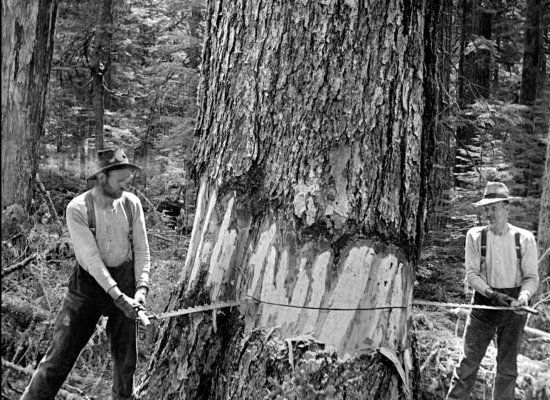
Lumberjacking
1 of 21


Men prefer not to call it "male bonding." We can't call it "man time" either, because that just sounds ... questionable. Either way, it's usually something involving little-to-no speech and a good amount of physical exertion. Your mind might immediately go to sports, but I'd say lumberjacking or drinking. Absinthe makes the heart grow fonder. Oddly enough, the guy friends I still have today are the ones I used to go behind my house with so we could shoot each other with air-soft pistols at close range. The friends that bleed together stay together. --Daniel, writer
Read the rest.