Showing posts with label documentary. Show all posts

Thursday, August 21, 2014

What Only Soldiers Understand (On Youth and Male Friendship)


Sebastian Junger has a new film about the same group of soldiers he followed in the award-winning documentary, Restrepo. It's not really sequel, however, even though it uses the same cache of interviews he drew from in the last film. Korengal, which takes its name from the Korengal Valley in northeastern Afghanistan where he followed the 15-month tour of the platoon in 2010, is more a story about male bonding among young men. There was some of that theme in Restrepo, but here it is the focus of the film. Sounds promising - I look forward to seeing it.

What Only Soldiers Understand

Christopher de Bellaigue
August 20, 2014


Outpost Films A soldier on patrol in Sebastian Junger’s Korengal

The acclaimed documentary Restrepo, which was made in 2010 by Sebastian Junger and Tim Hetherington, followed a platoon of US soldiers during their fifteen-month tour of duty in the Korengal Valley in northeastern Afghanistan. Released during President Obama’s Afghan “surge,” when there were some 30,000 US troops deployed in the country, the film took its name from Private First Class Juan Sebastián Restrepo, who was killed by the Taliban and immortalized in the name of an American observation post — “OP Restrepo.” The film began with a Taliban ambush and featured explosions, grueling patrols, and the slam of bullets into wood, earth, and metal. Restrepo conveyed with a relentless, almost monotonous immediacy the experience of combat — and this for an audience that was, in every sense, thousands of miles away.

Korengal is a new film that follows the same soldiers over the same period of time and draws from the same corpus of footage and interviews. But Korengal, while clearly related to Restrepo, cannot be considered its sequel; it might be misleading even to call it a war film. The film contains allusions to the death of PFC Restrepo, but the viewer is more aware of a second casualty, whose voice can occasionally be heard from behind the camera. By the time Sebastian Junger came to gather his material into Korengal, his confrere Tim Hetherington had been killed (while following another war, this one in Libya) and the US was preparing to pull out of Afghanistan. To some degree, the film is Hetherington’s memorial.

Korengal’s subjects are youth and male friendship, and it deals in a peculiarly profound way with the unsettling sense that a young warrior experiences, after fighting alongside his brothers-in-arms, that he knows all the joy and agony that life can offer. “I’d rather be there than here,” says one of the film’s unsuspecting heroes, the elfin, soft-spoken Misha Pemble-Belkin, after his tour has finished; “I’d go back right now if I could.” His nostalgia is echoed by others who spent their entire deployments despising their surroundings and longing for home, and insights of this kind into human frailty and illogic lift Korengal into a rare category of achievement.

Junger is outstanding at evoking the diabolical thrill of battle. “Until you hear the snap of a bullet go by your head” — and here Specialist Kyle Steiner, another of the film’s stars, permits himself a knowing, almost superior smile –- “there’s nothing else like it.” The film’s pivotal scene is a single firefight built into a mesmerizing homage to combat, complete with thumping, cod-Irish score and whoops of bloodlust. “I’m on fucking fire!” someone yells amid the mayhem. We all are, and we can be pretty sure the Taliban shooting back feel the same way — only their shouts are a little different, more in the line of, Allahu Akbar.

After the high of engagement comes the low of enforced inaction, boredom, and jangling nerves. Some of these men only recently grew into their bodies, and they hardly know what to do with themselves. They wrestle like lion cubs, play video games, mistreat a guitar, and conduct inane conversations (would George Clooney beat Fabio in a fight?). And, like generations of soldiers before them, they smoke.

There is an affecting scene when one of the soldiers confesses that he is afraid that God hates him because he has committed sins while in battle. But Korengal does not mention religious faith as a possible psychological buttress , and whether this reflects the predilections of the filmmakers or the skepticism of the men is not clear. If the answer is the latter, then a want of belief may be one of the few things that distinguish the men of Second Platoon, Battle Company from their predecessors in war. Given the psychological damage to which many of them confess, it may not be a good thing.

More than the deaths, lost limbs, and broken ankles (plenty in the scree-covered mountainsides) that punctuate the deployment, it’s this vulnerability that interests Junger and Hetherington. In Specialist Miguel Cortez they have a perfect case to study. Cortez is the kind of man whose cracks show through his too-ready smile, and whose eyes flee when he thinks dark thoughts. As the deployment wears on it’s Cortez who begins to court death, and who has to be told by his comrades that by endangering himself he is endangering them. And it’s this same, magnificent Cortez who wins a Bronze Star Medal for valor, and who says (again with that disarming smile), “I would actually throw myself on a grenade [for them], and the guys know that I would, without hesitation.”

Complexities of this kind are the stock-in-trade of Korengal — the product of a close, compassionate interest by Hetherington and Junger in the soldiers around them. There is a fascinating diversion into the racial bafflements of Specialist Sterling Jones, for instance. He is one of the few black men in the whole company — because, as he says sardonically, “black people don’t jump out of planes.” Jones believes he is disliked by his white comrades, which makes his motivations for fighting all the more surprising. “I’m not doing this for recognition from my country,” he says. “Truthfully, I could give a shit what anybody thinks — except for those guys to my left and my right, because that’s what it’s about…that’s why in a deployment you see people run out under fire to go pull their buddy back.”

The irony about Jones is that his mother had urged him to join the army, and he had protested. Pemble-Belkin is the opposite. His parents were Oregon hippies who disapproved of him playing soldiers. Now he smiles angelically and asks, “What’s not to like about a giant machine gun?”

A second telling absence in Korengal is politics. Officers and NCOs dutifully repeat the message of bringing civilization to a benighted people, but for the rest the war seems almost like a sealed exercise, justified in personal, rather than patriotic terms. They certainly feel no sympathy for the locals, and why should they? As Steiner puts it,
Hearts and minds is out the window when you see the guy shooting at you and then he puts his wife and kids in front of him knowing full well that we won’t shoot back. Or the guy who shakes our hand, takes the ten bags of rice we give him for his family and the school supplies…and immediately walks up the mountain and shoots an RPG at us, and walks back down and smiles the next morning when he’s walking his goats…

Fuck his heart. Fuck his mind.
It is a remarkable commentary on modern warfare waged by a democracy that a film like Korengal can be made, with the full cooperation of the US military, and without anyone getting into trouble for an excess of candor.

Later on, after the deployment, Steiner is under pressure from his family and his girlfriend. He is back home, but it seems that he is not fully present. “You’ll never understand,” is his somewhat tetchy response. “It’s not your position to understand.” Steiner wouldn’t be here if it weren’t for the helmet that protected his head from a Taliban round. He is the kind of man who would cross the country to help a former comrade change a tire –- “in a heartbeat.” Now he delivers himself of an aphorism that expresses his feelings brutally: “You may have your family’s blood running through your veins. You didn’t shed it with them.”

Even for the survivors, war is a kind of death.

Sunday, May 18, 2014

BBC - Blurred Lines: The New Battle of the Sexes


From the BBC, this is an interesting look at the new culture of misogyny, "whether there's a new culture abroad in which it's acceptable to write about, talk about, and feature women in a sexually offensive, even abusive way. Or whether the female of the species just needs to 'man up', learn to enjoy a gag, and get used to the 21st century world." This is not only a British issue, as it seems maybe worse in the U.S.

Blurred Lines: The New Battle of the Sexes


Published on May 9, 2014
Blurred Lines: The New Battle of the Sexes - BBC Documentary, 2014


From bomb threats sent to campaigners for more females on banknotes to sexually explicit pop videos. From extreme laddism at universities to rape jokes in the school yard... Kirsty Wark explores whether there's a new culture abroad in which it's acceptable to write about, talk about, and feature women in a sexually offensive, even abusive way. Or whether the female of the species just needs to 'man up', learn to enjoy a gag, and get used to the 21st century world.
Kirsty Wark also participated in a Twitter question and answer session, the product of which is presented below.

Your questions to Kirsty Wark


Kirsty Wark  
Kirsty Wark held a Twitter Q&A on sexism and misogyny


How have men's attitudes towards women changed? Is the internet a naturally hostile place for women?

The BBC's Kirsty Wark answered your questions in a live Twitter Q&A on Friday 9 May.
This is an edited version of the session.

Question from @NUS_Vonnie: Where did the idea come from that "Freedom of Speech" means freedom to say things with no consequences?
Kirsty answers: Civil society evolved over centuries-the internet just decades. Need a web conduct code that's not censorious but courteous

Will Blaik emails: Is the increased misogyny that we see a reaction to misandry?
Kirsty answers: I'm not sure that misandry is as entrenched and overt as misogyny. I think it's more complicated than a simple reaction

Question from @dotluckhurst: Is it possible to change attitudes? Parents & schools must act more urgently.
Kirsty answers: Action in schools is the great hope because it's this generation who are growing up online. Schools must talk about it.

Chris emails: Can we encourage teenagers and young people to know, care and understand others around them?
Kirsty answers: I think many young people do care for those around them. But the pressures on them, eg from porn, are phenomenal

Question from @AliceBand1: I am so shocked by Grand Theft Auto. Shocked to the core. How is this allowed to exist?
Kirsty answers: It's perfectly legal. We asked Rockstar to take part but they declined. Why don't you write to them and ask?!

Question from @_raymatthew: Why do parents allow their children to "play" computer games that show rape?
Kirsty answers: Many parents just don't know what's in these games.They need to talk to kids; the activity needs to come out the bedroom

Question from @thegreenelk: It's a mistake to tie increase in misogyny with growth of internet - think it started with rap lyrics
Kirsty answers: Misogyny has been around probably as long as men and women! But certainly rap music language should be part of the debate

Andrew Soule emails: Women say they prefer male bosses & are derogatory towards females. Do women hold themselves back?
Kirsty answers: Sexism and misogyny is a mind-set not a gender. Sometimes women don't realise that they've internalised prejudice.

Question from @thinkingmuslim: Did you toy with the idea that the internet has its own culture & its misogyny doesn't enter real world?
Kirsty answers: The internet does have its own culture, but it's one that spill[s] into the real world. For young people it is the real world

Question from @Charlesknight: Why was the show entirely white?
Kirsty answers: Noted - misogyny affects women of all colours and creeds. Women of colour can experience an additional layer of prejudice

Question from @Jillaclogs: Do you think children's access to smartphones should be regulated? So many beartraps!
Kirsty answers: Certainly could be parental controls for pre-teens, but parents need to learn to use smartphones better than their kids!

Question from @louisegrant21: Has making #blurredlines made you more worried about misogyny or more hopeful it will die out?
Kirsty answers: The young women we spoke to who are standing up to sexism and misogyny makes me hopeful. They have real energy and purpose

Question from @julieohara79: Was excellent, any chance of a series?
Kirsty answers: Glad you enjoyed the documentary. The decision on a series is above our pay-grade!

Kirsty ends: Thanks for all your questions and comments. Sorry I couldn't answer all of them. Great to have the discussion. Newsnight calls!

For more tweets from Kirsty Wark you can follow her Twitter account.
Kirsty examined these issues in the BBC2 programme Blurred Lines: The New Battle of the Sexes. Twitter Q&A produced by Andree Massiah

Saturday, May 3, 2014

Wartorn 1861-2010 - A Documentary on War and PTSD


No new information here for those who work with PTSD and especially combat-related PTSD, but this is still an essential documentary for those who love, live with, or know the young men (and women) coming home from Iraq and Afghanistan. An estimated 25-35% of combat veterans (mostly men) from these two recent wars will experience symptoms of post-traumatic stress disorder. This HBO documentary examines their experience, their symptoms, and their lives once they return home.

Wartorn 1861-2010

68 Minutes


After the Civil War more than half of the patients in mental institutions were veterans. In 1980 post-traumatic stress disorder (PTSD) became an accepted diagnosis for veterans with psychological wounds. Based on personal accounts of American soldiers whose physical and mental health was torn asunder by the shock and fear of bloodshed and PTSD, the documentary narrates the chronic effects of battle agony and post-traumatic anxiety on military personnel and people close to them throughout American history... from the Civil War through today's modern warfare in Iraq and Afghanistan.

There's a lot of confusion about post-traumatic stress. What are some of the physical manifestations? Well, the hallmark symptoms are the agitation and being keyed up and on edge. And the problem with PTSD is that those symptoms don't go away when soldiers come back home. It's almost like a seizure where they don't have control, they don't know when it's going to happen, and they have to constantly plan so that if it does happen, they're in a place where they can recover.

So what about the people that don't get it? Is there anybody that you can honestly say was in a great deal of intense combat situations and comes back completely fine? Those folks are pretty rare. There's that mythology of the warrior that the only thing you should feel when you shoot an insurgent is recoil. But in fact, nobody is really unscathed unless you really have no compassion for human life. If you have a total disregard maybe the only thing you feel is recoil. Everybody else carries something with them.

In August 1943, General Patton slapped a young soldier who was hospitalized with nervous exhaustion. He was reported to have said: I won't have the hospitals cluttered up with these sons of bitches who haven't got the guts to fight. Send that yellow son of a bitch back to the front line.

Friday, January 17, 2014

Christina Hoff Sommers - Masculinity Is More Than a Mask


Christina Hoff Sommers is a political commentator, author, and resident scholar at the American Enterprise Institute (a right wing "think tank"). A revised and updated version of her book, The War Against Boys: How Misguided Policies are Harming Our Young Men, has recently been published.

Although I applaud Sommers for her frequent and vocal defense of men (although it sometimes seems she is defending the traditional model of masculinity against its own growth and evolution), I often disagree with he, as the prior parenthetical indicates.

In this article from Time Magazine she offers her supportive critique of how to make The Mask You Live In a better or more fair film for men and boys. This is one of those times I mostly agree with her. 

Masculinity Is More Than a Mask

Is it O.K. to tell boys to "be a man"? An upcoming film that is much buzzed about on the web ignores the real differences between the sexes


By Christina Hoff Sommers Jan. 13, 2014


Are school shooters and mass murderers born out of an aggressive emphasis on masculinity in our society? The trailer for filmmaker and feminist activist Jennifer Siebel Newsom’s new documentary, The Mask You Live In, would have us think so.

The recently released trailer has attracted 1 million views on YouTube. It argues that American boys are captive to a rigid and harmful social code of masculinity. From the earliest age, they are told to “Be a man!” “Don’t cry!” “Stop with the emotion!” and “Man up!” This “guy code” suppresses their humanity, excites their drive for dominance and renders many of them dangerous. The trailer features adolescent men describing their isolation, despair and thoughts of suicide, artfully interspersed with terrifying images of school shooters and mass murderers.

I admire Newsom for using her considerable talent to advocate for boys. But I worry that she is less concerned with helping boys than with re-engineering their masculinity according to specifications from some out-of-date gender-studies textbook. The trailer is suffused with males-are-toxic ideology but shows little appreciation for how boys’ nature can be distinctively good. The Mask You Live In is scheduled to be released later this year. Let’s hope there is still time for edits.

Here are a few suggestions:


1. Recognize that masculinity is more than a “mask”

The title and content of the film suggest that masculinity is a cultural creation. That is only marginally true. A lot of typical boy behavior, such as rough-and-tumble play, risk taking and fascination with gadgets rather than dolls, appears to have a basis in biology. Researchers have found, for example, that female monkeys play with dolls much more than their brothers, who prefer toy cars and trucks. Are male monkeys captive to a “guy code”? A recent study on sex differences by researchers from the University of Turin, in Italy, and the University of Manchester, in England, confirms what most of us see with our eyes: with some exceptions, women tend to be more sensitive, esthetic, sentimental, intuitive and tender-minded, while men tend to be more utilitarian, objective, unsentimental and tough-minded. We do not yet fully understand the biological underpinnings of these universal tendencies, but that is no reason to deny they exist.

(MORE: It’s a Man’s World, and It Always Will Be)


2. Appreciate the difference between healthy and pathological masculinity

Some boys are hypermasculine or pathologically masculine. They are bullies and worse, establishing their male bona fides through destruction, mayhem and preying on the weak and vulnerable. But most boys evince healthy masculinity. They may enjoy mayhem in games and sports, but in life they like to build, not destroy. Their instinct is not to exploit vulnerable people but to protect and defend them. Of course, all boys need guidance and discipline from the adults in their lives. I agree with Newsom that telling a boy to “man up” can be harsh and degrading. But teaching him to “be a gentleman” is another matter. It’s a tried-and-true way to bring out the best in males.


3. Acknowledge the virtue of male reserve

Newsom’s film tells us that boys in our society don’t feel safe talking about emotions and personal struggles. To do so violates the boy code and subjects them to shame and ridicule. The driving message of Newsom’s film is that we must free our young men to become emotionally expressive. Of course, parents should do all they can to improve their sons’ emotional literacy. But parents (as well as wives and girlfriends) should keep in mind that male reticence has its advantages.

A 2012 a study surveyed and observed nearly 2,000 children and adolescents and found that boys and girls have very different expectations about the value of problem talk. Girls were more likely to report that personal disclosure made them feel cared for and understood. Boys, overall, found it to be a tedious waste of time — and “weird.” Contrary to what we learn from Newsom’s film, boys did not find personal disclosure embarrassing or unmasculine. According to the study’s author, Amanda Rose: “Boys’ responses suggest they just don’t see talking about problems to be a particularly useful activity” (emphasis added).

But in girls, excessive problem talk is in fact linked to anxiety and depression. Male stoicism may be adaptive and protective. If you want a boy to be more forthcoming, Rose has good advice for parents and counselors: “You will have to persuade him that it serves a practical purpose.” Engage his male instinct for problem solving.

(MORE: What Boys Want: Hook-Up Culture Doesn’t Just Hurt Girls)


4. Make clear that most boys are psychologically sound and resilient

The Mask You Live In gives the impression that the average adolescent boy is severely depressed. In fact, clinical depression is rare among boys. (National Institute of Mental Health data show that the prevalence of depression among among 13- to 17-year-old boys is 4.3%; among girls of the same age group, it is 12.4%.)

Newsom’s film reports that every day in the U.S. three or more boys take their own lives. Suicide is, indeed, primarily a male disease. Among 10- to 24-year-olds, 81% of suicide victims are male. In 2010, a total of 3,951 young men died by their own hands. Male suicide is a much neglected scourge, and Newsom’s efforts to raise awareness are admirable. Still, in a nation of nearly 33 million boys, that means that the percentage of boys who commit suicide is close to 0.01%. Each of these deaths is a tragedy. But it helps no one to pretend that suicide is typical male behavior.

Attention-deficit/hyperactivity disorder (ADHD) does appear to be an epidemic among boys, but the implications of that are ambiguous. It could be that as a society, we are pathologizing age-old male rambunctiousness. Some experts have suggested that ADHD would be significantly reduced if we allowed boys more unstructured recess and occasions for spirited rough-and-tumble play. Yet, in Newsom’s documentary, scenes of boys engaging in mock fisticuffs, playfully head-butting and chasing one another around the playground are offered as evidence of how young males are driven to “prove” their aggressive masculinity.


5. Include specific ideas on how to help boys with depression or thoughts of suicide

Some of the most promising, innovative ideas are coming out of Australia. In 2006, a report in the Medical Journal of Australia argued for a paradigm shift in the nation’s mental-health system. Rather than blaming “masculinity” or trying to “re-educate” men away from their reluctance to seek help, the author asks, “Why not provide health services that better meet the needs of men?”

The Australians are now developing male-specific mental-health protocols. A 2012 Australian study, for example, found that large majorities of young men associate the term mental health with insanity and straightjackets. Mental fitness seems to go over better with men. The Australians recently launched a mental-fitness app for guys. The focus is on acquiring “skills,” developing “strengths” and achieving “self-mastery.” But doesn’t that reinforce traditional narratives of masculinity? It certainly does — that’s the point, and the key to its promise.

The energy, competitiveness and corporal daring of normal males are responsible for much good in the world. No one denies that boys’ aggressive and risk-taking tendencies must be socialized and channeled toward constructive ends. But the de–Tom Sawyering of the American boy should not be anyone’s agenda. I am sure it is not Newsom’s. Yet her film in progress suggests otherwise.


Christina Hoff Sommers @chsommers

Christina Hoff Sommers is a resident scholar at the American Enterprise Institute. A revised and updated version of her book, The War Against Boys: How Misguided Policies are Harming Our Young Men, has recently been published. The views expressed are solely her own.

Monday, December 16, 2013

Russell Brand: From Addiction to Recovery


Nice documentary - I have a lot of respect for the man Russell Brand is becoming.

Russell Brand: From Addiction to Recovery


Cannabis, booze, acid, speed, coke, crack, heroin... Russell took drugs every single day. At one point he started being afraid of the fact that he might die. He was told that if he continues like that, in six month time, he's going to be dead, in prison, or in an asylum. He got clean at the age of 27, the age Amy Winehouse was when she died. Amy's death was a paradoxical, unsurprising shock, and Russell felt like he could have done something to help.

That's why he made this film, to have a sympathetic look at alcoholism and addiction, a condition that the World Health Organization regards as a disorder. He reckons that drugs and alcoholism are much misunderstood by users, non-users, and the government. He thinks that we need to start regarding addiction in all its forms as a health issue as opposed to the judicial and criminal issue. In this film he wants to learn more and see if we can do things differently.

Brand meets a whole range of people from whom he draws insights - scientists at the cutting edge of research into the psychology of addiction, those involved in innovative recovery treatments and drug addicts themselves. 
Is addiction a disease? Should it be criminalized? And is abstinence-based recovery, which worked for Brand, a possible way forward? In this documentary Brand challenges conventional theory and practice as well as government policy in his own inimitable style, confronting the reality of addiction head on. 
Along the way he draws on his own experience to try to help one of the addicts he meets to take the first steps towards recovery. Armed with his own heartfelt beliefs and new insights gained during his journey, Brand has the opportunity to change the hearts and minds of policy makers when he is invited to give evidence before the Home Affairs Select Committee investigating the efficacy of current drug addiction treatment in the UK. - BBC Three.
Watch the full documentary now - 60 min

Thursday, October 24, 2013

'Tough Guise 2': The Ongoing Crisis of Violent Masculinity

Hmmm . . . There were some things I liked about the original Tough Guise, and there were some things that really bothered me about that film. It felt to me that Jackson Katz fails to understand the complexity of the issue he was addressing. I wrote this back in 2009:
I have my issues with Jackson Katz’s “Tough Guise” video - it feels to me like the pathological side of the postmodern, relativist developmental stage, otherwise known as the Mean Green Meme in integral circles. I'm not sure such a beast actually exists (see here), but there does seem to be a tendency in this developmental stage - which is focused on group harmony, expression of emotion, and other communal manifestations of development - to reject any and all expressions of violence. I'm not sure this is realistic.

While as a Buddhist I reject violence, this is not necessarily a universal belief, even among Buddhists. Many hundreds of years have shown that Buddhists will take violent action in order to protect the weak and the dharma - the killing of a few to save the many has been the argument.

When the Chinese invaded Tibet, the few "soldiers" that existed tried in vain to fight off the invaders. This might be seen as the dark side of the complete opposition to violence and force. If they had taken seriously the realities of a world in which not everyone shares their values of peace and compassion, they might have been more prepared to defend those values by whatever means necessary.

Perhaps this is not good Buddhist doctrine. Or perhaps this is a more integral understanding of the need for right use of force. The "right use" part is crucial - I am not for the glorification of violence in film and TV. I do not think that boys should be taught that violence is how to resolve issues. I do not think that the military should be deployed unless our borders are threatened or unless we can protect the weak from genocide by the few who are ignorant and violent.

But I do know that we should be able to defend ourselves and those we love if there is no other option. Is there ever a time when there is no other option? I'm not sure.
So I'm not sure how I feel about his making of a sequel, from which there is a short clip below. Maybe over the past 14 years he has become more accepting that there are some masculine traits that are results of our biology and hormones . . . and evolution. That we still have these traits when they have ceased be relevant does not mean that they are wrong.

Whether violence is wrong or necessary depends on the context.

'Tough Guise 2': The Ongoing Crisis of Violent Masculinity

In a follow-up to his powerful 1999 documentary, Jackson Katz argues that men are actively taught to be violent creatures.

October 24, 2013 • By Lisa Wade


A still from Tough Guise 2. (PHOTO: COURTESY OF JACKSON KATZ)
In 1999 Jackson Katz headlined a documentary that powerfully revealed the mask of masculinity, a pretense of stoicism and readiness for violence that many men feel compelled to put on, at least part of the time. The film, Tough Guise: Violence, Manhood, and American Culture, became a staple in classes on gender across the country.
It’s no use arguing whether the media, the military, or the gun industry are responsible for rates of violence, he observes, since they’re in cahoots.
Last week marked the release of Tough Guise 2 and SocImages was given the honor of debuting an exclusive clip from the new film. In the segment below, Katz explains that men aren’t naturally violent but, instead, often learn how to be so. Focusing on socialization, however, threatens to make invisible the socialization agents. In other words, Katz argues, men don’t just learn to be more violent than they otherwise would be—they are actively taught.

He begins with the fact that the video game and film industries both take money from companies that make firearms to feature their products. The U.S. military then uses the video game Call of Duty for recruitment and training. It’s no use arguing whether the media, the military, or the gun industry are responsible for rates of violence, he observes, since they’re in cahoots. These extreme examples intersect with the everyday, mundane lessons about the importance of being “real men” that boys and men receive from the media and their peers, parents, coaches, and more.

This update of the original will tell the compelling story about manhood and violence to a new generation and remind older ones of the ongoing crisis of masculinity in America.


This post originally appeared on Sociological Images, a Pacific Standard partner site.

Saturday, October 5, 2013

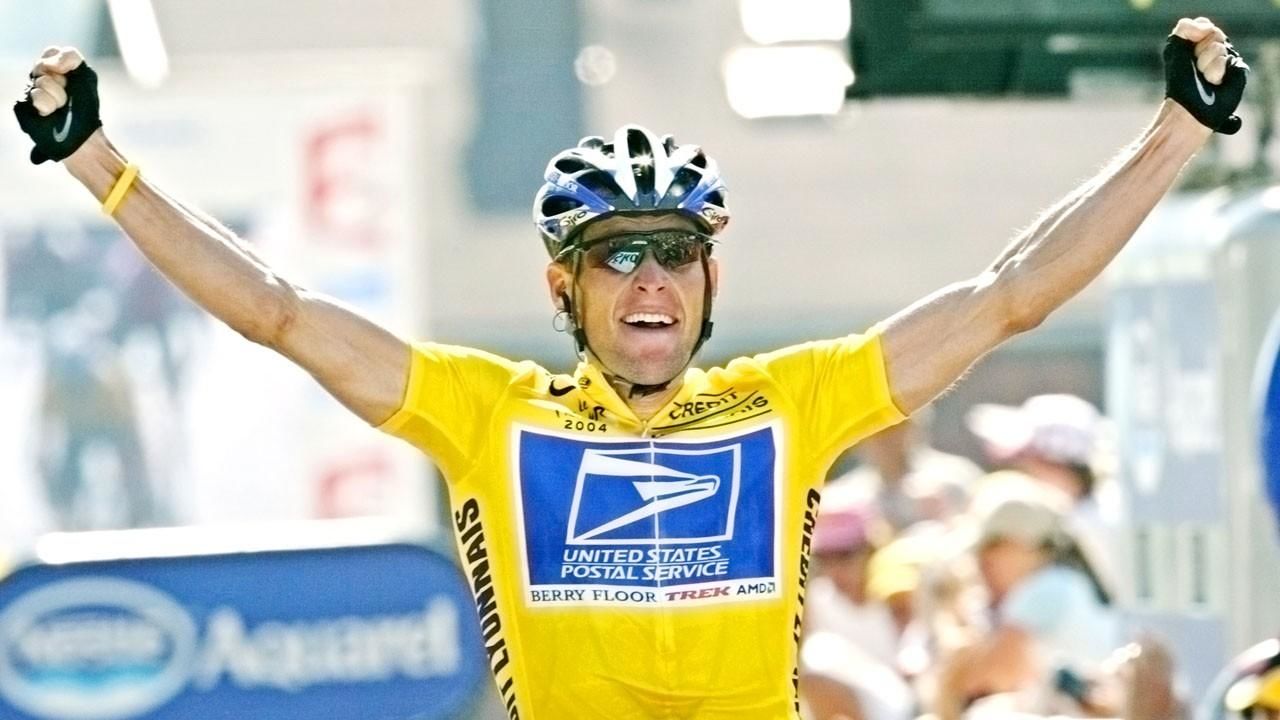
Documentary - Cycling’s Greatest Fraud (Lance Armstrong)


Blood transfusions. Steroids. EPO. Injections. Deceptions. National Geographic Channel goes inside the science and scheming of Lance Armstrong’s legendary fall from grace.

Armstrong's rise and fall provides a lesson in how greed, hubris, and self-righteousness - not to mention self-deception - can destroy even the most talented of people. Armstrong was (and is) a rare genetic specimen whose body seems designed for endurance sports like cycling or running. Even as a teen, he was destined to be a great athlete.

But greatness was not enough - he had to be the best whoever rode a bike (although no one will ever surpass Eddie Merckx). So he began the most organized and successful doping program ever seen in professional sports (outside of bodybuilding). The best and most honest account of this I have seen so far is Tyler Hamilton's The Secret Race: Inside the Hidden World of the Tour de France (winner of the William Hill Sports Book of the Year).

Cycling’s Greatest Fraud


This one-hour special dissects the story of the science and scheming behind what’s been called “the most sophisticated and successful doping scheme in all of sports”.

Piece together eyewitness testimonies and delve into the illicit science to discover how the USADA says the doping plot began and then mushroomed in its complexity.

With new interviews from key members of his inner circle, see how Armstrong went to great lengths to protect his secret and his legacy, by using all the powers at his command to silence and attack critics, while assuring the public that his blood was as clean as his public image.

But, in the end, his empire collapsed, as the scheming unravelled and the science finally caught up with Armstrong.

Saturday, August 31, 2013

Documentary - The Bro Code: How Contemporary Culture Creates Sexist Men


This is an educational documentary meant, I assume, for university campuses. Sounds pretty similar to Jackson Katz's Tough Guise. Here some of the main points of the film, according to the supplemental materials.
Key Points
• The filmmaker admits that he grew up in “bro culture,” pointing to his background in sports and music.
• He then suggests that boys today are being raised in the same sexist ways he was raised.
• But he underlines a key difference between then and now: he claims that the sexism inherent in today’s “bro” culture is far more dangerous than in the past.
• The primary aim of the film, he says, is to understand the variety of ways that this increasingly dangerous strain of sexism continues to be lauded and defined as cool by mainstream media and mainstream male culture.

You can also read a transcript of the film (here)and a study guide for the film (here). Below is a low-resolution full-length preview of the film.

The Bro Code: How Contemporary Culture Creates Sexist Men


Filmmaker Thomas Keith, a professor of philosophy at California State University, Long Beach, provides an engrossing look at the forces in male culture that condition boys and men to dehumanize and disrespect women. Breaking down a range of contemporary media forms targeted explicitly at young men, Keith teases out the main maxims of "bro culture" and "the bro code," and examines how this seemingly ironic mentality reinforces misogyny and gender violence in the real world. Whether he's looking at movies and music videos that glamorize womanizing, pornography that trades in the brutalization of women, comedians who make fun of sexual assault, or the recent groundswell in men's magazines and cable TV shows that revel in reactionary myths of American manhood, the message Keith uncovers in virtually every corner of our "entertainment" culture is clear: that it's not only normal -- but cool -- for boys and men to control and humiliate women. Along the way, The Bro Code makes a powerful case that there's nothing normal, natural, or inevitable about this toxic ideal of American manhood, and challenges young people to fight back against the resurgent idea that being a "bro" -- and a man -- means glorifying sexism, bullying, and abuse.

Featuring interviews with Michael Kimmel, Robert Jensen, Shira Tarrant, J.W. Wiley, Douglas Rushkoff, Eric Anderson, and Neal King.

Sections:
Intro (2:15)
Step 1: Train Men to Womanize (18:03)
Step 2: Immerse Men in Porn (13:25)
Step 3: Make Rape Jokes (11:33)
Step 4: Obey the Masculinity Cops (12:22)

Viewer discretion advised : Contains violent & sexual imagery and profanity.


Filmmaker Info

Written and produced by Thomas Keith
Director of Photography: Michael Enriquez
Additional Photography: Mitch Lemos
Editing: Thomas Keith


Filmmaker's Bio

DR. THOMAS KEITH | Director, Writer, Producer
Dr. Thomas Keith teaches philosophy at California State University, Long Beach and California Polytechnic University. He specializes in American philosophy and pragmatism with an emphasis on issues of race, class, and gender. In 2008, Dr. Keith directed and produced the bestselling film, Generation M: Misogyny in Media and Culture, which is used in classrooms around the world.

Friday, June 28, 2013

Documentary - Crossover Kids (on Transgender Children)


In Arizona, Republican lawmakers tried to push through a bill that would prohibit gender-variant children from using the bathrooms of their sexual identities - and fortunately it did not get adequate support to move forward.

Meanwhile, in less back-assward news:
A Colorado family celebrates a huge win this week for their transgender first-grader, who has won the right to use the girls' restroom at her school. What message does this send to kids sharing the school yard with transgender children?
The child in this ruling, Coy Mathis, is featured in the film below.

Other states or cities are also supporting the rights of gender-variant children, as well as those who are openly transgender:
  • The San Francisco Unified School District recently added a transgender category in student health surveys. The survey found that 1.6 percent of high school students and 1 percent of middle school students identified as transgender or gender variant. Elementary students weren't in the survey, but Kevin Gogin, the program manager for school health programs, says the district has seen more young transgender and gender variant students, too.
  • In California, which has had protections for transgender people for some time, a new law requires schools to provide transgender and gender variant students with "equal and full access to programs and facilities," such as gender-neutral bathrooms, if need be, and private changing areas for gym and sports.
  • Overall, attitudes about differences in gender identity have been changing, even in the last decade, says Eli Erlick, a transgender student and graduating high school senior in Willits. When Erlick began her transition from boy to girl at age 8, she says that even she didn't know what the word "transgender" meant. She just knew that she wanted to live life as a girl. "I thought I was the only person like this," she says.
  • Now Erlick is the director of an organization called Trans Student Equality Resources, which provides schools with training and information about students like her. Erlick also has helped her school district and others in California develop transgender policies.
  • "There is definitely more awareness," says Kristyn Westphal, vice principal at Grant High School in Portland, Ore. There, they've established a student support team to determine how well the school is meeting the needs of transgender and other students. Earlier this year, the school also created individual gender-neutral bathrooms that any student can use.
This site offers support resources for the parents of gender-variant children. And with that background, here is the documentary, Crossover Kids (transcript also available).


Crossover Kids

On the surface, Coy Mathis is a typical six-year-old girl. She likes dressing up, gravitates towards the colour pink, and enjoys playing with her dolls. But Coy was born a boy.

Recently she won the right to use the girls restroom at her school in Colorado. The decision was made by the Colorado Civil Rights Division on Sunday that the Fountain-Fort Carson School District created an unnecessarily hostile situation for Coy Mathis by not allowing her to use the female bathroom.

Transgender advocates are hailing the decision as a major step forward for transgender rights. By not allowing Coy to use the girls’ restroom, the Eagleside Elementary School in Fountain ‘creates an environment rife with harassment,’ Steven Chavez, the division director, wrote in the decision.

Crossover Kids investigates the complex and fascinating world of transgender children. Backed by medical experts, a growing number of parents in the United States are allowing their kids to live openly as the other gender.

For the children involved, the switch can end years of unhappiness and feelings of being trapped in the wrong body. But like other members of the transgender community, they can face deep social stigma and discrimination.

How young is too young to change sex?

Saturday, March 30, 2013

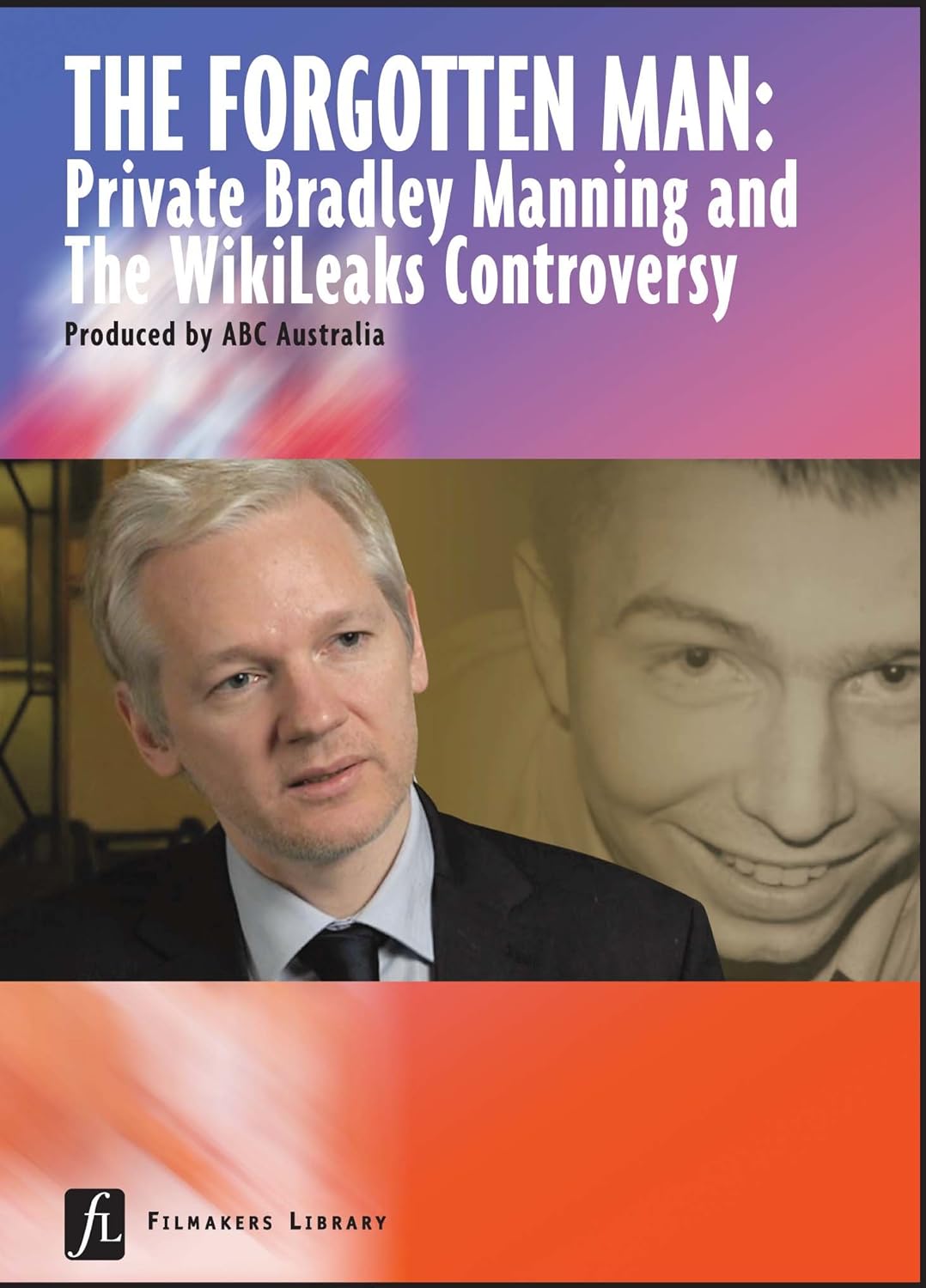
Wikileaks: The Forgotten Man (Private Bradley Manning)


Private Bradley Manning is clearly the most interesting and important figure in the WikiLeaks controversy, but the media has been obsessed with WikiLeaks publsiher Julian Assange. Currently, Manning is wasting away in solitary confinement, with David House being one of the small number of civilians allowed to see him.

House describes the young soldier's mental deterioration and his struggle to deal with long hours of solitary confinement, often without clothing. "The US Government is just trying to put immense pressure on him in order to get him to crack open.

A lot of people see Manning as a hero - a young man who was appalled by the things he saw happening (including war crimes and violations of the Geneva Conventions) in Iraq and decided that the American people should know what their government is doing. Others see him as a traitor who deserves nothing less than conviction and execution for treason.

What do you think?

The film includes interviews with Julian Assange, former military analyst Daniel Ellsberg, former WikiLeaks spokesperson Daniel Dmosceit-Berf, Manning supporter David House, hacker Adrian Lamo, and New York Times Washington Bureau Chief Dean Baquet.

WIKILEAKS: THE FORGOTTEN MAN


Private Bradley Manning is the man United States authorities allege stole classified military files, providing them to WikiLeaks for publication.

While WikiLeaks founder Julian Assange battles to avoid extradition from the United Kingdom to Sweden, on the other side of the Atlantic Bradley Manning is facing a court martial. If found guilty Manning could spend the rest of his life in prison.

It’s a case that has all the hallmarks of a spy thriller. Bradley Manning was an American soldier serving in Iraq, when he allegedly downloaded classified military files onto a disk storing Lady Gaga songs. A short time later the authorities arrested Manning and he’s been in a military jail ever since.

Early last year reporter Quentin McDermott told the story of Bradley Manning and the people who’d helped the United States government build a case against him. This film uncovers crucial new elements describing the ferocious battle between hackers and the U.S. government as they pursue Julian Assange and WikiLeaks.

The Forgotten Man also interviews Juan Mendez, the United Nations Special Rapporteur on Torture, about the treatment of Bradley Manning. Mr Mendez says Manning was subjected to cruel, inhuman and degrading treatment during his “excessive and prolonged isolation” at Quantico Marine Corps Base outside Washington.

But one question still remains: will Bradley Manning attempt to avoid a life sentence by turning against Julian Assange?

Tuesday, December 25, 2012

Documentary - Biology of Dads (BBC)


This is a cool documentary I found at Documentary Heaven on the necessity of dads, both biologically and psychologically, in the lives of their children, male and female. Nice to see a BBC piece on this topic - probably won't be any major networks doing this topic in the U.S any time soon.


Biology of Dads


‘Every child needs a father’ is a phrase heard often enough, but is there any evidence to support it? In this enlightening documentary, child psychologist Laverne Antrobus goes on a quest to discover why a dad’s relationship with his offspring is so important. She uncovers fascinating new research which is shedding light onto the science of fatherhood.

Laverne meets a new dad who is experiencing Couvade Syndrome, a condition sometimes known as ‘sympathetic pregnancy’. She is keen to explore if the symptoms – which are similar to those felt by pregnant women, such as nausea and sickness – might be physiological as well as psychological. The dad takes a blood test shortly after the birth of his third child and Antrobus discovers that hormones could be the cause of his symptoms: possibly nature’s way of ‘priming’ him to become a more nurturing father.

Laverne then meets one of the UK’s leading experts in the father’s role within the family. While observing father and toddler play in his lab, she finds out how the rough-and-tumble play they witness is classic ‘dad behaviour’. It is believed that this type of fatherly play is essential in teaching toddlers the boundaries of aggression and discipline.

In the final investigation, Antrobus looks into recent research which claims that men who have a good relationship with their daughters can influence the kind of husband the daughters choose. The study also found that girls whose fathers were absent during their formative years tend to reach puberty sooner and age quicker. Laverne recruits a team of married women to take part in one final, fascinating experiment.

Friday, August 31, 2012

Documentary - Ancient Warriors - Ninja: Warriors of the Night


There is a little kid in me who loves this stuff - Ninjas are so cool. It's good to honor the child in us sometimes, in healthy ways.

A little background on ninjas below the video.

Discovery Channel TV Series: Ancient Warriors
Episode 19: The Ninja - Warriors of the Night

The Ninja, respected for their stealth and cunning manners, were considered the most devious and feared warriors in ancient Japan. Ninjitsu - the way of the Ninja (shinobi) - involved taking any action necessary to achieve their aims, no matter how unethical. For four centuries, Japan was in turmoil, locked in warfare. The most powerful warlords were protected by the Samurai, noble soldiers prepared to die for their masters - but there was another kind of warrior, the Ninja (shinobi), who were cunning and ruthless and worked covertly. In this documentary film we follow their art, their tactics, the manner in which they were taught to move and think, and how they were prepared to die rather than divulge their secrets.


Wikipedia:

A ninja (忍者?) or shinobi (忍び?) was a covert agent or mercenary in feudal Japan who specialized in unorthodox warfare. The functions of the ninja included espionage, sabotage, infiltration, and assassination, and open combat in certain situations.[1] Their covert methods of waging war contrasted the ninja with the samurai, who observed strict rules about honor and combat.[2] The shinobi proper, a specially trained group of spies and mercenaries, appeared in the Sengoku or "warring states" period, in the 15th century,[3] but antecedents may have existed in the 14th century,[4] and possibly even in the 12th century (Heian or early Kamakura era).[5][6]

In the unrest of the Sengoku period (15th–17th centuries), mercenaries and spies for hire became active in the Iga Province and the adjacent area around the village of Kōga, and it is from their ninja clans that much of our knowledge of the ninja is drawn. Following the unification of Japan under the Tokugawa shogunate (17th century), the ninja faded into obscurity, being replaced by the Oniwabanshū body of secret agents.[7] A number of shinobi manuals, often centered around Chinese military philosophy, were written in the 17th and 18th centuries, most notably the Bansenshukai (1676).[8]

By the time of the Meiji Restoration (1868), the tradition of the shinobi had become a topic of popular imagination and mystery in Japan. Ninja figured prominently in folklore and legend, and as a result it is often difficult to separate historical fact from myth. Some legendary abilities purported to be in the province of ninja training include invisibility, walking on water, and control over the natural elements. As a consequence, their perception in western popular culture in the 20th century was based more on such legend and folklore than on the historical spies of the Sengoku period.

Sunday, August 19, 2012

Bukowski: Born Into This — The Definitive Documentary on the Hard-Living American Poet (2003)


Charles Bukowski was a mediocre poet and fiction writer. His work was brutally honest and it chronicled, sometimes in excruciating detail, the life he actually lived - painful, wounded, drunken, and more than a little outside the lines. The result body of work sells more books than Jack Kerouac and Ken Kesey.

Open Culture marked his birthday last week with the best biography I have seen about his life.

There is nothing great or exceptional about Bukowski - other than his willingness to lay bare his life on the page. How many of us would be willing to be that raw, that open about our weaknesses and failures? How many of us can turn those dark places into something many people see as art?

Bukowski: Born Into This — The Definitive Documentary on the Hard-Living American Poet (2003)

August 15th, 2012


Neglected to mark the occasion of poet and novelist Charles Bukowski‘s birthday yesterday? Then observe it today with a viewing of the documentary Bukowski: Born Into This. The most in-depth exploration of Bukowski’s life yet committed to film, the movie “is valuable because it provides a face and a voice to go with the work,” wrote Roger Ebert in 2004. “Ten years have passed since Bukowski’s death, and he seems likely to last, if not forever, then longer than many of his contemporaries. He outsells Kerouac and Kesey, and his poems, it almost goes with saying, outsell any other modern poet on the shelf.” A wide range of Bukowski enthusiasts both expected and unexpected appear onscreen: Sean Penn, Tom Waits, Harry Dean Stanton, Black Sparrow Press publisher John Martin, filmmaker Taylor Hackford (director of the earlier documentary titled simply Bukowski), and Bono, to name but a few. “Excerpts are skillfully woven with the reminiscences of former drinking buddies, fellow writers and Bukowski’s second wife, Linda, the keeper of the flame, whom he married in 1985,” wrote Stephen Holden in the New York Times. “Without straining, the film makes a strong case for Bukowski as a major American poet whose work was a slashing rebuke to polite academic formalism.”

Some might contrarily consider Bukowski’s writing glorified wallowing, a mere profane exultation of the low life, but Born Into This reveals that the man wrote as he lived and lived as he wrote, omitting neither great embarrassment nor minor triumph. Holden mentions that Bukowski, “a pariah in high school, suffered from severe acne vulgaris, which covered his face with running sores that left his skin deeply pitted. He recalls standing miserably in the dark outside his senior prom, too humiliated to show himself,” and that for all his work dealing with late-life sexual prowess, “he was a virgin until he was 24, the same age at which his first story was published. His description of sexual initiation with an obese woman whom he wrongly accused of stealing his wallet is a spectacularly unpromising beginning to the prolific sexual activity (described in his novel “Women”) that flowered after fame brought admirers.” Ebert asks the obvious question: “How much was legend, how much was pose, how much was real?”  Then he answers it: “I think it was all real, and the documentary suggests as much. There were no shields separating the real Bukowski, the public Bukowski and the autobiographical hero of his work. They were all the same man. Maybe that’s why his work remains so immediate and affecting: The wounded man is the man who writes, and the wounds he writes about are his own.”

You can find Born Into This listed in the Documentaries section of our collection of 500 Free Movies Online, or purchase your own copy on Amazon here.

Related content:
~ Colin Marshall hosts and produces Notebook on Cities and Culture. Follow him on Twitter at @colinmarshall.

Wednesday, August 1, 2012

Born to Rage: Inside the Warrior Gene w/ Henry Rollins


Interesting . . . . This documentary on rage and the supposed "warrior gene" features Henry Rollins, one of the coolest (and formerly angriest) guys alive, comes from National Geographic Explorer. What a perfect choice of narrator. More, more, and more on the warrior gene hypothesis.

Born to Rage: Inside the Warrior Gene

Born to Rage: Inside the Warrior GeneWere you born to rage? Is the need for anger management in your genes? Many, like ex-punk rocker Henry Rollins, have struggled with feelings of aggression their entire lives, and National Geographic is on a mission to figure out why.

Scientists are investigating a single gene – dubbed the warrior gene – that has been associated with violent behavior, raising the disturbing possibility that some people are Born to Rage.

Henry tests this theory on a colorful crew: outlaw bikers, mixed martial arts fighters, Buddhist monks and former gang members.

DNA testing reveals which of them – including possibly Henry Rollins himself – carries the warrior gene. The results provide an extraordinary insight into human behavior.

Watch the full documentary now. Alternative link at YouTube.

Thursday, July 26, 2012

Documentary - Working Man's Death

 
This interesting documentary series was created by Al Jazeera English - In four segments they look at the disposability of men in many cultures through the dangerous and often deadly work that they do.

Working Man's Death
In today's technological age, is heavy manual labour disappearing or is it just becoming invisible? From the exhausted mine shafts of Ukraine to the bloody slaughterhouses of Nigeria, this series offers an unflinching portrait of physical labour in the 21st century, talking to the people engaged in this dreary, demanding and, often, dangerous work.

1. Heroes
An unflinching portrait of physical work in the 21st century. 'Heroes' looks at freelance miners in Ukraine who spend long days crawling through cramped shafts of exhausted coal mines to dig out a living for themselves.


2. Ghosts
In this episode we visit east Java in Indonesia -- where men climb steep paths amid pungent vapours to bring back lumps of sulphur from the mouth of a volcano.


3. Lions
We take a glimpse inside the bloody and frenetic activity of the Port Harcourt meat market in Nigeria.


4. Brothers
Pakistani men use little more than their bare hands to dismantle an abandoned oil tanker for scrap metal.


Friday, June 22, 2012

Documentary - My Reincarnation (A Father and Son Story)


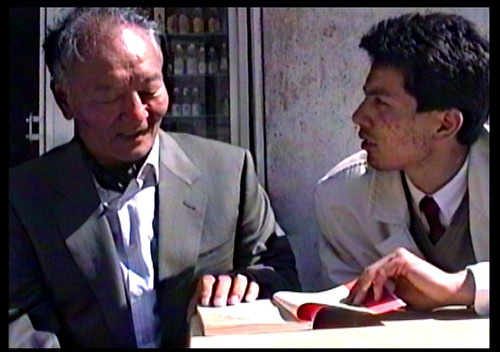
A new film aired last night (June 21) on the PBS documentary series, Point of View (POV) - My Reincarnation - that chronicles the life of exiled Tibetan Buddhist Master Namkhai Norbu Rinpoche and his son, Yeshi Silvano Namkhai (who is thought to be the reincarnation of Norbu's uncle, Khyentse Rinpoche Chökyi Wangchug— a revered Tibetan Buddhist Master who died in a Chinese prison) over an 20 year period.


Silvano resists the identity his father wishes him to assume, that of a reincarnate Tibetan master, and wants to live a Western life, which is quite understandable for a young man who has grown up in Italy among other Italians. But he also does not deny the identity that has is his birthright as a reincarnate master.

I have not seen this yet - it did air in Tucson last night - but this film covers two major interest areas for me, Tibetan Buddhism and father/son relationships. I look forward to seeing it.


My Reincarnation


POV: My Reincarnation

PBS Premiere: June 21, 2012
Online: June 22, 2012 – Sept. 20, 2012

Synopsis

My Reincarnation tells of the tireless work of exiled Tibetan Buddhist Master Namkhai Norbu to transmit the highest path of Tibetan Buddhism — called Dzogchen — around the world. Namkhai Norbu Rinpoche ("Rinpoche" is a Tibetan honorific title for Reincarnate Teachers meaning "precious one") feels enormous responsibility for keeping an ancient spiritual and cultural tradition alive in the face of a 50-year long diaspora that threatens Tibetan identity.

But Fox's film goes beyond reporting on the state of Tibetan Buddhism in exile. It enters Namkhai Norbu's story in unprecedented fashion. Filmed over 20 years, My Reincarnation follows a long, gentle, sometimes amusing, yet intense struggle between him and his Italian-born son, Yeshi.

Namkhai Norbu, along with the Tibetan Buddhist community, is convinced Yeshi is the reincarnation of his own master and destined to take up Namkhai Norbu's work. Yeshi, however, was raised in Italy and feels and looks more like an up-and-coming young businessman than anybody's spiritual master. Yet he can't quite turn away from his father's legacy. There are physical proofs of his reincarnation according to Buddhist tradition and his own spiritual yearnings. And there is the quiet, implacable determination of his father.

Yeshi Namkhai being brought to the monastery of his previous reincarnation


Yeshi Namkhai being brought to the monastery of his previous reincarnation where he will be enthroned during a large ceremony. Credit: Luigi Ottaviani

Fox began filming Namkhai Norbu in 1988 when, as a filmmaker and student of the Dzogchen tradition of Tibetan Buddhism, she took a four-year sabbatical from filmmaking and worked as his secretary. She started out recording his everyday life, including his work, family and travels, intent on documenting a spiritual life to which she'd been given unusual access. She returned 13 years later, and periodically after that, until 2009, amassing more than 1,000 hours of footage from Italy and the family's travels all over the world, including Venezuela, Russia and the United States (in Massachusetts and New York).

Using this footage plus archival material, My Reincarnation achieves a remarkably intimate and vivid account of Namkhai Norbu's life and work. Fleeing Tibet in 1959 in the wake of the Chinese takeover, along with thousands of other Tibetans including the H.H. the Dalai Lama, he settled in Italy, married an Italian woman, Rosa, had two children and began the work that brought him worldwide recognition as a Spiritual Master and Scholar. The film shows 20 years of constant travel as he lectures, counsels, leads ritual Buddhist observances and Tibetan gatherings and hosts the Dalai Lama. He ages, of course, but also appears to take on an extra burdens — not only the hopes, fears and challenges of spiritual seekers and Tibetans scattered in foreign lands, but also the survival of Tibetan Buddhism itself.

And so a movie-within-the-movie unfolds, because the struggle to preserve Tibetan Buddhism — to pass it on as a living legacy — extends to Namkhai Norbu's family. Tibetan Buddhism depends greatly on unbroken lines of reincarnated lamas, who continue to teach and interpret the scriptures. Namkhai Norbu is himself a reincarnate master, and Yeshi, his first-born son, was recognized from birth as the reincarnation of his great-uncle, another famous Buddhist master, who died imprisoned by the Chinese after their invasion of Tibet. Various traditional proofs of reincarnation, particularly involving a child's familiarity with the late lama's objects, convinced not only Namkhai Norbu but also other Tibetans that Yeshi is a reincarnate master. The only one who isn't convinced is Yeshi himself.


My Reincarnation


Yeshi is first seen in My Reincarnation as an intense, intelligent 18-year-old (he ages to 39 and Namkhai Norbu ages from 49 to 70 in the film) listening to his father's teaching or helping with ceremonies, but hanging on the margins of events. Later, he's an intense, intelligent young man on a fast-track to business success and all the things this can bring in Western society. Alternately amused and awe-struck by his Tibetan status, he can't quite shake the overwhelming implications of it. He's drawn along in his father's wake but resists all the way. He doesn't want to take up Buddhist study or teaching or to go to Tibet, as his father urges. Yeshi is especially unnerved by the idea of visiting the very monastery where his great-uncle had been master and where students await Yeshi as their master's reincarnation.

One of the delights of My Reincarnation is sharing Yeshi's views of his father and thoughts about the spiritual legacy to which he is heir. Even more striking is witnessing Yeshi's spiritual evolution, the highlight of which is his visit to the Tibetan monastery of his great uncle, where the local monks and villagers greet him with ancient ceremony and respect as their reincarnate Master. Such a profound demonstration of faith and spiritual continuity cannot help but have a great impact on Yeshi, and begins to awaken the heir to Namkhai Norbu's great mission.

Saturday, April 28, 2012

The Daily Beast - Morgan Spurlock Takes On Modern Masculinity


Jessica Bennett (senior writer and editor at Newsweek and The Daily Beast) takes a look at the new film from Morgan Spurlock, Mansome, an examination of what it means to be a 21st-century man through an unlikely lens—male grooming.

In ‘Mansome,’ Morgan Spurlock Takes On Modern Masculinity


In an age of manscaping, metrosexuals, and high-end grooming, what does it mean to be a man? Jessica Bennett on the latest tale of confused male identity, Morgan Spurlock’s Mansome.


There are probably a few ways to get people to watch a pseudo-documentary about male grooming. One is to put Jason Bateman and Will Arnett in a bathtub together, with fluffy white facial masks and cucumber eye coolers.

“What do you think makes a man?” Arnett ponders, candlelight flickering in the background.


“Well,” Bateman says, “I wish I had your manly voice.”

Two men. One bathtub. A $200 facial scrub. Competing for who has the deepest voice. It’s perhaps the perfect example of the modern male contradiction.


And so begins Mansome, the latest film from Oscar-nominated director Morgan Spurlock (Supersize Me), which premiered at the Tribeca Film Festival this week, and will be released in theaters on May 18. (Full disclosure: I was interviewed for it. I did not make the cut.) Produced by Arnett and Bateman, the film aims to tackle what it means to be a 21st-century man through an unlikely lens—male grooming. That means everything from the philosophy behind the mustache to mandatory manscaping to the rise of the man spa, where dudes can watch ESPN while getting their nails buffed (it’s a manicure, right?).


As Spurlock describes it, male primping has reached a tipping point, of sorts—and indeed, The Wall Street Journal proclaimed it in a story just this week: “Men’s grooming has gone mainstream.” If you bother to compile the data, you’ll find that men spent $84 million on high-end skincare products last year; they make up an estimated third of spa-goers; and 900,000 of them underwent cosmetic surgery procedures last year, according to the American Society for Aesthetic Plastic Surgery. (Brotox, anyone?) And in tough economic times, some men are willing to go to even greater lengths: in a Newsweek survey, 12 percent of men said they’d consider cosmetic surgery if it upped their chances of getting a job.


“There’s been a real commodification of manliness in the last few years, and I think, over time, there’s been a kind of softening of men,” says Spurlock, who shaved his mustache during his film’s New York premiere. “And I’m sure there are still men who chop down trees and hunt things, but I think those people are few and far between.”


Mansome

Shawn Daivari in scene from Mansome., Courtesy of Tribeca Film Festival


Spurlock, it appears, has suddenly discovered the metrosexual—albeit a few years late. Or perhaps it’s the more retro version: you know, guys who buy designer hunting gear, and cologne that’s scented like the woods. So while Spurlock insists he’s a “bar soap and water” kind of guy—save for his $50 La Roche-Posay facial cream—he set out to learn the ins and outs of male grooming habits across the country, with testosterone as his guide.


The male identity part gets lost along the way, but we do learn some interesting facts. For one, did you know that the world-champion beard grower is a dude from Walnut Creek, California? His red mane reaches to his belly button, and he will threaten to kill anyone who touches it (yes, really). Also: who would have known that male Mexican Molly fish have actual mustaches? Apparently it makes them more attractive to the lady Molly fish—or so explains science.


“When you wear a [mustache], you project a totally different energy and purpose,” the cofounder of Movember (the month formerly known as November) explains. “Deep down, every man wants to know what he looks like with a mustache.”

It’s hard for Spurlock to go wrong when he’s got Arnett and Bateman in a tub. Add ZZ Top, Adam Carolla,  and man-movie maven Judd Apatow to the Mansome mix, and you’ve got the frat boy’s documentary dream. Zach Galifianakis, seated in a forest, in a lumber-man’s jacket, tells us that his father smelled like “garlic and diesel fuel.” Judd Apatow makes sure we know that men “try to look good to meet a woman—or so that the woman doesn’t run away.” Which is pretty much what Spurlock’s 5-year-old son does, when he sees that his dad has shaved his beard. (Dad emerges from bathroom clean-shaven. Kid breaks down into hysterics.)


But Spurlock also introduces us to “regular” people, like the founder and CEO of “Fresh Balls” —it is what it sounds like—who explains simply, “I woke up one night, I had a problem, and I fixed it.” Or Mr. Carmine, a Yonkers toupee-maker with a thick Italian accent and a (very) full head of gray hair. We meet an extremely hairy pro wrestler who has his buddy help him shave his back—because hairlessness comes with the job.


And then there’s Ricky, a young New Yorker with what seems like a case of body dysmorphia—and the most artificially sculpted eyebrows known to man. He uses two separate razors to shave his face every day, so his skin is baby smooth. He tans, moisturizes, exfoliates, and buffs, and then gels his hair back, with a crisp white button-up. You can basically smell his cologne through the screen. “When I look good, I feel fearless,” the man tells the camera, taking one last look in the mirror before he heads out for the night.


Spurlock doesn’t bother to provide much context for such grooming habits—you know, the economy, men’s place in the world, the rise of plastic surgery, and all those stories about how men are in “crisis.” Nor does he give a reason for the sudden vanity. (Men’s magazines? Queer Eye?  Photoshop?) What’s clear is that as women rise up in the world, they’re allowed to be selective—and let’s be honest, who wants a man who doesn’t groom? “Women can now afford to be picky; and men probably sense this,” says Helen Fisher, the biological anthropologist.


But what Spurlock will say is that men are facing what women have long endured: mass marketing, and constant pressure. “We’ve started to do to men what’s happened to women for years—which is to say, ‘you’re fat,’ ‘you’re ugly,’ ‘you need to fix this and that,’” Spurlock says. “And now suddenly all these guys who were incredibly confident just because we were men are saying, ‘Maybe I’m not good enough.’”


In other words: welcome to the club.