Showing posts with label rage. Show all posts

Wednesday, May 28, 2014

Masculinity, Misogyny And Murder: Unpacking A Killing In California (On Point w/ Tom Ashbrook)

I have already commented on this tragedy in two different posts (here and here), as well as sharing a collection of links devoted to this topic (here). I don't really have too much to add, other than to reiterate that these killings cannot be simplified into a single cause or target of blame.

In Elliott Rodger's actions there are a whole collection of factors, most prominent (as if often true and overlooked) is the delusional and grandiose thinking that justified these actions in his broken mind. It's easy to blame guns (he owned all of his weapons legally), or misogynistic, toxic masculinity (he followed men's rights activists [MRAs] and pick up artists [PUAs] on You Tube), but they are only part of the story - they are shadow elements of our culture that rarely get examined in the light of day unless we are forced to do so by some atrocity like this one.

Masculinity, Misogyny And Murder: Unpacking A Killing In California

A vicious, deadly rampage spurs a new look at misogyny and why it matters.

May 28, 2014 | Tom Ashbrook

People gather at a park for a candlelight vigil to honor the victims of Friday night’s mass shooting on Saturday, May 24, 2014, in Isla Vista, Calif. Sheriff’s officials said Elliot Rodger, 22, went on a rampage near the University of California, Santa Barbara, stabbing three people to death at his apartment before shooting and killing three more in a crime spree through a nearby neighborhood. (AP)
What’s in a killer’s heart? We know in the case of last Friday’s Santa Barbara massacre. Because the killer wrote about it at length. He despised women. His unrequited desire turned into a furious hatred. And a plan to kill. A plan he carried out. An overwhelming response followed. A Twitter flood – the #yesallwomen hashtag – women sharing their own stories. Concerns that hatred, entitlement, towards women is woven widely into our culture. Not creating killers necessarily, but haters. Is this true? Where’s the line? And what’s to be done? This hour, On Point: Misogyny. Assessing the damage.
– John Donvan

Guests

Soraya Chemaly, activist and writer. Her work has appeared in the Huffington Post, Salon, the Guardian, CNN and in other publications. (@schemaly)

David Futrelle, freelance writer who blogs at “We Hunted the Mammoth,” a site that tracks the “Men’s Rights” movement online. (@DavidFutrelle)

Dr. Robert Heasley, professor of sociology at the Indiana University of Pennsylvania. Former president of the American Men’s Studies Association.

From The Reading List

Slate: The Pick-Up Artist Community’s Predictable, Horrible Response to a Mass Murder – “I do not blame the Pick-Up Artist community (or its somehow even more deeply tortured counterpart, the Anti-Pick-Up-Artist community) for the deaths of seven people. The man who committed this horrific crime is responsible for this heinous act. But I was interested to see how these groups are reacting to the news. It is disturbing, if not surprising, that they are using these murders to reinforce their hatred of women and “Beta” men, and to cement their own status at the top of the pyramid.”

The Guardian: Elliot Rodger’s California shooting spree: further proof that misogyny kills — “Rodger was reportedly involved with the online men’s rights movement: allegedly active on one forum and said to have been following several men’s rights channels on YouTube. The language Rodger used in his videos against women – like referring to himself as an “alpha male” – is common rhetoric in such circles. These communities are so virulently misogynist that the Southern Poverty Law Center, an organization that tracks hate groups, has been watching their movements for years.”

Washington Post: In covering Elliot Rodger, writers aren’t shy about blaming misogyny and the groups that perpetuate it — “people have embraced the term ‘misogyny’ to describe Rodger’s online screeds against women, and they've been more receptive to treating Friday’s killings as a hate crime, the way McDevitt suggests. Sunday night, Gawker’s Jordan Sargeantnoticed that Rap Genius co-founder Mahbod Moghadam posted incendiary annotations to Rodger’s 141-page manifesto. The manifesto had been uploaded to News Genius, Rap Genius’s sister site which aims to annotate and explain the news. Moghadam said Rodger’s manifesto was ‘beautifully written.’”

Sunday, May 25, 2014

Elliot Rodger - "Toxic Male Entitlement" or Mental Illness?

Elliot Rodger as a child
It did not take long for some "journalists" to take the easy path and blame "toxic male entitlement" for the shooting rampage of Elliot Rodger. Katie McDonough, a "lifestyle" editor at Salon has made the first move (of which I am aware). I have no doubt that "toxic male entitlement devalues women's and men's lives," the subtitle of her article. But, one must wonder, Did you WATCH the video this kid left behind?

Did anyone notice the delusional grandiosity in his video and manifesto, or the impotent rage, both expressed through ideas of omnipotence and entitlement? Did you notice how calmly, even calculatedly, he spoke in his final video statement, all the way down to the attempted "villain" laugh? Do you understand what it takes for a person to write 137 pages explaining his pain and his plan to kill those he blamed for his suffering?

This is not merely "toxic male entitlement," this is severe mental illness.

The record of events that is emerging suggests that people in his life have been concerned about him for some time. According to ABC News:
Brown said cops have had three previous contacts with Rodger before Friday's shooting, including when a member of Rodger's family asked police to check on him because of alarm over his behavior and videos. Brown said the cops found no reason to take further action on Rodger.
One of the other incidents occurred in January when he made a citizen's arrest of his roommate for allegedly stealing three candles, and again in July 2013 when he claimed he had been assaulted. Police determined that Rodger may have been the aggressor, Brown said. 

* * *

Schifman said in recent weeks that Rodger’s parents were concerned for their son's well being and reported his disturbing YouTube videos to police, which lead to an investigation. According to Schifman, police interviewed Rodger and found him to be “polite and kind.” He did not specify which law enforcement division conducted the interview. 

A social worker also contacted police about Rodger last week, said Schifman.
If you pay attention to his language, both in the video and in his manifesto, you will notice that his issues are all externalized, it is women who do not like him and there is no awareness of his own part in this issue. We call that an external locus of control, he is at the mercy of "powerful others," in this case attractive women.

Julian Rotter is the architect of the locus of control theory - this is from the Wikipedia entry on this topic:
Externals attribute outcomes of events to external circumstances. People that have external locus of control believe that many things that happen in their lives are out of their control.[9] They believe that their own actions are a result of external factors that are beyond their control. Rotter in his study suggested that people that have external locus of control have four types of beliefs which include the following: powerful others such as doctors, nurses, fate, luck and a belief that the world is too complex to predict its outcomes. People that have external locus of control tend to blame others for the outcomes rather than themselves. ... Due to their locating control outside themselves, externals tend to feel they have less control over their fate. People with an external locus of control tend to be more stressed and prone to clinical depression.[10]
What follows may be disturbing for some readers - these quotes are from the manifesto he left behind, 137 pages of rage and delusions, of blaming others for his suffering.

This first quote is about his plan to kill the men who have had successful sex lives, to even the score in his warped perspective:
All of that pleasure they had in life, I will punish by bringing them pain and suffering. I have lived a life of pain and suffering, and it was time to bring that pain to people who actually deserve it. I will cut them, flay them, strip all the skin off their flesh, and pour boiling water all over them while they are still alive, as well as any other form of torture I could possibly think of.

When they are dead, I will behead them and keep their heads in a bag, for their heads will play a major role in the final phase. This First Phase will represent my vengeance against all of the men who have had pleasurable sex lives while I’ve had to suffer. Things will be fair once I make them suffer as I did. I will finally even the score.
That is "phase one" of his plan. In "phase two," he goes after the women to punish them for denying him sex.
I will punish all females for the crime of depriving me of sex. They have starved me of sex for my entire youth, and gave that pleasure to other men. In doing so, they took many years of my life away.

I cannot kill every single female on earth, but I can deliver a devastating blow that will shake all of them to the core of their wicked hearts. I will attack the very girls who represent everything I hate in the female gender: The hottest sorority of UCSB.
Again, notice that he is blaming all of his pain, all of his loneliness, all of his frustration on the men who are successful with women and on the women who have denied him sex and love. I could go on quoting passage after passage, but this is already sufficient.

For the final phase of his plan, he believes he must, "kill my little brother, denying him of the chance to grow up to surpass me." This is indicative of someone who has split, whose ego no longer experiences dissonance between his beliefs about the world and the world itself.

He goes so far as to suggest that after he has murdered all of these people, "everyone will fear me as the powerful god I am," clearly a grandiose delusion of power and control, the things he has never felt himself to possess in his own life.

And there is the crux of this kid's mental illness. His reality, and his understanding of his reality, became so intolerable, so painful, that his psyche split into two separate parts: (1) the lonely, depressed, and socially impotent young man who once believed he could change his situation, and (2) the angry, rageful, and delusional rampage killer. This second persona became his sense of self, to the point that he acted on all of the fantasies he had been experiencing of making other people suffer as he has suffered.

All of this points to a paranoid psychosis. The DSM-IV recognizes paranoia as a personality disorder (possible here), as a subtype of schizophrenia (it seems that he has been in this space for less than 6 months, so it would be schizophreniform disorder), and "the persecutory type of delusional disorder (coded: 297.0), which is also called "querulous paranoia" when the focus is to remedy some injustice by legal action" (quite likely here, except that his delusions include himself as judge, jury, and executioner). He certainly experiences himself as persecuted.

It's far too easy to blame the PUA and MRA groups Rodger was interested in for spreading hateful misogyny, although they are loathsome in doing so.

The tougher, more relevant question is to understand how this young man who comes from a family of wealth and privilege became so alienated, wounded, and violent. For sure there is mental illness here, but mental illness does not grow without some fertilizer. What were the events and experiences that sent him into an alternate world where he can become a god through the murder of those he blames for his suffering and isolation?

In looking at this honestly and with a wider lens, we are confronted with the possibility that he could be anyone's son, or brother, or friend. But for different early life circumstances, different brain wiring, and different maturational experiences, I could be Elliot Rodger.

This is a reality too troubling to look at, so the media will take the easy way out and blame "toxic male entitlement."

Below is the article from Salon mentioned above. Is this the way we want to view this tragedy as a nation, or would we rather struggle to fathom the events as indicative of a young man whose soul became infected with pain, isolation, and rage?

Elliot Rodger’s fatal menace: How toxic male entitlement devalues women’s and men’s lives

In moments after unspeakable tragedy we must not rush to conclusions. But here's one thing we already know too well

Katie Mcdonough
Sunday, May 25, 2014


Elliot Rodger (Credit: YouTube)

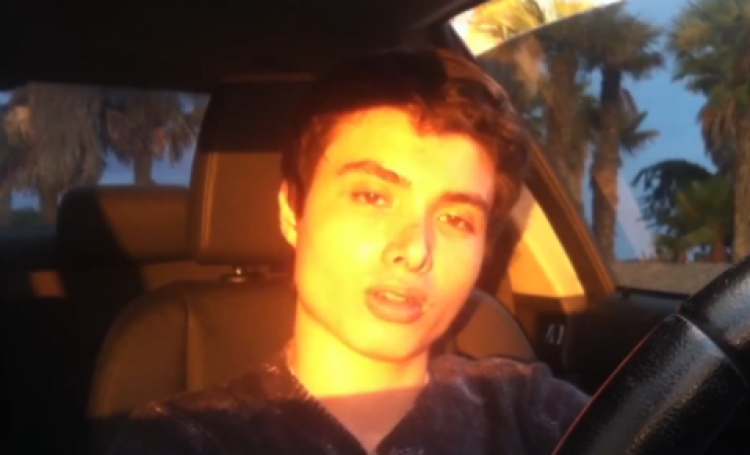
We don’t yet know much about the six innocent women and men who were killed in Isla Vista, California late Friday night, but we have come to know a few things about the man who is alleged to have murdered them. Hours before he is believed to have fatally stabbed and shot six people and wounded 13 others in that coastal college town, Elliot Rodger filmed a video of himself — palm trees behind him, the glow of an orange sun highlighting his young face — and vowed to get “revenge against humanity.”

There’s a lot more in the video, and the 140-page “manifesto” he left in his apartment. Rodger felt victimized by women, whom he appeared to desire and loathe simultaneously. He expressed anger and resentment toward other men, often because of their relationships with women. He seemed to be a profoundly troubled, profoundly lonely young man. According to a statement from the Rodger family’s attorney, he was receiving care from mental health professionals after his parents were alarmed by his Internet footprint — a series of YouTube videos and men’s rights chat groups where he expressed his violent views about women, men and himself.

It’s hard to say what any of this actually tells us. Maybe nothing. I won’t pretend to know. What role did Rodger’s misogyny play in this tragedy? And what about his apparent struggle with mental illness — that big, blanket term we never talk about except to throw it around as if it explains why someone would murder six people? And what about guns? What of our cowardice — the cowardice of our elected officials — when it comes to regulating deadly weapons so that we stand a better chance of keeping them out of the hands of men like Elliot Rodger? What about these things? As a friend and I discussed earlier while trying to grapple with the tragedy as we learned each new chilling detail, all of these things matter, but none seem sufficient to explain what happened. They couldn’t possibly, and yet they’re all we have.

It would be irresponsible to lay this violence at the feet of the men’s rights activists with whom Rodger seemed to find support for his rage. Rodger is alleged to have murdered six women and men. No amount of Internet vitriol — no unfulfilled threats of violence — can equal that. But it also denies reality to pretend that Rodger’s sense of masculine entitlement and views about women didn’t matter or somehow existed in a vacuum. These things matter because the horror of Rodger’s alleged crimes is unique, but the distorted way he understood himself as a man and the violence with which discussed women — the bleak and dehumanizing lens through which he judged them — is not. Just as we examine our culture of guns once again in the wake of yet another mass shooting, we must also examine our culture of misogyny and toxic masculinity, which devalues both women’s and men’s lives and worth, and inflicts real and daily harm. We must examine the dangerous normative values that treat women as less than human, and that make them — according to Elliot Rodger — deserving of death.

There is an angry part of me — a frightened part of me — that wants to tear Rodger’s video manifesto apart in the pettiest terms imaginable. Point to how cliched it all is — the tired self-importance, the god comparisons, his lazy use of “sluts” and “brutes” to describe the women and men he would allegedly target and murder only hours later. I have seen these videos before. Women have heard these threats before, and been forced to consider how seriously they should take a man who tells them on Twitter that he knows where they live and that, “You are going to die and I am the one who is going to kill you.” If Rodger had posted his angry monologue to YouTube or fired it off in an email to a woman online and then gone about his day — seething privately and without violence about his wounded sense of entitlement and the sting of having his resentful and warped desires unfulfilled — the country wouldn’t be talking about him. Because until the moment that he is alleged to have killed six women and men, Elliot Rodger was every bit the same as the other men who are defined by their resentment toward women and their sense of bitter victimization in the world. Men who threaten women in person and online in an attempt to control their lives. Men who feel that girls and women owe them adoration, sexual gratification, subservience. Men whose sense of rage and entitlement has rotted their brains and ruined them.

And this anger — this toxic male entitlement — isn’t contained to random comment boards or the YouTube videos of disturbed young men. It’s on full view elsewhere in our culture. Earlier this week, a writer for the New York Post quoted a member of a men’s rights group as the sole source in a report on Jill Abramson’s ouster at the New York Times. Mel Feit of the National Center for Men told columnist Richard Johnson that Abramson was systematically firing men and replacing them with women. He said that our society gives women preferential treatment. On his website, Feit bemoans a culture in which men are subject to the powerful whims of vindictive women who exist on “sexual pedestals.” He argues that men can’t be blamed for rape after a certain point of arousal. These views about women and violence are replicated in our criminal justice system. They filter into our media. This is what makes Rodger’s misogynistic vitriol so terrifying — the fact that in many ways it’s utterly banal.

The news out of Isla Vista is still painfully fresh, and in the coming days we will continue to struggle to understand this pattern of violence. And while we do that — the work of considering what laws, support systems and cultural shifts must be put in place to prevent these tragedies from destroying more lives, families and communities — I can’t help but be reminded of all of the women who have been victimized by a culture and a system that denies their humanity.

I’m reminded of Marissa Alexander, whom the state of Florida is trying to imprison for 60 years because she fired a warning shot to ward off a man who had a history of violently abusing her and had told her that he was going to kill her. I’m reminded of CeCe McDonald, a trans woman of color who was incarcerated for defending herself during a brutal assault. “Her gift for survival was a prison sentence,” trans actress and activist Laverne Cox recently observed. I’m reminded of the 276 Nigerian schoolgirls who were abducted more than a month ago and remain missing because they had the audacity to go to school.

I think of the millions of other women and girls whose names the public does not know, but who have been forced all the same — by institutional forces larger than themselves, by systemic and enduring misogyny and racism, by the sheer bad luck of being at a given place at a given moment — to become statistics or symbols of our culture’s profound disregard for the humanity of women and girls. I am reminded of all of them and I don’t know where to put the pain and anger that comes with that. There is no possible vessel large enough to hold it all.

Katie McDonough is an assistant editor for Salon, focusing on lifestyle. Follow her on Twitter @kmcdonovgh or email her at kmcdonough@salon.com.

Thursday, September 5, 2013

NPR - Trent Reznor: 'I'm Not The Same Person I Was 20 Years Ago'

File:Nine Inch Nails - Hesitation Marks Digital Album Art.jpg

There are not a whole lot of musicians I admire as men, and Trent Reznor is one of them. We are roughly the same age, have a similar history of drugs, alcohol, and anger, and have grown out of that chaos to become happier, more productive, more healthy human beings. Biggest difference? He is a rock star, and I, clearly, am not.

In this new interview at NPR, in support of his new album - the first new album since 2008's The Slip - Hesitation Marks, he makes the following statement that resonates with me:
"My life has been many examples of shortsighted goals that I thought would fix things. If there's something broken inside me, if there's a hole in there, I thought if I could just write a good song someday, then I'd be OK. You know, if I could just get a record deal, or if I could just be onstage in front of people I'd never seen before and be validated by them. I feel very fortunate that I've been able to achieve those things, and there have been moments of feeling good about it, but it didn't fix things, you know? It wasn't the solution to me feeling spiritually complete or whole." 
No matter what scale we operate at - filling stadiums and getting record deals, or getting the promotion and winning the Fantasy Football league - external things can never fill the internal holes, the emptiness that seeks completion.

A lot of hard NIN fans are disappointed in the new album because they think it shows Reznor's age, that he has lost his edge. Exactly. He has matured, the fans? Not so much.

Trent Reznor: 'I'm Not The Same Person I Was 20 Years Ago'

by Melissa Block
September 04, 2013

Listen Now

8 min 15 sec
Trent Reznor. Baldur Bragason/Courtesy of the artist

Trent Reznor is known as a detail guy: a meticulous composer and manipulator of sound, layers upon layers of it. From his band's genesis 25 years ago, the leader of Nine Inch Nails has been known for songs of deep, menacing pain, rage and self-destruction. Today, Reznor's dark days of alcohol and drug abuse are behind him — and he finds himself, at 48, with a wife and two young kids. 

The new Nine Inch Nails album, Hesitation Marks, ends a hiatus that Reznor announced in 2009 — and, as he tells NPR's Melissa Block, he sees the new record in part as a reaction to his earlier self. He recently spoke with Block about reacting to criticism, working with Lindsey Buckingham and the reasons he thinks opening for Guns N' Roses in Germany was a big mistake. Hear the radio version at the audio link, and read more of their conversation below.  

I'm thinking about your new song "Everything," which starts with this really kind of triumphant declaration? What's the first line of that song?  

"'I survived everything.' I think? I haven't listened to it for a few days." 

It absolutely is. And in the course of the song you say, "I've become something else." 

"Yeah, I meant that song to feel kind of absurd. You know, it's an arrogant, bold statement that might appear defiant but is actually, in my opinion, kind of self-destructive. And by the end of the song, when it doesn't resolve as nice and rosy with me running through a field of dandelions, clouds come over and there's a sense of getting what you asked for. 

"My life has been many examples of shortsighted goals that I thought would fix things. If there's something broken inside me, if there's a hole in there, I thought if I could just write a good song someday, then I'd be OK. You know, if I could just get a record deal, or if I could just be onstage in front of people I'd never seen before and be validated by them. I feel very fortunate that I've been able to achieve those things, and there have been moments of feeling good about it, but it didn't fix things, you know? It wasn't the solution to me feeling spiritually complete or whole."  

This song does start out in such a sunny way, with all these joyful harmonies. I'm sure you know there was a disgruntled fan who thought this was entirely too poppy — maybe a softer, happier side of Trent Reznor — and put together an animated video of you riding a unicorn under a rainbow with birds flying by. You're saying, though, that's ignoring what's really going on in this song? 

"That certainly wasn't anything that crossed my mind when I was working on this. You know, I still think in terms of album formats: collections of songs and how they relate to each other and how they integrate and tell a bigger story than what's contained in each little four-minute parcel. But when you've been around for a while and you've created, essentially, a brand, that has a certain level of expectation. And it encourages you to not color outside the lines if you pay too much attention to what you expect that fan base wants from you. I think many, many artists have suffered an artistic death by doing just that. I think we live in very dangerous times right now with the Internet and the feedback loop you can get from people who somehow feel their fingers are connected to an impulse — first second of hearing something, I need to write some reaction that gets blasted out to the world."  
What did you think of the video?  

"I saw about the first five seconds of it, and it lessened my faith that I am reaching an audience that is open-minded enough to understand what I'm trying to do. That's what I thought off the bat. And then I thought, 'I really don't care what you think.' We wouldn't be sitting here doing an interview, because my career would have been over 24 years ago, if I'd have listened to what I think people want to hear from me. [But] this is just my off-the-cuff thesis here. I'm sure it's riddled with holes that I'll be reminded of on the Internet any minute now."  

If you choose to read it.  

"When we started out, you would get feedback from fan mail, if you dared to read it. And I remember early versions of [online] bulletin boards, where it was exciting to see that somewhere, digitally, people were talking about your band in little chat rooms and things like that. When we got up to whenever Twitter came out, I took it upon myself to try to direct market to people. Myself, Rob Sheridan — my art director and collaborator on pretty much everything creative — we spent an enormous amount of time really studying the behavior of people: how people wanted to consume music, how they learned about music, what formats they liked, what felt insincere to them, what they felt the value of music might be. Really just watching. But it tuned us in to that feedback loop of commentary, and you can easily go down rabbit holes with niches of people that are unpleasable, regardless of what you could possibly do as an artist. My brain is wired to follow the negative down there and try to engage people and defend and fight, but that's an utter waste of time. I left that era of my life realizing that just because everybody now has the ability to be a self-publisher and broadcast every whim and thought to the world, it doesn't mean that that opinion is necessarily valid or needs to be consumed or listened to or paid attention to. I think — and I've said this recently in the press — as an artist it's an incredibly dangerous time to pay attention, too much, to what other people think. Because it inevitably leads to either homogenous, crowd-pleasing, meandering work, or it leads to something that's just as insincere — just to go against that."  

You're known for really intricately composed, crafted, layered songs. Walk me through what's going on in the new song "Copy of A." It starts out with this repetitive synth pattern, right?  

"Yeah, that's five 16th notes with a rest in there, so it's hard to tell where the downbeat is. I like the way it flips around and doesn't always land on the beat in an expected way. This song is really about repetition and starting to layer small elements of rhythm, percussion and treatment of vocal into something that is meant to feel hypnotic but slightly unnerving. Not comfortable, not EDM dance-tent, wave-your-hands-in-the-air, but more something that keeps you on the edge of your seat, that doesn't feel quite right." 

So the intent is to be unsettling? 
 
 
YouTube

"In this particular song, yeah. It's about tension. It's about layers of complexity that don't feel showy, that don't feel like, 'Look at all the things I can put in here.' Things suddenly creep in. If you were to study this track or listen to the multitracks of what made it up, there's a lot more in there than what it sounds like. It's meant to feel understandable and minimal in its surface."  

Do you remember how many tracks there are on this song, layered on top of each other?  

"No, no idea. I remember when we did The Fragile, however large the mixing console we had, we always had to add more tracks — we were always maxed out. This album in general was very much the opposite of that."  

And somewhere in here, on guitar, is Lindsey Buckingham of Fleetwood Mac. How did that happen? 

"The idea that [co-producer] Atticus Ross and I had was to bring in some other brains that work in a way that's different than ours. Lindsey Buckingham was kind of the oddball choice: 'Man, it'd be great if we could get him — let's try!' A couple days later, we were sitting in the studio with him."  

Why did you want him?  

"I've always greatly admired Fleetwood Mac from as far back as I can remember — and in particular, I've always admired his production skills and his guitar playing, which I think get overlooked because of all the other great aspects of Fleetwood Mac. His picking style, his sound, his aggressiveness and just his mastery of the instrument, I always thought was amazing. I thought it was so different than what I do, it might be interesting to see what happens if we put those things together. 

"We did the same thing with [guitarist] Adrian Belew and [bassist] Pino Palladino, which was just to bombard these guys with snippets of music that we assumed would be a bit unfamiliar and kind of a foreign land to drop them into. We would offer guidance, but not strict guidance — basically, 'Do whatever you want, but what if it was something like this? For this track, what if it was just long melodic phrases that were at least four bars long? Or what if your guitar was a percussion instrument [and] we don't hear any sense of melody?' We'd just record everything and sort through it later. I've been doing this with Adrian since The Downward Spiral; what Lindsey brought to the table was, the second he picks up his guitar, it's him. There's all these different sounds coming out and I think, 'What pedals is he using?' And he's not. He just knows how to play his instrument really well." 

I'll bet there are lots of tucked-away sounds in these songs that you're really, really pleased by, that are layered so deep in that we may not really hear them — but you know they're there. And I'll bet you love that.  

"We all acknowledged — when I say we, I mean Atticus Ross, [mix engineer] Alan Moulder, myself, the core team here — that we thought this was a pretty important collection of songs that would benefit from an extended period of time working on it. It ended up taking almost twice as long as we originally thought. We discovered [that] the sound of the record, the way we built it up and kept it fairly sparse, became very tricky to mix and get the puzzle just right. And what you were mentioning about layers and pieces — we spent a lot of time really weaving a kind of tapestry, a sculpture of things that work in very subtle ways, that lift up choruses or make certain areas feel more intimate or a bit more tense, really taking the time to get the mix and the tiny details right. I think those things come out after repeated listenings. Those are the kind of records that always change my life, that make it feel like my brain got larger or my taste widened a bit, so I try to make those type of records myself."  

You mean you're still discovering new things in this record?  

"Yeah, I mean, I aspire to make a record that sounds better 10 listens in than it does after two — and still, at 50 listens, you're picking out things that add a depth and a thoughtfulness. There's enough in there that you can still be extracting pieces out of it. I don't know that people listen to records that many times these days, but I do."  

There's a sort of a creaky, percussive sound on the song "Find My Way." What is that?  

"We put a mic up in a room and had a bunch of just junk around — slats of wood, miscellaneous percussion pieces, a table. We just started banging on things, recording everything and extracting them and treating them. And we stumbled into certain things that work in that context."  

I just love that sound so much. What were you trying to get out of it? 

"Well, we were trying to make it feel like it wasn't coming from the same place as the loop around it. What's around it is all electronic drums, processed and delayed. They feel very direct; there's a nice, fundamental low end and warmth to it. We wanted something that felt much more live sitting on top — not in a way that fights it, but that makes the track come alive. 

"We record a lot of things with a stereo mic in a room so it actually has a sense that it sounds real. If you walk in a room where someone's playing drums, it doesn't sound anything like drums usually sound on records — because drums on records have lots of close mics, and everything's gated and compressed and EQ'ed and polished up. If you walk in a room and Dave Grohl's bashing on a drum kit at full volume, it sounds exciting and live and ringy and chaotic. You're hearing it splash off the walls and the snare's too loud and the cymbals are kinda scary because your eyes vibrate when he hits them that hard." 

 
YouTube
 
A few years ago, back in 2009, you wrote on your website that it was time to let Nine Inch Nails disappear for a while and you were done touring under that name. You worked on other projects, but now you're back — doing these big arena shows, huge festivals, Lollapalooza. What's it like feeding off of those crowds again after having been away for a stretch of time?  

"It's pretty interesting, the transformation from the idea of it to the actual execution of it. A year and a half ago or so, I realized a record was going to be made, and there was the inevitable talk of doing a supporting tour — you know, do I think I have anything left I can pull off in that format? Can I say something new? If it's for nostalgia, no. If it's for me to just get up and relive running the touchdown across the finish line in the homecoming game, then I can't allow myself to do that. But if I think I haven't done everything I can do — if I have something to say and a way to present it that warrants it, and I can physically pull it off, and it's something that I think belongs under the heading of Nine Inch Nails and what that means to people, then yeah. And I'll catch some flak for saying I wasn't going to do that again, but I changed my mind. I feel much more invigorated and inspired than I did when I said I didn't want do it anymore. 

"A year and a half ago, that seed gets planted and the decision gets made: 'Let's play some shows, and let's put this record out.' Then it turns into executing it, and in the last month, it's turned into actually being onstage. Festivals can be the greatest and they can be the worst; I think we had a taste of both of that on this little run we just did. You're up there and it's a sea of people, and it's not a given that it's going to be your crowd because people are there for a variety of reasons — but when you see it connect, it feels fantastic. I think the show that we just built to play festivals was very smart, and I had that feeling as we were about to walk onstage that I can't wait to show this to people. You know, at song 22, I'm completely exhausted with a sore throat, saying, 'Did I just sign up for a full year of this?' I'm a hundred years old right now. It feels a little different in that way. But it's felt great."  

So when you say it could be the greatest or the worst, what's the worst?  

"There were a couple festivals where we were sandwiched in the wrong kind of bill, to be honest with you. Nine Inch Nails is kind of an anomaly because we've never had hits. We had one kind-of hit, 'Closer,' but we're not like a singles band. And to see us sandwiched with the people making Rihanna singles and some of the stuff that's at the top of the charts right now. ... We played a show in Belgium, essentially opening for Eminem. And there was a realization about midway through the first song that, OK, this audience doesn't care about what I'm up to."  

So what do you do when that happens? How do you adapt or calibrate what you're doing next? 

"I don't know. Twenty years ago, it would have been smash equipment and insult the audience and throw a tantrum. Now, it's smash equipment, throw a tantrum internally, maybe. I'm not sure what you do. "I'm trying to think if I should say this out loud, but I will say it out loud because it's what I do. In '91, Nine Inch Nails was kind of the new, hot band that was starting to break in the States. We had just played the first Lollapalooza and our song that had been out for a year and a half had just gotten picked up on MTV; you could feel a kind of momentum. Guns N' Roses was the biggest band in the world at that time, and Axl Rose, who was a fan, publicly asked us, 'Come play some shows with us in Germany.' You know, play in front of 65,000 people in Mannheim. [I thought], 'I've never been there; let's do it.' Stepping onstage, I'm sure it didn't take the whole first song for me to realize, OK, this was a huge miscalculation, because the only thing that can be achieved here is confrontation. There's an audience that's here for a certain thing, and what we're doing is not in the wheelhouse of what's acceptable for that thing. And then you question, 'Are these people that even I would want to have as my audience?' And generally, no — I don't like this kind of music; I wouldn't come to this concert myself. And then you think, 'I should have thought this through before I said yes and flew to Germany.' We made a couple of those mistakes on this festival run. 

"But you can get comfortable playing to your own audience all the time. We're about to embark on an arena tour in the U.S. here — that will be our audience. And what's good about that is I feel we can get away with more things, we can stretch your attention span further, I can play songs that I feel are more challenging. But you're also walking into a home-court advantage every night. Sometimes it's humbling and can be beneficial in a sense that you still have something that you have to prove."  

When you're onstage now and you're doing old Nine Inch Nails songs from the dark days, songs full of hurt and pain and anger, how do you pull that off? Does it feel very different from where you are now, in that it's painful in a visceral way — like peeling off a scab?  

"I've kind of watched with amusement as the press has latched on to 'Reznor, now 48, happily married with two kids and an Oscar winner,' as if I can be summed up as that now. 'He made a song with a major chord in it that we don't understand' is something that references Joy Division and New Order. It's pop-punk. That's the tagline for who I am now. I'm not the same person I was 20 years ago, and I'm happy to not be that person. When I'm onstage, the songs that we've chosen to play from the back catalog are things that still resonate with me and matter to me, and when I'm in those songs, I get transported into those songs. It can be draining to go through that."  

You mentioned your kids — you have two young sons. Are they on the road with you when you go out on these tours? "Yep." What's that like?  

"We're just at the beginning of it, but so far, it's been great. I said I wasn't going to tour if it meant missing them grow up, and I mean that. I love playing and I love touring, but I'm not going to miss out on their lives to do that, so I'm attempting — and so far, so good — a balance there."  

Are you with them right before you go onstage? I mean, do you have to sort of shed one persona to become the other?  

"Generally, they don't come to the venues. But to be able to wake up and hang out with your family, to have that normal aspect of being present for them, that matters. I find that quite centering. You know, instead of sitting on a bus with a bunch of guys — nothing against it, but I've done that for quite some time. And it adds an interesting duality where I can kind of switch that off and kick into show mode. It keeps things, so far, feeling kind of sane. Ask me in a few months and we'll see what the answer is." 

You were talking before about the through-line in some of the new media coverage — the happily married guy with the two kids, and how that can be sort of misleading. What do you think is the biggest misunderstanding about you?  

"That's a good question. There were times when I kind of believed what I read about myself because I wasn't sure who I was in the first place. In the mid-'90s, I certainly fell prey to that. Nowadays, I don't care as much about what people think, and certainly what the press thinks. And I say that not out of arrogance — just, I've learned to tune out things that I find destructive. 

"I could spend a lot of time being frustrated about one aspect of the press, which is what low qualifications are required to become a quote-unquote journalist these days. I can do an interview with somebody and have a conversation with them. That person can extract their version of what was said, and then I'll get hundreds of Google Alerts extracting that quote out of context as some new slogan that's link bait — so they can sell advertisements. One of the ones — well, I won't even give it credit. Somehow it's being twisted into, I'm anti-'do-it-yourself' and I'm criticizing anybody that's trying to have a Kickstarter or do things on their own. That couldn't be further from the truth. There's been a big thing of, 'My album costs 10 bucks or go screw yourself,' with a different word in there — all taken out of context of what I was actually trying to say. And even trying to explain myself is tedious and kind of pointless, because this explanation will be taken out of context. So the end result of all that, for me, is to kind of just tune it out. Try to do the best work I can, try to do that work with integrity — and then, I can't control how you're gonna feel about it or what you're gonna think about it or how I'm gonna be represented about it." 

 If you look back farther at how you've been viewed as a musician or as an artist, are there other misperceptions that make you feel like, "They just don't get who I am and what I'm doing here"?  

"Well, there's always been a need to put things in boxes — understandable little headings so you know what the thing is. What were we called in the '90s — industrial? What does that mean? Well, we don't know. It's not alternative like grunge, and it has synthesizers — let's call it industrial. That was never me out there, waving that banner around. I think in Europe we got called metal at some point, and so we'd wind up in this kind of metal heading as if we're brethren with whoever's considered a metal band. I don't know. I think if you've been around long enough and you're attempting to continue to expand and reinvent, it becomes more difficult to niche — until they can comfortably place you in a Neil Young slot, as someone that's been around long enough that they've proven themselves to be something else." 

 You decided to master the new album, Hesitation Marks, two different ways: There's the standard version and the "audiophile" version. How are they different?  

"When we were working on the album, we realized the songs had a lot of dynamics: They went from very quiet to fairly loud. There was also a lot of low-end frequency: We made this record kind of inspired by a lot of what's happened in hip-hop and club stuff, where there's a lot of information happening down in the low end that you won't hear out of your computer speakers. In the last several years, the 'loudness wars' you hear about [have] been everybody trying to make their record louder than everybody else's — the idea being when you put your song on, it blasts out of the speakers and it sounds more exciting than one that's not as loud. The compromise that happens when you make things louder and louder is, you lose the dynamic range. The fidelity suffers, but the hype goes up. 

 
YouTube
 
"We were faced with a dilemma at the very end of mastering, which was, do we compete with everyone else? Do we want to be as loud as other acts when you're shuffling through on iTunes? Or do we a make it just a purist thing where it's exactly how we want it to sound? So we decided to master it two different ways. And this wasn't meant to be any kind of tricky marketing way to fool you into buying the record twice — it was just for the small percentage of people that would appreciate the difference. If you have a high-end system, you'll need to turn it up a little bit louder, but you'll hear it closer to what we actually were listening to in the studio. Don't get it expecting [that] you're going to radically notice the difference, particularly if you're listening to it on your computer. It's a subtle thing that was meant for the people that care about that sort of detail."  

That's got to make you happy, to know that some people will hear the album as you heard it.  

"Well, it's just like a number of other things. In the olden days, being on a major label, we'd get into fights about the cost of the package. I would be arguing, 'It needs four-color ink and it needs this kind of paper.' And the argument would be, 'Nobody cares about that stuff.' I don't know if the guy that bought the Eminem record cares about that — and that's nothing against Eminem. I don't know that my biggest fan cares about that. But I care about it. I care about the way that paper feels, and if it leaves fingerprints, and I would prefer that it's not the jewel box that explodes when you try to take the plastic off the outside. And with vinyl, I care about what's written on the inside with the engineer's handwriting. I think about those things. So if I'm able to offer something that actually makes it sound a little closer to how we wanted it to sound, I don't expect everyone to care about that. But if you do, then here it is."


Wednesday, August 14, 2013

Father Teaches Son How To Fly Into Rage Over Completely Inconsequential Bullshit

Here is a little hump day humor courtesy of The Onion. And as is usual with The Onion's brand of satire, there is some uncomfortable truths in this piece. My father taught me this, indirectly, on many occasions in my childhood. Often, the lessons that we learn through observation and experience are more deeply ingrained - because they are not verbally transmitted - than the lessons our fathers wanted us to learn and spent time trying to teach.

Father Teaches Son How To Fly Into Rage Over Completely Inconsequential Bullshit

ISSUE 49•33 • Aug 14, 2013

Dalton teaches his son how to irrationally fly off the handle if the battery in the garage door opener dies.

RAPID CITY, SD—Saying that he always strives to set a strong example for his son to follow, local father Gary Dalton told reporters Tuesday that he has been carefully teaching his 9-year-old boy Zachary how to overreact with blind rage to completely irrelevant bullshit.

“Now that Zach’s getting older, it’s important for me to show him how to deal with the minor inconveniences in life by blowing them totally out of proportion,” said Dalton, noting that he frequently tries to demonstrate to his son the proper way to fly off the handle both at home and in public. “Zach should know that small, trivial irritations, like misplaced keys or having to relight the pilot light in the basement, should trigger an unbridled anger inside him. And that’s not something he can fully learn from his friends at school or by watching TV—he needs a father figure right there, blowing up in his face about never, ever messing with the DVR again for him to see exactly how it’s done.”

“It’s up to me as a parent to become unsettlingly irate over something as small as letting the screen door slam shut, so that Zach learns to never let even the most petty, negligible nuisance slide,” Dalton added. “He’s an observant kid and he really looks up to me, so I’m sure he’ll catch on quickly.”

In an effort to help guide his son’s development, Dalton explained that he consistently tries to embody the qualities of irritability, hostility, and bitterness in his daily life, emphasizing to his fourth-grade son the importance of letting his annoyance over an inconsequential matter develop into a lingering, biting resentment that makes others feel uncomfortable to be near him.

In addition, the 42-year-old market researcher said that he has been making a concerted effort of late to show his boy how to obsess over such ultimately trifling things as a driver going too slow in the left lane or a person who is slightly holding up a line, and to interpret these incidents as if they were significant, deliberate personal slights.

Dalton told reporters that he believes he’s made significant headway with his son in recent weeks. In particular, the local father cited several “very constructive” instances in which he demonstrated how to absolutely flip out when someone asks him to pull the car over to use the bathroom; when to pound his fist on a table and mutter the phrases “Goddammit” and “I don’t need this” in increasingly loud and aggressive tones; and the proper way to scowl, roll his eyes, and pantomime hurling his cell phone violently to the floor when his wife calls to tell him that something came up and he’ll have to drive the children to their soccer game.

“I always try to lead by example, but now, when some meaningless little thing doesn’t go Zach’s way, I’ll help guide him through the process of treating it as if it were the end of the world,” said Dalton, noting how his own father instructed him how to fly into a rage over barely anything at all when he was a child. “Just last weekend, when a waitress brought him the wrong item, I laid out the process of having a public meltdown step-by-step, showing him exactly how to get irrationally livid, how to clench his teeth and curse under his breath, and then how to belittle a stranger’s intelligence in a loud, confrontational scene that causes others to look over in shock and disgust. I think it really made a strong impression on him.”

The local father told reporters that he was particularly looking forward to an upcoming family camping trip, claiming that a single explosive outburst in such close quarters would “go a long way” toward helping his son understand how to generalize a small frustration into a broad, unrestrained sense of anger that simmers for days and effectively ruins the whole family’s entire weekend.

Dalton reported, however, that he feels he’s able to get through to his son most clearly when he and Zach spend time alone together.

“When it’s just me and Zach, I can really show him up-close how enraged he should become over the unimportant things in life,” said Dalton, highlighting recent instructive one-on-one interactions in which he lashed out at his son for talking during a TV show and for touching the thermostat. “My hope is that, one day, Zach will be able to show his own son how to completely freak out at the slightest provocation and then snap at his wife and children.”

“These are important life skills I’m passing down to Zach, which he’ll be able to use nearly every day as he gets older,” Dalton continued. “And I really look forward to watching him grow into the arbitrary, quick-to-anger man I know he’s capable of becoming.”

Friday, December 21, 2012

Masculinity and "Suicide by Mass Murder"


Eric Harris and Dylan Klebold (Columbine), Cho Seung-Hui (Virginia Tech), Steven Kazmierczak (Northern Illinois University), Jared Loughner (Tucson), James Holmes (Aurora, CO), and Adam Lanza (Sandy Hook Elementary School).

Do all of these "rampage" killers share common traits? Which of these is not like the others?

Second answer first - Loughner and Holmes did not kill themselves after killing many other people. All of the other shooters seemingly planned to kill themselves before they could taken alive.

First answer -  Rachel Kalis and Michael Kimmel, with the Department of Sociology and SUNY Stony Brook, studied the first three murders in their paper, Suicide by mass murder: Masculinity, aggrieved entitlement, and rampage school shootings [Health Sociology Review (2010) 19(4): 451–464], and identified some common elements.

All the perpetrators were males, all were students in the rural or suburban schools they terrorised, and all evinced a self-justifying sense of righteousness to their actions. These characteristics conform to the pattern established by the other cases.


Interestingly, these three killings were perpetrated by young men significantly older than the average school shooters:

Harris was 18 and Klebold was 17, both high school seniors; Cho was 23 and Kazmierczak was 27. The average age of the perpetrators in the other cases was 14.7, and the modal age was 15. (Of the more recent American cases, for example, consider 16-year old Evan Ramsay, from Bethel, Alaska; 16-year old Luke Woodham, from Pearl, Mississippi; 14-year old Michael Carneal, from Paducah, Kentucky; 11-year old Andrew Golden and 13-year old Mitchell Johnson, from Jonesboro, Arkansas; and 15-year old Kip Kinkel, from Springfield, Oregon).

There are two other differences between these mass killers and the younger boys who have killed their peers. (1) These killers took more people with them, killing and injuring dozens of people. (2) These three killers took their own lives as or before police arrived.

[T]he school shootings at Columbine, Virginia Tech, and Northern Illinois all seem to be cases of what we can call suicide by mass murder.

Adam Lanza fits the model of these three other cases.

* * * * *

Granting that all of these young men were in some way mentally ill, can we say something intelligent about the situation that acknowledges this fact and also expands the conversation into more fruitful territory? Mental illness is a given when someone commits violent acts on a massive scale and then kills themselves, and the majority of people who are labeled "mentally ill" are not violent and will never hurt anyone (other than possibly themselves).

Again, one of the common traits shared by these young men is that they were male. There are qualities in the unhealthy male archetypes in this country that contributes to rage or rampage killings.

These perpetrators were not just misguided ‘kids’, or ‘youth’ or ‘troubled teens’ – they’re boys. They are a group of boys, deeply aggrieved by a system that they may feel is cruel or demeaning. Feeling aggrieved, wronged by the world – these are typical adolescent feelings, common to many boys and girls. What transforms the aggrieved into mass murders is also a sense of entitlement, a sense of using violence against others, making others hurt as you, yourself, might hurt. 
And there's more:

  • Aggrieved entitlement inspires revenge against those who have wronged you; it is the compensation for humiliation.
  • Humiliation is emasculation: humiliate someone and you take away his manhood. For many men, humiliation must be avenged, or you cease to be a man
  • Aggrieved entitlement is a gendered emotion, a fusion of that humiliating loss of manhood and the moral obligation and entitlement to get it back. And its gender is masculine.


In order to take a wider perspective on these killers, Kalis and Kimmel looked at three major weekly news magazines (Time, Newsweek, US News and World Report) and three of the largest daily newspapers (USA Today, Ne York Times, Los Angeles Times) to identify any related patterns to their explanation.

In conducting our analysis, we found a striking pattern from the stories about the boys who committed the violence: Nearly all had stories of being constantly bullied, beaten up, and, most significantly for this analysis, ‘gay baited’. Nearly all had stories of being mercilessly and constantly teased, picked on, and threatened. And, most strikingly, it was not because they were gay (at least there is no evidence to suggest that any of them were gay), but because they were different from the other boys – shy, bookish, honour students, artistic, musical, theatrical, non-athletic, ‘geekish’ or weird. Theirs are stories of ‘cultural marginalisation’ based on criteria for adequate gender performance – specifically the enactment of codes of masculinity. We can learn from queer studies that gay youth have higher rates of suicide then their straight counterparts (Remafedi et al. 1998). The shooters here display evidence of such marginalisation, but they choose a decidedly heteronormative way to combat it: violence.
Again, as is true with mental illness, millions of kids have been teased, bullied, picked on, threatened, and "gay baited," including me. But only a minuscule number of them take their own lives or the lives of others. This makes it challenging to pinpoint alienation and marginalization as explicit "causes."

However, it is males who tend to be most successful in suicide attempts, even though girls make more attempts (they choose less lethal means than boys).


There is another commonality among these killers that, to me, may be one of the best explanations for why these boys choose this route to their own death.

School shootings take place in front of others, a public display of violence. In fact, the public nature of school shootings are an example of their instrumental nature; they are done to get a point across, to send a message that the shooter wants to convey to the localised culture that has marginalised him, as well as the larger society. The detailed plans laid out by school shooters, as well as their methodical reasoning for their actions that impose blame on their peers demonstrate how they view their actions as public, as well as the entitlement the feel in their actions. The note left behind by Columbine shooter Eric Harris explicitly places the blame for his actions on his surrounding community (Klein and Chancer 2000).
Rampage murder/suicides are public performances, they are enacted to make a point, to assert power over those who have hurt them, and to do so as publicly as possible, and they have no doubt that their actions will be the talk of the nation for days or weeks after they have killed themselves - they have grown up in this culture and they know that mass killings will be covered 24/7 for weeks.

Still, this is not sufficient.

Kalis and Kimmel make a point on which they do not have space to follow-up, namely that we must also consider the schools where these killings happen, as well as the communities - and possibly (as in Adam Lanza) the families.

[It does not] diminish the specificity of that tragedy to also note that all the schools in which random school shooters also exhibited certain similarities. The schools themselves share characteristics that make random school shootings more likely in some places than in others. We believe that profiling the school shooters must be accompanied by a profile of the shooters’ schools.

We are never looking simply at the acts of a single person (or pair of persons) - these acts occur within a system, so if we hope to understand them, we need to look at the whole system, from the individual biology and psychology of the killer(s), to their families, their schools, their communities, and their society - all of these are systems interacting as a metasystem - we need that wide of a perspective.

This is an interesting and provocative paper - definitely worth your time to go read the whole thing.

Wednesday, August 1, 2012

Born to Rage: Inside the Warrior Gene w/ Henry Rollins


Interesting . . . . This documentary on rage and the supposed "warrior gene" features Henry Rollins, one of the coolest (and formerly angriest) guys alive, comes from National Geographic Explorer. What a perfect choice of narrator. More, more, and more on the warrior gene hypothesis.

Born to Rage: Inside the Warrior Gene

Born to Rage: Inside the Warrior GeneWere you born to rage? Is the need for anger management in your genes? Many, like ex-punk rocker Henry Rollins, have struggled with feelings of aggression their entire lives, and National Geographic is on a mission to figure out why.

Scientists are investigating a single gene – dubbed the warrior gene – that has been associated with violent behavior, raising the disturbing possibility that some people are Born to Rage.

Henry tests this theory on a colorful crew: outlaw bikers, mixed martial arts fighters, Buddhist monks and former gang members.

DNA testing reveals which of them – including possibly Henry Rollins himself – carries the warrior gene. The results provide an extraordinary insight into human behavior.

Watch the full documentary now. Alternative link at YouTube.

Friday, March 12, 2010

Revolutionary Man - Men And Rage

Jayson offers an interesting post of the topic of rage. He makes some good points. However, I have a slightly different take, which I'll discuss below.

Men And Rage

Mon, Mar 8, 2010

Photo by F. Montino (creative commons)

Photo by F. Montino (creative commons)

When you think of you and rage, what comes to mind? Do you picture yourself smashing cars with a baseball bat like I do? Or do you immediately think “I don’t get angry or enraged, that’s just not me.”

Have you personally ever felt rage? Homicidal rage? Rage at a lover? The world? The “system?” or whatever?

And, when you add the two elements of rage + men, what comes to mind? It is common to think the worst. Criminals, rapists, murderers, war, and extreme forms of violence. Rage often kills, destroys, and damages people and things.

I think that we can agree that most forms of rage are hurtful and beyond hurtful.

However, I want to introduce another slant on rage. This is the rage-reframe that you and the world needs. I need and want your rage.

What is Rage?

First, what is rage exactly and where does it come from?

Without jumping into a thesis on rage and the human brain, here are a few basic aspects of rage. Think of rage as a geyser. Let’s say anger is near the surface, maybe it’s the steam, the boiling water, the heat. Rage on the other hand, comes from deep down within the geyser. Rage is “superheated” and can cause a great deal of damage.

Rage is commonly brought on by fear–a threat to some part of yourself. When you are threatened, your brain instantly reacts with a fight, flight, or freeze response. Rage can also be a reaction to protect deep, deep shame. (Read more about the biochemistry of rage here).

Why is my rage wanted/needed?

As I said before, I need and want your rage. You might be thinking WTF? Rage equals violence, no way. Rage only hurts.

While it is true that rage has caused much of the devastation around the globe since the invention of agriculture, and we can safely assume, largely at the hands of men, a new kind of rage is needed. Call it “conscious rage” or as my friend Christiane Pelmas calls it “rage-in-service-of-life.”

Christiane writes in her ReWilding blog:

Men are responsible for egregious violence against life. It has been this way for at least four millennia. Yet in order for something different to arise men must cultivate a functional relationship with the very emotion responsible for so much of the violence. They must be reacquainted with their rage, allowing it to come out of the shadows and take its place alongside the (only slightly) more accepted emotions of love and grief.

A man’s rage is a powerful portal back to the deepest heart connection he has with the world and with himself. We need masculine rage-in-service-of-life as desperately as we need rain forests, clean oceans, mountaintops, and wild-flowing unobstructed rivers.

I could not agree more. We men must own our rage and use it for the greater good. Otherwise, your stuffed rage, or your buddy’s sloppy rage will cause harm, period. Moreover, if you have not dealt with your own rage, chances are you won’t be that helpful with anyone else’s.

From my experience as a former wilderness therapy counselor and psychotherapist with very enraged teenagers and men, and struggling with my own rage, I learned a few things about this volatile emotion.

The current approach to rage

Because men have little to no training in regards to expression of anger and rage, and because most men are scared of their emotional world, they typically respond to rage in one of two ways:

1. The Nice Guy—This is usually the first tactic men use. Don’t go there. Just bottle it up. You might hurt someone or get hurt. Fake a smile and act like everything’s fine.

2. The Spaz—Once a man realizes he’s tired of being nice, or he can no longer contain such a strong emotion, it bleeds out. Scream, yell, fight, attack, and defend. Largely, because these men have no training, they act like a hurt infant and throw a tantrum.

Both of these approaches have one thing in common–FEAR. Fear is the foundation of unconscious, dissociated rage. So long as fear is on board, you will likely cause harm. See diagram below.

Rage in Men

Likewise, the culture responds in one of two ways: 1) by egging rage on, (screaming fans at a fight) or 2) shutting it down with anger management. Conventional anger management essentially means you receive tools to help you further suppress your rage and anger.

To feel rage is to be human. All of us have felt rage at some point from infancy onward. It is human to feel shame, to feel threatened, and to want to defend yourself. The animal part of our brain acts like an animal for a reason–so we can survive. But the neocortex, or front part of our brain, comes in with some form of social conditioning such as “it’s not okay to express rage.” Thus rage becomes compounded and pressurized.

We all know that if feeling rage means you are human, it does not give you the right to uncork it and explode on a stranger, a co-worker, or a lover.

Remember, when you stuff your anger and rage over and over and you then add the stress of a failing marriage, a long day at the office, money issues, and you lack the tools to deal, a mundane event such as a person cutting you off on the highway or driving too slow in “your” lane, can trigger a massive outburst which can lead to real harm.

I personally stuffed my anger and rage for so long that when I would drink too much in college and someone rubbed me the wrong way, I would blow a gasket and go ape shit. My stuffed rage would explode out of me resulting in fights, verbal assaults, and other behavior that had me feeling a great deal of shame the following days and weeks.

But isn’t anger okay for men to express?

On the other hand, men in this culture seem to be “somewhat allowed” to express anger, and even rage. Especially if it’s finger pointing, blame, and fighting. Watch sports, TV reality shows, far-right or far-left politics. Men are often encouraged to “fight it out.” And if you don’t fight, you can be seen as too feminine, or gay.

And if no one ever taught you how to work with your anger/rage, you will likely respond as you did as a young infant boy; kick, scream, throw a tantrum, or shut down. (Sadly, if a woman gets enraged and shows it consciously or unconsciously, she’s labeled a psycho bitch).

Bottom line for men? You are left with a contradictory message. Stuff it and play nice or intimidate and bully by throwing a tantrum. So even while men have more “permission” to show anger/rage, the contradictory message promotes suppression, confusion, and perhaps eventually violence.

What is the alternative?

Since these two choices suck, I suggest a third.

When you step back from most unconscious rage experiences and think with your heart, from a place of compassion, there is another way.

Conscious Rage–The revolutionary approach to rage

Men and Rage

Rage sitting on top of love will simply have a different impact.

As Christiane invites, what if your rage was a powerful portal back to your heart connection with yourself and the world? What if you could use your rage as a lightning rod for transformation, peace, justice, and “right-action?” What if you felt safe enough to really go there and express your rage in a conscious way?

I am suggesting we acknowledge that we have anger and/or rage and that we can use that energy for the greater good. In other words, begin to form a conscious relationship to your rage. While you are at it, do this with all of your emotions.

Try it on that it is actually possible to feel your rage fully and not cause any harm to yourself or anyone else. How? By loving.

So, hopefully your brain is confused by now and you are open to doing rage and anger differently.

And, if you are one of those guys who claims, “I just don’t get angry.” Try it on that you are not connected to your own anger or rage and in turn, you are lacking life force. Anger and rage can be a gateway back to your personal power, passion, and the life force that can inspire you and others to make a difference.
Go read the rest of this post at the Revolutionary Man blog to see Jayson's suggestions for how to deal with rage.

OK, my position is that rage is NOT a natural emotion - it is what happens when we spend years and years of our lives stuffing down anger and hurt rather allowing the feelings to move through us and dissipate as they will if we do not stuff them down.

But we have been socialized not to have feelings most of the time, and many of us have been taught not to get angry, even though anger IS a natural and healthy emotion - as long as it not expressed as physical or emotional violence.

When we also stuff down our hurt, it connects with anger over time (because we get angry at some level that we cannot express our hurt) and the result is rage.

Rage feels very different than anger. Anger knows boundaries, and can express itself in words. Rage, on the other hand, does not know boundaries and often is pre-verbal in its expression. Rage is anger + hurt, and it is often beyond our ability to control it when it comes up, which can result in violence.

Although my take is different than Jayson's, I do recommend that interested readers go back to his blog for some good suggestions for how to work with rage.