This is the first song I've ever written and recorded. Sometimes you think you have a genius idea so you send it out into the internet world. Sometimes you're right...sometimes you are terribly wrong. Either way, I'm laughing. (Music Producer) Anthony Lavin - https://soundcloud.com/killian-cruiser (Director) David Geis - https://www.facebook.com/david.geis (DP) David Navarro - http://www.dreamlighting.net Available on iTunes soon! TWITTER: www.twitter.com/kristenq FACEBOOK: www.facebook.com/kristenquintrallofficial OFFICIAL WEBSITE: www.kristenquintrall.com INSTAGRAM: @kristenquintrall
-LYRICS- This is for all my ladies out there...you know what I'm talking about... Skinny jeans that hug that D Patchy beard oooo it tickles me Ironic T's from the Goodwill Store And the way you say, You've probably never heard this band before..." He's a trader joe's bagger and a champion Quilter And his whole hipster life is an Instagram Filter I love you, hipster man I love your hipster brand I love you, hipster man There's only one thing I can't stand He always cums first He's needs release before it's cool But there's nothing left for me but this vibrating tool Oooooo ah ah Hipster men cum first (before it's cool) Oooooo ah ah Hipster men cum first Hipster men cum first Ya he always fucking cum first Spinning vinyl sends my heart a flutter Vegan diet means vegan nut butter Grocery shopping on his Beach Cruiser American Spirits, ya he's a tobacco user Loves his coffee, dubstep and photography dream It's not my fault that I'm not into "mainstream cream" (Jizz) I love you, hipster man I love your hipster brand I love you, hipster man There's only one thing I can't stand He always cums first He's needs release before it's cool But there's nothing left for me but this vibrating tool (that always work, doesn't it) And I need release, (oh big time) And ya, I need it quick Because there's no kind of app that replaces meatstick (I mean penis) Oooooo ah ah Hipster men cum first (every single time) Oooooo ah ah Hipster men cum first Hipster men cum first And I'm about to burst My mind is going crazy , he's got so much swagger Wrote the RSS feed on the underground chatter He's always at the shows down in Silverlake Would never make a video of the Harlem Shake. Watches Buffy every night after Art School Cuz he loved Vampires before they were cool He's my dirty little hipster, I can't resist this fella If he breaks my heart, than I'll find another at Coachella ella ella ay ay ay
Around the internet, the tributes to rock icon Lou Reed continue. en|Gender offered their own tribute with a selection of videos that deal with gender, sexuality, and transgender realities.
Great collection of songs.
Here is a audio-remastered video of Reed's classic, Walk on the Wild Side, from 1973.
He wrote “Candy Says” about Candy Darling, one of the Warhol Factory’s out trans women. (There were quite a few trans women involved in Warhol’s stuff, including – Ms. Darling, Holly Woodlawn, Jackie Curtis and Jayne County.)
He wrote “Walk on the Wild Side” which inspired a ton of trans people to say “Wait, what? That’s possible?” when it came to gender transformation.
There are not a whole lot of musicians I admire as men, and Trent Reznor is one of them. We are roughly the same age, have a similar history of drugs, alcohol, and anger, and have grown out of that chaos to become happier, more productive, more healthy human beings. Biggest difference? He is a rock star, and I, clearly, am not.
In this new interview at NPR, in support of his new album - the first new album since 2008's The Slip - Hesitation Marks, he makes the following statement that resonates with me:
"My life has been many examples of
shortsighted goals that I thought would fix things. If there's something
broken inside me, if there's a hole in there, I thought if I could just
write a good song someday, then I'd be OK. You know, if I could just
get a record deal, or if I could just be onstage in front of people I'd
never seen before and be validated by them. I feel very fortunate that
I've been able to achieve those things, and there have been moments of
feeling good about it, but it didn't fix things, you know? It wasn't the
solution to me feeling spiritually complete or whole."
No matter what scale we operate at - filling stadiums and getting record deals, or getting the promotion and winning the Fantasy Football league - external things can never fill the internal holes, the emptiness that seeks completion.
A lot of hard NIN fans are disappointed in the new album because they think it shows Reznor's age, that he has lost his edge. Exactly. He has matured, the fans? Not so much.
Trent Reznor. Baldur Bragason/Courtesy of the artist
Trent Reznor is known as a detail guy: a meticulous composer and manipulator of sound, layers upon layers of it. From his band's genesis 25 years ago, the leader of Nine Inch Nails has been known for songs of deep, menacing pain, rage and self-destruction. Today, Reznor's dark days of alcohol and drug abuse are behind him — and he finds himself, at 48, with a wife and two young kids.
The new Nine Inch Nails album, Hesitation Marks, ends a hiatus that Reznor announced in 2009 — and, as he tells NPR's Melissa Block, he sees the new record in part as a reaction to his earlier self. He recently spoke with Block about reacting to criticism, working with Lindsey Buckingham and the reasons he thinks opening for Guns N' Roses in Germany was a big mistake. Hear the radio version at the audio link, and read more of their conversation below.
I'm thinking about your new song "Everything," which starts with this really kind of triumphant declaration? What's the first line of that song?
"'I survived everything.' I think? I haven't listened to it for a few days."
It absolutely is. And in the course of the song you say, "I've become something else."
"Yeah, I meant that song to feel kind of absurd. You know, it's an arrogant, bold statement that might appear defiant but is actually, in my opinion, kind of self-destructive. And by the end of the song, when it doesn't resolve as nice and rosy with me running through a field of dandelions, clouds come over and there's a sense of getting what you asked for.
"My life has been many examples of shortsighted goals that I thought would fix things. If there's something broken inside me, if there's a hole in there, I thought if I could just write a good song someday, then I'd be OK. You know, if I could just get a record deal, or if I could just be onstage in front of people I'd never seen before and be validated by them. I feel very fortunate that I've been able to achieve those things, and there have been moments of feeling good about it, but it didn't fix things, you know? It wasn't the solution to me feeling spiritually complete or whole."
This song does start out in such a sunny way, with all these joyful harmonies. I'm sure you know there was a disgruntled fan who thought this was entirely too poppy — maybe a softer, happier side of Trent Reznor — and put together an animated video of you riding a unicorn under a rainbow with birds flying by. You're saying, though, that's ignoring what's really going on in this song?
"That certainly wasn't anything that crossed my mind when I was working on this. You know, I still think in terms of album formats: collections of songs and how they relate to each other and how they integrate and tell a bigger story than what's contained in each little four-minute parcel. But when you've been around for a while and you've created, essentially, a brand, that has a certain level of expectation. And it encourages you to not color outside the lines if you pay too much attention to what you expect that fan base wants from you. I think many, many artists have suffered an artistic death by doing just that. I think we live in very dangerous times right now with the Internet and the feedback loop you can get from people who somehow feel their fingers are connected to an impulse — first second of hearing something, I need to write some reaction that gets blasted out to the world."
What did you think of the video?
"I saw about the first five seconds of it, and it lessened my faith that I am reaching an audience that is open-minded enough to understand what I'm trying to do. That's what I thought off the bat. And then I thought, 'I really don't care what you think.' We wouldn't be sitting here doing an interview, because my career would have been over 24 years ago, if I'd have listened to what I think people want to hear from me. [But] this is just my off-the-cuff thesis here. I'm sure it's riddled with holes that I'll be reminded of on the Internet any minute now."
If you choose to read it.
"When we started out, you would get feedback from fan mail, if you dared to read it. And I remember early versions of [online] bulletin boards, where it was exciting to see that somewhere, digitally, people were talking about your band in little chat rooms and things like that. When we got up to whenever Twitter came out, I took it upon myself to try to direct market to people. Myself, Rob Sheridan — my art director and collaborator on pretty much everything creative — we spent an enormous amount of time really studying the behavior of people: how people wanted to consume music, how they learned about music, what formats they liked, what felt insincere to them, what they felt the value of music might be. Really just watching. But it tuned us in to that feedback loop of commentary, and you can easily go down rabbit holes with niches of people that are unpleasable, regardless of what you could possibly do as an artist. My brain is wired to follow the negative down there and try to engage people and defend and fight, but that's an utter waste of time. I left that era of my life realizing that just because everybody now has the ability to be a self-publisher and broadcast every whim and thought to the world, it doesn't mean that that opinion is necessarily valid or needs to be consumed or listened to or paid attention to. I think — and I've said this recently in the press — as an artist it's an incredibly dangerous time to pay attention, too much, to what other people think. Because it inevitably leads to either homogenous, crowd-pleasing, meandering work, or it leads to something that's just as insincere — just to go against that."
You're known for really intricately composed, crafted, layered songs. Walk me through what's going on in the new song "Copy of A." It starts out with this repetitive synth pattern, right?
"Yeah, that's five 16th notes with a rest in there, so it's hard to tell where the downbeat is. I like the way it flips around and doesn't always land on the beat in an expected way. This song is really about repetition and starting to layer small elements of rhythm, percussion and treatment of vocal into something that is meant to feel hypnotic but slightly unnerving. Not comfortable, not EDM dance-tent, wave-your-hands-in-the-air, but more something that keeps you on the edge of your seat, that doesn't feel quite right."
So the intent is to be unsettling?
YouTube
"In this particular song, yeah. It's about tension. It's about layers of complexity that don't feel showy, that don't feel like, 'Look at all the things I can put in here.' Things suddenly creep in. If you were to study this track or listen to the multitracks of what made it up, there's a lot more in there than what it sounds like. It's meant to feel understandable and minimal in its surface."
Do you remember how many tracks there are on this song, layered on top of each other?
"No, no idea. I remember when we did The Fragile, however large the mixing console we had, we always had to add more tracks — we were always maxed out. This album in general was very much the opposite of that."
"The idea that [co-producer] Atticus Ross and I had was to bring in some other brains that work in a way that's different than ours. Lindsey Buckingham was kind of the oddball choice: 'Man, it'd be great if we could get him — let's try!' A couple days later, we were sitting in the studio with him."
Why did you want him?
"I've always greatly admired Fleetwood Mac from as far back as I can remember — and in particular, I've always admired his production skills and his guitar playing, which I think get overlooked because of all the other great aspects of Fleetwood Mac. His picking style, his sound, his aggressiveness and just his mastery of the instrument, I always thought was amazing. I thought it was so different than what I do, it might be interesting to see what happens if we put those things together.
"We did the same thing with [guitarist] Adrian Belew and [bassist] Pino Palladino, which was just to bombard these guys with snippets of music that we assumed would be a bit unfamiliar and kind of a foreign land to drop them into. We would offer guidance, but not strict guidance — basically, 'Do whatever you want, but what if it was something like this? For this track, what if it was just long melodic phrases that were at least four bars long? Or what if your guitar was a percussion instrument [and] we don't hear any sense of melody?' We'd just record everything and sort through it later. I've been doing this with Adrian since The Downward Spiral; what Lindsey brought to the table was, the second he picks up his guitar, it's him. There's all these different sounds coming out and I think, 'What pedals is he using?' And he's not. He just knows how to play his instrument really well."
I'll bet there are lots of tucked-away sounds in these songs that you're really, really pleased by, that are layered so deep in that we may not really hear them — but you know they're there. And I'll bet you love that.
"We all acknowledged — when I say we, I mean Atticus Ross, [mix engineer] Alan Moulder, myself, the core team here — that we thought this was a pretty important collection of songs that would benefit from an extended period of time working on it. It ended up taking almost twice as long as we originally thought. We discovered [that] the sound of the record, the way we built it up and kept it fairly sparse, became very tricky to mix and get the puzzle just right. And what you were mentioning about layers and pieces — we spent a lot of time really weaving a kind of tapestry, a sculpture of things that work in very subtle ways, that lift up choruses or make certain areas feel more intimate or a bit more tense, really taking the time to get the mix and the tiny details right. I think those things come out after repeated listenings. Those are the kind of records that always change my life, that make it feel like my brain got larger or my taste widened a bit, so I try to make those type of records myself."
You mean you're still discovering new things in this record?
"Yeah, I mean, I aspire to make a record that sounds better 10 listens in than it does after two — and still, at 50 listens, you're picking out things that add a depth and a thoughtfulness. There's enough in there that you can still be extracting pieces out of it. I don't know that people listen to records that many times these days, but I do."
There's a sort of a creaky, percussive sound on the song "Find My Way." What is that?
"We put a mic up in a room and had a bunch of just junk around — slats of wood, miscellaneous percussion pieces, a table. We just started banging on things, recording everything and extracting them and treating them. And we stumbled into certain things that work in that context."
I just love that sound so much. What were you trying to get out of it?
"Well, we were trying to make it feel like it wasn't coming from the same place as the loop around it. What's around it is all electronic drums, processed and delayed. They feel very direct; there's a nice, fundamental low end and warmth to it. We wanted something that felt much more live sitting on top — not in a way that fights it, but that makes the track come alive.
"We record a lot of things with a stereo mic in a room so it actually has a sense that it sounds real. If you walk in a room where someone's playing drums, it doesn't sound anything like drums usually sound on records — because drums on records have lots of close mics, and everything's gated and compressed and EQ'ed and polished up. If you walk in a room and Dave Grohl's bashing on a drum kit at full volume, it sounds exciting and live and ringy and chaotic. You're hearing it splash off the walls and the snare's too loud and the cymbals are kinda scary because your eyes vibrate when he hits them that hard."
YouTube
A few years ago, back in 2009, you wrote on your website that it was time to let Nine Inch Nails disappear for a while and you were done touring under that name. You worked on other projects, but now you're back — doing these big arena shows, huge festivals, Lollapalooza. What's it like feeding off of those crowds again after having been away for a stretch of time?
"It's pretty interesting, the transformation from the idea of it to the actual execution of it. A year and a half ago or so, I realized a record was going to be made, and there was the inevitable talk of doing a supporting tour — you know, do I think I have anything left I can pull off in that format? Can I say something new? If it's for nostalgia, no. If it's for me to just get up and relive running the touchdown across the finish line in the homecoming game, then I can't allow myself to do that. But if I think I haven't done everything I can do — if I have something to say and a way to present it that warrants it, and I can physically pull it off, and it's something that I think belongs under the heading of Nine Inch Nails and what that means to people, then yeah. And I'll catch some flak for saying I wasn't going to do that again, but I changed my mind. I feel much more invigorated and inspired than I did when I said I didn't want do it anymore.
"A year and a half ago, that seed gets planted and the decision gets made: 'Let's play some shows, and let's put this record out.' Then it turns into executing it, and in the last month, it's turned into actually being onstage. Festivals can be the greatest and they can be the worst; I think we had a taste of both of that on this little run we just did. You're up there and it's a sea of people, and it's not a given that it's going to be your crowd because people are there for a variety of reasons — but when you see it connect, it feels fantastic. I think the show that we just built to play festivals was very smart, and I had that feeling as we were about to walk onstage that I can't wait to show this to people. You know, at song 22, I'm completely exhausted with a sore throat, saying, 'Did I just sign up for a full year of this?' I'm a hundred years old right now. It feels a little different in that way. But it's felt great."
So when you say it could be the greatest or the worst, what's the worst?
"There were a couple festivals where we were sandwiched in the wrong kind of bill, to be honest with you. Nine Inch Nails is kind of an anomaly because we've never had hits. We had one kind-of hit, 'Closer,' but we're not like a singles band. And to see us sandwiched with the people making Rihanna singles and some of the stuff that's at the top of the charts right now. ... We played a show in Belgium, essentially opening for Eminem. And there was a realization about midway through the first song that, OK, this audience doesn't care about what I'm up to."
So what do you do when that happens? How do you adapt or calibrate what you're doing next?
"I don't know. Twenty years ago, it would have been smash equipment and insult the audience and throw a tantrum. Now, it's smash equipment, throw a tantrum internally, maybe. I'm not sure what you do.
"I'm trying to think if I should say this out loud, but I will say it out loud because it's what I do. In '91, Nine Inch Nails was kind of the new, hot band that was starting to break in the States. We had just played the first Lollapalooza and our song that had been out for a year and a half had just gotten picked up on MTV; you could feel a kind of momentum. Guns N' Roses was the biggest band in the world at that time, and Axl Rose, who was a fan, publicly asked us, 'Come play some shows with us in Germany.' You know, play in front of 65,000 people in Mannheim. [I thought], 'I've never been there; let's do it.' Stepping onstage, I'm sure it didn't take the whole first song for me to realize, OK, this was a huge miscalculation, because the only thing that can be achieved here is confrontation. There's an audience that's here for a certain thing, and what we're doing is not in the wheelhouse of what's acceptable for that thing. And then you question, 'Are these people that even I would want to have as my audience?' And generally, no — I don't like this kind of music; I wouldn't come to this concert myself. And then you think, 'I should have thought this through before I said yes and flew to Germany.' We made a couple of those mistakes on this festival run.
"But you can get comfortable playing to your own audience all the time. We're about to embark on an arena tour in the U.S. here — that will be our audience. And what's good about that is I feel we can get away with more things, we can stretch your attention span further, I can play songs that I feel are more challenging. But you're also walking into a home-court advantage every night. Sometimes it's humbling and can be beneficial in a sense that you still have something that you have to prove."
When you're onstage now and you're doing old Nine Inch Nails songs from the dark days, songs full of hurt and pain and anger, how do you pull that off? Does it feel very different from where you are now, in that it's painful in a visceral way — like peeling off a scab?
"I've kind of watched with amusement as the press has latched on to 'Reznor, now 48, happily married with two kids and an Oscar winner,' as if I can be summed up as that now. 'He made a song with a major chord in it that we don't understand' is something that references Joy Division and New Order. It's pop-punk. That's the tagline for who I am now. I'm not the same person I was 20 years ago, and I'm happy to not be that person. When I'm onstage, the songs that we've chosen to play from the back catalog are things that still resonate with me and matter to me, and when I'm in those songs, I get transported into those songs. It can be draining to go through that."
You mentioned your kids — you have two young sons. Are they on the road with you when you go out on these tours?
"Yep."
What's that like?
"We're just at the beginning of it, but so far, it's been great. I said I wasn't going to tour if it meant missing them grow up, and I mean that. I love playing and I love touring, but I'm not going to miss out on their lives to do that, so I'm attempting — and so far, so good — a balance there."
Are you with them right before you go onstage? I mean, do you have to sort of shed one persona to become the other?
"Generally, they don't come to the venues. But to be able to wake up and hang out with your family, to have that normal aspect of being present for them, that matters. I find that quite centering. You know, instead of sitting on a bus with a bunch of guys — nothing against it, but I've done that for quite some time. And it adds an interesting duality where I can kind of switch that off and kick into show mode. It keeps things, so far, feeling kind of sane. Ask me in a few months and we'll see what the answer is."
You were talking before about the through-line in some of the new media coverage — the happily married guy with the two kids, and how that can be sort of misleading. What do you think is the biggest misunderstanding about you?
"That's a good question. There were times when I kind of believed what I read about myself because I wasn't sure who I was in the first place. In the mid-'90s, I certainly fell prey to that. Nowadays, I don't care as much about what people think, and certainly what the press thinks. And I say that not out of arrogance — just, I've learned to tune out things that I find destructive.
"I could spend a lot of time being frustrated about one aspect of the press, which is what low qualifications are required to become a quote-unquote journalist these days. I can do an interview with somebody and have a conversation with them. That person can extract their version of what was said, and then I'll get hundreds of Google Alerts extracting that quote out of context as some new slogan that's link bait — so they can sell advertisements. One of the ones — well, I won't even give it credit. Somehow it's being twisted into, I'm anti-'do-it-yourself' and I'm criticizing anybody that's trying to have a Kickstarter or do things on their own. That couldn't be further from the truth. There's been a big thing of, 'My album costs 10 bucks or go screw yourself,' with a different word in there — all taken out of context of what I was actually trying to say. And even trying to explain myself is tedious and kind of pointless, because this explanation will be taken out of context. So the end result of all that, for me, is to kind of just tune it out. Try to do the best work I can, try to do that work with integrity — and then, I can't control how you're gonna feel about it or what you're gonna think about it or how I'm gonna be represented about it."
If you look back farther at how you've been viewed as a musician or as an artist, are there other misperceptions that make you feel like, "They just don't get who I am and what I'm doing here"?
"Well, there's always been a need to put things in boxes — understandable little headings so you know what the thing is. What were we called in the '90s — industrial? What does that mean? Well, we don't know. It's not alternative like grunge, and it has synthesizers — let's call it industrial. That was never me out there, waving that banner around. I think in Europe we got called metal at some point, and so we'd wind up in this kind of metal heading as if we're brethren with whoever's considered a metal band. I don't know. I think if you've been around long enough and you're attempting to continue to expand and reinvent, it becomes more difficult to niche — until they can comfortably place you in a Neil Young slot, as someone that's been around long enough that they've proven themselves to be something else."
You decided to master the new album, Hesitation Marks, two different ways: There's the standard version and the "audiophile" version. How are they different?
"When we were working on the album, we realized the songs had a lot of dynamics: They went from very quiet to fairly loud. There was also a lot of low-end frequency: We made this record kind of inspired by a lot of what's happened in hip-hop and club stuff, where there's a lot of information happening down in the low end that you won't hear out of your computer speakers. In the last several years, the 'loudness wars' you hear about [have] been everybody trying to make their record louder than everybody else's — the idea being when you put your song on, it blasts out of the speakers and it sounds more exciting than one that's not as loud. The compromise that happens when you make things louder and louder is, you lose the dynamic range. The fidelity suffers, but the hype goes up.
YouTube
"We were faced with a dilemma at the very end of mastering, which was, do we compete with everyone else? Do we want to be as loud as other acts when you're shuffling through on iTunes? Or do we a make it just a purist thing where it's exactly how we want it to sound? So we decided to master it two different ways. And this wasn't meant to be any kind of tricky marketing way to fool you into buying the record twice — it was just for the small percentage of people that would appreciate the difference. If you have a high-end system, you'll need to turn it up a little bit louder, but you'll hear it closer to what we actually were listening to in the studio. Don't get it expecting [that] you're going to radically notice the difference, particularly if you're listening to it on your computer. It's a subtle thing that was meant for the people that care about that sort of detail."
That's got to make you happy, to know that some people will hear the album as you heard it.
"Well, it's just like a number of other things. In the olden days, being on a major label, we'd get into fights about the cost of the package. I would be arguing, 'It needs four-color ink and it needs this kind of paper.' And the argument would be, 'Nobody cares about that stuff.' I don't know if the guy that bought the Eminem record cares about that — and that's nothing against Eminem. I don't know that my biggest fan cares about that. But I care about it. I care about the way that paper feels, and if it leaves fingerprints, and I would prefer that it's not the jewel box that explodes when you try to take the plastic off the outside. And with vinyl, I care about what's written on the inside with the engineer's handwriting. I think about those things. So if I'm able to offer something that actually makes it sound a little closer to how we wanted it to sound, I don't expect everyone to care about that. But if you do, then here it is."
Here are three different looks at the book and the song it chronicles. We begin with Rolling Stone and an excerpt from the book, then an NPR segment, and finally a CNN Radio segment.
The story behind the folk legend's most famous song
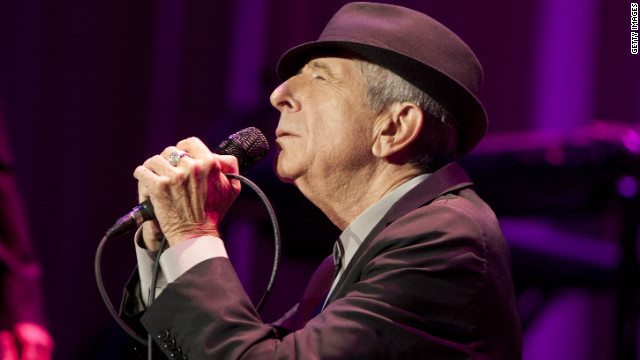
Leonard Cohen
JOEL SAGET/AFP/Getty Images
Leonard Cohen's career had reached a low point when he wrote "Hallelujah." It was 1984, and he had been out of the spotlight for quite a long time. His 1977 LP, Death of a Ladies' Man, a collaboration with Phil Spector, was a commercial and critical disappointment, and his next album Recent Songs fared no better. When Cohen submitted the songs for his subsequent LP, Various Positions, to Columbia, label execs didn't hear "Hallelujah," the opening song of Side Two, as anything special. They didn't even want to release the album, though it eventually came out in Europe in 1984 and America the following year. Q&A: Leonard Cohen on His New Tour and 'Old Ideas' It took a few years for "Hallelujah" to emerge as a classic. Bob Dylan was one of the first to recognize its brilliance, playing it at a couple of shows in 1988. The Velvet Underground's John Cale tackled it on the piano for a 1991 Cohen tribute disc, and three years later, Jeff Buckley took inspiration from that rendition and covered it on his 1994 album, Grace. It was that version that eventually created a huge cultaround the song, and it's since been covered by everybody from Bono to Bon Jovi. It's far and away Leonard Cohen's most famous composition, even though many people don't even realize that he wrote it. Alan Light dove deep into the history of the song for his new book, The Holy or the Broken: Leonard Cohen, Jeff Buckley, and the Unlikely Ascent of 'Hallelujah' by Alan Light, copyright 2012 by Alan Light, Published by Atria, an imprint of Simon and Schuste. Here is an excerpt.
* * * *
In June 1984, Cohen and Lissauer recorded the album that would become Various Positions in New York's Quadrasonic Sound studios. In the album's arrangements, for the first time on Cohen's recordings, synthesizers were prominent; they would come to define his sound more and more in the years to come. A group of musicians from Tulsa provided the backbone of the arrangements. Sid McGinnis – who joined the band at Late Night with David Letterman that same year and has remained with the show ever since, in addition to recording with the likes of Bob Dylan, David Bowie, and Dire Straits – provided additional guitar parts. Jennifer Warnes, who had sung backup with Cohen on previous albums and tours, was brought further into the spotlight as a featured vocalist, a counterpoint to the limited parameters of Cohen's voice. Hawaiian-born Anjani Thomas was one of the backup singers on these sessions; she would go on to become Cohen's longtime companion, and he produced an album of her singing his songs, Blue Alert, in 2006. Lissauer, a Yale graduate who has gone on to a successful career scoring films, beamed when he spoke of these sessions that took place almost thirty years earlier. Seated in the larger of the two studio rooms he operates from his thirty-five-acre farm about an hour north of Manhattan, he described working on Various Positions as pure pleasure. "I've never had a more rewarding experience," he said. "It was so much fun; we had a great time. Leonard and I got along so well it's almost scary. There were no roadblocks, no disasters; it was great start to finish – it was high art, it was just thrilling." The songs included several of Cohen's most lasting compositions. The selections that ultimately opened and closed the album, "Dance Me to the End of Love" and "If It Be Your Will," stand among his best-loved work. Midway through the sessions – Lissauer can't remember the precise sequence, but it wasn't near the beginning or the end – Cohen brought in "Hallelujah" to record. Whatever torment he'd been going through with the song's lyrics over the previous months and years, he showed no sign of confusion or indecision in the studio. "I think it was as it was," said the producer. "There was no 'Should we do this verse?' – I don't think there was even a question of the order of verses, any 'Which should come first?' And had he had a question about it, I think he would've resolved it himself. "He's not one to share his struggles," Lissauer continued. "If he wasn't up to recording, if he was still working on something, then we just wouldn't go in. But he'd never go in and act out the tormented, struggling artist." Leanne Ungar, who engineered Various Positions and has remained part of Cohen's production team ever since, said that there was a pragmatic reason he would not have been experimenting with lyrics during the recording. "He wouldn't bring extra verses to the studio because of time pressure," she said. "The meter is running there." It seems that the breakthrough in Cohen's editing – the vision that allowed him to bring the eighty written verses down to the four that he ultimately recorded – was reaching a decision about how much to foreground the religious element of the song. "It had references to the Bible in it, although these references became more and more remote as the song went from the beginning to the end," he once said. "Finally I understood that it was not necessary to refer to the Bible anymore. And I rewrote this song; this is the 'secular' 'Hallelujah.' " "Hallelujah" as it exists on Various Positions is both opaque and direct. Each verse ends with the word that gives the song its title, which is then repeated four times, giving the song its signature prayer-like incantation. The word hallelujah has slightly different implications in the Old and New Testaments. In the Hebrew Bible, it is a compound word, from hallelu, meaning "to praise joyously," and yah, a shortened form of the unspoken name of God. So this "hallelujah" is an active imperative, an instruction to the listener or congregation to sing tribute to the Lord. In the Christian tradition, "hallelujah" is a word of praise rather than a direction to offer praise – which became the more common colloquial use of the word as an expression of joy or relief, a synonym for "Praise the Lord," rather than a prompting to action. The most dramatic use of "hallelujah" in the New Testament is as the keynote of the song sung by the great multitude in heaven in Revelation, celebrating God's triumph over the Whore of Babylon. Cohen's song begins with an image of the Bible's musically identified King David, recounting the heroic harpist's "secret chord," with its special spiritual power ("And it came to pass, when the evil spirit from God was upon Saul, that David took a harp, and played with his hand: so Saul was refreshed, and was well, and the evil spirit departed from him" – 1 Samuel 16:23). It was his musicianship that first earned David a spot in the royal court, the first step toward his rise to power and uniting the Jewish people. "As a student of the sound, I understood the resonances of his incantation and invocation of David," said Bono, who added that he immediately responded to the "vaingloriousness and hubris" of the lyric. "I've thought a lot about David in my life. He was a harp player, and the first God heckler – as well as shouting praises to God, he was also shouting admonishment. 'Why hast thou forsaken me?' That's the beginning of the blues." But this first verse almost instantly undercuts its own solemnity; after offering such an inspiring image in the opening lines, Cohen remembers whom he's speaking to, and reminds his listener that "you don't really care for music, do you?" "One of the funny things about 'Hallelujah,' " said Bill Flanagan, "is that it's got this profound opening couplet about King David, and then immediately it has this Woody Allen–type line of, 'You don't really care for music, do you?' I remember it striking me the first time I heard the song as being really funny in a Philip Roth, exasperated kind of way – 'I built this beautiful thing, but the girl only cares about the guy with a nice car.' " Cohen then describes, quite literally, the harmonic progression of the verse: "It goes like this: the fourth, the fifth / the minor fall, the major lift." This is an explanation of the song's structure (the basic chord progression of most pop and blues songs goes from the "one" chord, the root, up three steps to the "four," then up another to the "five," and then resolves back to the "one"), followed by a reference to the conventional contrast between a major (happy) key and a minor (sad) key. He ends the first verse with "the baffled king composing Hallelujah!" – a comment on the unknowable nature of artistic creation, or of romantic love, or both. In the song's earliest moments, he has placed us in a time of ancient legend, and peeled back the spiritual power of music and art to reveal the concrete components, reducing even literal musical royalty to the role of simple craftsman. The second verse of "Hallelujah" shifts to the second person – "Your faith was strong but you needed proof." Apparently the narrator is now addressing the character who was described in the first verse, since the next lines invoke another incident in the David story, when the king discovers and is tempted by Bathsheba. ("And it came to pass in an eveningtide, that David arose from off his bed, and walked upon the roof of the king's house: and from the roof he saw a woman washing herself; and the woman was very beautiful to look upon" – 2 Samuel 11:2.) In a July 2011 service at St. Paul's Presbyterian Church in Prince Albert, Saskatchewan, the reading of this story was accompanied by a performance of "Hallelujah." The Reverend Dr. R. M. A. "Sandy" Scott delivered a sermon with his explication of the David story and its usage in the song. "The story of David and Bathsheba is about the abuse of power in the name of lust, which leads to murder, intrigue, and brokenness," said Reverend Scott. He recounted that until this point, David had been a brave and gifted leader, but that he now "began to believe his own propaganda – he did what critics predicted, he began to take what he wanted." Reverend Scott calls the choice of the word baffled to describe this David "an obvious understatement on Cohen's part. David is God's chosen one, the righteous king who would rule Israel as God's servant. The great King David becomes no more than a baffled king when he starts to live for himself. "But even after the drama, the grasping, conniving, sinful King David is still Israel's greatest poet, warrior and hope," Scott continued. "There is so much brokenness in David's life, only God can redeem and reconcile this complicated personality. That is why the baffled and wounded David lifts up to God a painful hallelujah." Following the David and Bathsheba reference, the sexuality of the lyrics is drawn further forward and then reinforced in an image of torture and lust taken from the story of Samson and Delilah – "She tied you to a kitchen chair / she broke your throne, she cut your hair" – before resolving with a vision of sexual release: "and from your lips she drew the Hallelujah!" Both biblical heroes are brought down to earth, and risk surrendering their authority, because of the allure of forbidden love. Even for larger-than-life figures and leaders of nations, the greatest physical pleasure can lead to disaster. "The power of David and the strength of Samson are cut away; the two are stripped of their facile certainties, and their promising lives topple into the dust," wrote Reverend Thomas G. Casey, S.J., a professor of philosophy at the Pontifical Gregorian University, of these first two verses. "The man who composed songs of praise with such aplomb and the man whose strength was the envy of all now find themselves in a stark and barren place." Lisle Dalton, an associate professor of religious studies at Hartwick College, noted the many levels on which Cohen's linking of David and Samson works. "Both are heroes that are undone by misbegotten relationships with women. Both are adulterers. Both are poets – Samson breaks into verse right after smiting the Philistines. Both repent and seek divine favor after their transgressions. "I don't know a lot about Cohen's personal life," Dalton continued, "but he seems to be blending these two figures together with, we presume, some of his own experiences. There's no 'kitchen chair' in the Bible! There's a biblical irony that highlights the tendency of even the most heroic characters to suffer a reversal of fortunes, even destruction, because they cannot overcome their sinful natures. The related tendency, and the moral message, is for the character to seek some kind of atonement." In the third verse of "Hallelujah," Cohen's deadpan wit returns, offering a rebuttal to the religious challenge presented in the previous lines. "You say I took the Name in vain," he sings. "I don't even know the name." He then builds to the song's central premise – the value, even the necessity of the song of praise in the face of confusion, doubt, or dread. "There's a blaze of light in every word; / it doesn't matter which you heard, / the holy, or the broken Hallelujah!" "A blaze of light in every word." That's an amazing line. Every word, holy or broken – this is the fulcrum of the song as Cohen first wrote it. Like our forefathers, and the Bible heroes who formed the foundation of Western ethics and principles, we will be hurt, tested, and challenged. Love will break our hearts, music will offer solace that we may or may not hear, we will be faced with joy and with pain. But Cohen is telling us, without resorting to sentimentality, not to surrender to despair or nihilism. Critics may have fixated on the gloom and doom of his lyrics, but this is his offering of hope and perseverance in the face of a cruel world. Holy or broken, there is still hallelujah. Finally, the remarkable fourth verse drives this point home, starting with an all-too-human shrug: "I did my best; it wasn't much." Cohen reinforces his fallibility, his limits, but also his good intentions, singing, "I've told the truth, I didn't come to fool you." And as he brings the song to a conclusion, Cohen shows that for a composition that has often come to be considered a signifier of sorrowful resistance, "Hallelujah" was in fact inspired by a more positive feeling. "It's a rather joyous song," Cohen said when Various Positions was released. "I like very much the last verse – 'And even though it all went wrong, / I'll stand before the Lord of Song / with nothing on my lips but Hallelujah!' " (While the published lyrics read "nothing on my lips," Cohen has actually almost always sung "nothing on my tongue" in this line.) Though subsequent interpreters didn't always retain this verse, its significance to Cohen has never waned: Decades later, when he was inducted into the Songwriters Hall of Fame, he recited this full last verse as the bulk of his acceptance speech. "I wanted to push the Hallelujah deep into the secular world, into the ordinary world," he once said. "The Hallelujah, the David's Hallelujah, was still a religious song. So I wanted to indicate that Hallelujah can come out of things that have nothing to do with religion."
Rufus Wainwright performs in London earlier this year. His cover of "Hallelujah" is among the best-known versions of the oft-interpreted Leonard Cohen song.
There are songs, and then there are anthems. One of those anthems is the subject of music journalist Alan Light's new book, The Holy Or The Broken. The anthem itself, Leonard Cohen's "Hallelujah," is one you've probably heard before, but most likely it's been one of the many covers sung by the likes of Rufus Wainwright, Willie Nelson, Susan Boyle, k.d. lang and even Michael Bolton. You may have also heard one of its many appearances in film and television. As Light tells Weekend Edition Sunday host Rachel Martin, the "bassy and kind of droning" song almost didn't see the light of day. "Columbia Records, which was Leonard's label then and remains so today, listened to the record and rejected it," Light says.
The label thought the song was "out of step" with where music was at the time, but PVC Records, an independent label, eventually released the song in 1984 in the U.S. to little fanfare. "Not only was this under the radar, it was completely absent from the radar," Light says. "It was as if this song had never happened." In 1994, a cover by the late Jeff Buckley helped save "Hallelujah" from musical obscurity. Buckley's version turned one man's lament into another artist's ode to love. Light says the ambiguity of the song's lyrics makes it easy for musicians to make the tune their own. "There are lyrics that are talking about sex. There are these allusions to stories from the Bible; the King David story and the Samson story," he says. "There's lots and lots of layers."
The song really hit the mainstream when a version by John Cale was in a scene from the hit animated film Shrek. Even since, Light says "Hallelujah" is a go-to emotional trigger in TV shows and movies. "You know what you're supposed to feel when you hear that song," he says. "You can't even hear it anymore. You just know that's the song that's supposed to make me feel sad now." Still, Light says at a time when the way we encounter music has become so fragmented, the endurance of this song and its dozens of covers — nearly 30 years after it was first released — is remarkable. "This is a song that people [now] use at weddings, at funerals and at very deeply personal things ... it's really kind of humbling," he says. "A song like this, you witness just how important it can still be for huge swaths of people."
* * * * *
Finally, here is the segment from CNN, which they also reposted on their Belief Blog.
Leonard Cohen performs at Madison Square Garden on December 18, 2012.
Editor's Note: Listen to the full story in our player above, and join the conversation in our comments section below. (CNN) – It's a song that's been recorded by hundreds of artists. It's been a favorite in TV competition shows and been used as a healing anthem in times of tragedy. And just recently, after the tragedy in Newtown, Connecticut, 'Hallelujah' emerged again. The popularity of 'Hallelujah' was hardly foreshadowed when it was written and first recorded by Leonard Cohen in 1984. The song was on an album Cohen's record company decided not to release. A decade would pass before it was embraced by another artist, and its true introduction began. Author Alan Light writes about the song's journey from obscurity to what he calls now a "modern standard".
[1:20] "There are now countless ways that people first encounter this song and so there isn't one fixed version that everything gets compared to because people enter it through all of these many different uses and these many different versions. And it allows it to be a lot more flexible and a lot more malleable then a song where everybody starts from hearing the same version and everything gets compared to that."
From Open Culture, this is a gem of a find - the first ever performance of one of Johnny Cash's most famous songs, Man in Black, a title which became his trademark. As he mentions in the introduction to the song, it's still so new to him that he needs cue cards to remember his most recent rewrites (from that morning).
It’s from a special called “Johnny Cash on Campus” which aired on February 17, 1971. The performance was taped in front of an all-student audience at the Ryman Auditorium in downtown Nashville. A few days earlier Cash had traveled across town to visit students on the campus of Vanderbilt University and, as he explains here in the introduction, an idea began brewing.
1971 was a time of widespread student protests over the Vietnam War and other issues. The Kent State shootings had happened the year before. As a protest song, “Man in Black” shows Cash’s ability to reach across generations and appeal to audiences much wider than those usually afforded to country music.
When Cash first played the song at Ryman Auditorium it was so new he needed cue cards to follow the words. The video offers a rare glimpse of an artist trying out a major work when the paint was still wet.
In the late 1980s, NWA turned the rap world upside down by singing and rapping about real, everyday life in the inner city of Compton, ground zero for drugs, gangs, and guns in Los Angeles. Their music documented the rage and despair that led, eventually, to the L.A. riots in the aftermath of the Rodney King beating.
In 1989, the FBI went after them on the pretext that their music incited violence against police. Such actions seriously backfired - the more negative press they received, the more records they sold. Even after Ice Cube left, their second full-length album went to #1 on the Billboard charts - the first hardcore rap album to do so.
Their music captured a moment in time for young black men growing up in the inner cities - maybe things have changed since then, but I doubt it.
This documentary tells the story of their rise to fame - and it's narrated by Chris Rock (VH1, 2008).
NWA: The World’s Most Dangerous Group tells the story of a group of childhood friends from Compton who channeled the rage of the streets through the prism of rap music and pop culture. Eazy-E, Dr. Dre, Ice-Cube, MC Ren and DJ Yella gave a powerful voice to the late-80′s Compton ghetto that was on the verge of exploding, and in the process scared the hell out of White America. We also show you new interviews with Ice Cube, DJ Yella, Eazy-E’s widow Tamika Wright, former manager Jerry Heller, Ice-T, and director John Singleton. Supplemented by rarely-seen footage and interviews of the group’s early days, photos, and music, the documentary will show how gangsta rap was born in late 80s Los Angeles, a city torn by drugs and violence…and how a nation grew to fear the music that emerged.
I really did not become a Johnny Cash fan until the mid 1990s when I went to see Mark Lanegan (former singer for the Screaming Trees) as the opening act for Cash in Seattle. Lanegan had released two moody, melodic, post-grunge solo albums that hinted at the blues-tinged work he would do later, and I was willing to pay the steep ticket price to see him do a solo show (stripped down, mostly acoustic). Besides, we could always leave at intermission before Cash played. But we didn't.
This was the era when Cash had begun working with Rick Rubin on the 4-CD series for American Recordings that would become the foundation for Unearthed, a 5-CD retrospective released shortly after Cash died. The song the grabbed me from that first album was "The Beast in Me," written by Cash's former son-in-law, Nick Lowe.
This album, and those that followed, resurrected his career, especially with his cover of Nine Inch Nail's "Hurt." This song seemed so personal for him at the time - which was recorded (I believe) shortly before his wife June Carter died, and showing his own ill health. He died seven months later.
Back to the concert - what amazed me at that show was the incredible numbers of middle-aged people who had shown up with arms full of his records (remember vinyl?) hoping to get them signed. The other thing that amazed me at that show was that I knew most of his songs.
Anyway, I am not sure that Cash was the last great American - but he was a man who made his own way in the world - having started with nothing. He overcame drugs and alcohol, prison time, and producers who wanted to make him the next Elvis when he was more in tune with being the next Robert Johnson.
He eventually found June Carter Cash, his last wife, who he credited with his redemption. They often performed together in the last decades of his life.
I admired Cash - through all of the struggles in his life, he found meaning and purpose through his music, his love, and his faith. I respect that in any person.
Documentary profiling the life of legendary country music star Johnny Cash, who died in 2003 shortly after completing the retrospective Unearthed, a five-CD set of the acoustic performances with which he resurrected his career in the last decade of his life, and after losing his wife, June Carter Cash.
This first major retrospective of Cash’s life, times and music features contributions from his daughter Rosanne Cash and son John Carter Cash, his longtime manager Lou Robin and fellow musicians including Little Richard, Cowboy Jack Clement, Kris Kristofferson, Merle Haggard and Elvis Costello.
Cash was the son of a poor sharecropper from Kingsland, Arkansas, who sang folk, spiritual and country songs to himself while picking cotton in the fields. In the 50s he signed to Sam Phillips’ Sun Records, scored his first hits and was part of the ‘Million Dollar Quartet’ with Elvis Presley, Jerry Lee Lewis and Carl Perkins.
I recently watched the documentary by Cameron Crowe, Pearl Jam Twenty, celebrating 20 years of music from Seattle band Pearl Jam. Awesome! The footage from the early years of Green River and Mother Love Bone is priceless - long before Eddie Vedder joined the band and became the face of Pearl Jam (the band was originally, briefly named Mookie Blaylock, as all true fans know).
Part of the reason I am posting this here (other than to highly recommend the film) is that this is really a story about a bunch of guys who are friends and who have been fortunate to do things in a way that feels right to them. Part of what has kept them together is their dedication to being a band that makes music over a long period of time, constantly changing and evolving. The worst albums have been the ones that sounded like earlier albums - their best albums (like Lost Dogs, a compilation of B-sides and alternate takes) show the band taking risks and trying new things.
Pearl Jam Twenty chronicles the years leading up to the band's formation, the chaos that ensued soon-after their rise to megastardom, their step back from center stage, and the creation of a trusted circle that would surround them—giving way to a work culture that would sustain them. Told in big themes and bold colors with blistering sound, the film is carved from over 1,200 hours of rarely-seen and never-before seen footage spanning the band's career. Pearl Jam Twenty is the definitive portrait of Pearl Jam: part concert film, part intimate insider-hang, part testimonial to the power of music and uncompromising artists.
As a bonus, here is footage from the opening of the film at the Toronto International Film Festival - the press conference and then a Q and A in which Eddie makes a surprise appearance.
In 1985 I turned 18, graduated from high school, flunked out of college, and never told any of my friends that I liked R.E.M. or Joy Division or The Cure - after all, I was a guy and this was not manly music in redneck Southern Oregon. We listened to Ozzy Osbourne, AC/DC, Iron Maiden, Judas Priest (how ironic), Motley Crue, and Metallica, now that was manly music. [cough]
It's funny now, 25+ years later, to look back at how desperate I was (and probably most of my male friends were) to be seen as manly. What a load of crap, and yet so many young men still deal with those issues in one way or another - they have to be athletes, or weight lifters, or outdoors men, or whatever the stereotype is that region of America.
In honor of the scared kid I was, here is a full R.E.M. concert filmed in Germany, from 1985's Fables of the Reconstruction tour. In the two encores they play some excellent covers, including The Rolling Stone's "Paint It Black" and Aerosmith's "Toys in the Attic" (those two songs could pass as manly tunes in my neck of the woods, just for the record).
Thanks to Open Culture for posting this first. Brought back good memories.
Set List:
Feeling Gravitys Pull
Harborcoat
Sitting Still
Maps And Legends
Fall On Me (original lyrics)
Green Grow The Rushes
Driver 8
Hyena
So. Central Rain
Have You Ever Seen The Rain?
Can't Get There From Here
King Of The Road
Seven Chinese Brothers
Auctioneer (Another Engine)
Old Man Kensey
Little America
Pretty Persuasion
Encore 1:
Theme From Two Steps Onward
Toys In The Attic
See No Evil
Second Guessing
Encore 2:
Ghost Riders In The Sky
(Don't Go Back to) Rockville
We Walk-Falling In Love Again-Behind Closed Doors
Paint It, Black
In my skeptical mind, I'm thinking, "Yeah, these guys are happier because they are going to museums and plays and the ballet and their wives/girlfriends are thrilled, so they are getting more sex." But I'm sure that's just my cynical self - I actually love good museums, plays, classical music, modern dance, etc.
Seriously, research has shown repeatedly that arts - both creating and watching - are good for the mind and for general happiness and meaningful life.
Men who visit art galleries, museums, and the theatre regularly tend to enjoy better health and are more satisfied with life, reveals a study published online in the Journal of Epidemiology and Community Health.
The study found that both men and women who play musical instruments, paint or visit the theatre or museums felt in better health, enjoyed life more, and were less likely to be anxious or depressed then people who do not participate in cultural activities.
However, the effect was most pronounced in men who were interested in watching and looking at culture rather than doing creative or active cultural activities themselves.
The Norwegian researchers used questionnaires to determine how frequently 50,797 adults living in Nord-Trøndelag County participated in cultural activities and to assess their perceived state of health, satisfaction with life, and anxiety and depression levels.
All types of cultural activities were significantly associated with good health and satisfaction with life, and people who engaged in cultural activities had lower levels of anxiety and depression.
Moreover, the more culture was experienced, the greater were the benefits to health and well-being. The greatest benefits were seen in men who did "receptive" cultural activities, such as visiting theatres and museums.
"The results indicate that the use of cultural activities in health promotion and healthcare may be justified," comment the authors.
Source: The Journal of Epidemiology and Community Health




 Documentary profiling the life of legendary country music star Johnny Cash, who died in 2003 shortly after completing the retrospective Unearthed, a five-CD set of the acoustic performances with which he resurrected his career in the last decade of his life, and after losing his wife, June Carter Cash.

