Showing posts with label biography. Show all posts

Saturday, October 25, 2014

This Is What Developing Acute Schizophrenia Feels Like (via Vice)

This is an amazing first person account of one young man's descent into psychosis and his slow and hopeful recovery. I have to append a warning to this story however - his outcome is great, but your outcome may vary.

A lot of people do NOT respond well to the atypical antipsychotic medications now in wide use, and a lot of those people suffer with serious weight gain (and diabetes, eventually), lethargy, brain fog, loss of sexual function, and a whole list of other problems. This young man was among the fortunate few who respond to the medications.

This comes from Vice.

This Is What Developing Acute Schizophrenia Feels Like


By Daniel Smith* | Oct 15 2014
*This and other names have been changed.

The brain, showing the cerebral cortex. Photo via Wellcome Images

A year ago this winter, I began to not recognize myself.

Sleep was the first thing to change. Progressively, over the course of about two weeks, I began struggling to drift off. As a 24-year-old man with a good supply of hash, this had never been a problem before. It was so odd. Seemingly out of the blue, I’d get into bed at night and not be able to shut off my brain. Thoughts would grow tendrils and loop onto other thoughts, tangling together like a big wall of ivy. Some nights, I’d pull the covers over my head, grab my face hard in my hands, and whisper, “Shut. The. Fuck. Up.”

Eventually I would be able to get to sleep, but I’d wake up feeling peculiar, like I had forgotten to do or tell someone something. Hunger wasn’t as aggressive as it usually was during this time, either. Normally I bolt downstairs to pour a heaping bowl of Frosted Flakes the second my eyes open. Instead, I woke each morning with a sick, creeping feeling in my gut. Still, I carried on as normal, thinking I’d just lay off the hash for a bit. That was probably it. I wasn’t panicked.

I carried on my work at a local wine shop and tried to push what was happening during the night to the back of my mind. I got through the days OK, if slightly bleary-eyed—but looking back now I can see that I had started to struggle with simple conversations.

If my boss told me to check a delivery, it’d take me a few seconds to process what he was saying, like two or three people had said it at the same time and I couldn’t make out the clear instruction. Looking at morning delivery slips and trying to make sense of them in my head was like trying to make out a tree in the fog—possible, but hard.

Everything felt misty. I started to think that stuff was about to fall all the time—I’d look at a shelf of bottles and see one or two about to topple over, then look again and they’d be fine. I also kept thinking I could hear phones ringing, at all different pitches, even though there were no phones in the warehouse. Again, I wasn’t panicking yet—I just told everyone who asked if I was OK that I wasn’t sleeping well and thought it was all down to that. Sleep deprivation does weird things to people. A friend at work gave me some sleeping pills to try out, and they seemed to help for a bit, even though I’d wake up and feel like my head was full of wool. I stopped caring about going to bars or playing soccer on the weekends. All I wanted to do was sleep. Conversations were too much work.

I’d say it probably took two months from that initial sleeplessness for me to actually think there was something seriously wrong with me. The thought octopuses, as I ended up calling them, got weirder and weirder at night. I’d have the TV on and start being unable to identify what was noise coming from the screen and what was my own noise. It was frightening. One night, while watching Homeland (of all the shows), I had what I thought at the time was a panic attack. I knew what a panic attack was because one of the girls I used to go out with had them—she once had to lie down in the movie theater and do deep breathing to stop herself from retching. It was horrible to watch. That night in bed, though, I started trembling like it was freezing cold—only my skin was boiling. My legs shook against the bed sheets and there was this cacophony in my head, like a crowd of people were chatting beside my pillow. Nothing dramatic, just a steady, confusing noise. By the flickering light of the TV, I began to lose my mind.

I didn’t sleep at all that night. I felt paralyzed. My bedroom door had become the very end of my world, like the paper set Jim Carrey rows into in the final scene of The Truman Show. The noise came and went in waves, but it felt like someone, or something, had replaced my body and mind. It wasn’t me who was too scared to go to the bathroom to piss, so I decided to do it into an empty glass, spilling it all over the floor. It wasn’t me who threw all my bed sheets off, only feeling comfortable completely naked against the bare mattress. It wasn’t me who pressed the tip of a boxcutter into my heel to try and snap myself out of the despair. In that room, as the sun came up and my alarm went off for work, I thought, I need my mom.

Luckily, she was only a staircase away. I hadn’t gotten myself together to move out of home yet—couldn’t afford to, really. I called her from my phone because I thought that if I left my bedroom my insides were going to fall out. I genuinely believed crossing the threshold of my bedroom doorframe into the hallway would make my skull come apart and my bowels fall out of me like a bucket of pig swill. She answered the phone and said, “Oh for goodness sake, Daniel,* stop messing around,” or something similar. I started crying, apparently in big, whooping sobs like a little boy, and heard her throwing her phone on the floor through the ceiling.

When she opened my door, she gasped. I don’t remember doing it, but apparently I’d pulled apart my TV remotes (I had, like, four of them) and my bare mattress was covered in little circuit boards, piss, and blood (from my heel). I sat there in my underwear, crying, and told her that I'd been “taken over.” She called an ambulance.

Again, I don’t really remember this properly, but apparently when the paramedics arrived I thought they were both taking pictures of me. I got really angry and tried to punch them. I screamed at one of them, telling him it was against the law to take my photo and that I had rights, all while seated in a pair of soaking wet boxer shorts with blood all over my leg.

All I remember from the drive to the hospital is my mom holding my legs down against the bed, but she says I was screaming that I didn’t want to be driven on the highway because there were people crouched inside the speed cameras. My memories of the hospital that night are colorless flashes of needles, soft voices, and arm restraints.

An image showing brain areas more active in controls than in schizophrenia patients during a working memory task. Photo via

All the above is what’s called a psychotic episode, and it's emblematic of acute schizophrenia—the illness I was diagnosed with. Psychosis is defined as someone having a loss of contact with reality. It can happen quickly, or—most commonly in those who develop schizophrenia—can be a slow burner and then suddenly snap. That’s what happened to me. I was hospitalized for about a week and a half and started on a course of antipsychotic medication immediately. I don’t remember much of this time, either, only that I felt sick a lot and found it hard to talk to anyone. Oh, and that the guy in the room next to me constantly shat himself on purpose. The smell was like the death I felt in my brain.

I remember the day I started to feel like I’d clicked back into reality, when the new chemicals I was taking found their footing in my body and didn’t just make me want to cover my head in blankets and sleep. My brother came in to see me with my mom (they’d been coming in every day but mostly just talked to the doctors and nurses—I was incapable of conversation), and we watched three episodes of Breaking Bad in a row on the iPad in the visitor’s lounge. My mom held it against her knees with one hand, while occasionally stroking the back of my neck with the other. I laughed at something Saul said and felt like I might be getting somewhere, like the curtains that had been drawn on who I once was were starting to flicker. I even ate a full meal that evening, and I'll now never take mashed potatoes for granted again.

The road to recovery was filled with potholes. Namely, debilitating panic attacks when I had flashes of what had happened weeks previous. But the mental health team at my local NHS hospital were amazing—save a couple of nurses who treated me like a baby. I hated that. Once I was allowed home I had a social worker come and see me every week to check on the medication, ask about what I was doing each day, and encourage me to go for walks with my mom and start talking to my friends again. I'd been too embarrassed to, and thought they wouldn’t understand. Or, worse, just write me off as a nutjob. I couldn’t have been more wrong.

My best friend, Sam, said he’d been so worried about me that he actually hadn’t been sleeping at night. Stupid bastard. One by one they all started texting me again—I think they'd been frightened of saying the wrong thing, mostly—and said they couldn’t wait to start playing soccer again, that I’d be back on my skinny legs in no time. It was amazing how mature they all seemed.

The mental health unit arranged a course of outpatient therapy with a straight-talking man called Gregg. The antipsychotics were really sedating for a while, and I often felt like I was wading through molasses, but there was a strange calm in my brain that I’d not felt for months and months. Gregg helped make sense of what had happened to me, teaching me techniques for when panicked thoughts came into my brain about that night when I snapped (he says it’s unhelpful to talk about “losing” your mind—the mind is still there, it just got ill) and how to not live in fear of it happening again. He encouraged me to start seeing my friends again and told me about how the mind doesn’t stay the same, how it’s possible for it to recover, and that the medication had worked so would continue to work, but that I had to be realistic with myself and accept that I had become ill. All I needed was time.

Accepting it was the biggest thing, actually. Frustration is, as I’ve learned, too close to anxiety. On the days when I’d go out for a walk (my mom made me go every afternoon for at least an hour, leaving me on my own halfway through and giving me a task, like buying a pint of milk or some butter) and start thinking about everything, thoughts would flash into my brain: For fuck’s sake, why can’t you just be normal? I had to stop, inhale a few times and say to myself out loud, "I am normal. I just got sick and am having a break."

Within about six weeks of leaving the hospital, I started going to my friends’ houses again. I always felt a little twinge of discomfort when the TV was too loud, or when everyone talked at once, but I just told them when I felt strange. No one laughed at me. No one pitied me, either, which was amazing. I feel like if one of them had gotten sick like I had, I’d be like an overbearing mother, constantly asking if they were all right.

Within ten weeks I was back at work part-time. My boss couldn’t have been more sympathetic. Apparently, when I went into the hospital he called my mom to let me know that the job was waiting for me as soon as I felt well enough, and that I could take it at my own pace. Initially this made me angry—I didn’t want to go back as some sort of invalid. I was 25 (I celebrated my birthday in a medicated fog watching Friends reruns), not 60, and wanted to be thought of as the same guy when I returned. It took me a while to accept people’s sympathy and care for what it was, not a slight on me as a person.

Going back to work was the best thing for me. Having a routine, people to talk to, and tangible tasks to complete was very medicinal. I had days when I’d wake up and feel frightened, when it would take me a couple of hours to shower and leave the house, but nobody questioned me. I called Gregg a few times from the warehouse—being in the place where my reality had started to slip was, on occasions, pretty odd—and he wasn’t always available, but sometimes just leaving him a message was enough. Eventually, he said I didn’t need to come and see him anymore—that he trusted me to work through the thoughts and techniques on my own.

It’s a year on now, and I’ve not relapsed. I'll have to take this medication for a long time, I think, but I’m OK with that. I have precious little sex drive (even though I can still get it up) and have put on a bit of weight, but those are small prices to pay for clarity of mind.

I wanted to tell this story because, until I became schizophrenic, the word represented a death sentence in my mind. When you hear of people being schizophrenic, you imagine them locked in rooms with padded walls, rocking backwards and forwards into a two-dimensional future of heavily-medicated conversations and drool-covered pillows. You imagine a future of hearing voices and seeing phantoms. This is far from the case if it's treated well. With the right treatment, and especially if it’s caught early, you can recover incredibly well from acute schizophrenia, as you can from other mental illnesses.

I'm realistic about my prognosis: I might have a relapse at some point in the future, and do sometimes feel depressed about that. But now I know that I can recover well, it’s less scary. I'm back at work, socializing, keeping fit, and playing soccer like I was a year ago. I’ve even been on vacation. I’m not quite ready to move out of home yet, but that might be due to laziness more than anything.

My biggest piece of advice to anyone who starts to experience any psychological symptoms they’re not used to is to tell someone. Anyone. Make it a conversation rather than something you carry around yourself. Mental illness is no different from physical illness—it just involves a different organ: the brain. Don’t worry about asking for time off work, or about telling your boss that you’re feeling unwell, like I did. Looking back, hallucinating that invisible phones were ringing when I still had some grip on reality should have made me reach out to someone. Shame can play no part when it comes to looking after your mental well-being, and we should be as finely tuned to our mental symptoms as we are to our physical ones. Being a master of disguise, like I was to even my own mom, is nothing to be proud of.

If you're feeling out of sorts, talk to your doctor. Demand emergency appointments if you have to. Even if you think it sounds silly, or like something that will blow over, telling someone about how you’re feeling is the best thing you can do. I was dealt with as a psychiatric emergency, and as we all know, the hospital is astounding in an emergency. I don’t know what it’s like for others that don’t present like I did (I’ve read all sorts of horror stories about shoddy, delayed treatment online), but I do know that staying silent about feeling unwell is the worst thing you can do. People are always far more sympathetic than you think they’ll be.

It’s 2014. We need to stop treating mental illness as something taboo, something that will stain us forever. And that can only start with ourselves.

Tuesday, October 22, 2013

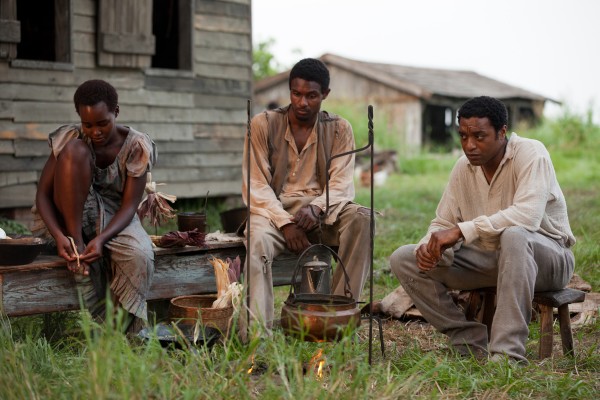
"12 Years a Slave" Reminds Us that Slaves Didn't Win Freedom by Being Manly


A friend at Facebook (thanks Jean!) turned me on to this article from The Atlantic, a review of the new film (based on a true story), 12 Years a Slave. The reason this film - and this review of the film - appeals to me is that Director Steve McQueen offers a different take on the movie hero - traditionally a role that requires that a man "man-up," or become a "real man," which generally means to physically defeat one's tormentor or enemy.

Not so in this film, which is a fictionalized adaptation of the 1853 autobiography Twelve Years a Slave by Solomon Northup, a free black man who was kidnapped in Washington, D.C. in 1841 and sold into slavery.

In Django Unchained, as is also true in Glory, manly strength leads to freedom and vengeance. In 12 Years a Slave, it serves only to harm those you care about.
When Northup escapes, it's not through violence, but because a white Canadian working on the plantation agreed to get word to the north. Northup's ordeal ends as abruptly as it began when an old white friend pulls up at the plantation with the sheriff. There's no hail of gunfire, only a hail of legalese. Nor is this a happy ending. No one can give him back his lost years with his wife, or missing his children grow up. Patsey, and many others, are still enslaved. The men who kidnapped him are never brought to justice. Northup has no manly triumph. '12 Years a Slave' doesn't see slavery as a trial that men must overcome on their way to being men, but as a systemic evil that leaves those in its grasp with no good choices.
I'm excited to see this film - it's rare that life on film is presented with the fully incomprehensible abruptness that we experience in real life. One day Northup is a happily married man making a living as a musician - the next he has been sold into slavery. And just as suddenly, 12 years later, through no heroic action on his part, he is once again a free man . . . but his life and his sense of the world is forever altered by his experience.

NPR did a short but interesting review of the film, and it has been reviewed by nearly every major newspaper and culture blog. It has a 7.9/10 rating at IMdB and a 95% positive rating at Rotten Tomatoes (94% among views who are not critics).

12 Years a Slave's Reminder: Slaves Didn't Win Freedom by Being Manly

Unlike Glory or Django Unchained, Steve McQueen's film resists the notion that a slave could overcome the institution just by fully asserting his masculinity.

Noah Berlatsky | Oct 21 2013


Fox Searchlight

Hollywood is in general uncomfortable with race, but it likes heroic masculinity. It's no surprise, then, that films about slavery often end up being about men becoming men. Django Unchained is a basic revenge story, with Django taking up the phallic gun to blast the evil forces that have held him down and captured his wife. Glory is a standard military parable, with the weak and undisciplined black troops learning to be a deadly fighting force even as their boyish white commanding officer proves himself. "We're men," Denzel Washington declares before the final battle, for all the world as if, before they joined the regiment, they were something else.

Remarkably and honorably, 12 Years a Slave, based on Solomon Northup's 1841 autobiographical narrative, has a different story to tell. When the film opens, Northup (Chiwetel Ejiofor) is a free musician, living in Saratoga, New York with his wife, son and daughter. He's a success and a grown-up; he doesn't need to learn to become a man. The narrative arc of the film isn't from powerlessness to power. It's the reverse.

Northup is courted by two men who promise him a touring gig, and then, after they've lured him to Washington, slip him a drug, knocking him unconscious. He wakes up in a cell, where he is viciously beaten on all fours while the slaver hits him with a stick from behind. Northup loses his former life, his dignity, even his self, as he is forced to take the name of a runaway slave, Platt. The entire sequence is a violation and unmanning—it's presented as a symbolic rape.

If we were working with the logic of Glory or Django, Northup would have to regain his manhood by standing up to his attackers and besting them in combat. That's not what happens here, though. Instead, Northup tries various ways to deal with the system. At first, he uses his education and skills to help his (very) relatively humane owner, William Ford (Benedict Cumberbatch), with various engineering projects. Then, when he is harassed and attacked by Ford's overseer, he fights back, in a scene reminiscent of Frederick Douglass's autobiography, whipping the man who had intended to whip him. Where Douglass triumphed, though, Northup just ends up sold to a true sadist. As another slave, Eliza (Adepero Oduye), tells Northup, you can compromise yourself as you will, give the slave-owners your skills or your body. It doesn't matter. You're still a slave.

Eliza's speech has no parallels in Glory or Django, because when masculinity is the story, women are pushed to the sidelines. In Django, the main romance of the film is between Django and his white buddy; the second is between Django and the evil slave Stephen—and lagging far behind in third is the relationship between Django and his wife, who functions more as a prize than as a person. For its part, Glory barely has a female speaking role; like Django, all its energy goes into inter- and intra-racial male bonding.

12 Years a Slave though, doesn't present masculinity as a solution to slavery, and as a result it's able to think about and care about women as people rather than as accessories or MacGuffins. Other than Northup, in fact, the most vivid slave characters are female. There's Eliza, who is utterly devastated by the loss of her children. And there's Patsey (Lupita Nyong'o), a phenomenal worker in the cotton fields who Northup's second sadistic owner, Edwin Epps (Michael Fassbender), takes as his mistress. Patsey is raped by Epps, loathed by his jealous wife, and systematically abused, beaten, and tortured by both. In a terrifying scene, she wakes Northup up and begs him to take her to the marsh and drown her. "Do what I ain't got the strength to do myself," she pleads. "God is merciful and forgives merciful acts."

Northup, with a desperate callousness, refuses, asking her "How can you fall into such despair?"—though there's no question that he knows exactly how. Later, he is forced at gunpoint to lash her back bloody. In Django, manly strength leads to freedom and vengeance; here, it serves only to harm those you care about.

When Northup escapes, it's not through violence, but because a white Canadian working on the plantation agreed to get word to the north. Northup's ordeal ends as abruptly as it began when an old white friend pulls up at the plantation with the sheriff. There's no hail of gunfire, only a hail of legalese. Nor is this a happy ending. No one can give him back his lost years with his wife, or missing his children grow up. Patsey, and many others, are still enslaved. The men who kidnapped him are never brought to justice. Northup has no manly triumph. '12 Years a Slave' doesn't see slavery as a trial that men must overcome on their way to being men, but as a systemic evil that leaves those in its grasp with no good choices.

Manly triumph isn't to be sneered at in every case. The 54th Massachusetts of Glory really did fight with honor and transform Northern opinion about blacks—their courage really did matter. But seeing slavery solely as a test of masculinity not only erases women's experience; it ends up making men who don't overcome it responsible for their own oppression. If you were a man, such narratives say, you would fight back and kill them all with the music swelling, as Django does in Django Unchained. Django even explicitly refers to its title character as "exceptional"—he is better than all those others sunk in slavery. If you don't defeat your enemies like a man, the film seems to say, then you're not a man, you're a moral failure. Which is not that far from saying that victims are responsible for their victimhood.

At the end of the film, when Northup returns to his family, he starts stammering apologies—for his appearance, for crying, and, though he doesn't say it, for being captured and being unable to return to his family for so long. To which his wife, Anne (Kelsey Scott) replies, "You have absolutely nothing to apologize for." 12 Years a Slave doesn't see slavery as a trial that men must overcome on their way to being men, but as a systemic evil that leaves those in its grasp with no good choices. As a result, 12 Years a Slave is that rare film about slavery in which slaves don't have to become Hollywood "men" for their stories to matter.

Related Story: 


The Searing, Visceral 12 Years a Slave

Sunday, August 19, 2012

Bukowski: Born Into This — The Definitive Documentary on the Hard-Living American Poet (2003)


Charles Bukowski was a mediocre poet and fiction writer. His work was brutally honest and it chronicled, sometimes in excruciating detail, the life he actually lived - painful, wounded, drunken, and more than a little outside the lines. The result body of work sells more books than Jack Kerouac and Ken Kesey.

Open Culture marked his birthday last week with the best biography I have seen about his life.

There is nothing great or exceptional about Bukowski - other than his willingness to lay bare his life on the page. How many of us would be willing to be that raw, that open about our weaknesses and failures? How many of us can turn those dark places into something many people see as art?

Bukowski: Born Into This — The Definitive Documentary on the Hard-Living American Poet (2003)

August 15th, 2012


Neglected to mark the occasion of poet and novelist Charles Bukowski‘s birthday yesterday? Then observe it today with a viewing of the documentary Bukowski: Born Into This. The most in-depth exploration of Bukowski’s life yet committed to film, the movie “is valuable because it provides a face and a voice to go with the work,” wrote Roger Ebert in 2004. “Ten years have passed since Bukowski’s death, and he seems likely to last, if not forever, then longer than many of his contemporaries. He outsells Kerouac and Kesey, and his poems, it almost goes with saying, outsell any other modern poet on the shelf.” A wide range of Bukowski enthusiasts both expected and unexpected appear onscreen: Sean Penn, Tom Waits, Harry Dean Stanton, Black Sparrow Press publisher John Martin, filmmaker Taylor Hackford (director of the earlier documentary titled simply Bukowski), and Bono, to name but a few. “Excerpts are skillfully woven with the reminiscences of former drinking buddies, fellow writers and Bukowski’s second wife, Linda, the keeper of the flame, whom he married in 1985,” wrote Stephen Holden in the New York Times. “Without straining, the film makes a strong case for Bukowski as a major American poet whose work was a slashing rebuke to polite academic formalism.”

Some might contrarily consider Bukowski’s writing glorified wallowing, a mere profane exultation of the low life, but Born Into This reveals that the man wrote as he lived and lived as he wrote, omitting neither great embarrassment nor minor triumph. Holden mentions that Bukowski, “a pariah in high school, suffered from severe acne vulgaris, which covered his face with running sores that left his skin deeply pitted. He recalls standing miserably in the dark outside his senior prom, too humiliated to show himself,” and that for all his work dealing with late-life sexual prowess, “he was a virgin until he was 24, the same age at which his first story was published. His description of sexual initiation with an obese woman whom he wrongly accused of stealing his wallet is a spectacularly unpromising beginning to the prolific sexual activity (described in his novel “Women”) that flowered after fame brought admirers.” Ebert asks the obvious question: “How much was legend, how much was pose, how much was real?”  Then he answers it: “I think it was all real, and the documentary suggests as much. There were no shields separating the real Bukowski, the public Bukowski and the autobiographical hero of his work. They were all the same man. Maybe that’s why his work remains so immediate and affecting: The wounded man is the man who writes, and the wounds he writes about are his own.”

You can find Born Into This listed in the Documentaries section of our collection of 500 Free Movies Online, or purchase your own copy on Amazon here.

Related content:
~ Colin Marshall hosts and produces Notebook on Cities and Culture. Follow him on Twitter at @colinmarshall.

Saturday, December 31, 2011

Documentary - Johnny Cash: The Last Great American


I really did not become a Johnny Cash fan until the mid 1990s when I went to see Mark Lanegan (former singer for the Screaming Trees) as the opening act for Cash in Seattle. Lanegan had released two moody, melodic, post-grunge solo albums that hinted at the blues-tinged work he would do later, and I was willing to pay the steep ticket price to see him do a solo show (stripped down, mostly acoustic). Besides, we could always leave at intermission before Cash played. But we didn't.

This was the era when Cash had begun working with Rick Rubin on the 4-CD series for American Recordings that would become the foundation for Unearthed, a 5-CD retrospective released shortly after Cash died. The song the grabbed me from that first album was "The Beast in Me," written by Cash's former son-in-law, Nick Lowe.


This album, and those that followed, resurrected his career, especially with his cover of Nine Inch Nail's "Hurt." This song seemed so personal for him at the time - which was recorded (I believe) shortly before his wife June Carter died, and showing his own ill health. He died seven months later.


Back to the concert - what amazed me at that show was the incredible numbers of middle-aged people who had shown up with arms full of his records (remember vinyl?) hoping to get them signed. The other thing that amazed me at that show was that I knew most of his songs.

Anyway, I am not sure that Cash was the last great American - but he was a man who made his own way in the world - having started with nothing. He overcame drugs and alcohol, prison time, and producers who wanted to make him the next Elvis when he was more in tune with being the next Robert Johnson.

He eventually found June Carter Cash, his last wife, who he credited with his redemption. They often performed together in the last decades of his life.

I admired Cash - through all of the struggles in his life, he found meaning and purpose through his music, his love, and his faith. I respect that in any person.

This documentary is from Top Documentary Films.

Johnny Cash: The Last Great American

Johnny Cash: The Last Great AmericanDocumentary profiling the life of legendary country music star Johnny Cash, who died in 2003 shortly after completing the retrospective Unearthed, a five-CD set of the acoustic performances with which he resurrected his career in the last decade of his life, and after losing his wife, June Carter Cash.

This first major retrospective of Cash’s life, times and music features contributions from his daughter Rosanne Cash and son John Carter Cash, his longtime manager Lou Robin and fellow musicians including Little Richard, Cowboy Jack Clement, Kris Kristofferson, Merle Haggard and Elvis Costello.

Cash was the son of a poor sharecropper from Kingsland, Arkansas, who sang folk, spiritual and country songs to himself while picking cotton in the fields. In the 50s he signed to Sam Phillips’ Sun Records, scored his first hits and was part of the ‘Million Dollar Quartet’ with Elvis Presley, Jerry Lee Lewis and Carl Perkins.

Watch the full documentary now


Saturday, November 26, 2011

Pearl Jam Twenty - Trailer (and more)


I recently watched the documentary by Cameron Crowe, Pearl Jam Twenty, celebrating 20 years of music from Seattle band Pearl Jam. Awesome! The footage from the early years of Green River and Mother Love Bone is priceless - long before Eddie Vedder joined the band and became the face of Pearl Jam (the band was originally, briefly named Mookie Blaylock, as all true fans know).


Part of the reason I am posting this here (other than to highly recommend the film) is that this is really a story about a bunch of guys who are friends and who have been fortunate to do things in a way that feels right to them. Part of what has kept them together is their dedication to being a band that makes music over a long period of time, constantly changing and evolving. The worst albums have been the ones that sounded like earlier albums - their best albums (like Lost Dogs, a compilation of B-sides and alternate takes) show the band taking risks and trying new things.

Pearl Jam Twenty - Trailer


Pearl Jam Twenty chronicles the years leading up to the band's formation, the chaos that ensued soon-after their rise to megastardom, their step back from center stage, and the creation of a trusted circle that would surround them—giving way to a work culture that would sustain them. Told in big themes and bold colors with blistering sound, the film is carved from over 1,200 hours of rarely-seen and never-before seen footage spanning the band's career. Pearl Jam Twenty is the definitive portrait of Pearl Jam: part concert film, part intimate insider-hang, part testimonial to the power of music and uncompromising artists.
As a bonus, here is footage from the opening of the film at the Toronto International Film Festival - the press conference and then a Q and A in which Eddie makes a surprise appearance.

Press conference:


Q and A session: