Showing posts with label man up. Show all posts

Monday, February 3, 2014

JJ Vincent - Manning Up: Transsexual Men on Finding Family, Brotherhood, and Themselves

From the Good Men Project, this is a "review" (more like a preview) of a book due out later this year,
Manning Up: Transsexual Men on Finding Brotherhood, Family & Themselves (pre-order now from Transgress Press for $20.00, $3.00 off of the anticipated cover price).


This seems to be an interesting book - it's a topic that I have researched and studied myself, so I have an interest in this material beyond the work I have done with trans men.

Manning Up: Transsexual Men on Finding Family, Brotherhood, and Themselves

February 2, 2014 by JJ Vincent

Manning Up: Transexual Men Talk

A new book brings together a diverse range of trans*male voices to share their stories of how they became the men that they are.


Manning Up is not the first anthology of trans*men’s stories, but it may be the most diverse and wide-ranging.

Let’s start with the title, Manning Up. It’s usually a phrase that makes us cringe, associated with someone telling us that we are not living up to some masculine ideal. The editors, Zander Keig and Mitch Kellaway, have given “manning up” a new definition, using it as a phrase to describe the process of someone becoming the man they know themselves to be. In his foreword, transman, activist, and author Jamison Green writes:

As the men included in this collection attest, being a man involves knowing who you are and how you fit into the world of men. No man gains this knowledge automatically. It is a process for each of us, regardless of race, class, or age. The men who share pieces of their stories in these pages are in varying stages of this process. Their diverse backgrounds, ages, and racial heritage illuminate their journeys, and their histories of physical and socio-cultural obstacles enrich their appreciation of the nuances involved in taking their places among the men in their spheres, as well as redefining their relationships with women.
Each of the writers approaches masculinity from a different perspective. Some grew up doing “boy” activism others were pushed along traditionally female paths. Some are open and out, others choose to live with minimal disclosure of the lives they formerly led. Some transitioned early in life, with the full support of their families. One man was 54. These men are Christian, Jewish, Muslim, none of the above, gay, straight, poly, single, married. They are as varied as men anywhere.

One unifying theme in all of these stories, what makes them so compelling, is that each of them always knew, on some level, that they were not women, regardless of they physical characteristics they were born with or the social labels placed on them. Another is love-love of self, love of others-and how their transitions allowed them to experience this in new ways. What makes each one distinct, though, is what they believed a man was, how that view was shaped over time, and how they embraced or rejected that in their own lives.
 

One reviewer writes:
What is most subversive about the book, is that the stories present a poignant image of familial acceptance — something that many trans narratives still tend to shy away from. We hear from men whose masculinity is shaped by intimate interactions with fathers, brothers, colleagues, and even lovers.

Manning Up shows the complexity and beauty of transition that is not only unique to the trans male experience but with its underlying theme of love, it is a book that is relatable to all genders.

~ Kortney Ryan Ziegler, Oakland-based award-winning artist and writer
It is the distinct tone of each story that gives this book its strength, separates it from “coming out” books, and makes it accessible and compelling to anyone, not just people in the GLBT community. There is no one type of man; there is no one type of masculinity, or one transition narrative. Another reviewer says:
The genius of Manning Up is its ability to include, indeed its insistence on, multiple narratives and experiences and, thus, the creation of many new histories. These essays are a necessary antidote to today’s pervasive and crushing limited scope of “acceptable” (hyper) masculinities. These first person, deeply reflective and wondrously diverse narratives broaden the range of what is possible for trans and cis men alike. An important addition to masculinity studies by men with vitally human perspectives.

~ tc tolbert, co-editor of Troubling the Line: Trans and Genderqueer Poetry and Poetics
Manning Up contains a total of 29 stories divided into four sections: Manning Up, Family Man, Men Like Me, and New Territories.

I’m not going to lie to you and say this is a book of quick and easy reads, of short essays about being a man in modern society. There are pieces in here that will challenge you. There are pieces that are poetic and lyrical and others that are forceful and in-your-face. They are not all uplifting, with pat endings, starring the characters that popular media has taught us to expect in the stories of trans*people.

But they are worth your time. One writer writes about the most honest performance he has ever given, a true autobiography on stage-and how it is rewarded with praise for his acting ability. Another speaks of his comfort and discomfort of being unquestioningly accepted into the crude sexual joking/male bonding of his much-younger coworkers. In one deeply thought-provoking piece, the writer speaks about being a “new black man”, now subject to the presumption and racism that go with that.

Being a man, becoming a man, regardless of the path you take to get there, does not automatically confer privilege or erase your past experiences. But these stories, by established writers and new voices, will give you a new perspective on what it means to be one.

Photo by Wolfgang

Tuesday, October 22, 2013

"12 Years a Slave" Reminds Us that Slaves Didn't Win Freedom by Being Manly


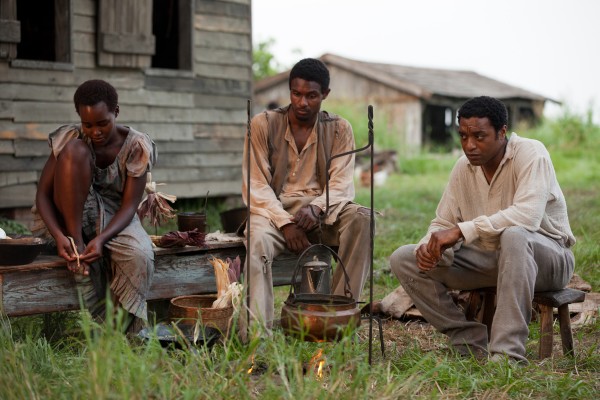
A friend at Facebook (thanks Jean!) turned me on to this article from The Atlantic, a review of the new film (based on a true story), 12 Years a Slave. The reason this film - and this review of the film - appeals to me is that Director Steve McQueen offers a different take on the movie hero - traditionally a role that requires that a man "man-up," or become a "real man," which generally means to physically defeat one's tormentor or enemy.

Not so in this film, which is a fictionalized adaptation of the 1853 autobiography Twelve Years a Slave by Solomon Northup, a free black man who was kidnapped in Washington, D.C. in 1841 and sold into slavery.

In Django Unchained, as is also true in Glory, manly strength leads to freedom and vengeance. In 12 Years a Slave, it serves only to harm those you care about.
When Northup escapes, it's not through violence, but because a white Canadian working on the plantation agreed to get word to the north. Northup's ordeal ends as abruptly as it began when an old white friend pulls up at the plantation with the sheriff. There's no hail of gunfire, only a hail of legalese. Nor is this a happy ending. No one can give him back his lost years with his wife, or missing his children grow up. Patsey, and many others, are still enslaved. The men who kidnapped him are never brought to justice. Northup has no manly triumph. '12 Years a Slave' doesn't see slavery as a trial that men must overcome on their way to being men, but as a systemic evil that leaves those in its grasp with no good choices.
I'm excited to see this film - it's rare that life on film is presented with the fully incomprehensible abruptness that we experience in real life. One day Northup is a happily married man making a living as a musician - the next he has been sold into slavery. And just as suddenly, 12 years later, through no heroic action on his part, he is once again a free man . . . but his life and his sense of the world is forever altered by his experience.

NPR did a short but interesting review of the film, and it has been reviewed by nearly every major newspaper and culture blog. It has a 7.9/10 rating at IMdB and a 95% positive rating at Rotten Tomatoes (94% among views who are not critics).

12 Years a Slave's Reminder: Slaves Didn't Win Freedom by Being Manly

Unlike Glory or Django Unchained, Steve McQueen's film resists the notion that a slave could overcome the institution just by fully asserting his masculinity.

Noah Berlatsky | Oct 21 2013


Fox Searchlight

Hollywood is in general uncomfortable with race, but it likes heroic masculinity. It's no surprise, then, that films about slavery often end up being about men becoming men. Django Unchained is a basic revenge story, with Django taking up the phallic gun to blast the evil forces that have held him down and captured his wife. Glory is a standard military parable, with the weak and undisciplined black troops learning to be a deadly fighting force even as their boyish white commanding officer proves himself. "We're men," Denzel Washington declares before the final battle, for all the world as if, before they joined the regiment, they were something else.

Remarkably and honorably, 12 Years a Slave, based on Solomon Northup's 1841 autobiographical narrative, has a different story to tell. When the film opens, Northup (Chiwetel Ejiofor) is a free musician, living in Saratoga, New York with his wife, son and daughter. He's a success and a grown-up; he doesn't need to learn to become a man. The narrative arc of the film isn't from powerlessness to power. It's the reverse.

Northup is courted by two men who promise him a touring gig, and then, after they've lured him to Washington, slip him a drug, knocking him unconscious. He wakes up in a cell, where he is viciously beaten on all fours while the slaver hits him with a stick from behind. Northup loses his former life, his dignity, even his self, as he is forced to take the name of a runaway slave, Platt. The entire sequence is a violation and unmanning—it's presented as a symbolic rape.

If we were working with the logic of Glory or Django, Northup would have to regain his manhood by standing up to his attackers and besting them in combat. That's not what happens here, though. Instead, Northup tries various ways to deal with the system. At first, he uses his education and skills to help his (very) relatively humane owner, William Ford (Benedict Cumberbatch), with various engineering projects. Then, when he is harassed and attacked by Ford's overseer, he fights back, in a scene reminiscent of Frederick Douglass's autobiography, whipping the man who had intended to whip him. Where Douglass triumphed, though, Northup just ends up sold to a true sadist. As another slave, Eliza (Adepero Oduye), tells Northup, you can compromise yourself as you will, give the slave-owners your skills or your body. It doesn't matter. You're still a slave.

Eliza's speech has no parallels in Glory or Django, because when masculinity is the story, women are pushed to the sidelines. In Django, the main romance of the film is between Django and his white buddy; the second is between Django and the evil slave Stephen—and lagging far behind in third is the relationship between Django and his wife, who functions more as a prize than as a person. For its part, Glory barely has a female speaking role; like Django, all its energy goes into inter- and intra-racial male bonding.

12 Years a Slave though, doesn't present masculinity as a solution to slavery, and as a result it's able to think about and care about women as people rather than as accessories or MacGuffins. Other than Northup, in fact, the most vivid slave characters are female. There's Eliza, who is utterly devastated by the loss of her children. And there's Patsey (Lupita Nyong'o), a phenomenal worker in the cotton fields who Northup's second sadistic owner, Edwin Epps (Michael Fassbender), takes as his mistress. Patsey is raped by Epps, loathed by his jealous wife, and systematically abused, beaten, and tortured by both. In a terrifying scene, she wakes Northup up and begs him to take her to the marsh and drown her. "Do what I ain't got the strength to do myself," she pleads. "God is merciful and forgives merciful acts."

Northup, with a desperate callousness, refuses, asking her "How can you fall into such despair?"—though there's no question that he knows exactly how. Later, he is forced at gunpoint to lash her back bloody. In Django, manly strength leads to freedom and vengeance; here, it serves only to harm those you care about.

When Northup escapes, it's not through violence, but because a white Canadian working on the plantation agreed to get word to the north. Northup's ordeal ends as abruptly as it began when an old white friend pulls up at the plantation with the sheriff. There's no hail of gunfire, only a hail of legalese. Nor is this a happy ending. No one can give him back his lost years with his wife, or missing his children grow up. Patsey, and many others, are still enslaved. The men who kidnapped him are never brought to justice. Northup has no manly triumph. '12 Years a Slave' doesn't see slavery as a trial that men must overcome on their way to being men, but as a systemic evil that leaves those in its grasp with no good choices.

Manly triumph isn't to be sneered at in every case. The 54th Massachusetts of Glory really did fight with honor and transform Northern opinion about blacks—their courage really did matter. But seeing slavery solely as a test of masculinity not only erases women's experience; it ends up making men who don't overcome it responsible for their own oppression. If you were a man, such narratives say, you would fight back and kill them all with the music swelling, as Django does in Django Unchained. Django even explicitly refers to its title character as "exceptional"—he is better than all those others sunk in slavery. If you don't defeat your enemies like a man, the film seems to say, then you're not a man, you're a moral failure. Which is not that far from saying that victims are responsible for their victimhood.

At the end of the film, when Northup returns to his family, he starts stammering apologies—for his appearance, for crying, and, though he doesn't say it, for being captured and being unable to return to his family for so long. To which his wife, Anne (Kelsey Scott) replies, "You have absolutely nothing to apologize for." 12 Years a Slave doesn't see slavery as a trial that men must overcome on their way to being men, but as a systemic evil that leaves those in its grasp with no good choices. As a result, 12 Years a Slave is that rare film about slavery in which slaves don't have to become Hollywood "men" for their stories to matter.

Related Story: 


The Searing, Visceral 12 Years a Slave

Friday, July 26, 2013

Secure in Your Self-Identity - Have You Had Your ‘Man Up’ Moment?


Do you live in the "man box" or do you set your own standards and agenda for life? In the article below, re-posted at the Good Men Project, that question (in all its various forms) is identified as the "man up" moment - the point in our lives when we have to choose who we are and who we want to be(come).
When a man faces a crisis — any kind of real life-changing crisis, whether it’s financial, familial, physical, emotional, or female — that’s when he’ll know what kind of stuff he’s really made of.
This is true, for the most part.

When your moment comes, will be ready for it? Will you know who you are and what you are about in the world?

Have You Had Your ‘Man Up’ Moment?

JULY 17, 2013 BY VICTORY UNLIMITED 

Victory Unlimited provides a series of questions for men to discover their self worth and achieve a fuller potential.

There comes a time…there always does…when a man is forced to choose. Not just between what woman he will pick over another, not just between which career choices he will make over another — but between what kind of man he is now and what kind of man he will be.

There will come a time in your life when that question will be asked of you, whether you’re 18 or 85. There will come a moment in your life where you will indeed be forced to answer it with either your words, your actions, or BOTH. Rest assured, if it has not already happened yet, your manhood, and how you have chosen to define it will be called upon to “present itself” at the verbal or nonverbal demand of either some “one” in your life or some “situation” at hand.

Often this roll call to self-identify will come as a surprise. Rare is it that a man actually has time to consciously prepare for this moment of truth — this moment that will forever distinguish “who he really is”, compared to “who he thinks he is”. When a man faces a crisis — any kind of real life-changing crisis, whether it’s financial, familial, physical, emotional, or female — that’s when he’ll know what kind of stuff he’s really made of.

What kind of man are you?


Actually, this is a question that you will be much better off asking yourself, as opposed to waiting for circumstances to put you in a position where you have to answer it. No, it’s much better to ask and answer this question of yourself, and for yourself — now. Self-discovery, much like self-development, and then ultimately — self-deployment is not something that you can always prepare yourself for beforehand. These three phases of fulfillment, these three steps toward spiritual empowerment, and these three necessities for achieving greater heights of personal peace and happiness are not an event — they are a process. And the only way that process can begin with the most chance of overall life success is by means of self-discovery.

Every man, if he’s honest, knows when he’s faced, or is facing, his “Man Up Moment” — that exact moment in his life that separates his Stand Around days from his Stand Up days. This initial phase of the process, this kind of self-discovery, because of it’s suddenness, really is an event. An event that forces him totally awake to the consequences and gravity of his life choices.

So though the scenarios may be different, the question remains the same.

What kind of man are you?


Are you a man who puts off things until tomorrow that he knows he should do today? Or are you a man who does things today in order to increase his chances of having a better tomorrow?

Are you a man who stays in torturous, toxic relationships with women you know that are bad for you? Or are you a man who believes in himself, respects himself, and loves himself enough to break free from bad relationships in order to make room for good ones?

Are you a man who treats all women badly because some women before have dogged you out? Or, are you a man who learns from the past, takes it into account, but rationally judges the next woman he meets based on her actions as opposed to the actions of those that came before her?

Are you a man who works a job he hates, who always complains, and sells his soul to “the company store” out of abject fear for his financial future? Or, are you a man who goes after the career he really wants or works towards starting that business he really wants by using the resources from that job he hates to finance achieving those things he really loves?

Are you a man who has convinced himself that it’s better to be SAFE — at home, fantasizing about all the women you see on the Internet? Or are you a man who has DECIDED that he’s worthy enough and courageous enough to risk meeting real women in real life in order to form real relationships?

Are you a successful man who sees nothing wrong with stepping on other innocent men, women, and even “children” as long as you can get what you want? Or, are you a man who has become successful in life, but now also uses your success to inspire and motivate others in desperate need — those who are still struggling valiantly to achieve for themselves just half of what you’ve already accomplished?

Are you a man who measures his fulfillment in life by how much personal, unbridled, nondiscriminatory pleasure you can experience without any regard to the well-being of others? Or, are you a man who has chosen to live his life by a set of well-thought out moral standards, codes of ethics, or personal principles that inspire you to treat others as you’d like to be treated?

Are you a man who pretends to ignore injustice and laughs at things that are not funny? Or, are you a man that challenges ideas and viewpoints that should be challenged —a man that respectfully, but firmly speaks up and takes a stand for what he believes in?

What kind of man are you?


How would you answer that question to yourself? And when you answer it honestly, are you happy with the answer you give?In fact, if you died today, and you were attending your own memorial service — do you think that YOUR answer to that question would be the same answer that those who know you would give about you? If so, then consider yourself fortunate, because not only is there a good chance that you have a firm grasp of who you are, it’s also likely that who you think you are is in-line with the image that you project to those around you.

Which brings to mind some follow up questions:

“If you do know who you are as a man, are you also HAPPY with the man that you are?”

After reading that question, I can almost hear you say, “Happiness is such a ubiquitous, ethereal term, how can anyone really know if they’re happy or not?

Well, in an effort to help you answer the question that I have posed, you would do well to remember that the word “happiness” is synonymous with other words and phrases like “being content”, “being at peace”, “being glad”, or “being satisfied”. So, with that being said, know that the Victory Unlimited definition of being “happy” with what kind of man you are is to be able to look back at who you are and what you did yesterday — and still have a deep, inner sense of contentment, peace, gladness, or satisfaction when you think about it today.

Therefore, if this is where you are as a man — you’re on a good path. But also, if you happen to be a man who has just faced his “Man Up Moment”, found yourself wanting, and has come out of it “not” liking who you are — the good news is that all is not lost. Why? Because every day alive is another chance to get it right. As long as your heart is beating, the clock is still ticking, and time is on your side.

Every day alive is another day of grace — another day for redemption. So as long as you never turn back, never give up, and never surrender in your fight to become a better man today than you were yesterday — you will ultimately win. So stay locked, loaded, and armed with a positive attitude while you continue to aim at becoming the kind of man you want to be. 
It’ll be like shooting at the ground with a Machine Gun…you can’t miss.

Soldier on.

Tuesday, March 5, 2013

Michael Taylor with Ray Arata - Are You Ready To Wake Up, Step Up and Man Up?


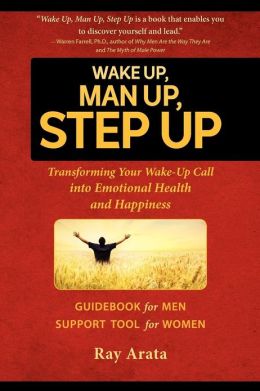
On the most recent episode of Coach Michael Taylor's A New Conversation with Men, Michael welcomed Ray Arata to talk about his new book, Wake Up, Man Up, Step Up: Transforming Your Wake-Up Call Into Emotional Health and Happiness. I'm not a fan of the whole "man up" thing, but the conversation is useful and productive and the book sounds interesting.


Listen to internet radio with Coach Michael Taylor on Blog Talk Radio


Coach Michael Taylor with Ray Arata - Are You Ready To Wake Up, Step Up and Man Up?
How do you find freedom from outmoded and destructive patterns of behavior that keep you from achieving success in your roles as partner, father, husband, leader, and friend? 
Most men aren't aware that the old model of masculinity is outdated and ineffective in today's culture. The absence of a healthy, functioning model of masculinity often causes emotional pain that is unbearable, demanding significant life changes and generating the proverbial "wake-up call." 
Wake Up, Man Up, Step Up: Transforming Your Wake-Up Call Into Emotional Health and Happiness provides an insightful and practical seven-step Roadmap for how you can transform large or small crises into opportunities for better relationships, happiness, and success. 
Join Coach Michael Taylor as he interviews Ray Arata about his wonderful new book Wake Up, Man Up, Step Up as they discuss how men can use this book as a resource to support them in living extraordinary lives.

Wednesday, October 24, 2012

"Man Up: Cracking the Code of Modern Manhood" by Carlos Andres Gomez - The Secret Lives of Men Podcast

This week on the Secret Lives of Men podcast, Dr. Chris Blazina talks with actor, poet, and author Carlos Andres Gomez about his new book, Man Up: Cracking the Code of Modern Manhood.


From the Amazon book description:
Inspired by the award-winning poet and actor’s acclaimed one-man play, a powerful coming-of-age memoir that redefines masculinity for the twenty-first-century male.

Award-winning poet, actor, and writer Carlos Andrés Gómez is a supremely gifted storyteller with a captivating voice whose power resonates equally on the live stage and on the page. In one of his most moving spoken-word poems, Gómez recounts a confrontation he once had after accidentally bumping into another man at a club. Just as they were about to fight, Gómez experienced an unexplainable surge of emotion that made his eyes well up with tears. Everyone at the scene jumped back, as if crying, or showing vulnerability, was the most insane thing that Gómez could possibly have done.

Like many men in our society, Gómez grew up believing that he had to be ready to fight at all times, treat women as objects, and close off his emotional self. It wasn’t until he discovered acting that he began to see the true cost of squelching one’s emotions—and how aggression dominates everything that young males are taught.

Statistics on graduation rates, employment, and teen and young-adult suicide make it clear that the young males in our society are at a crisis point, but Gómez seeks to reverse these ominous trends by sharing the lessons that he has learned. Like Hill Harper’s Letters to a Young Brother, Man Up will be an agent for positive change, galvanizing men—but also mothers, girlfriends, wives, and sisters—to rethink and redefine the way all men interact with women, deal with violence, handle fear, and express emotion.

Here's the podcast:

"Man Up: Cracking the Code of Modern Manhood" by Carlos Andres Gomez

CARLOS ANDRES GOMEZ is an award-winning writer and performer from New York City. A former social worker in Harlem and the south Bronx and public school teacher in Philadelphia and Manhattan, Gomez has performed at more than 200 colleges and universities and toured across North America, Europe, the Caribbean, and Africa. Nominated for the Pushcart Prize and named Artist of the Year at the 2009 Promoting Outstanding Writers Awards, he co-starred in Spike Lee's #1 movie "Inside Man" with Denzel Washington, Jodie Foster, and Clive Owen and appeared on the sixth season of HBO's "Russell Simmons Presents Def Poetry."
Listen to internet radio with Secret Lives of Men on Blog Talk Radio

Saturday, February 18, 2012

Guante - 10 Responses to the Phrase ‘Man Up’

The Good Men Project posted this awesome video from a 2-time National Poetry Slam champion, Guante, offering 10 Responses to the Phrase "Man Up." You can read the full text at Guante's site.

I bow to his brilliance.


10 Responses to the Phrase ‘Man Up’


A spoken word poem by 2-time National Poetry Slam champion, activist and social justice educator Guante.

“New piece. I really hate those Miller Lite commercials, but it’s definitely bigger than just that. Felt good to talk about it on stage.  This is one of the first performances of this piece, and it’ll probably be polished some and hopefully filmed more professionally at some point.  But I wanted to post it now.

"On a side note, I know there are a ton of spoken-word pieces out there about masculinity.  I’ve got this one too.  But I think it’s important to keep talking about these issues, especially if you can do it in a creative way, or at least have a new angle or hook.  I think there’s a bad tendency in spoken-word circles to dismiss any poem that covers well-trod territory (like “here’s another hip hop poem,” or “here’s another domestic violence poem”) and while I completely understand where that’s coming from and agree that we should be pushing ourselves in terms of subject matter, I ALSO believe that certain topics deserve the attention.  Especially as someone who works with young people–particularly young men– I like to have three or four of these kinds of poems in my pocket.

"Anyways, hope you like it.  Might be a bit of a “preaching to the choir” piece in some ways, but that all depends on with whom we all share it.  Any FB posts, tweets, tumblr posts, re-blogs and whatever are much appreciated, as always.”