This seems to be an interesting book - it's a topic that I have researched and studied myself, so I have an interest in this material beyond the work I have done with trans men.
A new book brings together a diverse range of trans*male voices to share their stories of how they became the men that they are.
Manning Up is not the first anthology of trans*men’s stories, but it may be the most diverse and wide-ranging.
Let’s start with the title, Manning Up. It’s usually a phrase that makes us cringe, associated with someone telling us that we are not living up to some masculine ideal. The editors, Zander Keig and Mitch Kellaway, have given “manning up” a new definition, using it as a phrase to describe the process of someone becoming the man they know themselves to be. In his foreword, transman, activist, and author Jamison Green writes:
As the men included in this collection attest, being a man involves knowing who you are and how you fit into the world of men. No man gains this knowledge automatically. It is a process for each of us, regardless of race, class, or age. The men who share pieces of their stories in these pages are in varying stages of this process. Their diverse backgrounds, ages, and racial heritage illuminate their journeys, and their histories of physical and socio-cultural obstacles enrich their appreciation of the nuances involved in taking their places among the men in their spheres, as well as redefining their relationships with women.
Each of the writers approaches masculinity from a different perspective. Some grew up doing “boy” activism others were pushed along traditionally female paths. Some are open and out, others choose to live with minimal disclosure of the lives they formerly led. Some transitioned early in life, with the full support of their families. One man was 54. These men are Christian, Jewish, Muslim, none of the above, gay, straight, poly, single, married. They are as varied as men anywhere.
One unifying theme in all of these stories, what makes them so compelling, is that each of them always knew, on some level, that they were not women, regardless of they physical characteristics they were born with or the social labels placed on them. Another is love-love of self, love of others-and how their transitions allowed them to experience this in new ways. What makes each one distinct, though, is what they believed a man was, how that view was shaped over time, and how they embraced or rejected that in their own lives.
One reviewer writes:
What is most subversive about the book, is that the stories present a poignant image of familial acceptance — something that many trans narratives still tend to shy away from. We hear from men whose masculinity is shaped by intimate interactions with fathers, brothers, colleagues, and even lovers.
Manning Up shows the complexity and beauty of transition that is not only unique to the trans male experience but with its underlying theme of love, it is a book that is relatable to all genders.
~ Kortney Ryan Ziegler, Oakland-based award-winning artist and writer
It is the distinct tone of each story that gives this book its strength, separates it from “coming out” books, and makes it accessible and compelling to anyone, not just people in the GLBT community. There is no one type of man; there is no one type of masculinity, or one transition narrative. Another reviewer says:
The genius of Manning Up is its ability to include, indeed its insistence on, multiple narratives and experiences and, thus, the creation of many new histories. These essays are a necessary antidote to today’s pervasive and crushing limited scope of “acceptable” (hyper) masculinities. These first person, deeply reflective and wondrously diverse narratives broaden the range of what is possible for trans and cis men alike. An important addition to masculinity studies by men with vitally human perspectives.
~ tc tolbert, co-editor of Troubling the Line: Trans and Genderqueer Poetry and Poetics
Manning Up contains a total of 29 stories divided into four sections: Manning Up, Family Man, Men Like Me, and New Territories.
I’m not going to lie to you and say this is a book of quick and easy reads, of short essays about being a man in modern society. There are pieces in here that will challenge you. There are pieces that are poetic and lyrical and others that are forceful and in-your-face. They are not all uplifting, with pat endings, starring the characters that popular media has taught us to expect in the stories of trans*people.
But they are worth your time. One writer writes about the most honest performance he has ever given, a true autobiography on stage-and how it is rewarded with praise for his acting ability. Another speaks of his comfort and discomfort of being unquestioningly accepted into the crude sexual joking/male bonding of his much-younger coworkers. In one deeply thought-provoking piece, the writer speaks about being a “new black man”, now subject to the presumption and racism that go with that.
Being a man, becoming a man, regardless of the path you take to get there, does not automatically confer privilege or erase your past experiences. But these stories, by established writers and new voices, will give you a new perspective on what it means to be one.
In paths untrodden,
In the growth by margins of pond-waters,
Escaped from the life that exhibits itself,
From all the standards hitherto publish'd, from the
  pleasures, profits, conformities,
Which too long I was offering to feed my soul,
Clear to me now standards not yet publish'd, clear to me
  that my soul,
That the soul of the man I speak for rejoices in comrades,
Here by myself away from the clank of the world,
Tallying and talk'd to here by tongues aromatic,
No longer abash'd, (for in this secluded spot I can respond
  as I would not dare elsewhere,)
Strong upon me the life that does not exhibit itself, yet
  contains all the rest,
Resolv'd to sing no songs to-day but those of manly
  attachment,
Projecting them along that substantial life,
Bequeathing hence types of athletic love,
Afternoon this delicious Ninth-month in my forty-first
  year,
I proceed for all who are or have been young men,
To tell the secret of my nights and days,
To celebrate the need of comrades.
Back in January, Ann Friedman posted this first article over at The Atlantic - she was making the case that women generally have better social support systems than men. I believe this is true in my experience - or I should say it has been for me, especially when I was younger.
Here is her piece, and then a second article, a response from Paul Burkhart at Patrol, follows below.
In the comments on my post about quitting my job, some folks took up the question of whether men are more likely than women (or vice versa) to have strong social support networks. Jess wrote,
I've come to think The Patriarchy is a Very Nearly Equal Opportunity Bastard, but it never occurred to me that men are less apt to have a support system for things like this-as in, less likely to have family support and stuff?
These discussions can veer into the realm of gender essentialism and stereotypes pretty quickly, but I'm feeling bold today. Let's talk about it anyway. Eric Vanderhoff replied to Jess, "Men are culturally expected not to need it and much less apt to seek or receive it." And Socioprof added, "Men in general tend to have less social support than women. This is across race and increases with age."
Anecdotally, this rings true. The women I know maintain much closer friendships with each other (more regular contact, more likely to share intimate details and ask for each other's help, more physical affection) than heterosexual men I know. There's research that says men and women even define friendship differently. According to the Encyclopedia of Women and Gender (there's a reference book for everything!), "one of the most consistent findings in gender research is that men invest most heavily in their wives as support providers whereas women most often turn to women friends and family for support." This is probably why men suffer more than women in a break-up.
From an early age, most women are socialized to be more nurturing and relationship-oriented than men, so perhaps this isn't surprising. My guess is that homophobia also plays a huge role. Men are taught to perceive intimacy with other men as gay. You can see it in trend stories about "man-dates" and movies about male friendship, which often veer pretty quickly from depictions of platonic affection to defensive homophobia. There's even a social stigma attached to cross-gender friendships. Just ask Slate's Juliet Lapidos and her best friend, Jeff. Or me and my bestie Josh. (No, he's not gay. No, I'm not gay. No, we've never dated. Yes, we are super tight.) If all of these relationships are socially off-limits, who's a man to befriend?
I thought about this gender gap in support networks when I read the Timesarticle about Jared Loughner. For all of the explanations that have been offered for his actions -- a culture that glorifies violence, easy access to guns, poor access to mental health care -- Loughner's lack of a strong emotional and social support network has not been a prominent part of the post-tragedy narrative. It's been taken as a given that this young man was a loner. We've come to expect that perpetrators of headline-dominating acts of violence will be young, single, heterosexual men like Loughner.
There are consequences to the fact that many men don't have the social support they need and deserve. I think this is changing as our societal understanding of gender evolves. But it's changing slowly. I, for one, can't wait until bromance is not just a punchline but a part of every dude's life.
In a response to this, Burkhart, writing at Patrol (a review of religion and the modern world), encourages men (and he writing for Christian men, so all the better) to make close friendships, share personal parts of our lives, and don't be afraid to hug, or touch - you'll still be a man, you'll just be happier and healthier (research confirms this).
She talks about how men are conditioned to see close platonic friendships with both men and woman as “gay.” Can a guy and girl be best friends? Can two guys actually refer to one another as best friends? Technically, I would say that we have culturally come to a place where we can, but even when we do, it seems there is an extra step in our mental process where we have to remind ourselves this is okay, they don’t have to be gay. As Friedman muses, “If all of these relationships are socially off-limits, who’s a man to befriend?”
Further, Friedman asks if this lack of connection between males might not be a primary reason that it seems that most every major national act of violence (such as the Tuscon shootings) is perpetrated by young, single, men with little or no friends or close relationships with other men:
I thought about this gender gap in support networks when I read the Timesarticle about Jared Loughner. For all of the explanations that have been offered for his actions — a culture that glorifies violence, easy access to guns, poor access to mental health care — Loughner’s lack of a strong emotional and social support network has not been a prominent part of the post-tragedy narrative. It’s been taken as a given that this young man was a loner. We’ve come to expect that perpetrators of headline-dominating acts of violence will be young, single, heterosexual men like Loughner.
And yet, things are changing, albeit slowly. And the interesting thing is this: it is changing through the social vehicle of humor. When we do talk about men and their bromosexuality, it is nearly always tongue in cheek, and hoping to get a few laughs (hence the use of terms like “man date“, “bromance” and “bromosexual” in the first place). At first, when thinking about this, I had the same reaction as Friedman does in her conclusion:
There are consequences to the fact that many men don’t have the social support they need and deserve. I think this is changing as our societal understanding of gender evolves. But it’s changing slowly. I, for one, can’t wait until bromance is not just a punchline but a part of every dude’s life.
But then I remembered a piece of wisdom an old pastor of mine gave me concerning preaching sermons. It is, he said, like surgery: it is taking the scalpel of the Word of God and using it to rightly divide and excise the unhealthy parts of the human heart from the healthy. But in that endeavor, just as in surgery, anesthesia can be used to make the surgery move along a little less painfully and a little more successfully. Humor, he said, when employed winsomely and graciously, can be an effective sermon “anesthetic”.
Could this not work on a societal level? Part of me wonders if this issue particularly—this “bromophobia”—could only really change through the vehicle of humor in our world. Could it be that the fundamental change that needed to be made to get this ball rolling is that male relationships and social connections would be made out to be “not that big of a deal”; to (literally) be “made light of.”
And, in conclusion, this issue needs to be addressed. First, for ourselves and our happiness. David Brooks, in an article from the New Yorker that’s been getting a lot of play in the media recently, writes:
There’s a debate in our culture about what really makes us happy, which is summarized by, on the one hand, the book “On the Road” and, on the other, the movie “It’s a Wonderful Life.” The former celebrates the life of freedom and adventure. The latter celebrates roots and connections. Research over the past thirty years makes it clear that what the inner mind really wants is connection. “It’s a Wonderful Life” was right. Joining a group that meets just once a month produces the same increase in happiness as doubling your income. According to research by Daniel Kahneman, Alan B. Krueger, and others, the daily activities most closely associated with happiness are social—having sex, socializing after work, and having dinner with friends.
And secondly for our world. As Friedman pointed out, when men have real connections—deep, abiding, friendships that call them to account to become better men—society just might see less violence and ill within in ranks, as well as see more productivity and justice.
Best documentary last year, hands down. Don't know how long this will be up for free, so watch it now.
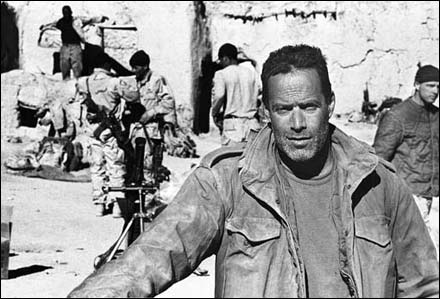
Sebastian Junger and Tim Hetherington’s year dug in with the Second Platoon in one of Afghanistan’s most strategically crucial valleys reveals extraordinary insight into the surreal combination of back breaking labor, deadly firefights, and camaraderie as the soldiers painfully push back the Taliban.
Here are some links about the book (War) and the film.
The American public reached Iraq/Afghanistan war movie fatigue, whether documentary or narrative, almost as soon as both wars started.There’s only so much brooding shirtless Channing Tatum and heavy-handed Hollywood bullshit preaching that one person can take. Which is a shame, because Sebastian Junger and Tim Hetherington’s breathtaking Restrepo, the finest piece of conflict journalism since Michael Herr’s Dispatches, hits theaters this Friday after taking Sundance’s Grand Jury Prize. Lincoln center hosted an early screening Monday as part of the Human Rights Film Festival.
If anyone is qualified to make the defining war picture of this era, it’s Junger and Hetherington. Junger first gained prominence when he wrote The Perfect Storm, later adapted into the movie of the same name. Since then he’s established himself as one of the premier war journalists of this generation, writing brilliant long-form pieces in Vanity Fair accompanied by award-winning photos from Hetherington, who earned his stripes covering wars in West Africa. Hell, Junger’s newly released book is simply titled War.Between the two of them, they probably have more combat experience then any of the soldiers they embedded with.
The film follows the troops of 2nd Platoon, B Company, 2nd Battalion, 503rd Infantry Regiment Airborne as they make their way in the Korangal Valley, arguably the deadliest place for US troops in Afghanistan. These men saw 500 firefights over a period of 15 months, sometimes 7 a day. Restrepo takes it name from the dangerous, isolated outpost the soldiers built in a hard fought moment of triumph. It is named after a beloved deceased soldier, Doc Restrepo, who we don’t get to know that well but who obviously carried a large amount of respect and love from his fellow soldiers.
We follow the soldiers on harrowing patrols, through firefights, in the surreal moments in which they prepare to go on patrols in which they know they will be shot at, through hard to watch meetings with village elders, and in the bored moments on base in-between violence. Interspersed are post-deployment interviews, the camera zoomed in on extreme close-ups on the soldiers faces as they talk about their experience with a look in their eyes that no actor could ever duplicate. When the movie is over, you will want to buy them a beer. You will want to hug them. And you will want to cry.
Excellent. Sebastion Junger offers a better insight into how war and battle create incredible bonds between men than anything I have ever seen in academic writing. His first hand experience, on the lines with the soldiers, offers a perspective to which we do not usually have access.
This is not to say that I support the idea of war, only that I have a better appreciation for what soldiers go through in being thrust into battle at such a young age - these are essentially kids in many ways.
I do not like that we, as a culture, see young men as disposable in the pursuit of political goals and economic interests. But until we can outgrow the need for war, we MUST try to understand what we are subjecting our kids to, and why they come home so damaged - and most importantly, how to help them heal when they do come home.
Summary
A contributing editor to Vanity Fair magazine, Sebastian Junger is the best-selling author of The Perfect Storm, A Death in Belmont, and Fire. Between June 2007 and June 2008, Mr. Junger was embedded with the 173rd Airborne Brigade Combat Team, making five trips to the Korengal Valley of eastern Afghanistan, a location that saw more combat than any other in the Afghan theater. Mr. Junger describes what he experienced in his latest book, War.
From this close-in vantage point, Junger discusses the universal themes at play in the experience of all soldiers, ancient and modern, who experience combat: fear, killing, and love, that "intoxicating" bond formed by the men who wage battle together.
Junger also takes a step back to reflect on his own (the journalist's) experience covering war. "Pure objectivity ... isn't remotely possible in a war... Objectivity and honesty are not the same thing, though, and it is entirely possible to write with honesty about the very personal and distorting experiences of war." Finally Junger addresses the one question that cannot be avoided: "Is the war in Afghanistan worth it?"
Sebastian Junger - A contributing editor to Vanity Fair magazine, Sebastian Junger is the best-selling author of The Perfect Storm, A Death in Belmont, and Fire.
Between June 2007 and June 2008, Mr. Junger was embedded with the 173rd Airborne Brigade Combat Team, making five trips to the Korengal Valley of eastern Afghanistan, a location that saw more combat than any other in the Afghan theater. Mr. Junger describes what he experienced in his latest book, War.
Peter M. Robinson is a research fellow at the Hoover Institution, where he writes about business and politics, edits Hoover's quarterly journal, the Hoover Digest, and hosts Hoover's television program, Uncommon Knowledge.
Robinson is also the author of three books: How Ronald Reagan Changed My Life; It's My Party: A Republican's Messy Love Affair with the GOP; and the best-selling business book Snapshots from Hell: The Making of an MBA.
I posted a video, a review, and an excerpt of Sebastian Junger's new book, War, when he was on one of the morning shows last week. This more lengthy interview is by Jeffrey Brown, of PBS Newshour, conducted at the Aspen Institute.
Here is my commentary from the original post - on the issue of "brotherhood" among soldiers, which Junger discusses in his book.
One of the topics he looks at in the book is the ways in which men bond in the military, but especially in combat. That sense of "brotherhood" is crucial to their survival and when they are home, they miss that element of their experience.
It's long been said that war changes men - yet, to my knowledge, this is something that has not been adequately looked at in the psychological literature. And it also seems that each new generation experiences war in ways similar to and markedly different from their predecessors.
Men - young men in particular, with the highest testosterone levels of any humans not competing in a Mr. Olympia show - are the tools of war. We recruit them to serve, strip them of personal identity in basic training, and then reshape them into flesh and bone weapons. But, despite the military's best efforts, these are still human beings. They suffer, they fear, they get injured, and they mourn.
The greatest loss for most soldiers is not their own injuries, it's the loss of a fellow soldier, a comrade in arms, a brother. In the process of forming a unit, these men (boys, really) become a family of brothers - some you hate, some you love, some you trust, some you don't, but all the men in your unit are your brothers - and you will die for them.
That kind of brotherhood and bonding exists nowhere outside of battle, not even on a football field in the Super Bowl. The heightened emotional atmosphere of the battlefield, of searching houses, of stopping a caravan of Afghans who may or may not be Taliban - adrenaline makes emotion-laden memories much more permanent than other memories.
The question then becomes, knowing these things, how do we care for these men when they come home? How can we support them in re-integrating into their families, their communities? How do we provide some semblance of that brotherhood they are leaving behind when they come home?
The Daily Beast had this to say about the book, and the forthcoming documentary by Junger:
Among his points: soldiers on the ground don’t think about politics–they have a job to do; war is literally intoxicating, like a cocaine high; Hollywood doesn’t understand war, at all; and at the heart of combat is love.
That last point is the crux of both Junger’s book, which comes out today, and the documentary film he shot and directed with British filmmaker and photographer Tim Hetherington based on the Korengal experience. The film, Restrepo, was Junger’s first, and it won the Grand Jury Prize at Sundance in January. It will be released June 25.
How does a first-time filmmaker win at Sundance? The same way he parlays his convalescence from a tree-cutting chainsaw accident in 1991 into a magazine article about one of the worst storms to ever hit the East Coast, which then becomes the best-selling book The Perfect Storm.
While Junger was laid up in Gloucester, Massachusetts, recovering from the tree injury, he got the idea to write a book about dangerous jobs. “I started getting interested in loggers, commercial fishing, fire fighting, foreign correspondents, oil well drilling. I picked out six jobs that didn’t involve guns, and that weren’t performance jobs,” he said in an interview at the time. Then, the storm hit near Gloucester and what started out as a potential chapter in a book became a book in itself.
Being nearly blown up in a Humvee, which he captured on film, was a turning point in his reporting. “I was like, fuck you. You’re not going to kill me,” Junger says.
After that, Junger became a celebrity adventure writer–and was even feted as the new Hemingway. He contributed adrenaline-filled stories on whale hunting and rock climbing to magazines like Outside and Men’s Journal. “Sebastian’s a phenomenal reporter,” says Restrepo co-director Hetherington, who also shared a Columbia-Dupont Award with Junger last year for a piece they did together on the Korengal Valley for Nightline. “He talks about so many things other journalists won’t talk about. There’s an honesty to him.”
In a sense, he’s now back to his original quest, this time writing about the far more serious job of soldiers. With War and Restrepo, Junger wanted to simply document what they go through, minus any political commentary. “What I wanted to know is, what are the emotional experiences of combat, stripped of all the macho bullshit we see in movies?” he says.
This is a very interesting video - Sebastian Junger's new book, War is out this week, so he is making the rounds on the talk shows. Thanks to Shawn Phillips for the link to this story.
One of the topics he looks at in the book is the ways in which men bond in the military, but especially in combat. That sense of "brotherhood" is crucial to their survival and when they are home, they miss that element of their experience.
It's long been said that war changes men - yet, to my knowledge, this is something that has not been adequately looked at in the psychological literature. And it also seems that each new generation experiences war in ways similar to and markedly different from their predecessors.
Men - young men in particular, with the highest testosterone levels of any humans not competing in a Mr. Olympia show - are the tools of war. We recruit them to serve, strip them of personal identity in basic training, and then reshape them into flesh and bone weapons. But, despite the military's best efforts, these are still human beings. They suffer, they fear, they get injured, and they mourn.
The greatest loss for most soldiers is not their own injuries, it's the loss of a fellow soldier, a comrade in arms, a brother. In the process of forming a unit, these men (boys, really) become a family of brothers - some you hate, some you love, some you trust, some you don't, but all the men in your unit are your brothers - and you will die for them.
That kind of brotherhood and bonding exists nowhere outside of battle, not even on a football field in the Super Bowl. The heightened emotional atmosphere of the battlefield, of searching houses, of stopping a caravan of Afghans who may or may not be Taliban - adrenaline makes emotion-laden memories much more permanent than other memories.
The question then becomes, knowing these things, how do we care for these men when they come home? How can we support them in re-integrating into their families, their communities? How do we provide some semblance of that brotherhood they are leaving behind when they come home?
First Posted: 05-11-10 11:48 AM | Updated: 05-11-10 02:33 PM
Sebastian Junger, the author of the bestselling "Perfect Storm," has a new book out called "War," based on the time he spent with an army platoon in Afghanistan and chronicling the experiences of the men in that platoon.
Junger gets at some huge questions about war in the book, from its relation to love and to fear to why people desperately miss it when they leave the army. What it comes down to in most cases, said Junger, is brotherhood. "There are guys in the platoon who straight-up hate each other, but we'd all die for each other," one soldier told him. When they leave, they miss that brotherhood. They miss being fundamentally necessary. "That is a very very reassuring place to be," Junger said.
Most of what we read and hear about the conflict in Afghanistan focuses on politics and strategy. Junger makes plain that he isn't interested in such abstractions but in the men we've sent far away to do our dirty work. I say "men" because this book takes place among the hyper-male front-line infantry, where women are prohibited from serving.
With his narrative gifts and vivid prose -- as free, thank God, of literary posturing as it is of war-correspondent chest-thumping -- Junger masterfully chronicles the platoon's 15-month tour of duty. But what elevates "War" out of its particular time and place are the author's meditations on the minds and emotions of the soldiers with whom he has shared hardships, dangers and spells of boredom so intense that everyone sits around wishing to hell something would happen (and wishes to God it was over when, inevitably, it does).
"War" is divided into three long sections: "Fear," "Killing" and "Love." In each, Junger makes us see the terror, monotony, misery, comradeship and lunatic excitement that have been elements of all wars since, say, the siege of Troy. He thus becomes a kind of 21st-century battle singer, narrating the deeds and misdeeds of his heroes while explaining what makes them do what they do. These reflections, drawing on his wide-ranging research into military history, biology and psychology as well as on his personal experiences, overreach once or twice. Otherwise, it's the best writing I've seen on the subject since J. Glenn Gray's 1959 classic, "The Warriors: Reflections on Men in Battle."
Here is an excerpt from the book - this is from the ABC News website.
Read a Portion of the Book Sebastian Junger Wrote After His Time in One of the Most Dangerous Areas of Afghanistan
May 11, 2010
1. Fear
By cowardice I do not mean fear. Cowardice is a label we reserve for something a man does. What passes through his mind is his own affair. - Lord Moran, The Anatomy of Courage
New York City
Six Months Later
O'Byrne is standing at the corner of Ninth Avenue and 36th Street with a to-go cup in each hand and the hood of his sweatshirt pulled up. It's six in the morning and very cold. He's put on twenty pounds since I last saw him and could be a laborer waiting for the gate to open at the construction site across the street. Now that he's out of the Army I'm supposed to call him Brendan, but I'm finding that almost impossible to do. We shake hands and he gives me one of the coffees and we go to get my car. The gash across his forehead is mostly healed, though I can still see where the stitches were. One of his front teeth is chipped and looks like a fang. He had a rough time when he got back to Italy; in some ways he was in more danger there than in combat.
O'Byrne had been with Battle Company in the Korengal Valley, a small but extraordinarily violent slit in the foothills of the Hindu Kush mountains of eastern Afghanistan. He was just one soldier out of thirty but seemed to have a knack for putting words to the things that no one else really wanted to talk about. I came to think of O'Byrne as a stand-in for the entire platoon, a way to understand a group of men who I don't think entirely understood themselves. One valley to the north, two platoons from Chosen Company accumulated a casualty rate of around 80 percent during their deployment. Battle Company wasn't hit that hard, but they were hit hard enough. This morning I'm going to interview Justin Kalenits, one of the wounded from Chosen, and O'Byrne has asked if he could join me. It's a cold, sunny day with little traffic and a north wind that rocks the car along the open stretches and on the bridges. We barrel southward through the industrial dross of New Jersey and Pennsylvania talking about the deployment and the platoon and how strange it is in some ways for both of us to find ourselves in the United States for good. I spent the year visiting O'Byrne's platoon in the Koren-gal, but now that's over and neither of us will ever see it again. We're both dreaming about it at night, though, weird, illogical combat sequences that don't always end badly but are soaked in dread.
Kalenits was shot in the pelvis during what has come to be known as the Bella Ambush. Bella was one of the firebases operated by Chosen Company in the Waygal Valley. In early November, fourteen Chosen soldiers, twelve Afghan soldiers, a Marine, and an Afghan interpreter walked to the nearby village of Aranas, met with elders, and then started to walk back. It was a setup. The enemy had built sandbagged positions in a 360-degree circle around a portion of the trail where there was no cover and the only escape was to jump off a cliff. By some miracle, Chosen held them off. Six Americans and eight Afghans were killed and everyone else was wounded. An American patrol hasn't taken 100 percent casualties in a firefight since Vietnam.
We turn into Walter Reed Army Medical Center and park in front of Abrams Hall, where Kalenits lives. We find him in his room smoking and watching television in the dark. His blinds are down and cigarette smoke swirls in the slats of light that come through. I ask Kalenits when was the first moment he realized he was in an ambush, and he says it was when the helmet was shot off his head. Almost immediately he was hit three times in the chest, twice in the back, and then watched his best friend take a round through the forehead that emptied out the back of his head. Kalenits says that when he saw that he just "went into awe."
There were so many muzzle flashes around them that the hills looked like they were strung with Christmas lights. The rounds that hit Kalenits were stopped by ballistic plates in his vest, but one finally hit him in the left buttock. It shattered his pelvis and tore up his intestines and exited through his thigh. Kalenits was sure it had severed an artery, and he gave himself three minutes to live. He spotted an enemy machine-gun team moving into position on a nearby hill and shot at them. He saw the men fall. He went through all of his ammunition except for one magazine that he saved for when the enemy came through on foot to finish everyone off.
Kalenits started to fade out from lack of blood and he handed his weapon to another man and sat down. He watched a friend named Albert get shot in the knee, and start sliding down the cliff. Kalenits's team leader grabbed him and tried to pull him back, but they were taking so much fire that it was going to get them both killed. Albert yelled to his team leader to let go and he did, and Albert slid partway down the cliff, losing his weapon and helmet on the way. He finally came to a stop and then got shot three more times where he lay.
Rocket-propelled grenades were exploding all around them and throwing up so much dust that the weapons were jamming. Men were spitting into the breeches of their guns, trying to clear them. For the next hour Kalenits faded in and out of consciousness and the firefight continued as one endless, deafening blur. It finally got dark and the MEDEVAC bird arrived and started hoisting up the wounded and the dead. There was a dead man in a tree below the trail and dead men at the bottom of the cliff. One body fell out of the Skedco harness as it was being hoisted into the helicopter, and a quick-reaction force that had flown in from Battle Company had to search for him most of the night.
The last thing Kalenits remembered was getting stuck with needles by doctors at the base in Asadabad; the next thing he knew, he was in Germany. His mother had come home to a message telling her to get in contact with the military immediately, and when she did she was told that she'd better fly to Germany as fast as possible if she wanted to see her son alive. He was still alive when she arrived, and he eventually recovered enough to return to the United States.
O'Byrne has been quiet most of the interview. "Did anyone bring up the issue of walking at night?" he finally says. "On the way out, did anyone bring that up?"
I know why he's asking: Second Platoon left a hilltop position during the daytime once and got badly ambushed outside a town called Aliabad. A rifleman named Steiner took a round in the helmet, though he survived.
"No the lieutenant said, 'We're leaving now,'" Kalenits answers. "What are you going to say to him?" "F*** off?" O'Byrne offers.
Kalenits smiles, but it's not a thought anyone wants to pursue.
KORENGAL VALLEY, AFGHANISTAN
Spring 2007
O'Byrne and the men of Battle Company arrived in the last week in May when the rivers were running full and the upper peaks still held their snow. Chinooks escorted by Apache helicopters rounded a massive dark mountain called the Abas Ghar and pounded into the valley and put down amid clouds of dust at the tiny landing zone. The men grabbed their gear, filed off the birds, and got mortared almost immediately. The enemy knew a new unit was coming into the valley and it was their way of saying hello; fourteen months later they'd say goodbye that way as well. The men took cover in the mechanics' bay and then shouldered their gear and climbed the hill up to their tents at the top of the base. The climb was only a hundred yards but it smoked almost everyone. Around them, the mountains flew up in every direction. The men knew that before the year was out they would probably have to walk on everything they could see.
The base was called the Korengal Outpost the KOP and was considered one of the most dangerous postings in Afghanistan. It was a cheerless collection of bunkers and C-wire and bee huts that stretched several hundred yards up a steep hillside toward a band of holly trees that had been shredded by gunfire. There was a plywood headquarters building and a few brick-and-mortars for the men to sleep in and small sandbag bunkers for mortar attacks. The men ate one hot meal a day under a green Army tent and showered once a week in water that had been pumped out of a local creek. Here and there PVC pipe was stuck into the ground at an angle for the men to urinate into. Since there were no women there was no need for privacy. Past the medical tent and the water tank were four open brick stalls that faced the spectacular mountains to the north. Those were known as the burn-shitters, and beneath each one was a metal drum that Afghan workers pulled out once a day so they could burn the contents with diesel fuel. Upslope from there was an Afghan National Army bunker and then a trail that climbed up to Outpost 1, a thousand feet above the KOP. The climb was so steep that the previous unit had installed fixed ropes on the bad parts. The Americans could make the climb in forty-five minutes, combat-light, and the Afghans could make it in half that.






First Posted: 05-11-10 11:48 AM | Updated: 05-11-10 02:33 PM