Who's The Man? Hollywood Heroes Defined Masculinity For Millions
by Bob Mondello
All Things Considered
July 30, 2014
Movies have always offered a window through which audiences, sitting in the dark, can observe human nature without being observed. A movie theater is where many a boy learned how to make things right, the way John Wayne did in so many pictures, with fists or a gun. Movies taught about sacrificing for the greater good, as Humphrey Bogart did when he sent Ingrid Bergman off with a "here's lookin' at you, kid" in Casablanca. They're a place to learn about standing firm against injustice (with Spencer Tracy in Inherit the Wind), and about standing up for yourself (with Sidney Poitier in A Raisin in the Sun).
All of which was useful for a nation that thought of itself as a melting pot. For generations, newly arrived immigrants had emerged slowly from their ethnic enclaves in big cities, where things were comfortingly just like the old country. Assimilating was hard.
But film — even back when it was silent — was like an instruction manual for the American experience. For a nickel at the nickelodeon, a foreign fellow fresh off the boat could see exactly how American men dressed, how they greeted each other (with a handshake, not with European kisses on each cheek), and, more generally, how people in his newly adopted country behaved. Admittedly, silent films used a kind of shorthand for American behavior — stereotypes, to allow directors to brush in characters quickly without dialogue: women were almost always domestic, delicate and passive, while men were outgoing, strong and active.
Film's power of suggestion quickly became so influential — so overwhelming in fact — that some argued it should be curbed. In the 1930s, the film industry created a production code that laid out a set of strict rules for filmmakers, banning drunkenness, sex, revenge plots, all forms of immorality and stating explicitly that no movie should throw audience sympathy to the side of wrongdoing.
You couldn't do most of Shakespeare under those rules, but you could have strong, manly, family-friendly heroes. Which meant, as the bluenoses intended, that Hollywood, having been told what it could show, was in effect telling audiences what they should be — portraying human behavior (especially male behavior) in idealized, heroic terms that mere mortals might have trouble living up to.
After World War II, the code started fraying around the edges as competition from television cut into Hollywood's bottom line. What could film offer that TV couldn't? Well, foreign films had nudity; indie films offered rebellion. The studios wanted a piece of that action, so they stopped restricting filmmakers with the Production Code and started alerting audiences through the ratings we know today.
And as soon as the restrictions were gone, leading men in movies became more like men in real life — not always strong or good or forceful. Dustin Hoffman became a huge star, playing a total slacker in The Graduate. Peter Fonda easy-rode his way across America; Paul Newman and Steve McQueen played antiheroes and got labeled the "Kings of Cool." John Travolta was that era's Fred Astaire — all of them recognizable as people, not icons.
All were nuanced, and vulnerable and incapable of being like the men of old Hollywood, because the world had changed too much. Woody Allen demonstrated the change in comically literal terms by conjuring up Bogie to help him man up in Play It Again, Sam.
In a world of modern, nuanced, flawed screen men, superheroes like Robert Downey Jr.'s Iron Man have taken up the mantle of traditional movie masculinity, says critic Bob Mondello. Industrial Light & MagicTestosterone was in full retreat by the 1980s. Movies made for teenagers had teen heroes, not adult males. James Bond started poking fun at the kind of "suave" his predecessors had played straight, and romance devolved from Cary Grant to Hugh Grant — stammering, hesitant, charming in a manner that was utterly without eloquence or confidence.
This led over time to the adult male as overgrown child in Judd Apatow comedies, to dads who turned themselves into Mrs. Doubtfires to rule the roost, to sensitive bad guys, earnest good guys, gay guys who wished they could quit each other, and action heroes like Jason Bourne who literally don't know who they are. Men, in short, became varied, and human, and unambiguously authentic on-screen.
But audiences still want heroes — and more important, audiences are eager to pay to see heroes. Which means Hollywood needed to find a way for males to be heroic again.
The solution, which turned out to be a multibillion-dollar solution: Make them superheroic. Men of Steel, Men of Iron, men with the webslinging power of spiders and with the claws of wolverines — but more important, each and every one a man who cares.
From John Wayne to Iron Man ... not such a stretch, really. They're icons both, standing tall, fighting for the greater good. And yes, they're manly in a way that may not be entirely human, or even something most people would want to live up to. But it sure looks great in Cinemascope.
Showing posts with label film. Show all posts
Showing posts with label film. Show all posts
Wednesday, August 6, 2014
Who's The Man? Hollywood Heroes Defined Masculinity For Millions
This brief story from NPR details the shift in Hollywood from leading men who embody traditional forms of masculinity (tough, sure, quiet) to men who are more real and more reflective of the varied masculinities men can embody. Even our superheroes are flawed men (Iron Man, The Dark Knight [Batman], Superman) who have doubts about themselves and who many not always act like heroes.


Sunday, February 2, 2014
Philip Seymour Hoffman - Aged 46, Overdose - RIP

Sad . . . another talented and apparently tormented person succumbs to addiction and perishes with the needle still in his arm. The picture above is Hoffman and his son at a Knicks basketball game.
Brendan O'Connor on Gawker has a brief post suggesting three of his favorite Hoffman performances. He left one out, however, that I quite liked, Magnolia (1999):
He was also in one of the best funny movies ever, The Big Lebowski.
Remembering Philip Seymour Hoffman's Best Performances
Brendan O'Connor | Gawker
"For me, acting is torturous, and it's torturous because you know it's a beautiful thing. I was young once, and I said, That's beautiful and I want that. Wanting it is easy, but trying to be great — well, that's absolutely torturous."That's Philip Seymour Hoffman, who was found dead in his apartment earlier today, talking to Lynn Hirschberg in a 2008 New York Times Magazine profile. The actor was known for the depth of his characters as well as his range.
Here are some of my favorite Hoffman performances. Share your favorites below.
Almost Famous (2000):
Synechdoche, New York (2008):
The Master (2012):

Wednesday, January 22, 2014
Ryan Leas - Masculinity Anxiety at the Movies: Questioning Yesterday’s Tough Guys (Salon)

From Ryan Leas at Salon, an interesting article on how the Hollywood portrayal of men in the movies has changed considerably since Clint Eastwood was asking bad guys to make his day, or Charles Bronson became a nighttime vigilante in Death Wish.
Today's male leads don't do masculine very well.
In the films reviewed below,
We’re shown all sorts of classic imagery of frontier masculinity, but we’re rarely led to believe the writers, actors or directors behind these characters consider them feasible in a contemporary setting.And . . .
As ambitious as these films are, none of them seem entirely sure what their endings should mean. And that makes complete sense. These are movies dealing with a concept and a trend as it unfolds. We don’t know where it’s going or what should replace it. Longing and wearied, “Mud” and “Out of the Furnace” and “The Place Beyond the Pines” are all stories by men about the sorts of men they might want to be, but with the knowledge that the world is leaving those sorts of men behind.The fact that there are no easy answers in these films reflects our own current struggles to evolve a new form of masculinity is appropriate - we are still in process of shaping where we are heading as men.
Masculinity anxiety at the movies: Questioning yesterday’s tough guys
For the guys in a spate of recent movies, trying to be a tough, rugged outlaw doesn't work out very well
Ryan Leas
Monday, Jan 20, 2014
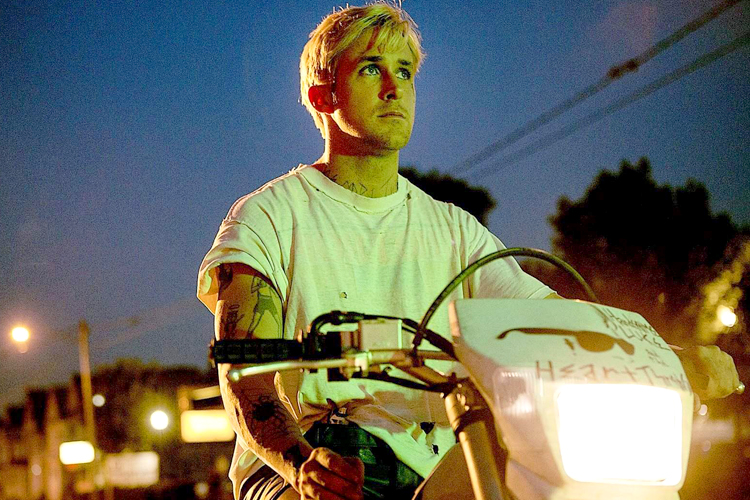
Ryan Gosling in "The Place Beyond the Pines"
A friend of a friend of mine has big plans: quit his prestigious editorial job in New York, grow his beard a bit further out, and start working on the docks. In 2014, the sentiments behind such a decision aren’t anything new, but they’re becoming more and more visible in our pop culture. You know the litany already: Gender roles in the workplace and the family are blurring, outsourcing is closing factory after factory, once-secure manufacturing jobs are disappearing. “American men don’t know how to make things anymore,” and all that. For a certain slice of American men, a romance has cropped up around working the docks, or an oil rig, or a crab boat up around Alaska. You’re getting back in touch with something, some supposedly inherent masculine energy that seems ever more ineffable as the nation adjusts its identity for a new era.
Last year saw a handful of filmmakers take on the questions of what it means to be a man in America in the 21st century, but their films don’t celebrate archetypal images of frontier manliness. Rather, they seem to suggest that looking back to these old forms is another broken urge in an age of cultural nostalgia.
After a decade of male antihero-dominated prestige TV dramas, the problem of contemporary American masculinity had its thematic apotheosis with “Breaking Bad.” Walt might have gotten a bleak version of a final Wild West showdown, but one of the most lasting images of the final season was that of him wasting away alone in a frozen cabin in New Hampshire. All the bluster of Heisenberg faded as Walt was corroded by the consequences of his actions — we saw up close the perversity of a man like him living alone in the woods. But while “Breaking Bad” did condemn old archetypes of masculinity to a degree, other stories seem to eulogize them as they slip away. Such an impulse toward eulogy has run through a handful of recent movies, most notably Jeff Nichols’ “Mud,” Derek Cianfrance’s “The Place Beyond the Pines” and Scott Cooper’s “Out of the Furnace.”
Though they may initially seem to have little in common, the settings of each film all present classic figments of Americana as if they are synonymous with the raw nature of our country’s landscape, a landscape in which listless male characters see their conceptions of life fragmenting. Each movie is shot in its own way, but each poeticizes decrepitude. The moss-covered porches and shuttered storefronts of Braddock, Pa., in “Out of the Furnace” aren’t so different from the strip malls and Piggly Wiggly in “Mud.” Luke and Romina, the ill-fated lovers of “The Place Beyond the Pines,” work as a traveling circus performer and a waitress. There’s something inescapably Springsteen-esque about their struggles, emphasized by the moment where “Dancing in the Dark” fades out as Luke walks up to the diner where Romina works.
That strain of down-on-your-luck American iconography runs through “Out of the Furnace,” as well. When Russell is released from jail, the very next scene begins with a shot of the road leading to the steel mill. Like much of “Out of the Furnace,” the symbolism isn’t overly subtle: a prison lies at one end of the road, the mill at the other. That mill appears as a darkened structure nearly indistinguishable from the earth it sits upon, either as barbaric as nature or being reclaimed by nature. Everything in Braddock is in the process of becoming a ghost.
Cooper, Cianfrance and Nichols also turn to immortal tropes of the past to address a much more contemporary preoccupation with a fading sense of rugged American masculinity. The most overt of these is the biblical influence on “Mud.” The isolated island where Mud lives is Edenic; it’s unclear for much of the movie whether Mud himself is supposed to be the snake in the garden or the First Man. It’s the battleground upon which Ellis’ loss of innocence takes place, the boy’s disillusionment boiling over into a confrontation with Mud that shatters the adventurous, paradisal escapism of the island.
Of course, linking biblical or classical ideas to American mythology is far from new. The difference here is that with each movie’s more or less contemporary setting (“The Place Beyond the Pines” begins in the ’90s, but ends in current day), it feels as if the traditional imagery — both American, and further back — is being deployed as a last-ditch attempt at inflating characters who have stopped making sense. These are broken archetypes wandering through archetypically desolate landscapes. They are men of the frontier, but also victims to it.
In each film, some character embodies a mythic vision of American masculinity. These characters are almost always shown either as out of step with the world around them, or as reflecting ways of life that are dying. They never triumph in an uncomplicated way. Just as the plots of these movies nod to biblical motifs, the characters themselves often take elements of stock fictional depictions of rugged masculinity. Mud is an island man as Rodney (or, on the darker side, Harlan) is a mountain man, as Luke is classical outlaw, a bank robber.
Of all of these, it’s Mud who’s most romanticized. He first appears as something of an apparition, the boys noticing cross-marks in the sand from his boots. They turn around and he’s standing by the tide — appearing out of nowhere, out of nature. He presents himself as an American mystic living out in the swamp, but also sounds like a rambling Beat. The crosses are nails meant to “ward off evil spirits.” As Ellis talks to both Mud and Tom Blankenship, the men mythologize one another. According to Mud, Tom is an ex-CIA assassin living a quiet, monkish second life in a houseboat; Tom claims Mud was “living in the woods when I first met him.” It’s unclear whether anything the men say about each other is actually true, but all of it paints Mud as a romantic outlaw.
In “The Place Beyond the Pines,” Jason hears that his father, Luke, is an “outlaw,” but the tone of the word is far different than when it’s applied to Mud. In “Mud,” there’s the creep of disenchantment — the fact that, far from a man bending the earth to his needs, Mud is a man on the run from the law, relying on Ellis’ groceries for sustenance. Luke, meanwhile, is a tragic outlaw. What would be mythic in a film less concerned with consequence gets refigured as something shameful. Luke thinks he’s living in a Wild West fantasy, but winds up slain by a cop and leaving his son without his biological father. Such complications are what bring each film’s ideas into the modern day. We’re shown all sorts of classic imagery of frontier masculinity, but we’re rarely led to believe the writers, actors or directors behind these characters consider them feasible in a contemporary setting.
What hangs over all of this is a tension between classic visions of manhood and a landscape that’s begun to move beyond them altogether. “Out of the Furnace” makes it explicit, and occasionally too obvious. Russell’s mill work and a hunting sequence are juxtaposed against Rodney’s refusal of a steady job in favor of fighting for money. In their way, both characters represent traditional masculinity through the physicality of their work. But Rodney’s status as an Iraq War veteran makes him, in one way, of the modern world. Russell’s factory life is a remnant of a dying lifestyle, where Rodney’s reclamation of a more visceral sense of masculinity could be seen as an extreme counterpoint to the emasculation Russell experiences through looming unemployment and his girlfriend leaving him for another man during his time in jail. “Out of the Furnace” doesn’t buy into that, though; Rodney’s brashness eventually gets him killed. The failures of the characters in “Out of the Furnace” are similar to Luke’s failures in “The Place Beyond the Pines,” all the men deal with the consequences of trying to embody an inherited vision of masculinity. Even Mud becomes — to gesture toward the Beat language he himself echoes — a holy fool, chasing after the icon of Juniper he’s built up in his head rather than realizing the truths about their relationship.
It’s worth returning to that hunting sequence in “Out of the Furnace.” Placed against Rodney’s fight in the Ramapo Mountains, together the scenes illustrate ritual displays of male control — over nature, over beasts, over themselves. The men of these movies are inevitably tied to the American landscape. They are born from it, but in their failings, they are also overcome by it. Each film centers on an interplay between these characters and their environment, between the marks of humanity and nature.
This comes out most clearly in the ways each film presents machinery and man-made items lost in nature. In “The Place Beyond the Pines,” Luke almost seems a creature of the countryside. His circus rolls through town based on the cycle of seasons; we see him riding his motorcycle rapidly through the woods as if he knows the land. True to the movie’s title, however, it’s out in nature that Luke and Avery come to terms with the more animalistic or darker corners of themselves. Luke goes into the woods and emerges a bank robber; Avery is made to face the physical result of his killing Luke. Natural settings here, as in “Mud” and “Out of the Furnace,” are where men are forced to reckon with themselves and face the futility of the structures they’ve built up, both figurative and literal. It’s there in the beginning of “Mud” in the image of the boat stuck up in the tree and littered with fallen leaves. Even though that boat’s running by the end of the movie, it’s dragging along the dark shadow of the violent gunfight that erupted at the film’s climax. As for “Out of the Furnace,” the steel mill that looms over Braddock and the film alike is on its way to becoming a shell. In the climax of the film, Russell chases Harlan among its ruined corners, through collapsing walls and rails overgrown with brush. The frontier that a character like Russell seems born out of is in the process of reclaiming the man-made symbol of what Russell is.
Even as each of these films undercuts the classic imagery it uses, none of them end without one last gesture toward dominance or transcendence. Both “Mud” and “The Place Beyond the Pines” end with a play on the classic trope of riding off into the sunset. Mud and Tom sail the boat out into open water. Jason purchases a motorcycle, inheriting more strands of his father, and rides off down roads winding through the mountainsides. Neither of these endings are clean or peaceful, and the characters in both still carry the baggage of the events that lead them to this final point. “Out of the Furnace” is more conflicted still — Russell avenges Rodney by shooting Harlan, and then there is a final shot of him sitting alone in his house, with no escape or reprieve after his actions. If these are final touches of romanticism, they are self-conscious ones.
For a moment, it may seem as if each of these films wants to uphold the mythic outlaw figures they’ve messily deconstructed along the way. As ambitious as these films are, none of them seem entirely sure what their endings should mean. And that makes complete sense. These are movies dealing with a concept and a trend as it unfolds. We don’t know where it’s going or what should replace it. Longing and wearied, “Mud” and “Out of the Furnace” and “The Place Beyond the Pines” are all stories by men about the sorts of men they might want to be, but with the knowledge that the world is leaving those sorts of men behind.
Ryan Leas (@RyanLeas) is a freelance writer based in New York. He has also written for GQ.com, Stereogum, and the Village Voice's music blog Sound of the City. More Ryan Leas.
Wednesday, May 23, 2012
Masculinity Movies Reviews Shutter Island

Speaking of movies (see the previous post below), Masculinity Movies has posted a review of Shutter Island, an excellent psycho-horror homage to film noir with Leonardo DiCaprio in the lead role, along with Mark Ruffalo, Max von Sydow, and Ben Kingsley - and directed by Martin Scorsese. This is a classic style suspense drama with clues and confusion and twists, lots of rising tension, and all leading to one climactic scene. A feminist critic might see this as a typically male plot structure.
Here is a plot summary from IMDb:
It's 1954, and up-and-coming U.S. marshal Teddy Daniels (DiCaprio) is assigned to investigate the disappearance of a patient from Boston's Shutter Island Ashecliffe Hospital. He's been pushing for an assignment on the island for personal reasons, but before long he wonders whether he hasn't been brought there as part of a twisted plot by hospital doctors whose radical treatments range from unethical to illegal to downright sinister. Teddy's shrewd investigating skills soon provide a promising lead, but the hospital refuses him access to records he suspects would break the case wide open. As a hurricane cuts off communication with the mainland, more dangerous criminals "escape" in the confusion, and the puzzling, improbable clues multiply, Teddy begins to doubt everything - his memory, his partner, even his own sanity.This is a "user review," and the user in question is Paul Miller, a consultant psychiatrist & psychogeriatrician trained in Northern Ireland with a special interest in the effects of trauma on people - including miscarriages of justice.
Go read the whole review.Published: May 23, 2012Shutter Island Synopsis
Drama set in 1954, U.S. Marshal Teddy Daniels is investigating the disappearance of a murderess who escaped from a hospital for the criminally insane and is presumed to be hiding nearby. This movie has an amazing twist at the heart of it and you may wish to watch it BEFORE reading this. However, you will want to watch it again.

- Genre: Thriller
- Production year: 2010
- Director: Martin Scorsese
- Male actors: Leonardo DiCaprio, Mark Ruffalo, Ben Kingsley
"Denial is Not a River in Egypt"
by Paul Miller
Past Traumas
Teddy Daniels - the US Marshall - is a troubled man who has returned from WWII having seen the horrors of the holocaust in the Nazi death camps. Pierre Janet (30 May 1859 – 24 February 1947) IMHO the true father of psychotherapy coined the words ‘dissociation’ and ‘subconscious’. He stated that traumatic memories were stored differently in the brain to normal memories and this is now been proven with modern scanning techniques. Essentially traumatic memories are relived rather than re-experienced. He was one of the first people to draw a connection between events in the subject's past life and his or her present day trauma. This is what we see Teddy experiencing in the movie.
Wednesday, May 2, 2012
Short Film - The Man in the Glass Case
This short film (under 20 mins.) from Maxwell Addae is called "The Man In The Glass Case," and is based on Albert Camus’ absurdist masterpiece, The Stranger (L’Etranger). The film won the Best US Short award at the 2010 Rome International Film Festival, and was the People’s Choice Award winner at the 2010 Arizona Black Film Festival.
The writer/director credits Camus' The Stranger, but the final conversation between James and Rob sounds like something out Dostoyevsky - a definite absurdity to the conversation given the context. James is an enigmatic character - worthy of some thought and consideration.
The original source of this material (bio, interviews, etc) is Shadow and Act.

The writer/director credits Camus' The Stranger, but the final conversation between James and Rob sounds like something out Dostoyevsky - a definite absurdity to the conversation given the context. James is an enigmatic character - worthy of some thought and consideration.
The original source of this material (bio, interviews, etc) is Shadow and Act.
The Man In The Glass Case
Maxwell Addae
Director's Statement:
Albert Camus' The Stranger was the inspiration behind "The Man in the Glass Case." I have an affinity for characters whose minds operate on a plane just this side of normal. What fascinates me about James is how complex his character really is. From one angle, James is a sociopath, a creepy killer who should be locked up forever, but from another angle, James sees the world as it truly is: void of any value aside from what we as humans have assigned to it. Why should the death of a person be any more significant than grabbing lunch with friends? They are both, simply actions. While I personally do not hold such an extreme view of the world, I do feel it is worth investigating as a method to reevaluate ideas such as normal, classic, natural, truth, etc. I feel that James sees a side of the world that we fear considering for a variety of reasons, but maybe on his side, our side can be observed a little clearer.
- Maxwell Addae__________________________
Credited cast: 
Akume ... Kerri Duncan ... 
Christopher Guetig ... 
Cicero Salmon III ... 
Dru Lockwood ... 
Jai Maddox ...
[The Conversation] Maxwell Addae
Posted by Margo
Maxwell Addae is a young writer/director based in Los Angeles, CA who is finalizing his premiere short film “The Man in the Glass Case” for festival release. From acquiring his BFA in Film and through his personal projects, a wealth of information about budgeting time and money was learned. He takes that knowledge to each new project. His eye for subtle details and the study of human behavior has lent itself to this young man’s writing and the ability to bring his characters to life in an intriguing way. Also in the works, Maxwell is in development with his first feature film, a psychological character-driven drama titled “Mean World Theory”. We talked to Maxwell about his interests and his career.
TBBO: What movie influenced you most?
- City of God (Cidade de Deus) by Fernando Meirellesis is a film that contains a range of characters, humbling story (executed perfectly as a visual novel), naturalistic performances and the ability to find breathless beauty in the slums. While the subject matter was familiar, it overcame the limits generally imposed by the genre. I was transported to a world, knew the characters intimately, and they stayed with me long after the movie was over. As a filmmaker, this movie influenced my preconceived notion about what was required to tell a story with cinematic and artistic integrity. Here’s a film made with no celebrities, no Hollywood writers or directors, and no special effects and yet still managed to exhibit the power of film. It is a movie that grabbed me by the throat and refused to let go. This is a very important film to see.
TBBO: Who would play you in a biographical role?
- As of right now, my story could probably be told in a 3 minute internet video. So, taking into account what I plan to accomplish in my life and career, I’d tap the underestimated Mr. Nick Cannon. The reason he’d be a great choice is because I’m at a very early stage in my career and I feel that I have a lot of potential as a filmmaker/artist that only time will be able to accurately exhibit; I feel the same about Mr. Cannon’s dramatic acting career. Therefore, our predicted paths would equate to an actor and story worth merging.
TBBO: What movie would you love to star in?
- Toussaint L’ouverture, the Haitian revolutionary. His story of overcoming oppressors to free a society is a perfect example of triumph, perseverance, and the overthrowing of oppressive powers. He was able to accomplish so much with his life that it’s a great example of how one person can make a huge difference in the world. I find it hard to believe that this story has yet to be told on the epic scale which it deserves. I’m aware that Danny Glover has been attempting to get this heroic tale to the big screen, in the face of what seems like a strategic effort to block the film, but I look forward to one day seeing this movie made… even if I’m not in it.
TBBO: What is the worst movie you ever saw?
- Irreversible, a French film by Gaspar Noé pushed me to the limits on what I could tolerate. I’m a person who appreciates films with dark tones and subject matter, like Requiem for a Dream and Three Extremes. However, in this film in which I’m basically referring to two graphic scenes, one specifically being a nine minute rape scene, challenged my level of acceptance. But the combination of violent, realistic-imagery plus a well executed cinematic film and performances left me conflicted, shook, and drained…too drained!
TBBO: Favorite piece of modern technology?
- The internet, primarily because the way it has allowed various forms of media and communication to converge in ways never before available. Now, I watch TV whenever I want to online, I communicate in real time to long lost friends and family, and there’s practically no subject that I can’t learn about in a thorough summary, love that Wikipedia. It has helped and continues to revolutionize the world.
__________________________
INTERVIEW: Maxwell Addae
Written by Vy Pham
Local filmmaker Maxwell Addae has always had a love for creating stories and an equal love for movies. He talks to RAW about his new film and his work. Be sure to RSVP to see a special screening of "The Man in the Glass Case" at the next RAW showcase at Cinespace in Hollywood on Thursday, August 5th!
Tell us about yourself. I’m from a modest-sized city between Dallas and Fort Worth, Texas called Arlington. Creating stories has always been a skill that I would marvel at. From a coup led by GI Joe action figures over an evil robotic island, to the secret world of invisible gargoyles that protected me in my third grade class, I’ve always been interested in characters, fiction, and journeys. So, deciding to become a writer/director was an eventual no-brainer that I revel in. Watching some of the masters at their craft is great motivation. I hope to be able to challenge, confuse, entertain, and inspire for quite a long time.
How did you first get started in film? After an unfulfilled attempt at pursuing a biology major, I kicked my parents out of my room (and my head) and vowed to follow my passion. After months of meditation, I realized that I had always told stories as a young man. The ability to create entire lives from your mind and to have those characters and stories internalized by people forever was always something that fascinated me. Whether it was by toys, invisible friends, my younger brother, or reluctant neighborhood kids, I realized that my affinity to create stories and my love of movies lead me to this beautiful, frustrating, visceral, fickle, career as a filmmaker.
Tell us about "The Man in the Glass Case.” My short is about a very diligent warehouse employee named James who has a unique perspective about life. James sees most things in life as absurd, or pointless and he really operates on a essential needs basis. Food, sleep, companionship, work, etc. He does this so naturally and honestly that when he commits a violent act against a co-worker, he truly has no concept of its significance. This causes trouble when he is confronted and challenged about his morality by his employer. Albert Camus’ beautifully told story The Stranger was the inspiration behind my film and helped set the film’s tone.
Any other films you've produced? Yes, but I’ve tucked those away in a very secluded and dark place never to be seen by human eyes as they were done while I was still in school, therefore the technical issues were not only obvious, but a character all its own.
From where do you draw inspiration for your work? A little bit of everywhere, but lately, from different types of people. Noticing the way they talk, walk, dress, their background, ideas, their relationships and contradictions.
Do you engage in, or draw inspiration from, any other forms of art? Photography has always been a great way to study composition, lighting and learning about the ability to tell an entire story in one shot. I think the freedom that literature allows leaves me in awe. And music’s influence over the entire vibe of anything is powerful.
What does a typical film-making day look like for you? A complete and thorough meltdown, then a rebuilding of my entire being from the ground up (privately). After that, I go over shots with my cinematographer, go over the upcoming scenes with the actors and start shooting. I like doing a few days of rehearsing to flesh out ideas, so on the day of shooting I leave the performance up to the actors and I try to allow them the freedom to freely go where the scene takes them.
When you are not filming, how do you like to spend your time? Usually staring at walls, but I’ve tried to incorporate more film viewing, collaborating with other artists and discovering Los Angeles’ many hidden gems.
All time favorite film? My all time favorite film has changed every few years, but currently I have to say City of God. The story, the characters, the politics, the energy, everything about this film reminded me about the power that film viewing experience can give. What added to the enjoyment was the lack of special effects and Hollywood actors. Here was a great film because it was a great film, every aspect of what makes a movie was first class.
Are there any filmmakers, past or present, who strongly inform and influence your work? Alfonso Cuaron, Darren Aronofsky, Paul Thomas Anderson, Spike Lee, Quentin Tarantino, F. Gary Gray, Stanley Kubrick, Christopher Nolan, Martin Scorsese, Steven Soderbergh, Zack Snyder, Woody Allen, M. Night Shyamalan, Park Chan Wook, Takashi Miike, just to name a few.
Are there any specific reoccurring themes or subjects that you explore and deal with most in your work? I’ve really been into the idea of mental illness or mental instability as an opportunity to discover new perspectives about life. From A Clockwork Orange to The Dark Knight’s the joker, I like views that may be considered “off” as a great base to redefine our world and how we perceive each other. I think it’s a form of rebellion against practically everything and story-wise, that rebellion can be explored from different angles.
Why showcase with RAW? RAW is the perfect venue to introduce my film to a diverse audience. At festivals, everyone attending is interested in the film medium, but at a RAW event, attendees know that they will be experiencing an array of different art forms. That audience may have a wider knowledge of art mediums to pull from when creating their opinion about my film, creating a more perceptive audience and one that I am excited to share my film with.
Any current rising stars within the genre that you would recommend we look out for? A young student filmmaker from Little Rock, Arkansas named Julian Andrew Walker.
To learn more about filmmaker Maxwell Addae, visit: www.maxwelladdae.com
Sunday, February 26, 2012
In Waiting - A New Short Film Made by Boys in Westchester Jail

This story ran in the local paper for Eastchester, NY. It's great to see boys (young men) who have been in trouble make something creative from the experience. Sending blessings for these young men to create lives that their backgrounds would never have predicted.
Film Made by Boys in Westchester Jail to Premiere
Rick Pezzullo (email)
VALHALLA, N.Y. – A film created by students in a youth program at the Westchester County Jail in Valhalla will premiere at the Jacobs Burns Film Center (JBFC) in Pleasantville Monday night.
The nine-minute feature film that chronicles masculinity in prison today was filmed entirely within the confines of the prison by a handful of now former inmates from the Southern Westchester BOCES Incarcerated Youth Program.
"It's been an incredible experience for the JBFC to work with the Incarcerated Youth Program and we are proud to be screening the courageous story the students chose to tell this year," said Emily Keating, director of education programs at the film center. "This transformational experience provides the youth with essential 21st century digital literacy skills and gives them a powerful means of expression."
The film entitled “In Waiting” is an adaptation of Israel Horovitz's seminal play “The Indian Wants the Bronx,” which tells the story of an Indian native who comes to New York knowing very little English and is subsequently taunted and attacked by some young punks.
JBCF staff spent six months teaching the students how to film and edit digital video and helped them produce, write and direct a film amid the dark, barren walls of the jail.
The film project initiative first began at the jail in the fall of 2008. “In Waiting” is the third film made by youths and JBCF. The first was called “Judgement,” which explored the idea of being judged and judging others, while the second, called “Look Inside,” looked at the daily life experiences of being in jail and reflections from students.
The Southern Westchester BOCES Incarcerated Youth Program serves approximately 900 students annually and 140 students a day. There are 18 classrooms available to students, who are in class five hours a day. Credits for the courses are given by the home school districts of the students.
Donnie Simmons, supervisor of the program, said the goal is to "provide the best quality educational services we possibly can to this entire constituent population."
None of the students who worked on “In Waiting” were available for comment.
Saturday, October 22, 2011
NPR - To 'Hell And Back,' With A Marine And His Wife
I listened to this earlier in the week and thought it was very revealing about how so many of the soldiers coming back from Iraq and especially Afghanistan are struggling with life back home. Sounds like a good film that might be a little hard to watch.
The documentary Hell and Back Again follows U.S. Marine Sgt. Nathan Harris and his wife, Ashley, as the two grapple with the physical and emotional fallout of his injuries in Afghanistan.One Marine had been killed. A dozen had collapsed from heat exhaustion. It was 130 degrees, and their supplies of water were running out."That's when Sgt. Nathan Harris handed me his last bottle of water," says Danfung Dennis, a filmmaker and acclaimed combat photographer. "We first met on Machine Gun Hill."From The Film
With two deployments in Iraq and Afghanistan under his belt, the 25-year-old Harris was "an exceptional leader," Dennis tells NPR's Renee Montagne — the Marine chosen to be first off the chopper in an assault on a Taliban stronghold that would become a brutal firefight. "'He was this courageous platoon leader who was at the tip of the spear of this entire battle."Six months later, watching a contingent of returning Marines step off the buses in North Carolina for a reunion with their families, Dennis realized that Nathan Harris wasn't among them. He'd been hit two weeks before — shot in the hip by a Taliban machine-gun round. He had nearly bled to death."He was in extreme pain and distress," Dennis recalls, "and feeling very guilty for having left his men behind."Harris' agonized struggle to transition back into a society that didn't much understand what he'd been through became the focus of Dennis' documentary Hell and Back Again, which won a World Cinema Grand Jury Prize at this year's Sundance Film Festival.Daily stresses that get under everyone's skin — paying bills, finding parking at a Walmart — proved overwhelmingly distracting for Harris."It makes me want to lose my frickin' mind," Harris says in the film. "It's just like, 'My God, I would rather be in Afghanistan, where it's simple.' When you come home, it's almost more difficult than doing that stuff."
EnlargeDanfung Dennis/Docurama Films
Lingering pain from a gunshot wound to the hip is just one of the hurdles facing Harris as he tries to re-acclimate to life stateside.Simple? In a sense."Back in Afghanistan, it's simply walking, fighting and do it again the next day," Dennis explains.But not uncomplicated. Embedded with Harris' unit, Dennis went through multiple combat engagements with the Marines. His camera captures the chaos of battle up close — dirt sprays the lens when a rocket-propelled grenade detonates nearby, and the day darkens when an IED explodes, enveloping the unit in dust and uncertainty."When you're exposed to that much violence and that much trauma, it's a very natural response for your body to go into this emotionally numb state," Dennis says. "You have to. When you get home, that's when it comes back — and so I'm trying to blend these two worlds, Afghanistan and North Carolina, and seamlessly create one experience to show that the fighting doesn't stop when you get back."To create that "one experience," Dennis overlays footage from Harris' daily life in North Carolina with audio from battles the two went through in southern Afghanistan. In one scene, Harris' wife orders corn dogs and fries from a fast-food drive-through, as the roar of jet engines, the beat of helicopter blades and the chap-chap-chap of machine-gun fire slowly drowns her out.
EnlargeJoe Raedle/via Docurama Films
Director Danfung Dennis (bottom left) shot Hell and Back Again in part while embedded with Harris' unit — Echo Company, 2nd Battalion, 8th Marine Regiment.Those scenes aren't literal depictions of what was going through Harris' mind in those moments. They're more impressionistic."Sgt. Harris and I never sat down and looked at the footage I was shooting," Dennis says. "He just had to trust me to tell his story. And so I think I brought in a lot of my own personal experiences of what it was like to come home from war — of how that war stays with you, the things that you've seen stay with you. And they change you."Much of the film is literal, though — a chronicle of how the war changed Harris. In a pharmacy, picking up her husband's powerful medications, Ashley Harris speaks of the stranger she sometimes sees behind Nathan's eyes."He gets so mad, he turns into a different person almost. ... It's like I don't even see my husband; it was almost like someone had taken over him," she says.Wounded though he may be, Nathan Harris is still an active-duty Marine, part of the Wounded Warriors Regiment at Camp Lejeune in North Carolina. Dennis says he wants to go back to the battle — "he wants to be a leader of men."It's unlikely to happen, and Harris eventually realizes that. "So Ashley, in one way, is relieved," Dennis says. "But at the same time, I think they both wonder, what is he going to do? Nothing really seems to have the same sort of purpose or meaning once you've been over there. And so he's sort of in this transition still, two years later, [discovering] what it means to come home from war where there isn't a clear spot for you to land."


Sunday, September 11, 2011
Frankie: Best Short Film, 2008 Berlinale Film Festival

Cool little short film . . . . Being a dad is harder than it looks.
Frankie
Frankie — he’s only 15 and already getting ready for fatherhood. He has the best of intentions, that’s for sure. But everything around him — the lack of a father in his own life, institutions that shut him out, the gravitational pull of wayward friends, the folly of youth — make it unlikely that this story turns out well. Directed by Irish filmmaker Darren Thornton, Frankie was named Best Short film at the Berlinale Film Festival in 2008. A big thanks to Daniel B. for sending this our way….
Thursday, August 25, 2011
Superman Finally Stops Wearing His Underwear on the Outside
And people are not pleased.
But seriously, we are supposed to respect an adult man who wears his underwear on the outside of his clothes? It always looked silly to me. When I was kid buying cheap Halloween costumes, I preferred Batman because he at least knew what order in which to put on his clothes.
More seriously, a lot of people freaked out about the new metrosexual Superman who has, hold on now . . . feelings. Yep, the Man of Steel is also a man with feelings. Well, that's the rumor that had people upset that Henry Cavill was selected to play the role.
Sounds like a step forward to me.


But seriously, we are supposed to respect an adult man who wears his underwear on the outside of his clothes? It always looked silly to me. When I was kid buying cheap Halloween costumes, I preferred Batman because he at least knew what order in which to put on his clothes.
More seriously, a lot of people freaked out about the new metrosexual Superman who has, hold on now . . . feelings. Yep, the Man of Steel is also a man with feelings. Well, that's the rumor that had people upset that Henry Cavill was selected to play the role.
Sounds like a step forward to me.
Henry Cavill’s Superman goes without underpants, internet freaks outGo read the whole article. Here are a few more images - the top one is the new rebooted series from DC Comics, the bottom one is an enlargement of a still from the new film.
Where have Superman's famous red trunks gone? Henry Cavill was pictured on the set of Zack Snyder's Man of Steel without the traditional red bottoms of the Superman costume. The internet saw Commando Superman, and was not pleased.
Naturally a few folks were displeased by the disappearing trunks...

Thursday, June 2, 2011
NPR - 'Beginners': A Son's 'Love Letter' To His Gay Father
The relationship between a father and son is always tenuous and a foundation for growth and compassion if one works with the issues that come up. This sounds like a film I definitely want to see. And I look forward to hearing the whole interview later today.
I suspect the film also looks at the challenges of coming out as a senior citizen, after a lifetime of marriage and living a life other than one's own.
I suspect the film also looks at the challenges of coming out as a senior citizen, after a lifetime of marriage and living a life other than one's own.
'Beginners': A Son's 'Love Letter' To His Gay Father
Audio for this story from Fresh Air from WHYY will be available at approx. 5:00 p.m. ET.
 Focus Features
Academy Award nominee Christopher Plummer (left) and Ewan McGregor star as father and son in Mike Mills' Beginners.
Filmmaker Mike Mills' parents met in junior high school. For 45 years, they lived together, raising Mills and his older sisters, until Mills' mother died in 1999. Six months later, Mills' father — a 75-year-old retired museum director — announced that he's gay.
Mills' second movie, Beginners, is loosely based on his own relationship with his father, Paul. The movie stars Ewan McGregor as a graphic designer whose 75-year-old father, played by Christopher Plummer, has just come out and wants to experience the gay life he denied himself when he was married.
Mills says he remembers the day that his own father took him aside and told him that he didn't just want to be "theoretically gay" — that he wanted to do something about the feelings he had repressed for decades.
"The day before, he said, 'Michael, I'm going to throw you a ball and I hope you catch it,' " Mills recalls. "And I was like, 'Oh, no, he wants to move in with me.' ... The next day, we're sitting on the couch and he said 'I'm gay.' "
Mills says the announcement was not as shocking as the changes that took place shortly after his mother's death — when he had to teach his father how to defrost food and live on his own.
 Ron Batzdorff/Focus Films
Mike Mills is a graphic designer and filmmaker. His first film Thumbsucker starred Vincent D'Onofrio, Tilda Swinton and Vince Vaughn. He has also created graphics for the bands Sonic Youth and the Beastie Boys and directed music videos for Moby, Yoko Ono and Everything but the Girl.
"In the wake of these huge changes [after my mother's death,] his coming out was actually quite small," Mills says. "His coming out was actually this gesture, of him saying 'I want life. I want more life. I want something.' And this was a man who was so self-denying for so long — this very polite, quiet man. And he [wanted] sex. ... It's just weird, to think of your parent that way ... This is a man who had defused himself, who had tamped down his desires. And when he came out, it was the beginning of him becoming more vivid and hot and present, which was often messy but always wonderful."
After coming out, his father physically transformed, going from "75 to 40" in days, says the filmmaker.
"He got a trainer, he lost a bunch of weight, he really physically changed and became so much more young," he says. "He had crushes on all of these younger guys. So until he got sick [with cancer,] he became so much younger and independent and had this whole new world."
Interview Highlights
On making a film about his father's life
"Even when he was alive, toward the end of his life, I knew I wanted to do something. I didn't know what it was. I didn't know if it was going to be a documentary. In my head I had this title that was like 'My father has a crush on the king of Spain and my mother wants to be Humphrey Bogart.' And I thought that gave me some entry or permission to do the unspeakable thing of talking about my parents. So I didn't know how in the heck I was going to do it. So I was thinking about it while he was alive."
On how coming out changed his father
"When my dad came out, we talked about everything and he was a very different person all of a sudden. But for the first 33 years of my life, [my parents] didn't talk about their interior lives hardly at all."
On marriage
"Marriage is really strange and my parents' relationship is still really perplexing to me. In a lot of ways, it was really committed, and in a lot of ways, it was very kind. And also, let's be frank, they had me when they were 40 — 10 and 7 years after my sisters. I was an unintentional birth. I am their strange love child. I'm the product of their recreational sex. But to me, marriage and seeing their marriage — there were these big voids that you couldn't point out, that you couldn't put a name to. There was this strange loneliness that went unspoken, that went undiscussed but very much felt by me as a kid. I feel like kids are the perfect psychic investigators of their parents, and kids understand their parents' unconscious better than the parents ever do. On the surface, it all looked good, and underneath, there was this impossible-to-describe loneliness."
Tags:
Subscribe to:
Posts (Atom)