Showing posts with label philosophy. Show all posts

Thursday, July 25, 2013

Julian Baggini - The Death of My Father (via Aeon Magazine)

At 13, I was young when my father died. I didn't have the resources or skills an adult might possess to process the pain, the confusion, the anger, the almost (but not quite) invisible sense of abandonment. As an adult, when my mother died, I had the skills and I was able to think and write and process the experience through language, as Baggini describes below.

Fatherloss is an interesting topic in masculinity studies - how we are when we lose our fathers has a real impact on it affects us as men (or boys).

This excellent article by one of my favorite living philosophers, Julian Baggini, author of The Ego Trick and many other fine books, comes from the always interesting Aeon Magazine.

The Death of My Father

When someone close to you dies, the very fabric of your life is ripped to shreds. Is philosophy any consolation?


by Julian Baggini
Published on 5 July 2013

A funeral in Italy, 1951. Photo by Henri Cartier-Bresson/Magnum Photos


Julian Baggini is a writer and founding editor of The Philosophers’ Magazine. His latest book is The Shrink and the Sage: A Guide to Modern Dilemmas, co-authored with Antonia Macaro. His previous book, a "Best Books of 2012" selection on many lists, was The Ego Trick.

I’m dealing with the death of my father the way I deal with most things: by thinking, and processing those thoughts through writing, fingers to keyboard. Given my philosophical bent, these thoughts wander from his particular death to mortality in general. That might strike you as cold, excessively rational, analytic. But the only rule about grief is that there are no rules. Reactions to death cannot be neatly divided between the normal or abnormal, appropriate and inappropriate, right and wrong. We muddle through death as we muddle through life, each scrambling in the dark for a way through.

At times like these, philosophers are of limited use because when they have talked about dying they have tended to focus on what it means for the one who dies. Plato, for instance, called philosophy a preparation for death, while Epicurus told us we had nothing to fear from dying. But such thoughts are not much use to those who die suddenly. My father had seemed fit as a fiddle, but he was struck by a heart attack and died on the spot. The same happened to his brother and his brother-in-law, while his own father was killed instantly by a stroke. It is as though the Grim Reaper enjoys playing a cruel joke on those who look intently ahead. Those who prepare to meet him face-to-face are just as likely to find he sneaks up behind them and takes them unawares.

A much more useful philosophy would help us to prepare for the deaths of others. I have never been sure that philosophy does a good job of that. But perhaps a philosophical outlook can help us make sense of death when it comes close to us. It seems to me there are three dimensions to this: what the death means for the one who has died; what it means for those who survive; and, perhaps most of all, the sheer shock and surprise to find death not knocking at the door but crashing through it, uninvited.

If death comes at the end of a long illness, most would say it is easier to face, even if nothing can fully prepare you for the day when it finally comes. However, when the death is sudden, almost everyone talks the language of incredulity. ‘It doesn’t seem possible.’ ‘It doesn’t seem real.’ ‘I still can’t believe it.’ I’ve heard phrases such as these again and again over recent days. My father had not lived in his native Italy for years but he was back for one of his periodic visits, and on this trip he seems to have been exceptionally sociable. The number of people who had chatted to him for the first time in years in the days before his death is extraordinary. And they all said that he seemed fit, well, healthy. Those who knew him longer talked about how they assumed this slim cyclist and vegetarian, who was a strictly social drinker and smoker, would outlive his generally stouter, less careful, more sedentary peers.

I cannot share their feelings of impossibility. Yes, there are elements of unreality about it all but, for as long as I can remember, I have been more or less constantly aware that death can come to anyone at any time. So I’m genuinely not surprised when occasionally it does, even when it’s to a member of my family. Of course, some people will have a longer life than others, but I know that the rule of chance defeats the law of averages for any given person.

So what surprises me is not that people die or get sick, but that other people continue to be so surprised when it happens. Am I unusual in this because I have devoted so much of my life to philosophy? I suspect the causal arrow is the other way round: I have devoted so much of my life to philosophy because I am unusual in this. After all, it is not as though the basic insight depends on a close reading of the Stoics, Socrates or Schopenhauer. I am talking about the facts about death that everyone knows, but cannot necessarily accept. All that it takes to ingrain them is the philosophical habit of turning easily understood ideas into the more difficult practice of how you perceive the world day by day.

Cultural norms have their part to play, too. In the village where my father died and was interred, there is no hiding from death when it comes, no disguising what has happened. Every passing is marked by posters announcing the time and place of the funeral, so wherever you go there is always some reminder of death’s omnipresence. Nor are they coy about corpses. My father was laid out in a coffin in his brothers’ house, a glass lid allowing him to be seen, and his body kept cool by a refrigeration unit. People popped in and out all day to see him, often talking over his body.

The ceremonial niceties, such as the huge free-standing electric candle sticks that were placed either side of his coffin, contrasted with the utilitarian brutalities of the thing. The undertakers, for instance, sealed up the metal lining of his coffin by putting on the lid, getting out a fiery soldering iron and welding him in. At the graveyard, he was interred into a wall, and after the priest had given a last splash of his holy water, two men in grubby clothes set to work bricking him up.

It’s very different in Britain, where bodies are whisked away to mortuaries and seeing them is something you can avoid altogether without censure. The Italian way — at least the one I saw — has to be better. Everything here seemed designed to make you as aware as possible of the reality of death and its natural place in the life cycle. But such is the human desire to avoid facing mortality that even in Italy people seem genuinely shocked to see another one bite the dust. If anyone does look at the empty cubicles in the cemetery wall and thinks ‘One of these has my name on it,’ that thought seems to be swiftly buried with the body.

These strange facts persuade me that the shock of death can be diminished by how we think about it, if we think about it as a reality and not just an abstract idea. If we really do take on board the fickle nature of fate, the inevitability of death and the randomness of its timing, then although there might be other things about a death that leave us devastated, the mere surprise and shock of it need not be one of them.

There are, of course, plenty of other things about a death to get upset about, most obviously our sadness for the person who has died. However, philosophers have struggled to make sense of this and, as a result, have often concluded that there is simply nothing to be concerned about. The person has died. He cannot suffer in any way. There is no point in feeling sorry about what he might have missed out on because there is no longer anyone there to feel sorry for. The only people who can feel any pain are those who survive.

I think there’s something deeply wrong about this. The sadness that one feels for the deceased is not that he is, in a strange way, still around but unable to appreciate life, but rather that he is no longer around at all. He is not suffering but nor is he enjoying, savouring, loving, laughing, or appreciating either. That is the cause of our sadness, for him or, perhaps more accurately, for what the deceased could still have been.

Many philosophers have been baffled by this, protesting that it is no more rational to feel sad for the unexperienced joys of the deceased than it is for those of the never born. But there is a huge difference between the time two people could have spent together in the real world were it not for an accident, say, and the time two people who had never been born could have spent together in a parallel, imaginary universe. The former did not come to pass when it very nearly could have, while the latter is just one of an infinite number of counterfactual possibilities. It takes a curiously impersonal perspective to assign the same value to both the unrealised experiences of purely hypothetical beings and those of people who lived and breathed. If we can delight in someone’s company, or even just derive enjoyment from a glass of good wine, then there is nothing irrational about feeling sad, perhaps painfully so, that someone we know who would have taken equal pleasure did not have the chance to do so.

Philosophers flounder when trying to analyse grief because the phenomenon they are trying to capture is indeed complex and paradoxical. To see a corpse in a coffin, as dozens of people did at my uncles’ house, is to be confronted by something that is, and is not, someone you loved, and love. People often say of a corpse that it looks like the person is sleeping. I can’t agree. In every living thing, asleep or awake, there are small movements, subtle signs of vitality. The face of my father was completely lifeless, not a single muscle was flexed, his chest neither rose nor fell with his breathing. He was gone. And yet in a sense this was also clearly him, what remained of him. His still being there in that state was the clearest evidence that he was no longer there. You feel for him knowing that he feels nothing, he is now nothing. And that is precisely the source of your sadness for him.

To a strict logician, this might seem incoherent. But even logicians must accept that there are times when an inconsistent description comes closer to the truth than our best attempt at consistency. The language and logic of philosophy are sometimes inadequate to capture some of the most important and real phenomena of life. At such times, the poetry of paradox comes closer than the deracinated prose of consistency. In a conflict between our best rational account and the profoundest felt experience, we should be careful of awarding victory to the rational unless we are sure it has delivered a knockout blow.

Sadness for the days not lived is appropriate even when a person is old and has had a long, good life. Life is never long enough. We almost all decline before we have exhausted our capacity to suck the marrow out of life. I accept that mortality is necessary for life to have meaning, and that eternal life would be a sentence, not a reward. But I cannot accept that 80 years (if you’re lucky) of diminishing potency is enough, and that we should not feel sad that we – and the people we love – don’t have longer.

Despite their failings, it might still seem that the philosophers who preached placid acceptance of death were not too far wrong. The existential shock can be countered and, although sadness for the dead might be deep, it need not feel like the punch in the gut that typically characterises bereavement. But there is a third aspect of grieving that is not so easily ameliorated. When you lose someone very close to you, the very fabric of your life is ripped to shreds.

The most common, and accurate, way of describing this is as a loss of a part of yourself. This is more than just a metaphor. When someone is close to you, his way of thinking, his thoughts and his biography become inextricably linked with yours. Where you end and he begins is not clear. No one would think it controversial to say that when you lose such a companion, then a part of your life is lost too. If, as I and many wiser minds have concluded, you are the sum of your experiences, thoughts, projects, plans and so on, then to lose someone who is such a big part of these things is indeed to lose a part of yourself.

Perhaps this is a better way to understand sayings such as ‘It doesn’t seem real’ or ‘I can’t believe it.’ Experiencing the death of someone close to us, we have a sense that the world has been so transformed, so disfigured, that it is no longer familiar: we don’t know how to be in it. We clumsily say we can’t believe it. What we really mean is that we cannot conceive what it even means to be ourselves any more. This can be the case even when the person is no longer a regular part of one’s daily life, but has been a constant background presence for as long as you can remember.

And yet, if the hardest thing is not that the other person’s life has ended but that our own has been ripped to shreds, then has grief become a deeply selfish thing? I don’t think so. The phenomenology of grief means that we cannot draw any simple division between self and other. We feel confused — are we crying for ourselves or for the deceased? — because our feelings for ourselves and the person we love can’t be neatly taken apart, just as we cannot neatly take ourselves apart from those to whom we are closest. Rather than being a purely selfish thought, the idea that someone was so loved that he became a part of you is the most profound form of appreciation possible. It’s perhaps also why death is so often marked by regret, which is not about just you or the one you mourn, but for the shared opportunities lost to you both.

In a subtler way, the interpenetration of self and other extends to everyone whose lives we have touched. For me, the most affecting part of my father’s funeral was when I entered the church to find it packed, standing-room only. It was not that he had dozens and dozens of very close friends. It was that, over the course of his life, he had become part of the lives of many people in his village, usually in small ways that were nonetheless significant enough to motivate them to come out to remember him. This community had lost a part of itself, and they were grieving for that. As we live more and more atomised lives, perhaps this aspect of grief will diminish in importance. There will be plenty of free seats at my funeral, for sure. When the fabric of our selves is torn apart, we will increasingly find it made of a smaller and smaller cloth. Grief will become more limited but also more private, and perhaps therefore harder to bear.

There is one more way in which philosophy can change the way we react to death. Aristotle said that you could not describe a life as good until it was over. What has gone well so far could still end in a catastrophe that would negate all that has gone before, while a hitherto awful life could yet be redeemed.

I have seen the full stop of death, closing the final chapter of a life, making it possible to stand back, look at the whole, and say that it was good. Of course, any life story is littered with mistakes, bad times and failures, as well as successes. But in the case of my father, and of some others I have known who have died in recent years, there has been some comfort in the knowledge that the overall story was a good one. Maybe there were some decent chapters that still might have been written, but there could equally have been a cruel twist or two in the tale that would have led to a less happy ending. For the protagonist, better a good short novel than a tragic epic.

There is nothing automatically soothing about this, of course. The reaper can, and often does, choose to type ‘The End’ after pages of misery, without bothering to bring any resolution. The last full stop that allows the ‘life well lived’ to be appreciated can also expose the life gone badly for all the horror that it was. That is just one reason why secular humanists should not overstate the extent to which a good, happy, moral life is possible without God. Of course it is. But bad and unhappy lives are also possible, and all too common. Philosophy provides little consolation for these, other than the knowledge that the pain is over.

I am presupposing here that death is indeed the end, as I have throughout this essay. But much of what I have described will also resonate with those who believe in a life to come. People often say there are no atheists in foxholes: that in the face of death everyone clings on to some transcendental hope. In my experience that is simply not true, and even if it were, I always reply that there do not seem to be too many theists at funerals, either. The way that the bereaved behave suggests to me that they do not feel any confidence that their loss is a mere temporary inconvenience.

My father believed that there was something more to come after this life and so, as he often did, he would have disagreed with much of what I have written here, while approving of the sincere attempt to work out the truth for myself, as he had done for himself. At the same time, his passing is a reminder that no one gets it all straight, and that even the best philosophy in the world can’t save us from ultimate extinction, likely in a state far from enlightenment. It has to be enough to have lived well and to have played a part in the lives of others too, and the only philosophy worth its salt is the kind that helps us to do just that.

However we grieve, after the tomb is sealed, the ashes scattered, or the coffin buried, all we can do is get on with trying to make sure we write the best chapters of our own lives that we can, while contributing some good lines and passages to those of others. We can’t guarantee that the great editor of fate won’t ruin it by inserting an ugly ending. But we can give the bastard as little help as possible.

Friday, June 14, 2013

Omnivore - Notions of Manhood

From Bookforum's Omnivore blog, here is a collection of links related to being a man, including an interesting article on the relation between upper body strength and support for income redistribution.

The researchers collected data on bicep size, socioeconomic status, and support for economic redistribution from hundreds of people in the United States, Argentina, and Denmark. 
In line with their hypotheses, the data revealed that wealthy men with high upper-body strength were less likely to support redistribution, while less wealthy men of the same strength were more likely to support it. 
"Despite the fact that the United States, Denmark and Argentina have very different welfare systems, we still see that -- at the psychological level -- individuals reason about welfare redistribution in the same way," says Petersen. "In all three countries, physically strong males consistently pursue the self-interested position on redistribution." 
Men with low upper-body strength, on the other hand, were less likely to support their own self-interest. Wealthy men of this group showed less resistance to redistribution, while poor men showed less support. 
"Our results demonstrate that physically weak males are more reluctant than physically strong males to assert their self-interest -- just as if disputes over national policies were a matter of direct physical confrontation among small numbers of individuals, rather than abstract electoral dynamics among millions," says Petersen.
Based on my own life, I would guess that I fit into their model - I have greater than average upper body strength, middle class income, and I tend to support a more equitable distribution of wealth. But is that based on my upper body strength, or is it based on my moral and ethical beliefs?

There are also articles on feminist men and why men should align with feminists against sexism.

Notion of manhood 
JUN 10 2013
1:00PM

Friday, April 12, 2013

Vanessa Fisher: Revisioning Men's Worth: A Critical Exploration of the Challenges and Opportunities Facing Men & Masculininty - An Interview with Mark Forman


This interview with Mark Forman, PhD., was featured near the end of last year in Vanessa Fisher's "Dancing in the Liminal Dialogue Series: A Global, Border-Crossing Inquiry into Art, Activism, Spirituality & Leadership for the 21st Century."

Vanessa's interviews are excellent, and Mark is a good guest for her dialogue series. Mark moderated an excellent panel discussion on Integral Masculinity at the 2010 Integral Theory and Practice Conference, on which I was one of several panelists (along with Pelle Billing, Diane Hamilton, Gilles Herrada, and Bert Parlee). Mark is the author of A Guide to Integral Psychotherapy: Complexity, Integration, and Spirituality in Practicepublished in 2010 by SUNY Press.

Revisioning Men's Worth: A Critical Exploration of the Challenges and Opportunities Facing Men and Masculininty in the New Millienium: An Interview with Mark Forman


Download this Dialogue as an MP3


Mark Forman, PhD., is the Clinical Director of Life Design Centre, an innovative psychotherapy studio dedicated to changing the lives of individuals, couples, children, and families. He is also the Executive Director of MetaIntegral’s Psychotherapy Center and the Lead Organizer of their Integral Theory Conference, the world’s largest academic conference devoted to Integral theory and its application.

In this dialogue, I interview Mark on his views regarding the unique challenges and opportunities facing men and masculinity in the 21st Century. We critically examine cultural discourses surrounding the shifting historical roles of masculinity and femininity, explore the impact of feminism on men over the last 50 years, and point towards new directions of inquiry for men's role in the future.

Mark is a long-term practitioner of both yoga and meditation, having studied intensively under several prominent teachers, including Gurumayi Chidvilasananda and Kenneth Folk.

His latest book, A Guide to Integral Psychotherapy: Complexity, Integration, and Spirituality in Practice was published in 2010 by SUNY Press. Mark is also currently co-editing, along with Michael Raffanti and Toni Gregory, the first ever text on Integral Diversity, entitled Integral Approaches to Diversity Dynamics: Exploring the Maturation of Diversity Theory and Practice.


*This Dialogue was recorded on November 12, 2012

Tuesday, August 7, 2012

Damon Horowitz Says “Quit Your Tech Job and Get a Ph.D. in the Humanities”


Damon Horowitz, once a serial entrepreneur, having co-founded Aardvark, Perspecta, and a number of other tech companies, is now a PhD philosopher who recently took the job of In-House Philosopher/Director of Engineering at Google. In this talk at Stanford, he advocates for techies to quit their jobs and go back to school for a PhD in humanities. As someone with a master's in humanities, I would suggest becoming independently wealthy before making such a move.

In my experience the world might be a little better of a place if lawyers, doctors, politicians, psychotherapists, scientists, and just about everyone else had a better and deeper grounding in literature, philosophy, comparative religion, and the arts - all those humanities subjects that won't pay a mortgage but give us a wider perspective and more compassion for our fellow human beings.

This is from Open Culture.

Serial Entrepreneur Damon Horowitz Says “Quit Your Tech Job and Get a Ph.D. in the Humanities”

August 7th, 2012

Damon Horowitz, a philosophy professor and “serial entrepreneur,” recently joined Google as an In-House Philosopher/Director of Engineering. Prior to his work at Google, Horowitz co-founded Aardvark, Perspecta, and a number of other tech companies. In this talk at Stanford University’s 2011 BiblioTech conference on “Human Experience,”  Horowitz explains why he left a highly-paid tech career, in which he sought the keys to artificial intelligence, to pursue a Ph.D. in Philosophy at Stanford (the text of the talk is available here).

Horowitz offers fellow techies a formidable challenge, but a worthwhile one. In saying so, I must confess a bias: As a student and teacher of the humanities, I have watched with some dismay as the culture becomes increasingly dominated by technicians who often ignore or dismiss pressing philosophical and ethical problems in their quest to build a better world. It is gratifying to hear from someone who recognized this issue by (temporarily) giving up what he admits was a great deal of power and societal privilege and headed back to the classroom.

Horowitz describes his intellectual journey from “technologist” to philosopher with passion and candor, and concludes that as a result of his academic inquiry, he “no longer looks for machines to solve all of our problems for us,” and no longer assumes that he knows what’s best for his users. This kind of humility and intellectual flexibility is, ideally, the outcome of a higher degree in the humanities, and Horowitz uses his own trials to make a case for better critical thinking, for a “humanistic perspective,” in the tech sector and elsewhere. For examples, see Horowitz’s TED talks on a “moral operating system” and “philosophy in prison.” Complicating Google’s well-known, unofficial slogan “don’t be evil,” Horowitz, drawing on Hannah Arendt, believes that most of the evil in the world comes not from bad intentions but from “not thinking.”


In a related Stanford talk (above) from the same seminar, Marissa Mayer, former Vice President of Consumer Products at Google, discusses how she incorporated the humanities into product innovation at Google. The first female engineer at Google (and its youngest executive at the time of this talk), she has made headlines recently, becoming the new CEO of Yahoo.

Related Content:
Josh Jones is a doctoral candidate in English at Fordham University and a co-founder and former managing editor of Guernica / A Magazine of Arts and Politics.

Wednesday, May 2, 2012

Short Film - The Man in the Glass Case

This short film (under 20 mins.) from Maxwell Addae is called "The Man In The Glass Case," and is based on Albert Camus’ absurdist masterpiece, The Stranger (L’Etranger). The film won the Best US Short award at the 2010 Rome International Film Festival, and was the People’s Choice Award winner at the 2010 Arizona Black Film Festival.

The writer/director credits Camus' The Stranger, but the final conversation between James and Rob sounds like something out Dostoyevsky - a definite absurdity to the conversation given the context. James is an enigmatic character - worthy of some thought and consideration.

The original source of this material (bio, interviews, etc) is Shadow and Act.

The Man In The Glass Case


Maxwell_addae
Maxwell Addae

Director's Statement:

Albert Camus' The Stranger was the inspiration behind "The Man in the Glass Case." I have an affinity for characters whose minds operate on a plane just this side of normal. What fascinates me about James is how complex his character really is. From one angle, James is a sociopath, a creepy killer who should be locked up forever, but from another angle, James sees the world as it truly is: void of any value aside from what we as humans have assigned to it. Why should the death of a person be any more significant than grabbing lunch with friends? They are both, simply actions. While I personally do not hold such an extreme view of the world, I do feel it is worth investigating as a method to reevaluate ideas such as normal, classic, natural, truth, etc. I feel that James sees a side of the world that we fear considering for a variety of reasons, but maybe on his side, our side can be observed a little clearer.
                                                                            - Maxwell Addae
Credited cast:
Akume Akume ...
Co-Worker - Victor
Kerri Duncan Kerri Duncan ...
Alexis
Christopher Guetig Christopher Guetig ...
Hugo
Cicero Salmon III Cicero Salmon III ...
Faruq
Dru Lockwood Dru Lockwood ...
Rob
Jai Maddox Jai Maddox ...
James
__________________________

[The Conversation] Maxwell Addae

Posted by Margo

Maxwell Addae is a young writer/director based in Los Angeles, CA who is finalizing his premiere short film “The Man in the Glass Case” for festival release. From acquiring his BFA in Film and through his personal projects, a wealth of information about budgeting time and money was learned. He takes that knowledge to each new project. His eye for subtle details and the study of human behavior has lent itself to this young man’s writing and the ability to bring his characters to life in an intriguing way. Also in the works, Maxwell is in development with his first feature film, a psychological character-driven drama titled “Mean World Theory”. We talked to Maxwell about his interests and his career.

TBBO: What movie influenced you most?

- City of God (Cidade de Deus) by Fernando Meirellesis is a film that contains a range of characters, humbling story (executed perfectly as a visual novel), naturalistic performances and the ability to find breathless beauty in the slums. While the subject matter was familiar, it overcame the limits generally imposed by the genre. I was transported to a world, knew the characters intimately, and they stayed with me long after the movie was over. As a filmmaker, this movie influenced my preconceived notion about what was required to tell a story with cinematic and artistic integrity. Here’s a film made with no celebrities, no Hollywood writers or directors, and no special effects and yet still managed to exhibit the power of film. It is a movie that grabbed me by the throat and refused to let go. This is a very important film to see.

TBBO: Who would play you in a biographical role?

- As of right now, my story could probably be told in a 3 minute internet video. So, taking into account what I plan to accomplish in my life and career, I’d tap the underestimated Mr. Nick Cannon. The reason he’d be a great choice is because I’m at a very early stage in my career and I feel that I have a lot of potential as a filmmaker/artist that only time will be able to accurately exhibit; I feel the same about Mr. Cannon’s dramatic acting career. Therefore, our predicted paths would equate to an actor and story worth merging.

TBBO: What movie would you love to star in?

- Toussaint L’ouverture, the Haitian revolutionary. His story of overcoming oppressors to free a society is a perfect example of triumph, perseverance, and the overthrowing of oppressive powers. He was able to accomplish so much with his life that it’s a great example of how one person can make a huge difference in the world. I find it hard to believe that this story has yet to be told on the epic scale which it deserves. I’m aware that Danny Glover has been attempting to get this heroic tale to the big screen, in the face of what seems like a strategic effort to block the film, but I look forward to one day seeing this movie made… even if I’m not in it.

TBBO: What is the worst movie you ever saw?

- Irreversible, a French film by Gaspar Noé pushed me to the limits on what I could tolerate. I’m a person who appreciates films with dark tones and subject matter, like Requiem for a Dream and Three Extremes. However, in this film in which I’m basically referring to two graphic scenes, one specifically being a nine minute rape scene, challenged my level of acceptance. But the combination of violent, realistic-imagery plus a well executed cinematic film and performances left me conflicted, shook, and drained…too drained!

TBBO: Favorite piece of modern technology?

- The internet, primarily because the way it has allowed various forms of media and communication to converge in ways never before available. Now, I watch TV whenever I want to online, I communicate in real time to long lost friends and family, and there’s practically no subject that I can’t learn about in a thorough summary, love that Wikipedia. It has helped and continues to revolutionize the world.

__________________________

INTERVIEW: Maxwell Addae

Written by Vy Pham

Local filmmaker Maxwell Addae has always had a love for creating stories and an equal love for movies. He talks to RAW about his new film and his work. Be sure to RSVP to see a special screening of "The Man in the Glass Case" at the next RAW showcase at Cinespace in Hollywood on Thursday, August 5th!

Tell us about yourself. I’m from a modest-sized city between Dallas and Fort Worth, Texas called Arlington. Creating stories has always been a skill that I would marvel at. From a coup led by GI Joe action figures over an evil robotic island, to the secret world of invisible gargoyles that protected me in my third grade class, I’ve always been interested in characters, fiction, and journeys. So, deciding to become a writer/director was an eventual no-brainer that I revel in. Watching some of the masters at their craft is great motivation. I hope to be able to challenge, confuse, entertain, and inspire for quite a long time.

How did you first get started in film? After an unfulfilled attempt at pursuing a biology major, I kicked my parents out of my room (and my head) and vowed to follow my passion. After months of meditation, I realized that I had always told stories as a young man. The ability to create entire lives from your mind and to have those characters and stories internalized by people forever was always something that fascinated me. Whether it was by toys, invisible friends, my younger brother, or reluctant neighborhood kids, I realized that my affinity to create stories and my love of movies lead me to this beautiful, frustrating, visceral, fickle, career as a filmmaker.

Tell us about "The Man in the Glass Case.” My short is about a very diligent warehouse employee named James who has a unique perspective about life. James sees most things in life as absurd, or pointless and he really operates on a essential needs basis. Food, sleep, companionship, work, etc. He does this so naturally and honestly that when he commits a violent act against a co-worker, he truly has no concept of its significance. This causes trouble when he is confronted and challenged about his morality by his employer. Albert Camus’ beautifully told story The Stranger was the inspiration behind my film and helped set the film’s tone.

Any other films you've produced? Yes, but I’ve tucked those away in a very secluded and dark place never to be seen by human eyes as they were done while I was still in school, therefore the technical issues were not only obvious, but a character all its own.

From where do you draw inspiration for your work? A little bit of everywhere, but lately, from different types of people. Noticing the way they talk, walk, dress, their background, ideas, their relationships and contradictions.

Do you engage in, or draw inspiration from, any other forms of art? Photography has always been a great way to study composition, lighting and learning about the ability to tell an entire story in one shot. I think the freedom that literature allows leaves me in awe. And music’s influence over the entire vibe of anything is powerful.

What does a typical film-making day look like for you? A complete and thorough meltdown, then a rebuilding of my entire being from the ground up (privately). After that, I go over shots with my cinematographer, go over the upcoming scenes with the actors and start shooting. I like doing a few days of rehearsing to flesh out ideas, so on the day of shooting I leave the performance up to the actors and I try to allow them the freedom to freely go where the scene takes them.

When you are not filming, how do you like to spend your time? Usually staring at walls, but I’ve tried to incorporate more film viewing, collaborating with other artists and discovering Los Angeles’ many hidden gems.

All time favorite film? My all time favorite film has changed every few years, but currently I have to say City of God. The story, the characters, the politics, the energy, everything about this film reminded me about the power that film viewing experience can give. What added to the enjoyment was the lack of special effects and Hollywood actors. Here was a great film because it was a great film, every aspect of what makes a movie was first class.

Are there any filmmakers, past or present, who strongly inform and influence your work? Alfonso Cuaron, Darren Aronofsky, Paul Thomas Anderson, Spike Lee, Quentin Tarantino, F. Gary Gray, Stanley Kubrick, Christopher Nolan, Martin Scorsese, Steven Soderbergh, Zack Snyder, Woody Allen, M. Night Shyamalan, Park Chan Wook, Takashi Miike, just to name a few.

Are there any specific reoccurring themes or subjects that you explore and deal with most in your work? I’ve really been into the idea of mental illness or mental instability as an opportunity to discover new perspectives about life. From A Clockwork Orange to The Dark Knight’s the joker, I like views that may be considered “off” as a great base to redefine our world and how we perceive each other. I think it’s a form of rebellion against practically everything and story-wise, that rebellion can be explored from different angles.

Why showcase with RAW? RAW is the perfect venue to introduce my film to a diverse audience. At festivals, everyone attending is interested in the film medium, but at a RAW event, attendees know that they will be experiencing an array of different art forms. That audience may have a wider knowledge of art mediums to pull from when creating their opinion about my film, creating a more perceptive audience and one that I am excited to share my film with.

Any current rising stars within the genre that you would recommend we look out for? A young student filmmaker from Little Rock, Arkansas named Julian Andrew Walker.

To learn more about filmmaker Maxwell Addae, visit: www.maxwelladdae.com

Tuesday, April 24, 2012

Bookforum Omnivore - Why Sex Matters

An is an interesting collection of links from Bookforum - why sex matters. Interesting articles on transgender and intersexuality.


Friday, February 10, 2012

Jesse J. Prinz - Why Are Men So Violent? Are Men Warriors by Nature?


The male warrior hypothesis, based in biology and evolutionary psychology, contends that men are by nature more violent than women, more racist, more prone to social dominance hierarchies, more xenophobic, and less likely to cooperate (unless under duress). In other words, men are ignoble savages.

I think this is a load of crap. And fortunately, so do a lot of other people, including philosopher Jesse Prinz. In a recent column for Psychology Today's Experiments in Philosophy blog, Prinz argues that all of the evidence assembled to support the evolutionary claims can better be understood by looking at social and historical pressures and circumstances. He makes a compelling case.
Are men warriors by nature? History, not evolution, may explain male violence.
It will not have gone unnoticed that men are more violent than women. Men perpetrate about 90 percent of the world's homicides and start all of the wars. But why? A recent article in a prominent science journal contends that evolution has shaped men to be warriors. More specifically, the authors claim that men are biologically programmed to form coalitions that aggress against neighbors, and they do so in order to get women, either through force or by procuring resources that would make them more desirable. The male warrior hypothesis is alluring because it makes sense of male violence, but it is based on a dubious interpretation of the science. In my new book, I point out that such evolutionary explanations of behavior are often worse than competing historical explanations. The same is true in this case. There are simpler historical explanations of male violence, and understanding these is important for coping with the problem.

A historical explanation of male violence does not eschew biological factors, but it minimizes them and assumes that men and woman are psychologically similar. Consider the biological fact that men have more upper-body strength than women, and assume that both men and women want to obtain as many desirable resources as they can. In hunter-gatherer societies, this strength differential doesn't allow men to fully dominate women, because they rely on the food that women gather. But things change with the advent of intensive agriculture and herding. Strength gives men an advantage over women once heavy ploughs and large animals become central aspects of food production. With this, men become the sole providers, and women start to depend on men economically. The economic dependency allows men to mistreat women, to philander, and to take over labor markets and political institutions. Once men have absolute power, they are reluctant to give it up. It took two world wars and a post-industrial economy for women to obtain basic opportunities and rights.

This historical story can help to explain why men are more violent than women. The men who hold power will fight to keep it, and men who find themselves without economic resources feel entitled to acquire things by force if they see no other way. With these assumptions, we can dispense with the male warrior hypothesis, which is advanced by Melissa McDonald, Carlos Navarrete, and Mark Van Vugt, in the latest issue of Philosophical Transactions of the Royal Society. These three psychologists imply that male violence is natural and inevitable, but all the evidence they offer can be explained by the simpler assumption that farming technologies allowed men co-opt power over the course of human history.
  • The authors claim that men are more xenophobic than women, because they are wired to wage war. But this is also predicted on the historical account, because men control governments and handle foreign relations. It follows too that men start all wars. 
  • The authors contend that, compared to women, men prefer social dominance hierarchies, which testifies to their innately competitive nature. But this is easily explained on the social story: in male dominant societies, men gain from dominance hierarchies, and women lose.
  • The authors note that men are more prone to cooperate when under threat than otherwise, which may suggest an instinct to form armies. But a simpler explanation is that, having obtained power, men are reluctant to cooperate except under pressure. 
  • The authors cite a disturbing study in which men endorse war after being primed with a picture of an attractive woman, which suggests that male violence has a sexual motive. But the link between sex and violence may derive from the fact that sex is often coercive in male dominant societies. 
  • The authors link the male warrior hypothesis to racism: white men, they say, show greater fear responses to pictures of black men, than do white women. But this is difficult to explain on any evolutionary hypothesis, since there would have been little ethnic diversity in our ancestral past. Racism is more readily linked to the social history of slavery, an industry run by men.
  • The authors also remark that women become more racist at times of peak fertility, suggesting fear of impregnation by foreign invaders. A different explanation is that menstrual peaks also bring out strong emotions, which lets latent racism come to the fore.
The male warrior hypothesis makes many predictions that don't pan out. There is no evidence that men prefer foreign women--the Western ideal is Barbie--and women often like effeminate men: David Bowie would not be sexier with an enormous beard. On the male warrior hypothesis, women should fear foreigners as much as men do, because foreign men are hardwired to attack them, but women are actually more sympathetic to foreigners. This may stem from their firsthand knowledge of discrimination. Women are also more cooperative than men, which makes little sense if men are innate coalition builders.

There are dubious presuppositions as well. The warrior hypothesis assumes there was constant warfare in our evolutionary past, but some anthropologists argue that ancestral populations were too sparse for frequent contact. It also presupposes that warfare increases male fertility, when it may actually reduce fertility for all. Fertility is probably maximized when men are non-violent and share in childcare, but in many societies men beat their wives, neglect their children, and practice sex-selective infanticide against girls. The authors perpetuate the myth that evolution prefers men to be polygamous and females to be monogamous, but we see every variation in other species. In chimpanzees, both sexes seek multiple partners.

Social history explains such facts by proposing that men have taken power by their greater strength, leading to violent competition and the abuse of women. This approach correctly predicts cross-cultural variation in gender differences. As women gain economic power, they cease being treated as male property, age differences between romantic partners shrink, and violence against women diminishes. On the flipside, women who gain power, like Margaret Thatcher and Condalisa Rice, are often hawkish, suggesting that power, not gender, determines belligerence. Women in the judiciary dole out harsher penalties than men. And woman are committing more acts of domestic violence than previously recorded.

To reduce male violence, it is not sufficient to reform men, as the defenders of the male warrior hypothesis recommend. Nor will it suffice to empower women. This will reduce domestic violence, but not war, because women can be as aggressive as men. Warfare did not decline precipitously with women's suffrage, and during recent conflicts with Russia, 43 percent of Chechen suicide bombers have been women. Crucially, we must reduce the incentives for violence. In a recent book, Steven Pinker documents a radical reduction in violence with the rise of democracy and global trade, a comforting confirmation that social factors matter (for two reviews see here and here). I think Pinker's optimism may be overstated: global trade has done less to remedy the poverty that devastates lives of people outside the economic partnerships between wealthy nations; healthy trading relationships can lead one nation to overlook the human rights abuses in another; and there have also been dozens of attempts at genocide since the Second World War.  In fact, Pinker too eagerly accepts the myth of the ignoble savage: the idea that humans are violent by nature.  But his book does contain a crucial insight.  He shows that patterns of violence can be dramatically altered by historical forces.  Attitudes towards slavery, torture, and honor killing change over time, and this should make us realize that the biological contributions to violence may be greatly outweighed by the sociological.

Violence is a complex problem, which no simple biological approach can diagnose or remedy. Factors such as political instability, population density, and income inequality are associated with massive differences in violence across cultures, and these differences are observed while gender ratios remain constant. Of course, men still hold most of the power in the world, and it is no surprise, then, that they perpetrate most of the violence.  But that too is a historical fact, not a biological given.  If we focus on biology instead of economic and historical variables, we will miss out on opportunities for progress.

Jesse Prinz, Ph.D.

Jesse Prinz
Jesse Prinz is a Distinguished Professor at the City University of New York, Graduate Center. His work focuses on the role of perception, emotion, and culture and their influence on human human thought and values. His most recent book is Beyond Human Nature with Penguin Press and on Kindle.  He is also the author of Furnishing the Mind: Concepts and Their Perception Basis and Gut Reactions: A Perceptual Theory of EmotionThe Emotional Construction of Morals, and a forthcoming book, The Conscious Brain.

Tuesday, December 13, 2011

Life-Affirming Talks by Cultural Mavericks Presented at The School of Life

Open Culture presented this collection of cool videos from the School of Life, a project initiated by Alain de Botton, a London-based institution that offers courses “in the important questions of everyday life,” especially in their Sunday Sermons series.

Open Culture offered their own selections in this post, but be sure to explore the offerings available - there's some good stuff. All of these videos offer us a step out of our normal perspectives to see the world through fresh eyes, someone else's eyes.

Personal choices: Karen Armstrong on Compassion, Raymond Tallis - On Wonder, and Mark Williams on Mindfulness.

Life-Affirming Talks by Cultural Mavericks Presented at The School of Life


Miranda July on Strangers from The School of Life on Vimeo.


Since the late 1990′s, Alain de Botton has been breaking down difficult philosophical and literary ideas and seeing how they apply to people’s everyday lives. He did this with his 1997 bestseller, How Proust Can Change Your Life. And he took things a step further with his television series called Philosophy: A Guide to Happiness.

Then, in the summer of 2008, de Botton and some colleagues set up The School of Life, a London-based institution that offers courses “in the important questions of everyday life,” in areas we all tend to care about: careers, relationships, politics, travels, families, etc. The school also hosts a series of “Sunday Sermons” that feature “maverick cultural figures” talking about the virtues they cling to, and the vices to be wary of.

Today, we’re featuring several of these sermons. Above, the actress, writer, and director Miranda July takes an offbeat and endearing look at strangers, and the role they play in our lives. Then come some notable mentions:


Lawrence Krauss on Cosmic Connections from The School of Life on Vimeo.


Physicist Lawrence Krauss on Cosmic Connections. (Also don’t miss this other unrelated but splendid talk by Krauss.)


Rebecca Solnit on Hope from The School of Life on Vimeo.


Author Rebecca Solnit on Hope.


Alain de Botton - On Pessimism from The School of Life on Vimeo.


And Alain de Botton himself on the importance of defying pessimism.

Again, you can find the full list of sermons organized chronologically here.

Monday, November 21, 2011

Daily Om - Who Am I? The Heart Of Unknowing


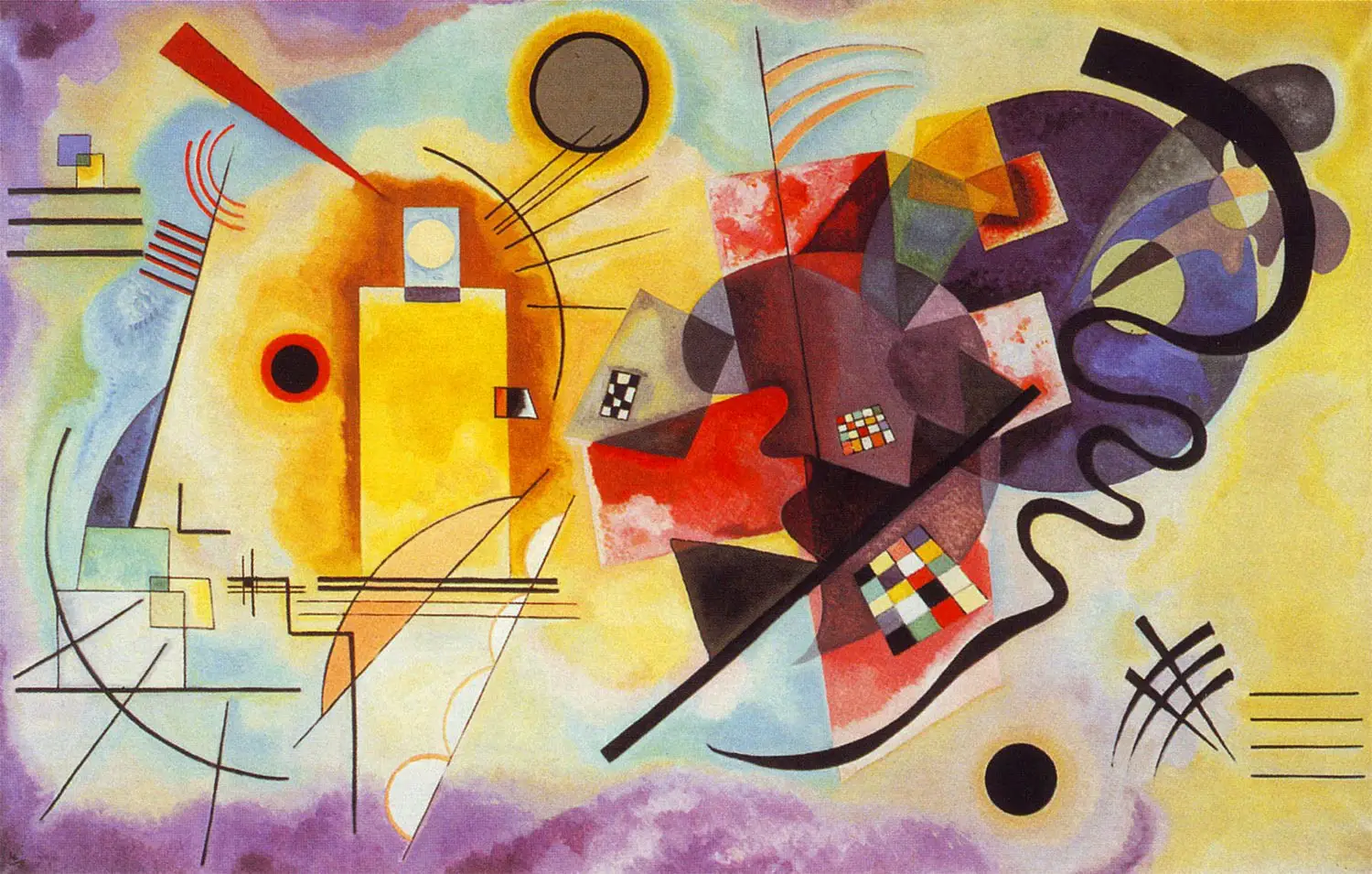
Remember when you were in college and you and some buddies would drop a couple of tabs of acid and stay up all night talking about philosophical stuff, like the meaning of life, who you were, and whether the Kandinsky print on the wall or the Brian Eno music playing the background actually had a specific meaning or was simply some kind of psycho-spiritual Rorschach test?

No? Well, damn, you went to the wrong college or had really straight friends.

My point is that those questions, especially about the meaning of life and "Who am I?", still have value - just because we are older does not mean we should be less curious. Or maybe you are in college now, for the first time, and these questions are even more pressing.

Spend some time with them. Construct some meaning, or deconstruct your sense of self. We are humans being . . . identity is a process, not a thing. You may not be who you think you are.
Who Am I
The Heart Of Unknowing
 
The question of who we are is a seed that can bear much fruit if given the chance to unfold.

At some point in our lives, or perhaps at many points in our lives, we ask the question, “Who am I?” At times like these, we are looking beyond the obvious, beyond our names and the names of the cities and states we came from, into the layers beneath our surface identities. We may feel the need for a deeper sense of purpose in our lives, or we may be ready to accommodate a more complex understanding of the situation in which we find ourselves. Whatever the case, the question of who we are is a seed that can bear much fruit.

It can send us on an exploration of our ancestry, or the past lives of our soul. It can call us to take up journaling in order to discover that voice deep within us that seems to know the answers to a multitude of questions. It can draw our attention so deeply inward that we find the spark of spirit that connects us to every living thing in the universe. One Hindu tradition counsels its practitioners to ask the question over and over, using it as a mantra to lead them inevitably into the heart of the divine.

While there are people who seem to come into the world knowing who they are and why they are here, for the most part the human journey appears to be very much about asking this question and allowing its answers to guide us on our paths. So when we find ourselves in the heart of unknowing, we can have faith that we are in a very human place, as well as a very divine one. “Who am I?” is a timeless mantra, a Zen koan ultimately designed to lead us home, into the part of our minds that finally lets go of questions and answers and finds instead the ability to simply be.

What do you think?
Discuss this article
and share your opinion

Sunday, April 3, 2011

Can Integral Theory Account for Transsexual Experience?

integral theory

In my research on female-to-male transsexuals (FTM, transmen), one of the stories I read over and over again is how these men felt that being born in a female body was some form of mistake or accident.

Henry Rubin's Self-Made Men (2003) offers a great look at the issue of embodiment in FTM men - most of the men in his study offered different understandings of why they were born into the wrong bodies - some are creative, some are biological:
Whereas most individuals feel that they have bodies that adequately express their true selves, these FTMs all feel as if their bodies are erroneous expressions of their core selves. Their bodies fail to express their internal male identities. An expressive error occurred, severing the link between their body and their identity. The men in this study describe a variety of possible errors, ranging from the belief that God had made a mistake, to genetic mutations, to chemical imbalances, to underdeveloped or hidden male anatomy. One man believes he was reincarnated in a female body so that he could avoid the draft during the Vietnam War. This occurrence would be fortuitous, but most of the other men are less than thrilled with the mistakes of God or nature. They have always been men, albeit men whose bodies fail to express this to the world. (p. 150-151)
And it must be stated up front that I trust their experience - I do not believe trans people are mentally ill or suffering from gender identity disorder (GID), which I am not convinced is an actual valid diagnosis for anyone. Here is how the DSM-IV-TR defines GID:
DSM-IV-TR Diagnostic Criteria For Gender Identity Disorder

A. A strong and persistent cross-gender identification (not merely a desire for any perceived cultural advantages of being the other sex). In children, the disturbance is manifested by four (or more) of the following:

  1. repeatedly stated desire to be, or insistence that he or she is, the other sex

  2. in boys, preference for cross-dressing or simulating female attire; in girls, insistence on wearing only stereotypical masculine clothing

  3. strong and persistent preferences for cross-sex roles in make-believe play or persistent fantasies of being the other sex

  4. intense desire to participate in the stereotypical games and pastimes of the other sex

  5. strong preference for playmates of the other sex

B. Persistent discomfort with his or her sex or sense of inappropriateness in the gender role of that sex.

C. The disturbance is not concurrent with a physical intersex condition.

D. The disturbance causes clinically significant distress or impairment in social, occupational, or other important areas of functioning.

When the APA membership discussed the continued relevance and use of this diagnosis, members were split - but some would definitely like to see it revised or eliminated.

Katherine Wilson, Ph.D. said that DSM fails to acknowledge that “many healthy, well-adjusted transsexual people exist” or to distinguish between such individuals and those who would benefit from a medical treatment.

She would like to see GID replaced with a term such as gender dysphoria, which would describe someone who is persistently distressed with his or her physical sex characteristics or with the limiting gender-based roles that society often imposes on men and women. (Hausman, 2003)

More importantly, trans people suffer depression, anxiety, and addictions at about the same rate as the general population (an increased prevalence likely arises as a result of the social ostracism and discrimination they experience). When they come to see a therapist, they often are not coming for counseling around gender issues - it is often for all the same reasons other people go to therapy: family, relationships, work, depression, anxiety, substance use, and so on.

So if their experience is not pathological in the usual sense, how do we account for the discrepancy between gender identity and natal physiology? The term gender dysphoria is useful, I suppose, but in the absence of pronounced brain differences between trans and non-trans people (most likely based in genetics or epigenetics), we lack a solid understanding.

The deeper one gets into these men's lives, the more one learns that it really is not even about the penis for many transmen - their breasts are often a source or torment and their experience of menstruation, especially the first time, was traumatic.

Kristen Schilt and Elroi Waszkiewicz (2006) looked at the role of surgeries in transmen in their presentation to the American Sociological Association:
For most of our interviewees, hormone therapy, which gives transmen male secondary sex characteristics like thicker facial and chest hair, and chest reconstruction take priority over phalloplasty. Chest reconstruction involves a double mastectomy to remove the breasts, signifiers of womanhood,(7) and allows for the surgical construction of a male chest. The effects of testosterone, such as beard growth, create a male appearance. Having facial hair, no visible breasts, a low voice, and “men’s clothes” function as “cultural genitalia” for transmen, as they are assumed to have a penis based on their appearance.(8) Thus, even without a “real” penis, transmen can gain a male social identity that lines up with their personal gender identity.
For transwomen, the situation is a bit different - these women report that living with a penis, although they can pass as women in society, prevents them from fully adopting their internal gender identity - for them, the surgery is important.

Setting an Integral Foundation

In the integral psychology model developed by Ken Wilber, the human being grows and develops as a body, as a psyche, as an interpersonal being, and as a member of society. Each of those domains (the It, the I, the We, and the Its) shape the individual and determine her/his identity - and all of this occurs in an interrelated and interconnected manner.

Ken Wilber (Integral Psychology, 2000), explains the interaction of the quadrants with the now familiar phrase (at least it's familiar in integral circles) "tetra-evolve" (also: tetra-arising, tetra-interact, and so on) - the idea is that all quadrants interact in the creation of a holon:
It is not enough to say that organism and environment coevolve; it is not enough to say that culture and consciousness coevolve. All four of those "tetra-evolve" together. That is, the objective organism (the Upper-Right quadrant), with its DNA, its neuronal pathways, its brain systems, and its behavioral paterns, mutually interacts with the objective environment, ecosystems, and social realities (the Lower Right), and all of those do indeed co-evolve. Likewise, individual consciousness (Upper Left), with its intentionality, structures, and states, arises within, and mutually interacts with, the intersubjective culture (Lower Left) in which it finds itself, and which it in turn helps to create, so that these, too, coevolve. But just as important, subjective intentionality and objective behavior mutually interact (e.g., through will and response), and cultural worldviews mutually interact with social structures, as does individual consciousness and behavior. In other words, all four quadrants-organism, environment, consciousness, and culture--cause and are caused by the others: they "tetra-evolve."

(It does not matter "how" this happens; that "how," I am suggesting, is more fully disclosed at the postrational, nondual waves; at this point, it is only necessary to acknowledge that this interaction seems phenomenologically undeniable. Whether you think it is theoretically possible or not, your mind does interact with your body, your mind interacts with its culture, your mind interacts with the physical organism, and your organism interacts with your environment: they all "tetra-interact.") (p. 183-184)
Among those who accept the AQAL model (pronounced "aw kwal" - all quadrants, all levels, all lines, all states, and all types), this notion of tetra-evolving is taken as foundational. It is one of the primary assumptions upon which the whole model is built - to call it into question brings whole elements of the model into question.

Wilber goes as far as to say this tetra-evolution of the quadrants is essentially obvious: "this interaction seems phenomenologically undeniable." But is it undeniable? If we can't find an explanation that allows for the transsexuality in a non-pathologized manner, then we must question the extent to which body and psyche are inextricably linked.

So then how do we fit trans people into the model?

Trans men and women grow up with the awareness that they were born in the wrong body. In fact, trans people do not feel that they are transforming, for them its a transition:
Their goal is simply to become recognizable. Who they are at heart does not change during transition. Notice that they use the term "transition" rather than "transformation." Although they do have to make a social and physical changeover from one sex to another, they are not transforming, like caterpillars becoming butterflies. They are not changing their personality, only the physical package that houses the person inside the flesh. They are not transforming themselves from women into men. They are repairing the link between their bodies and their gender identity. (Rubin, 2003, p. 143-144)
From their experience and perspective, their body is all wrong for who they are as a gendered person. They would seriously question this assumed linkage that Wilber feels is unquestioned in its obviousness. I would suspect that intersex and other transgender people might also offer resistance to the idea that the body inherently shapes identity, especially gender identity.

The great gift of postmodern and poststructural views of gender identity is that these models break the 1:1 link between genitals and gender identity. The social construction model argues that (1) gender is constructed by each individual, (2) that it is based on conscious or unconscious acceptance or rejection of cultural norms (hegemonic masculinity, for example), and (3) that gender identity is not always equivalent to biological sex identity.

The flaw, for me, is that there is considerable evidence of the ways in which biology and brain structure impact our notions of male or female. The social construction approach tends to minimize or reject this research - but an integral approach cannot make that exception. We must find a way to account for the body in trans identity development.

I am going to propose a rather radical solution to this problem - but I am at a loss as to how to describe this phenomenon without pathologizing it - I can't offer the how or the why, only an attempt at explaining the what.

Subtle Bodies and Gross bodies

In 2003, Wilber posted a series of excerpts from what was to be (before his illness) part of the Kosmos Trilogy begun with Sex, Ecology, Spirituality - one of those postings was Excerpt G: Toward A Comprehensive Theory of Subtle Energies (Shambhala Publications website).

If you choose to read that article/excerpt, please keep in mind that Wilber comes from a Buddhist background, as well as transpersonal psychology, and association with various "nondual" gurus (some toxic, some not). Because of his own contemplative experience and due to the teachings he has received, Wilber accepts ideas about subtle and causal bodies with (it seems to me) little intellectual questioning.

He has talked frequently over the years about the three bodies - gross body (physical matter, the "outside" body), subtle body (contains - or can contain - the 3 levels of emotional, mental, and higher mental), and causal body (contains an overmental consciousness [Aurobindo's overmind], and is also the source for involution of archetypes - see Plotinus).

I've never entirely bought into this notion (it always felt metaphorical to me, even though I feel I can sometimes "read" bodies, which is probably picking up on the subtle body) - while there is considerable overlap on these ideas in the writings of various mystics coming from all of the major wisdom traditions, there has not been anything empirical for me to wrap my brain around.

Until now.

As I was thinking about the topic of trans identity and the lack of "fit" in their birth bodies, I decided to look back at Thomas Metzinger's The Ego Tunnel (2009). He had written extensively on out-of-body-experiences (OBEs) in that book, which he uses as a foundation for his self-model theory of subjectivity.

He lists ownership, agency, and location at three of the defining elements of "me-ness" in most people. While these and other qualities are important, he feels it has become increasingly obvious that . . .
ownership is closest to the core of our target property of self hood. Nevertheless, the experience of being an embodied self is a holistic construct, characterized by part-whole relationships and stemming from many different sources.[5] Phenomenal ownership is not only at the heart of conscious self experience; it also has unconscious precursors. Classical neurology hypothesized about a body schema, an unconscious but constantly updated brain map of limb positions, body shape, and posture.[6] (p. 78)
Ownership would seem to be a hard word for those who feel almost betrayed by their birth bodies. Interestingly, however, in finding a way out of the "location" issue so as to explain OBEs, he may have also given us a solution to the embodiment problem in integral self theory.

Metzinger offers a brief history subtle body thinking to create an intellectual, philosophical, and theoretical foundation for his idea OBEs - here is his list:
Examples are the Hebrew ruach, the Arabic ruh, the Latin spiritus, the Greek pneuma, and the Indian prana. The subtle body is a spatially extended entity that was said to keep the physical body alive and leave it after death.[14] It is also known in theosophy and in other spiritual traditions; for instance, as "the resurrection body" and "the glorified body" in Christianity, "the most sacred body" and "supracelestial body" in Sufism, "the diamond body" in Taoism and Vajrayana, "the light body" or "rainbow body" in Tibetan Buddhism. (p. 86)
He suggests that the idea of the subtle body may be the origin of our modern conception of the soul. More importantly to our work here, however, he tries to ground the idea of the subtle body in contemporary neurobiology (specifically body schemas).
My theory—the self-model theory of subjectivity—says that this subtle body does indeed exist, but it is not made of "angel stuff" or "astral matter:' It is made of pure information, flowing in the brain.[15] Of course, the "flow of information" is just another metaphor, but the information processing level of description is the best we have at this stage of research. It creates empirically testable hypotheses, and it allows us to see things we could not see before. The subtle body is the brain's self-model, and scientific research on the OBE shows this in a particularly striking way. (p. 86)
It's not too challenging to see Metzinger's model and Wilber's model as highly similar, at least as far as a general view is concerned.

For Metzinger, the subtle body is information, the brain's self-model; this is not all that different from Wilber's subtle body containing emotional, mental, and higher mental aspects of self.

Antonio Damasio offers a neurobiological model that can possibly account for this subtle body - and we leave the causal body to Wilber and the esoteric traditions.

In each of his last several books, Damasio has been refining his brain-based model of the self, most recently in Self Comes to Mind (2010). Arguing that the origin of the self and self-consciousness is in the upper brain stem and surrounding region, he posits a proto self, an organized and coherent, though temporary neural mapping of sensation and "primordial" feeling; a core self, a kind of stream of conscious that is modified whenever an object or experience "modifies" the proto self; and an autobiographical self that possesses knowledge of past (memory) and future planning. This third stage is social and spiritual in its construction and not directly connected to brain circuitry in the same way as the earlier stages.

Again, this autobiographical self is similar to Metzinger's and Wilber's versions of the subtle body - and he does a better job of explaining its origins than either Metzinger or Wilber.

So we have the gross physical body - the sexed body - and the subtle body that contains or holds our sense of self.

So is it possible that when these two do not match in terms of sex identity (female body, male self identity, or some other incongruous combination) that we have a transgendered person? Is this the child who grows up to be transsexual?

I think this may be an integrally-oriented explanation. And of course, how this dissonance is lived out will depend wholly on the developmental stage of the individual in question.
  • A mythic-authoritarian stage person, one who is religious, would likely not be able to face or "embody" the lived conflict between body and self.
  • A rational, self-expressive person might simply see gender reassignment surgery as the only obvious option.
  • A relativistic, communally oriented person might see variety of options from (assuming he has a female body) living as a butch female, living as a male with no surgeries, take testosterone, taking T and having chest reconstruction, all the way up to phalloplasty.
There is still much to think about around this topic - but I want to think out loud and maybe get thoughts from people who think I am off the deep end or on the right track or somewhere in between.

Stay tuned.

References:
  • Damasio, A. (2010). Self comes to mind: Constructing the conscious brain. NY: Pantheon Books.
  • Hausman, K. (2003, July 17). Controversy continues to grow over DSM’s GID diagnosis. Psychiatric News, vol. 38, no. 14: 25-32.
  • Metzinger, T. (2009). The ego tunnel: The science of the mind and the myth of the self. NY: Basic Books.
  • Rubin, H. (2003). Self-made men: Identity, embodiment, and recognition. Nashville, TN Vanderbilt University Press.
  • Schilt, K. R. & Waszkiewicz, E. (2006, Aug. 10). I feel so much more in my body: Challenging the significance of the penis in transsexual men’s bodies. Paper presented at the annual meeting of the American Sociological Association, Montreal Convention Center, Montreal, Quebec, Canada. Accessed online: 2011-03-13 from http://www.allacademic.com/meta/p104747_index.html.
  • Wilber, K. (2000). Integral psychology: Consciousness, spirit, psychology, therapy. Boston: Shambhala Publications, Inc.
  • Wilber, K. (2003). Excerpt G: Toward a comprehensive theory of subtle energies. (Shambhala Publications website).