Showing posts with label death. Show all posts

Wednesday, May 14, 2014

Have a Purpose, Live Much Longer

This is an interesting article from Esquire - It's short, so below it is a longer piece from the Association for Psychological Science. Below that is the abstract - the full article is hidden from public view behind a greedy pay wall.

The data for this study comes from an open access data collection project, available here and here.

Full Citation:
Hill, PL & Turiano, NA. (2014, May 8). Purpose in Life as a Predictor of Mortality Across Adulthood. Psychological Science.

Have a Purpose, Live Much Longer

It doesn't matter what it is. If you care for something other than yourself, you'll live much longer.

By Ned Hepburn on May 12, 2014


Is your passion riding a bike with a bunch of boxes on it? Good. You'll live longer. 
Unless you die in a horrible bike/box accident.
Life got you down? Can't get a handle on things? Staring into the abyss of your soul, turning frantically to whiskey, weird drugs and the dredges of society in the hopes that you'll feel something, anything? Well, first, perhaps switch to beer. Second, maybe find yourself a purpose. Because if Navin R. Johnson has a special purpose, you should, too.

Seriously. Scientists are saying that "having a purpose" in life will add years onto said life.

Six thousand people from all walks of life were part of a 14-year study. Some admitted to wandering aimlessly while others were focused and driven. Unsurprisingly, the most focused people -- the ones that had a "purpose" -- lived longer. Interestingly, 9% of the subjects died in the 14 year period and those that died had reported of having a lower purpose in life.

"Purpose" is defined here by living for something other than yourself. Be it religion, your job, a kid, your folks, family, your career, whatever -- life is better, and now longer, if you have a reason to get up in the morning.

Patrick Hill of Carleton University in Canada, who conducted the study explains:
"There are a lot of reasons to believe that being purposeful might help protect older adults more so than younger ones. For instance, adults might need a sense of direction more, after they have left the workplace and lost that source for organizing their daily events. In addition, older adults are more likely to face mortality risks than younger adults. To show that purpose predicts longer lives for younger and older adults alike is pretty interesting, and underscores the power of the construct."
Now that these scientists spent 14 years studying a concept as vague as "purpose," maybe they could be spend a year or so on a deoderant that works past lunch. Just a suggestion that might make your life even longer, scientists.
* * * * *


Having a Sense of Purpose May Add Years to Your Life

May 12, 2014  
Feeling that you have a sense of purpose in life may help you live longer, no matter what your age, according to research published in Psychological Science, a journal of the Association for Psychological Science.

The research has clear implications for promoting positive aging and adult development, says lead researcher Patrick Hill of Carleton University in Canada:

“Our findings point to the fact that finding a direction for life, and setting overarching goals for what you want to achieve can help you actually live longer, regardless of when you find your purpose,” says Hill. “So the earlier someone comes to a direction for life, the earlier these protective effects may be able to occur.”

Previous studies have suggested that finding a purpose in life lowers risk of mortality above and beyond other factors that are known to predict longevity.

But, Hill points out, almost no research examined whether the benefits of purpose vary over time, such as across different developmental periods or after important life transitions.

Hill and colleague Nicholas Turiano of the University of Rochester Medical Center decided to explore this question, taking advantage of the nationally representative data available from the Midlife in the United States (MIDUS) study.

The researchers looked at data from over 6000 participants, focusing on their self-reported purpose in life (e.g., “Some people wander aimlessly through life, but I am not one of them”) and other psychosocial variables that gauged their positive relations with others and their experience of positive and negative emotions.

Over the 14-year follow-up period represented in the MIDUS data, 569 of the participants had died (about 9% of the sample). Those who had died had reported lower purpose in life and fewer positive relations than did survivors.

Greater purpose in life consistently predicted lower mortality risk across the lifespan, showing the same benefit for younger, middle-aged, and older participants across the follow-up period.

This consistency came as a surprise to the researchers:

“There are a lot of reasons to believe that being purposeful might help protect older adults more so than younger ones,” says Hill. “For instance, adults might need a sense of direction more, after they have left the workplace and lost that source for organizing their daily events. In addition, older adults are more likely to face mortality risks than younger adults.”

“To show that purpose predicts longer lives for younger and older adults alike is pretty interesting, and underscores the power of the construct,” he explains.

Purpose had similar benefits for adults regardless of retirement status, a known mortality risk factor. And the longevity benefits of purpose in life held even after other indicators of psychological well-being, such as positive relations and positive emotions, were taken into account.

“These findings suggest that there’s something unique about finding a purpose that seems to be leading to greater longevity,” says Hill.

The researchers are currently investigating whether having a purpose might lead people to adopt healthier lifestyles, thereby boosting longevity.

Hill and Turiano are also interested in examining whether their findings hold for outcomes other than mortality.

“In so doing, we can better understand the value of finding a purpose throughout the lifespan, and whether it provides different benefits for different people,” Hill concludes.


Preparation of the manuscript was supported through funding from the National Institute of Mental Health (Grant T32-MH018911-23), and the data collection was supported by Grant P01-AG020166 from the National Institute on Aging.

* * * * *

Purpose in Life as a Predictor of Mortality Across Adulthood


Patrick L. Hill [1], Nicholas A. Turiano [2]
1. Department of Psychology, Carleton University
2. Department of Psychiatry, University of Rochester Medical Center, Rochester, New York

Abstract


Having a purpose in life has been cited consistently as an indicator of healthy aging for several reasons, including its potential for reducing mortality risk. In the current study, we sought to extend previous findings by examining whether purpose in life promotes longevity across the adult years, using data from the longitudinal Midlife in the United States (MIDUS) sample. Proportional-hazards models demonstrated that purposeful individuals lived longer than their counterparts did during the 14 years after the baseline assessment, even when controlling for other markers of psychological and affective well-being. Moreover, these longevity benefits did not appear to be conditional on the participants’ age, how long they lived during the follow-up period, or whether they had retired from the workforce. In other words, having a purpose in life appears to widely buffer against mortality risk across the adult years.

Sunday, May 11, 2014

It Took Losing My Mother to Finally Know Her

I wrote this several years ago and posted it on Integral Options Cafe in 2005. I thought it might be a good time to reshare this post, in honor of sons and mothers who struggle to know each other as people, and maybe as encouragement to change that, if at all possible.

When I posted this piece, my mother's uterine cancer had just returned and metastasized into her whole abdomen and into her brain. A few days later, on August 24 of 2005, I sat beside her in a hospice as her breathing slowed and then stopped. A quiet end to a painful life. 

Here is a picture of me from back in 2003, give or take, about 36 years old. Unfortunately, I have no pictures of my mother scanned into this computer.

Getting to Know Ruth

Three years ago, my mother was diagnosed with uterine cancer. The doctors thought it was terminal. Somehow, she recovered from the surgery, the chemo, and the radiation and lived for two+ years in remission. But uterine cancer nearly always returns, and so it has. My mother is in a morphine-induced coma to ease her pain. She will likely never awaken.

When she was first diagnosed, I wrote the following entry in my journal – a confession of sorts, as well as a tribute to the woman who raised me as best she could. She lasted three years longer than anyone thought possible, long enough to lose her daughter and to see her son find himself as a man.


Getting to Know Ruth
5.25.02


For thirty-five years, my life until this very moment, my mother has been a non-person to me. Obviously, I knew she was human, had a history before my birth, and possessed her own hopes and fears. But I never really saw or experienced her as a real person, a complete human being. She was my mother, a collection of feelings and memories that I had accumulated over these thirty-five years.

A few nights ago, however, I found out she has cancer, very serious cancer. She has been sick for almost a month, but now it is official: uterine cancer, maybe more that will be discovered in surgery. But the surgery will have to wait until they can control some blood clotting that might kill her during a surgical procedure.

She told me she is tired, that after seventy-two years -- very difficult, challenging, painful years -- she is ready to die.

For the first time in my life, my experience of her shifted. It wasn’t the first time that I was in a care-taking role with her (for several years after my father died, when I was 13, I was the adult in the house), so the shift has to be something else. After a lot of tears, a few hours of writing in my journal, and listening to Lou Reed’s Magic and Loss, I began to clearly see my mother for the first time -- to see her life, her struggles, her loves, all from a place outside my own needs and fears.

My mother has become a person, a person whom I love very much, a person whom I hardly know, a person who is dying.

*****

My mother was born in February, 1930, along with a fraternal twin brother. When she was conceived, the world seemed to offer unlimited potential. There were jobs, and it was easy to support a family of five, even for the children of German immigrants at a time when Germans were not trusted after the First World War.

Then the stock market crashed and the Great Depression began. Big cities like Chicago – where my mother's family settled – were hit hard. Jobs of any kind became scarce. Suddenly it was next to impossible to support a family of five. My grandfather took any work he could get, but still, there was often only enough food for one meager meal each day. Sugar cubes were given to satisfy the hunger of crying children. The struggle to feed the family went on for several years. My mother and her brother developed rickets, a deficiency illness caused by a lack of calcium and vitamin D. My mother and her brother were severely malnourished at an age when proper nutrition determines normal physical and intellectual development.

As a result of this malnutrition, my mother, like her brother, did not experience normal intellectual growth. Her IQ scores would likely test in the range of 70 to 80. By most standards, she is developmentally disabled. She has had difficulty living independently during those years when she was not living with her mother or married.

*****

I was thirteen when my father died. By that time I had been identified as “talented and gifted” and placed in advanced classes in school. It was difficult for a strong-willed and precocious child to grow up with a challenged parent as primary caregiver.

When my father died, I was the one who took care of the funeral arrangements, the insurance policy, the government pension my mother would receive, and all the other financial decisions. I continued to perform most of the money-related tasks for two or three years. However, within six months of my father’s death, I was smoking pot regularly, drinking whenever possible, and beginning to show a lot of unconscious anger. 


Emotionally, I was completely shut down, using chemicals to stay numb. My straight A grades began to decline. I was in pain and needed a strong mother to comfort me, but she was in too much pain of her own, too lost to be able to help my sister or me. She was diagnosed with depression and put on medications that made her sleep a lot, although the sleeping is also part of the depression.

Over the next several years, I became a daily drug user and was arrested for alcohol possession, vandalism, and growing my own marijuana. Grace alone kept me out of jail or the morgue for the better part of my teen years. The times I was locked up only made me angrier and more determined to feel nothing.

During those years, my relationship with my mother was terrible. I was incapable of seeing how much pain she was in, how lost she felt, how much she needed my love and support. However, as I became increasingly lost in a haze of smoke, drink, and pills, she learned to pay the bills on her own, got a driver’s license for the first time in her life, and found the strength to call the police when she found my little pot-growing operation. I was sixteen and completely out of control.

Although I knew my mother was different from other mothers, even when I was young, it wasn’t until I was a teenager that I truly became aware of the reality. I wasn’t understanding or compassionate. I was angry. I made fun of her in front of my friends. I told her she was stupid. I hurt her in more ways than I can count. And she just kept on loving me and doing her best to keep me alive and healthy.

As I write this, I still feel so much shame for those actions and words. I’ve spent the last 15 years trying to make up for the pain I caused her during those five years when I was acting out every shadow element in my psyche. If I had 100 more years to make amends, it would not be enough.

When I was 19, after hitting my personal bottom, I cleaned up my life and went to college. I studied psychology, literature, and religions. I began to learn a little about why I was so unconscious and confused during my teen years, and pieces of why my mother has had to struggle in her life. Most importantly, I began to learn about powers greater than me in this amazing Universe.

*****

My mother is not like other mothers. She was never able to help me with my homework. She seldom read to me. She was incapable of advising me on whom to go to parties with when I was in middle school and dating was new and awkward. When I began to publish poems after high school, she never asked to read them or showed any interest in my writing. When I was in college, she didn’t ask about my studies, had no awareness of national or international events, and only wanted to know if I was employed.

She isn’t like other mothers. I saw the mothers of my friends turn their backs and walk away from troubled sons and daughters, unable to face their failures as a parent and their children's pain. But my mother never stopped loving me, supporting me, or trying to help me, no matter how awful I became, and I became very awful. Where other mothers might or did give up, she loved me even more.

After 35 years, I am finally able to see that she was gifted in ways I could not understand earlier in my life. She has an amazing heart, a capacity to love that my mind can barely grasp. I didn’t have the mother I wanted, but I had the mother I needed. To get to where I am now in my life, I had to go through the pain and confusion of my youth, and I didn’t need someone to guide me through it, I just needed someone to love me no matter how lost I found myself. If I had been guided through those difficult experiences, without the pain, there would have been no learning, no understanding, and no wisdom gained from the experience of finding my own way through the dark places within me.

I would not wish my teen years on anyone, but those experiences are what allow me to sit here now and write these words. If I hadn't been so out of control, my mother may have never found the strength to take control of her own life and learn to be as independent as she became. Again, we get what we need, not what we want.

So, now she is dying. This comes at a time when my life is in a liminal space between who I was and who I will become, a self-chosen disruption of the course my life was following. In the middle of all this, my mother is diagnosed with cancer.

Odd as it may sound, the timing for this to happen in my life could not be better. I am in a unique position in my life to change the way I see the world, to change the meta-narrative of my life, to re-open my heart in ways I have been too frightened to do in the past. For the first time in my life I am on the path of self-discovery and healing. It makes all the difference.

From this place in my life, I have learned to step back from myself, to see through the eyes of my observer self, or Witness. Through those eyes I see my mother as a person. I can see her struggles, her fears, her joys, her successes. I see her weaknesses and her strengths. I see her not as my mother, but as wonderful human being who has survived 72 painful, challenging years while holding onto the love in her heart. I see a woman who is not capable of knowing how extraordinary she is. I see a woman who inspires me to open my heart and learn to love in the same selfless way she has loved others for her entire life.

I am blessed to come to see my mother as the human being she is, not just as my mother. I have been given a chance to know her in ways I could never imagine before. I want to learn how she was able to love others so easily, despite being told she was not like everyone else and being treated as deficient.

My mother is not like other mothers. For however much time she has left, I want to learn about her fears, her joys, her life. I want to know the person who is named Ruth. 


R.I.P., Ruth Sophie Harryman, born Ruth Sophie Koenig.

Sunday, February 2, 2014

Philip Seymour Hoffman - Aged 46, Overdose - RIP


Sad . . . another talented and apparently tormented person succumbs to addiction and perishes with the needle still in his arm. The picture above is Hoffman and his son at a Knicks basketball game.

Brendan O'Connor on Gawker has a brief post suggesting three of his favorite Hoffman performances. He left one out, however, that I quite liked, Magnolia (1999):


He was also in one of the best funny movies ever, The Big Lebowski.

Remembering Philip Seymour Hoffman's Best Performances
Brendan O'Connor | Gawker

Remembering Philip Seymour Hoffman's Best Performances
"For me, acting is torturous, and it's torturous because you know it's a beautiful thing. I was young once, and I said, That's beautiful and I want that. Wanting it is easy, but trying to be great — well, that's absolutely torturous."
That's Philip Seymour Hoffman, who was found dead in his apartment earlier today, talking to Lynn Hirschberg in a 2008 New York Times Magazine profile. The actor was known for the depth of his characters as well as his range.

Here are some of my favorite Hoffman performances. Share your favorites below.

Almost Famous (2000):


Synechdoche, New York (2008):


The Master (2012):


Friday, December 6, 2013

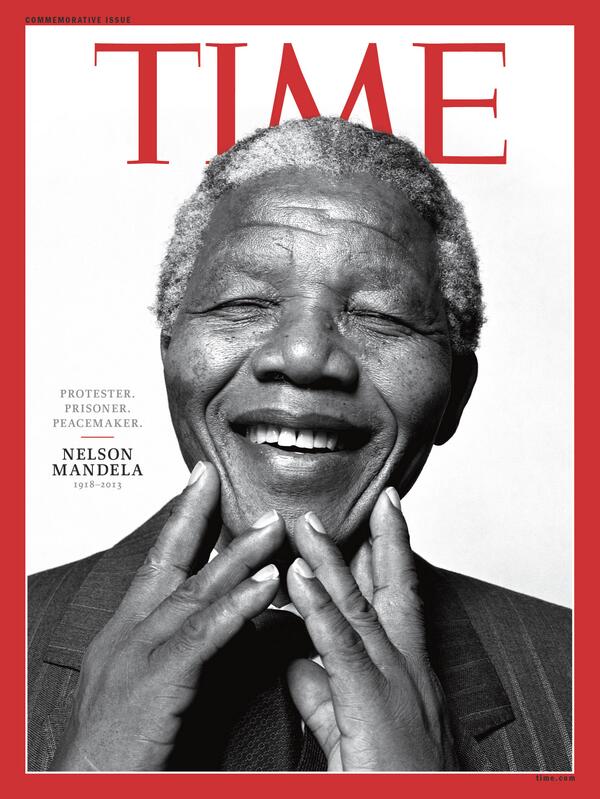
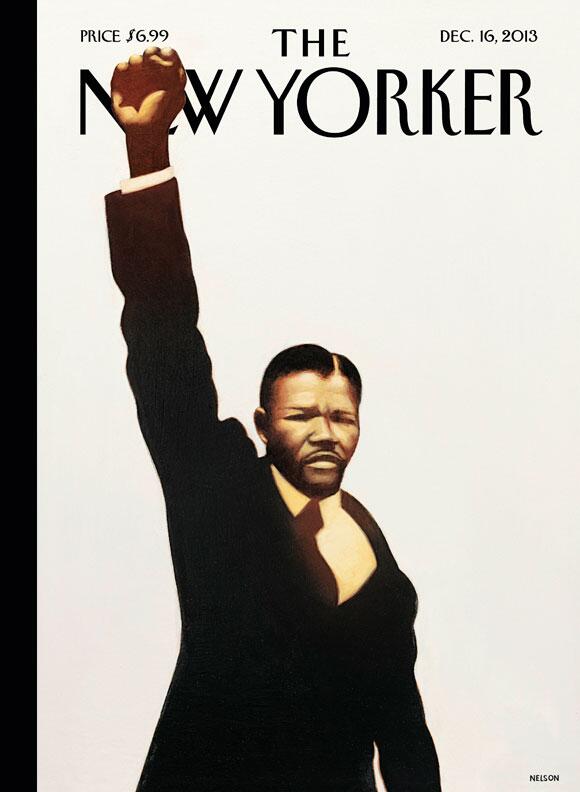
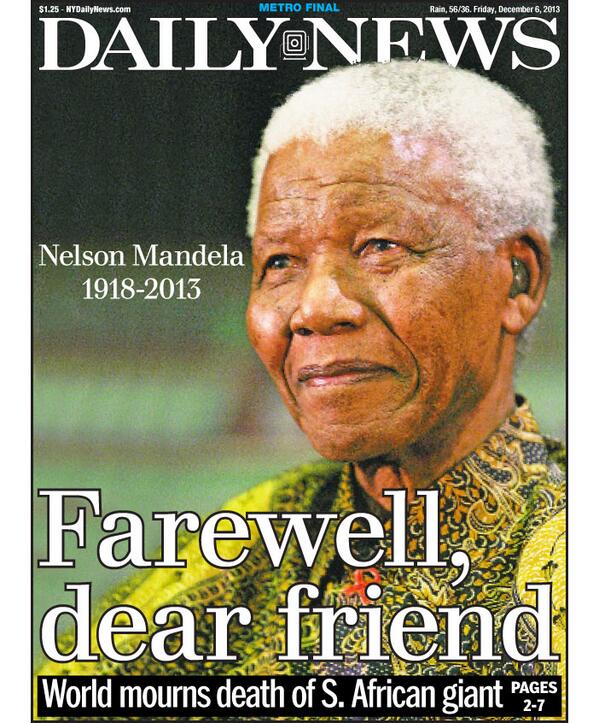
Remembering Nelson Mandela

View image on Twitter

The outpouring of love for Nelson Mandela since his death on Thursday night (at the age of 95) has been nothing short of staggering.

Here is some of the press coverage . . . click the links to see the whole of any article.

From NPR's On Point with Tom Ashbrook:

Remembering Nelson Mandela, 1918-2013

We remember South African anti-apartheid icon Nelson Mandela, father of a nation.

Former South African President Nelson Mandela reacts at the Mandela foundation, in Johannesburg, South Africa, Tuesday June 2, 2009, during a meeting with a group of American and South African students as part of a series of activities leading to Mandela Day on July 18th. The anti-apartheid leader died in his home on Dec. 5, 2013.


Guests

From Tom’s Reading List

NPR: Nelson Mandela, Inspiration To World, Dies At 95 — “From his childhood as a herd boy, Mandela went on to lead the African National Congress’ struggle against the racially oppressive, apartheid regime of South Africa. For his efforts, he spent 27 years behind bars as a political prisoner. In 1994, after Mandela was elected president in South Africa’s first democratic elections, Archbishop Desmond Tutu shook with elation as he welcomed Mandela to a rally in Cape Town.’One man inspires us all. One man inspires the whole world,’ Tutu said at the time. ‘Ladies and gentlemen, friends, fellow South Africans, welcome our brand new state president — out of the box: Nelson Mandela.’”

Bloomberg News: Nelson Mandela, Who Led South Africa Past Apartheid, Dies at 95 – “Released from prison in 1990, Mandela negotiated a peaceful end to the old regime with leaders of South Africa’s white minority government. Three years later, he won the Nobel Peace Prize. He served as president from 1994 to 1999, before stepping down voluntarily. Mandela came to symbolize proof that seemingly intractable disputes could be resolved. Former Palestinian Authority President Yasser Arafat, East Timorese independence leader Xanana Gusmao and warring factions in Burundi all asked him to help mediate conflicts. On his part, Mandela never wavered from espousing non-violence after the settlement talks began.”

Wall Street Journal: Nelson Mandela Dies at 95 – “It was as a prisoner that Mr. Mandela first became a rallying point for opponents of apartheid. After he was sentenced to life in prison in 1964, he spent more than a quarter-century behind bars, much of it in a maximum-security prison on Robben Island, off the coast of Cape Town.By the time he was released from a different prison in 1990, the tables had been turned. South Africa had become a pariah nation and Mr. Mandela would lead his country’s re-embrace of a world that had spurned its racist government.”
* * * * *
From The Skinny:

R.I.P. Nelson Mandela: The World Reacts

Nelson Mandela
Feature by Bram E. Gieben.
Published 06 December 2013

Nelson Mandela, the former South African President and civil rights campaigner who led South Africa out of the apartheid era, passed away last night after an extended illness at the age of 95. Mandela was the South African presidency from 1994 to 1995, becoming the first black South African to hold the office. As a young anti-apartheid revolutionary, he was tried for treason in 1962 and imprisoned for 27 years. In the early 90s, he published his autobiography Long Walk To Freedom, and in 1994 was instrumental in setting up South Africa's first multi-racial elections. In 1993 he was given the Nobel Peace Prize. Since then, he has campaigned on issues such as poverty, sexual health, and other issues affecting his homeland.

Glasgow has a special relationship with Mandela – he visited the city in 1993 shortly after his release, and was given the freedom of the city in a ceremony which honoured him for his civil rights work, and in recognition of the long campaign to free him, in which the people of Glasgow were deeply involved from 1962 onwards. Mandela never forgot the solidarity the people of Glasgow showed towards him, commenting in his acceptance speech in 93: "While we were physically denied our freedom in the country of our birth, a city 6,000 miles away, and as renowned as Glasgow, refused to accept the legitimacy of the apartheid system, and declared us to be free." For a full account of Glasgow's relationship with Mandela, read this article on the BBC News site.
* * * * *

From The Economist's Intelligent Life magazine, an encore of an article from 2008 on the eventual death of Mandela (at his 90th birthday party).


TWILIGHT OF A LIVING GOD


Intelligent Life


From the Archive: every month, his foundation receives over a thousand requests for his help. Adam Roberts watches Nelson Mandela in action and talks to those closest to him

From INTELLIGENT LIFE magazine, Summer 2008


Double acts don't come much better. Nelson Mandela enters grinning from a door on the right and shuffles forward, one hand clasping an ivory-white cane, the other arm held by a blonde assistant. His eyes are twinkling but watery, his ankles are permanently swollen, and his knees hardly bend--the result of an accident in prison with a pile of seaweed. "Madiba!" murmurs an excited crowd, using his clan name. "Tata Madiba."

He makes it to the centre of the room and is met by the one person who can upstage him. Anyone sensitive to bright colours should look away now. As usual, Mandela is a tropical pensioner: white hair with a touch of grey; a white vest under a shirt of shimmery blue, gold and brown; a pair of gold pens in his top pocket. Archbishop Desmond Tutu, also smiling, bounces up. He is resplendent in full-length purple and his head is smooth, shiny, a contrast to Mandela's shock of white. Around Tutu's neck swings a golden cross, the size of a ping-pong bat.

Politicians and veterans of the struggle for democracy have gathered in Johannesburg to launch the celebrations for Mandela's 90th birthday, which falls on July 18th. The launch is in March: the festivities will take months, and will include a charity concert in Hyde Park, London, featuring Queen, Annie Lennox and leading African bands. Film crews and cameramen pack the room and late-summer sunshine pours through the windows as the two old men hold court. Tutu stands with his back straight, palms pressed together in front of his face, looking not so much like a bishop as a schoolboy imitating a bishop. Mandela steps forward as Tutu bows deeply from the waist and holds himself low, showing off his bald pate. Somehow he makes the gesture both respectful and slightly mocking.


Mandela: "I am a sinner."
Tutu (standing back up): "I will absolve you!"
Mandela: "If you clear the way, I can knock on the doors of heaven!"


The two men break up laughing and the room roars along. We are giggling about the impending death of probably the most popular person on the planet.
* * * * *

From The Week, all of the coverage from everywhere else:

Remembering Nelson Mandela: The world's front pages

The covers of newspapers and magazines are one of our most enduring public memorials to global heroes. Here's a sampling of how the world is memorializing Mandela.


By Peter Weber

When an icon like Nelson Mandela dies, "dead tree" journalism comes to life Twitter/The Week

The world is mourning the death and celebrating the life of South African icon Nelson Mandela in numerous ways, both publicly and privately. World leaders are paying their respects, people are sharing their favorite Mandela quotes and photos, and, of course, newspapers are updating and running their long-written obituaries for the 95-year-old anti-apartheid leader who went on to become South Africa's first black president.

In many ways, the front pages of newspapers and covers of magazines are our most enduring public memorials to world leaders and global celebrities. Here's a sampling of how print media outlets from three continents are memorializing the man South Africans reverently call Madiba (his Xhosa name) or Tata (father) . . . .

View image on Twitter

 View image on Twitter

Friday, November 29, 2013

A Son Learns About Life Through His Father's Death


Over at his Psychology Today blog, Going Out Not Knowing, David B. Seaburn, Ph.D., L.M.F.T. discusses being with his father the day he died, and the lessons he learned on life from being with father as he died.
I was forty-eight when he died. I am sixty-three now. I carry his pocket knife with me every day. At one time I lost his knife for two years so my brother bought me another one exactly like it. Now I can carry two. I have his watch on the night stand beside my bed.
Fatherloss is one of the most difficult experiences in many men's lives. One of the better books on this topic is Fatherloss: How Sons of All Ages Come to Terms with the Deaths of Their Dads by Neil Chethik - you can read the introduction here.

The Day My Father Died

Being with my father when he died taught me more about life than death.

Published on November 9, 2013 by David B. Seaburn, Ph.D., L.M.F.T. in Going Out Not Knowing


November 11, 1998 dawned grey and cold. I had been staying with my brother and mother in Ellwood City, Pa. off and on for six weeks since my father had been diagnosed with acute leukemia. The doctor had given him six to eight weeks to live. It had been a long twenty-two years since my father had had a heart attack, years littered with health problems, years of caregiving for my mother. My father was eighty years old and proud of it. His brothers had all died before him, mostly of heart disease, one at the age of thirty-six. The day before he died was my parents’ fifty-sixth wedding anniversary, something that he was unaware of. We crossed our fingers that day, hoping he would live through it.

A few days before his death, my mother and I received a call in the middle of the night from my father’s nurse. She said he was restless and afraid and that we should come to the hospital. When we arrived, he was not afraid at all. In fact, he was smiling and more alert than he had been in many days. My mother and I stood by the bed talking with him. He joked that a beer would taste good about now. At one point he asked my mother to kiss him, which she did. Then he asked me to say a prayer, so the three of us held hands while I prayed.

That was his last lucid moment. He was unconscious most of the time after that.

I knew he was dying, but I did not recognize this as his goodbye. We had been making daily trips to the hospital for weeks and had fallen into the dying routine with its waiting, and watching, and remembering, and lunches at the hospital café, and stories, and laughter, and sadness, and silence. I realized later that I had assumed that my father would just go on dying, but never actually die.


On the morning of November 11 I took my dog, Abby, for a walk in the school yard near my parents’ house. We stopped and talked to a neighbor who asked all about my father. When I got back to the house, it was a little after 9am, a later start than usual. My mother wasn’t quite ready. My brother was on the road, his trucking job not allowing him time to be with us that morning, although he was with us emotionally throughout. I told my mother that I would go to the hospital, see how things were, and then come back to pick her up.

When I got to hospital, I checked in with the nursing staff at the desk to see how my father’s night had been. Then I went to his room where he lay on his back, his mouth open, his breathing slowed. I spoke to him as I always did, reporting on the weather, talking a little about how the Steelers were doing. I put some water on a tiny sponge and dabbed his lips. I cleaned his nose. Then I sat on the naugahyde lounger beside him. His breathing was labored. I listened to him exhale and waited anxiously for his inhale. I counted the seconds between each breath. One, two, three, four, more anxious now, five, six, seven, finally another inhale and I felt relieved. Again, and again, and again. This went on for several minutes. Around 9.20am----one, two, three, four, five, six, seven, eight, nine--- I stood up and looked at Dad. I listened and watched. I placed my hand on his chest. By then I knew he had died. I held his hand, his fingers still soft and warm.

Quietness.

I had the strangest sensation (perhaps my last moment of denial) that my dad would wake up and tell me all about dying, what it was like, how it had gone, as if having triumphed over the last of life’s challenges, he could give me some wisdom about what to expect.

I was forty-eight when he died. I am sixty-three now. I carry his pocket knife with me every day. At one time I lost his knife for two years so my brother bought me another one exactly like it. Now I can carry two. I have his watch on the night stand beside my bed. When my wife and I watch our two little granddaughters (ages four and two), they love to play in our bedroom. The two-year old, Makayla, always stands on the bench beside my nightstand and puts my father’s watch on. It slides up to her armpit as she holds her arm up high. When she is done, she puts it back exactly where she found it.

When I was forty-eight, I hoped my father’s death would teach me about dying. At sixty-three, I think it has taught me mostly about living; that life is short but beautiful; that even though time is measured, there is enough, if you pay attention; and that everything that matters in life is here, now.

David B. Seaburn, Ph.D., L.M.F.T.


David B. Seaburn, Ph.D., L.M.F.T., served a rural country parish, worked in community mental health, was an assistant professor of psychiatry and family medicine at the University of Rochester Medical Center for twenty years, and directed a public school-based free family counseling center. He co-authored two professional books, Family-Oriented Primary Care (1990) and Models of Collaboration (1996), over sixty articles, and four novels: Chimney Bluffs (2012), Charlie No Face (2011—Finalist in General Fiction, National Indie Excellence Awards), Pumpkin Hill (2007), and Darkness is as Light (2005). He and his wife live near Rochester, NY. They have two adult daughters and two wonderful granddaughters.

Thursday, July 25, 2013

Julian Baggini - The Death of My Father (via Aeon Magazine)

At 13, I was young when my father died. I didn't have the resources or skills an adult might possess to process the pain, the confusion, the anger, the almost (but not quite) invisible sense of abandonment. As an adult, when my mother died, I had the skills and I was able to think and write and process the experience through language, as Baggini describes below.

Fatherloss is an interesting topic in masculinity studies - how we are when we lose our fathers has a real impact on it affects us as men (or boys).

This excellent article by one of my favorite living philosophers, Julian Baggini, author of The Ego Trick and many other fine books, comes from the always interesting Aeon Magazine.

The Death of My Father

When someone close to you dies, the very fabric of your life is ripped to shreds. Is philosophy any consolation?


by Julian Baggini
Published on 5 July 2013

A funeral in Italy, 1951. Photo by Henri Cartier-Bresson/Magnum Photos


Julian Baggini is a writer and founding editor of The Philosophers’ Magazine. His latest book is The Shrink and the Sage: A Guide to Modern Dilemmas, co-authored with Antonia Macaro. His previous book, a "Best Books of 2012" selection on many lists, was The Ego Trick.

I’m dealing with the death of my father the way I deal with most things: by thinking, and processing those thoughts through writing, fingers to keyboard. Given my philosophical bent, these thoughts wander from his particular death to mortality in general. That might strike you as cold, excessively rational, analytic. But the only rule about grief is that there are no rules. Reactions to death cannot be neatly divided between the normal or abnormal, appropriate and inappropriate, right and wrong. We muddle through death as we muddle through life, each scrambling in the dark for a way through.

At times like these, philosophers are of limited use because when they have talked about dying they have tended to focus on what it means for the one who dies. Plato, for instance, called philosophy a preparation for death, while Epicurus told us we had nothing to fear from dying. But such thoughts are not much use to those who die suddenly. My father had seemed fit as a fiddle, but he was struck by a heart attack and died on the spot. The same happened to his brother and his brother-in-law, while his own father was killed instantly by a stroke. It is as though the Grim Reaper enjoys playing a cruel joke on those who look intently ahead. Those who prepare to meet him face-to-face are just as likely to find he sneaks up behind them and takes them unawares.

A much more useful philosophy would help us to prepare for the deaths of others. I have never been sure that philosophy does a good job of that. But perhaps a philosophical outlook can help us make sense of death when it comes close to us. It seems to me there are three dimensions to this: what the death means for the one who has died; what it means for those who survive; and, perhaps most of all, the sheer shock and surprise to find death not knocking at the door but crashing through it, uninvited.

If death comes at the end of a long illness, most would say it is easier to face, even if nothing can fully prepare you for the day when it finally comes. However, when the death is sudden, almost everyone talks the language of incredulity. ‘It doesn’t seem possible.’ ‘It doesn’t seem real.’ ‘I still can’t believe it.’ I’ve heard phrases such as these again and again over recent days. My father had not lived in his native Italy for years but he was back for one of his periodic visits, and on this trip he seems to have been exceptionally sociable. The number of people who had chatted to him for the first time in years in the days before his death is extraordinary. And they all said that he seemed fit, well, healthy. Those who knew him longer talked about how they assumed this slim cyclist and vegetarian, who was a strictly social drinker and smoker, would outlive his generally stouter, less careful, more sedentary peers.

I cannot share their feelings of impossibility. Yes, there are elements of unreality about it all but, for as long as I can remember, I have been more or less constantly aware that death can come to anyone at any time. So I’m genuinely not surprised when occasionally it does, even when it’s to a member of my family. Of course, some people will have a longer life than others, but I know that the rule of chance defeats the law of averages for any given person.

So what surprises me is not that people die or get sick, but that other people continue to be so surprised when it happens. Am I unusual in this because I have devoted so much of my life to philosophy? I suspect the causal arrow is the other way round: I have devoted so much of my life to philosophy because I am unusual in this. After all, it is not as though the basic insight depends on a close reading of the Stoics, Socrates or Schopenhauer. I am talking about the facts about death that everyone knows, but cannot necessarily accept. All that it takes to ingrain them is the philosophical habit of turning easily understood ideas into the more difficult practice of how you perceive the world day by day.

Cultural norms have their part to play, too. In the village where my father died and was interred, there is no hiding from death when it comes, no disguising what has happened. Every passing is marked by posters announcing the time and place of the funeral, so wherever you go there is always some reminder of death’s omnipresence. Nor are they coy about corpses. My father was laid out in a coffin in his brothers’ house, a glass lid allowing him to be seen, and his body kept cool by a refrigeration unit. People popped in and out all day to see him, often talking over his body.

The ceremonial niceties, such as the huge free-standing electric candle sticks that were placed either side of his coffin, contrasted with the utilitarian brutalities of the thing. The undertakers, for instance, sealed up the metal lining of his coffin by putting on the lid, getting out a fiery soldering iron and welding him in. At the graveyard, he was interred into a wall, and after the priest had given a last splash of his holy water, two men in grubby clothes set to work bricking him up.

It’s very different in Britain, where bodies are whisked away to mortuaries and seeing them is something you can avoid altogether without censure. The Italian way — at least the one I saw — has to be better. Everything here seemed designed to make you as aware as possible of the reality of death and its natural place in the life cycle. But such is the human desire to avoid facing mortality that even in Italy people seem genuinely shocked to see another one bite the dust. If anyone does look at the empty cubicles in the cemetery wall and thinks ‘One of these has my name on it,’ that thought seems to be swiftly buried with the body.

These strange facts persuade me that the shock of death can be diminished by how we think about it, if we think about it as a reality and not just an abstract idea. If we really do take on board the fickle nature of fate, the inevitability of death and the randomness of its timing, then although there might be other things about a death that leave us devastated, the mere surprise and shock of it need not be one of them.

There are, of course, plenty of other things about a death to get upset about, most obviously our sadness for the person who has died. However, philosophers have struggled to make sense of this and, as a result, have often concluded that there is simply nothing to be concerned about. The person has died. He cannot suffer in any way. There is no point in feeling sorry about what he might have missed out on because there is no longer anyone there to feel sorry for. The only people who can feel any pain are those who survive.

I think there’s something deeply wrong about this. The sadness that one feels for the deceased is not that he is, in a strange way, still around but unable to appreciate life, but rather that he is no longer around at all. He is not suffering but nor is he enjoying, savouring, loving, laughing, or appreciating either. That is the cause of our sadness, for him or, perhaps more accurately, for what the deceased could still have been.

Many philosophers have been baffled by this, protesting that it is no more rational to feel sad for the unexperienced joys of the deceased than it is for those of the never born. But there is a huge difference between the time two people could have spent together in the real world were it not for an accident, say, and the time two people who had never been born could have spent together in a parallel, imaginary universe. The former did not come to pass when it very nearly could have, while the latter is just one of an infinite number of counterfactual possibilities. It takes a curiously impersonal perspective to assign the same value to both the unrealised experiences of purely hypothetical beings and those of people who lived and breathed. If we can delight in someone’s company, or even just derive enjoyment from a glass of good wine, then there is nothing irrational about feeling sad, perhaps painfully so, that someone we know who would have taken equal pleasure did not have the chance to do so.

Philosophers flounder when trying to analyse grief because the phenomenon they are trying to capture is indeed complex and paradoxical. To see a corpse in a coffin, as dozens of people did at my uncles’ house, is to be confronted by something that is, and is not, someone you loved, and love. People often say of a corpse that it looks like the person is sleeping. I can’t agree. In every living thing, asleep or awake, there are small movements, subtle signs of vitality. The face of my father was completely lifeless, not a single muscle was flexed, his chest neither rose nor fell with his breathing. He was gone. And yet in a sense this was also clearly him, what remained of him. His still being there in that state was the clearest evidence that he was no longer there. You feel for him knowing that he feels nothing, he is now nothing. And that is precisely the source of your sadness for him.

To a strict logician, this might seem incoherent. But even logicians must accept that there are times when an inconsistent description comes closer to the truth than our best attempt at consistency. The language and logic of philosophy are sometimes inadequate to capture some of the most important and real phenomena of life. At such times, the poetry of paradox comes closer than the deracinated prose of consistency. In a conflict between our best rational account and the profoundest felt experience, we should be careful of awarding victory to the rational unless we are sure it has delivered a knockout blow.

Sadness for the days not lived is appropriate even when a person is old and has had a long, good life. Life is never long enough. We almost all decline before we have exhausted our capacity to suck the marrow out of life. I accept that mortality is necessary for life to have meaning, and that eternal life would be a sentence, not a reward. But I cannot accept that 80 years (if you’re lucky) of diminishing potency is enough, and that we should not feel sad that we – and the people we love – don’t have longer.

Despite their failings, it might still seem that the philosophers who preached placid acceptance of death were not too far wrong. The existential shock can be countered and, although sadness for the dead might be deep, it need not feel like the punch in the gut that typically characterises bereavement. But there is a third aspect of grieving that is not so easily ameliorated. When you lose someone very close to you, the very fabric of your life is ripped to shreds.

The most common, and accurate, way of describing this is as a loss of a part of yourself. This is more than just a metaphor. When someone is close to you, his way of thinking, his thoughts and his biography become inextricably linked with yours. Where you end and he begins is not clear. No one would think it controversial to say that when you lose such a companion, then a part of your life is lost too. If, as I and many wiser minds have concluded, you are the sum of your experiences, thoughts, projects, plans and so on, then to lose someone who is such a big part of these things is indeed to lose a part of yourself.

Perhaps this is a better way to understand sayings such as ‘It doesn’t seem real’ or ‘I can’t believe it.’ Experiencing the death of someone close to us, we have a sense that the world has been so transformed, so disfigured, that it is no longer familiar: we don’t know how to be in it. We clumsily say we can’t believe it. What we really mean is that we cannot conceive what it even means to be ourselves any more. This can be the case even when the person is no longer a regular part of one’s daily life, but has been a constant background presence for as long as you can remember.

And yet, if the hardest thing is not that the other person’s life has ended but that our own has been ripped to shreds, then has grief become a deeply selfish thing? I don’t think so. The phenomenology of grief means that we cannot draw any simple division between self and other. We feel confused — are we crying for ourselves or for the deceased? — because our feelings for ourselves and the person we love can’t be neatly taken apart, just as we cannot neatly take ourselves apart from those to whom we are closest. Rather than being a purely selfish thought, the idea that someone was so loved that he became a part of you is the most profound form of appreciation possible. It’s perhaps also why death is so often marked by regret, which is not about just you or the one you mourn, but for the shared opportunities lost to you both.

In a subtler way, the interpenetration of self and other extends to everyone whose lives we have touched. For me, the most affecting part of my father’s funeral was when I entered the church to find it packed, standing-room only. It was not that he had dozens and dozens of very close friends. It was that, over the course of his life, he had become part of the lives of many people in his village, usually in small ways that were nonetheless significant enough to motivate them to come out to remember him. This community had lost a part of itself, and they were grieving for that. As we live more and more atomised lives, perhaps this aspect of grief will diminish in importance. There will be plenty of free seats at my funeral, for sure. When the fabric of our selves is torn apart, we will increasingly find it made of a smaller and smaller cloth. Grief will become more limited but also more private, and perhaps therefore harder to bear.

There is one more way in which philosophy can change the way we react to death. Aristotle said that you could not describe a life as good until it was over. What has gone well so far could still end in a catastrophe that would negate all that has gone before, while a hitherto awful life could yet be redeemed.

I have seen the full stop of death, closing the final chapter of a life, making it possible to stand back, look at the whole, and say that it was good. Of course, any life story is littered with mistakes, bad times and failures, as well as successes. But in the case of my father, and of some others I have known who have died in recent years, there has been some comfort in the knowledge that the overall story was a good one. Maybe there were some decent chapters that still might have been written, but there could equally have been a cruel twist or two in the tale that would have led to a less happy ending. For the protagonist, better a good short novel than a tragic epic.

There is nothing automatically soothing about this, of course. The reaper can, and often does, choose to type ‘The End’ after pages of misery, without bothering to bring any resolution. The last full stop that allows the ‘life well lived’ to be appreciated can also expose the life gone badly for all the horror that it was. That is just one reason why secular humanists should not overstate the extent to which a good, happy, moral life is possible without God. Of course it is. But bad and unhappy lives are also possible, and all too common. Philosophy provides little consolation for these, other than the knowledge that the pain is over.

I am presupposing here that death is indeed the end, as I have throughout this essay. But much of what I have described will also resonate with those who believe in a life to come. People often say there are no atheists in foxholes: that in the face of death everyone clings on to some transcendental hope. In my experience that is simply not true, and even if it were, I always reply that there do not seem to be too many theists at funerals, either. The way that the bereaved behave suggests to me that they do not feel any confidence that their loss is a mere temporary inconvenience.

My father believed that there was something more to come after this life and so, as he often did, he would have disagreed with much of what I have written here, while approving of the sincere attempt to work out the truth for myself, as he had done for himself. At the same time, his passing is a reminder that no one gets it all straight, and that even the best philosophy in the world can’t save us from ultimate extinction, likely in a state far from enlightenment. It has to be enough to have lived well and to have played a part in the lives of others too, and the only philosophy worth its salt is the kind that helps us to do just that.

However we grieve, after the tomb is sealed, the ashes scattered, or the coffin buried, all we can do is get on with trying to make sure we write the best chapters of our own lives that we can, while contributing some good lines and passages to those of others. We can’t guarantee that the great editor of fate won’t ruin it by inserting an ugly ending. But we can give the bastard as little help as possible.


Tuesday, July 2, 2013

The Looming Daddy Wars - Alyssa Rosenberg Speaks with Marc Tracy on Critic Proof (Bloggingheads.tv)


On this week's episode of Critic Proof on Bloggingheads.tv, Alyssa Rosenberg (who blogs at Think Progress and The XX Factor for The Atlantic) speaks with Marc Tracy (blogs at Jewish Jocks and The New Republic) about his recent article, Here Comes the Daddy Wars.


Alyssa Rosenberg (Think Progress, The Atlantic, The XX Factor) and Marc Tracy (The New Republic, Jewish Jocks)

On Critic Proof, Alyssa asks Marc about his recent article on the looming "Daddy Wars." Why aren't men having the same conversation as women about having it all? They explore how sitcoms portray fatherhood, and focus in particular on the tragedy of 30 Rock's Jack Donaghy. In the wake of James Gandolfini's recent death, they discuss the complex depiction of fatherhood on The Sopranos. Finally, they consider Don Draper's parenting skills in the just-concluded sixth season of Mad Men. (contains spoilers)

Wednesday, June 19, 2013

Robert Krulwich - Why Men Die Younger Than Women: The 'Guys Are Fragile' Thesis

Over at his NPR blog, Krulwich Wonders, Robert Krulwich looks at the evidence for the "guys are fragile" thesis to explain why men die, on average, quite a bit younger than women.

Some of the evidence:

  • "the ratio of males to females ... has been estimated to be from 107 to 170 males per 100 females."
  • "105 males are born for every 100 females"
  • "male disadvantage spikes during the teens and early twenties, when young men fight, go to war, dare, and don't wear motorcycle helmets - deaths are increasingly accidental, suicidal, homicidal or war related"
  • "In America, nine out of 10 of the so-called "supercentarians" (over 110) are female"

It doesn't look good for the males. Some of the things that make us male, make us masculine, may also lead us to younger deaths.

Why Men Die Younger Than Women: The 'Guys Are Fragile' Thesis


by ROBERT KRULWICH
June 17, 2013

The 19th century just lost its last living man.

Jiroemon Kimura, of Kyotango, Japan, was born in April 1897, lived right through the 20th century and died last Wednesday. He was 116. According to the Guinness Book of Records (which searches for these things) he was the last surviving male born in the 1800s. All the other boys from that century, as best we know, are dead.

The ladies, however, are still ticking. Misao Okawa of Osaka is now officially the oldest person on the planet. She was born in 1898. There are four others, two in Britain, one in the USA, and another in Japan — all 19th century-born, all female, all still alive.

Once again, the ladies have outlasted the gentlemen. Not that that's a big surprise.

They Might Be Giants - Older

Women, on average, seem to take a little longer to die. But here's what I didn't know. Women, it turns out, don't just win in the end. It seems that women consistently outlive men in every age cohort. Fetal boys die more often than fetal girls. Baby boys die more often than baby girls. Little boys die more often than little girls. Teenage boys, twenty-something boys, thirty-something boys — in every age group, the rate of death for guys is higher than for women. The difference widens when we hit our fifties and sixties. Men gallop ahead, then the dying differential narrows, but death keeps favoring males right to the end.

After that, everybody's dead.

So Death, it turns out, is not an equal opportunity avenger. It seems to consistently favor males. Why? What is it about maleness that brings Death knocking?

The Fetal Difference


First off, whatever we males are doing wrong, nature seems to know about it. Because when human babies are conceived, says a 2002 study, "the ratio of males to females ... has been estimated to be from 107 to 170 males per 100 females." The storks, it seems, drop extra boy babies into wombs, almost as if they know what's coming. But even with a boost at conception, male fetuses don't make it out of the uterus as often as female fetuses. The death differential, says the study, "has been estimated to be from 111 to 160 males per hundred females." So miscarriages are mostly male.

The Baby Difference


Then come birthdays. More boy babies get born than girl babies. This is true all over the world. In America, it's 105 males for every 100 females. But as soon as they're out, the boys start to go. Male babies born prematurely die more often than females. Birth weight is not as strong a predictor as gender. You can be born impossibly small, and if you're a girl you are still slightly more likely to make it through.

The Adolescent Difference


The male disadvantage spikes during the teens and early twenties. This is the time when young men fight, go to war, dare and don't wear motorcycle helmets. Their deaths here are increasingly accidental, suicidal, homicidal or war related. "If deaths from violence are excluded," says a study from the Society of Actuaries, the spike in the early 20s disappears completely, though the female advantage remains. Not too long ago, young women got pregnant and many died having babies during their twenties, but in the modern era, childbirth mortality is down; male derring-do less so.

The Middle Years Difference


Here the gender difference narrows and holds steady, but if you look across the years, men are more likely to die from injuries, and (at least in the USA), from suicide, respiratory cancer, cirrhosis of the liver, emphysema and coronary heart disease. The leading female diseases, breast cancer and cervical cancer, do damage, but not as much as the male diseases.

The Oldies Difference


Somewhere in our fifties, the men begin to accelerate their dying, and that difference peaks in our sixties and early seventies and then narrows. In the last lap, among the oldest of the oldies — people 110 and over — women are lopsidedly the survivors. In America, nine out of 10 of the so-called "supercentarians" are female. Jiroemon Kimura, the farmer/mailman who died last week in Japan, — was a double exception; he was not only super-old, he was a super-old male. That's very rare.

They Might Be Giants - Older

But Why The Difference?


Which brings us back to the deeper question (again, we're talking not about you in particular; we are making a statistical argument based on averages): Is there something about being a male that all by itself, shortens a lifespan? And if so, is it correctible or built-in? The most famous paper on this subject Why Men Die Younger, comes from an actuary (naturally) working in Seattle, Barbara Blatt Kalben. In 2002, she wrote that being a guy is definitely more dangerous, but she has a bevy of reasons why that might be, and she doesn't choose a winner.

Blame Testosterone?


There are obvious behavioral differences between men and women, she writes. Some of them might be cultural. Men are more violent which puts them in harm's way more often. They consistently consume more tobacco, alcohol and drugs, which makes them sicker (then deader) later on. The explanations for this difference could be chromosomal or hormonal (more testosterone) and therefore hard to change; or they could be learned.

Blame Size?


Other explanations seem hard-wired, and not fixable. Men, she notes, are generally bigger, which reflects a general rule in biology, seen in most species, which says (quoting from a study) "that larger (size) individuals (within a species) tend on average to have shorter lives." This has proven true for animals in the wild, showing up in worms, fish, insects, mammals, and, of course, our group, the primates. The bigger among us (again, on average) die earlier. (I've noticed this among dogs, but birds, she says, are a notable exception — Big Bird, if he existed, would likely to last longer than your average garden robin.)

But now comes the explanation that made me wince.

Blame Male Weakness


Barbara Kalben mentions it, quoting an author named "Allen" (I couldn't find his full name, not having access to her bibliography) but he apparently studied data from the Mayo Clinic and in 1934 wrote an essay that said that "mere maleness" is predictor of greater mortality. Something about being male "influences unfavorably the resistance ... to disease at all ages." He called it "male weakness."
The factors which are usually set down in explanation of the greater mortality in males are overwork, alcoholism, venery [I looked it up, it means lots of sex and also hunting] tobaccoism, exposure to the elements, industrial hazards, and irregular habits of eating and sleeping. ... 
For each explanation of the lack of inherent vitality of the male there are objections, but these do not influence the fact; the male is, by comparison with the female, a weakling at all periods of life from conception to death. Venery, alcoholism, exposure, overwork, and various other factors may influence the susceptibility to disease and the greater mortality of the adult male, but they are only straws placed on the greater burden of his sex-linked weakness. 
There seems to be no doubt that, speaking comparatively, the price of maleness is weakness.
So, for many reasons, because of our hormones, our chromosomes, our lifestyle, the stresses of being a guy, we become (or are born) more fragile. This is not exactly my image of maleness, which runs more to Achilles or to Muhammad Ali, but the data suggests in the long run, when it comes to just surviving, it's the ladies who pack steel.

A bunch of years ago on ABC News, in a series I did with Ted Koppel called Brave New World, I touched on the theme of time with two friends of mine, John Lennell and John Flansburgh, better known as They Might Be Giants. They made a music video to illustrate our hour-long essay, which included this refrain: "You're Older Than You Were Before, And Now You're Even Older..." lines that make me smile to this day. Both the Johns and the three musicians they hired (all named Dan) and I (I introduce the song) are older than we were before ... and, as sometimes happens, now we're even older. Notice, there are no women in the video. If we'd included any, chances are they'd have gone on and on and on and, in a gender-embarrassing way, outlasted us.

Thursday, March 28, 2013

Dax Shepard's Tribute to His Deceased Father


America is obsessed with celebrity. We like to know all the dirty details about Lindsey Lohan's latest arrest, or Charlie Sheen's insanity, or who George Clooney is dating this month. Most of it is shallow and meaningless.

However, once in a while a celebrity does or says something worth noting.

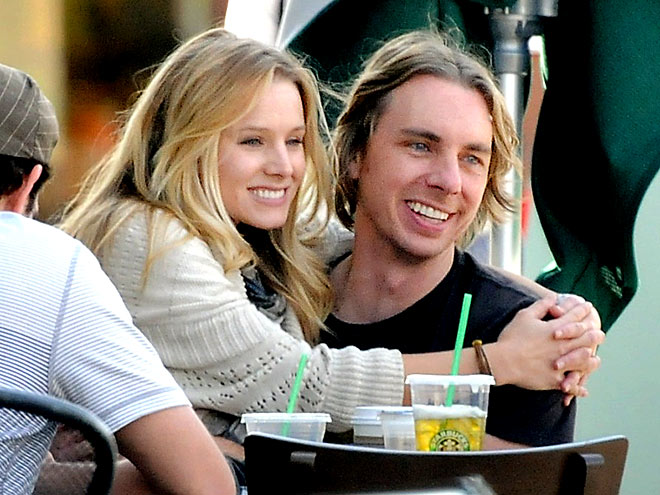
Actor Dax Shepard is probably best known for his relationship with actress Kristin Bell (Veronica Mars on television, and a whole mess of romantic comedies), but he is on the critically-acclaimed television show Parenthood and has been in several (mostly unknown) films.

Now, he will be known - at least for a while - as the author of a post on his Tumblr blog honoring his deceased father, a post entitled My Father's Horniness. It's really touching and emotionally honest reflection on his last visits with his father - and it's nice to see someone who is a celebrity doing something human and authentic.

Here is the summary from Huffington Post:

Dax Shepard Writes Emotional Post About His Late Father and Kristen Bell


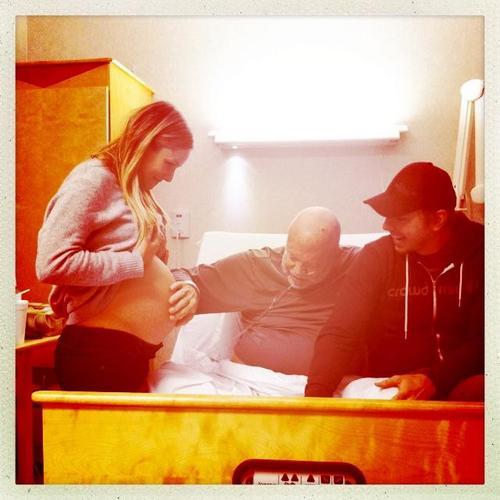
It's like an episode of "Parenthood" -- funny, dramatic and sure to make you cry -- but a recent tear-jerker of a blog post by one of the show's stars is not fiction at all. On his Tumblr, actor Dax Shepard writes about the last visit he had with his dying father, including this poignant moment with his pregnant fiancée, Kristen Bell.Story continues below photo.


His father, who was only 62, was in a Detroit hospital battling cancer, Shepard writes. Bell, who is due to give birth this spring, had been shooting in Los Angeles, but flew to Detroit to surprise them.
It was an amazing, incredible, perfectly timed surprise. She lifted her shirt up and he put his hand on her swollen stomach. He left it there for the better part of an hour. He was smiling from ear to ear, sitting contently, unable to put together a sentence, but still capable of connecting to the new family member we were creating. He wasn’t going to make it to the birth, but that didn’t get in the way of him meeting the new baby. It was an emotional and triumphant moment. One I will never forget. If I live to be a thousand, I will still be in debt to my wife for giving him that one last thrill.
Though Shepard calls Bell his wife in the post, the couple have said they will not wed until their gay friends have the same right.

Any parent who has lost their own mom or dad before their kids were born or old enough to know grandparents knows what kind of hole it leaves. That is why Shepard's anecdote about Bell's role in this visit is especially touching. Yes, as TODAY points out there is a certain allure in learning what two incredibly likable stars experience when cameras aren't rolling, and we have an obsession with celebrity parents that is well-documented. But it is impossible to not feel a twinge of empathy when reading Shepard's tale about Bell's drop-in at his father's bedside.

Shepard writes that he was in the midst of a very full shooting schedule when he first found out about his dad's illness, and he and Bell had just learned they were having a baby. "Whoever was writing my life couldn’t figure out which storyline they wanted to tell, and decided to tell them all at once," he writes.

The actor shares details of his father's life: he was an alcoholic with a colorful group of friends and a big appetite. Dad and Shepard moved 28 times, and when the actor did find "pockets of time" to see his father while he was sick, they would drive around Michigan, looking at all of those homes. "The car rides proved to be shockingly therapeutic," he says. And his father had a "way with women." Shepard's post is titled "My Father's Horniness" for a reason. (Go read it here because it is a beautiful piece.)

Almost 1,500 fans have left notes for Shepard on Tumblr, and his tweet about the piece has been retweeted hundreds of times. This morning, he sent out a message of thanks.

Here is the beginning of Shepard's blog post about his father:

My Father’s Horniness

My father, Dave Robert Shepard Sr., died on either December 30th or December 31st, depending on what time zone you were in. I received the call on the 30th at 11:30PM in Los Angeles, but the caller, positioned in Detroit, was two hours deep into the 31st. He was dead at 62 years old. Small cell carcinoma was to blame. It originated in the lungs and then travelled with great speed to all corners of his body.

I had been back to Detroit just six days before and was disappointed I couldn’t be with him at the actual finish line. We were partners. We had taken on this cancer project together. He chose me to deal with all the doctors and creditors and landlords. It was the only project we ever teamed up on. We never built a tree house or a soap box derby car together, but you would have never known it by watching us tear through chemo decisions and radiation plans. We were two great minds with one single thought: get into the end zone gracefully.

He had noticed a lump in his neck in August. A biopsy was taken and some chest x-rays. “A mass” was detected on the lungs. Those were his words to me, “a mass,” which sounded much more like the words of a doctor than the retired car salesman that he was. He was much more prone to use the word “fuck,” and I wondered while he was telling me this news if he realized how serious that word was. Test results from the “lump,” which turned out to be a swollen lymph node, came back positive for cancer. It was the phone call you see on TV and in movies. It was happening to me now, and I found the timing to be exceedingly inconvenient. In movies, news of this kind seems to always coincide with a huge hole in the lead character’s schedule. He or she is able to spend vast amounts of time at the bedside of the loved one, or at a diner having coffee and pie with estranged family members. This flexible schedule allows for some high quality catharsis to take place.

I was acting full time on a TV show based in LA when I got the call. He was in Detroit. On my days off from the TV show I was traveling around the country promoting a movie I had directed. During the month of August I went to Portland, Seattle, Chicago, Detroit, San Diego, Nashville, Memphis and New York. Compounding all of this was the recent and incredibly fortuitous news that my wife and I were pregnant with our first baby. Whoever was writing my life couldn’t figure out which storyline they wanted to tell, and decided to tell them all at once.

As tends to happen in real life, despite it being inconvenient, it all worked out. Pockets of time opened up here and there and I was able to go back to Detroit often. My initial response was to get him to do chemo in LA. Surely the weather would be better. He wasn’t having it. I then made a strong push for him to go to Oregon to be with my brother. Nope. He was staying in Detroit. He had a huge support system of friends there, and in the end, it was the right decision.

His friends. This is relevant. One of the few upsides of my father being dead is that I can now break his anonymity and state plainly that he was a proud member of Alcoholics Anonymous for over 25 years. During that quarter-of-a-century span, he accumulated the most colorful, caring, fucked-up group of friends you’d ever want to see. It was a rag-tag band of misfits bound together only by their shared desire to not get loaded anymore. What a group. It was truly his greatest accomplishment. They all loved him in a way that even my brother and I had a hard time doing. He hadn’t missed any of their birthdays or soccer games, and they saw only the man who had helped so many struggling folks get sober. They were by his side, uninterrupted, from diagnosis to death. Often annoying, but always a blessing, they gave him the greatest gift possible: their time. He was never alone. Not for one second.

When I visited we would break up the chemo routine with trips to the cineplex or restaurants of his choosing. He loved to eat. Holy shit could he eat. Of all of his addictions, and there were many (drugs, alcohol, cigarettes, sex, cars, houses, shiny things), eating was his number one. He never did get a handle on that vice. He could hunker down in front of the TV for hours, nibbling with comma-inducing ferocity the entire time. Nothing in the pantry was safe. He would come up with the most counter-intuitive combinations of food. Like a true alchemist, he’d put salsa on oatmeal, or smother frozen waffles with a can of black beans. He was like a perpetually stoned, pregnant woman. No permutation of ingredients was out of the question; anything was possible. It was a sight to behold.

We had a lot of fun together during those four months. We took long car rides through the back roads of rural Michigan. We spent a weekend visiting every single house and apartment the two of us had ever lived in. There were 28 between the two of us. Together we had only shared three of those places: a single-wide mobile home from 0-1 years-old, a small, brick ranch on a few acres in the middle of nowhere from 1-3 years-old, and a modern, middle-class home in a McMansion-ee neighborhood from 15-16 years-old. It was that gap between 3 and 15 years-old that caused most of our issues. He was a selfish asshole, and I lived to hold a grudge, so it was a thoroughly symbiotic pairing. The car rides proved to be shockingly therapeutic. One of the hidden benefits of cancer is that it can erode grudges the way WD-40 dissolves rust. It just finds it’s way into all the nooks and crannies and starts loosening. Before long, the once formidable chip on my shoulder had melded into something the size of a nicotine patch. Apologies were exchanged. Tears were had. Hugs were frequent and lingering. I spent the majority of our time together running my hand lightly over the tiny little hairs peaking out from the back of his soft, bald head. He let me do that for hours. Without any awareness of it at the time, the trips home turned into a proper Alexander Payne Movie. It became one of the more beautiful experiences of my life.

Things got worse, as they do. Car rides gave way to hospitals and senior care facilities. His last two months were spent dealing with cancer, heart disease and gout. He had an increasingly difficult time walking and spent most of his time in bed. On my last trip home, just before Christmas, I took him on his final jailbreak. I threw him in a wheelchair and rolled him through 20 degree weather to his favorite restaurant, where I watched him pick at his waffles and bacon. He couldn’t have had more than four bites over the course of an hour. It was a very clear signal to me that the end was near. I took him, for the last time, to his house. I gave him his percocet and sat him in front of the TV. He held the remote in his right hand like a six-shooter, splitting his attention between the TV, the view of the lake through the sliding glass door, and me. It was wonderful. We sat that way for over three hours.
Go read the whole post.