Showing posts with label mothers. Show all posts

Sunday, May 11, 2014

It Took Losing My Mother to Finally Know Her

I wrote this several years ago and posted it on Integral Options Cafe in 2005. I thought it might be a good time to reshare this post, in honor of sons and mothers who struggle to know each other as people, and maybe as encouragement to change that, if at all possible.

When I posted this piece, my mother's uterine cancer had just returned and metastasized into her whole abdomen and into her brain. A few days later, on August 24 of 2005, I sat beside her in a hospice as her breathing slowed and then stopped. A quiet end to a painful life. 

Here is a picture of me from back in 2003, give or take, about 36 years old. Unfortunately, I have no pictures of my mother scanned into this computer.

Getting to Know Ruth

Three years ago, my mother was diagnosed with uterine cancer. The doctors thought it was terminal. Somehow, she recovered from the surgery, the chemo, and the radiation and lived for two+ years in remission. But uterine cancer nearly always returns, and so it has. My mother is in a morphine-induced coma to ease her pain. She will likely never awaken.

When she was first diagnosed, I wrote the following entry in my journal – a confession of sorts, as well as a tribute to the woman who raised me as best she could. She lasted three years longer than anyone thought possible, long enough to lose her daughter and to see her son find himself as a man.


Getting to Know Ruth
5.25.02


For thirty-five years, my life until this very moment, my mother has been a non-person to me. Obviously, I knew she was human, had a history before my birth, and possessed her own hopes and fears. But I never really saw or experienced her as a real person, a complete human being. She was my mother, a collection of feelings and memories that I had accumulated over these thirty-five years.

A few nights ago, however, I found out she has cancer, very serious cancer. She has been sick for almost a month, but now it is official: uterine cancer, maybe more that will be discovered in surgery. But the surgery will have to wait until they can control some blood clotting that might kill her during a surgical procedure.

She told me she is tired, that after seventy-two years -- very difficult, challenging, painful years -- she is ready to die.

For the first time in my life, my experience of her shifted. It wasn’t the first time that I was in a care-taking role with her (for several years after my father died, when I was 13, I was the adult in the house), so the shift has to be something else. After a lot of tears, a few hours of writing in my journal, and listening to Lou Reed’s Magic and Loss, I began to clearly see my mother for the first time -- to see her life, her struggles, her loves, all from a place outside my own needs and fears.

My mother has become a person, a person whom I love very much, a person whom I hardly know, a person who is dying.

*****

My mother was born in February, 1930, along with a fraternal twin brother. When she was conceived, the world seemed to offer unlimited potential. There were jobs, and it was easy to support a family of five, even for the children of German immigrants at a time when Germans were not trusted after the First World War.

Then the stock market crashed and the Great Depression began. Big cities like Chicago – where my mother's family settled – were hit hard. Jobs of any kind became scarce. Suddenly it was next to impossible to support a family of five. My grandfather took any work he could get, but still, there was often only enough food for one meager meal each day. Sugar cubes were given to satisfy the hunger of crying children. The struggle to feed the family went on for several years. My mother and her brother developed rickets, a deficiency illness caused by a lack of calcium and vitamin D. My mother and her brother were severely malnourished at an age when proper nutrition determines normal physical and intellectual development.

As a result of this malnutrition, my mother, like her brother, did not experience normal intellectual growth. Her IQ scores would likely test in the range of 70 to 80. By most standards, she is developmentally disabled. She has had difficulty living independently during those years when she was not living with her mother or married.

*****

I was thirteen when my father died. By that time I had been identified as “talented and gifted” and placed in advanced classes in school. It was difficult for a strong-willed and precocious child to grow up with a challenged parent as primary caregiver.

When my father died, I was the one who took care of the funeral arrangements, the insurance policy, the government pension my mother would receive, and all the other financial decisions. I continued to perform most of the money-related tasks for two or three years. However, within six months of my father’s death, I was smoking pot regularly, drinking whenever possible, and beginning to show a lot of unconscious anger. 


Emotionally, I was completely shut down, using chemicals to stay numb. My straight A grades began to decline. I was in pain and needed a strong mother to comfort me, but she was in too much pain of her own, too lost to be able to help my sister or me. She was diagnosed with depression and put on medications that made her sleep a lot, although the sleeping is also part of the depression.

Over the next several years, I became a daily drug user and was arrested for alcohol possession, vandalism, and growing my own marijuana. Grace alone kept me out of jail or the morgue for the better part of my teen years. The times I was locked up only made me angrier and more determined to feel nothing.

During those years, my relationship with my mother was terrible. I was incapable of seeing how much pain she was in, how lost she felt, how much she needed my love and support. However, as I became increasingly lost in a haze of smoke, drink, and pills, she learned to pay the bills on her own, got a driver’s license for the first time in her life, and found the strength to call the police when she found my little pot-growing operation. I was sixteen and completely out of control.

Although I knew my mother was different from other mothers, even when I was young, it wasn’t until I was a teenager that I truly became aware of the reality. I wasn’t understanding or compassionate. I was angry. I made fun of her in front of my friends. I told her she was stupid. I hurt her in more ways than I can count. And she just kept on loving me and doing her best to keep me alive and healthy.

As I write this, I still feel so much shame for those actions and words. I’ve spent the last 15 years trying to make up for the pain I caused her during those five years when I was acting out every shadow element in my psyche. If I had 100 more years to make amends, it would not be enough.

When I was 19, after hitting my personal bottom, I cleaned up my life and went to college. I studied psychology, literature, and religions. I began to learn a little about why I was so unconscious and confused during my teen years, and pieces of why my mother has had to struggle in her life. Most importantly, I began to learn about powers greater than me in this amazing Universe.

*****

My mother is not like other mothers. She was never able to help me with my homework. She seldom read to me. She was incapable of advising me on whom to go to parties with when I was in middle school and dating was new and awkward. When I began to publish poems after high school, she never asked to read them or showed any interest in my writing. When I was in college, she didn’t ask about my studies, had no awareness of national or international events, and only wanted to know if I was employed.

She isn’t like other mothers. I saw the mothers of my friends turn their backs and walk away from troubled sons and daughters, unable to face their failures as a parent and their children's pain. But my mother never stopped loving me, supporting me, or trying to help me, no matter how awful I became, and I became very awful. Where other mothers might or did give up, she loved me even more.

After 35 years, I am finally able to see that she was gifted in ways I could not understand earlier in my life. She has an amazing heart, a capacity to love that my mind can barely grasp. I didn’t have the mother I wanted, but I had the mother I needed. To get to where I am now in my life, I had to go through the pain and confusion of my youth, and I didn’t need someone to guide me through it, I just needed someone to love me no matter how lost I found myself. If I had been guided through those difficult experiences, without the pain, there would have been no learning, no understanding, and no wisdom gained from the experience of finding my own way through the dark places within me.

I would not wish my teen years on anyone, but those experiences are what allow me to sit here now and write these words. If I hadn't been so out of control, my mother may have never found the strength to take control of her own life and learn to be as independent as she became. Again, we get what we need, not what we want.

So, now she is dying. This comes at a time when my life is in a liminal space between who I was and who I will become, a self-chosen disruption of the course my life was following. In the middle of all this, my mother is diagnosed with cancer.

Odd as it may sound, the timing for this to happen in my life could not be better. I am in a unique position in my life to change the way I see the world, to change the meta-narrative of my life, to re-open my heart in ways I have been too frightened to do in the past. For the first time in my life I am on the path of self-discovery and healing. It makes all the difference.

From this place in my life, I have learned to step back from myself, to see through the eyes of my observer self, or Witness. Through those eyes I see my mother as a person. I can see her struggles, her fears, her joys, her successes. I see her weaknesses and her strengths. I see her not as my mother, but as wonderful human being who has survived 72 painful, challenging years while holding onto the love in her heart. I see a woman who is not capable of knowing how extraordinary she is. I see a woman who inspires me to open my heart and learn to love in the same selfless way she has loved others for her entire life.

I am blessed to come to see my mother as the human being she is, not just as my mother. I have been given a chance to know her in ways I could never imagine before. I want to learn how she was able to love others so easily, despite being told she was not like everyone else and being treated as deficient.

My mother is not like other mothers. For however much time she has left, I want to learn about her fears, her joys, her life. I want to know the person who is named Ruth. 


R.I.P., Ruth Sophie Harryman, born Ruth Sophie Koenig.

Kevin Durant's MVP Speech Honors His Mother in its Authentic Gratitude

Via @anthonyvslater
The image here is the full-page ad Nike bought in the Oklahoman 
to honor Kevin Durant's MVP award.

Back in 2010, I wrote about how Kevin Durant handled his contract extension (he was not even a free agent yet) with the Oklahoma City Thunder (formerly the Seattle Sonics) while LeBron James made this HUGE media circus called The Decision (it has its own Wikipedia page - how many other player decisions in which team s/he will play with have their own Wikipedia page?).

So Kevin Durant is back in the news, having (at age 25) won his first NBA Most Valuable Player award (to go with several scoring titles). Likely, this is also the first of many.

He gave a very heart-felt and moving acceptance speech, thanking all of his teammates, especially Russell Westbrook, and also thanking all of his coaches.

But what really tugged at the heartstrings was the thank you he gave to his mother. How beautiful to see an athlete show such integrity on the biggest stage of his young career.

Here is the whole speech:


Some time markers for those who want to get to the point:
3:40 Durant individually thanks his teammates
13:05 Durant speaks about his bond with Russell Westbrook
18:12 Durant thanks his coaches
21:00 Durant thanks his family and his mom
 

Here is the USA Today story on the NBA using a Durant's words about his mother in a new Mothers' Day commercial.
When Kevin Durant gave his speech after winning the MVP, he gave his mother perhaps the best Mother’s Day present of all.
The Oklahoma City Thunder star touchingly said his mother was the “real MVP” at the end of his speech, giving way to a standing ovation for his mother and tears from mothers around the world.

The speech is now part of a new NBA ‘Mother’s Day’ commercial. Because while we can’t all thank our moms with a touching speech after winning the NBA MVP award, we can certainly remind her that she’s the MVP in our life.

Or at least send flowers. Helpful reminder: It’s Sunday.

Happy Mother's Day to all of the Moms out there
who have or are raising authentic young men!

Wednesday, June 26, 2013

Marc Tracy - Here Come the Daddy Wars


This article originally appeared at The New Republic just before Father's Day (obviously I am a little bit behind in my posting), but the main points are still highly relevant. Men are going to face some tough decisions (some already are) and there are going to be some intense societal struggles in determining how men should be fathers and how much they will be allowed to be fathers.

I don't see there being any time soon where men are given equal post-natal time off from work (paid or unpaid, but with job and position security) to that of women - hell we don't even offer women much on average. It's not likely we will be anywhere near France's (22 paid days off, 318 total days off), Spain's (18 paid, 312 total), Germany's (47 paid, 170 total), Sweden's (47 paid, 163 total), or Norway's (44 paid, 150 total) position on parenting in my lifetime . . . or yours.

For the record, the U.S. offers 0 paid days and 24 total days off for maternity/family leave (these are days given by law, and all stats are from 2008).

Here Come the Daddy Wars

June 14, 2013
BY MARC TRACY

The average American spends $144 celebrating Mother’s Day, while for Father’s Day, the figure is $82. And that Father’s Day was inspired by Mother’s Day rather than vice versa is probably the least surprising fact you will read today. Mainly, Mother’s Day’s relative prominence is a vestige—and, to a lesser extent, a reflection—of society’s view that women are primarily mothers whereas men are fathers but also other things. This view not only gives women whose ambitions extend beyond the household a bum deal—for reasons I hope I don’t have to elucidate!—but it also fails men who might like to be more prominent as fathers and caregivers than societal norms currently encourage.

Women have fabricated a way of talking about the conflict between women who hope to find most of their self-fulfillment in the home and those for whom being a homemaker and child-rearer is not enough—and not only that, but believe it should not be enough for most women. This is the enlightened, productive side of what are commonly called the Mommy Wars. My question, as Father’s Day approaches, is: Where are the Daddy Wars?

Every day I see smart, career-ambitious women having an intelligent, heated conversation, informed by personal experience and strewn with first principles, about what a woman’s proper roles are, and what society, men, and other women could do to realize a better world. I don’t feel as though I’ve been kept out. But I do think men have been altogether too shy about joining this conversation or, perhaps, starting their own.

However, in the past few weeks, there have been a bevy of articles and studies that all point to this news: At long last, the Daddy Wars are coming.

The trends are both economic and sociological. Economically, as writers like Hanna Rosin have amply documented, women are finally gaining some level of equality with men—not at the very top, but at least in the middle. A new Pew report found that four in ten households with children have a woman as the prime or sole breadwinner, up from one in ten 50 years ago. Partly this is a function of single mothers, but in more than five million of such households, the mother is married yet simply makes more than the husband—and in such marriages, median income is higher. A Third Way study noted that employment trends are better for women than for men.

Esquire recently published an essay by Richard Dorment on the work-life balance that men face. It was fashioned as a response to Anne-Marie Slaughter’s “Why Women Still Can’t Have It All” Atlantic feature (which made mention of how men face similar quandaries) and unfortunately was riddled with condescension for the same people—chiefly, feminists—who should be his allies. (Salon’s Irin Carmon did a good job pointing out this curious dynamic.) Still it captured, I think, the feelings of many men, fathers and not, who were brought up to think in terms of career and providing for their families financially, with actual work at home getting short shrift.

Most men stress over the next step in their professions, with the attitude that if they happen to fall in love and settle down, well, that’s great, too. But recently, in many cases inspired by the women in our lives and the conversation they are having among themselves, we have begun to question whether our most basic priorities aren’t out of whack, and to wonder whether, for reasons both social and surprisingly biological, we shouldn’t be as “ambitious” to have children as we are to land the next great job. Plus, having had children, many of us hope to play a more active role in their upbringing than has typically been expected of fathers. Many of us were lucky to have mothers who, whatever other ambitions and accomplishments they had, clearly took great joy in raising us; some of us were even lucky enough to have similar fathers. Do we want it “all”? Who knows (or cares). But we want that.

In a smart response on New York’s The Cut blog, Kurt Soller noted that men will probably have to take their cues from ladyblogs and the like as they navigate this issue, and offered several smart thoughts, including the observation that when men mentor other men, the subject matter is almost exclusively confined to the professional and romantic, not the domestic. (He also noted that as a late-twenty-something he should be as fretful as many of his same-aged female friends are about the looming having-kids prospect, which is true, if also—gulp—terrifying.) Yet even Soller seemed somewhat uncomfortable raising this topic: “As ridiculous as this seems,” he wrote, “the Esquire article had me realizing that a lot of the anxiety surrounding ‘leaning in’ or ‘having it all’ does feel relevant to me as a man.”

The next step, therefore, is to make this not feel at all ridiculous. Because it isn’t. The next step is to make a magazine devoted to artisinal Brooklyn fatherdom more than a quaint Talk of the Town subject. It is to encourage, socially and even legally, paternity leave, which a large share of men don’t take, as well as respect at the office for caregiving fathers, which according to two new studies such fathers currently do not generally enjoy. In the future, when a man voluntarily gives up great responsibility to “spend more time with my family,” I do not want the notion that this could be a euphemism to even occur to me.

In short, it’s going to be the Daddy Wars. (Want that url? Don’t bother; my friend and I have been cybersquatting at daddywars.tumblr.com for weeks.) The Mommy Wars consist of people—primarily other women—convincing women that it is in society’s interest, their children’s interests, other women’s interests, and their own interests for them to be more than stay-at-home moms. The Daddy Wars cannot be the exact obverse, since the playing field is already asymmetrical (for generations, the default for men was to find some balance between work and home, whereas the default for women was home). But they will be something like that.

Like the Mommy Wars, the Daddy Wars are going to require, as Carmon put it, “a negotiation between what’s possible, what they’ve been taught to expect is normal, and what they might really want.” Like the Mommy Wars, they are going to require walking a fine line between the ideology they forthrightly advocate—men should be home more—and respect for individual choice, of the “I choose my choice!” variety, accounting for not only the choices of the men themselves but also of their childrearing partners. (Yes, eventually, the Mommy Wars and the Daddy Wars will likely have to become one big Parents Wars, but first the right side will have to win the Daddy Wars.) Let’s see if we can’t get a generation of American men to think more of themselves as “Dad” or “Dad-to-Be.” That would be a good start.

Sunday, May 12, 2013

Carolyn Kizer - The Great Blue Heron


The Great Blue Heron
BY CAROLYN KIZER


M.A.K. September, 1880-September, 1955
As I wandered on the beach
I saw the heron standing
Sunk in the tattered wings
He wore as a hunchback’s coat.
Shadow without a shadow,
Hung on invisible wires
From the top of a canvas day,
What scissors cut him out?
Superimposed on a poster
Of summer by the strand
Of a long-decayed resort,
Poised in the dusty light
Some fifteen summers ago;
I wondered, an empty child,
“Heron, whose ghost are you?”

I stood on the beach alone,
In the sudden chill of the burned.
My thought raced up the path.
Pursuing it, I ran
To my mother in the house
And led her to the scene.
The spectral bird was gone.
But her quick eye saw him drifting
Over the highest pines
On vast, unmoving wings.
Could they be those ashen things,
So grounded, unwieldy, ragged,
A pair of broken arms
That were not made for flight?
In the middle of my loss
I realized she knew:
My mother knew what he was.

O great blue heron, now
That the summer house has burned
So many rockets ago,
So many smokes and fires
And beach-lights and water-glow
Reflecting pinwheel and flare:
The old logs hauled away,
The pines and driftwood cleared
From that bare strip of shore
Where dozens of children play;
Now there is only you
Heavy upon my eye.
Why have you followed me here,
Heavy and far away?
You have stood there patiently
For fifteen summers and snows,
Denser than my repose,
Bleaker than any dream,
Waiting upon the day
When, like grey smoke, a vapor
Floating into the sky,
A handful of paper ashes,
My mother would drift away.


Carolyn Kizer, “The Great Blue Heron” from Cool, Calm, and Collected: Poems 1960-2000. Copyright © 2001 by Carolyn Kizer. Reprinted with the permission of Copper Canyon Press, P. O. Box 271, Port Townsend, WA 98368-0271, www.coppercanyonpress.org.

Source: Poetry (April 1958).

Tuesday, April 17, 2012

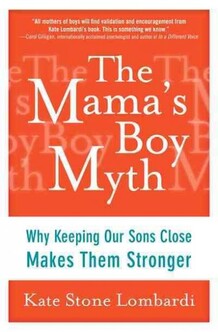
The Mama Boy Myth - Real or Imagined?

Kate Lombardi is the author of the new book, The Mama's Boy Myth: Why Keeping Our Sons Close Makes Them Stronger. She was on NPR a week or so ago talking about the book. While I listened to the brief interview, I found myself arguing with the author and remembering a book I reviewed a while ago for Wildmind Buddhist Meditation.

I agree that mothers can teach their sons emotional intelligence - and that's important. But I see a lot of men who never fully individuate from their mothers - men whose wives feel they are the 2nd most important woman in his life. I'm sure Ms. Lombardi is not advocating an unhealthy relationship, but when women start telling men what healthy masculinity looks like, I get cautious.

First up, here is the segment from NPR's All Things Considered - then below that is the review I wrote of Michael Gurian's The Invisible Presence.

April 8, 2012

There are plenty of pop culture references to the dangers of a close mother-son relationship. From the myth of Oedipus to the movie Psycho, narrative after narrative harps on the idea that mothers can damage their sons, make them weak, awkward and dependent.

But for millions of men, the opposite has turned out to be true, author Kate Lombardi tells NPR's Laura Sullivan. Lombardi — a mother herself — is the author of the new book, The Mama's Boy Myth: Why Keeping Our Sons Close Makes Them Stronger.

Lombardi's own relationship with her son was a major inspiration for the book. "For a long time, I thought that what we had was kind of unique," she says, "that I was somehow blessed with this especially sensitive, caring boy." But in her research for The Mama's Boy Myth, she discovered that she was far from alone.

Her starting point was that mothers and sons face a stigmatization that other parent-child relationships don't. Mothers and daughters, she says, have no problems. "I'm very close to my daughter, and it doesn't raise any eyebrows," she says. Similarly, father-son relationships are viewed as very important, and even father-daughter relationships are valued. "But mothers and sons — that relationship is always looked at with a little skepticism and a little fear."

Lombardi speculates that it might be Sigmund Freud's Oedipus complex at the back of many parents' minds. "I think some of this fear and anxiety around the mother-son relationship really predates Freud," she says. "But that said, Freud codified it. I was amazed how many moms in 2012 were still bringing up the Oedipus complex."

A Healthy, Loving Relationship
The stereotype of the unhealthy mother-son relationship is very familiar — a controlling or dominating mother that interferes with her son's life and refuses to let him come into adulthood on his own. But that's not how it has to be to have closeness, Lombardi says.

"A healthy, loving relationship is one where the mom is emotionally supportive of her son. She recognizes his individuality, his sensitivity, and his vulnerability along with his strengths," she says.
The ideal mother-son relationship is one where the mother can and does respond to her son's emotional needs — and perhaps it's not all that different from a healthy mother-daughter relationship, she says.

It often goes awry, though, when mothers of young boys are pressured to let their child learn to cope on his own. One mother Lombardi interviewed related a story where her pediatrician had accused her of "modeling anxiety" while comforting her son after a fall. "We get the strong message that the last thing a boy needs is his mother, when in fact the research shows just the opposite," she says.

A Good Bond Leads To Better Relationships
The research is actually quite extensive, as Lombardi tells it. Small boys who lack a healthy attachment to their mother are often more aggressive, disobedient and even violent. When boys reach middle school age, the differences are apparent in their views on masculinity.

Author Kate Stone Lombardi is the recipient of six Clarion awards. She has written for The New York Times and The Wall Street Journal.
Author Kate Stone Lombardi is the recipient of six Clarion awards. 
She has written for The New York Times and The Wall Street Journal.
 
"Boys who were closer to their mothers ... didn't think, for instance, that every time you got challenged you had to fight," Lombardi said, "or that being a guy means acting tough or going it alone." A better relationship a son has with his mother translates to better mental health.

As those boys reach manhood, the differences can be many, Lombardi says. For one, they often have an easier time in adult relationships.

"One of the things that moms tend to do with their boys is they teach them emotional intelligence," Lombardi says. "They teach them to recognize their feelings and talk about them."

Take the classic image of a little boy melting down in a grocery store, and the mother responding, "Use your words." Or when the sullen high schooler comes home, slams the door and yells, "I don't want to talk about it!" The mother with the healthier relationship, Lombardi says, can ask her son to cool off and talk it out when he's ready.

Lombardi knows it works — after all, her own son, now 23, now enjoys the benefits of having that healthy relationship while growing up. And now that his mother has shared it with the world?
"He's pretty proud of it," she says. "He's not ashamed of our closeness."

Tuesday, January 17, 2012

Bookforum - Positionings of Gender

Yesterday's Bookforum offered up a collection of links on issues related to gender - it's a pretty eclectic mixture of material, sure to please and/or piss off most anyone. Contrary to my usual practice, I've broken these links down into discrete entries for your browsing pleasure.

Positionings of gender

Monday, November 7, 2011

NPR - 'SNL's' Darrell Hammond Reveals Cutting, Abuse

It takes a hell of a lot of courage to admit to this degree of pain and abuse - especially for a man. Good for him - I suspect there is a lot more mother-son abuse than ever gets talked about because of the shame and fear these men live with. Sometimes, however, when one man can step forward with his story, everything changes.

He seems like a pretty cool guy in this interview - but then spending your adult life in therapy is bound to help. 

'SNL's' Darrell Hammond Reveals Cutting, Abuse

November 7, 2011
 
In 14 years on Saturday Night Live, Darrell Hammond did many impressions, including Bill Clinton, Al Gore and Sean Connery. Few of his cast members knew that Hammond struggled with drugs, alcohol and self-cutting as the result of childhood abuse.

In his memoir God, If You're Not Up There, I'm F——-: Tales of Stand-Up, 'Saturday Night Live' and Other Mind-Altering Mayhem, Hammond details the systematic brutality he suffered at the hands of his mother, who beat him, stabbed him and tortured him with a hammer and electrical outlet.

"I've been in treatment since I was 19, and I'm 56," he tells Fresh Air's Terry Gross. "That's a couple of bucks and a long time."

Hammond says he was medicated during much of his time at SNL and that he frequently cut himself backstage. Before one of his most famous sketches — the Bush-Gore "lockbox" debate with actor Will Ferrell — Hammond says he started having flashbacks and momentarily forgot what Gore sounded and looked like.

"I was disoriented and frightened, and I was feeling every single thing that happened to me when I was in the kitchen once with my mother," he says. "I'm not a doctor — so I can't describe flashbacks well — but it is like you're living it again."

Hammond says most of his co-workers weren't aware of his inner turmoil — or of the fact that backstage, before each sketch, he would often cut himself.

"Most of the time it was really manageable," he says. "But if you added a pint of [alcohol] to the equation, then sometimes it got a little messy."

Hammond repeatedly checked himself into a psychiatric hospital in New York City for treatment. He says he relied heavily on the producers of SNL, who were aware of his struggles, for support.

"They were extremely helpful to me," he says. "They made considered decisions over whether I was going to be able to put the ball over the fence — whether [being on SNL] was jeopardizing my health or actually helping me to have this giant project to pour my life into. That was a delicate balance for them, and not one that they should have had to go through."

During Hammond's time on SNL, he impersonated celebrities like Donald Trump, John Travolta and Geraldo, and politicians like Bill Clinton, Al Gore and Dick Cheney. But Hammond didn't want to impersonate Arizona Sen. John McCain out of fear of mocking his father, who suffered from lifelong trauma after serving in World War II.

"If you're injured, it changes the way you move," he says. "If you're injured, it changes the way you talk. I didn't want to lampoon someone who'd given his life."

Hammond's gift with impressions got him his initial audition and then his job on SNL, but it also helped him at home. As a child, Hammond says, he relied on his ability to imitate Popeye as one of the few ways he could connect with his mother.

"I don't want to say that it delighted her or charmed her or changed our relationship," he says. "I can tell you that on a given day, it changed her state. When she got that faraway look in her eyes, when her Southern accent fell, I knew what was happening then. ... The afternoon's over and everything's fine."

Interview Highlights

On why he wanted to write a memoir

"The agreement between perpetrator and victim in which the victim agrees to remain silent because he's in fear. I wanted to write about it."

On playing Bill Clinton

"I thought, 'Was this guy into Kennedy or something?' I'm feeling Kennedy. It was an instinctual thing. It's not like what I do is an exact science. And I'm frequently wrong. But finally, I couldn't get a handle on it. I had an audio recording of JFK's inaugural address. I printed it out by hand. I rehearsed it with a Southern accent. And then I put in this little crackle in my voice that I'd do. And voila. I felt like I had him."

On his parents and his mental illness

"They were happy to accept, as I was happy to accept, a sanitized version of reality. If I can get a sanitized version of reality, I'll take it. I go to this doctor and this guy interviews me and he doesn't know what he's dealing with. How can he in one hour? So he says to my mother, 'He's a schizophrenic and he's a manic depressive.' And I saw her face. And she said, 'Oh.' Like she thought she was going to get busted. And instead she said, 'Really? Is that right? Yeah. Well, what can we do about that?' And the doctor says, 'We'll just give him these pills. And then we'll lock him up here for a while and that'll be just fine.' ... So years later, when I began trauma therapy, I called [my mother] on the phone and I said, 'I'm being treated for the symptoms that prisoners of war [get], Mom, but all I did was grow up in your house. Can you talk to me about that?' There was a pause and then a husky-throaty thing where she said, 'Don't ever call us again.' Click. And I didn't talk to them until their deathbed.' "

On regaining childhood memories

"I remember reciting a Little Orphan Annie poem about Little Orphan Annie being butchered. I remember that. I remember the floor being red and me bleeding in a vague sense. I remember it was my fault. I remember my hand slammed in the door. My fault. Also electric socket, my fault. All my fault, isn't it? Can you imagine the desperation of a child who chooses to believe that it was all his fault just so he doesn't have to consider the idea that his mother did it? Or that his parents did it? Because, Terry, I'll tell you something, I don't know anything about you, but I think it's completely barbaric to shake hands with and seek help from the person who caused your injury. That will make you sick."

Read an excerpt of God, If You're Not Up There, I'm F- - - - -

Friday, September 30, 2011

Relationships between mothers and their sons change during childhood and adolescence


Good research summary from Science Codex - nearly a month old but still interesting. Once again, this study show that the problems that teen boys experience are often the result of issues they experienced in the family as small children. If you want a happy and healthy teenager (as much as that is even possible), then you need to start preparing for that from the very beginning.

Mother-son ties change over time, influence teen boys' behavior

posted on: august 30, 2011


Relationships between mothers and their sons change during childhood and adolescence. However, not all relationships change in the same way, and how the relationships change may affect boys' behavior when they become teens.


Those are the findings of a new longitudinal study of low-income families by researchers at Wayne State University, Oklahoma State University, the University of Pittsburgh, the University of Montreal, and the University of Oregon. The study appears in the journal Child Development.


The researchers looked at 265 mother-son pairs from low-income families in Pittsburgh, Pennsylvania, starting when the boys were 5 and continuing through adolescence. The families were taking part in the Pitt Mother & Child Project, an ongoing longitudinal project examining vulnerability and resilience in low-income boys.


For each of the pairs, the study looked at the family's neighborhood, the mother's relationship with her romantic partner, the quality of parenting provided by the mother, and the child's temperament. It also assessed the level of conflict and warmth between mothers and sons, and the boys' delinquent behavior, relationships with best friends, and sense of morality during adolescence.


Mothers of boys who had a difficult temperament when they were toddlers reported that their relationships with the boys included a lot of conflict and lower levels of closeness over time. When mothers had better relationships with their significant others, they tended to form closer bonds with their sons that lasted throughout childhood and adolescence. Boys who experienced a lot of conflict with their mothers were more likely to engage in delinquent behavior as teens. On the other hand, boys who hade a close relationship with their mothers were more likely to have a better relationship with their best friends during the teen years.


"These results suggest that successfully adapting to the transitions of childhood and adolescence may require parents and children to maintain relatively high levels of closeness and minimize conflict in their relationships," according to Christopher Trentacosta, assistant professor of psychology at Wayne State University, the study's lead author.


"The findings also have implications for prevention and intervention," Trentacosta suggests. "Family-focused programs should address conflict in the parent-child relationship if the goal is to reduce delinquent behavior, and should foster greater closeness between parents and children if improving peer relationships is the goal."


Source: Society for Research in Child Development

Thursday, August 25, 2011

NPR - Moms: Helping Boys Form Deep Friendships

Cool segment - Niobe Way's Deep Secrets: Boys' Friendships and the Crisis of Connection is an excellent book on this subject.

Moms: Helping Boys Form Deep Friendships

Listen to the Story

[17 min 50 sec]       Download

Jolene Ivey's son, Julian, left, and his best friend JaJuan, right.
EnlargeJolene Ivey
Jolene Ivey's son, Julian, left, and his best friend JaJuan, right.

Research shows boys crave and can establish strong friendships, but cultural bias may create barriers to those desires. So how can parents help boys develop healthy long-lasting friendships? Host Michel Martin speaks with Tell Me More's regular parenting contributors Leslie Morgan Steiner and Jolene Ivey, and Niobe Way, author of Deep Secrets: Boys' Friendships and the Crisis of Connection.
MICHEL MARTIN, host: I'm Michele Martin and this is TELL ME MORE from NPR News. They say it takes a village to raise a child, but maybe you just need a few moms in your corner. Every week, we check in with a diverse group of parents for their common sense and savvy parenting advice.
And now, as kids around the country are heading back to school, we wanted to talk about making friends. On the one hand, most people know that making and keeping friends can be a make-or-break part of the school experience, but that often doesn't come easy, especially for boys.
But research shows that boys have a deep yearning for intimacy with other boys, so how can parents teach their boys to develop good friendships and keep those friendships? Can they teach that and should they even try?
To help us out, we've called upon Niobe Way, author of "Deep Secrets: Boys' Friendships and the Crisis of Connection." She is also a professor of applied psychology at New York University.
Also with us are regular moms contributors, Leslie Morgan Steiner and Jolene Ivey. Among them, they have six boys.
So welcome, ladies, and moms. Thank you all so much for joining us.
NIOBE WAY: Hey, Michel.
JOLENE IVEY: Glad to be here.
LESLIE MORGAN STEINER: Very nice to be here.
MARTIN: Niobe, you spent 20 years researching how boys communicate and relate to one another. First, I wanted to ask, how did you get interested in that? And what do you think is the biggest disconnect between the way boys really want to relate to each other and the way their relationships are often viewed?
WAY: Well, it really stemmed from being a counselor. I was a high school counselor in the late '80s and I spent my days listening to teenagers, teenage girls and boys, and it really struck me how much boys were talking about their friendships, and I - it really surprised me because I expected them to be talking about their girlfriends or maybe their parents or maybe their teachers. But they really were almost consumed with talking about their friendships and the ins and outs of their friendships. And it really was in such a contrast from what sort of popular culture frames boys and certainly boys' friendships.
And the second influence was that I have two younger brothers. I listened to them, nosing in on their conversations as they grew up. And so listening to my brothers, as well as counseling hundreds of teenagers, really led me to this fascination with boys' friendships in particular, and then it became a lifelong passion, really, to really understand boys' relationships and how to foster these relationships and how to raise healthy, happy men.
MARTIN: Okay. So I'm wondering if we have actually eight boys among the people in this conversation. We have eight boys, but Jolene, you wear the crown. You have five, you know, of the eight.
And I understand that you've seen this with your boys. In fact, one of the things you were telling us is that, on the one hand your boys - many of them have some very deep friendships. On the other hand, they're very concerned that their friendships not be mischaracterized as being sexual. Can you talk a little bit about that?
IVEY: You mean the no homo comment?
MARTIN: Yeah, yeah, yeah.
IVEY: Yeah. My 16-year-old. He loves to talk about his best friend, who just went off to college. His best friend's two years older than he is. Whenever they would talk about each other, they would always say, you know, how much they love each other, how close they were, but Julian would always say, but no homo. On the other hand...
MARTIN: And I just want to emphasize that that's not meant as a slur.
IVEY: It's not at all.
MARTIN: It's meant to clarify.
IVEY: Especially not from Julian, because he went into puberty backstage on Broadway, so he says he's totally cool with gay people. He totally doesn't care. And he's very confident and comfortable with himself. He'll wear a pink shirt in a heartbeat if it looks good on him, he doesn't care. So he's one of those people that Niobe referred to as being good looking, popular, a confident person, and able to communicate his feelings as a result.
MARTIN: Niobe, is that common, though, that this desire to feel a need to distinguish between kind of a deep intimate friendship and a homosexual relationship? Is that something that you've found? And is that more common now than it was when you first started doing this research?
WAY: You know, it's a hard thing to say because what we see is we see those patterns. The no homo really comes out in their interviews starting when they're about 15, 16, 17, and we do not hear it in the early stages of adolescence, when they're 13, 14 years old.
And what's amazing to me is that, you know, we all live in a culture in which simply a close relationship between two boys, emotionally close at 16, we immediately sexualize it. We allow girls to have close friendships and we don't make it into something that's about sexuality or about, you know, somehow not being an independent, strong person.
MARTIN: Okay.
WAY: We put - go ahead.
MARTIN: I see what you're saying, but before we just move on from this, and bring Leslie into the conversation, I do want to emphasize this is perhaps a marker of that.
You saw that earlier this month PBS felt compelled to announce that Bert and Ernie, the Muppets characters, are not gay. I'm just going to play a short clip from an ABC News report about that for people who may wonder, like, why are we making a big deal of this. Here it is.
(SOUNDBITE OF ABC NEWS BROADCAST)
UNIDENTIFIED WOMAN: Bert and Ernie. A lot of people are trying to make them a couple. There's a whole Internet push to get Bert and Ernie married. So "Sesame Street" has felt that they've got to come out and address this controversy. They've said Bert and Ernie are best friends. They remain puppets, and as such, do not have a sexual orientation.
MARTIN: Jolene, you were going to say something briefly about that?
IVEY: Yeah. Just because up until that point, I have to say I wasn't really buying into the book. I really wasn't buying into the premise of society views boys differently when it comes to friendships, because I just didn't see it myself. But as soon as the Bert and Ernie announcement came out, I said I was so wrong.
(SOUNDBITE OF LAUGHTER)
MARTIN: Well, big of you to admit it.
(SOUNDBITE OF LAUGHTER)
MARTIN: Leslie, what about your 14-year-old? What are you seeing?
STEINER: Well, I got hooked on this book from the very first page, because I really I think it's a wonderful subject that we don't talk about enough as moms and as - in the schools, and that boys are pretty misunderstood, I think. And my 14-year-old son, he's one of these easygoing kids that you could drop him anywhere, and he would have four or five friends within about 15 minutes. And he has a core of six to eight boys who - they're his best friends. They're together all the time.
The thing that's kind of interesting about them that I feel gets them in trouble sometimes is that they are so rough with each other, physically and verbally. But I've watched them up close and personal for years. There's sleepovers at my house almost every Friday night of the school year with all of them, and they really deeply care for each other. But they're very comfortable showing affection by teasing each other and by tackling each other. And I think that it frightens some people. I think, you know, maybe rightly so, we're worried about boys being too violent. But I think we come down too hard on boys who have friends who they express physical and other kinds of affection in ways that our society is starting to say is totally unacceptable. And I find that to be sad, and it must be very confusing for the boys.
MARTIN: If you're just joining us, this is TELL ME MORE, from NPR News. We're having our weekly parenting conversation, and we're talking about the friendships among boys. We're talking about why those friendships matter, and why boys sometimes have trouble maintaining those friendships.
Our guests are our regular Moms contributors Jolene Ivey and Leslie Morgan Steiner. Also with us is Professor Niobe Way. She is the author of, "Deep Secrets: Boys' Friendships and the Crisis of Connection." Professor Way, could you talk a little bit more about what Leslie just raised? This idea that there seems to be a...
WAY: Yeah.
MARTIN: ...growing discomfort around the way sometimes boys like to express themselves, like roughhousing, you know, punching each other and things like that. There seems to be a lot of energy around...
WAY: Yeah. Yeah.
MARTIN: ...intervening in that. Do you think that's true?
WAY: Well, I think that is true. I mean, I think we're uncomfortable with boys being intimate, whatever form. And so one could say that there's a kind of wrestling that I certainly know from my own son that has an obvious quality of intimacy to it, in terms of the way they're tumbling around on the floor. And, in general, we're uncomfortable with boys being intimate with each other. And ultimately, you know, whether it comes out on a physical form or a verbal form, we see that we have done something. We're really pathologizing a critical relationship for boys and, you know, we need to become aware of this.
MARTIN: And Leslie, though, you were saying that you really do feel that there's a way that the society is pathologizing boys in the way they often like to relate to each other. For example, do you mind my mentioning that - is it okay if I mention your son was suspended for roughhousing?
STEINER: Yes. My son and several of this crew of his friends were, this past year in eighth grade, they faced a really hard time at school. And several of them were suspended on different occasions. And it was roughhousing within the group. Nobody was hurt. And it was really, in my view, it was - it's a tiny school, and people know these boys very well. And they should have known that these boys were - are really good friends and not doing any harm. And I think there's a lot of paranoia about bullying - rightly so. But I think it's what Niobe said, is that we're really uncomfortable with any kind of closeness among boys, whether...
WAY: Yup. Yup.
STEINER: And this summer, I was reflecting on it because I had a business trip to India, and I was shocked by how physically affectionate boys are there. You know, you're walking down the street, boys just throw their arms around each other, two, three boys at once, grown men putting their arms around each other, holding hands walking down the street. And India is a deeply patriarchal country, and here they are so very comfortable with physical affection in a way that we clearly aren't here.
MARTIN: Well, because - that's, in part, because it is a deeply patriarchal society.
(SOUNDBITE OF LAUGHTER)
MARTIN: It's that - it's women and men walking down the street holding hands. But perhaps some will remember when former president George W. Bush greeted Saudi King Abdullah at his ranch in Crawford. As a gesture of friendship, he held the monarch's hand as they approached the steps. And some people thought he was holding his hand because he was elderly, but it was, in fact, it was a gesture of friendship. And you remember there was some discussion around that.
WAY: Yup.
STEINER: Yeah.
MARTIN: You know, was that okay to do? But, you know, I want to talk a little bit about gangs. And it's a place where, you know, I think, Leslie, I think it's fair to say that one of the reasons that people become - they're concerned about boys friendships and - is that they worry that then, unlike with girls, they think that it moves into a bad phase or something dangerous. And I want to talk a little bit about the role that gangs play as kind of an extension - perhaps maybe do I want to say extreme form of male friendship?
I'll just play a short clip from a conversation we had earlier this year with a young man name Lac Su, who's the author of a book called "I Love Yous are for White People." And he comes immigrant family, an Asian immigrant family. And he talked about the fact that his parents, particularly his father, very remote, very authoritarian, and that he sought comfort and intimacy and warmth with men, other men, and he found it in a gang. And I'll just play a short clip from the conversation that we had with him.
(SOUNDBITE OF INTERVIEW)
LAC SU: In the gangs that I ran with, there was a lot of compliments, even though they were, you know, bad actions that I did. It was a form of retreat, as well. We hung around each other to be away from our families. So we'd get together and talk about the way our parents beat us. And sometimes it's so hard that we resorted to drinking and, you know, drugs and all that, to forget the circumstances of the way our parents raised us.
MARTIN: So, Jolene, what do think about that? I mean - and I just want to mention for those who may not remember, in addition to being the mom of five boys, you're also a state legislator and you're also married to a former prosecutor, the former chief prosecutor for the region in which - for the jurisdiction in which you live. So you've actually thought a lot about this. So...
IVEY: Well, what he just described was what leads voice to join gangs. I mean, boys want the friendships...
MARTIN: Exactly.
IVEY: ...like Niobe has said, and if they don't find the gang at home to belong to, of their parents and their siblings, they're going to find it somewhere. So hopefully, it's a good gang, like Leslie's son's friends, or - as opposed to one that'll - part of their social activities is stealing cars and sticking people up.
MARTIN: You know what? Why don't we again - Niobe why, maybe you take this.
WAY: Yeah.
MARTIN: Why don't we have a similar concern about girls doing - I mean, we do have a concern about girls ganging up on other girls and bullying and being mean in particularly, you know, the social media age. But why, you know, you know what I mean? Why is it that we...
WAY: I think it really goes back to this issue that I think that boys have the same social, emotional needs and desires as girls. We need to foster those needs. And then - and guess what happens if we don't foster those needs and we don't attune to those needs? They start acting poorly. By the way, boys also, right at the age in which they lose their friendships, it's right at the age that boys' suicide rate goes up five times the rate of girls, at about 15, 16 years old. So there are also higher rates of suicide among boys than girls. So boys are clearly in trouble.
And I think part of the things about boys that I just want to throw in there before I know you have to move on, is that helping our sons also make good choices in who their friends are.
MARTIN: Well, that's where I wanted to go, actually.
WAY: Yeah. Yeah.
MARTIN: That's where I wanted you to go next. And I'm going to ask each of you to weigh in on this. So are there things that parents, friends, care-giving adults can do to help boys develop and maintain these healthy friendships and relationships? Niobe, you started there. So do you want to talk a little bit more about that?
WAY: Basically, I see that the ways to help boys are in two sort of overarching areas. One is helping them with their relationships. So talking about their friendships at the dinner table, talking about your own friendships so boys can also hear the complexities and the joys of friendships, understand how to negotiate things, helping them make good choices in their friendships, choices so that they choose friends that support them so that it's mutually supportive. I know lots of boys that get in these friendships, in which it goes one way and not the other.
The second realm of help I think parents can do is that - around emotional and social skills, helping them with their - natural empathic skills. And also, finally, just avoiding repeating stereotypes that we know hurt boys, like big boys don't cry, all those kinds of things that we know parents all the time will repeat to their sons, avoiding those kinds of things, because that makes boys feel bad when they actually have real feelings that they want to express.
MARTIN: Hm. This is a conversation we need to obviously bring some dads into because...
WAY: Yeah.
MARTIN: ...I can tell you that some of them will have some rather different feelings about that, feeling that they're equipping their sons for the world that they're actually living into. So we'll obviously need to have part two of this conversation. Leslie, what about you? What are some of the things that you think that parents can do, caring adults can do to help boys?
STEINER: Well, one thing that I have done is that my home is very boy-friendly. My living room, for a long time, had no furniture in it, and it was a football field for my son. So I make it a place where boys can hang out. But it doesn't mean that they run wild. I'm a very strict chaperone. And I have confronted all of them at one time or another about something that they did or some language that they had, or the way they were speaking about each other or a girl that I didn't like.
I also try to get my son and his friends to talk, to use words. I'm really into communication, and I try to draw him out, and I think it's worked so far. And then the last thing I did, which is just this summer, is that there's a new honorary member of the Max gang, and that is that I let him get a pet. He wanted to get a boa constrictor, of course. He wanted to get a really macho pet, and I wouldn't do that. So I let him get a kitten. The kitten is named Spike. He has a spiked collar.
(SOUNDBITE OF LAUGHTER)
STEINER: He's like the toughest little cat you've ever seen. But he's my son's. And I think it really brings out a nurturing side of him that - being encouraged to show that kind of love for a weak little, you know, four-pound stray is going to help my son over time.
WAY: That's a great idea. Yeah. That's wonderful.
MARTIN: Jolene, final thought from you. You have a lot of experience in this area, too.
IVEY: And I'm a pretty practical person. If it's a kid who I like who I could see is a good influence on my kid, I make it really easy for my kid to be able to play with that kid. I'll make play dates. I'll drive him some place. I'll make fun things happen for them. If it's a kid that I'm not too excited about, then, you know, I just can come up with barriers, like why you can't go out today and, you know, something else that needs to be done. And I never bring up that the kid is kind of obnoxious. I mean, sometimes I do. But generally, I just try to make it easy for them to have friends who are good for them, and make it difficult for them to have friends who aren't good for them. And that works pretty well.
MARTIN: To be continued. Jolene Ivey is a Maryland state lawmaker. She is the mother of five boys. She joined us, once again, from our Washington, D.C. studios. Also with us, Leslie Morgan Steiner. She's another one of our regulars. She's the author of the book most recently "Crazy Love," and she's the mother of three, which includes one teenage boy. She spoke with us from our bureau in New York. And also with us, Niobe Way. She is the author of "Deep Secrets: Boys' Friendships and the Crisis of Connection." She's also a professor of Applied Psychology at New York University. And she's with us from Boston.
Ladies, moms, thank you all so much for joining us.
IVEY: Thanks, Michel.
STEINER: A pleasure.
WAY: Thank you so much.
MARTIN: And that's our program for today. I'm Michel Martin, and this is TELL ME MORE, from NPR News. Let's talk more tomorrow.
Copyright © 2011 National Public Radio®. All rights reserved. No quotes from the materials contained herein may be used in any media without attribution to National Public Radio. This transcript is provided for personal, noncommercial use only, pursuant to our Terms of Use. Any other use requires NPR's prior permission. Visit our permissions page for further information.