Showing posts with label parenting. Show all posts

Wednesday, August 20, 2014

The Science of Fatherhood (NPR)

This is an excellent NPR show on the science of becoming a father, and how current science has ignored or overlooked the important role of fathers.

This originally on The Daily Circuit from Minnesota Public Radio.

The science of fatherhood

The Daily Circuit · Aug 4, 2014


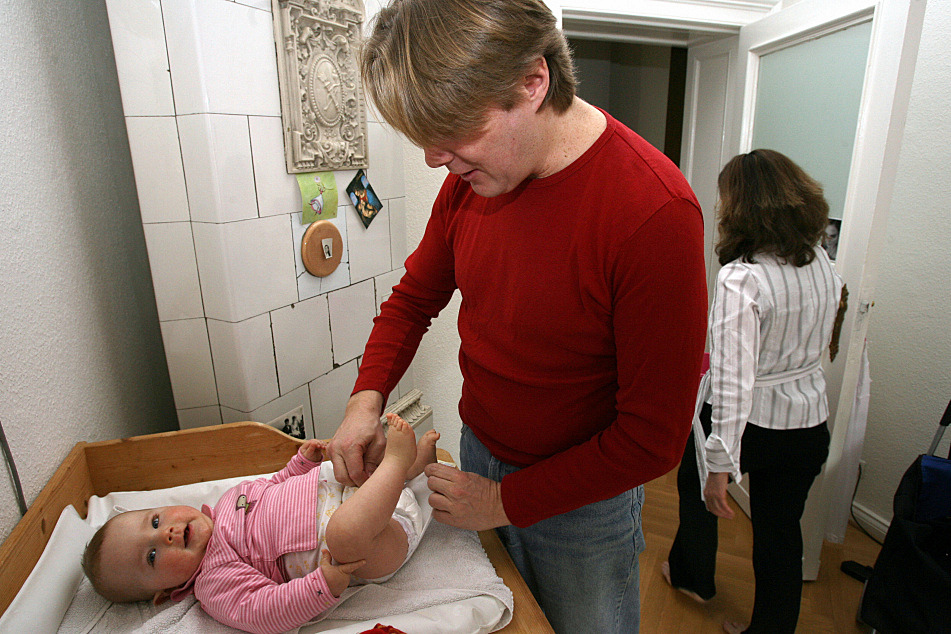
A picture taken April 21, 2006 shows Berlin, Germany resident Nicolas W. changing his 8-month-old daughter at home. JOHN MACDOUGALL/AFP/Getty Images

Listen: Story audio

39min 13sec

Guests
  • Dr Eli J Finkel: Professor of psychology and of management and organizations at Northwestern University
  • Paul Raeburn: Author of "Do Fathers Matter?" chief media critic at the Knight Science Journalism Tracker and blogger at About Fathers for Psychology Today
Parenting is hard work - we've always known that. There are major biological and life changes that occur when you welcome a baby into your home.

Social scientists, however, have been taking a new look at the experience of parenthood. In an article Dr Eli J Finkel in The New York Times, he said the biological changes that a man faces when he becomes a father have long been overlooked:
Although many parents happily take to their new role, millions every year respond with despair. According to a 2010 article in the Journal of the American Medical Association, among new parents -- three to six months postpartum -- 42 percent of mothers and 26 percent of fathers exhibit signs of clinical depression. In a longitudinal study reported earlier this year in the journal Pediatrics, men on average experienced significant increases in depressive symptomatology across the first five years of fatherhood (if and only if they lived with their child). Indeed, in the years after becoming a parent, both men and women experience significant reductions in their overall level of satisfaction with their lives, according to a 2008 paper in The Economic Journal.
Author Paul Raeburn says that beyond the initial transition of becoming a father, science frequently omits the role a father plays in a child's life - be it the role of a sperm donor, a bread winner, a primary caretaker or a relationship that doesn't fit into one category.

Finkel and Raeburn join The Daily Circuit to discuss how becoming a father impacts a man, and what role a father plays in a child's life.

Sunday, August 17, 2014

Michael Brooks - Men Can Be Just as "Maternal" As Women, According to Neuroscience

http://www.newrepublic.com/sites/default/files/u187208/fathersnewstatesman.jpg

"Sometimes science needs to state the bleeding obvious." Indeed, that about sums it up. But the "bleeding obvious" around this topic is not widely believed in the U.S. Women are still considered better care-givers, more emotionally attuned, and more nurturing. Those of us who know single fathers know this is not true.

By the way, this comes from The New Republic, via The New Statesman.

The researchers scanned the brains of parents while they watched videos of their own interactions with their children. What they found is that brain activity increases in two areas (the article did not name the areas and the study is pay-walled):
One is an emotional network that deals with social bonding, ensures vigilance and coordinates responses to distress, providing chemical rewards for behaviors that maintain the child’s well-being. The other network is concerned with mental processing. It monitors the child’s likely state of mind, emotional condition, and future needs, allowing for planning.
In the secondary care-giver, the activity is stronger in the 2nd area, the one focused on planning and monitoring the child's state of mind. In the primary care-giver, the social bonding and distress response area is most active.

Here's the aha! moment: the above was true no matter who was the primary caregiver, the mother or the father (if the father does not have a female partner). In fathers with female partners, whether they are primary or secondary caregivers, "the relative size of the of emotional and thinking responses varied according to how much time they spend looking after the child."

Take home message: "Neuroscience tells us that children who are raised by two fathers experience the same care-giving environment as those raised by a mother and a father."

Support the Anti-Bulling Campaign
Dan Savage (right), his husband Terry (left) and their son, DJ (middle).

Well, damn, this IS bleeding obvious.

Men Can Be Just as "Maternal" As Women, According to Neuroscience

By Michael Brooks
July 25, 2014

Occasionally, scientific research comes up with banal findings that should nonetheless stop us in our tracks. For example, researchers recently published a study showing that a father’s brain will change its hormonal outputs and neural activity depending on his parenting duties. The conclusion of the research is, in essence, that men make good parents, too. Surely this is not news.

Yet it does provide evidence that is sadly still useful. Those involved with issues of adoption, fathers’ rights, gay rights, child custody, and religion-fueled bigotry will all benefit from understanding what we now know about what makes a good parent.

The biggest enemy of progress has been the natural world, or at least our view of it. Females are the primary caregivers in 95 percent of mammal species. That is mainly because of lactation. Infants are nourished by their mothers’ milk, so it makes sense for most early caring to be done by females.

Human beings, however, have developed more sophisticated means of nourishing and raising our offspring. Should the circumstances require a different set-up, we have ways to cope. It turns out that this is not just in terms of formula milk, nannies or day care: We also have a flexible brain.

The new study, published in Proceedings of the National Academy of Sciences, scanned the brains of parents while they watched videos of their interactions with their children. The researchers found that this stimulated activity in two systems of the brain. One is an emotional network that deals with social bonding, ensures vigilance and coordinates responses to distress, providing chemical rewards for behaviors that maintain the child’s well-being. The other network is concerned with mental processing. It monitors the child’s likely state of mind, emotional condition, and future needs, allowing for planning.

In mothers who are the primary caregivers, the emotional system was most active. Fathers who are secondary to a female caregiver were more engaged as thinkers and planners. But men raising a child without a female partner were found to have the same level of emotional response as a mother and the same thinking and planning response as the secondary father. In other words, they are able to perform both roles.

What’s more, for men in both primary and secondary roles, the relative size of the of emotional and thinking responses varied according to how much time they spend looking after the child. To give the child the best care, the brain changes its output depending on circumstances.

Neuroscience tells us that children who are raised by two fathers experience the same care-giving environment as those raised by a mother and a father. Similar studies still need to be conducted on single mothers, non-parents raising children and dual-mother parents but the likelihood is that they, too, will display similar plasticity.

Oregon State University’s Sarina Saturn writes that this will one day be regarded as a landmark study. That is a little depressing—we shouldn’t need scientific research to tell us this. Yet she is right. It will help dispel prejudice, just as the discovery of homosexual activity among animals helped to dispel the myth that this is somehow unnatural. We now know that the brain “is flexible enough to keep up with the times”, as Saturn puts it. Hurrah. Sometimes science needs to state the bleeding obvious.

~ This piece first appeared on newstatesman.com.
Sunday, August 10, 2014

Omnivore - Of the Two Sexes

From Bookforum's Omnivore blog, here is a collection of links on men and women and the issues that drive gender theory.

Of the Two Sexes

Aug 8 2014
3:00PM

Saturday, June 14, 2014

Shawn Phillips - The 10 Best Things About Being A Dad

This is an old post from Shawn, dated 2009, but it's still relevant. Since tomorrow is Father's Day, it seemed like a good time to share this with those who may not see Shawn's Start Strong Monday blog.

It's kind of an interesting "holiday" for me - it's been 34 years since I have had a father, and if he were still alive (he'd be nearly 88 years old), I doubt we would be on speaking terms. The experience of growing up with him (and my equally dysfunctional mother) are why I knew by my teens I would never have kids.

All of this combines to make Father's Day a bit of a mystery. I don't know the feeling of actually being grateful for a father's love and guidance; nor do I have the experience of being a father and feeling that affection from my kids.

So I observe, vicariously and share those things that seem insightful.

The 10 Best Things About Being A Dad

Tue, Jun 23, 2009

sp_bp_mtn_2 

Yesterday was father’s day—a holiday I used to resist. I thought it a bit unnecessary. “Why dedicate one day to showing our father’s we care when we can do it 365 days a year?,” I reasoned.

Well, now that I am a father my view on this has made a 180. I still remember my first father’s day (now 10, geeze) 5 years ago, surprised I was by how great it felt to belong to the category of fathers. It was also special because my dad, BP, was alive and we both got to share the day.

Yesterday may well have been my best father’s day since. 

Sure, it’s great to get gifts and just be recognized but what struck me is how much better I am with self-care, with putting myself near the top of the list on this one day. In my experience this is a place where most father’s struggle—finding time for me.

To all those father’s out there: I hope that you too enjoyed a day where you were the featured attraction. And perhaps were able to anchor the feeling and recognize that while the family will always be first in mind and heart—taking care of self enables us to be more and give more to our children and spouses.
 Riding my bike through the stunning Colorado mountains yesterday I was contemplating the best things about being a dad. What follows are the highlights.

If you’re a dad, you need only skim these as I am sure you’ll connect with them instantly. At the end there’s a space for your story. I’d love to hear your favorite thing about being a dad. Whether it’s already on my list or not, share yours and I’ll make it worth your time, promise.

The 10 Best Things About Being A Dad


1. You finally know how your dad feels about you.


Regardless of the circumstances of your childhood, the moment you go from being “a guy” to being a father you “get it.” That is the feeling of what it is to love something more than life itself. I recall how my view of my father transformed in an instant. For I knew, no matter what he ever did or said, he too had felt “this” for me, my brother and sister. It’s not an optional feeling.


2. You know what it means to love something more than yourself.


Let’s face it, for all guys call sacrifice and profess to “give it up for,” not until we have a child do we really truly get what it is to hold something or someone else more important than self. And I believe this is a vital, transformational experience in life.


3. Whatever your age, kids make you young again.


If you’re a father you get this—if you’re not there yet, trust me on this. It’s so true. Your kids energy doesn’t wait on you. You get moving whether you want to or not. And they keep you playing more and seeing the world through the eyes of innocence that we’ve all worn once.

4. Being a dad makes you a better man.


I think we all like having the opportunity to be a mentor—to help someone learn and grow. It’s inherent in our DNA. And being a father is the ultimate mentoring opportunity—you get to truly shape a life(s). When it becomes obvious that it’s not just what you want them to pick up that they learn, you start thinking about choices you’d not given a second thought to before. Things like where you go, how you get there, who you hang around, etc. It all matters but what matters most is the man you are.


5. It’s a license to be silly and play


Once out of college it seems like the world gets pretty darn serious real quick. Having children brings play back into your life. Whether it’s wrestling around, dancing, making faces, telling jokes or playing tag—you’ve got a license to be your silliest. It’s hard not to go to a playground and play—just as I imagine it’s hard to go to a playground and play if you don’t have kids. It can look bad–so if you must at least stay off the monkey bars if you’re over 30.


6. It awakens you to your global responsibility.


Being a father makes you instantly more accountable and responsible to the world around us. Even if you’re one who’s been outspoken about your concern for the environment, politics or social issues of the day—with children suddenly you become more aware of everything that will impact the next generation and the next.


7. Someone is truly intrigued by your life wisdom stories.


Face it, guys like to tell stories from our formative years. As a father you finally have someone who is truly interested in all those stories that have bored others to tears for years. Enjoy the sharing and be a careful edit so as not to plant any unnecessary seeds—which I can tell you my dad did! They may take many years to materialize but trust me, really “good” stories can percolate for a long time.


8. You actually want someone to best you—to show you up!


While we all pull for friends and people we like, a child of your own is different story. It’s not just hoping they do well you truly want them to exceed any and every best you’ve ever enjoyed. It’s free from even the slightest jealousy of competitiveness and this is a refreshing, empowering feeling.


9. Being a father softens your heart and opens you to life.


No matter how focused you’ve been on getting ahead on your career and success—or how hardened your resolve from your own life circumstances, being a father will melt your heart. I won’t even try to explain it beyond that. At this point you either get it our you don’t. It’s that simple.


10. You’ve got Full Strength to help you be the world’s best dad!


For the other 364 days a year, when it’s not your day, you’ve got the life performance advantage of Full Strength nutrition, the world’s first and only true premium nutrition shake built for the modern day warrior dad. The delicious tasting, convenient, clinically proven nutrition shake with the exclusive Performance Balance is intentionally created to elevate your every day performance in work, play and LIFE. It’s the once a day antidote to dieting that will give you more energy, more time and more vitality to be the Full Strength father you really truly want to be for your children.


Full Strength for SuperHero Fathers


Share ONE of YOUR favorite things being a father—a memorable moment or touching story—and then click here for Dad’s only FREE Shipping on a 2-week or 1-month packages… Full Strength is the only nutrition shake clinically proven to swap fat for lean muscle without any dieting whatsoever!


Until Next Week…

Stay Strong,


Shawn

Follow Me: Twitter.com/shawn_phillips

Thursday, May 15, 2014

What Men Really Want When It Comes to Work (via NPR)

This story aired on Mother's Day, but the topic is very relevant to a lot of men in this country who want the freedom to spend more time with family (especially when a new child arrives). In a new study, 89% of men said that paternity leave is important to them. Now if only paid parental leave were universal in this country as it is in Europe.

What Men Really Want When It Comes to Work

by Anne Miller | May 10, 2014
Partner content from Ozy.com


Want to hire smart men? Give them paternity leave. Laura Doss/Getty Images

Sure, there's salary and vacation time, but there's one more benefit on the minds of many men — even in their 20s and 30s — when it comes to job necessities.

Eighty-nine percent of men say paternity leave is hugely important to them, says a new Boston College study to be published in June.

That puts some pretty big numbers onto what society's starting to recognize as a sea change in public opinion. It's increasingly normal to expect dads and moms to share parental burdens at home, says Jennifer Fraone, of Boston College's Center for Work and Family, which delves into "The New Dad" in a .

But it's more than just expecting parents to share the workload at home — men are starting to demand parity in the workplace too, even if there isn't yet have a bun in the proverbial oven. Few companies offer some kind of paid leave for new dads, Fraone says, only 20 percent, citing numbers from the U.S. Department of Labor.

In the U.S., the permits 12 weeks of time off in the first year of the child's life. But that glorious declaration is laden with piles of red tape: The leave doesn't have to be paid, so an employee might be required to use up vacation and sick time. Plus it only applies to businesses with 50 or more employees (meaning startup nation is excluded). And it is only available to employees who have worked for a company at least a year.

Compare that to the British Isles, where new rules hitting the books in 2015 will allow moms and dads to share 50 weeks of leave any way they see fit. Parents will be able to swap the time back and forth between them, beyond the initial two weeks after birth (already guaranteed). That's a change from the current time that must be taken in set blocks.

Paternity leave might not yet be making waves in the American political landscape, but private firms ought to take note. It's a damn good selling point.

Businesses: Want a leg up on the competition when it comes to hiring rock stars? Consider treating them like moms.

Monday, April 7, 2014

Expert Perspectives: Erin Rehel on Fatherhood, Masculinity and Paternity Leave


This post comes from the Fathers, Work, and Family blog, back in January of this year. The discussion with Erin Rehel sheds some light on fathers and the value of paternity leave.

Expert Perspectives: Erin Rehel on Fatherhood, Masculinity and Paternity Leave

Sociologist Erin Rehel conducted a fascinating research study on paternity leave and changing perceptions of masculinity. Here’s a Q and A with Dr. Rehel about her research and its implications for working dads.


Dr. Erin Rehel recently conducted a fascinating study about fatherhood, paternity leave and masculinity

Tell us a bit about your study

My research examines the connection between fatherhood, work, social policy, and shifting ideals of masculinity in the United States and Canada. I conducted 85 interviews with fathers and their partners. I find that fathers today draw think differently about masculinity and fatherhood, but there are societal and workplace barriers that force many dads to fall back into less involved parenting roles.

In this particular study, “When Dad Stays Home Too: Paternity Leave, Gender, and Parenting,” (forthcoming in Gender & Society), I argue that when fathers experience the transition to parenthood in ways similar to mothers, through formal or informal paternity leave, they come to think about and do parenting in ways that are similar to mothers.

Paternity leave provides the space necessary for fathers to develop the parenting skills and sense of responsibility that allows them to be active co-parents rather than helpers to their female partners. This shift from a manager-helper dynamic to that of co-parenting creates opportunities for a more gender-equitable division of labor.

What are some of the commonalities of the men who take paternity leave?


The majority of the men who took leave lived in Quebec, where the government provides up to 5 weeks of paid paternity leave at a wage replacement level of 70% (up to a maximum, of course). Statistics show that about 80% of Quebec fathers now take advantage of this policy, suggesting that providing paid leave is very important.

In the US, the fathers who took leave–sometimes unpaid leave–were actually quite similar in many ways to their non-leave taking colleagues. In general, fathers who did not take leave had some type of family support in childcare, such as grandparents, often right from when the baby was born. Also, dads in dual-earner couples were more likely to take leave, perhaps because of more economic freedom to do so and more egalitarian attitudes.

How do dads who took leave say they’ve benefitted from doing so?

Fathers who took leave overwhelmingly said they enjoyed the experience. Many said it allowed them to really understand what it meant to take care of an infant, all the things that go into a daily routine. This presence allowed them to participate in all aspects of infant care, giving them confidence in their skills. Others spoke of how it brought them closer to their partners, as it gave them the time and space to do parenting together. This shared experience, while exhausting, was something that both fathers and mothers spoke of in their interviews.


I was very fortunate to spend a lot of time with Nick after he was born. I wish all dads had the same opportunity

How could we encourage more men to take leave?

Leave-taking in the US is still not very common, even if we hear of more and more employers providing paid paternity leave. In less-than-stable economic times, people are worried about doing anything that might jeopardize their jobs. This is completely understandable.

I think we can encourage men to take leave in a number of ways. I think employers who do offer leave need to be clear about that yes, this is a policy we support and yes, we encourage you to take it. Make employees aware of the policy and make it a straightforward process. Have more senior people be vocal about their support for the policy. These small organizational culture elements are really quite key in creating an environment where fathers feel able to take leave.

As far as encouraging individual men to take leave, I think it’s important for fathers who do take leave to talk about it. But not just about how wonderful it was, because I think those types of only positive narratives make people skeptical, but also about the challenges faced. I think getting mothers to encourage their partners to take leave can also go a long way to making men feel welcome and important in parenting.

Really, though, it is about changing how we understand masculinity. If we continue to value a form of masculinity that doesn’t leave much space for caring, that values paid work over care work, men aren’t going to see paternity leave as a desirable option. While 3 days isn’t much, I think Major League Baseball has done quite a bit of work in this area with their paternity leave list. It’s these types of cultural shifts that I think can make significant differences in how men understand their place in families and their families in relation to work.

How could we encourage more employers to offer paternity leave?

I think there is a compelling business case to be made for paternity leave. We have more and more evidence that compensation isn’t the only thing workers are looking for from employers. If employers want top talent, they need to offer the things that will attract that top talent. Workplace flexibility and family-supportive policies are ways to attract and retain top talent.

Any advice for dads who can’t/didn’t take leave as they still try hard to be involved fathers?

I think taking leave has real potential to help fathers develop the skills and confidence necessary to be co-parents along with their partners, but I don’t think it’s the only way. I think being an involved father requires intentionality, patience, and a supportive partner.

If a father’s partner has more hands-on experience with the child, they both have to be ok with it perhaps taking a bit longer to sooth a crying baby (hard to do, I know) or to feed a toddler who is use to the mother doing it.

Really, it’s about getting in there and making it happen: ask to do things and get involved. Or better yet, take over a task–a regularly-occurring, time-consuming, perhaps not always fun, task. Be the bath person. Or the get-everyone-ready-in-the-morning person. Of course don’t have that be the only thing you do, but taking over a significant task has the potential to snowball into doing lots of other, related tasks.

-

Thanks, Erin! What do you think about this interview? Your thoughts about fatherhood and paternity leave? Let’s discuss in the comments section.

Like the article? Think it would make for a good facebook, reddit or twitter conversation? Then please share it using the buttons below. You can also follow the blog via email, facebook or twitter. Thanks!

~ Erin M. Rehel is an Assistant Professor of Sociology at Youngstown State University. She completed her PhD in Sociology, with a certificate in Women’s and Gender Studies, from Vanderbilt University in 2013. Her research considers the intersection of gender, family, and work, with a particular focus on how fathers experience work -family conflict. You can follow her on twitter.

Sunday, March 23, 2014

Do You Wanna Be a Dad? Four Important Questions to Ask Yourself


Too many men becomes fathers without actually thinking about it, without looking at the ways we must make sacrifices in our own desires and plans for the betterment of our children. In fact, in this country too many men become fathers because they don't practice safe sex and then must deal with consequences (or, as is too often the case, not take responsibility for the child they have created).

Perhaps we are not designed to think too deeply about these decisions - if we did, far fewer men would sacrifice 18+ years of their lives for a single unprotected orgasm.

And yes, I am childless by choice, so my bias is obvious here. Still, even though I am closing in on 50 years, I still get pressured occasionally to "have kids now before it's too late." Thank you, but no.

Do You Wanna Be a Dad?

Four important questions to ask yourself

Published on March 23, 2014 by Ellen Walker, Ph.D. in Complete Without Kids

Whether or not to have children is probably the most important choice in a man’s life. Just think about it: If you marry the wrong person, you can get a divorce. If you go into the wrong career, you can retool and try something else. If you move to the wrong neighborhood, you can pack up and relocate. But a child is your responsibility for the next eighteen years, and on some levels for the rest of your life.

Yet many men don’t step back and ask themselves if fatherhood is the right path for them until they have to jump into the role -- whether they really want to or not.

Instead of leaving your life to fate, why not consider these questions about fatherhood and how it would be for you?

1) Do you enjoy spending time with children and being in places that are child-friendly? Children don’t live in a bubble—they go to birthday parties and play soccer, and they like to have friends come over for play-dates. So, if you’re going to be a dad, you’d better think these activities are fun, because you’re going to be overseeing a lot of them!
Related Links
2) Do you have an easy-going temperament, and do you not mind clutter? Children cry in inappropriate places, have medical emergencies, and create clutter. It’s critical that a parent is flexible, patient, and able to change plans readily. Kids can be noisy and messy, and dinnertime in most homes is not an adult sanctuary! Having a child means giving up quiet, tidy meals and cleaning up spilled milk on a routine basis.

3) Do you like the idea of teaching and setting limits with children, and do you think that learning how to do this -- even with a challenging kid -- would be rewarding for you? Your child will need constant guidance and boundaries. And you cannot predict if you’ll have a child with special needs, requiring even greater levels of parenting. Remember, parenting is not being a best buddy. You’re there to raise your child so that he can go out into the world as a responsible, independent adult.

4) When you imagine your life ten years from now, do you see yourself as a father? Are you relishing -- rather than resenting -- this role? Keep in mind that raising a child to age 21 costs $241,000—and it takes on average eight hours a day to raise two kids to the age of eighteen. So if you’re going that route, you’d better think it’s well worth the expense, both in time and money! Does the idea of getting up in the night to take care of a sick child raise your blood pressure? Remember that parenting means being a doctor, nurse, social planner, math tutor, chauffer, bail bondsman, chaperone, and etiquette instructor to a small human who can be obnoxious and disrespectful.

Also consider that you may have to sacrifice your expensive and time-consuming recreational pursuits for fatherhood. If you’re not willing to do so, then it’s is probably not for you.

Don’t forget that parenting is an option (unless you’ve already had a child). Once you’re there, you can’t back out. As I discuss in my book, Complete Without Kids: An Insider's Guide to Childfree Living by Choice or by Chance, many young people today are making the decision to not become parents, and to instead focus their time and energy on other pursuits. Childfree adults, for the most part, describe their lives as rich and full. Meanwhile, being a parent is no walk in the park; it’s a serious and challenging job. More and more parents are admitting that they wish they’d thought it through more carefully because now they feel unfilled and frustrated in parenthood.So carefully consider the questions above -- and look before you leap!

Saturday, March 1, 2014

A Third of American Children Are Growing Up in Homes Without Their Biological Fathers

Dads DO matter, a lot. There is ever increasing piles of evidence showing that children who grow up without their biological father (or any good father figure) do worse in school, have more social and behavioral problems, and are at increased risk of mental illness. Those are the facts.

But we also know that children who grow in homes with "family problems" are also more prone to many of the same issues.

This is a no-win situation for the kids. The only solution is for fathers to have more access to their children in the event of divorce or having fathered a child out of wedlock (the family court system is still blatantly anti-fathers in many areas of the country). Of course, that requires the fathers to WANT to be involved, which is more often the case now than ever before.

This article comes from The Atlantic.

Why Dads Matter

A third of American children are growing up in homes without their biological fathers.

Lois M. Collins & Marjorie Cortez Feb 23 2014


MIDVALE, Utah — Jordan Ott was the third of his mother’s six children, born over the course of four marriages.

By age 8, he’d had two step-dads; his brothers and sisters had more or fewer based on birth order. Each child also had different numbers of siblings, depending on whether their own dads fathered other children. Ott has one full sister, four half-siblings and at one point had three step-siblings “that I know of,” he said. His own father has mostly lived far away.

His story is not uncommon today. More than half of babies of mothers under 30 are born to unmarried parents. The divorce rate among those who do marry exceeds 40 percent, according to the 2012 State of Our Unions report.

These statistics play out most often in the form of absent fathers—or the arrival and departure of serial father figures involved in romantic relationships with a child’s mother. (Moms still usually retain custody in a breakup or divorce.) Twenty-four million American children—one in three—are growing up in homes without their biological fathers, the 2011 Census says. Children in father-absent homes, it notes, are almost four times more likely to be poor.


Like Ott, now 25, children may grow up with lots of father figures, but no real dad. Or they can be like Arvie Burgos, 17 and in foster care in Utah, who grew up in a virtually man-free zone.

Ott said he learned not to pay attention to stepfathers, even one he had for years. “If I did something wrong and needed discipline, he was all over it. Otherwise, we didn’t have too much to do with each other.”

Meanwhile, Burgos’ sole significant male role model was a young man he saw a few hours each month courtesy of a Big Brothers program. His father had never been part of his life and his mother was a drug addict. He could count on his grandmother, but she died when he was 15, about the time his mentor moved away.

“I think there’s consensus that cultural and family factors are causing children’s family lives to be more unstable than in the past,” said Andrew J. Cherlin, author of The Marriage-Go-Round and director of the Hopkins Population Center at Johns Hopkins University. Experts debate whether recent cultural shifts or economic changes most undermine family stability, but, said Cherlin, “most who I respect believe both are at play.” “None of this implies men are better as dads than women are as moms.”

Most children weather family turmoil and wind up OK, said Cherlin, who coined the term “family churn” to describe what happens to families as couples split, often moving dad out of the home and a new man in. A study in the Journal of Marriage and Family said children in such homes experience an average of more than 5.25 partnership transitions. That’s tough for kids who are used to having their own fathers within reach.

“Dad also helps with impulse control and memory and enhances a child’s ability to respond effectively to new or ambiguous situations, for boys and girls,” said Warren Farrell, author of Father and Child Reunion. Children who are close to their fathers tend to achieve more academically, while kids with absent fathers are more likely to drop out. Fathers are the biggest factor in preventing drug use, Farrell said.

The time a dad spends with his children is a particularly strong predictor of how empathetic a child will become, according to commission of experts who wrote a proposal asking President Obama to create a White House Council on Boys and Men. The group, which Farrell helped assemble, compiled research showing infants with dads living at home were months ahead in personal and social development. Children who lack contact with fathers are more likely to be treated for emotional or behavioral problems. Girls with absent or indifferent fathers are more prone to hyperactivity. If dad is around, girls are less likely to become pregnant as teens.

As early as 1993, studies showed that dads also influenced whether their sons became teenage fathers. A Temple University study found no boys born to teen mothers became teen fathers if they had close relationships with their biological fathers, compared to 15 percent of those who didn’t have that closeness.

“None of this implies men are better as dads than women are as moms,” Farrell and the commission emphasized. Children need both.

But dad’s place is not always secure. The commission report said, “The U.S. has done a better job of integrating women into the workplace than in integrating men into the family—especially into the lives of children in the non-intact family. We have valued men as wallets more than as dads.” The result is “moms feeling deprived of resources and dads feeling deprived of purpose and children feeling deprived of the full range of parenting input.”

Few have studied the relationship between children and sequential parent figures, said Paula Fomby, associate research scientist at University of Michigan. She said research suggests someone not biologically related is less likely to invest in a child for various hypothetical reasons, including unclear parental roles. Sometimes, father figures compete or are stretched thin by obligations to children fathered with other women.

The more transitions a child endures, the worse off he or she typically is, Cherlin said.

In Ott’s case, not all the siblings growing up with him experienced the family’s transitions the same way. Some of his younger half-siblings were actually living with both biological parents while he was dealing with a step-father. It was unequal and complicated as step-fathers treated him and his siblings each differently. He saw friends in intact families enjoy greater consistency, something he wants for his own future children.

“There is a great deal of evidence that children from single-parent homes have worse outcomes on both academic and economic measures than children from two-parent families,” wrote scholar Elaine C. Kamarck and Third Way president Jonathan Cowan in the introduction to Wayward Sons, a report produced for Washington think tank Third Way. “There is a vast inequality of both financial resources and parental time and attention between one- and two-parent families.”

The report also said absent fathers particularly impact the psychosocial and academic development of boys.

University of California-Berkeley’s Philip A. Cowan and his wife, Carolyn Pape Cowan, study parent couples. Their research shows a couple’s relationship is vital to their children, even if they are no longer intimate partners—whether they’re divorced, separated or never married.

“The relationship between two biological parents determines a lot about how fathers are going to be involved, and that determines a lot how kids are going to be,” he said. Simply improving the job market for young adults, especially men, would do wonders to stabilize families.

If parents get along, their children tend to be more psychologically and emotionally healthy. Moms who feel their child’s father backs them up are better mothers through all stages of the child’s development, reports the U.S. Department of Health and Human Services—“more responsive, affectionate, and confident with their infants; more self-controlled in dealing with defiant toddlers; and better confidants for teenagers seeking advice and emotional support.”

Ott’s father lived too far away to be available physically or emotionally. Burgos “knew” his father through a single letter and a phone call. Neither of them gained the benefits the studies attribute to an involved, interactive dad.

The federal government is beginning to recognize how important fathers are to children after years of focusing almost exclusively on mothers. Government-funded programs to promote marriage for at-risk families now include money for paternal involvement, too, Cowan said. Social welfare programs have been told to include fathers in case management. The Obama, Bush and Clinton administrations all funded healthy-marriage initiatives. Cowan called attempts to include fathers “islands of hope,” but concedes they’re “fighting decades of prejudice.”

The odds are still stacked against fathers in many government and nonprofit agencies designed to assist families, he said. Often, men’s names are not included on case files, even when parents are married.

Simply improving the job market for young adults, especially men, would do wonders to stabilize families—particularly those just starting out, Cherlin said. Experts have been surprised by the real drop in divorce among the college-educated, who still can get good jobs. He said young people need more job training opportunities and apprenticeships, especially if they’re not college-bound. Making sure tax policy doesn’t discourage marriage and providing a modest earned income tax credit for disadvantaged childless young adults would also encourage formation of stable relationships, he added.

Stable relationships are something both Ott and Burgos long for, and each can picture one in his mind. But both admit to feeling somewhat unsure about how to make it happen in real life.

Burgos said he had some good teachers and a foster dad he liked a lot, but no confidants after his “big brother” Jacob moved away. “I don’t really have deep emotional conversations with anybody,” he admits.

Ott recently married and hopes to have children and a stable family life. Burned more than once by the choices adults made when he was young, he keeps one eye on the past. It’s a path he doesn’t intend to travel.

“I’ve never had a family,” Ott said. “I know what I’m not going to do.”

This story is part of The Father Factor, a series, produced in collaboration with the Deseret News, on the role of dads in American society today.

Lois M. Collins and Marjorie Cortez

Lois M. Collins covers family issues for the Deseret News and is a recent National Health Journalism fellow. Marjorie Cortez is a reporter for the Deseret News, where she covers local government and human services issues including poverty, substance abuse, mental illness, homelessness, and refugee resettlement.

See also

Sunday, January 12, 2014

Findings from a Large and Recent Study of U.S. Paternal Involvement


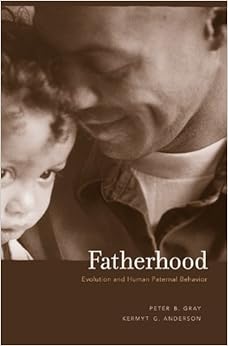
Peter B Gray is co-author, with Kermyt Anderson, of Fatherhood: Evolution and Human Paternal Behavior (2012). In this post from their Psychology Today blog, The Evolving Father, Gray takes a quick look at new findings on the involvement of fathers with their children.

Some Father-Friendly Data

Findings from a large and recent study of U.S. paternal involvement

Published on January 8, 2014 by Peter B. Gray, Ph.D. in The Evolving Father


Data on Dads--Oh Boy

If you are a father of a 3 year old, how frequently have you read to your child the past four weeks? If you are the father of a 10 year old, how often have you taken your child to activities the past four weeks? If you delve into the results of a recent report issued by the Centers for Disease Control (CDC), you can find answers to eight of these kinds of questions from a nationally representative probability sample of over 10,00 men aged 15-44, about 4000 of whom were fathers. What are some highlights of the study? And what are some qualifiers and interpretations?

One of the themes highlighted during the late-December 2013 media rush on this study was the high involvement of fathers. Most residential fathers who fell into the study engaged in most of the activities they were asked about. As an example, 93% of coresidential fathers with a child aged 5-18 years of age reported eating a meal at least several times a week or every day with their child during the past four weeks. As another example, some 84% of fathers reported reading at least once a week with a child less than five years of age. So much for slacker dads, these figures suggest.

Another theme of the findings is that father involvement differed greatly depending on whether a father lived with a child or not. For the eight behaviors asked about (e.g., playing with a child), fathers who lived with a child reported engaging in these more often than fathers who don’t live with a child. Just over half of non-residential fathers reported not eating any meals with their child aged 5-18 or reading to their child under age five during the past five weeks. Dads are obviously much less involved if they don’t live with their children, even if that is hardly surprising. Coresidential fathers also perceive they are doing a better job at fathering (44% reporting very good) than their nonresidential counterparts (21% very good). Yet from another angle, it’s astonishing that non-residential dads do anything for their kids. As Kermyt Anderson noted in our Fatherhood: Evolution and Human Paternal Behavior book, one definition of our species’ uniqueness could boil down to the claim that, “humans are the species in which males continue to invest in offspring after the parents cease to be in a sexual relationship.” (p. 130)

Besides residential status, study findings were presented with respect to fathers’ age, cultural background, relationship status (marriage vs. cohabitation) and education. These factors were also associated with variation in paternal involvement. Older fathers reported playing less and reading more than did younger fathers, for example. Nonresidential Hispanic or Latino fathers were less likely to have eaten meals with their child aged 5-18 the past four weeks than were African American or White fathers.

With this bonanza of quantitative data on U.S. paternal involvement, what are some spins suitable to an “evolving father” blog? As some reports have noted, the data suggest some incremental increases in paternal involvement in the U.S. since the last comparable report in 2002. Other sources of data (e.g., time diaries) have shown increases in the time men spend with their kids, including some specific activities like cleaning or diapering them, in the past few decades. So by such measures it appears that U.S. dads are engaging in more direct care and interaction with their children.

Some other key elements are not included in the data. Most importantly, there is no information on fathers’ economic contributions. In the U.S. and elsewhere, fathers continue to be scrutinized carefully for their ability to contribute to the financial and material support of a partner and children, making the lack of such data here a notable gap. While it can be refreshing to see the spotlight on fathers shift from a focus on breadwinning to lots of direct behavioral involvement, more complicated discussions about contemporary male work/family tradeoffs, female work/family tradeoffs, and a sexual division of labor within families need both pieces. The report also ignored any potential differences between step- and genetic fathers, combining both groups within the category of coresidential fathers. Given potential motivational and material differences between step- and genetic fathers, that also warranted a distinction, even if to show previously-documented findings such that coresidential stepfathers may me more involved in their stepkids’ lives than those same children’s nonresidential fathers.

In summary, the data on American dads and their direct care are richer with this study, even if we can push those data into all kinds of other conversations (even a panel discussion at a local NPR affiliate).

Friday, December 27, 2013

"Fathers Who Care About Parenting" Are Not a Revelation (via Esquire)

Can I get an "Amen!"? This short article from Esquire tries to help dispel the myth that men who are trying to be actively involved and caring parents are some kind of aberration.

"Fathers Who Care About Parenting" Are Not a Revelation


By Stephen Marche on December 23, 2013


The recent government survey of American family life is mostly good news. American dads are heavily involved with the lives of their children in a variety of important ways. Among other things, most fathers read to their children several times a week, help out with homework, and eat meals with their kids. Given that new research shows just how powerful time spent with a father can be, particularly in the lives of boys, these are all signs of genuine and substantial hope. The only really bad news about the government survey is that it's news at all.

"Fathers who care" are the new "women who work." Haven't we all moved beyond this question by now?

We all know that fatherhood matters to men. When my own father died a year and a half ago, I discovered for myself just how much. The new survey shows that the symbolic power of fatherhood is increasing. Young men want to be fathers more than young women want to be mothers now. But the trends the new government survey identifies are pretty mild. The amount of father's attention to their children has "increased slightly" since 2002.

So when the AP writes that "the detached dad, turning up his nose at diapering and too busy to bathe, dress and play with his kids, is mostly a myth," I have to ask: Whose myth?

This idea of fathers coming home to retire to the den to build bottle shops and suck back old-fashioneds has not been viable for a generation at least. That may be how today's grandfathers remember their own grandfathers, but for everybody else, it's history.

We all know that the family as it currently stands comprises mothers who work and fathers who help with the children. That is the way the vast majority of families work. To remark on fathers who care is to imply that the norm is for fathers not to care. To remark on women who work is to imply that it's unusual. And this attitude of surprise has consequences.

American work life and American family life have arranged themselves so that women are punished for having children at the workplace and discussions of family leave are almost entirely discussions of maternity leave. Treating the current family as some weird outlier makes discussions of family policies separated from reality.

The latest Pew research shows that 40% of households with children under 18 have women as breadwinners. This comes as a surprise to exactly no one who is paying attention. The current model of the standard family, insofar as such a thing exists at all, involves both partners bringing in income, and both partners helping to care for the children. (Housework is a different matter.) This is not news anymore. It is simply established reality.

The most important and substantial trend in American family life is not that men and women are in separate spheres, but that they're struggling in both, that government and business policies around family-life balance in America are virtually non-existent, and that they haven't properly been thought through yet. "News" that treats the current lives as men and women as alternative reality doesn't help.

Let's stop being amazed that men and women are living the way they are. Let's start doing something to help them.

Tuesday, October 29, 2013

Dad’s Been On A Parenting Kick Lately

Don't be this dad, okay? Please . . . .


Dad’s Been On A Parenting Kick Lately

ISSUE 49•44 • Oct 28, 2013


AUSTIN, TX—In the most recent of a long string of hobbies and obsessions to completely absorb the local father’s attention, friends and family reported Monday that Jacob Rossbach, 35, has been on a serious parenting jag lately. “In the past few days, he’s just been going nuts with the paternal encouragement and affection stuff—he’s really gotten into it lately,” said daughter Jenny, 7, adding that while she’s not sure what put the parenting bug in her dad’s ear, her father now spends nearly all his free time on activities such as doling out advice, providing material assistance, and imparting wisdom to his two children. “A few minutes ago he stopped by my room just to tell me he was proud of me. He’s done that five times today. It’s like, huh, guess he’s going through a little nurturing-his-children phase or something.” The sudden burst of commitment to his paternal duties reportedly replaces a fiscal responsibility kick that dominated the previous week and a half of Rossbach’s life.

Wednesday, August 14, 2013

Father Teaches Son How To Fly Into Rage Over Completely Inconsequential Bullshit

Here is a little hump day humor courtesy of The Onion. And as is usual with The Onion's brand of satire, there is some uncomfortable truths in this piece. My father taught me this, indirectly, on many occasions in my childhood. Often, the lessons that we learn through observation and experience are more deeply ingrained - because they are not verbally transmitted - than the lessons our fathers wanted us to learn and spent time trying to teach.

Father Teaches Son How To Fly Into Rage Over Completely Inconsequential Bullshit

ISSUE 49•33 • Aug 14, 2013

Dalton teaches his son how to irrationally fly off the handle if the battery in the garage door opener dies.

RAPID CITY, SD—Saying that he always strives to set a strong example for his son to follow, local father Gary Dalton told reporters Tuesday that he has been carefully teaching his 9-year-old boy Zachary how to overreact with blind rage to completely irrelevant bullshit.

“Now that Zach’s getting older, it’s important for me to show him how to deal with the minor inconveniences in life by blowing them totally out of proportion,” said Dalton, noting that he frequently tries to demonstrate to his son the proper way to fly off the handle both at home and in public. “Zach should know that small, trivial irritations, like misplaced keys or having to relight the pilot light in the basement, should trigger an unbridled anger inside him. And that’s not something he can fully learn from his friends at school or by watching TV—he needs a father figure right there, blowing up in his face about never, ever messing with the DVR again for him to see exactly how it’s done.”

“It’s up to me as a parent to become unsettlingly irate over something as small as letting the screen door slam shut, so that Zach learns to never let even the most petty, negligible nuisance slide,” Dalton added. “He’s an observant kid and he really looks up to me, so I’m sure he’ll catch on quickly.”

In an effort to help guide his son’s development, Dalton explained that he consistently tries to embody the qualities of irritability, hostility, and bitterness in his daily life, emphasizing to his fourth-grade son the importance of letting his annoyance over an inconsequential matter develop into a lingering, biting resentment that makes others feel uncomfortable to be near him.

In addition, the 42-year-old market researcher said that he has been making a concerted effort of late to show his boy how to obsess over such ultimately trifling things as a driver going too slow in the left lane or a person who is slightly holding up a line, and to interpret these incidents as if they were significant, deliberate personal slights.

Dalton told reporters that he believes he’s made significant headway with his son in recent weeks. In particular, the local father cited several “very constructive” instances in which he demonstrated how to absolutely flip out when someone asks him to pull the car over to use the bathroom; when to pound his fist on a table and mutter the phrases “Goddammit” and “I don’t need this” in increasingly loud and aggressive tones; and the proper way to scowl, roll his eyes, and pantomime hurling his cell phone violently to the floor when his wife calls to tell him that something came up and he’ll have to drive the children to their soccer game.

“I always try to lead by example, but now, when some meaningless little thing doesn’t go Zach’s way, I’ll help guide him through the process of treating it as if it were the end of the world,” said Dalton, noting how his own father instructed him how to fly into a rage over barely anything at all when he was a child. “Just last weekend, when a waitress brought him the wrong item, I laid out the process of having a public meltdown step-by-step, showing him exactly how to get irrationally livid, how to clench his teeth and curse under his breath, and then how to belittle a stranger’s intelligence in a loud, confrontational scene that causes others to look over in shock and disgust. I think it really made a strong impression on him.”

The local father told reporters that he was particularly looking forward to an upcoming family camping trip, claiming that a single explosive outburst in such close quarters would “go a long way” toward helping his son understand how to generalize a small frustration into a broad, unrestrained sense of anger that simmers for days and effectively ruins the whole family’s entire weekend.

Dalton reported, however, that he feels he’s able to get through to his son most clearly when he and Zach spend time alone together.

“When it’s just me and Zach, I can really show him up-close how enraged he should become over the unimportant things in life,” said Dalton, highlighting recent instructive one-on-one interactions in which he lashed out at his son for talking during a TV show and for touching the thermostat. “My hope is that, one day, Zach will be able to show his own son how to completely freak out at the slightest provocation and then snap at his wife and children.”

“These are important life skills I’m passing down to Zach, which he’ll be able to use nearly every day as he gets older,” Dalton continued. “And I really look forward to watching him grow into the arbitrary, quick-to-anger man I know he’s capable of becoming.”

Saturday, July 13, 2013

Omnivore - Differences Between Men and Women

From Friday's issue of Bookforum's Omnivore blog, this is an interesting assortment of links for articles dealing with the various differences between men and women.

Between Men and Women