Showing posts with label fatherhood. Show all posts

Wednesday, August 20, 2014

The Science of Fatherhood (NPR)

This is an excellent NPR show on the science of becoming a father, and how current science has ignored or overlooked the important role of fathers.

This originally on The Daily Circuit from Minnesota Public Radio.

The science of fatherhood

The Daily Circuit · Aug 4, 2014


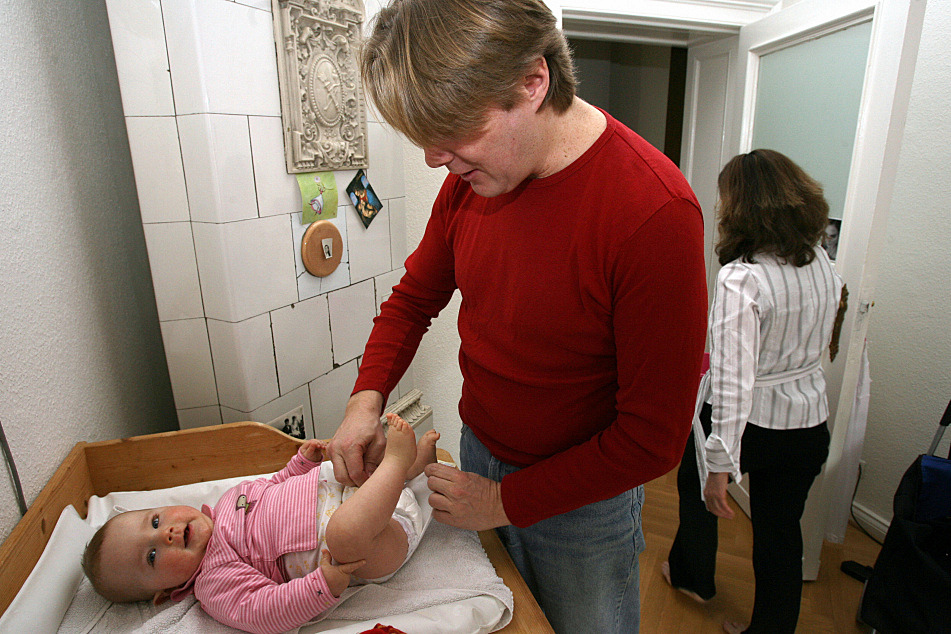
A picture taken April 21, 2006 shows Berlin, Germany resident Nicolas W. changing his 8-month-old daughter at home. JOHN MACDOUGALL/AFP/Getty Images

Listen: Story audio

39min 13sec

Guests
  • Dr Eli J Finkel: Professor of psychology and of management and organizations at Northwestern University
  • Paul Raeburn: Author of "Do Fathers Matter?" chief media critic at the Knight Science Journalism Tracker and blogger at About Fathers for Psychology Today
Parenting is hard work - we've always known that. There are major biological and life changes that occur when you welcome a baby into your home.

Social scientists, however, have been taking a new look at the experience of parenthood. In an article Dr Eli J Finkel in The New York Times, he said the biological changes that a man faces when he becomes a father have long been overlooked:
Although many parents happily take to their new role, millions every year respond with despair. According to a 2010 article in the Journal of the American Medical Association, among new parents -- three to six months postpartum -- 42 percent of mothers and 26 percent of fathers exhibit signs of clinical depression. In a longitudinal study reported earlier this year in the journal Pediatrics, men on average experienced significant increases in depressive symptomatology across the first five years of fatherhood (if and only if they lived with their child). Indeed, in the years after becoming a parent, both men and women experience significant reductions in their overall level of satisfaction with their lives, according to a 2008 paper in The Economic Journal.
Author Paul Raeburn says that beyond the initial transition of becoming a father, science frequently omits the role a father plays in a child's life - be it the role of a sperm donor, a bread winner, a primary caretaker or a relationship that doesn't fit into one category.

Finkel and Raeburn join The Daily Circuit to discuss how becoming a father impacts a man, and what role a father plays in a child's life.
Wednesday, June 25, 2014

Roughhousing Lessons From Dad

Dad\\\

It's nice to see researchers looking at the role of fathers in their children's lives. This review of recent research comes from the Wall Street Journal.

Roughhousing Lessons From Dad

Fathers Teach Risk-Taking, Boundary-Setting; Learning From 'Sock Wrestling'


By Sue Shellenbarger
Updated June 11, 2014


http://m.wsj.net/video/20140613/061014lunchworkfam2/061014lunchworkfam2_640x360.jpg
Fathers who spend time with their kids help instill self-control and social skills, numerous studies show, but exactly how fathers do that is a mystery. WSJ columnist Sue Shellenbarger and father of two Greg Kessler join Tanya Rivero on Lunch Break to decode the father factor. Photo: Greg Kessler

There is no question among researchers that fathers who spend time with their children instill self-control and social skills in their offspring.

Exactly how dads do that, however, is largely a mystery.

Thousands of studies have sliced and diced the benefits for children of a close, nurturing bond with Mom. Researchers have a harder time analyzing the ways fathers interact with children, such as rough-and-tumble play.

Some scientists are inventing new scales and laboratory procedures to try to measure the father factor. One researcher watched fathers and children playing games like "Get Up," in which fathers try to get up from the floor while the children try to hold them down, and "Sock Wrestle," in which father and child try to snatch each other's socks. Other researchers had toddlers climb down stairs in fathers' presence, in a process dubbed "Risky Situation."

"Most people have a pretty well-defined sense of what it means to be a good mom, but for dads, that role is much less scripted," says University of Georgia researcher Geoffrey Brown, lead author of a 2012 study in the Journal of Family Psychology on fundamental questions about how fathers bond with children.


Theo Stroomer for the Wall Street Journal

Greg Kessler likes to roughhouse with his 7-year-old son Ezra or his 4-year-old daughter Zoe. He loves wrestling, pillow-fighting and a game they call "Big Chair, Little Chair," when he lies down, balances a child on the soles of his feet and raises and lowers the child in midair, says Mr. Kessler, a New York City photographer.

His wife, Paula Trotto, believes her husband's play style will help Ezra learn to stand up for himself, but "it does baffle me" that her husband enjoys getting the children so excited, she says. At times, she adds, "I have to leave the room. It's such an intuitive thing, to not want to tolerate the sounds of your kids screaming."

The primary test of attachment—a key concept in child-development research—was developed to analyze babies' bonds with mothers. This procedure, known as the "Strange Situation," has mothers briefly separate from their infants twice. Babies who are upset but readily comforted by the mother when she returns are seen as having a secure bond.

Positive scores tend to sync with other measures of mothers' sensitivity and to predict better cognitive and emotional skills in children later. But when researchers put dads through the Strange Situation, the scores don't consistently predict much, and often fail to match other measures' results.

Many researchers believe dad's bond is expressed a little later, when the father serves as a secure base allowing the child to explore and take risks. This is hard to study in a lab. Animal studies, however, show that baby rats deprived of rough-and-tumble are more aggressive and lack social skills as adults.

The Father Factor

Researchers studying fathers' role often look at how they act during rough-and-tumble play. Here are some positive signs:
  • Father is immersed in the game emotionally, smiling and laughing
  • Father shows spontaneity, creativity or silliness
  • Father is good-natured about losing, with no signs of ego
  • Father helps the child control his or her emotions and calms him or her when overexcited
  • Father adjusts his effort and his technique based on the child's cues
  • Father motivates the child to stay engaged and keep going, or rejoin the game
  • Father is dominant but shares the upper hand, allowing the child to win sometimes
--Richard Fletcher, University of Newcastle in Australia
In an early study at the University of Regensburg in Germany, researchers created a scale to evaluate parents' play, based on whether they challenged kids to stretch themselves, were sensitive to their emotions and encouraged them to solve problems. Mothers and fathers were observed playing with blocks or play dough with their 2-year-olds. Fathers' scores were a unique predictor of children's healthy attitudes toward relationships with others at age 16, according to the 2002 study of 49 subjects led by Karin Grossmann, a senior scientist at the university.

Christopher VanDijk tunes in closely to signals from his 4-year-old son Liam that he wants to play. "He gets this mischievous look on his face, and you just kind of know," says Mr. VanDijk of Denver, an at-home dad. "We have pillow fights. And I pretend like I'm going to eat his ears. There's lots of squealing."

Liam sometimes takes the lead, saying, 'I'm going to scare you, and when I say, "Boo!" you have to say, "Ahhh!" ' Mr. VanDijk also watches for signals that Liam is out-of-control or frightened. "There are times when you put on the brakes," he says.

Rough-and-tumble play isn't confined to fathers. "If a mom does it, the child will learn the same thing," says Catherine Tamis-LeMonda, a professor of developmental psychology at New York University.

Mr. VanDijk's wife Angie, a college administrator, often plays active superhero games with Liam. "Sometimes he needs quiet time, sometimes he needs scuffle time," she says.

Fathers engage in more scuffle time on average, however. Using an adjustable carpeted ramp, researchers at New York University asked 34 parents to show how steep a slope they'd allow their babies to attempt. Some 62% of fathers said they would let their babies try a slope beyond their ability, compared with 56% of mothers, says the 2007 study co-authored by Dr. Tamis-LeMonda.

Many fathers walk a fine line during play between safety and risk, allowing children to get minor injuries without endangering them, says a 2011 study of 32 subjects in the Journal of Developmental and Behavioral Pediatrics. Researchers say this can instill emotional intelligence under fire, and an ability to take prudent risks and set limits with peers.

Navdeep Singh Dhillon likes play-fighting with his 4-year-old daughter Kavya, pretending to throw a kick, teaching her how to block it, then saying, "OK, it's your turn to kick me," he says. He sometimes traps Kavya and his 4-month-old son Shaiyar in a leg lock and has Kavya "tap out," tapping him three times as a signal to release them. Mr. Dhillon of Jersey City, N.J., a college professor, says such play teaches children to set boundaries. "When they have relationships of their own, or with other kids, they'll know what is OK and what's not OK."

Richard Fletcher, an Australian researcher who has studied fathers in free-form games with preschoolers, says fathers need to follow children's lead sometimes, while encouraging them to stretch themselves, and to let them win often enough to have fun—but not so often that they lose interest. Dr. Fletcher, a senior lecturer on the health and medicine faculty at the University of Newcastle, invented a scale to measure quality of play. In a study published last year in Early Child Development and Care, researchers video-recorded 26 fathers in their homes playing the games "Get Up" and "Sock Wrestle" with their 3- and 4-year-olds. Children of fathers who scored high on play quality had fewer social and behavior problems.

The "Risky Situation" is a 20-minute test that assesses children's confidence to explore. Toddlers are placed in a room with their father and a stranger and allowed to play with the stranger, then to climb down a set of stairs. Toddlers who explored with confidence, while heeding limits set by their fathers, had better social and emotional skills 12 to 18 months later, according to a 2013 study co-authored by the test's creator, Daniel Paquette, an associate professor of psychoeducation at the University of Montreal in Canada.

Dr. Tamis-LeMonda is video-recording daily routines of 100 New York City families. In a past study, she discovered "hall ball"— a game where "Dad throws the ball down the hallway," and the toddler brings it back, she says. "That's a natural, everyday routine we wouldn't have known about if we just brought families into the lab and said, 'Here are some toys.' " Such insights, she says, "might guide future research."

Write to Sue Shellenbarger at sue.shellenbarger@wsj.com

Sunday, June 15, 2014

Dads Reflect on the Unexpected Moments that Defined Them as Parents

Happy Father's Day to the dad's out there. Here is an article from The Atlantic on the joyful moments of being a father. Judith Ohikuare interviews Brian Gresko, author of When I First Held You: 22 Critically Acclaimed Writers Talk About the Triumphs, Challenges, and Transformative Experience of Fatherhood.

What Makes Men Fathers

Dads reflect on the unexpected moments that defined them as parents.


Michaela Rehle/Reuters

As writer and stay-at-home dad Brian Gresko sees it, narratives about fatherhood are slowly but surely becoming more present in overall conversations about parenthood. He notes that programs like NBC’s Today have honed in on dads by rebranding long-running segments like Today Moms into Today Parents (with an extra nod to Modern Dads). And online, Gresko says, “There’s definitely a growing trajectory of men writing honestly and openly about parenting” as a counterbalance to the well-established mommy-blogosphere.

Still, Gresko notes that while “there are also the so-called momoirs,” that genre doesn’t quite exist yet for dads. His new anthology, When I First Held You, compiles 22 essays on fatherhood from a host of distinguished contemporary attempts to showcase the wide range of experiences that men have as they grapple with being called “Dad.” I spoke with Gresko about the changing nature of fatherhood and visibility inside and outside of the home.


When did you become a stay-at-home dad and why was that the best decision for your family at the time?

My decision to be a writer and to be a dad all came kind of at the same time for me, or out of the same catalyst. At the time, my then-girlfriend was nearing 30 and wanted to have a family. That was a stumbling block in our relationship, and I took a year to get some space, and teach, and write in China. While I was there, I not only fell into a more regular practice of writing, but I also decided that I did, indeed, want to get married and start a family. When I came back home, I enrolled in an MFA program at The New School, my wife and I got married, and she became pregnant.
My son was born a week after I got out of school, so my wife wanted to go back to work. I had taken myself out of a career path at that point already, and it appealed to me to stay at home and have time to write in the evenings and while my son napped. But it also really appealed to me emotionally because even though I had not wanted to be a father for most of my life, I had decided to embrace it as fully as I could.

What was the environment like for stay-at-home dads at the time?

This was in Brooklyn in 2009, so it wasn’t foreign, but even today it’s much more normal to see guys walking around with their babies strapped to them or with strollers. A few guys would give me looks like, You’re walking around with a baby? What’s up with that?—but it was mostly women.
I would get unsolicited advice, as if I didn’t know what I was doing and nannies looking for work would kind of assume that I would rather be working, and that I must be looking for someone to take care of my child. To take yourself out of the workforce was seen as very strange. I was met with, “Well, this must be a nice little vacation for you,” or “You must be taking a sabbatical to try and reboot yourself. I wish I could do that,” instead of recognizing what I was doing as another kind of work. So, those first couple of years when I was at home with my son were very lonely.

How did you feel about fatherhood when you became a dad, especially since as you say, you didn’t actually want to be one for most of your life?

When I was a child, my parents revealed to me that the guy I grew up thinking was my biological father was actually my adopted father. It was a really tense conversation and an uncomfortable thing for them to talk about, so we never discussed it again after that. During the process of my dad legally adopting me, my parents had been asked, “How would you address this with the child?” They were advised to talk about it with me at an early age, but not bring it up again unless I wanted to, and that’s what they did. Partly because of my natural temperament, which was to avoid making waves, and partly because I felt that my parents were still upset about it, I felt somewhat shameful and kind of guilty that I had caused this upset for them, so I kind of swallowed it.

But I always felt very different. When I was a teenager, I was more academic and a natural reader, and my parents are a little more sporty and great at fixing things around the house—things that I just didn’t have an inclination for. I started thinking that maybe I was different because my biological father had given me something other than what I was getting at home, and being such a reader, I started to imagine that he was someone like Henry Miller. I really fell in love with Henry Miller and it made sense to me that if [my father] was this really bright, creative guy, then he couldn’t be tied down to a kid since he was pursuing his own artistic path.

All of that synched into this identity for me, where I was going to be a writer and an artist, but I would not be a family person—and that felt right because of what I was interested in, and also because of the pain that I had around the idea of fatherhood and around the idea of family.

So what led you to making this book?

I wanted to hear from guys that are really amazing artists and writers, that you could be a great writer and also be a loving, engaged, active father. That, from the start, is something that has surprised me about fatherhood. I had always completely accepted the idea that a writer or artist had to choose between their work and having a family, but that is not the case.

In fact, the experience of having a kid opens you up emotionally in a way that [causes] you to see the world totally differently. You feel things more deeply; you feel love in a different way. You might have only experienced romantic love and now you’re experiencing this really warm sense of protection for another human being. You feel vulnerable; you want to protect them but you know you can’t. You want to be the best dad you possibly can, but it’s impossible to always have as much patience as kids require, or to be your best self all the time. Those feelings can really feed your creative work, and that’s something I never anticipated.
That’s interesting, especially given the idea that corporate careers are the ones that limit family time, while “creative” ones are seen as more flexible or accommodating—even though writing can be a very solitary thing.

I think of the old Modernist image of the male writer as being unattached and kind of hardheaded; someone hard-drinking with big opinions. Norman Mailer comes to mind, or Kerouac, or Henry Miller, or even Hemingway, who has this macho air about him. He had kids and writes about them a little bit, but mostly writes about going out to bullfights, and on fishing trips, and drinking at bars. That stereotype still looms large.

Writing is a very solitary act and it requires that you have time to think into your imagination and be alone, but it’s also a communicative art. You’re writing about people and that requires not just knowing yourself but [also] paying attention to what goes around you. Most people on this planet become parents at some point, so these are really universal relationships. The men in this book have written books that are just as hard and heavy-hitting as any of the books Modernist authors would have put out—but they’re also really engaged with their families and they don’t hide that.

How does the title of the book relate to the idea of fatherhood? For many women who give birth, experiencing the physical changes that accompany pregnancy might help them feel a connection to their children sooner, whereas men might continue to grapple with the reality of being a parent until there’s actually a baby in front of them.

Women experience those changes in many different ways. I know friends who have said that they loved being pregnant, and there are other people like my wife who just did not enjoy it. But men are completely outside of that. The experience of their partner’s pregnancy is very abstract. We don’t really ever have the experience of our bodies being out of control unless we’re sick—and when that happens, it’s weird. With pregnancy, you’re taking care of this creature that’s growing inside of you, and it’s changing you and making you feel all sorts of things. A guy can hear about that and know the baby is coming, but it’s not a physical reality in the same way that it is for a woman.

That’s something that came up in several of the essays without me asking anybody to put that in. Stephen O’Connor—who was a guy that knew he wanted to be a dad from an early age—writes about how even after his son was born, those early days of infancy were so demanding that he didn’t actually feel like he fully loved his son until there was a health crisis. Then, after hearing that his son is going to be okay, he realizes how terribly, life-alteringly upset he would have been if something tragic had happened, and how inexorably connected they are. That every day, from now on, his son’s happiness will affect his happiness.

In my own [life] story, that was something that my dad said to me. He and my mom had been high school sweethearts, and when she got pregnant and my biological father said that he didn’t want to be a part of it, my adopted dad rekindled their friendship, and then eventually they got married.
He said that in those early days, he wasn’t sure what was going to happen with him, but when he first held me, he knew that he wanted to stick around for not only the love that he and my mom were developing, but also to just be there for me. I think that’s really powerful—that you can hold a little baby that isn’t your child, and it can be a profoundly moving experience.

Did any of the stories in the book resonate with you in particular?

Garth Stein writes in his essay about sharing a bed with his wife and his toddler son, and how this child is lying in between him and his wife like the sword lay between Tristan and Isolde, keeping them separate. Having a little boy, you hear this thing about sons and how much they love their moms, and that image in Stein’s essay really struck a chord with me, because my son has always had a very strong, Oedipal love for his mom. “When I grow up, I’m going to get married to you, mom!” he’ll say, and I never anticipated that.

My wife basically comes home every day to these two guys who are so happy to see her: me, because I’ve spent the whole afternoon with just my son, so I’m happy to see another grown-up, and he gets so excited because now she’s home and can play with him a little bit before dinner. We’re both kind of going, “Pay attention to me! Pay attention to me!” It does sometimes feel like we’re competing for her attentions and affections, and in that sense, Garth’s story really resonated with me.

Was there any commonality in terms of what men and women were saying was hard about being a parent?

I think everyone worries about how good a job they’re doing, and that’s kind of a big secret among parents. You worry that you’re messing your kids up in some way—and you know that you kind of are, which is anxious-making. You have these tiny, little conversations with your kids sometimes—“How was school?”—and then they reveal these big things. All of a sudden you’re in the midst of this really intense conversation wondering, what I should say? What’s the right thing to do? Both men and women have that same sense of, gosh I don’t know; I just hope I’m doing the right thing and that that’s good enough—but nobody knows any better than you do.

Saturday, June 14, 2014

Shawn Phillips - The 10 Best Things About Being A Dad

This is an old post from Shawn, dated 2009, but it's still relevant. Since tomorrow is Father's Day, it seemed like a good time to share this with those who may not see Shawn's Start Strong Monday blog.

It's kind of an interesting "holiday" for me - it's been 34 years since I have had a father, and if he were still alive (he'd be nearly 88 years old), I doubt we would be on speaking terms. The experience of growing up with him (and my equally dysfunctional mother) are why I knew by my teens I would never have kids.

All of this combines to make Father's Day a bit of a mystery. I don't know the feeling of actually being grateful for a father's love and guidance; nor do I have the experience of being a father and feeling that affection from my kids.

So I observe, vicariously and share those things that seem insightful.

The 10 Best Things About Being A Dad

Tue, Jun 23, 2009

sp_bp_mtn_2 

Yesterday was father’s day—a holiday I used to resist. I thought it a bit unnecessary. “Why dedicate one day to showing our father’s we care when we can do it 365 days a year?,” I reasoned.

Well, now that I am a father my view on this has made a 180. I still remember my first father’s day (now 10, geeze) 5 years ago, surprised I was by how great it felt to belong to the category of fathers. It was also special because my dad, BP, was alive and we both got to share the day.

Yesterday may well have been my best father’s day since. 

Sure, it’s great to get gifts and just be recognized but what struck me is how much better I am with self-care, with putting myself near the top of the list on this one day. In my experience this is a place where most father’s struggle—finding time for me.

To all those father’s out there: I hope that you too enjoyed a day where you were the featured attraction. And perhaps were able to anchor the feeling and recognize that while the family will always be first in mind and heart—taking care of self enables us to be more and give more to our children and spouses.
 Riding my bike through the stunning Colorado mountains yesterday I was contemplating the best things about being a dad. What follows are the highlights.

If you’re a dad, you need only skim these as I am sure you’ll connect with them instantly. At the end there’s a space for your story. I’d love to hear your favorite thing about being a dad. Whether it’s already on my list or not, share yours and I’ll make it worth your time, promise.

The 10 Best Things About Being A Dad


1. You finally know how your dad feels about you.


Regardless of the circumstances of your childhood, the moment you go from being “a guy” to being a father you “get it.” That is the feeling of what it is to love something more than life itself. I recall how my view of my father transformed in an instant. For I knew, no matter what he ever did or said, he too had felt “this” for me, my brother and sister. It’s not an optional feeling.


2. You know what it means to love something more than yourself.


Let’s face it, for all guys call sacrifice and profess to “give it up for,” not until we have a child do we really truly get what it is to hold something or someone else more important than self. And I believe this is a vital, transformational experience in life.


3. Whatever your age, kids make you young again.


If you’re a father you get this—if you’re not there yet, trust me on this. It’s so true. Your kids energy doesn’t wait on you. You get moving whether you want to or not. And they keep you playing more and seeing the world through the eyes of innocence that we’ve all worn once.

4. Being a dad makes you a better man.


I think we all like having the opportunity to be a mentor—to help someone learn and grow. It’s inherent in our DNA. And being a father is the ultimate mentoring opportunity—you get to truly shape a life(s). When it becomes obvious that it’s not just what you want them to pick up that they learn, you start thinking about choices you’d not given a second thought to before. Things like where you go, how you get there, who you hang around, etc. It all matters but what matters most is the man you are.


5. It’s a license to be silly and play


Once out of college it seems like the world gets pretty darn serious real quick. Having children brings play back into your life. Whether it’s wrestling around, dancing, making faces, telling jokes or playing tag—you’ve got a license to be your silliest. It’s hard not to go to a playground and play—just as I imagine it’s hard to go to a playground and play if you don’t have kids. It can look bad–so if you must at least stay off the monkey bars if you’re over 30.


6. It awakens you to your global responsibility.


Being a father makes you instantly more accountable and responsible to the world around us. Even if you’re one who’s been outspoken about your concern for the environment, politics or social issues of the day—with children suddenly you become more aware of everything that will impact the next generation and the next.


7. Someone is truly intrigued by your life wisdom stories.


Face it, guys like to tell stories from our formative years. As a father you finally have someone who is truly interested in all those stories that have bored others to tears for years. Enjoy the sharing and be a careful edit so as not to plant any unnecessary seeds—which I can tell you my dad did! They may take many years to materialize but trust me, really “good” stories can percolate for a long time.


8. You actually want someone to best you—to show you up!


While we all pull for friends and people we like, a child of your own is different story. It’s not just hoping they do well you truly want them to exceed any and every best you’ve ever enjoyed. It’s free from even the slightest jealousy of competitiveness and this is a refreshing, empowering feeling.


9. Being a father softens your heart and opens you to life.


No matter how focused you’ve been on getting ahead on your career and success—or how hardened your resolve from your own life circumstances, being a father will melt your heart. I won’t even try to explain it beyond that. At this point you either get it our you don’t. It’s that simple.


10. You’ve got Full Strength to help you be the world’s best dad!


For the other 364 days a year, when it’s not your day, you’ve got the life performance advantage of Full Strength nutrition, the world’s first and only true premium nutrition shake built for the modern day warrior dad. The delicious tasting, convenient, clinically proven nutrition shake with the exclusive Performance Balance is intentionally created to elevate your every day performance in work, play and LIFE. It’s the once a day antidote to dieting that will give you more energy, more time and more vitality to be the Full Strength father you really truly want to be for your children.


Full Strength for SuperHero Fathers


Share ONE of YOUR favorite things being a father—a memorable moment or touching story—and then click here for Dad’s only FREE Shipping on a 2-week or 1-month packages… Full Strength is the only nutrition shake clinically proven to swap fat for lean muscle without any dieting whatsoever!


Until Next Week…

Stay Strong,


Shawn

Follow Me: Twitter.com/shawn_phillips

Thursday, May 15, 2014

What Men Really Want When It Comes to Work (via NPR)

This story aired on Mother's Day, but the topic is very relevant to a lot of men in this country who want the freedom to spend more time with family (especially when a new child arrives). In a new study, 89% of men said that paternity leave is important to them. Now if only paid parental leave were universal in this country as it is in Europe.

What Men Really Want When It Comes to Work

by Anne Miller | May 10, 2014
Partner content from Ozy.com


Want to hire smart men? Give them paternity leave. Laura Doss/Getty Images

Sure, there's salary and vacation time, but there's one more benefit on the minds of many men — even in their 20s and 30s — when it comes to job necessities.

Eighty-nine percent of men say paternity leave is hugely important to them, says a new Boston College study to be published in June.

That puts some pretty big numbers onto what society's starting to recognize as a sea change in public opinion. It's increasingly normal to expect dads and moms to share parental burdens at home, says Jennifer Fraone, of Boston College's Center for Work and Family, which delves into "The New Dad" in a .

But it's more than just expecting parents to share the workload at home — men are starting to demand parity in the workplace too, even if there isn't yet have a bun in the proverbial oven. Few companies offer some kind of paid leave for new dads, Fraone says, only 20 percent, citing numbers from the U.S. Department of Labor.

In the U.S., the permits 12 weeks of time off in the first year of the child's life. But that glorious declaration is laden with piles of red tape: The leave doesn't have to be paid, so an employee might be required to use up vacation and sick time. Plus it only applies to businesses with 50 or more employees (meaning startup nation is excluded). And it is only available to employees who have worked for a company at least a year.

Compare that to the British Isles, where new rules hitting the books in 2015 will allow moms and dads to share 50 weeks of leave any way they see fit. Parents will be able to swap the time back and forth between them, beyond the initial two weeks after birth (already guaranteed). That's a change from the current time that must be taken in set blocks.

Paternity leave might not yet be making waves in the American political landscape, but private firms ought to take note. It's a damn good selling point.

Businesses: Want a leg up on the competition when it comes to hiring rock stars? Consider treating them like moms.

Sunday, March 23, 2014

Do You Wanna Be a Dad? Four Important Questions to Ask Yourself


Too many men becomes fathers without actually thinking about it, without looking at the ways we must make sacrifices in our own desires and plans for the betterment of our children. In fact, in this country too many men become fathers because they don't practice safe sex and then must deal with consequences (or, as is too often the case, not take responsibility for the child they have created).

Perhaps we are not designed to think too deeply about these decisions - if we did, far fewer men would sacrifice 18+ years of their lives for a single unprotected orgasm.

And yes, I am childless by choice, so my bias is obvious here. Still, even though I am closing in on 50 years, I still get pressured occasionally to "have kids now before it's too late." Thank you, but no.

Do You Wanna Be a Dad?

Four important questions to ask yourself

Published on March 23, 2014 by Ellen Walker, Ph.D. in Complete Without Kids

Whether or not to have children is probably the most important choice in a man’s life. Just think about it: If you marry the wrong person, you can get a divorce. If you go into the wrong career, you can retool and try something else. If you move to the wrong neighborhood, you can pack up and relocate. But a child is your responsibility for the next eighteen years, and on some levels for the rest of your life.

Yet many men don’t step back and ask themselves if fatherhood is the right path for them until they have to jump into the role -- whether they really want to or not.

Instead of leaving your life to fate, why not consider these questions about fatherhood and how it would be for you?

1) Do you enjoy spending time with children and being in places that are child-friendly? Children don’t live in a bubble—they go to birthday parties and play soccer, and they like to have friends come over for play-dates. So, if you’re going to be a dad, you’d better think these activities are fun, because you’re going to be overseeing a lot of them!
Related Links
2) Do you have an easy-going temperament, and do you not mind clutter? Children cry in inappropriate places, have medical emergencies, and create clutter. It’s critical that a parent is flexible, patient, and able to change plans readily. Kids can be noisy and messy, and dinnertime in most homes is not an adult sanctuary! Having a child means giving up quiet, tidy meals and cleaning up spilled milk on a routine basis.

3) Do you like the idea of teaching and setting limits with children, and do you think that learning how to do this -- even with a challenging kid -- would be rewarding for you? Your child will need constant guidance and boundaries. And you cannot predict if you’ll have a child with special needs, requiring even greater levels of parenting. Remember, parenting is not being a best buddy. You’re there to raise your child so that he can go out into the world as a responsible, independent adult.

4) When you imagine your life ten years from now, do you see yourself as a father? Are you relishing -- rather than resenting -- this role? Keep in mind that raising a child to age 21 costs $241,000—and it takes on average eight hours a day to raise two kids to the age of eighteen. So if you’re going that route, you’d better think it’s well worth the expense, both in time and money! Does the idea of getting up in the night to take care of a sick child raise your blood pressure? Remember that parenting means being a doctor, nurse, social planner, math tutor, chauffer, bail bondsman, chaperone, and etiquette instructor to a small human who can be obnoxious and disrespectful.

Also consider that you may have to sacrifice your expensive and time-consuming recreational pursuits for fatherhood. If you’re not willing to do so, then it’s is probably not for you.

Don’t forget that parenting is an option (unless you’ve already had a child). Once you’re there, you can’t back out. As I discuss in my book, Complete Without Kids: An Insider's Guide to Childfree Living by Choice or by Chance, many young people today are making the decision to not become parents, and to instead focus their time and energy on other pursuits. Childfree adults, for the most part, describe their lives as rich and full. Meanwhile, being a parent is no walk in the park; it’s a serious and challenging job. More and more parents are admitting that they wish they’d thought it through more carefully because now they feel unfilled and frustrated in parenthood.So carefully consider the questions above -- and look before you leap!

Sunday, January 12, 2014

Findings from a Large and Recent Study of U.S. Paternal Involvement


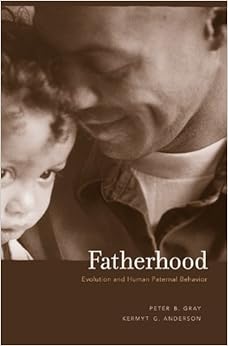
Peter B Gray is co-author, with Kermyt Anderson, of Fatherhood: Evolution and Human Paternal Behavior (2012). In this post from their Psychology Today blog, The Evolving Father, Gray takes a quick look at new findings on the involvement of fathers with their children.

Some Father-Friendly Data

Findings from a large and recent study of U.S. paternal involvement

Published on January 8, 2014 by Peter B. Gray, Ph.D. in The Evolving Father


Data on Dads--Oh Boy

If you are a father of a 3 year old, how frequently have you read to your child the past four weeks? If you are the father of a 10 year old, how often have you taken your child to activities the past four weeks? If you delve into the results of a recent report issued by the Centers for Disease Control (CDC), you can find answers to eight of these kinds of questions from a nationally representative probability sample of over 10,00 men aged 15-44, about 4000 of whom were fathers. What are some highlights of the study? And what are some qualifiers and interpretations?

One of the themes highlighted during the late-December 2013 media rush on this study was the high involvement of fathers. Most residential fathers who fell into the study engaged in most of the activities they were asked about. As an example, 93% of coresidential fathers with a child aged 5-18 years of age reported eating a meal at least several times a week or every day with their child during the past four weeks. As another example, some 84% of fathers reported reading at least once a week with a child less than five years of age. So much for slacker dads, these figures suggest.

Another theme of the findings is that father involvement differed greatly depending on whether a father lived with a child or not. For the eight behaviors asked about (e.g., playing with a child), fathers who lived with a child reported engaging in these more often than fathers who don’t live with a child. Just over half of non-residential fathers reported not eating any meals with their child aged 5-18 or reading to their child under age five during the past five weeks. Dads are obviously much less involved if they don’t live with their children, even if that is hardly surprising. Coresidential fathers also perceive they are doing a better job at fathering (44% reporting very good) than their nonresidential counterparts (21% very good). Yet from another angle, it’s astonishing that non-residential dads do anything for their kids. As Kermyt Anderson noted in our Fatherhood: Evolution and Human Paternal Behavior book, one definition of our species’ uniqueness could boil down to the claim that, “humans are the species in which males continue to invest in offspring after the parents cease to be in a sexual relationship.” (p. 130)

Besides residential status, study findings were presented with respect to fathers’ age, cultural background, relationship status (marriage vs. cohabitation) and education. These factors were also associated with variation in paternal involvement. Older fathers reported playing less and reading more than did younger fathers, for example. Nonresidential Hispanic or Latino fathers were less likely to have eaten meals with their child aged 5-18 the past four weeks than were African American or White fathers.

With this bonanza of quantitative data on U.S. paternal involvement, what are some spins suitable to an “evolving father” blog? As some reports have noted, the data suggest some incremental increases in paternal involvement in the U.S. since the last comparable report in 2002. Other sources of data (e.g., time diaries) have shown increases in the time men spend with their kids, including some specific activities like cleaning or diapering them, in the past few decades. So by such measures it appears that U.S. dads are engaging in more direct care and interaction with their children.

Some other key elements are not included in the data. Most importantly, there is no information on fathers’ economic contributions. In the U.S. and elsewhere, fathers continue to be scrutinized carefully for their ability to contribute to the financial and material support of a partner and children, making the lack of such data here a notable gap. While it can be refreshing to see the spotlight on fathers shift from a focus on breadwinning to lots of direct behavioral involvement, more complicated discussions about contemporary male work/family tradeoffs, female work/family tradeoffs, and a sexual division of labor within families need both pieces. The report also ignored any potential differences between step- and genetic fathers, combining both groups within the category of coresidential fathers. Given potential motivational and material differences between step- and genetic fathers, that also warranted a distinction, even if to show previously-documented findings such that coresidential stepfathers may me more involved in their stepkids’ lives than those same children’s nonresidential fathers.

In summary, the data on American dads and their direct care are richer with this study, even if we can push those data into all kinds of other conversations (even a panel discussion at a local NPR affiliate).

Wednesday, December 18, 2013

Ethan Hawke Grows Up . . . and Becomes a Good Man

Nice interview with an actor, a human being, who has grown as a man while under the spotlight of being a star. But it feels as though he does not take any of that seriously. This could be an interview with any man his age, we are only reading this because there is a new move to promote and the studio is pimping him for ticket sales - and he gets that:
I love to talk all the time, except when I have something to sell. And then I feel like a whore. You're interviewing me because a studio has a giant movie they want to release, and they want the world to go see it. And you're not necessarily interested in me, but you want people to buy your magazine. So the actor is just serving as the tip of the spear. I might as well be standing on the street corner, juggling one of those cardboard arrow signs.
It's a good article.

Ethan Hawke: What I've Learned

Actor, 43, New York City
By Mike Sager on December 17, 2013 

PUBLISHED IN THE JANUARY 2014 ISSUE: The Meaning of Life
Interviewed by Mike Sager, October 29, 2013

The morning of this interview, his refrigerator fell through the kitchen floor. Still, he showed up early, wearing a nice sweater, and ready to talk.
When I was sixteen, I remember telling my high school sweetheart I was pretty sure I knew everything. There were some dates of wars and Latin terms I didn't know, but I felt I knew everything that was important. Now I'm forty-two and I'm pretty sure I don't know anything.

Everything about my life is different
than I thought it would be. I don't remember what I thought it would be, but everything about being an adult is so much subtler, and grayer, and so mysterious, and so profound…and a lot more irritating than I ever imagined.

Being a parent
dilutes your narcissism.


The father has a very particular role, which involves cutting the umbilical cord, not just as a literal thing but as a metaphor. The father is the guardian of that first step away from the real safety of the nest. Our job is to usher our children into the world.

Every perceived failure turns out to have a secret success, and every perceived success has some secret failing in it.

In Macbeth, it's fascinating to see the moment when the witches actually come to Macbeth—it's after the biggest triumph of his life. The play opens and he's won two battles and he's the hero of both. Everybody loves him more than ever. And that's the moment the witches come. That's what Shakespeare shows: You're not your most vulnerable when you're broke and destitute and hungry. I mean, it's a tough moment, sure. But it's even tougher when the world gives you everything you want. That's when you're really in danger of becoming a prick.

I love to talk all the time, except when I have something to sell. And then I feel like a whore. You're interviewing me because a studio has a giant movie they want to release, and they want the world to go see it. And you're not necessarily interested in me, but you want people to buy your magazine. So the actor is just serving as the tip of the spear. I might as well be standing on the street corner, juggling one of those cardboard arrow signs.

I remember saying to my son, "Who's the best father you ever saw?" And he said, "Dad, you just want me to say you. I don't know any other fathers."

One of the great advantages of not going to college is you're not taught a right and a wrong way to do things. So many young people have stopped freethinking for themselves. I never went to acting school; I learned from Peter Weir, Sidney Lumet, Denzel Washington. I kind of see myself as a perpetual student.

What we communicate—our magazines, movies, books, plays, and all that—are our collective consciousness.

My grandfather was a general manager of the Abilene Blue Sox of Abilene, Texas. He was also the head sportswriter for The Abilene Reporter-News. He would cover his own games, which I thought was kind of fascinating.

I can't imagine that there's a person in this world who doesn't have something better to do than tell people that they can't love each other forever, no matter what their sex.

What I've learned about divorce? Not to speak about it publicly. Hopefully that will make somebody laugh.

Flip through the channels sometime and count how many times you see a woman taking her top off under duress, like being attacked physically, or how many times you see a woman dead, a body or a cadaver. Now flip through and notice how many times we see a man taking his clothes off, a man dead, a man being physically attacked. It's like nine to one.

I'm always dubious about talking politics; I don't have anything to say about that. To some degree, I think performers should stick to performing, you know what I mean?

A long time ago, I had to give up on the dream of being a professional athlete. Now I have to give up the dream of even playing a professional athlete. But here's the perfect metaphor for aging: I'm starting to look for coach roles.

Daughters are easier because I don't project myself onto them. Like, if my daughter doesn't like the Yankees, I'm not offended. But if my son says he likes the Orioles, I'm like, "What is wrong with you?"

Following this year's Before Midnight, the third film of a trilogy by director Richard Linklater, Hawke is now appearing in Macbeth at Lincoln Center in New York.

Monday, October 7, 2013

This is What Real Fatherhood Looks Like (Good Men Project)

Nice collection of photos on the multiplicity of expressions of masculine fatherhood. The collection comes from the Good Men Project and it seems like a positive way to begin the week.

This is What Real Fatherhood Looks Like

September 6, 2012 by the Editors

Juan C. Gonzalez takes a photo of himself and his son flying through the air every single year. See more at Lime Fly Photography.
Tender, surprising, and brimming with love: these are images of real* fatherhood.

We asked Good Men Project readers what Real Fatherhood meant to them, and how it looked in their day-to-day lives. Here are some of the amazing photos, stories and tweets you shared with us during our #RealFatherhood campaign.
*”real” in this case = “real-life”, as in, not actors or media-created images.

♦◊♦

Dave is very at ease with the fact that he has twins.

♦◊♦


Gabe and Pierce – even their toes match.

♦◊♦


Mark Greene and son. More fun at MegaSAHD

Yes, sir, I do believe in the power of Post-Its.


♦◊♦


Marcus Williams and twin daughters

Are you both listening?


♦◊♦


Charlie Capen and son Finn. More fun from Charlie at How To Be A Dad.

One of us has put on his happy face.


♦◊♦


Chris and Sammie

There’s no party like a tea party…


♦◊♦


…except maybe a princess dress-up party.

“Is my tiara on straight?”


♦◊♦


Alberto and Quentin

There’s gotta be a better system for this.


♦◊♦


Single image (not photoshopped!) courtesy of Lime Fly Photography

They didn’t know about my broom!


♦◊♦


Ryan and Marc

For Ryan, being a good dad is about being a part of what his kids love.


♦◊♦


John, Hailey and Heather with friends
When John said he wanted to be chased by a mob of females, this wasn’t exactly what he had in mind…

No, this is way better.


♦◊♦


See more: The Happy Aspie/Flickr
Bek Caruso’s husband, Jeff, and their son, Alex. Bek and Alex both live with autism, and Bek and Jeff also live with ADHD.

♦◊♦


Matt and Alex. See more at Randy Schroeder photography

1-2-3 Jump!


♦◊♦

Baker Wright coaching his son in his first round of T-ball.


♦◊♦


Christopher and Derek

Some of the best moments in fatherhood are the quietest ones.


♦◊♦


Photo by Maria Allebring

The comfort of Daddy’s arms.


♦◊♦


Emily Heist Moss and her dad. Read more from Emily at Rosie Says Blog.

Mr. 90s Dad


♦◊♦

Lamont holds baby Mya in the NICU. His wife Amie explains the type of father Lamont has been to their children:


“I’m married to a guy who used to sing Elton John’s “Your Song”, and read the classic version of Peter Pan to our dying daughter. He made a great Tink… Here he is holding Mya about 2 months before she died. He was going on probably less than 3 hours of sleep over 2 or 3 days, which actually was pretty common because he worked and then spent every waking hour in the NICU.“

Read more here
♦◊♦


Ivan and Izz

Baby in blue at the center of the universe.


♦◊♦


Dr. Adam Sheck and his daughter winning first prize in a pie eating contest at a father-daughter picnic.

♦◊♦


Antonio, Gina and Stella

Silly Daddy!


♦◊♦


Jon D. writes: “She made me understand the absolute power of real unconditional love. I can not think of anything she could ever do that will make me not love her.”

♦◊♦


Nathan, dad of Owen and Aria. “They are my world.”

The perfect smell of a sleeping baby’s head.


♦◊♦


Josh and the girls. Photo by Erin Gant

Daddy Tickle Monster


♦◊♦


Lamont with Javen, Max and Ty. See more photos by Amie Lee

Peeing lesson


♦◊♦


Matt and Alex, by Mathias Johnson Photo

And into the future, Daddy forever more.


♦◊♦ 

Read all of the #RealFatherhood stories

Wednesday, July 10, 2013

Nearly a Quarter of Single Parents in the United States Are Men

I am glad to see more fathers being given custody of their children following divorce or other forms of separation (The Atlantic). This is new phenomena in the family court system, where the "wisdom" was that children need their mother but the father was just a sperm donor (unfortunately, this is still true of some men).

To be clear, men raising kids by themselves struggle in many of the same ways as do moms raising kids alone. I have seen this in friends and in clients - balancing a job, parenting, a social life (mostly non-existent), and other responsibilities can be a real challenge.

While I am glad to see more fathers given custody of their children, it would be better for the child if both parents are involved, and preferably still married. This is why: 
Single father-headed households have a median income of $40,000, well-above the $26,000 for single mother headed households, but far below the $70,000 for married father-headed households.
It's better for everyone involved to avoid divorce if possible, and better yet not have kids if the marriage is not stable - and, by the way, having a child will not save your troubled marriage. On the other hand, if the marriage is beyond repair, the children are better off if the parents split than to be subjected to parental fighting and bickering.

What the Rising Number of Single Dads Says About Fatherhood in General

Nearly a quarter of single parents in the United States are men—a sign of how all fathers are taking a more active role with their kids.

JUL 3 2013

OakleyOriginals/flickr

If my wife and I divorced, who would get the kid?

Obviously, if only for mental health reasons, this isn't the sort of hypothetical I want to spend any significant proportion of my time worrying about. But I'll admit it did flit across my mind while reading the recent Pew paper The Rise of Single Fathers. The report shows a massive, ninefold increase in single dads raising their kids, from around 297,000 in 1960 to 2.6 million today.

There are a number of factors that have contributed to this change. Some are the same factors that have contributed to the rise of single mothers. Divorce rates have stabilized, but they're still way higher than they were in the 1960s. Out-of-wedlock births are more common and less stigmatized than they used to be, too. Marriage has, since 1960, gotten less stable, and single parenting has gotten more accepted. As a result, you've got more single parents, of whatever gender, raising kids.

But single dads haven't just increased in absolute numbers. They've also increased as a percentage of all single parents. Back in 1960, single dads made up only 14 percent of single-parent headed households. Today that number has climbed to 24 percent--almost a quarter. Men's rights advocates would have you believe that feminism has systematically prevented men from gaining custody of children. Yet, according to this data at least, it seems like the (limited, but real) feminist gains of the last 50 years have actually coincided with greater parity. It's hard to say whether this is correlation or causation, but either way, it looks like folks who want more men getting custody should be rooting for more feminism, not less.

Again, the impetus behind the rising rates of single dads seems fairly straightforward. Another recent Pew study shows that the roles of moms and dads are converging: Women in marriage spend more than twice as much time on paid work as they did in 1965, while men spend more than twice as much time on childcare and housework. The continued gender disparities are a little startling -- women still spend on average twice as many hours on childcare as men do. But there's no doubt that men are looking after the kids in marriage far more than they did in the past. It's not a surprise that they are caring for kids when marriage ends, too.

The general trends certainly apply to my marriage -- and possibly would also apply if the marriage ended. I'm the primary caregiver in our family, mostly because I work from home and can ferry the boy hither and yon whenever the schedule calls for it, but also because the whole idea of ferrying hither and yon at the dictates of someone else's schedule (however charming that nine-year-old someone else may be) makes my wife exceedingly cranky. To be fair, she did warn me about this going in.

In any case, the point is that the considerations that make me the primary caregiver -- whether logistical or temperamental -- would, presumably, still be in play if my wife and I separated. Changing gender roles have let us organize our marriage in a way that would have looked quite odd to most people circa 1960. Those same changes make it more natural, or thinkable, for men to get the child or children in the event of a break up.

On the one hand, it's difficult to argue that more single dads is exactly a good thing. Single dads don't tend to provoke the same kind of moral panic and concern-trolling from cultural commentators that single moms do, but it's clear from the report that men raising kids alone struggle in many of the same ways, if not to the same extent, as do moms raising kids alone. Single father-headed households have a median income of $40,000 --well-above the $26,000 for single mother headed households, but far below the $70,000 for married father-headed households.

On the other hand, though, the fact that there are more single dads seems like an outgrowth of a series of developments that are positive in a lot of ways. I'm happy that I get to have a marriage where I do a lot of parenting. I like parenting. Similarly, my wife likes not having to do all the childcare the way her mom did. More single dads is a sign that guys have more roles open to them...and also, relatedly, a sign that women have more roles open to them. That the percentage of single dads is slowly approach the percentage of single moms is an indication that marriage, and society, are becoming a little more equal. Which seems like a good thing for moms, for dads, and for everybody else as well.