Showing posts with label play. Show all posts

Sunday, October 19, 2014

Daily Om: Remembering Childhood Joys

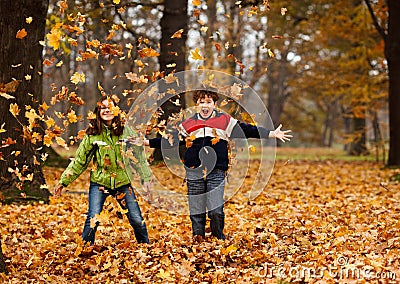
http://thumbs.dreamstime.com/x/kids-playing-autumn-park-23097115.jpg

Today's Daily Om is a reminder that fun is a choice - and as adults we too often get caught up in all of the responsibilities of being an adult and forget to have some fun. If you have kids, you get down to their level and play in the dirt, or color and draw with crayons, or watch cartoons. Even if you don't have kids, drawing and coloring can be fun, as is swinging on the swings at the park, or playing on the merry-go-round, or catching and releasing frogs in the local pond (if you live in a rural area), or playing in the fall leaves (like diving into the pile after you rake them up).

Whatever you enjoy, let yourself enjoy it.

Just for Fun

Remembering Childhood Joys


by Madisyn Taylor
October 19, 2014


Fun isn’t something that is given or done to you, it is something that you allow yourself to experience.

As adults, we often get so caught up in “grown up” business that we can forget how to have pure fun. This isn’t the kind of fun that comes from doing a specific kind of activity or being in a specific mood for fun. Rather, this is the fun born from the state of pure being. You see this kind of fun in small children who are so busy being fully present to their lives and in their own bodies that the glow of fun radiates from them just because they are alive: the delight that flashes across the eyes of a child who discovers that water flows with the turn of the tap knob or the squeal of pleasure from a young baby whose tongue is being tickled by cold ice cream; then there’s the full, infectious laughter of a child watching the same hat trick for the fiftieth time.

Back when we were children, this experience of pure delight didn’t have to come from a heightened, heady event in order for us to feel like our day had been made; and it can be that way for us again - if we are willing to remember and reconnect with that part of ourselves that knows how to be in the flow of fun. You can begin this process by reminiscing on what was fun for you as a child. Think about what caused you to giggle in delight or wriggle in pleasure or burst into endless laughter that you couldn’t sit up straight no matter how much you wanted to. Try to spend a few moments with each memory, and really feel what it was like to be in those experiences – allowing that feeling of pure fun to wash over you. It lives, in you – that feeling. It can’t be bottled, manufactured, or sold. You just have to call it back up in order to experience it again.

Pure fun happens when we are fully engaged with ourselves and our world in each moment. It is the spontaneous delight that bubbles out of us when we let go long enough to bring it through; it is the experience of natural, organic pleasure that springs up from our bellies, through our souls, up through our faces, and down to our toes. We’ve naturally known how to have pure fun since we were babies and the flicker of lights caused us to jump to attention from the sheer enjoyment of being able to see. Approach your life today with the knowledge that pure fun isn’t something that is given or done to you; rather, it is something that you allow yourself to experience.

What do you think?
Discuss this article and share your opinion

Wednesday, June 25, 2014

Roughhousing Lessons From Dad

Dad\\\

It's nice to see researchers looking at the role of fathers in their children's lives. This review of recent research comes from the Wall Street Journal.

Roughhousing Lessons From Dad

Fathers Teach Risk-Taking, Boundary-Setting; Learning From 'Sock Wrestling'


By Sue Shellenbarger
Updated June 11, 2014


http://m.wsj.net/video/20140613/061014lunchworkfam2/061014lunchworkfam2_640x360.jpg
Fathers who spend time with their kids help instill self-control and social skills, numerous studies show, but exactly how fathers do that is a mystery. WSJ columnist Sue Shellenbarger and father of two Greg Kessler join Tanya Rivero on Lunch Break to decode the father factor. Photo: Greg Kessler

There is no question among researchers that fathers who spend time with their children instill self-control and social skills in their offspring.

Exactly how dads do that, however, is largely a mystery.

Thousands of studies have sliced and diced the benefits for children of a close, nurturing bond with Mom. Researchers have a harder time analyzing the ways fathers interact with children, such as rough-and-tumble play.

Some scientists are inventing new scales and laboratory procedures to try to measure the father factor. One researcher watched fathers and children playing games like "Get Up," in which fathers try to get up from the floor while the children try to hold them down, and "Sock Wrestle," in which father and child try to snatch each other's socks. Other researchers had toddlers climb down stairs in fathers' presence, in a process dubbed "Risky Situation."

"Most people have a pretty well-defined sense of what it means to be a good mom, but for dads, that role is much less scripted," says University of Georgia researcher Geoffrey Brown, lead author of a 2012 study in the Journal of Family Psychology on fundamental questions about how fathers bond with children.


Theo Stroomer for the Wall Street Journal

Greg Kessler likes to roughhouse with his 7-year-old son Ezra or his 4-year-old daughter Zoe. He loves wrestling, pillow-fighting and a game they call "Big Chair, Little Chair," when he lies down, balances a child on the soles of his feet and raises and lowers the child in midair, says Mr. Kessler, a New York City photographer.

His wife, Paula Trotto, believes her husband's play style will help Ezra learn to stand up for himself, but "it does baffle me" that her husband enjoys getting the children so excited, she says. At times, she adds, "I have to leave the room. It's such an intuitive thing, to not want to tolerate the sounds of your kids screaming."

The primary test of attachment—a key concept in child-development research—was developed to analyze babies' bonds with mothers. This procedure, known as the "Strange Situation," has mothers briefly separate from their infants twice. Babies who are upset but readily comforted by the mother when she returns are seen as having a secure bond.

Positive scores tend to sync with other measures of mothers' sensitivity and to predict better cognitive and emotional skills in children later. But when researchers put dads through the Strange Situation, the scores don't consistently predict much, and often fail to match other measures' results.

Many researchers believe dad's bond is expressed a little later, when the father serves as a secure base allowing the child to explore and take risks. This is hard to study in a lab. Animal studies, however, show that baby rats deprived of rough-and-tumble are more aggressive and lack social skills as adults.

The Father Factor

Researchers studying fathers' role often look at how they act during rough-and-tumble play. Here are some positive signs:
  • Father is immersed in the game emotionally, smiling and laughing
  • Father shows spontaneity, creativity or silliness
  • Father is good-natured about losing, with no signs of ego
  • Father helps the child control his or her emotions and calms him or her when overexcited
  • Father adjusts his effort and his technique based on the child's cues
  • Father motivates the child to stay engaged and keep going, or rejoin the game
  • Father is dominant but shares the upper hand, allowing the child to win sometimes
--Richard Fletcher, University of Newcastle in Australia
In an early study at the University of Regensburg in Germany, researchers created a scale to evaluate parents' play, based on whether they challenged kids to stretch themselves, were sensitive to their emotions and encouraged them to solve problems. Mothers and fathers were observed playing with blocks or play dough with their 2-year-olds. Fathers' scores were a unique predictor of children's healthy attitudes toward relationships with others at age 16, according to the 2002 study of 49 subjects led by Karin Grossmann, a senior scientist at the university.

Christopher VanDijk tunes in closely to signals from his 4-year-old son Liam that he wants to play. "He gets this mischievous look on his face, and you just kind of know," says Mr. VanDijk of Denver, an at-home dad. "We have pillow fights. And I pretend like I'm going to eat his ears. There's lots of squealing."

Liam sometimes takes the lead, saying, 'I'm going to scare you, and when I say, "Boo!" you have to say, "Ahhh!" ' Mr. VanDijk also watches for signals that Liam is out-of-control or frightened. "There are times when you put on the brakes," he says.

Rough-and-tumble play isn't confined to fathers. "If a mom does it, the child will learn the same thing," says Catherine Tamis-LeMonda, a professor of developmental psychology at New York University.

Mr. VanDijk's wife Angie, a college administrator, often plays active superhero games with Liam. "Sometimes he needs quiet time, sometimes he needs scuffle time," she says.

Fathers engage in more scuffle time on average, however. Using an adjustable carpeted ramp, researchers at New York University asked 34 parents to show how steep a slope they'd allow their babies to attempt. Some 62% of fathers said they would let their babies try a slope beyond their ability, compared with 56% of mothers, says the 2007 study co-authored by Dr. Tamis-LeMonda.

Many fathers walk a fine line during play between safety and risk, allowing children to get minor injuries without endangering them, says a 2011 study of 32 subjects in the Journal of Developmental and Behavioral Pediatrics. Researchers say this can instill emotional intelligence under fire, and an ability to take prudent risks and set limits with peers.

Navdeep Singh Dhillon likes play-fighting with his 4-year-old daughter Kavya, pretending to throw a kick, teaching her how to block it, then saying, "OK, it's your turn to kick me," he says. He sometimes traps Kavya and his 4-month-old son Shaiyar in a leg lock and has Kavya "tap out," tapping him three times as a signal to release them. Mr. Dhillon of Jersey City, N.J., a college professor, says such play teaches children to set boundaries. "When they have relationships of their own, or with other kids, they'll know what is OK and what's not OK."

Richard Fletcher, an Australian researcher who has studied fathers in free-form games with preschoolers, says fathers need to follow children's lead sometimes, while encouraging them to stretch themselves, and to let them win often enough to have fun—but not so often that they lose interest. Dr. Fletcher, a senior lecturer on the health and medicine faculty at the University of Newcastle, invented a scale to measure quality of play. In a study published last year in Early Child Development and Care, researchers video-recorded 26 fathers in their homes playing the games "Get Up" and "Sock Wrestle" with their 3- and 4-year-olds. Children of fathers who scored high on play quality had fewer social and behavior problems.

The "Risky Situation" is a 20-minute test that assesses children's confidence to explore. Toddlers are placed in a room with their father and a stranger and allowed to play with the stranger, then to climb down a set of stairs. Toddlers who explored with confidence, while heeding limits set by their fathers, had better social and emotional skills 12 to 18 months later, according to a 2013 study co-authored by the test's creator, Daniel Paquette, an associate professor of psychoeducation at the University of Montreal in Canada.

Dr. Tamis-LeMonda is video-recording daily routines of 100 New York City families. In a past study, she discovered "hall ball"— a game where "Dad throws the ball down the hallway," and the toddler brings it back, she says. "That's a natural, everyday routine we wouldn't have known about if we just brought families into the lab and said, 'Here are some toys.' " Such insights, she says, "might guide future research."

Write to Sue Shellenbarger at sue.shellenbarger@wsj.com

Saturday, March 31, 2012

Robert Sapolsky on Stress - How Stress Hurts Men’s Sex Lives

Greater Good has featured clips from a talk by Robert Sapolsky, Ph.D., this month, and an essay (abridged) that originally appeared in Foreign Affairs. Sapolsky is the John A. and Cynthia Fry Gunn Professor of Biological Sciences and a professor of neurology and neurological sciences at Stanford University. His most recent book is Monkeyluv: And Other Essays on Our Lives as Animals.

Here is the segment on male sexual issues brought on by stress. See the article below for a lot more information on stress, a serious issue for a lot of men.

Robert M. Sapolsky

The best-selling author and Stanford University professor explains why the stress response, which evolved for short-term physical crises, can become a long-term, chronic problem for human beings—and how we can reduce the impact of stress on our lives. More about Robert M. Sapolsky.

Subscribe to The Science of a Meaningful Life Video Series via RSS

Featured Clip


How Stress Hurts Men’s Sex Lives

March 2012 | TRT 3:03
Combining wit with deep knowledge, the researcher and best-selling author explains why stress interferes with male sexual response.
 This clip is from a much longer talk only available to members. Here is the abridged article the talk is based on - with a lot of good material on stress.

How to Relieve Stress

By Robert M. Sapolsky | March 22, 2012


Robert M. Sapolsky explains why stress can become a chronic problem—and how we can reduce the toll it takes on our lives.

This month, we feature videos of a Greater Good presentation by Robert M. Sapolsky, one the country’s foremost experts on stress. In this excerpt from his talk, the best-selling author and Stanford University professor explains the difference between bad stress and good stress, and how we can manage the effects of chronic stress on our lives.

In 1900, what do you think were the leading causes of death in this country? 


If you were 20 to 40 years old and a woman, the single riskiest thing you could do was try to give birth. TB, Pneumonia, influenza killed a lot of other people. But few people under the age of 100 die of the flu anymore. Relatively few women die in childbirth. Instead, we die of these utterly bizarre diseases that have never existed before on the planet in any sort of numbers—diseases like heart disease, cancer, adult-onset diabetes, and Alzheimer’s.

Now, some of this has to do with nuts and bolts biology. But some of it has to do with issues that nobody ever had to think about before in medicine—totally bizarre questions like, “What’s your psychological makeup?” or “What’s your social status?” or “How do people with your social status get treated in your society?”

And this one: “Why is it that when we’re feeling unloved, we eat more starch?” Figure that out, and you’ve cured half the cases of diabetes in this country

Indeed, when you look at the diseases that do us in, they are predominantly diseases that can be caused, or made worse, by stress. As a result, most of us in this room will have the profound Westernized luxury of dropping dead someday of a stress-related disease. That’s why it’s so urgent that we understand stress—and how to better manage it.

How stress kills

Do you remember “homeostasis,” a term I guarantee you heard in ninth grade biology? Homeostasis is having an ideal body temperature, an ideal level of glucose in the bloodstream, an ideal everything. That’s being in homeostatic balance.

A stressor is anything in the outside world that knocks you out of homeostatic balance. If you’re some zebra and a lion has ripped your stomach open and your innards are dragging in the dust and you still need to get out of there—well, that counts as being out of homeostatic balance.

So to reestablish that balance, you secrete adrenaline and other hormones. You mobilize energy and you deliver it where it’s needed, you shut off the inessentials like the sex drive and digestion, you enhance immune defenses, and you think more clearly. You’re facing a short-term physical crisis, and the stress response is what you do with your body. For 99 percent of the species on this planet, stress is three minutes of screaming terror in the savannah, after which either it’s over with or you’re over with. That’s all you need to know about the subject if you’re a zebra or a lion. 

If you’re a human, though, you’ve got to expand the definition of a stressor in a very critical way. If you’re running from a lion, your blood pressure is 180 over 120. But you’re not suffering from high blood pressure—you’re saving your life. Have this same thing happen when you’re stuck in traffic, and you’re not saving your life. Instead you are suffering from stress-induced hypertension.


We humans turn on the stress response with memories, with emotions, with thoughts, and the whole punch line is: That’s not what it evolved for. Do it regularly enough, and you’re going to damage your cardiovascular system. Increased blood flow hammers on the walls of your blood vessels, causing inflammation. Fat and glucose and cholesterol glom on and begin to clog your arteries. That’s bad news. You are more at risk for chronic fatigue, sleep disruption, muscle atrophy, and probably most importantly, adult-onset diabetes, this once obscure disease that’s just on the edge of being the number one killer in this country.

Chronic stress also does bad things to the nervous system. Stress kills neurons in the part of the brain called the hippocampus and weakens the cables between neurons, so they can’t talk to each other. This impairs the formation and retrieval of long-term memory. The opposite thing happens in the amygdala, which is where we see fear in a brain scanner. In the hippocampus, stress causes stuff to shrivel up. But stress feeds the amygdala. It actually gets bigger. Chronic stress creates a hyper-reactive, hysterical amygdala, and this tells us tons about what stress has to do with anxiety disorders.

Another domain: the mesolimbic dopamine system. Dopamine is a neurotransmitter that is about reward and pleasure. Cocaine works on the dopamine system. All the euphorians do. What are the effects of chronic stress on this part of the brain? Those pathways get depleted of dopamine, and this takes away your ability to feel pleasure. So if stress depletes your dopamine, what have you just set yourself up for? Major depression.

What about the frontal cortex? It’s the most human part of the brain; we’ve proportionally got more of it than any other species does. And what does the frontal cortex do? It does gratification postponement, self-discipline, long-term planning, emotional regulation. It’s the last part of the brain to fully mature—that doesn’t happen until you’re 25 years old, which explains a lot about the freshmen year of college.

This has a very interesting implication. If this is the last part of the brain to fully develop, by definition, then, it is the part of the brain least constrained by genes and most sculpted by experience. What does chronic stress do to the frontal cortex? Atrophy of neurons, disconnecting circuits. As a result, you make the most idiotic decisions, which are going to haunt you for the rest of your life, and yet you think they’re brilliant at the time. That’s another effect of chronic stress: Your judgment goes down the tubes.


How to manage stress

We’ve just gone on a quick tour of all the things that can go wrong from chronic stress. If you study the subject for a living, it’s amazing to you that anybody is still alive, that we haven’t just collapsed into puddles of stress-related disease.

Despite that, most of us do decent jobs at coping, and a subset of us is spectacular at coping. And thus from day one, stress researchers have wondered why some bodies and some psyches deal better with stress than others. In making sense of individual differences, what we’re essentially asking is, “What is it that makes psychological stress stressful”? And a huge elegant literature by now has shown precisely what the building blocks are.

The literature is built on experiments like this one: You have a lab rat in a cage, and every now and then, you give it a shock. Nothing major, but nonetheless, the rat’s blood pressure goes up and so do stress hormone levels. Up goes the risk of an ulcer. You are giving this rat a stress-related disease.

Now, in the second cage, there’s another rat. Every time the first rat gets a shock, so does the second. Same intensity, same duration, both of their bodies are being thrown out of homeostatic balance to exactly the same extent. 

But there’s a critical difference: Every time the second rat gets a shock, it can go over to the other side of its cage, where there’s another rat that it can bite the crap out of. And you know what? This guy’s not going to get an ulcer, because he has an outlet for his frustrations. He has a hobby.

There are other stress experiments that involve torturing rats, which suggest ways for humans to manage stress. We can give the rat a warning 10 seconds before each shock, and we find it doesn’t get an ulcer. That tells us that you are less vulnerable to a stress-related disease if you get predictive information.

Another experiment: If we give the rat a lever to press, and that rat thinks he’s in control of the shocks, that helps—a sense of control decreases the stress response.

Yet another experiment tells us it helps to have friends: If a rat getting shocks has a friend it likes in the cage, and they are able to groom each other, the rat doesn’t get the ulcer. So social affiliation helps control stress.

In short, you are more likely to get a stress response—more likely to subjectively feel stressed, more likely to get a stress-related disease—if you feel like you have no outlets for what’s going on, no control, no predictability, you interpret things as getting worse, and if you have nobody’s shoulder to cry on.

Okay, these are very powerful observations. They’re helpful. But please don’t assume that if you get as much control in your life and as much predictive information in your life as possible, you will be protected from stress. To understand why, let me share some of the subtleties of this field.

Look at the rat that got a warning. Timing is everything. He didn’t get an ulcer when he got a 10-second warning. But if the warning light goes on one second before the shock occurs, it has no positive effect whatsoever, because there isn’t time for the rat to adjust anything. Or suppose, instead, the warning light comes two minutes before. That will make the ulcers worse, because the rat is sitting there, ulcerating away, thinking, “Here it comes, here it comes, here it comes.” When it comes to predictive information, there’s only a narrow window where it works.

When does a sense of control work? When you’re dealing with a mild to moderate stressor, because in those circumstances you know how much worse it could have been and can imagine, rightly or wrongly, that you had control over that improvement. But if it’s a major disastrous stressor, the last thing you want is an inflated sense of control, because that sets you up to think that the disaster is all your fault. In the case of a major disaster, we tend to minimize people’s sense of control—by saying, for example, “It wouldn’t have mattered if you had gotten him to the doctor a month ago, it wouldn’t have made a difference.” And one of the worst things we do, societally, is attribute more control to victims: “Well, what’s she going to expect if she dresses that way?” or “Well, what are they going to expect if they choose not to assimilate?”

In short, a sense of control is protective for mild to moderate stressors, but it’s a disaster for major ones. In that domain, the most humane thing you can do is foster denial and rationalization rather than a sense of responsibility.

When is stress good?

Just as not all stress management techniques work, not all stress is bad. In fact, we love stress. We pay good money for it in a scary movie or on a roller coaster ride. We love stress when it’s the right amount of stress.

When is it optimal? When it’s only moderately stressful, at the most. And good stress is transient—it’s not for nothing that you don’t have roller coaster rides going for three weeks! The stress also has to be happening in a context that feels safe overall. Moderately stressful at most, transient, safe—what does that define? 


That defines stimulation. That defines what play is. What is play about? 

It’s when a higher rank dog says to a lower ranking dog: “I am willing to suspend our dominance relations right now and allow all sorts of unpredictable interactions. To show how much I’m doing that, I’m going to give you access to my throat or my genitals, and we’re just having a great time here playing.” In play, you feel safe, and as a result, you are willing to give up some control and predictability. We say, “Surprise me!” That’s good stress.

There’s another lesson we can learn from dogs and other hierarchical mammals, like baboons: Social rank can cause stress, especially where rankings are unstable and people are jockeying for position. But social rank is not as important as social context. What patterns of social affiliation do you have? How often do you groom, how often does somebody groom you? How often do you sit in contact and play with kids?

What’s clear by now is if you have a choice between being a high-ranking baboon or a socially affiliated one, the latter is definitely the one that is going to lead to a healthier, longer life. That’s the baboon we want to be—not the one with power, but the one with friends, neighbors, and family.

Monday, February 28, 2011

Alva Noe - Men At Work, But In Play

From NPR's 13.7 Cosmos and Culture blog.

I don't know enough about chess to comment on the quality of play. But this video is stunning, and its electric force has nothing to with chess.

If you ever wondered why games, or sports, matter to us, then watch this video. Don't worry about whether you can follow the play.

Follow the music.

That's the first thing that jumps at you: The music. Or better, the choreography. It isn't just sound and movement organized in space and time; the dynamic pattern that emerges is the expression of a kind of necessity, or principle. They are like surfers on a wave. What is the wave? They are enacting the wave. They are entrained by their own activity.

Openness. The players are tense; they sometimes appear to be suffering. They are working very hard. They are utterly concentrated. But the effect of all this is to enable them to see and hear, not each other, but the situation (the chess situation) in which they find themselves. Have you ever been that present to a task? That involved with anything?

They are not only battling each other, but the clock as well, that is, the ever-present reminder that the condition of play is fragile and temporary. And so each player does battle with himself. He must both cast a spell and fall victim to its influence.

And then it is over. Without drama. But the very gesture with which one player resigns — gathering up the pieces and and handing them a cross the board — is the act of setting up a new beginning. A long night, a long life, of play.