Showing posts with label families. Show all posts

Sunday, January 12, 2014

Findings from a Large and Recent Study of U.S. Paternal Involvement


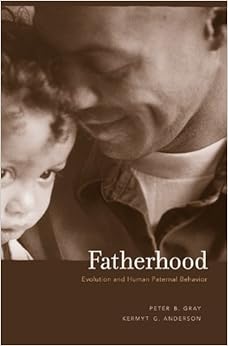
Peter B Gray is co-author, with Kermyt Anderson, of Fatherhood: Evolution and Human Paternal Behavior (2012). In this post from their Psychology Today blog, The Evolving Father, Gray takes a quick look at new findings on the involvement of fathers with their children.

Some Father-Friendly Data

Findings from a large and recent study of U.S. paternal involvement

Published on January 8, 2014 by Peter B. Gray, Ph.D. in The Evolving Father


Data on Dads--Oh Boy

If you are a father of a 3 year old, how frequently have you read to your child the past four weeks? If you are the father of a 10 year old, how often have you taken your child to activities the past four weeks? If you delve into the results of a recent report issued by the Centers for Disease Control (CDC), you can find answers to eight of these kinds of questions from a nationally representative probability sample of over 10,00 men aged 15-44, about 4000 of whom were fathers. What are some highlights of the study? And what are some qualifiers and interpretations?

One of the themes highlighted during the late-December 2013 media rush on this study was the high involvement of fathers. Most residential fathers who fell into the study engaged in most of the activities they were asked about. As an example, 93% of coresidential fathers with a child aged 5-18 years of age reported eating a meal at least several times a week or every day with their child during the past four weeks. As another example, some 84% of fathers reported reading at least once a week with a child less than five years of age. So much for slacker dads, these figures suggest.

Another theme of the findings is that father involvement differed greatly depending on whether a father lived with a child or not. For the eight behaviors asked about (e.g., playing with a child), fathers who lived with a child reported engaging in these more often than fathers who don’t live with a child. Just over half of non-residential fathers reported not eating any meals with their child aged 5-18 or reading to their child under age five during the past five weeks. Dads are obviously much less involved if they don’t live with their children, even if that is hardly surprising. Coresidential fathers also perceive they are doing a better job at fathering (44% reporting very good) than their nonresidential counterparts (21% very good). Yet from another angle, it’s astonishing that non-residential dads do anything for their kids. As Kermyt Anderson noted in our Fatherhood: Evolution and Human Paternal Behavior book, one definition of our species’ uniqueness could boil down to the claim that, “humans are the species in which males continue to invest in offspring after the parents cease to be in a sexual relationship.” (p. 130)

Besides residential status, study findings were presented with respect to fathers’ age, cultural background, relationship status (marriage vs. cohabitation) and education. These factors were also associated with variation in paternal involvement. Older fathers reported playing less and reading more than did younger fathers, for example. Nonresidential Hispanic or Latino fathers were less likely to have eaten meals with their child aged 5-18 the past four weeks than were African American or White fathers.

With this bonanza of quantitative data on U.S. paternal involvement, what are some spins suitable to an “evolving father” blog? As some reports have noted, the data suggest some incremental increases in paternal involvement in the U.S. since the last comparable report in 2002. Other sources of data (e.g., time diaries) have shown increases in the time men spend with their kids, including some specific activities like cleaning or diapering them, in the past few decades. So by such measures it appears that U.S. dads are engaging in more direct care and interaction with their children.

Some other key elements are not included in the data. Most importantly, there is no information on fathers’ economic contributions. In the U.S. and elsewhere, fathers continue to be scrutinized carefully for their ability to contribute to the financial and material support of a partner and children, making the lack of such data here a notable gap. While it can be refreshing to see the spotlight on fathers shift from a focus on breadwinning to lots of direct behavioral involvement, more complicated discussions about contemporary male work/family tradeoffs, female work/family tradeoffs, and a sexual division of labor within families need both pieces. The report also ignored any potential differences between step- and genetic fathers, combining both groups within the category of coresidential fathers. Given potential motivational and material differences between step- and genetic fathers, that also warranted a distinction, even if to show previously-documented findings such that coresidential stepfathers may me more involved in their stepkids’ lives than those same children’s nonresidential fathers.

In summary, the data on American dads and their direct care are richer with this study, even if we can push those data into all kinds of other conversations (even a panel discussion at a local NPR affiliate).

Friday, December 27, 2013

"Fathers Who Care About Parenting" Are Not a Revelation (via Esquire)

Can I get an "Amen!"? This short article from Esquire tries to help dispel the myth that men who are trying to be actively involved and caring parents are some kind of aberration.

"Fathers Who Care About Parenting" Are Not a Revelation


By Stephen Marche on December 23, 2013


The recent government survey of American family life is mostly good news. American dads are heavily involved with the lives of their children in a variety of important ways. Among other things, most fathers read to their children several times a week, help out with homework, and eat meals with their kids. Given that new research shows just how powerful time spent with a father can be, particularly in the lives of boys, these are all signs of genuine and substantial hope. The only really bad news about the government survey is that it's news at all.

"Fathers who care" are the new "women who work." Haven't we all moved beyond this question by now?

We all know that fatherhood matters to men. When my own father died a year and a half ago, I discovered for myself just how much. The new survey shows that the symbolic power of fatherhood is increasing. Young men want to be fathers more than young women want to be mothers now. But the trends the new government survey identifies are pretty mild. The amount of father's attention to their children has "increased slightly" since 2002.

So when the AP writes that "the detached dad, turning up his nose at diapering and too busy to bathe, dress and play with his kids, is mostly a myth," I have to ask: Whose myth?

This idea of fathers coming home to retire to the den to build bottle shops and suck back old-fashioneds has not been viable for a generation at least. That may be how today's grandfathers remember their own grandfathers, but for everybody else, it's history.

We all know that the family as it currently stands comprises mothers who work and fathers who help with the children. That is the way the vast majority of families work. To remark on fathers who care is to imply that the norm is for fathers not to care. To remark on women who work is to imply that it's unusual. And this attitude of surprise has consequences.

American work life and American family life have arranged themselves so that women are punished for having children at the workplace and discussions of family leave are almost entirely discussions of maternity leave. Treating the current family as some weird outlier makes discussions of family policies separated from reality.

The latest Pew research shows that 40% of households with children under 18 have women as breadwinners. This comes as a surprise to exactly no one who is paying attention. The current model of the standard family, insofar as such a thing exists at all, involves both partners bringing in income, and both partners helping to care for the children. (Housework is a different matter.) This is not news anymore. It is simply established reality.

The most important and substantial trend in American family life is not that men and women are in separate spheres, but that they're struggling in both, that government and business policies around family-life balance in America are virtually non-existent, and that they haven't properly been thought through yet. "News" that treats the current lives as men and women as alternative reality doesn't help.

Let's stop being amazed that men and women are living the way they are. Let's start doing something to help them.

Monday, October 21, 2013

Family Watches In Silence As Dad Checks Out Waitress

This is from The Onion, so it's satire, but satire is based in reality. In this case, a common reality. Don't be this guy.

Family Watches In Silence As Dad Checks Out Waitress

ISSUE 49•42 Oct 14, 2013 
 

CLEVELAND—Struggling not to openly show discomfort, family members dining with local man Louis Munson sat quietly on Sunday as Munson peered intently in the direction of Olive Garden waitress Layla Martinez. Munson, who first noticed the 23-year-old brunette as she walked past carrying another table’s pasta entrees, reportedly gazed at her for approximately 12 seconds, lingering on certain features of her anatomy while his fully aware wife, two sons, and daughter watched in silence. Though the family’s unease had largely passed by the end of the meal, sources say it was re-sparked when Munson suddenly noticed Martinez from across the restaurant bending down to tie her shoe.

Friday, May 31, 2013

This Is What a Good Man Looks Like . . . Patrick Stewart

I have admired Patrick Stewart as an example of a good man for several years. He always has seemed humble and grateful, yet is one of the most talented actors of his generation or any other. When he began to speak out about the domestic violence he lived with as a child (see here and here), my respect for him increased substantially.

A blogger at the Comicpalooza in Texas, held on Memorial Day weekend, thanked him for a speech he gave on domestic violence at an Amnesty International event. She said she had been through a similar event in her life and thanked him for speaking out.

From there, things got personal . . . .

Patrick Stewart hugs domestic-abuse survivor, tells of violence in his childhood


Gael Fashingbauer Cooper
TODAY

Patrick Stewart told the Comicpalooza audience that his mother was blamed for the abuse rained on her by his father.

On television, he was the almost unflappable Captain Jean-Luc Picard on "Star Trek: The Next Generation." But Patrick Stewart was raised in a poor household with an abusive father, and the experience gave him the fire to work for such causes once he had the fame to make himself heard.

Stewart appeared at Comicpalooza in Texas over the Memorial Day weekend, and while there, answered questions from audience members.

Heather Skye, who blogs at Lemon Sweetie, thanked Stewart for a speech he gave at an Amnesty International event about domestic violence, saying that she had come through a similar event and appreciated his speaking out, and asked him about what non-acting work he's the most proud of.

And then things got personal. Stewart, who has spoken about his father's abuse before, referenced his own childhood in 1940s England. "The work that I do in campaigns about violence towards women, particularly domestic violence, grew out of my own childhood experience," he said.


He discussed the specific groups he works with, and went on to say, "I do what I do in my mother's name, because I couldn't help her then. Now I can."

Stewart said his father, a World War II veteran, was then said to suffer from severe shellshock, but would today be diagnosed with post-traumatic stress disorder. He works with both the veterans' mental-health charity Combat Stress as well as the domestic-violence shelter Refuge, saying he does so because of both of his parents.

"As a child, I heard in my home doctors and ambulance men say, 'Mrs. Stewart, you must have done something to provoke him,'" Stewart said to Skye and the crowd. "'Mrs. Stewart, it takes two to make an argument.' Wrong! WRONG! My mother did nothing to provoke that, and even if she had, violence is never ever a choice that a man should make. Ever!"

The crowd gave Stewart a standing ovation, and shortly after, he walked into the crowd and hugged Skye. She wrote on her blog, "He told me 'You never have to go through that again, you’re safe now.' I couldn’t stop thanking him. His embrace was so warm and genuine. It was two people, two strangers, supporting and giving love. And when we pulled away he looked (straight) in my eyes, like he was promising that. He told me to take care. And I will."