Showing posts with label athletes. Show all posts

Thursday, July 17, 2014

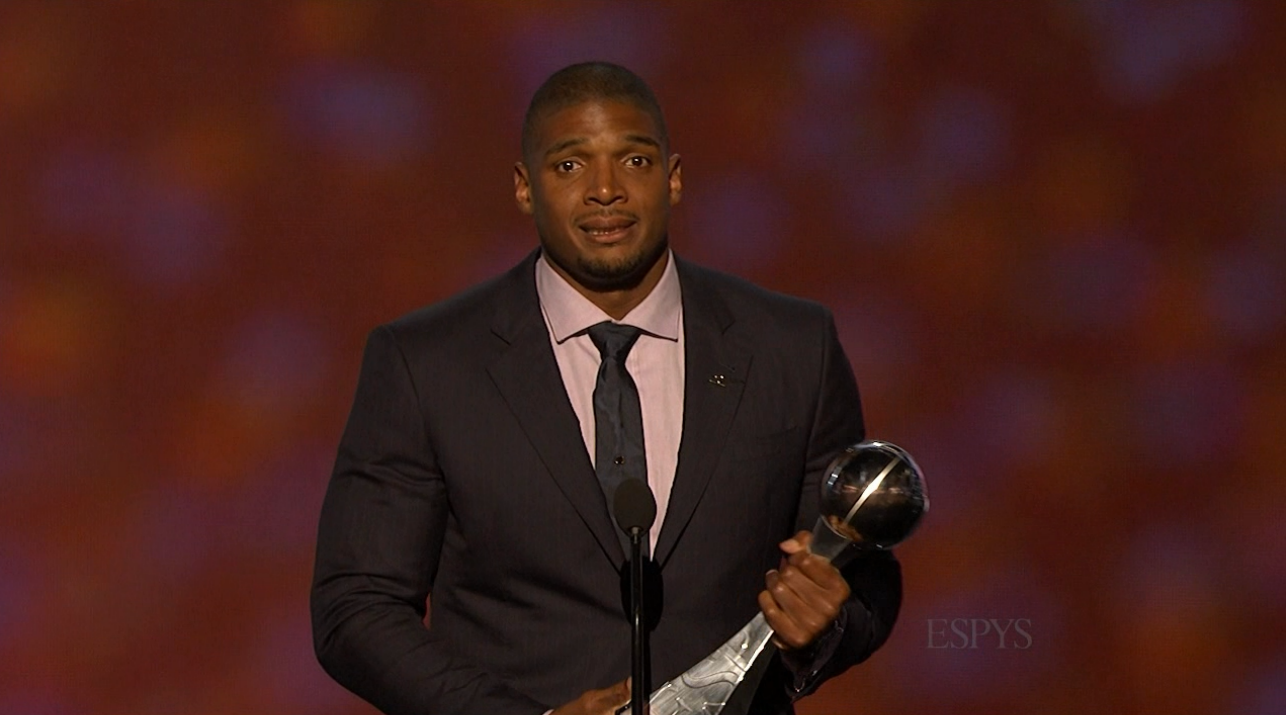
Michael Sam's Powerful, Show-Stopping Speech at the ESPYs


Michael Sam was given the Arthur Ashe Courage Award at the 2014 ESPYs on Wednesday night. His acceptance speech was incredibly powerful. Enjoy!

Michael Sam's Powerful, Show-Stopping Speech at the ESPYs

By Scott Gleeson

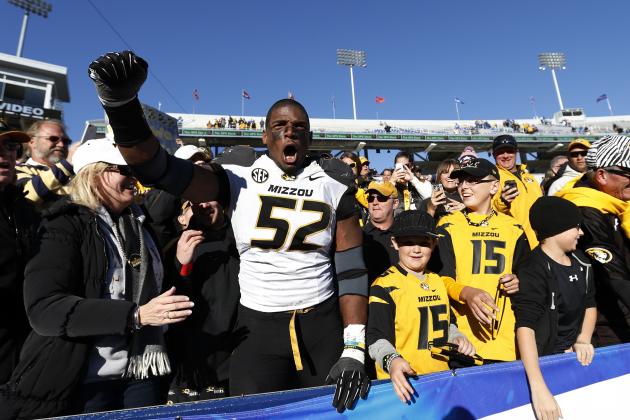
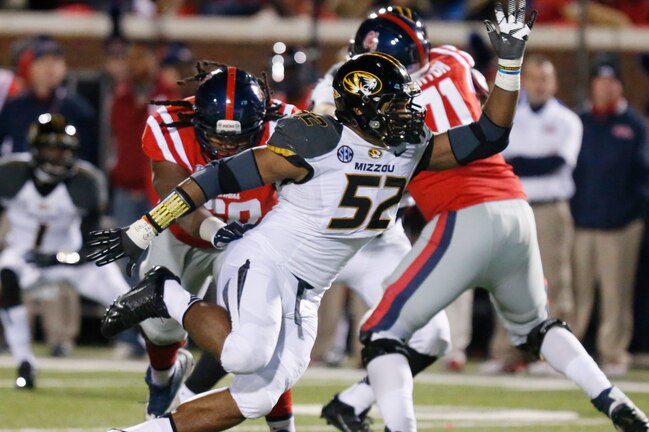
LOS ANGELES — Michael Sam delivered an incredibly powerful speech after accepting the Arthur Ashe Courage Award at the 2014 ESPYs on Wednesday night.

There weren’t many dry eyes in the room following the words of Sam, who was honored for his decision to publicly come out and become the first openly gay player drafted into the NFL.

Sam emotionally quoted Ashe’s words of wisdom, that included: Start Where You Are, Use What You Have and Do What You Can.

“Those were words to live by,” Sam said. “Whether you’re white or black. Young or old. Straight or gay.”

Sam fought back tears on stage, and he ended his speech by telling the story of a gay woman who told him she never again consider committing suicide after he came out as gay.

Sam’s powerful message: “To anyone out there, especially young people feeling like you don’t fit in, or are not accepted, great things can happen when you have the courage to be yourself.”

Sam brought boyfriend Vito Cammisano on the red carpet and specifically thanked him.

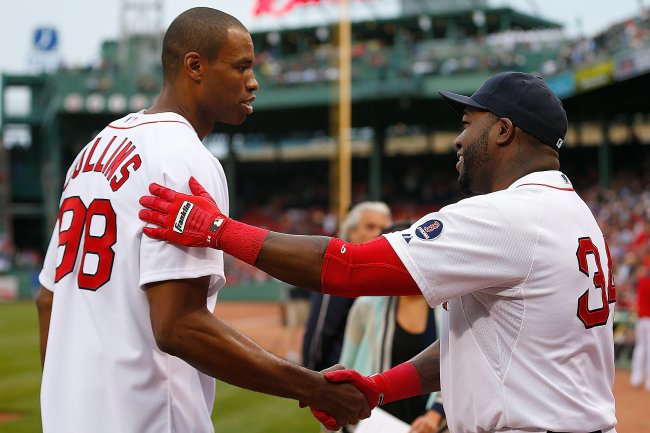
Dwayne “The Rock” Johnson presented the award. Jason Collins, the first openly gay athlete in the NBA, was shown cheering in the audience.

Monday, June 9, 2014

John Romano - How Steroids Became the Scourge of America

This might seem like a sports topic, or even a performance enhancement topic, but it feels to me like a male topic. At the bottom line, what we are discussing here is the demonization of the male hormone, testosterone. Yes, some women do use steroids, but generally not testosterone (women tend to favor more anabolic and less androgenic substances, for obvious reasons).

On the surface, legislators talk about cheaters, which is deceptive. They held congressional hearings on steroids in baseball, where a handful of athletes were using the drugs, but they have never held hearings on professional wrestling or bodybuilding, where ALL of the athletes are using steroids (as well as growth hormone, insulin, clenbuterol, corticosteroids, and other PEDs). More to the point, there are a lot of ways of cheating, hell, pitchers do it all of the time (the Yankees have been caught twice this year "doctoring" the ball on the mound, but you won't see congress holding hearings on spit balls, or pine tar on bats).

In addition to being a male issue, this is also a transhumanist issue. Steroids are ostensibly little more than a chemical means to expand physical capabilities. Used wisely, and with a doctor's supervision, they can make us bigger and stronger with few side effects. One wonders why the government opposes this technology, other than that steroids have been demonized as a result of their abuses, not because anything is inherently wrong or dangerous about them.

Sadly, I can't really see this changing anytime soon, unless all drugs are decriminalized.

Steroids: The Birth of a Demon

How Steroids Became the Scourge of America

by John Romano
Jun 9, 2014


Here's what you need to know...

•  Due to harsh laws based on Reefer Madness-like myths, the personal use of steroids for aesthetic purposes can land lifters in prison or get them fined for more money than they probably have. Ironically, steroid usage in sports, which these laws were created to curb, has not decreased.

  Steroids and other PEDs have been in widespread use in bodybuilding and Olympic lifting since the late 50s. Their usage in baseball, the Ben Johnson debacle, Lyle Alzado's questionable death, the Lance Armstrong farce, and the sad case of Taylor Hooton brought steroids to the forefront. Politicians and those with agendas took full advantage.

•  Although it has many medical uses and is now commonly prescribed to aging males, the illegal use of testosterone puts you into the same criminal category as a heroin addict. And science has never backed up the hysterical claims made by anti-steroid zealots.


"I think it's absolutely disgraceful that our government should be in the position of converting people who are not harming others into criminals, of destroying their lives, putting them in jail." - Milton Friedman

The following account is something I lived through and was a small part of. It is my view of the fascinating history of how steroids emerged as an ergogenic aid in sports and subsequently became an ominous facet of the modern age - becoming criminal while at the same time assaulting the very core of America by representing a proposed danger to our youth and, worse still, sullying the most hollowed of all things American - baseball.

This odd journey, especially the inception, involved numerous colorful characters from all over the globe who together eventually created a culture. Many of you reading this have adopted this culture without perhaps knowing the full extent of what it means to be a steroid-using bodybuilder and how it got that way.

I find it unfortunate that the younger guys embracing our culture today have to adapt to a whole different set of circumstances regarding steroids than my contemporaries did. Today you have to understand that the general public - the people you deal with, work with, live next to - believes that "steroids" cause a plague of maladies, from liver, brain and kidney cancer, to heart attacks and strokes, to psychotic episodes that end in madness, mayhem, murder and death. Given the current state of the public discourse, if your next door neighbor found out you were a juicehead, he'd probably wish you were a heroin addict instead.

Back when I adopted our culture it was perfectly acceptable to drive down to Mexico and buy all the real pharmaceutical gear I wanted, at incredibly low prices, and drive it back to LA with no problema. And no one cared if a bunch of guys down at the gym took steroids. We didn't bother anyone. We were totally under the radar and really not doing anything that wrong, certainly nothing even remotely felonious.

Well, it's not like that today. Not only are steroids listed by the feds in the same class as narcotics - with prison time for possessing, importing or selling them - the media has also driven the "Reefer Madness" hysteria to such a degree that there are families in Kansas who believe Gold's Gym is the incubator for the Zombie Apocalypse. What hatched such two-headed insanity? I'm going to skim over the last 30 years and describe what I believe are the milestones that lead to the concomitant criminalization and vilification of the very sex hormones our bodies produce.

The Perfect Steroidal Storm

The demonization of steroids in America has been perpetuated by three equally reprehensible yet powerful groups: vocal alarmists with agendas who incite hysteria based on fiction, the media who reports it, and the vote-hungry law-makers in Washington who believe they can do something about it.

In the 80-90 years that steroids have been around, they've gone from virtually innocuous, unknown medical compounds to a public menace nearly eclipsing heroin, cocaine, amphetamines and club drugs, with federal penalties for distribution and possession that can put you away for a fairly extended part of your life. How did the media wrap itself around this issue and funnel politicians, athletes and bereaved parents into promoting one of the biggest scams in US pop culture?

I've been around the block a few times, seen a bit of the world with all of the bark off, but I can't for the life of me think of another situation in which a single topic has gotten so misconstrued as that of performance enhancing drugs. With the mega amount of intellect in the demonization camp regarding PEDs, any person of reason would have to ponder... why? Unfortunately, when it comes to this group of drugs, most, if not all, common intellect goes right out of the window.

It was about that very same time 24 years ago that noted economist Milton Friedman uttered the words quoted above, and President George H. W. Bush signed house bill HR 4658 IH "Anabolic Steroids Control Act of 1990" into law, adding anabolic steroids to Schedule III of the DEA's list of controlled substances: the same legal class as amphetamines, methamphetamines, opiates, and morphine. Subsequently, in 2004, the law was amended to add prohormones and other "steroid like" compounds to the category, thus criminalizing anything that even remotely resembles testosterone or its effect. Later, the US Sentencing Commission reconvened to raise steroid penalties.

Today, in America, it is possible to be sentenced to 30 years in prison, and fined up to $5,000,000 for the possession and distribution (or importation) of testosterone, the very same hormone that human males and, to a lesser degree, human females, have been carrying around in our bodies since the early dawn of man. Let that sink in for a minute. Did I just say thirty years and 5 million bucks for testosterone? Yes, I did. We're talking about America here, not North Korea, right? How could such an insane thing happen? Well, let's work backwards.

Muscles, Narcotics, and Prison Time 


First let me give you the sentencing guidelines as they stand today to give you the full magnitude of just how far we've come since the dawn of testosterone in the lab - the very same hormone that half of the American male voting public used to produce when they had testicles.

In the wake of the BALCO case, high ranking government agents were incensed over the four month slap on the wrist Victor Conte received after the government spent four years and over 50 million dollars chasing and prosecuting him. On March 27th, 2006, the US Sentencing Commission amended the sentencing guidelines for anabolic steroid cases by changing the way steroid quantities are factored to effectively increase sentences. The Commission's amendment made injectable and oral steroids comparable to other Schedule III drugs in a 1:1 ratio. That means that now, instead of the 50 pills that used to equal one unit, one "unit" of oral steroids is now one pill. One "unit" of injectable steroids goes from a 10 cc bottle down to half a cc.

Naturally, the government's 1:1 ratio is wrought with stupidity, not the least of which being the absence of any language pertaining to the potency of a particular drug. In the eyes of the law, a steroid is a steroid. That means a 5 mg Anavar tab is as equally felonious as a 50 mg tab of Anadrol, or 1 cc of equipoise being equal to a Sustanon 250 preload.

The guideline change also pays no attention to the diametric differences between steroids and other Schedule III drugs. All Schedule III drugs are narcotics that elicit an immediate, mind-altering effect when used for recreation, while steroids actually elicit a beneficial physical effect and no mind-altering effect. Unfortunately, no cogent argument can usurp the law of the land, which under title 21 U.S.C. states that possession of just one tablet of any steroid is now a federal crime punishable by up to one year in jail for a first offense, and up to two years in prison for anyone with a prior drug conviction.

And, if you think that's bad, you really don't want to get caught "distributing" steroids. The following increases apply to possession with intent to distribute, importation and internet sales.
[For convictions of a] "controlled substance in Schedule III, such person shall be sentenced to a term of imprisonment of not more than 10 years and if death or serious bodily injury results from the use of such substance shall be sentenced to a term of imprisonment of not more than 15 years, a fine not to exceed the greater of that authorized in accordance with the provisions of title 18, United States Code, or $500,000 if the defendant is an individual or $2,500,000 if the defendant is other than an individual, or both."

"If any person commits such a violation after a prior conviction for a felony drug offense has become final, such person shall be sentenced to a term of imprisonment of not more than 20 years and if death or serious bodily injury results from the use of such substance shall be sentenced to a term of imprisonment of not more than 30 years, a fine not to exceed the greater of twice that authorized in accordance with the provisions of title 18, United States Code, or $1,000,000 if the defendant is an individual or $5,000,000 if the defendant is other than an individual, or both."
What could this mean to you? Let's imagine you have a buddy down at the gym who picked up a few bottles of test for you and a few of his other buddies while he was down in Mexico. On his way back to the US he was detained by US Customs and searched, uncovering 30 or 40 bottles of various steroids. Certainly nothing out of the ordinary - for bodybuilders.

He was brought before a federal magistrate and charged with importation and intent to distribute a Schedule III drug. The judge looked at the unit amount of juice and figured he better not kick back to the state the prosecution of such a high-level steroid kingpin and assigned the case to federal court. And he probably won't grant bail because your buddy is considered a flight risk because he's an accused importer with alleged ties to a foreign country. Since the feds tend to feed upstream, they're not too likely to offer your buddy a deal to follow him to your house and wear a wire. But, the possibility does exist, especially if the investigation is being handled by inexperienced agents who, based on the unit amount and country involved, think they're investigating a savage steroid cartel.

If your buddy doesn't have a good lawyer he'll be convicted of steroid importation and possession with intent to distribute, and if it's his second offense, he could be looking at 20 years in prison. If someone gets hurt using the gear he imported then add another 10 years. And then there's the seven-figure fine...

While such sentences rarely ever see the top of the guidelines, the potential still exists, under the law, for a 30 year sentence for what would amount to a few bottles of testosterone you picked up for a few of your buddies along with your own. More down to reality, for a first offence: up to two years just for having it in your possession and up to five if you're importing and distributing anything even remotely considered rich.

The government has made sure there's no such thing anymore as a slap on the wrist for steroid crimes. The shameful truth of today is, if you're a national level bodybuilder and had all the gear you were going to need all year to compete hidden in a small trash bag under your bathroom sink, and your door got kicked in (after you accepted a package from a controlled delivery), the unit amount of all the gear in your house makes you a kingpin dealer and - if you don't have a good lawyer - you're going to pay a hefty fine, lose your house, your car, your job, any licenses you might have, the local media is going to portray you as something just shy of a child molester, you're going to prison for a long time and when you get out you'll have nothing coming; your felony record will haunt you long after you're off paper. Interesting risk that poses to a great many competitors these days.

Any reasonable person who knows anything about these drugs knows this is a tough pill to swallow, especially when you consider how steroids compare to other legal over the counter drugs, not to mention cigarettes and alcohol. To any reasonable person, the government's position on steroids is nothing short of lunacy.

Sports, Congress, and "Protecting the Children" 


How was public opinion swayed so far away from the truth? The media drove America into a virtual attack frenzy, concomitantly criminalizing and vilifying a non-narcotic, non-mind altering drug - a hormone naturally occurring in our bodies that can help us be stronger, more muscular, leaner, perform better and add quality to an aging male's life.

It basically boils down to this simple formula: alarmists with an agenda get the attention of the media that misstates facts, exaggerates claims, sensationalizes accounts and assigns blame without cause just to make the story sexy. This vomit lands on the over-coiffed crepe hair of vote-hungry politicians who will stand on their soggy vomit-clogged heads in front of the media and congress to lead another blind crusade against the biggest scam to ever invade politics: "save our children."

As far as steroids go, the most simplified version of what happened is this:

Steroids and other PEDs had been in fairly widespread use in bodybuilding and Olympic lifting during the late 50s and early 60s, especially internationally. While the iron sports kept a pretty low profile, the performance benefits of the drugs started seeping into other, more popular sports such as cycling and track and field. Their use proliferated, particularly in Olympic lifting, cycling, and track as well as other professional sports, particularly football - baseball came way later (at least that's what most people think).

While the NFL and MLB were still decades away from a published drug policy, an uproar was starting to build among top level amateur athletes amid failed drug tests and the marked increase in disqualifications in cycling and Olympic lifting, but nothing made quite enough noise to raise many eyebrows. Then in 1988 at the summer Olympics in Seoul, Canadian sprinter Ben Johnson plucked just 9.76 seconds out of the thin air that spanned the entire Olympic games and made them the most talked about sequence of numbers in recorded history next to 666.

It's not so much that Johnson tested positive for Winstrol after the race and ostensibly cheated his way to the world record. It had more to do with the Canadian beating the American favorite, Carl Lewis, by cheating - by using steroids! - in what's considered the most popular of all summer Olympic sports. Among the Walmart crowd, the only way Canada could beat America was to cheat.

But remember, science does not prove negatives. While Johnson's positive test proved he was taking Winny, Lewis's negative test results for banned drugs does not prove he wasn't taking them. It just means the test didn't detect any. Be that as it may, controversy breeds contempt just as well as it breeds headlines, and now steroids had a face: a revered champion of the most hallowed of Olympic sports. Johnson was surely a role model for millions of kids. The proposed message that sends to our youth, combined with growing alarmist reports that high school football players were using steroids, and the politicians had the hors d'oeuvre they needed to get dinner started.

Between Johnson's disqualification in 1988 and into 1990, Congressional hearings were held to determine whether the Controlled Substances Act should be amended to include anabolic steroids along with more serious drugs like Valium, opiates, and amphetamines. Congress was able to call witnesses whose stories would help support criminalization - from the masculinisation of a female Olympic athlete, to a pro football player suggesting (without any medical evidence) that his heart problems were linked to his past steroid use, to the conditioning coach for the Philadelphia 76er's who insisted "steroids must be considered a controlled substance, no different than cocaine."

However, it was an Assistant Professor of Psychiatry at Yale University School of Medicine, a guy named Kenneth Kashin, who spoke, verbatim, the words the politicians wanted to hear. The good doctor testified that "steroid use can cause an addiction with similarities to alcohol, opiate, and cocaine addiction." He talked about "dangerous criminal-like behavior while intoxicated on anabolic steroids" and individuals who have "lost control of their behavior," or "became violent." Yes, this puppet show really went on.

When all was said and done, despite the opposition of the DEA, AMA, the Department of Health and Human Services and the recommendations of the most knowledgeable experts, Congress changed the classification of anabolic steroids to a Schedule III controlled substances under Title 21 of the United States Code, which regulates food and drugs.

This is an incredibly significant milestone in the demonization history of steroids, especially where bodybuilding is concerned. It marks a turning point where a series of very interesting questions were being unanimously answered by American athletes, particularly bodybuilders, not to mention federation officials, judges, promoters, magazine publishers, supplement company executives, basically the entire iron industry. The dawn of the 90's ushered in the era of advanced pharmacology in bodybuilding just in time for the government to make most of it a federal felony.

The unanimous decision everyone ultimately made was to ignore the law. To this day, since the law was passed 24 years ago, the entire bodybuilding industry - among the competitors of all the various disciplines to the cottage industry that feeds off their bodies - there isn't the slightest hint there's a federal law that prohibits steroid use, trafficking, importing, buying it over the internet, possessing it, etc. Any top national bodybuilder and most IFBB pros could walk around with a flashing neon sign over their heads that says "steroid user," "drug dealer," "smuggler," or "internet buyer." It's a wonder they don't get caught, all of them, like yesterday, me included.

But such arrests are not as common as you'd think. Given the multitude of obvious, illegal drug-using bodybuilders out there, at least ten a week, and/or their dealers, should be getting popped all over the country. But they aren't. High profile bodybuilders, and most other athletes for that matter, seem almost immune to the law of the land. So, who is getting caught?

Athletes Walk, Recreational Lifters Do Time

What motivated Congress to ignore the advice of the experts and bulldoze this legislation through? Page after page of congressional testimony focused on just two points. First, the unfair advantage the steroid user has over those who don't use them; and second, Congress was able to leverage the nefariousness of cheating with the unsavory message that steroid use in top-level sports sends to our youth. If nothing else it would take the spotlight off of the pro athletes getting arrested for domestic violence charges, coke busts, sex offences and dog fighting. It's none of that, kids, it's steroids that sully the image of sports for you. Remember, cheating is bad. Especially if baseball is involved.

However, after two decades on the books it wasn't the cheating athletes who were getting caught - they just kept on cheating to the degree that college, and probably high school, football players figured out that it's just a matter of time before steroids come their way. It's a given.

For its intent, the law was a flop. What happened was that thousands of otherwise law-abiding Americans - not athletes, but mature adult males - have been arrested, arraigned, prosecuted, convicted, forfeited property, lost their jobs and their licenses, and sentenced to prison for the personal use of anabolic steroids. Virtually none of them have been top pro bodybuilders, Olympic athletes, NFL players and certainly not baseball players. They're not cheating in sports; they're not even playing sports. But they're the ones being dragged through the system by a law that was never meant for them.

Hundreds of pages of congressional transcript focused on promoting the even playing field in sports. Not a single word was ever paid to the probability that a healthy adult male, running a light cycle of test and deca to enhance the effects of his training, would be arrested and prosecuted. He's no one's role model and he's not cheating any other athletes. He's not bothering anybody. Yet I know for sure that the nation's top steroid law firms' files would support the claim that it is he, not the cheating athlete, being snared.

In light of the number of big-named athletes not appearing in the press on steroid charges, there were, nevertheless, widespread reports of steroid use among athletes using them to cheat. There was not yet any real danger associated with them. Of course there were reports of side effects and overdrawn reports of rage, but nothing to really irk the public in terms of the dangers steroids represent, especially to our precious youth.

Eventually, by direction of the media, the public discourse shifted to become less about cheating role models and more about health. Surely, if Junior is injecting a drug in the same class as heroin, he's going to become a strung-out juicehead and end up hanging himself in his bedroom or die another gruesome death from a degenerative disease such as cancer, or completely go crazy and shoot up his high school.

It was pretty much accepted that athletes are prone to cheating and probably using steroids to do so, but at what cost? Simply passing a law to target the athlete wasn't enough (never mind the fact that it wasn't even working). America needed a stronger message to send our darling children. Cheating isn't just immoral, cheating had to be dangerous because steroids are bad drugs. But, how bad?

Steroids: They'll Kill You Until You're Dead! 


A year after the legislation was passed, the most feared man in the NFL, Lyle Alzado, was diagnosed with brain cancer he said was brought on by steroid use. A year after he was diagnosed, he died from it: a frail, weak, quivering shadow of the man he used to be. Now, according to the media, steroids had openly claimed their first victim, a high ranking NFL star who died from steroids. The only problem? It wasn't true.

Of course the truth didn't matter. The health dangers of steroids now officially had a face, and it wasn't pretty. But it was selling like hotcakes on the multi-media machine. Kids looked up to Lyle, then he took steroids and he lied and then he died because he lied and took steroids. Oh, the travesty to our precious youth! Imagine the money the therapists will be making down the road when this trauma surfaces, manifesting mild schizophrenia and issues with trust and intimacy.

This set the stage for what was about to come. Steroid hysteria was in full swing. Any aberrant violent behavior, murder or suicide involving any athlete and Geraldo Rivera would immediately "smell steroids" with that enormous schnozz of his. News reports would abound about how - without any proof - steroids caused or contributed to such shocking behavior while completely ignoring much more relevant factors such as being on mismanaged psychotropic drugs, narcotic pain killers, alcohol or a combination thereof with or without underlying psychosis.

It got to a point in the mid-90s where virtually any unusual aberrant behavior reported in the press had some mention of "steroids." Defense attorneys even invented a "steroid defense" that relied on a convincing argument that "the steroids made their client do it." It worked a few times, but then the judges got wise.

Dirty Cheaters Save Major League Baseball 


The ensuing years brought us another pivotal point in the demonization history of steroids: the infamous baseball strike. More to the point, the subsequent resurrection of the game that had all but died during the strike.

The players going back to work wasn't enough to refill the stadiums. Nope, the strike-weary fans still weren't very happy. What baseball needed was some excitement. It needed a homerun race and the Bash Brothers and Roger Maris getting bumped out of the way. They needed McGwire and Sosa and Barry Bonds cracking them out of the park in a seemingly endless volley, racking up homeruns like nobody's business. The fans came screaming back.

MLB had its best year in history: a ten-digit payday at the very height of the steroid scandal, while the players who made it happen - who were told to do "whatever it takes" to make it happen - were getting thrown under the bus. The game was juiced and even Jose Canseco said so. In 2004, during his state of the Union Address, President Bush (former managing partner of the team for which Canseco played and earned the nickname "The Godfather of Steroids") demanded a crackdown on the drugs "because they are dangerous and send a bad message to our youth."

Weeks later, then Attorney General John Ashcroft read the indictment of Victor Conte and three others involved in the Bay Area Laboratory Cooperative (later to become infamous as "BALCO") on national TV - the scandal that later metastasized and drew Barry Bonds into the fold. All the while Congress convened and reconvened and held hearing after hearing on steroids in baseball to the preposterous degree that it spent more time talking about steroids than it did the economy, the war in Iraq or why the levies broke during hurricane Katrina, combined.

The Taylor Hooton Tragedy
 

During one of those hearings, testimony was given by a guy named Don Hooton who blamed steroids for his son Taylor's suicide, as well as baseball itself, i.e. Bud Selig, for sending this lethal message to our youth. Hooton's convincing testimony chastising the idols of the great American pastime caught the attention of international news media and within minutes cemented Taylor Hooton's face among Alzado's and Johnson's when he gave teen steroid death a name that became a household word.

A handsome, white, 17 year-old high school baseball player from Texas named Taylor, cut down in the prime of his youth by the evil Schedule III drug that pro ball players use to cheat at America's great pastime... You might as well dress up as Hitler and set fire to the flag on your front lawn on Veteran's Day.

To us, Don Hooton's campaign is a laughing stock replete with sophomoric scare tactics and loads of erroneous suppositions, misinformation and outright lies. To the millions of bodybuilding forum members, Don Hooton is a tool. While that's a sad thing considering he buried his son, the truth is that for over a decade neither he, nor his Taylor Hooton Foundation, have proffered a singe truth when it comes to anabolic steroids. In no other single instance in the history of the steroid debate has the alarmist with the agenda made out as well for himself as Don Hooton, and mislead more people - including congress - doing it.

The ruckus Hooton has made over his son's suicide made Taylor's death a trending topic online for many years and certainly marks another milestone in the demonization of steroids. However, the Hooton case has also festered in the scientific community for over a decade now, calling into play some of the most respected and informed experts in the field. Among them, the widely accepted consensus is that steroids didn't kill Taylor Hooton.

The scene in Bigger Stronger Faster with Dr. Norm Foss pretty much epitomizes the opinion of unbiased experts. If there's a chemical to blame for inciting the ideation to hang himself, Taylor's death is, from a clinical standpoint, far more likely to have been motivated by the prescription anti-depressant drug he was taking: Lexapro, a popular selective serotonin reuptake inhibitor (SSRI). The data is just not there to put the blame on anything else.

And therein lies the rub. The Taylor Hooton suicide has been dissected numerous times over the last decade by numerous clinicians, scientists and healthcare professionals amassing quite a bit of peer reviewed and published data. Here's a brief synopsis of the published material by Dr. Jack Darkes:
"Taylor Hooton reportedly colored his hair and looked twice when he passed a mirror and was always concerned about his looks. In combination with a reported desire to be bigger suggests potential body dissatisfaction which is associated with both AAS use and suicide as a form of 'socially-prescribed perfectionism.' He had low self-esteem, a family history of depression (mother), a suicide attempt (sister) and was taking anti-depressant mediation (Lexapro). His AAS use was allegedly motivated by wanting to excel at baseball, although some sources have suggested it had more to do with personal appearance and status."
To date, there is no published data in the medical literature that suggests steroid use, or cessation of steroid use, by itself, incites suicidal ideation. However, the journals are rife to demonstrate suicidal ideation in adolescent patients treated with SSRIs. So, with so much statistical data against him, why has Hooton been blaming steroids and not SSRIs? Why is he picking on steroids, scientifically the least likely of culprits? Why is he campaigning so hard to demonize them?

Because, with such a vocal steroid attack in the wake of your son's suicide you not only get to testify before Congress during the baseball hearings, but also twice more. You get to start a non-profit foundation in your son's name and guilt guys such as Bud Selig into donating a million dollars on behalf of MLB. Then you name yourself president and decide to pay yourself up to 32% of the millions you take in to run the foundation. You get to go all over the country sounding like an expert and getting your picture in the paper and being named Texas Sports Personality of the Year by the Dallas Morning News. You don't get that going after SSRIs. Steroids made Don Hooton a celebrity. Steroids made Hooton a lot of money. Suing the makers of Lexapro would have gotten him nothing.

Either way, he's not getting his son back. Alzado's son isn't getting his dad back and history isn't taking back Johnson's nine-seven-six. So, rather than rile suburban soccer parents with sensationalistic lies that have the sky falling on our children, why not just tell the truth?

Forget the reality of their widespread use in professional sports, good science has demonstrated a real time and place for steroids among healthy adult males, especially as they age. The absolute garbage being proffered by guys such as Don Hooton is only eclipsed by the money they're making doing it. Proof, I'll reckon, is the fact that since Taylor Hooton's suicide over a decade ago, the scientific community has still not assigned "anabolic steroids" as the cause of one single teen suicide. Yet Hooton is still out there raking in millions preaching that it could still happen because - despite mountains of evidence to the contrary - Don says he knows that his son died from them. I'm sure Hooton is claiming this statistic as his victory. The only thing more revolting than Hooton's mission is the abject moron who supports him. Unfortunately, there are more than a few.

BALCO and Barry Bonds 


Shortly after the plea deal was reached with Victor Conte and the name "BALCO" became as much a household word as "Kleenex", the US Sentencing Commission reconvened to raise sentences for steroid cases. The 4 months Conte spent at Club Fed following a 55 million dollar investigation by the federal government was just not enough. The result of those Sentencing Commission hearings were those penalties I described at the beginning of this article.

While the circle seems complete, the story continued on. The federal agent who headed the BALCO investigation, Jeff Novitzky, became sort of a cult anti-hero, carrying the torch onward in his self-appointed fight against steroids. While there was never a formal order ever given to go after BALCO, Novitzky did, and to this day continues to do his best to lock up as many athletes as he can. Novitzky's tactics usually push the limits of legality and ethics, cheating just as much as the athletes he's chasing. The only difference is that he really doesn't ever truly win.

The BALCO case didn't yield much in the form of prison time for any of those snared in his investigation - at least not for steroids anyway - although several promising athletic careers were smashed and Olympic medals were taken back. Gold medal sprinters Marion Jones and Tim Montgomery actually did jail time, but for perjury and writing bad checks, not juice. Nevertheless, when the dust settled, Novitzky still had his claws in homerun king Barry Bonds, at that moment the most famous athlete on earth.

Novitzky's entire impetus for going after BALCO was to get Barry Bonds. Now he had him where he wanted him. Novitzky knew Bonds had taken steroids. He knew that Bonds's trainer, Gregg Anderson, gave/administered them to Bonds. All he had to do was prove it by getting Anderson to testify against Bonds, his childhood friend. Novitzky, the master of getting athletes to roll on each other, couldn't get Anderson to talk no matter how many months he spent locked away on contempt charges for refusing to testify. Ultimately, Anderson got out of jail. Finally, after an appeals court upheld his sentence in 2013, Bonds started serving his whopping two months of house arrest... for obstruction of justice. 

Lance Armstrong


Ten full years and tens of millions spent since the BALCO raid that started it all and Novitzky still doesn't have a drug conviction of an athlete. So, what does he do in light of what could only be construed as a black eye for the government? Novitzky spends millions more going after America's favorite son, Lance Armstrong. Seven Tour victories? He must have been on something.

First, Novitzky went after disgraced Tour de France winner Floyd Landis and promised him immunity if he rolled on former teammate, Armstrong. Naturally, Landis agreed and then suddenly the most tested athlete in the world - who never failed a drug test - was being brought down by an "administrative positive." Landis, and an assortment of others, ratted out Lance. Luckily for Lance, the government is easing off on steroid prosecutions and opted not to prosecute him. Novitzky got to the altar a little late.

The Obama administration has openly said that enough time has been spent on steroids; those resources can be used for better things. Lance did have to step down from his philanthropic foundation and give back all his Tour victories as well as the silver medal he won in the Olympics. I'm sure we all sleep better at night now.

Novitzky's star seems to be fading. There's no one really left after Lance. Although he could start going after rappers. LL Cool J looks pretty jacked.

So Where Does This Leave Us?

A closer analysis of current events might look like we've come full circle. While the laws and penalties for steroids are quite unfavorable right now, you have to work a little harder at getting caught. My old friend Dr. Gary Wadler, a former leader of the World Anti-Doping Agency, said, "I don't think this administration has the same vigor as the previous administrations on the [PED] issue. That was clear from the beginning when Barack Obama was running for election [in 2008]."

So, where does that leave us? Well, you can still get 30 years for testosterone, if you get caught. That's a big if. It does however seem to be a bit smaller of an if as it was a few years ago. The hysteria seems to have ebbed. The alarmists have lost much credibility from parent groups calling creatine a steroid and Don Hooton proclaiming that veteran actor Tom Hanks opened a show on Broadway "high on steroids" for having had a cortisone shot in his injured hand. Don sounds a bit desperate.

Steroids are perhaps a bit less vilified today and have in fact been inducted into the modern American lexicon. "On steroids" is a phrase openly accepted even in advertising to depict the deluxe version of just about anything from pick-up trucks to non-stick cookware. Baseball is boring again. And any time any athlete ever does anything noteworthy it will automatically be assumed that he's "on steroids."

Chances are he is and no government willing to enforce laws against it is ever going to stop him. Part of the reason for that is the high degree of chemical engineering going on today that was extremely rare just a few years ago. Designer labs are certainly the new frontier. And the feds know it.

There's a big difference between hunting down high-profile elite athletes and cracking down on the new forms of steroids designed to sneak around the law. While the government might not be chasing big named athletes around with the wild geese, lawmakers are still reaping mileage out of the steroid issue. At the time of this writing, Reps. Joe Pitts (R-Penn.) and Frank Pallone (D-N.J.) have introduced legislation in the House designed to crack down on anabolic steroids masquerading as dietary supplements.

These "designer steroids" come in the wake of what was leaned from the BALCO case. The products are made by reverse engineering illegal steroids and slightly changing their chemical composition. Such reengineering avoids placement on the DEA's list of controlled substances, creating a nice fat loophole for athletes to pee into. Urine tests can only detect known substances. If you're taking something unknown, then you can't fail a drug test.

The House bill is the next step toward full passage of a law that will further empower the DEA with new tools to identify and quickly respond when new designer anabolic steroids are introduced and falsely marketed as dietary supplements. How much of a bearing will this have on us? Very little. The point is just to show that while the steroid issue may have lost its luster in the mainstream, there are lawmakers who still think the platform can buy them some votes.

Just remember, the public stigma against steroids may have relaxed a little and the government may have decided they've had enough congressional hearings on steroids, but that doesn't mean that getting popped for them isn't still a reality, nor that the effect that bust will have on you and your family will be anything less than profound, and it will get worse when your local paper runs the story.

Apparently, this is what's known as "evolution."

 
John Romano

John Romano is a longtime industry insider and held the position of Senior Editor at Muscular Development magazine for 18 years. He has authored several books in the bodybuilding and fitness field and has appeared as a performance enhancement advocate in programs on HBO, ESPN, ABC's 20/20, and numerous radio talk shows, as well as consulted on, and appeared in, the acclaimed documentary Bigger Stronger Faster. Romano resides in Guadalajara, Mexico with his wife and son where they own and operate one of three Gold’s Gyms in the city.
Wednesday, May 21, 2014

No One Wants To Be With The Marlboro Man: Terry Crews On 'Manhood'


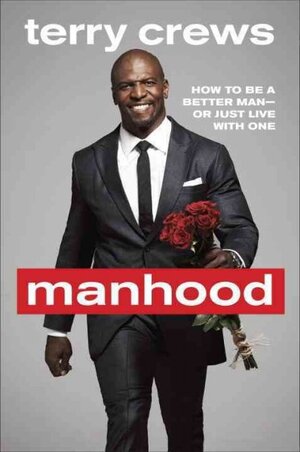
I heard this interview on NPR over the weekend and found it quite entertaining, and disarmingly honest. Who knew that the Old Spice guy was this interesting. His name is Terry Crews, he is a former NFL player, and he was once known as T-Money on the gladiator show Battle Dome. His new book is How to Be a Better Man-Or Just Live With One.

Here is the ad copy for the book:
From NFL player turned film and TV star Terry Crews comes a wise and warmhearted memoir chronicling his lifelong quest to become a good man, loving husband, and responsible father.
 
What does it mean to be a man? Terry Crews, TV’s iconic “Old Spice Guy” and co-star of the hit Golden Globe Award–winning series Brooklyn Nine-Nine, has spent decades seeking the answer to that question. In Manhood, he shares what he’s learned, telling the amazing story of his rise to fame and offering straight-talking advice for men and the women who love them.

A self-described “super-driven superstar alpha male,” Terry Crews embodies the manly ideal for millions worldwide. But as he looks back on his difficult childhood and shares hard-learned lessons from the many humbling experiences he endured to get where he is today, he shows how his own conception of manhood is constantly evolving.

Crews offers up a lively, clear-eyed account of the ups and downs of his twenty-five-year marriage, revealing the relationship secrets that have kept it going—and the one dark secret that nearly tore it apart. Along the way, he shares his evolving appreciation for looking good, staying fit, and getting it done for the people you love.

Being a man is about more than keeping your core strong. It’s about keeping your core values stronger. With insightful observations on spirituality, work, and family, Terry Crews shows men how to face their inner demons, seek forgiveness from those they’ve wronged, and tear down the walls that prevent them from forging meaningful relationships with others.

From the NFL gridiron to the Hollywood backlot, Terry Crews has survived it all with his sense of humor—and his marriage—intact. In Manhood he shows men everywhere that real strength is not measured in muscle mass—unless that muscle is the heart.
Interesting man.

No One Wants To Be With The Marlboro Man: Terry Crews On 'Manhood'

by Terry Crews
May 17, 2014
10 min 3 sec


How to Be a Better Man-Or Just Live With One
by Terry Crews

More on this book

When Hollywood needs a big dude — a really big dude — they can call on all sorts of former athletes. Few come with the heart and humor of Terry Crews.

An 11th-round draft pick of the Rams, Crews gave up his NFL dream in 1997 to pursue a different dream in Hollywood. He thought he'd turn his love of art into a job behind the scenes in special effects. Instead, he has stolen scenes on camera — from action movies like The Expendables to TV comedies like the Golden Globe-winning Brooklyn Nine-Nine.

Maybe his most puzzling role: those surreal ads for Old Spice.

Crews has written a new memoir, Manhood: How to Be a Better Man — or Just Live with One. As he tells NPR's Tess Vigeland, "The book should've been called, Terry Crews Is an Idiot and This Is How I Survived. I'm serious! There was so much astounding immaturity in this book."

Interview Highlights


On living under an alcoholic father

As an African-American, there's a lot of things that — culturally we just don't talk to each other. Anything bad in the past is supposed to be suppressed. "Somebody had it harder than you! So just be glad you're eating!" That's the attitude. And then what would happen is he would bury all his problems in alcohol. It would come out one way or the other. He abused my mother. There was a lot of physical violence in the home."

On revealing his pornography addiction to his wife

She gave me another chance. She said, "Now that I know everything, I'm still choosing to love you." ... That kind of mercy, that kind of grace — it took our relationship to a whole other level, because this is one thing I never realized. ... I always thought if she really knew who I was, she wouldn't want to be with me. And that blew my mind!

On manhood

Manhood used to be the Marlboro Man — my way, the highway, I walk alone! And the Marlboro Man is always by himself. Family, kids? Can't hang with him. They don't understand him. What happens is, that guy in his 60s, he's back there in his shed and he's crying his eyes out. He's alone. No one wants to be with him. And I averted that future.

Sunday, May 11, 2014

Kevin Durant's MVP Speech Honors His Mother in its Authentic Gratitude

Via @anthonyvslater
The image here is the full-page ad Nike bought in the Oklahoman 
to honor Kevin Durant's MVP award.

Back in 2010, I wrote about how Kevin Durant handled his contract extension (he was not even a free agent yet) with the Oklahoma City Thunder (formerly the Seattle Sonics) while LeBron James made this HUGE media circus called The Decision (it has its own Wikipedia page - how many other player decisions in which team s/he will play with have their own Wikipedia page?).

So Kevin Durant is back in the news, having (at age 25) won his first NBA Most Valuable Player award (to go with several scoring titles). Likely, this is also the first of many.

He gave a very heart-felt and moving acceptance speech, thanking all of his teammates, especially Russell Westbrook, and also thanking all of his coaches.

But what really tugged at the heartstrings was the thank you he gave to his mother. How beautiful to see an athlete show such integrity on the biggest stage of his young career.

Here is the whole speech:


Some time markers for those who want to get to the point:
3:40 Durant individually thanks his teammates
13:05 Durant speaks about his bond with Russell Westbrook
18:12 Durant thanks his coaches
21:00 Durant thanks his family and his mom
 

Here is the USA Today story on the NBA using a Durant's words about his mother in a new Mothers' Day commercial.
When Kevin Durant gave his speech after winning the MVP, he gave his mother perhaps the best Mother’s Day present of all.
The Oklahoma City Thunder star touchingly said his mother was the “real MVP” at the end of his speech, giving way to a standing ovation for his mother and tears from mothers around the world.

The speech is now part of a new NBA ‘Mother’s Day’ commercial. Because while we can’t all thank our moms with a touching speech after winning the NBA MVP award, we can certainly remind her that she’s the MVP in our life.

Or at least send flowers. Helpful reminder: It’s Sunday.

Happy Mother's Day to all of the Moms out there
who have or are raising authentic young men!

Monday, May 5, 2014

Over 95% of Straight [British] Male College Athletes Admit to Cuddling Their Teammates in Bed

This comes from The Daily Mail in England, which is not a very reliable source of non-sensationalist information. But this time there is an actual research study that serves as the foundation for the article - from the journal Men and Masculinities.

Cuddling and Spooning: Heteromasculinity and Homosocial Tactility among Student-athletes

By Eric Anderson, Mark McCormack

Abstract

This article examines the prevalence of homosocial tactility and the contemporary status and meaning of heteromasculinity among British male youth. Drawing on in-depth interviews with forty student-athletes at a British university, we find that thirty-seven participants have cuddled with another male. In addition to this cuddling, participants also engage in “spooning” with their heterosexual male friends. Demonstrating the pleasurable aspects of being a man in this culture, we argue that the expansion of esteemed homosocial behaviors for heterosexual men is evidence of an expansion of changing conceptions of masculinity in contemporary culture. We call for the discussion of heteromasculinities and contextualize our findings using inclusive masculinity theory.
There really is nothing at all shocking about this - men used to regular share beds and share physical affection like cuddling and hugs. Seems this died out, at least on the surface, back around the early 20th century.

It's a fallacy, however, to equate this behavior (mostly in men aged 16-22) as homosexual or homoerotic. It seems to me that men are finally getting comfortable (again) with the need for physical touch to be psychologically whole. If you are an athlete in particular, you likely spend more time with teammates than with any other human beings - its logical to look to those guys for emotional support and physical contact. 

I'd bet the numbers are far lower in the U.S. where there is much more homophobia and homohysteria among athletes.

Here is the summary of the article from The Daily Mail.

Spooning for success: Over 95% of straight male college athletes admit to cuddling their teammates in bed

  • Researchers found that 97.5% of heterosexual, male British college athletes have shared a bed with another
  • Small study interviewed 40 male athletes on their sleeping arrangements

By Mark Prigg
Published: 1 May 2014

Researchers have found that the majority of male athletes spoon each other when sharing beds with their teammates.

Researchers found that 97.5% of heterosexual, male college athletes have shared a bed with another man and 93.5% admit to having indulged in spooning.

Researchers say the athletes even spooned with others who were not necessarily close friends.


A fine Bromance: James Franco and Keegan Allen aren't alone, researcher have found. Researchers found that 97.5% of heterosexual, male college athletes have shared a bed with another man and 93.5% admit to having indulged in spooning.
CHANGING ATTITUDES
  • A recent national survey found that 29% of British adults think same-sex relationships are wrong, a sharp drop from 46% in 2000.
  • It’s backed up by data from the Pew Research Center, which found that 74% of Americans born after 1980 believe that homosexuality should be accepted by society.
The study, published last month in the Men and Masculinities journal, was conducted by two researchers at Winchester and Durham Universities, who questioned 40 University athletes.

'In addition to cuddling, participants also engage in ‘spooning’ with their heterosexual male friends,' Eric Anderson and Mark McCormack wrote.

'Highlighting the prosaic nature of bed sharing for these participants, most indicated that it was not necessary to be close friends to share a bed with someone.'

One of the participants said the act was simply one of friendship.

'I love a quick cuddle, just so you remember your friends are about and are there for you.'

Another said: 'I feel comfortable with Connor and we spend a lot of time together.

The researchers say the behavior is common among athletes as they travel and shower together, but is common among all young men - although tapers off with age.

'I happily rest my head on Connor’s shoulder when lying on the couch or hold him in bed. But he’s not the only one. The way I see it, is that we are all very good and close mates.

'We have a bromance where we are very comfortable around each other.'

The researchers say the behavior is common among athletes as they travel and shower together, but is common among all young men - although tapers off with age.

'Outside of an undergraduate setting the numbers are likely to be far less,' Anderson told Vocativ.

'While we know, definitively, that it is a regular occurrence among 16- to 18-year-olds in addition to university students, it is not likely to exist whatsoever among 40-year-old men,' he says.

Participants said cuddling up was simply an act of friendship.

'This is both a function of the homohysteric culture that 40-year-old men experienced in their adolescence, as much as it is a function of the fact that 40-year-old men go home to sleep in bed with their spouses.'

Experts say the study reflects changing attitudes to male sexuality.

'We argue that the expansion of esteemed homosocial behaviors for heterosexual men is evidence of an expansion of changing conceptions of masculinity in contemporary culture, the researchers wrote.

A recent national survey found that 29% of British adults think same-sex relationships are wrong, a sharp drop from 46% in 2000.

It’s backed up by data from the Pew Research Center, which found that 74% of Americans born after 1980 believe that homosexuality should be accepted by society.

Some of the interviewees even admitted they had no problem with their bedmate waking up with a morning erection.

'We don’t give anyone s**t anymore,' said one.

Tuesday, April 8, 2014

Men on the Edge of Panic: Boomer Esiason, Mike Francesa and Toxic Masculinity (The Nation)

Tori and Daniel Murphy

A little background may be necessary here for those who do not follow baseball (like me). Recently, Daniel Murphy of the New York Mets received a LOT of criticism for taking paternity leave that caused him to miss opening day. In essence, he getting blasted for choosing to be with his wife for the birth of their child rather than play in the opening day game (1 of 162 games each season).

Former NFL quarterback stuck his foot so far down his throat that he had to issue a very contrite apology.

Yesterday's post looked at the ways paternity leave is changing for men. So here is some response from David Zirin at The Nation on this issue.

Men on the Edge of Panic: Boomer Esiason, Mike Francesa and Toxic Masculinity

Dave Zirin on April 7, 2014

Daniel Murphy of the New York Mets received criticism for taking paternity leave this week. (AP Photo/Seth Wenig)

This is not another shooting-fish-in-a-barrel commentary about the antediluvian swinishness of Boomer Esiason and Mike Francesa. This is not another swipe at their comments criticizing the efforts of Mets second basemen Daniel Murphy for missing opening day to be with his wife for the birth of their child. For those who missed it, Esiason opined, “I would have said, ‘C-section before the season starts. I need to be at Opening Day. I’m sorry, this is what makes our money. This is how we’re going to live our life. This is going to give my child every opportunity to be a success in life. I’ll be able to afford any college I want to send my kid to, because I’m a baseball player.’”

Fellow troglodytic troll of the NYC sports radio airwaves Mike Francesa commented, “You’re a major league baseball player. You can hire a nurse.” Francesa also called the paternity leave at his own company “a scam-and-a-half.”

Many have verbally stomped them for the nature of their comments—well done, Chris Hayes—and Esiason also issued a fulsome apology.

I spoke to my friend Martha, who is a midwife—and a Mets fan—about their comments. She said simply, “I would ask if they knew how it sounded, talking about this woman like she is a human incubator to be cut open in a dangerous, often unnecessary surgical procedure so Murphy can make it to Citi Field on time. I would ask that, but honestly, if you can’t see why the asshole-levels on these comments are off the charts, then I can’t help you.”

I also spoke with Joe Ehrmann, a former NFL player and someone who has devoted his life to challenging the ways in which sports have the capacity to communicate a toxic, destructive brand of masculinity. Ehrmann said, “I think these comments are pretty shortsighted and reflect old school thinking about masculinity and fatherhood. Paternity leave is critical in helping dads create life long bonding and sharing in the responsibilities of raising emotionally healthy children. To miss the life altering experience of ‘co-laboring’ in a delivery room due to nonessential work-related responsibilities is to create false values.”

Ehrmann also pointed out the ways in which these statements create a culture that normalizes the alienation between fathers and children. He said, “Comments like these put every man in a position to think about career and co workers opinions ahead of father/husband/partner roles. So even in companies with paternity leave, many new dads won’t or feel like they can’t take advantage of leave without a stigma being attached to them…. This is one more arena where sports/athletes could be a metaphor for social change and elevate the birth/nurture/fatherhood role and responsibilities over work.”

He then said to me that this kind of sexist mentality not only harms families, not only harms men, but also quite specifically harms athletes. “I’m convinced the number-one common denominator in locker rooms is father-child dysfunction,” he said. “It’s what pathologically elevates many performances. ‘I will prove to [the coach/father figure] I am worthy of my dad’s love and acceptance,’ at the expense of self and others. If any group should understand need for dads in delivery rooms it should be athletes and the athletic world.”

I would also add that the only reason Daniel Murphy even had the option to take this time off is because it was collectively bargained into his contract by his union. There are millions of men in nonunion jobs who don’t even have this option, not to mention millions of women who risk their employment in the United States by taking time off after the birth of their child.

I think there is something else going on as well. The comments from Boomer and Francesa smack of a kind of existential fear from an older generation of sports radio jockeys about the ways in which definitions of masculinity and sports have been rapidly changing. There have been two dominant kinds of masculine archetypes for the last thirty years in sports. Either you could be heterosexual, misogynist, talking loudly but saying nothing with a goal of trying to become a commercial brand; or you could be a heterosexual evangelical Christian, talking humbly with a goal of trying to become a commercial brand. Those who strayed outside of these norms have only done so with considerable risk to their standing in the media or even their job.

But in the last two years, these archetypes have changed. We have seen players such as Jason Collins, Robbie Rogers and Michael Sam break new ground as gay athletes. We have seen Royce White and Brandon Marshall speak out about their mental health challenges and show that this kind of openness does not demonstrate weakness but courage. We have a new cultural consensus that does not see concussions as a bizarre badge of honor but a danger sign. We’ve had Jonathan Martin go public about being bullied by teammates, forcing the NFL to confront long-standing locker-room behaviors. Poisonous, narrow definitions of masculinity are being challenged. A player’s missing opening day to be with his wife on the birth of their child clearly caused Boomer’s and Francesa’s brains to rupture. Their idealized sports world as a masculinist cocoon absent of progress and insulated from the real world, where every day is 1985 (or even 1955), is withering before their eyes. People are deciding that ruining your life and your relationship with family in the name of a code that impresses the Mike Francesas of the world isn’t worth it. This is progress, but as in any time when we see progressive healthy change, the hounds of reaction will still nip at its heels.

Monday, February 10, 2014

How the NFL's Plan for Its 1st Openly Gay Player Fell Apart - And How Missouri Defensive End Michael Sam Is Changing All That

Two stories from the Bleacher Report - the first details the NFL's plan to announce it's first gay player fell through, and how the very recent announcement by Missouri Defensive End Michael Sam that he is gay is likely to change all of that - for the better.

The cool thing about Sam coming out was the support he received on Twitter from players (pas and present) and other athletes, including Shannon Sharpe, DeAngelo Williams, Tiki Barber, Amy Wambach, Jonathan Martin, and Robbie Rogers, among others.

The Inside Story of How the NFL's Plan for Its 1st Openly Gay Player Fell Apart

By Mike Freeman , NFL National Lead Writer Nov 20, 2013

B/R photo illustration 
The team had decided yes. The player had decided the same. It was set. It was going to happen. An NFL player was going to publicly say he was gay and then play in the NFL.

What happened before that moment showed how parts of the NFL are progressive and ready for change. Then, what happened next showed how the sport is still in some ways fearful of it.

The following account is based on interviews with approximately a dozen people, including team and league officials, current and former players, and gay-rights advocates. Some were directly involved with the discussions that nearly led to the first openly gay NFL player. Further illustrating the intense secrecy, delicacy and fear surrounding the subject, none of the principals wanted to be identified. They also refused to identify the team or the player.

It was early this past spring when a closeted gay player, who was a free agent, reached out to a small group of friends and told them about his sexual orientation. The friends, both current and former players, and others with NFL connections, then contacted a handful of teams to gauge their interest in the player and their comfort with that player talking openly about being gay if they signed him.

A number of teams contacted passed. The player was told they didn't have a need at his position. The player told a recently retired player he believed the teams declined because they feared the attention a gay NFL player would receive from the public and media.

Yet some teams were interested, and one team actually said yes. It wasn't a lukewarm yes or a conditional one. It was a definite yes.

The team expressed that it didn't care if the player was gay and had no issue with him announcing he was gay after signing. The player expected the signing, and subsequent announcement, to happen in June. This would give the team, fans and media a month to adjust to the news before training camp began.

It was during these talks with the team, occurring in late March and early April, that reports surfaced about the possibility of an openly gay player emerging. In effect, word of the impending signing was leaking. I reported a player was strongly considering coming out. My reporting was based on speaking to several NFL players. Word of an openly gay player signing was spreading among a portion of the player base.

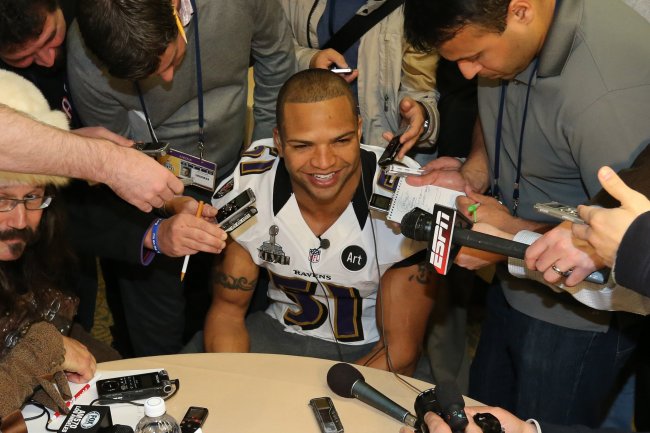
Gay-rights advocate and former Baltimore Raven Brendon Ayanbadejo said in April that he believed several gay players might come out. He later backed away from the number of players but stood by his statement that a gay player would soon emerge onto the NFL stage. 
 
USA TODAY Sports - Outspoken gay-rights advocate Brendon Ayanbadejo is not as confident as he once was about how soon there will be an openly gay NFL player.
Some months later, it's possible Ayanbadejo may have been right. The feeling now among team officials, as well as current and former players, is that there wasn't just one gay player ready to shed his secret, but multiple ones.

"I don't know how close we are," Ayanbadejo said to Bleacher Report in regard to having an openly gay player. "I just know there are gays in the NFL but their identities remain confidential."

The sources paint a remarkable picture. At least two or three gay players, each unaware of the other, living in different parts of the country, with different sets of friends and agents, each contemplating the same thing: coming out.

That period was, as one gay-rights advocate described it, "the spring of optimism for the NFL and gay rights." There was a feeling that the NFL was on the verge of crossing this significant barrier. There was great excitement. It was going to happen.

Until it didn't.

***

The question now is: What happened?

In considering possible answers, it's important to know five things.

First: Estimates of how many gay players are in the NFL range widely, but some of them, from people intimately familiar with the league, are far higher than might be assumed by the outside public.

Players and team executives give totals ranging from several dozen to several hundred. (There are about 2,000 players in the league.) One former general manager said he believes the number of gay players is 30-40.

Second: The NFL and union know the identities of some gay players, according to many sources—a gay-rights advocate, a union official and a team official. The league and union learn who these players are from other players and coaches. They keep the identities of these players secret. In some cases, teams do so to protect the players. In many cases, teams learn the identities to avoid signing them as free agents.

Third: The league office backs the idea of an openly gay player, but one high-ranking league official believes the NFL isn't yet ready for one. League executives think football is three to five years away from accepting such a player, according to an NFL source. The league plans to carefully and deliberately make the atmosphere more tolerant and comfortable in the meantime, setting the stage for when that happens.

The NFL actually wants an openly gay player because it would be one of the last barriers broken in the sport and show professional football as a tolerant sport. And not everyone thinks the league needs to wait. Another league-office executive said the NFL is ready now. "We are prepared," he stated. "The league would give the player and his team all the support necessary."

In response to this story the NFL issued a statement saying all players are protected by the NFL's Personal Conduct Policy. A manual given to every player during training camp includes language about violent or threatening behavior between employees inside and outside of the workplace. It includes documents relating to sexual harassment and sexual orientation.

Fourth: Some individual franchises, however, are not as enthusiastic about the prospect as the league office seems to be. Several team officials say the largest obstacle to an openly gay player is the resistance of a significant number of NFL owners and a smaller number of general managers and coaches.

Fifth: Many in the league are fearful of acting or even speaking on this subject. Quite simply, teams remain terrified of signing an openly gay player.

One team official gave an example of why there is such fear. He posed a question: What if a gay player came out in a place like the Dolphins locker room, where there was allegedly severe hazing?

Some stories out of the last NFL combine indicated teams are worried. Nick Kasa, a prospective pro out of the University of Colorado, told ESPN Radio in Denver earlier this year that during interviews with team officials at the combine in Indianapolis: "(Teams) ask you, like, 'Do you have a girlfriend?' 'Are you married?' 'Do you like girls?'" Big-name players like Michigan's Denard Robinson and Michigan State's Le'Veon Bell indicated in radio interviews that they were asked similar questions. The assumption was that the questions were some form of standard operating procedure not tied to the particular interviewees.

 
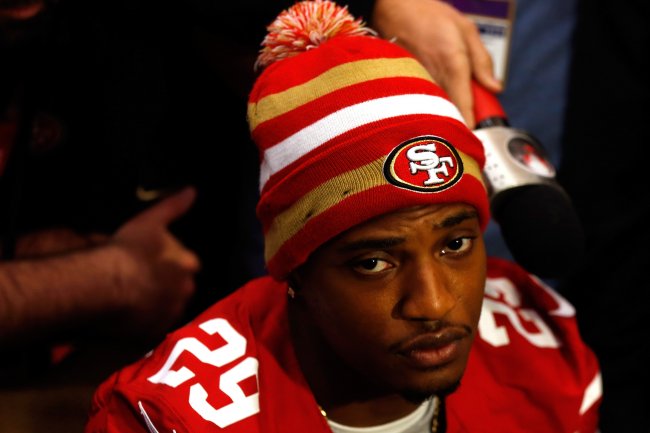
Scott Halleran/Getty Images - Chris Culliver's homophobic remarks in advance of the Super Bowl this year offered a glimpse at the reception an out player might get.

During media day before this past Super Bowl, 49ers defensive back Chris Culliver said, "I don’t do the gay guys, man. I don’t do that. Got no gay people on the team. They gotta get up outta here if they do. Can’t be with that sweet stuff…Can’t be…in the locker room, nah. You’ve gotta come out 10 years later after that."

It's this fear of gays that helps explain why many in the NFL are nervous about addressing the issue on the record. Some sources feel that talking openly about gay issues will label them as being part of the gay-player discussion and harm them in their current positions across the sport.

Still, some players strongly believe an openly gay player would be welcome in an NFL locker room.

"Players, in general, don't care what other players do in the bedroom," Arizona kicker Jay Feely, who is in his 13th season and has been a longtime union representative, told Bleacher Report. "Whether that is being celibate, having an affair, being happily married for 20 years or being gay. No one cares. The only thing they care about is winning games (and getting paid). That's the honest truth.

"This story is not about football or locker rooms but outside factors and agendas that are using football as the carrot to attract attention for their own personal gain."

To others, both in football and out of it, an openly gay NFL player would be a monumental moment, signaling that yet another barrier has fallen not just in sports, but all of society.

***

This past spring, it seemed imminent that barrier was going to collapse with not one, but two players having found teams that would sign them knowing they would come out.

Along with the initial player discussed in this article, there was a fairly well-known defensive back. He drew interest from at least one AFC team that knew he was gay. Coaches on the team were asked if they were OK with a gay player. They were. Some defensive players were casually queried, according to an official on the team. All of the players asked said it wouldn't be an issue. They were not told the name of the player.

According to the team, the potential deal collapsed when the player wanted too much money. If that was the case—and there is doubt about that among gay-rights advocates—it stands apart from everything else league insiders are saying about an NFL which they know includes many gay players and not a single one who will publicly acknowledge he's gay.

The first player, the one who expected to sign in June, heard in mid-to-late May from the interested team that it would no longer be signing him, officials from other teams told Bleacher Report. The player was told the reason why was fear of intense media coverage.

It was at the end of April that NBA player Jason Collins wrote a first-person story for Sports Illustrated in which he stated he was gay. The story became one of the most discussed in recent sports history. 
 
Jim Rogash/Getty Images - Did the media attention Jason Collins received scare off NFL teams thinking of signing a gay player? Collins has not been signed by an NBA team.

The NFL player told a former teammate he believes the Collins story, and others about gay athletes around that time, caused the team to withdraw its offer. It was afraid of the attention. Now, six months and countless injuries to active players later, neither he nor the other player has signed with a team.

While being afraid to sign an openly gay player smacks of cowardice—the Dodgers signed Jackie Robinson knowing there would be not only disapproval but possibly violence directed against the club—it remains a fact teams fear almost any type of controversy. And this would be one of the more talked about stories ever.

So after lots of talk of a gay NFL player coming out, the talk disappeared. Because NFL teams, in the end, got cold feet. It's that simple.

The sport still isn't quite ready for an openly gay NFL player.

***

All sources close to the players were asked one question repeatedly: Why don't the players just come out?

The answer was the same—fear. If they come out before signing, they won't get signed. While the players want to help push change, they also want to play football. Some will point to how Collins remains unemployed post-announcement.

The other problem is the league itself. It has, at times, moved extraordinarily slow on this issue. One gay-rights advocate who has had extensive dealings with the NFL said the league is trying to do the right thing but "it's like changing the course of a cruise ship."

Go back to an important fact. At least one league official believes pro football is three to five years away from a gay player coming out. Thus we're seeing the S.S. NFL turning hard to starboard toward a gay player coming out, but turning ever so slowly.

It will happen. It's just a question of when.

The two likeliest scenarios remain true. The first is what happened with the NBA's Collins could happen in the NFL. A player toward the end of his career comes out while a free agent or just after signing with a team.

The other possibility is a high-profile player in college is openly gay and has discussed this in media interviews for years. By the time he's picked high in the NFL draft, his sexuality has been so discussed and analyzed that no one cares.

And that is the goal. Reach a day when no one will care.

* * * * *

NFL Prospect Michael Sam Comes Out as Gay — Big Tests Loom for Him, League

By Mike Freeman , NFL National Lead Writer Feb 9, 2014

 
Joe Robbins/Getty Images 
One of the last barriers of bigotry in all of professional sports will soon fall: Former Missouri star defensive end Michael Sam, an All-American and the SEC Defensive Player of the Year, has come out as gay.

Sam is expected to be a high-round draft pick in May, which would set a series of historic firsts in motion. He would be the first openly gay player drafted. Since most high-round picks make NFL rosters, he'd also likely be the first openly gay player in NFL history.

"I came to tell the world that I'm an openly, proud gay man," he told Chris Connelly of ESPN's Outside The Lines Sunday night.

“Michael has shown great courage in taking this step and not only do we support him, we are incredibly grateful. His decision to welcome us all into his world as he embarks upon a professional NFL career is an honorable one. This moment will resonate in a unique and important way for countless people, particularly LGBT youth,” said human rights activist Brendon Ayanbadejo, the former Baltimore Ravens player who has been advising Sam. Ayanbadejo is a member of the Athlete Ally Board of Directors, a group that fights homophobia in sports.

The announcement sets up a number of tests for the league, for Sam and for his fellow players.

For one, there will be a dizzying scouting combine that starts Feb. 19 in Indianapolis, which Sam is expected to attend. No draft prospect in the history of the combine has been dissected or discussed like he will be. 
 
Brandon Wade/Associated Press

If Sam does attend, the combine will become one of the most heavily covered sports events in recent years because it would no longer be a sports-centric story. It will be talked about across the media spectrum.

One general manager told Bleacher Report that Sam will be a true test of whether the NFL is actually open to all kinds of players. He believes that if Sam falls past the third round, then "something stinks. Because this guy is easily a high-rounder."

Bleacher Report NFL Draft Lead Writer Matt Miller agrees that Sam's talents should result in his getting picked in an early round.

"As a player, Michael Sam was one of the most impactful defenders in college football last season," Miller said. "Playing left defensive end, he was able to produce All-American numbers by using his quickness off the ball and high-level instincts. The tape shows a smaller pass-rusher with good agility, but (at 6'2", 255 pounds) he might struggle to find a true position in the NFL...The production and burst are easy to fall in love with, though. Teams needing an outside pass-rusher will like the tools he brings and his developmental potential as a player."

The NFL released a statement to Bleacher Report saying: "We admire Michael Sam's honesty and courage. Michael is a football player. Any player with ability and determination can succeed in the NFL. We look forward to welcoming and supporting Michael Sam in 2014."

Sam will have to withstand being the center of attention outside and inside the locker room. And many believe his teammates may have a hard time accepting him.

The NFL reiterated it has a workplace conduct policy that prohibits discrimination of any kind. A portion of the collective bargaining agreement also states: "There will be no discrimination in any form against any player by the NFL, the Management Council, any Club or by the NFLPA because of race, religion, national origin, sexual orientation, or activity or lack of activity on behalf of the NFLPA."

The historic nature of this cannot be overstated. An openly gay player in America's most popular sport has the potential to change a great deal all across the sports world. Gay NFL players—as well as players in other sports—have come out after they retired but never during their career, or, as Sam is doing, as their NFL career is beginning.

Sam's declaration has the potential to open other fronts on this issue as well. It can make current closeted NFL athletes less fearful. It could provide support to younger athletes, in high school or younger, that they don't have to deny their sexuality.

Sam told ESPN that he knew from a young age that he was gay.

"It shouldn't be a big problem" to people, Sam said.

"I want to be a football player in the NFL," he added.

When asked how he thought his future NFL teammates would feel, Sam said, "It shouldn't matter."

"I'm not afraid of who I am."

Sam told his team some time ago he was gay. The team in turn not only had no problem with Sam's sexuality, they protected him. One Missouri player told Miller: "98 percent of the NFL could care less about someone being gay. It's the two percent that make us look bad."

The player added, "I got his back."

The reaction from NFL players, team executives and league officials queried by Bleacher Report was mostly positive but also cautious. Some of the players did not want to be identified out of fear of repercussions from the league.

What all agreed on was that Sam would face immense pressure. While Sam won't be the first openly gay player to try to make an NFL team, he will undoubtedly be the first to earn a roster spot, and most assuredly be the highest-profile player to do so.

In many ways, this is a huge test of the NFL's belief that an openly gay player would suffer no discrimination in the sport. This is a belief that has been privately stated by some NFL officials for years. Yet other officials believed the league is still some three to five years away from being able to handle an openly gay player.

One player called Sam the "gay Jackie Robinson." Yes, that is pressure. (Though the better comparison might not be Robinson, but instead, Charles Follis, one of the NFL's first black players.)

The disagreement begins with the question of how Sam will be treated. One veteran player said Sam will be welcome in most locker rooms and will have few problems. Another player said that "half of the NFL's locker rooms will accept him and half won't. It's a roll of the dice whether he would be accepted or not."

A third player explicitly said that he felt the player would face bigotry no matter what team he played for because homophobia still is common in the NFL despite the league's best attempts to eliminate it. The player said Sam "would be targeted by players on the field and fans off of it."

"Just look at the Dolphins and (Richie) Incognito," said the player. Text messages between Incognito and Jonathan Martin featured repeated use of gay slurs. The player also pointed out what happened in Minnesota to former Vikings punter Chris Kluwe. Kluwe alleged he was released because of his outspokenness on gay issues and that his position coach repeatedly used gay slurs. The Vikings deny this.

Players also point to interviews done by the NFL Network's Andrea Kremer in which players state pessimism about how the first openly gay player would be treated. 
 
Rogelio V. Solis/Associated Press

"There's such a stigma with gay and homosexuals within male sports," said Washington linebacker London Fletcher to Kremer. "It would be very difficult for that first person to come out."

New Orleans linebacker Jonathan Vilma told Kremer, "I think that he would not be accepted as much as we think he would be accepted, I don't want people to just naturally assume, like, 'Oh, we're all homophobic.' That's really not the case. Imagine if he's the guy next to me and, you know, I get dressed, naked, taking a shower, the whole nine, and it just so happens he looks at me. How am I supposed to respond?"

"That attitude is more prevalent in NFL locker rooms than you think," one of the players interviewed by Bleacher Report said.

The comments to the NFL Network follow the strong anti-gay remarks made by San Francisco 49er Chris Culliver at last year's Super Bowl. Also, at last year's combine, at least one team asked several players were asked if they liked women.

Team and league officials interviewed vehemently disagree that the NFL is homophobic. One team executive said Sam would be "the most protected player in NFL history" because neither the team he goes to nor the league itself would want anything to happen to Sam.

"Imagine how humiliated the league would be if the first openly gay player to be in the NFL suffered from extreme bigotry?," the team official said.

A league official said the NFL is ready for a gay player and that teams and players would treat Sam like any other player.

When Sam this past season was named the conference Defensive Player of the Year, he was the first player from the Missouri program to earn the honor since tackle Jeff Gaylord was Big Eight defensive player of the year in 1981. Sam doing the same about 35 years later was considered a great piece of history.

But that pales to what Sam has done now.