My sex supplement problem
It started with Viagra in my 20s, but sex became a performance. Could I ever find intimacy without a pharmacy?
Rob Williams
Monday, Sept 1, 2014
(Credit: Piotr Kowalski via Shutterstock)
“There’s something serious you need to know,” I said, pulling my pretty, ambitious 25-year-old girlfriend, Rachel, aside as we walked home from work. I was 33, trying to play the role of confident older man, but I was a wreck. I lit a cigarette. “Sometimes I take supplements — to help myself perform.”
“You mean like Viagra?” she asked. She looked totally calm, even relieved.
“Lately it’s just over-the-counter things, stuff you can buy at the Vitamin Shoppe: ginseng, L-arginine, maca root,” I confessed. “But the side effects keep getting worse. I get a headache every time, no matter how much I cut the dosage.”
“That doesn’t sound so bad,” she said. “I thought you were going to tell me something awful. If the headaches bother you that much, stop.”
Her nonchalance made me even more ashamed. “You don’t understand. Without the supplements, I may not be able to do it.”
She touched my arm and said, “It’s going to be fine.”
I tried to smile. Too often in my 20s, when I’d gone to bed with a woman, I couldn’t perform. Even if I did become excited, I usually got thrown off my game moments later. A touch I didn’t like, a word or glance I couldn’t interpret. Anything that made me think made me wilt.
Everything made me think.
The first time I enlisted pharmaceutical help, I was 28. I had become infatuated with a sexy mortuary science student, a sardonic redhead just emerging from what she called her “drunkenly whoring around New York” phase. Some men might have been irritated by their poor timing. I was actually relieved to get a chance to get to know her better before humiliating myself in bed.
We went slow at first, holding hands on the street, kissing on the subway as the train approached the station. Our chemistry was natural, undeniable. But alone in her bedroom in Park Slope, I fumbled tragically.
I gave up and rolled onto my back, staring at the ceiling. Neither of us spoke or moved. To my surprise, her pheromones in the dark and the stillness of the moment excited me. Maybe I wasn’t doomed after all. I went for it, thrilled that I’d salvaged the situation. But afterward, as we got dressed to go downstairs for dinner, she said, “Phew, we finally got that out of the way. Next time, we can do it properly.”
She was trying to be funny, but it sent me into a neurotic tailspin. At home, I went straight to the computer and ordered a bottle of Viagra from an online pharmacy. I couldn’t let another relationship be spoiled by my body’s unreliability.
I never told her the source of my newfound sturdiness. For a while, I was convinced I’d fixed everything. But she had a confusing tendency to create problems where I thought none existed. She complained that because we both had roommates, we never had enough privacy to be completely intimate. I moved to a one-bedroom apartment in her neighborhood. She began to fixate on abstract considerations, questioning my sincerity. Months and several terrible fights later, she confessed she had borderline personality disorder. I insisted that it didn’t matter. I loved her, and I hoped she would still love me if I ever revealed my own flaws. But I never did. She was already obsessed with the idea that I didn’t really love her. I worried that if I revealed there was a chemical component to our sex life, she would doubt my love more. Instead, we fought. I broke off contact.
I blamed my upbringing for my intimacy problems. My parents were both shy. My father was a Christian theology grad student from upstate New York. My mother, a beautiful painter from Connecticut. Their way of teaching my brother and me about sex was simply to ignore the subject. I was insulted by their vague, sentimental statements about how pregnancy “happens when two people are in love.” Did they really think I was that naive? By the time I was 20, I attributed my own difficulties with women to the timid way they had glossed over “the talk.” Now I knew what I’d always suspected was true: Love was not enough.
I enjoyed dating, but as soon as our clothes came off, I felt like I was standing outside of myself. I was too trapped in my head — all my girlfriends had pointed that out. But what was harder to articulate was that I was also trapped in her head. Of course, I couldn’t really know her thoughts, but I desperately wanted to. So I created my own version, concocting a story about what she was thinking. In it, she never truly desired the same things I did. The woman I invented was either offended, ambivalent or humoring me.
The drugs helped, but sex still seemed like a charade. Not only was I being dishonest with the women I dated, I was also being dishonest with myself. I’d always had fantasies of being totally in control in bed. Instead, I was timid, obsequious. With a woman who identified as submissive, I thought I’d have the freedom to be myself, although part of me feared I was a pervert. I had spent years believing pornography excited me in a way that was impossible in the real world. The voices of feminists I’d read reminded me: “Porn is not reality. It’s degrading. Real women would never enjoy it that way.”
I needed to reinvent myself — and my understanding of women. A month before my 30th birthday, I created an erotic online profile advertising myself as “a copy editor by day, burgeoning dom by night.” I told myself it was an experiment, but it was conceived out of desperation. After 12 years of dissatisfaction in the bedroom, it was either that or celibacy.
After creating my kinky alter ego, I was astonished by the number of women in New York having the same fantasies. In the past, I had worried about “using” women as sexual objects. But in terms of the dominance/submission game, that was not only permissible, it was desirable — for both partners. Having clearly defined roles freed us from the awkwardness of egalitarian lovemaking, so that deeper desires could emerge.
Outwardly, I was happier. I was finally enjoying myself, with more partners. But it was as someone else. At the core, my view of myself had not changed. I still saw sex as a performance. I was an actor, and I relied on a spectacular array of products to ensure I didn’t get stage fright.
Vigorplex, Capatrex, Ejaculoid, Python, Python Extra, Tribulus Terrestris Extract, L-Arginine, L-Ornithine, L-Citrulline, maca root, ginseng, zinc, Super Energy Up. I preferred these so-called natural products because they helped me believe the problem wasn’t that bad. Although I bought Viagra over the Internet, it embarrassed me that it was a prescription drug, even if I was the only one who knew about it. Over-the-counter treatments were easier to rationalize.
No matter what I took — Viagra or ginseng or anything in between — I got subtle, distracting headaches, either that night or the next day. In a way it was worse than if they’d been extremely painful, as if Poe’s telltale heart was throbbing in my head. I experimented with different pills and dosages, always searching for the perfect drug in the perfect amount that would give me the desired result without any side effects.
After three years, I had to admit it didn’t exist. Then I met Rachel, a petite, curly-haired brunette at the office. I gave up my Internet conquests to pursue her instead. She was quiet, slinky, catlike — different than the brash, emotionally unstable women I had dated in the past. We flirted for months. Usually, I considered dating co-workers verboten. The likelihood that my secret shame would be revealed was too great. But with her, I thought, perhaps I would risk it.
We circled each other slowly. I told her about my kinks, my double life on the Internet, the tumultuous way my past relationships had ended. I wanted to be understood. She accepted it all. More than that, she seemed charmed. But for months I stopped short of revealing my deeper anxiety and addiction, because I still feared some things were too embarrassing to talk about.
Even after finding the courage to speak honestly with Rachel, I stuck to my routine, taking a bit of L-arginine before she came over. I didn’t want her to know when my new drug-free life was going to start, in case it changed her attitude in some small way, which might throw me off.
Finally, I switched my L-arginine for sugar capsules. To my surprise, the sugar pills were just as good. Does the placebo effect actually work when you administer the medications to yourself? But after having repeated success with the sugar pills, I couldn’t rationally put the true test off any longer. The next time Rachel came over, I didn’t take anything at all.
My body didn’t know the difference. Everything was as good as it had been with the pills. I was amazed but didn’t tell Rachel yet. I needed to replicate the results to believe it. A week later, as we were lying in bed, I turned to her and said, “I finally did it. No supplements of any kind.”
She rolled onto my chest, smiling at me through long lashes. For the first time, I could believe what Rachel had already known: It was going to be fine. Being vulnerable and accepted by her was more powerful than any drug.
Rob Williams is a writer and editor who lives above a meat market in New York City. Read more of his stories at itmustbebobby.com.
More Rob Williams.
Showing posts with label performance enhancing drugs. Show all posts
Showing posts with label performance enhancing drugs. Show all posts
Monday, September 1, 2014
Rob Williams - My Sex Supplement Problem
This is an interesting and extremely honest article on the issues men face with sexual performance. Turns out that the best sexual performance enhancer is intimacy.


Monday, June 9, 2014
John Romano - How Steroids Became the Scourge of America
This might seem like a sports topic, or even a performance enhancement topic, but it feels to me like a male topic. At the bottom line, what we are discussing here is the demonization of the male hormone, testosterone. Yes, some women do use steroids, but generally not testosterone (women tend to favor more anabolic and less androgenic substances, for obvious reasons).
On the surface, legislators talk about cheaters, which is deceptive. They held congressional hearings on steroids in baseball, where a handful of athletes were using the drugs, but they have never held hearings on professional wrestling or bodybuilding, where ALL of the athletes are using steroids (as well as growth hormone, insulin, clenbuterol, corticosteroids, and other PEDs). More to the point, there are a lot of ways of cheating, hell, pitchers do it all of the time (the Yankees have been caught twice this year "doctoring" the ball on the mound, but you won't see congress holding hearings on spit balls, or pine tar on bats).
In addition to being a male issue, this is also a transhumanist issue. Steroids are ostensibly little more than a chemical means to expand physical capabilities. Used wisely, and with a doctor's supervision, they can make us bigger and stronger with few side effects. One wonders why the government opposes this technology, other than that steroids have been demonized as a result of their abuses, not because anything is inherently wrong or dangerous about them.
Sadly, I can't really see this changing anytime soon, unless all drugs are decriminalized.
On the surface, legislators talk about cheaters, which is deceptive. They held congressional hearings on steroids in baseball, where a handful of athletes were using the drugs, but they have never held hearings on professional wrestling or bodybuilding, where ALL of the athletes are using steroids (as well as growth hormone, insulin, clenbuterol, corticosteroids, and other PEDs). More to the point, there are a lot of ways of cheating, hell, pitchers do it all of the time (the Yankees have been caught twice this year "doctoring" the ball on the mound, but you won't see congress holding hearings on spit balls, or pine tar on bats).
In addition to being a male issue, this is also a transhumanist issue. Steroids are ostensibly little more than a chemical means to expand physical capabilities. Used wisely, and with a doctor's supervision, they can make us bigger and stronger with few side effects. One wonders why the government opposes this technology, other than that steroids have been demonized as a result of their abuses, not because anything is inherently wrong or dangerous about them.
Sadly, I can't really see this changing anytime soon, unless all drugs are decriminalized.
Steroids: The Birth of a Demon
How Steroids Became the Scourge of America
by John Romano
Jun 9, 2014

Here's what you need to know...
• Due to harsh laws based on Reefer Madness-like myths, the personal use of steroids for aesthetic purposes can land lifters in prison or get them fined for more money than they probably have. Ironically, steroid usage in sports, which these laws were created to curb, has not decreased.
• Steroids and other PEDs have been in widespread use in bodybuilding and Olympic lifting since the late 50s. Their usage in baseball, the Ben Johnson debacle, Lyle Alzado's questionable death, the Lance Armstrong farce, and the sad case of Taylor Hooton brought steroids to the forefront. Politicians and those with agendas took full advantage.
• Although it has many medical uses and is now commonly prescribed to aging males, the illegal use of testosterone puts you into the same criminal category as a heroin addict. And science has never backed up the hysterical claims made by anti-steroid zealots.
"I think it's absolutely disgraceful that our government should be in the position of converting people who are not harming others into criminals, of destroying their lives, putting them in jail." - Milton Friedman
The following account is something I lived through and was a small part of. It is my view of the fascinating history of how steroids emerged as an ergogenic aid in sports and subsequently became an ominous facet of the modern age - becoming criminal while at the same time assaulting the very core of America by representing a proposed danger to our youth and, worse still, sullying the most hollowed of all things American - baseball.
This odd journey, especially the inception, involved numerous colorful characters from all over the globe who together eventually created a culture. Many of you reading this have adopted this culture without perhaps knowing the full extent of what it means to be a steroid-using bodybuilder and how it got that way.
I find it unfortunate that the younger guys embracing our culture today have to adapt to a whole different set of circumstances regarding steroids than my contemporaries did. Today you have to understand that the general public - the people you deal with, work with, live next to - believes that "steroids" cause a plague of maladies, from liver, brain and kidney cancer, to heart attacks and strokes, to psychotic episodes that end in madness, mayhem, murder and death. Given the current state of the public discourse, if your next door neighbor found out you were a juicehead, he'd probably wish you were a heroin addict instead.
Back when I adopted our culture it was perfectly acceptable to drive down to Mexico and buy all the real pharmaceutical gear I wanted, at incredibly low prices, and drive it back to LA with no problema. And no one cared if a bunch of guys down at the gym took steroids. We didn't bother anyone. We were totally under the radar and really not doing anything that wrong, certainly nothing even remotely felonious.
Well, it's not like that today. Not only are steroids listed by the feds in the same class as narcotics - with prison time for possessing, importing or selling them - the media has also driven the "Reefer Madness" hysteria to such a degree that there are families in Kansas who believe Gold's Gym is the incubator for the Zombie Apocalypse. What hatched such two-headed insanity? I'm going to skim over the last 30 years and describe what I believe are the milestones that lead to the concomitant criminalization and vilification of the very sex hormones our bodies produce.
The Perfect Steroidal Storm
The demonization of steroids in America has been perpetuated by three equally reprehensible yet powerful groups: vocal alarmists with agendas who incite hysteria based on fiction, the media who reports it, and the vote-hungry law-makers in Washington who believe they can do something about it.
In the 80-90 years that steroids have been around, they've gone from virtually innocuous, unknown medical compounds to a public menace nearly eclipsing heroin, cocaine, amphetamines and club drugs, with federal penalties for distribution and possession that can put you away for a fairly extended part of your life. How did the media wrap itself around this issue and funnel politicians, athletes and bereaved parents into promoting one of the biggest scams in US pop culture?
I've been around the block a few times, seen a bit of the world with all of the bark off, but I can't for the life of me think of another situation in which a single topic has gotten so misconstrued as that of performance enhancing drugs. With the mega amount of intellect in the demonization camp regarding PEDs, any person of reason would have to ponder... why? Unfortunately, when it comes to this group of drugs, most, if not all, common intellect goes right out of the window.
It was about that very same time 24 years ago that noted economist Milton Friedman uttered the words quoted above, and President George H. W. Bush signed house bill HR 4658 IH "Anabolic Steroids Control Act of 1990" into law, adding anabolic steroids to Schedule III of the DEA's list of controlled substances: the same legal class as amphetamines, methamphetamines, opiates, and morphine. Subsequently, in 2004, the law was amended to add prohormones and other "steroid like" compounds to the category, thus criminalizing anything that even remotely resembles testosterone or its effect. Later, the US Sentencing Commission reconvened to raise steroid penalties.
Today, in America, it is possible to be sentenced to 30 years in prison, and fined up to $5,000,000 for the possession and distribution (or importation) of testosterone, the very same hormone that human males and, to a lesser degree, human females, have been carrying around in our bodies since the early dawn of man. Let that sink in for a minute. Did I just say thirty years and 5 million bucks for testosterone? Yes, I did. We're talking about America here, not North Korea, right? How could such an insane thing happen? Well, let's work backwards.
Muscles, Narcotics, and Prison Time

First let me give you the sentencing guidelines as they stand today to give you the full magnitude of just how far we've come since the dawn of testosterone in the lab - the very same hormone that half of the American male voting public used to produce when they had testicles.
In the wake of the BALCO case, high ranking government agents were incensed over the four month slap on the wrist Victor Conte received after the government spent four years and over 50 million dollars chasing and prosecuting him. On March 27th, 2006, the US Sentencing Commission amended the sentencing guidelines for anabolic steroid cases by changing the way steroid quantities are factored to effectively increase sentences. The Commission's amendment made injectable and oral steroids comparable to other Schedule III drugs in a 1:1 ratio. That means that now, instead of the 50 pills that used to equal one unit, one "unit" of oral steroids is now one pill. One "unit" of injectable steroids goes from a 10 cc bottle down to half a cc.
Naturally, the government's 1:1 ratio is wrought with stupidity, not the least of which being the absence of any language pertaining to the potency of a particular drug. In the eyes of the law, a steroid is a steroid. That means a 5 mg Anavar tab is as equally felonious as a 50 mg tab of Anadrol, or 1 cc of equipoise being equal to a Sustanon 250 preload.
The guideline change also pays no attention to the diametric differences between steroids and other Schedule III drugs. All Schedule III drugs are narcotics that elicit an immediate, mind-altering effect when used for recreation, while steroids actually elicit a beneficial physical effect and no mind-altering effect. Unfortunately, no cogent argument can usurp the law of the land, which under title 21 U.S.C. states that possession of just one tablet of any steroid is now a federal crime punishable by up to one year in jail for a first offense, and up to two years in prison for anyone with a prior drug conviction.
And, if you think that's bad, you really don't want to get caught "distributing" steroids. The following increases apply to possession with intent to distribute, importation and internet sales.
[For convictions of a] "controlled substance in Schedule III, such person shall be sentenced to a term of imprisonment of not more than 10 years and if death or serious bodily injury results from the use of such substance shall be sentenced to a term of imprisonment of not more than 15 years, a fine not to exceed the greater of that authorized in accordance with the provisions of title 18, United States Code, or $500,000 if the defendant is an individual or $2,500,000 if the defendant is other than an individual, or both."What could this mean to you? Let's imagine you have a buddy down at the gym who picked up a few bottles of test for you and a few of his other buddies while he was down in Mexico. On his way back to the US he was detained by US Customs and searched, uncovering 30 or 40 bottles of various steroids. Certainly nothing out of the ordinary - for bodybuilders.
"If any person commits such a violation after a prior conviction for a felony drug offense has become final, such person shall be sentenced to a term of imprisonment of not more than 20 years and if death or serious bodily injury results from the use of such substance shall be sentenced to a term of imprisonment of not more than 30 years, a fine not to exceed the greater of twice that authorized in accordance with the provisions of title 18, United States Code, or $1,000,000 if the defendant is an individual or $5,000,000 if the defendant is other than an individual, or both."
He was brought before a federal magistrate and charged with importation and intent to distribute a Schedule III drug. The judge looked at the unit amount of juice and figured he better not kick back to the state the prosecution of such a high-level steroid kingpin and assigned the case to federal court. And he probably won't grant bail because your buddy is considered a flight risk because he's an accused importer with alleged ties to a foreign country. Since the feds tend to feed upstream, they're not too likely to offer your buddy a deal to follow him to your house and wear a wire. But, the possibility does exist, especially if the investigation is being handled by inexperienced agents who, based on the unit amount and country involved, think they're investigating a savage steroid cartel.
If your buddy doesn't have a good lawyer he'll be convicted of steroid importation and possession with intent to distribute, and if it's his second offense, he could be looking at 20 years in prison. If someone gets hurt using the gear he imported then add another 10 years. And then there's the seven-figure fine...
While such sentences rarely ever see the top of the guidelines, the potential still exists, under the law, for a 30 year sentence for what would amount to a few bottles of testosterone you picked up for a few of your buddies along with your own. More down to reality, for a first offence: up to two years just for having it in your possession and up to five if you're importing and distributing anything even remotely considered rich.
The government has made sure there's no such thing anymore as a slap on the wrist for steroid crimes. The shameful truth of today is, if you're a national level bodybuilder and had all the gear you were going to need all year to compete hidden in a small trash bag under your bathroom sink, and your door got kicked in (after you accepted a package from a controlled delivery), the unit amount of all the gear in your house makes you a kingpin dealer and - if you don't have a good lawyer - you're going to pay a hefty fine, lose your house, your car, your job, any licenses you might have, the local media is going to portray you as something just shy of a child molester, you're going to prison for a long time and when you get out you'll have nothing coming; your felony record will haunt you long after you're off paper. Interesting risk that poses to a great many competitors these days.
Any reasonable person who knows anything about these drugs knows this is a tough pill to swallow, especially when you consider how steroids compare to other legal over the counter drugs, not to mention cigarettes and alcohol. To any reasonable person, the government's position on steroids is nothing short of lunacy.
Sports, Congress, and "Protecting the Children"

How was public opinion swayed so far away from the truth? The media drove America into a virtual attack frenzy, concomitantly criminalizing and vilifying a non-narcotic, non-mind altering drug - a hormone naturally occurring in our bodies that can help us be stronger, more muscular, leaner, perform better and add quality to an aging male's life.
It basically boils down to this simple formula: alarmists with an agenda get the attention of the media that misstates facts, exaggerates claims, sensationalizes accounts and assigns blame without cause just to make the story sexy. This vomit lands on the over-coiffed crepe hair of vote-hungry politicians who will stand on their soggy vomit-clogged heads in front of the media and congress to lead another blind crusade against the biggest scam to ever invade politics: "save our children."
As far as steroids go, the most simplified version of what happened is this:
Steroids and other PEDs had been in fairly widespread use in bodybuilding and Olympic lifting during the late 50s and early 60s, especially internationally. While the iron sports kept a pretty low profile, the performance benefits of the drugs started seeping into other, more popular sports such as cycling and track and field. Their use proliferated, particularly in Olympic lifting, cycling, and track as well as other professional sports, particularly football - baseball came way later (at least that's what most people think).
While the NFL and MLB were still decades away from a published drug policy, an uproar was starting to build among top level amateur athletes amid failed drug tests and the marked increase in disqualifications in cycling and Olympic lifting, but nothing made quite enough noise to raise many eyebrows. Then in 1988 at the summer Olympics in Seoul, Canadian sprinter Ben Johnson plucked just 9.76 seconds out of the thin air that spanned the entire Olympic games and made them the most talked about sequence of numbers in recorded history next to 666.
It's not so much that Johnson tested positive for Winstrol after the race and ostensibly cheated his way to the world record. It had more to do with the Canadian beating the American favorite, Carl Lewis, by cheating - by using steroids! - in what's considered the most popular of all summer Olympic sports. Among the Walmart crowd, the only way Canada could beat America was to cheat.
But remember, science does not prove negatives. While Johnson's positive test proved he was taking Winny, Lewis's negative test results for banned drugs does not prove he wasn't taking them. It just means the test didn't detect any. Be that as it may, controversy breeds contempt just as well as it breeds headlines, and now steroids had a face: a revered champion of the most hallowed of Olympic sports. Johnson was surely a role model for millions of kids. The proposed message that sends to our youth, combined with growing alarmist reports that high school football players were using steroids, and the politicians had the hors d'oeuvre they needed to get dinner started.
Between Johnson's disqualification in 1988 and into 1990, Congressional hearings were held to determine whether the Controlled Substances Act should be amended to include anabolic steroids along with more serious drugs like Valium, opiates, and amphetamines. Congress was able to call witnesses whose stories would help support criminalization - from the masculinisation of a female Olympic athlete, to a pro football player suggesting (without any medical evidence) that his heart problems were linked to his past steroid use, to the conditioning coach for the Philadelphia 76er's who insisted "steroids must be considered a controlled substance, no different than cocaine."
However, it was an Assistant Professor of Psychiatry at Yale University School of Medicine, a guy named Kenneth Kashin, who spoke, verbatim, the words the politicians wanted to hear. The good doctor testified that "steroid use can cause an addiction with similarities to alcohol, opiate, and cocaine addiction." He talked about "dangerous criminal-like behavior while intoxicated on anabolic steroids" and individuals who have "lost control of their behavior," or "became violent." Yes, this puppet show really went on.
When all was said and done, despite the opposition of the DEA, AMA, the Department of Health and Human Services and the recommendations of the most knowledgeable experts, Congress changed the classification of anabolic steroids to a Schedule III controlled substances under Title 21 of the United States Code, which regulates food and drugs.
This is an incredibly significant milestone in the demonization history of steroids, especially where bodybuilding is concerned. It marks a turning point where a series of very interesting questions were being unanimously answered by American athletes, particularly bodybuilders, not to mention federation officials, judges, promoters, magazine publishers, supplement company executives, basically the entire iron industry. The dawn of the 90's ushered in the era of advanced pharmacology in bodybuilding just in time for the government to make most of it a federal felony.
The unanimous decision everyone ultimately made was to ignore the law. To this day, since the law was passed 24 years ago, the entire bodybuilding industry - among the competitors of all the various disciplines to the cottage industry that feeds off their bodies - there isn't the slightest hint there's a federal law that prohibits steroid use, trafficking, importing, buying it over the internet, possessing it, etc. Any top national bodybuilder and most IFBB pros could walk around with a flashing neon sign over their heads that says "steroid user," "drug dealer," "smuggler," or "internet buyer." It's a wonder they don't get caught, all of them, like yesterday, me included.
But such arrests are not as common as you'd think. Given the multitude of obvious, illegal drug-using bodybuilders out there, at least ten a week, and/or their dealers, should be getting popped all over the country. But they aren't. High profile bodybuilders, and most other athletes for that matter, seem almost immune to the law of the land. So, who is getting caught?
Athletes Walk, Recreational Lifters Do Time
What motivated Congress to ignore the advice of the experts and bulldoze this legislation through? Page after page of congressional testimony focused on just two points. First, the unfair advantage the steroid user has over those who don't use them; and second, Congress was able to leverage the nefariousness of cheating with the unsavory message that steroid use in top-level sports sends to our youth. If nothing else it would take the spotlight off of the pro athletes getting arrested for domestic violence charges, coke busts, sex offences and dog fighting. It's none of that, kids, it's steroids that sully the image of sports for you. Remember, cheating is bad. Especially if baseball is involved.
However, after two decades on the books it wasn't the cheating athletes who were getting caught - they just kept on cheating to the degree that college, and probably high school, football players figured out that it's just a matter of time before steroids come their way. It's a given.
For its intent, the law was a flop. What happened was that thousands of otherwise law-abiding Americans - not athletes, but mature adult males - have been arrested, arraigned, prosecuted, convicted, forfeited property, lost their jobs and their licenses, and sentenced to prison for the personal use of anabolic steroids. Virtually none of them have been top pro bodybuilders, Olympic athletes, NFL players and certainly not baseball players. They're not cheating in sports; they're not even playing sports. But they're the ones being dragged through the system by a law that was never meant for them.
Hundreds of pages of congressional transcript focused on promoting the even playing field in sports. Not a single word was ever paid to the probability that a healthy adult male, running a light cycle of test and deca to enhance the effects of his training, would be arrested and prosecuted. He's no one's role model and he's not cheating any other athletes. He's not bothering anybody. Yet I know for sure that the nation's top steroid law firms' files would support the claim that it is he, not the cheating athlete, being snared.
In light of the number of big-named athletes not appearing in the press on steroid charges, there were, nevertheless, widespread reports of steroid use among athletes using them to cheat. There was not yet any real danger associated with them. Of course there were reports of side effects and overdrawn reports of rage, but nothing to really irk the public in terms of the dangers steroids represent, especially to our precious youth.
Eventually, by direction of the media, the public discourse shifted to become less about cheating role models and more about health. Surely, if Junior is injecting a drug in the same class as heroin, he's going to become a strung-out juicehead and end up hanging himself in his bedroom or die another gruesome death from a degenerative disease such as cancer, or completely go crazy and shoot up his high school.
It was pretty much accepted that athletes are prone to cheating and probably using steroids to do so, but at what cost? Simply passing a law to target the athlete wasn't enough (never mind the fact that it wasn't even working). America needed a stronger message to send our darling children. Cheating isn't just immoral, cheating had to be dangerous because steroids are bad drugs. But, how bad?
Steroids: They'll Kill You Until You're Dead!

A year after the legislation was passed, the most feared man in the NFL, Lyle Alzado, was diagnosed with brain cancer he said was brought on by steroid use. A year after he was diagnosed, he died from it: a frail, weak, quivering shadow of the man he used to be. Now, according to the media, steroids had openly claimed their first victim, a high ranking NFL star who died from steroids. The only problem? It wasn't true.
Of course the truth didn't matter. The health dangers of steroids now officially had a face, and it wasn't pretty. But it was selling like hotcakes on the multi-media machine. Kids looked up to Lyle, then he took steroids and he lied and then he died because he lied and took steroids. Oh, the travesty to our precious youth! Imagine the money the therapists will be making down the road when this trauma surfaces, manifesting mild schizophrenia and issues with trust and intimacy.
This set the stage for what was about to come. Steroid hysteria was in full swing. Any aberrant violent behavior, murder or suicide involving any athlete and Geraldo Rivera would immediately "smell steroids" with that enormous schnozz of his. News reports would abound about how - without any proof - steroids caused or contributed to such shocking behavior while completely ignoring much more relevant factors such as being on mismanaged psychotropic drugs, narcotic pain killers, alcohol or a combination thereof with or without underlying psychosis.
It got to a point in the mid-90s where virtually any unusual aberrant behavior reported in the press had some mention of "steroids." Defense attorneys even invented a "steroid defense" that relied on a convincing argument that "the steroids made their client do it." It worked a few times, but then the judges got wise.
Dirty Cheaters Save Major League Baseball

The ensuing years brought us another pivotal point in the demonization history of steroids: the infamous baseball strike. More to the point, the subsequent resurrection of the game that had all but died during the strike.
The players going back to work wasn't enough to refill the stadiums. Nope, the strike-weary fans still weren't very happy. What baseball needed was some excitement. It needed a homerun race and the Bash Brothers and Roger Maris getting bumped out of the way. They needed McGwire and Sosa and Barry Bonds cracking them out of the park in a seemingly endless volley, racking up homeruns like nobody's business. The fans came screaming back.
MLB had its best year in history: a ten-digit payday at the very height of the steroid scandal, while the players who made it happen - who were told to do "whatever it takes" to make it happen - were getting thrown under the bus. The game was juiced and even Jose Canseco said so. In 2004, during his state of the Union Address, President Bush (former managing partner of the team for which Canseco played and earned the nickname "The Godfather of Steroids") demanded a crackdown on the drugs "because they are dangerous and send a bad message to our youth."
Weeks later, then Attorney General John Ashcroft read the indictment of Victor Conte and three others involved in the Bay Area Laboratory Cooperative (later to become infamous as "BALCO") on national TV - the scandal that later metastasized and drew Barry Bonds into the fold. All the while Congress convened and reconvened and held hearing after hearing on steroids in baseball to the preposterous degree that it spent more time talking about steroids than it did the economy, the war in Iraq or why the levies broke during hurricane Katrina, combined.
The Taylor Hooton Tragedy

During one of those hearings, testimony was given by a guy named Don Hooton who blamed steroids for his son Taylor's suicide, as well as baseball itself, i.e. Bud Selig, for sending this lethal message to our youth. Hooton's convincing testimony chastising the idols of the great American pastime caught the attention of international news media and within minutes cemented Taylor Hooton's face among Alzado's and Johnson's when he gave teen steroid death a name that became a household word.
A handsome, white, 17 year-old high school baseball player from Texas named Taylor, cut down in the prime of his youth by the evil Schedule III drug that pro ball players use to cheat at America's great pastime... You might as well dress up as Hitler and set fire to the flag on your front lawn on Veteran's Day.
To us, Don Hooton's campaign is a laughing stock replete with sophomoric scare tactics and loads of erroneous suppositions, misinformation and outright lies. To the millions of bodybuilding forum members, Don Hooton is a tool. While that's a sad thing considering he buried his son, the truth is that for over a decade neither he, nor his Taylor Hooton Foundation, have proffered a singe truth when it comes to anabolic steroids. In no other single instance in the history of the steroid debate has the alarmist with the agenda made out as well for himself as Don Hooton, and mislead more people - including congress - doing it.
The ruckus Hooton has made over his son's suicide made Taylor's death a trending topic online for many years and certainly marks another milestone in the demonization of steroids. However, the Hooton case has also festered in the scientific community for over a decade now, calling into play some of the most respected and informed experts in the field. Among them, the widely accepted consensus is that steroids didn't kill Taylor Hooton.
The scene in Bigger Stronger Faster with Dr. Norm Foss pretty much epitomizes the opinion of unbiased experts. If there's a chemical to blame for inciting the ideation to hang himself, Taylor's death is, from a clinical standpoint, far more likely to have been motivated by the prescription anti-depressant drug he was taking: Lexapro, a popular selective serotonin reuptake inhibitor (SSRI). The data is just not there to put the blame on anything else.
And therein lies the rub. The Taylor Hooton suicide has been dissected numerous times over the last decade by numerous clinicians, scientists and healthcare professionals amassing quite a bit of peer reviewed and published data. Here's a brief synopsis of the published material by Dr. Jack Darkes:
"Taylor Hooton reportedly colored his hair and looked twice when he passed a mirror and was always concerned about his looks. In combination with a reported desire to be bigger suggests potential body dissatisfaction which is associated with both AAS use and suicide as a form of 'socially-prescribed perfectionism.' He had low self-esteem, a family history of depression (mother), a suicide attempt (sister) and was taking anti-depressant mediation (Lexapro). His AAS use was allegedly motivated by wanting to excel at baseball, although some sources have suggested it had more to do with personal appearance and status."To date, there is no published data in the medical literature that suggests steroid use, or cessation of steroid use, by itself, incites suicidal ideation. However, the journals are rife to demonstrate suicidal ideation in adolescent patients treated with SSRIs. So, with so much statistical data against him, why has Hooton been blaming steroids and not SSRIs? Why is he picking on steroids, scientifically the least likely of culprits? Why is he campaigning so hard to demonize them?
Because, with such a vocal steroid attack in the wake of your son's suicide you not only get to testify before Congress during the baseball hearings, but also twice more. You get to start a non-profit foundation in your son's name and guilt guys such as Bud Selig into donating a million dollars on behalf of MLB. Then you name yourself president and decide to pay yourself up to 32% of the millions you take in to run the foundation. You get to go all over the country sounding like an expert and getting your picture in the paper and being named Texas Sports Personality of the Year by the Dallas Morning News. You don't get that going after SSRIs. Steroids made Don Hooton a celebrity. Steroids made Hooton a lot of money. Suing the makers of Lexapro would have gotten him nothing.
Either way, he's not getting his son back. Alzado's son isn't getting his dad back and history isn't taking back Johnson's nine-seven-six. So, rather than rile suburban soccer parents with sensationalistic lies that have the sky falling on our children, why not just tell the truth?
Forget the reality of their widespread use in professional sports, good science has demonstrated a real time and place for steroids among healthy adult males, especially as they age. The absolute garbage being proffered by guys such as Don Hooton is only eclipsed by the money they're making doing it. Proof, I'll reckon, is the fact that since Taylor Hooton's suicide over a decade ago, the scientific community has still not assigned "anabolic steroids" as the cause of one single teen suicide. Yet Hooton is still out there raking in millions preaching that it could still happen because - despite mountains of evidence to the contrary - Don says he knows that his son died from them. I'm sure Hooton is claiming this statistic as his victory. The only thing more revolting than Hooton's mission is the abject moron who supports him. Unfortunately, there are more than a few.
BALCO and Barry Bonds

Shortly after the plea deal was reached with Victor Conte and the name "BALCO" became as much a household word as "Kleenex", the US Sentencing Commission reconvened to raise sentences for steroid cases. The 4 months Conte spent at Club Fed following a 55 million dollar investigation by the federal government was just not enough. The result of those Sentencing Commission hearings were those penalties I described at the beginning of this article.
While the circle seems complete, the story continued on. The federal agent who headed the BALCO investigation, Jeff Novitzky, became sort of a cult anti-hero, carrying the torch onward in his self-appointed fight against steroids. While there was never a formal order ever given to go after BALCO, Novitzky did, and to this day continues to do his best to lock up as many athletes as he can. Novitzky's tactics usually push the limits of legality and ethics, cheating just as much as the athletes he's chasing. The only difference is that he really doesn't ever truly win.
The BALCO case didn't yield much in the form of prison time for any of those snared in his investigation - at least not for steroids anyway - although several promising athletic careers were smashed and Olympic medals were taken back. Gold medal sprinters Marion Jones and Tim Montgomery actually did jail time, but for perjury and writing bad checks, not juice. Nevertheless, when the dust settled, Novitzky still had his claws in homerun king Barry Bonds, at that moment the most famous athlete on earth.
Novitzky's entire impetus for going after BALCO was to get Barry Bonds. Now he had him where he wanted him. Novitzky knew Bonds had taken steroids. He knew that Bonds's trainer, Gregg Anderson, gave/administered them to Bonds. All he had to do was prove it by getting Anderson to testify against Bonds, his childhood friend. Novitzky, the master of getting athletes to roll on each other, couldn't get Anderson to talk no matter how many months he spent locked away on contempt charges for refusing to testify. Ultimately, Anderson got out of jail. Finally, after an appeals court upheld his sentence in 2013, Bonds started serving his whopping two months of house arrest... for obstruction of justice.
Lance Armstrong

Ten full years and tens of millions spent since the BALCO raid that started it all and Novitzky still doesn't have a drug conviction of an athlete. So, what does he do in light of what could only be construed as a black eye for the government? Novitzky spends millions more going after America's favorite son, Lance Armstrong. Seven Tour victories? He must have been on something.
First, Novitzky went after disgraced Tour de France winner Floyd Landis and promised him immunity if he rolled on former teammate, Armstrong. Naturally, Landis agreed and then suddenly the most tested athlete in the world - who never failed a drug test - was being brought down by an "administrative positive." Landis, and an assortment of others, ratted out Lance. Luckily for Lance, the government is easing off on steroid prosecutions and opted not to prosecute him. Novitzky got to the altar a little late.
The Obama administration has openly said that enough time has been spent on steroids; those resources can be used for better things. Lance did have to step down from his philanthropic foundation and give back all his Tour victories as well as the silver medal he won in the Olympics. I'm sure we all sleep better at night now.
Novitzky's star seems to be fading. There's no one really left after Lance. Although he could start going after rappers. LL Cool J looks pretty jacked.
So Where Does This Leave Us?
A closer analysis of current events might look like we've come full circle. While the laws and penalties for steroids are quite unfavorable right now, you have to work a little harder at getting caught. My old friend Dr. Gary Wadler, a former leader of the World Anti-Doping Agency, said, "I don't think this administration has the same vigor as the previous administrations on the [PED] issue. That was clear from the beginning when Barack Obama was running for election [in 2008]."
So, where does that leave us? Well, you can still get 30 years for testosterone, if you get caught. That's a big if. It does however seem to be a bit smaller of an if as it was a few years ago. The hysteria seems to have ebbed. The alarmists have lost much credibility from parent groups calling creatine a steroid and Don Hooton proclaiming that veteran actor Tom Hanks opened a show on Broadway "high on steroids" for having had a cortisone shot in his injured hand. Don sounds a bit desperate.
Steroids are perhaps a bit less vilified today and have in fact been inducted into the modern American lexicon. "On steroids" is a phrase openly accepted even in advertising to depict the deluxe version of just about anything from pick-up trucks to non-stick cookware. Baseball is boring again. And any time any athlete ever does anything noteworthy it will automatically be assumed that he's "on steroids."
Chances are he is and no government willing to enforce laws against it is ever going to stop him. Part of the reason for that is the high degree of chemical engineering going on today that was extremely rare just a few years ago. Designer labs are certainly the new frontier. And the feds know it.
There's a big difference between hunting down high-profile elite athletes and cracking down on the new forms of steroids designed to sneak around the law. While the government might not be chasing big named athletes around with the wild geese, lawmakers are still reaping mileage out of the steroid issue. At the time of this writing, Reps. Joe Pitts (R-Penn.) and Frank Pallone (D-N.J.) have introduced legislation in the House designed to crack down on anabolic steroids masquerading as dietary supplements.
These "designer steroids" come in the wake of what was leaned from the BALCO case. The products are made by reverse engineering illegal steroids and slightly changing their chemical composition. Such reengineering avoids placement on the DEA's list of controlled substances, creating a nice fat loophole for athletes to pee into. Urine tests can only detect known substances. If you're taking something unknown, then you can't fail a drug test.
The House bill is the next step toward full passage of a law that will further empower the DEA with new tools to identify and quickly respond when new designer anabolic steroids are introduced and falsely marketed as dietary supplements. How much of a bearing will this have on us? Very little. The point is just to show that while the steroid issue may have lost its luster in the mainstream, there are lawmakers who still think the platform can buy them some votes.
Just remember, the public stigma against steroids may have relaxed a little and the government may have decided they've had enough congressional hearings on steroids, but that doesn't mean that getting popped for them isn't still a reality, nor that the effect that bust will have on you and your family will be anything less than profound, and it will get worse when your local paper runs the story.
Apparently, this is what's known as "evolution."

John Romano
John Romano is a longtime industry insider and held the position of Senior Editor at Muscular Development magazine for 18 years. He has authored several books in the bodybuilding and fitness field and has appeared as a performance enhancement advocate in programs on HBO, ESPN, ABC's 20/20, and numerous radio talk shows, as well as consulted on, and appeared in, the acclaimed documentary Bigger Stronger Faster. Romano resides in Guadalajara, Mexico with his wife and son where they own and operate one of three Gold’s Gyms in the city.
Wednesday, October 16, 2013
What's Really in Your Pre-Workout Supplement? It Might Be Methamphetamine . . .
Over the past 15 to 25 years, the sports supplement market has exploded. When I was a wee lad, there was a limited selection of supplements, mainly dessicated liver tablets, Joe Weider Mega Mass 4000 (and other similar buckets of sugar), some amino acids, and a faith in drinking glasses of raw eggs.

Now there are supplements for everything - pre-workout, poist-workout, A.M, P.M., fat loss, energy, focus, better pumps, test boosters, anti-estrogens, and an assortment of proteins, creatine mixtures, and other crap.
One of the areas that has exploded in recent years is the pre-workout segment of the market. Back 15 years, it was common to take 20 mg ephedra, 200 mg caffeine, and 200 mg of aspirin (the ECA stack), but when the FDA banned ephedra because a handful of idiots took 3 or 4 times the recommended dosage and did not eat, then had heart attacks or fainted, the market blew up with companies trying to concoct an equally effective supplement.
During this same period, several companies promoting testosterone boosting supplements got nailed when athletes using the products failed drug tests for anabolic steroids. No wonder they worked!
The practice among the shady companies was to come out with a new product making extraordinary claims - claims any close look at the ingredients listed on the label could not support. Yet users would post rave reviews on message boards about gaining 10 lbs of muscle in just two weeks or losing 4% bodyfat in a week, or whatever. And they did - because the supplement contained banned substances. Once the hype had built around the product, the manufacturer could remove the illegal substances before the FDA caught on and still sell tons of the product to undiscerning people who believed the hype. [T-Nation did an excellent story on this back in the day.]
Turns out the practice is still occurring, with a slight tweak. Now they avoid the actually illegal substances but instead they include analogs, substances that are chemically similar but are not listed as illegal yet (this is especially true in the pro-hormone market, where many products can be found online that are actual steroids, but are not on the controlled substances lists).
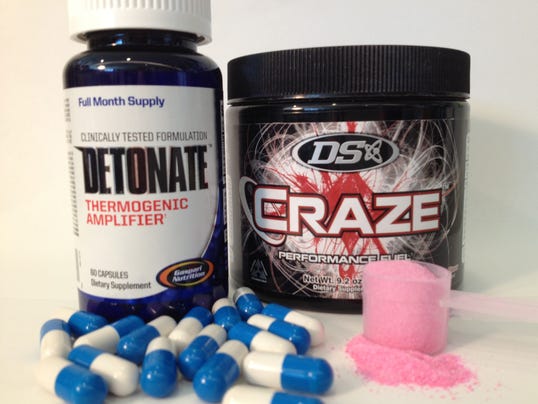
A new study found that the popular pre-workout supplement Craze contains an analog of methamphetamine, you now, crystal meth. The FDA has cracked down on them, and they have removed the product from the market - Gaspari Nutrition, a company generally thought reputable, also had a product with this substance, and they have also removed it from the shelves.

Here is the summary of the research study from Medical News Today, followed by an article from USA Today about this whole mess.
Full Citation:
Pieter A. Cohen, John C. Travis, Bastiaan J. Venhuis. (2013, Oct 14), A methamphetamine analog (N,α-diethyl-phenylethylamine) identified in a mainstream dietary supplement. Drug Testing and Analysis: Article first published online: 14 OCT 2013 - DOI: 10.1002/dta.1578
Here is the USA Today article:
Now there are supplements for everything - pre-workout, poist-workout, A.M, P.M., fat loss, energy, focus, better pumps, test boosters, anti-estrogens, and an assortment of proteins, creatine mixtures, and other crap.
One of the areas that has exploded in recent years is the pre-workout segment of the market. Back 15 years, it was common to take 20 mg ephedra, 200 mg caffeine, and 200 mg of aspirin (the ECA stack), but when the FDA banned ephedra because a handful of idiots took 3 or 4 times the recommended dosage and did not eat, then had heart attacks or fainted, the market blew up with companies trying to concoct an equally effective supplement.
During this same period, several companies promoting testosterone boosting supplements got nailed when athletes using the products failed drug tests for anabolic steroids. No wonder they worked!
The practice among the shady companies was to come out with a new product making extraordinary claims - claims any close look at the ingredients listed on the label could not support. Yet users would post rave reviews on message boards about gaining 10 lbs of muscle in just two weeks or losing 4% bodyfat in a week, or whatever. And they did - because the supplement contained banned substances. Once the hype had built around the product, the manufacturer could remove the illegal substances before the FDA caught on and still sell tons of the product to undiscerning people who believed the hype. [T-Nation did an excellent story on this back in the day.]
Turns out the practice is still occurring, with a slight tweak. Now they avoid the actually illegal substances but instead they include analogs, substances that are chemically similar but are not listed as illegal yet (this is especially true in the pro-hormone market, where many products can be found online that are actual steroids, but are not on the controlled substances lists).
A new study found that the popular pre-workout supplement Craze contains an analog of methamphetamine, you now, crystal meth. The FDA has cracked down on them, and they have removed the product from the market - Gaspari Nutrition, a company generally thought reputable, also had a product with this substance, and they have also removed it from the shelves.
Here is the summary of the research study from Medical News Today, followed by an article from USA Today about this whole mess.
Muscles and meth: Drug analog identified in 'Craze' workout supplement
An international team of scientists have identified potentially dangerous amounts of methamphetamine analog in the workout supplement Craze, a product widely sold across the U.S. and online. The study, published in Drug Testing and Analysis, was prompted by a spate of failed athletic drug tests. The results reveal the presence of methamphetamine analog N,α- DEPEA, which has not been safely tested for human consumption, in three samples.
"In recent years banned and untested drugs have been found in hundreds of dietary supplements. We began our study of Craze after several athletes failed urine drug tests because of a new methamphetamine analog," said lead author Dr. Pieter Cohen, of Harvard Medical School, U.S.A.
A workout supplement marketed as a 'performance fuel', Craze is manufactured by Driven Sports, Inc., and is sold in stores across the United States and internationally via body supplement websites.
The supplement is labeled as containing the compound N,N-diethyl-phenylethylamine (N,N-DEPEA), claiming it is derived from endangered dendrobium orchids. However, while there is no proof that this compound is found within orchids, it is also structurally similar to the methamphetamine analog N,α-diethylphenylethylamine (N,α-DEPEA), a banned substance.
The team analyzed three samples of Craze for traces of N,α-DEPEA. The first sample was brought from a mainstream retailer in the U.S., while the second and third samples were ordered from online retailers in the U.S. and Holland.
The team used ultra-high performance liquid chromatography to detect the presence of N,α-DEPEA. The first two samples were analyzed by NSF International, while the third was tested at the Netherland's National Institute for Public Health. The findings were independently corroborated by the Korean Forensic Service, which confirmed the presence of N,α-DEPEA in two further samples of Craze in a parallel investigation.
"We identified a potentially dangerous designer drug in three separate samples of this widely available dietary supplement," said Cohen. "The tests revealed quantities of N,α-DEPEA of over 20mg per serving, which strongly suggests that this is not an accidental contamination from the manufacturing process."
As a structural analog of methamphetamine, N,α-DEPEA , may have stimulant and addictive qualities; however, it has never been studied in humans and its adverse effects remain unknown.
The product labeling claims that Craze contains several organic compounds, known as phenylethylamines. However, phenylethylamines are a very broad category of chemicals which range from harmless compounds found in chocolate to synthetically produced illegal drugs.
"The phenylethylamine we identified in Craze, N,α-DEPEA, is not listed on the labeling and it has not been previously identified as a derivative of dendrobium orchids," said Cohen.
"If these findings are confirmed by regulatory authorities, the FDA (The U.S. Food and Drug Administration) must take action to warn consumers and to remove supplements containing N,α-DEPEA from sale," concluded Cohen. "Our fear is that the federal shutdown may delay this, resulting in potentially dangerous supplements remaining widely available."
Full Citation:
Pieter A. Cohen, John C. Travis, Bastiaan J. Venhuis. (2013, Oct 14), A methamphetamine analog (N,α-diethyl-phenylethylamine) identified in a mainstream dietary supplement. Drug Testing and Analysis: Article first published online: 14 OCT 2013 - DOI: 10.1002/dta.1578
Here is the USA Today article:
Maker of Craze suspends production of sports supplement
Alison Young, USA TODAY, October 15, 2013
Driven Sports, maker of the pre-workout supplement Craze, announced Tuesday that it has suspended all production and sales of the product in the wake of tests finding amphetamine-like ingredients.
(Photo: Alison Young, USA TODAY)
Story Highlights
The maker of the popular sports supplement Craze, which scientists say contains a methamphetamine-like compound, revealed Tuesday that it has suspended all production and sales of the product.
- Driven Sports says it stopped production of Craze "several months" ago after media reports
- A USA TODAY investigation in July reported that tests had found amphetamine-like compounds in Craze
- Two scientific journal articles have recently identified a methamphetamine-like compound in Craze
- FDA and DEA officials could not be reached for comment because of the government shutdown
Driven Sports, which has declined USA TODAY's repeated interview requests, posted a statement on its website disclosing that the New York-based company suspended production "several months ago while it investigated the reports in the media regarding the safety of Craze."
In July, a USA TODAY investigation revealed that a top Driven Sports official, Matt Cahill, is a convicted felon who has a history of putting risky products on the market and that tests of Craze by the U.S. Anti-Doping Agency and a lab in Sweden had found amphetamine-like compounds in the pre-workout powder.
On Monday, a team of scientists from the U.S. and the Netherlands published an article in the peer-reviewed scientific journal Drug Testing and Analysis saying they had identified an analog — or chemical cousin — of methamphetamine in samples of Craze. They warned that the chemical has never been studied in humans, that the health risks are unknown and that it is not disclosed on Craze's label.
Driven Sports says that its own studies continue to show Craze is safe "when used responsibly" and that tests it has commissioned "have consistently indicated that Craze does not contain amphetamines or controlled substances." It added "the confidence of our retailers to sell the product and our consumers to buy the product is our primary concern so we will continue the suspension of the production and sale of Craze for the foreseeable future until these issues are resolved."
Walmart.com, Bodybuilding.com and some other online retailers stopped selling Craze earlier this summer in the wake of the USA TODAY investigation, but tubs of the pre-workout powder continued to be available for purchase elsewhere online and in GNC stores. Recently, the product was no longer available on GNC.com and Driven Sports' own website listed Craze as out of stock.
GNC officials have declined to be interviewed. In a statement the retailer said: "With third party products, GNC is simply the retailer and, like all retailers, relies upon the representations and contractual warranties made by the vendor that the products are safe and compliant with all applicable laws and regulations."
In a related development this week, NSF International announced that in separate testing they found the same meth-like compound in the weight-loss supplement Detonate, which is marketed by Gaspari Nutrition. NSF International is a Michigan-based testing organization; one of its scientists co-authored Monday's journal article about Craze.
Gaspari Nutrition officials did not respond to interview requests and as of Tuesday night had removed Detonate from its website's list of products. Detonate was still listed on Gaspari's website as of Oct. 10, according to a version of the page archived by Google that day. Detonate remains available for sale online and in some stores. USA TODAY was able to purchase a bottle of Detonate on Tuesday at a Vitamin Shoppe store in Sterling, Va., but found several GNC and Vitamin Shoppe stores in the Virginia suburbs of Washington, D.C. did not have it in stock.
Driven Sports says it believes that the independent labs and scientists who have found amphetamine-like and methamphetamine-like compounds in Craze may have made a mistake in their tests. Craze's label says it contains dendrobium orchid extract, which the company says has naturally occurring phenylethylamine compounds. The statement says that these other scientists' tests may be mistaking the natural compound for amphetamine-like substances.
Driven Sports says its labs' tests indicate the presence of "n-beta DEPEA" in Craze" and that this compound is "a related but very different substance" from the n,alpha DEPEA identified in Monday's journal article. The company said it is "very difficult to distinguish these two substances unless you know precisely what you are looking for and are using the proper test methodology."
In an e-mailed statement, the journal article's authors said that "their argument holds no merit" and that Driven Sports is "just throwing out new chemical names to try to confuse." The authors said that n-beta DEPEA is "a completely different molecule" and that the differences in the molecule would have made them act differently on two of the three tests they ran.
"We stand 100% behind our results," said the research team: Pieter Cohen of Harvard Medical School; John Travis, a scientist at NSF International; and Bastiaan Venhuis of the National Institute for Public Health and the Environment in the Netherlands.
Another team of scientists based in South Korea found the same methamphetamine-like substance when they tested other samples of Craze. Their findings were published in a forensic toxicology journal in August.
Neither the Food and Drug Administration nor the Drug Enforcement Administration could be reached for comment because of the federal government shutdown.
Amy Eichner, a special advisor on supplements at the U.S. Anti-Doping Agency, noted that both Craze and Detonate have been listed on the nonprofit organization's "high risk" supplement list. "There needs to be a serious examination of the current regulations of supplements," she said, "and changes must be made in order for the FDA to have the necessary tools to effectively regulate the supplement industry."
Although dietary supplements -- such as vitamins, minerals and herbal pills -- are often marketed as health remedies, the FDA does not have the authority to require pre-market testing for safety or effectiveness as it does with medications. Supplement industry officials have said that greater enforcement, not new regulations, are what is needed to address problem products and makers.
Driven Sports and Gaspari Nutrition, the companies marketing Craze and Detonate, are both members of the American Herbal Products Association. The association did not respond to questions or an interview request from USA TODAY about the findings of meth-like compounds in the companies' products.
Saturday, October 5, 2013
Documentary - Cycling’s Greatest Fraud (Lance Armstrong)
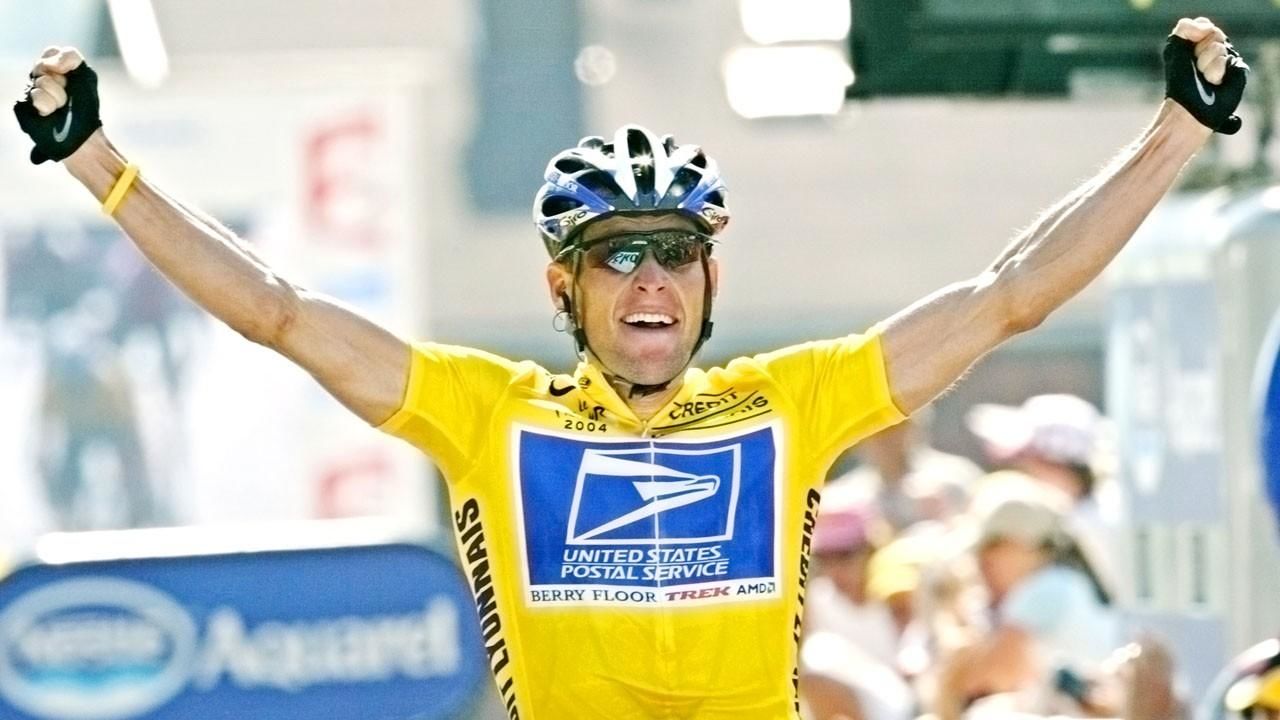
Blood transfusions. Steroids. EPO. Injections. Deceptions. National Geographic Channel goes inside the science and scheming of Lance Armstrong’s legendary fall from grace.
Armstrong's rise and fall provides a lesson in how greed, hubris, and self-righteousness - not to mention self-deception - can destroy even the most talented of people. Armstrong was (and is) a rare genetic specimen whose body seems designed for endurance sports like cycling or running. Even as a teen, he was destined to be a great athlete.
But greatness was not enough - he had to be the best whoever rode a bike (although no one will ever surpass Eddie Merckx). So he began the most organized and successful doping program ever seen in professional sports (outside of bodybuilding). The best and most honest account of this I have seen so far is Tyler Hamilton's The Secret Race: Inside the Hidden World of the Tour de France (winner of the William Hill Sports Book of the Year).
Cycling’s Greatest Fraud
This one-hour special dissects the story of the science and scheming behind what’s been called “the most sophisticated and successful doping scheme in all of sports”.
Piece together eyewitness testimonies and delve into the illicit science to discover how the USADA says the doping plot began and then mushroomed in its complexity.
With new interviews from key members of his inner circle, see how Armstrong went to great lengths to protect his secret and his legacy, by using all the powers at his command to silence and attack critics, while assuring the public that his blood was as clean as his public image.
But, in the end, his empire collapsed, as the scheming unravelled and the science finally caught up with Armstrong.
Saturday, February 16, 2013
Lance Armstrong Admits Drug Use, Plans Return To Cycling As Flamboyant, Fan-Hating Villain

With his 'golden boy' image tarnished, Lance Armstrong has returned to cycling as radical bad boy 'Killstrong.'
Friday, January 18, 2013
My Perspective on Lance Armstrong's Oprah Confession - It's Not About the Drugs . . . .

I have not seen the whole broadcast, but I have read enough (and know enough of the background) to have a well-informed opinion. Having been a serious cycling fan since Greg LeMond was winning his three Tours de France, I had little doubt about the use of performance enhancing drugs (PEDs) in cycling, especially after the Festina Affair in 1998.
Here is what I wrote in a status update earlier today on Facebook (edited and greatly expanded):
* * * * * * *
The legendary Eddy Merckx was a 5-time Tour de France winner, 5-time Giro d'Italia winner, 1-time winner of the Vuelta a Espana, and he won the Giro and the Tour back-to-back three times. Merckx is widely considered by most cycling fans the greatest rider of all time. When Merckx was dominating the sport (the myth is that when other riders saw Merckx line up at the start of a race, they all knew they were racing for 2nd place), no one questioned his brilliance, his training, his will to win.
The only differences between now-disgraced Lance Armstrong (7-time winner of the Tour de France, no matter what the records say) and Merckx is that there was no EPO to use in the early 1970s, but amphetamines and anabolic steroids (testosterone and its variations) were legal . . . and crucially, there was no drug testing.
If you look at the way Merckx dominated the sport and made other great riders like look like weekend enthusiasts, the likelihood that he did not use PEDs is pretty slim. In his best year (1971), Merckx won almost every other race he rode. Merckx won the equivalent of a race a week for six years [The Independent, Friday 6th July, 2007.]
This list shows his wins as a percentage of races started - look at how often he won in 1970-1973:
If you look at the way Merckx dominated the sport and made other great riders like look like weekend enthusiasts, the likelihood that he did not use PEDs is pretty slim. In his best year (1971), Merckx won almost every other race he rode. Merckx won the equivalent of a race a week for six years [The Independent, Friday 6th July, 2007.]
This list shows his wins as a percentage of races started - look at how often he won in 1970-1973:
- 1966: 21%
- 1967: 23%
- 1968: 24%
- 1969: 33%
- 1970: 37%
- 1971: 45%
- 1972: 39%
- 1973: 37%
- 1974: 27%
- 1975: 25%
No mater how great Merckx was - and he was the best rider ever - these numbers are at best suspicious. The difference between him and Lance is that Lance dominated the Tour in an era when PEDs were not only illegal, but were the source of many scandals. In 1998, the year he returned to the Tour after his battle with testicular cancer (and the year before Lance's first victory), the Festina Affair ripped the drug scene in cycling wide open. Here is a brief summary from Wikipedia:
The Festina Affair refers to the events that surrounded several doping scandals, doping investigations and confessions by riders to doping that occurred during and after the 1998 Tour de France. The affair began when a large haul of doping products was found in a car of the Festina cycling team just before the start of the race. An investigation was followed by the opening of a separate case into the TVM team and the subsequent searching of many teams during the race. The investigation revealed systematic doping, and suspicion was raised that there may have been a widespread network of doping involving many teams of the Tour de France. Publicity on the case was constant and negative. Hotels were searched by police, and a spate of confessions were made by retired and current riders. Many team personnel were arrested or detained, and protests were made by riders in the race. Several teams withdrew from the race.
When Lance says he chose to use PEDs because that is what it took to be competitive and win races, this is the environment to which he is referring. To me, Lance is the greatest rider in a generation of riders who were using PEDs. If drugs are simply another technology (and they are, which is why I believe they should be legal), like having better bikes, better wheels, better aero helmets, and better training techniques, then Lance had better drugs and applied their use more effectively.
For me, it's not about the drugs . . . .
For me, it's not about the drugs . . . .
What bothers me is that he lied about it, and not just lied, but actively sought to destroy anyone who might reveal his truth to the world. Men who willingly place themselves as role models have an obligation to at the very least be honest and demonstrate some integrity. In 1997, the year he returned to competitive cycling, he founded the Lance Armstrong Foundation, which later became the Livestrong Foundation. Lance wanted to be a role model - he spoke about his miraculous recovery, the great story of a hero overcoming imminent death to win one of the toughest sporting events on the planet, and then do it 6 more times.
However, the real issue to me is the way Lance bullied and intimidated other riders who spoke out about drugs, and especially those who spoke against him. In 1999, the first of Lance's 7 victories, Christophe Bassons (the only Festina rider from 1998 who rode clean) wrote some articles about the Tour and about doping, suggesting that the speeds were suspicious and that he believed little had changed. He paid a heavy price for those words, with Lance dealing the hardest blow:
The peloton began to turn against him, refusing to speak to him, and otherwise shunning him.[3]
Stage 10 occurred on July 14 and was from Sestrieres to Alpe d'Huez. Bassons would later tell the story of this stage to media, including an October 2012 interview with the BBC. He said that nobody had been talking to him. The entire peloton planned to ride slow for the first 100 km without telling him. Bassons only heard about this because a mechanic from his team told him. Bassons decided he was "fed up" and decided to ride ahead of the others ("attacked from the start"). As they came to a flat spot, "all of the teams rode together to close me down". As the teams rode by him, they looked at him.[3]
" . . . and then Lance Armstrong reached me. He grabbed me by the shoulder, because he knew that everyone would be watching, and he knew that at that moment, he could show everyone that he was the boss. He stopped me, and he said what I was saying wasn't true, what I was saying was bad for cycling, that I mustn't say it, that I had no right to be a professional cyclist, that I should quit cycling, that I should quit the tour, and finished by saying [*beep*] you. . . . I was depressed for 6 months. I was crying all of the time. I was in a really bad way." - Bassons, on BBC Radio 5, 2012 10 15[3]In 2011/2012, after investigations into past doping in cycling, especially the 2012 USADA report on Armstrong's US Postal Service team, the media began to re-tell Bassons story. In one interview for the BBC, Armstrong teammate Tyler Hamilton publicly apologized for being part of the peloton that shunned him, saying that he was "100% wrong" not to talk to him. Bassons said "that's life, it's nothing. I don't begrudge Hamilton. I understand."[3]
Where I find little tolerance for Lance is not in his drug use (all but one of the 2nd and 3rd place finishers behind Lance in those Tour wins have been implicated in doping, as well). My intolerance lies in how he destroyed lives to maintain his lie, something he did not address last night.
Greg LeMond and Frankie Andreu lost their livelihood at various points because of Lance (granted, LeMond had/has his own issues that made success off the bike more difficult). After LeMond expressed concern about Armstrong's relationship with Dr. Michele Ferrari, a known supplier of doping products and protocols to cyclists, Trek Bicycles threatened to drop the LeMond line of bikes unless LeMond apologized to Lance for saying he rode dirty - LeMond claims he suffered two years of depression for giving in to this demand.
From the New York Times:
If ever there were a place where "Man Up" is the appropriate response, this would be it. Armstrong owes a lot of apologies to a lot of people, which he did say was part of his effort to come clean. But for those people most wronged by Lance, it is probably far too little and far too late.
As Shawn Phillips has mentioned in his comments on Lance, we can never know what pressures he faced and what motivations lie beneath the surface in his life (including his calculated, detached, and minimal admission of doping on Oprah's couch, not with a sports reporter or cycling magazine). It's hard to judge someone when we acknowledge our own flaws and weaknesses - and while I find it difficult to accept that he should not be held, somehow, accountable for those lives he damaged, I also know that I live in a glass house. So this is where I place my stones on the ground and walk away.
Beyond the doping and the lost titles, and the money that will likely have to be returned, there is a man who has to live with himself for the next 40 or 50 years. There are deeper lessons in all of this, painful though they may be.
In the end, the races, the screaming fans, and the money mean nothing in life. What is important, however, are the relationships, the friendships, without which we are isolated and life loses its value and purpose. A man who throws friends and colleagues under the bus to protect his own lie, a lie he seems to have believed was his privilege, is a man who will die alone and lonely.
It seems Lance has not experienced this realization, yet, whereby he is willing to publicly apologize, and so sincerely, for destroying the lives of friends and teammates.
The two parties first found themselves at odds in July 2001, after LeMond expressed public concern over the relationship between Italian doping doctor Michele Ferrari and Trek's star athlete, Lance Armstrong. "When I heard he was working with Michele Ferrari, I was devastated," LeMond was quoted as saying of Armstrong. "If Lance is clean, it is the greatest comeback in the history of sports. If he isn't, it would be the greatest fraud."[108][109]
Trek's president John Burke pressured LeMond to apologize, claiming, "Greg's public comments hurt the LeMond brand and the Trek brand."[110][111] Burke allegedly justified his demand for an apology by advising that, "As a contractual partner, he [LeMond] could criticize doping only generally – not point his finger at specific athletes, particularly one that happens to be the company's main cash cow."[112]Betsy and Frankie Andreu were close friends of Armstrong - and Frankie a teammate - who were present with Lance in the hospital when he was diagnosed with testicular cancer. During this revelation, the Andreus contend the overheard Lance admit to using EPO, steroids, and other banned substances.
From the New York Times:
The Andreus claim that they overheard two doctors in an Indianapolis hospital room in 1996 ask Armstrong if he had ever used performance-enhancing drugs. They said Armstrong, who was battling cancer then, rattled off: testosterone, EPO, growth hormone, cortisone, and steroids.
But for years, Armstrong vehemently criticized them for their claims, saying they made up the story because they were jealous and vindictive, and that Betsy Andreu hated him.
Yet when Armstrong told Winfrey in an interview that aired Thursday that he had doped throughout most of his cycling career, he failed to say that the Andreus’ hospital room story was true.
“I’m not going to take that on,” he said when Winfrey asked about it. “I’m laying down on that one.”He has not apologized or made any amends to them for his public assertions of their dishonesty and his use of the legal system to silence them. After the first segment of Lance's apology concluded, Betsy Andreu appeared on CNN with Anderson Cooper - she seemed clearly pained that Lance evaded the question and did not issue an apology:
She was not waiting for his doping confession. She was waiting for Armstrong to announce that she and her husband, Frankie, were not liars when they said Armstrong in 1996 had admitted to doping.
But the acknowledgment that Betsy Andreu had long anticipated never came.
“He owed it to me,” Betsy Andreu, on the verge of tears, said Thursday night on CNN’s Anderson Cooper 360. “You owed it to me, Lance, and you dropped the ball. After what you’ve done to me and what you’ve done to my family, and you couldn’t own up to it? Now we’re supposed to believe you? You had one chance at the truth, and this was it.”
If ever there were a place where "Man Up" is the appropriate response, this would be it. Armstrong owes a lot of apologies to a lot of people, which he did say was part of his effort to come clean. But for those people most wronged by Lance, it is probably far too little and far too late.
* * * * * * *
As Shawn Phillips has mentioned in his comments on Lance, we can never know what pressures he faced and what motivations lie beneath the surface in his life (including his calculated, detached, and minimal admission of doping on Oprah's couch, not with a sports reporter or cycling magazine). It's hard to judge someone when we acknowledge our own flaws and weaknesses - and while I find it difficult to accept that he should not be held, somehow, accountable for those lives he damaged, I also know that I live in a glass house. So this is where I place my stones on the ground and walk away.
* * * * * * *
Beyond the doping and the lost titles, and the money that will likely have to be returned, there is a man who has to live with himself for the next 40 or 50 years. There are deeper lessons in all of this, painful though they may be.
In the end, the races, the screaming fans, and the money mean nothing in life. What is important, however, are the relationships, the friendships, without which we are isolated and life loses its value and purpose. A man who throws friends and colleagues under the bus to protect his own lie, a lie he seems to have believed was his privilege, is a man who will die alone and lonely.
It seems Lance has not experienced this realization, yet, whereby he is willing to publicly apologize, and so sincerely, for destroying the lives of friends and teammates.
Subscribe to:
Posts (Atom)