Showing posts with label purpose. Show all posts

Wednesday, May 14, 2014

Have a Purpose, Live Much Longer

This is an interesting article from Esquire - It's short, so below it is a longer piece from the Association for Psychological Science. Below that is the abstract - the full article is hidden from public view behind a greedy pay wall.

The data for this study comes from an open access data collection project, available here and here.

Full Citation:
Hill, PL & Turiano, NA. (2014, May 8). Purpose in Life as a Predictor of Mortality Across Adulthood. Psychological Science.

Have a Purpose, Live Much Longer

It doesn't matter what it is. If you care for something other than yourself, you'll live much longer.

By Ned Hepburn on May 12, 2014


Is your passion riding a bike with a bunch of boxes on it? Good. You'll live longer. 
Unless you die in a horrible bike/box accident.
Life got you down? Can't get a handle on things? Staring into the abyss of your soul, turning frantically to whiskey, weird drugs and the dredges of society in the hopes that you'll feel something, anything? Well, first, perhaps switch to beer. Second, maybe find yourself a purpose. Because if Navin R. Johnson has a special purpose, you should, too.

Seriously. Scientists are saying that "having a purpose" in life will add years onto said life.

Six thousand people from all walks of life were part of a 14-year study. Some admitted to wandering aimlessly while others were focused and driven. Unsurprisingly, the most focused people -- the ones that had a "purpose" -- lived longer. Interestingly, 9% of the subjects died in the 14 year period and those that died had reported of having a lower purpose in life.

"Purpose" is defined here by living for something other than yourself. Be it religion, your job, a kid, your folks, family, your career, whatever -- life is better, and now longer, if you have a reason to get up in the morning.

Patrick Hill of Carleton University in Canada, who conducted the study explains:
"There are a lot of reasons to believe that being purposeful might help protect older adults more so than younger ones. For instance, adults might need a sense of direction more, after they have left the workplace and lost that source for organizing their daily events. In addition, older adults are more likely to face mortality risks than younger adults. To show that purpose predicts longer lives for younger and older adults alike is pretty interesting, and underscores the power of the construct."
Now that these scientists spent 14 years studying a concept as vague as "purpose," maybe they could be spend a year or so on a deoderant that works past lunch. Just a suggestion that might make your life even longer, scientists.
* * * * *



Having a Sense of Purpose May Add Years to Your Life

May 12, 2014  
Feeling that you have a sense of purpose in life may help you live longer, no matter what your age, according to research published in Psychological Science, a journal of the Association for Psychological Science.

The research has clear implications for promoting positive aging and adult development, says lead researcher Patrick Hill of Carleton University in Canada:

“Our findings point to the fact that finding a direction for life, and setting overarching goals for what you want to achieve can help you actually live longer, regardless of when you find your purpose,” says Hill. “So the earlier someone comes to a direction for life, the earlier these protective effects may be able to occur.”

Previous studies have suggested that finding a purpose in life lowers risk of mortality above and beyond other factors that are known to predict longevity.

But, Hill points out, almost no research examined whether the benefits of purpose vary over time, such as across different developmental periods or after important life transitions.

Hill and colleague Nicholas Turiano of the University of Rochester Medical Center decided to explore this question, taking advantage of the nationally representative data available from the Midlife in the United States (MIDUS) study.

The researchers looked at data from over 6000 participants, focusing on their self-reported purpose in life (e.g., “Some people wander aimlessly through life, but I am not one of them”) and other psychosocial variables that gauged their positive relations with others and their experience of positive and negative emotions.

Over the 14-year follow-up period represented in the MIDUS data, 569 of the participants had died (about 9% of the sample). Those who had died had reported lower purpose in life and fewer positive relations than did survivors.

Greater purpose in life consistently predicted lower mortality risk across the lifespan, showing the same benefit for younger, middle-aged, and older participants across the follow-up period.

This consistency came as a surprise to the researchers:

“There are a lot of reasons to believe that being purposeful might help protect older adults more so than younger ones,” says Hill. “For instance, adults might need a sense of direction more, after they have left the workplace and lost that source for organizing their daily events. In addition, older adults are more likely to face mortality risks than younger adults.”

“To show that purpose predicts longer lives for younger and older adults alike is pretty interesting, and underscores the power of the construct,” he explains.

Purpose had similar benefits for adults regardless of retirement status, a known mortality risk factor. And the longevity benefits of purpose in life held even after other indicators of psychological well-being, such as positive relations and positive emotions, were taken into account.

“These findings suggest that there’s something unique about finding a purpose that seems to be leading to greater longevity,” says Hill.

The researchers are currently investigating whether having a purpose might lead people to adopt healthier lifestyles, thereby boosting longevity.

Hill and Turiano are also interested in examining whether their findings hold for outcomes other than mortality.

“In so doing, we can better understand the value of finding a purpose throughout the lifespan, and whether it provides different benefits for different people,” Hill concludes.


Preparation of the manuscript was supported through funding from the National Institute of Mental Health (Grant T32-MH018911-23), and the data collection was supported by Grant P01-AG020166 from the National Institute on Aging.

* * * * *

Purpose in Life as a Predictor of Mortality Across Adulthood


Patrick L. Hill [1], Nicholas A. Turiano [2]
1. Department of Psychology, Carleton University
2. Department of Psychiatry, University of Rochester Medical Center, Rochester, New York

Abstract


Having a purpose in life has been cited consistently as an indicator of healthy aging for several reasons, including its potential for reducing mortality risk. In the current study, we sought to extend previous findings by examining whether purpose in life promotes longevity across the adult years, using data from the longitudinal Midlife in the United States (MIDUS) sample. Proportional-hazards models demonstrated that purposeful individuals lived longer than their counterparts did during the 14 years after the baseline assessment, even when controlling for other markers of psychological and affective well-being. Moreover, these longevity benefits did not appear to be conditional on the participants’ age, how long they lived during the follow-up period, or whether they had retired from the workforce. In other words, having a purpose in life appears to widely buffer against mortality risk across the adult years.

Monday, March 24, 2014

Dr. Sarah McKay - How Finding Your Purpose Protects Your Brain: A Neuroscientist Explains

Do you know what your purpose is in life? Why you are here? Is there a set of values or beliefs around which you organize.

How Finding Your Purpose Protects Your Brain: A Neuroscientist Explains

By Dr. Sarah McKay
March 23, 2014


What is your purpose in life? Your passion. Your bliss. Your calling … Whatever you call it, we’re all searching for it to some extent. Mastin Kipp’s words sum it up for me: “Your bliss and your purpose are the same thing.”

If finding your north star is an elusive task, then perhaps taking a scientific approach to defining and measuring "purpose" might work as a discovery strategy.

Patricia Boyle, a neuropsychologist who specializes in Alzheimer's research defines "purpose in life" as: “the psychological tendency to derive meaning from life’s experiences and to possess a sense of intentionality and goal directedness that guides behavior.”

To measure purpose in life, researchers from the Rush University Medical Center in Chicago asked over 900 older folks living in residential communities to rate their level of agreement from 1 to 5, to each of the following statements:
  • I feel good when I think of what I have done in the past and what I hope to do in the future.
  • I live life one day at a time and do not really think about the future.
  • I tend to focus on the present because the future nearly always brings me problems.
  • I have a sense of direction and purpose in life.
  • My daily activities often seem trivial and unimportant to me.
  • I used to set goals for myself, but that now seems like a waste of time.
  • I enjoy making plans for the future and working them to a reality.
  • I am an active person in carrying out the plans I set for myself.
  • Some people wander aimlessly through life, but I am not one of them.
  • I sometimes feel as if I have done all there is to do in life.
The researchers found that a high purpose in life score was linked to many positive health outcomes including:
  • Better mental health
  • Less depression
  • Happiness
  • Satisfaction
  • Personal growth, self-acceptance
  • Better sleep
  • Longevity
Startlingly, in the seven years of the study, 155 of 951 people developed Alzheimer’s disease. A more detailed analysis showed that those folks with high purpose in life scores had:
  • Reduced risk of Alzheimer’s disease
  • Less mild cognitive impairment
  • Slower rate of cognitive decline in old age
Explaining her findings to Science Daily, Patricia Boyle explained: "Somehow, having a purpose allows people to cope with the physical signs of Alzheimer's disease."

So what might be is the biological basis linking purpose and passion with brain health?

The researchers in this study weren’t 100% sure, but neuroscience tells us that a lack of purpose in life is associated with the follower indicators of poor health:
  • High levels of the stress hormone cortisol
  • Markers of inflammation
  • Low high-density lipoprotein cholesterol levels (the "good" cholesterol)
  • Abdominal fat
We know these factors probably combine to diminish the brain’s resilience to degeneration and aging. Brain resilience is also referred to as "brain reserve"—its ability to cope with increasing damage while still functioning adequately. So, if you’re still searching, neuroscience might just be able provide some pretty compelling evidence about why you should foster your purpose and passions. And maybe thinking about the questions posed to the older folks might just guide you to your north star.

If you're totally lost when it comes to your purpose, this piece may offer some pointers.

Photo Credit: Shutterstock.com

Sunday, August 25, 2013

Discussing Purpose in Life with Very Old Men (80+ Years Old)


As part of the Umeå 85+ study in the north of Sweden, which focused on the health and outlook of the very old, researches combed the data to try to understand how older men look at purpose in life. From the original sample, twenty-three men who were administered the purpose in life (PIL) scale narrated about their meaning or purpose in life. Eight of the participants were 85 years old, ten were 90 years old, and five were 95 years of age or older.
The participants talked about purpose in life from various perspectives, which were categorized into three main discourses: 1) Talking of purpose of life in general, including the categories work, struggle, forming a family, and confidence, 2) Talking of own purpose in life, including the categories happiness, adaptation, and looking forward, and 3) Reflecting on purpose in life including the categories limited meaning, health, an honorable life, and the ability to face death.
This is an interesting study.

I'm not sure I want to live to be 90 or older*, but it feels like a good thought exercise to imagine myself at that age and looking back on what I felt to be the meaning or purpose in my life.

I do not have a family and never wanted children. Generally I have sought work I can enjoy rather than work that makes me a lot of money. And unlike these men, the idea of an honorable life has never occurred to me. From this alone, my reflections will be different than many of these men, and rightfully so since I half their age.

[* Unless I am still healthy in body and mind.]

Full Citation:
Hedberg, P. , Gustafson, Y. , Brulin, C. and Aléx, L. (2013). Purpose in life among very old men. Advances in Aging Research, 2(3), 100-105. doi: 10.4236/aar.2013.23014

Purpose in life among very old men


Pia Hedberg, Yngve Gustafson, Christine Brulin, and Lena Aléx

Copyright © 2013 Pia Hedberg et al. This is an open access article distributed under the Creative Commons Attribution License, which permits unrestricted use, distribution, and reproduction in any medium, provided the original work is properly cited.

ABSTRACT

This paper provides very old men’s experiences of and reflections on purpose in life. The answers from an interview question about purpose in life from 23 men were analyzed by using qualitative content analysis. The results revealed three content areas: talking of purpose of life in general, talking of own purpose in life and reflections on purpose in life. Our findings showed that very old men experienced purpose in life most strongly when remembering the past and describing their earlier work. The old men reflected on purpose in life not just from their own individual perspectives, but also from a more reflective and analytic perspective.

1. INTRODUCTION

This study is part of the Umeå 85+ study in the north of Sweden, which focuses on health and outlook on life in the very old. The research in the Umeå 85+ study has resulted in several theses e.g. [1-5] describing the very old from various perspectives—both the good aging and the threats against the good aging. The intent of this study was to describe how very old men experience and reflect on purpose in life. In the first part of the 20th century, men and women lived mainly in separate spheres; being a man in Sweden was characterized by being the breadwinner of the family, while being a woman was characterized by taking care of the children and the household [6]. Hirdman [7] pointed out that in Swedish society men have usually been seen as the norm and have been more highly valued than women. Her theory, however, was grounded on men and women who still active in society. Research into various life experiences among older men is lacking. Courtney [8] has found that old men do not fully use the physical and mental health services available for their physical and mental health needs, nor do they seek medical help as often as women. Courtenay [9] also suggests that men commonly suffer in silence, deal with their problems alone, and may refuse to seek medical help because their ideas about normative masculinity demand an appropriately stoic behavior from a man. However, gender researchers have pointed out that there is more than one masculinity, and these various masculinities can be constructed in different ways depending on historical and societal circumstances [10,11].

Knodel and Ofstedal [12] argue that old men are made invisible in research about old people and that it is necessary to focus on this group. Calasanti and King [13] suggest that old men struggle not only against society’s attitudes toward very old people, but also against society no longer seeing them as men, as age quickly overshadows gender in how they are viewed. Because old men tend both to keep silent about their needs and to be overlooked by society, it is important that their lives and perceptions be further researched.

The very old age group in Sweden is increasing, and the average life expectancy for men at birth in Sweden is now 78.4 years [14]. Research on purpose in life in the elderly has been carried out in various ways. For example Pinquart [15] found that having a high quantity and quality of social contacts are associated with higher purpose in life among older people.

Earlier research has shown that men aged over 75 years who live alone were more isolated than women and had less developed social networks compared to women in the same age [16,17]. Davidson et al. [17] showed that old men in day centers are not involved in social organizations to the same extent as older women. Because social contacts have been shown to be associated with purpose in life and old men live more isolated lives, we were interested in studying old men’s experiences of purpose in life.

Purpose or meaning in life is a psychological construct that refers to people’s ability to find meaning in their life experiences and their everyday situations [18]. Frankl [18] posited the will to find meaning as the primary driving force for all human beings. Failure to find meaning in life, he wrote, produces negative psychological effects, especially feelings of boredom and emptiness, described as an existential vacuum [19].

Several cross-sectional studies of purpose in life in middle-aged men focus on the association between purpose in life and various health problems that men may live with, for example HIV [20,21], recovery from knee surgery [22], and spinal cord injury [23]. An earlier study within the Umeå 85+ study focused on purpose in life among very old women [24], but as far as we know no study has yet described experiences of purpose in life among very old men.

Research in purpose in life in very old men is very sparse and should be further investigated. The aim of this study, therefore, is to illuminate very old men’s experiences of and reflections on purpose in life.

2. METHOD

This study was performed in the years 2000 and 2002 and included people living in a medium-sized town and surrounding rural areas in a county in northern Sweden. As part of the Umeå 85+ project [1,2], invitation to participate was extended to all individuals aged 95 or over, all individuals aged 90, and every second individual aged 85. The inclusion criteria were age, being able to answer Likert-type questionnaires, and having the strength to participate in interviews. The participants were assured confidentiality and anonymity in the presentation of the results, and they were assured they could withdraw from the study without having to give a reason. The study was approved by the Ethics Committee of the Medical Faculty, Umeå University (Um dnr 99-326, 00-171).

2.1. Participants

Of the 69 men who had answered the purpose in life (PIL) scale [24], 51 were interviewed about various aspects of their experiences of becoming and being very old. These interviews were tape-recorded and transcribed verbatim. In the first step of the selection of the text, all the text containing various aspects of their lives, such as experiences of aging, difficult and positive life events, and PIL from 30 interviews (10 interviews from those measuring highest and 10 from those measuring lowest and 10 from those who had estimated themselves as average of the PIL scale) was analyzed. After this first analysis of all the text only the text from the specific questions about PIL was chosen for analysis. Twenty-three men out of 30 had narrated about their meaning of purpose in life and these narratives were included in this study. Eight of the participants were 85 years old, ten were 90 years old, and five were 95 years of age or older. A majority of the men lived alone (n = 18), five lived in an institution, ten were independent in activities in daily life (ADL), two had impaired reading vision, and ten of the men had impaired hearing. None of the men included in the study was diagnosed as depressed.

2.2. Data Collection

The participants were informed about the study and invited to take part by letter and by telephone. Initially, the participants answered a number of questionnaires, including the Purpose in Life test [25]. On a second occasion specific to this study, about one week later, narrative interviews were performed at the participants’ homes. The interviews lasted between 30 and 90 minutes each and were conducted by two men and five women, all nurse researchers belonging to the same research team. In this study, we focus on answers from the specific questions asked about purpose in life.

2.3. Analysis

The interviews were analyzed using qualitative content analysis a method useful in analysis of person’s experiences, reflections, and attitudes as described by [26- 28]. In the first step all the text about PIL was read through by two of the authors to obtain an overall picture of how purpose in life was narrated. The interviews were divided into “meaning units” (sentences and fragments with latent meanings), codes, and categories, and sorted into three content areas. Thereafter we looked for discourses about the way PIL was being addressed and “talked” about. The analysis was performed separately by two of the authors and discussed in depth by two of the authors until consensus was reached. To confirm the results, the categories and the found discourses (as shown in Table 1) were discussed and reflected upon several times by all the authors. The results are presented in three content areas with underlying categories illustrated by quotations.

3. RESULTS

The participants talked about purpose in life from various perspectives, which were categorized into three main discourses: 1) Talking of purpose of life in general, including the categories work, struggle, forming a family, and confidence, 2) Talking of own purpose in life, including the categories happiness, adaptation, and looking forward, and 3) Reflecting on purpose in life including the categories limited meaning, health, an honorable life, and the ability to face death.

3.1. Talking of Purpose of Life in General


Table 1. Content areas and categories.
Work was stressed as an important source of purpose for men who had worked hard earlier in life, whose work had dominated their lives, and who described themselves as “workaholics.” Work building their own homes was very important to their experiences of purpose in life, as were feelings of self-respect and personal worth from their previous work: “Purpose in life is primarily work. I had a fantastic job and I was keen to manage my job well.” The men had experienced hard times and lack of resources, and their earlier lives were described as dominated by hard work.

Struggle was expressed in terms of the struggle for money, and this struggle gave the very old generation strength and purpose. “In my childhood there was never 25 cents left, and that was of course a hard time.” While they were proud of their earlier struggles, the old men felt that younger people did not respect or appreciate the older generation’s hard work to survive. Some thought that people today made too much money for too little effort compared with the old days when it was much harder to earn a living.

Forming a family was also a main purpose in life— both living with a loving wife and feeling that the marriage had been totally perfect without any disputes. One man’s purpose in life was expressed in terms of the joy of having married, settled down, and “created a family.”

One man said: “I met my lovely wife, and we have had it very nice together and got very nice children and grandchildren, so it has always been positive.” Having children and grandchildren was stressed as important for purpose in life. One man talked about how taking care of his grandchild for long periods contributed to his having a purpose in life.

To have confidence in relation to other people, society, and a higher power were stressed as important for experiencing purpose in life as a whole. The confidence in God was expressed as the ability during life to rely on God and place everything in God’s hands. To have confidence and rely on God made both daily news and the reality of death understandable, as one man said: “When I read the newspaper and see all the obituaries, I feel confident that there is a higher power, and this faith gives me strength.”

3.2. Talking of Own Purpose in Life

Experiencing purpose in life was also described as being happy in everyday life and thinking positively in every situation. Making the most of one’s day was expressed as a purposeful act: “I see the positive in every day, and tomorrow is a new day.” Finding joy in everyday situations and taking each day as it comes were important for purpose in life: “I take the day as it comes. I never dig myself into things. I always see things from the bright side. I go to the shop and talk to people.”

Being able to adapt to bodily changes, to continue to feel satisfied in life despite functional decline, and maintaining everyday activities were also mentioned as contributing to purpose in life: “For me, purpose in life is being able to get up in the morning and get dressed. That is worth a great deal. If you can’t do that and you just lay in bed, there would be no purpose in life at all.” Adaption was described by one man who expressed relief about knowing that he would soon move into an apartment in a block with services for the elderly and not have to worry about his daily shopping anymore.

Continuing with hobbies was also stressed as giving purpose in life: “I went fishing this spring in the river, and I got seven large graylings, and I have fish left in the freezer. I have always had this as a hobby.” Looking forward, continuing with life, and making plans for the future despite very old age were important. One man’s plans for the summer and for the future were especially ambitious: “I have very clear goals and purpose; I have announced that I will plant six acres of forest.” Maintaining interest in life and what is happening in the world and looking ahead contributed to meaningfulness. Despite the fact that some of the men were prevented by disability from continuing to work outside the home, it was still important to feel that they could do their duty to make life meaningful: “I have to fill in my income-tax return and do my duty.”

3.3. Reflection on Purpose in Life

Reflections on purpose in life included questioning whether there was a purpose in life at all, feelings of complete boredom, and the sense that every day was exactly the same as the day before. The view that purpose in life was limited was expressed assertions that all humans were totally bound by heredity and environment and was therefore powerless to do or say anything to change that fact. “Well, you see, I have in fact given up on everything.”

Reflecting on purpose in life in relation to their physical abilities, the men talked about their treatment by other people who see them as no longer physically capable. “Since I retired, it is like I have to break in to get my voice heard in a conversation.” Within this category they stressed the importance of being healthy, both for themselves and for their families.

Living an honorable life, being good to others, knowing they had done their best and been decent were important to feeling purpose in life: “Just to live decently, you don’t need to live like a king.” Some men said it was important to “love your neighbor as you love yourself.” Living an exciting and challenging life was also seen to contribute to purpose in life. One man talked about his experiences of traveling around the world and seeing different things as an old man; however, he wondered whether traveling could be the purpose in life, or whether it was just something fun or pleasurable to do. “It was nice to travel, but I’m not really sure if this is really the meaning, because before we had those opportunities to travel, there was also meaning in life.” The narratives indicated that the men experienced more purpose in life when they were younger. “When I was younger I wanted so much. I wanted to go forward, so I think purpose in life was greater then.” The men reflected on why people are born, work all their life, and then die, and what might happen after death. Their reflections upon death were told without any fear and with acceptance that there was nothing they could do to avoid it. “You have to face death when it comes.”

4. DISCUSSION

The aim of the study was to illuminate very old men’s experiences of and reflections on purpose in life. The results revealed three content areas: purpose of life as a whole; purpose in everyday life; and reflections on purpose in life. The joy of work was prominent in almost all of the narratives and pride in previous work was stressed as important to purpose in life. From the historical perspective, in the first part of the 19th century “being a man” entailed being the provider and usually the sole financial support for the household [6]. These men’s emphasis on their own physical hard work as important for purpose in life can be seen in light of Connell’s [29] (1995) theory of hegemonic masculinity, which is the masculinity that is the most valued in a specific historical society and requires all men to position themselves in relation to it [10]. Men’s emphasis on the importance of work in this study was probably influenced by the importance of the traditional role requirement of a man to be a strong man. The men had also experienced poverty as children, and their lives were characterized by that hard work was a possibility to increase their economic status.

The men told with pride how they had built their own houses and created their homes. Russell [30] reported that older men and women discuss the meaning of home differently. Men attribute their feelings for home in terms of building and renovating their physical houses, which they see as identical to forming the home. The meaning of home for women, on the other hand, is deeply connected to their personal identities: women see the home as both an extension of themselves and the place where they should be [30].

The men described their ability to adapt as important to their ability to experience purpose in life. Men who belonged to the oldest old spoke of adapting in terms of the importance of being able to get up and get dressed. Baltes and Baltes [31] have constructed a model of successful aging called selective optimization with compensation (SOC). The SOC model builds on the assumption that throughout life people have both opportunities and limitations, including illnesses that can be managed or mastered by using a combination of the three components of the model: selection, optimization, and compensation [31]. Freud and Baltes [32] found that people who used SOC life-management behaviors such as compensation were more satisfied in life. Reflecting on past achievements to reconnect to associated self-respect and personal worth is one way older people may independently, or with use of the SOC model use as a strategic model for maintaining purpose in life.

Our study showed that the oldest old men experienced and reflected over purpose in life which can be seen as a contradiction to other descriptions of belonging to the oldest old as for instance in Ferrucci et al., [33] who describe that very old people just tend to be described as a homogenous group with functional decline and high consumption of health care resources. Calasanti and King [13] have reflected over how old men are described in media. They argued that a more refined form of agism is an attempt to portray old men in a more positive light by setting up middle-aged men as the standard of virility and health. Doing so the description of being a man seems not be congruent with being old in reality. Green [34] argued that views on very old men are focused on the predominant effort to understand men’s aging bodies and health problems, in particular their medical problems. He means that it t is vitally important that very old men are seen as a heterogeneous group with various levels of strength and abilities instead of a homogeneous group defined by frailty [34]. Our study shows that in spite of their very old age, the oldest old men do experienced purpose in life.

Our study shows the importance of having hobbies and making future plans in maintaining purpose in life. Being healthy was stressed as important for purpose in life. Healthy aging is a complex process of adapting to physical, psychological, and social changes across the life span [35]. According to Rowe and Khan’s [36] model of healthy aging, it is necessary for older people to play an active role in maintaining their physical and mental health and to optimize their capacity as much as possible until the end of life and Purpose in life has long been hypothesized to be an important determinant for physical health and well-being [37]. Thus, these concepts seem to be closely interrelated.

This study shows that very old men experience purpose in life mainly when remembering the past and when making future plans, which is in contrast to the Hedberg et al. [38] study of purpose in life in very old women. The women in that study seemed to enjoy life and were grateful even for small daily things, such as having the strength to wipe off the table. The women expressed purpose in life as taking the day as it comes, and having family and friends around for a chat was seen as purposeful, while the men’s narratives of purpose in life focused mainly on their previous work. Very old men and women seem to find purpose in life in different terms, with very old men finding purpose in life either in the past or in the future, and very old women finding purpose in the present and their everyday life. Men, however, seem to reflect more over the concept purpose in life than women do [5]. This finding may be interpreted as men are socialized to become reflecting subjects, while women are socialized to become immanent objects.

One man in our study expressed negative feelings about purpose in life and said that he had practically given up. From the perspective of Frankl [18], he can be seen as living in an existential vacuum and; from a biological medical perspective he is likely depressed. It is essential in the care of very old men and women to help them maintain purpose in life in order to prevent the risk of existential vacuum, which can lead to psychological ill-health. Purpose in life seems to be relevant and worth being reflected on for very old men even in their latest part of life. Likewise if there were statements that showed that purpose in life was connected to faith in god, no men told about that in addition to purpose in life there also could be a purpose in death.

5. METHODOLOGICAL CONSIDERATION

For this study we analyzed data about purpose in life from 23 men who completed the PIL questionnaire. Throughout the process we discussed the analysis and our interpretation in depth, both among the authors and within a seminar group, in order to ensure that we did not over-interpret the text. Our analysis is also strengthened by our first analysis of 30 interviews. The PIL scores among the 23 included men ranging from 77 to 134, and can therefore be seen as a representative sample of all men answering the PIL test (n = 69) in the larger study. One limitation of this study is that the participants were a selected group of cognitively healthy individuals who cannot be assumed to be representative of the entire population of very old people. However, we believe that our results may be transferable to other very old people in a similar context.

6. CONCLUSION

Our findings showed that very old men talked about PIL in various ways. They experienced purpose in life most strongly when remembering the past and describing their earlier work. The old men also reflected on purpose in life not just from their own individual perspectives, but also from a more reflective and analytic perspective. From a nursing perspective it ought to be of importance to listen to, and open up for how old men talk about PIL for enhancing their possibility to either experience PIL, or their ability to create PIL in their everyday life.

7. ACKNOWLEDGEMENTS

We are grateful an anonymous referee for helpful comments. All errors are ours.

REFERENCES
  1. von Heideken Wågert, P. (2006) Health, physical ability, falls and morale in very old people: The Umeå 85+ study. Umeå University Medical Dissertations, New Series No. 1038-ISSN 0346-6612-ISBN 91-7264-130-4, Umeå University, Umeå.
  2. Nygren, B. (2006) Inner strength among the oldest old; a good aging. Umeå University Medical Dissertations, New Series No. 1065-ISBN 91-7264-201-7, Umeå University, Umeå.
  3. Bergdahl, E. (2007) Depression among the very old. Umeå University Medical Dissertations, New Series No. 1132- ISSN 0346-6612-ISBN 978-7264-423-6, Umeå University, Umeå.
  4. Aléx, L. (2007) Old people’s narratives about growing and being old from gender and ethnicity perspectives. Umeå University Medical Dissertations, New Series No. 1081-ISSN 0346-6612-ISBN 978-7264-248-5, Umeå University, Umeå.
  5. Hedberg, P. (2010) Purpose in life among very old people. Umeå University Medical Dissertations, New Series No 1384. ISSN 0346-6612, ISBN 978-91-7459-106-4, Umeå University, Umeå.
  6. Hirdman, Y. and Andreasen, Y. (1991) The gender system. In: Andreasen, T., Borchorst, A., Dahlerup, D., Lous, L. and Nielsen, R., Eds., Moving On, Aarhus University Press, Aarhus, 187-207.
  7. Hirdman, Y. (1994) Women—From possibility to problem? Arbetslivscentrum, Stockholm.
  8. Courtenay, W.H. (2000) Constructions of masculinity and their influence on men’s well-being: A theory of gender and health. Social Science and Medicine, 50, 1385-1402.doi:10.1016/S0277-9536(99)00390-1
  9. Courtenay, W.H. (2000) Behavioral factors associated with disease, injury and death among men. Evidence and implications for prevention. The Journal of Men’s Studies, 9, 81-142. doi:10.3149/jms.0901.81
  10. Connell, R.W. and Messerschmidt, J.W. (2005) Hegemonic masculinity. Rethinking the concept. Gender & Society, 19, 829-859. doi:10.1177/0891243205278639
  11. Aléx, L., Hammarström, A., Norberg, A. and Lundman, B. (2008) Construction of masculinities among men aged 85 and older in the north of Sweden. Journal of Clinical Nursing, 17, 451-459. doi:10.1111/j.1365-2702.2007.01961.x
  12. Knodel, J. and Ofstedal, M.B. (2003) Gender and aging in the developing world: Where are the men? Population and Development Review, 29, 677-698. doi:10.1111/j.1728-4457.2003.00677.x
  13. Calasanti, T. and King, N. (2005) Firming the floppy penis: Age, class, and gender relations in the lives of old men. Men and Masculinities, 8, 23.doi:10.1177/1097184X04268799
  14. Swedish Statistics Bureau (SCB) (2009) Population of Sweden in a cohort 2007-2050. Statistics Sweden, Stockholm.
  15. Pinquart, M. (2002) Creating and maintaining purpose in life in old age: A meta-analysis. Ageing International, 27, 90-114. doi:10.1007/s12126-002-1004-2
  16. Encel, S., Kay, M. and Zidekowski, G. (1996) Keeping in touch: Older people living alone. New South Wales Consultative Committee on Ageing, Sydney.
  17. Davidson, K., Daly, T. and Arber, S. (2003) Older men, social integration and organizational activities. Social Policy & Society, 2, 81-89.doi:10.1017/S1474746403001118
  18. Frankl, V. (1958) The will to meaning. Journal of Pastoral Care, 12, 82-88.
  19. Frankl, V. (1955) The doctor and the soul. Alfred A Knopf, New York.
  20. Bechtel, G. (1994) Purpose in life among gay men with HIV disease. Nurse Connections, 7, 5-11.
  21. Lewis, M.P., Erlen, J.A., Dabbs, A.D., Breneman, K. and Cook, C. (2006) The utility of the purpose-in-life test in persons with AIDS. Journal of the Association of Nurses in AIDS Care, 17, 51-59. doi:10.1016/j.jana.2005.11.005
  22. Smith, B.W. and Zautra, A.J. (2004) The role of purpose in life in recovery from knee surgery. International Journal of Behavioral Medicine, 11, 197-202.doi:10.1207/s15327558ijbm1104_2
  23. Kruse, A. and Schmitt, E. (2006) A multidimensional scale for the measurement of agreement with age stereotypes and the salience of age in social interaction. Ageing and Society, 26, 393-411. doi:10.1017/S0144686X06004703
  24. Hedberg, P., Gustafson, Y. and Brulin, C. (2010) Purpose in life among men and women aged 85 years and older. International Journal of Aging and Human Development, 70, 213-229. doi:10.2190/AG.70.3.c
  25. Crumbaugh, J. and Maholick, L.T. (1964) An experimental study in existentialism: The psychometric approach to Frankl’s concept of noogenic neurosis. Journal of Clinical Psychology, 20, 200-207. doi:10.1002/1097-4679(196404)20:2<200::aid-jclp2270200203>3.0.CO;2-U
  26. Downe-Wamboldt, B. (1992) Content analysis: Method, applications, and issues. Health Care for Women International, 13, 313-321. doi:10.1080/07399339209516006
  27. Graneheim, U.H. and Lundman, B. (2004) Qualitative content analysis in nursing research: Concepts, procedures and measures to achieve trustworthiness. Nurse Education Today, 24, 105-112. doi:10.1016/j.nedt.2003.10.001
  28. Kripendorff, K. (2004) Content analysis: An introduction to its methodology. Sage, Thousand Oaks.
  29. Connell, R.W. (1995) Masculinities. University of California Press, Berkley.
  30. Russell, C. (2007) What do older women and men want? Gender differences in the lived experience of ageing. Current Sociology, 55, 173-192. doi:10.1177/0011392107073300
  31. Baltes, P.B. and Baltes, M.M. (1990) Psychological perspectives on successful aging: The model of selective optimization with compensation. In: Baltes, P.B. and Baltes, M.M., Eds., Successful Aging: Perspectives from the Behavioral Sciences, Cambridge University Press, New York, 1-34. doi:10.1017/CBO9780511665684.003
  32. Freund, A.M. and Baltes, P.B. (1998) Selection, optimization, and compensation as strategies of life management: Correlation with subjective indicators of successful aging. Psychology and Aging, 13, 531-543. doi:10.1037/0882-7974.13.4.531
  33. Ferrucci, L., Guralnik, J.M., Studentski, S., Fried, L.P., Cutler Jr., G.B. and Walston, J.D. (2004) Designing randomized controlled trials aimed at preventing or delaying functional decline and disability in frail older persons: A consensus report. Journal of American Geriatric Society, 52, 625-634. doi:10.1111/j.1532-5415.2004.52174.x
  34. Green, B.S. (1993) Gerontology and the construction of old age: A study in discourse analysis. Aldine de Gruyter, Hawthorne.
  35. Peel, N., Bartlett, H. and McClure, R. (2004) Healthy ageing: How is it defined and measured? Australasian Journal on Ageing, 23, 115-119. doi:10.1111/j.1741-6612.2004.00035.x
  36. Rowe, J.W. and Khan, R.I. (1994) Successful aging. The Gerontologist, 37, 433-440.doi:10.1093/geront/37.4.433
  37. Ryff, C.D., Singer, B.H. and Dienberg, L.G. (2004) Positive health: Connecting well-being with biology. Philosophical Transactions of the Royal Society of London, Series B, Biological Sciences, 359, 1383-1394. doi:10.1098/rstb.2004.1521
  38. Hedberg, P., Brulin, C. and Aléx, L. (2009) Experiences of purpose in life when becoming and being a very old woman. Journal of Women & Aging, 21, 125-137.doi:10.1080/08952840902837145

Monday, September 13, 2010

J. Steven Svoboda - Defining the Purpose of Boys

I recently reviewed the re-issue of Michael Gurian's Mothers, Sons, and Lovers for Wildmind Buddhist Meditation, under it's new name The Invisible Presence: How a Man's Relationship with His Mother Affects All His Relationships with Women.

J. Steven Svoboda's recent article for MensNewsDaily (yes, I know the general tone of this site), "Defining the Purpose of Boys," looks at another of Gurian's recent books:
The Purpose of Boys: Helping Our Sons Find Meaning, Significance, and Direction in Their Lives. By Michael Gurian. San Francisco: Jossey-Bass, 2009. 248 pp. $26.95 (also in paperback, $11.53 at Amazon)
It's a fine review - here's a taste:

On the positive side, Gurian is to be commended for delving headlong into the often controversial topic of values, going so far as to suggest ten specific values that three-family systems should consider aiming to teach to boys: the values of legacy, give and take, failure, independence, identity, self-reflection, ethical action, self-discipline, self-doubt, and faith. Regarding the value of self-reflection, the author notes that recent brain science is just now confirming that “many of the parts of the brain that are involved with self-reflection also control ethical and moral decision making.”

Gurian strongly supports having boys work outside the home for a wage as soon as they can, emphasizing that after-school activities do not substitute for the experience of earning money in employment for which showing up properly groomed and on time is a requirement. The author pointedly observes that “a lot of the time boys used to spend doing… values development, work, and moral learning… from extended families and institutions—is now spent in ‘media time.’” Moreover, “[m]edia use is beginning to affect boys’ abilities to become fully functional men.” Sometimes, parents are discovering, all that is needed to start a marked improvement in their sons’ behavior and school performance is to disconnect the television and video games.

He also mentions another element of the book, one which was the focus of the book I reviewed - the idea that young men need a rite of passage, some form of initiation to help them transition from boyhood to manhood (i.e., separation and individuation from the mother).

Check it out.


Thursday, September 2, 2010

Career Values Inventory - Life Values?

I took the free, quick career values inventory from MyPlan.com (I just finished a career and vocational counseling class) and found the results interesting - not so much the values, but the job matches they came up with.

Knowing our values around work can be essential to choosing a career - no one ever told me that when I was young. But knowing our values in the rest of our life is even more important - no one ever told me that one either.

Anyway, here are my career values scores (none of which is surprising - and they are pretty general values):
Introduction to the Theory of Work Values

The twenty cards you were asked to sort represent unique work needs or underlying motivators that can be used to predict job satisfaction. (Your scores on these twenty individual work needs are presented in detail in the Career Comparisons & CareerMatch™ sections of this report, where you'll be able to discover how well your work values match up with that of 900 different careers.) The Theory of Work Values groups these twenty specific needs into six broad themes (or clusters) that highlight a pattern of importance. By grouping statistically similar work needs, the model provides a way for us to more easily conceptualize what motivates us at work.

There are six core work values. They are described below and rank-ordered according to your scores, from highest to lowest. Work values are presented on a scale from 1 to 5 and depicted by stars. For more information on Work Values Clusters – its theory, history and statistics – please refer to the section on Methodology.

Independence

People who score high in the Independence cluster should look for jobs where they are left to do things on own initiative. These people also value creativity and the freedom to work alone. They should explore work where they can make decisions on their own. The personal work needs that correspond to this cluster are Creativity, Responsibility and Autonomy.

Your Score: (4.7)

Achievement

People who score high in the Achievement cluster should look for jobs that let them use their best abilities. It's also important that they look for work where they can see the results of their efforts directly. They should explore jobs where they can get a strong feeling of accomplishment. The personal work needs that correspond to this cluster are Ability Utilization and Achievement.

Your Score: (4.0)

Relationships

People who score high in the Relationships cluster should look for jobs where their co-workers are likely to be friendly and supportive. They should also look for work that lets them be of service to others. These people should explore jobs that do not compromise their personal morals, or sense of right and wrong. The personal work needs that correspond to this cluster are Co-workers, Moral Values and Social Service.

Your Score: (3.7)

Support

People who score high in the Support cluster should look for jobs where the company stands behind its workers and where the workers are comfortable with management’s style of supervision. These people should explore work in companies with a reputation for competent, considerate, and fair management. The personal work needs that correspond to this cluster are Company Policies, Supervision: Human Relations and Supervision: Technical.

Your Score: (3.0)

Working Conditions

People who score high in the Working Conditions cluster should consider pay, job security, and good working conditions when looking at jobs. They should also look for work that suits their personal work style. Some people like to be busy all the time, or work alone, or have many different things to do. These people should explore jobs where they can take best advantage of their particular work style. The personal work needs that correspond to this cluster are Activity, Compensation, Independence, Security, Variety and Working Conditions.

Your Score: (2.3)

Recognition

People who score high in the Recognition cluster should explore jobs with good possibilities for advancement. They should look for work with prestige or with the potential for leadership. These people value status and should look toward careers that fulfill that need. The personal work needs that correspond to this cluster are Advancement, Authority, Recognition and Status.

Your Score: (1.3)
So that's cool - but then I looked at the job matches for my scores. I found this part interesting (this is just the top of the list):

For the record:
Jobs I have had/am working toward
Jobs I have wanted/thought about seriously
Astronomers 73%
Soil & Plant Scientists 70%
Geologists & Geoscientists 69%
Choreographers 68%
Sociologists 68%
Mathematicians 68%
Hydrologists 68%
Geographers 67%
Archeologists 66%
Historians 66%
Animal Scientists 65%
Audio-Visual Collections Specialists 65%
Statisticians 65%
Biologists 65%
Economists 64%
Materials Scientists 64%
Anthropologists 64%
Athletic Trainers 63%
Operations Research Analysts 63%
Environmental Scientists & Specialists 63%
Biochemists & Biophysicists 63%
Educational, Vocational & School Counselors 62%
Librarians 62%
Music Directors 62%
Graduate Teaching Assistants 62%
Prosthodontists 61%
School Psychologists 61%
Product Safety Engineers 61%
Zoologists & Wildlife Biologists 60%
Clinical Psychologists 59%
Counseling Psychologists 59%
Medical & Public Health Social Workers 58%
Mental Health & Substance Abuse Social Workers 58%
Mental Health Counselors 58%
Substance Abuse & Behavioral Disorder Counselors 58%
Physicists 58%
It clearly does not include aptitude, or all the math/dance/music stuff would be gone. But I found it interesting how many jobs I have had or wanted are reflected in the scoring.

I think a values inventory can be very useful in helping us look at career options, but it can also be a good tool for helping us see our life's direction in general.

You can download a sample values inventory here - even this basic sample test can help you see your values more clearly. Here is a brief introduction to their instrument, but it also serves as a good statement of the roles our values play in shaping our lives.

Your values are the lenses through which you view yourself and your world. They serve as a foundation for your self-evaluation and your evaluations of others. They influence your thoughts, feelings, and behavior. They also shape organizational culture.

As values develop they are crystallized and prioritized to form a values system. In essence, they form your own "personal truth" from which self-esteem, fulfillment and resilience develop. The Life Values Inventory (LVI) was developed to help individuals and organizations clarify their values and serve as a blueprint for effective decision-making and optimal functioning.

Do you know your values?


Wednesday, January 20, 2010

The Revolutionary Man: Personal Growth 101 – Know What You Want

Another good post from Jayson. We'll never get anywhere if we are not clear on where we really want to be. Unfortunately, too many of us have conflicting narratives of what we want from life, and that conflict keeps us stuck in place, spinning our wheels.

Personal Growth 101–Know What You Want

Fri, Jan 15, 2010

Photo by Josh Levin

Photo by Josh Levin

This is going to seem like a no brainer, but it’s amazing to me how many guys out there have no idea what they want. What about you?

If someone asks you “What do you really want?” What is your response?

In the first session I always ask the men I coach “What do you want?” Typically they think they know. After they describe it to me, I reflect back this fuzzy, vague picture back to them. They are often unclear whether it’s their short term vision or long term vision.

I ask, “Is that really your ideal?” Wow, is that all you want, seriously?

I have mentioned this in a few prior posts about finding your purpose and a recent post about lasting change.

So here is a simple technique to help you get very, very clear (I go into more detail in coaching someone).

The basic flow is this…

Screen shot 2010-01-15 at 1.42.24 PM

Step 1. Identify where you are. Hard to know what is next when you don’t even know who you are or where you are. Get your “self-knowledge” on.

Step 2. Get clear. The key here is to get very, very clear. The universe likes clarity. The more crystal clear you are, the more you are in touch with what you want and the more likely it is to happen.

I like to suggest a short term want list and a long term want list. In one year, I want…

In 15 years, I want…

I also suggest to do this process from a place that would have you very fulfilled and at peace internally. Don’t list “stuff” that makes your ego happy.
Read the whole post.


Saturday, August 8, 2009

Revolutionary Man - The 2 Keys To Finding Your Life’s Purpose

Great post from Jayon at the Revolutionary Man.

The 2 Keys To Finding Your Life’s Purpose

picture-7

This post was repurposed from one I wrote for Primer Magazine.

Do you know why you are on the planet?

Many of us believe that someone else has the answer to the call of our life. “Just tell me what I’m supposed to do with my life!” we claim.

While it’s true that a good mentor can give us valuable course corrections, and remind us to stay true to ourselves and our path, ultimately, finding and living our life purpose is up to us. We have to be the one to uncover and discover what we are here to do.

Even still, psychics and woo woo healers will claim to know your life purpose. To want them to give you the answer is human. Believe me, I have looked to someone else to tell me what I should do with my life many times over.

There are many web sites and businesses built upon helping you discover your life purpose. But it all boils down to 2 main things:

  • Know yourself deeply
  • know what you want

The more you know yourself, the more you are able to articulate what you want in life and out of that comes discovering your purpose.

So, if it’s true that you just need more self-knowledge to discover your purpose, then save yourself a lot of time and money, and, as I keep saying over and over on this website, go inward. Be willing to make the deep dive and your purpose will emerge, but not in the way you think.

The River Of Your Life

Let’s use a metaphor of a giant, wide, river.

If you stay in the river of your life, you are likely to be on purpose and you may not even know it. The more you stay in the big wide river, which represents your following your heart or following your truth, then you are on target.

For example, if all you know is that you want to help others, then that is your river. The finer details will come in terms of with whom, where, what and how.

Now, if you don’t stay in the river of helping others, and you listen instead to your parents, culture or friends, the more you will get diverted along the path of their river and you will get lost taking side tributaries. You might get distracted by the allure of money, fame, power, a woman.

This is common–to veer off your path for a while. But then, remember to come back to the big river of what you want.

If you commit to staying in your river, not someone else’s, the narrower the river will become until it’s like a surging mountain torrent or waterfall. When this happens, you feel alive, invigorated and full of energy to give to your purpose or cause.

Notice how I didn’t use the metaphor of reaching the summit of the highest peak. Men often think that one day, they will find their purpose, as if it’s a summit, and then everything will be okay. My own experience suggests otherwise.

A few important points about purpose.

  • You have to be willing to know yourself deeply and know what it is you want. Not what your ego wants!
  • Most spiritual teachers and traditions agree that a meaningful life purpose is always about helping others.
  • David Deida likes to say that if you don’t know your purpose, your purpose ought to be finding your purpose.

If you are unclear about your purpose, here are some fun exercises:

1. Finding your life’s purpose in 20 minutes. This comes from personal development wizard Steve Pavlina. Check it out.

2. What do you want? Stemming off of what Steve suggests, take out a sheet of paper and write “What do I want?” at the top. Now, write “I want…” and fill in the blank over and over. Remember not knowing what you want becomes an excuse to continue putting off your life and discovering what you are here to do.

3. Now brainstorm this question from Deepak Chopra. “If you had all the money and all the time in the world what would you do?”

4. If you go the “woo woo” route, use palm readers, psychics, shamans and plant medicine with great care. Don’t go in like I did expecting to be hit over the head with “the answer.” Remember, your purpose is likely to unfold over many years and will change many times. Remember to stay in a common theme (the big river).

5. Listen to Tripp Lanier interview Guy Sengstock and Brian Johnson on the New Man podcast. These are both great interviews about finding your purpose.

So remember, finding your purpose in life is about discovering who you are and what you want, plain and simple.


Monday, August 3, 2009

Art of Manliness - Making a Difference

The most we can hope for in life sometimes is to make a difference, in a good way, in someone else's life. This article from the Art of Manliness looks at bigger ways we can make a difference, at the community level - but never forget that one person is all that is needed to make a difference in another person's life, and it generally doesn't take anything more than asking, "How can I help?"

Making a Difference

by Antonio on July 31, 2009

service

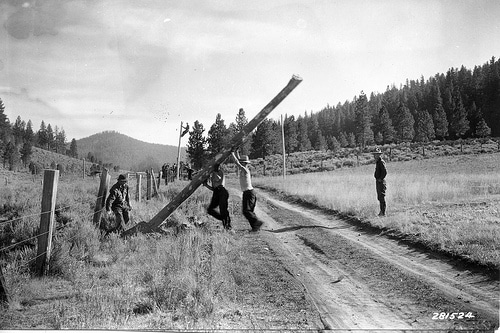
Civilian Conservation Corps, Oregon

A man walking on the beach saw a child reaching down to pick up small objects and then throwing them into the ocean. He called out “Good morning! May I ask what it is that you are doing?” The child looked up and replied “Throwing starfish into the ocean.”

“I must ask, then, why are you throwing starfish into the ocean?” To this, the child replied, “The sun is up and the tide is going out. If I don’t throw them in, they’ll die.”

Upon hearing this, the man commented, “But do you not realize that there are thousands of starfish? You can’t possibly make a difference!”

At this, the child bent down, picked up a starfish, and threw it into the ocean. As it met the water, he said, “It made a difference for that one.”

Adapted – Loren Eiseley “The Star Thrower”

This article is intended to inspire; because it can seem that the efforts of one are insignificant, that a single man’s actions will not be noticed. But nothing could be further from the truth. Inspired individuals can and do make a difference.

Declaring War on Extreme Poverty – Nuru International

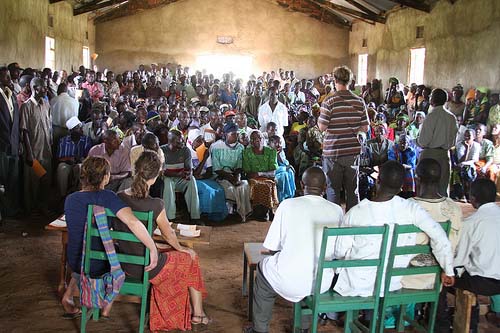
NURU Training in Kenya - modern farming techniques, water sanitation training, and sustainability are the topics being covered.

Nuru International Training in Kenya - modern farming techniques, water sanitation training, and sustainability are the topics being covered.

I use the term “war” because that is how Jake Harriman has approached his mission of eliminating extreme poverty. A Naval Academy graduate, Jake served as a Special Operations Platoon Commander with 1st Marines and deployed with BLT 3/1 during the initial thrust up from Kuwait to Baghdad. It was in Iraq that he came into contact with people whose economic situation was so desperate that they were being forced into the unthinkable life and death decision of fighting US forces or having their families murdered. After these events he sought to make a difference, to find a way to help his fellow human beings caught in the cycle of extreme poverty.

Leaving the military, Jake pursued his masters at Stanford where he conducted independent research on what worked and what didn’t for non-profits operating in impoverished regions, specifically Africa. Taking what he learned, he founded Nuru International with the goal of helping communities pull themselves out of the clutches of extreme poverty through a sustainable business model that included education and micro loans for better crop inputs. Creating a lean strike force which he would lead, the initial Nuru team was to be the test subject to see if the idea was scalable. Nuru’s first team into Africa included water & sanitation specialist Nicole Scott, marketing specialist Douglas Scott, and health care expert Janine Dzuba. Harnessing their individual strengths along with a grassroots support base, Jake sought to lay the foundation for a concerted and sustained effort to eradicate extreme poverty in Kuria, Kenya.

What has Nuru International accomplished in less than a year? With their modest resources, Jake and his team helped 450 farmers learn modern farming techniques, worked with them to acquire 70 tons of fertilizer, and planted over 7 tons of quality seed. As of April 2009, this has translated into an increased crop yield of over 400% which will enable the farmer to not only feed their families but pay back their loans in addition to having resources left over to repeat the process next year. They also taught thousands proper sanitation techniques (boiling water before use, washing with soap properly, using mosquito nets, etc), spearheaded the building of collecting rain water from roofs, and organized the digging of 4 wells to decrease the need of women to walk miles to fetch water from streams.

Nuru Internation Crop Results

Nuru International Crop Results - The farmer on the left did not participate while the farmer on the right did and experienced a 400% crop yield increase.

This picture, take in July of 2009, shows clearly the difference Nuru made for farmers who took advantage of their training and loans. These two fields were within a stone’s throw of each other – the field on the right yielded more corn in one season than this farmer had seen in the previous five years combined.

Nuru International has permanently improving the lives of 5000 people by providing them the tools to pull themselves out of extreme poverty. And the amazing thing is their model is both sustainable and transferable; already there are plans to expand the program once the proper resources are available. To learn more visit Nuru’s website where you can see their videos summarizing recent accomplishments and become a fan of their Facebook Page where they just posted their latest pictures from Kenya.

Using Your Unique Skill Set – The First Response Team of America

Tad Agoglia and The First Response Team at work clearing debris after a natural disaster strikes a small town.

Tad Agoglia and The First Response Team at work clearing debris after a natural disaster strikes a small town.

Growing up in West Texas I remember seeing firsthand how destructive nature could be; in 1987, the town of Saragosa was wiped off the map when a monster tornado ripped through the town. The floods in Iowa last year again highlight to me just how powerful the forces of nature can be. Nothing can be done to avoid a natural disaster – but what can we do to help immediately after the event, in the first few critical days when people need help the most? What can one person do in that critical time period?

Tad Agoglia asked himself that question; a successful small businessman, he owned two specially designed trucks outfitted with debris clearing claw cranes capable of lifting cars. As a contractor he watched government agencies sometimes take weeks to get recovery operations going. Seeing this, Tad felt that America deserved a better type of response to these disasters.

In May 2007, Greensburg, Kansas was destroyed by a tornado. Tad immediately loaded up his equipment and small team of men and drove to the disaster offering his services – free of charge. His team cleared roads for emergency vehicles, opened the fire department and hospitals, recovered valuable equipment and documents covered by debris, and provided power with their industrial strength generators. His work allowed emergency personnel to do their jobs, helping heroes be heroes. Since Greensburg, Tad and his team have responded to over 20 disasters across the United States. Again, all free of charge. I can only imagine what this world would be like with more men like Tad.

To learn more about the First Response Team of America, visit their website and join their Facebook page.

What Can I do Right Now?

We all know that money is something non-profit organizations are always short on, so all I’ll say is make sure your contribution counts. I prefer small, local, and religious organizations that use a volunteer force vs. a well paid staff. These organizations usually do a better job of stretching every dollar, and only a tiny bit if any goes to payroll. Although 8 years old, this article highlights the strengths of my favorite large charity, the Salvation Army.

No money? Time and skills are a great substitute for monetary contributions. Can you create a blog for the local Boys Club and spend the day snapping pictures to upload so that others can become aware of the organization’s plight? What about volunteering at a local school to help the children who need extra instruction and encouragement with their basic math and reading skills? Even something as simple as taking a few minutes to properly social bookmark your favorite non-profit can help bring in scores of traffic it wouldn’t have otherwise received. All of us have something to give.

I would like us to use the comments section below to highlight other men & small organizations making a difference. I know I’ll personally visit each link and if nothing else, social bookmark it or become a fan. A small “contribution,” I know, but every little bit counts – sometimes a tiny contributions is the spark that leads to a much larger set of actions.

“Be the change you want to see in the world.” Mahatma Gandhi


Saturday, July 11, 2009

The New Man - How to Find Your Purpose or Mission

Another great New Man podcast from Tripp Lanier - follow the links.

How to Find Your Purpose or Mission

guy-pic

Is your job a place to just make money or is it something you deeply love?

Do you ever find yourself at work wondering, “What in the hell am I doing?”

And -- be honest -- why are you living the life you’re living? Is it a reflection of what you deeply desire or has it just happened?

This week Guy Sengstock returns to The New Man Podcast to talk about how to find your purpose in life.

Guy Sengstock (coach, Arete Creator and Co-Owner of Authentic SF) joins us to talk about how to find your purpose or mission in life. Guy’s purpose (and career) is basically to help others find their purpose; so who better to have in the hot seat?

We discuss how men get caught up in the WHAT of their lives -- the emails, the to do list, the accomplishments. And yet we have a deeper connection to WHY we do them. This leaves us feeling drained and burdened instead of alive and energized.

Join us as we fumble f--k our way through an exploration of this critical process in a man’s life.

TNM-LISTEN-NOW Click here to listen.

For more information on Guy’s year long transformational coaching training visit:
http://www.AuthenticManProgram.com/TCLT/

Or contact Guy Sengstock at (415) 290-8385 or guy@aretecenter.com

For more information on what Circling is:
http://blog.authenticmanprogram.com/2009/05/24/guy/#comments

In this episode:
  • The Circling Process
  • Purpose
  • Finding your mission
  • Helping others find their purpose
  • Trying to find your purpose kinda screws it up
  • The danger of not listening to yourself
  • Living under the ultimate male-illusion
  • “If you work hard enough one day it’ll be over”
  • David Deida
  • Striving to feel release, bliss
  • Finding the answer means finding freedom
  • Men are lost in the content of our lives
  • To Do Lists, Jobs, Details, the Grindstone
  • Getting lost in emails
  • How do you feel after your work?
  • Purpose equals context
  • Purpose is why you’re doing what you’re do
  • Purpose is not the accomplishment
  • Year Long Coaching Program
  • When work becomes a burden
  • The difference between work and living your purpose
  • Why are you doing what you do?
  • What do you really want?
  • What is my desire?
  • Separating your voice from the voices of others
  • Parents, Friends, Society
  • Having the balls to ask these questions
  • You always have a “why” for the things in life
  • Is it your “why”?
  • Your current life supports you to stay where you are
  • Feeling drained or burdened indicates you’re not living your purpose
  • Start to get honest with yourself
  • Be willing to admit that you don’t know what is driving you
  • What gives your actions meaning?
  • Start with what is your purpose right now?
  • Are you living someone else’s life?
  • Doing what your told?
  • Defying what your told?
  • Everything I do is something I’ve consciously do from the heart
  • Discovering your prison cell is elating
  • You’re not locked in your prison cell
  • The beginning of choice
  • You can only make choices for things that you’re aware of
  • There’s more possible
  • Continuously waking up
  • Not a utopia
  • Is your “why” a chosen why?
TNM-LISTEN-NOW Click here to listen.