Showing posts with label community. Show all posts

Monday, May 6, 2013

Jed Diamond - Mentored Boys or Monster Boys

From The Good Men Project, this article by Jed Diamond looks at the importance of mentoring for boys and young men - and more than that, he looks at the importance of rites of passage.

Mentored Boys or Monster Boys

MAY 5, 2013 BY JED DIAMOND PH.D


“In the absence of elders, the impetuosity of youth becomes the slow death of the community.” Jed Diamond takes his grandson on a rite of passage. 

I wrote recently about my preparations to take my 15 year-old grandson, Deon, for a four day, young men’s rites of passage, retreat. It was truly an adventure of a life-time for both of us and want to share a bit about the experience with you.

I’ve long believed that mentoring is critical to the well-being of our children and grandchildren, particularly the young men. It’s also critical to the well-being of our communities. Many years ago I attended a mentoring workshop with ritual elder, Malidoma Somé. He said, “Elders and mentors have an irreplaceable function in the life of any community. Without them, the young are lost—their overflowing energies wasted in useless pursuits.”

He went on to remind us that “old must live in the young like a grounding force that tames the tendency towards bold but senseless actions and shows them the path of wisdom. In the absence of elders, the impetuosity of youth becomes the slow death of the community.” Psychologist Robert Moore offers a chilling recognition of what happens when young men are not mentored or given initiations into manhood. He says we move from healthy masculinity to monster-boy masculinity.

Comedian Elayne Boosler offers a humorous, yet insightful assessment about the different ways males and females deal with the stresses of life. “When women are depressed they either eat or go shopping. Men invade another country.” If we’re going to heal males and save humanity, there’s nothing more important than mentoring our young men.

My grandson, Deon, was dealing with a lot of stress, had few mentors in his life, and his anger was causing problems at home and at school. He had gotten in trouble with some other kids and came to the attention of the local police. His father and mother (my daughter) were divorced and his father didn’t spend a lot of time with him. I was hoping that attending the 4 day “Call to Adventure Rites of Passage Retreat,” sponsored by the Los Angeles Men’s Center, would help him at this important transition time in his life. I chose the Men’s Center Call to Adventure (CTA) because I knew it was high quality and also because they reached out to inner city Black kids between the ages 12 and 20. My first wife and I adopted Angela when she was 3 ½ months old. She’s Black and has four kids. Deon is the oldest boy.

I drove down from my home in Willits, picked Deon up at his home in Bakersfield, and headed for Los Angeles. Deon didn’t say much driving down. He’s a quiet kid. But he told me he wanted to do the retreat.

We needed a rest stop so I pulled off the freeway in Encino and stopped at a small park. I had remembered it from my childhood. It was a place my father had taken me numerous times before I was five years old. I thought we might get inspiration from being there, but was not prepared for what my grandson had to say as we sat in the grass. “You said you were interested in some kind of rite of passage from boyhood to manhood. What is it you’re wanting to get from the experience?” I wanted to know.

I expected his usual shake of the head or an “I don’t know.” But what he said was amazingly clear and concise. “I want three things,” he told me. “I need guidance. I also want more confidence. And I want respect.” I told him I thought with that kind of clarity and desire he would get what he wanted.

I also asked him what he thought the qualities of a good man were for him. Again, I was surprised by his insights and vision. He gave me seven things he associated with being a good man.
  1. A good man takes care of himself and his family.
  2. A good man is a working man and has a job.
  3. A good man knows what’s right and what is wrong.
  4. If he’s right a good man stands up for himself, but doesn’t make the other person wrong.
  5. A good man apologizes when he’s wrong.
  6. A good man helps people when they need help.
  7. A good man always has a back-up plan.
I’ve learned from many years of experience that no matter how clear our vision of what we want in life we’re not likely to be successful achieving it without a connection with mentors and a healing community. I had chosen this rite of passage experience because of the connection I’ve had with the founder of the Los Angeles Men’s Center, Dr. Stephen Johnson. I’ve known Stephen for more than 25 years and have found him to be one of the most grounded and compassionate men I know. He’s written a wonderful book, The Sacred Path: The Way of the Spiritual Warrior, that gathers his experiences working with men and providing Rites of Passage for both young males and adult men over the last 35 years.

“Our young males are yearning for a sense of belonging,” says Johnson. “Inner city youth, succumbing to the dramatic absence of fathering and mentoring, turn to urban gangs for a sense of belonging. Males from privileged and underprivileged backgrounds often perceive acquisitions as the measure of manhood.” Johnson started offering the Call to Adventure retreats 14 years ago to make a difference in the lives of young men and older mentors.

When we arrived at the site for the retreat, I was knocked out by the peace, serenity, and beauty of the place. It’s located on a bluff 800 feet above Camp Hess Kramer and the Pacific coast and boasts spectacular views of the ocean, Channel Islands and surrounding Santa Monica Mountains. It triggered memories from when I attended U.C. Santa Barbara and was embarking on my own journey to manhood.

A good setting can go a long way towards a good experience and I was looking forward to seeing how the place would interact with the people and the program. We had arrived early and a staff member welcomed us and invited us to help build the sweat lodge which would be part of the ceremonial experience we would take part in later.

I was tired from the drive, but Deon volunteered right away and went off with the guys to help. It turned out that the sweat lodge became one of the cornerstone experiences for Deon in the weekend. Our group participated the next day. We listened to Inipi Sweat Lodge Ceremony leader Thomas Alvarez describe the way in which the sweat lodge was used by native peoples throughout the world to cleanse, pray, and ask for guidance.

One of the young men who had participated in a number of previous CTA retreats encouraged our group of adults and young men prior to going into the lodge. “This may be a new experience for many of you and it’s not the kind of thing most of us have done where we come from,” he told us. “But it can be a very powerful way of asking for guidance and getting support. It will be hot and dark and your natural tendency may be to get away as fast as you can, but hang in there if you can and you’ll get something important.”

He also told us that sometimes we sweat for others who are carrying a lot pain and difficulty in their lives but can’t be there. He said he was doing this for himself and also for his twin brother who was in prison. I thought of my daughter Angela and her family and wanted to help carry some of the burden of the pain she lived with every day as she dealt with the stresses of her family life.

There were “four rounds” to the experience and Thomas guided our prayers and sang to the spirits. It got very, very hot, but Deon and most of the others hung in there. By the end we all felt cleansed, had been forced to deal with our fears, and felt stronger for having gone through the experience together. After dinner that evening we met in small “tribal” groups with 10-15 adult mentors and kids.

We went around the circle and talked a bit about why we were here. Deon opened up immediately and told the group, “I’m lost in my life and I need guidance.” Young and old knew what he meant and many opened up to their own feelings of being lost. For the first time I had a deep experience of the violence that so many of these kids live with every day. One boy talked about killings he had seen in his neighborhood and Deon also talked about people he knew who had been killed. Another young boy said that didn’t want a lot in life, just to know that he would survive another day.

Steve Branker, one of the Men’s Center organizers said, “The pressures that these young men face in everyday life are astounding. Instead of primarily dealing with such things as schoolwork and girlfriends, they are dealing with whether or not they will come back alive after they walk out of their homes each day.”

I thought to myself, “God, they’re so small and what they are dealing with is so big.” I felt the terrible loss and pain that so many experience, but also the courage they had to break free of the life of violence and to reach for something better. I felt deeply blessed to be able to share this experience with my grandson and the other mentors who were committed to helping these kids survive their childhood and grow into adults who had something they could look forward to in life.

The next day we had the opportunity to confront the Ropes Course where leaders from Fulcrum, Inc. engaged us in taking risks to stretch ourselves and to celebrate their motto of Do, Risk, Grow and cultivate the potential greatness of each individual and the group as a whole. It was inspiring to see kids and adults reaching past their fear to test themselves and their limits.


Wednesday, October 3, 2012

Mark Radcliffe - The Male Straightjacket

Title has been corrected - apologies for the lack of editing.


This piece by Mark Radcliffe was posted at the Good Men Project back in August. It's a brave and important statement about our need, as men, to be part of a community (and a community of men) in which we can ask for help and support when we need it, and offer it in return when others need it.

Around the time this was posted, President Obama made a speech in which he argued that personal and financial success in this country is the result of community effort, not a single individual. Even those people who seem to have done it all on their own - Steve Jobs, Bill Gates, Warren Buffett, and son on - all had people who helped them and supported them along the way. He was ridiculed by the political right for his statements - they still hold on to the belief that success is an individual effort. 

But the era of rugged individualism, one of the false ideals of this country, is long past being useful - and was likely never really true. Two decades ago, Hillary Clinton argued that it takes a village - she was right then and it's true today. But men are taught that it's weak to need support, to ask for help, to admit that we don't know.

I have been working on this stuff for 20 years and I still struggle with those bullshit messages I was raised with in my family. I am grateful every day for the friends and colleagues who support and encourage me (especially my brilliant and lovely partner, Jami) - and yet I forget to ask for help sometimes when I need it, or I say to "yes" to one more thing because I should be able to do everything, and do it all perfectly.

It is a straightjacket - and it's killing us.

The Male Straitjacket


Mark Radcliffe tears up the myth of male independence.

I’m a man.

I’m supposed to be able to do it all on my own.

Chop my own wood.

Slay my own dinner.

Provide for my children (if I had any).

Charm women far and wide.

And still remember to call grandma on Mother’s Day.

I’m not supposed to “need” anyone. I’m supposed to be fiercely independent, bravely self-sufficient, and provide for others in my spare time.

But the secret is that, often, I’m barely keeping my head above water.

I’m trying to feed all of my dreams, like starving children I so desperately want to help flourish.
And the problem is: I always feel like I’m falling short.

Whether it’s a writing career I’m trying to manage, a new album of songs I’m trying to write, an essay I’m trying to finish, or a novel I’m trying to edit, or even a social life to keep afloat, the problem remains the same: after a certain point, I’m overwhelmed. I need a relief pitcher to come in and take over.

What’s worse: I can almost never admit it.

Because I pride myself on trying to finish what I’ve started. That I can be the Babe Ruth of my own personal World Series—knock in the big final grand slam with one last, brilliant swing.

I’m not a toddler, I tell myself. I’m not a teenager. I don’t need a coach. I don’t need anyone. I’m a self-sufficient achievement machine.

(Aren’t I?)

But the thing we don’t realize when we look at our heroes is that they all had their coaches and teammates and supporting cast. We just don’t see ‘em.

Jordan had Phil Jackson. Lance Armstrong had Johan Bruyneel. Bono had a nation of Irishmen (and women) behind him, not to mention a helluva band. No one makes it alone, we’re told, time and time again, but we forget it. Because we only see Phelps up there on stage. We don’t see his coaches. We only see Scorcese accepting the Oscar. We don’t see his high school film teacher. Or his manager. We only see Adam Levine getting a Grammy. We don’t see the guy who encouraged him to keep writing songs back in 9th grade when he was about to quit. Let alone his accountant, guitar tech, pilates instructor and girlfriend(s?) who keep him going each day.

It just slayed me. The notion that maybe the final act of being a man was to not achieve perfectly competent independence, but to rather so commit yourself to life that you can’t possibly do it alone, that you need someone to help you get through it all, someone without whom you’re utterly helpless.
So that’s why it’s crucial that we men take the humility step and just learn to lean on others to help us get to our goals. It’s okay if we only do 80% of the work instead of 100%. Especially if trying to do 100% keeps us from ever finishing anything. The novel. The career switch to being a chef. The act of being a better husband. The pursuit of working less and being a better father. Or any of the other countless goals we men dream up but don’t always get around to doing.

Because it’s hard to ask for help. To truly admit that we can’t do it alone. That in some sense, we are “dependent.” And that’s what we’ve been told not to do.

There was a DeBeers diamond ad years ago that was perhaps the only one of the whole campaign to reach me. I wasn’t really sure I’d ever marry, for a variety of reasons. But there it was, this simple line, that caught me at the right time: “Make a declaration of dependence,” it urged. It just slayed me. The notion that maybe the final act of being a man was to not achieve perfectly competent independence, but to rather so commit yourself to life that you can’t possibly do it alone, that you need someone to help you get through it all, someone without whom you’re utterly helpless. Or at least not the best man you can be. The goal for independence is the male equivalent of a straitjacket, and one that keeps us from truly embracing others in life.

So maybe the real goal of being a man, after a certain point, is to stop being superman, and to realize that you can make a lot more difference in this world if you’re part of a team than if you’re going it alone. Steve Jobs needed a Wozniak. Barack needs a Michelle. Kobe needed a Shaq. The trick is to realize it while they’re still in front of you.

And ask them if they’d care to join up as a team.

Here’s to the end of the Isle of Man.

 
About Mark Radcliffe
Mark Radcliffe is a writer and singer/ songwriter based in New York City.
You can read more of his essays here: http://theradcliffescrolls.tumblr.com/
And check out his music here: http://markradcliffe.net/

Wednesday, April 4, 2012

Joseph Gelfer at Elephant Journal - Gender, Sexuality, and Psychedelic Spirituality

Gender studies professor, author (Numen, Old Men: Contemporary Masculine Spiritualities and the Problem of Patriarchy, The Masculinity Conspiracy, 2012: Decoding the Countercultural Apocalypse, and editor of the Journal of Men, Masculinities and Spirituality), and blogger Joseph Gelfer has a new article up at Elephant Journal. It's an interesting examination of gender and sexuality in the community of psychedelic spirituality.

Gender, Sexuality and Psychedelic Spirituality. ~ Joseph Gelfer


Loving Earth

A while back I attended a conference about psychedelic spirituality. During one of the Q&A sessions a woman stood up and asked, “It’s great to see all these beautiful, well-read and articulate men. But I have one question: Where are the women?” 

This was a very good question indeed. Looking around, it was difficult to identify any gender imbalance in the audience –– comprised as it was equally of beautiful men and women –– but the speaker of the program told another story. Apart from a few anomalies, the speakers were all men.

The psychedelic community prides itself on progressive, transgressive and even utopian values. But do these values extend to the domain of gender and sexuality? I decided to take it upon myself to find some answers to this question, and looked both to what we already know about this subject, and undertook a survey on how the psychedelic community viewed these issues.

Read the whole article.

Wednesday, June 22, 2011

Duane Elgin - Thriving in a Post-Consumerist Society

http://www.calfinder.com/blog/wp-content/uploads/2010/02/hakka-sustainable-home-community.jpg

This is probably one of those issues that is gender neutral in how it is lived out in the world, but it's also an issue that all we need to take more seriously and then become actively aware of how our own actions and behaviors feed into the consumerist nonsense.

When I was young, I used to see a lot of bumper stickers (on the backs of huge, gas-guzzling trucks) that proclaimed, "He Who Dies with the Most Toys Wins!"

Uh, so, are you taking those toys with you when you die? Maybe there are more important things than toys? Maybe relationships?

In this article Duane looks at a micro-community in which he and his wife lived - and it was not a commune:
We did not move into a "commune" with shared income, personal lives and possessions. Instead, this was a setting that valued the privacy and integrity of people's individual lives while offering diverse ways of coming together in meaningful activities ranging from cooking and gardening to sharing common meals.
Sounds interesting - there is a similar type of community south of Tucson, in a more agriculturally suited climate - they have separate houses, an on-site school, a community hall, and they share chores and responsibility for the fruits and vegetables they grow to support the community.

I suspect we will see more of this living arrangement again in the near future, and hopefully they will have learned from the mistakes made by the commune movements in the late 1800s and the 1960s and 1970s.

Thriving in a Post-Consumerist Society

- Speaker, Author, Educator, Media Activist

What does a thriving way of life look like in a post consumerist society? Many aspects of a thriving future can be found by stepping into a contemporary co-housing community or eco-village.

To illustrate, my wife and I lived in a co-housing community in Northern California for nearly two years. Our motivation was to explore an alternative to the alienation and isolation of a single-family dwelling and lifestyle and to see if there was a healthier and happier way of living in community with others. We did not move into a "commune" with shared income, personal lives and possessions. Instead, this was a setting that valued the privacy and integrity of people's individual lives while offering diverse ways of coming together in meaningful activities ranging from cooking and gardening to sharing common meals. Overall, we discovered a sense of kinship based, not on material status and consumption, but on neighborliness, shared values, and mutual regard. We also found a community that cared for all of its children, as well as for those aging and dying. Not to be left out was a generous sense of celebration for life with music and dance.

The three core organizing principles for the community are simplicity, family, and ecology. With 70 people (50 adults and 20 children), this was a scale of living small enough to create a genuine feeling of community and large enough to use our size to advantage. This co-housing community consists of 30 units in two-story flats and townhouses clustered in rows to establish a common green area on the interior and parking on the exterior. The common house is used as a dining area but is regularly transformed into a dance floor, meeting room, playroom and more. The common house also includes two guest rooms, an informal lending library and a playroom for kids on rainy or cold days.

As a community, we would typically eat together three evenings each week and often have a brunch on weekends. Each person participates in a three-person cooking crew roughly once a month, preparing food and cleaning-up for roughly 50 persons. People are also expected to participate in work crews such as landscaping, conflict resolution or kitchen maintenance. Every other week there are meetings to run the workings of the community. Happily, these are run efficiently and expertly, attendance is high and much is accomplished. This eco-village has a half-dozen commercial spaces connected with it, so it combines a residential community with commercial enterprises.

Beyond the formal activities of operating a co-housing community are the informal ones that brought us together in meaningful relationships. We easily and quickly organized diverse activities ranging from fundraisers (such as a brunch for tsunami disaster relief), to arranging classes (such as yoga and Cajun dancing) and creating community celebrations and events. Again and again, we saw diverse gatherings and initiatives emerge from the combined strengths and diverse talents of the community.

Envisioning a future of sustainable prosperity, diverse families will live in an "eco-home" that is nested within an "eco-village," that, in turn, is nested within an "eco-city," and so on up to the scale of the bio-region, nation, and world. Each eco-village of 100 -200 persons could have a distinct character, architecture, and local economy. Common to many of these new villages could be a child-care facility and play area, an organic garden, a common house for community meetings, celebrations, and regular meals together, a recycling and composting area, an open space, and a crafts and shop area. As well, each could offer a variety of types of work to the local economy such as child care, aging care, organic gardening, green building, conflict resolution and other skills that provide fulfilling employment for many. These micro-communities represent unique expressions of thriving sustainability as they provide meaningful work, raise healthy children, celebrate life in community with others and live in a way that honors the Earth and future generations.

A new village movement could transform urban life around the world. Drawing inspiration from co-housing and eco-villages, a flowering of diverse, neighborhood-scale communities could replace the alienating landscape of today's massive cities and homogeneous suburbs. Eco-villages could provide a practical scale and foundation for a sustainable future and become important islands of security, camaraderie, learning and innovation in a world of sweeping change. These human-sized living environments encourage diverse experiments in cooperative living that touch the Earth lightly and are uniquely adapted each locale.

Although eco-villages are designed for sustainable living, there is not the time to retrofit and rebuild our existing urban infrastructure around this approach to living before we encounter a world in systems crisis. Climate disruption, energy shortages, financial breakdowns, and other critical trends will overtake us long before we can make a sweeping overhaul in the design and functioning of cities and towns that have been a century or more in the making. We can regard eco-villages and co-housing communities as greenhouses of human invention, learn from their experiments, and adapt their designs and principles for successful living.

Without the time to retrofit cities into well-designed "green villages," we must make the most of the urban infrastructure that already exists. Creatively adapting ourselves to this new world will produce a wave of innovations for local living -- technical, social, architectural and more. An experimental and daring new village movement will emerge as the existing urban architecture is transformed into human-scale designs for sustainable and thriving forms of living. Overall, in creating healthier ways of living, a new village movement based upon the sanity of simplicity, a strong ecological consciousness and respect for children and family, will play a vital role in building a future of sustainable prosperity.

An important resource for exploring this further is the "Global Ecovillage Network" or GEN. For the United States, see the Cohousing Association.


Friday, May 20, 2011

"The Men's Project" on Secret Lives of Men


The Men's Project (TMP) was founded in Ottawa on July 1, 1997. The creation of TMP was initiated by its two founders: Larry Gauthier, MSW, and Rick Goodwin, MSW RSW, and the National Capital Region YMCA-YWCA. TMP was created to fill existing gaps in community-based counselling resources for men.

This is a phenomenal idea. Listening to the podcast, in which Chris Blazina interviews one of the founders, Rick Goodwin makes me want to find some way to do that here in Tucson. This is a community that really needs community counseling that addresses men, and only men - from police and fire departments, from Davis-Monthan Air Force Base, from Fort Huachuca, from the various reservations, and perhaps most importantly, from the multitude of gangs that make Tucson their battleground.

The Center for Life Skills Development offers men's counseling, but I would never seek counseling at a place whose web page reads like it was written by a third grader.

Anyway, maybe this is what I want to do as a counselor . . . . .

"The Men's Project" on Secret Lives of Men

Broadcasting live from Canada this week, we visit with Rick Goodwin Director of "The Men's Project." The Men's Project is a non-profit charitable men's counselling agency that has been providing services to men and their families since 1997.The men's Project provides individual and couple counseling, as well as a specialized healing program for men who have experienced sexual or physical abuse as children, anger management, emotional intelligence and fathering.The services are specifically designed for men and professionally facilitated by accredited psychotherapists.

Listen to internet radio with Secret Lives of Men on Blog Talk Radio


Tuesday, April 12, 2011

Collecting Our Allies on Life's Journey

http://i2.squidoocdn.com/resize/squidoo_images/-1/draft_lens12299731module111566951photo_1279910301Friends_Forever.jpg

I'm not a huge fan of the "tribe" language that a lot of men's groups and organizations employ for bonding purposes - it's been a REALLY long time since white Europeans have lived in tribal structures and it makes no sense to me to look backward for meaning.

But I do like the idea of gathering allies to accompany and support us as we move through life - especially for men. We are communal beings - we know ourselves and grow as human beings in relations with others, whether our parents when we are infants and toddlers, our friends in school, our partners as adults, or our buddies right now - we need to be with people around whom we can be ourselves.

This Daily Om from yesterday addresses than need.

Finding Your Tribe
Your Allies on Life’s Journey


The people who become members of your tribe are in the world waiting and you are destined to find them.

Part of being human is the search for an individual identity. Bound to this strong need to establish a unique persona, however, is an equally intense desire for acceptance. It is when we find our individual tribes that both are satisfied. Our tribe members are those people who accept us as we are without reservation and gladly accompany us on our journeys of evolution. Among them, we feel free to be our imperfect selves, to engage unabashedly in the activities we enjoy, and to express our vulnerabilities by relying on our tribe for support. We feel comfortable investing our time and energy in the members of our tribe, and are equally comfortable allowing them to invest their resources in our development.

The individuals who eventually become members of your unique tribe are out there in the wide world waiting for you. You are destined to find them, one by one, as you move through life. Sometimes your own efforts will put you in contact with your future tribe members. At other times, circumstances beyond your control will play a role in helping you connect with your tribe. If you look about you and discover that you are already allied with a wonderful and supportive tribe, remember that there are likely many members of your tribe you have not yet met. On the other hand, if you feel you are still living outside of your tribe, broadening your horizons can help you find your tribe members.

However your life develops after you come together with your tribe, you can be assured that its members will stand at your side. On the surface, your tribe may seem to be nothing more than a loose-knit group of friends and acquaintances to whom you ally yourself. Yet when you look deeper, you will discover that your tribe grounds you and provides you with a sense of community that ultimately fulfills many of your most basic human needs.

Wednesday, February 2, 2011

TED Talks - Bruce Feiler: The council of dads

A moving and inspiring TED Talk.

Bruce Feiler: The council of dads

Diagnosed with cancer, Bruce Feiler worried first about his young family. So -- as he shares in this funny, rambling and ultimately thoughtful talk -- he asked his closest friends to become a "council of dads," bringing their own lifetimes of wisdom to advise his twin daughters as they grow.


Monday, August 3, 2009

Art of Manliness - Making a Difference

The most we can hope for in life sometimes is to make a difference, in a good way, in someone else's life. This article from the Art of Manliness looks at bigger ways we can make a difference, at the community level - but never forget that one person is all that is needed to make a difference in another person's life, and it generally doesn't take anything more than asking, "How can I help?"

Making a Difference

by Antonio on July 31, 2009

service

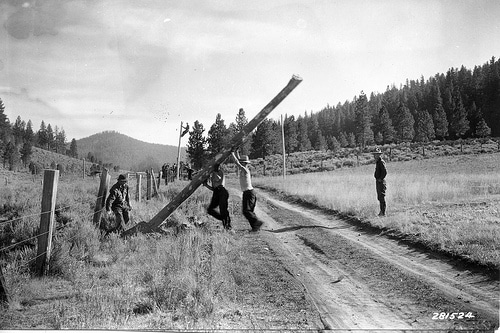
Civilian Conservation Corps, Oregon

A man walking on the beach saw a child reaching down to pick up small objects and then throwing them into the ocean. He called out “Good morning! May I ask what it is that you are doing?” The child looked up and replied “Throwing starfish into the ocean.”

“I must ask, then, why are you throwing starfish into the ocean?” To this, the child replied, “The sun is up and the tide is going out. If I don’t throw them in, they’ll die.”

Upon hearing this, the man commented, “But do you not realize that there are thousands of starfish? You can’t possibly make a difference!”

At this, the child bent down, picked up a starfish, and threw it into the ocean. As it met the water, he said, “It made a difference for that one.”

Adapted – Loren Eiseley “The Star Thrower”

This article is intended to inspire; because it can seem that the efforts of one are insignificant, that a single man’s actions will not be noticed. But nothing could be further from the truth. Inspired individuals can and do make a difference.

Declaring War on Extreme Poverty – Nuru International

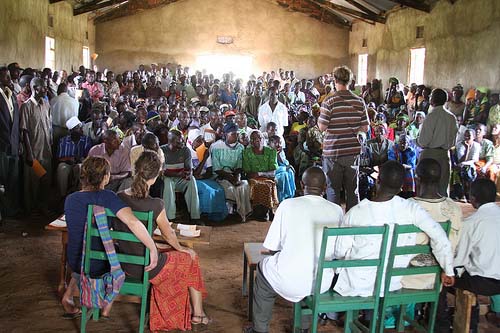
NURU Training in Kenya - modern farming techniques, water sanitation training, and sustainability are the topics being covered.

Nuru International Training in Kenya - modern farming techniques, water sanitation training, and sustainability are the topics being covered.

I use the term “war” because that is how Jake Harriman has approached his mission of eliminating extreme poverty. A Naval Academy graduate, Jake served as a Special Operations Platoon Commander with 1st Marines and deployed with BLT 3/1 during the initial thrust up from Kuwait to Baghdad. It was in Iraq that he came into contact with people whose economic situation was so desperate that they were being forced into the unthinkable life and death decision of fighting US forces or having their families murdered. After these events he sought to make a difference, to find a way to help his fellow human beings caught in the cycle of extreme poverty.

Leaving the military, Jake pursued his masters at Stanford where he conducted independent research on what worked and what didn’t for non-profits operating in impoverished regions, specifically Africa. Taking what he learned, he founded Nuru International with the goal of helping communities pull themselves out of the clutches of extreme poverty through a sustainable business model that included education and micro loans for better crop inputs. Creating a lean strike force which he would lead, the initial Nuru team was to be the test subject to see if the idea was scalable. Nuru’s first team into Africa included water & sanitation specialist Nicole Scott, marketing specialist Douglas Scott, and health care expert Janine Dzuba. Harnessing their individual strengths along with a grassroots support base, Jake sought to lay the foundation for a concerted and sustained effort to eradicate extreme poverty in Kuria, Kenya.

What has Nuru International accomplished in less than a year? With their modest resources, Jake and his team helped 450 farmers learn modern farming techniques, worked with them to acquire 70 tons of fertilizer, and planted over 7 tons of quality seed. As of April 2009, this has translated into an increased crop yield of over 400% which will enable the farmer to not only feed their families but pay back their loans in addition to having resources left over to repeat the process next year. They also taught thousands proper sanitation techniques (boiling water before use, washing with soap properly, using mosquito nets, etc), spearheaded the building of collecting rain water from roofs, and organized the digging of 4 wells to decrease the need of women to walk miles to fetch water from streams.

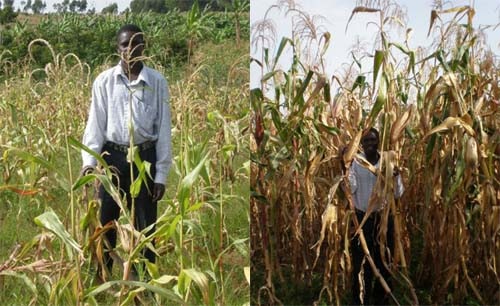
Nuru Internation Crop Results

Nuru International Crop Results - The farmer on the left did not participate while the farmer on the right did and experienced a 400% crop yield increase.

This picture, take in July of 2009, shows clearly the difference Nuru made for farmers who took advantage of their training and loans. These two fields were within a stone’s throw of each other – the field on the right yielded more corn in one season than this farmer had seen in the previous five years combined.

Nuru International has permanently improving the lives of 5000 people by providing them the tools to pull themselves out of extreme poverty. And the amazing thing is their model is both sustainable and transferable; already there are plans to expand the program once the proper resources are available. To learn more visit Nuru’s website where you can see their videos summarizing recent accomplishments and become a fan of their Facebook Page where they just posted their latest pictures from Kenya.

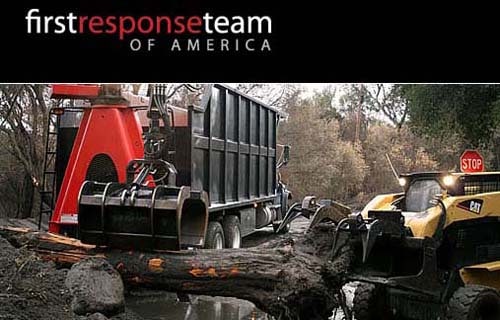
Using Your Unique Skill Set – The First Response Team of America

Tad Agoglia and The First Response Team at work clearing debris after a natural disaster strikes a small town.

Tad Agoglia and The First Response Team at work clearing debris after a natural disaster strikes a small town.

Growing up in West Texas I remember seeing firsthand how destructive nature could be; in 1987, the town of Saragosa was wiped off the map when a monster tornado ripped through the town. The floods in Iowa last year again highlight to me just how powerful the forces of nature can be. Nothing can be done to avoid a natural disaster – but what can we do to help immediately after the event, in the first few critical days when people need help the most? What can one person do in that critical time period?

Tad Agoglia asked himself that question; a successful small businessman, he owned two specially designed trucks outfitted with debris clearing claw cranes capable of lifting cars. As a contractor he watched government agencies sometimes take weeks to get recovery operations going. Seeing this, Tad felt that America deserved a better type of response to these disasters.

In May 2007, Greensburg, Kansas was destroyed by a tornado. Tad immediately loaded up his equipment and small team of men and drove to the disaster offering his services – free of charge. His team cleared roads for emergency vehicles, opened the fire department and hospitals, recovered valuable equipment and documents covered by debris, and provided power with their industrial strength generators. His work allowed emergency personnel to do their jobs, helping heroes be heroes. Since Greensburg, Tad and his team have responded to over 20 disasters across the United States. Again, all free of charge. I can only imagine what this world would be like with more men like Tad.

To learn more about the First Response Team of America, visit their website and join their Facebook page.

What Can I do Right Now?

We all know that money is something non-profit organizations are always short on, so all I’ll say is make sure your contribution counts. I prefer small, local, and religious organizations that use a volunteer force vs. a well paid staff. These organizations usually do a better job of stretching every dollar, and only a tiny bit if any goes to payroll. Although 8 years old, this article highlights the strengths of my favorite large charity, the Salvation Army.

No money? Time and skills are a great substitute for monetary contributions. Can you create a blog for the local Boys Club and spend the day snapping pictures to upload so that others can become aware of the organization’s plight? What about volunteering at a local school to help the children who need extra instruction and encouragement with their basic math and reading skills? Even something as simple as taking a few minutes to properly social bookmark your favorite non-profit can help bring in scores of traffic it wouldn’t have otherwise received. All of us have something to give.

I would like us to use the comments section below to highlight other men & small organizations making a difference. I know I’ll personally visit each link and if nothing else, social bookmark it or become a fan. A small “contribution,” I know, but every little bit counts – sometimes a tiny contributions is the spark that leads to a much larger set of actions.

“Be the change you want to see in the world.” Mahatma Gandhi