Showing posts with label mentors. Show all posts

Monday, May 6, 2013

Jed Diamond - Mentored Boys or Monster Boys

From The Good Men Project, this article by Jed Diamond looks at the importance of mentoring for boys and young men - and more than that, he looks at the importance of rites of passage.

Mentored Boys or Monster Boys

MAY 5, 2013 BY JED DIAMOND PH.D


“In the absence of elders, the impetuosity of youth becomes the slow death of the community.” Jed Diamond takes his grandson on a rite of passage. 

I wrote recently about my preparations to take my 15 year-old grandson, Deon, for a four day, young men’s rites of passage, retreat. It was truly an adventure of a life-time for both of us and want to share a bit about the experience with you.

I’ve long believed that mentoring is critical to the well-being of our children and grandchildren, particularly the young men. It’s also critical to the well-being of our communities. Many years ago I attended a mentoring workshop with ritual elder, Malidoma Somé. He said, “Elders and mentors have an irreplaceable function in the life of any community. Without them, the young are lost—their overflowing energies wasted in useless pursuits.”

He went on to remind us that “old must live in the young like a grounding force that tames the tendency towards bold but senseless actions and shows them the path of wisdom. In the absence of elders, the impetuosity of youth becomes the slow death of the community.” Psychologist Robert Moore offers a chilling recognition of what happens when young men are not mentored or given initiations into manhood. He says we move from healthy masculinity to monster-boy masculinity.

Comedian Elayne Boosler offers a humorous, yet insightful assessment about the different ways males and females deal with the stresses of life. “When women are depressed they either eat or go shopping. Men invade another country.” If we’re going to heal males and save humanity, there’s nothing more important than mentoring our young men.

My grandson, Deon, was dealing with a lot of stress, had few mentors in his life, and his anger was causing problems at home and at school. He had gotten in trouble with some other kids and came to the attention of the local police. His father and mother (my daughter) were divorced and his father didn’t spend a lot of time with him. I was hoping that attending the 4 day “Call to Adventure Rites of Passage Retreat,” sponsored by the Los Angeles Men’s Center, would help him at this important transition time in his life. I chose the Men’s Center Call to Adventure (CTA) because I knew it was high quality and also because they reached out to inner city Black kids between the ages 12 and 20. My first wife and I adopted Angela when she was 3 ½ months old. She’s Black and has four kids. Deon is the oldest boy.

I drove down from my home in Willits, picked Deon up at his home in Bakersfield, and headed for Los Angeles. Deon didn’t say much driving down. He’s a quiet kid. But he told me he wanted to do the retreat.

We needed a rest stop so I pulled off the freeway in Encino and stopped at a small park. I had remembered it from my childhood. It was a place my father had taken me numerous times before I was five years old. I thought we might get inspiration from being there, but was not prepared for what my grandson had to say as we sat in the grass. “You said you were interested in some kind of rite of passage from boyhood to manhood. What is it you’re wanting to get from the experience?” I wanted to know.

I expected his usual shake of the head or an “I don’t know.” But what he said was amazingly clear and concise. “I want three things,” he told me. “I need guidance. I also want more confidence. And I want respect.” I told him I thought with that kind of clarity and desire he would get what he wanted.

I also asked him what he thought the qualities of a good man were for him. Again, I was surprised by his insights and vision. He gave me seven things he associated with being a good man.
  1. A good man takes care of himself and his family.
  2. A good man is a working man and has a job.
  3. A good man knows what’s right and what is wrong.
  4. If he’s right a good man stands up for himself, but doesn’t make the other person wrong.
  5. A good man apologizes when he’s wrong.
  6. A good man helps people when they need help.
  7. A good man always has a back-up plan.
I’ve learned from many years of experience that no matter how clear our vision of what we want in life we’re not likely to be successful achieving it without a connection with mentors and a healing community. I had chosen this rite of passage experience because of the connection I’ve had with the founder of the Los Angeles Men’s Center, Dr. Stephen Johnson. I’ve known Stephen for more than 25 years and have found him to be one of the most grounded and compassionate men I know. He’s written a wonderful book, The Sacred Path: The Way of the Spiritual Warrior, that gathers his experiences working with men and providing Rites of Passage for both young males and adult men over the last 35 years.

“Our young males are yearning for a sense of belonging,” says Johnson. “Inner city youth, succumbing to the dramatic absence of fathering and mentoring, turn to urban gangs for a sense of belonging. Males from privileged and underprivileged backgrounds often perceive acquisitions as the measure of manhood.” Johnson started offering the Call to Adventure retreats 14 years ago to make a difference in the lives of young men and older mentors.

When we arrived at the site for the retreat, I was knocked out by the peace, serenity, and beauty of the place. It’s located on a bluff 800 feet above Camp Hess Kramer and the Pacific coast and boasts spectacular views of the ocean, Channel Islands and surrounding Santa Monica Mountains. It triggered memories from when I attended U.C. Santa Barbara and was embarking on my own journey to manhood.

A good setting can go a long way towards a good experience and I was looking forward to seeing how the place would interact with the people and the program. We had arrived early and a staff member welcomed us and invited us to help build the sweat lodge which would be part of the ceremonial experience we would take part in later.

I was tired from the drive, but Deon volunteered right away and went off with the guys to help. It turned out that the sweat lodge became one of the cornerstone experiences for Deon in the weekend. Our group participated the next day. We listened to Inipi Sweat Lodge Ceremony leader Thomas Alvarez describe the way in which the sweat lodge was used by native peoples throughout the world to cleanse, pray, and ask for guidance.

One of the young men who had participated in a number of previous CTA retreats encouraged our group of adults and young men prior to going into the lodge. “This may be a new experience for many of you and it’s not the kind of thing most of us have done where we come from,” he told us. “But it can be a very powerful way of asking for guidance and getting support. It will be hot and dark and your natural tendency may be to get away as fast as you can, but hang in there if you can and you’ll get something important.”

He also told us that sometimes we sweat for others who are carrying a lot pain and difficulty in their lives but can’t be there. He said he was doing this for himself and also for his twin brother who was in prison. I thought of my daughter Angela and her family and wanted to help carry some of the burden of the pain she lived with every day as she dealt with the stresses of her family life.

There were “four rounds” to the experience and Thomas guided our prayers and sang to the spirits. It got very, very hot, but Deon and most of the others hung in there. By the end we all felt cleansed, had been forced to deal with our fears, and felt stronger for having gone through the experience together. After dinner that evening we met in small “tribal” groups with 10-15 adult mentors and kids.

We went around the circle and talked a bit about why we were here. Deon opened up immediately and told the group, “I’m lost in my life and I need guidance.” Young and old knew what he meant and many opened up to their own feelings of being lost. For the first time I had a deep experience of the violence that so many of these kids live with every day. One boy talked about killings he had seen in his neighborhood and Deon also talked about people he knew who had been killed. Another young boy said that didn’t want a lot in life, just to know that he would survive another day.

Steve Branker, one of the Men’s Center organizers said, “The pressures that these young men face in everyday life are astounding. Instead of primarily dealing with such things as schoolwork and girlfriends, they are dealing with whether or not they will come back alive after they walk out of their homes each day.”

I thought to myself, “God, they’re so small and what they are dealing with is so big.” I felt the terrible loss and pain that so many experience, but also the courage they had to break free of the life of violence and to reach for something better. I felt deeply blessed to be able to share this experience with my grandson and the other mentors who were committed to helping these kids survive their childhood and grow into adults who had something they could look forward to in life.

The next day we had the opportunity to confront the Ropes Course where leaders from Fulcrum, Inc. engaged us in taking risks to stretch ourselves and to celebrate their motto of Do, Risk, Grow and cultivate the potential greatness of each individual and the group as a whole. It was inspiring to see kids and adults reaching past their fear to test themselves and their limits.


Saturday, June 2, 2012

TEDxLSE - Nilo Bagga - The Art of Samba Soccer


Nilo Bagga (above, with some of his players) is an undergraduate at the London School of Economics and Social Sciences (LSE) and the Founder and Director of Samba Soccer Schools. He employs Brazilian soccer (Samba Soccer) to help young people (mostly boys) develop creativity and spontaneity, as well as to develop interpersonal skills and self-esteem. This is a young man making a difference in the world through, to quote Pele, the Beautiful Game.

From TEDxLSE.


Nilo Bagga - The Art of Samba Soccer 


Nilio Bagga is an undergraduate at LSE and the Founder and Director of Samba Soccer Schools. He also operates as the Head Coach employing teams of coaches to deliver projects in local communities across Warwickshire. Samba Soccer Schools is a fast growing, innovative and inspirational soccer school that teaches football the Brazilian way. Nilio established the enterprise during his gap year in 2009 and in that time, has delivered 23 projects and taught over 500 young people. Samba Soccer Schools has a two-fold purpose. The first is football; to learn how to play with the flair and freedom that epitomises the Brazilian game. The second is social development. By using Brazilian football as the vehicle Samba Soccer Schools is able to develop discipline, confidence and knowledge in young people. Nilio was recently shortlisted for both Coach of the Year and Football Development Project of the Year at the inaugural Asian Football Awards, Wembley 2012. Currently, he is researching the under-representation of British Asians in coaching and managerial positions at top flight football in the UK for his dissertation.

Friday, June 17, 2011

William Harryman & Own Marcus - From Boy to Man -- What It Takes To Finally Grow Up

https://blogger.googleusercontent.com/img/b/R29vZ2xl/AVvXsEhczdAX6Qr9D71Soybirfcg8yTP37C6ScmZxXk1nEfz-OvkRCV1mULZOxhXFT6gmL26ToMyIDchgaM_Sr2VW5KdCydJRi2vARKI5gxWDqKyCaDk0cUf-TfM6PjMGyJcmAVxsCxAs0WUFH8s/s1600/MensSummit-300.250.jpg

We had a great discussion yesterday for those of you who could join us or who have listened to the audio of the talk. Owen and I shared a lot of similar ideas, but we come at them from different backgrounds and different experiences, which makes life more interesting.

My sincerest thanks to both Owen and Lion for a fun hour of conversation.

One thing I found interesting was that our talk - number 59 and occurring on the 7th day of the 10 day event - was the first one to bring up the topic of shame in men's lives. It's hard for me to imagine that we can talk about men evolving in any way without dealing with the anchor of shame so many of us carry.

We touch briefly on PTSD - one point I wanted to make that I didn't get a chance for was to suggest that the shame so many of us experience as boys is a kind of trauma, and the more it is repeated by family or peers, the more likely it is that the boy will grow into a man who carries a variation of PTSD. Certainly not all men will experience this, but many will.

And these are the men who cannot be criticized without experiencing a shame attack (I know all about this). Their inner critic is so finely honed from growing up in a shaming environment (remember, inner parts are there to help, so in this case the critic tries to point out ALL possible flaws and mistakes before anyone else notices and launches an attack from the outside), that if it hears any kind of criticism, even where none is intended, it launches its own brutal attack. The result of this is that many men either shut down emotionally and withdraw (my habit) or strike out in anger, because anger is safer than hurt and shame.

Anyway, just wanted to spell that out since I didn't get to say it in the session.

I hope you enjoy the discussion.

Friday, June 3, 2011

Robert Stein - Defining Macho Down (Looking in all the Wrong Places)

http://justjayne.com/wp-content/uploads/2011/03/Charlie+Sheen+drinks+tiger+blood+Hb9hMKQI165l.jpg

The media has been focused quite a bit lately on men behaving badly - from Charlie Sheen and his paranoid narcissism to the Govenator and his wayward sperm donations, and a whole lot of other crazy sh!t in between.

This piece comes from Connecting.the.Dots, a blog by Robert Stein.

Stein is essentially arguing that we lack the male (read = masculine) role models that we had in the middle of the last century. As far as I am concerned, that's a good thing. We don't need the archaic role models of the past, the limited and limiting models our fathers looked up to as kids (at least for those of us older than 40).

He misses macho - I think macho sucks.

We need new, more complex and more real role models, but the men in the media these days are setting men (and masculinity) back a few decades at best. I don't know that we will ever have good public role models again - all men have always been flawed, but now those flaws are on the news and in the magazines, while in the past they were kept quiet (even when the media knew about them, witness President Kennedy and his affairs).

Public figures in the current media climate probably can never be good role models - and maybe we should not expect that of them.

http://i.dailymail.co.uk/i/pix/2009/09/07/article-1211823-031C9158000005DC-552_468x330.jpg

Instead, fathers and brothers and teachers and grandfathers and coaches and neighbors and pastors and other men who are a part of our daily lives - these men should be our role models, these men should mentor boys and young men. It is not their responsibility (whoever they are), it is our responsibility.

Defining Macho Down

Never mind men in outer space or those slogging in Middle East mud, media attention is on a horny old Frenchman in Manhattan detention, a former body builder with no procreative self-control and a preening pack of politicians playing Chicken with the national debt limit.

In the Age of Viagra, masculinity is being downgraded everywhere. Even 60 Minutes is obsessed with strength cheating by Lance Armstrong and other cycling idols.

The Bogart-Eastwood days of strong, silent men are long gone, replaced by caricatures on the national stage, flexing fake muscles and abandoning all the responsibilities that used to be associated with responsible manhood.

A nation still composed more of families headed by breadwinners and Little League fathers than cases of arrested development watches survivor and “reality” shows featuring selfishness and low cunning as well as “news” about creatures with no sense of what’s involved in taking care of dependent people at home or in the public arena.

When moments of old-fashioned heroism, such as Seal Team Six’s takeout of Osama bin Laden, jolt us into awareness of reality, Disney is right there to trademark the name in order to convert it into toys, games and other distractions.

All this is happening against an almost complete takeover of the mental health profession by women, who comprise 90 percent of counselors now as compared to 70 in 1982.

A study finds that a man’s willingness to seek therapy is directly related to how strongly he agreed with traditionally male assumptions, like “I can usually handle whatever comes my way” and that men undecided about treatment may be discouraged by the prospect of talking to a woman.

The coming election year will only inflate male bluster about leadership and strength in the effort to unseat a President more prone to professorial lecturing about national problems than playing dress-up to land on an airplane carrier bedecked with “Mission Accomplished” signs.

But then again, Bogie is long gone and Eastwood is a very senior citizen in an era of noisy blowhards and sexual sneaks.


Sunday, October 25, 2009

Jayson Gaddis - Why Finding a Man Mentor Is So Essential

Over at his Revolutionary Man blog, Jayson has put up a great post on why men need mentors. This is good stuff for thought.

Why Finding a Man Mentor Is So Essential

picture-1

Commitment 9

I commit to finding a mentor ASAP and not doing life “alone.” I commit to always having a mentor in my life–someone I trust, respect, and want to learn from in areas where I need guidance. Then, I commit to becoming a mentor to other men (read the other 8 commitments here).

It boggles my mind how many guys still go it alone in life. In my eyes this attitude is bankrupt. Not only that, it is dangerous.

If you are a guy who “goes it alone,” try it on that you could double your impact and accelerate your growth if you found a great mentor. If you still believe you have to suck it up and that asking for help is a sign of weakness, you are asleep or stuck. It’s 2009. We are not living in 1955 anymore.

In my own life, I “went it alone” for years. “I don’t need anyone’s help” was one of my mantras. Even though I had great friends and guys I could probably lean on, I never did. Not only that, when I felt challenged in my life, most guys tried to fix it or make me feel better. It took me years to realize that’s not what I needed.

What I needed was someone to hear me, understand me, call BS on me, and then help me move forward and find solutions to my own challenges. I needed someone to teach me how to trust myself, how to love myself and how to have more successful relationships. However, that said, I just wasn’t ready.

A lot of you walk around with the complaint, “nobody understands me.” My question for you is “Do you let anyone try?”

Let’s face it, we men have a lot of unconscious blocks that keep us from the things we want–deeply satisfying relationships, money, the right job, and happiness. Men tend to blame the outside, not knowing that it’s coming from the inside.

Now, if you had a mentor, you would begin to realize that YOU are the issue in your life. YOU are the person that needs a big fat course correction. YOU are the one who could use some feedback, love, guidance, and support.

So, remember, if you know that you may benefit from a mentor, the first rule of thumb is that you have to want one. It doesn’t do a lot of good if you are not open or “coachable.”

When I was younger, I had no real mentor. Now I have several.

What exactly is a mentor? Here’s how Dictionary.com defines it:

mentor

[men-tawr, -ter] Show IPA –noun

1. a wise and trusted counselor or teacher.

2. an influential senior sponsor or supporter.

Let’s look a few types of mentors and you will get a sense of what kind of mentorship might benefit you.

Types of mentors:

  1. The Mentor
  2. The relationship mentor
  3. The spiritual mentor
  4. The professional mentor
  5. The Coach

Let’s look at all five in detail and then determine how to find one.

Go read the whole post.


Friday, June 5, 2009

Art of Manliness - 30 Days to a Better Man (Days 2, 3, 4)

Here are the last few updates from the Art of Manliness's 30 Days to a Better Man series.

Day 2: Shine Your Shoes - yeah, OK, whatever.

Day 3: Find a Mentor - this one is good.

A few months ago we wrote about the importance of a mentor in a man’s life. Figuring out what it means to be a man can be tough. And it’s arguably tougher for men today, who are often more socially isolated, don’t have as many friends, and don’t have strong relationships with their fathers and other male relatives. It’s therefore more important than ever for every man to seek out mentors to help him navigate the complicated waters of manliness and life.

Mentors have the experience and wisdom to give us sound guidance, direction, and advice. Mentors can also help us expand our point of view on a particular area of our life. Moreover, a mentor can become a good friend and confidant during times when we struggle and falter.

So having a mentor is quite important. The tricky part is, how do you find one? Here’s a suggested road map.

Read more.

Day 4: Increase Your Testosterone - now we're talking. It's good to actually see some useful and accurate information about testosterone.

When it comes to the differences between men and women, some are arguably cultural and some are biological. And the ones that are biological all pretty much have one thing in common: testosterone.

It was testosterone that helped form your penis and scrotum when you were just a fetus and put those first awesome hairs on your chest as a teenager. You may not have thought about testosterone much since your voice cracked while reciting Shakespeare in Mrs. Tonnelson’s ninth grade English class. But you should, a lot actually. Why, you ask? Well, ask yourself the following questions:

  • Do you feel like your libido has been ebbing away?
  • Has erectile dysfunction caused you embarrassment?
  • Have you been carrying some extra pounds that won’t go away?
  • Do you often feel physically and mentally tired?
  • Do you feel depressed and unhappy?
  • Do you feel shiftless and lack drive?
  • Do you wish you felt more like a man?

Testosterone is not the cure for all of life’s ills. But it can go a long way in addressing these ailments and contributing to your overall health and well-being.

What is testosterone?

Testosterone is part of the androgen group and is the primary male sex hormone. The majority of your T is produced by your trusty testes. Women have T too, but men have 40-60 times greater amounts in their bodies. Testosterone is what gave you bigger muscles and organs than women. And it’s what gave you a “male brain,” which is larger than the female brain (although we should strongly point out that size has nothing to do with intelligence) but which has a decreased connection between the hemispheres. Perhaps most importantly, T is what enables you to rock an awesome beard or mustache. Testosterone maintains your manly characteristics throughout your whole life and regulates several systems in your body.

So T is pretty damn important to a man. It’s what makes you feel like a man, man. So if you haven’t been feeling too manly lately, or maybe ever, perhaps it’s time for you to throw yourself a T party.

The Benefits of Testosterone

Testosterone has been scientifically proven to:

  • Improve your mental and physical energy
  • Increase your competitive drive1
  • Increase your muscle size and strength
  • Increase your metabolism
  • Help prevent Alzheimer’s and dementia2
  • Increase libido and erectile function

Every man is born with different levels of testosterone, and T secretion naturally falls as a man ages. And overdosing on testosterone (read: steroids) can have negative health effects. But modern environmental, cultural, and dietary changes are artificially decreasing men’s normal T levels, and at a younger and younger age. According to a recent study:

“Researchers in the US are finding testosterone levels to be substantially lower — by about 15 to 20% — than they were fifteen years ago. Scandinavian studies show similar declines, and in younger men too; a man born in 1970, for example, had about 20 percent less testosterone at 35 than a man of his father’s generation at the same age.”3

So what’s sapping our T? Here’s a few of the factors at play:

Stress. Stress increases our level of cortisol and decreases our testosterone.

Lack of sleep. Testosterone rises while you sleep, particularly during the REM phases. Today, men are often skimping on their shut eye, which in turn is sapping their testosterone.4

Soy intake. Soy is supposed to be so good for you, right? Wrong! Soy increases your estrogen and decreases your T.5 It will also lower your sperm count.6

Eating a low fat diet. Low fat diets have been widely debunked these days.7 But in case you needed yet another reason to put down the Snackwell’s, it has also been proven to decease your T.8

Smoking. The nicotine and cotinine in cigarettes inhibits and reduces T production.9

The Day 4 Challenge: Increase Your Testosterone!

So your task for today is to do three things from the following list that will help increase your testosterone. Obviously, doing more than 3 is great, and I would encourage you to commit to them for the whole 30 days and beyond.

1. Get at least 8 hours of sleep tonight.

2. Do not smoke at all today. (If you don’t smoke right now, you can’t count this one as one of your 3)

3. Do no eat anything with soy in it. You’re going to have to read labels. It will blow your mind how many things contain soy these days.

4. Meditate for at least 10 minutes. This will help you de-stress.

5. Do resistance training. Lift some weights and do compound exercises like squats, deadlifts, dips, rows, and pull-ups. They’ll boost your T more than bicep curls. You also need to use heavy weights and short sets. If you’re looking to maximize your T, I highly recommend the Strong Lifts 5X5 program.

6. Eat a serving of good fat. As you fat intake goes up, so do your T levels. Aim to get at least 30% of your calories from fat today and spread your consumption of it throughout the day. Monosaturated fats-the kind found in nuts, fish, olives, olive oil, seeds, and avocados-are particularly beneficial to your testosterone level (and your health).10 Also, don’t be afraid of saturated fat; that whole business about it raising your cholesterol and causing heart disease is a bunch of rubbish.11

7. Eat a serving of animal protein. Vegetarian diets have been proven to lower your T levels.12 So go ahead and have that steak. (This might be the easiest day of the challenge yet!) There’s no need to overdo it though; a diet with a carb to protein ratio of 2:1 is ideal for testosterone production.

8. Eat a serving of cruciferous vegetables. Veggies like broccoli, cauliflower, radishes, turnips, cabbage and brussel sprouts contain Diindolylmethane which helps balance your estrogen and testosterone levels and increases the amount of free circulating T in your body.

9. Have morning sex (if you partner is willing, of course). Just having an erection increases your testosterone. And you already get a surge of T when you wake up, so this will bump it up even further.

Which 3 did you pick? Share your Day 4 results with us in the Community.


Monday, February 16, 2009

Art of Manliness - Every Man Needs a Man Mentor

Another interesting post from The Art of Manliness, this one looks at the idea of mentors for young men in particular, but also men in general. I've been fortunate to have one of these men in my life, when I was in my early twenties, and he is still a friend today. In fact, he has known me longer than any other person alive who is still in my life.

Every Man Needs a Man Mentor

February 15, 2009

manmentor Every Man Needs a Man Mentor

When I was 15, I met a man who would have a profound impact on my life. His name was Andrew Lester. I first encountered Mr. Lester at church. He was the fun old guy that everyone liked being around. Despite being in his 8os, he had this boyish, mischievous look to him. He also made wearing a Breath-right nasal strip look cool. He wore them all the time. Mr. Lester was an artist by trade. His mother was a Cheyenne Indian, so his art focused on Native American motifs. A tribe called him the White Buffalo, and he made a really beautiful painting representing the name bestowed on him. I have print of it hanging up in my office.

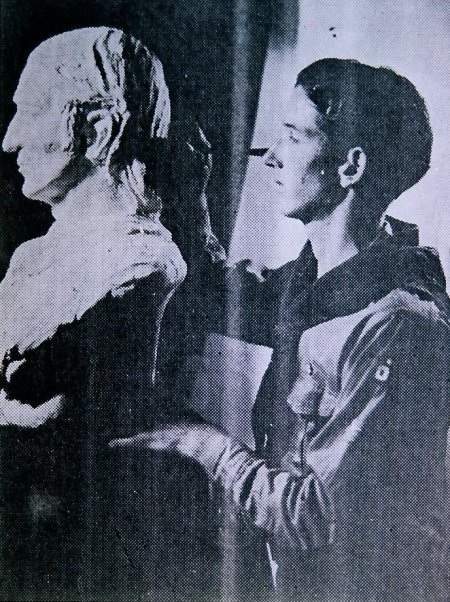
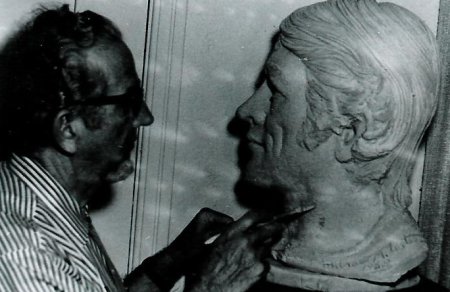
While Mr. Lester dabbled in painting, his real skill was in sculpting clay. He sculpted mammoth busts of great people from history like Martin Luther King Jr., Jim Thorpe, and Western movie star Tom Mixx. When he wasn’t working in his studio, he volunteered in various community organizations aimed at helping underprivileged Native and African Americans. Mr. Lester was very active in the African-American community in Oklahoma and founded the Oklahoma African-American Museum Hall of Fame.

When I first saw Mr. Lester at church, I never thought he would become a mentor and good friend to me. But by chance, I was asked to regularly visit him and his wife to help them out around their home. Little did I know the impact this man would have on my passage into manhood.

A few weekends a month throughout high school, I would drive up to Mr. Lester’s home in Guthrie to visit him. Our visits usually began with me doing some chore around the house or in his art studio. This often involved me pulling some weeds or moving the big clay busts around in his studio. He sometimes had me actually work on his busts. I remember doing some fine tuning to Tom Mixx’s hat and nose with a chisel and some sandpaper.

lester11 Every Man Needs a Man Mentor

After I finished my task, Mr. Lester and I would go to his living room or studio just to talk. He’d share with me stories from his life. I learned how as a teenager in the 1920’s, Mr. Lester hitchhiked all the way from Cheyenne, OK to San Antonio, TX just to see if the Alamo would display a bust of Davy Crockett that he had sculpted. They agreed. The sculpture is still there today.

He shared with me his experience as an art teacher for troubled students in inner city Los Angeles during the 1960s. This was an intense time to be a white guy living in that part of LA. Racial tensions were high and boiled over in 1965 during the Watts Riot. But despite being a white guy from Oklahoma, Mr. Lester was able to make fast friends with the students in his class. And he quickly became involved with helping the African-American community in the city.

With each story, Mr. Lester would always impart a life lesson. He’d used the story about his trip to San Antonio to teach me about doing whatever it takes to accomplish a goal in life. His experience in Los Angeles conveyed to me the importance of tolerance, respect, and compassion for people who are different from you and that a real man will stand up for the oppressed and downtrodden.

Mr. Lester would always ask me about what was going on in my life. He’d listen intently and provide some counsel and words of encouragement or sometimes a verbal kick in the butt if I needed it. After each visit with him, I felt uplifted and edified.

But my friend and mentor became sick. He was diagnosed with cancer. Our visits became shorter. It was hard to see this man who was once filled with mischief and vitality become weak from the chemo. But Mr. Lester still shared stories and lessons, and he still gave me advice and counsel.

Mr. Lester died during my senior year of high school. I remember driving up to Cheyenne, OK, to see Mr. Lester return to his birthplace. His final resting ground was appropriate; Cheyenne’s wide open skies and desert landscape provided enough room for a spirit as big as Mr. Lester’s to roam.

lester Every Man Needs a Man Mentor

Andrew Lester Working on a Bust

It’s been almost ten years since Andrew Lester died, but I can still vividly remember the conversations we had and the lessons he presented to me. From Mr. Lester, I learned the importance of being an honorable man. I learned that success in life requires tenacity and enthusiasm. I learned that the strong should look out for the weak. And I learned the value of respect towards all men, no matter their race, creed, or social background.

Read the rest of the post to see the four kinds of mentors most men need, and for how to become a mentor to others.