From The Good Men Project, this article by Jed Diamond looks at the importance of mentoring for boys and young men - and more than that, he looks at the importance of rites of passage.
“In the absence of elders, the impetuosity of youth becomes the slow death of the community.” Jed Diamond takes his grandson on a rite of passage.
I wrote recently about my preparations to take my 15 year-old grandson, Deon, for a four day, young men’s rites of passage, retreat. It was truly an adventure of a life-time for both of us and want to share a bit about the experience with you. I’ve long believed that mentoring is critical to the well-being of our children and grandchildren, particularly the young men. It’s also critical to the well-being of our communities. Many years ago I attended a mentoring workshop with ritual elder, Malidoma Somé. He said, “Elders and mentors have an irreplaceable function in the life of any community. Without them, the young are lost—their overflowing energies wasted in useless pursuits.” He went on to remind us that “old must live in the young like a grounding force that tames the tendency towards bold but senseless actions and shows them the path of wisdom. In the absence of elders, the impetuosity of youth becomes the slow death of the community.” Psychologist Robert Moore offers a chilling recognition of what happens when young men are not mentored or given initiations into manhood. He says we move from healthy masculinity to monster-boy masculinity. Comedian Elayne Boosler offers a humorous, yet insightful assessment about the different ways males and females deal with the stresses of life. “When women are depressed they either eat or go shopping. Men invade another country.” If we’re going to heal males and save humanity, there’s nothing more important than mentoring our young men. My grandson, Deon, was dealing with a lot of stress, had few mentors in his life, and his anger was causing problems at home and at school. He had gotten in trouble with some other kids and came to the attention of the local police. His father and mother (my daughter) were divorced and his father didn’t spend a lot of time with him. I was hoping that attending the 4 day “Call to Adventure Rites of Passage Retreat,” sponsored by the Los Angeles Men’s Center, would help him at this important transition time in his life. I chose the Men’s Center Call to Adventure (CTA) because I knew it was high quality and also because they reached out to inner city Black kids between the ages 12 and 20. My first wife and I adopted Angela when she was 3 ½ months old. She’s Black and has four kids. Deon is the oldest boy. I drove down from my home in Willits, picked Deon up at his home in Bakersfield, and headed for Los Angeles. Deon didn’t say much driving down. He’s a quiet kid. But he told me he wanted to do the retreat. We needed a rest stop so I pulled off the freeway in Encino and stopped at a small park. I had remembered it from my childhood. It was a place my father had taken me numerous times before I was five years old. I thought we might get inspiration from being there, but was not prepared for what my grandson had to say as we sat in the grass. “You said you were interested in some kind of rite of passage from boyhood to manhood. What is it you’re wanting to get from the experience?” I wanted to know. I expected his usual shake of the head or an “I don’t know.” But what he said was amazingly clear and concise. “I want three things,” he told me. “I need guidance. I also want more confidence. And I want respect.” I told him I thought with that kind of clarity and desire he would get what he wanted. I also asked him what he thought the qualities of a good man were for him. Again, I was surprised by his insights and vision. He gave me seven things he associated with being a good man.
A good man takes care of himself and his family.
A good man is a working man and has a job.
A good man knows what’s right and what is wrong.
If he’s right a good man stands up for himself, but doesn’t make the other person wrong.
A good man apologizes when he’s wrong.
A good man helps people when they need help.
A good man always has a back-up plan.
I’ve learned from many years of experience that no matter how clear our vision of what we want in life we’re not likely to be successful achieving it without a connection with mentors and a healing community. I had chosen this rite of passage experience because of the connection I’ve had with the founder of the Los Angeles Men’s Center, Dr. Stephen Johnson. I’ve known Stephen for more than 25 years and have found him to be one of the most grounded and compassionate men I know. He’s written a wonderful book, The Sacred Path: The Way of the Spiritual Warrior, that gathers his experiences working with men and providing Rites of Passage for both young males and adult men over the last 35 years. “Our young males are yearning for a sense of belonging,” says Johnson. “Inner city youth, succumbing to the dramatic absence of fathering and mentoring, turn to urban gangs for a sense of belonging. Males from privileged and underprivileged backgrounds often perceive acquisitions as the measure of manhood.” Johnson started offering the Call to Adventure retreats 14 years ago to make a difference in the lives of young men and older mentors. When we arrived at the site for the retreat, I was knocked out by the peace, serenity, and beauty of the place. It’s located on a bluff 800 feet above Camp Hess Kramer and the Pacific coast and boasts spectacular views of the ocean, Channel Islands and surrounding Santa Monica Mountains. It triggered memories from when I attended U.C. Santa Barbara and was embarking on my own journey to manhood. A good setting can go a long way towards a good experience and I was looking forward to seeing how the place would interact with the people and the program. We had arrived early and a staff member welcomed us and invited us to help build the sweat lodge which would be part of the ceremonial experience we would take part in later. I was tired from the drive, but Deon volunteered right away and went off with the guys to help. It turned out that the sweat lodge became one of the cornerstone experiences for Deon in the weekend. Our group participated the next day. We listened to Inipi Sweat Lodge Ceremony leader Thomas Alvarez describe the way in which the sweat lodge was used by native peoples throughout the world to cleanse, pray, and ask for guidance. One of the young men who had participated in a number of previous CTA retreats encouraged our group of adults and young men prior to going into the lodge. “This may be a new experience for many of you and it’s not the kind of thing most of us have done where we come from,” he told us. “But it can be a very powerful way of asking for guidance and getting support. It will be hot and dark and your natural tendency may be to get away as fast as you can, but hang in there if you can and you’ll get something important.” He also told us that sometimes we sweat for others who are carrying a lot pain and difficulty in their lives but can’t be there. He said he was doing this for himself and also for his twin brother who was in prison. I thought of my daughter Angela and her family and wanted to help carry some of the burden of the pain she lived with every day as she dealt with the stresses of her family life. There were “four rounds” to the experience and Thomas guided our prayers and sang to the spirits. It got very, very hot, but Deon and most of the others hung in there. By the end we all felt cleansed, had been forced to deal with our fears, and felt stronger for having gone through the experience together. After dinner that evening we met in small “tribal” groups with 10-15 adult mentors and kids. We went around the circle and talked a bit about why we were here. Deon opened up immediately and told the group, “I’m lost in my life and I need guidance.” Young and old knew what he meant and many opened up to their own feelings of being lost. For the first time I had a deep experience of the violence that so many of these kids live with every day. One boy talked about killings he had seen in his neighborhood and Deon also talked about people he knew who had been killed. Another young boy said that didn’t want a lot in life, just to know that he would survive another day. Steve Branker, one of the Men’s Center organizers said, “The pressures that these young men face in everyday life are astounding. Instead of primarily dealing with such things as schoolwork and girlfriends, they are dealing with whether or not they will come back alive after they walk out of their homes each day.” I thought to myself, “God, they’re so small and what they are dealing with is so big.” I felt the terrible loss and pain that so many experience, but also the courage they had to break free of the life of violence and to reach for something better. I felt deeply blessed to be able to share this experience with my grandson and the other mentors who were committed to helping these kids survive their childhood and grow into adults who had something they could look forward to in life. The next day we had the opportunity to confront the Ropes Course where leaders from Fulcrum, Inc. engaged us in taking risks to stretch ourselves and to celebrate their motto of Do, Risk, Grow and cultivate the potential greatness of each individual and the group as a whole. It was inspiring to see kids and adults reaching past their fear to test themselves and their limits.
As we gathered for our final goodbyes Stephen reminded us about why we were here and what we still had to accomplish. “Our boys, young men, and our mature men are calling on us to explore with clarity what the role of fathers, grandfathers, and mentors should be. If we do not provide a sacred role for our boys as they grow, they are more likely to join a gang, abuse their lovers, abandon their wives and children, subsist in emotional isolation, and become addicted, hyper-materialistic, lonely, and unhappy.”
“A boy needs a structure and discipline in which to learn who he is. He needs to live a journey that has clear responsibilities and goals. He needs a role in life. Without these, without the role training that accompanies these, he does not know his sacred and important objectives in life.” Deon leaned over and whispered to me, “Can I come back next year?” “If you want to come back, we’ll make it happen,” I told him. “And maybe we’ll get your dad and younger brother to come as well. What do you think?” He just smiled and nodded his head. ~ If you’d like to learn more about these important programs for mentoring young men, visit the Men’s Center website. ~ Read more on Mentoring & Volunteering. ~ Images courtesy of the author
As long-time readers know, I have had issues with the MKP organization but have found many of their members to be good men of heart and strength. Eivind is one of those men - this post originally appeared at his blog.
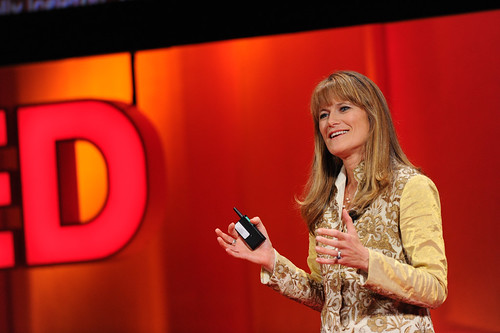
I am pretty sure I posted this at IOC back when it first was posted by the TED folks - but it's worth seeing more than once. She gets to the important insights about men at the 7:15 point in the talk - she really gets it (text at the bottom, but please listen to the whole talk).
I was very inspired by this incredible TED talk by Jacqueline Novogratz. Not only is she a wonderful, heart-open and humble woman deeply in tune with humanity’s challenges, but she has the visionary insight that male depression is related to female suffering. For some women, it’s very common today to think and say that men make women suffer because we are evil and uncontrollably violent, little else but walking testosterone bombs who need to be feminized to heal us from our inherent evils.*
Jacqueline understands that a young man who has not been loved, blessed or nourished by an elder man will turn into bitter, disempowered, depressed men who lash out from a place of pain and who are easy prey for tyrant demagogues. She also seems to understand how masculinity is a wonderful thing that the world needs more of, empowering men to serve as stewards of our future.
One story she told impacted me a great deal. Ingrid Washinawatok, a Native American woman, told Jacqueline how elders of her Native American tribe would visualize children from seven generations into the future watching them from above, seeing them as stewards for the time that was once going to be theirs. This concept is so powerful it strikes me right in the heart. All we think of in the midst of consumerist hysteria is “I need more”. Selfish, ignorant and altogether miserable are so many modern lives.
Have a look. Trust me, it’s worth your time.
* “All sex, even consensual sex between a married couple, is an act of violence perpetrated against a woman.” – Catherine MacKinnon * “The media treat male assaults on women like rape, beating, and murder of wives and female lovers, or male incest with children, as individual aberrations…obscuring the fact that all male violence toward women is part of a concerted campaign.” – Marilyn French
Here is the piece of the transcript that I find most moving for men, although the whole thing is excellent.
I also have been touched by the dark side of power and leadership. And I have learned that power, particularly in its absolute form, is an equal opportunity provider. In 1986, I moved to Rwanda, and I worked with a very small group of Rwandan women to start that country's first microfinance bank. And one of the women was Agnes -- there on your extreme left -- she was one of the first three women parliamentarians in Rwanda, and her legacy should have been to be one of the mothers of Rwanda. We built this institution based on social justice, gender equity, this idea of empowering women.
But Agnes cared more about the trappings of power than she did principle at the end. And though she had been part of building a liberal party, a political party that was focused on diversity and tolerance, about three months before the genocide, she switched parties and joined the extremist party, Hutu Power, and she became the Minister of Justice under the genocide regime and was known for inciting men to kill faster and stop behaving like women. She was convicted of category one crimes of genocide. And I would visit her in the prisons, sitting side-by-side, knees touching, and I would have to admit to myself that monsters exist in all of us, but that maybe it's not monsters so much, but the broken parts of ourselves, sadnesses, secret shame, and that ultimately it's easy for demagogues to prey on those parts, those fragments, if you will, and to make us look at other beings, human beings, as lesser than ourselves -- and in the extreme, to do terrible things.
And there is no group more vulnerable to those kinds of manipulations than young men. I've heard it said that the most dangerous animal on the planet is the adolescent male. And so in a gathering where we're focused on women, while it is so critical that we invest in our girls and we even the playing field and we find ways to honor them, we have to remember that the girls and the women are most isolated and violated and victimized and made invisible in those very societies where our men and our boys feel disempowered, unable to provide. And that, when they sit on those street corners and all they can think of in the future is no job, no education, no possibility, well then it's easy to understand how the greatest source of status can come from a uniform and a gun.
Sometimes very small investments can release enormous, infinite potential that exists in all of us. One of the Acumen Fund fellows at my organization, Suraj Sudhakar, has what we call moral imagination -- the ability to put yourself in another person's shoes and lead from that perspective. And he's been working with this young group of men who come from the largest slum in the world, Kibera. And they're incredible guys. And together they started a book club for a hundred people in the slums, and they're reading many TED authors and liking it. And then they created a business plan competition. Then they decided that they would do TEDx's.
And I have learned so much from Chris and Kevin and Alex and Herbert and all of these young men. Alex, in some ways, said it best. He said, "We used to feel like nobodies, but now we feel like somebodies." And I think we have it all wrong when we think that income is the link. What we really yearn for as human beings is to be visible to each other. And the reason these young guys told me that they're doing these TEDx's is because they were sick and tired of the only workshops coming to the slums being those workshops focused on HIV, or at best, microfinance. And they wanted to celebrate what's beautiful about Kibera and Mathare -- the photojournalists and the creatives, the graffiti artists, the teachers and the entrepreneurs. And they're doing it. And my hat's off to you in Kibera.