Showing posts with label gender relations. Show all posts

Thursday, October 30, 2014

Proposal - Relational Education Through Dance

http://www.theprospect.net/wp-content/uploads/2013/12/061010-MiddleSchool-Dance-001-L.jpg

One of the biggest issues I see in how young men relate to young women is the lack of empathy and compassion for their experience (and vice versa). There is, to me, a critical age for learning these skills, generally between the ages of 11-14, puberty.

Proposal

What if, say beginning in sixth grade, we divided up the boys and the girls and talked about how we relate to the opposite sex? Not just the usual "how babies are made" talk, but real, honest, ongoing talk about feeling nervous asking a girl to dance, about flirting, about appropriate language, about inappropriate language and behaviors, and so on.

What if then, after a semester of these ongoing conversations, we then taught kids to dance, formal dance, like the kind we learn for weddings? I suggest this because there is a formality and respect that this type of dance (waltz, rumba, foxtrot, salsa, etc.) entails that can help boys and girls to enact some of what they learn in the conversations that precede it and continue alongside it.

Imagine how much easier our lives might have been had we learned to dance as young people. But more importantly, imagine how much dating and relationships might have been had we learned some basic rules for conduct with the opposite sex (all of which is applicable to same-sex relationships, as well).

I'm sure that as an 11-year-old I would have been mortified at having to dance. I also know that kids get over this awkwardness pretty quickly once they begin to develop a sense of mastery.

http://www.uptowncollective.com/wp-content/uploads/2014/06/Washington-Heights-Kids-Ballroom-Dancing.jpg

I don't know. Maybe this would not work to change the patterns of how young adults interact, but it's worth a try.

Tuesday, May 20, 2014

The Gender Binary (Omnivore)

From Bookforum's Omnivore blog, a new collection of links looking at the gender binary (and Facebook's "antagonistic relationship to gender), the gender gap in pay, and variations on gender differences and gender essentialism.

The Gender Binary

May 19 2014
3:00PM


Sunday, May 18, 2014

BBC - Blurred Lines: The New Battle of the Sexes


From the BBC, this is an interesting look at the new culture of misogyny, "whether there's a new culture abroad in which it's acceptable to write about, talk about, and feature women in a sexually offensive, even abusive way. Or whether the female of the species just needs to 'man up', learn to enjoy a gag, and get used to the 21st century world." This is not only a British issue, as it seems maybe worse in the U.S.

Blurred Lines: The New Battle of the Sexes


Published on May 9, 2014
Blurred Lines: The New Battle of the Sexes - BBC Documentary, 2014


From bomb threats sent to campaigners for more females on banknotes to sexually explicit pop videos. From extreme laddism at universities to rape jokes in the school yard... Kirsty Wark explores whether there's a new culture abroad in which it's acceptable to write about, talk about, and feature women in a sexually offensive, even abusive way. Or whether the female of the species just needs to 'man up', learn to enjoy a gag, and get used to the 21st century world.
Kirsty Wark also participated in a Twitter question and answer session, the product of which is presented below.

Your questions to Kirsty Wark


Kirsty Wark  
Kirsty Wark held a Twitter Q&A on sexism and misogyny


How have men's attitudes towards women changed? Is the internet a naturally hostile place for women?

The BBC's Kirsty Wark answered your questions in a live Twitter Q&A on Friday 9 May.
This is an edited version of the session.

Question from @NUS_Vonnie: Where did the idea come from that "Freedom of Speech" means freedom to say things with no consequences?
Kirsty answers: Civil society evolved over centuries-the internet just decades. Need a web conduct code that's not censorious but courteous

Will Blaik emails: Is the increased misogyny that we see a reaction to misandry?
Kirsty answers: I'm not sure that misandry is as entrenched and overt as misogyny. I think it's more complicated than a simple reaction

Question from @dotluckhurst: Is it possible to change attitudes? Parents & schools must act more urgently.
Kirsty answers: Action in schools is the great hope because it's this generation who are growing up online. Schools must talk about it.

Chris emails: Can we encourage teenagers and young people to know, care and understand others around them?
Kirsty answers: I think many young people do care for those around them. But the pressures on them, eg from porn, are phenomenal

Question from @AliceBand1: I am so shocked by Grand Theft Auto. Shocked to the core. How is this allowed to exist?
Kirsty answers: It's perfectly legal. We asked Rockstar to take part but they declined. Why don't you write to them and ask?!

Question from @_raymatthew: Why do parents allow their children to "play" computer games that show rape?
Kirsty answers: Many parents just don't know what's in these games.They need to talk to kids; the activity needs to come out the bedroom

Question from @thegreenelk: It's a mistake to tie increase in misogyny with growth of internet - think it started with rap lyrics
Kirsty answers: Misogyny has been around probably as long as men and women! But certainly rap music language should be part of the debate

Andrew Soule emails: Women say they prefer male bosses & are derogatory towards females. Do women hold themselves back?
Kirsty answers: Sexism and misogyny is a mind-set not a gender. Sometimes women don't realise that they've internalised prejudice.

Question from @thinkingmuslim: Did you toy with the idea that the internet has its own culture & its misogyny doesn't enter real world?
Kirsty answers: The internet does have its own culture, but it's one that spill[s] into the real world. For young people it is the real world

Question from @Charlesknight: Why was the show entirely white?
Kirsty answers: Noted - misogyny affects women of all colours and creeds. Women of colour can experience an additional layer of prejudice

Question from @Jillaclogs: Do you think children's access to smartphones should be regulated? So many beartraps!
Kirsty answers: Certainly could be parental controls for pre-teens, but parents need to learn to use smartphones better than their kids!

Question from @louisegrant21: Has making #blurredlines made you more worried about misogyny or more hopeful it will die out?
Kirsty answers: The young women we spoke to who are standing up to sexism and misogyny makes me hopeful. They have real energy and purpose

Question from @julieohara79: Was excellent, any chance of a series?
Kirsty answers: Glad you enjoyed the documentary. The decision on a series is above our pay-grade!

Kirsty ends: Thanks for all your questions and comments. Sorry I couldn't answer all of them. Great to have the discussion. Newsnight calls!

For more tweets from Kirsty Wark you can follow her Twitter account.
Kirsty examined these issues in the BBC2 programme Blurred Lines: The New Battle of the Sexes. Twitter Q&A produced by Andree Massiah

Wednesday, July 31, 2013

Nick Smithers - Why We Have To Talk About Male Victims of Domestic Violence

From the Good Men Project, Nick Smithers tries to raise public awareness about male victims of domestic violence (in Scotland). The numbers in this country are sobering.

According to research by the Domestic Violence Research Group, intimate partner violence (IPV) is essentially bi-directional, and when it's unidirectional (aside from sexual coercion) women are more often the perpetrators (nearly 2:1 on average), yet men are more often arrested or incarcerated.
In conclusion, our results demonstrate the amount of overall IPV differed significantly among samples, but the percent that was categorized as bi-directional did not. This indicates that bi-directional violence is a common IPV pattern and suggests that women play a larger role in the occurrence of IPV than previously thought. Such findings have considerable implications for assessment, legal, intervention, and preventive efforts. It is suggested that if one resolution of the gender symmetry/asymmetry debate is to argue that there are subtypes of male and female intimate partner violence perpetrators, or that there are different patterns of violence amongst relationships characterized by IPV (Johnson, 2005; Johnson, 2006), researchers and clinicians will need to work to together to determine how to reliably and meaningfully make these determinations in ways that will facilitate our ability to effectively prevent and treat all types of IPV.
Here are some very sobering statistics on the rates of IPV and whether it is bi-directional, MFPV (male to female) or FMPV (female to male) among three populations (epidemiological, community, and college):
Among epidemiological/population samples, the average weighted rate of IPV reported was 16.3% (22.1% unweighted). Using weighted averages, among those reporting IPV, 57.9% of the IPV reported was bi-directional. Of the remaining 42.1% that was reported as uni-directional IPV, 13.8% was MFPV, 28.3% was FMPV, and the ratio of uni-directional FMPV to MFPV was 2.05 weighted (2.02 unweighted).
Among community samples, the average weighted rate of IPV reported was 47.0%. Using weighted averages, among those reporting IPV, 59.6% was bidirectional. Of the remaining 40.4% that was reported as uni-directional IPV, 17.5% was MFPV, 22.9% was FMPV, and the ratio of uni-directional FMPV to MFPV was 1.30 weighted (1.98 unweighted).
Among school and college samples, the average weighted rate of IPV reported was 39.2%. Using weighted averages, among those reporting IPV, 51.9% was bi-directional. Of the remaining 48.1% that was reported as uni-directional IPV, 16.2% was MFPV, 31.9% was FMPV, and the ratio of uni-directional FMPV to MFPV was 1.96 weighted (2.18 unweighted).
This information remains relatively unknown among the general population. This silence about gender-based violence is perpetuated by the overwhelming emphasis on male-perpetuated violence, which does tend to be more violent when it occurs.

Why We Have To Talk About Male Victims of Domestic Violence

JULY 27, 2013 BY NICK SMITHERS 


Nick Smithers works for a Scottish charity that wants male victims to be included in the public perception of domestic violence.


I recently started a new job as the National Development Officer for Abused Men in Scotland (AMIS), a charity that’s been working to improve services of male victims of domestic violence since 2010. Part of my role is to raise awareness of male victims which often means taking our message to events where the focus has traditionally been on women. Which is why, earlier this year I ending up co-presenting a workshop with a representative of a prominent organisation which provides essential supports to women who are fleeing abusive partners.

Conversations about male and female victims of domestic violence can often get reduced to arguments about gender politics. AMIS works hard to avoid this type of dialogue. As a frontline service we bring real expertise of working with male victims and we back this up with rigorous and original research such as our recent report on Men’s Experience of Domestic Abuse in Scotland.

One of the key themes that has emerged from our research is the extent to which the “public story” of domestic abuse is extremely pervasive—that being the notion that domestic abuse is perpetrated almost exclusively by men against women. It’s one thing knowing this, the challenge we face is finding ways to create a new public story that accounts for both male and female victims.

♦◊♦

As I sat in the hall awaiting the call to step up to stage and begin my presentation I was approached by the chairperson and informed that we would be joined by the Queen’s daughter the Princess Royal and asked whether I knew royal protocol. Well for those of you who live in more evolved democracies such things as royal protocol are likely to be something of a mystery – well, they are also a mystery to me, Scots born and bred. My innate urge to conform overcame any rebelliousness and I stood when expected, sat when instructed and generally behaved myself – I wanted to make friends and influence people of course.

While I sat on stage and listened to the informative and moving presentation by my co-presenter, my anxiety grew, as the heightened atmosphere in the hall became apparent. As my co-presenter sat down there was much muttering and whispering and I could see that there was some disagreement between Her Royal Highness and her consort. Horror, against her will the Princess was being ushered from the room before having the opportunity to hear about the experience of men in Scotland who are victim to domestic abuse, she turned and offered an apology to me as she was led away and I took to the lectern.

Well I hope I can say confidently that she missed something, as the talk attracted a good deal of interest and the majority of questions afterwards were related to my presentation. Many of the professionals from around Europe recognised the iniquity that I related affecting men. I had described the ingrained, gendered conceptualisation which renders male victimhood counter-intuitive. This can create a service vacuum where repeat victimisation of men can become a common occurrence from an uncomprehending system.

I was asked my view on the introduction of the term “gender based violence” (GBV) to replace ‘domestic abuse’ in many official publications and discourse. I suggested that this could be another barrier to men getting help as the implication was that GBV was male on female—the standard assumption. My co-presenter intervened to make what, to me, was a telling clarification. It was asserted that GBV was not about ‘who does what to whom’ but about why some people were victimised due to their gender.

♦◊♦

My co-presenter then stated that social construction theory explains this phenomenon as it illuminates the fact that men are brought up to control women and that this is the context for domestic abuse. Well I was somewhat taken aback by this statement which I could neither relate to on a personal level as a man nor on a professional level having worked with men in a deprived area of Edinburgh for six years.

This exchange has been reverberating in my mind since then. It seems to encapsulate an ideology which is the hidden, guiding hand of domestic abuse policy here in Scotland and beyond. While it was surprising for me to hear such a political definition of sex roles it was highly instructive as to why abused men in Scotland often suffer in silence.

Men experiencing domestic abuse can feel stigmatised and ashamed. In many cases men will not recognise their experience as domestic abuse such is the prevalence of the public story- they will believe it is something which only happens to women. It is imperative that the narrative around domestic abuse shifts to allow gender inclusive language to become the norm.

The first step is the recognition that significant numbers of men are experiencing domestic abuse but often feel that they have nowhere to turn for help.

I believe that if we keep speaking out for male victims then the public story about domestic violence will change and everyone — including the Princess Royal—will recognize that both male and female victims of domestic violence need our help and support.

♦◊♦

Photo Credit: Flickr/The New Institute

Thursday, April 18, 2013

Men Easily Attune to Other Men's Feelings, But Struggle Attuning to Women


The headline of this article surely comes as no surprise to anyone who has ever been in an opposite sex relationship. A study like this might lead a moron with a diploma mill degree to conclude that men are from Mars and women are from Venus. He'd be painfully wrong of course, but most Americans are desperate to understand why communication between the genders can be so challenging sometimes, so they will buy his book, which probably bears a similar title.

The hidden problem with a study like this is that they are claiming adult males are hardwired to be more attuned to other men and less so to women. But these are adults - we cannot say they are hard-wired at birth, since there is no way to ascertain that information. But there is considerable evidence from interpersonal neurobiology that social interactions and relationships shape the developing brain in profound ways.

For example, most boys grow up playing with other boys, not girls. This ongoing relational experience is going to wire their brains to be more attuned to male emotions because those are the people closest to them most of the time. But then these boys become teens and young adults and start hanging around with females (for the sake of this argument, the boys are heterosexual), and strangely, these female humans are emotionally quite different from their male friends.

Likewise, these young women have grown up mostly spending time with other women, and so their brains have become more attuned to female emotional expression. When they start dating young men, it may seem as though these young men are an alien species.

A study such as the one below does not take into account the socialization of men in all the years prior to their participation in the research study.

Here is the abstract and citation for the original study that is summarized below.
Abstract 
Men are traditionally thought to have more problems in understanding women compared to understanding other men, though evidence supporting this assumption remains sparse. Recently, it has been shown, however, that meÅ„s problems in recognizing women’s emotions could be linked to difficulties in extracting the relevant information from the eye region, which remain one of the richest sources of social information for the attribution of mental states to others. To determine possible differences in the neural correlates underlying emotion recognition from female, as compared to male eyes, a modified version of the Reading the Mind in the Eyes Test in combination with functional magnetic resonance imaging (fMRI) was applied to a sample of 22 participants. We found that men actually had twice as many problems in recognizing emotions from female as compared to male eyes, and that these problems were particularly associated with a lack of activation in limbic regions of the brain (including the hippocampus and the rostral anterior cingulate cortex). Moreover, men revealed heightened activation of the right amygdala to male stimuli regardless of condition (sex vs. emotion recognition). Thus, our findings highlight the function of the amygdala in the affective component of theory of mind (ToM) and in empathy, and provide further evidence that men are substantially less able to infer mental states expressed by women, which may be accompanied by sex-specific differences in amygdala activity.
Full Citation: 
Schiffer B, Pawliczek C, Müller BW, Gizewski ER, Walter H (2013) Why Don't Men Understand Women? Altered Neural Networks for Reading the Language of Male and Female Eyes. PLoS ONE 8(4): e60278. doi:10.1371/journal.pone.0060278

Study: Men Struggle to Read Women’s Emotions


By Bill Andrews | April 12, 2013


In a paper sure to please lazy stand-up comics and beleaguered husbands everywhere, scientists say that men do indeed have a hard time understanding women. Recent results show that men have a significantly harder time recognizing women’s emotions than they do men’s, and that men seem to use different parts of their brain when ascribing intentions and feelings to women versus men.

Previous experiments had suggested that men are naturally wired to be more intuitive toward other men’s mental states and emotions. Eager to figure out why and how this could be, the researchers studied the brains of 22 male participants as they received a version of a well-known empathy test called the “Reading the Mind in the Eyes Test.” (You can take a version of the test online here.) As the name suggests, the test consists of snapshots of pairs of eyes. Pairs of eyes were shown in succession to each participant, who had to determine either the gender or the emotional state of the person pictured. This all took place within an MRI machine, allowing the researchers to see which parts of the brain were active while participants made their determinations.

Participants were about equally good at guessing the gender of male and female eyes, but the men did significantly worse at recognizing the emotions of the female eyes. They correctly interpreted about 87 percent of men’s eyes but only about 76 percent of women’s eyes. Participants also took longer to judge women’s emotions—about 40 milliseconds longer on average. Thus, in effect, men can “read” other men’s eyes faster and better, the researchers report in PLOS ONE.

The MRI data also showed for the first time that this difference is linked to different areas of brain activity. Men inferring other men’s mental states showed much more activity in the right hippocampus and the anterior cingulate cortex than men reading women’s emotions. Those two brain areas are involved in the acquisition of emotional memories, and so it may be that men were drawing more strongly on their own remembered experiences when imagining others men’s emotions.

The authors speculate that, evolutionarily, it would have been most useful for men to quickly and accurately interpret other men’s facial expressions, since males were more heavily involved in violent activities like hunting and territorial battles. Of course, just because “men are less able to infer mental states expressed by women,” as the authors put it, doesn’t mean that men find women completely inscrutable. The results show noticeable, but still generally subtle, differences. Plenty of men have still been known to lead long and happy lives (mostly) understanding women.

Image courtesy Dave Clark Digital Photo / Shutterstock

Tuesday, February 5, 2013

The Three Most Anti-Male Commercials from this Year's Super Bowl


This article comes from the Men's Anti-Violence Council. They offer their analysis of this year's Super Bowl commercials and find three of them especially derogatory toward men in various ways. What do you think?

Superbowl 2013 Ads: New Ads, More of the Same Pandering

By mensantiviolencecouncil

It is that time of year again. Arguably one of the highest rated programs in the country, the superbowl commands top tier, star studded advertising like none other.

If you are anything like me, this might be one of the few times you stick around FOR the ads.

If economic theory tells us anything, then the sky high costs of advertising for during the superbowl (estimated to cost well over $3 million per thirty second spot) should say what companies think sells with the American public.

So what is selling these days?

Besides the usual animated babies (in space!), amazing cameos (including Seth Rogen/Paul Rudd and Amy Poehler), Clydesdales, and farmers; the super bowl also featured a number of questionable choices as well.

What do I mean by “questionable choice?” I mean that these three commercials represent some of the worst advertising gender tropes and objectifications of the game.

3. If it has boobs, men will buy it.

GoDaddy is arguably one of the worst offenders of the bunch. It ranks as number three because their efforts are half-hearted and transparent. As a technology company that builds websites, nudity and sex has absolutely nothing to do with their services or their products. Yet like the game companies that sponsor “booth babes,” GoDaddy makes a wide assumption that men, particular men in the technology field, are helpless at the sight of buxom and scantily clad women. It is an endorsement of the objectification of women as “flair” for technology products. Furthermore, as someone who fancies himself a male geek, I am offended. You can check out their video here:


2. Men who do not conform to gender codes are an object of derision

I’m a little torn on including the Dorrito’s commercial on this list, but ultimately, I think the ad falls short of its intended purpose (dorritos will make us do anything) and instead ends up casting aside the men who don women’s clothing to play tea party with their daughters as emasculated. This is shown in two parts, one of which being the mother who chastises the husband and the other in the fact that even wearing women’s clothing the men egg each other on, less like an enjoyment of the setting and more like a fraternity hazing event.

Feel free to disagree, but you can find positive images of cross dressing, but this is not one of them.


1. Women are less important than objects

Objectification of women has long been a part of media strategy. It has percolated in US culture in a plethora of ways from the phrase “I would tap THAT” (emphasis added), and Comedian Daniel Tosh who joked about how “funny” it would be if a heckler at his show was suddenly gang raped.

I’m no expert on humor, but I imagine a few women in New Delhi, Steubenville Ohio, Montana, and across the world would disagree. As a man I disagree. But such is the freedom of speech. It allows us to debate about humor but does not and should not condone violence of the most intimate variety.

Which is why Gildan’s, a t-shirt manufacture, initial foray into brand advertising was so surprising. A man sneaking away from a one night stand, clearly suffering the affects of too much alcohol, is more concerned with his shirt than the woman he slept with is disquieting in ways that the other commercials are not. Whether this was the result of trying to start a national ad campaign for the first time or some greater design, their commercial hits the number one problematic advertisement of Superbowl 2013. Not because of its overt content, but for the implicit messages that it seems to condone.


But that is just one person’s opinion. What did you think of the 2013 ads?

EDIT: Dishonorable mention goes to Volkswagon for the cooption of a Jamaican accent. It plays on stereotypical notions of accent, attitudes, and behaviors. Perhaps not the worst offender everywhere, but problematic none the less.

Monday, December 24, 2012

Julie Gillis - Men Deserve Real Empathy, Not Deference

Yesterday I posted an article by Christy Wampole from the New York Times on guns and the decline of young men. Over at the Good Men Project, Julie Gillis posted a response later in the day - and Gillis believes men need some real empathy and compassion, not deference, as suggested by Wampole.

Men Deserve Real Empathy, Not Deference

DECEMBER 23, 2012 BY JULIE GILLIS


Julie Gillis challenges a New York Times Op-Ed that insists that women should show deference to the men who feel they are losing privilege in a changing world. 
Recently, in light of the Connecticut shootings, Christy Wampole wrote an article for the NYT Opinionator blogs about young men, guns, their feelings of disassociation and rage.

If the soldier has largely been replaced by the video game character and the drone, if the mothers have proven that they can raise the children alone, if the corporations are less able or willing to guarantee the possibility of upward mobility and some level of respect that comes with title, if someone else can bring home the bacon, what is left for young men?

She then relates how we (women) should show more empathy in the form of deference to these young men who are suffering from losing privilege in the world, who are feeling lost and useless.

Empathy could serve many of us: those who have not yet put themselves in the position of a person who is losing their power and those who can aim a gun at someone without imagining themselves on the other end of the barrel. For those of us who belong to a demographic that is doing increasingly better, a trained empathic reflex toward those we know to be losing for our gains could lead to a more deferential attitude on our part and could constitute an invitation for them to stay with us. To delight in their losses and aim at them the question, “How does it feel?” will only trigger a cycle of resentment and plant the seeds for vengeance. It is crucial to accommodate the pain of others.

Hugo Schwyzer wrote a good takedown of the piece, though I have to admit it was a little too sarcastic for my tastes, but something hit me about what he said and hard.

Wampole doesn’t recommend that women defer to men out of respect for masculine authority, but out of empathy for those suffering from Post-Patriarchal Depression. But why should empathy require deference rather than a passing acknowledgement that yeah, life can be confusing for many young men today? 
Read the whole post.

Thursday, June 28, 2012

Men and Feminism: A Good Men Project Roundtable

A disturbing number of men tend toward the opinion that if we are devoted to helping men, then we must, by default, oppose feminism. There seems to be a tendency toward defining all feminism (and feminists) by the rantings of the most extreme voices in the feminist cause - the radical feminists.

Clearly not all men's movement guys are SNAGs (sensitive New Age guys) or misogynists, so it is equally true that not all feminists are man-haters. Why is that so hard to accept?

The Good Men Project has convened a roundtable on men and feminism - some views I understand, some I do not. I'll let you decide which ones are worthwhile.

Men and Feminism: A Good Men Project Roundtable


If there’s one thing we’re all about here at the Good Men Project, it’s discussion. So when our erstwhile founder Tom Matlack wrote a controversial post about how he sees the role of feminism in discussions of men’s issues, we figured this was something worth talking about. Below you’ll find Tom’s original post, as well as a collection of response pieces from a number of our favorite contributors, representing many different points of view on this important issue.

Why Being a Good Man is NOT a Feminist Issue

Tom Matlack envisions a place where men can share stories of their struggle for goodness man-to-man apart from what women or feminists might say about that story.

♦◊♦

Why Being a Good Man is Definitely a Feminist Issue

Noah Brand makes the case that gender theory applies to both genders.
♦◊♦

These Are The Stories that Change Everything

Lisa Hickey responds to an article in The Atlantic about ‘having it all’ and debates feminism and Tom Matlack along the way.

♦◊♦

Is Men vs. Feminism Even a Relevant Discussion?

Jesse Kornbluth asks why, with women’s rights under attack in America and around the world, we should argue about who gets to be in the club against these abuses.

Sunday, March 18, 2012

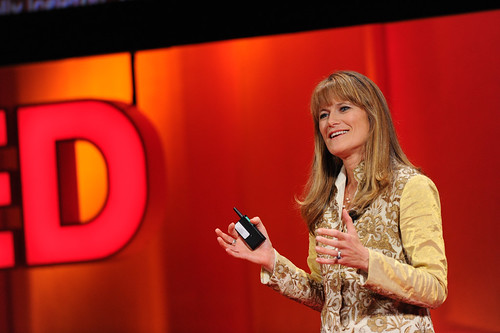
Eivind Skjellum - Amazing Lecture by Jacqueline Novogratz


Eivind Skjellum is the man behind Masculinity Movies, which is only occasionally active at the moment, but since completing the New Warrior Training Adventure in June 2011, he has been blogging from time to time at The Mankind Project Journal.

As long-time readers know, I have had issues with the MKP organization but have found many of their members to be good men of heart and strength. Eivind is one of those men - this post originally appeared at his blog.

I am pretty sure I posted this at IOC back when it first was posted by the TED folks - but it's worth seeing more than once. She gets to the important insights about men at the 7:15 point in the talk - she really gets it (text at the bottom, but please listen to the whole talk).

Amazing lecture by Jacqueline Novogratz

March 5, 2012 

I was very inspired by this incredible TED talk by Jacqueline Novogratz. Not only is she a wonderful, heart-open and humble woman deeply in tune with humanity’s challenges, but she has the visionary insight that male depression is related to female suffering. For some women, it’s very common today to think and say that men make women suffer because we are evil and uncontrollably violent, little else but walking testosterone bombs who need to be feminized to heal us from our inherent evils.*

Jacqueline understands that a young man who has not been loved, blessed or nourished by an elder man will turn into bitter, disempowered, depressed men who lash out from a place of pain and who are easy prey for tyrant demagogues. She also seems to understand how masculinity is a wonderful thing that the world needs more of, empowering men to serve as stewards of our future.

One story she told impacted me a great deal. Ingrid Washinawatok, a Native American woman, told Jacqueline how elders of her Native American tribe would visualize children from seven generations into the future watching them from above, seeing them as stewards for the time that was once going to be theirs. This concept is so powerful it strikes me right in the heart. All we think of in the midst of consumerist hysteria is “I need more”. Selfish, ignorant and altogether miserable are so many modern lives.

Have a look. Trust me, it’s worth your time.


* “All sex, even consensual sex between a married couple, is an act of violence perpetrated against a woman.” – Catherine MacKinnon
* “The media treat male assaults on women like rape, beating, and murder of wives and female lovers, or male incest with children, as individual aberrations…obscuring the fact that all male violence toward women is part of a concerted campaign.” – Marilyn French
 Here is the piece of the transcript that I find most moving for men, although the whole thing is excellent.
I also have been touched by the dark side of power and leadership. And I have learned that power, particularly in its absolute form, is an equal opportunity provider. In 1986, I moved to Rwanda, and I worked with a very small group of Rwandan women to start that country's first microfinance bank. And one of the women was Agnes -- there on your extreme left -- she was one of the first three women parliamentarians in Rwanda, and her legacy should have been to be one of the mothers of Rwanda. We built this institution based on social justice, gender equity, this idea of empowering women.

But Agnes cared more about the trappings of power than she did principle at the end. And though she had been part of building a liberal party, a political party that was focused on diversity and tolerance, about three months before the genocide, she switched parties and joined the extremist party, Hutu Power, and she became the Minister of Justice under the genocide regime and was known for inciting men to kill faster and stop behaving like women. She was convicted of category one crimes of genocide. And I would visit her in the prisons, sitting side-by-side, knees touching, and I would have to admit to myself that monsters exist in all of us, but that maybe it's not monsters so much, but the broken parts of ourselves, sadnesses, secret shame, and that ultimately it's easy for demagogues to prey on those parts, those fragments, if you will, and to make us look at other beings, human beings, as lesser than ourselves -- and in the extreme, to do terrible things.

And there is no group more vulnerable to those kinds of manipulations than young men. I've heard it said that the most dangerous animal on the planet is the adolescent male. And so in a gathering where we're focused on women, while it is so critical that we invest in our girls and we even the playing field and we find ways to honor them, we have to remember that the girls and the women are most isolated and violated and victimized and made invisible in those very societies where our men and our boys feel disempowered, unable to provide. And that, when they sit on those street corners and all they can think of in the future is no job, no education, no possibility, well then it's easy to understand how the greatest source of status can come from a uniform and a gun.

Sometimes very small investments can release enormous, infinite potential that exists in all of us. One of the Acumen Fund fellows at my organization, Suraj Sudhakar, has what we call moral imagination -- the ability to put yourself in another person's shoes and lead from that perspective. And he's been working with this young group of men who come from the largest slum in the world, Kibera. And they're incredible guys. And together they started a book club for a hundred people in the slums, and they're reading many TED authors and liking it. And then they created a business plan competition. Then they decided that they would do TEDx's.

And I have learned so much from Chris and Kevin and Alex and Herbert and all of these young men. Alex, in some ways, said it best. He said, "We used to feel like nobodies, but now we feel like somebodies." And I think we have it all wrong when we think that income is the link. What we really yearn for as human beings is to be visible to each other. And the reason these young guys told me that they're doing these TEDx's is because they were sick and tired of the only workshops coming to the slums being those workshops focused on HIV, or at best, microfinance. And they wanted to celebrate what's beautiful about Kibera and Mathare -- the photojournalists and the creatives, the graffiti artists, the teachers and the entrepreneurs. And they're doing it. And my hat's off to you in Kibera.