The world’s first advertisement for sex is a work of art
"When sex becomes a routine it is necessary to change something," artist Matus the First said of his ad VIDEO
Jenny Kutner | Wednesday, Oct 15, 2014
(Credit: Matus the First via Metropolitan Film Institute)
Sex is the most common theme in advertisements, and yet… when has there ever been an advertisement for sex? When has there ever needed to be an advertisement for sex? It’s about the one thing in the world that doesn’t need to be promoted for people to want it, buy it or have it.
But that’s not always true, as Slovak artist Matus the First claims, and he’s right. People lose touch, get disconnected and or fall into a routine. Sex becomes rote, or it doesn’t happen at all. With that in mind, Matus created what is believed to be the world’s first ad purely for the sex act; it’s not selling anything else, just the idea of having sex.
“When sex becomes a routine it is necessary to change something,” Matus told The Mirror. “Therefore this is not a product commercial, because you can’t buy a solution to some things. … I felt though that in some cases it might be important for people to change something in their minds and this commercial is not only about sex but also about thinking.”
advertisement
The spot doesn’t explicitly depict any actual sex. Instead, Matus relies on the classic “pencil sharpener” metaphor to indicate penetration. That means the commercial is just a little NSFW, and definitely not intended for television. “The commercial was produced to share on the Internet,” Matus said. So, here it is.
Watch Matus the First’s first advertisement for sex below:
(h/t Jezebel)
Jenny Kutner is an assistant editor at Salon, focusing on sex, gender and feminism. Follow @jennykutner or email jkutner@salon.com.
Showing posts with label commercials. Show all posts
Showing posts with label commercials. Show all posts
Wednesday, October 15, 2014
The World’s First Advertisement for Sex is a Work of Art (via Salon)
An ad promoting sex, who woulda thunk!? The visuals are actually pretty inventive. It's only NSFW at the very end (word, not images).


Wednesday, March 12, 2014
What the Summer's Eve "Manly Mistake" Commercial Says about Men and Femininity
Wow, I had not seen this commercial. I'm sure it's supposed to be incredibly over-the-top and maybe the reaction below is taking it too seriously. But even in satire there are serious truths. For men, any hint of femininity is to be feared and immediately rejected with as much manliness as possible.
Femininity: Feared and Reviled
by Lisa Wade, PhD,

The paradox: masculinity is strength, power, and dominance… but femininity is terrifying. Gender rules insist that men must avoid association with the feminine at all costs because, if they do not, they are weak. They are pussies, bitches, women, girls. Femininity is weakness and yet, oddly, it has the power to strip men of their manliness. It is as if, as sociologist Gwen Sharp once put it, “masculinity is so fragile that apparently even the slightest brush with the feminine destroys it.”
Behold the best example of this phenomenon ever:
Let’s be clear. The reason he’s afraid of femininity is because it’s reviled. It makes you a woman, which makes you worthless. Which is fine for the ladies, but dudes are advised to avoid personal denigration if at all possible.
Thanks Summer’s Eve, you make my job easy.
Lisa Wade is a professor of sociology at Occidental College. You can follow her on Twitter and Facebook.
Tuesday, September 10, 2013
Best. Beer. Commercial. EVER.

Commercial from Guinness, text from Huffington Post.
Created by BBDO New York, the ad features a group of wheelchair basketball players.. with an unexpected twist at the end.Most everyone has probably seen this already, but I wanted to post it here for those who haven't seen it.
Watch it for yourself and be prepared for some serious heartstring-pulling at the end. Let's just say that it's not your average beer commercial.
Monday, June 17, 2013
Codes of Gender - Documentary

I think I posted this here before, but it's an interesting video definitely worth a viewing, or maybe a second viewing. This documentary offers a cogent analysis (using Irving Goffman's examination of advertising and the contemporary commercial landscape) shows how influential advertising media is in communicating "normative ideas about masculinity and femininity, the relationship between gender and power, and the everyday performance of cultural norms."
The Codes of Gender
The Codes of Gender applies the late sociologist Erving Goffman’s ground-breaking analysis of advertising to the contemporary commercial landscape, showing how one of American popular culture’s most influential forms communicates normative ideas about masculinity and femininity, the relationship between gender and power, and the everyday performance of cultural norms.
In striking visual detail, this film explores Goffman’s central claim that gender ideals are the result of ritualized cultural performance, uncovering a remarkable pattern of masculine and feminine displays and poses.
The film looks beyond advertising as a medium that simply sells products, and beyond analyses of gender that focus on biological difference or issues of objectification and beauty, to provide a clear-eyed view of the two-tiered terrain of identity and power relations.
With its sustained focus on how our perceptions of what it means to be a man or a woman get reproduced and reinforced on the level of culture in our everyday lives, the film is a great introduction to socially and culturally constructed gender roles.

Tuesday, May 14, 2013
KATHRYN DEHOYOS - NEW STUDY: Macho Advertising Encourages Hyper-Masculinity
From The Good Men Project, a brief report on how macho advertising leads to hyper-masculine behaviors in men. The research, published in the May issue of Sex Roles, found that “print ads targeting men also encourage them to aspire to an unrealistic and potentially harmful brand of masculinity,” what is often referred to as hyper-masculinity, defined in the paper as “gender-based ideology of exaggerated beliefs about what it is to be a man.”
Nearly all advertising aimed at men is essentially "macho," so this problem is so pervasive that it seems unlikely that it will change any time soon.
Nearly all advertising aimed at men is essentially "macho," so this problem is so pervasive that it seems unlikely that it will change any time soon.
NEW STUDY: Macho Advertising Encourages Hyper-Masculinity
MAY 9, 2013 BY KATHRYN DEHOYOS
Hyper-masculine advertising has been found to encourage men to an “unrealistic and potentially harmful brand of masculinity.”
A new study published in the most recent issue of Sex Roles suggests that sexist advertising aimed at men is just as damaging as that aimed at women. According to the report, researchers found that “print ads targeting men also encourage them to aspire to an unrealistic and potentially harmful brand of masculinity,” otherwise known as hyper-masculinity, which the paper defines as “gender-based ideology of exaggerated beliefs about what it is to be a man.”
Psychologists from the University of Manitoba studied the ads in 8 US men’s magazines which were published in 2007-2008, the publications were “differentiated by readership age, education, and household income,” and the ads were analyzed for any “hyper-masculine depictions.” What researchers found was that at least 50% of the ads in most magazines, and as many as 90% in some promoted one or more of the following hyper-masculine beliefs:
The study indicates that throughout the ads which were analyzed, “The beliefs that toughness equals control and that danger is exciting were more common than the belief that violence is manly or callousness towards women and sex.” Research also showed that hyper-masculine ads were significantly more common in magazines geared toward “younger, lower-income, and less educated readers.” In other words, those who are most at-risk for “appropriating such beliefs and behaviors.” The study also asserts that the perpetuation of the hyper-masculine images in the advertisements is problematic because it “exposes readers to these beliefs and normalizes them.”
- Danger is exciting.
- Toughness is a form of emotional self-control.
- Violence is manly.
- It’s fine to be callous about women and sex.
Photo: FontShop/Flickr

* * * * * * *
Full Citation:
Vokey, M, Tefft, B, Tysiaczny, C. (2013, May). An Analysis of Hyper-Masculinity in Magazine Advertisements. Sex Roles, Volume 68, Issue 9-10, pp 562-576. DOI: 10.1007/s11199-013-0268-1An Analysis of Hyper-Masculinity in Magazine Advertisements
Megan Vokey, Bruce Tefft, Chris Tysiaczny
Abstract
Hyper-masculinity is a gender-based ideology of exaggerated beliefs about what it is to be a man. HM consists of four inter-related beliefs, namely toughness as emotional self-control, violence as manly, danger as exciting, and calloused attitudes toward women and sex (Zaitchik & Mosher1993). Adherence to HM is linked to a host of social and health problems in North America, such as dangerous driving and violence toward women (Parrot & Zeichner 2003). Advertising is believed to play a role in constructing hyper-masculinity (Kilbourne 1999). In this study, eight U.S. men’s magazines published in 2007–2008, differentiated by readership age, education, and household income, were analyzed for hyper-masculine depictions in their advertisements. Using a behavioural checklist with good inter-rater reliability, it was found that 56 % (n = 295) of 527 advertisements depicted one or more hyper-masculine beliefs. Some magazines depicted at least one hyper-masculine belief in 90 % or more of advertisements. In addition, reader age, education, and income were all inversely related to the prevalence of hyper-masculine beliefs, with HM depictions presented more often in advertisements targeting young, less educated, and less affluent men. Implications of these findings for the well-being of men and society are discussed.
Tuesday, February 5, 2013
The Three Most Anti-Male Commercials from this Year's Super Bowl

This article comes from the Men's Anti-Violence Council. They offer their analysis of this year's Super Bowl commercials and find three of them especially derogatory toward men in various ways. What do you think?
Superbowl 2013 Ads: New Ads, More of the Same Pandering
By mensantiviolencecouncil
It is that time of year again. Arguably one of the highest rated programs in the country, the superbowl commands top tier, star studded advertising like none other.
If you are anything like me, this might be one of the few times you stick around FOR the ads.
If economic theory tells us anything, then the sky high costs of advertising for during the superbowl (estimated to cost well over $3 million per thirty second spot) should say what companies think sells with the American public.
So what is selling these days?
Besides the usual animated babies (in space!), amazing cameos (including Seth Rogen/Paul Rudd and Amy Poehler), Clydesdales, and farmers; the super bowl also featured a number of questionable choices as well.
What do I mean by “questionable choice?” I mean that these three commercials represent some of the worst advertising gender tropes and objectifications of the game.
3. If it has boobs, men will buy it.
GoDaddy is arguably one of the worst offenders of the bunch. It ranks as number three because their efforts are half-hearted and transparent. As a technology company that builds websites, nudity and sex has absolutely nothing to do with their services or their products. Yet like the game companies that sponsor “booth babes,” GoDaddy makes a wide assumption that men, particular men in the technology field, are helpless at the sight of buxom and scantily clad women. It is an endorsement of the objectification of women as “flair” for technology products. Furthermore, as someone who fancies himself a male geek, I am offended. You can check out their video here:
2. Men who do not conform to gender codes are an object of derision
I’m a little torn on including the Dorrito’s commercial on this list, but ultimately, I think the ad falls short of its intended purpose (dorritos will make us do anything) and instead ends up casting aside the men who don women’s clothing to play tea party with their daughters as emasculated. This is shown in two parts, one of which being the mother who chastises the husband and the other in the fact that even wearing women’s clothing the men egg each other on, less like an enjoyment of the setting and more like a fraternity hazing event.
Feel free to disagree, but you can find positive images of cross dressing, but this is not one of them.
1. Women are less important than objects
Objectification of women has long been a part of media strategy. It has percolated in US culture in a plethora of ways from the phrase “I would tap THAT” (emphasis added), and Comedian Daniel Tosh who joked about how “funny” it would be if a heckler at his show was suddenly gang raped.
I’m no expert on humor, but I imagine a few women in New Delhi, Steubenville Ohio, Montana, and across the world would disagree. As a man I disagree. But such is the freedom of speech. It allows us to debate about humor but does not and should not condone violence of the most intimate variety.
Which is why Gildan’s, a t-shirt manufacture, initial foray into brand advertising was so surprising. A man sneaking away from a one night stand, clearly suffering the affects of too much alcohol, is more concerned with his shirt than the woman he slept with is disquieting in ways that the other commercials are not. Whether this was the result of trying to start a national ad campaign for the first time or some greater design, their commercial hits the number one problematic advertisement of Superbowl 2013. Not because of its overt content, but for the implicit messages that it seems to condone.
But that is just one person’s opinion. What did you think of the 2013 ads?
EDIT: Dishonorable mention goes to Volkswagon for the cooption of a Jamaican accent. It plays on stereotypical notions of accent, attitudes, and behaviors. Perhaps not the worst offender everywhere, but problematic none the less.
Wednesday, April 11, 2012
Documentary - The Codes of Gender: Identity and Peformance in Pop Culture
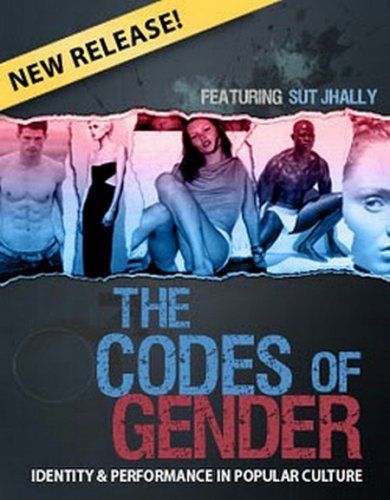
This is an edited version (for nudity and length) of a slightly longer documentary (full version here) applying the sociological theories of Erving Goffman to the most ubiquitous (and powerful?) form of gender-norming in our culture, commercials and advertising (as well as films and TV). Here is the filmmaker's statement about their work, from their website (credit where credit is due, I first found this film at Top Documentary Films):
Codes of Gender, The Identity and Performance in Pop Culture
Written and directed by MEF Executive Director Sut Jhally, The Codes of Gender applies the late sociologist Erving Goffman's groundbreaking analysis of advertising to the contemporary commercial landscape, showing how one of American popular culture's most influential forms communicates normative ideas about masculinity and femininity.
In striking visual detail, The Codes of Gender explores Goffman's central claim that gender ideals are the result of ritualized cultural performance, uncovering a remarkable pattern of masculine and feminine displays and poses. It looks beyond advertising as a medium that simply sells products, and beyond analyses of gender that focus on biological difference or issues of objectification and beauty, to provide a clear-eyed view of the two-tiered terrain of identity and power relations.
With its sustained focus on how our perceptions of what it means to be a man or a woman get reproduced and reinforced on the level of culture in our everyday lives, The Codes of Gender is certain to inspire discussion and debate across a range of disciplines.
Viewer Discretion Advisory: This program contains violence, nudity, and sexual themes.
DVD contains two versions: a full length version (73 minutes) and an abridged version (46 minutes) which has been edited for nudity and length.
Sections: Sex and Gender | The Feminine Touch | The Ritualization of Subordination | Licensed Withdrawal | Infantilization | The Codes of Masculinity | Trapped in the Code | History, Power, and Gender Display
You can read Goffman's analysis of advertising and gender on Scribd. Granted, this is an extreme reading of cultural images, but there is more truth to this than not, in my opinion.
Whether you agree with this reading of gender-norming or not, there is much in this documentary (and I have only seen the edited version included here) to inspire thought and discussion.
Tuesday, February 7, 2012
Chrysler - Clint Eastwood - Halftime in America
This is widely considered to be the best commercial from Sunday's Super Bowl. Two years running, now, Chrysler has delivered inspiring ads that are less about their cars and more about the people of Detroit and the nation we live in (last year it was the Eminem commercial).
Clint Eastwood was the perfect spokesman for this spot - he embodies the rugged masculine strength Chrysler wanted to project, as well as the sensitivity he has become known for as a film director.
For the most part, corporations are all about the money, but even in that pursuit, they can sometimes offer a glimpse of "our better angels." This two minute ad cost them about $14 million just for the airtime, not counting the production and the fees to the ad agency (commercials cost an average of $3.5 million for a 30-second spot this year).
Chrysler - Clint Eastwood - Super Bowl Commercial
Clint Eastwood was the perfect spokesman for this spot - he embodies the rugged masculine strength Chrysler wanted to project, as well as the sensitivity he has become known for as a film director.
For the most part, corporations are all about the money, but even in that pursuit, they can sometimes offer a glimpse of "our better angels." This two minute ad cost them about $14 million just for the airtime, not counting the production and the fees to the ad agency (commercials cost an average of $3.5 million for a 30-second spot this year).
Chrysler - Clint Eastwood - Super Bowl Commercial
As reported in the LA Times, two of the three writers credited with writing that ad are part of literary world, a poet and fiction writer. Interesting.
[O]f the three people credited as copywriters on the powerful Chrysler advertisement above, the one featuring Clint Eastwood that aired for the first time during Sunday's Super Bowl, one is poet Matthew Dickman.Dickman -- whose twin brother, Michael, is also a poet -- is the poetry editor of Tin House magazine. He's got one collection, "All-American Poem," and has been published by many fine magazines, including Narrative and the New Yorker. He's won a number of prestigious awards. But none of those things makes him a shoo-in for a Chrysler Super Bowl ad.The advertising firm that created the spot is Wieden & Kennedy, the Portland, Ore., firm known for its seminal Nike ads. Dickman, too, is based in Portland.Maybe that explains it. But it wouldn't explain one of Dickman's co-authors, Smith Henderson. I suspect he is the short story writer Smith Henderson, a recipient of the 2011 PEN American Center Emerging Writers award.Maybe more literary writers should give advertising a try.
Thursday, February 10, 2011
Max Sparber - Super Bowl ads: The softer side of masculinity
Minnesota media critic Max Sparber takes a clear-eyed look at what this year's batch of Super Bowl commercials tell us about the cultural status of males. If you remember last year's batch, there was a very pronounced theme around men being emasculated by women - a metaphoric castration in service of committed relationships. Men seemed in those ads to be struggling to find their place (and themselves) in a world that views holding your girlfriend's purse as a fatal humiliation.
This year's ads are different. The conflict in these narratives is not with women (although there a couple of those) but with our own hypermasculinity. That is what Max Sparber sees in the ads this year.
There was one commercial that really annoyed me - a Doritos in which a boyfriend antagonizes his girlfriends dog with the (foul, disgusting) flavored chips in an effort to get the little dog to run head first into a glass door.
The guy in this commercial is an idiot - and he gets his due in the end. But I really hate the commercials (and there are a lot of them these days) that portray men as stupid and childish. Maybe that's just me.
Anyway, here is the article from Sparber - it's a pretty good synopsis of the masculinity issues in this year's ads. I added commercials that are mentioned but not included in the original post.
On the bright side, there were a few great commercials. One that I liked a lot (probably some kind of nostalgia thing) is the Best Buy Ozzy and Bieber commercial.
For many people, the Chrysler commercial (lasting 2 full minutes) was the best commercial this year - certainly, it was the most artistic.
Oh, and if you need a shot of old school masculinity, there is the commercial for the new Thor movie.
Here is the longer version, the theater trailer:
This year's ads are different. The conflict in these narratives is not with women (although there a couple of those) but with our own hypermasculinity. That is what Max Sparber sees in the ads this year.
There was one commercial that really annoyed me - a Doritos in which a boyfriend antagonizes his girlfriends dog with the (foul, disgusting) flavored chips in an effort to get the little dog to run head first into a glass door.
The guy in this commercial is an idiot - and he gets his due in the end. But I really hate the commercials (and there are a lot of them these days) that portray men as stupid and childish. Maybe that's just me.
Anyway, here is the article from Sparber - it's a pretty good synopsis of the masculinity issues in this year's ads. I added commercials that are mentioned but not included in the original post.
Super Bowl ads: The softer side of masculinity
By Max Sparber | Published Mon, Feb 7
[We join this post, already in progress] . . . . I don't know who played, or who won, and I'm not even sure why they call it the Super Bowl. Do they go out bowling afterward?
But there is a reason we critics would be interested in the Super Bowl, and it's something I stayed up late to watch online: the commercials. Although most only last 30 seconds, they tend to cost about as much as a feature film, they get seen by more than 100 million people, and they get discussed for weeks and sometimes years later. As popular art forms go, they're about as important as anything produced today. And, when well-done, they are master classes in narrative minimalism, telling an entire story in the length of time it takes me to look up whether Super Bowl is one or two words.
There was, for example, the ad for Living Social, in which a Patrick Warburton-lookalike makes use of coupons to change himself from a mountain man to a transvestite. It was a very clever commercial, and also an unexpected one, as you wouldn't expect an ad directed at a Super Bowl audience to suggest that a side-benefit of their business would be a loss of masculinity. Heck, right toward the end there, before he puts on a dress, he seems to have turned into a theater critic.
And it wasn't the only commercial to toy with the idea that a daintier version of masculinity is somehow desirable. There was an Audi commercial called "Release the Hounds" in which a pair of Thurston Howell-types attempt to escape a prison that looks like the plummy interior of an English social club — one actually carries a stuffed dodo with him to aid his escape. The warden's attempts to stop them involve releasing a large number of very well groomed Afghan hounds and playing the music of light-jazz favorite Kenny G.
Budweiser took a similar tack with its spaghetti western commercial in which a black clad desperado threatens to shoot up a saloon until he gets a Bud, and then spontaneously launches into Elton John. I don't know what to say about this. I don't expect that it meant to imply that beer will make you likely to participate in singalongs of the music of a man who is married to filmmaker David Furnish — I suspect instead it's a riff on the scene in "Almost Famous" when the fictional band Stillwater bonds over the same song. Nonetheless, it is a bit like Jack Palace paused "Shane" for a few moments to dance along with Madonna's "Vogue."
I can't help but wonder if this isn't a reaction to last year's Super Bowl ads, which collective seemed to paint a portrait of modern romance consisting of childlike men straining against the spoilsportism of their humorless, scolding girlfriends and wives. (One example: The Dodge Charger ad that featured a contemptuous male narrator describing what is presumed to be an inventory of the humiliations men must suffer at the hands of their mates — "I will carry your lip balm" — as forlorn male faces look at the screen). This year, men weren't at war with women so much as they were at war with their own desires to not be so very butch.
That's not to say there weren't female spoilsports at all — that's one of the primary roles of women in modern narrative fiction. Male characters are reckless and have fun, female characters stare at them like they were infants and, charitably, offer a civilizing influence. Uncharitably, they just make things less fun. It was ever thus, and, as long as Hollywood and Wall Street are ruled by men who desperately wish to be Don Draper, Sic semper girlfriendis.
The most egregious example of this was the Pepsi "Love Hurts" commercial, in which a scowling wife physically abuses her husband when he cheats on his diet, and, at the end, when he leers at a passing jogger, she accidentally assaults the jogger. Oh, Mylanta! Such hilarity!
But the controversy du jour is not about unconscious sexism. No, instead Groupon, the popular coupon site, produced a series of commercials that seemed to mock social ills and recommend mindless consumerism as an alternative. [Editor: the Tibet commercial has offended nearly everyone.]
* * * *
Groupon seems to be enjoying the most attention of all of the ads from yesterday's game.
I prefer not to give trolls attention. And so I will point out another ad that seems intended to redefine masculinity, the Stella Atrois commercial in which Adrien Brody mimics the singing style of Chet Baker in a smoky club, occasionally drifting into French — French! — as women look on and weep. We men could be the blank-faced victims of femininity from last year's commercials, suffering in pathetic silence until we get the chance to speed in an overpriced muscle car. Or we could be the eagle-beaked, floppy haired European sophisticate Brody plays, which, frankly, seems a lot more fun. To me, at least.
But then, I don't watch football.Another rather annoying commercial - that ended up being rather funny - was the Doritos "House Sitting" ad (strange, many of the commercials that are hardest on men this year are from Doritos/Pepsi -coincidence?). The guy doing the house sitting is a total slob and needs the "magic" Doritos to save his ass.
On the bright side, there were a few great commercials. One that I liked a lot (probably some kind of nostalgia thing) is the Best Buy Ozzy and Bieber commercial.
For many people, the Chrysler commercial (lasting 2 full minutes) was the best commercial this year - certainly, it was the most artistic.
Oh, and if you need a shot of old school masculinity, there is the commercial for the new Thor movie.
Tags:
Subscribe to:
Posts (Atom)