Showing posts with label female. Show all posts

Thursday, October 16, 2014

Michael White - How the Sexes Evolved (via Pacific Standard)

Each Friday, Pacific Standard has been looking at how and why the social becomes biological. This week Michale White flipped the question: How does biology become social? One of the best ways to see how biology drives social behavior is to look at one of the oldest social relationships in the living world: sex.

How the Sexes Evolved

• August 15, 2014 

sex-gene
(Photo: Crystal Eye Studio/Shutterstock)
The distinction between males and females is one of the oldest facts of biology—but how did it come to affect our social identity?
Every Friday this month we’re taking a look at the relationship between the social and the biological—specifically, how and why the former becomes the latter. Check back next week for another installment.

One way to understand how and why the social becomes biological is to flip the question: How does biology become social? One of the best ways to see how biology drives social behavior is to look at one of the oldest social relationships in the living world: sex.

Sex and its central role is biology is the main reason why men and women are different, but it’s hard to tease apart biology from culture. Anatomical differences are obviously biological, while a quick survey of various human societies is enough to see that many differences between men and women are cultural and liable to change. The distinction between males and females, however, is one of the oldest facts of biology. Except for bacteria, nearly all life reproduces sexually at least some of the time, and two distinct sexes are generally necessary to do this.

Just why sex is such a popular method for transferring genes to the next generation is still a bit of an enigma, but it’s clear that distinct male and female sexes emerged multiple times throughout evolutionary history. It happened in the ancestors of plants and animals more than a billion years ago. That’s too far back for us to recover even sketchy details about how the original distinction between males and females evolved. Fortunately for us, we have an “evolutionary time machine” of sorts: the volvocine green algae. It’s a family of present-day species that nicely illustrates the evolutionary transition from a single-celled organism without very distinct sexes, to a multi-cellular one with genuine males and females.

Volvocine algae are like a time machine because, in the relatively brief period of 200 million years, this group evolved from a free-living, single-cell ancestor into a variety of multi-cellular life forms. To study this evolutionary process, biologists can compare a present-day single-cell species, Chlamydomonas reinhardtii, with its much larger, multi-cellular relative, Volvox carteri. Volvox has males and females, while Chlamydomonas doesn’t; by comparing the two, we can learn about how sexes evolve.

Chlamydomonas sex is typical for a single-cell sexual organism: primitive. These algae come in two different “mating types,” called “plus” and “minus.” Instead of issuing specialized male and female reproductive cells, this organism transforms its entire one-celled self into a gamete and seeks out a partner of the opposite mating type. Like two poles of a magnet, “plus” and “minus” organisms aren’t that different from each other. The differences that do exist serve mainly to allow one mating type to recognize and fuse with the other.

Volvox sex, on the other hand, is surprisingly familiar. These algae, made up of about 2,000 cells, exist as distinct males and females. The males produce sperm that fertilize the eggs of the females, producing a zygote that develops into an embryo. Sound familiar? But here’s the stunning fact about it: This whole reproductive process evolved from scratch in algae within the last 200 million years, during a time when reptiles, amphibians, mammals—descended from a long line of sexually reproducing ancestors—were roaming the Earth. The two sexes of Volvox are an evolutionary rerun.

SO HOW DO YOU get from mating types to males and females? That’s the question asked by a trio of researchers, at the Danforth Plant Science Center in St. Louis and the Salk Institute in La Jolla, in a study published this summer. The scientists began from the observation that distinct sexes have evolved repeatedly in life’s history, and the result is nearly always the same: females who produce relatively few large, immobile eggs, and males who produce many small, mobile sperm. To understand the genetic basis of Volvox males and females, the researchers tried swapping genes between the sexes.

They were interested in one gene in particular, called MID. Male Volvox have this gene, while the females don’t. This gene exists in single-celled algae as well, where it acts as a master mating type switch that prevents “minus” from turning into “plus.” The scientists reasoned that MID might do something similar in Volvox. They transferred a copy of this male-specific gene into females, which became pseudo-males and started making sperm. And when they deleted MID from the males, the algae became pseudo-females and started making eggs. Their results show that this master switch gene “control[s] two very different manifestations of sexual reproduction.” This gene was reprogrammed from a simple regulator of primitive mating types into one that controls the major differences between females and males.

The oldest and most fundamental way that males and females differ is in their reproductive cells. Once you have sex-specific reproductive cells, new sex-specific evolutionary strategies come into play. These drive the development of even more physical and behavioral differences between males and females. New genes fall under the control of the master switch to become sex-specific genes. In Volvox, about a dozen genes are found only in males or females. In humans, there are about 80 protein-coding genes on the Y chromosome that are specific to men. The human master switch is called SRY, and like MID in Volvox, its primary job is to switch on the genetic program to produce sperm.

There is no doubt that the trend in human societies is to exaggerate the differences between men and women—typically by emphasizing the supposedly lesser capabilities of women. Then society changes, and sex differences that many people took for granted as biological turn out to be social after all. Certainly compared to many species, the differences between human males and females are small. But those biological differences drive so much of our social behavior, for better and for worse, and the case of Volvox algae show how the differences between men and women probably began.

Michael White
Michael White is a systems biologist at the Department of Genetics and the Center for Genome Sciences and Systems Biology at the Washington University School of Medicine in St. Louis, where he studies how DNA encodes information for gene regulation. He co-founded the online science pub The Finch and Pea. Follow him on Twitter @genologos.

More From Michael White
Related Stories


Thursday, December 12, 2013

Sex and the Genome: Cultural Gender Conceptions Influence the Genetic Science of Sex


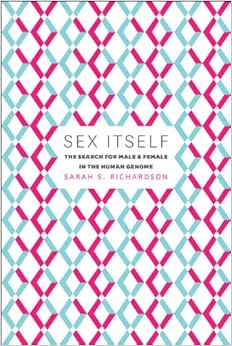
From the editors at Big Think, the article below summarizes last week's Specific Gravity podcast in which Jeff Schechtman speaks with Sarah Richardson, author of Sex Itself: The Search for Male and Female in the Human Genome (2013). 

According to Richardson, human genomes are 99.9 percent identical, with the exception of the X and Y chromosomes. Nonetheless, new genomic technologies make it very easy to demonstrate sex difference.
Richardson says "there are quantitative technologies that allow us to simply measure organ by organ - the liver, the heart, the brain, or disease by disease - diabetes or cardiovascular diseases - and publish a paper showing sex difference."
Yes, there are some differences, but we are still learning what they mean.

Sex and the Genome: Cultural Gender Conceptions Influence the Genetic Science of Sex

by Big Think Editors
December 6, 2013


If the 20th century was the century of silicon, many believe the 21st will be the century of biotechnology, and especially genomic technology. And as we stand at the advent of this 'genomic century,' Harvard professor Sarah Richardson argues, "we are going to need to have an open, frank conversation about how we view human difference."

Richardson, the author of Sex Itself: The Search for Male and Female in the Human Genome, points out to Jeff Schechtman in this week's Specific Gravity interview that human genomes are 99.9 percent identical, with the exception of the X and Y chromosomes. Nonetheless, new genomic technologies make it very easy to demonstrate sex difference. Richardson says "there are quantitative technologies that allow us to simply measure organ by organ - the liver, the heart, the brain, or disease by disease - diabetes or cardiovascular diseases - and publish a paper showing sex difference."

What we have a much harder time describing, Richardson says, is the meaning and significance of those differences. One view - that is both scientific and cultural - is that there is an "unchangeable binary between maleness and femaleness." And yet it is a more scientifically accurate view, in Richardson's eyes, that there is "a distributed and convergent process throughout the genome, and there are many pathways for healthy maleness and femaleness."

We still have a lot to learn about the way the genome functions. We tend to look to science to try to settle our most difficult questions, Richardson says, as if it is a neutral arbiter. And yet, Richardson says throughout history ideas about gender have always tended to drift back and forth "into science and then back out into the culture."

And so as we set out in the brave new post-genomic world, Richardson says "we need a patience with the data and an openness to surprising results." We then need incorporate these results into a cultural discussion of differences. And then, Richardson says, "we can do this research in an ethical space and feel that we are doing the right thing."

Listen to the podcast here:

 
~ Image courtesy of Shutterstock

Monday, June 17, 2013

Codes of Gender - Documentary


I think I posted this here before, but it's an interesting video definitely worth a viewing, or maybe a second viewing. This documentary offers a cogent analysis (using Irving Goffman's examination of advertising and the contemporary commercial landscape) shows how influential advertising media is in communicating "normative ideas about masculinity and femininity, the relationship between gender and power, and the everyday performance of cultural norms."


The Codes of Gender


The Codes of Gender applies the late sociologist Erving Goffman’s ground-breaking analysis of advertising to the contemporary commercial landscape, showing how one of American popular culture’s most influential forms communicates normative ideas about masculinity and femininity, the relationship between gender and power, and the everyday performance of cultural norms.

In striking visual detail, this film explores Goffman’s central claim that gender ideals are the result of ritualized cultural performance, uncovering a remarkable pattern of masculine and feminine displays and poses.

The film looks beyond advertising as a medium that simply sells products, and beyond analyses of gender that focus on biological difference or issues of objectification and beauty, to provide a clear-eyed view of the two-tiered terrain of identity and power relations.

With its sustained focus on how our perceptions of what it means to be a man or a woman get reproduced and reinforced on the level of culture in our everyday lives, the film is a great introduction to socially and culturally constructed gender roles.

Tuesday, March 26, 2013

Flexible Gender Identities Confound Expectations Of A Male And Female World

This article comes from NPR's 13.7 Cosmos and Culture blog. Barbara King reports on an incident that happened in Virginia (where she lives) in which a transgendered woman was asked to leave a spa (with sex-segregated baths) because of five complaints that she didn't look feminine enough (she is a marathoner and happens to be muscular). The complaints had nothing to do with her genitalia, only her muscular appearance.

From this story, King moves into the complex world of fluid gender identities, something this culture is going to have to deal with as more and more people become gender-queer (whether they identify that way or not).

Flexible Gender Identities Confound Expectations Of A Male And Female World

Riya Suising

by BARBARA J. KING
March 14, 2013

Last month, a traveler from California named Riya Suising came to Virginia (where I live) on business. While here, Suising decided to visit a spa and relax in its communal, sex-segregated baths, something she, a marathon runner, often does at home.


iStockphoto.com

What happened next shocked her. The spa's manager asked Suising to leave, based on what he said were five complaints lodged by other spa customers. For some people, Suising — who, by her own description is tall and muscular, with broad shoulders — did not look feminine enough to be sitting in the female baths.

Suising, a transgendered person, told The Fairfax Times: "None of the complaints, as they were described to me, referenced my genitalia in any way. I can't believe that they would discriminate based on physical appearance. I was not doing anything but keeping to myself."

It's that comment of Suising's — I was not doing anything but keeping to myself — that I find most poignant. And this was no momentary lapse in judgment for which the spa subsequently apologizes. No, as The Fairfax Times article makes clear, it's the spa's policy to not accept what it terms "any kinds of abnormal sexual oriented customers," a policy that's been interpreted as legal in Virginia.

I learned about what happened to Suising from my daughter, Sarah Hogg, after discussing with her a book we'd both just read: Stone Butch Blues by Leslie Feinberg. In this novel, a young person named Jess Goldberg, born female, struggles for many years with gender identity.

As an adolescent, Jess identifies as butch in a butch-femme culture, and later takes steps, including hormone therapy and breast-reduction surgery, to pass as a man. Later still, Jess embraces an identity that is neither wholly female nor wholly male.

Repeatedly, Jess loses hir job (this pronoun is meant to adress Jess' blended identity). Jess is also attacked and beaten. The attacks occur not only when police raid the bars Jess visits in the 1960s and 1970s (both before and after Stonewall), but also when Jess is out in the everyday world, shopping or waiting for the subway. In other words, harm comes to hir even when Jess is not doing anything but keeping to hirself.

There was something different about Jess. For some people, being unable to categorize hir as male or female upon sight was disconcerting enough to trigger discrimination, or worse.

Author Feinberg, a political journalist and gender activist, notes in an afterword that, though fiction, the book is "Real all right. So real it bleeds."

I asked my daughter Sarah — who thinks about these things in the course of her leadership role with James Madison University's Madison Equality organization — two questions: Was it believable that someone who just looked different would be the target of such discrimination in the everyday world, even when keeping to hirself? And even if that result had occurred decades ago, weren't people more informed, aware, and accepting now?

That's when Sarah showed me the article about Suising. While Suising wasn't physically harmed at the spa, the incident clearly and understandably has caused her much emotional pain. What happened at that spa was wrong. Suising identifies as female: end of the story (or it should be). As with anyone, she should be judged on her behavior, not her appearance.

I've written it here before: there's so much gender variety in our world, beyond a strict, imagined born-male versus born-female dichotomy. Some people identify as female, some as male, some as both male and female, some as neither. Feinberg has the character Jess speak this truth through fiction:
Who was I now, woman or man? I fought long and hard to be included as woman among women, but I always felt so excluded by my differences. ... Who was I now, woman or man? That question could never be answered as long as those were the only choices; it could never be answered if it had to be asked.

~ You can keep up with more of what Barbara is thinking on Twitter: @bjkingape

Thursday, August 30, 2012

Not Male? Not Female? Must Be Agender - The Emerging Gender Neutrality


I suspect there have always been people who do not comfortably identify as either male or female, a self-perception that seems to be more common in the asexual community (according to the article, a 2011 study found that 23% of this community feels gender neutral). So now there is a name for this gender identity, or perhaps it's a lack of gender identity (?) - agender, or gender neutrois.

Isn't this simply a rejection of the gender binary? It seems that it may be a little deeper than that. All five of the people the author spoke to had no need for masculinity or femininity, so it's beyond gender fluidity. This is all very interesting to me . . . .

The article is from Rachel White (she of the wonderful Rachel Rabbit White blog) in the NY Magazine's The Cut blog.


Neither Man Nor Woman: Meet the Agender


"I didn’t really want nipples," Cory said, running a hand through a mop of bleached blond hair. Born female, 23-year-old Cory uses the pronoun co—and asked that we refer to co that way, too—and got elective surgery to remove co's breasts last year. But co is not transgender in the traditional sense, transitioning between female and male. Co wants neither gender. So co joined the ranks of the agender—or, in a more florid recent coinage, the gender neutrois.

"You read stuff on Tumblr about how us nonbinary people just want to be special snowflakes," explained Cory, who is special but made of sturdier stuff than a snowflake. Was Cory's desire to remove co's secondary sexual traits a ploy for attention? A reaction to internalized sexism? The result of sexual repression? "I tackled all that stuff with my therapist. We came to the conclusion that I was not okay with this part of my body. Regardless of where that came from, it was there." Co has neither breasts nor nipples now.

"It is so perfect," Cory said. “For me this is what neutral looks like and feels like.”

I found Cory through the #nonbinary #agender #neutrois tags on Tumblr. The social network has become an unofficial home for the gender neutral. Though most group themselves with the transgender community, they reject the narrative of a person born into the wrong, oppositely-gendered body. All five neutrois individuals I spoke to have no need for masculinity or femininity at all.

L to R: Cory, Micah, Ashton

"You read all these trans youth narratives, the kid insisting he was a boy and going to grow a penis. That was me when I was 3," explained 26-year-old Micah. "I was like the poster trans kid. But then somewhere in there, it shifted."

Skyping from an airy San Francisco apartment shared with a fiancée, Micah has chestnut hair styled like a surfer's, sea-glass eyes, and rose-flecked skin. For Micah, gender neutrality has involved laser hair removal, a double mastectomy, a low dose of hormones, and the pronoun they. Asked about their ideal gender-neutral body (though our subjects' chosen pronouns drive Microsoft Word's Spelling and Grammar Check nuts, I see no reason not to oblige) Micah replied, “This is it.”

Micah came out of the closet twice, first when they entered a relationship with a woman, and again when they transitioned to neutrality last year. Though Micah identifies as both agender and asexual—which they define as "a lack of sexual attraction"—girlfriend Tammy identifies as a sexual female.

"When we started dating I got really confused," Tammy reflected. "Was I now dating a girl? I knew I wanted to be with Micah, but did that mean that I was now a lesbian?" After "six months of confusion," Tammy settled on "queer," and has stuck with her queer relationship with Micah for five and a half years.

When they first started dating, Tammy thought she could "make" Micah desire sex. "Now we've just found so many different ways of expressing love, other than what the usual sexual relationship looks like. Sometimes we feel like being more intimate, and sometimes we don't."

When I spoke to the pair together Tammy mostly deferred to Micah, who was uncomfortable discussing the mechanics of their physical relationship. "Too much focus on genitals," they said, then compared sex to asparagus: "OK when cooked properly, but I never really have a craving for it." A blog post Micah wrote about the relationship emphasizes "cuddling" and "communication."

"There are more ways to express intimacy than just sex," Micah concluded, referencing Asexual Visibility and Education Network founder David Jay. Reached by phone, Jay emphasized that most asexual people have a gender. There is, however, significant overlap between those who lack sexuality and those who lack gender: A 2011 survey of the asexual community found that 23 percent of those surveyed identified as neither male nor female—although most do not go so far as to have their nipples removed.

Why did this iteration of gender and pronouns emerge? There are virtually no studies on people who identify as agender. In 2010 the National Transgender Discrimination Survey Report on Health and Health Care found that 12 percent of self-identifying transgender people surveyed identified as gender nonconforming. And there may be a connection to asexuality: Jay says the asexual community has become a safe space for those questioning gender. Tumblr has become the unofficial support space for agender exploration and, sometimes, fierce debate. (On recent post read, “So there is this guy on Facebook. He’s agender. He’s about fifteen other labels as well.... the thing about this guy though is that he isn’t really agender for any reason other than a political statement.”)

For Micah, “not growing up was always a huge factor, and still is. I idolized Peter Pan,” they told me, noting that they are sometimes mistaken for a young boy. “In San Francisco I am seen as a lesbian," Micah continued. "I hate being called a lesbian, because it means I am a girl. But queer people are visible here and I am visibly queer. But at home in Mexico, queer doesn't exist."

After coming out, Micah lost contact with their Mexican family. They launched an agender blog, Neutrois Nonsense, and built a small online community there. Micah says their website receives over 12,000 pageviews a month, and a related Tumblr account has 2,200 followers.

Ashton, a 21-year-old Kansan, also passed as a lesbian until coming out as agender. Large and square shaped with a pinkish complexion, silvery-blond short hair and wire-frame glasses on a slight nose, Ashton (who also uses the pronoun ‘they’) used to work 50 hours per week in a factory and spends downtime in a transgender support group. (Ashton thinks the internet makes it easier to find one's way to an agender description. "You have Google in a tab next door, to explain things.")

Ashton’s supervisor and two other women at the factory formed a small queer community, which Ashton joined. “Most people who work there are male, so the women there really bond over female-ness. One day I counted 32 times that I was called by a female name--lady, miss, girl.” Ashton recounts a lot of joking around and sometimes going out together after work.

But Ashton was met with silence when they revealed their agender identity at the factory.
Persevering, Ashton wore a Pride shirt to work another day, which showed three boxes: ‘Female’: blank, ‘Male’: blank and ‘Blank’: checked. “I was asked to switch it inside out because it was distracting and offensive,” Ashton told me during a Skype chat in July, noting a fear of getting fired. Two weeks later, it happened. Ashton wrote on Tumblr: “I just lost my job for being a lesbian presenting assumed transguy atheist liberal who knows what else.”

Losing the job was something Ashton couldn't afford, since they are saving up for a double mastectomy. “I bind my chest for 11 or 12 hours a day when I am at work," they said before getting fired. "The recommended limit is 8 to 12 hours with as little strenuous activity as possible. I am doing lots of lifting and am on my feet all day. It is hot, sometimes my back spasms.”

Micah has faced loss in the name of gender neutrality, too. Upon finding out that her one-time daughter would be getting a double mastectomy, Micah's mother disowned her child. To this day she lights candles and talks to angels on Micah's behalf.

"My wife views Micah's actions as an act of terrorism, the fact that we have to have things on Micah’s terms," Micah's father explains. Their family is Mexican and Jewish. "She is worried about social and cultural things: how will Micah connect with Mexico?"

Micah's father supports his child's transition, as well as Micah's relationship with Tammy. The pair would like to marry and have children; Micah's father thinks they shouldn't wait for his wife's approval, because they may never get it.

Micah is actually the third name that they have tried out during transition—first it was Mich then Maddox as an online moniker, but it didn’t feel right ‘in real life.’ But Micah says they're sure that this is it. Micah is working on the legal paperwork to cement this chosen name. I ask, is there anything more to the transformation?

 “I don't remember aspiring to grow up to be a man, but was disgusted by the idea of growing up to be a woman. Physically I don't think I want anything different than what I have today, my own skin.”

All that's left now is aging. Micah imagines growing into a wrinkly, graying little kid, sort of like Benjamin Button, the F. Scott Fitzgerald creation who ages backwards: starting old and becoming younger.

Thursday, May 10, 2012

io9 - Sweden Seeks to Abolish the Concept of Gender


Sweden has officially introduced a new gender-neutral pronoun in an effort to abolish the divisions of gender. The newly proposed gender-neutral personal pronoun "hen" is to be used instead of han [he in Swedish] and hon [she].

It's an interesting idea - but will it work?

Will Sweden abolish the concept of gender?

Will Sweden abolish the concept of gender?


Sweden, it would seem, is doing its darndest to abolish the idea of gender. Their latest effort comes with the introduction of a new gender-netural pronoun, called "hen." But while some see it as a huge victory in the struggle to achieve gender equality, others see it as yet another imposition brought on by the political correctness police.

There's no doubt that Sweden is a rock star when it comes to this sort of stuff. Two years ago the World Economic Forum designated Sweden as the most gender-equal country in the world. It boasts the highest proportion of working women in the world and allow for 480-day parental leaves — of which 60 days are reserved for dads.

And in an effort to work towards yet even greater levels of gender equality, Sweden now wants to do it through the channel of linguistic gender-neutrality. A good number of forward-looking Swedes have determined that government and society should no longer recognize any legal distinctions between the sexes. To that end, they have officially introduced the new gender-neutral pronoun, "hen," to the vernacular. To make it all the more official, they added it to the country's National Encylopedia and defined it as a "proposed gender-neutral personal pronoun instead of he [han in Swedish] and she [hon]."

Swedes figure that the introduction of a gender-neutral pronoun will allow people to avoid having to identify themselves with a particular gender; it will also allow speakers to be sensitive to those people who choose to not have their gender identified. More conceptually, it can be seen as a refinement of the language, an added level of linguistic sophistication. Authors can now refer to a character without having to reveal their gender (whereas in English we tend to use the awkward "they" in its place).

Critics claim that such terminology will only confuse children. The suggestion that there is a "third" gender, they argue, can only disrupt the natural development of their own gender identities. Other critics complain that gender-neutrality is a social hallucination and a bizarre denial of the fact that humans are a gendered species.

While Sweden is certainly a world-leader in this regard, it can been seen as part of a wider global trend toward the achievement of a "genderless" society, or what some call a postgendered society. It can also be interpreted as the ongoing evolution and refinement of language. Words need to change in order to suit ever-shifting normative values and interpersonal sensitivities. We tend to no longer refer to unmarried women as "Miss", for example, nor do we talk about "salesmen", instead referring to "salespersons".

Science fiction fans will of course recall similar attempts to change the language of gender, particularly in those futurist worlds that feature postgendered or uniquely gendered characters. Greg Egan, in his hard SF classic Diaspora, borrowed Keri Hulme's gender-neutral pronouns "ve", "vis", and "ver" to help his uploaded sexless characters get their language right. And in the collaborative Orion's Arm universe, pronouns such as "e", "em", and "eir" are commonly used to avoid confusion in a world featuring not just genetically-altered humans, aliens, and artificial lifeforms, but also characters with other possible genders beyond just male and female.

So yes, you've got it right. Science fiction is always one step ahead of everybody else. Even the Swedes.

Saturday, August 13, 2011

Noam Shpancer, Ph.D. - Male and Female: The Overlapping Curves

  1. Men and women are biologically different, from genitals to brain, so masculine and feminine are essential traits of the male and female body.
  2. Men and women are so nearly identical in their brain structures, with only a few hormonally-influenced differences, that any differences between masculinity and femininity are not inherent male and female differences but, rather, socially constructed and learned differences.
  3. There are some biological differences that shape male and female identities, largely due to sex hormones, and their are also socially constructed ideas of masculinity and femininity that are based on the evolutionary origins of those biological differences, but there is more flexibility in the human experience than either model allows for.
  4. We are human beings first and gendered second, and when we take this view we are free to express our gender identity in whatever way feels best to each of us, including the right to switch genders if the body we get at birth does not match our subjective gender identity.
* * * * *

Those are four of the most common views on gender identity in the United States, although I suspect the majority of people would identify the first one as most true of the four.

These ideas have been the background material for an ongoing realignment of gender roles over the last 50 years or more. But in terms of our everyday lives and what we see in the media, one might be believe little has changed since feminism first gained some power in the 1960s.

In this post from his blog at Psychology Today, discusses the first two ideas from the list above - and it seems this is as far as it ever gets in most articles on gender.
What’s with the differences between men and women?

In the popular media, and popular opinion, a contest has been waging for some time between two opposing views of the gender landscape.

Different species altogether

One approach holds that men and women are fundamentally different species. Men are from Mars, women are from Venus. Men fantasize about sex; women fantasize about marriage. Men are silent, women are talkative. Men are ‘jerks' women are ‘bitches.' Men are hard, women are soft. Men are hunters; women are gatherers, and so on and so forth. Women's magazines wittingly or not contribute to this view, filling their pages with advice columns about how to treat that strange, alien creature that is your guy. These columns never say, "Treat your guy like you treat yourself."

This ‘apples and oranges' approach finds support in two main sources. First, this approach is sustained by our basic intuition and affirms the order of the world we see around us. All of us see daily examples of marked differences between male and female behavior, appearance, and attitude. When my daughter's female teenage friends would come to hang, they would immediately pile on the bed in her room, giggle and watch a movie about a girl who's in love with a boy who ignores her because he does not know what's good for him (and he's also a vampire). When her male pals would come to hang, the house would fill with running, jumping and yelling, and in short order some vase would break in the living room and some lumbering schmo would tumble into the pool in his clothes. These kinds of differences between the genders we see all the time around us, and we tend to believe that what we see around us is the natural order of things.

Now that's different!

Second, men and women have different physiologies, which emerge from their innate genetic differences. These physiological differences between the genders are real and nontrivial. Masters and Johnson, for example, pioneers of the scientific study of human sexual physiology, documented up close and with precision more than 10000 intercourse cycles. Their data show clearly that in the realm of orgasmic athletics, women trump men hands down (no pun). The man, they found, is an old rifle in the hands of a drunk. He has but one bullet in the chamber, hurries to discharge it, often accidently and without much aim, and then takes 30 minutes to reload, if he's not out of ammunition altogether and if he hasn't fallen asleep in the process. The woman, on the other hand, is a sophisticated semi-automatic weapon; she can fire in rapid succession, and doesn't run out of ammo (although her intricate mechanisms sometimes jam, and sometimes she doesn't feel like going to the shooting range, she feels like going to Starbucks).

Physiological differences inevitably lead to differences in how we move in the world. If I have nimble feet and you have big wings, and we both encounter a hungry lion on our afternoon walk, chances are I'll escape by running while you escape by flying. The differences in behavior and functioning between the sexes, therefore, are rooted in the fundamental physiological differences between them, and you cannot help that. There is, after all, no known society in history where gender differences did not exist.

These are strong arguments, but they're not bullet proof. First, what we see around us is not necessarily a natural order. This mistake is known as the naturalistic fallacy. In biblical times, slavery was seen as a state of nature. The bible says not a thing against slavery. Today, even avid bible thumper won't dare speak in favor of slavery. Second, not everything that is intuitively and easily comprehensible is also true and factual. The fact that we are stuck on a rotating ball in the middle of endless space is neither intuitive (when I look out my window the world doesn't appear round or rotating) nor easy to grasp. (Infinite space? With no beginning or end? Are you high?). Still, it is fact.

Big in Japan

Third, the argument that genetic differences inherently give rise to differences in behavior and functioning is problematic. Genes do not establish traits or behaviors, they establish potentials. The path from genetic potential to actual behavior in the world, from genotype to phenotype, passes necessarily through the social environment. Society, in this context, influences genes in two primary ways. First, it decides how much of your genetic potential will be fulfilled. Your genes may predispose you to be six foot four, but if you grow up malnourished, in a neglectful early environment (social conditions) you will not achieve your potential height. Second, society controls the manner in which you will express your genetic potential. A big, strong, agile man may find himself on a football team, if he's American. If he's Japanese he may find himself on the sumo mat. Our DNA doesn't have a ‘football gene' or a ‘sumo gene.' Those are paths created by society.

These kinds of realizations and data about the crucial role of the social environment in shaping behavior and identity--along with the political, cultural and ideological changes since the 60s in the West--have given rise to a second approach, which holds that manifestations of difference between the genders are not natural or innate but rather artifacts-byproducts of the social order.

Jon and Joan at home

Femininity and masculinity, in this view, are not innate qualities but learned constructs and acquired habits. Children learn to be feminine or masculine like they learn everything else: by modeling, imitating, and following the rewards. Baby Jon receives praise for being big and strong (What a tiger! There, go catch that ball!). Baby Joan receives accolades for her daintiness (What a sweetie! Here, let me hold you so that your cute skirt doesn't get rumpled). These kids follow the path of rewards and shape their behavior accordingly.

The prediction emerging from this view is that a change in the social norms would bring about a change in gender behavior, identity and consciousness. Give baby Jon dolls to dress up and baby Joan trucks to smash, and within a few generations you'd see women yap blithely about torque, wipe their greasy palms and pine for quickie sex in the gas station bathroom; you'll have men struggling to decide which shirt fits their mood today and dreaming of an endless honeymoon in Greece.

Wearing pants

This approach has scored some significant wins in recent decades. The range of behaviors and attitudes included in our definition of masculine and feminine has opened, expanded, and become more balanced. Women today can wear pants, run a business, and have one night stands. Men are allowed to be stay-at-home dads, pluck their eyebrows, and cry in a romantic vampire movie. And yet, even in the most open and progressive of homes you'd be hard pressed to find that baby Jon elects to dress up Barbie or that baby Joan smashes trucks for fun (although she may be happy to smash Jon). Even in the most progressive cultures, men rate body shape over social status in their mate preference priority list, and women rate status over a pretty body for their preferred male mates. For men, across cultures, sexual attraction is still mostly a ‘this or that' proposition--more attraction to one gender predicts less attraction to the other. Not so for women, who often manifest a ‘this and that' pattern. And the capital of nose jobs is not Hollywood, but Tehran. You can open or close the social structure, yet the whisperings of evolution remain strong.

And so we return to the question: which approach is right? What is the primary determinant of our gendered selves, innate genetic forces or learned cultural habits?

At the end of the day, both approaches are wrong, mostly because they are both right. Genes and environment don't operate in exclusivity, but rather in tandem. Men and women are not alien species to each other, but neither are they clones. There are predictable innate differences between the genders. Society can choose to work to minimize or maximize these differences; it can change the meaning attributed to them; but, at least up to now, it has not found a way to erase them.

Very nurturing

On the level of daily living, however, it is most important to remember that when it comes to gender, deducing from the group to the individual is neither wise nor fair. In other words, the fact that average differences exist between men and women cannot determine how we perceive and relate to any individual man or woman. This is because our traits and abilities tend to be distributed normally, in a bell shaped curve. The male and female distribution curves for the whole gamut of socially meaningful traits, behaviors and attitudes, are overlapping. Therefore, even if we find that, for example, women are on average more nurturing than men, still those men who are above average on the male distribution curve may be more nurturing than those women who are below average on the female curve.

Understanding this point about the overlapping curves allows for a more nuanced, and more accurate, insight on the male-female debate to arise: average differences exist, but they should not be used to predict the ability, character, or behavior of individuals. Men on average fantasize more about sex, but that does not mean that the particular man standing at your doorstep, his eyebrows all trim, ready to take you to a romantic movie about vampires, fantasizes about sex more than you.

Maybe he's fantasizing about marriage.


Monday, August 30, 2010

Delia Lloyd - 5 Signs You Think Like a Man

http://wwwdelivery.superstock.com/WI/223/1555/PreviewComp/SuperStock_1555R-214007.jpg

Really? According to her list of five traits, I am not at all male in my thinking. So I took the quiz she links to at the BBC, and it seems I do think more like a female brain, whatever that means. Yet, if you asked Jami, she would tell you that my brain is distinctly male, while I feel I am pretty balanced.

Anyway, I tend to agree more with the Guardian article Lloyd cites - that much more of the differences in male and female brains is socialization, not biology (while acknowledging that biology does play a role).

5 Signs You Think Like a Man

Delia Lloyd

Posted: August 30, 2010

A few weeks ago, I posted a link on my blog to a quiz on the BBC website called Sex ID that purported to let you know whether you think like a man or a woman. (Warning to those who have yet to take it: the quiz lasts about 20 minutes.)

If you managed to make it through this quiz, you'll know that a lot of the tasks that they have you do boil down to whether you're good at reading maps and judging the angle of parallel lines (more typically male traits) vs. whether you can read people's expressions and identify with them (more typically female traits.)

I've since been informed via The Guardian that a new study is out showing that behavioral differences between the sexes are not, in fact the result of fundamentally different wiring in the brain, but rather the result of societal expectations.

Be that as it may (and I'm sure that this is one of those debates that will rage into eternity and beyond), I've been giving the whole male vs. female thing some more thought since taking that quiz, where I scored (huge sigh of relief?) as a prototypical-thinking woman. Here are some further indicators I've come up with that shed light on whether or not you think like a man:

1. You like reading instruction manuals. While I'm quite sympathetic to Gretchen Rubin's admonition over on The Happiness Project to read the instruction manual, there's a distinction between doing something because you *ought* to do it and doing something because you enjoy it. I hereby submit that I absolutely hate reading instruction manuals and -- as a result -- have spent many a frustrated moment by either failing to consult them ex ante or failing to save them somewhere useful ex post. My husband, in contrast, has an entire file full of instruction manuals for virtually every single appliance in our house. Not only does he consult them regularly, he actually seems to enjoys it! And instruction manuals in video form are even better, as with this video on how to take apart and reassemble my new Brompton folding bicycle. Hey, it's your funeral, as they say...

b. You like to talk about gadgets. I've posted many times on this blog about my husband's penchant for gadgetry. I don't think that's an inherently male trait -- many of the things he's bought for us have been hugely useful and I like them as much as he does. But there's using them and then there's talking about using them. And I've noticed lately that guys like to spend an inordinate amount of time cataloging, describing and comparing gadgets in a way that women don't.

c. You read David Pogue's column in The New York Times religiously. Which brings us to a corollary of (b) -- David Pogue's technology column in The New York Times, Pogue's Posts. Don't get me wrong. If I'm in the market for a new cell phone or a digital camera, I turn to Pogue first. The guy is unbelievably knowledgeable about technology and a terrific writer to boot. But as generic reading material on the order of "Here's how I'm going to spend my breakfast?" Not so much. Whereas my husband is glued for hours.

d. You like playing strategy games. This may have actually been one of the questions on the BBC quiz; I can no longer remember. But since taking that quiz, my son and I happened to open up Othello, a game that one of his friends gave him for his birthday last year. It's one of those deceptively simple games that actually requires an enormous amount of strategy on the part of the players. If you're like me, you take the easy route on this game, maximize your winnings as you go, and ultimately lose. If you're like my son or my husband, you look like you're losing all the way along but at the very last minute you win because you've been thinking like six moves ahead the whole time. (Ditto Settlers of Catan, the greatest game of all time.)

e. You (still) like assembling Legos. Someone recently gave my husband one of those adult Lego kits. It was a model of Frank Lloyd Wright's famous Falling Water home, a painting of which is hung in our living room. I think Legos are really cool, especially this new architectural series. But, much like gadgetry, it's something I'd rather admire than actually build. So if this had been given to me as a present, it probably would have languished somewhere in a closet, taking up space on my never-ending "should" list. Whereas my husband spent weeks with the kids building this house, which now adorns the mantle in our living room right in front of our picture. (He's in good company, btw. Apparently, to kill time during a recent trip abroad, English football legend David Beckham confessed that he spent a night in a hotel constructing The Taj Majal.)

As I read this over, I realize that it may provide more of an insight into my marriage than it does into generic male/female brain differences. Then again, I do think that having a division of labor is key to a happy marriage, so maybe that's a good thing!