Showing posts with label evolution. Show all posts

Thursday, October 16, 2014

Michael White - How the Sexes Evolved (via Pacific Standard)

Each Friday, Pacific Standard has been looking at how and why the social becomes biological. This week Michale White flipped the question: How does biology become social? One of the best ways to see how biology drives social behavior is to look at one of the oldest social relationships in the living world: sex.

How the Sexes Evolved

• August 15, 2014 

sex-gene
(Photo: Crystal Eye Studio/Shutterstock)
The distinction between males and females is one of the oldest facts of biology—but how did it come to affect our social identity?
Every Friday this month we’re taking a look at the relationship between the social and the biological—specifically, how and why the former becomes the latter. Check back next week for another installment.

One way to understand how and why the social becomes biological is to flip the question: How does biology become social? One of the best ways to see how biology drives social behavior is to look at one of the oldest social relationships in the living world: sex.

Sex and its central role is biology is the main reason why men and women are different, but it’s hard to tease apart biology from culture. Anatomical differences are obviously biological, while a quick survey of various human societies is enough to see that many differences between men and women are cultural and liable to change. The distinction between males and females, however, is one of the oldest facts of biology. Except for bacteria, nearly all life reproduces sexually at least some of the time, and two distinct sexes are generally necessary to do this.

Just why sex is such a popular method for transferring genes to the next generation is still a bit of an enigma, but it’s clear that distinct male and female sexes emerged multiple times throughout evolutionary history. It happened in the ancestors of plants and animals more than a billion years ago. That’s too far back for us to recover even sketchy details about how the original distinction between males and females evolved. Fortunately for us, we have an “evolutionary time machine” of sorts: the volvocine green algae. It’s a family of present-day species that nicely illustrates the evolutionary transition from a single-celled organism without very distinct sexes, to a multi-cellular one with genuine males and females.

Volvocine algae are like a time machine because, in the relatively brief period of 200 million years, this group evolved from a free-living, single-cell ancestor into a variety of multi-cellular life forms. To study this evolutionary process, biologists can compare a present-day single-cell species, Chlamydomonas reinhardtii, with its much larger, multi-cellular relative, Volvox carteri. Volvox has males and females, while Chlamydomonas doesn’t; by comparing the two, we can learn about how sexes evolve.

Chlamydomonas sex is typical for a single-cell sexual organism: primitive. These algae come in two different “mating types,” called “plus” and “minus.” Instead of issuing specialized male and female reproductive cells, this organism transforms its entire one-celled self into a gamete and seeks out a partner of the opposite mating type. Like two poles of a magnet, “plus” and “minus” organisms aren’t that different from each other. The differences that do exist serve mainly to allow one mating type to recognize and fuse with the other.

Volvox sex, on the other hand, is surprisingly familiar. These algae, made up of about 2,000 cells, exist as distinct males and females. The males produce sperm that fertilize the eggs of the females, producing a zygote that develops into an embryo. Sound familiar? But here’s the stunning fact about it: This whole reproductive process evolved from scratch in algae within the last 200 million years, during a time when reptiles, amphibians, mammals—descended from a long line of sexually reproducing ancestors—were roaming the Earth. The two sexes of Volvox are an evolutionary rerun.

SO HOW DO YOU get from mating types to males and females? That’s the question asked by a trio of researchers, at the Danforth Plant Science Center in St. Louis and the Salk Institute in La Jolla, in a study published this summer. The scientists began from the observation that distinct sexes have evolved repeatedly in life’s history, and the result is nearly always the same: females who produce relatively few large, immobile eggs, and males who produce many small, mobile sperm. To understand the genetic basis of Volvox males and females, the researchers tried swapping genes between the sexes.

They were interested in one gene in particular, called MID. Male Volvox have this gene, while the females don’t. This gene exists in single-celled algae as well, where it acts as a master mating type switch that prevents “minus” from turning into “plus.” The scientists reasoned that MID might do something similar in Volvox. They transferred a copy of this male-specific gene into females, which became pseudo-males and started making sperm. And when they deleted MID from the males, the algae became pseudo-females and started making eggs. Their results show that this master switch gene “control[s] two very different manifestations of sexual reproduction.” This gene was reprogrammed from a simple regulator of primitive mating types into one that controls the major differences between females and males.

The oldest and most fundamental way that males and females differ is in their reproductive cells. Once you have sex-specific reproductive cells, new sex-specific evolutionary strategies come into play. These drive the development of even more physical and behavioral differences between males and females. New genes fall under the control of the master switch to become sex-specific genes. In Volvox, about a dozen genes are found only in males or females. In humans, there are about 80 protein-coding genes on the Y chromosome that are specific to men. The human master switch is called SRY, and like MID in Volvox, its primary job is to switch on the genetic program to produce sperm.

There is no doubt that the trend in human societies is to exaggerate the differences between men and women—typically by emphasizing the supposedly lesser capabilities of women. Then society changes, and sex differences that many people took for granted as biological turn out to be social after all. Certainly compared to many species, the differences between human males and females are small. But those biological differences drive so much of our social behavior, for better and for worse, and the case of Volvox algae show how the differences between men and women probably began.

Michael White
Michael White is a systems biologist at the Department of Genetics and the Center for Genome Sciences and Systems Biology at the Washington University School of Medicine in St. Louis, where he studies how DNA encodes information for gene regulation. He co-founded the online science pub The Finch and Pea. Follow him on Twitter @genologos.

More From Michael White
Related Stories


Thursday, January 16, 2014

The Y Chromosome is Not Doomed to Shrivel Away to Nothing

Well, dang, I guess that's some good news . . . . From The Guardian (UK):

Y chromosome is not doomed to shrivel away to nothing, say researchers

Despite concerns it may be shrinking, male sex chromosome is likely to remain in rude health for many millions of years to come.

Ian Sample, science correspondent
The Guardian, Thursday 9 January 2014

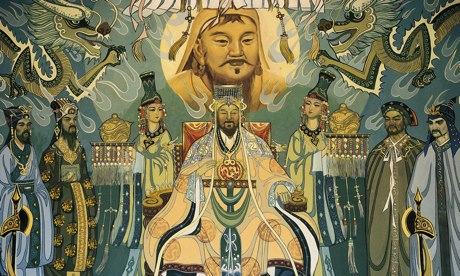
Mural featuring Genghis Khan and his court
One explanation for the lack of genetic variation on the Y chromosome is the Genghis Khan effect, with a small number of men fathering many children. Photograph: Alamy
Reports of the coming death of the male sex chromosome are greatly exaggerated, say scientists, whose work will raise a collective cheer from at least half the population. The fate of the Y chromosome, which carries the genetic switch that sends a developing embryo down the route to maleness, has been questioned since scientists first discovered that it had lost more than 90% of its genes over millions of years of evolution.

The steady withering of the Y has led some to claim that it might vanish completely over the next five million years, leaving humans to join the Okinawa spiny male rat on the list of species that make do without a sex chromosome. But that unsettling prospect is dismissed in research published on Friday by scientists at the University of California, Berkeley. Having studied the genetic makeup of 16 men, they conclude that natural selection is not about to cast the shrunken male chromosome on the evolutionary scrapheap.

The Y chromosome has shrunk over time because, unlike every other chromosome in the human body, it has no partner. This means it cannot easily be repaired when harmful mutations occur. Typically, people have 23 pairs of chromosomes including two that govern sex, which are X and Y in males, or two Xs in females. The numbers vary in some genetic disorders.Most chromosomes can repair damage that arises from mutations by swapping DNA with their opposite number, a process called recombination. But the Y is always inherited alone, so has no partner to swap with. As such, the damage builds up until the DNA is discarded, leaving the chromosome that much smaller. Today, the Y carries only 27 genes that are used to make proteins, compared with around 800 on the X chromosome. A few hundred million years ago, early versions of the X and Y were the same size.

Writing in the journal Plos Genetics,the Berkeley researchers describe the genetic diversity of Y chromosomes in eight European and eight African men. The variation was tiny, and suggests that the Y chromosome has been pared down to its bare essentials by "purifying selection"An alternative explanation for the low genetic variation of Y chromosomes is that a minority of men had a high proportion of children, passing on fewer Y chromosome variants to each successive generation. At the extreme is the Genghis Khan effect, named after the Mongol leader who fathered so many sons, his Y chromosome lives on in around 0.5% of the male global population. But the study found that if this were the driving force for low genetic variation on the Y chromosome, fewer than one in four men would have fathered children in the course of human history.

According to the researchers, all 27 genes on the Y chromosome, nearly half of which are poorly understood, are acted on by purifying selection. The fact they're still here suggests they have a valuable role to play in successful breeding.

"Natural selection is acting on the Y chromosome and has maintained the genes pretty well," said Melissa Wilson Sayres, an evolutionary biologist. "All the evidence points toward it not disappearing."

The Berkeley team now hopes to study more Y chromosomes to learn whether the genes are subjected to "positive selection", whereby beneficial mutations spread through the population.

Thursday, March 21, 2013

The Father of All Men Is 340,000 Years Old

Dwarfed by the X chromosome, the Y seems more ancient than we thought <i>(Image: Pasieka/SPL)</i>
Dwarfed by the X chromosome, the Y seems more ancient than we thought (Image: Pasieka/SPL)

New research suggests that the oldest common male ancestor for all living men existed BEFORE (around 340,000 years ago) anatomically modern humans emerged around 195,000 years ago. Very interesting. This would make the oldest common male ancestor quite a bit older than Mitochondrial Eve, who is estimated to have lived approximately 190,000–200,000 years ago.

The father of all men is 340,000 years old

March 2013 by Colin Barras
Magazine issue 2908.

Albert Perry carried a secret in his DNA: a Y chromosome so distinctive that it reveals new information about the origin of our species. It shows that the last common male ancestor down the paternal line of our species is over twice as old as we thought.

One possible explanation is that hundreds of thousands of years ago, modern and archaic humans in central Africa interbred, adding to known examples of interbreeding – with Neanderthals in the Middle East, and with the enigmatic Denisovans somewhere in southeast Asia.

Perry, recently deceased, was an African-American who lived in South Carolina. A few years ago, one of his female relatives submitted a sample of his DNA to a company called Family Tree DNA for genealogical analysis.

Geneticists can use such samples to work out how we are related to one another. Hundreds of thousands of people have now had their DNA tested. The data from these tests had shown that all men gained their Y chromosome from a common male ancestor. This genetic "Adam" lived between 60,000 and 140,000 years ago.

All men except Perry, that is. When Family Tree DNA's technicians tried to place Perry on the Y-chromosome family tree, they just couldn't. His Y chromosome was like no other so far analysed.

Deeper roots

Michael Hammer, a geneticist at the University of Arizona in Tucson, heard about Perry's unusual Y chromosome and did some further testing. His team's research revealed something extraordinary: Perry did not descend from the genetic Adam. In fact, his Y chromosome was so distinct that his male lineage probably separated from all others about 338,000 years ago.

"The Y-chromosome tree is much older than we thought," says Chris Tyler-Smith at the Wellcome Trust Sanger Institute in Hinxton, UK, who was not involved in the study. He says further work will be needed to confirm exactly how much older.

"It's a cool discovery," says Jon Wilkins of the Ronin Institute in Montclair, New Jersey. "We geneticists have been looking at Y chromosomes about as long as we've been looking at anything. Changing where the root of the Y-chromosome tree is at this point is extremely surprising."

Digging deeper, Hammer's team examined an African database of nearly 6000 Y chromosomes and found similarities between Perry's and those in samples taken from 11 men, all living in one village in Cameroon. This may indicate where in Africa Perry's ancestors hailed from.
Older than humanity

The first anatomically modern human fossils date back only 195,000 years, so Perry's Y chromosome lineage split from the rest of humanity long before our species appeared.

What are the implications? One possibility is that Perry's Y chromosome may have been inherited from an archaic human population that has since gone extinct. If that's the case, then some time within the last 195,000 years, anatomically modern humans interbred with an ancient African human.

There is some supporting evidence for this scenario. In 2011, researchers examined human fossils from a Nigerian site called Iwo Eleru. The fossils showed a strange mix of ancient and modern features, which also suggested interbreeding between modern and archaic humans. "The Cameroon village with an unusual genetic signature is right on the border with Nigeria, and Iwo Eleru is not too far away," says Hammer.

Chris Stringer at the Natural History Museum, London, was involved in the Iwo Eleru analysis, and says the new Y chromosome result highlights the need for more genetic data from modern-day sub-Saharan Africans. "The oldest known fossil humans in both West Africa at Iwo Eleru and Central Africa at Ishango [in Democratic Republic of the Congo] show unexpectedly archaic features, so it certainly looks like we have a more complex scenario for the evolution of modern humans in Africa."

Journal reference: American Journal of Human Genetics, doi.org/kp4

Monday, February 11, 2013

Randy Astaiza - A Man With 12 Percent Body Fat Is The Best Mate, Evolutionarily

Strangely, this article came from Business Insider Magazine - not where one usually goes for evolutionary psychology research. Be that as it may, the researchers found that body fat was linked to attractiveness, high testosterone levels, and a stronger immune system.

A Man With 12 Percent Body Fat Is The Best Mate, Evolutionarily
Randy Astaiza | Nov. 27, 2012


When a guy catches your eye, what draws your attention?

Some people may say nice eyes get them going, while others say a manly, chiseled jaw or big strong arms. Evolutionarily, though, a man's body fat, not masculine features, is a better indicator of how attractive of a mate he would be, a new study suggests.

With any luck, these traits of an "optimal" mate would be genetically encoded and would be passed on to the man's offspring — so a female wants to choose a man with good genes and a healthy immune system. We just need to know how to figure out if a potential mate has these traits.

Masculine looking males were believed to be a good indicator of good mate choice because their looks were thought to indicate better genes and a stronger immune system, one that could take on the negative effects of high testosterone levels (which make men more prone to infection).

A new study, published today Nov 27 in the journal Proceedings of the Royal Society B: Biological Sciences, switches that on its head. The researchers found that a man's waist size is more important than how masculine his face is, when it comes to attractiveness and good immune systems.

Twenty-nine women in the fertile stage of their menstrual cycle (meaning they were more receptive to sexual cues, and more responsive to masculinity) rated pictures of 69 young white males of all body sizes by their attractiveness, masculinity, and body fat.

They then took these rating and compared them to how well the men's immune system responded to a Hepatitis B vaccine. They also tested circulating testosterone levels in the participants.

The results showed that a man's masculinity rating didn't mean he was more attractive, and also didn't mean that his immune system worked better. How masculine a man was also wasn't an indicator of how much testosterone he had either.

On the other hand, body fat was linked to attractiveness, high testosterone levels, and a stronger immune system. Too much fat was bad too, though: Body fat attractiveness had a bell-shaped curve. The most attractive men had 12 percent body fat.

When he was above normal body fat — obese or overweight — the immune system was negatively impacted.

From their data, the researchers made a composite image of the bottom eight men with the cruddiest immune systems on the left, and the eight men with the best on the right. Which do you think is more attractive?

science men composite image immune system
Proceedings of the Royal Society

Tuesday, September 18, 2012

Bookforum Omnivore - Back Off, Masculinity Patrol

Last week, Bookforum's Omnivore blog (thematic collections of links posted several times each day) featured a collection of links related to masculinity. There are some really interesting articles in this collection, including one on avoiding feminist men (or not) and one what to do with men who don't want to be men (actually a reply to a NY Times op-ed about men being no longer necessary). Enjoy.


Thursday, September 6, 2012

Kevin Charles Redmon - The Rise and Fall of Sexual Promiscuity


According to this article in Pacific Standard, sexual promiscuity is on the decline - and has been for a very long time (don't tell that to the men and women who wait longer than ever to get married and have children, thus experiencing a greater number of sexual partners than previous generations).

The basic premise of a new research study (discussed in this article) is that at some point in our evolutionary history, males who were not alpha figured out that the only way to secure a mate to pass along those pesky selfish genes was to offer something the alphas did not - security. So females, in essence, traded the greater benefits of multiple male partners (better gene diversity, greater chance of fertilization, decreased infanticide, and more male providers) for the security of one male who provides food (for sexual access) and helps care for/protect the offspring.

This is the first model of this type that includes females as agents in the equation - in the past they have been relegated to passive roles. That, in itself, makes it a more viable model than others. 

The other interesting aspect is that this is still somewhat true today. Alpha males are "playas" and are not likely to settle with or be faithful to one female (obviously, this is a generalization). Non-alpha males, however, i.e. "nice guys," are more able to provide security and more likely to be faithful. And again, this is a generalization that has a lot to do with the developmental stage of the males in question. Those with less egocentric tendencies will likely be better mate material. It also depends on women to choose nice guys, and we know there are plenty of women who are only attracted to "bad boys," which is probably also a factor of ego development.

Anyway . . . this is interesting stuff (even if it only conjecture). Original abstract is at the bottom.

The Rise and Fall of Sexual Promiscuity

Sleeping around once had its benefits, but turns out women may have given up better fertility for better security.


Long before Match.com and The Bachelor—even before yentas and oracles—there was the primal jungle, and finding a mate was messy business. Violence and hierarchy ruled the day. Alpha males got the girls; lesser competitors did not. Evolutionary biologists have long tried to trace the human path from combat to courtship: When did we crude animals trade polygamy and paternal absenteeism for “I do” and BabyBjörn?

A new study from Sergey Gavrilets, professor of ecology, biology, and mathematics at the University of Tennessee-Knoxville, reviews the current evidence and offers an intriguing hypothesis. The transition from “promiscuity to pair-bonding,” Gavrilets writes in the journal PNAS, occurred only when lesser male hominids, realizing their physical inferiority, adopted a “provider” role in partnerships, and female hominids, in turn, began to show fidelity to these partners. (Others have postulated that the rise of agriculture helped smooth the way for the transition.) The role of female choice is not often considered in evolutionary biology, but if Gavrilets’ models are correct, it may be integral to explaining our past.

Scientists have also long debated the origins of pair-bonding, not because its advantages are in dispute, but because, according to evolutionary logic, it ought never to have happened.

Many species are indeed better off, Gavrilets explains, when their males live cooperatively in societies, helping raise families, rather than warring over mates and leaving their offspring fatherless. But males face a “social dilemma” when it comes to spreading their genes: if they choose to spend their energy providing for—rather than fighting for—mates, other males may cheat and “free ride” on their largesse. (So-called “free rider” problems show up not just in biology, but in every corner of economics, psychology, and environmental policy.) Of all the theories that explain why cooperation (i.e. pair-bonding) replaced competition (i.e. promiscuity) among our ancestors, Gavrilets argues, none account for this social dilemma.

The study highlights several current theories of pair-bonding: instead of fighting, male hominids began to devote effort to caring for offspring, protecting their mate, or provisioning food for sex. But Gavrilets builds mathematical models to show how each of these hypotheticals leads to a “sub-optimal” outcome—how “investing more in offspring means that there is more paternity for other males to steal.” Run the model, and instead of choosing cooperation, the males will choose to fight. It’s not the outcome any one male desires, but the free-rider problem effectively “traps” the whole group in a benighted state.

Gavrilets proposes a modification to existing theory. What if we assume that males began to provide for one—and only one—female, and females, likewise, began to depend on a sole mate for food and help with childcare? First, not all men are created equal; there are few Ryan Goslings and many Kevin Redmons. The weaker among us quickly learned the futility of direct competition, and turned to “alternative reproductive strategies” to spread our genes. (I may not be a dreamboat, baby, but I’ll bring you coffee in bed.) Second, females make choices. Whereas previous models ascribe females a passive role, Gavrilets asserts that “because they receive direct benefits from provisioning males, females should be choosy, and they may become, to some extent, faithful” to their providers.

Promiscuity is a funny thing in nature. Despite what your mother and youth pastor spent so many years telling you, sleeping around has real (genetic) benefits. Polyandry—in which females take more than one mate—allows for better gene diversity, boots the likelihood of fertilization, decreases infanticide, and means more male providers. Gavrilets acknowledges that in switching from promiscuity to monogamy, females actually risked lower fertility. The tradeoff was security.

When he runs the model again, with these two assumptions in place, the outcome is different: instead of a spiral into violent competition, male provisioning and female faithfulness “co-evolve in a self-reinforcing manner.” Males escape the “social dilemma” and pair-bonding replaces promiscuity.

Critically, Gavrilets notes, this process begins with the weakest males—those who have the worst chances of beating out Ryan Gosling for a mate—because they stand to gain the most from an alternative strategy like provisioning. Slowly, the strategy works its way up the dominance hierarchy, as females begin to reward the weaker males with their fidelity. Out of this sexual revolution comes self-domestication. A new kind of society is born, one in which, “except for a very small proportion of the top-ranked individuals, males invest exclusively in provisioning for females, who have evolved very high fidelity to their mates.”

A few million years hence, here we are—imperfect creatures, a long way from the jungle, somewhat closer to commitment.

About Kevin Charles Redmon
Kevin Charles Redmon is a Middlebury Fellow in Environmental Journalism. He writes for The Washington Post, Minnesota Monthly, and the Minneapolis Star Tribune, as well as at TheAtlantic.com, The Millions, and The Rumpus.
Full Citation:
Gavrilets, S. (2012, Jun 19). Human origins and the transition from promiscuity to pair-bonding. PNAS, 109(25): 9923-8. Epub 2012 May 29. DOI: 10.1073/pnas.1200717109

Abstract for the original article:

Human origins and the transition from promiscuity to pair-bonding

Abstract

A crucial step in recent theories of human origins is the emergence of strong pair-bonding between males and females accompanied by a dramatic reduction in the male-to-male conflict over mating and an increased investment in offspring. How such a transition from promiscuity to pair-bonding could be achieved is puzzling. Many species would, indeed, be much better off evolutionarily if the effort spent on male competition over mating was redirected to increasing female fertility or survivorship of offspring. Males, however, are locked in a “social dilemma,” where shifting one’s effort from “appropriation” to “production” would give an advantage to free-riding competitors and therefore, should not happen. Here, I first consider simple models for four prominent scenarios of the human transition to pair-bonding: communal care, mate guarding, food for mating, and mate provisioning. I show that the transition is not feasible under biologically relevant conditions in any of these models. Then, I show that the transition can happen if one accounts for male heterogeneity, assortative pair formation, and evolution of female choice and faithfulness. This process is started when low-ranked males begin using an alternative strategy of female provisioning. At the end, except for the top-ranked individuals, males invest exclusively in provisioning females who have evolved very high fidelity to their mates. My results point to the crucial importance of female choice and emphasize the need for incorporating between-individual variation in theoretical and empirical studies of social dilemmas and behaviors.

Thursday, August 9, 2012

Stressed Out Men Prefer Full-Bodied Women


Not sure what the significance of this study is, but it's interesting. If I had to make an evolutionary guess, I'd wager that slightly larger women signify health and resilience while skinny, model types seem rather frail and not adaptable to stress. 

You can read the whole paper at the link below - it's from the open source PLOS ONE.

The Impact of Psychological Stress on Men's Judgements of Female Body Size

Viren Swami, Martin J. Tovée

Abstract

Background

Previous work has suggested that the experience of psychological stress may influence physical attractiveness ideals, but most evidence in favour of this hypothesis remains archival. The objective of this study was to experimentally investigate the impact of stress on men's judgements of female body size.

Methods

Men were randomly assigned to either an experimental group, in which they took part in a task that heightened stress (experimental group, n = 41) or in which they did not take part in such a task (control group, n = 40). Both groups rated the attractiveness of female bodies varying in size from emaciated to obese, completed a measure of appetite sensation, and had their body mass indices (BMIs) measured.

Results

Between-groups analyses showed that the experimental group was matched with the control group in terms of mean age, BMI, and appetite sensation. Further analyses showed that men in the experimental group rated a significantly heavier female body size as maximally attractive than the control group. Men in the experimental group also rated heavier female bodies as more attractive and idealised a wider range of female figures than did the control group.

Conclusion

This study found that the experience of stress was associated with a preference among men for heavier female body sizes. These results indicate that human attractiveness judgements are sensitive to variations in local ecologies and reflect adaptive strategies for dealing with changing environmental conditions.

Citation: Swami V, Tovée MJ. (2012). The Impact of Psychological Stress on Men's Judgements of Female Body Size. PLoS ONE 7(8): e42593. doi:10.1371/journal.pone.0042593


Saturday, May 5, 2012

Personal Observation - Violent Instincts?


I tend to think of myself as relatively evolved, i.e., I walk upright, I speak in complete sentences (usually), and I do not solve problems with violence. Well, that last one should include "anymore" at the end because when I was young, I did solve problems with violence. Somewhere around the end of my teens and the beginning of my 20s, I stopped using my fists and began using my brain.

Looking back at my youth, I tend to see those violent days as a manifestation of being taught by my father that the only way to deal with bullies was to beat the crap out of them. BUT, I was never to be a bully myself - and no matter what she did, I was never to hit a girl.

There was also the serious influence of peers who fought on the playground to determine alpha status. We never really hurt each other, it was more like wrestling the other other person into submission. Violence seemed to be a cultural norm, even though I was suspended from school a couple of times for fighting.

As an adult, I thought I had outgrown that desire to hurt people.

Recently, however, a very unstable person has inflicted serious chaos and uncertainty (possible loss of livelihood as a worst-case outcome) into the life of someone I care about very much. And the unstable person has recruited otherwise sane people in the quixotic quest to hurt my friend.

I was rather disturbed that my first impulse was a desire to hurt this person. Obviously it's something I would never do, but the thought arose and sat there in my awareness almost mocking me. It seemed to be saying, "This is who you are - there is no escaping your true nature."

Before you conclude that I myself am less than stable, please be assured that I do not hear voices, nor do I see invisible people. But I do try to dialogue with thoughts and feelings sometimes, which is part of a psychological process called disidentification.

OK then, I was left wondering if the desire that arose in me is a leftover from my youth, or if it is something hard-wired into males as the "protectors" of the tribe. Are men, in general (and obviously not all men), hard-wired to protect those they care about with violence? Is this a part of our genetic heritage?

Perhaps.

But we also have the option to see these impulses as objects of awareness and not be identified with them, not be compelled to act them out. Clearly, evolution has endowed us with higher order functions.

I'd be curious to hear from any men who have thoughts on this issue. Does this happen for you? How do you make sense of it?

Wednesday, April 25, 2012

Dogs Decoded - The Remarkable Bond Between Humans and Their Dogs


Man's best friend. . . . In country music and popular cliche, nothing comes between a man and his dog, not even (or especially) his woman. This 2010 NOVA episode, reposted at Documentary Heaven, looks at the long and complicated history between human and dogs.


Dogs Decoded

Broadcast (2010) "Dogs Decoded" reveals the science behind the remarkable bond between humans and their dogs and investigates new discoveries in genetics that are illuminating the origin of dogs—with surprising implications for the evolution of human culture. Other research is proving what dog lovers have suspected all along: Dogs have an uncanny ability to read and respond to human emotions. Humans, in turn, respond to dogs with the same hormone responsible for bonding mothers to their babies. How did this incredible relationship between humans and dogs come to be? And how can dogs, so closely related to fearsome wild wolves, behave so differently?

Dogs have been domesticated for longer than any other animal on the planet, and humans have developed a unique relationship with these furry friends. We treat our pets like a part of the family, and feel that they can understand us in a way other animals can't. Now, new research is revealing what dog lovers have suspected all along: Dogs have an uncanny ability to read and respond to human emotions. Humans, in turn, respond to dogs with the same hormone responsible for bonding mothers to their babies. How did this incredible relationship between humans and dogs come to be? And how can dogs, so closely related to fearsome wild wolves, behave so differently? It's all in the genes.

Dogs Decoded investigates new discoveries in genetics that are illuminating the origin of dog - with big implications for the evolution of human culture as well. In Siberia, the mystery of dogs' domestication is being repeated--in foxes. A fifty-year-old breeding program is creating an entirely new kind of creature, a tame fox with some surprising similarities to Man's Best Friend.

Sunday, December 4, 2011

Women Fake Orgasms as a Mate Retention Strategy

Evolutionary Psychology is more crap than science, but sometimes it gets near to the truth, or at least offers a perspective that makes a little bit of sense.

If your partner is faking orgasms with you, there is now another option that you simply being a bad lover or mismatched sexual partner - she might be insecure about your loyalty to her.
Faking orgasms to retain your man.
When Harry Met Sally, starring Billy Crystal (Harry) and Meg Ryan (Sally), is perhaps one of the most loved romantic comedies of all-time. In an iconic scene at a diner, Harry proclaims to Sally that women have never faked an orgasm with him. Harry adds that he would know if women have faked it with him, and he is certain that this has never happened. Sally responds to his self-assuredness by offering a classic "fake orgasm" scene at the diner.

A majority of women have indeed faked orgasms at some point in their lives (sorry gentlemen!), which leads to the obvious question: Why are women compelled to engage in this form of fake signaling? In a forthcoming paper in the Archives of Sexual Behavior, Farnaz Kaighobadi, Todd K. Shackelford, and Viviana A. Weekes-Shackelford tackled this exact issue. As a side note, Todd Shackelford was one of the endorsers of my recently released trade book The Consuming Instinct (see my latest interviews with Reason TV and Kill Mag, in which I discuss key precepts from my book). Returning to the study, they theorized that faking orgasms might serve as a mate retention tactic. Specifically, women who perceived their partner as more likely to be unfaithful might fake orgasms more frequently (as one of several possible strategies for retaining their mate).

The researchers administered a survey to 453 women involved in long-term heterosexual relationships, which included the Mate Retention Inventory (MRI; 104 items that capture five types of mate retention strategies), and two items each to capture their partner's perceived likelihood of sexual infidelity as well as the extent to which the participants faked orgasms/sexual arousal. I shall report here two key findings (and will skip the findings associated with the meditational analyses; see the study's abstract for additional details):

(1) The likelihood of faking was positively correlated to infidelity risk (p < .001). In other words, women who felt insecure about their partner's loyalty were more likely to fake sexual arousal/orgasm.

(2) The likelihood of faking was positively correlated to each of the five MRI measures (all p-values less than 0.05). Women who engage in a wide range of mate retention tactics (ostensibly because they are likely to feel insecure in the relationship) are more likely to fake orgasms.

Gentlemen: If your woman frequently fakes orgasms, it might be that she is insecure about your loyalty to her (beyond the obvious possibility that you might not be a good lover!). One more source for male performance anxiety!

Tuesday, June 7, 2011

Let's Talk About Sex

http://images.huffingtonpost.com/gen/17691/thumbs/s-HOW-TO-BEHAVE-AFTER-SEX-large.jpg

There a few interesting articles today on everyone's favorite topic, sex (well, almost everyone - Rep. Weiner is probably not feeling so good about sex these days). These four articles cover the spectrum from why we have sex (probably not merely for reproduction) - why we stopped being polyamorous (if we ever truly were) - what our post-coital behavior says about us (if anything) - and what the color of the hankie in your pocket means in a gay bar (you could end up getting interesting offers if you don't know this).

What if Making Babies -- Extending the Species -- Isn't the Real Reason for Having Sex?


By A Modern Love Muse, SeXis Magazine
Posted on April 15, 2011, Printed on June 7, 2011

What if everything we’ve ever learned about our basic motivation to have sex — the procreation of the species — is unequivocally wrong? What if making babies is a byproduct of the real purpose of our couplings?

What if the reason humans as a species spend more time having sex than any other creature on the planet — including our randy bonobo cousins who don’t seem to have any hang-ups about enjoying a good knoodling — is driven by something entirely different from what we’ve thus far been taught?

For this jaunt down sexual lane, we’re wrapping our scientific hands around controversial notions of female sexuality. An illuminating place to start is the recently published best-selling memoir by Pamela Madsen: Shameless: How I Ditched the Diet, Got Naked, Found True Pleasure...and Somehow Got Home in Time to Cook Dinner (Rodale, 2011).

Madsen’s narrative is a bold revelation of the pursuit of sexual gratification within the confines of marriage. Her courtship story reflects the social norms of her time: monogamy and matrimony, not necessarily in that order, but certainly till death do us part. When that construct no longer worked, Madsen found herself needing to scratch that immeasurable sexualove itch, the one begging for satisfaction and novelty, without violating her vows.

Based on her uber-popular blog by the same name, Shameless describes her sexual metamorphosis through oily encounters with sex surrogates in New York, to BDSM parties in San Francisco. Madsen did what few women in her demographics would dare do: gets her rocks off, and write a best-selling sexual tell-all that has some wagging their tongues, and others simply drooling. Her story is audacious, but really, is it that far off base from all our primal urges?
Read the whole article.

* * * * * * *

Speaking of Sex

An interview with psychologist Christopher Ryan, co-author of the New York Times bestseller Sex at Dawn: The Prehistoric Origins of Modern Sexuality

by: Barry F. Seidman and Arnell Dowret

Published in the March / April 2011 Humanist.

Christopher Ryan received a BA in English and American literature from Saybrook University in San Francisco, California, in 1984 and returned twenty years later for an MA and PhD in psychology. The intervening decades, he writes, were spent “traveling around the world, living in unexpected places working at very odd jobs (e.g., gutting salmon in Alaska, teaching English to prostitutes in Bangkok and self-defense to land-reform activists in Mexico, managing commercial real-estate in New York’s Diamond District, and helping Spanish physicians publish their research).” Drawing upon his multi-cultural experience, Ryan’s research focuses on trying to distinguish the human from the cultural; his doctoral dissertation looked specifically at the prehistoric roots of human sexuality. Based in Barcelona since the mid-1990s, he has lectured at the University of Barcelona Medical School and consults at various local hospitals. He speaks about human sexuality to audiences around the world, and his work has appeared in major newspapers, magazines, and scholarly journals. He is also the author of a textbook used in medical schools and teaching hospitals throughout Spain and Latin America.

In December 2010 Ryan appeared on the radio program Equal Time for Freethought (ETFF) where he spoke about Sex at Dawn, coauthored with Cacilda Jetha and published by Harper in 2010—and also about just what the anthropological and psychological evidence says about humans’ “natural” state. The following excerpt is reprinted here with permission from the producers.

ETFF: Dr. Ryan, can you give us an overview of your work, as explored in your new book?

Christopher Ryan: Essentially, what we argue in Sex at Dawn is that there’s a great deal of data—evidence from primatology, from human anatomy, comparative primate anatomy, psychology, sexology, all sorts of anthropology—that all point to the fact that our sexual evolution was as a promiscuous species where most of our ancestors would have had several ongoing sexual relationships at any given point in their lives. And when I say promiscuous, I mean it in the original sense of the word, which is just “to mix”. I don’t mean any sort of moral judgment. And I certainly don’t mean to imply that these were casual, non-loving relationships.

Our ancestors spent their lives in groups, generally of under 150 people, where they would have known everyone very well, very intimately. So even if they had several ongoing sexual relationships, they would have been more intimate in many ways than the casual relationships that people experience these days. We evolved as sharing everything before the advent of agriculture, including sexual pleasure. Then with the agricultural revolution, which was only about 10,000 years ago (a period that’s only 5 percent of our existence as anatomically modern humans), we took a 90-degree turn off the path that we had been on for a very long time, and everything changed. And that’s when we became possessive about each other, about sexuality, and also about paternity and land and housing and animals and all these things that entered human life with the advent of agriculture.

Read the whole interview.

* * * * * *

This next article is actually an academic essay, but it's interesting and not too long - you might learn what your post-coital behavior says about your personality (if anything).
VARIATION IN REPRODUCTIVE STRATEGIES INFLUENCES POST-COITAL EXPERIENCES WITH PARTNERS

Daniel J. Kruger, Institute for Social Research and School of Public Health, University of Michigan, Ann Arbor
Susan Hughes, Department of Psychology, Albright College

Abstract

The Post-Coital Time Interval (PCTI) may be particularly important for pair-bonding and establishing relationship commitment. Women have greater incentives for establishing relationship commitment than men because of their greater necessary investment in offspring and the benefits of long-term paternal investment. Thus, sex differences in PCTI experiences may emerge based on sex differences in reproductive strategies. We generated 16 items to assess PCTI experiences and extracted three factors related to: 1) satisfaction and bonding, 2) a desire for more signals of bonding and commitment from one’s partner, and 3) romantic partners having a greater interest in talking about relationship issues. Consistent with our predictions, women’s satisfaction with PCTI experiences was inversely related to the extent to which they desired greater bonding and commitment signals from their partner, whereas men’s satisfaction with PCTI experiences was inversely related to the extent to which their partners’ had greater interests in talking about relationship issues. These dimensions were also related to other indicators of reproductive strategies, including attachment style.

Introduction

This study investigated experiences with partners during the time interval immediately following sexual intercourse. There is a tremendous volume of research on human sexuality, and in recent decades, evolutionary researchers have generated a large body of literature on variance in human reproductive strategies (see Buss, 2005). Much of this literature has focused on differences between male and female reproductive strategies and how these differences are represented in psychology and behavior. In comparison to topics such as mate selection preferences, courting behavior, and sexual activities prior to full sexual intercourse, there has been relatively little attention paid to psychology and behavior following acts of sex in the evolutionary literature. Others have noted that discussions of the time spent together after sex has been conspicuously absent in the mass market products on sexuality and also underrepresented in the initial empirical literature (Halpern & Sherman, 1979).

We believe that the Post-Coital Time Interval (PCTI), the time in which couples spend together after sexual intercourse before one partner leaves or falls asleep, is an important component of sexual relationships. Specifically, we argue that sex differences in PCTI experiences reflect divergence in the evolved reproductive strategies of men and women. We also predict that individual variation in PCTI experiences within each sex is related to other psychological aspects of variation in life history strategy, particularly tendencies towards engaging in committed long-term monogamous relationships. We designed an exploratory investigation of PCTI experiences and tested predictions derived from evolutionary theory regarding the psychology of human sexuality.
Read the whole article.

* * * * * * *

We conclude with one for my gay brothers (and their straight allies) on how gay men in a bar can tell who wants oral, who wants S&M, and so on - but is there code for tops and bottoms, or is that discussed openly?

FRIDAY TYRANT - THE MYSTERIOUS ORIGINS OF THE HANKY CODE

My nose has been running a lot lately so I have been forced to carry a handkerchief to wipe the snot from my face. After jamming a lavender plaid hanky into my back pocket today, I found myself wondering what kind of dudes would hit on me if it were hanging out for all to see. If you don’t know what I’m talking about, it’s probably time to introduce yourself to the Hanky Code. A long time ago fags figured out how to cut any bullshit that might get in the way of shooting one off by letting different colored handkerchiefs hang out of their back pockets in order to show their sexual proclivities to others aware of the code. There are two theories about how this trend began. One theory says that the hanky code began at square dances in San Francisco (that’s weird) after the Gold Rush. Due to the shortage of women, the men had to dance with other men (disgusting). The dancer who took the male role wore a blue hanky and the dancer who took the female role wore a red hanky. The second theory says that a journalist from the Village Voice wrote that instead of wearing keys to indicate if someone was a “top” or “bottom,” gays should be more subtle and just wear different colored hankies. The chart below is the basic guide that comes from Larry Townsend’s The Leatherman’s Handbook II (’83). It’s simple and easy to learn.

hankysmall1

Genuinely interested in where this whole thing began, I asked the two most knowledgeable homosexuals (besides myself) whose emails I happen to have. Writer-God Edmund White wasn’t sure, but thinks it began with The Leatherman’s Handbook as well, while Project Runway’s Chris March had this to say:

“I don’t know, but one of my college professors was a creepy older guy who kept giving me these lascivious looks all the time. Then I found out why—he had an orange hanky in his left pocket, which means ‘anything, anytime, anywhere—just clean up afterward.’ Ew.”

Thanks for nothing, guys. So it looks like the genius who thought this whole thing up will forever remain unremembered. I’m sorry about this, whoever you are. You were a true trailblazer.

Read the rest of the article.

Friday, March 18, 2011

FORA.tv - Glenn Wilson: Sex Wars

I'm not a big fan of evolutionary psychology approaches to sex and gender - the basic assumption is oxymoronic, that we have NOT evolved much or at all. EP therefore is actually an essentialist approach with the assumption that social, cultural, and psycho-emotional evolution cannot overcome our prehistoric biology. Nonsense if you ask me, and of course, you did not.
Glenn Wilson: Sex Wars

Why do the "selfish genes" of men and women sometimes create conflict? How do monogamy, polygamy and infidelity stack up in terms of adaptive value? Is sex addiction a real disease or just an excuse for bad behaviour? The distinction between explanation and moral justification. Reconciling the discrepancy between male and female instincts.

Dr. Glenn Wilson

As well as being one of Britain's best-known psychologists, Glenn Wilson is the Visiting Gresham Professor of Psychology. He has appeared on numerous television and radio programs and has published more than 150 scientific articles and 33 books.

He is an expert on individual differences; social and political attitudes; sexual behavior, deviation and dysfunction; and psychology applied to the performing arts. Not one to shy away from contention, his most recent books include: Born Gay: The Psychobiology of Sex Orientation, The Secret of Lasting Love and Psychology for Performing Artists.He has lectured widely abroad, having been a guest of the Italian Cultural Association, and a visiting professor at California State University, Los Angeles, San Francisco State University, Stanford University, the University of Nevada, Reno and Sierra Nevada College.

Apart from being a professional psychologist, Dr. Wilson trained as an opera singer at the Guildhall School of Music and Drama in London and still undertakes professional engagements as an actor, singer and director.


Tuesday, February 1, 2011

The Connection Between Brain Size and Penis Size

OK, sorry guys, this is not an article about one's personal assets - i.e., you have a big brain so you have a big penis. No, this is an evolutionary adaptation that I, personally, would have never considered in a million years - but someone did. And not just someone, but scientists.

I found this at io9, your one-stop source for strange-but-true information.

As human heads grew, so did human penises


As human heads grew, so did human penises

The reward for big brains may not be art, culture, comfort, or even basic survival. Instead, it may just be the development of larger penises.

The great apes are bigger than humans in a lot of ways. A lot of them have overall size on us. Because they're not sitting around in swivel chairs all day they generally have bigger muscles. But there are at least two parts of the human body that surpass our ape cousins' in size: heads and penises. It turns out that these two things are not unrelated.

Tiny little chimp brains can be contained in tiny little chimp heads. And tiny little chimp heads can be easily birthed. As humans needed larger brains in order to acquire language, imagination, and the ability to learn, their heads needed to expand along with everything else. In order for large-headed human infants to come out of human females, the birth canals of human females needed to expand.

These expanded birth canals meant competition was on as to whose sperm could get to the end of it in order to do some impregnating. There are only a few ways to do this. Either super-charged sperm can race down the birth canal or regular sperm can be given a 'head start'. The larger heads of infants lead to larger birth canals, which in turn lead human males to have much larger penises than the great apes.

Just don't tell that to a silverback gorilla.

Via Discovery and Scientific American.

Friday, January 14, 2011

Contesting essentialist theories of patriarchal relations: evolutionary psychology and the denial of history

Nice article - definitely worth your time to read. Warning - it is quite long.

Contesting essentialist theories of patriarchal relations: evolutionary psychology and the denial of history

Journal of Men's Studies, The, Fall, 2010 by Jesse Crane-Seeber, Betsy Crane

Why do empowered females often choose to date, have sex with, and marry jerks, males whose performance of traditional masculinity brings them positive attention from other powerful males, but who often treat females and 'weaker' males poorly? Despite research revealing that women do like dating nice men (Urbaniak & Kilmann, 2003), practitioners of evolutionary psychology have strongly argued for the genetic and evolutionary basis for dominant-male attractiveness to females (Delton, Robertson, & Kenrick, 2006; Ellis & Symons, 1990). One early sociobiologist summarizes the conclusions of evolutionary theory as, "Nice guys finish last" (Ghiselin, 1974). As part of a 15-year-long, mother-son dialogue on this question, we examined the literature on gender from the earliest human societies until the dawn of patriarchy to understand why women are desired because of how their bodies look while men are valued for their social status, power, and aggressiveness, and why women choose such men.

This essay revisits myths about the origin of patriarchy, arguing that they play a role in the social-historical constructions of sexuality and relationships that they ostensibly explain. We argue that legitimating myths are part and parcel of the reproduction of patriarchal relationship patterns, characterized by male domination accepted by males and females, repression of the feminine and homosexuality, as well as the disciplining of masculinity. As McCaughey (2008) recently argued, a "caveman mystique" based on evolutionary theory permeates popular culture, granting privileged epistemic status to "scientific" discourse such that men experience their sexuality as "acultural, primal" (p. 3). Highlighting the ways that humans produce identities through performative interaction, we offer an alternative narrative that can produce more dynamic ways of relating. Our perspective entails the rejection of an essential self that precedes action, we instead interpret identity as something we do through habit and repetition, producing our sense of ourselves in recognizable way (Butler, 1988).

Central to our discussion is the concept of hegemonic masculinity, the "configuration of gender practice, which embodies the currently accepted answer to the problem of the legitimacy of the patriarchy, which guarantees (or is taken to guarantee) the dominant position of men and the subordination of women" (Connell & Messerschmidt, 2005, p. 77). Historical and evolutionary explanations of male dominance act to legitimate these disciplinary practices that shape gendered expectations of heteronormative identities and relationships. In our analysis, patriarchy shifts from being something men do to women and becomes a shared logic that we all respond to. Considering what gender relations could look like outside of a male-supremacist model of social power, we offer a historically contingent view of how patriarchal relations developed.

Critically important stories of our how ancestors once lived have long been minimized or erased. Traces of other ways of relating are easily trivialized, like indigenous communities today that struggle to protect cooperative economies from governmental and corporate ambitions. The prevailing story told to children at home and at school is that men have always been dominant, implying that current social relations are the result of survival of the fittest. Not surprisingly, this his-story, whether based on ancient religious texts or Victorian interpretations of archaeological findings, was crafted by elite male authors raised in cultural systems that naturalized an emotionally distant approach to knowledge and society (Seidler, 1994). History is recorded from the perspective of the conquerors and their decedents, for nearly 10,000 years, the power to narrate history has been exercised by those who identify with and legitimate male-supremacy.

It is not true however, that all males have been winners in these historical struggles. While boys and men benefit to some extent from patriarchal relations, they are also damaged by the disciplining practices needed to reproduce misogynist relations. By analogy, racism and colonialism were also said to "benefit" dominant groups. Yet activists like Mohandas Gandhi, Martin Luther King Jr., and others have pointed to the self-destruction involved in dominating others (Memmi, 1991; Nandy, 1984). One day the notion that men "benefit" from silencing and sexually victimizing women may seem as ethically preposterous as a Christian "benefitting" from slaughtering pagans (Todorov, 1984).

Many theorists of patriarchy and its history have modeled their analyses on class warfare: men as a class were seen to hurt women as a class (Engels, 1884). We propose that relational constructivist analysis make more sense when thinking about gender and sexual identity performance. This allows our analysis of male dominance to highlight ongoing disciplinary practices that shape men's and boy's expectations of themselves and each other, for example, homophobic bullying and violence. Viewing society not as a clash of pre-existing groups, but as the playing out of family, educational, and professional relations demonstrates how inequalities are continuously sustained (see Tilly's [1998] treatment of poverty). Relational analysis of patriarchy reveals that hegemonic masculinity is not the only way to be male (Connell & Messerschmidt, 2005). Instead of men vs. women, we see practices that turn sweet boys into arrogant, confused, and isolated young men, a dangerously under-theorized component of bullying and school shootings. In short, analytically transforming patriarchy from a "thing" into a set of interlocking practices shows that all sorts of men are harmed by dominating males who enact traditional roles (Heasley, 2005).

To clear intellectual space for this account of patriarchal gender relations, we first offer a critique of evolutionary psychology. Responding to those who naturalize gender identities, we highlight politically enabling insights of feminist, postcolonial, and poststructural theories of identity production. The second section utilizes insights from feminist archeology to dispute the inevitability of gender-based dominance, instead offering a narrative of how sex differences were given powerful ideological weight, with ongoing consequences.

ARE MEN FROM MARS?

Contrary to the folk wisdom embodied by the bestselling book series, (1) we maintain that men and women are not from separate planets. Human communities have always consisted of male, female, and trans members living together, right here, on earth. Nonetheless, many stories about the origins of dominating male-female relations obscure our shared origins.

Religious authorities have provided ideological and cosmological justifications for hierarchical societies by telling stories about how kings, presidents, the divine father in heaven, and husbands all share a fatherly duty to protect (and control) those under their authority. These social arrangements are justified by a history that begins with female subservience ordained by a male god. A husband's authority over his wife and children, starting with Adam in the garden, becomes a template for ecclesiastical and royal powers. One evangelical Christian website "dedicated to the restoration of Christian family culture" sums up this logic: "A culture characterized by biblical patriarchy is one in which godly men lead, provide for, and protect their families and communities with the aims of implementing the rule of the Lord Jesus in every area of life and of raising up the foundation of many godly generations." (2) Reformers in each faith tradition have contested the patriarchal bent of the Abrahamic religions. Yet creation stories, as well as inherited traditions and laws, continue to privilege male social power and control of women's sexuality. These messages resonate from ancient scriptures through religious institutions, media outlets, and social movements.

In response to divinely legitimated patriarchal origin-stories, feminist theory has long followed Simone de Beauvoir's (1989) contention that "Woman is determined not by her hormones or by mysterious instincts, but by the manner in which her body and her relation to the world are modified through the action of others than herself' (p. 725). This relational ontology of gender has long undergirded feminist critiques of both religious and secular ideologies, and has been extended by queer and poststructural theorists. Though critics of constructivist ontologies deride postmodern studies of social meaning, adopting a relational critique does not entail intellectual idealism that denies materiality; it only complicates the relationship between matter and power. Butler (1993) argued that performativity entails "a process of materialization that stabilizes over time to produce the effect of boundary, fixity, and surface we call matter" (p. 9). What these critiques indicate are the historically shifting and unpredictable ways that bodies are made to mean particular things, within a given way of interpreting the world (Foucault, 1990). Bodies only come to "mean" what they do through ideological, scientific, and other operations, which are embedded in human history and political contestations. It is not that there is no real world; (3) rather, there is no place outside of the world from which to view it (as the discipline of Science Studies has so aptly demonstrated, see Haraway, 1989; Latour, 1999, 2008).

In defending essentialist notions of gender, religious traditions have allies in evolutionary theory. While the feminist critique of gender as innate has developed over decades, many still argue that variance between males and females in mate selection and physical aggressivity means that distinct sexual logics are genetically hardwired (Buss, 1989; Buss & Shackelford, 1997; Ellis, 1992; Sadalla, Kenrick, & Vershure, 1987). Biological reductionists claim that females, being physically weaker, need powerful males to care for them and their children. Both religious and genetic explanations erase the question of how gendered relations came about and are sustained, instead positing them as permanent.

Evolutionary psychology has been an ardent defender of gender roles as innate, insisting that males and females have differentiated mating strategies (Townsend, 1998). Evolutionary forces impel men to "spread their seeds" (through rape, if necessary) and women must secure powerful mates to ensure the survival of their children. This is inferred, "Because women more than men invest physiologically in offspring" and is the reason that "men, relative to women, are predicted to have a stronger preference for younger mates" (Delton et al., 2006, p. 268). One evolutionary explanation of male spousal abuse asserts: "insofar as males are specialized for aggressive competition and male fitness is largely determined by the frequency and exclusivity of mating access, it is hardly surprising that males commonly attempt to exert aggressive control of females" (Wilson & Daly, 1993, p. 275). Another argues that "from the woman's perspective rape can best be understood by consideration of the negative influences of the behavior on female fitness for future reproduction" (Thornhill & Thornhill, 1991, pp. 245-246).

Read on.