Showing posts with label male. Show all posts

Thursday, October 16, 2014

Michael White - How the Sexes Evolved (via Pacific Standard)

Each Friday, Pacific Standard has been looking at how and why the social becomes biological. This week Michale White flipped the question: How does biology become social? One of the best ways to see how biology drives social behavior is to look at one of the oldest social relationships in the living world: sex.

How the Sexes Evolved

• August 15, 2014 

sex-gene
(Photo: Crystal Eye Studio/Shutterstock)
The distinction between males and females is one of the oldest facts of biology—but how did it come to affect our social identity?
Every Friday this month we’re taking a look at the relationship between the social and the biological—specifically, how and why the former becomes the latter. Check back next week for another installment.

One way to understand how and why the social becomes biological is to flip the question: How does biology become social? One of the best ways to see how biology drives social behavior is to look at one of the oldest social relationships in the living world: sex.

Sex and its central role is biology is the main reason why men and women are different, but it’s hard to tease apart biology from culture. Anatomical differences are obviously biological, while a quick survey of various human societies is enough to see that many differences between men and women are cultural and liable to change. The distinction between males and females, however, is one of the oldest facts of biology. Except for bacteria, nearly all life reproduces sexually at least some of the time, and two distinct sexes are generally necessary to do this.

Just why sex is such a popular method for transferring genes to the next generation is still a bit of an enigma, but it’s clear that distinct male and female sexes emerged multiple times throughout evolutionary history. It happened in the ancestors of plants and animals more than a billion years ago. That’s too far back for us to recover even sketchy details about how the original distinction between males and females evolved. Fortunately for us, we have an “evolutionary time machine” of sorts: the volvocine green algae. It’s a family of present-day species that nicely illustrates the evolutionary transition from a single-celled organism without very distinct sexes, to a multi-cellular one with genuine males and females.

Volvocine algae are like a time machine because, in the relatively brief period of 200 million years, this group evolved from a free-living, single-cell ancestor into a variety of multi-cellular life forms. To study this evolutionary process, biologists can compare a present-day single-cell species, Chlamydomonas reinhardtii, with its much larger, multi-cellular relative, Volvox carteri. Volvox has males and females, while Chlamydomonas doesn’t; by comparing the two, we can learn about how sexes evolve.

Chlamydomonas sex is typical for a single-cell sexual organism: primitive. These algae come in two different “mating types,” called “plus” and “minus.” Instead of issuing specialized male and female reproductive cells, this organism transforms its entire one-celled self into a gamete and seeks out a partner of the opposite mating type. Like two poles of a magnet, “plus” and “minus” organisms aren’t that different from each other. The differences that do exist serve mainly to allow one mating type to recognize and fuse with the other.

Volvox sex, on the other hand, is surprisingly familiar. These algae, made up of about 2,000 cells, exist as distinct males and females. The males produce sperm that fertilize the eggs of the females, producing a zygote that develops into an embryo. Sound familiar? But here’s the stunning fact about it: This whole reproductive process evolved from scratch in algae within the last 200 million years, during a time when reptiles, amphibians, mammals—descended from a long line of sexually reproducing ancestors—were roaming the Earth. The two sexes of Volvox are an evolutionary rerun.

SO HOW DO YOU get from mating types to males and females? That’s the question asked by a trio of researchers, at the Danforth Plant Science Center in St. Louis and the Salk Institute in La Jolla, in a study published this summer. The scientists began from the observation that distinct sexes have evolved repeatedly in life’s history, and the result is nearly always the same: females who produce relatively few large, immobile eggs, and males who produce many small, mobile sperm. To understand the genetic basis of Volvox males and females, the researchers tried swapping genes between the sexes.

They were interested in one gene in particular, called MID. Male Volvox have this gene, while the females don’t. This gene exists in single-celled algae as well, where it acts as a master mating type switch that prevents “minus” from turning into “plus.” The scientists reasoned that MID might do something similar in Volvox. They transferred a copy of this male-specific gene into females, which became pseudo-males and started making sperm. And when they deleted MID from the males, the algae became pseudo-females and started making eggs. Their results show that this master switch gene “control[s] two very different manifestations of sexual reproduction.” This gene was reprogrammed from a simple regulator of primitive mating types into one that controls the major differences between females and males.

The oldest and most fundamental way that males and females differ is in their reproductive cells. Once you have sex-specific reproductive cells, new sex-specific evolutionary strategies come into play. These drive the development of even more physical and behavioral differences between males and females. New genes fall under the control of the master switch to become sex-specific genes. In Volvox, about a dozen genes are found only in males or females. In humans, there are about 80 protein-coding genes on the Y chromosome that are specific to men. The human master switch is called SRY, and like MID in Volvox, its primary job is to switch on the genetic program to produce sperm.

There is no doubt that the trend in human societies is to exaggerate the differences between men and women—typically by emphasizing the supposedly lesser capabilities of women. Then society changes, and sex differences that many people took for granted as biological turn out to be social after all. Certainly compared to many species, the differences between human males and females are small. But those biological differences drive so much of our social behavior, for better and for worse, and the case of Volvox algae show how the differences between men and women probably began.

Michael White
Michael White is a systems biologist at the Department of Genetics and the Center for Genome Sciences and Systems Biology at the Washington University School of Medicine in St. Louis, where he studies how DNA encodes information for gene regulation. He co-founded the online science pub The Finch and Pea. Follow him on Twitter @genologos.

More From Michael White
Related Stories


Saturday, May 10, 2014

Women Prefer "Feminine" Male Faces Over "Hyper-Masculine" Male Faces


Women seem to prefer men who have a slightly feminine face (below) over those men who have more hyper-masculine faces (above). The exception to this is in areas where disease is prevalent, and these women prefer more masculine faces (the assumption is that more testosterone creates more resilient genetics); the same is true in women primed with images of body fluids, skin lesions, and other cues of disease.

It's interesting research.

Why the masculine face?

Genetic evidence reveals drawbacks of hyper-masculine features.

Rob Brooks, UNSW
Monday, 27 January 2014


Javier Bardem’s prominent cheeks, large brows and jaw give his face an exaggerated masculinity. Image: cinemafestival/Shutterstock

Studying sex differences seldom gets boring. While the origins of differences in behaviour and cognition remain fiercely - and quite rightly - disputed, we don’t sweat quite as much about why women and men differ in size and strength. The Darwinian process of sexual selection, in which genes that improve an individual’s reproductive success get inherited by the fruits of that reproduction, does a good job explaining sexual dimorphism (male-female differences) in these traits.

For most of our evolutionary past, bigger men fended off rivals for female attention and out-competed other men to secure status and resources that made them useful contributors to a family. These advantages offset the energetic costs and higher disease risk of building a bigger body. But what of other manly features? What use is masculine hairiness? Or those features that tend to distinguish male from female faces.

Like many other traits, from height to interest in the affairs of the sisters Kardashian, facial features differ between women and men, on average, but there is much overlap between the sexes. Using just the distances between ‘landmark’ features, the differences between masculine and feminine faces come down to complex multivariate vectors, but features like brow prominence, chin size and lip thickness play a big part.

Women and men both rate female faces bearing typically feminine features as more attractive than female faces with more masculine combinations of traits. Which might explain why Miranda Kerr’s full-lipped, round-faced, small-chinned visage seems to be everywhere these days.

So it would be reasonable to predict that lantern-jawed, Neanderthal-browed men at the far-masculine end of the facial distribution would be sought-after by women. But reality is far more varied and interesting.

Women don’t usually find masculine faces more attractive than more feminine male faces. For every Javier Bardem or Josh Brolin, there’s an Orlando Bloom or Zac Efron down the girly end of the man-tinuum. More studies report an overall preference for ‘feminine’ male faces than for ‘masculine’ ones.

It seems that women vary in how attractive they find masculine faces. Women at the fertile peak of their cycle favour more masculine faces, or at least less-feminine ones, than women not at the fertile peak or on the pill. Women who rate their own partners as highly masculine, or who describe their ideal partners as highly masculine, prefer more masculine faces in experiments. And women contemplating once-off sex or infidelity are keener on masculine-looking men.

The prevailing view in evolutionary psychology is that highly masculine men make great sperm donors but not necessarily awesome partners and fathers. First the downside: highly masculine men are less committed as fathers and partners, less cooperative, more sensation-seeking in outlook and more likely to seek short-term sexual encounters than less-masculine looking men. These downsides of pairing with a masculine man are thought to result from testosterone’s effects on behaviour.

While low-T, less-masculine guys might make better long-term partners, there might be benefits of a fleeting attraction, at peak fertility, to manly men if they are more likely to sire genetically well-endowed kids. It’s an idea bolstered by the findings that women living in countries with lots of disease prefer faces of more masculine-looking men. As do women primed with images of body fluids, skin lesions and other cues of disease. Developing highly masculine features takes plenty of testosterone, an immunosuppressing hormone. Which means only those with the best immune genes can afford to be taxed with high-T levels in puberty. Or so the story goes.

This is one of those ideas with prurient appeal, but patchy evidence. It’s morphing into what my UNSW colleague Angela Moles calls a ‘Zombie Idea’: compelling and considered self-evidently true by many, but not actually that well supported. Every link, from the attractiveness of masculine facial features to the immunosuppressive nature of testosterone to the claim that masculine-looking men have good immunity genes is contested. We don’t know how big the genetic benefits to children might be, much less whether they can offset the costs to a woman of mating with a highly masculine man.

New kinds of evidence

Only with new kinds of evidence can this complex question be more rigorously tested. And such new evidence has emerged, in the form of a paper in Psychological Science by Anthony J. Lee, Brendan Zietsch* and collaborators.

From an exhaustive suite of measures taken from photographs of teenaged identical and non-identical twins and their non-twin siblings, Lee dissected the extent to which variation in facial masculinity-femininity is due to genetic variation. Interestingly, around half the variation in both male and female facial masculinity could be attributed to additive genetic variation. This is the kind of variation on which the idea of “gene shopping” for genetically superior mates depends.

The extensive genetic variation in masculinity makes more plausible the idea that choosing to mate with a masculine man can result in more attractive offspring. But the genes that made a male face more masculine did not make it more attractive. Worse, these same genes made female faces more masculine and thus less attractive. Families that make manly-looking sons tend also to make masculine-looking daughters.

Overall, this paper deals a substantial blow to the idea that masculine men make good genetic sires. Of course, the genes that confer masculinity on both sons and daughters might have other positive effects, including but not limited to improved immunity. That remains to be assessed, hopefully with the same kind of quantitative genetic evidence.

So, why the manly face?

The evidence that masculine faces predict other testosterone-dependent traits typically associated with men suggests the strong action of sexual selection, but the evidence that female mate choice drives that sexual selection is far from settled. Perhaps masculine looks, like size, are more about signalling to other men. It would be better, for the average dude, not to mess with a manly looking man in a tussle or a fight in just the same way he’d avoid a tall, muscular opponent.

Women’s varied and subtle preferences for masculine looks might be a response to the upside of having a mate who is competitive and intimidating toward other men. Some collaborators and I have shown that those countries where disease is rife and women prefer more masculine men are also characterised by high income inequality - a driver of man-on-man competition and violence. Manly, competitive men might have been better providers and defenders throughout a history more violent and competitive that suburban life is today.

Much about the variable preference for manliness and for bad boys remains to be explained. Much, I fear, might be inexplicable. Like the Tumblr “Hot and Busted” of good-looking arrest mugshots. Or the FreeJahar teens who profess to love the alleged Boston Bomber. But none of it is boring.

* Disclosure: I have collaborated with Lee and Zietsch on studies of attractiveness unrelated to this new paper.

Rob Brooks does not work for, consult to, own shares in or receive funding from any company or organisation that would benefit from this article, and has no relevant affiliations.

Editor's Note: This article was originally published at The Conversation. Read the original article.

Thursday, December 12, 2013

Sex and the Genome: Cultural Gender Conceptions Influence the Genetic Science of Sex


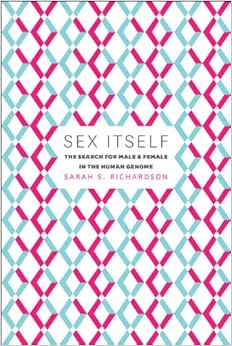
From the editors at Big Think, the article below summarizes last week's Specific Gravity podcast in which Jeff Schechtman speaks with Sarah Richardson, author of Sex Itself: The Search for Male and Female in the Human Genome (2013). 

According to Richardson, human genomes are 99.9 percent identical, with the exception of the X and Y chromosomes. Nonetheless, new genomic technologies make it very easy to demonstrate sex difference.
Richardson says "there are quantitative technologies that allow us to simply measure organ by organ - the liver, the heart, the brain, or disease by disease - diabetes or cardiovascular diseases - and publish a paper showing sex difference."
Yes, there are some differences, but we are still learning what they mean.

Sex and the Genome: Cultural Gender Conceptions Influence the Genetic Science of Sex

by Big Think Editors
December 6, 2013


If the 20th century was the century of silicon, many believe the 21st will be the century of biotechnology, and especially genomic technology. And as we stand at the advent of this 'genomic century,' Harvard professor Sarah Richardson argues, "we are going to need to have an open, frank conversation about how we view human difference."

Richardson, the author of Sex Itself: The Search for Male and Female in the Human Genome, points out to Jeff Schechtman in this week's Specific Gravity interview that human genomes are 99.9 percent identical, with the exception of the X and Y chromosomes. Nonetheless, new genomic technologies make it very easy to demonstrate sex difference. Richardson says "there are quantitative technologies that allow us to simply measure organ by organ - the liver, the heart, the brain, or disease by disease - diabetes or cardiovascular diseases - and publish a paper showing sex difference."

What we have a much harder time describing, Richardson says, is the meaning and significance of those differences. One view - that is both scientific and cultural - is that there is an "unchangeable binary between maleness and femaleness." And yet it is a more scientifically accurate view, in Richardson's eyes, that there is "a distributed and convergent process throughout the genome, and there are many pathways for healthy maleness and femaleness."

We still have a lot to learn about the way the genome functions. We tend to look to science to try to settle our most difficult questions, Richardson says, as if it is a neutral arbiter. And yet, Richardson says throughout history ideas about gender have always tended to drift back and forth "into science and then back out into the culture."

And so as we set out in the brave new post-genomic world, Richardson says "we need a patience with the data and an openness to surprising results." We then need incorporate these results into a cultural discussion of differences. And then, Richardson says, "we can do this research in an ethical space and feel that we are doing the right thing."

Listen to the podcast here:

 
~ Image courtesy of Shutterstock

Monday, June 17, 2013

Codes of Gender - Documentary


I think I posted this here before, but it's an interesting video definitely worth a viewing, or maybe a second viewing. This documentary offers a cogent analysis (using Irving Goffman's examination of advertising and the contemporary commercial landscape) shows how influential advertising media is in communicating "normative ideas about masculinity and femininity, the relationship between gender and power, and the everyday performance of cultural norms."


The Codes of Gender


The Codes of Gender applies the late sociologist Erving Goffman’s ground-breaking analysis of advertising to the contemporary commercial landscape, showing how one of American popular culture’s most influential forms communicates normative ideas about masculinity and femininity, the relationship between gender and power, and the everyday performance of cultural norms.

In striking visual detail, this film explores Goffman’s central claim that gender ideals are the result of ritualized cultural performance, uncovering a remarkable pattern of masculine and feminine displays and poses.

The film looks beyond advertising as a medium that simply sells products, and beyond analyses of gender that focus on biological difference or issues of objectification and beauty, to provide a clear-eyed view of the two-tiered terrain of identity and power relations.

With its sustained focus on how our perceptions of what it means to be a man or a woman get reproduced and reinforced on the level of culture in our everyday lives, the film is a great introduction to socially and culturally constructed gender roles.

Thursday, March 21, 2013

The Father of All Men Is 340,000 Years Old

Dwarfed by the X chromosome, the Y seems more ancient than we thought <i>(Image: Pasieka/SPL)</i>
Dwarfed by the X chromosome, the Y seems more ancient than we thought (Image: Pasieka/SPL)

New research suggests that the oldest common male ancestor for all living men existed BEFORE (around 340,000 years ago) anatomically modern humans emerged around 195,000 years ago. Very interesting. This would make the oldest common male ancestor quite a bit older than Mitochondrial Eve, who is estimated to have lived approximately 190,000–200,000 years ago.

The father of all men is 340,000 years old

March 2013 by Colin Barras
Magazine issue 2908.

Albert Perry carried a secret in his DNA: a Y chromosome so distinctive that it reveals new information about the origin of our species. It shows that the last common male ancestor down the paternal line of our species is over twice as old as we thought.

One possible explanation is that hundreds of thousands of years ago, modern and archaic humans in central Africa interbred, adding to known examples of interbreeding – with Neanderthals in the Middle East, and with the enigmatic Denisovans somewhere in southeast Asia.

Perry, recently deceased, was an African-American who lived in South Carolina. A few years ago, one of his female relatives submitted a sample of his DNA to a company called Family Tree DNA for genealogical analysis.

Geneticists can use such samples to work out how we are related to one another. Hundreds of thousands of people have now had their DNA tested. The data from these tests had shown that all men gained their Y chromosome from a common male ancestor. This genetic "Adam" lived between 60,000 and 140,000 years ago.

All men except Perry, that is. When Family Tree DNA's technicians tried to place Perry on the Y-chromosome family tree, they just couldn't. His Y chromosome was like no other so far analysed.

Deeper roots

Michael Hammer, a geneticist at the University of Arizona in Tucson, heard about Perry's unusual Y chromosome and did some further testing. His team's research revealed something extraordinary: Perry did not descend from the genetic Adam. In fact, his Y chromosome was so distinct that his male lineage probably separated from all others about 338,000 years ago.

"The Y-chromosome tree is much older than we thought," says Chris Tyler-Smith at the Wellcome Trust Sanger Institute in Hinxton, UK, who was not involved in the study. He says further work will be needed to confirm exactly how much older.

"It's a cool discovery," says Jon Wilkins of the Ronin Institute in Montclair, New Jersey. "We geneticists have been looking at Y chromosomes about as long as we've been looking at anything. Changing where the root of the Y-chromosome tree is at this point is extremely surprising."

Digging deeper, Hammer's team examined an African database of nearly 6000 Y chromosomes and found similarities between Perry's and those in samples taken from 11 men, all living in one village in Cameroon. This may indicate where in Africa Perry's ancestors hailed from.
Older than humanity

The first anatomically modern human fossils date back only 195,000 years, so Perry's Y chromosome lineage split from the rest of humanity long before our species appeared.

What are the implications? One possibility is that Perry's Y chromosome may have been inherited from an archaic human population that has since gone extinct. If that's the case, then some time within the last 195,000 years, anatomically modern humans interbred with an ancient African human.

There is some supporting evidence for this scenario. In 2011, researchers examined human fossils from a Nigerian site called Iwo Eleru. The fossils showed a strange mix of ancient and modern features, which also suggested interbreeding between modern and archaic humans. "The Cameroon village with an unusual genetic signature is right on the border with Nigeria, and Iwo Eleru is not too far away," says Hammer.

Chris Stringer at the Natural History Museum, London, was involved in the Iwo Eleru analysis, and says the new Y chromosome result highlights the need for more genetic data from modern-day sub-Saharan Africans. "The oldest known fossil humans in both West Africa at Iwo Eleru and Central Africa at Ishango [in Democratic Republic of the Congo] show unexpectedly archaic features, so it certainly looks like we have a more complex scenario for the evolution of modern humans in Africa."

Journal reference: American Journal of Human Genetics, doi.org/kp4

Thursday, August 30, 2012

Not Male? Not Female? Must Be Agender - The Emerging Gender Neutrality


I suspect there have always been people who do not comfortably identify as either male or female, a self-perception that seems to be more common in the asexual community (according to the article, a 2011 study found that 23% of this community feels gender neutral). So now there is a name for this gender identity, or perhaps it's a lack of gender identity (?) - agender, or gender neutrois.

Isn't this simply a rejection of the gender binary? It seems that it may be a little deeper than that. All five of the people the author spoke to had no need for masculinity or femininity, so it's beyond gender fluidity. This is all very interesting to me . . . .

The article is from Rachel White (she of the wonderful Rachel Rabbit White blog) in the NY Magazine's The Cut blog.


Neither Man Nor Woman: Meet the Agender


"I didn’t really want nipples," Cory said, running a hand through a mop of bleached blond hair. Born female, 23-year-old Cory uses the pronoun co—and asked that we refer to co that way, too—and got elective surgery to remove co's breasts last year. But co is not transgender in the traditional sense, transitioning between female and male. Co wants neither gender. So co joined the ranks of the agender—or, in a more florid recent coinage, the gender neutrois.

"You read stuff on Tumblr about how us nonbinary people just want to be special snowflakes," explained Cory, who is special but made of sturdier stuff than a snowflake. Was Cory's desire to remove co's secondary sexual traits a ploy for attention? A reaction to internalized sexism? The result of sexual repression? "I tackled all that stuff with my therapist. We came to the conclusion that I was not okay with this part of my body. Regardless of where that came from, it was there." Co has neither breasts nor nipples now.

"It is so perfect," Cory said. “For me this is what neutral looks like and feels like.”

I found Cory through the #nonbinary #agender #neutrois tags on Tumblr. The social network has become an unofficial home for the gender neutral. Though most group themselves with the transgender community, they reject the narrative of a person born into the wrong, oppositely-gendered body. All five neutrois individuals I spoke to have no need for masculinity or femininity at all.

L to R: Cory, Micah, Ashton

"You read all these trans youth narratives, the kid insisting he was a boy and going to grow a penis. That was me when I was 3," explained 26-year-old Micah. "I was like the poster trans kid. But then somewhere in there, it shifted."

Skyping from an airy San Francisco apartment shared with a fiancée, Micah has chestnut hair styled like a surfer's, sea-glass eyes, and rose-flecked skin. For Micah, gender neutrality has involved laser hair removal, a double mastectomy, a low dose of hormones, and the pronoun they. Asked about their ideal gender-neutral body (though our subjects' chosen pronouns drive Microsoft Word's Spelling and Grammar Check nuts, I see no reason not to oblige) Micah replied, “This is it.”

Micah came out of the closet twice, first when they entered a relationship with a woman, and again when they transitioned to neutrality last year. Though Micah identifies as both agender and asexual—which they define as "a lack of sexual attraction"—girlfriend Tammy identifies as a sexual female.

"When we started dating I got really confused," Tammy reflected. "Was I now dating a girl? I knew I wanted to be with Micah, but did that mean that I was now a lesbian?" After "six months of confusion," Tammy settled on "queer," and has stuck with her queer relationship with Micah for five and a half years.

When they first started dating, Tammy thought she could "make" Micah desire sex. "Now we've just found so many different ways of expressing love, other than what the usual sexual relationship looks like. Sometimes we feel like being more intimate, and sometimes we don't."

When I spoke to the pair together Tammy mostly deferred to Micah, who was uncomfortable discussing the mechanics of their physical relationship. "Too much focus on genitals," they said, then compared sex to asparagus: "OK when cooked properly, but I never really have a craving for it." A blog post Micah wrote about the relationship emphasizes "cuddling" and "communication."

"There are more ways to express intimacy than just sex," Micah concluded, referencing Asexual Visibility and Education Network founder David Jay. Reached by phone, Jay emphasized that most asexual people have a gender. There is, however, significant overlap between those who lack sexuality and those who lack gender: A 2011 survey of the asexual community found that 23 percent of those surveyed identified as neither male nor female—although most do not go so far as to have their nipples removed.

Why did this iteration of gender and pronouns emerge? There are virtually no studies on people who identify as agender. In 2010 the National Transgender Discrimination Survey Report on Health and Health Care found that 12 percent of self-identifying transgender people surveyed identified as gender nonconforming. And there may be a connection to asexuality: Jay says the asexual community has become a safe space for those questioning gender. Tumblr has become the unofficial support space for agender exploration and, sometimes, fierce debate. (On recent post read, “So there is this guy on Facebook. He’s agender. He’s about fifteen other labels as well.... the thing about this guy though is that he isn’t really agender for any reason other than a political statement.”)

For Micah, “not growing up was always a huge factor, and still is. I idolized Peter Pan,” they told me, noting that they are sometimes mistaken for a young boy. “In San Francisco I am seen as a lesbian," Micah continued. "I hate being called a lesbian, because it means I am a girl. But queer people are visible here and I am visibly queer. But at home in Mexico, queer doesn't exist."

After coming out, Micah lost contact with their Mexican family. They launched an agender blog, Neutrois Nonsense, and built a small online community there. Micah says their website receives over 12,000 pageviews a month, and a related Tumblr account has 2,200 followers.

Ashton, a 21-year-old Kansan, also passed as a lesbian until coming out as agender. Large and square shaped with a pinkish complexion, silvery-blond short hair and wire-frame glasses on a slight nose, Ashton (who also uses the pronoun ‘they’) used to work 50 hours per week in a factory and spends downtime in a transgender support group. (Ashton thinks the internet makes it easier to find one's way to an agender description. "You have Google in a tab next door, to explain things.")

Ashton’s supervisor and two other women at the factory formed a small queer community, which Ashton joined. “Most people who work there are male, so the women there really bond over female-ness. One day I counted 32 times that I was called by a female name--lady, miss, girl.” Ashton recounts a lot of joking around and sometimes going out together after work.

But Ashton was met with silence when they revealed their agender identity at the factory.
Persevering, Ashton wore a Pride shirt to work another day, which showed three boxes: ‘Female’: blank, ‘Male’: blank and ‘Blank’: checked. “I was asked to switch it inside out because it was distracting and offensive,” Ashton told me during a Skype chat in July, noting a fear of getting fired. Two weeks later, it happened. Ashton wrote on Tumblr: “I just lost my job for being a lesbian presenting assumed transguy atheist liberal who knows what else.”

Losing the job was something Ashton couldn't afford, since they are saving up for a double mastectomy. “I bind my chest for 11 or 12 hours a day when I am at work," they said before getting fired. "The recommended limit is 8 to 12 hours with as little strenuous activity as possible. I am doing lots of lifting and am on my feet all day. It is hot, sometimes my back spasms.”

Micah has faced loss in the name of gender neutrality, too. Upon finding out that her one-time daughter would be getting a double mastectomy, Micah's mother disowned her child. To this day she lights candles and talks to angels on Micah's behalf.

"My wife views Micah's actions as an act of terrorism, the fact that we have to have things on Micah’s terms," Micah's father explains. Their family is Mexican and Jewish. "She is worried about social and cultural things: how will Micah connect with Mexico?"

Micah's father supports his child's transition, as well as Micah's relationship with Tammy. The pair would like to marry and have children; Micah's father thinks they shouldn't wait for his wife's approval, because they may never get it.

Micah is actually the third name that they have tried out during transition—first it was Mich then Maddox as an online moniker, but it didn’t feel right ‘in real life.’ But Micah says they're sure that this is it. Micah is working on the legal paperwork to cement this chosen name. I ask, is there anything more to the transformation?

 “I don't remember aspiring to grow up to be a man, but was disgusted by the idea of growing up to be a woman. Physically I don't think I want anything different than what I have today, my own skin.”

All that's left now is aging. Micah imagines growing into a wrinkly, graying little kid, sort of like Benjamin Button, the F. Scott Fitzgerald creation who ages backwards: starting old and becoming younger.

Wednesday, July 25, 2012

All of the Nation's Mass Killings Committed by Males

Another mass killing, another male suspect. All of the nation's mass killings, going back at least to the 1966 UT Austin clock tower, have been committed by males. Erika Christakis, writing at Time Magazine, is probably going to catch a lot of flack as a man-hater for writer an article about this uncomfortable fact, but that does not make it less true.

On the other hand, three men died protecting the women they had come to the theater with that night. It's far more likely for men to die protecting women and children (and other men) than it is for men to become mass killers. We must not lose sight of this simple fact.

The first issue, that all mass killers have been men, says nothing in particular about men, at least in my opinion, although it bears examination. It seems that men are more likely to kill than are women (and we usually kill each other) - and we are more prone to violence in general. When it comes to acts of violence, whether against self (suicide) or others (murder), men are more likely to choose guns than are women, which makes our violence more lethal.

These extremely violent killings, however, are so isolated that we cannot seriously predict them or the men who will commit them - not in the same way that we can predict which kids will become gang bangers or drug users. Despite the opinion of Christakis, I don't think maleness is necessarily the issue - the issue is the biopsychosocial context of the men who become mass killers, the personal and environmental triggers that push a potential suicide to become a mass killer.

The second issue is more understandable - men are protectors and we always have been. Warren Farrell has argued this point (and its Siamese twin, that only men serve in combat) incessantly over the past couple of decades. But it's true, and as a matter of biological necessity, it makes perfect sense on an evolutionary scale (men are bigger and stronger and more likely to fight off a hyena or another predator than are women).

And while there is a biological element to the protector role, now it is more of a cultural expectation than a survival need. Women can own and shoot guns and don't men to protect them, but many men are still trained to see protecting women as their role (I was raised to protect my sister and stand up for any female who is being harassed, intimidated, or abused by a man). For the three women who are alive because a man shielded them and took the bullets in Aurora, I'm guessing that they are feeling fortunate (and traumatized) that these men behaved that way [NOTE: Thanks to Arthur for correcting my original wrong-wording in this sentence].

I don't know why the mass killers are always male - and I am sure the reasons are complex and irreducible to a single soundbite, even a single magazine column.

But I do know that there are many, many more men who would never raise a weapon at anyone, who would give their own lives to protect others (men and women), and who are just as baffled as am I as to what makes these depressed, damaged, and angry young men decided to kill people they have never met.

The Overwhelming Maleness of Mass Homicide

Why aren't we talking about the one thing mass murderers have in common?
Accused movie theater shooter James Holmes
RJ Sangosti / Getty Images - Accused movie-theater shooter James Holmes makes his first court appearance at the Arapahoe County courthouse on July 23, 2012 in Centennial, Colo.

There’s a predictable cycle of mourning and recrimination that follows a massacre like the shootings last week in Aurora, Colo. First come the calls for unity and flags flown at half-mast. Then the national fissures appear: the gun lobby stiffens its spine as gun-control advocates make their case. Psychologists parse the shooter’s background, looking for signs of mental illness or family disarray. Politicians point fingers about “society run amok” and “cultures of despair.”

We’ve been down this path so many times, yet we keep missing the elephant in the room: How many of the worst mass murderers in American history were women? None. This is not to suggest that women are never violent, and there are even the rare cases of female serial killers. But why aren’t we talking about the glaring reality that acts of mass murder (and, indeed, every single kind of violence) are overwhelmingly perpetrated by men? Pointing out that fact may seem politically incorrect or irrelevant, but our silence about the huge gender disparity of such violence may be costing lives.

Imagine for a moment if a deadly disease disproportionately affected men. Not a disease like prostate cancer that can only affect men, but a condition prevalent in the general population that was vastly more likely to strike men. Violence is such a condition: men are nine to 10 times more likely to commit homicide and more likely to be its victims. The numbers are sobering when we look at young men. In the U.S., for example, young white males (between ages 14 and 24) represent only 6% of the population, yet commit almost 17% of the murders. For young black males, the numbers are even more alarming (1.2% of the population accounting for 27% of all homicides). Together, these two groups of young men make up just 7% of the population and 45% of the homicides. And, overall, 90% of all violent offenders are male, as are nearly 80% of the victims.

We shouldn’t need Steven Pinker, one of the world’s leading psychologists and the author of the book, The Better Angels of Our Nature, to tell us the obvious: “Though the exact ratios vary, in every society, it is the males more than the females who play-fight, bully, fight for real, kill for real, rape, start wars and fight in wars.” The silence around the gendering of violence is as inexplicable as it is indefensible. Sex differences in other medical and social conditions — such as anorexia nervosa, lupus, migraines, depression and learning disabilities — are routinely analyzed along these lines.

For millennia, human society has struggled with what to do with young men’s violent tendencies. Many cultures stage elaborate initiation ceremonies, presided over by older men, which help channel youthful aggression into productive social roles. But in contemporary society, we have trouble talking about the obvious: the transition from boy to man is a risky endeavor, and there can be a lot of collateral damage.

Skeptics will claim that the perpetrators of horrific acts like the Aurora shootings are such aberrations that we can hardly build public policy around their evil behavior. But it’s a mistake to view mass murderers as incomprehensible freaks of nature. For example, we know that the young men who go on murderous rampages are not always sociopathic monsters but, rather, sometimes more or less “regular” men who suffered from crushing depression and suicidal ideation.

No reasonable person can imagine how despair could possibly lead to premeditated mass homicide. However, the fact that depression is so frequently accompanied by violent rage in young men — a rage usually, but not solely, directed at themselves — is something we need to acknowledge and understand.

Our refusal to talk about violence as a public-health problem with known (or knowable) risk factors keeps us from helping the young men who are at most risk and, of course, their potential victims. When we view terrible events as random, we lose the ability to identify and treat potential problems, for example by finding better ways to intervene with young men during their vulnerable years. There is so much more we need to learn about how to prevent violence, but we could start with the sex difference that is staring us in the face.


Christakis, M.P.H., M.Ed., is a Harvard College administrator who blogs at ErikaChristakis.com. The views expressed are solely her own.

Thursday, May 24, 2012

Morgan Spurlock, Male Grooming and ‘Mansome’

 
For decades, women have been targeted by the personal products industry with everything from hair removal devices and creams to "odor" removing feminine hygiene products to make up and hair coloring. If you watch the commercials and look at the magazine ads, nearly everything that is natural about being female needs to be prettied up and sanitized. And aside from small enclaves around the world (most noticeably Boulder, Seattle, San Francisco, Flagstaff, and a few East Coast towns with women-only colleges in the U.S.), a LOT of women have bought into this marketing of the shaved, painted, and sanitized woman.

Now men are being targeted - a trend that seemed to begin with the metrosexual phenomenon in the 1990s and 2000s. But as Morgan Spurlock documents (and ridicules) in his new film, Mansome, the trend is also moving into the mainstream of masculine culture. The focus for men seems to be some of the traditionally masculine qualities - strength and muscle (but it often requires shaving one's whole body to highlight the muscle, as in bodybuilding and guido culture), six pack abs (again, super lean and muscular, with a strict attention to diet that used to be something only women worried about), nice hair (well-groomed and god forbid you should go gray or bald), and impeccable clothing (more guys seem to be getting things tailored than in the past), and so on. Those last two are where things cross-over into the realm of the metrosexual, withthe use of personal care products becoming much more acceptable.

My take: I use hair product, shower gel, cologne, go to the gym as often as I can, have six-pack abs, watch what I eat, like to wear nice clothes, and am strong and mildly muscular - but I do not think of myself as metrosexual, nor do I do any of those things because I feel some pressure to conform to an image (and I have examined this, thoroughly, since I do have a vanity part). I do it because it's who I am. If men want to get prettied up, or be rough and bearish, or live somewhere in between, who the hell cares? Whatever makes them happy.

I watch these trends in the media because they say something, no matter how trivial, about the evolution or transformation of masculine ideals in the culture. I think we're seeing some men beginning to take better care of their health and their appearance, but a trip to Walmart or Home Depot will show us just how small a minority of men are doing so at this point.

From the New York Times, an interview with Spurlock about the film.

Morgan Spurlock, Male Grooming and ‘Mansome’

Morgan Spurlock shaving his handlebar mustache in "Mansome." 
Morgan Spurlock shaving his handlebar mustache in “Mansome.”

After tackling fanboy culture (“Comic-Con Episode IV: A Fan’s Hope”) and product placement (“Pom Wonderful Presents: The Greatest Movie Ever Sold”), the documentary filmmaker Morgan Spurlock has now turned his focus to men’s grooming habits with “Mansome.” The movie, which had its premiere last month at the Tribeca Film Festival, opens in theaters Friday.

In the film, Mr. Spurlock interviews many men, from celebrities like Jason Bateman and Zach Galifianakis, to the award-winning beardsman Jack Passion, in a quest to understand how men’s grooming habits have evolved in the 21st century and how male identity has changed in the process. Mr. Spurlock’s own handlebar facial hair factors into the mix.

The beardsman Jack Passion in "Mansome." 
The beardsman Jack Passion in “Mansome.”

In a recent interview at his SoHo production offices, Mr. Spurlock spoke about the film. Below are edited excerpts from that conversation.

Q. How did you want to structure the film?
 
A. We wanted to use characters as the best place to jump off from, to find people who had interesting and compelling stories. Jack Passion is an amazing character. Here’s a guy who is the European beard champion and the U.S. beard champion. He represents you and the rest of us Americans as the finest in “beard building,” as he calls it. Once I met Jack, I thought this is someone we should use as a model.

We wanted to find the people who represented the fringes of this idea. Only by understanding the extremes of certain people can you start to understand what the middle represents. I find myself more in the middle with the exception of this ridiculous mustache that I’ve been shaving around for eight years.

 
Q. You did a little bit of life imitating doc with your own mustache at the film premiere at Tribeca, correct?
 
Mr. Spurlock without his mustache at the Tribeca Film Festival. 
Mr. Spurlock without his mustache at the Tribeca Film Festival.
 
A. Yes, in the movie, I talk about how I came across Adam Garone, [a co-founder of] Movember, a charity fund-raiser for prostate cancer research where they get guys to grow mustaches. I called him and said I’ve had this mustache for a long time, so we came up with the idea of me shaving off my mustache during Movember to raise money for charity.

And then my little boy, who’s never seen me without a mustache, sees this weird man in his house and kind of loses it.

So for the premiere, I had my mustache, and while the movie showed, I shaved it off. After the movie, everybody’s looking at me like, “You kind of look like somebody I should know.” People couldn’t tell who I was. It was great.
 
Q. How did you determine which celebrities you were going to use?
 
A. Well, first you go to ZZ Top. You have these guys with these iconic rock ‘n’ roll man beards that they’ve had for years. It’s their identity. Then John Waters, with his pencil-thin mustache, was good. Zach Galifianakis is one of those guys who has always made fun of how he’s a bit of a schlub. Yet he’s incredibly successful with this dirty-mountaineer look to him. So I thought he’d be interesting.
 
Q. Beyond facial hair, what were you interested in exploring?
 
A. The film does look at this world of male body dysmorphia, where men are supposed to look and be a certain way. Shawn Daivari is an example of this. As a professional wrestler, there’s a certain way he’s supposed to look, which is completely ripped and cleanshaven without a hair on his body. He has to shave his whole body every single day before he goes to work. He has this mental image of what he has to live up to every single day. So there are some serious questions that are raised and some serious conversations that come up in the middle of a lot of funny parts.
 
Q. What ways have you found that male identity has most changed over the years?
 
A. Men now are made to feel as insecure as we’ve made women feel for decades. Magazines cater to this insecurity. You’re too fat, you’re too ugly. Get that girl! So you think: “I don’t have six-pack abs. What’s wrong with me?” I think that men have lost the confidence of self. We’ve lost this confidence of our own identity.
 
This brief article is from the LA Times, the land of bronze skin and botox - where youth is worshipped almost as much as celebrity.

Is the post-metrosexual manscape landscape the 'mansome era'?

Mansome Movie Stills

When it comes to answering the big questions about masculine identity and the male grooming ritual, Morgan Spurlock's latest movie, "Mansome" may barely scratch the surface (in spa terms that would make it more of an exfoliation than an extraction), but since the topic is being tackled on the silver screen at the same the makers of men's lotions, potions, salves, tonics and shaving implements are seeing increased sales, I decided to have a chat with Spurlock during his recent West Coast press junket. The result appears in Sunday's Image section.

Over the course of the interview, Spurlock shared some of the surprises and regrets from getting the documentary from idea to screen. One high point was finding Ricky Manchanda, a New Yorker who, at first glance, appears to be nothing more than a preening peacock of a narcissist.

"What I love about Ricky’s story is that he's a guy who has dealt with something we’ve all dealt with on some level -- peer pressure and being ridiculed by friends .... [A]nd Ricky’s saying: 'I’m not going to be that guy, I’m going to fit in by society’s standards.' That was a real 'aha' moment for me. "

Although there are a lot of voices (and I mean a lot; the press notes list 28 commentators by name -- from famous comedians to bloggers -- which doesn't include a slew of random men- and women-on-the-street interviews) there was some insight Spurlock wishes he'd been able to include.

"I would have loved more magazine editors and more people like that to chime in on their role in what’s happened," Spurlock said. "But it’s hard to get a lot of people to talk about how they've contributed to it. ... And we tried to get people from the modeling business to talk about it from the male modeling side  and we couldn’t get people to go on camera to talk about that."

Most discussions about male grooming and societal expectations eventually touch on the dreaded M-word -- metrosexual -- and when the topic finally came up Spurlock sounded ready to kick it to the curb once and for all.

"What’s the word for the post post-metrosexual era? I don’t know what it is," Spurlock said. "But I do know that we're beyond metrosexual. That was a term that came out to describe these men -- was almost a slag against them -- because they were engaging in something that had been quintessentially associated with gay culture [and] it was a negative connotation."

"We're at a place where [men taking care of their appearance] is being seen as normal, and it's becoming more accepted in society. So maybe we're living in 'mansome' era."
 

Thursday, May 10, 2012

io9 - Sweden Seeks to Abolish the Concept of Gender


Sweden has officially introduced a new gender-neutral pronoun in an effort to abolish the divisions of gender. The newly proposed gender-neutral personal pronoun "hen" is to be used instead of han [he in Swedish] and hon [she].

It's an interesting idea - but will it work?

Will Sweden abolish the concept of gender?

Will Sweden abolish the concept of gender?


Sweden, it would seem, is doing its darndest to abolish the idea of gender. Their latest effort comes with the introduction of a new gender-netural pronoun, called "hen." But while some see it as a huge victory in the struggle to achieve gender equality, others see it as yet another imposition brought on by the political correctness police.

There's no doubt that Sweden is a rock star when it comes to this sort of stuff. Two years ago the World Economic Forum designated Sweden as the most gender-equal country in the world. It boasts the highest proportion of working women in the world and allow for 480-day parental leaves — of which 60 days are reserved for dads.

And in an effort to work towards yet even greater levels of gender equality, Sweden now wants to do it through the channel of linguistic gender-neutrality. A good number of forward-looking Swedes have determined that government and society should no longer recognize any legal distinctions between the sexes. To that end, they have officially introduced the new gender-neutral pronoun, "hen," to the vernacular. To make it all the more official, they added it to the country's National Encylopedia and defined it as a "proposed gender-neutral personal pronoun instead of he [han in Swedish] and she [hon]."

Swedes figure that the introduction of a gender-neutral pronoun will allow people to avoid having to identify themselves with a particular gender; it will also allow speakers to be sensitive to those people who choose to not have their gender identified. More conceptually, it can be seen as a refinement of the language, an added level of linguistic sophistication. Authors can now refer to a character without having to reveal their gender (whereas in English we tend to use the awkward "they" in its place).

Critics claim that such terminology will only confuse children. The suggestion that there is a "third" gender, they argue, can only disrupt the natural development of their own gender identities. Other critics complain that gender-neutrality is a social hallucination and a bizarre denial of the fact that humans are a gendered species.

While Sweden is certainly a world-leader in this regard, it can been seen as part of a wider global trend toward the achievement of a "genderless" society, or what some call a postgendered society. It can also be interpreted as the ongoing evolution and refinement of language. Words need to change in order to suit ever-shifting normative values and interpersonal sensitivities. We tend to no longer refer to unmarried women as "Miss", for example, nor do we talk about "salesmen", instead referring to "salespersons".

Science fiction fans will of course recall similar attempts to change the language of gender, particularly in those futurist worlds that feature postgendered or uniquely gendered characters. Greg Egan, in his hard SF classic Diaspora, borrowed Keri Hulme's gender-neutral pronouns "ve", "vis", and "ver" to help his uploaded sexless characters get their language right. And in the collaborative Orion's Arm universe, pronouns such as "e", "em", and "eir" are commonly used to avoid confusion in a world featuring not just genetically-altered humans, aliens, and artificial lifeforms, but also characters with other possible genders beyond just male and female.

So yes, you've got it right. Science fiction is always one step ahead of everybody else. Even the Swedes.

Tuesday, May 1, 2012

Simon Baron-Cohen - Testsoterone on My Mind and in My Brain

From Edge, a conversation with research psychologist Simon Baron-Cohen - an expert in sex differences and autism - on his favorite hormone (and mine), testosterone. In the interest of full-disclosure, I have often disagreed with Baron-Cohen, feeling that some sex and gender traits are more socially constructed than biologically determined, but he is an important voice in this field.

His most recent book is The Science of Evil: On Empathy and the Origins of Cruelty (2011), but I also recommend The Essential Difference: Male And Female Brains And The Truth About Autism (2004), which is a great introduction to his thinking on sex differences and the origins of autism.

At the Edge site, there are some videos and the question and answer transcript - go check it out.

TESTOSTERONE ON MY MIND AND IN MY BRAIN

A Conversation With Simon Baron-Cohen [4.30.12] SLIDE SHOW


By 2003, I was beginning to sense that that political climate was changing, that it was a time when people could ask the question — do boys and girls differ? Do men and women differ? — without fear of being accused of some kind of sexist agenda, but in a more open-minded way.

First of all, I started off looking at neuroanatomy, to look at what the neuroscience is telling us about the male and female brain. If you just take groups of girls and groups of boys and, for example, put them into MRI scanners to look at the brain, you do see differences on average. Take the idea that the sexes are identical from the neck upwards, even if they are very clearly different from the neck downwards: the neuroscience is telling us that that is just a myth, that there are differences, even in terms of brain volume and the number of connections between nerve cells in the brain at the structure of the brain, on average, between males and females.

I say this carefully because it's still a field which is prone to misunderstanding and misinterpretation, but just giving you some of the examples of findings that have come out of the neuroscience of sex differences, you find that the male brain, on average, is about eight percent larger than the female brain. We're talking about a volumetric difference. It doesn't necessarily mean anything, but that's just a finding that's consistently found. You find that difference from the earliest point you can put babies into the scanner, so some of the studies are at two weeks old in terms of infants.

You also find that if you look at postmortem tissue, looking at the human brain in terms of postmortem tissue, that the male brain has more connections, more synapses between nerve cells. It's about a 30 percent difference on average between males and females. These differences are there.
The second big difference between males and females is about how much gray matter and white matter we see in the brain: that males have more gray matter and more white matter on average than the female brain does. White matter, just to be succinct, is mostly about connections between different parts of the brain. The gray matter is more about the cell bodies in the brain. But those differences exist. Then when you probe a bit further, you find that there are differences between the male and female brain in different lobes, the frontal lobe, the temporal lobe, in terms of how much gray and white matter there is.

You can also dissect the brain to look at specific regions. Some of you will have had heard of regions like the amygdala, which people think of as a sort of emotion center, that tends to be larger in the male brain than the female brain, again, on average. There's another region that shows the opposite pattern, larger in females than males: the planum temporale, an area involved in language. These structural differences exist, and I started by looking at these differences in terms of neuroanatomy, just because I thought, at least those are differences that are rooted in biology, and there might be less scope for disagreement about basic differences.

I've talked a little bit about neuroanatomy, but in terms of psychology, there are also sex differences that are reported. On average, females are developing empathy at a faster rate than males. I keep using that word 'on average' because none of these findings apply to all females or all males. You simply see differences emerge when you compare groups of males and females. Empathy seems to be developing faster in girls and in contrast, in boys there seems to be a stronger drive to systemize. I use that word ‘systemizing’, which is all about trying to figure out how systems work, becoming fascinated with systems. And systems could take a variety of different forms. It could be a mechanical system, like a computer; it could be a natural system, like the weather; it could be an abstract system, like mathematics; but boys seem to have a stronger interest in systematic information. I was contrasting these two very different psychological processes, empathy and systemizing. And that's about as far as I went, and that was now some 11 years ago.

Since then my lab has wanted to try to understand where these sex differences come from, and now I'm fast-forwarding to tell you about the work that we're doing on testosterone. I'm very interested in this molecule, partly because males produce more of it than females, and partly because there's a long tradition of animal research which shows that this hormone may masculinize the brain, but there's very little work on this hormone in humans.

Before I tell you about the testosterone work, I should just mention one somewhat controversial study that we published back in the year 2000, and that was a study of newborn babies. What we wanted to do was establish whether the sex differences that you find in behavior, or in the mind, in human beings, were purely the result of culture and purely the result of postnatal experience, or whether biology might also be contributing to those differences.

We did a study that we call the Newborn Baby Study, where we studied just over 100 babies aged 24 hours old. This was a study conducted in Cambridge. The babies had just popped out of the womb. The mothers had signed a consent form saying that they were happy for their baby to take part in research. We would have loved to study the babies as soon as they came out, but the obstetricians asked us, out of respect for mother and baby, if we would wait 24 hours, which we were happy to do; and then when the babies were settled and the mother was settled, we presented these babies with two objects: a human face or a mechanical mobile suspended above the crib. So, two very different kinds of objects, one mechanical and one animate and human. And we looked to see whether babies, aged one day old, looked longer at the human face, a social stimulus, or looked longer at the mechanical object.

The objects were presented one at a time, and we counterbalanced, that's to say we varied the order, whether the baby saw the face first or the mechanical object first. What we found, just cutting to the chase, was that if we compared babies in terms of looking longer at a social stimulus or looking longer at a mechanical stimulus, more boys seemed to look longer at the mechanical stimulus, and more girls seemed to look longer at the social stimulus, the face. We were finding a difference that was there as early as 24 hours old; and that, to me, was pointing to biology being a contributing factor to sex differences.

People who really want to argue that all sex differences that you find in the mind and in behavior can be explained by cultural factors might still have argued that in those 24 hours, that mother and baby or father and baby had been interacting, that parents may have been somehow shaping their sons and daughters to have different patterns of interest. That is just possible, because in 24 hours, people would argue, there's plenty of room for experience. But it's equally plausible that what we're seeing is babies arriving on day one with slightly different patterns of interest: with girls on average, being more oriented towards people, being more inquisitive about people, and boys, again on average, being slightly more oriented in their attention towards the physical environment, and patterns in the physical world.

Now we're up to testosterone. We picked testosterone, this molecule, just because we were looking for a candidate biological explanation or mechanism for these sex differences we were observing. And the animal research was pointing to the fact that before birth there's a surge in the production of testosterone. Testosterone is suddenly produced at very high quantities and then it drops off again around birth. And the animal researchers were arguing that this surge in the production of testosterone, that the fetus is producing a lot of testosterone during fetal life, because it has some permanent and organizing effect on brain development. And they were able to show that in rats.

You can do experimental manipulations of this hormone in rats, that would be completely unethical in humans: you can either deprive the animal of its testosterone, for example, by castration at birth (since testosterone, one source of it in males is the testes); or you can inject extra testosterone, for example, into a female rat at birth, and look at the effects of brain and behavior. And that experimental evidence was pointing to long-term “organizational” effects on brain development.
Just to take an example, if you have a female rat that's given extra testosterone either during pregnancy or at birth, and then look at that female rat's behavior post-natally, her behavior is much more like a typical male rat. Ways that you can test this include, for example, letting the rats run through mazes, finding their way through a maze. If you take male and female rats, usually the male rats will get through the maze faster, learning a spatial route more quickly; but female rats that have been given extra testosterone are much more like typical male rats, so their behavior has been changed. And then if you look at post-mortem, at the rat brain, the female rats that were given extra testosterone, in terms of their neuroanatomy, the female rat's brain looks much more like a typical male rat's brain.

There was a hypothesis from animal research that testosterone was this special molecule that masculinizes the brain, and it was looking clearer and clearer in other species, but no one had found a way to demonstrate it in humans. What we've been doing over the last decade is to try to find a way to test it in humans. And the way that we settled on was to look at women in pregnancy who were having a procedure called amniocentesis. Many of you will have heard of this: this is where a pregnant woman has along needle introduced into the womb, the baby is in the womb surrounded by amniotic fluid, and the needle goes in as part of a medical, clinical procedure, to take some of that fluid. That's called amniocentesis, where you take some of the amniotic fluid that surrounds the baby. Usually this is done because there's some suspicion that the baby might have Down's syndrome, and the doctor wants to analyze the amniotic fluid for chromosomal abnormalities, as a test of whether the baby will indeed go on to have Down's syndrome.

These women were having this procedure, and the research had been telling us that if you wanted to look at hormones like testosterone, in terms of their potential influence on the human brain, you'd need to find a way of measuring it during pregnancy. We put these two things together and asked these women, if you're having an amniocentesis anyway, can we take some of the fluid, with your consent, and analyze it for testosterone levels that you find in the fluid? This is when the baby is sometime between 12 and 19 weeks of pregnancy. It's a little window when amniocentesis takes place. If you think of pregnancy as 40 weeks, normally, nine months, roughly 40 weeks, this is at the end of the first trimester, the first third of pregnancy, and just going into the second trimester, the middle of pregnancy.

We were getting this opportunity to measure hormones, but particularly testosterone, whilst the baby was still growing, at a point when the brain is developing very rapidly. And then the design of our research was that we would then store the fluid in our deep freeze, wait for the baby to be born, and follow up the babies after they were born to see if there was any correlation between their testosterone levels in the womb and how they turned out as children.

I should say one other thing, which is that this was premised on the idea that children are more different to each other than they are similar. Those of you who are parents know this very well: that you might have two or three kids and despite the fact that they've grown up in the same home, they've got the same parents, they seem to have very different personalities, very different patterns of interest, and very different rates of development. Part of the challenge, scientifically, was also to try to understand this variability in development, individual differences in development, and we were anchoring our research by looking at one factor, testosterone, which varies, with some people being very low in testosterone, other people being average or very high in testosterone, and seeing whether that scale of individual differences had anything to do with individual differences we see post-natally: for example, in rates of language development, in how sociable children are, and on other dimensions.

The study was that the woman had her amniocentesis while she was pregnant, we then waited for the baby to be born, and we've invited these babies in pretty much every year since their birth. We started off with about 500 of these babies, that's the cohort, where their testosterone levels are known, and we've been following them and they're now about 12 years old. So it's a story that's been unfolding whilst we've been able to measure the behavior as they grow, and see whether it has anything to do with their testosterone prenatally.

At their first birthday, we looked at eye contact. And I was particularly interested in this, because my main area of research is autism, and children with autism make very little eye contact. Their eye contact is at the extreme, showing very little interest in faces. But we'd already heard from that newborn baby study that there seems to be, on average, a sex difference in how interested people are in faces, and making eye contact, with girls being, on average, more interested in faces than boys, but there's a whole spectrum of individual differences. And what we found was that the higher the baby's prenatal testosterone, the less eye contact they made at their first birthday. That was simply measured by inviting the toddler into our lab, videotaping them and then later coding those videotapes for how many times the baby looked up at their mother's face. That was at the first birthday.

At the second birthday we looked at language development. We got parents to fill in a checklist of how many words does your child know, and how many words can your child produce. We were looking at the size of children's vocabularies. What we found, which was quite striking to us, was that by two years old, there were some children who had very small vocabularies, only about ten or 20 words, they were kind of at the low edge of normal development; and there were some kids who were really chatty and had 600 words. So the size of the differences in vocabulary was immense. And then we could look back at their testosterone levels.And once again, we found a significant correlation: that the higher the child's prenatal testosterone, the smaller their vocabulary at two years old. So this same hormone seemed to be related not only to patterns of social interest, whether you look at faces, but also to communication, how talkative you are and your rate of language development.

I don't want to go through all the steps, but we've also looked, when they were four years old, at empathy, finding that prenatal testosterone is negatively correlated with empathy. So again, it's the same pattern we were just hearing about: that if you were higher in testosterone during the pregnancy, it meant that you were slower to develop empathy as a four year old. And again, there are different ways that you can measure that. You can ask parents to fill in questionnaires about their child's empathy. You can actually get the child to take various empathy tests, or you can also get information about how easily the child mixes in school with other children. But the hormone, once again, was showing relationships with social behavior at school age.

We were also interested in that concept of systemizing, how strong a child's interest was in systems of different kinds. Was this a child who liked to collect things, to have the complete set, for example, that makes up a system? Was this a child who loved to take things apart and put them back together again? So, very much interested in construction and assembly and figuring out how things work? Was this a child who spotted the small differences between different makes of cars, or little toy cars, and could tell you the differences between different varieties of system? Again, what we found, but this time the correlation was flipped over, was a positive correlation with prenatal testosterone. The higher the child's prenatal testosterone the more interested they were in systems of one kind or another.

When they were about eight years old, we figured it was time to invite these kids into the MRI scanner, so that we could look directly at the question of whether testosterone is actually changing the way the brain is developing. Up until now we'd only done what's called behavioral studies, where we could find relationships between testosterone and behavior. But by eight years old a child is old enough to stay still, which is essential in a brain scan, because if the child squirms and moves around too much, then you can't interpret the results. These children, by eight, were able to tolerate having an MRI scan and we were able to look at the structure of the brain and see if it had any relationship to prenatal testosterone. And in fact, there are lots of interesting relationships.

As I mentioned, one region of the brain that differs between males and females is that region called the planum temporale, a language area, and that's related to prenatal testosterone. The hormone is having an effect on the way the brain is growing, just looking at the volume of different regions in the brain. We looked at one other region, which is the corpus callosum. Some of you will have heard of this: it's the connective tissue between the two hemispheres, and the hormone was correlated with the asymmetry of one part of the corpus callosum, just towards the back of that structure. This was the first evidence that the hormone in humans is having an effect on brain structure, brain development, and it was mirroring what the scientists who do animal research had been telling us all along, but we needed to demonstrate it in humans.

I want to bring this back to my interest in autism: autism is a neurological disability, and it affects boys much more than girls, and we were interested in the possibility that that same hormone, prenatal testosterone, might be a risk factor, or might be playing some role in the outcome of autism. I told you that the sample of children we were studying was about 500 kids. And autism is a relatively rare condition. It affects about one percent of the population. What that means is within 500 kids, there might be five children who have autism, which would be way too small a number to be able to draw any inferences about prenatal testosterone and association with this medical diagnosis.

We've been tackling the problem in two different ways. The first way is that within these 500 children we've used a dimensional measure of autism, rather than looking at whether the child has autism or not. We've been looking at the dimension of autistic traits, where you can look at the number of autistic traits a child has. The assumption is that we all have some autistic traits and that autism isn't categorically different to the rest of the population. It's simply at an extreme of a bell curve, a normal distribution of autistic traits. There are ways to measure autistic traits. Most of them are questionnaires. You get the parents to fill out a questionnaire, which is basically a way of describing how many autistic traits their child has, and then independently, you can look at their prenatal testosterone and see if there's any correlation.

What we found, maybe some of you have anticipated the result of this particular stage of the research, is that the higher the child's prenatal testosterone, the more autistic traits they were showing at different stages in development, at two years old, and we've repeated that at four years old. That's telling us about prenatal testosterone and autistic traits. But what we'd really like to do, and this is bringing you right up to date with where our research is, is to see whether there's any relationship between prenatal testosterone and actually developing autism.

As I've already explained, having a sample of 500 kids doesn't allow us to answer that question, so we've been collaborating with scientists in Denmark, in Copenhagen, at the Biobank there, because in Denmark they've been collecting amniotic fluid from women who have amniocentesis in Denmark. But they've been collecting those samples since 1980, so they have 100,000 samples sitting in their deep freeze. And for a scientist, that's a wonderful opportunity. The other thing that Denmark has is a national register for psychiatric diagnosis. Every time anyone in Denmark develops any kind of psychiatric condition, they're put into a central database, and so we know across the whole of Denmark, who has autism. We can go to the Biobank and fish out their amniotic fluid if it's in there, to analyze it for prenatal testosterone.

Whereas in our normative study of 500 children, we were dependent on doing the first measure of the hormones in pregnancy and then waiting for life to unfold over a ten-year period, in this new study, we can work backwards. We can say we know who's got autism, and we can look to see whether their amniotic fluid is still in the deep freeze. That then gives us, if you like, a fossil record of what their hormones were like, what their levels of testosterone were like when they were in the womb. It's reverse engineering the problem. And to just tell you where we're up to, we've just completed that study. The analysis is going on as we speak, so we hope to publish the results of that study later this year. Effectively, that will tell us whether testosterone levels are elevated prenatally in children who go onto receive a diagnosis of autism. And we're relatively confident that those results will be available during 2012.

This is a hormone that has fascinated me. It's a small molecule that seems to be doing remarkable things. The variation we see in this hormone comes from a number of different sources. One of those sources is genes. Many different genes can influence how much testosterone each of us produces, and I just wanted to share with you my fascination with this hormone, because it's helping us take the science of sex differences one step further, to try to understand not whether there are sex differences, but what are the roots of those sex differences? Where are they springing from? And along the way we’re also hoping that this is going to teach us something about those neurodevelopmental conditions like autism, like delayed language development, which seem to disproportionately affect boys more than girls, and potentially have us understand the causes of those conditions.