Showing posts with label inspiration. Show all posts

Thursday, October 9, 2014

Man Pushing Giant Testicle Across U.S. For Cancer

http://www.gannett-cdn.com/-mm-/bd6a36880cde1d99db722d23e34769c5a9b9950b/c=1-0-534-400&r=x404&c=534x401/local/-/media/WTSP/None/2014/10/02/1412290499000-ball.jpg

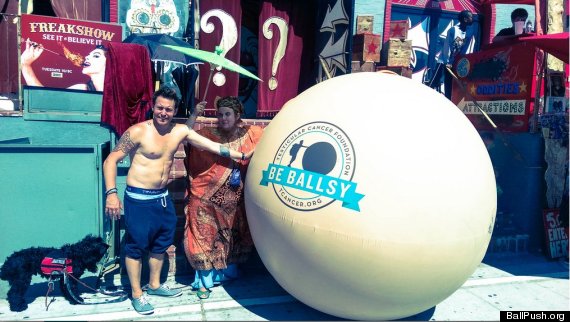
Thomas Cantley, also known as "Mr. Ballsy" is rolling a giant ball from Los Angeles to New York city to educate and engage with others about testicular cancer.

* * * * *

BALLSY MOVE: Thomas Cantley Pushing Giant Testicle Across US To Raise Cancer Awareness

The Huffington Post | By David Moye
Posted: 10/03/2014
Thomas Cantley wants to raise awareness about testicular cancer in the ballsiest way possible.

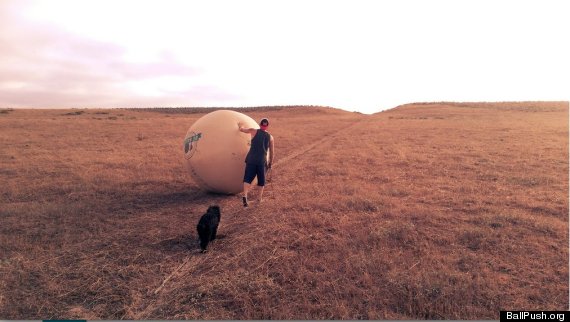
Cantley, 31, a fashion photographer by trade, is currently pushing a giant 6-foot ball across America from Los Angeles to New York.
He started Sept. 4 and is currently in New Orleans. If all goes well, Cantley, his dog Vader, and giant ball -- which he has named "Lefty" -- will roll into New York around Oct. 13.
The testicle trek isn't as nutty as it might seem at first glance.
"I wanted to do sort of a social experiment," Cantley told KSBW TV. "I didn't want to force myself on anyone, and what this does, it forces people to come to me, ask me, 'What is this, what's it about, it kind of looks like a testicle, what's going on?' It creates that conversation." 
thomas cantley 3
Cantley was diagnosed with testicular cancer in 2009. At the time, he had been suffering from abdominal and lower back pain but wasn't aware they were key warning signs of testicular cancer.
"I had this 'Superman Complex' all these men create," he told Today.com. "I was a fashion photographer in New York and I was so self-centered."
If detected early, testicular cancer has a 95 percent survival rate. By the time Cantley did go to a doctor, his left testicle had ballooned to the size of an orange, Newser.com reports.
thomas cantley
Cantley said that after his diagnosis, he sat down and asked himself: “If I died right now, what could I say I’ve accomplished in my life?”
He decided he needed to get teste.
“My initials are T.C., same as testicular cancer, and testicular cancer month is in April, my birthday is April 3. So, for me there was kind of a calling,” he told the Killeen Daily Herald. “When I was diagnosed with cancer, it was an awakening for me. I realized that I’m a communicator, I love people.”
thomas cantley 2 

Saturday, May 17, 2014

40 Boys Open Their Hearts to Support a Friend - Touching


This touching story is from The Mighty. If these boys can do this at their age, they are going to grow up to be some really good men. Stories like this are what prevent me from becoming a complete misanthrope some days.

40 Boys Put on Suits to Stand Up for Their Friend. It Worked.


Megan Griffo

Jennifer Keefe’s 10-year-old son, Timothy, came home from school last November and asked his mom to take him out to buy a suit.

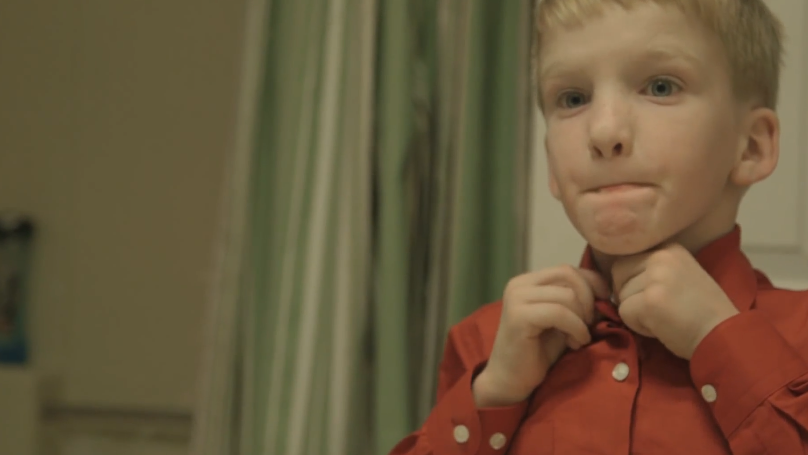
Keefe was taken aback. She was used to her 6-year-old son, Danny, wearing suits — he’d been attached to them since the Christmas before, when his mom bought him a red shirt and black jacket. But Timothy never showed any interest in dressing up.

“Ten-year-old boys like to wear Under Armor and sweatshirts,” Keefe recalls. “I asked him why he needed a suit.”

“We’re all wearing them,” he said, “to show Danny we support him.”


Kids at school often bullied Danny — they didn’t understand why he wore a dress shirt or fedora each day, and they didn’t understand why he couldn’t talk. Danny has apraxia of speech, a motor disorder that makes it difficult for him to communicate. Kids would go up to him and ask, “Why can’t you talk? Just talk.” He’d come home from school distraught.

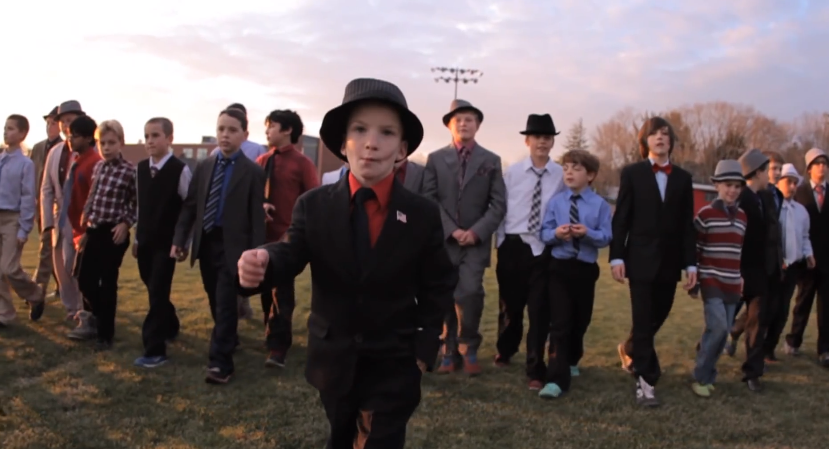
But a group of the boys on the Bridgewater Badgers’ football team, where Danny is the official water manager, wouldn’t stand for this. Their solution? A “Danny Appreciation Day,” where they would all imitate Danny’s suave style and proudly go to school. In the Life Is Good video below, you can watch scenes from that day — more than 40 boys wore suits. Danny led the march.


“It could have turned ugly. The boys could have gone to the playground and said, ‘Who’s doing this to you? Where are they?’” Keefe told The Mighty. “But instead they responded in this very adult-like, peaceful way. It was all about love and support.”

Nearly six months later, Danny confidently walks around the school hallways. No one picks on him anymore, his mom says.

“It’s kind of the opposite now,” Keefe told The Mighty. “Kids go up to him and say, ‘Hey, you’re the kid from TV!’”

Family friends have also started a fundraiser to help the Keefes afford Danny’s expensive speech therapies. Out of the 100 sessions he needs this year, insurance will only cover about 15, Keefe says. It’s a battle she downplays, though — her son’s happiness is a priority.

“Danny started crying when he saw everyone in suits that day,” Keefe recalls. “He was only 6 but it was like he understood the magnitude of what happened. I’m just so thankful the parents in my community raised such kind young men.”

Watch Danny’s story in this Life Is Good video, directed by Tim O’Donnell:

Sunday, January 19, 2014

Shane Koyczan - Remember How We Forgot?


Brilliant, touching, beautiful . . . . Discovered through Upworthy.


Credits:

ORIGINAL: By Shane Koyczan.

If you'd like to get one of Shane's poems emailed to you once a month, go here. And if you'd like to follow the amazingly talented Hannah Epperson, who accompanied this performance on the violin, Like her here.

Thursday, January 2, 2014

My Personal Goal for 2014 - Fail More, Embrace Imperfection


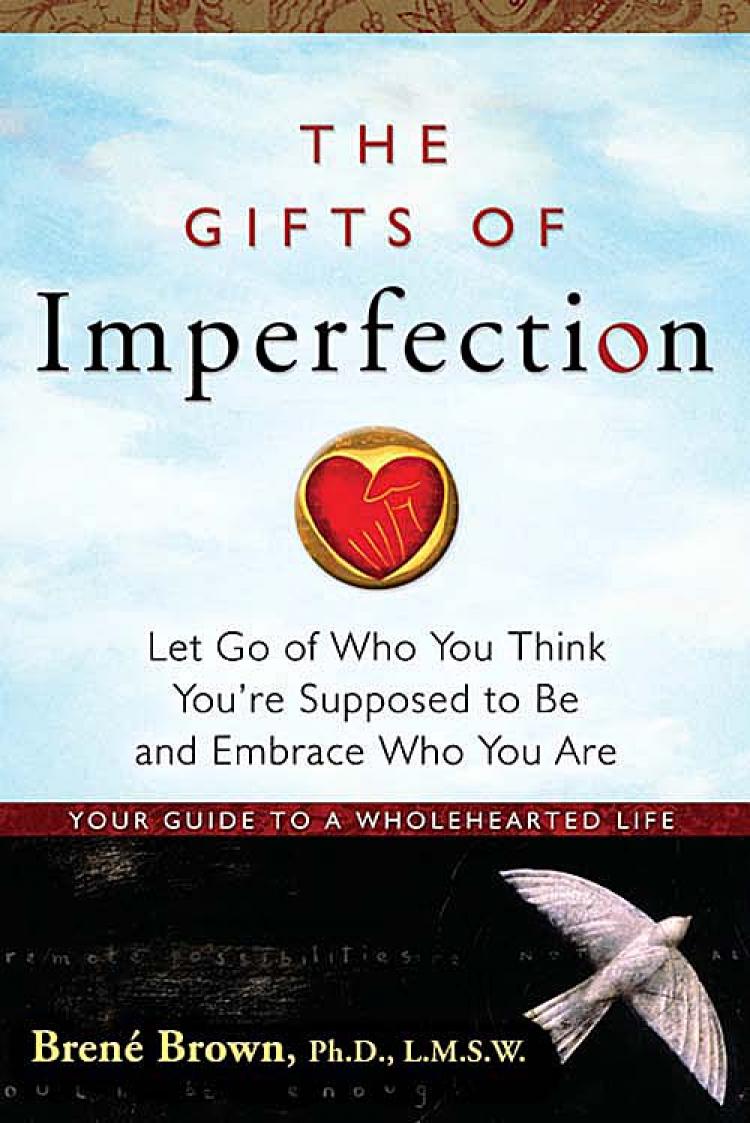
In the spirit of Brené Brown's The Gifts of Imperfection: Let Go of Who You Think You're Supposed to Be and Embrace Who You Are, my personal growth challenge for 2014 is to fail more often and to embrace imperfections.

I have always feared failure, which is fitting because one of my coping strategies to deal with a hyper-critical parent was to become a perfectionist. It worked great in school - I got good grades and the teachers loved me. Then that parent died, and I still had this perfectionist inside me.

The downside is that I have missed out on a lot of opportunities to do things because I was afraid I would not be good something new. That fear of being laughed at and being obviously not good at something was a powerful deterrent.

I have changed this quite a bit over the years - to the point that I am fine with falling on my ass trying something new. But that perfectionist is still in there, and when he fears he failed at something, he and the inner critic get together and have a shame party at my expense.

No more. 

Here are two of Brown's TED Talks on vulnerability, which is what we must embrace if we embrace imperfection. The illusion of perfection offers an invulnerability cloak (a protection from shame), but failure is raw, vulnerable, and human.

Brené Brown: Listening to Shame: TED Talk


Brené Brown: The Power of Vulnerability: TED Talk


This last video is from the Behance U99 Conference in 2013.

Brené Brown: Why Your Critics Aren't The Ones Who Count


And for one other bit of inspiration, it appears that over at the Good Men Project has a similar goal for 2014. Here is his post from yesterday.


Hey Man, Let’s Practice Imperfection in 2014
January 1, 2014 by Joe Rutland


Joe Rutland in defense of messiness, authenticity and imperfection.
Every New Year’s Day is a chance for men to either start something new or stop actions and behaviors that may not be healthy to their lives. Those infamous “New Year’s resolutions” can sometimes, without intention, become a horrendous “to-do” list that feels like a 45-pound weight swinging around a man’s neck. What if this Jan. 1 was different? What if men chose a few different actions beside the usual list of “eating healthier, exercising more, stressing out less, getting finances in order, etc.”? Let me suggest three possibilities: Choose imperfection. Choose messiness. Choose authenticity.

Being imperfect is actually a healthy emotional behavior as the stress to be perfect is lessened. Messiness shakes the reins of obsessive-compulsive behaviors and thoughts, turning them upside down. Authenticity, when practiced, can become a blessing instead of a fear-based, soul-wrenching curse.

Now when it comes to perfection and being a perfectionist, then you’ll find my name at the top of the list. Oh no, you think your name is No. 1. Nope. I’m the chief of perfectionists, meaning that I have to do every single thing in my life just right. I have to say the right words, act the right way, stuff my thoughts and feelings deep within myself and not let them out, even when sitting among what I consider safe environments and safe people. Fighting against perfectionism hasn’t been a healthy battle in my life. I have lost more times than I have won, and I’ve lost so much time and emotional energy to it.

What I can say is that I’ve learned a lot about letting go, trusting the process (whatever that looks like), and believing in myself in recent years. Reading others’ stories and hearing other men talk about how they deal with perfection has helped me greatly. Perfectionism could almost be put into a mental health category alongside shame.

One of the more enlightening pieces of literature I’ve read recently around this subject is The Gifts of Imperfection, written by Dr. Brene’ Brown, a member of the research faculty at the University of Houston Graduate School of Social Work. Dr. Brown’s work has focused around the topics of shame and fear and the subject of Wholeheartedness, about which Dr. Brown poses this question: “How do we cultivate the courage, compassion, and connection that we need to embrace our imperfections and to recognize that we are enough—that we are worthy of love, belonging, and joy?”

A lot of men are more apt to wrap their self-worth around the trophy system. You know: the trophy job, the trophy wife, the trophy car, the trophy sexual conquests, the trophy fill-in-the-blank. Then one day, a man wakes up, looks within, goes into his bathroom and stares at the mirror. “It’s all bullshit,” he mutters to his reflection. Now this could be called a rude awakening. It also could be called a spiritual awakening. Not one of blazing chariots of fire coming down from the heavens and lifting the veil from his eyes, per se. But this moment is powerful if and when it happens.

Imperfection allows breathing room for mistakes, missteps and foibles. Remember the opening scene from “The Dick Van Dyke Show” where Rob Petrie (Van Dyke) walks through his front door, leans in to kiss his wife Laura (Mary Tyler Moore), turns and starts heading toward his “Alan Brady Show” co-writers Sally Rogers and Buddy Sorrell (Rose Marie and Morey Amsterdam, respectively), and doesn’t see the ottoman in front of him and flips over it? That’s imperfection. It’s also a good sense of acrobatic timing on Van Dyke’s part. To get that scene right, he probably had to practice it a few times; therefore, getting the “imperfect” scene perfect.

Yet the image is of imperfection. Now do I put up an “image of imperfection” so that I can hold on like a drunken sailor to my perfections? God knows I’ve done my best to dump that image and trade it for reality. Oh, but my perfections protect me from you…and you…and you, too. I don’t want you to see that I make mistakes. It pisses me off when I don’t get something perfect. Even today, after years of soul work, I still catch myself starting that negative self-talk chatter when I make a mistake. It is brutal.

Living in imperfection is definitely easier. Accepting myself as I am—a man who is worthy of love, compassion, empathy, healthy sexuality, nurturing and support—sure helps my mental and emotional well-being. Come to think of it, my physical health improves, too. Imperfection, messiness and authenticity do take time and practice so they can become a part of a man’s life. For too long, men (and women, too) have been bombarding themselves with negative self-talk. It is a disease, or dis-ease, of the mind, body and spirit.

So what if someone doesn’t like what I think or write? OK.

So what if someone doesn’t believe what I believe? OK.

Is it really “OK” or, again, am I fooling myself and you with my physical responses to not pleasing you?

A very wise friend told me one time four words about physical responses that people give off to other people’s statements or words: “The body don’t lie.” Think about it. When your wife, girlfriend, employer, best friend or co-worker starts giving you a hard time about something, are you aware of your physical responses? You know, like folding your arms across your chest, making a loud sighing noise (which is really telling the person to shut up without saying “shut up”), or pressing your lips so tightly together that water flowing from Niagara Falls couldn’t get inside your mouth.

Well, I’d say it is time for me and you to give ourselves a break. Let’s do our best to drop perfectionism this year. Embrace your mistakes, foibles and faults. Know that it is OK to screw up and it’s also OK to protect yourself from others’ perfectionism.

Be imperfect. Give it a shot in 2014 and see what happens. Who knows? Your life, and mine, might change for the better.

- modified photo Plat / Flickr Creative Commons

Wednesday, November 13, 2013

What Is Your Passion? What Is Worth Fighting For?

This new article from T-Nation is part of their powerful words series - inspiration, motivation, and introspection (my words, not theirs). On the surface it is an exhortation to find your reason for getting and staying fit, but there is more to it than that.

We all have to find our fight in life, the thing we are passionate about (or the things). Even when we can identify the passion, we also must find our motivation to engage in that passion with our full commitment, our full selves.

The author, Nate Miyaki, provides his reasons for being in the "fight" to be and stay fit"
I can tell you some of the things I'm fighting for, just to give you ideas. It's because I come from a family that's struggled with addiction, and linking my identity to athletic pursuits has given me a better obsession.

It's because I think we're all searching for the same three things in life: a passion, a sense of purpose, and peace of mind. We just go about it in different ways. It just so happens that I've been lucky enough to find all three in this game, and don't think I could find it anywhere else.
For me it was obesity, diabetes, and heart disease [dad], as well as obesity, blood clots, and cancer [mom], the lifestyle diseases that killed my parents. It was being an athlete first to fit in with the other boys (a challenge for all nerds), and later because I LOVE to compete. Now I compete with myself.

As I grew older, I realized that staying fit protected me from being deeply depressed, from low self-esteem, and from gaining the middle age spread my parents acquired. I exercise to live.

But there are more fights in life than fitness.

What are you REALLY passionate about? What in your life is worth fighting for, living for, sacrificing for?

Find Your Fight

by Nate Miyaki | T-Nation


The most valuable lesson I've learned has nothing to do with the nuts and bolts of training or diet. The true key, the secret to your success in physique transformation or strength sports, and maybe even in life, is this:

You gotta know what you're fighting for.

Until you find what you're truly fighting for, all training programs and diets (even the best ones), will be relatively meaningless.


The Lost Generation


For the most part, our generation has become a bunch of whiney, lazy, entitled pussies. People have lost their warrior spirit, their dedication, and their willingness to strive.

We've become highly skilled at acquiring facts and information, analyzing, and sounding intelligent, but we are doing less and less. We know distraction well, but discipline has become a foreign language. We've gotten great at throwing forum and social media posts like right and left hooks, but run like cowards from any real-life fights.

How do we change that? Some modern guru is going to tell you it's all about drinking some magical tea and floating through space in a lotus pose. They'll spice it up with some mysticism and cultish codependency as well. None of that is really necessary because, believe it or not, the answer is a lot more simple and straightforward.


Learn from Cinderella Man


If you haven't seen the movie, Cinderella Man, you should. Here's the Cliff Notes synopsis:

It's based on the "true story" of James Braddock, a boxer who retires due to injury. He works as a day laborer to support his family during the Great Depression. Having lost all his possessions and savings and unable to pay the bills, he gets an opportunity to return to the ring in a last-chance effort to save his family.

During his comeback, Braddock is pitted against a fighter that had beaten him earlier in his career. In the middle of this rematch, Braddock is winning, which initiates the following exchange between Braddock's opponent and his trainer in-between rounds:
Trainer: What are you doing? You beat this guy easy last time.
Fighter: He ain't the same guy.
Braddock had watched his family starve and suffer. Fueled by more than personal ego, vanity, or even mere competition, Braddock becomes a different animal in the ring, fighting for survival. He somehow finds a way to beat younger, stronger, heavier, and more skilled boxers. When asked by a reporter how the impossible became possible, he gives a simple answer:

"This time around, I know what I'm fighting for."

Finding Your Fight


I don't know what that is for you. And I don't think any life coach or guru can give you some magical formula to figure it out. More than giving you any awesome diet or training plan, it would be my greatest pleasure in the world to be able to provide that answer for you. Unfortunately, I can't.

Ultimately, you're going to have to take some personal accountability, look at your life, look inside yourself, and come to your own conclusions. As a matter of fact, part of finding your fighting spirit is realizing that you can't always rely on someone else, or wait for a savior to solve all of your problems. You have to solve them for yourself.

What I can do is tell you what has motivated others. Maybe that will give you some ideas. For some, it really was about survival. They had a health problem they had to fix, and their life, or quality of life, was suddenly on the line. For some, their sport was how they made their living, and food on the table was dependent upon victories.

For some, it was to give them a competitive edge in a career outside of sports. Working out and eating right gave them better energy, cognitive function, and focus behind the desk, allowing them to push harder than the competition, and ultimately crush it.

For some, it was about being picked on as kids, and if the world wasn't going to give them respect, they were going to build themselves up and take it. For some, it was just like what martial arts can be to others – a way to channel negative energy into positive, to learn lessons that translate to life, to find some kind of deeper meaning through physical challenges. Some used nunchucks; others used dumbbells. No matter, either served to fulfill their purpose.

I can tell you some of the things I'm fighting for, just to give you ideas. It's because I come from a family that's struggled with addiction, and linking my identity to athletic pursuits has given me a better obsession.

It's because I think we're all searching for the same three things in life: a passion, a sense of purpose, and peace of mind. We just go about it in different ways. It just so happens that I've been lucky enough to find all three in this game, and don't think I could find it anywhere else.


How Will You Know?


I might not be able to tell you how to find your fight, but I can certainly tell you how you'll know when you've found it. There will be no more beginnings or getting back on track. There will be no defined ends as some 90-day program's promise. There will only be putting one foot in front of the other, in the next step of a never-ending journey.
  • Days will run into months, months will run into years without ever having to start over. You'll just keep moving forward. 
  • You won't complain of the struggles. You'll embrace them, because you'll know that your ability to push through is what will ultimately separate you from the rest of the pack.
  • There will be no more New Year's resolutions, only daily ones. And sticking to them will not be an option. It will be a necessity.
  • You will not find excuses. You'll find ways.
  • You'll stop looking for short cuts and quick fixes, because you'll know that a worthwhile mission lasts a lifetime.
  • You'll stop training for gym or virtual high-fives, but rather for personal satisfaction and accomplishment.
  • You won't have a sport or a hobby. You'll have a way of life
  • All of a sudden those 20 different diet and training programs that didn't work in the past, will all work.
It's going to make the road any easier. Excellence is never easy – that's the point. There will be ups and downs, adversity, and setbacks. There will be days where you will absolutely want to quit. But when you know what you're fighting for, you will find a way to persevere.

This is life. The obstacles are never-ending. That's why it's imperative that you find a true reason to keep going, not some make-believe, self-induced, bubble gum fitness one.


The Rules


The path to success lies in the purpose, not the person. We're all capable of great things. Ordinary men that had a purpose have achieved great things. Extraordinarily gifted men with no mission have chronically underachieved. Society provides plenty of examples of both.
  • Rule #1: Find what you're fighting for.
  • Rule #2: First learn rule #1. Everything else is just details.

Thursday, March 28, 2013

Dax Shepard's Tribute to His Deceased Father


America is obsessed with celebrity. We like to know all the dirty details about Lindsey Lohan's latest arrest, or Charlie Sheen's insanity, or who George Clooney is dating this month. Most of it is shallow and meaningless.

However, once in a while a celebrity does or says something worth noting.

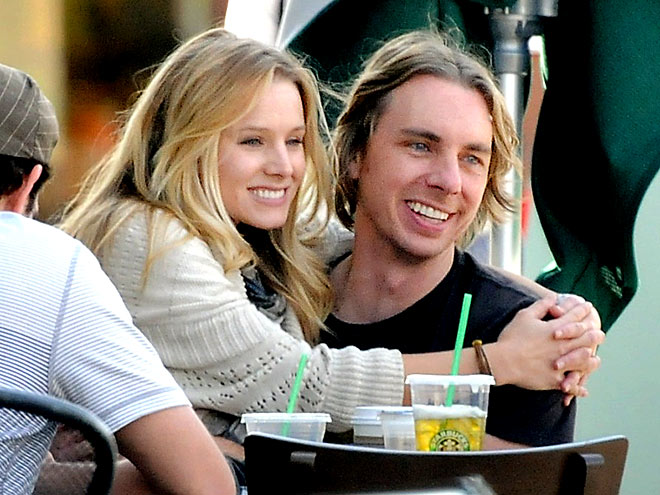
Actor Dax Shepard is probably best known for his relationship with actress Kristin Bell (Veronica Mars on television, and a whole mess of romantic comedies), but he is on the critically-acclaimed television show Parenthood and has been in several (mostly unknown) films.

Now, he will be known - at least for a while - as the author of a post on his Tumblr blog honoring his deceased father, a post entitled My Father's Horniness. It's really touching and emotionally honest reflection on his last visits with his father - and it's nice to see someone who is a celebrity doing something human and authentic.

Here is the summary from Huffington Post:

Dax Shepard Writes Emotional Post About His Late Father and Kristen Bell


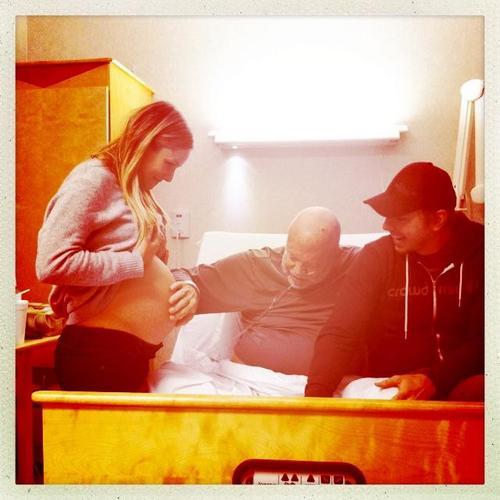
It's like an episode of "Parenthood" -- funny, dramatic and sure to make you cry -- but a recent tear-jerker of a blog post by one of the show's stars is not fiction at all. On his Tumblr, actor Dax Shepard writes about the last visit he had with his dying father, including this poignant moment with his pregnant fiancée, Kristen Bell.Story continues below photo.


His father, who was only 62, was in a Detroit hospital battling cancer, Shepard writes. Bell, who is due to give birth this spring, had been shooting in Los Angeles, but flew to Detroit to surprise them.
It was an amazing, incredible, perfectly timed surprise. She lifted her shirt up and he put his hand on her swollen stomach. He left it there for the better part of an hour. He was smiling from ear to ear, sitting contently, unable to put together a sentence, but still capable of connecting to the new family member we were creating. He wasn’t going to make it to the birth, but that didn’t get in the way of him meeting the new baby. It was an emotional and triumphant moment. One I will never forget. If I live to be a thousand, I will still be in debt to my wife for giving him that one last thrill.
Though Shepard calls Bell his wife in the post, the couple have said they will not wed until their gay friends have the same right.

Any parent who has lost their own mom or dad before their kids were born or old enough to know grandparents knows what kind of hole it leaves. That is why Shepard's anecdote about Bell's role in this visit is especially touching. Yes, as TODAY points out there is a certain allure in learning what two incredibly likable stars experience when cameras aren't rolling, and we have an obsession with celebrity parents that is well-documented. But it is impossible to not feel a twinge of empathy when reading Shepard's tale about Bell's drop-in at his father's bedside.

Shepard writes that he was in the midst of a very full shooting schedule when he first found out about his dad's illness, and he and Bell had just learned they were having a baby. "Whoever was writing my life couldn’t figure out which storyline they wanted to tell, and decided to tell them all at once," he writes.

The actor shares details of his father's life: he was an alcoholic with a colorful group of friends and a big appetite. Dad and Shepard moved 28 times, and when the actor did find "pockets of time" to see his father while he was sick, they would drive around Michigan, looking at all of those homes. "The car rides proved to be shockingly therapeutic," he says. And his father had a "way with women." Shepard's post is titled "My Father's Horniness" for a reason. (Go read it here because it is a beautiful piece.)

Almost 1,500 fans have left notes for Shepard on Tumblr, and his tweet about the piece has been retweeted hundreds of times. This morning, he sent out a message of thanks.

Here is the beginning of Shepard's blog post about his father:

My Father’s Horniness

My father, Dave Robert Shepard Sr., died on either December 30th or December 31st, depending on what time zone you were in. I received the call on the 30th at 11:30PM in Los Angeles, but the caller, positioned in Detroit, was two hours deep into the 31st. He was dead at 62 years old. Small cell carcinoma was to blame. It originated in the lungs and then travelled with great speed to all corners of his body.

I had been back to Detroit just six days before and was disappointed I couldn’t be with him at the actual finish line. We were partners. We had taken on this cancer project together. He chose me to deal with all the doctors and creditors and landlords. It was the only project we ever teamed up on. We never built a tree house or a soap box derby car together, but you would have never known it by watching us tear through chemo decisions and radiation plans. We were two great minds with one single thought: get into the end zone gracefully.

He had noticed a lump in his neck in August. A biopsy was taken and some chest x-rays. “A mass” was detected on the lungs. Those were his words to me, “a mass,” which sounded much more like the words of a doctor than the retired car salesman that he was. He was much more prone to use the word “fuck,” and I wondered while he was telling me this news if he realized how serious that word was. Test results from the “lump,” which turned out to be a swollen lymph node, came back positive for cancer. It was the phone call you see on TV and in movies. It was happening to me now, and I found the timing to be exceedingly inconvenient. In movies, news of this kind seems to always coincide with a huge hole in the lead character’s schedule. He or she is able to spend vast amounts of time at the bedside of the loved one, or at a diner having coffee and pie with estranged family members. This flexible schedule allows for some high quality catharsis to take place.

I was acting full time on a TV show based in LA when I got the call. He was in Detroit. On my days off from the TV show I was traveling around the country promoting a movie I had directed. During the month of August I went to Portland, Seattle, Chicago, Detroit, San Diego, Nashville, Memphis and New York. Compounding all of this was the recent and incredibly fortuitous news that my wife and I were pregnant with our first baby. Whoever was writing my life couldn’t figure out which storyline they wanted to tell, and decided to tell them all at once.

As tends to happen in real life, despite it being inconvenient, it all worked out. Pockets of time opened up here and there and I was able to go back to Detroit often. My initial response was to get him to do chemo in LA. Surely the weather would be better. He wasn’t having it. I then made a strong push for him to go to Oregon to be with my brother. Nope. He was staying in Detroit. He had a huge support system of friends there, and in the end, it was the right decision.

His friends. This is relevant. One of the few upsides of my father being dead is that I can now break his anonymity and state plainly that he was a proud member of Alcoholics Anonymous for over 25 years. During that quarter-of-a-century span, he accumulated the most colorful, caring, fucked-up group of friends you’d ever want to see. It was a rag-tag band of misfits bound together only by their shared desire to not get loaded anymore. What a group. It was truly his greatest accomplishment. They all loved him in a way that even my brother and I had a hard time doing. He hadn’t missed any of their birthdays or soccer games, and they saw only the man who had helped so many struggling folks get sober. They were by his side, uninterrupted, from diagnosis to death. Often annoying, but always a blessing, they gave him the greatest gift possible: their time. He was never alone. Not for one second.

When I visited we would break up the chemo routine with trips to the cineplex or restaurants of his choosing. He loved to eat. Holy shit could he eat. Of all of his addictions, and there were many (drugs, alcohol, cigarettes, sex, cars, houses, shiny things), eating was his number one. He never did get a handle on that vice. He could hunker down in front of the TV for hours, nibbling with comma-inducing ferocity the entire time. Nothing in the pantry was safe. He would come up with the most counter-intuitive combinations of food. Like a true alchemist, he’d put salsa on oatmeal, or smother frozen waffles with a can of black beans. He was like a perpetually stoned, pregnant woman. No permutation of ingredients was out of the question; anything was possible. It was a sight to behold.

We had a lot of fun together during those four months. We took long car rides through the back roads of rural Michigan. We spent a weekend visiting every single house and apartment the two of us had ever lived in. There were 28 between the two of us. Together we had only shared three of those places: a single-wide mobile home from 0-1 years-old, a small, brick ranch on a few acres in the middle of nowhere from 1-3 years-old, and a modern, middle-class home in a McMansion-ee neighborhood from 15-16 years-old. It was that gap between 3 and 15 years-old that caused most of our issues. He was a selfish asshole, and I lived to hold a grudge, so it was a thoroughly symbiotic pairing. The car rides proved to be shockingly therapeutic. One of the hidden benefits of cancer is that it can erode grudges the way WD-40 dissolves rust. It just finds it’s way into all the nooks and crannies and starts loosening. Before long, the once formidable chip on my shoulder had melded into something the size of a nicotine patch. Apologies were exchanged. Tears were had. Hugs were frequent and lingering. I spent the majority of our time together running my hand lightly over the tiny little hairs peaking out from the back of his soft, bald head. He let me do that for hours. Without any awareness of it at the time, the trips home turned into a proper Alexander Payne Movie. It became one of the more beautiful experiences of my life.

Things got worse, as they do. Car rides gave way to hospitals and senior care facilities. His last two months were spent dealing with cancer, heart disease and gout. He had an increasingly difficult time walking and spent most of his time in bed. On my last trip home, just before Christmas, I took him on his final jailbreak. I threw him in a wheelchair and rolled him through 20 degree weather to his favorite restaurant, where I watched him pick at his waffles and bacon. He couldn’t have had more than four bites over the course of an hour. It was a very clear signal to me that the end was near. I took him, for the last time, to his house. I gave him his percocet and sat him in front of the TV. He held the remote in his right hand like a six-shooter, splitting his attention between the TV, the view of the lake through the sliding glass door, and me. It was wonderful. We sat that way for over three hours.
Go read the whole post.

Saturday, December 15, 2012

Jeffrey Platts - 3 Things I Now Want As A Man

Jeffrey Platts (at his eponymous blog) posted this excellent statement of purpose for his life - his desires and his goals, and the traits he seeks that will get him to being a Man on Purpose, Husband, and Father.

Jeffrey offers coaching, circling (Inter-Subjective Meditation), yoga instruction, and men's groups in the Washington, D.C. area.

3 Things I Now Want As A Man

Posted on by Jeffrey Platts

 
This has been a powerful year for me.

Through all the ups and downs, I’m getting clarity around who I am, what I want as man and what I want for my life, my heart, my soul. The days of wandering around and letting life drift me in any direction are becoming less and less tolerable as I realize I am the captain of this ship.

I’m noticing that I sometimes don’t allow myself to want things, because I either…
1. Don’t see how it is possible.
2. I feel I don’t deserve it.
3. I think that there is a limited supply of good things.
4. I let my current circumstances cloud my view.
5. I am embarrassed that what I want might sound cliché.
What’s become crystal clear is that I've been letting what I truly want stay hidden in the background for too long. Mostly to myself. And I’m discovering and declaring that my three of my biggest reasons for being on this planet are to be a husband, a father and a man on purpose.

It’s time to keep it simple and stick to the basics.

Right now, my heart is wide open, inspired and engaged. Yet I can’t be a husband without a woman and I can’t be a father without any children.

But my wife exists. She is out there right now. Living, sleeping, eating, smiling, breathing, dancing, dreaming, singing.

And my kids are on their way some time after that. Of course, after some years of fun with just me and my wife!

And I’m realizing that my job isn’t to worrying about how it’s all going to happen.

My job is to just BE and LIVE in the energetic frequencies of what I want and who I am as a man.

To embody the traits and actions of a good man so when reality saddles up beside my vision, the merging will be seamless. That’s a very different vibe than the single guy who not knowing what he wants or who he wants to be (and be with). I already have the traits of a good husband, father and man on purpose. The seeds are there. The more I live from that space, and take inspired action from that space, the more the Universe will present me with who and what matches that.

I made the lists below as a way for me to get clear on how I want to show up in the meantime.

So what does the vibe of what I want look like?
Go read the whole post - the list of traits Jeffrey seeks to embody are ones most of us could aspire to.

Tuesday, February 28, 2012

Big Think - Henry Rollins' Letters to a Young American


I don't really have heroes, but if I did, Henry Rollins would certainly be one of them. He's intelligent and self-educated, talented as a musician and an author, healthy and muscular (he's been "straight edge," I believe, throughout his career), and he cares about and is passionate about the world in which he lives.

He was not handed success - he found it, took it, or made it. And along the way he finally learned to find humor and perspective in all the tragedy he has witnessed in the punk scene, in politics, and in the world. 

Here is the bio statement for him at Big Think.

About Henry Rollins

Henry  Rollins
Henry Rollins is an American singer-songwriter, spoken word artist, writer, comedian,publisher, actor, and radio DJ.After performing for the short-lived Washington D.C.-based band State of Alert in 1980, Rollins fronted the California hardcore punk band Black Flag from August 1981 until mid-1986. Following the band's breakup, Rollins soon established the record label and publishing company 2.13.61 to release his spoken word albums, as well as forming the Rollins Band, which toured with a number of lineups from 1987 until 2003, and during 2006. Since Black Flag, Rollins has embarked on projects covering a variety of media. He has hosted numerous radio shows, such as Harmony in My Head on Indie 103, and television shows such as The Henry Rollins Show, MTV's 120 Minutes, and Jackass. He had a recurring dramatic role in the second season of Sons of Anarchy and has also had roles in several films. Rollins has also campaigned for various political causes in the United States, including promoting LGBT rights, World Hunger Relief, and an end to war in particular, and tours overseas with the United Service Organizations to entertain American troops.
Big Think has posted two clips called "Letters to a Young American" - good stuff.

Henry Rollins' Letters to a Young American: Do it Yourself

Jason Gots on February 28, 2012, 12:00 AM

Henry%20rollins%20-%20letter

Thought exercise: Open "stickies" or "notepad" or grab a real piece of paper. Write the words "Dear ___ year old self," filling the blank with an age at least 10 years younger than you are now. Now, for five full minutes, write whatever comes to mind.

What's the Big Idea? 

Chances are whatever you wrote contains some variation on the phrase "don't worry about..." with the ellipses representing some preoccupation that time has revealed to be meaningless, unproductive, even harmful. It's likely, too, that your advice to yourself contains something of more general value - the kind of sage advice that almost never comes to mind when you're explicitly trying to advise someone else. 

We asked Henry Rollins - a guy who at the age of 20 left his responsible job as manager of a Haagen Dazs to tour the country as the frontman of the hardcore band Black Flag, and has gone on to build one of the most diverse and unprecedented arts careers ever, as a musician, author, spoken-word artist, television actor, and world-traveling photojournalist – to improvise a “letter to a young American,” coming of age in a time of, at best, “cautious optimism.” The result, as we’d hoped, was a letter to a young Henry Rollins, full of invaluable advice for just about anyone on trusting in your own ability to learn and become whatever you want to, no matter what obstacles you face.


What's the Significance? 

Nobody’s perfect, but Henry Rollins has done a better job than most of approaching life courageously. Like his hero, Abraham Lincoln, he’s a voracious reader and autodidact in multiple fields. Too busy working his way through high school to take acting lessons, he invented his own form of performance art – a mix of motivational speaking, and strident sociopsychopolitical comedy – developing his unique voice onstage as he went along. Never formally taught what not to do, he has dared to make his mistakes publicly and had the humility to learn from them. 

In a recent article, Why Are Harvard Graduates in the Mailroom? Adam Davidson of NPR’s Planet Money points out that many of America’s comfortable middle-management jobs have disappeared. As a result, he says, many ambitious young professionals without “something to fall back on” are diving into the jungle of Hollywood or other creative professions in which legions of drudges vie for promotion to a few top spots. 

An Ivy League education still looks good on a resume, but if “the best” formal education is no longer a guarantee of (at least monetary) success, then what do you tell a bright kid who wants to get ahead in the world? “Work hard, be honest, and trust in yourself,” the sage advice Henry Rollins stole from Abraham Lincoln and wants to pass on to the next generation, seems like a pretty good place to start.
* * * * * * *

Henry Rollins' Letters to a Young American: Live Heroically

Tuesday, February 7, 2012

Chrysler - Clint Eastwood - Halftime in America

This is widely considered to be the best commercial from Sunday's Super Bowl. Two years running, now, Chrysler has delivered inspiring ads that are less about their cars and more about the people of Detroit and the nation we live in (last year it was the Eminem commercial).

Clint Eastwood was the perfect spokesman for this spot - he embodies the rugged masculine strength Chrysler wanted to project, as well as the sensitivity he has become known for as a film director. 

For the most part, corporations are all about the money, but even in that pursuit, they can sometimes offer a glimpse of "our better angels." This two minute ad cost them about $14 million just for the airtime, not counting the production and the fees to the ad agency (commercials cost an average of $3.5 million for a 30-second spot this year).


Chrysler - Clint Eastwood - Super Bowl Commercial

As reported in the LA Times, two of the three writers credited with writing that ad are part of literary world, a poet and fiction writer. Interesting.
[O]f the three people credited as copywriters on the powerful Chrysler advertisement above, the one featuring Clint Eastwood that aired for the first time during Sunday's Super Bowl, one is poet Matthew Dickman.

Dickman -- whose twin brother, Michael, is also a poet -- is the poetry editor of Tin House magazine. He's got one collection, "All-American Poem," and has been published by many fine magazines, including Narrative and the New Yorker. He's won a number of prestigious awards. But none of those things makes him a shoo-in for a Chrysler Super Bowl ad.

The advertising firm that created the spot is Wieden & Kennedy, the Portland, Ore., firm known for its seminal Nike ads. Dickman, too, is based in Portland.

Maybe that explains it. But it wouldn't explain one of Dickman's co-authors, Smith Henderson. I suspect he is the short story writer Smith Henderson, a recipient of the 2011 PEN American Center Emerging Writers award.

Maybe more literary writers should give advertising a try.

Friday, December 17, 2010

The Good Men Project - The Top 10 Good Men of 2010

Nice list - I'm especially glad to see Dan Savage on the list. His work this year with the It Gets Better Project was nothing less than inspirational for a lot of people, especially the young people whose lives may be saved.

I didn't know their number one choice, but he is awesome - very happy to see someone devoted to educated get some recognition.

#1: Geoffrey Canada

“Our entire public education system needs radical and immediate improvement. We must tackle the challenge of improving traditional public schools, where the overwhelming majority of children are.”

Great list. These are all good men. And I am also glad to see Gates and Buffett on the list.

The Top 10 Good Men of 2010

In 2010, we saw challenges that required a fool’s readiness to undertake Sisyphean tasks. We faced the biggest oil spill in our country’s history, the grim prospect that our jobs weren’t coming back (at least not for a while), and a cantankerous political climate that stifled progress.

Which is why for this, our inaugural Good Men of the Year list, we’re not celebrating memorable personalities, newly minted pop-culture icons, or 15-minute men. This was a year of unprecedented challenges, and it cried out for good men.

Men who inspired us to do better.

Men who wouldn’t settle for incremental improvements—and who were willing to make sacrifices for bona fide progress.

Men who embraced failure as a necessary ingredient in their success.

Men who would rather be called an asshole than ineffectual.

This year, it wasn’t just our ideas that mattered, but how we shared them. Our networks—from an online community of innovators, to educators on neglected blocks in Harlem, to a civilization 2,000 feet underground—became catalysts for change.

We learned that the smallest germ of an idea could grow contagious and develop into a viral phenomenon. So we rolled up our sleeves, opened our computers, and started to think.

What follows are just 10 of the many men who made their world a better place in 2010. So tell us: who would be on your top 10 list?

♦◊♦

The Top 10 Good Men of 2010

10) Josh Hamilton

9) Chris Christie

8 ) The Chilean Miners

7) Mick Foley

6) David Beckmann

5) Barack Obama

4) The Billionaires Who Pledged Their Fortunes

3) Dan Savage

2) Chris Anderson

1) Geoffrey Canada

♦◊♦


Thursday, April 29, 2010

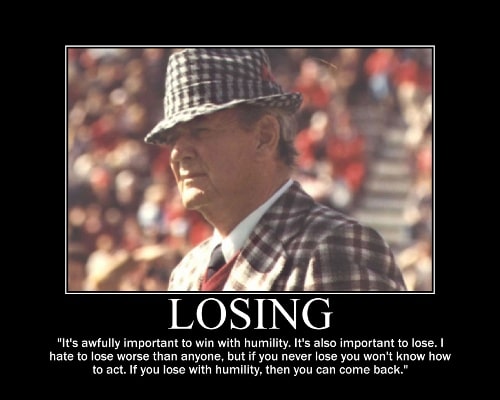
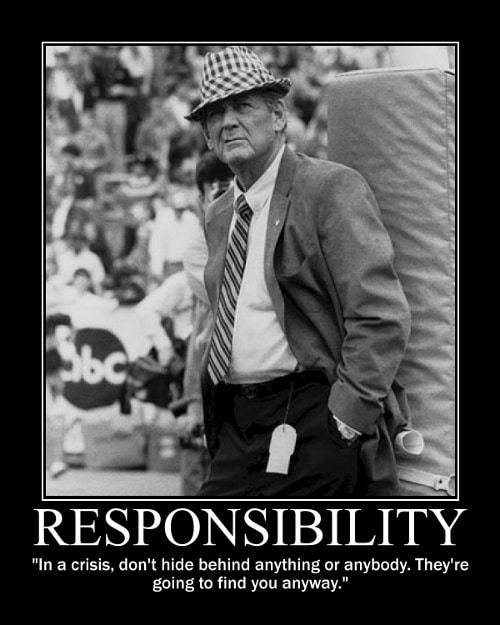
Art of Manliness - Motivational Posters: Bear Bryant

Cool.
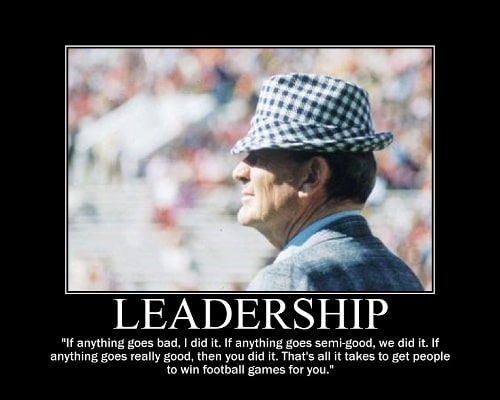
Paul “Bear” Bryant was a coaching legend. During his 25 year tenure at the University of Alabama, he was college football’s winningest coach, leading his team to six national championships. As a young man he was tough - he earned his famous nickname by volunteering to wrestle a bear at age 13 and played in a game with a partially broken leg during his time as a college player. He carried this toughness over to his coaching where he demanded excellence of his men on and off the field, and looked dapper while doing it. Losing was not an option, and sweat equity made sure of it. The inspiration he doled out applies not just to football but to the grand game of life.
Here are a couple of the images - more at the site.