Showing posts with label pop culture. Show all posts

Tuesday, December 31, 2013

Die Like a Man: The Toxic Masculinity of "Breaking Bad"

I missed this article when it first appeared in October, but it's still a topic worth discussing now that nearly everyone has seen the Breaking Bad finale. The title of the article tells you what you are going to read, a review of the ways this epic television show portrayed a toxic form of masculinity defined by violence, power, and money.

I have no disagreements with any of that.

However, I want to suggest that there are other depictions of masculinity that are not so toxic. For much of the series, Walt and Jesse perform a strange dance of interdependence - many times Walt could have allowed Jesse to be killed and did not. And in one of the most difficult scenes early in the series, Walt allows Jesse's heroin addict girlfriend to die of asphyxiation in her sleep rather than save her, ostensibly to protect Jesse from his proclivity for addiction.

It's Jesse who represents the best of masculine values, in spite of the chaotic world in which he lives. He loves honestly and consistently. He does his best to take care of the young woman and her son that he loves and had to leave in order to protect them from the dangerous people in his life, including Walt. When he escapes in the final episode after Walt rescues him, we can imagine he will find the young boy (his mother, Jesse's love, is now dead) and raise him as his own.

Throughout the show, Jesse struggles with addiction, goes to rehab, and struggles some more with addiction. He is beaten nearly to death by Hank, Walt's brother-in-law, and then for much of the last season he is beaten and tortured.

Jesse never gives up hope. And he never loses his sense of right and wrong the way Walt does as he seeks more money, more power, and does so with violence - including putting out a hit on Jesse.

It's too simplistic to say that Breaking Bad presents and represents toxic masculinity - it reveals the full spectrum of masculinity, from tenderness to toxicity, often within the space of a single scene. 

Die Like a Man: The Toxic Masculinity of Breaking Bad

By Laura Hudson
10.05.13


Spoilers for the Breaking Bad finale follow.
“It felt right and satisfying and proper to us that he went out on his own terms; he went out like a man,” Breaking Bad creator Vince Gilligan shared in a recent podcast, describing the death of Walter White in the series finale.

If that sounds familiar, it’s because we heard Hank – his prototypically macho brother-in-law – say something very similar during Skyler’s intervention, when he defended Walt’s decision to refuse both financial charity and cancer treatment: “Maybe Walt just wants to die like a man.”

What, exactly, does it mean to be a “man”? It’s a question that sits at the dark, warped heart of the entire series and its anti-hero protagonist. A nerdy chemist whose brains haven’t earned him any power or respect from the world at large, the terminally ill Walt decides that he’s finally going to get that power and respect through whatever means necessary (and whenever possible, using science). The show doesn’t just trace Walt’s arc from Mr. Chips to Scarface, as Gilligan famously described it, or from Walt to Heisenberg; it also maps his journey from being a “pussy” to being a “man.” And while he succeeds in his goals, it’s a transformation that comes at a high price.

If we really want to look at the definition of a man within the world of Breaking Bad, it’s easiest to start by looking at what it says a man is not: the Walter White we meet in the very first episode of the show.

By some measures, Walt has had a successful life: He’s incredibly brilliant (we’re told his research contributed to a project that won a Nobel Prize, not to mention Gray Matter Industries); he’s a teacher; and most importantly, he has a loving relationship with his family, and another child on the way. But Walt still feels like a failure, particularly because he hasn’t achieved the sort of financial success he believes he deserved.

Money and masculinity are deeply linked by the series. Not only does money signify the value of the person who earns it, but also the control and self-sufficiency that comes along with it. This link between manliness, money, and power is a dangerous one for people who accept it. Walt, after all, would literally rather die than accept charity, because taking money from Gretchen and Elliott would somehow make him feel like less of a man.

Later, when Walt says that cooking meth has cost him his family, drug kingpin Gus Fring suggests that perhaps he’s looking at it the wrong way. Perhaps in alienating his family, he was actually fulfilling a more important role: “When you have children, you will always have family. They will always be your priority, your responsibility. And a man, a man provides. And he does it even when he’s not appreciated, or respected, or even loved. He simply bears up and he does it. Because he’s a man.”

This seems particularly prescient, because it’s the exact model of manhood that Walt embraces. By the time the finale rolls around, Walt is so alienated from his family that they neither want to see him nor accept his money, and so he must funnel his drug fortune to them without their knowledge, ensuring he receives no credit — no appreciation, respect or love. In Walt’s mind, the measure of a man isn’t his relationship to his family, but rather his ability to support them financially. Faced with a terminal cancer diagnosis, and the decision about what sort of legacy he truly wants to leave behind, Walt sacrifices the former for the latter. (Of course, as he admits in the final episode, it isn’t simply about the money, and it isn’t really for his family. Leaving them the money isn’t an act of altruism so much as it is an affirmation of his own power and identity: being a man who provides.)

Masculinity in Breaking Bad is a brittle thing, one so terrified of weakness that any display of vulnerability must be punished, and any slight against another man’s power answered with violence – or else perceived as a weakness. We see it in the hyper-masculine culture of both the neo-Nazis and the drug cartel, where the air is always dripping with machismo and vengeance is considered an almost sacred duty.

This model of manhood also requires control not only over your own life, but over the lives of others. Think about all of the most iconic moments of the show, the badass lines that made us want to pump our fists: “Say my name.” “I am the danger.” “I am the one who knocks.” “I won.” Every single time, it’s about dominance – not just about having power, but about taking power away from someone else.


The series begins with what seems like an odd image: a pair of pants, flying through the air. Much of what follows is about who gets to wear them. When Skyler shows up unexpectedly to threaten Jesse for supposedly selling weed to Walt, Jesse is quick to insult Walt’s manhood: “Good job wearing the pants in the family.” As time goes on, however, and Walt slowly dominates Skyler to the point that she would rather try to drown herself in a pool than speak up against him, the new status quo becomes clear: He’s wearing the pants now.

It’s also worth noting that when Hank finally discovers the truth about Walt, it’s while Hank is sitting on the toilet – literally, getting caught with his pants down. And while Walt may not have wanted Hank to die, Walt almost surely thrills a little to getting away with all his crimes under the nose of the man who used to condescend to him, enacting his own twisted version of the movie where the nerd gets one over on the jock. Once the truth is out and Hank assaults him physically, Walt fires back with a chilling warning, letting Hank knows that he is no longer a man to be trifled with: “If you don’t know who I am, then maybe the best course is to tread lightly.”

Their conflict is one of the most interesting in the show, not only because Hank serves as the uber-masculine counterpoint to Walt – the Charles Atlas to Walt’s skinny kid getting sand kicked in his eyes – but because their pissing contest in the garage isn’t just about who has more power. It’s about which brand of power is superior: brains or brawn. Ultimately, Walt doesn’t subordinate Hank by lifting weights, getting buff and beating him in a fistfight. He wins by outsmarting him, like Walt always does.

When we first meet Walt, he’s an object of ridicule to his students, trapped in a low status loop where his intellect isn’t valued and confers no power to him. The first sign that he is transforming into someone different is when he begins to push back, and lash out at the bullies around him – and of course, he does it with science. When slighted by a jerk in an expensive car, Walt manipulates the engine and causes it detonate. When a drug lord beats Jesse and takes their money, Walt shows up with an explosive designed to look like meth and blows up the building. When the feds get hold of the incriminating tapes from the superlab, Walt rigs a truck with a supermagnet, and uses it to erase the evidence from outside the building.

Walt and science, making everyone their bitch since 2008.

Which leads us to perhaps the most interesting and gender-charged word on Breaking Bad: “bitch.” Yes, yes, it’s just a word. But it’s also coded with some very gender-specific ideas about power and dominance – who has it and who takes it – that are fundamental to the conflict at the heart of Walt’s transformation.

The easiest way to deconstruct a word is to think not only about what it means but what it does, and how it does it. When you call a woman a bitch, you’re saying that she’s difficult, unaccommodating. By that standard, Walter White would be possibly the biggest bitch of all. Of course, that’s not the way it works. When we apply a female slur like “bitch” to a man, something strange happens. It stops meaning that someone is difficult or unpleasant – words that for men more easily be seen as signs of strength – and instead becomes an indicator of weakness and cowardice.

In short, calling a man a “bitch” is designed to diminish his power by comparing him to a woman. It implies that women are weaker and less powerful, and also that they are to be used and dominated. “Bitch” is linked to exploitation, to submission; if you make someone your bitch, you force them to submit to your will, in one way or another. (Despite being the most famous and popular insult of Jesse Pinkman, it’s worth noting that Jesse almost never uses the word to describe women.)

Similarly, “pussy” is a word used almost exclusively against men, for the very reason that it reduces them from masculine to feminine, from a higher level of power to a lower one. What these words tell us is that men aren’t just defined by what they are; they’re defined by what they’re not supposed to be. Over and over again, men in Breaking Bad send and receive the message that the last thing they want to be is women.

Jesse: The face of toxic masculinity

Jesse is highly aware of the very narrow cultural script for being a man, and certainly knows how to act it out. This is a guy who feels perfectly comfortable grabbing his crotch and telling Walt to “speak into the mic, bitch!” But despite his flaws and his posturing, he’s always been a good guy: compassionate, caring and even sensitive. Deep down Jesse is more creampuff than criminal, unable to take part in the sociopathy of the people around him and deeply traumatized when forced to commit violence. (Walt, meanwhile, just whistles.) We see Jesse cry on more than one occasion, and he has a particular soft spot for children, both very stereotypically feminine traits.

Needless to say, Jesse is punished for them. Expressing emotion is seen as weakness and liability, and the reason that Jesse ultimately ends up broken, enslaved and exploited by the final episode. Despite his attempts to ward off subordination with masculine posturing — like calling everyone in earshot a “bitch” — that’s exactly what he becomes. Manipulated by a long series of more powerful men, by the end of the series Jesse is shackled in a cell while the men around him watch videos of him weeping during his confession for entertainment. “Does this pussy cry through the whole thing?” asks Jack.

In many ways a boy trying to become a man, Jesse is the male face of the damage that toxic masculinity does – the cost it extracts not only from women but from men. He shatters against the rocks of the masculine ideal, and it’s doubtful he will ever be able to put himself back together. Taken to its furthest extent, this brand of masculinity punishes men for acting like Jesse, and instead produces men like Walt – and even Todd.

The irony of this perspective on masculinity is that for all its insistence on the importance of power — both having it and taking it — it often makes the people who adopt it weaker. Or as Walt Jr. says, when asked to discuss his father’s refusal to accept charity or get treatment for his cancer: “You’re a pussy.” (Of course.)

When Hank refuses to acknowledge his PTSD – or accept his physical weakness after his shooting – he prevents himself from healing both emotionally and physically. When Heisenberg’s crimes are pinned on Gale, Walt tells Hank that the other chemist wasn’t good enough to pull it off because his pride won’t allow him to give up the credit. And in the end, masculine pride is what makes Walt’s final act of revenge possible: By suggesting that Jack might have partnered with a rat — impugning his honor — Walt is able to delay his own death long enough to activate his machine gun.

Many have argued that Breaking Bad is an indictment of Walt, a critique of the male power fantasy rather than a celebration. How we respond to the ending and whether we’re still rooting for Walt in those final moments is indeed a measure of our own complicity – or Matt Zoller Seitz puts it at Vulture, “it’s an ending that leaves us alone with a mirror.”

While we may want to cheer for the character we’ve been identifying with for so long, what are we really cheering? What standards of success are we tacitly endorsing when we feel just a little bit pleased that Walt got to live — and die — “like a man”? The masculinity described in Breaking Bad is something deeply pernicious, a cultural dogma that damages, warps and limits men, isolating them from their emotions and from others. It promotes violence, retribution, and a hierarchy built upon the backs victims both male and female. Sometimes, it kills them. As Silpa Kovvari at The Atlantic observed, the masculinity of Breaking Bad represents “standards to die by, not to live by.”

Regardless of whatever personal triumph it represents to him, Walt’s is a Pyrrhic victory; he has achieved power only by stripping it from others, and perpetuating the same ruthless system that once humiliated him and treated him as worthless.

If we learned anything from the kind, brilliant Gale, it’s that the Walter White who dies at the end of the show would have had no problem shooting the Walter White of the first episode in the head if he got in his way. When the nerd who was bullied becomes the bully, should we really feel a sense of satisfaction? Or should we take a deep, soul-searching look at the sort of system that makes underdogs like Walt feel like the only way they can be men is by destroying and dominating everyone around them?

Breaking Bad was a show about a man with greatness inside him, and who believed that the only way to achieve it was by becoming the sort of man who whose greatness would be acknowledged and respected. While it’s obvious that Walt isn’t a “good” guy by the end, to many people he was still a sympathetic one. It’s far easier to high-five Walt for climbing to the top of the masculine power pyramid than to reexamine whether we should be tearing it down. Not only because of the collateral damage it does to people like Skyler and Andrea, but the damage it does to the men who attempt the climb.

While Gilligan has voiced his criticism and even contempt for the man Walt becomes on numerous occasions, the final installment is nothing if not a victory lap. Yes, Walt pays for his decisions in many ways, but it’s telling that all of those costs get extracted in the episodes preceding the finale. Taken on its own, the last episode of the show reads more like wish fulfillment than condemnation, as Walt dies surrounded not by his failures but by his triumphs, by the chemistry he loves rather than the family he sacrificed, and with a smile on his face. You can (and probably should) step back and view Walt’s final form as a critique, as something that ends in emptiness, but somehow that’s not the feeling the finale imparts. The show ends not by inviting introspection, but rather, as Gilligan said, offering satisfaction:

“As bad a guy as he has been, and as dark a series of misdeeds as he has committed, it felt right and satisfying and proper for us that he went out on his own terms. He went out like a man.”

Indeed he did.

Thursday, April 4, 2013

The 8 Most Ridiculous Products Marketed For Men (The Village Voice)

From The Village Voice, this is a funny (although disturbing) collection of products marketed at men, as though we are dumb as rocks and would actually ENJOY a fart-scented candle (seriously, see below). Enjoy the banality.

The 8 Most Ridiculous Products Marketed For Men


By Nick Greene 
Wed., Apr. 3 2013

 
Did you know there was once a time when products were just products? Of course, now products are powerful things that decide your gender for you. Why else would companies spend so much of their time making "Men's" versions of even their most basic items? For the chance to sell twice as many of them by praying on the insecurities of men raised in a culture that trumpets superficially masculine constructs as shields against perceived weaknesses which are themselves the products of discriminatory gender-bias?

Oh, that's probably it.

To demonstrate this remarkably stupid aspect of our adorable society, we've found the 8 most ridiculous products marketed for men.


The Man Hanger

Why buy a $25 rebar clothes hanger? Because where else would you hang your "I'm a Secure, Confident Man" T-shirt?

The best part is, when you are done hanging clothes, you can straighten the hanger with your bare hands and pour concrete over it to construct a monument to your manhood. Make it really big so people know how manly you are--you did buy The Man Hanger, after all.


Dr. Pepper Ten

It's entirely possible that Dr. Pepper Ten's oft-mocked slogan, "It's Not for Women," was forced upon them by the FDA. Are we to assume that one sip of this sugary sludge will make women's ovaries explode from their abdomens like erumpent comets of sinew?

Let's just say we've never seen it explicitly rebutted by Dr. Pepper or the FDA.


Axe Shower Gel 
Axe has been the champion of pointless product gendering for years. Their deodorants and body washes have names like "Cool Metal," "Sports Blast," and "Anarchy."

The best part? They all smell like watermelon. Even "Anarchy."


Axe Shower Tool

As if manly soap wasn't enough, Axe sells a masculine loofah. What separates this from a normal loofah? Rubber casing that looks like a tire and the fact that it's called a "Shower Detailer Tool."

If you haven't figured it out yet, Axe thinks you're stupid.


Man Candles

Click on the above link, the one that says "man candles." Go ahead, we'll wait.

Fantastic, now Amazon thinks you're the kind of consumer who is interested in buying BBQ- and fart-scented candles. Enjoy their recommendations for "poop-shaped bath soap" and "Maybe You Touched Your Genitals Hand Sanitizer."

You know, "man" stuff.


HOME Cleaning Products for Men

You're a man and you have a dilemma: Your house is dirty. You could A) Let your filthy house fester until it becomes a breeding ground for maggots and roaches that will eventually chew the skin off your face as you sleep on a pile of garbage, or B) Go to the store and purchase cleaning supplies.

For years, option A was the only way to go for us Y-Chromosome warriors. That was until these cleaning products for men were made. Now we have faces, complete with beards and strong jaws.

Thanks, cleaning supplies.


Brogurt

This is the first sentence of the first paragraph of Powerful Yogurt's "Who We Are" section from their website:
From the time of the Greeks, abs have represented dedication, strength, power, and success.
Yes, abs -- that's what the Greeks are known for. Democracy too, but that's for pussies. Buy our Greek yogurt made with protein you're just going to shit out anyway.


Lip Balm for Men 
True story: I once saw a man use Chapstick. His son--a handsome boy--watched as his dad applied the balm. As he spread it on his lips, his son's face turned cold and gray.

"Dad?" he cried, "What are you doing?"

"There won't be any more catch in the backyard, son," the father said, his voice high and shrill, "I decided to use Chapstick and now I am no longer a strong male role model. Also, I sold the riding mower."

True story.

[@nickgreene]

Thursday, March 28, 2013

Dax Shepard's Tribute to His Deceased Father


America is obsessed with celebrity. We like to know all the dirty details about Lindsey Lohan's latest arrest, or Charlie Sheen's insanity, or who George Clooney is dating this month. Most of it is shallow and meaningless.

However, once in a while a celebrity does or says something worth noting.

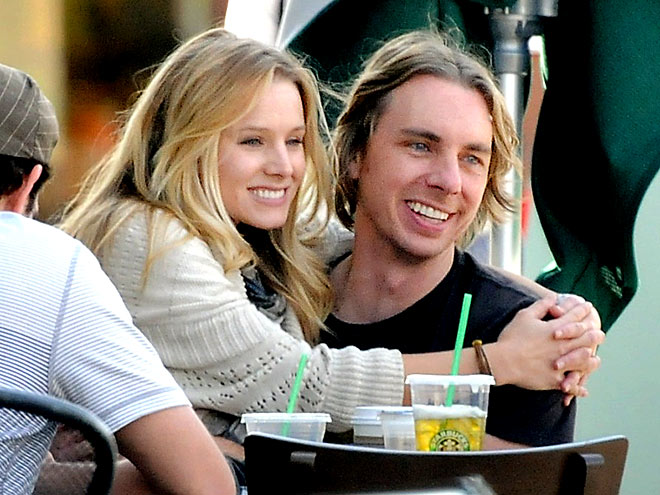
Actor Dax Shepard is probably best known for his relationship with actress Kristin Bell (Veronica Mars on television, and a whole mess of romantic comedies), but he is on the critically-acclaimed television show Parenthood and has been in several (mostly unknown) films.

Now, he will be known - at least for a while - as the author of a post on his Tumblr blog honoring his deceased father, a post entitled My Father's Horniness. It's really touching and emotionally honest reflection on his last visits with his father - and it's nice to see someone who is a celebrity doing something human and authentic.

Here is the summary from Huffington Post:

Dax Shepard Writes Emotional Post About His Late Father and Kristen Bell


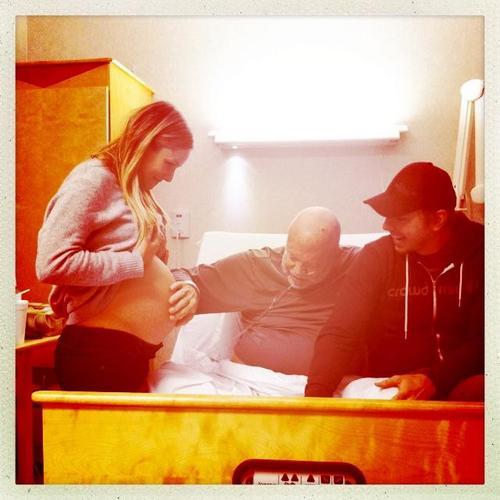
It's like an episode of "Parenthood" -- funny, dramatic and sure to make you cry -- but a recent tear-jerker of a blog post by one of the show's stars is not fiction at all. On his Tumblr, actor Dax Shepard writes about the last visit he had with his dying father, including this poignant moment with his pregnant fiancée, Kristen Bell.Story continues below photo.


His father, who was only 62, was in a Detroit hospital battling cancer, Shepard writes. Bell, who is due to give birth this spring, had been shooting in Los Angeles, but flew to Detroit to surprise them.
It was an amazing, incredible, perfectly timed surprise. She lifted her shirt up and he put his hand on her swollen stomach. He left it there for the better part of an hour. He was smiling from ear to ear, sitting contently, unable to put together a sentence, but still capable of connecting to the new family member we were creating. He wasn’t going to make it to the birth, but that didn’t get in the way of him meeting the new baby. It was an emotional and triumphant moment. One I will never forget. If I live to be a thousand, I will still be in debt to my wife for giving him that one last thrill.
Though Shepard calls Bell his wife in the post, the couple have said they will not wed until their gay friends have the same right.

Any parent who has lost their own mom or dad before their kids were born or old enough to know grandparents knows what kind of hole it leaves. That is why Shepard's anecdote about Bell's role in this visit is especially touching. Yes, as TODAY points out there is a certain allure in learning what two incredibly likable stars experience when cameras aren't rolling, and we have an obsession with celebrity parents that is well-documented. But it is impossible to not feel a twinge of empathy when reading Shepard's tale about Bell's drop-in at his father's bedside.

Shepard writes that he was in the midst of a very full shooting schedule when he first found out about his dad's illness, and he and Bell had just learned they were having a baby. "Whoever was writing my life couldn’t figure out which storyline they wanted to tell, and decided to tell them all at once," he writes.

The actor shares details of his father's life: he was an alcoholic with a colorful group of friends and a big appetite. Dad and Shepard moved 28 times, and when the actor did find "pockets of time" to see his father while he was sick, they would drive around Michigan, looking at all of those homes. "The car rides proved to be shockingly therapeutic," he says. And his father had a "way with women." Shepard's post is titled "My Father's Horniness" for a reason. (Go read it here because it is a beautiful piece.)

Almost 1,500 fans have left notes for Shepard on Tumblr, and his tweet about the piece has been retweeted hundreds of times. This morning, he sent out a message of thanks.

Here is the beginning of Shepard's blog post about his father:

My Father’s Horniness

My father, Dave Robert Shepard Sr., died on either December 30th or December 31st, depending on what time zone you were in. I received the call on the 30th at 11:30PM in Los Angeles, but the caller, positioned in Detroit, was two hours deep into the 31st. He was dead at 62 years old. Small cell carcinoma was to blame. It originated in the lungs and then travelled with great speed to all corners of his body.

I had been back to Detroit just six days before and was disappointed I couldn’t be with him at the actual finish line. We were partners. We had taken on this cancer project together. He chose me to deal with all the doctors and creditors and landlords. It was the only project we ever teamed up on. We never built a tree house or a soap box derby car together, but you would have never known it by watching us tear through chemo decisions and radiation plans. We were two great minds with one single thought: get into the end zone gracefully.

He had noticed a lump in his neck in August. A biopsy was taken and some chest x-rays. “A mass” was detected on the lungs. Those were his words to me, “a mass,” which sounded much more like the words of a doctor than the retired car salesman that he was. He was much more prone to use the word “fuck,” and I wondered while he was telling me this news if he realized how serious that word was. Test results from the “lump,” which turned out to be a swollen lymph node, came back positive for cancer. It was the phone call you see on TV and in movies. It was happening to me now, and I found the timing to be exceedingly inconvenient. In movies, news of this kind seems to always coincide with a huge hole in the lead character’s schedule. He or she is able to spend vast amounts of time at the bedside of the loved one, or at a diner having coffee and pie with estranged family members. This flexible schedule allows for some high quality catharsis to take place.

I was acting full time on a TV show based in LA when I got the call. He was in Detroit. On my days off from the TV show I was traveling around the country promoting a movie I had directed. During the month of August I went to Portland, Seattle, Chicago, Detroit, San Diego, Nashville, Memphis and New York. Compounding all of this was the recent and incredibly fortuitous news that my wife and I were pregnant with our first baby. Whoever was writing my life couldn’t figure out which storyline they wanted to tell, and decided to tell them all at once.

As tends to happen in real life, despite it being inconvenient, it all worked out. Pockets of time opened up here and there and I was able to go back to Detroit often. My initial response was to get him to do chemo in LA. Surely the weather would be better. He wasn’t having it. I then made a strong push for him to go to Oregon to be with my brother. Nope. He was staying in Detroit. He had a huge support system of friends there, and in the end, it was the right decision.

His friends. This is relevant. One of the few upsides of my father being dead is that I can now break his anonymity and state plainly that he was a proud member of Alcoholics Anonymous for over 25 years. During that quarter-of-a-century span, he accumulated the most colorful, caring, fucked-up group of friends you’d ever want to see. It was a rag-tag band of misfits bound together only by their shared desire to not get loaded anymore. What a group. It was truly his greatest accomplishment. They all loved him in a way that even my brother and I had a hard time doing. He hadn’t missed any of their birthdays or soccer games, and they saw only the man who had helped so many struggling folks get sober. They were by his side, uninterrupted, from diagnosis to death. Often annoying, but always a blessing, they gave him the greatest gift possible: their time. He was never alone. Not for one second.

When I visited we would break up the chemo routine with trips to the cineplex or restaurants of his choosing. He loved to eat. Holy shit could he eat. Of all of his addictions, and there were many (drugs, alcohol, cigarettes, sex, cars, houses, shiny things), eating was his number one. He never did get a handle on that vice. He could hunker down in front of the TV for hours, nibbling with comma-inducing ferocity the entire time. Nothing in the pantry was safe. He would come up with the most counter-intuitive combinations of food. Like a true alchemist, he’d put salsa on oatmeal, or smother frozen waffles with a can of black beans. He was like a perpetually stoned, pregnant woman. No permutation of ingredients was out of the question; anything was possible. It was a sight to behold.

We had a lot of fun together during those four months. We took long car rides through the back roads of rural Michigan. We spent a weekend visiting every single house and apartment the two of us had ever lived in. There were 28 between the two of us. Together we had only shared three of those places: a single-wide mobile home from 0-1 years-old, a small, brick ranch on a few acres in the middle of nowhere from 1-3 years-old, and a modern, middle-class home in a McMansion-ee neighborhood from 15-16 years-old. It was that gap between 3 and 15 years-old that caused most of our issues. He was a selfish asshole, and I lived to hold a grudge, so it was a thoroughly symbiotic pairing. The car rides proved to be shockingly therapeutic. One of the hidden benefits of cancer is that it can erode grudges the way WD-40 dissolves rust. It just finds it’s way into all the nooks and crannies and starts loosening. Before long, the once formidable chip on my shoulder had melded into something the size of a nicotine patch. Apologies were exchanged. Tears were had. Hugs were frequent and lingering. I spent the majority of our time together running my hand lightly over the tiny little hairs peaking out from the back of his soft, bald head. He let me do that for hours. Without any awareness of it at the time, the trips home turned into a proper Alexander Payne Movie. It became one of the more beautiful experiences of my life.

Things got worse, as they do. Car rides gave way to hospitals and senior care facilities. His last two months were spent dealing with cancer, heart disease and gout. He had an increasingly difficult time walking and spent most of his time in bed. On my last trip home, just before Christmas, I took him on his final jailbreak. I threw him in a wheelchair and rolled him through 20 degree weather to his favorite restaurant, where I watched him pick at his waffles and bacon. He couldn’t have had more than four bites over the course of an hour. It was a very clear signal to me that the end was near. I took him, for the last time, to his house. I gave him his percocet and sat him in front of the TV. He held the remote in his right hand like a six-shooter, splitting his attention between the TV, the view of the lake through the sliding glass door, and me. It was wonderful. We sat that way for over three hours.
Go read the whole post.

Wednesday, August 22, 2012

LL Cool J Breaks Burglar's Jaw, Detains Thief Until Police Arrive


LL Cool J is a big man, and it appears he's also badass enough to protect his home and family without a gun. According to stories all over the web today, LL Cool J beat the crap out a man who had broken into his San Fernando Valley home last night. The unnamed suspect was still receiving treatment for a broken nose and broken jaw as the story hit the press.
When LL Cool J was surprised by an intruder who had tripped the alarm system at his Studio City home in Los Angeles home around 1 a.m. this morning, he decided the fend off the man himself.

At over 6 feet tall and a hulking 200-pounds plus (of pure muscle, we're guessing), it was no surprise he was able to overcome the burglar and detain him until police could arrive.

The Associated Press reports that police responded to a call to 9-1-1 from a girl who said her father was holding a man who had broken into the home.

When police got to the scene, they found the perpetrator with minor bruises and LL Cool J unharmed. The man reportedly did not take anything but was still arrested on suspicion of burglary, said law enforcement officials.

A spokesperson for the L.A. police originally said that the call came from a home on Blairwood Drive, a street on which LL Cool J's real name, "James Smith," is listed as a resident. It was later confirmed to TMZ that it was indeed the home of the rapper-turned actor.

“As a father, husband and citizen, [LL Cool J] is committed to keeping his family safe and is cooperating with authorities on this private matter," said the spokesperson in a statement to the Daily News.
Very cool - a man who is a musician, an actor, a family man, and can kick ass and take names when necessary.

Cool J told Men's Health Magazine in 2006 that his workout program includes "free-weight bodybuilding exercises, plyometrics, fighters' moves, calisthenics, and endurance training, all designed to build muscle while burning fat." Among the fun things he does are 100 meter sprints, running hills in a weighted vest, and mixes of old school bodybuilding with high-intensity cardio - all done with his trainer, Scooter Honig.

I've always admired Cool J even while not being a rap/hip-hop fan. He chose his own path in the industry - not gangsta and not political - and fused rap/hip-hop with pop music appeal. He has been incredibly successful and has also been labeled a sell-out by some factions of the rap community.

He responded to the worst of it, in 1990, with Mama Said Knock You Out (see below), a huge hit and his hardest music to that point - the best-selling record in his career.

More importantly, he has been married to the same woman since 1995, and they have four children (oldest is 22, youngest is 11). It's rare to see anyone in the music or acting stay married that long, maybe more so for man coming out of the rap community.

On the page devoted to him at AskMen.com, he is quoted:
"Keeping it real ain't about carrying a gun or smoking blunts. It's about being true to yourself and those around you." 
He has been active in politics, supporting both Republican and Democratic candidates - based not on their political party, but on what they do for the community. His support of NY Governor George Pataki (R) grew out of meeting him at an assisted-living project fund-raiser in Cool J's old neighborhood (where his grandparents raised him following his parents' divorce when he was 4 years old).

He has also been active in helping youth, according to Rolling Stone:
He taped a radio commercial for a "Stay in School" literacy campaign and founded the Camp Cool J Foundation and Youth Enterprises, a program for urban youth.
Here is the video for Mama Said Knock You Out, which we can now take a bit more literally.