Showing posts with label theory of mind. Show all posts

Monday, July 14, 2014

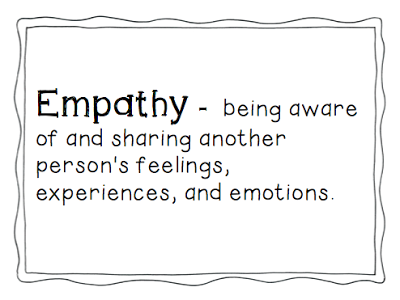
Denise Cummins - Why Some People Seem to Lack Empathy

https://blogger.googleusercontent.com/img/b/R29vZ2xl/AVvXsEj6q0ntngPzy2AAcGTGIg8TPvJ613e9BbatSBtHZPrbwBlH-YNVgTMAjmXBfCVuIYfnr96fgcWz9G3w2t44UUPtMe3bjbpiy1RpXZx-F0Aj_-5XlPQqoEo_dsC-Daua2vs5HLA3WOqygaVY/s400/Empathy.png

Between men and women, men usually get the bad rap for not being very good about expressing empathy, unfairly I would suggest.

This post from Psychology Today's Good Thinking blog, by Denise Cummins, Ph.D., offers some insight into people (not just men) seem to lack empathy - and it's a study of women only (no men).


Why friends sometimes shun each other when they should be there instead.

Published on June 23, 2014 by Denise Cummins, Ph.D. in Good Thinking

"You OK? You seem distracted", asks Alice's coworker.


"Yes, I'm OK", Alice responds. "It's just that my mother is in the hospital again, and I'm not sure she's going to make it this time." Alice's voice cracks, and she reaches for a tissue to wipe her tears. When she looks up, she is surprised to find her coworker has vanished.

To make matters worse, her coworker avoids her for the rest of the day. He is even hostile when Alice asks for information she needs to complete a report.

Later that evening, her coworker sends her an email that simply says, "Sorry. Couldn't take it."

Most of us have had interactions like this that leave us scratching our heads. We can reverse the sexes in the above scenario, or have both parties be the same sex. It doesn't matter. It still surprises and chagrins us when people we consider friends—decent, kind people—seem to abandon us when we most need emotional support. They are clearly not sadists who delight in the suffering of others or psychopaths who are indifferent to it. So their behavior is perplexing.

This kind of interaction can lead to anger, judgment, and recriminations—the "you don't care about me" outrage response. But here is the problem: Both parties feel their feelings have been trampled.


The Empathy Response Can Lead to Emotional Overwhelm

Consider what happens inside us when we view the suffering of others. When we experience physical pain or emotional distress ourselves, a neural circuit becomes activated (anterior cingulate cortex—or ACC--and insula).  Neuroscientific research shows this same circuit gets activated when we see others suffer pain or emotional distress. So seeing the suffering of others causes us to suffer as well.
Although this response is crucial for social interaction, it is indeed unpleasant. If that circuit is hit too frequently (excessive sharing of others' negative experiences), it can lead to emotional burnout.

And so people develop strategies for protecting themselves. Some do what Alice's coworker did—put physical and emotional distance between themselves and the suffering person. Some stay present but emotionally dissociate, which the sufferer usually experiences as emotional abandonment.

Coping with the Emotional Overwhelm of Empathy

A crucial part of socialization is learning how to protect oneself from being overwhelmed by the suffering of others while still giving them the support they need and deserve.

Research suggests that the answer to this dilemma may be compassion training. Compassion is defined as a feeling of concern for the suffering of others (rather than experiencing distress in the face of the suffering of others.) Programs aimed at training compassion have been found to foster prosocial (helping) behavior while evoking a feeling of emotional well-being.

Recent research led by Max Planck scientist Olga Klimicki showed that compassion training actually affects which neural circuits are activated when viewing the suffering of others. 

This was the basic design of the experiment:


Compassion study design
The design of an fMRI study on compassion training

The affect group viewed three blocks of video clips that consisted of a high-emotion and a low-emotion video clip (10-18 seconds long). The clips were taken from newscasts or documentaries. The high-emotion video showed people suffering physical or emotional distress. The low-emotion vides showed everyday scenes that did not include suffering. fMRI brain scans were taken while the women viewed the videos. After each video, the women rated how much empathy, positive feelings and negative feeling they had experienced while seeing the video. They were told that "empathy" meant how much they shared the emotion of the persons in the video clips.

The first session was the baseline—the women simply viewed the videos and their natural responses were recorded. Following this pre-training viewing session, the women received "empathy training" to enhance their empathetic responses. This training consisted of instructing them to focus on resonating with the suffering they were viewing. The second viewing session followed this training. Following this, they received "compassion training" which consisted of a meditation for directing love and compassion toward themselves and others. They then viewed the third and final set of videos. (A control group completed a memory task that consisted of learning lists of neutral words.)

The results were quite striking: As expected, the women showed more distress to the high-emotion clips than the low-emotion ones, both in their fMRI scans and their own ratings. The scans showed activation of the "empathy circuit" (ACC and insula). Their distress was enhanced following empathy training—greater activation in their empathy circuitry, higher negative emotion ratings, and lower positive emotion ratings.

But importantly, compassion training reversed these effects: Negative emotion ratings returned to baseline levels, positive emotion ratings surpassed baseline levels, and a brain circuit associated with reward and affiliation became activated (medial orbitofrontal cortex and striatum).

The researchers concluded that compassion can be trained as a coping strategy to overcome empathic distress and strengthen resilience. Rather than feeling overwhelmed by the suffering of others, those trained in compassion can offer help while simultaneously deriving peace and satisfaction from reducing the suffering of others.

Final note: You may be wondering why only women served as participants in the study. The answer can be found here.

Copyright June 23, 2014 Denise Cummins, PhD

Dr. Cummins is a research psychologist, a Fellow of the Association for Psychological Science, and the author of Good Thinking: Seven Powerful Ideas That Influence the Way We Think.

More information about me can be found on my homepage
And my author page.
Follow me on Twitter.
And on Google+.

Saturday, June 8, 2013

Fathers Should Ask Kids: 'Am I the Dad You Need Me to Be?'


Wow, I can't imagine how my life might have been different if my father had asked that question - or even considered for a brief moment that how he treated me would impact my life in some negative ways. As a child, I interpreted his actions as being about me, or about the specific circumstances, but not about him as a father or a person. After he died (I was 13), when I was in my teens and early 20s, I began to realize that his behavior was a function of who he was, not about me as a son. I got that intellectually long before I got it emotionally.

Children try to make sense of their world in very complex ways, but deciphering the intentions behind others' behavior can be challenging (a skill that develops as the frontal cortex develops, which is not fully formed until people are in their mid to late 30s).

In the study, girls made more stable attributions (based on his qualities as a father) of the father's positive actions than did the boys (all early adolescents), who generally created unstable attributions (based on situations).

Here are the citation and abstract for the source article (full article behind a paywall, $25), followed by a summary of the article and research from Science Daily.

Full Citation:
A. K. Finlay, J. T. Cookston, D. S. Saenz, M. E. Baham, R. D. Parke, W. Fabricius, S. Braver. (2013). Attributions of Fathering Behaviors Among Adolescents: The Role of Gender, Ethnicity, Family Structure, and Depressive Symptoms. Journal of Family Issues, DOI:10.1177/0192513X13478404

Attributions of Fathering Behaviors Among Adolescents: The Role of Gender, Ethnicity, Family Structure, and Depressive Symptoms


Andrea K. Finlay, Jeffrey T. Cookston, Delia S. Saenz, Melinda E. Baham, Ross D. Parke, William Fabricius, Sanford Braver

Abstract

Little attention has been paid to how early adolescents make attributions for their fathers’ behavior. Guided by symbolic interaction theory, we examined how adolescent gender, ethnicity, family structure, and depressive symptoms explained attributions for residential father behavior. A total of 382 adolescents, grouped by ethnicity (European American, Mexican American) and family structure (intact, stepfamilies), reported attributions for their fathers’ positive and negative behaviors. Results indicated that for positive events, girls made significantly more stable attributions, whereas boys made more unstable attributions. Mexican American adolescents tended to make more unstable attributions for positive events than European Americans, and adolescents from intact families made more stable attributions for positive events than adolescents from stepfamilies. Implications are discussed for the role of attributions in father–adolescent relationships as prime for intervention in families.

Study Suggests Fathers Should Ask Kids: 'Am I the Dad You Need Me to Be?'


June 5, 2013 — As Father's Day draws near, psychologist Jeff Cookston says dads should ask their children for a little more feedback than they might get with the yearly greeting card.

Just being a good parent may not be good enough, said Cookston, professor of psychology at San Francisco State University, who has studied fatherhood extensively. "There's a need for fathers to sometimes say to their kids, 'How am I doing? Am I the dad you need me to be?'"

"Kids are actively trying to make sense of the parenting they receive," he explained, "and the meaning that children take from the parenting may be as important, or more important, than the behavior of the parents."

"I don't think a lot of parents give these ideas about meaning much thought," Cookston said. "You may think that you're being a good parent by not being harsh on your kid, for instance, but your child may view that as 'you're not invested in me, you're not trying.'"

The meanings that adolescents in particular attach to their fathers' behavior can vary depending on the child's gender, ethnicity, and the presence of a stepfather in the child's life, Cookston and former SF State graduate student Andrea Finlay report in a new study published in the Journal of Family Issues. The study included children from California and Arizona.

The researchers examined how adolescents view their fathers' actions -- specifically, whether the teens attribute these actions to a dad's overall character or to his reaction in a particular situation. For instance, a daughter might believe her dad took her to the baseball game because he is a good father, or she might believe that he took her to the game because he likes to go to the game.

The study suggests that girls tend to believe that a father's "enduring aspects" are responsible for a dad's good deeds, while boys are more likely to think that dads do good depending on the situation. Mexican-American children are more likely than their European-American peers to think that good times with dad depend on the situation.

The reasons for these differences are not clear, Cookston and his colleagues say, although in the case of boys and girls, it may be that girls are socialized to interpret other people's behavior in a more positive light. In Mexican-American families, the process of adapting to U.S. culture may increase family conflict, leading children to have a less optimistic view of their fathers' good deeds.

Cookston has conducted extensive research on parenting and fatherhood, with a focus on how children from diverse cultural backgrounds respond to parenting and how children perceive and construct their relationships with their fathers. His research has shown that the relationship between father and child can have a significant impact on the child's tendencies toward depression and behavior problems.

Father's Day can be a good time for dads to rethink their relationship with their children, with a few tips that Cookston has gleaned from these studies:

  • Be sure to check in with your child. Dads may be surprised by the "filters" their children use to interpret their behavior, making it important for fathers to regularly ask about the relationship. "Fathers should ask, 'am I more or less than you need me to be?'," Cookston said, "and children -- particularly adolescents -- should be able to say, 'I need you to change course.'" 

  • Show your emotional support. Dads provide everything from discipline to role modeling, but Cookston said it is the fathers who emphasize their emotional relationships with their children who have kids that are less likely to behave in aggressive and delinquent ways. 

  • Don't be afraid to switch up your style. If you weren't always a warm and accepting father, it's not too late to become one, according to Cookston. "Parents can change, and kids can accept that. Parents need to be constantly adapting their parenting to the development and individual needs of the child." 

  • Be a team player. Cookston's research focuses on dads, but his work with divorced families has taught him how valuable it is when parents work together as a team. Children are more likely to talk to parents about family relationships if they see that they agree on parenting decisions, he noted, and "parents play unique, additive roles in their children's lives." 

  • Aim high as a dad. "We need to raise the bar for fatherhood. If a man is around and is a good provider and doesn't yell at his kids and goes to soccer games, we say that's enough," Cookston said. "But we need to expect more in terms of engagement, involvement and quality interaction."

Thursday, April 18, 2013

Men Easily Attune to Other Men's Feelings, But Struggle Attuning to Women


The headline of this article surely comes as no surprise to anyone who has ever been in an opposite sex relationship. A study like this might lead a moron with a diploma mill degree to conclude that men are from Mars and women are from Venus. He'd be painfully wrong of course, but most Americans are desperate to understand why communication between the genders can be so challenging sometimes, so they will buy his book, which probably bears a similar title.

The hidden problem with a study like this is that they are claiming adult males are hardwired to be more attuned to other men and less so to women. But these are adults - we cannot say they are hard-wired at birth, since there is no way to ascertain that information. But there is considerable evidence from interpersonal neurobiology that social interactions and relationships shape the developing brain in profound ways.

For example, most boys grow up playing with other boys, not girls. This ongoing relational experience is going to wire their brains to be more attuned to male emotions because those are the people closest to them most of the time. But then these boys become teens and young adults and start hanging around with females (for the sake of this argument, the boys are heterosexual), and strangely, these female humans are emotionally quite different from their male friends.

Likewise, these young women have grown up mostly spending time with other women, and so their brains have become more attuned to female emotional expression. When they start dating young men, it may seem as though these young men are an alien species.

A study such as the one below does not take into account the socialization of men in all the years prior to their participation in the research study.

Here is the abstract and citation for the original study that is summarized below.
Abstract 
Men are traditionally thought to have more problems in understanding women compared to understanding other men, though evidence supporting this assumption remains sparse. Recently, it has been shown, however, that meńs problems in recognizing women’s emotions could be linked to difficulties in extracting the relevant information from the eye region, which remain one of the richest sources of social information for the attribution of mental states to others. To determine possible differences in the neural correlates underlying emotion recognition from female, as compared to male eyes, a modified version of the Reading the Mind in the Eyes Test in combination with functional magnetic resonance imaging (fMRI) was applied to a sample of 22 participants. We found that men actually had twice as many problems in recognizing emotions from female as compared to male eyes, and that these problems were particularly associated with a lack of activation in limbic regions of the brain (including the hippocampus and the rostral anterior cingulate cortex). Moreover, men revealed heightened activation of the right amygdala to male stimuli regardless of condition (sex vs. emotion recognition). Thus, our findings highlight the function of the amygdala in the affective component of theory of mind (ToM) and in empathy, and provide further evidence that men are substantially less able to infer mental states expressed by women, which may be accompanied by sex-specific differences in amygdala activity.
Full Citation: 
Schiffer B, Pawliczek C, Müller BW, Gizewski ER, Walter H (2013) Why Don't Men Understand Women? Altered Neural Networks for Reading the Language of Male and Female Eyes. PLoS ONE 8(4): e60278. doi:10.1371/journal.pone.0060278

Study: Men Struggle to Read Women’s Emotions


By Bill Andrews | April 12, 2013


In a paper sure to please lazy stand-up comics and beleaguered husbands everywhere, scientists say that men do indeed have a hard time understanding women. Recent results show that men have a significantly harder time recognizing women’s emotions than they do men’s, and that men seem to use different parts of their brain when ascribing intentions and feelings to women versus men.

Previous experiments had suggested that men are naturally wired to be more intuitive toward other men’s mental states and emotions. Eager to figure out why and how this could be, the researchers studied the brains of 22 male participants as they received a version of a well-known empathy test called the “Reading the Mind in the Eyes Test.” (You can take a version of the test online here.) As the name suggests, the test consists of snapshots of pairs of eyes. Pairs of eyes were shown in succession to each participant, who had to determine either the gender or the emotional state of the person pictured. This all took place within an MRI machine, allowing the researchers to see which parts of the brain were active while participants made their determinations.

Participants were about equally good at guessing the gender of male and female eyes, but the men did significantly worse at recognizing the emotions of the female eyes. They correctly interpreted about 87 percent of men’s eyes but only about 76 percent of women’s eyes. Participants also took longer to judge women’s emotions—about 40 milliseconds longer on average. Thus, in effect, men can “read” other men’s eyes faster and better, the researchers report in PLOS ONE.

The MRI data also showed for the first time that this difference is linked to different areas of brain activity. Men inferring other men’s mental states showed much more activity in the right hippocampus and the anterior cingulate cortex than men reading women’s emotions. Those two brain areas are involved in the acquisition of emotional memories, and so it may be that men were drawing more strongly on their own remembered experiences when imagining others men’s emotions.

The authors speculate that, evolutionarily, it would have been most useful for men to quickly and accurately interpret other men’s facial expressions, since males were more heavily involved in violent activities like hunting and territorial battles. Of course, just because “men are less able to infer mental states expressed by women,” as the authors put it, doesn’t mean that men find women completely inscrutable. The results show noticeable, but still generally subtle, differences. Plenty of men have still been known to lead long and happy lives (mostly) understanding women.

Image courtesy Dave Clark Digital Photo / Shutterstock