Showing posts with label connection. Show all posts

Saturday, October 19, 2013

Lisa Firestone, Ph.D. - What's Getting in the Way of Your Sex Life

Dr. Lisa Firestone is the co-author of Sex and Love in Intimate Relationships (2008) and the Compassion Matters blog at Psychology Today, as well as several other books, including The Self Under Siege: A Therapeutic Model for Differentiation (2012) and Creating a Life of Meaning and Compassion: The Wisdom of Psychotherapy (2003).

This is an interesting, though brief, post on the challenges we all can face in our sex lives over time and as we age.

What's Getting in the Way of Your Sex Life

Why our sexuality changes and what to do about it

Published on October 15, 2013 by Lisa Firestone, Ph.D. in Compassion Matters

Your sexuality can change a lot throughout one lifetime. It can even change a lot throughout one relationship. Some of these changes can be for the better. Others can feel like they're for the worse. When these changes occur, many men and women tend to take the wrong course of action, shutting up or shutting down. You may shy away from talking to your partner or pull away from a physical relationship you valued. You might lose interest in sex altogether or turn against yourself and your body. When people face these challenges, what they'll often find is that talking about sex, while it may feel uncomfortable at first, can be the key to maintaining a healthy sex life and a positive sense of one's own sexuality.

So what are some of the changes that impact a person's sex life? These shifts can be physical or related to age. They can even be caused by medications that strongly affect one's sexual feelings and performance. Although these are often natural alterations that our bodies go through over time, people tend to view them as embarrassing or something to be kept secret. However, the opposite is true.

Talking about these changes, be it with your partner, a friend or your doctor can lead to more understanding and self-compassion and allows you to maintain a satisfying sex life. As your body changes, you can choose to take a healthy approach to these shifts without turning on yourself and giving in to your "critical inner voices," allowing them to tear you down or make you feel insecure. It's important not to listen to what your inner critic tells you about these changes or to allow yourself to shut the door on your sexuality.

In addition to physical adjustments, people of all ages often face an onslaught of psychological influences that can hurt their sexuality. This can have a lot to do with the critical inner voice, which every person possesses. When it comes to sexuality a person's inner critic often comments on their performance, their bodies or what their partner is feeling or not feeling. This "voice" keeps people in their heads instead of in their bodies.

When it comes to sex, most people tend to feel there are a lot of "supposed to's," as if they are supposed to perform this way or feel that way in a sexual encounter. These expectations are fueled by the critical inner voice and can lead people to feel self-conscious, insecure or disconnected when being physically affectionate. Many people can also be critical of their appearance, viewing themselves as too old/fat/unattractive/uncomfortable for sex. With all its input, your inner critic can negatively influence your sexual relationships and eventually prove the false notion that passionate relationships can't last long-term.

The truth is that intimate relationships don't have to lose their excitement. However, as people get closer, they tend to struggle with maintaining an alive and satisfying sexual relationship. Many people find it difficult to combine emotional intimacy and deep loving feelings with passionate sexuality. One reason this can occur, albeit mostly unconsciously, is that old issues from their past begin to surface. People may even start to experience "critical inner voices" about their sexuality that hold familiar themes from their past. For example, if you were hurt or rejected by the people who cared for you, you may have grown up feeling there is something wrong with you on a bodily level. You may have thoughts like "you are so unattractive, he/she is repulsed by you." If you felt a lack of affection as kids, you may feel desperate for affection as an adult, having thoughts like "you need to be aggressive. he/she is not going to come toward you." If you felt intruded on, you may have a tendency to pull away when someone gets close, thinking "he/she is so hungry towards you; you don't really want this."

When people start to get into their heads during sex, they lose a sense of connectedness to their partner. When they feel this distance, the sexual experience often doesn't feel as satisfying or worthwhile. With their head flooded with self-critiques and attacks on their partner, they may start to think about just getting through the sexual situation instead of enjoying it. Emotional closeness is the most important aspect of physical intimacy. Therefore, it becomes all the more important to bring your struggles to light and talk about what's going on.

When changes occur in you, be them physical or emotional, it can also affect your partner's feelings about him or herself. It may trigger critical inner voices in them like, you are bored with them or that they're unattractive to you, etc. Talking to your partner and exposing the destructive attitudes of your critical inner voices can bring you back to yourselves and can reestablish the closeness between you and your partner. Closeness, self-esteem and open communication are essential to lasting, healthy sexuality. They are also the biggest factors in sexual satisfaction.

When you open up to your partner about what's going on in your mind in regards to your sexuality, you allow him or her to know you on a deeper level. In a certain sense, conversation can be foreplay, as it allows a couple to feel for each other and get closer. While it may feel awkward or unnatural at first, very often, when they do open up and talk about it, there are major, surprising shifts in a couple's sexual relationship.

Too often, people let years pass without having a conversation about their sexuality. In addition to talking to your partner, you can confide in a close friend or a therapist. It's all too easy to feel alone in your struggles, but you'd be surprised at how many people relate to exactly what you're going through. Staying silent leaves room for your critical inner voices to fester and will make you feel worse and even like giving up on your sexuality. The more you talk, the better you are likely to feel, and the quieter the noise in your head can become.

When it comes to sex, the optimal experience involves feeling emotionally close to your partner, in touch with your body and in the present moment. I have found that by identifying and challenging destructive thought processes or critical inner voices that interfere with closeness and optimal sexual functioning, people can learn to combine love and sexuality and achieve that special combination that is so desirable in an intimate relationship. Taking a chance and talking to your partner can be the first step to achieving this goal.

Read more from Dr. Lisa Firestone at PsychAlive.org

Dr. Lisa Firestone will be presenting a weekend workshop on "Creating a Loving Relationship" Nov. 8-10 in Ojai, CA. The event is open to individuals and couples. Learn more here.

Read Dr. Lisa Firestone's book, Sex and Love in Intimate Relationships.


Sunday, September 15, 2013

Chris Kyle - The Three Hidden Powers of Vulnerability

Over at the Good Men Project, Chris Kyle shared an excellent post on masculinity and vulnerability - two great things that go great together, but that we (as men growing up) are not simply discouraged from embodying, but essentially threatened with the loss our status as men if we do embody vulnerability.

This is wrong in more ways than I can count. Vulnerability is essential for psychological health, for mature masculine presence, and for ensuring authentic relationships.

Chris concludes his article with three observations around the benefits of being vulnerable: (1) increased capacity for courage, (2) greater compassion for ourselves and others, and (3) deeper, more authentic connections with others.


About Chris Kyle

Chris is a speaker, teacher, success coach and champion of your purpose. He’s an eLearning expert and recently created two new virtual programs called the Power of Purpose Summit and the Man on Purpose online course. Chris is also passionate about building global learning communities that unite people across cultures.
Enjoy the article - he even mentions the current guru on vulnerability, Brene Brown.

The Hidden Powers of Vulnerability

September 13, 2013 | by Chris Kyle


Chris Kyle learned early on that he better man up and sure as hell ‘Don’t cry!’ He learned later that vulnerability makes him stronger.

When I was a kid, I can’t tell you how many times I heard phrases like these: “just suck it up, Kyle.”
“Don’t cry.” “What are you, a pussy?; ”Don’t get too excited.” “Tone it down.” “I don’t want to hear how you feel about it, just do it.” “Don’t get angry with me young man.”

These came from my friends, my teachers, my coaches, and my family too.

I know many men who can relate to these words and far worse including a lot more swearing— “f*cking” this and “goddamn” that.

As a boy and then a young man I was told constantly to stay in a zone of feeling and behavior that essentially felt like I was a block of granite—solid, unmoving, rational, toned-down, and generally unfeeling. Sharing my feelings, my deep fears, expressing sadness, crying were all seen as weakness for a young, maturing man.

I came to believe vulnerability = weakness.

I recall one key event in my early teens when some friends at school were instigating a fight between me and a kid named Evan. I didn’t want to fight him, but it somehow became a matter of honor, or an issue of shame, if I didn’t fight him.

I remember facing Evan, with a small crowd circled around us, and thinking “Why am I here?” I literally couldn’t remember what we fought about or what was the issue that had us squaring off against each other with fists raised. We finally dove into it, trading a few punches, and then found ourselves wrestling on the ground. He got me in a headlock and all I could do was say ‘uncle’—to tap out. I’d lost the fight.

As I stood up, facing the others gathered around, I could feel the shame welling up in me, and the tears started to come. And, of course, one of the boys says: “F*ck Kyle, are you crying?” It was said with such disdain and disbelief. I dropped into a deeper level of shame for having these feelings and showing the tears. This moment shut me down and locked me out from my tears, and slammed the door on my vulnerability.

Our culture continues to indoctrinate boys and men in this way—through old socializing patterns that are deeply ingrained in our cultural DNA. Be tough, don’t cry, don’t share your fear, win at all costs, prove you’re a man.

And yet, now what I’m seeing are adult men who are willing to work on themselves and take a deep look at these beliefs and patterns. They are consciously unwinding this shame and belief of ‘vulnerability is weakness,’ and bringing a new understanding and self-compassion to their childhood wounds and traumas.

This truth-telling about myself and the willingness to be more open, transparent, revealing… to be more vulnerable, is freeing and empowering.

Now, vulnerability looks and feels different. It has become a hidden source of power for me.

At its core, vulnerability allows us to really be seen, warts and all, so we can feel more connected. Researcher and author Brene Brown says that it’s this vulnerability that helps heal our shame and opens us up to deeper connection and a greater sense of worthiness.

So as I investigated deeper into masculine vulnerability, I became aware of what I call the Three Hidden Powers of Vulnerability.

1. Vulnerability opens us to an increased capacity for courage.
 Being vulnerable, sharing more of myself, taking the risk to say with needs to be said, to speak the truth in my heart—all of it takes courage. As we practice being more vulnerable (open, transparent, being seen) then we foster a new level of courage that we can apply in many areas of our lives. This courage building also garners respect and appreciation from others. And it builds resilience in us to face the many challenges that life will bring.

2. Being vulnerable brings forth greater compassion for ourselves and others.
 When we are vulnerable, when we truly open ourselves to be seen by others, we are sharing more parts of ourselves with the world. And in that awareness of the hurt, raw or broken parts of ourselves we are able to see our own humanity and have greater compassion for ourselves. As this capacity builds inside us we have more empathy and compassion for others. This growing power of compassion provides us with a greater ability to accept and let go of beliefs and judgments that don’t serve us. More presence and peace is found in this compassion.

3. Vulnerability creates deeper, more authentic connections.
 What I see as the greatest gift of vulnerability is the ability to actively cultivate deeper, more real connections with everyone in my life. When we practice being more open and vulnerable we are able to pierce the veil of shame and fear and experience deeper connection and relatedness. More honest dialog emerges, more healing between friends and loved ones occur. And this is counter-intuitive to our minds—where we equate vulnerability with fear, hurt and weakness. When in fact it creates more support, more freedom, more joy, more release and more appreciation. These authentic connections serve our success and happiness in every area of life—relationships, work, parenting, community and well-being.

So, I invite you to choose more opportunities to share yourself, to express your fears, to let your tears be seen. Cultivate this openness, this vulnerability and watch these hidden powers blossom and grow so that they infuse your life with more meaning, passion and care for yourself and others.

Read More from Men’s Work

Image Credit: Rochelle Hartman/Flickr

Tuesday, July 23, 2013

It Takes Evil to Know Evil


When I think about evil, if evil actually exists, I think Stalin, Hitler, Pol Pot, and clowns. I don't think of children, not even disturbed teenage children.

Yet, when I was a teenager strung out on drugs and alcohol and generally getting myself into heaps of trouble, I was told I was evil . . . by teachers, administrators, police officers, and even my mother (and especially her church friends). Some people probably feel the label was/is deserved. My mother died believing I would burn in hell not only for my sins against her in my youth, but because I became an unrepentant secular Buddhist.

As near as I can tell, my teenage years, what I remember of them, were hell - there is nowhere else to go but up. I would not wish that degree of angst, that total lack of self-awareness . . . that pure all-consuming despair . . . on anyone.

Those years were hellish because I believed what those people said about me - I knew I was evil. So many people could not all be wrong, right? Plus, I had heaps of the Catholic guilt for all of the things I really had done - nothing horribly serious, but many destructive acts toward myself, other people's property, or worst of all, other people's feelings.

I internalized their disparaging label and adopted it as a core belief for many, many years.

I know how deeply a label can wound, how it undercuts anything and everything we do, we are, we believe we can ever be. The inner critic says, "After all, You are (I am) evil. What hubris in you (me) thinks you (I) ever deserve to be happy, to be successful, to be loved?"

After years of therapy and a lot of Buddhist practice, still there are remnants of that wounding, there are echoes of those old scripts that long since were rewritten and reframed. I do not really even believe in evil, but there are scars where those old beliefs once were festering wounds.

It is this experience from all those years ago that informed my response to a situation yesterday, although I did not get clear on it until I discussed it with a mentor this morning. So often things we (I) think have healed can be triggered - reactivated - by another human being having a similar experience.

This particular situation, for a variety of reasons having nothing to do with objective reality, involved someone who believes s/he is evil because of some of the things s/he has done (all of which the persona was forced to do). But for this person, for that 16-year-old part still lurking inside the adult, the sense of being evil is so overwhelming that death seems the only viable option.

In reality, this could be any one of my clients, any survivor of neglect, childhood abuse, emotional violence, sexual molestation, or a host of other interpersonal traumas. But yesterday, for whatever reason, it was this person.

In the time I spent with this person yesterday, something about the pain and despair touched that old scar within me, left me filled with deep sadness and compassion.

Why that person on that day? I don't know.

Or maybe . . . It takes evil to know evil?

What I do know is that having this new awareness of why that situation followed me home and weighed heavy on my heart allows me to connect with people in a deeper way, to be a better friend, a better partner, and hopefully a better therapist.

Saturday, May 19, 2012

Owen Marcus - Men Speak about the Power of Empathy


The Center for Building a Culture of Empathy recently held an online conference called How Can We Build a Culture of Empathy and Compassion? Owen Marcus curated one of the panels, The Culture of Empathy and Men for the conference.

Here is the post Owen put up, along with the video, which is also available at the Center for Building a Culture of Empathy site for the conference. This is part of a year-long series of panel discussions, so check out the site for ones already complete, and check back for new ones when they are added.

Men Speak about the Power of Empathy


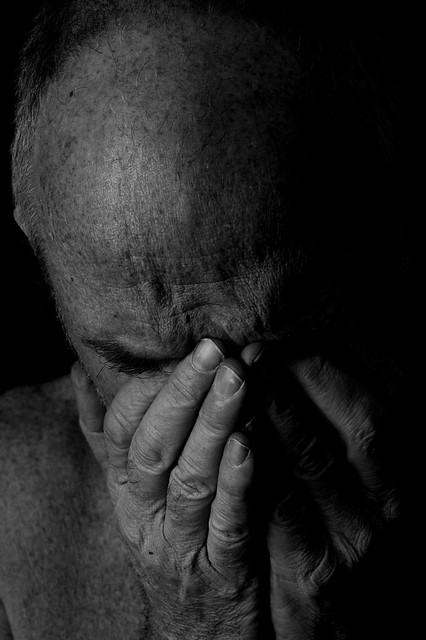
old man look at my life 

“Emotions” and “empathy” are words we don’t generally associate with men. But in my experience, I have found that men are just as emotional and empathetic as women. We just express it differently—different than women express, and different than the culture expects us to express.

Recently I moderated a panel on “The Culture of Empathy and Men” where we explored what empathy is for men. We looked at what is missing for men, and why it seems like we’re behind the empathy curve. But more important than just looking at what’s missing, we looked at ways to fill those gaps. We gave the viewer cues on how he could learn what was never taught to him.

Trauma and chronic stress will shut down a man’s desire to experience empathy. The panel spoke about how the PTSD response can be unlearned in the micro-communities of men’s groups, and in special trainings in corporations.

Going beyond the standard masculine approach to “fix it,” or to agree or disagree, we discussed how listening for understanding is a powerful setup for empathy. When we listen to understand, we create an empathetic dialogue that allows others to open up. The other person wants to share because he or she feels not only safe, but also feels your interest.

Not only are these men speaking to the power of empathy, now science is too.

Unlearning the frozen survival response, which shuts down empathy, changes our brain chemistry. In his book The Moral Molecule, neuroeconomist Paul Zak describes oxytocin’s role in trust, bonding and even virtuous behavior. In this interview Paul Zak speaks about how oxytocin increases as a man or woman relaxes with empathy.

How do you build empathy in a masculine way? What is it like for you to experience a man who is empathetic?