Showing posts with label healing. Show all posts

Saturday, December 14, 2013

Danny Baker - 13 Myths Surrounding Mental Illness (Good Men Project)

Danny Baker offers an important post on the myths of mental illness over at the Good Men Project. For a lot of us, especially readers of this blog, these are common sense and we know better - but there are a lot of people who hold these beliefs or variations of them, especially men (it's weak to ask for health, we should just get over it, and so on).

13 Myths Surrounding Mental Illness

December 13, 2013 by Danny Baker

when you think of me-y JenXer-flickr

From the belief that mental illness doesn’t exist to being able to just “get over it,” Danny Baker lists 13 myths surrounding mental illness that can hinder recovery.

 
In no particular order, here are 13 of the most widespread myths surrounding mental illness in the 21st century.
  1. Mental illness doesn’t exist. Just because mental illnesses are invisible on the surface, it doesn’t mean that they aren’t real. We can’t see gravity, either – does that mean that that’s made up? Furthermore, through various brain image technology, it’s actually now possible to observe differences in the brain between people with certain mental illnesses and people without them.
  2. Mental illness is rare. On the contrary, approximately 1 in 4 people suffer from a mental illness.
  3. You don’t know anyone with a mental illness. Again, since mental illness affects 1 in 4, then unless you live by yourself on a raft in the middle of the ocean, then it’s almost certain that you do.
  4. If you have a mental illness, then it means you’re crazy. No! If you have a mental illness, then all it means is that you have a mental illness – a condition that can be treated just like physical illnesses can.
  5. Mental illnesses are lifelong and impossible to treat. I kind of gave the truth away in myth 4, but it’s worth emphasizing: treatments today are more refined than ever before, and as a result, most mental illnesses are able to be recovered from, or at the very least managed.
  6. If someone has a mental illness, than they’re to blame for it. While I do believe that sufferers need to take responsibility for their illness and be proactive in trying to recover, it’s critical to note that absolutely anyone can fall victim to a mental illness. Mental illnesses tend to be caused by a combination of genetics, brain chemical imbalances, psychological trauma and environmental stresses; since so much of this is out of a person’s control, then blaming them for developing a mental illness is extremely unfair.
  7. Only people who are weak ask for help. It’s really the complete opposite – it takes self-awareness to admit that you have a problem, and given the stigma surrounding mental illness, it takes a lot of courage to ask for support. And on a more fundamental level, seeking help is just the smart, logical thing to do. Just like physical illnesses, mental illnesses require treatment in order for the sufferer to recover – so if you want to get better and return to living a healthy life, then you have to get help. Otherwise your illness will always impair you.
  8. People with a mental illness can “just get over it”. Again, mental illnesses are illnesses. You can’t “just get over them”, in the same way you just can’t get over a physical illness like cancer.
  9. People with a mental illness are violent. This is nonsense perpetrated by the media and television shows. Numerous studies have shown this to be blatantly untrue. For example in the US, a nationwide study by NIMH showed that only 4% of violent crimes are committed by people with a diagnosed mental illness. Additionally, the study showed that people with a mental illness are 11 times more likely to be the victim of a violent crime than the general population.
  10. People with a mental illness are incompetent. Because mental illnesses are treatable, then most sufferers who are getting help are able to work and live productive lives. In fact, it’s well known that depression rates are particularly high in the legal profession, which is proof that people with a mental illness can still be extremely high functioning. Furthermore, since mental illness affects 1 in 4 people, chances are that you work with one or multiple sufferers, even if you don’t know it.
  11. Mental illnesses don’t affect teenagers – any problems they’re experiencing is just part of going through puberty. Granted that one’s adolescent years tend to be more of a roller coaster than most, but it’s ludicrous to assume that this is the root of all their problems and that it’s impossible for them to suffer from a mental illness. In fact, studies show that across Australia, the UK and the US, as many as 1 in 5 teens will experience depression before they reach adulthood – and that’s just one of a myriad of mental illnesses.
  12. People with a mental illness – particular those suffering from depression – are attention seekers or drama queens. In fact, it’s usually the opposite, which is why the majority of sufferers hide their pain with a smile, and why their most common response to “how are you” is “I’m fine”.
  13. I can’t do anything for someone with a mental illness. While it’s true that you can’t snap your fingers and make them recover, you can help immensely by being a good friend – by doing your best to understand them instead of judging them, by showing them respect, by listening to them when they need someone to talk to, and by putting your arm around them when they need your support.
What are some of the other mental illness myths you’ve heard? If you suffer from a mental illness, what are some you’ve heard that are specific to that particular illness?

Thursday, September 12, 2013

Gratitude

Over the past decade or so, I have mentioned my last therapist, Maude (the one therapist who really helped me heal), in various conversations with friends, always with a sense of awe or deep appreciation. She didn't offer answers or platitudes, but she had the wisdom of lived (and learned) experience, as well as a very skillful compassion that was not always gentle. Some days her compassion was so direct that it broke me wide open, left me gasping for air, feeling as raw as an exposed nerve.

With Maude I learned to cry again. I learned how to mourn. I learned that my childhood was not normal and not healthy. I learned how to accept myself, and in that process I learned how to forgive my parents for their failings, their shortcomings, and their ignorance. I learned that I was a kind of ugly duckling in my family and that separating from them as soon as I was able was not ungrateful, not disloyal, not selfish - it was necessary for my growth and survival.

I learned that all the drugs, alcohol, and promiscuity of my teen years - behaviors that had filled me with a sense of shame, that made me feel like a broken and terrible person - were nothing more than unskillful coping strategies, they were the ways I found not to chase a bottle of Vicodin with a fifth of whiskey and a handful of Valium. I learned to feel compassion rather than contempt for that scared and wounded kid that I had been.

I learned that depression can be a sane response to an insane world (this is a reframe of a quote from Ronald David Laing, who once said: "Insanity sometimes is the sane response to a mad society"). I also learned that my particular kind of depression was a form of living in the past, and that my anxiety was a way to live in fear of the future, a perspective that came originally from Lao Tzu:
If you are depressed you are living in the past.
If you are anxious you are living in the future.
If you are at peace you are living in the present.
I learned how to apply mindfulness and awareness to my interior states, an approach I was familiar with from the writings of Pema Chödrön. I learned that my Buddhist practice was not confined to time spent in meditation, that the best place to practice was my daily life.

After a couple of years, I began to notice that I was not so reactive to daily stresses and annoyances. I came to realize that the political blog I was writing at the time was making me miserable and cynical, aggravating my depression. I stopped following political news and switched to blogging at Integral Options Cafe, then to this blog.

I switched my blogging focus to growth, psychology, philosophy, and health. I became curious about what it means to be a man in this culture, during this time when gender roles and identities are shifting so rapidly. I began blogging here, at The Masculine Heart.

Soon I realized it was time to go back to school, to return to my original goal of becoming a psychotherapist. That had been my major during my first stint in college, but the program as too reductionist and I switched to an English degree and then a masters in humanities (literature and comparative religions).

When I was nearly 40, I was finally ready to become a therapist.

I am still learning, still trying to be a better person, and through working with my clients, I become my best self more and more every day. This is the gift they give me without ever knowing.

Even now, when I am working with clients, I hear Maude's voice in my head, asking the hard questions, reminding me to connect my brain with my heart in every moment. For that gift, I will be forever grateful.

Tuesday, July 23, 2013

It Takes Evil to Know Evil


When I think about evil, if evil actually exists, I think Stalin, Hitler, Pol Pot, and clowns. I don't think of children, not even disturbed teenage children.

Yet, when I was a teenager strung out on drugs and alcohol and generally getting myself into heaps of trouble, I was told I was evil . . . by teachers, administrators, police officers, and even my mother (and especially her church friends). Some people probably feel the label was/is deserved. My mother died believing I would burn in hell not only for my sins against her in my youth, but because I became an unrepentant secular Buddhist.

As near as I can tell, my teenage years, what I remember of them, were hell - there is nowhere else to go but up. I would not wish that degree of angst, that total lack of self-awareness . . . that pure all-consuming despair . . . on anyone.

Those years were hellish because I believed what those people said about me - I knew I was evil. So many people could not all be wrong, right? Plus, I had heaps of the Catholic guilt for all of the things I really had done - nothing horribly serious, but many destructive acts toward myself, other people's property, or worst of all, other people's feelings.

I internalized their disparaging label and adopted it as a core belief for many, many years.

I know how deeply a label can wound, how it undercuts anything and everything we do, we are, we believe we can ever be. The inner critic says, "After all, You are (I am) evil. What hubris in you (me) thinks you (I) ever deserve to be happy, to be successful, to be loved?"

After years of therapy and a lot of Buddhist practice, still there are remnants of that wounding, there are echoes of those old scripts that long since were rewritten and reframed. I do not really even believe in evil, but there are scars where those old beliefs once were festering wounds.

It is this experience from all those years ago that informed my response to a situation yesterday, although I did not get clear on it until I discussed it with a mentor this morning. So often things we (I) think have healed can be triggered - reactivated - by another human being having a similar experience.

This particular situation, for a variety of reasons having nothing to do with objective reality, involved someone who believes s/he is evil because of some of the things s/he has done (all of which the persona was forced to do). But for this person, for that 16-year-old part still lurking inside the adult, the sense of being evil is so overwhelming that death seems the only viable option.

In reality, this could be any one of my clients, any survivor of neglect, childhood abuse, emotional violence, sexual molestation, or a host of other interpersonal traumas. But yesterday, for whatever reason, it was this person.

In the time I spent with this person yesterday, something about the pain and despair touched that old scar within me, left me filled with deep sadness and compassion.

Why that person on that day? I don't know.

Or maybe . . . It takes evil to know evil?

What I do know is that having this new awareness of why that situation followed me home and weighed heavy on my heart allows me to connect with people in a deeper way, to be a better friend, a better partner, and hopefully a better therapist.

Saturday, January 12, 2013

Conquering the Past and Creating the Future - The Secret Lives of Men Podcast


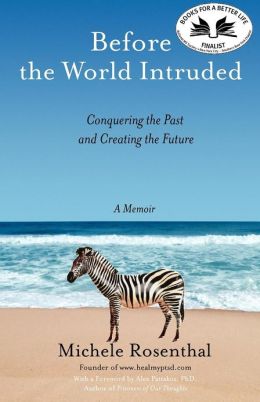
This episode of the Secret Lives of Men podcast features Dr. Chris Blazina talking to his guest, Michele Rosenthal about her new book, Before the World Intruded: Conquering the Past and Creating the Future, A Memoir, which details the author's struggles to overcome the trauma of having nearly died as a thirteen-year old.

You may ask yourself what this has to do with men, but all of us experience trauma in our lives, whether it's a near-fatal illness, an auto accident, the death of a loved one, or any number of other wounds we can experience. How we recover from these traumas has been a learning experience for many of us. In this discussion (and in her book), Ms. Rosenthal offers some insights that can aid all of us in our healing.


Conquering the Past and Creating the Future - The Secret Lives of Men Podcast

Listen to internet radio with Secret Lives of Men on Blog Talk Radio
Before the World Intruded: Conquering the Past and Creating the Future, A Memoir, is one woman’s quest to triumph over trauma — and the very unexpected way she did it. At the age of thirteen Michele Rosenthal survived such a rare, life-threatening illness none of her doctors had actually seen a case. Out of the hospital and making a full recovery, she believed if she only looked toward the future she could escape the trauma in her past. Twenty-five years later, however, the young girl had become a woman imprisoned by memories, fear, and Post-Traumatic Stress Disorder. In a bid to reclaim her life and heal her soul Michele boldly left the world she knew in search of a self she could barely imagine. In her transformation lie the seeds for anyone who wants to conquer the past and create the future. This transcendent book shows what can happen when you discover who you are and then choose who you most deeply want to be. 
~ Michele Rosenthal is an award winning blogger, speaker, poet, post-trauma coach, and radio talk show host. A trauma survivor who struggled with Post-Traumatic Stress Disorder (PTSD) for over twenty-five years, today Michele joyfully lives 100% free of PTSD symptoms. She is the founder of www.healmyptsd.com and sits on the board of Hope4PTSDvets.org and St. Clair Butterfly Foundation. For more information visit, HealMyPTSD.com. To receive over $1,900 in free trauma recovery support resources, take your Amazon sales receipt number and visit: http://yourlifeaftertrauma.com/trauma-project-give-back/free-gifts/

Saturday, December 29, 2012

Tami Simon Speaks with John Welwood: Healing the Core Wound of the Heart

The good folks at Sounds True made this Tami Simon discussion with John Welwood, from back in July, available for free at their site. Welwood is one of the clearest and most nurturing writers there are in the area of psychology and spirituality. His book, Perfect Love, Imperfect Relationships: Healing the Wound of the Heart, is one of my all-time favorite books, and should be essential reading for relationships.

John Welwood: Healing the Core Wound of the Heart


Tuesday, July 3, 2012


Tami Simon speaks with Dr. John Welwood, a clinical psychologist, psychotherapist, and practicing student of Buddhism and Eastern contemplative psychology. Dr. Welwood is an author whose books include Journey of the Heart and Perfect Love, Imperfect Relationships, and with Sounds True he has created the audio learning program Conscious Relationships.

Dr. Welwood is a clinical psychologist, psychotherapist, teacher, and author. He trained in existential psychology and worked closely with Eugene Gendlin at the University of Chicago, where he received his PhD in clinical psychology in 1974. He has also been a practicing student of Buddhism and Eastern contemplative psychologies for forty years.

In the 1980s, he emerged as a major contributor to the leading-edge fields of transpersonal psychology and East/West psychology. The former Director of the East/West Psychology Program at the California Institute of Integral Studies in San Francisco, he is currently an editor of the Journal of Transpersonal Psychology. He trains psychotherapists in psychotherapy in a spiritual framework and leads trainings on psychospiritual work and embodied presence throughout the world.

In this episode, Tami speaks with Dr. Welwood about his understanding of the relationship between psychological work and the spiritual journey, as well as his view of the phenomenon of “spiritual bypassing.” He also spoke about committed relationships and the most common issue that couples present in couples therapy. (61 minutes)


More from John Welwood:

Monday, May 21, 2012

TEDxXavierUniversity - Sherman Bradley - Relational Justice

Sherman Bradley brings his own family experience to introduce the topic of relational justice - a shift of perspective around crime and poverty as relational (between people) and not institutional (between the person and the state). Here is a definition of relational justice from Nicola Baker and Jonathan Burnside:
Relational justice is a fresh vision of what doing justice means in a society where relationships are being undermined and undervalued. It turns the spotlight on one of the goals of justice which is to restore and repair human relationships damaged by crime.
 Bradley brings these ideas to healing poverty and helping men without hope through his organization, Consider the Poor, a project of the City Gospel Mission. Consider the Poor educates the public about the dynamics of poverty and homelessness and encourages dialogue about these critical issues. By bringing people together for training and discussion, Consider the Poor inspires men and women to advocate for the poor and create grassroots change in their communities.

Sherman Bradley's Understanding Poverty Workshop 

Take Action


TEDxXavierUniversity - Sherman Bradley - Relational Justice
This former US air force sargent, has made it is his life's mission to empower formerly incarcerated, addicted, disenfranchised and homeless men. What he discovered is a new way of looking at... one another.

Sherman Bradley is innovating the way we serve with an entirely new approach.

Monday, April 9, 2012

Geoff Laughton on A New Conversation with Men - Should Men Participate In Inner Child Work?


"Inner child work" sounds very unmanly and way too touchie-feelie for most men, yet there is a lot of benefit in doing this kind of therapy (with a qualified therapist) for healing attachment wounds and childhood traumas.

In last week's A New Conversation with Men, Coach Michael Taylor spoke with Geoff Laughton about inner child work for men. There are too many men with childhood trauma, both big T traumas (abuse, neglect, incest, etc) and small t traumas (broken bones, accidents, bullying, teasing, etc) who live with these traumas and are not aware of how they shape and impact their lives. Inner child work can help to heal those wounds and reduce their symptoms.

Should Men Participate In Inner Child Work?

by Coach Michael Taylor


Listen to internet radio with Coach Michael Taylor on Blog Talk Radio


Does childhood trauma have an effect on a man's behavior in his grownup years?

Is it possible that the childhood trauma is making it difficult for men to create and maintain intimate relationships 20-30 years later?

Can men heal those childhood wounds and learn to become genuinely happy with their lives?

These questions and more will be answered in this empowering educational interview.

Join Coach Michael Taylor as he speaks with Geoff Laughton about Inner Child Work and how it can support men in dealing with letting go of the past and finding peace in the present moment.

Monday, August 22, 2011

A Male Survivor of Childhood Sexual Abuse (introduction)

I indirectly know this guy - and I admire his courage in making these short videos. He was abused from the ages of four to fourteen, but he is seeking help and is in recovery. His videos are honest and accurate - something to which most men who have been abused can probably relate.

If you appreciate what he is doing, stop by his YouTube page (link right below) and leave him a supportive message,

From: henrifirstman, Aug 3, 2011

A Male Survivor of Childhood Sexual Abuse (introduction)


A Male Survivor of CSA (sexuality and masculinity)


A Male Survivor of CSA (gratitude)