Showing posts with label acceptance. Show all posts

Sunday, April 26, 2015

Bruce Jenner, Aydian Dowling, and America's Transgender Awakening

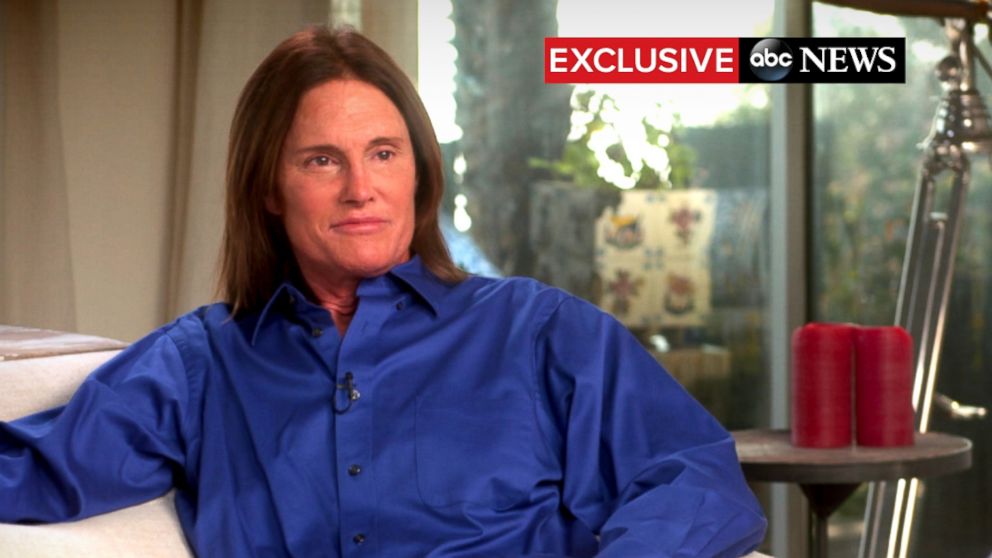
PHOTO: Bruce Jenner sat down for a far-ranging exclusive interview with ABC’s Diane Sawyer in a special edition of “20/20.”

There are two big stories involving transgender people in the news this week. The first one is Bruce Jenner's television interview with Diane Sawyer in which he comes out as a woman. Unless you have been living under a rock, you have at least heard about the interview if not seen it.

Here is just a snip of his comments:
“For all intents and purposes, I’m a woman,” Jenner told ABC’s Diane Sawyer in an exclusive interview that aired Friday in a special two-hour edition of ABC News’ “20/20.” 

“People look at me differently. They see you as this macho male, but my heart and my soul and everything that I do in life -- it is part of me,” Jenner, 65, said. “That female side is part of me. That’s who I am.”
CNN has proposed that "2015 may be remembered as the year the term "transgender" fully entered mainstream consciousness." Here is more evidence they site (correctly) that suggests America is having a transgender awakening:
In January, President Obama condemned the persecution of "people who are lesbian, gay, bisexual or transgender," becoming the first president to utter the word in a State of the Union address.

"Transparent," about an aging father who begins living as a woman, won two top awards at the Golden Globes, while transgender actress Laverne Cox of "Orange is the New Black" -- who made the cover of Time magazine last year -- was just cast in a new CBS drama

The May issue of Vogue has a photo spread with transgender model Andreja Pejic, who said on Instagram this week that she "was told by various people many times over that the chances of me ending up on these pages were slim to none." A transgender character had a recurring storyline on the just-wrapped final season of "Glee," while transgender activist and YouTube star Jazz Jennings will star in a reality show debuting on TLC this summer.

transgender model Andreja Pejic

The second big news story, which is a far second to the Bruce Jenner story, a (wo)man once considered the best athlete on the planet after he won the 1976 Olympic gold medal in the Decathlon, is that a trans man, Aydian Dowling, is the leading vote-getter to appear on the cover of Men's Health Magazine.


As USA Today notes, he is not assured of being on the cover simply by winning the reader's vote:
While Dowling is clearly in the lead with reader votes (he's ahead by more than 30,000) it doesn't necessarily mean his image will grace the cover.

Judges for the annual contest, now in its second year, select a winner from entries based on a number of criteria including fitness, professional success, healthy lifestyle and how much they give back to their community. The public votes make up 10% of the final ranking, according to the contest rules.
Still, it would be a huge step for transgender acceptance and equality if he were given the cover, and no matter what less welcoming readers of Men's Health might think, this would likely be one of the best selling issues of all time. That may be all it takes to get Aydian Dowling on the cover.

These two stories, plus the trans model in Vogue (even if her image reinforces the dominant image of female beauty, and does not represent the majority of trans women), the success of Transparent on Amazon Prime, and the success of transgender actress Laverne Cox of Orange is the New Black, all signify a transgender awakening in America.

It's time. 

For more, see CNN's America's Transgender Moment.

Wednesday, August 28, 2013

British Neo-Pro Soccer Players Much More Accepting of Gay Teammates


In Britain, researchers spoke to 22 young men (age 16-18) on the verge of becoming professional soccer players (footballers). What they found was that all the participants would openly accept one of their colleagues coming out. All of the participants in the study identified as heterosexual and come from the lower to upper working class families.

In the last study to look at this issue (2002), Professor Eric Anderson, of the University of Winchester (who is one of the three co-authors of the new research) found that gay male athletes were tolerated by teammates, "as long as they played the sport well." However, there were no findings of active "support."

This is good to see - British football has traditionally been pretty homophobic, although not quite as much so as U.S. football (not soccer).

This shift seems to speak to the more open and accepting perspectives of the millennial generation, young people who have grown up with gay men and lesbian women in their daily lives. Exposure to people who are "other" reduces the sense of otherness and they become "like me," which is the key to acceptance.

Full Citation:
R. Magrath, E. Anderson, S. Roberts. (2013, Jul 30). On the door-step of equality: Attitudes toward gay athletes among academy-level footballers. International Review for the Sociology of Sport, 48(4), 1-18. DOI: 10.1177/1012690213495747

You can read the whole paper at Academia.edu or at the Sage Publications site. For now, here is the abstract followed by a summary of the press release from Science Daily.
Abstract
In this semi-structured interview research, we investigate the attitudes of 22 academy level association football (soccer) players who are potentially on the verge of becoming professional athletes. We find that, as a result of these men belonging to a generation holding inclusive attitudes towards homosexuality, independent of whether they maintain contact with gay men, they are unanimously supportive of gay men coming out on their team. Thus, this research supports a growing body of literature suggesting that team sport culture is no longer a bastion of homophobia in the UK. Their support includes athletes being unconcerned with sharing rooms with gay players, changing with them in the locker rooms, or relating to them on a social and emotional level. The only apprehension they maintain is that having a gay teammate might somewhat alter homosocial banter, as they would not want to offend that individual.
* * * * *

Generational Shift in Attitudes Among Young Soccer Players Towards Gay Teammates


Aug. 27, 2013 — Young soccer players (footballers) on the verge of becoming professionals are now much more likely to be supportive of gay teammates than a decade ago, according to new research from sociologists at the universities of Kent and Winchester.

Conducted via interviews with 22 Premier League academy footballers aged 16-18, the research found that all the participants would openly accept one of their colleagues coming out.

The research, led by Dr Steven Roberts, of the University of Kent's School of Social Policy, Sociology and Social Research, and Professor Eric Anderson, of the University of Winchester's Faculty of Business, Law and Sport, made use of intermittent interviews over a four-month period between November 2012 and February 2013.

All the participants identified themselves as heterosexual in their interview and all said they were from a lower to upper working class background. The study results showed a marked difference in acceptance of gay teammates compared to the findings of the last such study, carried out a decade ago.

Dr Roberts said: 'The interview results were broadly consistent with other recent research on young British men of their age in that these men showed no overt animosity towards gay men.

'In fact, they were more than tolerant and showed an inclusive attitude toward the hypothetical situation of having a gay teammate, best friend or roommate reveal their sexuality. The results are clear: among the 22 future footballers we interviewed, all were unbothered by the issue of gays in sport.

'This indicated a marked shift in perception from the last study. Although there was some evidence then that attitudes were changing, there has been a generational shift over the last decade. Lads now are saying "we would openly support and accept one of our colleagues coming out." '

The last similar research into the attitudes of young sportsmen was carried out in 2002 by Professor Eric Anderson, of the University of Winchester, one of the three co-authors of the new research. His study found that gay male athletes were tolerated by teammates, 'as long as they played the sport well'. However, there were no findings of active 'support'.

Professor Anderson said: 'Recent comments by Robbie Rogers, the former Leeds United footballer who came out but then left the English game to return to play in the US, suggested he didn't know how easy it would have been to make the transition.

'However, our research does suggest that attitudes in the locker room among young British players would lay the foundation for a player to be able to come out.'

Thursday, May 30, 2013

'Boy or Girl?' Transgender (and Gender Queer) Children in the Schools

Via the AP and ABC News, this is an interesting story on the challenges facing public schools with more children identifying as the opposite sex or refusing to adopt either sexual identity/gender identity. Here is a little piece from the beginning:
From early on, we divide toys and activities by very distinct gender lines, with superheroes and trucks and muck on one side and princesses and dolls and all things frilly on the other. 
Many children land, enthusiastically, on the expected side. Others dabble in both "girl" and "boy" things. But what if your kid, even from an early age, mostly showed interest in doing opposite-gender things? More importantly, what if they wanted to BE the opposite gender — or a less-defined mix of both? And what if they wanted to test those limits in public places, like school? 
Would you let them?
My sense is that we should allow kids to be themselves, whatever and whoever that is - BUT, I also know that other kids are cruel and brutal, so if my boy child wanted to wear dresses to school I would be afraid for him because I know how he will be treated by his peers. I also know that no rules or laws are going to protect him from verbal and even physical harassment on the playground.

The way I remember it, the playground at recess (in a small Southern Oregon community) was only a few steps away from Lord of the Flies. While I would never want to squash a child's individuality, I would also not want them to go through the likely ridicule from their peers.

On the bright side:
Some experts predict that views on gender will evolve in much the same way they have for sexual orientation, since homosexuality was removed as a mental illness nearly four decades ago. Today, the gender spectrum includes those who are transgender, who see themselves as the opposite gender, and those who are gender variant, or gender nonconforming, whose gender is more "fluid." For kids, it means they identify part of themselves as boy and part as girl.
I've written here about gender fluidity on many occasions so it's good to see the mainstream press also talking about it. Some articles from The Masculine Heart on gender fluidity are listed below:

'Boy or Girl?' Gender a New Challenge for Schools


By MARTHA IRVINE AP National Writer
CHICAGO May 28, 2013 (AP)


From the time they are born, we put our boys in blue beanies and our girls in pink ones. It's a societal norm, an expectation even, that you just are what you are born — a boy or a girl.

From early on, we divide toys and activities by very distinct gender lines, with superheroes and trucks and muck on one side and princesses and dolls and all things frilly on the other.

Many children land, enthusiastically, on the expected side. Others dabble in both "girl" and "boy" things. But what if your kid, even from an early age, mostly showed interest in doing opposite-gender things? More importantly, what if they wanted to BE the opposite gender — or a less-defined mix of both? And what if they wanted to test those limits in public places, like school?

Would you let them?

It's not, of course, that pat of a process. Parents don't just decide to let their kids switch genders. But, whether parents are dragged through the process, or if they decide to work it through more openly, more kids are challenging the boundaries of traditional gender, and going public at younger ages.

And they are doing so with the guidance of a growing faction of medical experts who no longer see this as something to be fixed. Last year, the American Psychiatric Association removed "gender identity disorder" from its list of mental health ailments.

Some experts predict that views on gender will evolve in much the same way they have for sexual orientation, since homosexuality was removed as a mental illness nearly four decades ago. Today, the gender spectrum includes those who are transgender, who see themselves as the opposite gender, and those who are gender variant, or gender nonconforming, whose gender is more "fluid." For kids, it means they identify part of themselves as boy and part as girl.

"Now these kids . are beginning to have a voice . and I think that's what's been making things interesting and challenging — and difficult, sometimes — depending on the family, the kid, or the school," says Dr. Robert Garofalo, director of the Center for Gender, Sexuality and HIV Prevention at Lurie Children's Hospital of Chicago.

While the numbers are relatively small, it means that, increasingly, schools are having to figure out how to accommodate them, some more successfully than others.

The questions often start with the basics: Which bathroom do they use? Where do they change for gym class? What if teachers or students don't want to use the pronoun, "he" or "she," or a new name the student prefers?
Transgender at 11: 'I Want Boobs!' Watch Video
It can be difficult, and uncomfortable. In Colorado, for instance, the parents of a 6-year-old transgender girl are suing their school district for trying to make her use a separate bathroom.

The center at Lurie opened recently, in part, to meet the demand from parents seeking guidance for children who are questioning their gender identity and to provide support to older transgender youth who sometimes struggle more in adolescence, even facing a greater suicide risk, especially if they have no backing from family and others around them.

The center also serves as a resource for schools with transgender and gender variant students.

Increasingly, those students are making the transition as early as elementary school, if not before.

———

Ryan, a fourth-grader in suburban Chicago, is one of those kids.

Most people, upon seeing her big blue eyes, long lashes and flowing blond hair, would never know she's anything but a girl. But underneath, she is still physically a boy.

Doctors call that gender variant, though Ryan prefers to call herself a "tomgirl."

"I feel that I'm a girl in my heart," she says, "and a boy in my brain."

Her parents allowed her to be interviewed and also agreed to speak to The Associated Press on the condition that the family's last name, the name of the town where they live and the school Ryan attends not be used in the story.

Though the decision to publicly express publicly as a girl happened at the end of kindergarten, Ryan had slowly been becoming "she" at home for a long time, even when she still had a crew cut.

Six months after her second birthday, her parents say Ryan was drawn to all things pink and sparkly. Ryan, the boy, wore pajama pants on his head, pretending it was long hair, or acted out girl roles from movies.

"I'm wishing . for the one I love . to find me!" the preschooler would enthusiastically sing into the toilet, copying Snow White, who sings into the echoing wishing well in the animated Disney movie.

By kindergarten, Ryan would bolt through the door of the family's suburban Chicago home, leaving a trail of boy clothes up the stairway — then quickly changing into a skirt and matching T-shirt.

Ryan's parents, initially told that Ryan had gender identity disorder, tried to get their child more interested in traditional boy things. But Ryan preferred chasing butterflies instead of footballs. Her dad scheduled extra "father-son" time, thinking that might have an influence. But nothing changed.

"The next step was to eliminate all girl things — can't write about girl things, can't draw girl things, can't talk about girly things ... and that just didn't feel right," says Sabrina, Ryan's mom.

They decided to stop resisting and allowed Ryan to start taking small steps into the outside world, at a nearby park, for instance, where she wore her girl clothes.

For her kindergarten Halloween party, Ryan dressed as a princess and, shortly after, asked her parents to refer to her as "she," a request to which they agreed, though it took a few months to adjust.

Their first support came from a pediatrician who specialized in gender, as well as other parents with children like Ryan, many whom they met through an online listerv. They are, as they call themselves, "affirming parents."

"There's a realization that it's not a phase or something that's ending when the preschooler gets to kindergarten," says Kevin Gogin, the program manager for school health programs at the San Francisco Unified School District, which recently added a transgender category in student health surveys. The survey found that 1.6 percent of high school students and 1 percent of middle school students identified as transgender or gender variant. Elementary students weren't in the survey, but Gogin says the district has seen more young transgender and gender variant students, too.

Sixteen states and the District of Columbia have transgender rights laws, according to Michael Silverman, the executive director of the Transgender Legal Defense and Education Fund in New York City. He is representing the family of Coy Mathis, the 6-year-old transgender girl in Colorado.

But even in states that don't have laws, he says districts are often open to guidance.

"By and large, most educators want to do the right thing and want to know how to treat all of their children equally," Silverman says. But often, they don't know how.

In California, which has had protections for transgender people for some time, a new law requires schools to provide transgender and gender variant students with "equal and full access to programs and facilities," such as gender-neutral bathrooms, if need be, and private changing areas for gym and sports.

There can be resistance, of course — even in families and friends, as Ryan's parents discovered.

Neighbors in the Chicago suburb where the family lived when Ryan was born stopped asking about or acknowledging her when she started dressing in girl clothes. "It was as if she no longer existed," Sabrina recalls.

Early on, people in their own extended family also struggled with their decision to let Ryan live outwardly as a girl. Some said: "I think what you're doing is wrong" or "Ryan's too young to know."

Cousins made fun of her, too, and once shut her in a dryer to taunt her.

Sabrina and husband Chris sat their family members down to talk and, over time, they say they came to an understanding.

"Our commitment is that our children are in an accepting, loving environment — and if someone's not on board with that, then they're not going to be around," Chris says, calmly but firmly.

They also moved to a neighboring suburb, where some said a particular elementary school would be more open to Ryan.

They still fear a harsh reaction from people outside their community. But they say most people locally have been accepting.

And she notes how well the staff at Ryan's school has handled things. She remembers meeting with the principal and teachers at the end of Ryan's kindergarten year. She told them that Ryan would likely enter first grade as a girl, then came home to find that Ryan was ready to make the transition — right then.

"I don't want to do this anymore," Ryan told her parents, referring to what she now calls the "revolving door" of changing her appearance from boy at school to girl at home.

Her mom alerted the school. "You know how we spoke about, that it might happen next year?" she said. "Well, it's happening tomorrow."

They were ready, and allowed Sabrina to explain things to Ryan's classmates — that Ryan liked to dress in girl clothes and liked girl things.

One of Ryan's friends also stood up: "I want everyone to know this is Ryan's first day as a girl, and everyone better be nice."

One boy talked about how he'd once worn his sister's shirt when his own got wet. A girl said she'd worn her brother's boots. And then the kindergarteners moved on, Sabrina says.

Of course, how a school staff and a community react still varies widely from place to place. But overall, attitudes about differences in gender identity have been changing, even in the last decade, says Eli Erlick, a transgender student and graduating high school senior in Willits, Calif., a small town in the northern part of the state.

When Erlick began her transition from boy to girl at age 8, she says that even she didn't know what the word "transgender" meant. She just knew that she wanted to live life as a girl. "I thought I was the only person like this," she says.

School was difficult. Some teachers made fun of her in front of the class, she says. To avoid dealing with which bathroom to use, she would pretend to be sick, so she could go home and use the facilities there.

Now Erlick is the director of an organization called Trans Student Equality Resources, which provides schools with training and information about students like her. Erlick also has helped her school district and others in California develop transgender policies.

Some schools in other states are doing the same.

"There is definitely more awareness," says Kristyn Westphal, vice principal at Grant High School in Portland, Ore.

There, they've established a student support team to determine how well the school is meeting the needs of transgender and other students. Earlier this year, the school also created individual gender-neutral bathrooms that any student can use.

Bathrooms often become a focal point because, when children are young, the transition is often more "social," a change in clothing and hairstyle.

As some kids move into puberty, they might use hormone blockers and, eventually, start hormone therapy to help their bodies transform from male to female, or vice versa. But any kind of surgery, experts say, is still relatively rare, even in adolescence.

Ryan's parents will consider these options later. But for now, Ryan sees no reason to choose one gender over the other — "at least until I get married or something," she says. So she uses a separate bathroom at school, as the principal has arranged with her parents.

A separate bathroom was not, however, a workable solution for the parents of Coy Mathis, who are suing their school district in Fountain, Colo. Kathryn Mathis, Coy's mother, says it's about more than that.

"If it were just a toilet, then just having the gender-neutral option would be fine. But it's really about being accepted," Mathis says.

"What's happening now — they will call you a girl but you're not really a girl, so you don't get to act like one. And that's incredibly damaging."

The school district has declined to comment on an ongoing case.

Mathis says she's heard from several parents who've made the decision for their transgender children to go "stealth." In other words, they make the transition — from boy to girl or girl to boy — and then move, so no one knows.

"That's how they're doing it ... because there aren't laws to protect them," Mathis says.

Even in Ryan's case, the initial transition at school wasn't always smooth.

While her own younger classmates were accepting, older kids called her "gay" and a "fag." Early on, a few followed Ryan around on the playground. "Are you a boy or a girl?" they'd ask repeatedly.

Her parents had prepared her for this type of reaction as best they could. Ryan, who her parents say is a strong-willed, independent kid, was mostly just annoyed. Still, she was relieved when her principal quickly stepped in to enforce the school's anti-bullying policy.

One mother also recalls how, early on, a few other parents worried about their boys being around Ryan — that it might cause them to be confused about their own gender. But that talk eventually dissipated, she says.

Sabrina took it upon herself to speak about Ryan at school curriculum nights, to answer parents' questions. And now, the principal says, it as a non-issue. "Ryan is Ryan," she says.

It's not been as easy at other nearby elementary schools, where there's been more friction over the few other transgender students. Some administrators have come to Ryan's principal for advice — and she's already been in contact with her counterparts at the middle school Ryan will eventually attend.

No one expects that adolescence will be easy.

"The more challenging times are up ahead, and we're clear about that," Sabrina says.

But Scott Morrison, a transgender student at Grant High School in Oregon, says having support at home and at school, as he did, will make a big difference for kids like Ryan.

Morrison, a graduating senior, moved to Oregon from Virginia three years ago.

"Gender identity is probably the most important part of me," Morrison says. "It's the most important discovery I've made about myself."

He transitioned from female to male a year later and says support from his mom, his friends and his new school — and help from a counselor — likely prevented him from committing suicide.

According to a 2010 National Transgender Discrimination Survey, 41 percent of transgender people surveyed said they had attempted suicide. That figure rose to 51 percent for those who said they'd also been bullied, harassed, assaulted or expelled because they were transgender or gender nonconforming at school. The survey was a joint project of the National Center for Transgender Equality and the National Gay and Lesbian Task Force.

With more support and an ability to live more openly, however, some wonder if it will be better for Ryan and this up-and-coming group of transgender and gender variant kids.

"I'll be really curious to see what this next generation looks like," says Masen Davis, the executive director of the Transgender Law Center, a civil rights and advocacy organization based in San Francisco. "I'm hopeful."

Ryan is, too. "It's just made me feel more strong and confident," she says of the support she's gotten from her parents and her school.

People who know her say that's true. She is a bubbly kid, they note. She loves to draw, sing and write poetry, loves sports and running. On the school playground, she can be found in the middle of a group of girls, doing cartwheels and playing tag.

"Most people forgot that she was ever a boy," says one of her girlfriends, a fellow fourth-grader.

If her parents ever question their decision to let Ryan go public at school, they say they pull out her first-grade photo and compare it with the one from kindergarten, taken when Ryan was still hiding her girl self.

"There is a light and a twinkle in her eye that's unmistakable," Sabrina says of the first-grade photo. "And if nothing else, just looking at that picture, we're clear we made the right choice."

———

Watch a video on non-gender conforming kids: http://apne.ws/19jicJx

On the Internet:

————

~ Martha Irvine is an AP national writer. She can be reached at mirvine(at)ap.org or at http://twitter.com/irvineap

Thursday, January 24, 2013

Battling Homophobia in Professional Sports

In recent years (mostly the last two or three years) there has been an increasingly vocal movement within professional male sports to eradicate, or at the least confront, the pervasive homophobia that has long been a part of that world. We know things are beginning to change when hyper-masculine men such as Brendon Ayanbadejo of the Baltimore Ravens, Scott Fujita of the Cleveland Browns, and Chris Kluwe of the Minnesota Vikings (all are straight) become vocal and even "impassioned" spokesmen for same-sex marriage.

Even boxing has an openly gay fighter, featherweight Orlando Cruz.


But there has never, ever been a professional male athlete who has come out while still playing his (team) sport in the U.S. David Kopay (Redskins running back), Billy Bean (Dodgers and Padres outfielder), John Amaechi (NBA center-forward), and Wade Davis (Titans, Seahawks, and Redskins cornerback) are gay athletes who waited until they were well out of their sport to reveal their sexual identity.

The NHL (You Can Play), MLS, and MLB have taken some leadership in trying to create a more welcoming atmosphere for gay players to feel safe and not feel compelled to be closeted. The San Francisco Giants were followed by a handful of other baseball teams, as well as teams and players from other professional sports, in participating in Dan Savage's It Gets Better Project.

35 N.H.L. players, including Henrik Lundqvist of the Rangers, Corey Perry of the Anaheim Ducks, and Daniel Alfredsson of the Ottawa Senators have supported You Can Play, a campaign created and promoted by hockey’s Burke family to open doors for gay athletes to participate in sports. Brenden Burke died in a car accident in 2010 - he came out while serving as manager of his college hockey team - his brother Patrick Burke is a scout with the Philadelphia Flyers. Their father, Maple Leafs General Manager Brian Burke, marched in Toronto’s gay pride parade with Brendan, and again after Brendan died.

The You Can Play campaign . . .
. . . is intended to “make locker rooms safe for all athletes, rather than places of fear, slurs and bullying,” said Patrick Burke, a scout with the Philadelphia Flyers and a founder of the project. 
The message will be shown for the first time during the first intermission of NBC’s Sunday afternoon telecast of the Bruins-Rangers game [note: this is from 2012]. Thirty-five N.H.L. players, including award winners and All-Stars, have committed to take part in the project, Burke said. The You Can Play Web site is scheduled to go online Sunday. 
Several Major League Baseball teams made similar announcements last season, as did N.B.A. players after a series of incidents in which fellow N.B.A. players used antigay slurs. (LA Times)
Unfortunately, there is still a rainbow ceiling for gay male athletes. 
Just ask soccer player David Testo. When Testo, a decorated midfielder with the Montreal Impact of the second-tier North American Soccer League, came out on a Canadian TV show 13 months ago he said the initial reception was positive. But his contract had expired two weeks earlier and after his announcement the phone stopped ringing. 
Testo, 31, hasn't played a game since. 
"It seems like there is a lot more support these days. But for someone to come out to the public or just to their teammates, it takes a lot of just coming to terms with it yourself," Testo says. "Most of these athletes are younger and they haven't had their time to kind of explore and just come to that kind of self-awareness. 
"I would love for someone to be able to do that in their prime and really be a role model, an inspiration for others. When that one special [player] does it, it's just going to open the floodgates. But it's hard. When there's a lot of money on the line, when there's endorsements on the line, it's different. Why would anyone want to risk that?" (LA Times)
While change is happening, men like David Testo still suffer from the homophobia infecting professional sports. He was a high quality player - nothing about his performance before coming out would have led team to ignore his availability when his contract ended.

In England, Manchester United's heterosexual goalkeeper Anders Lindegaard (of the Premier League - English football's version of the NHL or MLB, sports with lower tier professional leagues) joined the campaign to kick homophobia out of football (that's soccer to my American readers).

IT WAS bold and unequivocal. ''Gay people need a hero. They need someone who dares to step forward and stand for their sexuality.''
He's not the only one. West Ham winger Matt Jarvis became the third heterosexual Premier League star to appear on the cover of Attitude (a gay magazine). Former English rugby union international Ben Cohen launched a foundation with the goal of bringing an end to homophobic bullying. In Australia, Wallabies flanker (rugby) David Pocock has vowed he won't marry his girlfriend until gay couples are afforded the same right.

Still, according to Caroline Fusco (University of Toronto), homophobic attitudes are still embedded in professional sports.
“Sport as a space has been one that has really been there for the production of a certain kind of hyper-masculinity. Particularly when you think of pro sports, the big ones: hockey, football, baseball. These all tie in to the rugged notion of masculinity, and these attitudes remain — that gay men aren’t masculine,” she says.
*****
“Homophobia is also tied in to social class, to race as well,” says Fusco. “Who gets this hyper proving ground for masculinity?”
According to Fusco, these anti-homophobia campaigns are important, but she feels they need to take "a more holistic approach."
“These campaigns are really important, [but] there’s something about the implementation of the plan. It starts very early for boys and girls, at school, and schools need to be involved. Municipal, provincial and federal governments need to get on board.
The same is true here in the U.S. If we want to change the nature of the culture, it starts with teaching our children that every human being has the right to love the person of their choice, whether that person is the opposite sex or the same sex is not relevant.

And this needs to be a part of our sports programs - with a zero tolerance policy for bullying or harassment of gay teammates, or even of other students in the school. Then the programs being created for athletes at the professional level need to be re-tooled for middle school, high school, and college athletes.

I played soccer in Seattle for a couple of seasons on a gay (well, GBT) men's team. There is nothing girlie or weak or contagious about those men. They were ferocious athletes and nice guys. As the token bi guy (most of the team was gay, with a couple of straight guys, as well), I was accepted without hesitation - all they cared was that I was a good passer and an efficient scorer.

Even though this was a "recreational" league, most of these guys had been stars of their high school teams and many of us had played college ball. The level of competition was at least equal to that of my NAIA-Division III school.

I don't know what it will take for the first man at the professional level to feel safe coming out while still playing. But I know that the efforts of You Can Play and the It Gets Better Project (among others) will be instrumental in creating that safe space.

Saturday, April 7, 2012

Rick Hanson - Taking in the Good: A Personal Reflection


Rick Hanson, author of Buddha's Brain: The Practical Neuroscience of Happiness, Love, and Wisdom and Just One Thing: Developing A Buddha Brain One Simple Practice at a Time, is working on a new book. He sent out an email today asking for personal experiences on a specific topic. Interestingly enough, it was something that has been "up" for me the last couple of months.

First the email.

Hello,

I have a favor to ask. I'm heading into writing my next book, which is about the practice of taking in the good, and related themes of defeating the negativity bias, taking charge of building structure in your brain, and coming home to your natural resting state of happiness, love, and peace. It would help me a lot to get examples of how the method of taking in the good has helped people such as yourself. I need these as soon as possible, ideally over this weekend and by Tuesday at the latest. 

A sentence or brief paragraph would be great. Maybe with an example. I may use what you write in the book, though never with your name, and it's fine to leave out or alter identifying details. 

As you probably know, the three basic steps of taking in the good are:
1.  Let a good fact become a good experience.
2.  Open to and savor this experience for 10-30 seconds in a row.
3.  Intend and sense that the experience is sinking into you, becoming a part of you.
You can use this method for the good facts around you each day - most of which are relatively small, such as coffee smells good, you finished a batch of emails, flowers are blooming, someone was warm to you, etc. Most positive experiences are fairly mild, and that's fine. But mild or intense, they normally flow through the brain like water through a sieve while negative experiences get caught every time (which helped our ancestors survive). That's why it's so important, several times a day or more, to turn toward a positive experience and take it into you. And since "neurons that fire together, wire together," you'll be weaving positive feelings, sensations, and thoughts into the fabric of your brain and your self.  

Then there is the 4th, optional step, in which you're aware of a strong positive experience connecting with some negative material - such as a longing for love, feelings of anxiety, or some pain from childhood - that is dim and in the background of your mind. You don't let yourself get sucked into the negative material but keep the positive material relatively intense and in the forefront of awareness. With repetition, the positive material will gradually associate to, infuse, soothe, and even gradually replace the negative material. For more on all four steps, see chapters 2 and 50 in my book, Just One Thing.

So I'd really appreciate it if you could send me a few words about your own experience of taking in the good, especially how this method has helped you in some way. Informal and relaxed is fine; you don't have to worry about your writing. I really appreciate any help you can offer me with this.

Warmly,
Rick    

I assume this went out to the people who subscribe to Just One Thing, his newsletter, so it's not a personal email. But I did send him a response . . . although it was more than just a sentence or a paragraph. As usual, I was a bit verbose.

Here is my response, which I think offers some insight into the process Dr. Hanson is talking about, and also suggests that it's an ongoing process.

Hi Rick,

This is timely - I have been working with these ideas with my therapy clients (sexual trauma survivors) - but the fact that I am working with clients at all is where my experience of this comes in.

I have been self-employed as a fitness coach/trainer for several years, but I had not really "let it in" that my clients all seem to "love" me, for lack of a better word (or maybe that is the correct word). I initially became a personal trainer because I did not feel "good enough" to be a psychotherapist. Three years ago, however, I went back to school, partly as a result of personal work to build more self-efficacy and acceptance.

As I have transitioned into counseling (recently completing a 9-month internship), I received a good deal of feedback from clients (as they completed therapy) and supervisors that I was effective and that my clients were deeply appreciative.

I work to take their experience as fact, and also have worked over the last couple of months to take that in as my experience: I am effective and appreciated. It's always been challenging for me to accept praise or compliments of any kind, so I tried to sit with the emotions of feeling valued and effective in what I do (I have never let that in as a trainer, either, so this impacted my whole work life).

Over the past several weeks, I have continually tried to embody this sense of being valued and to integrate that into my self-concept at the intellectual, emotional, and somatic levels. Being valued is something I have never really felt, which has produced both a "pleaser" self and a "hyper-critical" self that I have worked with therapy and in meditation practice over the years.

Doing this process has brought up the old wounds of having never been acknowledged or appreciated by my family of origin. I did not value myself very highly, so I did not seek work that reflected my skills and abilities  (despite already having one post-graduate degree), and consequently I was always dissatisfied and bored in my work life. With time in therapy, I left some bad jobs and moved into being self-employed, but I still failed to see myself as valuable in the same ways as did my clients.

Now, having tried to use some of the techniques I have learned from your work, as well as from Richard Davidson, Pema Chodron, Kristin Neff, Dan Siegel, and many other sources, I am beginning to embody and live within a much different sense of self, with far less need to please others and much less self-criticism. It feels like I am only at the beginning stages of transformation, but the more room I make for self-worth and self-compassion, the more I know that I am reparenting myself (a la Dan Siegel's Mindsight model) and changing the way my brain is wired.

Thanks for offering space to share this!

I look forward to the new book.

All best,
Bill 

Tuesday, February 21, 2012

Daily Om - Sitting with Feelings


This was the Daily Om from a couple of weeks back - I've been wanting to post it here because I think that learning to sit with our feelings (not stuff them down, not self-medicate them, not act them out in inappropriate ways) is something most of us - men and women - can be better at, especially when the feelings are challenging or we have little experience controlling our affect.

This piece talks about listening to our bodies and becoming more embodied can help us to know and accept our feelings more easily. Learning these skills, which are based around mindfulness, can help us increase our emotional intelligence.
As the Earth Allows the Rain: Sitting with Feelings
February 8, 2012

Taking the time now to sit with your feelings and acknowledge them will save you much distress down the road.

It can take great courage to really sit with our feelings, allowing ourselves to surrender to their powerful energies. All too often we set our feelings aside, thinking we will deal with them later. If we don’t deal with them, we end up storing them in our minds and bodies and this is when anxiety and other health issues can arise. Denying what our bodies want to feel can lead to trouble now or down the line, which is why being in the thick of our feelings, no matter how scary it seems, is really the best thing we can do for ourselves.

One of the reasons we tend to hide or push aside our feelings is that we live in a culture that has not traditionally supported emotional awareness. However, as the connection between mind and body--our emotions and our physical health-- becomes clearer, awareness of the importance of feeling our feelings has grown. There are many books, classes, workshops and retreats that can help us on our way to emotional intelligence. We can also trust in our own ability to process what comes up when it comes up. If sadness arises, we can notice its presence and welcome it, noting where in our bodies we feel it, and allowing ourselves to express it through tears or a quiet turning inward.

When we simply allow ourselves to fully feel our feelings as they come, we tend to let them go easily. This is all we are required to do; our feelings simply want to be felt. We often complicate the situation by applying mental energy in the form of analysis, when all we really need is to allow, as the earth allows the rain to fall upon it. As the rain falls, the earth responds in a multitude of ways, sometimes emptying out to form a great canyon, sometimes soaking it up to nourish an infinitude of plants. In the same way, the deeper purpose of our feelings is to transform the terrain of our inner world, sometimes creating space for more feelings to flow, sometimes providing sustenance for growth. All we need to do is allow the process by relaxing, opening, and receiving the bounty of our emotions.

Discuss this article and share your opinion

Thursday, November 11, 2010

Graham Phoenix - Personal Masculinity

Nice post from Graham Phoenix at the Masculine eXperience on how men can develop their own personal sense of masculinity. His approach is slightly different than mine, but we both agree that authenticity and presence are crucial to a mature sense of masculine self.

Check out his site for a free ebook download on Male Energy.

Personal Masculinity

Apparently masculinity is out-dated and in decline. The world has moved on from the old ‘ideal’ of a ‘tough’ masculine man. We are told that in today’s modern society that is no longer appropriate.

Equally the concept of the ‘new man’ is out-dated and in decline. The world no longer wants the house husband who prepares lunch for his power wife. This is condemned as just another type of power structure and is no longer appropriate.

We now have men being strong but worshipping women, men apologising, in their power, for the oppression of women. The culture of apology for men’s past mistakes is over-taking the Men’s Movement.

‘Let’s be hard and gentle! Perhaps women will love us now!’

Surely just another archetypal approach to masculinity, another idea for us all to conform to.

The greater power is in a personal approach to masculinity and male behaviour, what I call ‘Personal Masculinity‘. This rejects the single approach to being a man in favour of one that gels with our own personality and energy. This is a new approach for me, one that I am just beginning to explore. It feels more right than much of what I have said in the past but, importantly, it incorporates what I have already talked about.

‘That seems fine’, you might say, ‘but that means you can be anything, what’s masculine about that?’

OK, fair point, but there is a crucial element missing, authenticity. Being masculine, for me, is about being sure and certain in yourself and of yourself, and then showing that to the world.

This means Awareness, Acceptance and Authenticity.

The first step is awareness. You need to know who you are, what you are. What is your personality and what are your core beliefs. How has your upbringing affected you and developed you? What is your work, how are your relationships? What are you passionate about and what affects you deeply? Are an ‘away from’ or a ‘towards’ type of man, what motivates you. How are you around women, what is your sexuality? You need to be something and you need to be aware of what that is.

Knowing what you believe you need to know what you are prepared to live and die for. This requires the ability to make a stand on what you believe. What’s important, today, is that this can be anything from macho man to new age man. But for this you need the second step, acceptance. You have to like who you are and want to be that person, that type of man. It is important that you can support your position and fully understand it, and it must be one that is in line with your life and your passions. The acceptance is critical, this requires you to examine your life and like it.

The third step is authenticity. You need to live the life you identify openly and honestly. This tests the depth of your awareness and acceptance because it relies on you shaping your life to your ideas. It requires you to examine your life, again, in a different way. How do you act, how do you behave? Do you, for example, profess a support for the equality of women and oppress them in your sexuality, do you profess a belief in the power and strength of men and fear your sexuality? How do you live your life? What is your truth?

I have talked a lot, here, about the power of masculine presence and certainty. The concept of ‘Personal Masculinity‘ is absolutely based on this. There is a sense of focus and direction in the way a man who knows himself operates. This sense comes from the strength of his presence and certainty. This sureness of foot is what women see in men and love. It is this knowledge of themselves and their, subsequent, ability to know and understand their woman, that creates the power of a man. This power is not a macho oppressive power but a quiet, knowing power. It is the power that lights up a room when a man enters it. He doesn’t need to do anything he just is. If this power is not laced, however, with compassion and love, it descends into arrogance and becomes negative. The man’s awareness disappears and his authenticity becomes questionable.

On ‘Male eXperience’ I talk a lot about a particular style of masculinity, that is my masculinity, the model based on my life. I know it works because I live it. I offer it to men because I see it as a powerful and valid way to live and be a man. It is not, however, for all, and I don’t propose it as such. Try it on, see if it fits. Perhaps change it here or there, fit it to your life. But don’t just adopt it as THE WAY, it isn’t. I have met many men who I regard as masculine men and their lives are very different from mine. They know who they are and what they want, they have awareness, acceptance and authenticity.

Be bold in your life but make sure it is an examined life, one that you stand by and are willing to defend. But don’t put it forward as the only answer, it is just a way, a direction. In helping men to become more masculine in their lives my aim is develop their awareness, test their acceptance and help them find their authenticity.

Where are you in this?

Image by drewkam


Friday, June 25, 2010

Elisha Goldstein, Ph.D. - Forgiveness Means Giving Up All Hope for a Better Past

http://esperermieux.files.wordpress.com/2009/10/handswhiteholding-forgiveness-stone.jpg

My father never wanted kids. He was 36 when he married my mother (who was 32) and was nearly 40 when I was born. My mother really wanted to try again as a mother (she had a son at 19 in her first marriage, then had to give him up for adoption when she divorced her abusive husband - her twin brother adopted the boy), but she was a smoker.

My father said he would only have kids if she quit smoking, probably thinking she could not do it. But she did, and never smoked again.

Growing up, it was pretty clear that my father did not really enjoy kids and didn't really have time for us (my mother insisted on adopting a little girl after I was born - she really wanted a daughter). He worked six days a week as a mail carrier, with an hour-long drive each way to and from work. On Sundays, his literal "day of rest," that's exactly what he wanted to do - rest. And who could blame him, he was up at 5 am everyday and didn't get home at night until 5:30.

Due to a series of heart attacks, he was forced to retire at age 50, so he moved the family to Southern Oregon. For the first time in my life, he had time for me - and seemed to actually want to get to know me. We never played ball, and he never went to my soccer games, but we played horseshoes almost daily, and we worked together in the garden and taking care of the animals.

Then, when I was 13, he had another heart attack - he was taken to the hospital late that night. By the next morning, he seemed stable, but they held him just in case. Then another heart attack, in the hospital, and he died. I was notified by a family friend on my way home from school.

Let's just say, to put it plainly, I was pissed off at the world, and at him. How dare he die when I finally felt like I had a father. So I acted out, got high, crawled into a bottle, and raged for the next five or so years.

* * * * *

Elisha Goldstein, Ph.D. recently posted an article at Huffington Post called, Forgiveness Means Giving Up All Hope for a Better Past. The title alone is one of the truest things ever said. Too bad no one said that to me when I was young. It took another decade to figure that out - in therapy and on the cushion. Oh, yeah, he got that quote from Lily Tomlin.

When we refuse to forgive, it's as if we're holding onto the past and saying "see past, I'm not going to let you have the pleasure of me letting go of you." Meanwhile, the past is the past, it's not happening right now in the present moment -- or is it?

We keep the past alive by holding tightly to it, so perhaps it is occurring in this present moment. Now, I'm not suggesting we forget the past for the past is our teacher, however, I am suggesting that we loosen our grip on it a bit.

In a past post I asked you to consider this experiment:

"Think of someone in your life right now (maybe not the most extreme person) who you are absolutely holding a grudge against right now. There is no way you are willing to forgive this person right now for their actions. Picture that person, and hold onto that unwillingness to forgive. Now, just observe what emotions are there. Anger, resentment, sadness? Also notice how you are holding your body right now, is it tense anywhere or feeling heavy? Now bring awareness to your thoughts; are they hateful and spiteful thoughts?"
This is what lives inside of you by holding so tightly, so the question is always: who is suffering?
***
~ Adapted from a publication on Mindfulness and Psychotherapy at Psychcentral.com. Elisha Goldstein, Ph.D. is Co-author of A Mindfulness-Based Stress Reduction Workbook. You may also find him at www.drsgoldstein.com.
There's more at Huffington Post or at PsychCentral.

A lot of men I know I have not yet been able to forgive their fathers (or others) for things that happened to them in their childhood. Certainly, this is not just a men's issue, and I don't mean to imply that it is - this is simply a blog for men (and the people who love them), so I am addressing this topic to men.

One buddy has a father who is bi-polar and was not yet on meds for it. He was erratic and sometimes gone for days at a time before his mother divorced him. They have a relationship now, but there is still a lack of forgiveness. I understand how he feels, but I also think he might find some peace if he were able to forgive.

Another guy I knew came out to his parents as a teenager and was kicked out of the house - a common story in the GLBT community. He has no contact with his family, but he also does not hold the anger and hurt anymore. As long as he held onto the pain and did not forgive them, he was tied to them psychologically in a way that he felt as unhealthy. He no longer wishes for different parents, although he misses and mourns the loss of his family.

Dr. Goldstein goes on to say:

There is an understanding at some point that we are all human beings capable of all kinds of atrocities, depending on our genetic makeup, the environment we grew up in and the events that have surrounded and influenced our lives.

This is not a statement meant to excuse or condone an aggressive or violent action committed, however, it is a statement meant to help cultivate understanding and compassion in order for the ones who are suffering to come to terms with the way things are, and slowly let go of allowing the atrocity of the past to still be occurring in this present moment.

We can begin to forgive, even though we will never forget.

This is the crux of it - developing compassion both for the person we have not forgiven and for ourselves is so important. In realizing and accepting that the past can never be any other way than it was (as obvious as that sounds), we can begin to feel compassion for our loss, for our pain, for the past we wanted but never had.

As much as we can know intellectually that the past is done and immutable, accepting that at an emotional level can be challenging. Some part of us was wounded and is living in that past as though it is still happening - part of us is stuck and the only to get unstuck is to release the past.

One last quote:

Sincere forgiveness isn't colored with expectations that the other person apologize or change. Don't worry whether or not they finally understand you. Love them and release them. Life feeds back truth to people in its own way and time.~ Sara Paddison

Thursday, July 2, 2009

The Revolutionary Man - The Big Paradox in Personal Development

http://revolutionaryman.com/wp-content/uploads/2009/07/picture-3.png

This is a cool article from Jayson at the Revolutionary Man that he posted a couple of days ago. Give it a read and answer the question, either privately for yourself or in the comments at his site.

Here is the crux of the post:

Many people like me (growth junkies) will turn to religion, self help, therapy, coaching and personal development to improve their lives. Why? Because more often than not these fields promise to alleviate your pain and fix your problem. Sometimes it actually works and if it’s good, it might be very beneficial. Sometimes these approaches just feel good in the face of not being able to feel much at all.

But mostly these approaches play into your false belief that there is something wrong with you. For example, if you and your coach or therapist believe your story that you are broken, both of you will try to fix you and eventually you’ll both end up frustrated at the lack of progress at the impossible task of “fixing” you.

The Revolutionary Way: You are okay as you are (i.e. there is nothing fundamentally wrong with you)

This is the big paradox in personal development: SELF ACCEPTANCE.

If you start out with the view as in Buddhism (which is a very ancient way) that you are fundamentally good and worthy of love and respect at your core right now, then the work with a healer, coach or teacher can be radically different.

Now personal development begins to mean growth toward self-acceptance. Or said another way, self-knowledge becomes self-love. And, as Krishnamurti reminds us “Self-knowledge is the cornerstone of freedom.”

We naturally begin to grow and evolve the more we are able to tolerate and embrace ourselves.

The more we practice self love, the more we are willing to let go of the mask and grow in order to become who we really are.

If you can turn your compass away from the view that you are bad or wrong and instead point it toward your own inherent goodness, you might be surprised at what is possible.

So this week's question for those of us in the Revolutionary Men group at Facebook is this:
where do you stand on your level of self acceptance?

Good question.

I'd say that these days it is better than it ever has been. I am more self aware, more self directed, and more self accepting than ever before - AND I know it can be better.

I've been working with perfectionist and pusher parts for years now, trying to create a more balanced relationship, and it has worked. I make more time to relax, and I don't feel guilty about it. I make mistakes and learn from them rather than beat myself up over them. I take risks have never taken in the past.

All that is good, and there is still a ways to go. I'm not as strong as I want to be, or as smart, or as educated, or as [fill in the blank]. So I have work to do in this realm, which may take me back into therapy. I firmly believe that counseling students should be doing private therapy during school, and after for that matter. So that may be my next step, finding someone new to work with who push me deeper and more fully into my own self acceptance.