Showing posts with label cheating. Show all posts

Tuesday, April 29, 2014

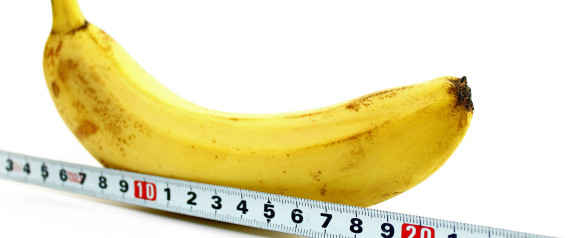
The Larger Your Penis, The More Likely Your Wife Will Cheat (in Kenya)

Irony, that. You can read the abstract for the study below this piece from the Huffington Post (the whole study is open access on PLoS ONE). The good news for American men is that this study involved women married to fishermen along Lake Victoria in Kisumu County, Kenya, so there is likely some cultural and values-based issues that Huffington Post chose not to mention in their provocative title.

See what the HP article does not mention until near the bottom is that penis size ranked third on the list of reasons they women had affairs - domestic violence and being denied a preferred sex position were one and two, respectively.

The Larger Your Penis, The More Likely Your Wife Will Cheat Says New Study

The Huffington Post | by Taryn Hillin
Posted: 04/23/2014


Men often view having a large member as a symbol of strength and sexual prowess. But it turns out, when it comes to keeping a woman satisfied, bigger may not be better.

Contrary to popular belief, a new study out of Kenya found that husbands with larger penises were more likely to be cheated on by their wives (shocking, we know).

For the study -- published this month in PLOS One -- researchers interviewed 545 married couples in Kenya in order to better understand their relationship habits and, more specifically, to identify factors which contributed to women having extramarital affairs.

Researchers asked both partners to self-report the male's erect penis size (they had a 15 inch ruler on hand for reference). Then, if there were differences between the estimates (which there were), they either took the average of the two or went with the estimate from the partner who was less likely to fib.

What they found was rather shocking:

"Every one inch longer penis increased the likelihood of women being involved in extra-marital partnership by almost one-and-half times," the researchers wrote. "Women associated large penises with pain and discomfort during sex which precludes the enjoyment and sexual satisfaction that women are supposed to feel."

In fact, one woman interviewed for the study told the researchers the following: "Some penis may be large yet my vagina is small, when he tries to insert it inside, it hurts so much that I will have to look for another man who has a smaller one [penis] and can do it in a way I can enjoy."

According to the study, 6.2 percent of the 545 females had affairs during the six-month study. Other factors that increased the likelihood of women straying outside the marriage included domestic violence, being denied sex or denied preferred sexual position, being under age of 25 and a lack of sexual satisfaction.

Researchers focused on female infidelity specifically because of the prevalence and spread of HIV among women in the region. Researchers felt if they could identify reasons for unprotected sex, they might better prevent it.
* * * * *

Here is the full abstract - follow the title link to see the whole article (open access).

Full Citation: 
Kwena Z, Mwanzo I, Shisanya C, Camlin C, Turan J, et al. (2014, Apr 18). Predictors of Extra-Marital Partnerships among Women Married to Fishermen along Lake Victoria in Kisumu County, Kenya. PLoS ONE; 9(4): e95298. doi: 10.1371/journal.pone.0095298

Predictors of Extra-Marital Partnerships among Women Married to Fishermen along Lake Victoria in Kisumu County, Kenya

Zachary Kwena, Isaac Mwanzo, Chris Shisanya, Carol Camlin, Janet Turan, Lilian Achiro, Elizabeth Bukusi

Abstract

Background

The vulnerability of women to HIV infection makes establishing predictors of women's involvement in extra-marital partnerships critical. We investigated the predictors of extra-marital partnerships among women married to fishermen.
 

Methods

The current analyses are part of a mixed methods cross-sectional survey of 1090 gender-matched interviews with 545 couples and 12 focus group discussions (FGDs) with 59 couples. Using a proportional to size simple random sample of fishermen as our index participants, we asked them to enrol in the study with their spouses. The consenting couples were interviewed simultaneously in separate private rooms. In addition to socio-economic and demographic data, we collected information on sexual behaviour including extra-marital sexual partnerships. We analysed these data using descriptive statistics and multivariate logistic regression. For FGDs, couples willing to participate were invited, consented and separated for simultaneous FGDs by gender-matched moderators. The resultant audiofiles were transcribed verbatim and translated into English for coding and thematic content analysis using NVivo 9.
 

Results

The prevalence of extra-marital partnerships among women was 6.2% within a reference time of six months. Factors that were independently associated with increased likelihood of extra-marital partnerships were domestic violence (aOR, 1.45; 95% CI 1.09–1.92), women reporting being denied a preferred sex position (aOR, 3.34; 95% CI 1.26–8.84) and spouse longer erect penis (aOR, 1.34; 95% CI 1.00–1.78). Conversely, women's age – more than 24years (aOR, 0.33; 95% CI 0.14–0.78) and women's increased sexual satisfaction (aOR, 0.92; 95% CI 0.87–0.96) were associated with reduced likelihood of extra-marital partnerships.
 
Conclusion

Domestic violence, denial of a preferred sex positions, longer erect penis, younger age and increased sexual satisfaction were the main predictors of women's involvement in extra-marital partnerships. Integration of sex education, counselling and life skills training in couple HIV prevention programs might help in risk reduction.

Sunday, September 22, 2013

Men Who Cheat - Does Biology Override Psychology?


A recent study in the Personality and Social Psychology Bulletin suggests that men may actually cheat in relationships more than women, but they attribute it to a more powerful biological sex impulse and not to an inability to keep their zipper zipped.

Part of this paper (Study 1) featured 218 Mechanical Turk (an Amazon service that pays per task) users (70 men, 148 women) who were 32.3 years old on average (SD= 11.6, range=18-70). According to this study, men were slightly more likely than women to act on self-described inappropriate attractions.


BUT, part of this paper (Study 2) was conducted with college-aged subjects (326 men, 274 women) with a median age of 18.6 (SD-0.84) - the time in a man's life when testosterone is high and common sense is low, not to mention the peer pressure to hook-up and the greater percentage of females willing to settle for a hook-up. It was this portion of the study that determined men have greater sexual impulses and not a lack of willpower.

Despite the paper under discussion being based on two different studies, it seems that any attempt to expand these results to incorporate men in general is short-sighted and reductionist. If they conducted the same studies with men and women in the 28-32 cohort, as well as a 38-42, 48-52, and 58-62 cohort, for example, they could then begin to see an "average" disposition for men across their sexually active years.

Personally, I might attribute cheating college guys less to the power of their sex drive and more to the prevalent idea that college is where you sow your wild oats, don't get involved in long-term relationships, and party as much as possible.

Anyway . . . summary below from Science 2.0 and then the abstract to the article. The whole article is freely available online - here.

Do Men Cheat More Than Women? If So, It May Be Biological, Says Psychologist


By News Staff | September 22nd 2013
A recently published paper strongly suggests men succumb to sexual temptations more than women — for example, cheating on a partner or stealing a girl from another guy — because they experience strong sexual impulses, not because they have weak self-control. At least when it comes to those of college age.

Previous papers have said that men are more likely than women to pursue romantic partners that are "off limits" but there has been no real theoretical explanation for this sex difference.

One possible explanation for this effect is that men experience stronger sexual impulses than women do. A second possibility is that women have better self-control than men. The current paper in Personality and Social Psychology Bulletin supports the former explanation and provide new insight into humans' evolutionary origins.

"Overall, these studies suggest that men are more likely to give in to sexual temptations because they tend to have stronger sexual impulse strength than women do," says lead author Natasha Tidwell, a doctoral student in the Department of Psychology at Texas A&M University. "But when people exercise self-control in a given situation, this sex difference in behavior is greatly reduced. It makes sense that self-control, which has relatively recent evolutionary origins compared to sexual impulses, would work similarly — and as effectively — for both men and women."

Results were determined by two separate experiments: the first, to determine how the sexes reacted to real-life sexual temptations in their past and, the second, to pick apart sexual impulses and self-control using a rapid-fire reaction time task.

In order to test their first hypothesis, researchers recruited 218 (70 male, 148 female) study participants, who were first asked to recall and describe an attraction to an unavailable or incompatible member of the opposite sex. They then answered survey questions designed to measure strength of sexual impulse, attempts to intentionally control the sexual impulse, and resultant behaviors.

"When men reflected on their past sexual behavior, they reported experiencing relatively stronger impulses and acting on those impulses more than women did," says Tidwell. However, men and women did not differ in the extent to which they exerted self-control. "When men and women said they actually did exert self-control in sexual situations, impulse strength didn't predict how much either sex would actually engage in 'off-limits' sex."

"Men have plenty of self-control — just as much as women," says senior author Paul W. Eastwick. "However, if men fail to use self-control, their sexual impulses can be quite strong. This is often the situation when cheating occurs."

In order to measure the strength of sexual impulse relative to the strength of impulse control, the researchers recruited 600 undergraduate students (326 men, 274 women) to participate in a "Partner Selection Game."

Participants were very briefly shown images of opposite-sex individuals; the images were tagged either "good for you" or "bad for you." Participants were asked to accept or reject potential partners based on the computer-generated "good for you" or "bad for you" prompt. While they were shown photographs of both desirable and undesirable individuals, participants were instructed to make acceptance and rejection choices based on the computer-generated tags.

In some trials, participants were asked to accept desirable and reject undesirable individuals; in other trials, participants were asked to go against their inclinations by rejecting desirable individuals and accepting undesirable individuals.

Men experienced a much stronger impulse to "accept" the desirable rather than the undesirable partners, and this impulse partially explained why men performed worse on the task than women did. However, this same procedure estimates people's ability to exert control over their responses, and men did not demonstrate a poorer ability to control their responses relative to women.
Full Citation: 
Tidwell ND, and Eastwick PW. (2013, Aug 22). Sex Differences in Succumbing to Sexual Temptations A Function of Impulse or Control? Personality and Social Psychology Bulletin;
XX(X), 1–14. doi: 10.1177/0146167213499614

Abstract

Men succumb to sexual temptations (e.g., infidelity, mate poaching) more than women. Explanations for this effect vary; some researchers propose that men and women differ in sexual impulse strength, whereas others posit a difference in sexual self-control. These studies are the first to test such underlying mechanisms. In Study 1, participants reported on their impulses and intentional control exertion when they encountered a real-life tempting but forbidden potential partner. Study 2 required participants to perform a reaction-time task in which they accepted/rejected potential partners, and we used process dissociation to separate the effects of impulse and control. In both studies, men succumbed to the sexual temptations more than women, and this sex difference emerged because men experienced stronger impulses, not because they exerted less intentional control. Implications for the integration of evolutionary and self-regulatory perspectives on sex differences are discussed.

Tuesday, April 23, 2013

New Research - Men ARE More Romantic


A new study reveals that 48% of men admit to falling in love at first time, while only 28% of women admit to having a "love at first sight" experience. On the downside, 33 per cent of men and 19 per cent of women admit to having sex outside of their current relationship. Men are more romantic, but they are also more likely to spread that love around.

The study data is preliminary from an ongoing survey - and the current data is published in The Normal Bar: The Surprising Secrets of Happy Couples and What They Reveal About Creating a New Normal in Your Relationship, by Chrisanna Northrupp, co-authored by academics Professor Pepper Schwartz (sociologist at the University of Washington), and Professor James Schwartz, Director of the Centre for Social Science Research at George Mason University in Virginia.

Men ARE More Romantic

I knew that!

Published on April 20, 2013 by Nancy Kalish, Ph.D. in Sticky Bonds

A survey of 100,000 people worldwide, published in The Normal Bar (Crown Publishing Group, 2013), reveals that 48% of the male participants said they had fallen in love "at first sight." Only 28% of the women said that they had a love at first sight experience.

This survey result indicating that the men were more romantic than the women is consistent with my rekindled romance research. The first post I ever wrote for this blog -- Are Men Romantic? -- discussed my finding that the men who had tried lost love reunions were significantly more likely than the women to report that they "never got over" their first loves.

Yes, men are romantic. And many women are not. The stereotypes of unromantic men with romantic female partners are harmful to adult relationships, and can lead to attempts at gender typing of young boys - to everyone's detriment.
Here is a more in-depth article from The Daily Mail Online.

Men ARE more romantic: 48% fall in love at first sight compared with 28% of women

  • Around 10,000 people took part in online survey about love and relationships in the 21st century
  • While romantic, men are more unfaithful gender, with 33% admitting to having had sex outside a relationship
By RACHEL REILLY
PUBLISHED: 22 April 2013

They may forget anniversaries and buy last minute Valentine’s gifts from petrol stations, but men are, apparently, more romantic than women.

A survey found that while 48 per cent cent have fallen in love at first sight, a mere 28 per cent of women could claim the same.

The research, published in new book The Normal Bar, questioned 10,000 people worldwide about their attitude towards love and relationships.

Dispelling the myth: A new book has found that men are more romantic than women

The Normal Bar is the brainchild of entrepreneur Chrisanna Northrupp and is co-authored by academics Professor Pepper Schwartz, sociologist at the University of Washington, and Professor James Schwartz, Director of the Centre for Social Science Research at George Mason University in Virginia.

Using data collected from their online survey, the book aims to dispel the myths surrounding sexuality and relationships, shed light on what a real 21st century relationship entails and help make your own relationship more satisfying.

The survey, which is ongoing, contains 1,300 questions and touches on everything from sex to the most attractive physical features to personality traits a prospective partner looks for, the Washington Post reported.

Other interesting figures from the survey included the finding that only 74 per cent of people are happy in their relationship and 66 per cent of those questioned believe their partner is their soulmate.

The survey also found that more men than women had strayed in their relationships

But perhaps the most interesting - albeit worrying - discovery was that having sex without a emotional ties outside a relationship was not technically regarded as an affair by many.

While only 15 per cent of those asked admitted to having had an affair, the number confessing to being unfaithful shot up dramatically when the question was phrased as ‘sex outside your current relationship’.

A third of men and 19 per cent of women then said they had indulged in extra-marital relations.

The books goes on to explain that for many, the secret to a happy relationship includes having regular date nights, using pet names, holding hands, passionate kissing, back rubs and frequently saying 'I love you'.

But the most important factor, that almost everyone surveyed agreed on, was communication.

In unhappy relationships, a lack of communication was cited as the number one reason for it breaking down.

. . . BUT ANOTHER STUDY SAYS ROMANCE IS DEAD

We are now twice as likely to choose money over love, according to a new study.

The research, carried out by innovative charity and gambling website jaro.com, has found that twice as many Britons would opt for £650 million (or $1bn U.S., where the research was carried out) over finding their true love, with men particularly being the most money-orientated.

And materialism peaks around middle age, with 40 per cent of those aged between 35 and 44 years old saying cash is more important than love or good health.

The survey of 2,000 adults found that women are more likely to choose love than men, but only by two per cent - 13 per cent of men are more likely to choose money.

The younger generation were found to be the most romantically inclined, with 18 to 24-year-olds placing equal importance on love and money at around 35 per cent each.

Saturday, November 24, 2012

Scientific American - Why Men Like Petraeus Risk It All to Cheat

The idea that men cheat because of an evolutionary drive to reproduce is a pile of shite created to avoid dealing with the real issues - self-absorption, lust, lack of empathy, relationship issues, lack of integrity, loneliness, and on and on. But it is NOT about reproduction.

Why Men Like Petraeus Risk It All to Cheat

The risk of destroying a career is nothing compared with the evolutionary drive to reproduce
a
 
Image: U.S. Army

An admitted affair has crumbled the career of CIA Director David Petraeus, prompting the evergreen question: Why do people with so much to lose risk it all for sex?

In the last few years alone, several public figures, from former Rep. Anthony Weiner to action star and former California Gov. Arnold Schwarzenegger, have admitted to straying from their marital vows. In Petraeus' case, a miscalculation of risk may have contributed to the decision to cheat, psychologists say.

"People tend to underestimate how quickly small risks mount up" because of repeated exposure to those risks, said Baruch Fischhoff, a professor of social and decision science at Carnegie Mellon University. "You do something once and you get away with it — certain things you're probably going to get away with — but you keep doing them often enough, eventually the risk gets pretty high."

Even so, men can become blind to risk at the sight of an attractive woman, and from an evolutionary perspective, cheating can be a positive mechanism for ensuring gene survival, regardless of risk, scientists say.
 
Military affairs
Petraeus, a retired four-star general, resigned his post as CIA Director on Friday (Nov. 9), admitting to an affair with Paula Broadwell, his biographer. Twenty years the general's junior, Broadwell had close access to Petraeus for several years, but their affair reportedly did not start until after he left the military in 2011.

A West Point graduate, Broadwell is a lieutenant colonel in the U.S. Army Reserves. She reportedly bonded with Petraeus over physical activity, going on runs with him and remaining a close confidant after Petraeus' military career ended.

That time together likely contributed to the intimacy between Petraeus and Broadwell, said Frank Farley, a Temple University psychologist, just as many people begin affairs after getting close in the workplace.

Petraeus is not the first high-ranking military man to have an affair, said Farley, who is also a past president of the American Psychological Association. Famously gruff World War II general George Patton had an affair with his wife's step-niece. General Douglas MacArthur had a mistress named Isabel Rosario Cooper, whom he met in the Philippines.

And General Dwight D. Eisenhower, later president, may have had an affair with his World War II chauffer, Kay Summersby, according to the woman's memoirs and some suggestive letters left behind after both parties died.

"The nation should not be surprised at Petraeus having an affair," Farley told LiveScience.
Leaders like Petraeus tend to be bold risk-takers, Farley said, a personality trait that is very helpful when leading soldiers into battle. The same trait may make these leaders more likely to take risks in their personal lives, as well. [10 Easy Paths to Self Destruction]

Broadwell may have some of the same risk-taking traits as the former director. In a January interview with The Charlotte Observer, Broadwell, who is also married, called herself and her husband "adventure junkies."
 
Risk versus reward
Still, Petraeus' 38-year marriage and his career were at stake in his decision to pursue an affair. Extramarital liaisons are especially risky for CIA employees with access to classified information, because an affair can leave the person open to blackmail.
There are also concerns that Broadwell could have gotten classified information from Petraeus. For example, in a speech in Denver in October, Broadwell brought up details about the U.S. Consulate attack in Benghazi that may not have been public knowledge, according to The Daily Beast.

With risks like that on the line, could an extramarital affair be worth it? As it turns out, men may become blind to risk when an attractive woman enters the picture. One 2008 study found that men who played blackjack after seeing beautiful female faces took more risks than men who played the game after seeing unattractive faces.

This was true if the men were highly motivated in seeking new sexual partners. The blackjack risks seemed calculated to impress potential mates, study researcher Michael Baker, now a professor at Eastern Carolina University, told LiveScience. [The Sex Quiz: Myths, Taboos & Bizarre Facts]

More germane to high-profile affairs, Baker said, the risk of losing one's career or reputation is nothing compared with the evolutionary drive to reproduce. In that sense, while embarking on an affair may seem dumb, it actually shows something called "mating intelligence."

"These individuals have these very high-status, high-power positions, and the whole idea behind why people might be motivated to get these positions is because it gives them better access to resources that could be used to increase their reproductive success and attract more mates," Baker said.

Until the last few decades, extramarital affairs wouldn't have put a crimp in the careers of high-profile men, Baker said. It's only recently that men have been subject to the consequences of infidelity. And, of course, monogamy is often a lofty ideal.

"The human race has had thousands of years of problems with monogamy," Farley said. "The problems have not been resolved."

Copyright 2012 LiveScience, a TechMediaNetwork company. All rights reserved. This material may not be published, broadcast, rewritten or redistributed.

Sunday, November 18, 2012

Why Do Men Cheat? 26 Reasons Guys Cheat, According To Men


With the recent "cheating scandal" involving CIA Director David Petraeus in constant rotation on nearly every mainstream news source, the question arises (once again), Why do men cheat?

Why Do Men Cheat: 26 Reasons Guys Cheat, According To Men

Posted:

The cheating scandal surrounding Gen. David Petraeus has nearly everyone trying to pinpoint why exactly men cheat -- including us.
 
But apparently, famed television evangelist Pat Robertson has it all figured out. On Monday's episode of "The 700 Club," Robertson gave the four-star general a free pass for the extramarital affair he had with biographer Paula Broadwell.

"The man's off in a foreign land and he's lonely and here's a good looking lady throwing herself at him," Robertson said. "I mean, he's a man."

Robertson's eyebrow-raising explanation got us wondering what other rationales people might offer up for why men cheat, so we went straight to the source and asked our our male followers on Facebook and Twitter. Click through the slideshow to find out what they had to say, then weigh in with your thoughts in the comments.


Here are a couple of the answers men gave on Twitter and Facebook (to protect these guys, I did not include their identities). You can see all 26 answers at the Huffington Post site. By the way, none of the answers I saw can justify cheating . . . just sayin'.
  • It's either entitlement/insecurity @HuffPostDivorce Some feel owed, been there, some feel they will never get laid again, so they cash in
  • @HuffPostDivorce I read somewhere men can only stay attracted to the same partner for three years. Aren't most primates non monogamous?
  • @HuffPostDivorce bc it's just sex
  • @HuffPostDivorce Because every man is biologically programmed to sleep with as many women as possible. Some control it, others don't.
  • @HuffPostDivorce Not that I would do it. but probably because there's something missing but not enough to warrant a new relationship

Monday, October 22, 2012

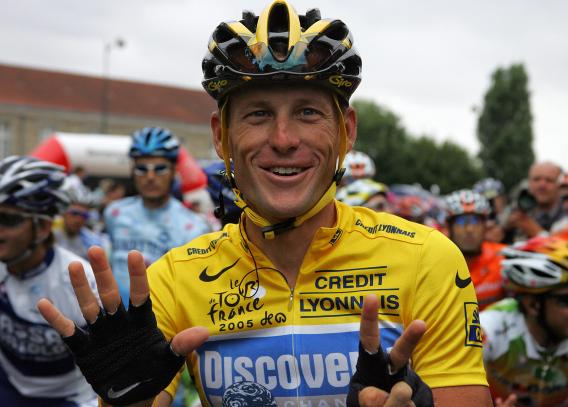
Lance Armstrong - The Fall of an American Hero


It's now official - Lance Armstrong has been stripped of all of his cycling results from August 1st 1998 forward, including the record seven Tours de France that he had won. He is also permanently banned from cycling and any World Anti-Doping Agency sanctioned events, including his new hobby of triathlons. 

I have some thoughts about all of this that may counter to a lot of what is in the press and posted online. First, however, here is the case against Armstrong as revealed so far, with a lot of links so you can read the material yourself and form your own opinion - after that, I will explain my perspective.
“The UCI will not appeal to the court of Arbitration for Sport, and it will recognise USADA’s sanction against Lance Armstrong,” said UCI President Pat McQuaid, who spoke forcefully about the fight against doping. “The UCI will ban Lance Armstrong from cycling and the UCI will strip him of his seven Tour de France titles. Lance Armstrong has no place in cycling.”

McQuaid said that it will also recognised the USADA’s sanctions on the riders who testified, and thanked them to for that. He said that the UCI will set up a structure to examine the doping situation which had happened, and will take measures to safeguard the sport from experiencing the same sort of problems as before.

On August 23rd, Armstrong was handed a lifetime ban from sport by USADA plus had all of his results since August 1998 taken away. The sanction was handed down after he decided not to fight the doping charges made against him by the agency.

The reasoned decision included over one thousand pages of evidence, including sworn testimony from 26 individuals. Of that number, eleven were former team-mates of Armstrong, namely Frankie Andreu, Michael Barry, Tom Danielson, Tyler Hamilton, George Hincapie, Floyd Landis, Levi Leiphimer, Stephen Swart, Christian Vande Velde, Jonathan Vaughters and David Zabriskie.

Other details contained included what USADA described as ‘direct documentary evidence including financial payments, emails, scientific data and laboratory test results that further prove the use, possession and distribution of performance enhancing drugs by Lance Armstrong.’

Its CEO Travis Tygart said that the management of the US Postal Service team ‘ran the most sophisticated, professionalized and successful doping program that sport has ever seen.’

“The USPS Team doping conspiracy was professionally designed to groom and pressure athletes to use dangerous drugs, to evade detection, to ensure its secrecy and ultimately gain an unfair competitive advantage through superior doping practices,” he elaborated. “A program organized by individuals who thought they were above the rules and who still play a major and active role in sport today.”

Last week, many of Armstrong’s sponsors including Trek, Giro and Nike have announced that they were ending their relationship with him. He also resigned as chairman of the Livestrong foundation.

The director of the Tour de France, Christian Prudhomme, will not reassign the seven victories vacated by Armstrong - but he does expect Armstrong to repay the approximately three million he won in that race over the years.
Christian Prudhomme, the director of the Tour de France, has confirmed that he does not want Lance Armstrong’s seven Tour de France victories reassigned after the UCI ratified the USADA verdict to ban the Texan and disqualify him from results going back to August 1998.

Prudhomme also said that he expects Armstrong to pay back his estimated three million dollars he won in the race.

“There won’t be a winner. The formal decision will be taken by the UCI on Friday but for us, it’s very clear; we want to leave the palmares blank,” Prudhomme told the Reuters news agency after hearing Pat McQuaid speaking during his Geneva press conference.
You can read the full accounts of investigations at Sports Illustrated (this is the January, 2011 story - there is a newer version in the current issue), the New York Daily News (a good review of all the allegations that we made over the last decade and a half), and the New York Times. Finally, Cycling News, one of the premier sites for professional cycling, has posted a list off all the doping allegations against Armstrong and his teams that they have reported over the years.

Since the USADA decision was released, more and more stories have been surfacing from people who likely felt unable to speak out in the past due to the threats of retaliation (including lawsuits) for which Armstrong was known. One recent story uncovered by CBS News reports that Armstrong bribed a rider from another team to ensure that he (Armstrong) would a $1 million prize for a three race series. He won, and paid the rider as agreed. Another story contends that Armstrong was warned prior to all doping controls, which made it easy for him to use masking agents or other means of appearing clean.

There is also evidence that Armstrong and Nike, his biggest sponsor, had paid $500,000 to former UCI president Hein Verbruggen to cover up a positive drug test. Both Armstrong and Nike have denied that there was a positive test or a payment to Verbruggen.

Those who know Armstrong believe he will never admit to doping, as have so many of his former teammates. As Josh Levin points out in Slate, in refusing to fight the charges, and by extension giving up his seven Tour de France titles, "he’s keeping what he prizes most: his righteous indignation."

* * * * * * *


This is from Armstrong in one of his Nike commercials:
This is my body, and I can do whatever I want to it. I can push it. Study it. Tweak it. Listen to it. Everybody wants to know what I'm on. What am I on? I'm on my bike busting my ass six hours a day. What are you on?
* * * * * * *

This quote offers the key, in my opinion, to understanding who Armstrong is and why he did the things he has done. It reflects both his incredible desire to win, by manipulating his body in any way he can, and the fact that he seriously worked his ass off to be the best cyclist in a peloton filled with other cyclists who were using banned substances as well.

I have no problem with Armstrong having used performance enhancing drugs - every other top rider in that era was also using chemical assistance, and as far as I am concerned, all of it should be legal and monitored by doctors to ensure the safety of the riders (or other athletes).

If you have done a 100 mile ride (like the El Tour de Tucson, which is 109 miles for the top riders), you know how grueling that can be and how hard on the body it is, even if you are in shape and adequately trained. Now imagine doing that for 19 out 21 days, including time trials and some of the steepest mountain climbs in the world. You might be tempted to use drugs, too, to get through those three weeks, especially if you wanted to be competitive in cycling's most prestigious event.

Here is where I have a problem, as revealed in the testimony of several former Armstrong teammates:
Christian Vande Velde testified to being pressured to stick to the program given to him by Dr. Michele Ferrari in 2001, one that "involved regular use of EPO and testosterone", he stated.

But his fears of needles and of being caught meant he was reluctant to follow the program. He was not selected for the 2002 Tour de France and was told by Armstrong, "if I wanted to continue to ride for the Postal Service team I would have to use what Dr. Ferrari had been telling me to use and would have to follow Dr. Ferrari's program to the letter.

"Johan Bruyneel confirmed this a few days later ... and said he expected to see improvement."

Vande Velde left the team in 2003 for the Liberty Seguros team, which he stated "had an organised doping program as well". After moving to CSC in 2005, and in the absence of "the pressure of an organised doping program, I decided I would only continue in the sport if I could ride clean." He stated he stopped doping in April, 2006.

Zabriskie describes coming into the sport at the time of the Festina affair in 1998, and testified, "I knew I did not want to use drugs". He was reassured by current USA Cycling president Steve Johnson (then with a performance lab), who said the sport was cleaning up.

By 2000, he caught the attention of Bruyneel with a win in the U23 GP des Nations. He was hired on at $40,000, but refused to participate in "recovery injections". In 2001, he was begging to keep his job, accepting a drop in salary to $15,000 just to stay. In 2002, he began using the injections, because "I came to believe it was just vitamins".

Although he joked about EPO on the team bus earlier, Zabriskie testified that he was reluctant to succumb to its use until finally, when his teammate Barry decided to give in, Zabriskie did as well in 2003.

After leaving US Postal in 2004, Zabriskie moved to CSC, during which time he used doping products growth hormone and testosterone several times, but then in June, 2006 he stated he quit doping for good,

Danielson testified to using EPO and blood transfusions on the Discovery Channel team (after taking a pay cut from $200,000 as a neo-pro with Fassa Bortolo to $125k to join Armstrong's team) in 2005, only beginning to get scared of doping in 2007 when the program shifted to blood doping.

"I began to worry that my blood would be mistaken for someone else's," Danielson testified. "The more I thought about it, the more worried I became.

"I found the whole process to be almost emotionally paralyzing," he said, admitting that he got so paranoid that he began to have panic attacks and was given a sedative on the last night of the 2007 Vuelta a España.

"I continued to experience anxiety attacks and have trouble finishing well in races. As a result, I stopped doping in 2007. He then left to join Vaughters' team "where I knew I would be more comfortable competing clean."
Vande Velde, Zabriske, and other rides have described an atmosphere where they were pressured and coerced to use drugs and banned methods (blood transfusions) - and Armstrong was instrumental in leveling that pressure on his teammates.

Again, I have no problem with Armstrong choosing to do drugs, as many other riders have done (including Levi Leipheimer and George Hincapie), but when he and Bruyneel pressure and coerce other riders to do the same, then I have a real problem.

The decision to cheat, and even more the decision to risk one's health with performance enhancing drugs, has to be a personal choice and a freely made decision. When you cut a rider's salary from $40K a year to $15K because that rider (Zabriske) does not want to use the drugs, that is wrong on many levels.

And then there is the ferocity with which Armstrong went after anyone who dared to expose his drug use and tactics. He was infamous for suing anyone who spoke out, or intimidating, threatening, and even (in the case of Tyler Hamilton) physically intimidating (assaulted?) those people.

From the New York Daily News:
Doping might sometimes be a victimless crime, but not in the case of Lance Armstrong, whose drug abuse and illicit blood transfusions created a phony empire of wealth, adulation and power that had to be protected at all costs.

The Armstrong myth was so lucrative that suppressing the truth came to require an endless behind-the-scenes campaign to bully and intimidate people into silence. Some of it bordered on gangsterism. Some of it was dressed up in the respectable wardrobe of elite law firms. But mostly it was just hot air - a fact that by 2010 had become clear enough to Floyd Landis that he stepped up and burst the bubble, blowing the whistle on the whole big fraud.

Armstrong is undoubtedly the most talented and exceptional cyclist of his generation - yes, he was doped, but he was doped in a peloton of doped cyclists. He was just better at it than all the others. 

It's too bad he resorted to doping and intimidation to make himself the best. He was naturally gifted enough to compete even with athletes using drugs, he just wanted a short-cut to the top. Rather than become more innovative in his training, he sought the chemical cocktail to the front of the peloton.

The greatest loss in all this, however, is for the cancer patients - current and in the future - who no longer have a role model to look up to for inspiration. Further, there is no way this will not impact the ability of the Livestrong Foundation to raise money for cancer research. Armstrong has helped raise more than $500 million over the years since he founded Livestrong, and for this alone he should be an American hero - no single person can claim anything near that in helping to cure a disease. But even this achievement will be tarnished by Armstrong's association with cheating.

He may have cheated death in surviving cancer, but he could cheat pro cycling without eventually falling victim to his own hubris and ego.