Showing posts with label kettlebells. Show all posts

Friday, August 15, 2014

Fitness Friday - Fitness News You Can Use

A little late today, but better late than never. Here is this week's installment of Fitness Friday. We have upper body exercise combos for mass, a 5-move kettlebell sequence, a highlight video from the Crossfit Games, a study on pushups being as effective as bench, and a 2-part interview with Mark Rippetoe from The Art of Manliness Podcast.

6 Combo Exercises for Upper Body Mass

by Ben Bruno | 08/01/14


Here's what you need to know...
  • The problem with most combination exercises is that one of the exercises is significantly stronger than the other and you end up using less weight for it. These six combos solve that problem.
  • Combination exercises can work well for packing on mass if both exercises are equally demanding so you don't have to shortchange one for the sake of the other.
  • Combos done in alternating fashion allow you to get more reps of each than if you were to use straight sets. Why? Because each muscle group gets a brief rest while you work the other.
The problem with most combination exercises is that one of the exercises is usually significantly stronger than the other. This means when it comes to selecting a weight, you must choose according to the weaker exercise, which in turn means that you're shortchanging the stronger exercise and not getting as much out of it as you could had you done it on its own. This isn't as big of a deal if you're just looking to do some lighter metabolic work, but if your goal is to build muscle, it's not ideal.

So while I typically don't like combination exercises for muscle building, they can work well if both exercises are equally demanding so you don't have to shortchange one for the sake of the other. With that in mind, here are six great combination exercises to add muscle to your upper body.

* * * * *

The 5-Move Core Shredder

Blast your abs, balance your strength, and boost total-body power and stability by training one limb at a time

By the editors of Men's Health, August 04, 2014

Trainer: Tony Gentilcore, C.S.C.S., cofounder of Cressey Performance, Hudson, Massachusetts


Best For: Shredding your core, eliminating muscle imbalances, boosting athletic performance, and packing on lean mass all over.

Equipment Needed: Two kettlebells
Focus: Strength, power, stability, coordination
Calories Burned: 397*
*As measured by a fit 6'2", 180-pound man using a Polar H7 heart rate sensor
How To Do It: Grab two kettlebells and do these exercises in the order shown. Rest 60 seconds between each set and 2 minutes between exercises.

* * * * *

Highlights from the 2014 Reebok CrossFit Games

Published on Aug 6, 2014


The CrossFit Games -- (http://games.crossfit.com)

* * * * *


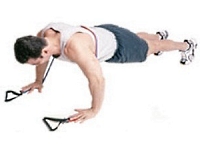
Push-ups just as good as bench presses for strength building


 8.11.2014
Push-ups just as good as bench presses for strength building

You're off on holiday: the neighbors are watering the plants; the in-laws are looking after the dog. But who will look after your pecs? How will they survive all those weeks without bench presses? You can't take benches, barbells or weights with you. But according to sports scientists at the University of Valencia in Spain you can work on your chest muscles without doing bench presses. If you use an elastic band, push-ups are just as effective as bench presses. 

* * * * *

Art of Manliness Podcast #75: Barbell Training With Mark Rippetoe Part I

Brett McKay | August 2, 2014


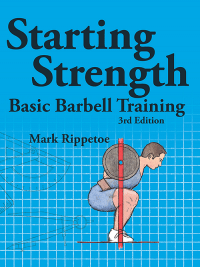
After taking a summer break from podcasting, I’m back in the saddle. And this week’s episode is a great one to come back on. I have a very enjoyable discussion with strength training expert and author Mark Rippetoe about barbell training. Mark is the author of the popular book, Starting Strength: Basic Barbell Training. Since 2005, Starting Strength has sold over 250,000 copies without any marketing; its solid advice has simply spread by word of mouth.

Show highlights:

  • Why a man should be strong
  • The benefits of barbell training over machines
  • The manly strength of old-time strongmen
  • The importance of form in barbell training
  • The main lifts every man should be doing
  • Mark’s opinion of Crossfit
  • And more!
In next week’s episode, Mark answers questions that were submitted by AoM readers. 

If you want to get strong, then I highly recommend picking up a copy of Starting Strength. It’s the most comprehensive book on barbell training out there that’s geared for the complete beginner. Even if you’ve been lifting for awhile, you’re bound to learn a thing or two from Starting Strength. And stay tuned for a great article by Mark next month on why barbells beat machines for building strength, hands down.
Art of Manliness Podcast #76: Barbell Training With Mark Rippetoe Part II

Brett McKay | August 8, 2014

In this week’s episode I continue my conversation (listen to Part I) with strength training expert Mark Rippetoe, author of Starting Strength. In this part of our discussion, I ask Mark questions submitted by podcast listeners via Twitter. Here’s a sampling:
  • Should you stretch before a workout?
  • Can you still squat even if you have bad knees?
  • Can squatting make your sprint faster?
  • Does the one rep max even mean anything?

Friday, August 8, 2014

Fitness Friday - Fitness News You Can Use

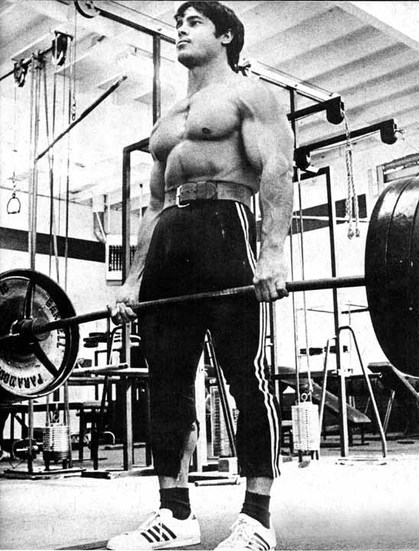
It's Friday, so it must be time for some fitness information. This week we have Chad Waterbury with a protocol to add strength in your training program; Christian Thibaudeau with a new training program; Charles Staley with a good post on sets, reps, and goals; Tony Gentilcore with a post of using kettlebells to improve your deadlift; and finally, Bret Contreras with 10 things people new to training should know.

Add Strength to Your Program

Chad Waterbury | August 6, 2014
Most of us want to get bigger and stronger at the same time. But most guys or gals that follow a bodybuilding-style program aren’t building much strength.

So today I’m going to outline a workout you can put in your current bodybuilding program that will fill in the much-needed gaps.

That’s important because if you increase your full-body strength you’ll be able to lift heavier loads in your bodybuilding workouts. This, in turn, will make it easier to build muscle in your other workouts.

Maximal Strength


There are many types of strength, so when I talk about strength-training I always make it clear to my audience what type of strength I’m talking about. In most cases, I’m referring to maximal strength: your ability to lift the heaviest load possible for 1-3 reps.

The master of maximal strength, Pavel Tsatsouline, and I have had many discussions on the best way to build it. Russian weightlifters – known as Olympic lifters to us in the states – spend most of their training cycle in the 80-85% of one-rep max (1RM) training zone. That fact will be surprising to many since it’s typically best to train with heavier loads than 85% of 1RM if you’re far from your maximal strength potential.

* * * * *

The 915 Workout Program

by Christian Thibaudeau | 08/06/14


Here's what you need to know...
  • This program is designed to make you at least 15% stronger while adding 7 pounds of muscle on your body – distributed in such a way that it will not only make you look a lot larger, but more powerful.
  • The 915 program uses the three powerlifts (squat, bench press, deadlift) and the snatch-grip high pull or power clean as the foundation lifts.
  • You'll use two assistance exercises for each main lift. These assistance exercises will allow you to correct any weaknesses holding you back on your main lift.
If you want to build muscle at a fast rate, you don't have to include an exercise for every single angle of every single muscle in your body. You don't have to use all the most advanced methods at the same time. Growing is all about working hard on exercises that will deliver results 10 out of 10 times. It's also about finding your personal weakness and hammering it hard.

The system I present below is very simple, but if you apply some elbow grease the results are guaranteed. So stop over thinking! Get on the system, work hard, and you will grow and get stronger. It's as simple as that. And for those who need further assurance, I've been using this system with several clients and they're all progressing faster than I expected; gains of at least 15% on the big lifts in 9 weeks is normal!

* * * * *

How Many Reps Should I Do?

by Charles Staley | 08/04/14


Here's what you need to know...

  • It's not what you can do in a set, it's what you can do in a workout. It's not what you can do in a workout, it's what you can do in a training cycle.
  • If you're interested in maximal strength, tension is the name of the game. That can mean lifting a very heavy weight as fast as you can, lifting a moderately heavy weight as fast as you can, or ideally, both.
  • If your main goal is strength, you should terminate any given set just short of technical breakdown, or for stable lifters, always leave one solid rep in the tank for any given set.
  • If your main goal is hypertrophy, you should use a wide range of reps, from as few as 1 to as many of 30. This can be done by pyramiding up to a few heavy sets, followed by a few higher-rep "back off" sets with lighter weights.
  • Most trainees need to address both strength and hypertrophy in their training, regardless of what they consider their primary goal to be. The "sweet spot" between these two adaptations seems to be 5-8 reps per set.
  • Training to failure is only advisable for technically stable athletes on their last set. Blowing your wad on your first set will limit the overall amount of volume you'd otherwise be able to rack up.
Whenever you're doing a set, there are only two real decisions you need to make:
1. How many reps should I do?
2. How close to failure should I go?
Aside from exercise selection and training frequency, these are possibly the two most important decisions you'll need to make in order to obtain optimal results from your training. To answer these questions, you'll in turn need to ask two additional questions:
1. What's my goal?
2. How many total sets am I going to do for that exercise?

* * * * *

How the Kettlebell Can Improve Your Deadlift

Tony Gentilcore | August 2, 2014


I had an interesting conversation with my good friend and fellow strength coach, Ben Bruno, not too long ago.

He and I like to catch up every now and then to 1) discuss our mutual affinity for JP Licks ice-cream and 2) talk some training and fitness shop.

He’s originally from New England and worked as a coach at Mike Boyle Strength and Conditioning for a handful of years before moving out to LA last fall for a change of pace and to pursue some other opportunities.

His typical clientele now out in LA resembles a litany of Hollywood A-listers and a “who’s who” of gossip magazine covers, as well as those people who have a bit more of an aesthetic bias towards training.

While he loves LA and the people he works with, a small percentage of his heart is still back in Boston, working with athletes and helping people get strong.

In one of our last conversations he made the comment that there’s a stark contrast in training mentality between the west and east coast. But a little context comes into play.

Whereas at Cressey Sports Performance, someone nails a 400+ lbs deadlift and no one bats an eye, out in LA someone hits that same lift in a commercial gym and it’s assumed they’re on steroids. And then given their own reality tv show!

Similarly, with regards to female training, and especially with regards to female celebrities and the “Hollywood” mentality as a whole (my apologies with the gross generalization here), barbell training is almost considered taboo.


Ben noted that whenever he’s tried to get some (not all) of his female clients to train with free-weights they were a tad skittish and reticent to place any appreciable load on the barbell.

Truth be told, while the tide is slowly turning for the better (more and more women are reaping the benefits of strength training. See: CrossFit), there’s still a “barbells are scary” vibe that pervades the female psyche. It’s slight, but it’s still there.

Ben noticed a funny thing, however. He noted that whenever he had his female clients use kettlebells they were more than eager to “get after it.” It was almost as if they didn’t think kettlebells counted as strength training.

* * * * *

10 Things All Beginning Lifters Should Know

Brett Contreras | August 5, 2014

Every experienced lifter out there can remember the first time they moseyed into the weightroom, full of fear, confusion, and insecurity. Though most of us make it past these initial stages, some lifters never do. Some lifters quit training, mostly because they don’t understand it. If only there was a seasoned lifter at every gym who could talk to beginners and educate them on what things are important and what things aren’t very important. Below are the more common sources of confusion and misunderstanding that newcomers to resistance training share.

Friday, April 4, 2014

Fitness Friday - Fitness News and Information You Can Use

In this week's Fitness Friday, a primer on front squats from Eric Cressey, a collection of the best. exercises. period. from Christian Thibaudeau at T-Nation, and a new article on kettlebells from Bret Contreras.

As a bonus, there is an interview of Chad Waterbury by Eric Cressey. Enjoy!

As always, I am only posting a little of the beginning of each article - follow the link to read the whole piece.

How to Front Squat: Everything You Need to Know

Published on December 4th, 2012
Written by: Eric Cressey

The squat is one of the most revered strength training exercises of all time, and the front squat is a popular variation on this compound lift. However, like many lifts, it's often performed incorrectly, and in many cases used by folks for whom it isn't a good fit. To that end, I thought I'd devote this article to outlining everything you need to know to be successful with the front squat.


What Makes the Front Squat Different?

A few primary factors differentiate a front squat from a traditional back squat.

First, the bar is positioned on the front of the shoulder girdle rather than on the upper back. In the process, an athlete is given a counterbalance to allow for a better posterior weight shift, which improves squat depth. If you need proof, check out your body weight squat, and then retest it while holding a ten-pound plate out at arm's length; most of you will improve substantially.

Second, because the arms are elevated (flexed humeri), the lats are lengthened. This is in contrast to the back squat, where the lats can be used to aggressively pull the bar down into the upper back and help create core stability. I firmly believe the lack of lat involvement is what accounts for the significant differences in loads one can handle in the front squat as compared to the back squat. However, "quieting down" the lats on the front squat is likely why athletes with such dramatic lordotic posture can often squat much deeper/cleaner with the front squat. Of course, if they have an excessive lordosis and anterior pelvic tilt, you may not want to squat them in the first place!
* * * * *

This is a great post from Christian Thibaudeau at T-Nation:

The Best Exercises. Period.

by Christian Thibaudeau   
Posted 04/01/14


Here's what you need to know...
•  Nothing will build up the yoke like the snatch-grip high pull.
•  While using a Prowler is great for fat loss and building muscle, the farmer's walk with a trap bar is better.
•  The bench press is not the best exercise to build the pectoral muscles. Rather, it's the dip.
•  The best exercise to use as a test for power, speed, and explosiveness isn't the 40-yard dash or the vertical jump, it's the underhand forward medicine ball throw.
One cautionary note before I jump into my list of favorite exercises. I'm assuming proper form and performance on all of them. A great movement can be turned into something totally worthless if not done properly.

* * * * *

A new article from Bret Contreras and Chris Beardsley in Strength & Conditioning Journal.

The Role of Kettlebells in Strength and Conditioning: A Review of the Literature

Beardsley, Chris MA (Hons); Contreras, Bret BSc

Strength & Conditioning Journal: 12 March 2014
doi: 10.1519/SSC.0000000000000048
Article: PDF Only

Abstract

Studies support the use of kettlebells for improving power, although evidence for using them to improve strength and aerobic fitness is still equivocal. Studies investigating the biomechanical properties of kettlebell training have been fruitful, and it may be useful for developing sprint running performance and for injury prevention. However, we still do not know the optimal loads for maximizing system and joint power production, how the mechanics, joint moments, and electromyographic activity changes as loads increase during kettlebell swings, nor whether kettlebell training transfers to sports performance.

* * * * * 

Catching Up With Chad Waterbury

Written on April 1, 2014, by Eric Cressey

This Saturday, Chad Waterbury will deliver his Advanced Training Workshop at Cressey Performance. And, since I hadn't caught up with him here for quite some time, I thought it'd be a good time to bring him back for an interview. Check it out. -EC


EC: Welcome back to EricCressey.com! It's been a while since we last touched base, so we ought to get up to speed on what you've been doing. To start, what would you say is the biggest change you’ve made compared to when you started training?

CW: The most significant change I’ve made is the way I assess clients. In the early days I would do some basic range of motion tests and ask a client which joints felt stiff or painful. Then I would do a combination of soft tissue work and PNF stretches to correct the issues. It helped clients move better and have less pain for the workout that followed, but those were usually just temporary changes. The next workout the client would often complain of the same problems.

Take the IT band, for example, since it’s usually stiff and painful to the touch on many athletes. I used to have my clients foam roll the IT band before training to release the tension. It hurts like hell to foam roll a super stiff IT band, and it’s easy to associate the pain of foam rolling with a gain in tissue quality. But that’s rarely the solution. In most cases, the IT band would be right back where it started the following day.

So a few years ago I started studying more progressive corrective approaches, namely the Postural Restoration Institute (PRI) and Dynamic Neuromuscular Stabilization (DNS). What I learned from those two approaches is how imperative it is to identify and correct the position of the ribcage and pelvis.

In my early training years I would look for muscles that were tight or painful and find a way to eliminate the tension through stretching or foam rolling. But I learned that instead of figuring out how to release a tight muscle it’s much more valuable to ask yourself: Why is the muscle tight?

When you learn to ask the right questions you put yourself much closer to the solution.