Showing posts with label weightlifting. Show all posts

Friday, July 18, 2014

Fitness Friday - Fitness News and Information You Can Use

Welcome to another Fitness Friday. I was on vacation last week and did not post the usual Fitness Friday link collection, so this week there is some catching up to do.

That noted, we begin today with two posts from the last two days at T-Nation, the first being a general article by Charles Staley on how to be sure your training program is organized correctly, and the second being a specific style of training (total-reps) by Kyle Arsenault. For what it's worth, Charles knows his stuff (he trains my girlfriend), so give it a good read. 

I am also a fan of the training style Arsenault outlines in his article. By using his technique, you assured of getting enough reps in to build muscle, but because you are using a weight that is essentially 5-6 rep max, you will also be building strength.

10 Principles For Better Programming

by Charles Staley   
7.18.2014


Here's what you need to know...
  • There are thousands of training programs out there, but the most effective ones share similar principles.
  • Check out the list below and make sure your training program puts most of these principles into action.
There are as many theories about programming as there are coaches who apply them. But in my 30-plus years in the field I've found that all successful training programs have common themes. Here are the top 10 most important principles for creating programs that work.
* * * * *

Total-Rep Training

by Kyle Arsenault   
7.17.2014


Here's what you need to know...
  • This method uses high intensities, greater volume, and involves working close to muscular failure.
  • Determine your 5-6RM for one of the big lifts. Then do as many sets as necessary for you to hit a total of 25 reps. In addition to allowing you to work close to failure on each set, the system allows for auto-regulation.
  • Once the total amount of reps is completed, you'll do a drop set where you immediately drop the resistance by 5-10% and complete one more set close to failure.
When it comes to making strength and size gains, a training program that utilizes higher intensities (percent of RM), a greater overall volume, and a closer proximity to muscular failure produces superior results. The issue with this approach is the increased risk of injury and burnout, as well as the consistent mental toughness and discipline it takes to continuously complete these sessions. Over time, crushing 8-10 sets of singles or triples or consistently smashing through a 5x5 routine will take its toll.

While de-load weeks have their place, I'm suggesting we find a way to complete the bulk of our training using a system that not only uses a higher intensity and volume, but also matches our physical and mental preparedness for that day. That's where this new method comes in.
* * * * *

From Jason Ferruggia's blog, a guest post by Yuri Elkaim.

Why Dudes Should Do Yoga

Guest Post By Yuri Elkaim
July 15th, 2014


Think Downward Dog and Cat Pose is stuff for sissies? Think again. You may be hitting the gym hard, spending hours on the court, but skimp on the stretching and you’ll never reach your A-game.

Yoga hasn’t been used for thousands of years by women only. It’s not just for old people that live in Asia. It’s actually a tool that’s helped millions of men, monks, and—yes—even elite athletes find their focus, get strong, and discover their ultimate ability.

Tap into the age-old wisdom of yoga, and you’ll find a whole new level of strength, conditioning, and power that you didn’t know you had. Here are five reasons to give yoga a try. Once you add it to your weekly workouts, you’ll discover a dozen other benefits.
* * * * *

From Eric Cressey's blog:

My Top 5 Powerlifting Mistakes

Written on July 15, 2014, by Eric Cressey

SSG

With this week's release of Greg Robins and my new resource, The Specialization Success Guide, I got to thinking about some of my biggest mistakes with respect to developing the Big 3 (squat, bench press, and deadlift). Here are the top five mistakes I made in my powerlifting career....
* * * * *

From Brett Contreras' blog:

A Simple System for Progression: 3 Set Total Reps

We all want to be making progress in the gym, but unfortunately, many lifters remain stagnant. In general, you want to make sure you’re getting stronger over time. Getting stronger means using more load or achieving more repetitions with the same weight. This is the essence of progressive overload, which I discussed in great detail HERE. While there are a million ways to progressively overload, I’m going to outline a very simple system I use in my own training and with my clients.
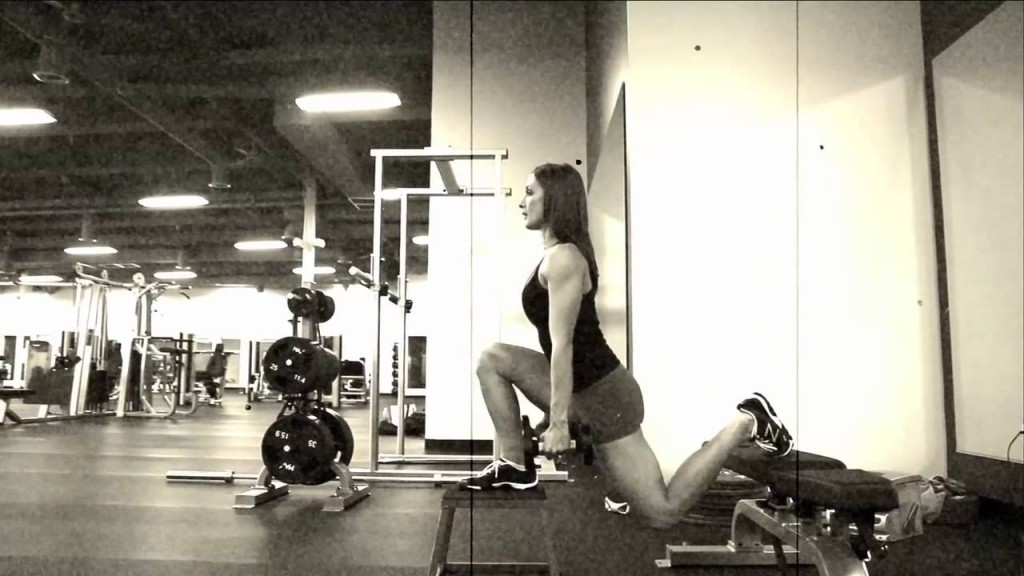


3 Set Total Reps


When I prescribe an exercise, quite often I will use the same load with all 3 sets, and I’ll simply note the total number of reps they achieve (this is in contrast to pyramids, which I wrote about HERE). Once they reach a particular total, I’ll increase the load. I first learned about this method from a Joe DeFranco DVD that I purchased many years ago, and it’s something that I’ve consistently sprinkled into my training since then.
* * * * *

And back to T-Nation for some heresy from TC, as well as other good stuff.

8 Reasons You're Still Weak or Fat

by TC   
07/14/14


Here's what you need to know...
  • If after several years of training you're still weak, there's a good chance you need to rethink your ideas about squats and deadlifts; that you've got no love for the upper body squat; that steroids misled you about a basic training principle; and that you work muscles instead of movements.
  • If after several years of training you're still fat, there's a good chance you need to rethink your ideas about eating 6 meals a day and doing fasted cardio.
  • If you're still skinny, there's a good chance your ideas about post-workout nutrition are 10 years old and your definition of recovery days needs an adjustment.
Convention dictates that I write an intro to this article, but this article is about defenestrating convention and tweaking your strength-building or fat-burning or bodybuilding perspective a little to the left or to the right, so screw a drawn-out intro. The title says it all.
* * * * *

Break 3 Rules, Build More Muscle

by Christian Thibaudeau   
07/07/14


Here's what you need to know...
  • For hypertrophy, it doesn't really matter what the exercise looks like as long as it puts the muscle under an optimal load/tension. Accordingly, some of the biggest bodybuilders on the planet rely heavily on partial reps.
  • If you can't feel a muscle working in an exercise, you can't stimulate it or grow it optimally. Isolation work will fix this problem and even improve your compound lifts.
  • You can build muscle with almost any kind of rep range. If you train consistently and try to gradually become stronger in the rep ranges you're doing, you'll grow muscle with 3 reps or 20 reps.
Despite my focus on performance, I also want to look muscular and lean, as do my clients. I've even competed in bodybuilding myself to see what it was like and to understand it better. I also had the opportunity to work with a lot of great bodybuilders, amateurs and pros. I worked with Amit Sapir for a few years, starting when he was an amateur and up to when he won his pro card. I also was involved in the Darryl Gee project that was documented on T Nation. Currently, I'm training Patrick Bernard, a new IFBB pro in the 212-pound class, as well as a young woman who won her class in figure at a recent contest. I've definitely learned a thing or two in the process.

You can learn from anyone who's training hard and making progress - bodybuilders, powerlifters, athletes, CrossFitters, Olympic lifters, etc. Close your mind to any of these training modalities because of pre-conceived ideas and you'll miss out on a lot. That said, here are three things I learned from working with bodybuilders.
* * * * *

How to Increase Your Pull-Up Power

by Dan John   
07/09/14


Here's what you need to know...

  • The pull-up has been beaten to death by lifters and athletes who try at all costs to get their rep total higher and higher. They should be adding load instead.
  • Simply hanging from the bar is an important form of loading. If you want to do 25 strict pull-ups, can you even hang from the bar long enough to do them?
  • The ab wheel mimics many of the keys to proper pull-ups.
  • Pavel's Russian Fighter Pull-up Program allows you to "sneak up" on a higher number of reps.
I pity the pull-up. In the past decade, this wonderful movement has been trashed and beaten by enthusiasts who try at all costs to up their rep total higher and higher. Sure, high reps have their place, but many of us need a smarter, more rational approach.

After a certain age, pull-ups start "bugging" people. For most of us, there's a pain in the elbow that only goes away when we avoid pull-ups. A few weeks or months later, it seems to cure itself and the only way we reinjure it is by doing more high-rep pull-ups and... we succeed! We have a name for this in my gym. We call it Middle Age Pull-Up Syndrome, or MAPS. "You too can help us cure this disease. Please send money now to..."

Improving your pull-up numbers, either with more reps or more load - which I tend to recommend over more reps - is going to be a study in balance. If you force the reps up with more and more volume, you might eventually hit your new personal record in the movement but never again throw a ball or comb your hair. You could keep your hair really short, or you could train the pull-up using a few contrarian ideas.

Friday, June 27, 2014

Fitness Friday - Fitness News and Information You Can Use

It's Friday, so it's time for a recap of the best fitness articles from the last week. Headlining this week is another good article from Charles Staley at T-Nation - this one on seven mind hacks to excel in the gym.

Following that, we have another T-Nation article by Eric Bach on the art of the hang clean. There's also an excellent primer by Mike Robertson on push-ups, and then a two part blog from Tony Gentilcore's blog on maintaining athleticism as we age.

7 Mind Hacks for Gym Dominance

by Charles Staley   
6/26/2014


Here's what you need to know...
  • Experts talk about strength training theory, lifting technique, and periodization, but very few talk about the psychological skills needed for weight-lifting dominance.
  • While your physicality can be likened to the size of your engine, your psychological aptitude is analogous to running on all cylinders. It determines how much horsepower you can get out of the body you've already built.
When I view the intellectual landscape around the subject of resistance training, it strikes me as significant that so little time is spent discussing the mental skills required for high-level lifting. There are a few possible explanations for the absence of this type of info:
  1. We don't think such skills are important.
  2. We think these skills are important, but not "teachable." In other words, either you have it or you don't.
  3. We understand the importance of the mind's role in lifting success, but don't feel qualified or otherwise capable of teaching these skills to others.
I suspect that the final explanation holds the most truth. Somehow, we view the mind as the exclusive domain of trained professionals with lots of letters after their name, not the purview of meathead lifters like us.

Psychological skills deserve more attention. After all, once your physical skills are well-developed, strategic psychology may be the greatest weapon in your arsenal. While your physicality can be likened to the size of your engine, your psychological aptitude is analogous to running on all cylinders – it determines how much horsepower you can get out of the body you've already built.

So with all of that in mind, here are my top seven tips for "getting your head right" when you really need to uncork a big lift in the gym.

* * * * *

Hang Clean For Total Body Power

by Eric Bach   
06/25/14


Here's what you need to know...
  • The clean is the top dog in resistance programs for improving performance as it requires triple extension of the hips, knees, and ankles in a coordinated, explosive pattern – a movement that simulates the triple extension in both sprinting and jumping.
  • Hang cleans will get you absolutely jacked. They not only stimulate your forearms and traps, but nearly 200 muscles in the body so that you get a huge anabolic surge and training effect.
  • Intelligently planned cleans get you absolutely shredded. Cleans, especially when performed with a full front squat or low catch, are metabolically demanding. The explosive nature and muscle recruitment requirements will leave you absolutely floored when done with proper technique and short rest.
Without question, power cleans are a phenomenal tool in your pursuit of high performance strength and muscle. The problem is, they can be difficult to learn. Most cleans are downright atrocious. You see things like starfish legs, excessive knee valgus, and a gross lack of coordination, none of which have a place in the weight room. Hang cleans, however, are a great, doable, alternative.

* * * * *

From Robertson Training Systems, Mike Robertson offers the most complete primer on push-ups I have ever seen.

Push-up

June 25, 2014


Every single client or athlete I train uses push-ups in their programming.

And why not?

They are simply a fantastic lift, whether your goal is to get stronger, burn more body fat, or become more athletic.

Let’s start our journey by reviewing just a few of the reasons you might want to include push-ups in your next training program.

* * * * *

Finally, from Tony Gentilcore's site, a good two-parter on how to stay athletic.

10 Must Do’s To Stay Athletic (Part I)

James Cerbie, CSCS | 6.23.2014


Today’s guest post comes courtesy of former Cressey Performance intern, James Cerbie. As the title suggests it’s all about how to maintain athleticism, which is something that will hit home for many former athletes, weekend warriors, and Al Bundy-like people who like to bask in the glory of their high-school and college days.

Enjoy!


What does it mean to be an athlete?

Sure, there’s getting all the girls of course.

Kidding…kidding…we all know there’s more to it than that.

So what is it?

The thrill of winning, the rush of competing, the butterflies before a game, the anticipation of a daunting challenge, the brotherhood (could be sisterhood but I’m speaking from my own experience), the pain of defeat, the constant drive towards perfection…it’s hard to say.

Being an athlete, to me at least, encompasses all of those things and more. It’s truly a way of life, and hard to rid yourself of once you’re so called playing days are over.

Unfortunately, the real world doesn’t seem to recognize this. Once you leave college or professional sports, you’re thrust into a world that almost looks down on being an athlete. They’ll just tell you: “Oh, you had your chance. Your playing days are over. It’s time to hang up the cleats and begin your slow decline into decrepitude.”
* * * * *

10 Must Do’s to Stay Athletic (Part 2)

James Cerbie, CSCS | 6.24.2014


Before we get to Part 2 of James’ guest post from yesterday, a few things:

1. You should read Part 1 if you haven’t already. This isn’t like The Matrix Reloaded or Revolutions or anything where, if you didn’t watch the original Matrix, you’d be throwing your hands up in the air wondering what WTF is going on.

Where did 100 Agent Smith’s come from?

If Neo can fly, why go through all the trouble of kung-fu’ing everyone?

And, who the hell is this Architect character and why is he obsessed with the word “ergo”?


Nevertheless, you can absolutely read Part 2 (below) and not Part 1 and get the gist of everything. But, it’s still nice to have the whole story.

Friday, June 20, 2014

Fitness Friday - Fitness News and Information You Can Use


If it's Friday, it must be time for some fitness news and information. This week we have 40+ interval training, supplementing with oral ATP for recovery, maintaining 1RM in the deadlift, a whole lot of rep scheme variations, and a 4-week chest specialization program (because we all need pecs that look like Arnold's, above).

First up, from Runner's World, and argument in favor of interval training for us old people (40+).

Interval Training and Trolleyology

Is it safe for 40-year-olds to exercise hard?
By Alex Hutchinson


---

I couldn't help thinking of these dilemmas yesterday when a doctor friend asked about the message given to a group of GPs by a cardiologist at a continuing medical education course – that for people over 40, the risks of interval training outweigh the benefits. The common thread: while it may not seem rational, most humans seem to prefer taking a passive role in a greater harm than an active role in a lesser harm. 

The central trade-off here is the same one that applies to all exercise: you have a slightly increased risk of a cardiac event during exercise, and in exchange you get a slightly decreased risk of a cardiac event during all the hours you're not exercising. This is true for marathons, sprints, moderate continuous exercise, intense interval exercise, you name it. That's why doctors used to discourage heart-attack survivors from doing any exercise – until they realized that avoiding exercise ultimately made a recurrence more likely rather than less likely.

* * * * *

Next we have a research article from the Journal of the International Society of Sports Nutrition
on supplementing with oral ATP following exercise to increase blood flow to the muscles (which would then increase transport of protein and glucose to the muscle for recovery).

Oral adenosine-5'-triphosphate (ATP) administration increases blood flow following exercise in animals and humans


Ralf Jäger, Michael D Roberts, Ryan P Lowery, Jordan M Joy, Clayton L Cruthirds, Christopher M Lockwood, John A Rathmacher, Martin Purpura and Jacob M Wilson

Journal of the International Society of Sports Nutrition; 2014, June 13, 11:28. doi: 10.1186/1550-2783-11-28 


Abstract (provisional)

Introduction

Extracellular adenosine triphosphate (ATP) stimulates vasodilation by binding to endothelial ATP-selective P2Y2 receptors; a phenomenon, which is posited to be accelerated during exercise. Herein, we used a rat model to examine how different dosages of acute oral ATP administration affected the femoral blood flow response prior to, during, and after an exercise bout. In addition, we performed a single dose chronic administration pilot study in resistance trained athletes.
 

Methods

Animal study: Male Wistar rats were gavage-fed the body surface area, species adjusted human equivalent dose (HED) of either 100 mg (n=4), 400 mg (n=4), 1,000 mg (n=5) or 1,600 mg (n=5) of oral ATP as a disodium salt (Peak ATP(R), TSI, Missoula, MT). Rats that were not gavage-fed were used as controls (CTL, n=5). Blood flow was monitored continuously: a) 60 min prior to, b) during and c) 90 min following an electrically-evoked leg-kicking exercise. Human Study: In a pilot study, 12 college-aged resistance-trained subjects were given 400 mg of ATP (Peak ATP(R), TSI, Missoula, MT) daily for 12 weeks, and prior to an acute arm exercise bout at weeks 1, 4, 8, and 12. Ultrasonography-determined volumetric blood flow and vessel dilation in the brachial artery was measured at rest, at rest 30 minutes after supplementation, and then at 0, 3, and 6 minutes after the exercise.


Results

Animal Study: Rats fed 1,000 mg HED demonstrated significantly greater recovery blood flow (p < 0.01) and total blood flow AUC values (p < 0.05) compared to CTL rats. Specifically, blood flow was elevated in rats fed 1,000 mg HED versus CTL rats at 20 to 90 min post exercise when examining 10-min blood flow intervals (p < 0.05). When examining within-group differences relative to baseline values, rats fed the 1,000 mg and 1,600 mg HED exhibited the most robust increases in blood flow during exercise and into the recovery period. Human study: At weeks 1, 8, and 12, ATP supplementation significantly increased blood flow, along with significant elevations in brachial dilation.

Conclusions

Oral ATP administration can increase post-exercise blood flow, and may be particularly effective during exercise recovery. 
The complete article is available as a provisional PDF. The fully formatted PDF and HTML versions are in production.
* * * * *


This is a useful article from Tony Gentilcore on how to maintain deadlift strength during time we are not able to lift heavy or consistently. Turns out that, of the big three (squat, deadlift, bench) deadlift strength lasts the longest without consistent practice. This seems to explain how some lifters with HUGE deadlifts only train that lift once a month or so.

How to Maintain Deadlift Strength


I received an interesting question from a reader the other day on deadlifts, particularly 1RM (1 rep max) deadlifts. And since I get all giddy like a school girl at a One Direction concert whenever someone brings up the topic, I figured I’d share my answer here on my website since I’m sure it’s a question that others have wondered as well.

Q: My lifting consists mostly of deadlifts and chin-up/pull-ups with lots of auxiliary work. I also cycle a lot (100 miles per week in-season). But I am in the field for several months a year and it interrupts my lifting.

Last year I pulled 305 on my 60th birthday (at 182 pounds body weight). I got a late start this year and was not as systematic with the spin up. I did a 1RM test and only pulled 270 (at 190 pounds) on my 61st.


My question is:
I would have liked to maintain a 300 pound 1RM but was not systematic enough through the year. What do I do between programs to maintain a higher 1RM? (And continue to cycle and miss the occasional month in the deep field for work?).

A: Who are you? John Wayne? I love this! 

* * * * *

Two articles from T-Nation floated to the top this week.

22 Proven Rep Schemes 

by Christian Thibaudeau   
06/16/14


Here's what you need to know...

  • While there's no one best set/rep scheme, there are plenty of great ones to choose from, all time-tested and proven to work.
  • Methods like 10 x 1, 5 x 2, ramping up to a 3RM, 3/2/1 waves, and 1/3 ratchet loading, among others, work great for pure strength gains.
  • For gaining both size and strength, schemes like cluster 5's, 5 x 5, and 1/2/4/6 are extremely effective.
  • For pure hypertrophy, 4 x 8, 10/8/6/20, and Gironda's 6 x 6 have been around forever and continue to pack on muscle.
"How many sets and reps should I do to get the best results?"

I hear that question every day. People all want a cut and dried answer so all they'll have to do is follow it and make uninterrupted progress. Sadly, it's not as simple as that. There is no one "best" sets/reps scheme. And sometimes a little detail like doing one too many sets in a certain intensity range could absolutely kill your progress. However, while there are no best schemes, there are several great ones. Here are 22 of them. All of them will work if you respect the given guidelines and train hard.

* * * * *

4-Week Chest Specialization 

by Mike Samuels   
06/17/14


Here's what you need to know...

  • With a traditional bodybuilding split, you'll only train your chest once every five to seven days, meaning you're leaving a hell of a lot of elevated muscle protein synthesis potential on the metaphorical table. We should instead opt for a specialization approach.
  • While hammering the chest three times per week, all other muscle group will be put on maintenance mode.
  • Monday will be your power/activation workout, Wednesday is your strength session, and Friday is for hypertrophy work.
Despite the "chest and biceps only" guys at every gym and Monday being International Chest Day, an awesome set of pecs is a rarity. It's hardly surprising though. Browsing through websites and magazines, you'll find conflicting information on chest training. Half the coaches out there say the bench press is the best damn chest exercise there is. The other half say it wrecks your shoulders, hits your delts and triceps more than your chest, and doesn't deserve its place in the bodybuilding hierarchy.

Then you've got the incline vs. decline argument. Judging by how many people suffer from man-boob syndrome where the size of the lower and mid portion of the pecs far outweigh the musculature of the upper section, you'd be forgiven for thinking that incline work is what everyone needs to focus on. Then suddenly, some fancy new EMG study comes out and indicates that the best chest-developer is the decline bench, and how inclines are actually much more of a shoulder exercise.

Confused? Yep, me too. At least I was, until I realized how to structure a chest routine for optimal development.

Friday, June 13, 2014

Fitness Friday - Fitness News and Information You Can Use

It's Friday, so it must be time for a new selection of fitness articles. This week we begin with two articles on squatting, then we move to preserving muscle and strength during a layoff (or injury), training the shoulders, and an interview with Dr. Fred Hatfield, one of the legendary figures in sports science.

This week we begin with two articles on squats - one from Tony Gentilcore at T-Nation and one from Bill Hartman at his blog.

How Deep Should I Squat?

by Tony Gentilcore
06/10/14


Here's what you need to know...


  • It's ignorant to say that everyone should squat to the same depth. Some lifters inherited awesome levers, possess just the right hip anatomy, and are able to squat butt-to-floor with no issues.
  • Serious squatters should perform the kneeling rock-back movement screen to see where they fit in on squat depth.
  • One problem directly related to squat depth is "butt wink." The butt wink is just a less fancy way of saying posterior pelvic tilt. Butt wink and squat depth can be improved by working on crappy ankle mobility, including glute work in every session, and doing slow goblet squats.
Let's make one point clear: It's completely asinine to say that everyone should squat to the same depth. Some people picked the right parents, inherited awesome levers, possess the appropriate hip anatomy, and are able to squat ass-to-grass with no issues at all. And we all hate those people.

Conversely, there are others out there who, because they're told to do so (usually from some internet jockey who claims to squat over 400 pounds, ass-to-grass, for reps, while juggling chainsaws) or because their manhood is somehow called into question, try to squat deep no matter what. And well, bad things happen. Not everyone is the same, and it's important to understand this. As a coach my "end game" is to work with what I have and to get every single one of my athletes or clients to squat to depth. However, it's not always a good idea to force someone to squat deep when they just don't have the ability to do so safely. While admirable, the end goal for every person shouldn't be to squat deep.

Rather, the goal should be to develop proper squat mechanics, groove technique in a safe range of motion that's applicable to a particular individual's limitations and anatomy, and most important of all, keep the spine safe. Admittedly, it's not a sexy approach. I'm not going to sit here and wax poetic about some super secret squatting protocol or bust out my protractor and discuss some advanced algorithm to follow. The answer, simply, is to work on "stuff," and eventually squat depth will improve. One problem directly related to squat depth, however, and one that I see far too often, is "butt wink."

* * * * *

Short Topic: There’s a squatting controversy? Seriously?

Bill Hartman | Intelligent Human Performance 


Optimal varies with imposed demands (load, speed, surface, fatigue, visual cues, stance width, pelvic position, hip joint shape, etc.). Squatting is not as simple as knees out being better than knees in or toes out being better than toes straight. 


Variability is the ideal. It would be desirable to be able squat in many different ways and many different foot positions under varying circumstances. 


There is never one ideal. That’s like saying there’s one ideal posture, one way to sit, one way to have sex, or one way to throw a ball. 


In fact, we know that because of the noise built into the nervous system we can’t duplicate the same motion no matter how hard we try even if it looks the same to the naked eye. 


With practice and good coaching, you will determine the optimal for the circumstances and the individual.
* * * * *

The next two articles are also from T-Nation.

How to Keep Muscle During a Layoff

by Christian Thibaudeau
06/11/14


Here's what you need to know...
  • Unless you're tied to a hospital bed, you won't lose any muscle mass if you take a week off from training. You may feel smaller or flatter, but it's not because you're losing muscle mass. Rather, your muscle tone has decreased slightly due to the nervous system being less "turned on."
  • After a layoff of 2-3 weeks, you might lose 5-10% of your strength, but you won't be losing much muscle mass (if at all) and the loss of strength will be mostly due to lost neural adaptations. Once you go past the 3 weeks, though, it's quite possible to lose muscle mass, but there are many things you can to do to mitigate the loss.
  • Contrary to what most people believe, you don't gain "extra strength" by tapering/deloading for a peak. You're simply "revealing" the strength you gained during your hard training cycle.
  • Sadly, most people only notice "overtraining" when they start to lose strength and body weight, so their normal reaction is to train more to kick-start the gains. Not only will that not solve the issue, it'll make things worse!
There are generally three situations where a serious lifter would take time off from training:
1. A planned deload to help reach peak performance or to recover from overtraining.
2. A short and planned break (e.g., a vacation or trip).
3. An unplanned layoff (sickness or injury).
The first two are generally done begrudgingly, while the third is often treated as the worst thing possible next to a death sentence. The fact is, deloading and hiatuses from training are things that are part of everybody's life. I've had to stop training due to some health problems and I work with lots of clients who have busy schedules that require time off or at least reduced training. While it's my job to help people get the most out of their training, it's also part of my job to help them retain most of their gains when they're forced out of the gym.
* * * * *

5-4-3-2-1 Shoulder Workout

by Nick Tumminello
6.12.2014


Here's what you need to know...
  • You'll be doing 5 sets of the first exercise, 4 sets of the second, 3 sets of the third, 2 sets of the fourth, and 1 set on the fifth.
  • The exercises that appear first are the most complex, use the most weight, and therefore require the fewest amount of reps. The exercises that appear at the end are simpler, use less weight, and require more reps.
The numbers (5-4-3-2-1) represents the sequence and number of sets you'll do for each of the exercises. The exercises that get the most sets (5, 4) are the most complex and tend to use the heaviest loads done for the fewest amount of reps. Therefore, they're placed early in the workout when you're most fresh. The less complex movements (i.e., more isolation oriented) exercises are performed for fewer sets (3, 2, 1) are placed later in the workout. These exercises are done for more reps so we use less weight.
* * * * *
Finally, from Breaking Muscle, Craig Marker sat down for an interview with Dr. Fred Hatfield, aka "Dr. Squat."

The 7 Laws of Training According to Dr. Fred Hatfield

Craig Marker
Contributor - Psychology and Research

I recently sat down with Dr. Fred Hatfield, also known as Dr. Squat, to discuss his views on strength and conditioning and how they fit into modern training systems. For those of you unfamiliar, Dr. Hatfield was a great college gymnast and bodybuilder (he was Mr. Mid America, but he didn’t compete in the Mr. America competition because of a powerlifting meet).

Dr. Hatfield is probably best known for his world record squat of 1,014lbs set in 1987 when he was the age of 45. He was also the founder of Men’s Fitness magazine and the International Sports Sciences Association, and he has written over sixty books. He knows squat and a whole lot more.

See you next week.

Friday, April 25, 2014

Fitness Friday - Fitness News and Information You Can Use


For this week's Fitness Friday, I serve up four good articles - one on how diet and exercise can contribute to healthy longevity, an article from Eric Cressey on band training, and two articles from T-Nation - an older gem from Charles Staley and an interesting piece on using drop sets for strength and size.

From Medical News Today, new research suggests that red meat and exercise are the keys to healthy aging.

Red meat and exercise could be the key to keeping body and mind in peak condition as we age

Thursday 27 February 2014

Protein loading to improve muscle performance isn't just for athletes and bodybuilders, with Deakin University researchers finding that a protein rich diet incorporating lean red meat combined with strength training improved the size and strength of muscles in elderly women.

The researchers believe the study's results show that the combination of red meat and strength training could be the key to reducing the impact age-related muscle loss has on the risk of falls and the ability of the elderly to undertake day-to-day activities such as getting out of a chair. In light of these positive results the study is being extended to look at the impact that increased dietary protein combined with strength training also has on the mental health and wellbeing of older people.
Read the whole article.

* * * * *

From Cressey Performance, an excellent article on using heavy bands for power training.

Band-Resisted Training for Power

Published on April 12th, 2014
Written by: Eric Cressey

Chat with any powerlifter about how he utilizes bands in his training, and you'll likely hear that they’re used for accommodating resistances to build strength. In other words, you can set up the bands to make an exercise harder at the portions of the strength curve at which you’re strongest. And, this is certainly an awesome application that’s helped thousands of lifters (myself included) to build strength.

Being a former competitive powerlifter, until just a few years ago, I’d looked at bands as something that could only make an exercise harder. Over the years, though, I've come around and begun to look for ways to utilize them to make things easier with our beginners. And, obviously, using them for pull-up and push-up assistance can be extremely helpful with working with new clients.


I did not, however, realize until just recently that there was also a middle ground between these two extremes (advanced lifter and novice client). In this capacity, more and more, we use bands with our athletes to be able to train power more aggressively, and more frequently. How do the bands fit in? They lower the landing stress on more horizontal and lateral power exercises.
Read the whole article.

* * * * *

Here is an old article that came up recently on Facebook, but it is still entirely relevant - from T-Nation.

7 Hard Truths About Lifting

by Charles Staley
08/20/13

Here's what you need to know...

• No matter what the goal, you simply can't go wrong by making strength a priority.
• Check your ego. Allow yourself to be coached by someone more knowledgeable.
• Numbers don't lie. If you're getting stronger, you're getting better.
• Stop working hard for the sake of working hard. Practice training economy and maximize the results of your efforts.
Over my 30-year career in the fitness biz, I've experimented with a lot of things that seemed promising at first, only to end up on the scrap heap in the end. But seven concepts have remained tried and true over the past three decades. As a bonus, I'll also share three ideas that I'm taking a second look at.
Read the whole article.

* * * * *

Here is another piece from T-Nation, on using drop sets for strength and power.

Masochistic Mechanical Drop Sets

by Ben Bruno
04/17/14


Here's what you need to know...
•  Mechanical drop sets allow you to switch to an easier exercise or an easier variation of the same exercise as a means to extend the set further – a great way to add muscle to stubborn body parts.
•  Don't go overboard. Two to four sets is adequate for upper body exercises, while 1-2 sets should be plenty for lower body.
Drop sets are a time-tested, muscle-building technique. You take a weight and rep it out, reduce the weight and rep out again, and then reduce the weight further and do it again. Essentially you reduce the weight as a means to keep the set going.

Mechanical drop sets follow a similar concept, only rather than reduce the load as you fatigue, the load stays the same throughout. You simply switch to an easier exercise or an easier variation of the same exercise to extend the set further. The key is to use exercises that sequence well together and require little-to-no setup changes so you can transition from one exercise to the next with minimal disruption to the flow of the set.

There are many different and effective ways to employ mechanical drop sets for both upper body and lower body work. Here are eight of the best, along with examples for each.
Read the whole article.

Friday, April 18, 2014

Fitness Friday - Fitness News and Information You Can Use

For this week's Fitness Friday, we have an article on workout nutrition (before, during, and after), another opinion on Crossift, two articles from T-Nation - one on squatting, the other on shoulders - and we finish with an article from Bodybuilding.com on core work.

First up, from Brian St. Pierre at Precision Nutrition, here is the newest thinking on workout nutrition, pre-, peri-, and post-. John Berardi, founder of Precision Nutrition, helped Biotest design some of the earliest effective post-workout nutrition products, and he has continued working in this realm ever since.

Workout nutrition: What to eat before, during, and after exercise

By Brian St. Pierre

We all know that what you eat is important. But what about when you eat? Especially if you’re active?

In this article, we’ll review the evidence on workout nutrition and give you practical recommendations for what to eat before, during, and after exercise.

Quick summary


By eating a healthy, well-considered meal 1-2 hours before exercise, and another healthy, well-considered meal within 1-2 hours after exercise, most people can meet their workout nutrition needs without anything else.

In other words:

If you’re a healthy person who exercises regularly, you probably don’t need special workout nutrition strategies.

Athletes have special needs

Of course, if you’re…
  • An endurance athlete. You train for high-level competition. You log a lot of high intensity miles each week. For you, carbohydrate and calorie needs are likely higher. You could add a protein + carbohydrate (P+C) drink during your training.
  • Training as a bodybuilder. You lift weights with serious muscle growth in mind. You want to gain weight. Your protein and calorie needs are likely higher. You could also add a protein + carbohydrate (P+C) drink during your training.
  • Getting ready for a fitness competition. You accumulate a lot of exercise hours. You’re trying to drop to a single-digit body fat percentage. For you, carb intake should be lower. You’d benefit from the performance-enhancing, muscle-preserving branched-chain-amino acids (BCAA) during your training.
Here’s a handy table that outlines our recommendations by goal and by body type.
Read the whole article.

* * * * *

Here is another opinion on Crossfit, since everyone seems to have one. This time it's Dr. Jose Antonio, a well-known research in sports science.

CrossFit – My Fiddy Cents

By Jose Antonio PhD FISSN


I’ve been asked so much about CrossFit that I figured I’d share my fiddy cents worth. Now mind you, naysayers have suggested to me that “if you haven’t tried CrossFit, then you shouldn’t criticize it.” WTF? That’s the dumbest thing (okay, not the dumbest, but it’s in my top 25) I’ve ever heard. So let me use that sterling logic. If I can’t run a 9.9 sec 100 meter dash, then I can’t comment on sprinting. If I haven’t actually finished a marathon in 2 hr 30 min or less, then I can’t comment on that either. So only those who climb Mt Everest have an understanding of altitude physiology? And if you want to compete in the Iditarod Trail Sled Dog Race, then I guess only dogs can comment on that. Those pre-conceived notions make about as much sense as fighting Mike Tyson with two arms tied behind your back. It’s just plain dumbass.


News Flash: if you understand the underlying physiology and biochemistry of any exercise or sport (i.e., overload, specificity, progression, etc), then you should be able to provide sound and evidence-based advice. It’s called SCIENCE.

Moving on.
Read the whole article.

* * * * *

Two articles from T-Nation this week, one is a brutal way to improve your squats, and the other is from Eric Cressey on how to build "bullet-proof" shoulders.


The 185 Rep Squat Workout 

by Dennis Weis
04/10/14 


Here's what you need to know...

•  High-rep squats were once a staple of legendary bodybuilders. Why? Because they worked!

•  High reps improve cardiovascular function, muscular bulk and definition, articulation and mobility of joints, coordination, and mental toughness.

•  Leg specialization of this kind has a tremendous anabolic effect on other muscle groups as well. Bodybuilders have experienced a solid 1-inch gain on their upper arms, usually accompanied by a 10-pound muscle mass gain.
Pain. Suffering. Lactic-acid paralysis. Some workouts not only tax your muscles and trigger hypertrophy, they also challenge your mental toughness, testing your courage and even your character. This is one of those workouts.

High-rep leg specialization is a badge of hardcore bodybuilding and will shred you down to the essence of who you are. My personal bests over the years were 305 x 75, 405 x 27, and 455 x 15 at a bodyweight of 212-pounds or under.

The dramatic training results of many old-school bodybuilding stars such as Steve Reeves, Larry Scott, Reg Park (who did up to 50 reps per set), John Grimek, and many others, is undeniable proof of the benefits of high reps. High reps improve cardiovascular function, respiratory efficiency, muscular bulk and definition, articulation and mobility of joints, coordination, and endurance. With high-rep back squats, your mind has to play a big part too, because they're just too damn hard to do without full-throated commitment.
Read the whole article.

* * * * *

How to Build Bulletproof Shoulders

by Eric Cressey
04/09/14


Here's what you need to know...
•  Landmine presses are an effective "middle of the road"exercise between overhead work and true horizontal pressing exercises.

•  If you're dead-set on returning to barbell overhead pressing as you come back from a shoulder injury, test the waters with a bottoms-up kettlebell variation first.

•  Athletes need to earn the right to train lats. You aren't allowed to do pull-ups or pulldowns until you pass the back-to-wall shoulder flexion test. No exceptions allowed.

•  Don't train the rotator cuff to failure. Fatigue is your enemy when you're trying to establish a strong and effective rotator cuff.
A lot of athletes refer to me as the "Shoulder Guy." This is probably because I've personally evaluated more than 3,000 shoulders. With that experience comes a lot of new expertise in the shoulder arena. Below, you'll find three examples of new things we're doing to keep shoulders healthy and performing at high levels.
Read the whole article. By the way, for those who remember him, that is Lee Priest in the picture above. He used to advocate 25 sets of biceps curls in magazine articles (Flex usually). Insanity for anyone not loaded to the gills on steroids and growth hormone.

* * * * *

Finally,

8 Moves For A Crazy-Strong Core

by Ben Bruno Apr 09, 2014


Website: benbruno.com

Many compound lifters scoff at abdominal exercises and argue that heavy squats and deadlifts work the core sufficiently. I think this is a mistake. Sure, the core gets taxed during heavy compound movements, but it's often the hidden weak link and limiting factor that keeps lifters from reaching new PRs.

In other words, a stronger core inevitably leads to bigger lifts. If it helps, think of it this way: Squats and deadlifts work the glutes and hamstrings a hell of a lot, but most serious lifters still do supplemental posterior chain work. Why should the core be any different?

There's a catch, though. Crunches, basic planks, and side planks aren't going to provide the stimulus necessary for strong lifters to get stronger, because they're simply too easy. You need to challenge yourself with difficult, high-tension core exercises to see improvement across the board.

Here are eight demanding exercises to take both your abdominal strength and your overall strength to the next level!

Read the whole article.

Friday, April 4, 2014

Fitness Friday - Fitness News and Information You Can Use

In this week's Fitness Friday, a primer on front squats from Eric Cressey, a collection of the best. exercises. period. from Christian Thibaudeau at T-Nation, and a new article on kettlebells from Bret Contreras.

As a bonus, there is an interview of Chad Waterbury by Eric Cressey. Enjoy!

As always, I am only posting a little of the beginning of each article - follow the link to read the whole piece.

How to Front Squat: Everything You Need to Know

Published on December 4th, 2012
Written by: Eric Cressey

The squat is one of the most revered strength training exercises of all time, and the front squat is a popular variation on this compound lift. However, like many lifts, it's often performed incorrectly, and in many cases used by folks for whom it isn't a good fit. To that end, I thought I'd devote this article to outlining everything you need to know to be successful with the front squat.


What Makes the Front Squat Different?

A few primary factors differentiate a front squat from a traditional back squat.

First, the bar is positioned on the front of the shoulder girdle rather than on the upper back. In the process, an athlete is given a counterbalance to allow for a better posterior weight shift, which improves squat depth. If you need proof, check out your body weight squat, and then retest it while holding a ten-pound plate out at arm's length; most of you will improve substantially.

Second, because the arms are elevated (flexed humeri), the lats are lengthened. This is in contrast to the back squat, where the lats can be used to aggressively pull the bar down into the upper back and help create core stability. I firmly believe the lack of lat involvement is what accounts for the significant differences in loads one can handle in the front squat as compared to the back squat. However, "quieting down" the lats on the front squat is likely why athletes with such dramatic lordotic posture can often squat much deeper/cleaner with the front squat. Of course, if they have an excessive lordosis and anterior pelvic tilt, you may not want to squat them in the first place!
* * * * *

This is a great post from Christian Thibaudeau at T-Nation:

The Best Exercises. Period.

by Christian Thibaudeau   
Posted 04/01/14


Here's what you need to know...
•  Nothing will build up the yoke like the snatch-grip high pull.
•  While using a Prowler is great for fat loss and building muscle, the farmer's walk with a trap bar is better.
•  The bench press is not the best exercise to build the pectoral muscles. Rather, it's the dip.
•  The best exercise to use as a test for power, speed, and explosiveness isn't the 40-yard dash or the vertical jump, it's the underhand forward medicine ball throw.
One cautionary note before I jump into my list of favorite exercises. I'm assuming proper form and performance on all of them. A great movement can be turned into something totally worthless if not done properly.

* * * * *

A new article from Bret Contreras and Chris Beardsley in Strength & Conditioning Journal.

The Role of Kettlebells in Strength and Conditioning: A Review of the Literature

Beardsley, Chris MA (Hons); Contreras, Bret BSc

Strength & Conditioning Journal: 12 March 2014
doi: 10.1519/SSC.0000000000000048
Article: PDF Only

Abstract

Studies support the use of kettlebells for improving power, although evidence for using them to improve strength and aerobic fitness is still equivocal. Studies investigating the biomechanical properties of kettlebell training have been fruitful, and it may be useful for developing sprint running performance and for injury prevention. However, we still do not know the optimal loads for maximizing system and joint power production, how the mechanics, joint moments, and electromyographic activity changes as loads increase during kettlebell swings, nor whether kettlebell training transfers to sports performance.

* * * * * 

Catching Up With Chad Waterbury

Written on April 1, 2014, by Eric Cressey

This Saturday, Chad Waterbury will deliver his Advanced Training Workshop at Cressey Performance. And, since I hadn't caught up with him here for quite some time, I thought it'd be a good time to bring him back for an interview. Check it out. -EC


EC: Welcome back to EricCressey.com! It's been a while since we last touched base, so we ought to get up to speed on what you've been doing. To start, what would you say is the biggest change you’ve made compared to when you started training?

CW: The most significant change I’ve made is the way I assess clients. In the early days I would do some basic range of motion tests and ask a client which joints felt stiff or painful. Then I would do a combination of soft tissue work and PNF stretches to correct the issues. It helped clients move better and have less pain for the workout that followed, but those were usually just temporary changes. The next workout the client would often complain of the same problems.

Take the IT band, for example, since it’s usually stiff and painful to the touch on many athletes. I used to have my clients foam roll the IT band before training to release the tension. It hurts like hell to foam roll a super stiff IT band, and it’s easy to associate the pain of foam rolling with a gain in tissue quality. But that’s rarely the solution. In most cases, the IT band would be right back where it started the following day.

So a few years ago I started studying more progressive corrective approaches, namely the Postural Restoration Institute (PRI) and Dynamic Neuromuscular Stabilization (DNS). What I learned from those two approaches is how imperative it is to identify and correct the position of the ribcage and pelvis.

In my early training years I would look for muscles that were tight or painful and find a way to eliminate the tension through stretching or foam rolling. But I learned that instead of figuring out how to release a tight muscle it’s much more valuable to ask yourself: Why is the muscle tight?

When you learn to ask the right questions you put yourself much closer to the solution.

Friday, March 21, 2014

Fitness Friday - Fitness News and Information You Can Use

Another Friday, and another installment of Fitness Friday - a collection of the week's best training information.

To start this week, here is some good information from T-Nation, featuring two of the smartest guys in the business, Dan John and Charles Staley:

10 Secrets to Building Mass

by Dan John   
03/18/14


Here's what you need to know...
•  If you have 14-inch arms and want to start a mass building program, don't worry about your stupid abs (for a while.)

•  The best movements for mass building make up a very short list and you need to do them every time you train, as mastery of the movements is a key to mass building.

•  There's something magical about mass gains around the 5-10 rep range and the last century of strength enthusiasts will bear this out, too.
So you want to put on mass, fast. I have a program that will do just that, but first, some guidelines . . . .
* * * * *

Training Hard vs. Training Smart

by Charles Staley
3/19/14

Here's what you need to know...
•  What better describes your training personality? Are you a detail-oriented training geek who's read all the studies? Or are you an intensity-focused, leave-blood-on-the-bar meathead?

•  Ideally, a combination of both is best, and the key is to find your sweet spot.

•  If you've never been injured you could be a really smart lifter... or you could be just not working hard enough.

•  If you fall too far on one end of the spectrum, answer a few questions honestly and you can trend toward your ideal sweet spot for making progress.
There are a number of ways you might break down the various elements that result in a successful training program, but let's look at a hypothetical "sweet spot" that resides on a continuum between two of these elements. Namely, training smart and training hard.
* * * * *

Front Squat vs. Goblet Squat

by Dan Blewett
3/20/14


Here's what you need to know...
•  The goblet squat is great for teaching technique to beginners and for major squat movements where weight isn't the focus. It's a great warm-up and good for when you're focusing on time under tension and higher reps. It's tough to progress though once you're ready to go heavy.

•  The front squat requires significant coordination, core strength, back rigidity, and overall leg strength. A more quad-dominant squat variation, the front squat typically allows for the best depth, even south of the goblet squat. But bar placement can be tough for many lifters.
Anteriorly loaded squat variations require significant core, quad, and upper back strength. We're mainly talking about the front squat and a relative newcomer, the goblet squat. Which is best for you? Let's match them up, grade them, and see which variation reigns supreme.
* * * * *

This excellent article comes from Eric Cressey High Performance Training blog.

5 Characteristics of Successful Metabolic Resistance Training Programs

Written on March 18, 2014, by Eric Cressey
1-armfarmers
Metabolic resistance training (MRT) has been all the rage in the fitness industry over the past few years. And, while people have started to appreciate that interval training is a better option for fat loss than steady-state aerobic activity, that doesn't mean that they've learned to effectively program this interval training – especially when it involves appreciable resistance, as with MRT. In other words, it's much easier to program intervals on the recumbent bike than it is to include kettlebell swings, as one obviously has to be much more cognizant of perfect technique with the swing. With that in mind, with today's post, I'll highlight five characteristics of safe and effective metabolic resistance training programs. 
Here are the five points he makes about well-constructed metabolic resistance training programs.
1. The must include self-limiting exercises.
2. There has to be sufficient total work to achieve a training effect.
3. The work intervals must be short enough to preserve a high effort level and good technique.
4. The programming must appreciate the influence of "other" stress.
5. There must be adequate equipment and sufficient space available.
* * * * *

Finally, for this week, here are five tips from Charles Poliquin on getting ripped for summer.

How To Get Your Body Ready For Summer: Five Steps To A Killer Physique

Sunday, March 16, 2014


Want to lose a few pounds of body fat so you have a lean, strong physique come summer?

Or are you planning on packing on some muscle, while simultaneously cutting excess flab so you finally have that killer body you’ve always dreamed of?

Here are five simple tips for making it happen. The good news: These five strategies will improve your metabolic health instead of killing your metabolism so that you’ll be able to keep the body fat off FOREVER.
Here are Poliquin's five tips - read the post for more information.
#1: Do Metabolically Stressful Training To Lose Body Fat Fast
#2: To Put on Muscle, Focus on “Stressing Out” Your Muscles
#3: Favor Sprints Over Steady-State Cardio
#4: Focus on Food Quality and Up Your Protein
#5: Reduce Stress with Diet—Focus On Recovery