That noted, we begin today with two posts from the last two days at T-Nation, the first being a general article by Charles Staley on how to be sure your training program is organized correctly, and the second being a specific style of training (total-reps) by Kyle Arsenault. For what it's worth, Charles knows his stuff (he trains my girlfriend), so give it a good read.
I am also a fan of the training style Arsenault outlines in his article. By using his technique, you assured of getting enough reps in to build muscle, but because you are using a weight that is essentially 5-6 rep max, you will also be building strength.
10 Principles For Better Programming
by Charles Staley
7.18.2014

Here's what you need to know...
There are as many theories about programming as there are coaches who apply them. But in my 30-plus years in the field I've found that all successful training programs have common themes. Here are the top 10 most important principles for creating programs that work.
- There are thousands of training programs out there, but the most effective ones share similar principles.
- Check out the list below and make sure your training program puts most of these principles into action.
* * * * *
Total-Rep Training
by Kyle Arsenault
7.17.2014

Here's what you need to know...
When it comes to making strength and size gains, a training program that utilizes higher intensities (percent of RM), a greater overall volume, and a closer proximity to muscular failure produces superior results. The issue with this approach is the increased risk of injury and burnout, as well as the consistent mental toughness and discipline it takes to continuously complete these sessions. Over time, crushing 8-10 sets of singles or triples or consistently smashing through a 5x5 routine will take its toll.
- This method uses high intensities, greater volume, and involves working close to muscular failure.
- Determine your 5-6RM for one of the big lifts. Then do as many sets as necessary for you to hit a total of 25 reps. In addition to allowing you to work close to failure on each set, the system allows for auto-regulation.
- Once the total amount of reps is completed, you'll do a drop set where you immediately drop the resistance by 5-10% and complete one more set close to failure.
While de-load weeks have their place, I'm suggesting we find a way to complete the bulk of our training using a system that not only uses a higher intensity and volume, but also matches our physical and mental preparedness for that day. That's where this new method comes in.
* * * * *
From Jason Ferruggia's blog, a guest post by Yuri Elkaim.
Why Dudes Should Do Yoga
Guest Post By Yuri Elkaim
July 15th, 2014
Think Downward Dog and Cat Pose is stuff for sissies? Think again. You may be hitting the gym hard, spending hours on the court, but skimp on the stretching and you’ll never reach your A-game.
Yoga hasn’t been used for thousands of years by women only. It’s not just for old people that live in Asia. It’s actually a tool that’s helped millions of men, monks, and—yes—even elite athletes find their focus, get strong, and discover their ultimate ability.
Tap into the age-old wisdom of yoga, and you’ll find a whole new level of strength, conditioning, and power that you didn’t know you had. Here are five reasons to give yoga a try. Once you add it to your weekly workouts, you’ll discover a dozen other benefits.

* * * * *
From Eric Cressey's blog:
My Top 5 Powerlifting Mistakes
Written on July 15, 2014, by Eric Cressey
With this week's release of Greg Robins and my new resource, The Specialization Success Guide, I got to thinking about some of my biggest mistakes with respect to developing the Big 3 (squat, bench press, and deadlift). Here are the top five mistakes I made in my powerlifting career....
* * * * *
From Brett Contreras' blog:
A Simple System for Progression: 3 Set Total Reps
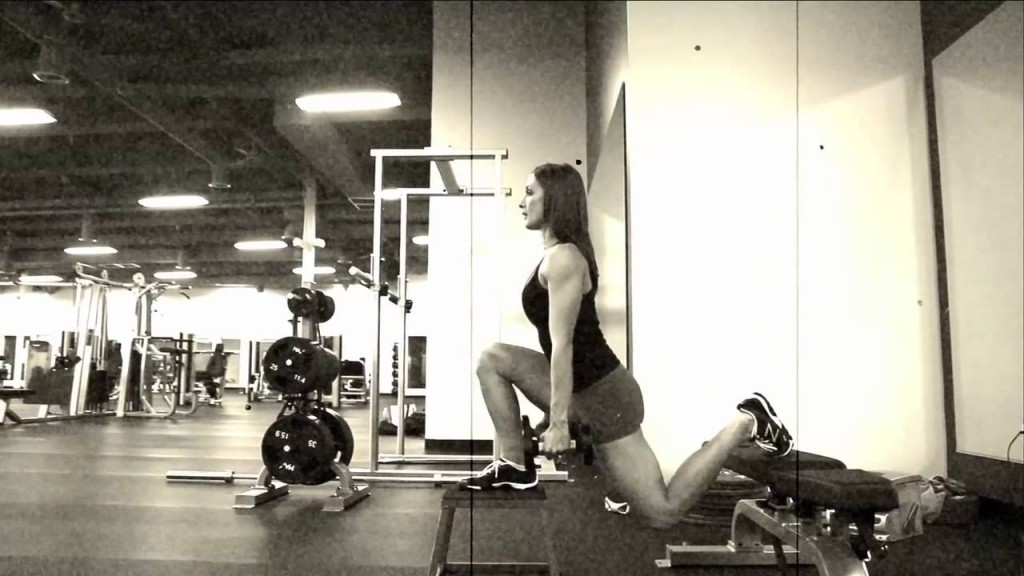
We all want to be making progress in the gym, but unfortunately, many lifters remain stagnant. In general, you want to make sure you’re getting stronger over time. Getting stronger means using more load or achieving more repetitions with the same weight. This is the essence of progressive overload, which I discussed in great detail HERE. While there are a million ways to progressively overload, I’m going to outline a very simple system I use in my own training and with my clients.
3 Set Total Reps
When I prescribe an exercise, quite often I will use the same load with all 3 sets, and I’ll simply note the total number of reps they achieve (this is in contrast to pyramids, which I wrote about HERE). Once they reach a particular total, I’ll increase the load. I first learned about this method from a Joe DeFranco DVD that I purchased many years ago, and it’s something that I’ve consistently sprinkled into my training since then.
* * * * *
And back to T-Nation for some heresy from TC, as well as other good stuff.
8 Reasons You're Still Weak or Fat
by TC
07/14/14

Here's what you need to know...
Convention dictates that I write an intro to this article, but this article is about defenestrating convention and tweaking your strength-building or fat-burning or bodybuilding perspective a little to the left or to the right, so screw a drawn-out intro. The title says it all.
- If after several years of training you're still weak, there's a good chance you need to rethink your ideas about squats and deadlifts; that you've got no love for the upper body squat; that steroids misled you about a basic training principle; and that you work muscles instead of movements.
- If after several years of training you're still fat, there's a good chance you need to rethink your ideas about eating 6 meals a day and doing fasted cardio.
- If you're still skinny, there's a good chance your ideas about post-workout nutrition are 10 years old and your definition of recovery days needs an adjustment.
* * * * *
Break 3 Rules, Build More Muscle
by Christian Thibaudeau
07/07/14

Here's what you need to know...
Despite my focus on performance, I also want to look muscular and lean, as do my clients. I've even competed in bodybuilding myself to see what it was like and to understand it better. I also had the opportunity to work with a lot of great bodybuilders, amateurs and pros. I worked with Amit Sapir for a few years, starting when he was an amateur and up to when he won his pro card. I also was involved in the Darryl Gee project that was documented on T Nation. Currently, I'm training Patrick Bernard, a new IFBB pro in the 212-pound class, as well as a young woman who won her class in figure at a recent contest. I've definitely learned a thing or two in the process.
- For hypertrophy, it doesn't really matter what the exercise looks like as long as it puts the muscle under an optimal load/tension. Accordingly, some of the biggest bodybuilders on the planet rely heavily on partial reps.
- If you can't feel a muscle working in an exercise, you can't stimulate it or grow it optimally. Isolation work will fix this problem and even improve your compound lifts.
- You can build muscle with almost any kind of rep range. If you train consistently and try to gradually become stronger in the rep ranges you're doing, you'll grow muscle with 3 reps or 20 reps.
You can learn from anyone who's training hard and making progress - bodybuilders, powerlifters, athletes, CrossFitters, Olympic lifters, etc. Close your mind to any of these training modalities because of pre-conceived ideas and you'll miss out on a lot. That said, here are three things I learned from working with bodybuilders.
* * * * *
How to Increase Your Pull-Up Power
by Dan John
07/09/14

Here's what you need to know...
I pity the pull-up. In the past decade, this wonderful movement has been trashed and beaten by enthusiasts who try at all costs to up their rep total higher and higher. Sure, high reps have their place, but many of us need a smarter, more rational approach.
- The pull-up has been beaten to death by lifters and athletes who try at all costs to get their rep total higher and higher. They should be adding load instead.
- Simply hanging from the bar is an important form of loading. If you want to do 25 strict pull-ups, can you even hang from the bar long enough to do them?
- The ab wheel mimics many of the keys to proper pull-ups.
- Pavel's Russian Fighter Pull-up Program allows you to "sneak up" on a higher number of reps.
After a certain age, pull-ups start "bugging" people. For most of us, there's a pain in the elbow that only goes away when we avoid pull-ups. A few weeks or months later, it seems to cure itself and the only way we reinjure it is by doing more high-rep pull-ups and... we succeed! We have a name for this in my gym. We call it Middle Age Pull-Up Syndrome, or MAPS. "You too can help us cure this disease. Please send money now to..."
Improving your pull-up numbers, either with more reps or more load - which I tend to recommend over more reps - is going to be a study in balance. If you force the reps up with more and more volume, you might eventually hit your new personal record in the movement but never again throw a ball or comb your hair. You could keep your hair really short, or you could train the pull-up using a few contrarian ideas.


