Man Violently Attacked for Standing Up for Women Being Catcalled
Rebecca Rose | August 12, 2014
A man is in the hospital after he was attacked for defending a group of women who were being harassed on the street, according to police.
The 39-year-old Texas man (whose name has not been released) was visiting Philadelphia's Rittenhouse Square on Saturday night. Police said the man observed a car of men pull up to a group of women. Via NBC Philadelphia:
The men inside the Nissan began taunting and catcalling the women, according to investigators, prompting the victim to get involved.The man is in stable condition at a local hospital. "This is a tragic, tragic story," Captain Fuchs said. "Here's a guy trying to stick up for these girls and he gets victimized."
"The male victim took offense to something that the guys were saying to the girls and said 'hey, watch what you're saying,'" said Philadelphia Police Captain George Fuchs.
Police say one of the men inside the Nissan then got out of the car and punched the victim once in the head. The man was knocked unconscious after he fell and struck his head on the concrete.
[...]
Police say the suspect's Nissan had Delaware tags. They are currently looking through surveillance video to see if they can find the license plate number.
Good to know that their are men who are so irrationally fixated on their need to publicly demean and shame women they are willing to beat the shit out of anyone who gets in their way or dares call it into question. Great. Add another layer of fear to all the reasons why I hate catcalling.
Screencap via NBC Philadelphia.
Showing posts with label sexism. Show all posts
Wednesday, August 13, 2014
Man Violently Attacked for Standing Up for Women Being Catcalled (via Jezebel)
It's great that this guy stood up to the a-holes, and it sucks that he got so badly hurt.
Sunday, June 22, 2014
Men Can Be Feminists . . . But It’s Actually Really Hard Work
Male feminist. To me, that is not at all unlike saying one is a male triathlete, or a male liberal. To be a feminist, and I am sure (as a male) I can't possibly grasp this entirely, is to want women and men to have equal rights and status in the society, both through cultural norms and under the legal system. That doesn't feel too hard, so I must be missing something.
Men can be feminists but it’s actually really hard work
Feminism is for everybody because sexism hurts everybody, but lots of men are comfortable with the status quo
Katie McDonough
Monday, Jun 9, 2014
Joseph Gordon-Levitt recently called himself a feminist (Credit: AP/Victoria Will)
The Betteridge law of headlines states that “any headline which ends in a question mark can be answered by the word no,” but a Monday piece in the New York Times may be the rare exception. “Is it possible to be a male feminist?” asks writer (and self-described male feminist) Jake Flanagin. The answer to this question is yes. Possibly even, “Yes of course come on seriously?”
It’s a fine enough question for a journalist to ask (think piece glass houses, etc.), but Flanagin’s decision to focus on Hugo Schwyzer — who was given several platforms to write about men and feminism while he spent his spare time attacking the personal, academic and professional lives of black feminists and other feminists of color – is an odd one. As Jamil Smith noted on Twitter, if you want to have a conversation about men and feminism, why not talk to male feminists? Smith’s point, I think, is to raise the issue of why we seem to have a lot of pieces questioning whether men can be feminists and very few that explore what happens after you answer that question in the affirmative. Aren’t we even a little bit curious?
The most compelling part of the Times piece comes in the very last paragraph, when writer Noah Berlatsky discusses the work that being a male feminist actually requires. “It’s true that sometimes male feminists, myself not excluded, imagine we’re brave allies, altruistically saving women by standing up for them,” Berlatsky observes. “But dreams about men saving women are just another version of misogyny — and, in this case in particular, totally backwards. Misogyny is a cage for everyone. When I call myself a male feminist, I’m not doing it because I think I’m going to save women. I’m doing it because I think it’s important for men to acknowledge that as long as women aren’t free, men won’t be either.”
Berlatsky gets to something important about the nature of justice — that it’s a radically intertwined project. Contrary to the tired trope about “mothers, wives and daughters” that generally gets thrown around in arguments about why men should care about women’s rights, men should be feminists because the lives of the women and girls they have never met and will never meet matter. Particularly in a culture that does not encourage men to cultivate or express empathy, this thing of giving a basic shit about people you don’t know is itself a kind of radical act. But Berlatsky’s point that “misogyny is a cage for everyone” also captures another reason that I think men can and should identify as feminists. Because of course men should be outraged at the violence experienced by women and girls and the systems that dehumanize them, but framing men’s relationship to feminism exclusively as men’s relationship to women’s status in the world erases the fact that men are also harmed by patriarchy, toxic masculinity and entrenched cultural and institutional sexism.
The scale is aways going to be different, of course. I’d never try to argue otherwise. Cultural norms that hold women as mothers and caregivers above all else mean that women get paid less than their male colleagues for the same work, and that women disproportionately put their personal and career ambitions on hold in order to care for children and others. But these same norms also leave men questioning their masculinity or doubting their self-worth if they want to stay home with their children. These things aren’t the same, but they both matter.
The same could be said about dominant narratives around sexual assault. Women and girls make up the majority of victims of sexual violence, but a culture that straight up says that teenage boys can’t be raped makes it almost impossible for male survivors to come forward. Destructive ideas about sexual male entitlement are at the heart of rape culture and the reason that so many women and girls are victimized in their lifetimes, but they also feed into this idea that men always want sex, which makes men who have been victims of rape question whether or not what happened to them even counts as a crime. It took a really, really long time for this to even become a crime. These same norms also encourage men to have really warped relationships to desire and sexual satisfaction. This stuff hurts women the most because of the violence it engenders, but it hurts men, too.
There are plenty of important questions to ask about how men can be feminists without making themselves the center of the movement. About the work of listening and boosting versus erasing and derailing. About how men get lots of applause and accolades for doing very basic things — like not violently abusing women. About how many men don’t identify as feminists because they are deeply invested in upholding the systems — like patriarchy and white supremacy — that benefit them. And Berlatsky’s point about the line between the male savior complex and being a legitimate force for positive social change is well made. But we can have all of these conversations while acknowledging that men who identify as feminists aren’t just cheerleading for women — they’re fighting systems that tell them that being a good listener makes them a pussy, or that they shouldn’t share their emotions, or that straight men can’t have intimate friendships with other men, or that rape in prison is hilarious.
Feminism’s relevance to everyone has been articulated and re-articulated throughout the history of the movement, and I was reminded of this again over the weekend when I read an interview with actress Mackenzie Davis, who said she couldn’t understand why “feminism” feels like such a scary word to some people.
“Feminism is rooted in racial rights and gender rights, and all of those things intersect, and to say that that’s not something you can stand behind — it confuses me,” she told the Times. “I think it’s a really great word.”
So do plenty of men.
Katie McDonough is an assistant editor for Salon, focusing on politics, culture and feminism. Follow her on Twitter @kmcdonovgh or email her at kmcdonough@salon.com.
Tuesday, May 27, 2014
The Tantrum of Masculinity - Omnivore
From Bookforum's Omnivore blog, here is a new collection of links themed on masculinity.The topics include patriarchy, male competition, academic masculinities, education, military masculinities, and pick up artists (PUAs).
And speaking of PUAs, there are also the mandatory links to articles blaming men, masculinity, patriarchy, and guns for the shooting rampage in Isla Vista. If only it were that simple.
The tantrum of masculinity
May 26 2014
9:00AM
- From Evolutionary Behavioral Sciences, Daniel J. Kruger (Michigan), Maryanne L. Fisher (St. Mary’s), and Paula Wright (Newcastle): Patriarchy, Male Competition, and Excess Male Mortality; and Dario Maestripieri, Amanda Klimczuk, Daniel Traļ¬conte, and M. Claire Wilson (Chicago): Ethnicity-Related Variation in Sexual Promiscuity, Relationship Status, and Testosterone Levels in Men.
- Christopher R. Matthews (Brighton): Biology Ideology and Pastiche Hegemony.
- Lawrence D. Berg , Levi Gahman, and Neil J. Nunn (UBC): Neoliberalism, Masculinities and Academic Knowledge Production: Towards a Theory of “Academic Masculinities”.
- A link between fidgety boys and a sputtering economy: A gender difference in behavioral skills, seen as early as kindergarten, is hurting boys’ academic prospects and their earning potential.
- Discharged under the rainbow: Ariel M. Martinez on military masculinities and Don't Ask, Don't Tell.
- The tantrum of masculinity: Elisabeth Donnelly interviews Rebecca Solnit on mansplaining, power, and her book Men Explain Things to Me.
- 10 years later, The Game has changed for pick-up artist Neil Strauss: “To hear Strauss tell it, PUA is about using male sexuality as a force for good in the world”.
- Amanda Hess on the Pick-Up Artist community’s predictable, horrible response to a mass murder.
- It denies reality to pretend that Rodger’s sense of masculine entitlement and views about women didn’t matter or somehow existed in a vacuum.
- Laurie Penny on calling the Isla Vista killings what they were: misogynist extremism (and more and more).
- Here are some of the most powerful #YesAllWomen tweets (and more and more and more and more and more).
- Rightbloggers say Santa Barbara killer Elliot Rodger's sexist rants have nothing to do with sexism (or guns).
- In the deadly aftermath of Elliot Rodger’s psychotic and suicidal shooting spree that left six others dead, the muted echoes of David Attias — who killed four people in Isla Vista 12 years ago — will be bouncing off Isla Vista’s blood-stained streets for some time to come.
Saturday, March 15, 2014
Elizabeth Meyer, Ph.D. - The Danger with “Boys Will Be Boys”
Why don't we ever say, "girls will be girls," when a girl does something that makes uncomfortable because it suggests a shadow side of their "girlishness"? Yet when a boy, let's a nine-year-old boy staring at a girl in a bikini at the beach, does something that makes us uncomfortable (because we know it is sexist or objectification), we simply write it off as "boys will be boys."
In this article from her Gender and Schooling blog at Psychology Today, Elizabeth J. Meyer, Ph.D. offers four points about how this "boys will be boys" model is bad for boys, and bad for the rest of us as well.
- It prompts students to construct gender stereotypes.
- Gender stereotypes allow unconscious biases to form and proliferate.
- It is misinformed thinking and oversimplifies the problem.
- It limits the full expression of children.
Image at the top is from NothingIsReal.
The Danger with “Boys Will Be Boys”
Why this phrase should be banned from our vocabulary
Published on March 14, 2014 by Elizabeth J. Meyer, Ph.D. in Gender and Schooling
This post is a response to The Way We Talk About Gender Can Make a Big Difference by Christia S. Brown, Ph.D.
I’ve had a couple different conversations with the teachers at my child’s preschool about some of the aggressive behaviors a few of the children have been exhibiting. It has been most alarming to wake up in the morning and have my three-year-old say to me, “I am a robot, I’m going to eat your brain and peel off your skin.” I was also concerned to learn that when a child brought in a Ninjago book, the teachers read the book to the children even though Common Sense media reports that this series is best for children 7 and over and has 0/5 educational value, 2/5 for violence and 5/5 for consumerism. When I have expressed my concerns about some of these issues, every conversation has ended the same, with the teacher saying, “Oh you know, boys will be boys.”
That statement effectively has ended the conversation because it has left me too stunned and flabbergasted to respond. I bite my tongue each time because I don’t want to be THAT parent who is viewed as oversensitive and disengaged from reality. I also want to have a productive dialogue that will allow the preschool to hear my concerns in a way that may allow them to shift their thinking about how they address these issues. This blog is my attempt to organize my thoughts and gather some relevant research in order to help other parents and teachers who may find themselves perplexed by the same situation. So why is “boys will be boys” dangerous?
- It prompts students to construct gender stereotypes. A recent Psychology Today blog post discussed the impacts of gendered language in elementary schools and how teachers who simply said things like “good morning boys and girls” vs. teachers who said “good morning children” led students to engage in more gender stereotypical thinking such as “only women can be kind, gentle and take care of children” or “only men should be a doctor or construction worker.” These gender stereotypes are limiting for everyone. One of the most damaging impacts is a phenomenon called “stereotype threat.” This is the impact of internalizing stereotypes about your group and having that impact your academic performance that has been documented in the research of Steele & Aronson (1995) and Aronson & Williams (2004). Aronson explains “when social conditions threaten basic motives—our sense of competence, our feelings of belonging, our feelings of control—this can dramatically influence our intellectual capacities.” He goes on to say, “These studies shed considerable light on how stereotypes suppress the performance, motivation and learning of students who have to contend with them and they suggest what educators can do to help.” For example, students of color underperformed in similar measures when students were asked to mark their gender or their race on their test paper, and in cases where students were not "reminded" of this group membership and as a result, the associated stereotypes, students performed much better. Another study confirmed that girls performed better in math assessments where stereotype threat was reduced (Quinn & Spencer 2001). Another Psychology Today blogger wrote eloquently about research showing how this impacted children as early as 1st grade and their attitudes toward math and language arts.
- Gender stereotypes allow unconscious biases to form and proliferate. Unconscious bias is a term that describes internalized attitudes about a particular group of people that then can shape our interactions with that group. In Jean Moule’s 2009 article, Understanding unconscious bias and unintentional racism, she calls this "blink of the eye racism," which in this case would be "blink of the eye sexism." These sorts of unexamined and deeply embedded beliefs are powerful in shaping how we make decisions in hundreds of everyday interactions, which can impact students’ educational opportunities. David Sadker outlines many examples of how this impacts students in his 2002 article, An Educator’s Primer to the Gender War. He explains that teachers give more attention to the "more active" boys and less academic contact to the "quieter" girls, and although more girls are identified for gifted programs in elementary schools, by high school fewer girls remain in gifted programs—particularly African American and Latina girls. These stereotypes also reinforce the myth of the gender binary and "sex differences" which I discuss more in point four below.
- It is misinformed thinking and oversimplifies the problem. This expression attempts to explain away aggressive behaviors that a small number of children exhibit by linking it with "natural" or "biological" impulses without examining other reasons for the aggression. By linking aggressive behaviors with a child’s sex assigned at birth it ignores all the other environmental (family, media influences, messages at school, etc.) and individual factors (personality, nutrition, body chemistry, etc.) that might be influencing behaviors. It creates an easy excuse to fall back on so adults don’t have to examine other reasons for such aggressive behaviors. It is also often used to justify schoolyard bullying—often very extreme cases that are violent and homophobic in nature—and causes many adults to accept negative behaviors as "natural." The principal in the famous Nabozny v. Podlesny case where a student was hospitalized after being beaten up for being gay justified the assault using such terms. This phrase allows harmful behaviors to persist unchecked and possibly worsen over time. It also reduces the likelihood of adults intervening in interactions that can be really harmful.
- It limits the full expression of children. By saying “boys will be boys” it teaches children that certain behaviors are endemic to masculinity and exclusive to boys only. This form of thinking reinforces rigid binaries that cause us to develop more engrained “either/or” attitudes that allow our culture to ignore the true spectrum and variety of behaviors that individuals can exhibit. Janet Hyde from the University of Wisconsin, Madison has carefully critiqued the “science of sex differences” research by doing an extensive analysis of studies of sex differences. This meta-analysis of hundreds of studies showed that most reported differences between sexes are quite small. As a result she has developed the gender similarities hypothesis that humans are more alike on most factors than "common sense" would have you believe. The Psychology Today editors wrote about this study in a blog post in 2008 that summarizes the study quite concisely. Other books have been published that try to perpetuate this belief that males and females are very different, and the media are ready to repeat these stories because they are comforting and familiar to their audience. However, they are not supported by the majority of research and we need to be able to talk about children’s behavior in more complex and nuanced ways that don’t confine them to socially constructed pink and blue scripts.
I want my child to grow up in a world that allows him to explore his strengths and express his personality in ways that are true to him, not ways that society believes boys are supposed to behave. I hope by sharing some of this research here, other parents and teachers may be able to work more actively to combat this misinformed approach to working with children and allow our kids to explore and express themselves in ways that are authentic and healthy for them. This will hopefully minimize some of the academic gaps reported on here, as well as reduce some of the violence that many young men engage in, and allow gender-creative and transgender youth to be affirmed and supported in their home and school environments.
Tuesday, March 11, 2014
Man Who Treats Women With Respect Asked What His Secret Is
From The Onion, America's Finest News Source . . . of course. As is the case with good satire, there is ironic truth to be had in this brief piece.
![]()
MINNEAPOLIS—Commenting upon his seemingly effortless ability to interact with all kinds of women, friends of local financial analyst Matt Brownlow, a man who regularly treats members of the opposite sex with respect, reportedly asked the 28-year-old Monday what his secret is. “You just seem to have such a way with women—what’s your trick?” friend Alex Stegman inquired of the considerate man who sustains healthy, meaningful relationships with women by consistently listening to them and not treating them as utilitarian instruments for male gratification. “I don’t know how you do it. It seems like talking to women is so easy for you, and you’re always able to get them smiling and engaged in conversation with you. Man, I wish I could do that.” At press time, sources confirmed Brownlow could be overheard working his magic on a female coworker by thoughtfully asking about her weekend.
Sunday, October 20, 2013
Ed Yong - Sexism and Harassment in the Science-Writing World
Ed Yong (photo below) blogs at National Geographic's Phenomena: Not Exactly Rocket Science blog here he does a weekly column of cool science-related articles from around the interwebs (I've got your missing links right here" - this week's is I've got your missing links right here (19 October 2013).
Before I continue, I want to mention that on the sidebar of his blog, Yong has this:
My wife, who makes it all possible
I share this because Yong's personality and commitment to his wife is relevant to his comments on and coverage of a recent series of disturbing events in science journalism. This lends Yong more weight in his refutation of the behaviors described below.
A very well-known science writer and blogger, the Blogs Editor at Scientific American, and co-founder of ScienceOnline.com - Bora Zivkovic - was accused by first one and then several science writers - all female - of sexual harassment.
The pattern is pretty distinct in each of their stories:
[Bora] contacted her, showed interest in her work, met with her, and then proceeded to steer the conversation straight towards sex (such as repeatedly telling her he was a "very sexual person.")This is all so effing disturbing as a man - I work with women who go through this is much less public ways. Often, as is the case with Kathleen Raven, this kind of harassment devolves into rape.
I am so proud of these women for speaking out and revealing the culture of control and power in which they work. And I applaud Ed Yong for featuring this story on his blog this weekend.
Ladybits have issued a call for submissions on the power of harassment.
So with that, here is the opening to this week's "missing links" column.
Sexism and harassment in the science-writing world
It’s been a bit of a week in the science-writing world. First, Scientific American blogger Danielle Lee wrote about an editor who asked her to write for free and called her a whore when she turned him down. SciAm took down the post with inconsistent explanations, prompting a fierce online response. Maryn McKenna sums up the story and I’d really recommend this post by Kate Clancy. The post is back up; the editor, fired.
In the wake of that, writer Monica Byrne accused Bora Zivkovic, a leading figure in the science blogging community, of harassment. He apologised, but concurrently other women stepped forward, including science writers Hannah Waters and Kathleen Raven. The women are brave; their accounts, devastating. Raven’s is the most gut-wrenching thing I have read in recent memory. Trigger warnings apply.
The event has also prompted a lot of good pieces on gender and power issues in the science community. This is a non-exhaustive list, but: many good pieces on Ladybits; Melanie Tannenbaum on the psychology of impact vs. intent; Alice Bell on the nature of the sci-blogging community; Laura Helmuth with sage advice for people seeking mentorship (and those who can provide it), and more; Martin Robbins on keep-it-quiet-ism.
The whole thing also led to the heartbreaking #ripplesofdoubt hashtag as many people shared their stories of how pervasive harassment and sexism affects them. See Hope Jahren’s piece.
I’m pushing this to the foreground because it’s more important than any of the stuff below. We need to open our eyes. We need to ensure that our colleagues don’t have to go through this, and certainly not alone. We need to speak up about it because doing so will create a culture where people can speak up about it, where they can stand up and be supported. Not this. [emphasis added]
More coverage here, here, here.
Saturday, August 31, 2013
Documentary - The Bro Code: How Contemporary Culture Creates Sexist Men
This is an educational documentary meant, I assume, for university campuses. Sounds pretty similar to Jackson Katz's Tough Guise. Here some of the main points of the film, according to the supplemental materials.
Key Points
• The filmmaker admits that he grew up in “bro culture,” pointing to his background in sports and music.
• He then suggests that boys today are being raised in the same sexist ways he was raised.
• But he underlines a key difference between then and now: he claims that the sexism inherent in today’s “bro” culture is far more dangerous than in the past.
• The primary aim of the film, he says, is to understand the variety of ways that this increasingly dangerous strain of sexism continues to be lauded and defined as cool by mainstream media and mainstream male culture.
You can also read a transcript of the film (here)and a study guide for the film (here). Below is a low-resolution full-length preview of the film.
The Bro Code: How Contemporary Culture Creates Sexist Men
Filmmaker Thomas Keith, a professor of philosophy at California State University, Long Beach, provides an engrossing look at the forces in male culture that condition boys and men to dehumanize and disrespect women. Breaking down a range of contemporary media forms targeted explicitly at young men, Keith teases out the main maxims of "bro culture" and "the bro code," and examines how this seemingly ironic mentality reinforces misogyny and gender violence in the real world. Whether he's looking at movies and music videos that glamorize womanizing, pornography that trades in the brutalization of women, comedians who make fun of sexual assault, or the recent groundswell in men's magazines and cable TV shows that revel in reactionary myths of American manhood, the message Keith uncovers in virtually every corner of our "entertainment" culture is clear: that it's not only normal -- but cool -- for boys and men to control and humiliate women. Along the way, The Bro Code makes a powerful case that there's nothing normal, natural, or inevitable about this toxic ideal of American manhood, and challenges young people to fight back against the resurgent idea that being a "bro" -- and a man -- means glorifying sexism, bullying, and abuse.
Featuring interviews with Michael Kimmel, Robert Jensen, Shira Tarrant, J.W. Wiley, Douglas Rushkoff, Eric Anderson, and Neal King.
Sections:
Intro (2:15)
Step 1: Train Men to Womanize (18:03)
Step 2: Immerse Men in Porn (13:25)
Step 3: Make Rape Jokes (11:33)
Step 4: Obey the Masculinity Cops (12:22)
Viewer discretion advised : Contains violent & sexual imagery and profanity.
Filmmaker Info
Written and produced by Thomas Keith
Director of Photography: Michael Enriquez
Additional Photography: Mitch Lemos
Editing: Thomas Keith
Filmmaker's Bio
DR. THOMAS KEITH | Director, Writer, Producer
Dr. Thomas Keith teaches philosophy at California State University, Long Beach and California Polytechnic University. He specializes in American philosophy and pragmatism with an emphasis on issues of race, class, and gender. In 2008, Dr. Keith directed and produced the bestselling film, Generation M: Misogyny in Media and Culture, which is used in classrooms around the world.
Friday, June 14, 2013
Omnivore - Notions of Manhood
From Bookforum's Omnivore blog, here is a collection of links related to being a man, including an interesting article on the relation between upper body strength and support for income redistribution.
The researchers collected data on bicep size, socioeconomic status, and support for economic redistribution from hundreds of people in the United States, Argentina, and Denmark.
In line with their hypotheses, the data revealed that wealthy men with high upper-body strength were less likely to support redistribution, while less wealthy men of the same strength were more likely to support it.
"Despite the fact that the United States, Denmark and Argentina have very different welfare systems, we still see that -- at the psychological level -- individuals reason about welfare redistribution in the same way," says Petersen. "In all three countries, physically strong males consistently pursue the self-interested position on redistribution."
Men with low upper-body strength, on the other hand, were less likely to support their own self-interest. Wealthy men of this group showed less resistance to redistribution, while poor men showed less support.
"Our results demonstrate that physically weak males are more reluctant than physically strong males to assert their self-interest -- just as if disputes over national policies were a matter of direct physical confrontation among small numbers of individuals, rather than abstract electoral dynamics among millions," says Petersen.
Based on my own life, I would guess that I fit into their model - I have greater than average upper body strength, middle class income, and I tend to support a more equitable distribution of wealth. But is that based on my upper body strength, or is it based on my moral and ethical beliefs?
There are also articles on feminist men and why men should align with feminists against sexism.
Notion of manhood
JUN 10 2013
1:00PM
- From Lip, we know what Plato thought about feminist men, but that was some 2000 years ago — how should we think about it today?
- Men's upper-body strength predicts their political opinions on economic redistribution, according to new research.
- A huge study involving over 12,000 participants across 51 cultures from Argentina to Uganda has concluded that men tend to have more varied personalities than women.
- When men experience sexism: There are some practices and policies that are unfair to men — but this fact should unite men with feminists, not drive them apart.
- How society’s notion of manhood leads to murder: Diane Anderson-Minshall interviews David McConnell, author of American Honor Killings: Desire and Rage Among Men.
- Joan Williams on how class anxiety and masculinity fears push men to work longer hours: A work culture in which long hours signal value and status is bad for everyone.
- If men need a 21st-century role model, how about Jesus Christ?
Sunday, April 7, 2013
Was President Obama's "Best-Looking Attorney General" Comment Sexist?
I pay very little attention to most political news, so I missed President Obama's "best-looking attorney general" comment (on Thursday, April 4) in reference to California Attorney General Kamala Harris. However, one of my female clients brought it up in her session, so I looked into it a little bit.
Interestingly, some conservatives (women) are defending Obama while others are suggesting he “crossed the line” (woman) and needs “gender-sensitivity training” (man).
“She’s brilliant and she’s dedicated, she’s tough, and she is exactly what you’d want in anybody who is administering the law, and making sure that everybody is getting a fair shake,” Obama said at a Democratic National Committee event in California Thursday, adding “She also happens to be, by far, the best looking attorney general.”I can see why some people might be bothered by this comment, although I have no sense that Obama is sexist in any way. He praised her skills as a lawyer and public servant first and foremost, and then offered, as an aside, the comment on her attractiveness.
Obama had the chattering class buzzing not long after he made the remarks, with some arguing he “crossed the line” and needed “gender-sensitivity training.”
And he found defenders in an unlikely place: Fox News. On Friday’s Fox & Friends Gretchen Carlson said “She’s pretty! So what?” Later conservative radio host Monica Crowley defended the president as well. “What he said was sincere, it was honest, it was very sweet,” she said.
It seems clear that is was the wrong place and time to make such a comment, but it does not appear particularly harmful or in any way belittling of her skills and talents. It feels like political correctness to demand he attend gender-sensitivity training.
Writing at The Atlantic, Garance Franke-Ruta offers a different perspective - the gaffe in this comment is in mixing the worlds of power and the worlds of beauty, which tend to be mutually exclusive.
Why Obama's 'Best-Looking Attorney General' Comment Was a Gaffe
The system of beauty, the system of power, and Kamala Harris
GARANCE FRANKE-RUTA
APR 5 2013,
Eric Risberg/AP Images
President Obama's biggest gaffe yesterday when speaking of California Attorney General Kamala Harris was not in flirtatiously complimenting her as "the best-looking attorney general," but in introducing an observation from the system of beauty into a forum that was about the system of power.
What's that, you say? Irin Carmon does a great job in Salon in laying out the bounds of propriety for when it's appropriate to talk about a woman's looks as a general matter. But I've long felt we lack a solid theoretical underpinning for easily discussing these issues, and why precisely it is that admiring and complimenting women for the beauty they work so hard to maintain--and let's be clear, nobody looks like Harris at her age (48) without effort and without herself valuing beauty and fitness, which are achievements as much or more than naturally occurring properties--can sometimes be inappropriate.
It seems to me--and I touched on this a bit a 2009 Slate piece--that a simple distinction between the two worlds in which women today operate can help us think about this: They are the system of beauty, and the system of power.
The system of beauty is what preceded women's entry into the paid workforce in a bid to achieve economic equality and professional fulfillment. It operates everywhere in the world, according to regionally variable standards, but goes a little something like this: Women are a natural resource, a form of wealth that men can acquire. Beauty and, to a lesser extent, fertility, are the coinage in this system of value. In contemporary America, women can choose the extent to which they wish to engage with this system of power, but there's no question that it remains extant, and that in many ways the most economically successful women are those who use it best to their advantage--actresses, models, musicians, and the like. Beauty is a system of power, deeply rooted, preceding all others, richly rewarded. We pay homage to it, still, and young women as they face the world can make a choice to live a life--even a career--within it, just as they can choose to go to law or medical school or contend in any other way for standing and earning capacity in the world.
That is, they can enter the system of power. Power as the acquisition of status, capital, position, knowledge, property. And for a reason other than the exploitation of the resource of the physical self. The fight of feminism was the fight of women for entry into the system of power from the system of beauty. The fight in the workplace for women very often is to create a space for themselves within the system of power while continuing to operate within the system of beauty in their private lives. And the struggle of feminism has often been to acknowledge that the system of beauty is irrevocable and cannot be expunged by protest or discourse or time. To be an educated professional woman in contemporary America is to know that you operate--and often, must operate--within both systems. It's why beautiful and extremely capable women are often valued above their less glamorous or less fit peers--they are triumphs in two systems of value, double-threats.
Harris, like Michelle Obama, is a triumph in the system of beauty as well as the system of power. But President Obama's remark mistook the setting. Just as it's perfectly appropriate to tell a colleague she looks gorgeous when she's dressed to the nines for some black tie work event, it would be inappropriate to refer to her as "gorgeous over there" during a work meeting. Doing so takes her out of the system of power and puts her into the system of beauty in a setting in which power is the value that's brought her to the table. And that, dear readers, is a gaffe.
Tuesday, February 5, 2013
The Three Most Anti-Male Commercials from this Year's Super Bowl
This article comes from the Men's Anti-Violence Council. They offer their analysis of this year's Super Bowl commercials and find three of them especially derogatory toward men in various ways. What do you think?
Superbowl 2013 Ads: New Ads, More of the Same Pandering
By mensantiviolencecouncil
It is that time of year again. Arguably one of the highest rated programs in the country, the superbowl commands top tier, star studded advertising like none other.
If you are anything like me, this might be one of the few times you stick around FOR the ads.
If economic theory tells us anything, then the sky high costs of advertising for during the superbowl (estimated to cost well over $3 million per thirty second spot) should say what companies think sells with the American public.
So what is selling these days?
Besides the usual animated babies (in space!), amazing cameos (including Seth Rogen/Paul Rudd and Amy Poehler), Clydesdales, and farmers; the super bowl also featured a number of questionable choices as well.
What do I mean by “questionable choice?” I mean that these three commercials represent some of the worst advertising gender tropes and objectifications of the game.
3. If it has boobs, men will buy it.
GoDaddy is arguably one of the worst offenders of the bunch. It ranks as number three because their efforts are half-hearted and transparent. As a technology company that builds websites, nudity and sex has absolutely nothing to do with their services or their products. Yet like the game companies that sponsor “booth babes,” GoDaddy makes a wide assumption that men, particular men in the technology field, are helpless at the sight of buxom and scantily clad women. It is an endorsement of the objectification of women as “flair” for technology products. Furthermore, as someone who fancies himself a male geek, I am offended. You can check out their video here:
2. Men who do not conform to gender codes are an object of derision
I’m a little torn on including the Dorrito’s commercial on this list, but ultimately, I think the ad falls short of its intended purpose (dorritos will make us do anything) and instead ends up casting aside the men who don women’s clothing to play tea party with their daughters as emasculated. This is shown in two parts, one of which being the mother who chastises the husband and the other in the fact that even wearing women’s clothing the men egg each other on, less like an enjoyment of the setting and more like a fraternity hazing event.
Feel free to disagree, but you can find positive images of cross dressing, but this is not one of them.
1. Women are less important than objects
Objectification of women has long been a part of media strategy. It has percolated in US culture in a plethora of ways from the phrase “I would tap THAT” (emphasis added), and Comedian Daniel Tosh who joked about how “funny” it would be if a heckler at his show was suddenly gang raped.
I’m no expert on humor, but I imagine a few women in New Delhi, Steubenville Ohio, Montana, and across the world would disagree. As a man I disagree. But such is the freedom of speech. It allows us to debate about humor but does not and should not condone violence of the most intimate variety.
Which is why Gildan’s, a t-shirt manufacture, initial foray into brand advertising was so surprising. A man sneaking away from a one night stand, clearly suffering the affects of too much alcohol, is more concerned with his shirt than the woman he slept with is disquieting in ways that the other commercials are not. Whether this was the result of trying to start a national ad campaign for the first time or some greater design, their commercial hits the number one problematic advertisement of Superbowl 2013. Not because of its overt content, but for the implicit messages that it seems to condone.
But that is just one person’s opinion. What did you think of the 2013 ads?
EDIT: Dishonorable mention goes to Volkswagon for the cooption of a Jamaican accent. It plays on stereotypical notions of accent, attitudes, and behaviors. Perhaps not the worst offender everywhere, but problematic none the less.
Thursday, August 23, 2012
Laurie Penny - How Should We Talk to Men about Sexism?
From The Independent (UK), this is an interesting exchange between a male and a female - both bloggers and both self-described feminists - on men and sexism. With that dumbass Missouri Congressman, Todd Akin, who is running for the Senate, making news with his fantasy-based models of reproductive biology (which is a more ignorant form of his unrepentant sexism), this is a relevant topic.
Hell, if guys like him get control of this country (and Paul Ryan is one of them), sexism will be the least our worries . . . it will be all-out war on women (and the men who think women and men should have rights, pay, and responsibilities across the board)..
But I digress . . . .
I think the most revealing thing for me in reading this is identifying just how much sexism shapes my behavior - rather, the fear of being seen as sexist or that my words/actions will be viewed as a form of sexism. Martin mentions changing his route while walking to avoid following a woman down an alley - I've done that, too. And more simply, I have NOT said things for fear of it being taken wrong.
For example, as most readers here know, I am a personal trainer (as well as a psychotherapist), so I spend a lot of time in gyms. I notice when someone, male or female, has made body composition improvements, but if it's a woman and I do not know her very well, I will not say anything (although I will have the impulse to say, "You look great - you must be proud of the changes you are making!"). My fear is that she probably will take my comment as another dumb jock (or old man, if she is young) trying to hit on her while she is working out.
There are probably a million little ways that sexism (as an assumption about men - guilty until proven innocent) shapes my reality - and I had not really thought about that before reading this exchange. However, while feminism can be useful in helping men understand female experience, I don't really see it as the answer to sexism (which is where this article concludes).
How should we talk to men about sexism?
![]()
By Laurie Penny
Monday, 23 July 2012
![]()
Laurie Penny and Martin Robbins are both writers, both feminists and both happened to be sitting alone at their computers on a Friday night when the question of ‘how to talk to men about sexism without scaring them off?’ came up on Twitter. Reasoning that the best way to encourage conversation is to start one, they did.
Martin: It’s tough being a male feminist, albeit far less tough than being a female one. Some women argue that, as a man, I shouldn’t be allowed to use the term to describe myself. There are men who say that I only support feminism to get laid. But the biggest problem I have persuading other men is one word: ‘patriarchy’. I’ve read the manual, I understand what patriarchy is, completely accept that it exists; but as a word it’s a disaster. It frames feminism in opposition to men, and it fails to capture that men too are victims of status quo. Feminists are fighting a centuries-old system of power that benefits nobody but the elite. If they win everyone benefits, and in an ideal world working- and middle-class men would be natural allies in the fight – one of the many reasons the “men’s rights” movement are so tragic. My frustration is that not enough people are getting this message across to them.
Laurie: What you’re talking about is structural violence, and the difficulty people have in understanding that there’s more to sexism than individual men doing individually nasty things to individual woman. In a world where we’re encouraged to see ourselves purely as atomised individuals with no relationship to any sort of broader social context, that’s a tough distinction to make. Ironically, structural violence is just what the word ‘patriarchy’ attempts to describe – but I think one reason men jerk away from the description ‘patriarchy’ is that it’s assumed to imply that you, individual man, have a lot of power, when you don’t.
Martin: Yes, exactly.
Laurie: The trouble is that patriarchy as a structure of violence is set up to produce precisely that reaction. It’s set up to make individual men feel guilty, ashamed and resentful at their place in a system of brutal hierarchy. Feminism is fighting a system of privilege in which class and gender work together so that only a small group of mostly-men – patriarchs – actually have power. Some of these patriarchs now wear skirt-suits, but that doesn’t make the whole thing much better. But let’s get back to that feeling of mistrust around ‘patriarchy’. Why does it hurt to be told you have gender privilege? By the way, let’s stay aware that we’re two internet-based middle-class British white kids talking about this!
Martin: Well, for me when I first encountered feminists using the term, I didn’t feel very privileged, personally. And that’s exacerbated if you’re a middle-class woman (or man) and you’re explaining to a checkout worker at the Co-op that he has privilege, you’re going to get looked at a bit funny. In terms of language it’s almost designed to frame things in terms of men vs. women, where the men are the villains, even if that’s not the intent. So naturally a first instinct is to go on the defensive.
Laurie: Okay. I think it’s important to recognise that privilege isn’t the same as power – and also to acknowledge the effect of shame here. Most if not all men think of themselves as basically decent blokes. They don’t want to be complicit in a system of gendered violence.
Martin: There’s a reflected shame too. It’s not pleasant knowing that women feel vulnerable because of the behaviour of a – substantial – minority of my gender.
Laurie: And that really does suck! It sucks that because of the behaviour of, as you say, a substantial minority of your gender, if we were strangers you couldn’t come up and introduce yourself to me on the Tube without my feeling a bit threatened – just for example.
Martin: Exactly. I’m six foot two, big build, I will literally change my route to avoid, for example, following a woman up an alley.
Laurie: Seriously?
Martin: Absolutely. Or hang back at least, or try and walk past quickly so I’m ahead of them. I do the same with elderly people too. Or basically, anyone I think might be freaked out by a big guy following them up an alley!
Laurie: The thing is that, considerate though that is, it doesn’t actually help much in the long term – because the people we really need to worry about are never going to hang back. But if we can’t talk about structures of violence for fear of putting men on the defensive, then, what can we do? Is there actually any way of talking about feminism that doesn’t make men defensive, and should that be the aim?
Martin: Well, I think there’s a question that’s rarely asked or tackled seriously, and that’s how does patriarchy affect men.
Laurie: That’s true. Feminists often repeat the mantra that it does without properly devoting time to explaining why. I guess some of us feel like we’ve enough of our own problems to sort out, and rightly so. A lot of blokes ask me ‘why do you talk about feminism? Surely it’s about equality! If you said ‘equalism’ then we’d listen!’ But it’s about so much more than equality…
Martin: If you take rape, we’re – rightly – bombarded with statistics on the prevalence of rape, convictions, etc. What I see less discussion of is why so many men are raised to rape in the first place. There’s a very similar discussion to be had around suicide, the biggest killer of my demographic. Why do so many men come out at 18 ill-equipped to deal with civilised society around them?
Laurie: I’ve just read Hanna Rosin’s ‘The End of Men,’ in which she seems to echo a very familiar argument that men are somehow falling behind, not properly equipped or evolved for modern life, whilst women are racing ahead. And it’s absolutely true that a lot of our ideals of masculinity are still based around a social model which largely doesn’t exist anymore, if it ever did: of decently-paid, stable work, industrial jobs – but it doesn’t necessarily follow that life is getting commensurately better for women.
Martin: Well, again I think there’s a danger of framing this as men vs. women in that kind of discussion.
Laurie: And that’s what a lot of people seem keen to do. Phrasing the whole thing as a giant set of scales where there’s a fixed amount of power and the more women have the less men have is absurd, but it’s convincing. It’s an argument that undermines class consciousness. Actually patriarchy isn’t disappearing at all – it’s simply being concentrated amongst fewer and fewer people.
Martin: This is where I think ‘male privilege’, while accurate, can be a distraction – because the privilege really in modern society is that men are held back maybe 10% while women are held back more. Nobody is ‘winning’ any contest aside from a shrinking elite at the top of the pyramid who have an uncanny knack of getting the proles to fight among themselves.
Laurie: So I think this is our point of contention. I don’t think talking about male privilege distracts from class, because the two are related. Capitalism is a system built on the subjugation of women, and that’s still what it runs on. The nature of labour and its distribution are changing, and unfortunately our concept of masculinity is, has always been, so keyed into winning at capitalism or within its confines that if a man doesn’t – as is happening more and more right now – he feels de-gendered, unmanned, unable to cope. That’s always been the case. It’s why unemployment has always been such a huge mental health risk for men. And it’s also why times of high unemployment tend to see an increase in male-on-female domestic violence: gender is a way of dividing and distracting people from their own class condition, but nobody can fully understand class today unless they understand gender and power and how they interact. I’m trying to think of a word that works better than patriarchy and I just can’t. Personally I love men, but I loathe patriarchs. Margaret Thatcher was a patriarch; you’re not.
Martin: Well, yes and no. I think branding is an issue, but I do struggle with a better word for it. On the other hand, maybe we’re too obsessed with the right word. Maybe just explaining to people how the existing system is fucking them over is a better way to go. Everyone can relate to that.
Laurie: There’s something so grating about being told that men would take feminists seriously if only we’d be nicer about it, make them feel safe and important and not threatened.
Martin: It also removes from men the responsibility to educate themselves and be aware of their surroundings and place in society.
Laurie: So when blokes I like do sexist things, half of me wants to yell and rage and the other half of me wants to sit them down and make them a cup of tea and quietly, calmly explain where they’re going wrong.
Martin: But then that’s an education I think a lot of people could benefit from, it’s something that should be taught in schools.
Laurie: A lot of vile sexist – and homophobic, and racist – behaviour gets learned in schools and goes unchecked, and by the time people leave they have to un-learn it all.
Martin: Completely unchecked, and it’s not just the obvious stuff, by the time you’re 18 as a man you’ve been taught to define yourself by certain values. How hard you are, never crying, and so on. The male suicide rate is linked to jobs, but there’s also a horrible loneliness about being a man in your twenties. You’re not allowed to say you’re lonely and vulnerable; it’s hard to make close friends unless you keep them from university.
Laurie: Oh. Do you think it’s like that for everyone?
Martin: Nothing’s ever like that for everyone, but I think it’s like it for a lot of men. I think generally men without families don’t have the same support structures women do, on average.
Laurie: I’d eyebrow-raise at that, but then I hang out around a lot of touchy-feely, pinko-socialist queers who talk a lot about building communities, so forgive my ignorance. It does seem like it could be lonely, being a bloke.
Martin: And I think that’s a function of how we’re raised. Look at male role models in popular culture – they tend to be lone wolves or alpha males in a group. Loneliness can be hard to define. You can be surrounded by people and be alone. The NHS have some good research on men my age, one of the biggest problems is not being able to discuss their feelings, and an inability to seek help.
Laurie: Yes, although it wasn’t always like that. Again, the model of masculinity changes according to what success and power is supposed to look like. Sixty years ago it was being the head of a household, an important role in your organisation or company or union, a pillar of your community. Now success for men is far more likely to mean lonely entrepreneurism. Seeking help is seen as weak.
Martin: Batman wouldn’t seek help.
Laurie: Batman doesn’t need to seek help, he has a butler.
Martin: And a billion dollars.
Laurie: And an enormous tower with his name on it.
Martin: Yes. No issues there at all.
Laurie: But seriously, what about sex?
Martin: Well, I don’t know you that well.
Laurie: Hah. Seriously, sex is a huge sticking point when it comes to talking to men about sexism. Unfortunately, there are still a significant proportion of men and women whose only real intimate contact with the opposite sex is through dating, and through fucking. So, the misunderstanding, hurt and heartbreak that come with that often color men’s understanding of women, and vice versa – the romantic-industrial complex encourages heterosexual people, particularly men, to see every member of the opposite sex as potentially interchangeable – ‘all women are cruel’; ‘all men are bastards’.
Martin: Well sex and control/power are inextricably bound. If you’re brought up to believe you’re James Bond, and then women refuse to sleep with you, that doesn’t compute very easily. So then you have men who basically resent the power they believe women hold over them, which is dangerous. Look at how people are brought up with this. It’s no fucking wonder that the rates of sexual assault are where they are. On the one hand you have women who are told sexuality is the most important thing they can have/wield. On the other, men raised to cede control to their penises and told their value is measured in their ability to dominate their surroundings.
Laurie: I’ve had men tell me that actually it’s women who have all the power, because they have the power of sexual refusal. Women are also informed that this is the only power we have or are expected to want – and ironically, of course, when we do say ‘no’ we’re rarely believed. Sexual refusal is the battleground, and if that’s women’s main power, it’s a shit power to have – particularly as it mainly works for young, hot women. For a lot of men, though, it seems like ‘women who I want to have sex with’ are the only ones admitted into the category ‘woman’ in the first place. Sexual refusal as a limited, contingent form of control is double bullshit for women and girls, because it means that if we actually happen to like sex and seek it out, as most of us would were we free to do so, we’re judged harshly for it. We like to think we live in a hugely sexually free culture, but we don’t. We don’t.
Martin: Well, that’s another point I wanted to hit. With men’s magazines, say, we’ve developed this weird lad culture that’s almost grown up in opposite to feminism – except it’s counter-productive and infantilising. And in a weird way a lot of examples of ‘rape culture’ – Brendan O’Neil’s “how can I help wolf-whistling at women” for example – are immensely infantilising. It’s like being told you’re a dribbling animal, so weak-willed that you’re guided by your penis. This weird clique of writers at magazines gradually fading out of fashion have an almost hysterical need to define what is and isn’t allowed to be sexy, and it seems not to bear much relationship to what people choose in real life. I remember, growing up, a lot of pressure on finding the right type of woman attractive – namely FHM’s sexiest 100 women, which as an exercise is like asking all humanity what their favourite foods are and then blending all the results into a sort of bland gruel.
Laurie: I like that. Ever thought about writing for a living?
Martin: Not sure there’s any money in it!
Laurie: Point.
Martin: But seriously, we talk about the objectification of women – on the flip side of that there’s a generation of men being told “these are the women you’re allowed to objectify.” Though I’m not claiming equivalency there in terms of harm done!
Laurie: So what you’re saying is that men are socialised to feel bad if they don’t participate in a culture that hurts and objectifies women?
Martin: Yes, that’s exactly what I’m saying. They reach adulthood in the 21st century, equipped with a 20th century education. I can’t think of a men’s magazine that covers these issues. I can’t even think of a columnist that covers these issues. In fact when I wrote about the FHM list being insulting to men I think I may have been about the first male journalist to ever do so. Ask me to name outspoken feminist male writers and by golly gosh I’d struggle without spending an evening on Google. Feminism can be a daunting area for men. Feminism has its own language, codes, like any cliquey area of writing. I’m keenly aware of blundering in as a man and saying stupid things, it put me off writing about it for a long time until I had the confidence. I was nervous about this chat. I’m keenly aware that you could probably make mincemeat of me on this topic.
Laurie: Unfortunately, it is true that there’s a small but serious risk of getting painfully jumped on if you get something wrong, particularly with the internet.
Martin: You almost need a sort of training arena where you can say stupid things to feminists and not get shot down in public. When I was struggling to understand patriarchy, I found feminist blogs unhelpful. I was asking questions I now realise were a bit stupid, but out of naivety rather than anything else.
Laurie: I’ve thought about this a lot and unfortunately, I do think female feminists are going to have to be a bit more forgiving and generous in our corrections from time to time, if we can do that without diluting the message – firm but fair. Which of course sucks balls, because we’ve spent our lives being told to be forgiving and generous and make men feel better.
Martin: Well, it’s a balance, because while I agree with that, men also need to…er…man up, and accept that we all have a responsibility to educate ourselves. We do need male feminists, but it’s hard to know where to start, especially as a writer. Plus, feminism shouldn’t be just for women. I’ve had feminists tell me I’m not allowed to call myself a feminist, and I hate that.
Laurie: Feminists who treat feminism as a special club that only they get to decide membership of can bog off.
Martin: Why are more men not talking about this? Where are the spaces where men can stand up and say – actually, this is fucked up? I wish feminism was seen as a discipline in which we discussed men’s issues as much as women’s.
Laurie: We need some more outspoken male feminists. Maybe you should be one. I’ll train you, we can be like Pai Mei and Beatrix. I’m Pai Mei.
[Insert elaborate training montage where Martin is made to climb an enormous mountain of privilege-comprehension, dodge the tar-pits of in-fighting and finally destroy Rick Santorum in hand-to-hand combat armed only with a copy of The Dialectic of Sex ]
Martin: *gasps* I…I know feminism.
Laurie: Now you’re ready.
Wednesday, April 11, 2012
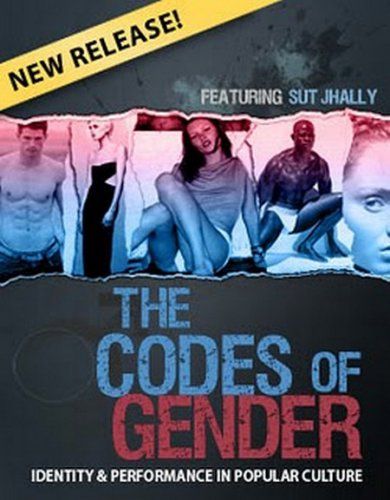
Documentary - The Codes of Gender: Identity and Peformance in Pop Culture
This is an edited version (for nudity and length) of a slightly longer documentary (full version here) applying the sociological theories of Erving Goffman to the most ubiquitous (and powerful?) form of gender-norming in our culture, commercials and advertising (as well as films and TV). Here is the filmmaker's statement about their work, from their website (credit where credit is due, I first found this film at Top Documentary Films):
Codes of Gender, The Identity and Performance in Pop Culture
Written and directed by MEF Executive Director Sut Jhally, The Codes of Gender applies the late sociologist Erving Goffman's groundbreaking analysis of advertising to the contemporary commercial landscape, showing how one of American popular culture's most influential forms communicates normative ideas about masculinity and femininity.
In striking visual detail, The Codes of Gender explores Goffman's central claim that gender ideals are the result of ritualized cultural performance, uncovering a remarkable pattern of masculine and feminine displays and poses. It looks beyond advertising as a medium that simply sells products, and beyond analyses of gender that focus on biological difference or issues of objectification and beauty, to provide a clear-eyed view of the two-tiered terrain of identity and power relations.
With its sustained focus on how our perceptions of what it means to be a man or a woman get reproduced and reinforced on the level of culture in our everyday lives, The Codes of Gender is certain to inspire discussion and debate across a range of disciplines.
Viewer Discretion Advisory: This program contains violence, nudity, and sexual themes.
DVD contains two versions: a full length version (73 minutes) and an abridged version (46 minutes) which has been edited for nudity and length.
Sections: Sex and Gender | The Feminine Touch | The Ritualization of Subordination | Licensed Withdrawal | Infantilization | The Codes of Masculinity | Trapped in the Code | History, Power, and Gender Display
You can read Goffman's analysis of advertising and gender on Scribd. Granted, this is an extreme reading of cultural images, but there is more truth to this than not, in my opinion.
Whether you agree with this reading of gender-norming or not, there is much in this documentary (and I have only seen the edited version included here) to inspire thought and discussion.
Sunday, April 1, 2012
Maxim: How to Cure a Feminist
The answer appears to be, wait for it . . . drive a Camaro and that will make her strip down to her sexy red underwear because Camaros make her "so hot." The World According to Maxim - is it any wonder they have had to cut staff and scale back the magazine? Are men changing in what they want, or are there just more and free sources for the same material on the internet? I hope for the former and suspect it's the later.
Anyway . . . .
My friend Duff posted this over at Facebook in response to the image from Maxim:
"I think some people equate feminism with negativity because feminist ideas question their latent sexism, something that forces people to confront something negative in themselves. People who refuse to do so sometimes project these negative feelings onto what they perceive to be the source--other people, specifically women. Since feminist ideas frequently critique attacks on women in the first place, rejecting feminism by attacking women is more of the same, and precisely why we need more feminist philosophy, discussion, and activism." —Duff McDuffeeProfessor Yesi King shared this response, also at Facebook:
So according to Maxim in order to "cure" a feminist and turn her into a "real girl", you have to feminize and pornographize her...Yes this image was really in Maxim magazine and no thanks Maxim, I'll pass.Most of the people who have commented on the various threads this article/image have created are focused on the degrading image of women - that a vegan feminist is not a real woman, that a real women stands around in her lingerie and gets turned on by a Camaro.
I totally sympathize with women who are seriously offended by that assertion.
I was just as appalled about the depiction of men and what men value and how they are valued. I left this comment on one of the threads at Facebook:
While I totally sympathize with you about the degrading message this crap offers about women, I have to say I find it offensive that they think a man wants a woman who is turned on by a car. At that point she ceases to be a woman, but merely an object to use as a tool of masturbation, and the male becomes a status object whose value is based on his mode of transportation. In both cases, the people involved are dehumanized into objects.I have seen some people - men - argue that this is satire. Maybe, but having seen copies of Maxim over the years, it fits with their image of women as objects of sexual desire and not as human beings. And it also fits with its marketing of clothes, cars, and gadgets as how men should define themselves.
Just for the sake of reference, here are some standard issue images from Maxim, which I believe reflect how they view women:
Holly Weber
European cover
Actress Grace Park
So - is that piece on curing a feminist really satire? Or is that how they view women? And as men, is that how we want to view and relate to women, as objects?
Maybe I am too serious - or maybe I one of the "white knights" (not the white supremacist group) the Mens' Rights Activists hate on so often (although, to be fair, I have no interest in rescuing these women - they are well-paid). But I prefer to relate to women as complex, interesting, intelligent, four-dimensional human beings. Could be I am just weird that way.
What do you think (about the Maxim thing, not my weirdness)?
Wednesday, August 24, 2011
Sexist Men and Women -- Made for Each Other
For some reason, maybe lack of sleep, this research review from Science Daily made me laugh. Too bad it seems to seldom work out that way.
Sexist Men and Women -- Made for Each OtherReference:
ScienceDaily (Aug. 23, 2011) — Men with a preference for 'one-night stands' and negative sexist attitudes towards women are more likely to use aggressive courtship strategies. They compete with other men who are also interested in the woman, tease the woman, and isolate her away from her friends. In response, women with a preference for 'no strings attached' sex and negative attitudes towards other women are more likely to respond to men's aggressive strategies. These findings by Jeffrey Hall and Melanie Canterberry, from the University of Kansas in the US, are published online in Springer's journal Sex Roles.
Hall and Canterberry set out to understand the characteristics of men who use aggressive court-ship strategies, based on speed seduction techniques described in the US bestseller "The Game" by Neil Strauss and the popular cable TV program "The Pickup Artist." They also studied the characteristics of women who find such strategies appealing.
The researchers conducted two surveys. The first pilot study surveyed a sample of 363 college students from a large Midwestern university in the US. The second, larger national study recruited 850 adult volunteers via the internet. The authors asked both male and female participants about their sexist attitudes toward women and whether they were willing to take part in uncommitted or short-term sex. They also asked about the extent to which men used assertive strategies to initiate relationships and the extent to which women found these approaches desirable.
The results showed that men who were keen on 'one-night stands' were more likely to use aggressive strategies when flirting with women, and women who were also open to casual sex were more likely to respond to this type of aggressive courtship. In addition, men with negative, sexist attitudes towards women, justifying male privilege, were more likely to use assertive strategies, which may serve to 'put women in their place' in a submissive or yielding role during courtship. Women with sexist attitudes towards members of their own gender were more likely to be responsive to men's assertive strategies. This suggests that they find men who treat them in a dominant way during courtship more desirable, because it is consistent with their sexist ideology.
Hall and Canterberry conclude: "Our results suggest that assertive courtship strategies are a form of mutual identification of similarly sexist attitudes shared between courtship partners. Women who adopt sexist attitudes are more likely to prefer men who adopt similar attitudes. Not only do sexist men and women prefer partners who are like them, they prefer courtship strategies where men are the aggressors and women are the gatekeepers."
Springer (2011, August 23). Sexist men and women -- made for each other. ScienceDaily. Retrieved August 24, 2011, from http://www.sciencedaily.com /releases/2011/08/110823104926.htm
Original source:
Hall JA & Canterberry M. Sexism and assertive courtship strategies. Sex Roles, 2011 DOI: 10.007/s11199-011-0045-y
Subscribe to:
Posts (Atom)