Showing posts with label toxic masculinity. Show all posts

Saturday, October 11, 2014

Seven Sayreville, N.J., High School Football Players Charged in Sexual Assault of Teammates


If the numbers mentioned in the report from Christian Science Monitor are accurate, 1 in 4 boys experiences sexual violence from peers during the high school years. This is identical to the number of females experiencing sexual violence in high school or college. Clearly, rape is not about sex - it's about power, control, and humiliation.

This crap needs to stop.

Hazing cancels Sayreville, N.J., football season: Does culture contribute to abuse?

As more details of the nature of the alleged sexual abuse in the New Jersey football program become known, a debate widens about the damage that can come from behavior often dismissed as 'initiation.'


By Stacy Teicher Khadaroo, Staff writer | October 10, 2014


In a football town, Sayreville residents shaken by hazing scandal; WPIX - New York

Amid a criminal investigation into possible hazing and sexual violence among high school football players, the town of Sayreville, N.J., is facing a season with no more football.

The decision by Sayreville Superintendent of Schools Richard Labbe to cancel the season Monday night brought an uproar from some parents, worried that innocent students who may depend on football for college scholarships would be unfairly punished.

[Update: On Friday night, seven students were charged with sex crimes in connection with a series of assaults. Six of the seven students, ranging in age from 15 to 17, were arrested Friday night, and the seventh was being sought, police and prosecutors said.]

But as details of the allegations at War Memorial High School spread in the news media this week, the town has become the stage for a broader public conversation about the detrimental nature of behaviors that experts say are too often dismissed as “tradition” or “initiation.”

About 47 percent of high school students experience some form of hazing, but only 8 percent apply that label to it, a landmark national study found in 2008. Among high school boys, 26 percent experience sexual violence from their male peers, the Journal of Youth and Adolescence reported in 2009.

A parent of one of the players in Sayreville told NJ Advance Media Wednesday that this fall, freshmen players were repeatedly attacked in the locker room by upperclassmen, who would physically restrain their target and assault him anally.

The school district has directed questions to the Middlesex County Prosecutor’s office, and a spokesman there told the Monitor he cannot comment beyond confirming there is an “active investigation.”

The initial negative reaction by many in the town when the season was cancelled may stem from confusion over the language in New Jersey’s statutes such as intimidation, harassment, and bullying, says Parry Aftab, an attorney and anti-bullying expert based in Fort Lee, N.J. Some people may not have realized how serious the allegations were.

But some who hear the allegations in such cases are still inclined to excuse the behavior and, instead, blame the victims for coming forward, says Kiersten Stewart, director of public policy and advocacy in the Washington office of Futures Without Violence. “This in no way can be tolerated. This is not hazing, this is child sexual abuse and we need to call it what it is,” she says.

The case highlights that education about respect, decency, and standing up against violence needs to start at a young age, Ms. Stewart and others say. But there also needs to be tough scrutiny of what any adults may have known about the case – whether current or former coaches, parents, or former players.

Superintendent Labbe told football players’ parents that school officials were not aware of any bullying or hazing before players came forward late last week, NJ Advance Media reports.

It’s important that students have access to anonymous reporting methods for more of them to come forward about bullying, hazing, and sexual assault, Ms. Aftab says.

The society “can’t just look at it as some anomalous thing that happens in some aberrant group,” but instead “we have to look at aspects of our culture that can create a climate where something like this is able to occur,” says Elizabeth Allan, president of Stop Hazing and a professor at the University of Maine in Orono.

One such factor is “the social construction of masculinity,” Professor Allan says, in which there are “lots of rewards for being seen as strong, tough, heterosexual…. One way to reinforce power and status and hierarchy in a group is to engage [male peers] in behaviors that would call into question their masculinity.”

In this case, if the allegations are true, she says, it will be more obvious to people that the behavior was physically forced, but in many instances of hazing, people think victims are going along with it because they don’t understand the coercion at play. “The kids know that if they don’t [go along with hazing] they are likely going to be seen in a different light.”

Education about how to speak up or intervene as a bystander in such situations is spreading into more high schools and middle schools around the country.

Sayreville community members are organizing a Sunday evening vigil to show support for the victims of the alleged hazing and raise awareness.

Wednesday, October 1, 2014

Psychologists: Masculinity Can Lead to Depression

Hmmmm . . . . Faulty headline in my opinion. Depression is a rational response to a really messed up world. No one, male or female, gets depressed for no reason.

Psychologists: Masculinity Can Lead to Depression

27/09/2014

Masculinity has been found to play a significant role in causing depression among men, psychologists from the National Institute of Mental Health (NIMH) say.

MOSCOW, September 27 (RIA Novosti) – Masculinity has been found to play a significant role in causing depression among men, psychologists from the National Institute of Mental Health (NIMH) say.

About six million American men suffer from depression every year, yet few of them are likely to seek help from medical professionals. Traditional masculine traits, which confine emotional expression and encourage ideas of success, power and competition, often compel men to hide their emotions and avoid seeking help. This, in turn, can lead to depression, according to researchers from the NIMH.
Traditional signs of depression, such as sadness, worthlessness and excessive guilt, may not always characterize many men’s depressive periods. Instead, researchers have coined the term “male-based depression” to signify a type of depression which is reflected in symptoms including irritableness and anger, a loss of interest in work and hobbies, insomnia, and a higher likelihood of drug and alcohol abuse. When coupled with substance abuse, these symptoms can mask more commonly-recognized signs of depression, making them harder to detect and effectively treat, said Dr. Aaron Rochlen, a Psychologist from the University of Texas.

Untreated depression can result in personal, family and financial problems; in the worst cases it can even lead to suicide. Four times as many men as women commit suicide in the United States, which psychologists believe happens as a result of a higher prevalence of untreated depression among men.
Luckily, some men have started to re-interpret and expand traditional ideas about what it means to be a man. Instead of seeing the idea of seeking help as unmanly behavior, they have started to consider it proactive and responsible, breaking out of the masculine “straightjacket”, says Jason Spendelow, a Clinical Psychologist from the University of Surrey, as quoted by The Conversation. By re-framing the masculine narrative and getting support from others, men can effectively combat depression, especially when they experience severe symptoms, such as suicidal thoughts.

Spendelow believes that seeking professional help when depression persists for more than a few weeks is a good idea. Some men say more traditional “talking treatments” are not suited for them. Currently, however, there are a variety of therapeutic techniques that can be used to approach depression from different angles and are better suited to men. At the end of the day, psychologists say that it is important for men not to suffer in silence.

Thursday, August 7, 2014

John Oliver Shames Americans for Public Apathy Toward Prison Rape


America's prisons are broken. Just ask John Oliver and several puppets. I'm not sure of the actual air date for this, but it was posted to YouTube on July 20, 2014.

With an estimated 2.2 million people in prison in America, 90% of whom are male, it's likely that the reported numbers on prison rape are significantly low compared to the actual occurrence rate.

No Escape: Male Rape in U.S. Prisons
is the title of an influential, book-length, 2001 report by Human Rights Watch on prison rape in the United States. The report is credited with playing a major role in the 2003 passage of the Prison Rape Elimination Act.

From Wikipedia:
The book-length "No Escape: Male Rape in U.S. Prisons" was released on April 19, 2001.[6] The report documented that prison rape was commonplace during a time when half of U.S. states compiled no statistics on the subject.[2] Brent Staples described the report, which was based partly on the testimony of over 200 inmate victims, as "grisly".[7]

"No Escape" surveyed 34 states' prison systems.[8][9] The report documented lurid accounts of prison rape, wherein inmates were being sold to other inmates as sex slaves. Men, instead of being beaten into submission, were coerced into sexual activity, sometimes while prison officials stood by.[7] In the report a group of six Texas inmates told HRW that sexual slavery "is commonplace in the system's most dangerous prison units."[10] "No Escape" identified prisons run by the Texas Department of Criminal Justice as the worst for incidents of prison rape;[11] this assertion was confirmed by later reports.[12][13] The report also collated similar testimony from inmates in Arkansas, Illinois, Michigan, and California.[10]
The reality is that reporting prison rape is likely to get you hurt even worse - the "no snitch" code is incredibly powerful. Like so many other forms of rape, this is an issue of toxic masculinity.


John Oliver Shames Americans for Public Apathy Toward Prison Rape

No one deserves to be the victim of a sexual crime.

August 1, 2014 | By Jelani Hayes


Photo Credit: Ljupco Smokovski / Shutterstock.com

Recently on Last Week Tonight, John Oliver delivered a great segment on the American prison system. One of the issues he addressed was the public’s apathy toward and alarming amusement by the occurrence of rape in prisons. “It’s so easy not to care about prisoners,” he said. “They are, by definition, convicted criminals. In fact, it’s so easy not to care that we are really comfortable making jokes about one of the most horrifying things that can potentially happen to them.” Rape.

Sexual assault is prevalent in our prisons and jails—a fact most Americans have probably gathered from popular media wherein prison rape jokes are common. According to the 2011-2012 National Inmate Survey, 4.0 percent of federal and state incarcerated persons and 3.2 percent of those in jails reported being sexually assaulted—from unwanted touching to rape—in the last twelve months. A prison or jail staff member was said to be responsible for more than half of these incidents. These numbers are open to question, of course. Other studies have suggested higher percentages, and sexual assaults are traditionally under reported.

Sexual violence should not occur in any space, yet its appearance in correctional facilities is especially troubling—prisons and jails are, in theory, controlled environments. Realistically, they cannot be completely controlled, but the rape of an inmate is a far greater oversight than the entry of contraband. Because the majority of these incidences occur at the hands of staff members, the crime is an even worse insult to our criminal justice system and our humanity.

The United States incarcerates more people than any other nation—largely a result of its militant and racist drug war—and thus its criminal justice system is subjecting a highly unusual number of people to violence in a confined space where they are unable to adequately protect themselves. The sexual victimization of imprisoned persons defeats one of the theoretical purposes of incarceration: rehabilitation. Upon their release, formerly incarcerated persons not only have to try to obtain housing, jobs, and educational opportunities with a criminal record attached to their names but they must also aim to cope with the emotional scars of being subjected or witness to sexual violence. The average incarcerated woman, for instance, has been a victim of physical or sexual abuse prior to being imprisoned. Incarceration may only continue the violence she is forced to confront.

Despite common knowledge of prison rape culture, the victims’ stories have largely gone untold and their pain has been cheapened into humor. Recently, select incidents of rape have received substantial media attention with the help of social networking and student activism. From college campuses to high school parties, the public is taking part in an ongoing conversation about rape culture—outside of prison walls. The victims whose lives are disrupted and thrown into the media spotlight are generally young, educated women who themselves pose no real or imagined threat to society. Justifiably, sympathy and support pours in from feminists and, quite frankly, anyone who is appalled by their cases and how the media, educational institutions, and the criminal justice system handle them. These stories are important. They remind us that rape culture deeply permeates American culture, and as a society, we have an obligation to combat and protect one another from its consequences. That obligation—as it is expressed in our mainstream conscience—currently does not extend in a meaningful way to our most vulnerable population: incarcerated children, men, and woman.

Incarcerated persons are forced to relinquish their bodies to the power of the state and render their humanity to public opinion. The government and the private prison industry have done very little to prevent sexual violence in jails and prisons. The media has presented sexual assault as a normal component of the punishment dealt to lawbreakers. Prison rape has been the subject of jokes (don’t drop the soap), used jokingly as a deterrent to crime (if you get caught, you know what will happen to someone like you in jail), and as an interrogation method (Law and Order: Special Victims Unit detectives have, on a number of occasions, threatened suspected sex offenders with the prospect of eye-for-an-eye justice at the hands of other inmates). Taken together, society has stripped incarcerated children, men, and women of their humanity. Their dehumanization is possible in part because of the uneducated popular notion that criminals stem from a culture not our own and that the conditions of their punishment are generally well deserved. With nearly one out of every 100 adults in the United States in jail or prison, the message society is currently sending is that sexual assault is tragic—99 percent of the time.

No one deserves to be the victim of a sexual crime—not even those society values so little that we store them away from public sight and sympathy. In the name of universal human dignity, the outrage surrounding rape culture must extend to the 2.2 million people behind American bars.

This piece first appeared on the Drug Policy Alliance Blog.

~ Jelani Hayes is an intern in the media department at the Drug Policy Alliance and a senior at the University of Pennsylvania.

Wednesday, May 28, 2014

Masculinity, Misogyny And Murder: Unpacking A Killing In California (On Point w/ Tom Ashbrook)

I have already commented on this tragedy in two different posts (here and here), as well as sharing a collection of links devoted to this topic (here). I don't really have too much to add, other than to reiterate that these killings cannot be simplified into a single cause or target of blame.

In Elliott Rodger's actions there are a whole collection of factors, most prominent (as if often true and overlooked) is the delusional and grandiose thinking that justified these actions in his broken mind. It's easy to blame guns (he owned all of his weapons legally), or misogynistic, toxic masculinity (he followed men's rights activists [MRAs] and pick up artists [PUAs] on You Tube), but they are only part of the story - they are shadow elements of our culture that rarely get examined in the light of day unless we are forced to do so by some atrocity like this one.

Masculinity, Misogyny And Murder: Unpacking A Killing In California

A vicious, deadly rampage spurs a new look at misogyny and why it matters.

May 28, 2014 | Tom Ashbrook

People gather at a park for a candlelight vigil to honor the victims of Friday night’s mass shooting on Saturday, May 24, 2014, in Isla Vista, Calif. Sheriff’s officials said Elliot Rodger, 22, went on a rampage near the University of California, Santa Barbara, stabbing three people to death at his apartment before shooting and killing three more in a crime spree through a nearby neighborhood. (AP)
What’s in a killer’s heart? We know in the case of last Friday’s Santa Barbara massacre. Because the killer wrote about it at length. He despised women. His unrequited desire turned into a furious hatred. And a plan to kill. A plan he carried out. An overwhelming response followed. A Twitter flood – the #yesallwomen hashtag – women sharing their own stories. Concerns that hatred, entitlement, towards women is woven widely into our culture. Not creating killers necessarily, but haters. Is this true? Where’s the line? And what’s to be done? This hour, On Point: Misogyny. Assessing the damage.
– John Donvan

Guests

Soraya Chemaly, activist and writer. Her work has appeared in the Huffington Post, Salon, the Guardian, CNN and in other publications. (@schemaly)

David Futrelle, freelance writer who blogs at “We Hunted the Mammoth,” a site that tracks the “Men’s Rights” movement online. (@DavidFutrelle)

Dr. Robert Heasley, professor of sociology at the Indiana University of Pennsylvania. Former president of the American Men’s Studies Association.

From The Reading List

Slate: The Pick-Up Artist Community’s Predictable, Horrible Response to a Mass Murder – “I do not blame the Pick-Up Artist community (or its somehow even more deeply tortured counterpart, the Anti-Pick-Up-Artist community) for the deaths of seven people. The man who committed this horrific crime is responsible for this heinous act. But I was interested to see how these groups are reacting to the news. It is disturbing, if not surprising, that they are using these murders to reinforce their hatred of women and “Beta” men, and to cement their own status at the top of the pyramid.”

The Guardian: Elliot Rodger’s California shooting spree: further proof that misogyny kills — “Rodger was reportedly involved with the online men’s rights movement: allegedly active on one forum and said to have been following several men’s rights channels on YouTube. The language Rodger used in his videos against women – like referring to himself as an “alpha male” – is common rhetoric in such circles. These communities are so virulently misogynist that the Southern Poverty Law Center, an organization that tracks hate groups, has been watching their movements for years.”

Washington Post: In covering Elliot Rodger, writers aren’t shy about blaming misogyny and the groups that perpetuate it — “people have embraced the term ‘misogyny’ to describe Rodger’s online screeds against women, and they've been more receptive to treating Friday’s killings as a hate crime, the way McDevitt suggests. Sunday night, Gawker’s Jordan Sargeantnoticed that Rap Genius co-founder Mahbod Moghadam posted incendiary annotations to Rodger’s 141-page manifesto. The manifesto had been uploaded to News Genius, Rap Genius’s sister site which aims to annotate and explain the news. Moghadam said Rodger’s manifesto was ‘beautifully written.’”

Tuesday, May 27, 2014

The Tantrum of Masculinity - Omnivore

From Bookforum's Omnivore blog, here is a new collection of links themed on masculinity.The topics include patriarchy, male competition, academic masculinities, education, military masculinities, and pick up artists (PUAs).

And speaking of PUAs, there are also the mandatory links to articles blaming men, masculinity, patriarchy, and guns for the shooting rampage in Isla Vista. If only it were that simple.

The tantrum of masculinity

May 26 2014
9:00AM

Here are the requisite articles on the Isla Vista killings last Friday.

 from the 12:00 pm entry:
  • Rightbloggers say Santa Barbara killer Elliot Rodger's sexist rants have nothing to do with sexism (or guns). 
  • In the deadly aftermath of Elliot Rodger’s psychotic and suicidal shooting spree that left six others dead, the muted echoes of David Attias — who killed four people in Isla Vista 12 years ago — will be bouncing off Isla Vista’s blood-stained streets for some time to come. 

Thursday, May 22, 2014

Jared Keller - The Tortured Rise of the All-American Bro (Pacific Standard)

The United States of Bros: A Map and Field Guide

This article by Jared Keller comes from Pacific Standard - it offers a first-person account of a man who identifies himself as a "bro."
For all intents and purposes, I am a bro. I identify as a bro in the sense that, as Jezebel so aptly put it, I am “an adult male whose social life revolves around collegiate homosocial bonding and who also presents himself in a way that assimilates to the prevailing aesthetic of men with similar socialization patterns.”
From a much more critical, dismissive perspective, John Saward says of "bros," writing in Vice, “This is his dream. This is his life. He is the worst person alive, and he has no idea.”
 He is a walking scorched-earth policy. He takes what he wants to satisfy some hedonistic impulse, and then he leaves her sobbing in a hallway with her friend on the other line. He wrings every moment of every drop of novelty. He is doing shots and never with a chaser, because moderation and restraint are for women and faggots and children. The only way to be a real man is to be a real man as ferociously as humanly possible. He goes all-in; he gets shredded and ripped and defines his life by aggression and competitions. He buys the hamburger that comes with two other hamburgers and a chicken cutlet on top of it. Why? Because it’s three hamburgers with a chicken cutlet on top of it.
Keller asks, and tried to answer in this article, some very challenging questions:
Where did this strange American Bro come from, this alien, fist-pumping, Jager-bombing avatar of modern sexism, racism, and nihilism? And why does he loom over every male friendship, every moment “with the boys”? Am I doomed, by our culture, to live as a jerk, a social parasite made fat on the sweet lard of privilege, with my male friends and colleagues? At what point did all strong homosocial relationships between men become conflated with the most vile and socially abhorrent behavior and egregious sartorial choices?
I'm fortunate, I guess, to have long, long ago left the "bro" stage of my life, sometime in 20s. When I get together with male friends, it's usually over coffee or lunch, not Jager-bombs. Our conversations do involve our work, but also our hobbies, or home repairs (do bros own homes?), or interesting books or articles we have read.

This is longish, but it is certainly deserving of a good read.

The Tortured Rise of the All-American Bro

Pacific Standard
By Jared Keller • May 06, 2014


cornell-fraternity
A fraternity building at Cornell University (Photo: Pete Spiro/Shutterstock)


The misogynist portrait of modern American masculinity may be a historical accident. Here’s how to fix it.

•
In April, my college buddies and I drove up to Maine to spend the weekend getting drunk and bouncing around downtown Portland for a former roommate’s bachelor party. Of all the people I’ve met and friends I’ve made—through high school and internships and college and jobs—these random goofballs are my closest friends. We headed north to celebrate impending nuptials, but at its core this weekend was about, as my girlfriend says, “just hanging out with the bros.”

For all intents and purposes, I am a bro. I identify as a bro in the sense that, as Jezebel so aptly put it, I am “an adult male whose social life revolves around collegiate homosocial bonding and who also presents himself in a way that assimilates to the prevailing aesthetic of men with similar socialization patterns.”

But according to Vice, my friends and I are the worst thing to happen to Portland since the great 1866 fire that leveled churches, destroyed the city’s commercial center, and left nearly 10,000 homeless. On an off day, I should be on Boston’s Orange Line, stinking of bourbon and slurring, and “cackling at the ceiling, electrified by the degree to which he does not give a fuck,” John Saward writes. “This is his dream. This is his life. He is the worst person alive, and he has no idea.”
He is a walking scorched-earth policy. He takes what he wants to satisfy some hedonistic impulse, and then he leaves her sobbing in a hallway with her friend on the other line. He wrings every moment of every drop of novelty. He is doing shots and never with a chaser, because moderation and restraint are for women and faggots and children. The only way to be a real man is to be a real man as ferociously as humanly possible. He goes all-in; he gets shredded and ripped and defines his life by aggression and competitions. He buys the hamburger that comes with two other hamburgers and a chicken cutlet on top of it. Why? Because it’s three hamburgers with a chicken cutlet on top of it.
I’ve been a member of male-centric institutions my entire life—sports teams, a summer camp staff, a fraternity—and still, somehow, my friends and I don’t seem to quite match this portrait of the American Bro. My weekend habits, though boisterous and uncouth, don’t sync with the totally terrifying acid trip of masculinity captured by Vice. Though I have spent time in the presence (or wake) of the horrific men described by Saward, I have never done 75 push-ups because NO REGRETS. I don’t know anyone named Rachael who wants it, she so wants it, bro. None of my fashion choices match Jezebel’s amazing geographical exhibition of the Great North American Bro. Even BuzzFeed’s “How ‘Bro’ Are You?” quiz considers me vaguely well-adjusted, despite the fact that I make duckface in way too many photos and have been known to say “duuude.” “Congratulations on having exquisite taste,” the BuzzFeed results page says, “and feel free to procreate as much as you like!”

Where did this strange American Bro come from, this alien, fist-pumping, Jager-bombing avatar of modern sexism, racism, and nihilism? And why does he loom over every male friendship, every moment “with the boys”? Am I doomed, by our culture, to live as a jerk, a social parasite made fat on the sweet lard of privilege, with my male friends and colleagues? At what point did all strong homosocial relationships between men become conflated with the most vile and socially abhorrent behavior and egregious sartorial choices?

The repressive, hypermasculine bro that stalks your local watering hole and pisses in the street is a modern, anxious manifestation of homosexual panic, an allergic reaction to the mainstreaming of gay culture.

Ironically, the history of homosexuality in America may hold the secret to the modern hyper-masculine bro. Prior to the 1970s, the majority of psychological literature on homosexuality was based on the presumption that the practice was a mental disorder, a view that coincided with advances in medicine at the end of the 18th century and the rise of psychoanalysis in the U.S. and Continental Europe. Homosexuality was eventually declassified as a mental illness in 1973, and all references to homosexuality as a psychiatric disorder were removed from the American Psychiatric Association’s Diagnostic and Statistical Manual of Mental Disorders (DSM). Despite this, gays and lesbians were still met with apprehension and hostility by the American public: In 1988, only 11 percent approved of same-sex marriage, and while that number increased to 46 percent by 2010, 40 percent of Americans remain opposed to it.

But decades of classifying homosexuality as a “dysfunction” in America left a lasting mark on all homosocial relationships. In modern Anglo-American society, writes gender theorist Eve Kosofsky (who coined the term “homosocial”) in her classic study “Between Men,” there’s a significantly greater disconnect between male homosexual and homosocial bonds, whereas there’s a much more psychosocially continuous relationship between female homosexual and homosocial bonds. The discontinuity between male homosociality and homosexuality results in male homosocial relationships taking on the form of “male bonding,” which is characterized by homosocial desire and intimacy (say it with me now: “broing out”) but marked, most notably, by homosexual panic, the fear of this attention gliding over into something a little more taboo, a little more risqué. In an attempt to emphasize heterosexuality, fear or hatred of homosexuals and misogynist language developed. The bro, in short, is a culture-wide defense mechanism against the gay.

This social split between male homosexual and homosocial relationships is why the sort of homosocial bonding on display in black-and-white photographs of men throughout American history all but went extinct by the middle of the 20th century: homosexuality had become a pathologized identity, one that carried connotations of psychological dysfunction and perversion. “The shift meant sitting for a portrait in your best bro’s lap was verboten; more important, though, some have argued that it has led to a wide-scale deprivation in boys and men of intimate touch that is important to their development and mental health,” Kat Stoeffel explains at The Cut, discussing the rise of touch isolation. “Men who hold hands, sling an arm around each other, and say ‘I love you’ risk being labeled gay at best and violent homophobic backlash (either from observers or their beloved bro) at worst.”
Male physical affection may be making a comeback: According to a recent study in British journal Men and Masculinities, 98 percent of the heterosexual men interviewed had shared a bed with another man, while 93 percent had cuddled or spooned with one, evidence of, as the authors write, “expansion of changing conceptions of masculinity in contemporary culture.”

The repressive, hypermasculine bro that stalks your local watering hole and pisses in the street is a modern, anxious manifestation of homosexual panic, an allergic reaction to the mainstreaming of gay culture (and, by extension, a loss of cultural power and sexual stability). The modern definition of manhood came about in strict domination over the feminine, both sexually and behaviorally. “Male-male relations organize and give meaning to the social and sexual involvements of young heterosexual men in a powerful way,” writes researcher Michael Flood in a 2008 issue of Men and Masculinities, an exploration of how male homosocial bonding affects men’s relationships with women. “Homosocial bonds are policed against the feminizing and homosexualizing influences of excessive heterosociality, achieving sex with women is a means to status among men, sex with women is a direct medium of male bonding, and men’s narratives of their sexual and gender relations are offered to male audiences in storytelling cultures generated in part by homosociality.”

If modern misogyny is a virus, a symptom of psychosexual anxiety and irrational fear of homosexuality, then institutions like fraternities make for an excellent petri dish. Alcohol consumption is the primary way in which men “negotiate masculinities in leisure activities,” writes Lois West in the Journal of Men’s Studies in a 2001 examination of two American drinking cultures, fraternities and the U.S. Navy. Collective boozing—at frat houses, on shore leave, at sporting events—can facilitate the creation of masculine homosociality by “developing a sense of community and trust” around perpetuating certain kinds of American masculine traditions, West writes. But alcohol-driven social interactions are also used to inhibit negotiations over other hierarchies of identity and social boundaries relating to class, religion, race, ethnicity, and sexuality. “Status hierarchies get negotiated through competitive drinking games, humor, and heterosexual significations.”

One of the more troubling features of the modern bro isn’t the sad, relatively recent dose of anxiety that fuels his behavior, but the cultural power he maintains. Male-heavy organizations like the armed forces and college fraternities have the institutional power to safeguard the more violent, despicable, and misogynistic behaviors of young men. The prevalence of sexual assault on college campuses, the site of social and professional development for America’s workforce, is especially troubling. Nearly 20 to 25 percent of female college students will experience rape or attempted rape during their time on campus, according to the Department of Justice; and according to research by the Center for Public Integrity, abusive students rarely receive more than a slap on the wrist. Some universities even rebrand rape as “non-consensual sex.” College sexual assault has become such a frightening epidemic in America that the White House has pressured universities to do more to combat it.

Fraternities, once social organizations focused on personal development and scholastic achievement, have devolved into engines for misogyny and assault. And they can breed future horrors. “Future fraternity brothers are often coddled by yes-men athletic coaches and administrators in high school, where they learn that they can argue their way out of class and — as nationally publicized cases like Steubenville and Maryville show us — rape accusations,” Katie Baker writes. “‘[A]n astonishing number of CEOs of Fortune 500 companies, congressmen and male senators, and American presidents have belonged to fraternities.’ Once they’re entrenched in the high-paying jobs they expected to easily obtain, these former fraternity brothers … continue to act the same way behind barely closed doors. If you feel so secure about your past, present and future that you feel invincible, why stop the fun?”

One of the more troubling features of the modern bro isn’t the sad, relatively recent dose of anxiety that fuels his behavior, but the cultural power he maintains.

And in that permanent aura of cultural invincibility, born from the anxiety of homosocial bonding, is where we find the American bro, freed from the ivied walls and storied halls of his fraternity house and let loose on the sidewalks near you. A visceral portrait of the dark strains of brodom can be found in Cord Jefferson’s demand that the white community take responsibility for a “culture of lawlessness” after a group of surfers rioted in Huntington Beach, California—a satirical inversion of the “culture of black violence” segments favored by cable’s talking heads. “Whites in America have been out from under their European ancestors’ boot heels for centuries; California specifically outlawed preferences for nonwhites in state hiring and education nearly two decades ago, so being ‘oppressed’ is no longer an excuse for behavior like this,” Jefferson writes. “How long must we wait for the white community to get its act together?”

Racism, sexism, and misogyny are alive and well in the minds of some men with too much time, money, and anger on their hands. In this respect, the chest-thumping, booze-guzzling mess of a man you encounter clad in stunner shades and blasting EDM in the early hours of the morning isn’t the norm, but some accidental avatar of the worst impulses of modern man. The bro is a historical accident, a hostile social virus—incubated in the safety of homosocial bonding and bred in communal organizations—that has infected the bloodstream of the United States.

Changing demographics and attitudes may be a vaccine against the social and political dominance of bros: Millennials, fast transitioning into adulthood, are the most racially diverse generation in American history, a trend driven by the large wave of Hispanic and Asian immigrants who have been coming to the U.S. for the past half century, and whose U.S.-born children are now aging. Millennials are essentially a transitional generation: Some 43 percent of Millennial adults are non-white, the highest share of any generation, and the Census Bureau projects that the full U.S. population will be majority non-white sometime around 2043. With the changing racial make-up of today’s young adults comes a burst of political liberalism, an acceptance of homosexuality, and an emphasis on social and political justice along gender and racial lines.

But the bro is a persistent creature, and some male-centric organizations can remain safe spaces for misogyny, frustration, anxiety, and cultural narcissism despite shifts in American society. The emphasis on terrible style choices—the cheapest, most juvenile form of identity politics—only distracts attention from other forms of sexism that permeate American culture beneath the veneer of irony and sophistication (hello, hipster sexism). And casting homosocial relationships between men into something cartoonish and clownish, either as insufferably haphazard and childish (like the bromances that dot Judd Apatow’s filmography) or mortifyingly aggressive and secretly homosexual (Jersey Shore), can end up conflating positive friendships with the caricature of a man that is the American Bro.

Male friendships are camouflage to the worst impulses of the bro, at the cost of a relatively decent, courteous, and moral class of American men. For them—us—being good isn’t enough. We can’t just point to this scourge of American social life and say “not all men.” I was lucky enough to belong to male-centric institutions—like my childhood summer camp—that emphasized understanding, empathy, and loyalty. But as a straight, white man, I benefit from brodom in American culture, and I’ve been socialized to navigate it. This is what it means to actually “check your privilege”: If the American Bro is “the worst person alive, and he has no idea,” as Vice’s Saward writes, then a real man lives keenly aware of the historical and institutional powers which he has inherited, regardless of good, humble, and sensitive he thinks he is.

This, really, is my challenge: To recast “bro”—now, rightfully, a slur—as the rallying cry of honest, thoughtful, and productive male friendship.
Jared Keller
~ Jared Keller is a journalist and social media specialist living in New York. His writing has appeared in The Atlantic, Bloomberg Businessweek, National Journal, Outside, Al Jazeera America, and The Verge.

More From Jared Keller

Tuesday, April 8, 2014

Men on the Edge of Panic: Boomer Esiason, Mike Francesa and Toxic Masculinity (The Nation)

Tori and Daniel Murphy

A little background may be necessary here for those who do not follow baseball (like me). Recently, Daniel Murphy of the New York Mets received a LOT of criticism for taking paternity leave that caused him to miss opening day. In essence, he getting blasted for choosing to be with his wife for the birth of their child rather than play in the opening day game (1 of 162 games each season).

Former NFL quarterback stuck his foot so far down his throat that he had to issue a very contrite apology.

Yesterday's post looked at the ways paternity leave is changing for men. So here is some response from David Zirin at The Nation on this issue.

Men on the Edge of Panic: Boomer Esiason, Mike Francesa and Toxic Masculinity

Dave Zirin on April 7, 2014

Daniel Murphy of the New York Mets received criticism for taking paternity leave this week. (AP Photo/Seth Wenig)

This is not another shooting-fish-in-a-barrel commentary about the antediluvian swinishness of Boomer Esiason and Mike Francesa. This is not another swipe at their comments criticizing the efforts of Mets second basemen Daniel Murphy for missing opening day to be with his wife for the birth of their child. For those who missed it, Esiason opined, “I would have said, ‘C-section before the season starts. I need to be at Opening Day. I’m sorry, this is what makes our money. This is how we’re going to live our life. This is going to give my child every opportunity to be a success in life. I’ll be able to afford any college I want to send my kid to, because I’m a baseball player.’”

Fellow troglodytic troll of the NYC sports radio airwaves Mike Francesa commented, “You’re a major league baseball player. You can hire a nurse.” Francesa also called the paternity leave at his own company “a scam-and-a-half.”

Many have verbally stomped them for the nature of their comments—well done, Chris Hayes—and Esiason also issued a fulsome apology.

I spoke to my friend Martha, who is a midwife—and a Mets fan—about their comments. She said simply, “I would ask if they knew how it sounded, talking about this woman like she is a human incubator to be cut open in a dangerous, often unnecessary surgical procedure so Murphy can make it to Citi Field on time. I would ask that, but honestly, if you can’t see why the asshole-levels on these comments are off the charts, then I can’t help you.”

I also spoke with Joe Ehrmann, a former NFL player and someone who has devoted his life to challenging the ways in which sports have the capacity to communicate a toxic, destructive brand of masculinity. Ehrmann said, “I think these comments are pretty shortsighted and reflect old school thinking about masculinity and fatherhood. Paternity leave is critical in helping dads create life long bonding and sharing in the responsibilities of raising emotionally healthy children. To miss the life altering experience of ‘co-laboring’ in a delivery room due to nonessential work-related responsibilities is to create false values.”

Ehrmann also pointed out the ways in which these statements create a culture that normalizes the alienation between fathers and children. He said, “Comments like these put every man in a position to think about career and co workers opinions ahead of father/husband/partner roles. So even in companies with paternity leave, many new dads won’t or feel like they can’t take advantage of leave without a stigma being attached to them…. This is one more arena where sports/athletes could be a metaphor for social change and elevate the birth/nurture/fatherhood role and responsibilities over work.”

He then said to me that this kind of sexist mentality not only harms families, not only harms men, but also quite specifically harms athletes. “I’m convinced the number-one common denominator in locker rooms is father-child dysfunction,” he said. “It’s what pathologically elevates many performances. ‘I will prove to [the coach/father figure] I am worthy of my dad’s love and acceptance,’ at the expense of self and others. If any group should understand need for dads in delivery rooms it should be athletes and the athletic world.”

I would also add that the only reason Daniel Murphy even had the option to take this time off is because it was collectively bargained into his contract by his union. There are millions of men in nonunion jobs who don’t even have this option, not to mention millions of women who risk their employment in the United States by taking time off after the birth of their child.

I think there is something else going on as well. The comments from Boomer and Francesa smack of a kind of existential fear from an older generation of sports radio jockeys about the ways in which definitions of masculinity and sports have been rapidly changing. There have been two dominant kinds of masculine archetypes for the last thirty years in sports. Either you could be heterosexual, misogynist, talking loudly but saying nothing with a goal of trying to become a commercial brand; or you could be a heterosexual evangelical Christian, talking humbly with a goal of trying to become a commercial brand. Those who strayed outside of these norms have only done so with considerable risk to their standing in the media or even their job.

But in the last two years, these archetypes have changed. We have seen players such as Jason Collins, Robbie Rogers and Michael Sam break new ground as gay athletes. We have seen Royce White and Brandon Marshall speak out about their mental health challenges and show that this kind of openness does not demonstrate weakness but courage. We have a new cultural consensus that does not see concussions as a bizarre badge of honor but a danger sign. We’ve had Jonathan Martin go public about being bullied by teammates, forcing the NFL to confront long-standing locker-room behaviors. Poisonous, narrow definitions of masculinity are being challenged. A player’s missing opening day to be with his wife on the birth of their child clearly caused Boomer’s and Francesa’s brains to rupture. Their idealized sports world as a masculinist cocoon absent of progress and insulated from the real world, where every day is 1985 (or even 1955), is withering before their eyes. People are deciding that ruining your life and your relationship with family in the name of a code that impresses the Mike Francesas of the world isn’t worth it. This is progress, but as in any time when we see progressive healthy change, the hounds of reaction will still nip at its heels.

Wednesday, January 15, 2014

The U.S. Is Not a "Feminized Atmosphere" - Life Is Just Getting Harder If You're an Asshole

Fox News' Brit Hume is an asshat. He argued the other day that Chris Christie's bridge blocking scandal is just a man being a good old fashioned man, you know, an asshole, and that he is only in trouble because America is too feminized. Via Esquire.

We Are Not Living in a Feminized Atmosphere - We've Just Made Life Harder If You're an Asshole


By Ben Collins on January 13, 2014


Fox News’ Brit Hume knows why all you peons are lapping up this Chris Christie Bridgegate story. It’s not because Christie’s administration made his constituents’ commutes a living hell solely over a petty political grudge that no average person had anything to do with.

No, it’s because you’re all a bunch of fairies who need to do some lifting, stat.

Punch yourself in the face and listen up, sissies:


Well, I would have to say that in this sort of feminized atmosphere in which we exist today, guys who are masculine and muscular like that in their private conduct, kind of old fashion tough guys, run some risk.  
I mean that men today have learned the lesson the hard way—that if you act like a kind of an old fashioned guy’s guy, you’re in constant danger of slipping out and saying something that’s going to get you in trouble and make you look like a sexist or make you look like you seem thuggish or whatever. That’s the atmosphere in which he operates. This guy is very much an old fashioned masculine, muscular guy, and there are political risks associated with that. Maybe it shouldn’t be, but that’s how it is.
There is no grander American past where you went to the store and fought the clerk fair and square for a jug of milk. That era did not exist. Not everybody lined up red rover-style and snapped at one another to assert dominance until a fist/knifefight broke out. That was West Side Story, and West Side Story is a musical where they would only stop stabbing each other to dance, and we’re not even going to get into the gender politics of that.

Even back in the days of the venerated/since-bastardized-into-something-unrecognizable Founding Fathers, everybody wore wigs to hide their crippling insecurities brought upon largely by syphilis. Have you seen John Hancock's signature? Alexander Hamilton’s pen name in the Federalist Papers was “Glory Hole Johnson.” (Okay, that one's a joke.)

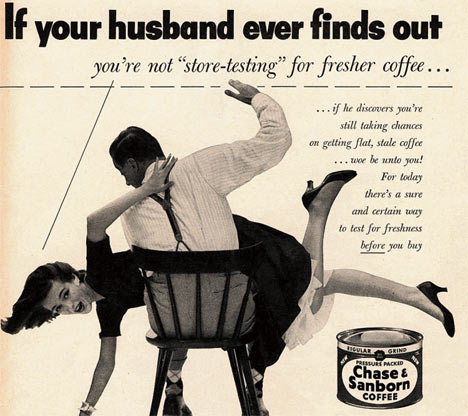
Maybe Brit Hume is thinking of the beautiful 1950s, where if your wife didn’t smell coffee before bringing it home from the supermarket, even advertisements would implore you to beat the living shit out of her until she figured it out. This was basically a cottage industry.

Just to get on the record for this one: That era was worse. Rhetorically, that was a bad time.

Not only is being an asshole an undesirable and unnecessary trait — one that's counterintuitive to getting stuff done and leading a beneficial life — it’s also not why Chris Christie is catching hell.

The media has latched onto this story — this unbelievably boring story about traffic, by the way, which is the world’s sleepiest subject — because this is the definitive role of the press in America: To out precisely this kind of corruption before somebody like this runs for president.

But while we’re at it, remember: The only thing less manly than acting like a tough guy is inquiring where all of the tough guys went, to an audience of nobody.

Tuesday, December 31, 2013

Die Like a Man: The Toxic Masculinity of "Breaking Bad"

I missed this article when it first appeared in October, but it's still a topic worth discussing now that nearly everyone has seen the Breaking Bad finale. The title of the article tells you what you are going to read, a review of the ways this epic television show portrayed a toxic form of masculinity defined by violence, power, and money.

I have no disagreements with any of that.

However, I want to suggest that there are other depictions of masculinity that are not so toxic. For much of the series, Walt and Jesse perform a strange dance of interdependence - many times Walt could have allowed Jesse to be killed and did not. And in one of the most difficult scenes early in the series, Walt allows Jesse's heroin addict girlfriend to die of asphyxiation in her sleep rather than save her, ostensibly to protect Jesse from his proclivity for addiction.

It's Jesse who represents the best of masculine values, in spite of the chaotic world in which he lives. He loves honestly and consistently. He does his best to take care of the young woman and her son that he loves and had to leave in order to protect them from the dangerous people in his life, including Walt. When he escapes in the final episode after Walt rescues him, we can imagine he will find the young boy (his mother, Jesse's love, is now dead) and raise him as his own.

Throughout the show, Jesse struggles with addiction, goes to rehab, and struggles some more with addiction. He is beaten nearly to death by Hank, Walt's brother-in-law, and then for much of the last season he is beaten and tortured.

Jesse never gives up hope. And he never loses his sense of right and wrong the way Walt does as he seeks more money, more power, and does so with violence - including putting out a hit on Jesse.

It's too simplistic to say that Breaking Bad presents and represents toxic masculinity - it reveals the full spectrum of masculinity, from tenderness to toxicity, often within the space of a single scene. 

Die Like a Man: The Toxic Masculinity of Breaking Bad

By Laura Hudson
10.05.13


Spoilers for the Breaking Bad finale follow.
“It felt right and satisfying and proper to us that he went out on his own terms; he went out like a man,” Breaking Bad creator Vince Gilligan shared in a recent podcast, describing the death of Walter White in the series finale.

If that sounds familiar, it’s because we heard Hank – his prototypically macho brother-in-law – say something very similar during Skyler’s intervention, when he defended Walt’s decision to refuse both financial charity and cancer treatment: “Maybe Walt just wants to die like a man.”

What, exactly, does it mean to be a “man”? It’s a question that sits at the dark, warped heart of the entire series and its anti-hero protagonist. A nerdy chemist whose brains haven’t earned him any power or respect from the world at large, the terminally ill Walt decides that he’s finally going to get that power and respect through whatever means necessary (and whenever possible, using science). The show doesn’t just trace Walt’s arc from Mr. Chips to Scarface, as Gilligan famously described it, or from Walt to Heisenberg; it also maps his journey from being a “pussy” to being a “man.” And while he succeeds in his goals, it’s a transformation that comes at a high price.

If we really want to look at the definition of a man within the world of Breaking Bad, it’s easiest to start by looking at what it says a man is not: the Walter White we meet in the very first episode of the show.

By some measures, Walt has had a successful life: He’s incredibly brilliant (we’re told his research contributed to a project that won a Nobel Prize, not to mention Gray Matter Industries); he’s a teacher; and most importantly, he has a loving relationship with his family, and another child on the way. But Walt still feels like a failure, particularly because he hasn’t achieved the sort of financial success he believes he deserved.

Money and masculinity are deeply linked by the series. Not only does money signify the value of the person who earns it, but also the control and self-sufficiency that comes along with it. This link between manliness, money, and power is a dangerous one for people who accept it. Walt, after all, would literally rather die than accept charity, because taking money from Gretchen and Elliott would somehow make him feel like less of a man.

Later, when Walt says that cooking meth has cost him his family, drug kingpin Gus Fring suggests that perhaps he’s looking at it the wrong way. Perhaps in alienating his family, he was actually fulfilling a more important role: “When you have children, you will always have family. They will always be your priority, your responsibility. And a man, a man provides. And he does it even when he’s not appreciated, or respected, or even loved. He simply bears up and he does it. Because he’s a man.”

This seems particularly prescient, because it’s the exact model of manhood that Walt embraces. By the time the finale rolls around, Walt is so alienated from his family that they neither want to see him nor accept his money, and so he must funnel his drug fortune to them without their knowledge, ensuring he receives no credit — no appreciation, respect or love. In Walt’s mind, the measure of a man isn’t his relationship to his family, but rather his ability to support them financially. Faced with a terminal cancer diagnosis, and the decision about what sort of legacy he truly wants to leave behind, Walt sacrifices the former for the latter. (Of course, as he admits in the final episode, it isn’t simply about the money, and it isn’t really for his family. Leaving them the money isn’t an act of altruism so much as it is an affirmation of his own power and identity: being a man who provides.)

Masculinity in Breaking Bad is a brittle thing, one so terrified of weakness that any display of vulnerability must be punished, and any slight against another man’s power answered with violence – or else perceived as a weakness. We see it in the hyper-masculine culture of both the neo-Nazis and the drug cartel, where the air is always dripping with machismo and vengeance is considered an almost sacred duty.

This model of manhood also requires control not only over your own life, but over the lives of others. Think about all of the most iconic moments of the show, the badass lines that made us want to pump our fists: “Say my name.” “I am the danger.” “I am the one who knocks.” “I won.” Every single time, it’s about dominance – not just about having power, but about taking power away from someone else.


The series begins with what seems like an odd image: a pair of pants, flying through the air. Much of what follows is about who gets to wear them. When Skyler shows up unexpectedly to threaten Jesse for supposedly selling weed to Walt, Jesse is quick to insult Walt’s manhood: “Good job wearing the pants in the family.” As time goes on, however, and Walt slowly dominates Skyler to the point that she would rather try to drown herself in a pool than speak up against him, the new status quo becomes clear: He’s wearing the pants now.

It’s also worth noting that when Hank finally discovers the truth about Walt, it’s while Hank is sitting on the toilet – literally, getting caught with his pants down. And while Walt may not have wanted Hank to die, Walt almost surely thrills a little to getting away with all his crimes under the nose of the man who used to condescend to him, enacting his own twisted version of the movie where the nerd gets one over on the jock. Once the truth is out and Hank assaults him physically, Walt fires back with a chilling warning, letting Hank knows that he is no longer a man to be trifled with: “If you don’t know who I am, then maybe the best course is to tread lightly.”

Their conflict is one of the most interesting in the show, not only because Hank serves as the uber-masculine counterpoint to Walt – the Charles Atlas to Walt’s skinny kid getting sand kicked in his eyes – but because their pissing contest in the garage isn’t just about who has more power. It’s about which brand of power is superior: brains or brawn. Ultimately, Walt doesn’t subordinate Hank by lifting weights, getting buff and beating him in a fistfight. He wins by outsmarting him, like Walt always does.

When we first meet Walt, he’s an object of ridicule to his students, trapped in a low status loop where his intellect isn’t valued and confers no power to him. The first sign that he is transforming into someone different is when he begins to push back, and lash out at the bullies around him – and of course, he does it with science. When slighted by a jerk in an expensive car, Walt manipulates the engine and causes it detonate. When a drug lord beats Jesse and takes their money, Walt shows up with an explosive designed to look like meth and blows up the building. When the feds get hold of the incriminating tapes from the superlab, Walt rigs a truck with a supermagnet, and uses it to erase the evidence from outside the building.

Walt and science, making everyone their bitch since 2008.

Which leads us to perhaps the most interesting and gender-charged word on Breaking Bad: “bitch.” Yes, yes, it’s just a word. But it’s also coded with some very gender-specific ideas about power and dominance – who has it and who takes it – that are fundamental to the conflict at the heart of Walt’s transformation.

The easiest way to deconstruct a word is to think not only about what it means but what it does, and how it does it. When you call a woman a bitch, you’re saying that she’s difficult, unaccommodating. By that standard, Walter White would be possibly the biggest bitch of all. Of course, that’s not the way it works. When we apply a female slur like “bitch” to a man, something strange happens. It stops meaning that someone is difficult or unpleasant – words that for men more easily be seen as signs of strength – and instead becomes an indicator of weakness and cowardice.

In short, calling a man a “bitch” is designed to diminish his power by comparing him to a woman. It implies that women are weaker and less powerful, and also that they are to be used and dominated. “Bitch” is linked to exploitation, to submission; if you make someone your bitch, you force them to submit to your will, in one way or another. (Despite being the most famous and popular insult of Jesse Pinkman, it’s worth noting that Jesse almost never uses the word to describe women.)

Similarly, “pussy” is a word used almost exclusively against men, for the very reason that it reduces them from masculine to feminine, from a higher level of power to a lower one. What these words tell us is that men aren’t just defined by what they are; they’re defined by what they’re not supposed to be. Over and over again, men in Breaking Bad send and receive the message that the last thing they want to be is women.

Jesse: The face of toxic masculinity

Jesse is highly aware of the very narrow cultural script for being a man, and certainly knows how to act it out. This is a guy who feels perfectly comfortable grabbing his crotch and telling Walt to “speak into the mic, bitch!” But despite his flaws and his posturing, he’s always been a good guy: compassionate, caring and even sensitive. Deep down Jesse is more creampuff than criminal, unable to take part in the sociopathy of the people around him and deeply traumatized when forced to commit violence. (Walt, meanwhile, just whistles.) We see Jesse cry on more than one occasion, and he has a particular soft spot for children, both very stereotypically feminine traits.

Needless to say, Jesse is punished for them. Expressing emotion is seen as weakness and liability, and the reason that Jesse ultimately ends up broken, enslaved and exploited by the final episode. Despite his attempts to ward off subordination with masculine posturing — like calling everyone in earshot a “bitch” — that’s exactly what he becomes. Manipulated by a long series of more powerful men, by the end of the series Jesse is shackled in a cell while the men around him watch videos of him weeping during his confession for entertainment. “Does this pussy cry through the whole thing?” asks Jack.

In many ways a boy trying to become a man, Jesse is the male face of the damage that toxic masculinity does – the cost it extracts not only from women but from men. He shatters against the rocks of the masculine ideal, and it’s doubtful he will ever be able to put himself back together. Taken to its furthest extent, this brand of masculinity punishes men for acting like Jesse, and instead produces men like Walt – and even Todd.

The irony of this perspective on masculinity is that for all its insistence on the importance of power — both having it and taking it — it often makes the people who adopt it weaker. Or as Walt Jr. says, when asked to discuss his father’s refusal to accept charity or get treatment for his cancer: “You’re a pussy.” (Of course.)

When Hank refuses to acknowledge his PTSD – or accept his physical weakness after his shooting – he prevents himself from healing both emotionally and physically. When Heisenberg’s crimes are pinned on Gale, Walt tells Hank that the other chemist wasn’t good enough to pull it off because his pride won’t allow him to give up the credit. And in the end, masculine pride is what makes Walt’s final act of revenge possible: By suggesting that Jack might have partnered with a rat — impugning his honor — Walt is able to delay his own death long enough to activate his machine gun.

Many have argued that Breaking Bad is an indictment of Walt, a critique of the male power fantasy rather than a celebration. How we respond to the ending and whether we’re still rooting for Walt in those final moments is indeed a measure of our own complicity – or Matt Zoller Seitz puts it at Vulture, “it’s an ending that leaves us alone with a mirror.”

While we may want to cheer for the character we’ve been identifying with for so long, what are we really cheering? What standards of success are we tacitly endorsing when we feel just a little bit pleased that Walt got to live — and die — “like a man”? The masculinity described in Breaking Bad is something deeply pernicious, a cultural dogma that damages, warps and limits men, isolating them from their emotions and from others. It promotes violence, retribution, and a hierarchy built upon the backs victims both male and female. Sometimes, it kills them. As Silpa Kovvari at The Atlantic observed, the masculinity of Breaking Bad represents “standards to die by, not to live by.”

Regardless of whatever personal triumph it represents to him, Walt’s is a Pyrrhic victory; he has achieved power only by stripping it from others, and perpetuating the same ruthless system that once humiliated him and treated him as worthless.

If we learned anything from the kind, brilliant Gale, it’s that the Walter White who dies at the end of the show would have had no problem shooting the Walter White of the first episode in the head if he got in his way. When the nerd who was bullied becomes the bully, should we really feel a sense of satisfaction? Or should we take a deep, soul-searching look at the sort of system that makes underdogs like Walt feel like the only way they can be men is by destroying and dominating everyone around them?

Breaking Bad was a show about a man with greatness inside him, and who believed that the only way to achieve it was by becoming the sort of man who whose greatness would be acknowledged and respected. While it’s obvious that Walt isn’t a “good” guy by the end, to many people he was still a sympathetic one. It’s far easier to high-five Walt for climbing to the top of the masculine power pyramid than to reexamine whether we should be tearing it down. Not only because of the collateral damage it does to people like Skyler and Andrea, but the damage it does to the men who attempt the climb.

While Gilligan has voiced his criticism and even contempt for the man Walt becomes on numerous occasions, the final installment is nothing if not a victory lap. Yes, Walt pays for his decisions in many ways, but it’s telling that all of those costs get extracted in the episodes preceding the finale. Taken on its own, the last episode of the show reads more like wish fulfillment than condemnation, as Walt dies surrounded not by his failures but by his triumphs, by the chemistry he loves rather than the family he sacrificed, and with a smile on his face. You can (and probably should) step back and view Walt’s final form as a critique, as something that ends in emptiness, but somehow that’s not the feeling the finale imparts. The show ends not by inviting introspection, but rather, as Gilligan said, offering satisfaction:

“As bad a guy as he has been, and as dark a series of misdeeds as he has committed, it felt right and satisfying and proper for us that he went out on his own terms. He went out like a man.”

Indeed he did.

Monday, April 29, 2013

America's Military-Masculinity Complex and Other Issues of Masculinity

From Bookforum's Omnivore blog, an interesting collection of links about masculinity - most of them dealing with the more toxic and violent (i.e., archaic) forms of masculinity. Looking at these, you might think men were little more than sexually coercive and violent criminals/terrorists.

Of these, the first one is perhaps the most interesting - here is the abstract:

Feminism, Masculinities, and Multiple Identities
Martha Albertson Fineman


Abstract:
Masculinities scholarship could be seen as distinct from and complementary to feminist theory — an independent and parallel companion theory, developed by men. In this regard, from a feminist’s perspective masculinities scholarship might be thought of as ethnography, helpfully providing insights into the operations and assumptions of a distinct masculine culture. This approach would seem to validate the notion that there are significant differences between men’s and women’s experiences and perspectives, and consideration of both is necessary to form a complete legal theory picture. Feminist legal theory and masculinities theory are thus seen as both contrasting and complementary in nature.

On the other hand, masculinities scholarship can be understood as providing the basis for a critique of feminist legal theory. This approach begins with the allegation that feminist legal theory generally and incorrectly treats men as a monolithic group when there is in fact a multiplicity of male identities. Masculinities scholarship, in this framing, could be categorized as the male-focused companion to critiques that have been made over the past thirty years that feminist legal theory is excluding and essentializing. It is this understanding of the significance of masculinities to feminist legal theory that prompted this Essay.

Toxic masculinity

APR 29 2013
9:00AM