Monday, June 24, 2013

Sarah Garrecht Gassen: Let's Stop Sexual Assault Where it Starts: With the Attackers


This editorial appeared in the local Tucson newspaper, The Daily Star, a couple of weeks ago. She advocates here for teaching our boys that rape is a criminal act, not a mistake or a bad decision. More importantly, we need to stop perpetuating the "boys will be boys" (the male rationalization) and "men can't control themselves" (the female explanation) nonsense that has been passed down from generation to generation.

Sarah Garrecht Gassen: Let's pin the issue of sexual assault where it belongs: on the attackers

June 06, 2013 • Sarah Garrecht Gassen Arizona Daily Star

Let's talk about the rapists. Conversations, including in those in Congress, about how to get thousands of military women who have been sexually assaulted to believe, despite ample evidence to the contrary, that their accounts will be heard and addressed with justice skips an elemental part of the equation: stopping the creation of victims.

So why don't we talk about stopping rape at its source? Why not instill in our young men the knowledge that rape, sexual assault, going too far, taking what you want because you can - whatever description applies - is not excusable? It's a criminal act, not a bad decision.

Let's focus on the people who attack, on the males who choose - assaulting another person is not something that just happens - to violate another person. Let's talk about the individuals who force themselves onto, and into, another human being.

Yes, into another human being. Let's not airbrush what we're talking about by couching it in language that buffers the reality of sexual assault.

The news is filled with stories of rampant sexual assault in the military. A Pentagon survey last year estimated that 26,000 troops - men and women - received "unwanted sexual contact" last year. Just 3,374 came forward to report they'd been sexually assaulted. Many do not report attacks for fear of retaliation or shunning from their military units.

Young women are familiar with the how-to-not-get-raped litany of don'ts: Don't get drunk, don't wear sexy clothing, don't flirt too much, don't be alone at parties, don't accept drinks and don't leave your drink unattended, don't trust strangers or people you know, don't walk alone.

How about this list of don'ts for young men: Don't assume. Don't take. Don't assault.

Don't rape.

It sounds so obvious. But it's evidently not. I've known otherwise intelligent young men who honestly do not understand that a woman is not automatically flattered by sexual attention - that trying to kiss someone who clearly doesn't want to be kissed isn't a compliment.

It goes beyond telling boys "no means no."

We have to take the conversation past the don't-be-a-victim to don't-victimize. The burden of stopping sexual assault belongs most to those in the position to attack.

The conversation has to go beyond telling a boy to treat a girl like he'd want his sister or mother to be treated. That's fine advice, but I'm willing to bet that few guys, no matter their age, are thinking of their mothers or sisters when they're choosing to take what they want, to exercise power and control over another person.

Shifting the responsibility from victims to perpetrators won't be a light lift. Take this insightful comment from Sen. Saxby Chambliss, R-Ga., at a Senate committee hearing on sexual assault in the military.

"If we're going to have women in combat, I think the potential for the issue to increase is going to become even greater," Chambliss said. Most enlisted troops are between 17 and 23, he said, and added, "Gee whiz, the hormone level created by nature sets in place the possibility for these types of things to occur."

The illusion that men can't control themselves is ludicrous. Millions of men work with women, talk to us, see us every day and don't become rapists. This isn't a problem of raging hormones or having too many women around.

This is a problem, in part, of expectations. Of what behavior and attitudes men will accept from other men. Of what's tolerated socially and what boys learn about respecting themselves and others when they're growing up.

My mind goes to a recent conversation with a couple of young men in their early 20s. I asked what they think of the "boys will be boys" attitude that's an undercurrent in many discussions about sexual assault. I wanted to know more about how young men learn what's OK and what's not.

James summed it up:

"Boys will be boys - until someone talks to them and teaches them, and then they'll be men."

Yes, they will.

Sarah Garrecht Gassen writes opinion for the Arizona Daily Star. Her column appears on Thursdays. Email her at sgassen@azstarnet.com

Sunday, June 23, 2013

Real Change Takes Time

Lest we forget, in our desire to be better men, better human beings, real change takes real time. We do not ever arrive at healed (it's a journey not a destination), and progress visible to our own eyes takes considerable time.

Real Change Takes Time

By Deborah Fike
The Change Blog


As a young adult, I had a nasty habit that I detested with all my being. I had a quick temper. I could easily lose my cool at the slightest insult and would snap at the people I loved. It didn’t matter if my behavior was justified or not, hurtful words just flew out of my mouth. Perhaps worse, over time I became cold and distant to many people without explaining why. This baffled many family and friends, and I lost genuine relationships over my behavior.

When I finally owned up to my anger problem during my senior year of college, I found it hard to change. I saw counselors that gave me relaxation techniques, but I did not use them consistently. I read books and articles about ways to cool my temper, but only followed that advice sporadically. I would be okay for a week or two, and then something would set me off, and I’d feel guilty for not being able to control my feelings. I felt trapped by my own personality, and I began to hate who I had become.

We all have things about ourselves that we wish we could change. It’s easy to read stories about people who make radical changes in their lives – losing 100 pounds, overcoming alcoholism, starting a new business. These media snippets make it sound so easy: a person just woke up one day and decided to take charge and boom! They led newer, happier lives.

If you read between the lines of all these stories, though, you’ll find that the “easy change” actually wasn’t so easy, nor did it happen in an instant. It took someone 2 years to shed 100 pounds. The person overcoming alcoholism tried 5 different programs before finding one that worked. The guy starting the new business lost money on 6 different products before getting it right. These changes took real time and effort.

Yet, why do we continue to think we can change overnight?

What I didn’t realize back in college was despite appearances, I actually was improving. Sure, I would feel my ugly anger rear its head now and again, but I would use those techniques that the counselors taught me and succeed in squashing my anger 80% of the time. Even after a bad blowout, I would sit down and analyze what went wrong. I visually pictured myself being provoked and not losing my cool. I also started avoiding situations that would make me angry, and thus, found myself happier overall.

Today, I’m proud to say I’m a much less angry person. Taming my temper didn’t happen overnight. It took several years of trial and error with many setbacks to learn how to calm myself. There wasn’t just one “a-ha” moment when I realized that I had “conquered” my temper. In fact, I still lose it now and again, but now it happens so infrequently that it’s become the exception and not the rule. I can now even walk away in the middle of a flare-up, something I never dreamed possible before.

So if you can learn anything from me, realize that real change doesn’t happen overnight. It will take time for you to make progress, especially if you have a big problem or are working toward a big goal. If you understand this, hopefully you’ll feel less guilty than I did trying to make great personal change.

And if you think you’ll never get to where you want to be, give yourself a break. Don’t give up. Just count all the small victories you’ve made instead of always blaming yourself for the small losses. You might be amazed at what you can accomplish if you give yourself some time.


About: Deborah Fike is a full-time mom and founder of Avalon Labs, which provides consultations and writing services for start-ups and online businesses. She believes in the power of self-reflection and positive change.

Friday, June 21, 2013

Gene Demby - We Mapped Out the Four Basic Aspects Of Being A "Bro"

According to the typology of this article (from NPR) on what comprises a "Bro," it seems they have chosen Ryan Lochte as the popular culture exemplar. I'm not sure about their 4 primary categories: jock, preppy, stoner, and dude - sounds like high school stereotypes.
With the elements of bro-dom thus explained, let us return to Ryan Lochte. He's a jock. He has a stoner affect. He competes in a preppy sport. He tweets pics of him and his dudes doing bro-ass things. So you can see why Lochte is the platonic ideal of bro-dom.
And Ryan Lochte as the exemplar of a Bro? Not. Maybe Russell Crowe, or maybe Colin Kaepernick (below).


Jeah! We Mapped Out the Four Basic Aspects Of Being A "Bro"


by GENE DEMBY
June 21, 2013

A beautiful bro-ment: Ryan Lochte, left, and Michael Phelps give each other the traditional arm-wrestle bro-shake at the U.S. Olympic swimming trials in June 2012. Mark Humphrey/AP

What up, bro? What's good, brah?

This is the chant of the bro, an increasingly parodied and often eye-roll-inducing genus of young male. They're called bros mostly because they refer to each other as such so frequently.

The usage of "bro" as a term of endearment isn't new, obviously. (As the indispensable Know Your Meme points out, people have been abbreviating "brother" this way for centuries, although its iteration as a synonym for "friend" — or more accurately, "friend who is a dude" — is much more recent.)

But over the last decade or so, "bro" has come to connote a specific kind of masculinity. Baseball cap with the frayed brim (possibly backwards), sky-blue oxford shirt or sports team shirt, cargo shorts, maybe some mandals or boat shoes. Y'all know who we mean. These cats right here.

The other day, the Code Switch team fell into a conversation about bros, as we're wont to do. When a member of the team described a person of color as being a bro, some of us wondered whether the description was legit. Weren't bros fratty white guys? Are there bros of color? Could dudes of color be bros independently of white bros? Or are they just like That Brown Friend in all those beer commercials — bro-y due to his social proximity to white bros?

Is bro-ness, well, raced? We asked people to conjure up an image of a typical bro in their mind's eye. What race is that guy in your head? Most people nearby said that guy was probably white.

We tossed the question out to Twitter.


Lots of people told us that yes, a bro is definitely a white dude. (But as Bryan Lowder at Slatewrote a few months ago, bros aren't necessarily straight.) Others said that most of the bros in popular culture are white dudes, but there are plenty of actual bros of color in the real world at places like USC. (Alas, even in bro-dom, people of color are underrepresented in the media.) Some folks even suggested that there were lady-bros — think Melissa McCarthy in Bridesmaids. And, of course, many people drew the distinction between bros and the term bruhs, which has a different (but occasionally still fratty) connotation among black folks speaking to other black folks.

(Damn right we're overthinking this. But rock with us a taste.)

We also realized that folks were employing different working definitions of bro-ness. We got the farthest in our articulation of bro-dom by asking people to send us examples of famous folks who fit the bill. A few names kept popping up: Matthew McConaughey, Joe Rogan, John Mayer, Dane Cook, the conveniently and appropriately named Brody Jenner. But we ultimately concluded that at the chewy nougat-y core of bro-dom lay in the eminently quotable Olympic swimmer Ryan Lochte.

(Seriously: watch this. Then read this.)

We noticed a few themes from the Twitter suggestions, and after a few days, we settled on four major dimensions of bro. These pillars, which may overlap, are stonerish-ness, dude-liness, preppiness, and jockishness. (Bro-ishness seems to preclude any uncomplicated ease with sexual and gender fluidity, it seems.)

Below, we explain those dimensions in greater detail. But without further ado, allow us to present — the Bro-Map: 


Source: Franco: Valery Hache / AFP / Getty Images; Hammer: Yoshikazu Tsuno / AFP / Getty Images; Harris: Ron P. Jaffee / CBS Entertainment via AP; Lochte: Daniel Ochoa De Olza / AP; McConaughey: Neilson Barnard / Getty Images for Veuve Clicquot; Penn: Matt Sayles / AP; Samberg: Ilya S. Savenok / Getty Images; Smith: Kevork Djansezian / AP; Tebow: Marc Piscotty / Getty Images - Credit: Alyson Hurt / NPR

Jockishness


Bros can be schlubby or scrawny, to be sure. But physical prowess, particularly in sports, seems to be a major part of the construction and performance of bro-ishness. Does the putative bro play a team sport? (And is that sport lacrosse?) Is the party thought of as his team's inspirational leader? Does the party in somehow manage to juggle a sporting life and his salubrious appetite for alcohol? That bro ranks high on our jockishness index. Fist bump!

Dudeliness


Dudeliness is one's propensity to do bro things with other bros. You talk with your bros about bro things and you conspire to do bro things with your bros. Dudeliness is a measure of homosociality, a fancy gender studies term for what folks often call bromances — very close, platonic friendships between people of the same sex. A particularly dudely bro is someone you usually think of as an intrinsic part of a larger pack of bros. (Would that be a murder of bros?)

Preppiness


We're thinking less ascot-and-yacht preppy and more Abercrombie and Fitch preppy. The bro uniform isn't Brooks Brothers, but the sons of guys who wear Brooks Brothers. A bro's sartorial inclinations are conservatively casual. But in the event that a bro does suit up, it's all Barney from How I Met Your Mother: a nice suit that doesn't look like he's trying too hard.) A lot of people suggested that bros gleefully wield their social privilege. (But privilege and preppiness doesn't automatically equate with bro-dom; Carlton Banks, for instance, would be no one's idea of a bro.)

Stoner-ishness


We don't use the stoner tag lightly; the racial politics of actual weed consumption are pretty complicated. Stoner-ish bros don't necessarily get high, but they do have a surfer vibe, and probably a speaking voice that simultaneously expresses both relaxation and bewilderment. This isn't to say that stoner-y bros aren't smart; James Franco is by many accounts a really intelligent dude behind his stoner-bro veneer.
_____

With the elements of bro-dom thus explained, let us return to Ryan Lochte. He's a jock. He has a stoner affect. He competes in a preppy sport. He tweets pics of him and his dudes doing bro-ass things. So you can see why Lochte is the platonic ideal of bro-dom.

You could plot any number of youngish, contemporary celebrities somewhere on this Venn diagram. Andy Samberg is all about that crew love. Dudely. Tim Tebow is the bro-iest dude in a major American sport. Jockish. Armie Hammer is the quintessence of preppy; he even has that fourth-generation, high-society name.

So we need a couple favors from y'all. Tell us some public figures of color who might count as bros. (In the interest of keeping these comments relatively civil, let's avoid political figures.) Who are some youngish celebrity types who are most decidedly not bros? Is there anyone that you can think of who more typifies bro-ness than Lochte?

And you may disagree with some or all of the names on our map. So we also invite you to use this Google form to share your substitutes with us:

ROLL YOUR OWN BRO-MAP

Thursday, June 20, 2013

Ian Sinclair - Football’s Dangerous Masculinity


This is an interesting article from The New Left Project, based in the UK, on the issue of masculinity and football (soccer for the American readers). However, I suspect this perspective speaks equally well to our own issues with hyper-masculinity and American football.

Key observation:
As these representative examples show (I could easily have cited countless others) the type of masculinity constructed and reinforced in the footballing world shows football to be an important, highly conservative influence on contemporary gender relations, largely working to reproduce existing inequalities in society.
This is important to be talked about - when I was growing up in sports (football, basketball, and soccer), I had coaches who instructed us to "take out" the other team's best player. As we got older, locker room talk about females became incredibly objectified, boasting of conquests (sexual or otherwise) escalated, and subtle restrictions on what constitutes a "man" became more hyper-masculine and less human.

Then we wonder why some men grow up to be violent, emotionally cold, and insensitive to the feelings or needs of others.


Football’s Dangerous Masculinity

May 21, 2013
by Ian Sinclair

As the UK’s unofficial national sport and with the season running for nine months a year it often seems like it’s impossible to escape from football. It’s the default conversation topic from the office to the barbershop; the latest Premier League happenings round off television news broadcasts and large portions of our newspapers are dedicated to reporting and discussing every minute detail of ‘the beautiful game’. This cultural supremacy has been demonstrated by the recent retirement of Alex Ferguson, the manager of Manchester United for the last 26 years. Treated in a similar manner to the death of a member of the royal family it was the top story on the BBC website and splashed across the frontpage of all the next day’s newspapers. Even Nick Robinson, the BBC’s Political Editor, felt the need to comment, gushing that Sir Alex was the “greatest living Briton”.

However, considering football’s importance to many people and society more broadly, progressives have remarkably little to say about it. Certainly there is ongoing concern about the ever increasing capitalist nature of the game but what is almost completely lacking is an honest discussion or critique of the ideology of the game – in particular football’s relationship with men and masculinity. As Mariah Burton Nelson notes in her 1994 book The Stronger Women Get, The More Men Love Football: Sexism and the American Culture of Sports, “We need to take sports seriously – not the scores or the statistics, but the process. Not to focus on who wins, but on who’s losing.”[1]

As Men’s Studies scholars have noted about sport generally, the hierarchical and highly competitive world of football is one of the key sites for the construction and reproduction of masculinity today.[2] Through playing and watching the game boys learn what it means to be a man – which values and behaviour are manly and which are unmanly. “Be tough”, “be strong”, “play to win”, “get stuck in”, “don’t be intimidated”, “don’t cry”, “don’t wimp out” – all are common encouragements and admonishments to young footballers. And when they return home to watch Match of the Day they hear commentators praising their idols for “dominating” their opponents and “controlling” the game. Those players that play through great pain are heralded as heroes and those, like Roy Keane, who intimidate and revel in the violence and hyper-aggression are feted by fans and awarded with trophies. “I'd waited long enough. I fucking hit him hard. The ball was there (I think). Take that you cunt. And don't ever stand over me sneering about fake injuries”, wrote Keane in his autobiography about his premeditated revenge take down of Manchester City’s Alf-Inge Haaland in 2001, which effectively ended the Norwegian’s career. “My attitude was, fuck him. What goes around comes around. He got his just rewards. He fucked me over and my attitude is an eye for an eye." A subsequent investigation led to Keane being banned for five matches and fined £150,000, although sceptical readers may wonder how long a prison sentence Keane would have received had the incident occurred outside of a football stadium. Three years later Keane was inducted into the English Football Hall of Fame.

While Roy Keane was Manchester United’s enforcer on the pitch, Sir Alex ran the club like a dictatorship. “Fergie’s rule was absolute”, notes Channel 4’s John Anderson. “Loyalty was a quality to be demanded and repaid in equally unswerving fashion, and his word was law.” Pundits marvelled and chuckled at his ability to discipline his players and play macho psychological mind games with his opponents. On several occasions he has been banned and fined for using abusive language to match officials. In a widely reported dressing room incident he kicked a boot in anger that hit David Beckham in the face, requiring stitches. Never mind that this bullying management style would get him immediately sacked from every other workplace in the UK – Sir Alex, we have been told repeatedly in the last week, is the greatest manager ever to have graced the English game. His “achievements demand not just respect, they deserve to be studied and learned from”, argued Robinson. Tony Blair’s own enforcer Alastair Campbell may look up to Ferguson, but what has any of this got to do with those working for democracy, justice and equality except to serve as a guide about how not to behave?

As these representative examples show (I could easily have cited countless others) the type of masculinity constructed and reinforced in the footballing world shows football to be an important, highly conservative influence on contemporary gender relations, largely working to reproduce existing inequalities in society.

And nowhere is football’s resistance to contemporary gender norms more obvious than when talking about the total absence of openly gay players in the professional game. The first openly gay footballer was trailblazer Justin Fashanu – also the first one million pound Black player. "A bloody poof!" was how his manager at Nottingham Forest football club, Brian Clough, described him. Justin’s own brother disowned him when he came out in 1990. “He has come out publicly and stated his sexual preferences, so now he will have to suffer the consequences. I wouldn’t like to play or get changed in the vicinity of him”, said John Fashunu. John went on to present the hit TV show Gladiators. Justin killed himself in 1998.

While sports scholars like Ellis Cashmore and Jamie Cleland argue homophobia among football fans has significantly decreased since those dark days the lived experience on the ground gives less cause for hope. In January 2012, Robbie Rogers left Leeds United by "mutual consent". A month later he announced he was gay. In a statement Rogers said that remaining in football after declaring that you were gay was "impossible".

Football is also stuck in the stone age when it comes to women. This shouldn’t be surprising when you consider sports scholars have long explained that professional, organised sport as we know it emerged in the late 19th century in response to a number of challenges to men’s traditional power, not least the rising consciousness and power of women in society. As Michael Messner, Professor of Sociology and Gender Studies at the University of Southern California, notes:
Sport was a male-created homosocial cultural sphere that provided men with psychological separation from the perceived ‘feminization’ of society, while also providing dramatic symbolic ‘proof’ of the natural superiority of men over women.[3]
More than a century later and “the locker room” continues to be “the last preserve of the all male world”, according to Michael Kimmel, Professor of Sociology at State University of New York.

Football’s endemic sexism hit the headlines in 2011 when the Premier League’s top commentating team, Sky Sports’s Andy Gray and Richard Keys, were caught making disparaging and sexist comments about a female linesman and to a female colleague in the studio. In another incident Keys, off air and talking about Jamie Redknapp’s former partner, lewdly comments “Would you smash it [have sex with her]?... You could have gone round there any night and found Redknapp hanging out the back of it”. Gray and Keys were dismissed by Sky Sports, but it’s important to note their behaviour only became an issue when a (presumably disgruntled) colleague leaked the footage to the media.

What should be clear from all these examples is that the type of masculinity promoted reproduced in the footballing world is not an aberrant masculinity which can be dismissed as the way other men – criminal and psychopathic men, perhaps – act. Rather, it encapsulates many of the values and behaviours that make up mainstream, perhaps even the dominant, form of masculinity today.

The problem, as Cynthia Cockburn and Ann Oakley cogently argued in 2011, is that these “widespread masculine traits and behaviours are dangerous and costly both to individuals and society.” According to Government figures, in 2009-10 men were the perpetrators in 91% of all violent incidents in England and Wales: 81% for domestic violence, 86% for assault, 94% for wounding, 96% for mugging, 98% for robbery. 2009 Ministry of Justice figures show men were responsible for 98% of sexual offences, 92% of drug offences and 89% of criminal damage. 99% of child sex offenders are male. On the road men commit 87% of all traffic offences, 81% of speeding offences, 97% of dangerous driving offences and 94% of motoring offences causing death or bodily harm.

To summarise, the sport that so many of us support financially and emotionally, and the players we idiolise and cheer on, promote a highly conservative version of masculinity that is damaging, sometimes deadly, to women, children and society more generally. Where, then, are the progressive and feminist voices raised in protest and anger at the gender politics of football? Where is UK Feminista? Where is the Fawcett Society? Where are the critiques in the Guardian’s women’s pages? And where, most importantly, are the men who say they are feminists who want more equality between men and women? As chef and Norwich City fan Delia Smith once shouted: “Where are you? Where are you? Let’s be having you! Come on!"

~ Ian Sinclair is a freelance writer based in London and the author of The march that shook Blair: An oral history of 15 February 2003 published by Peace News Press. ian_js@hotmail.com and https://twitter.com/IanJSinclair.


[1] Mariah Burton Nelson, The stronger women get, the more men love football. Sexism and the American culture of sports (Orlando: Harcourt Brace & Company, 1994), p. 8.
[2] For example Michael Messner, ‘Boyhood, organized sports, and the construction of masculinities’, Journal of Contemporary Ethnography, January 1990, Vol. 18, No. 4, pp-416-44.
[3] Michael Messner, Out of play. Critical essays on gender and sport (Albany, State University of New York Press, 2007), p. 92-3.

Wednesday, June 19, 2013

Robert Krulwich - Why Men Die Younger Than Women: The 'Guys Are Fragile' Thesis

Over at his NPR blog, Krulwich Wonders, Robert Krulwich looks at the evidence for the "guys are fragile" thesis to explain why men die, on average, quite a bit younger than women.

Some of the evidence:

  • "the ratio of males to females ... has been estimated to be from 107 to 170 males per 100 females."
  • "105 males are born for every 100 females"
  • "male disadvantage spikes during the teens and early twenties, when young men fight, go to war, dare, and don't wear motorcycle helmets - deaths are increasingly accidental, suicidal, homicidal or war related"
  • "In America, nine out of 10 of the so-called "supercentarians" (over 110) are female"

It doesn't look good for the males. Some of the things that make us male, make us masculine, may also lead us to younger deaths.

Why Men Die Younger Than Women: The 'Guys Are Fragile' Thesis


by ROBERT KRULWICH
June 17, 2013

The 19th century just lost its last living man.

Jiroemon Kimura, of Kyotango, Japan, was born in April 1897, lived right through the 20th century and died last Wednesday. He was 116. According to the Guinness Book of Records (which searches for these things) he was the last surviving male born in the 1800s. All the other boys from that century, as best we know, are dead.

The ladies, however, are still ticking. Misao Okawa of Osaka is now officially the oldest person on the planet. She was born in 1898. There are four others, two in Britain, one in the USA, and another in Japan — all 19th century-born, all female, all still alive.

Once again, the ladies have outlasted the gentlemen. Not that that's a big surprise.

They Might Be Giants - Older

Women, on average, seem to take a little longer to die. But here's what I didn't know. Women, it turns out, don't just win in the end. It seems that women consistently outlive men in every age cohort. Fetal boys die more often than fetal girls. Baby boys die more often than baby girls. Little boys die more often than little girls. Teenage boys, twenty-something boys, thirty-something boys — in every age group, the rate of death for guys is higher than for women. The difference widens when we hit our fifties and sixties. Men gallop ahead, then the dying differential narrows, but death keeps favoring males right to the end.

After that, everybody's dead.

So Death, it turns out, is not an equal opportunity avenger. It seems to consistently favor males. Why? What is it about maleness that brings Death knocking?

The Fetal Difference


First off, whatever we males are doing wrong, nature seems to know about it. Because when human babies are conceived, says a 2002 study, "the ratio of males to females ... has been estimated to be from 107 to 170 males per 100 females." The storks, it seems, drop extra boy babies into wombs, almost as if they know what's coming. But even with a boost at conception, male fetuses don't make it out of the uterus as often as female fetuses. The death differential, says the study, "has been estimated to be from 111 to 160 males per hundred females." So miscarriages are mostly male.

The Baby Difference


Then come birthdays. More boy babies get born than girl babies. This is true all over the world. In America, it's 105 males for every 100 females. But as soon as they're out, the boys start to go. Male babies born prematurely die more often than females. Birth weight is not as strong a predictor as gender. You can be born impossibly small, and if you're a girl you are still slightly more likely to make it through.

The Adolescent Difference


The male disadvantage spikes during the teens and early twenties. This is the time when young men fight, go to war, dare and don't wear motorcycle helmets. Their deaths here are increasingly accidental, suicidal, homicidal or war related. "If deaths from violence are excluded," says a study from the Society of Actuaries, the spike in the early 20s disappears completely, though the female advantage remains. Not too long ago, young women got pregnant and many died having babies during their twenties, but in the modern era, childbirth mortality is down; male derring-do less so.

The Middle Years Difference


Here the gender difference narrows and holds steady, but if you look across the years, men are more likely to die from injuries, and (at least in the USA), from suicide, respiratory cancer, cirrhosis of the liver, emphysema and coronary heart disease. The leading female diseases, breast cancer and cervical cancer, do damage, but not as much as the male diseases.

The Oldies Difference


Somewhere in our fifties, the men begin to accelerate their dying, and that difference peaks in our sixties and early seventies and then narrows. In the last lap, among the oldest of the oldies — people 110 and over — women are lopsidedly the survivors. In America, nine out of 10 of the so-called "supercentarians" are female. Jiroemon Kimura, the farmer/mailman who died last week in Japan, — was a double exception; he was not only super-old, he was a super-old male. That's very rare.

They Might Be Giants - Older

But Why The Difference?


Which brings us back to the deeper question (again, we're talking not about you in particular; we are making a statistical argument based on averages): Is there something about being a male that all by itself, shortens a lifespan? And if so, is it correctible or built-in? The most famous paper on this subject Why Men Die Younger, comes from an actuary (naturally) working in Seattle, Barbara Blatt Kalben. In 2002, she wrote that being a guy is definitely more dangerous, but she has a bevy of reasons why that might be, and she doesn't choose a winner.

Blame Testosterone?


There are obvious behavioral differences between men and women, she writes. Some of them might be cultural. Men are more violent which puts them in harm's way more often. They consistently consume more tobacco, alcohol and drugs, which makes them sicker (then deader) later on. The explanations for this difference could be chromosomal or hormonal (more testosterone) and therefore hard to change; or they could be learned.

Blame Size?


Other explanations seem hard-wired, and not fixable. Men, she notes, are generally bigger, which reflects a general rule in biology, seen in most species, which says (quoting from a study) "that larger (size) individuals (within a species) tend on average to have shorter lives." This has proven true for animals in the wild, showing up in worms, fish, insects, mammals, and, of course, our group, the primates. The bigger among us (again, on average) die earlier. (I've noticed this among dogs, but birds, she says, are a notable exception — Big Bird, if he existed, would likely to last longer than your average garden robin.)

But now comes the explanation that made me wince.

Blame Male Weakness


Barbara Kalben mentions it, quoting an author named "Allen" (I couldn't find his full name, not having access to her bibliography) but he apparently studied data from the Mayo Clinic and in 1934 wrote an essay that said that "mere maleness" is predictor of greater mortality. Something about being male "influences unfavorably the resistance ... to disease at all ages." He called it "male weakness."
The factors which are usually set down in explanation of the greater mortality in males are overwork, alcoholism, venery [I looked it up, it means lots of sex and also hunting] tobaccoism, exposure to the elements, industrial hazards, and irregular habits of eating and sleeping. ... 
For each explanation of the lack of inherent vitality of the male there are objections, but these do not influence the fact; the male is, by comparison with the female, a weakling at all periods of life from conception to death. Venery, alcoholism, exposure, overwork, and various other factors may influence the susceptibility to disease and the greater mortality of the adult male, but they are only straws placed on the greater burden of his sex-linked weakness. 
There seems to be no doubt that, speaking comparatively, the price of maleness is weakness.
So, for many reasons, because of our hormones, our chromosomes, our lifestyle, the stresses of being a guy, we become (or are born) more fragile. This is not exactly my image of maleness, which runs more to Achilles or to Muhammad Ali, but the data suggests in the long run, when it comes to just surviving, it's the ladies who pack steel.

A bunch of years ago on ABC News, in a series I did with Ted Koppel called Brave New World, I touched on the theme of time with two friends of mine, John Lennell and John Flansburgh, better known as They Might Be Giants. They made a music video to illustrate our hour-long essay, which included this refrain: "You're Older Than You Were Before, And Now You're Even Older..." lines that make me smile to this day. Both the Johns and the three musicians they hired (all named Dan) and I (I introduce the song) are older than we were before ... and, as sometimes happens, now we're even older. Notice, there are no women in the video. If we'd included any, chances are they'd have gone on and on and on and, in a gender-embarrassing way, outlasted us.

Tuesday, June 18, 2013

Obesity Leads to Brain Inflammation, and Low Testosterone Makes It Worse


This is some seriously bad news for American men, 66% of whom are overweight or obese. One of the most debilitating side effects of obesity is that fats cells create estrogen - the more fat cells, and the bigger the fat cells, the more estrogen in the body. It gets worse, fat cells also support high levels of aromatase, an enzyme that converts testosterone to estrogen. More fat, less testosterone due to the aromatization of testosterone into estrogen .

High fat levels (through increases in estrogen due to aromatase conversion) reduce testosterone, which has its own downside: depression, loss of libido, muscle wasting, bone density loss, heart attacks and other cardiovascular issues, and higher risk of early death.

The evidence has been building for years that many neurodegenerative disorders, such as Alzheimer's Disease and other forms of dementia are linked to neuroinflammation (see this article). More recent evidence is showing that inflammation may play a crucial role in depression, schizophrenia, and bipolar disorder.

A 2012 article (Maintaining Brain Health by Monitoring Inflammatory Processes: a Mechanism to Promote Successful Aging) in Aging and Disease looked at how inflammation contributes to mental decline, as well as structural and metabolic dysfunctions. The article is freely available at the link above.
Abstract 
Maintaining brain health promotes successful aging. The main determinants of brain health are the preservation of cognitive function and remaining free from structural and metabolic abnormalities, including loss of neuronal synapses, atrophy, small vessel disease and focal amyloid deposits visible by neuroimaging. Promising studies indicate that these determinants are to some extent modifiable, even among adults seventy years and older. Converging animal and human evidence further suggests that inflammation is a shared mechanism, contributing to both cognitive decline and abnormalities in brain structure and metabolism. Thus, inflammation may provide a target for intervention. Specifically, circulating inflammatory markers have been associated with declines in cognitive function and worsening of brain structural and metabolic characteristics. Additionally, it has been proposed that older brains are characterized by a sensitization to neuroinflammatory responses, even in the absence of overt disease. This increased propensity to central inflammation may contribute to poor brain health and premature brain aging. Still unknown is whether and how peripheral inflammatory factors directly contribute to decline of brain health. Human research is limited by the challenges of directly measuring neuroinflammation in vivo. This review assesses the role that inflammation may play in the brain changes that often accompany aging, focusing on relationships between peripheral inflammatory markers and brain health among well-functioning, community-dwelling adults seventy years and older. We propose that monitoring and maintaining lower levels of systemic and central inflammation among older adults could help preserve brain health and support successful aging. Hence, we also identify plausible ways and novel experimental study designs of maintaining brain health late in age through interventions that target the immune system.
Full Citation:
Rosano, C, Marsland, AL, and Gianaros, PJ. (2012, Feb). Maintaining Brain Health by Monitoring Inflammatory Processes: a Mechanism to Promote Successful Aging. Aging and Disease; 3(1): 16–33. PMCID: PMC3320802


Two easy ways to control and reduce inflammation are an anti-inflammatory diet and regular exercise. Over at Integral Options Cafe, I posted information this morning on foods and supplements that reduce inflammation.

Here is the press release:

Obesity Leads to Brain Inflammation, and Low Testosterone Makes It Worse


June 17, 2013 — Low testosterone worsens the harmful effects of obesity in the nervous system, a new study in mice finds.

The results will be presented Monday at The Endocrine Society's 95th Annual Meeting in San Francisco.

"Low testosterone and obesity are common in aging men, and each is associated with type 2 diabetes and Alzheimer's disease," said the study's lead investigator, Anusha Jayaraman, PhD, of the University of Southern California in Los Angeles. "Our new findings demonstrate that obesity and low testosterone combine to not only increase the risk of diabetes but also damage the brain."

The study -- which was conducted in the laboratory of Christian J. Pike, PhD, Professor in the Davis School of Gerontology at USC and funded by the National Institutes of Health's National Institute on Aging -- consisted of three groups of male mice that received a high-fat diet (60 percent of calories were from fat) to induce obesity. Each group had eight mice and varied by testosterone status. One group had normal testosterone levels, and the second group underwent surgical removal of the testes so that the mice had low testosterone levels. The third group also underwent castration but then received testosterone treatment through a capsule implanted beneath the skin.

The high-fat diet, Jayaraman reported, resulted in obesity and evidence of diabetes -- abnormally high blood glucose (sugar) levels and poor glucose tolerance, which is the ability to clear glucose from the bloodstream. Compared with the group that had normal testosterone levels, the testosterone-deficient mice had more body fat, higher blood sugar levels and poorer glucose tolerance, she said.

After blood testing, brain tissues from the mice underwent analysis for changes. The brains of obese mice showed substantial inflammation and were less able to support nerve cell growth and survival, according to Jayaraman. These damaging effects of diet-induced obesity were significantly worse in mice with low testosterone, she said, adding that control groups of mice fed a normal diet did not show these changes.

"Our findings suggest that low testosterone and obesity interact to regulate inflammation of the nervous system, which may increase the risk of disorders such as type 2 diabetes and Alzheimer's disease," she said.

Because many of the negative outcomes of the high-fat diet were eased in the group of mice that received testosterone therapy, Jayaraman said that "testosterone treatment may be useful in reducing the harmful effects of obesity and low testosterone on the nervous system."

Monday, June 17, 2013

Codes of Gender - Documentary


I think I posted this here before, but it's an interesting video definitely worth a viewing, or maybe a second viewing. This documentary offers a cogent analysis (using Irving Goffman's examination of advertising and the contemporary commercial landscape) shows how influential advertising media is in communicating "normative ideas about masculinity and femininity, the relationship between gender and power, and the everyday performance of cultural norms."


The Codes of Gender


The Codes of Gender applies the late sociologist Erving Goffman’s ground-breaking analysis of advertising to the contemporary commercial landscape, showing how one of American popular culture’s most influential forms communicates normative ideas about masculinity and femininity, the relationship between gender and power, and the everyday performance of cultural norms.

In striking visual detail, this film explores Goffman’s central claim that gender ideals are the result of ritualized cultural performance, uncovering a remarkable pattern of masculine and feminine displays and poses.

The film looks beyond advertising as a medium that simply sells products, and beyond analyses of gender that focus on biological difference or issues of objectification and beauty, to provide a clear-eyed view of the two-tiered terrain of identity and power relations.

With its sustained focus on how our perceptions of what it means to be a man or a woman get reproduced and reinforced on the level of culture in our everyday lives, the film is a great introduction to socially and culturally constructed gender roles.

Sunday, June 16, 2013

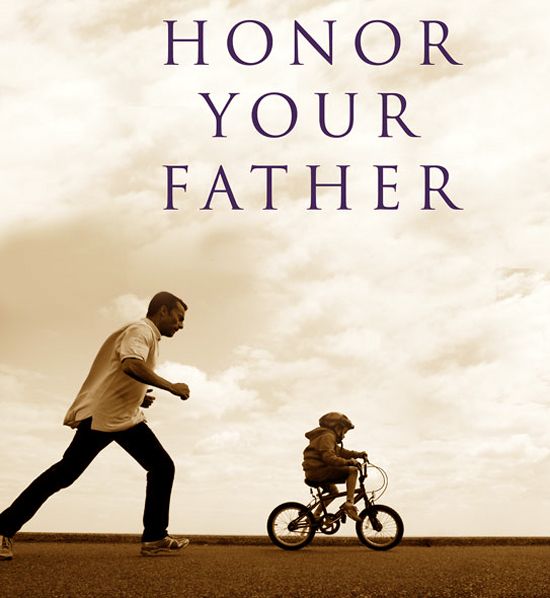
Honoring Our Fathers

In honor of Father's Day, here is a short piece from the Daily Om on the importance of honoring fathers for their work and support. As this article suggests, "The process of reconciling the ideal father that resides in our minds with the father that we actually have is a fertile one that can teach us a great deal about ourselves."

This has been very true in my life. I feared and idolized my father while he lived. After he died (I was 13), I held onto the idealization (maybe I needed to) but repressed or denied the fear I so often felt and the oppressiveness of his authoritarian behavior. It wasn't until more 10-15 years after his death that I was able to begin seeing my father as a flawed human being who lived with some serious wounding.

After a few decades and a lot of therapy, I understand who my father was and how he became the man who sired me. And I understand and honor that many of the things he did when I was a child had nothing to do with me, but were about his own pain, his fear, and his wounding.

The work it took to get to this place regarding my father is part of why I became a therapist, and informs my understanding of how cold, authoritarian parents can deeply wound their childen.

Providing Support: Fathers

by Madisyn Taylor
June 14, 2013 

In a time when the sacred feminine is being honored strongly, let's not forget fathers.

The idea of fatherhood is both personal and universal. We all have ideal concepts surrounding fatherhood, and we also have our real fathers—fathers who were there or not there for us, fathers who provided financial support for our families or failed to do so, fathers who loved or neglected us, fathers who were our role models or gave us someone to rebel against. Our father may have been there for us sometimes and not there for us at other times. The process of reconciling the ideal father that resides in our minds with the father that we actually have is a fertile one that can teach us a great deal about ourselves.

Our relationship with our father will often affect our relationships with the other men who will come into our lives. You may have learned to behave and think in certain ways because those were the ways that your father acted and thought. Certain talents that you possess may have been passed down to you by your father. There also may be personal issues that you inherited by virtue of who your father is. Understanding how your relationship with your father has influenced you can help you better understand yourself and the life that you have created.

In a time when mothers, the sacred feminine, and female energy are being honored, it is important not to forget the importance of fathers. Father energy and mother energy are the two complementary energies necessary to bring a healthy human being to fruition in the world. Many of the ideas surrounding fathers are changing in the wake of more modern parenting styles and the more egalitarian roles that are evolving between the sexes. More men are embodying the mother energy these days, and a woman can provide father energy for her children. Either way, we can all benefit from thinking about our fathers and how they have influenced who we’ve become and the ways that we walk through this world. Let us remember to honor our fathers.
* * * * *
What do you think?
Discuss this article and share your opinion 
Want more DailyOM?
Register for your free email, or browse all articles

Saturday, June 15, 2013

Are Two Dads Better than One?

With Father's Day coming up tomorrow, CBS offers this story on same-sex fathers and the legalities sure to arise as the Supreme Court prepares to rule on same-sex marriage later this year.
According to the Center for Family and Demographic Research, about one in six same-sex households include children. There are reportedly almost 2 million U.S. children being raised by same-sex parents, many of them in states that don't allow gays to marry.
But with the Supreme sitting on a 5-4 conservative majority (all 5 of the conservatives are Roman Catholic - the other side has 1 Roman Catholic and 3 Jews [all of whom appointed by Clinton]), the future of same-sex marriage and same-sex parents seems to be in peril.

However,
"The preponderance of the available evidence is that children of same-sex parents turn out just as well as other kids," said Debra Umberson, a sociology professor at University of Texas at Austin.
And,
In March, the American Academy of Pediatrics officially endorsed same-sex marriage, citing research showing that parents' sexual orientation has no bearing on a child's well-being. The policy said that if two same-sex parents want to marry, "it is in the best interests of their children that legal and social institutions allow and support them to do so."
Let's all hope that same-sex couples will continue to be able to use artificial insemination or to adopt unwanted children - and that the Justices will see that bans against same-sex marriage violate the Separation Clause in the U.S. Constituion.

Are two dads better than one?

By Stephen Smith / CBS News / June 15, 2013


Brent Almond, left, and Nicholas Pirulli with their son Jon at the Capital Pride parade in Washington, D.C., on June 8, 2013. / BRENT ALMOND

In many ways, Jon Pirulli-Almond enjoyed a pretty typical afternoon last Saturday. He chilled out in his red wagon. He played with a new Batman toy. He squirted his parents (and passersby) with a water pistol.

But there was nothing ordinary about the venue - or the boy's attire. It's a safe bet that Jon was the only 3-year-old in Washington, D.C. frolicking at a gay pride parade while wearing a shirt emblazoned with the message: "My Two Daddies (Can Beat Up Your One)."

His two fathers (Brent Almond, known as "Daddy" to John) and Nicholas Pirulli (aka "Papa") proudly hoisted their son, who was winning over the crowd with both his fashion message and his squirt gun prowess.

"It was so affirming and encouraging to hear everyone cheer when (we) walked by, and I've never gotten so many high-fives in my life," Almond said. "It was hard to stop smiling throughout the whole march."

Almond, a 44-year-old graphic designer, and Pirulli, a 46-year-old attorney, are among a small but growing number of same-sex parents in this country. According to the Center for Family and Demographic Research, about one in six same-sex households include children. There are reportedly almost 2 million U.S. children being raised by same-sex parents, many of them in states that don't allow gays to marry.

Nicholas Pirulli, left, and Brent Almond with their son Jon in Italy last year. 
BRENT ALMOND

Almond and Pirulli, who had a commitment ceremony in 2003, are hoping to legally marry later this year. "I don't know that being legally married will change our day-to-day lives, but it will be nice to know there are safeguards in place, just in case," Almond said. "It will be especially neat to have Jon involved."

With same-sex marriage gaining momentum (a recent poll shows a slim majority of Americans support it and 12 states now allow it), same-sex parenting has become a hot-button topic - even at the highest levels of the U.S. judicial system. When the Supreme Court took up the issue of same-sex marriage in March, Justice Antonin Scalia claimed that experts were debating whether raising a child in a single-sex family is "harmful to the child or not."

Scalia may have been alluding to a 2012 study conducted by Mark Regnerus, a University of Texas at Austin professor who found that children of a gay or lesbian parent may be more likely to have social and emotional problems.

But that conclusion is false, according to experts. The methodology of Regnerus' study was widely criticized by sociologists and even his own colleagues called it "bad science."

"The preponderance of the available evidence is that children of same-sex parents turn out just as well as other kids," said Debra Umberson, a sociology professor at University of Texas at Austin.

The social science on same-sex parenting is limited but some of the existing evidence is compelling. University of Virginia psychologist Charlotte Patterson recently invited both straight and same-sex couples to play with their respective children on a blanket with toys. Video showed that same-sex parents were more collaborative and egalitarian in their interactions with their children, while heterosexual parents retreated to conventional roles - mothers were more interactive while fathers were content to just play with the toys themselves.

Almond says he's not surprised by the study. He recounted a time he passed by a toddler soccer league and saw all the dads huddled on the sidelines and all the moms sequestered under the trees. Gay parents, he said, generally don't restrict themselves to one role.

"I can hang with the moms in the kitchen or I can go hang out with the dads on the sidelines depending on what my kid needs me for," he said.

When it comes to the well-being of kids, experts say stability and money trump sexual orientation. Susan Brown, a sociology professor at Bowling Green University, said that children fare better when their parents don't have to worry about basic financial needs and are in a committed relationship. To that end, marriage is key.

"Marriage has symbolic value as a public statement and public union," Brown said. "So (same-sex) marriage stands to enhance a child's well-being."

In March, the American Academy of Pediatrics officially endorsed same-sex marriage, citing research showing that parents' sexual orientation has no bearing on a child's well-being. The policy said that if two same-sex parents want to marry, "it is in the best interests of their children that legal and social institutions allow and support them to do so."

The Supreme Court is expected to rule on same-sex marriage cases this month.

Almond and Pirulli, who have been together for almost two decades, took methodical steps so they could adopt. Anticipating the home study process, they moved from D.C. to the suburbs to get a house, a big yard and a dog. They chose Maryland over Virginia because the latter does not allow unmarried couples to adopt.

The process was long and gut-wrenching. They were matched quickly with a mother but she changed her mind two days before the couple was supposed to be united with the baby. In adoption parlance, that's called a "disruption." Pirulli called it devastating.

"Brent had never seen me cry before that," Pirulli said of the ordeal.

They were then referred to an attorney in Portland, Ore., who found a match in 2009. The mother went into labor a month early and the couple caught the first plane to the Pacific Northwest. That night, they met Jon just a few hours after his birth and spent the night with him in the hospital. There was no maternal change of heart this time and the couple has had Jon ever since.

Nicholas Pirulli and Brent Almond with their son Jon at the White House Easter Egg Roll on April 1, 2013. / BRENT ALMOND

On their son's first birthday, Almond launched a blog "Designer Daddy," where he riffs on everything from "cool toys and doodads" to being an adoptive parent and gay father. He has since joined a father bloggers group where he commiserates with other men about the struggles of raising a three-year-old.

He has even taken classes on parenting, including one called "Managing Anger" - a class, Almond says, made up almost entirely of toddler parents.

"As a gay dad, I don't have a lot of peers, so these classes and the dad bloggers group have helped me establish my community of peers," Almond said.

While Almond and Pirulli say that most of the parenting challenges they face have nothing to do with their sexual orientation, both admit that they worry about what Jon might encounter as the adopted son of two gay men.

"Kids can be cruel," Pirulli said.

Pondering that hypothetical scenario, Almond decided to arm his son with lyrics to fend off any potential bullies. And so he wrote the song, "My Two Daddies (Can Beat Up Your One)" - the battle cry of a picked-on kid proclaiming that "some folks may get fretful or not understand my life but my parents love each other... There just ain't no wife." (Watch Almond perform the song below).


Almond calls the song (which is available on iTunes and raises money for the LGBT advocacy group Family Equity Council) "a love letter to my son - with a smidge of me working through my insecurities as a father."

On Monday, the day after Father's Day, Almond and Pirulli will once again get on a plane to Portland. They will take Jon for his annual visit with his birth parents. During the trip, Jon will also spend time with his biological brother who was adopted by a foster family.

Jon's two dads used to worry about the trip - how his birth parents would perceive them and how their young son might handle it. But their insecurities have dissipated since 2009.

"We occasionally talk about adoption but he doesn't ask questions like 'Why don't I have a mom?'" Pirulli said. "But it's going to happen soon."

"I have a script I've written and I ran it by an adoption social worker," Almond said. "But we have to be confident. He's ours. Our highest priority is him."

© 2013 CBS Interactive Inc.

Friday, June 14, 2013

Omnivore - Notions of Manhood

From Bookforum's Omnivore blog, here is a collection of links related to being a man, including an interesting article on the relation between upper body strength and support for income redistribution.

The researchers collected data on bicep size, socioeconomic status, and support for economic redistribution from hundreds of people in the United States, Argentina, and Denmark. 
In line with their hypotheses, the data revealed that wealthy men with high upper-body strength were less likely to support redistribution, while less wealthy men of the same strength were more likely to support it. 
"Despite the fact that the United States, Denmark and Argentina have very different welfare systems, we still see that -- at the psychological level -- individuals reason about welfare redistribution in the same way," says Petersen. "In all three countries, physically strong males consistently pursue the self-interested position on redistribution." 
Men with low upper-body strength, on the other hand, were less likely to support their own self-interest. Wealthy men of this group showed less resistance to redistribution, while poor men showed less support. 
"Our results demonstrate that physically weak males are more reluctant than physically strong males to assert their self-interest -- just as if disputes over national policies were a matter of direct physical confrontation among small numbers of individuals, rather than abstract electoral dynamics among millions," says Petersen.
Based on my own life, I would guess that I fit into their model - I have greater than average upper body strength, middle class income, and I tend to support a more equitable distribution of wealth. But is that based on my upper body strength, or is it based on my moral and ethical beliefs?

There are also articles on feminist men and why men should align with feminists against sexism.

Notion of manhood 
JUN 10 2013
1:00PM