The world’s first advertisement for sex is a work of art
"When sex becomes a routine it is necessary to change something," artist Matus the First said of his ad VIDEO
Jenny Kutner | Wednesday, Oct 15, 2014
(Credit: Matus the First via Metropolitan Film Institute)
Sex is the most common theme in advertisements, and yet… when has there ever been an advertisement for sex? When has there ever needed to be an advertisement for sex? It’s about the one thing in the world that doesn’t need to be promoted for people to want it, buy it or have it.
But that’s not always true, as Slovak artist Matus the First claims, and he’s right. People lose touch, get disconnected and or fall into a routine. Sex becomes rote, or it doesn’t happen at all. With that in mind, Matus created what is believed to be the world’s first ad purely for the sex act; it’s not selling anything else, just the idea of having sex.
“When sex becomes a routine it is necessary to change something,” Matus told The Mirror. “Therefore this is not a product commercial, because you can’t buy a solution to some things. … I felt though that in some cases it might be important for people to change something in their minds and this commercial is not only about sex but also about thinking.”
advertisement
The spot doesn’t explicitly depict any actual sex. Instead, Matus relies on the classic “pencil sharpener” metaphor to indicate penetration. That means the commercial is just a little NSFW, and definitely not intended for television. “The commercial was produced to share on the Internet,” Matus said. So, here it is.
Watch Matus the First’s first advertisement for sex below:
(h/t Jezebel)
Jenny Kutner is an assistant editor at Salon, focusing on sex, gender and feminism. Follow @jennykutner or email jkutner@salon.com.
Showing posts with label advertisements. Show all posts
Showing posts with label advertisements. Show all posts
Wednesday, October 15, 2014
The World’s First Advertisement for Sex is a Work of Art (via Salon)
An ad promoting sex, who woulda thunk!? The visuals are actually pretty inventive. It's only NSFW at the very end (word, not images).


Saturday, April 12, 2014
10 Percent of Gay Craigslist Ads Seek Men Who Don't Identify as Gay

Curious . . . human sexuality is an interesting and complex phenomenon. The ad above is a reverse on the study below. I know a younger gay man who hooks up with men through chat rooms, but a lot of the guys he sees are straight-identified and often in hetero relationships.
10 percent of gay Craigslist ads seek men who don't identify as gay
Posted By News On March 24, 2014
Online sexual hook-ups may present a unique opportunity to explore many factors of decision-making that inform sexual health, according to an analysis conducted by Eric Schrimshaw, PhD, at Columbia University's Mailman School of Public Health and Martin J. Downing, Jr., PhD, of the National Development and Research Institutes.
They found evidence that men having sex with men use the Internet to find sexual partners who do not identify as gay, either to fulfill a fantasy or because it allows anonymous sexual encounters without discovery. The findings are in Psychology of Sexual Orientation and Gender Diversity.
To examine the subgroup of men seeking non-gay-identified (NGI) men in the online sexual marketplace, the researchers reviewed 1,200 Internet personal ads posted on Craigslist and selected 282 for analysis and performed comparisons of two categories of personal ads: those seeking encounters with NGI men, including straight, bisexual, married, curious, and men on the "down low" (those who usually identify as heterosexual but have sex with men); and a contrasting set of ads that did not specifically seek NGI men. Craigslist was chosen because it is publicly accessible, highly trafficked, free-of-charge, and widely used by gay, NGI men seeking men, or men who have sex with men and women to find sexual partners.
Among the ads studied, 11% were placed by men seeking NGI partners. Although men who posted NGI-seeking ads were more likely to self-identify as bisexual, married, and/or discreet and to seek out an anonymous encounter relative to the ads of comparison men, only 24% of online advertisements seeking NGI men were posted by men who were themselves non-gay-identified. This suggests that many of the posts are placed by gay men seeking NGI men, perceived by some gay men to be more masculine, dominant, or "straight-acting."
Only a small number of ads by NGI-seeking men mentioned safe sex or condom use. The analysis revealed that men seeking NGI partners were significantly less likely to mention that they wanted to have safer sex/use condoms (15% vs. 33%) and were more likely (66% vs. 42%) to omit mention of condoms or safer sex in their advertisements. "This suggests that these men are more likely to be looking for and willing to engage in sex without a condom which may place them at greater risk for HIV/STI transmission than men who are not seeking non-gay-identified male partners," said Dr. Schrimshaw, who is assistant professor of Sociomedical Sciences at the Mailman School of Public Health.
Although few advertisements posted by men seeking NGI partners specifically sought anal sex without a condom (1% vs. 2%), they were significantly more likely to seek oral sex without a condom (14% vs. 5%) than comparison advertisements. "Future research on NGI-seeking men could lead to better understanding of their risk behaviors which, in turn, could be helpful for developing and targeting HIV/STD prevention and intervention efforts," noted Dr. Schrimshaw.
"Men having sex with men with characteristics that are devalued in the sexual marketplace such as older, heavier, or less masculine men will perhaps have less bargaining power, or at least perceive themselves as having less power, therefore, they may be willing to place themselves at risk for HIV and other sexually transmitted diseases to obtain a sexual partner," said Dr. Downing. These findings suggest that men may be even more willing to do this with NGI men.
The findings have unique implications for sexual health research targeting non-disclosing, NGI MSM and their same-sex partners. The authors note that further investigation is warranted to determine the extent to which NGI-seeking men are successful in finding partners for same-sex encounters who identify as straight or heterosexual, bisexual, down-low, or married as well as the types of behaviors these men engage in and the level of sexual risk.
"Regardless of any study limitations, the research has allowed us to document the existence of a subgroup of men who actively seek out sexual encounters with men who do not identify as gay," said Dr. Schrimshaw. "Moreover, the findings suggest that men with a preference for NGI men attempt to alert such prospective partners through a combination of self-described characteristics, desired partner attributes, and behavioral preferences, all of which serve to attract more discreet and masculine men. Given the attention to the sexual behaviors of NGI MSM, the results of this study support the need for additional research to investigate the behavioral outcomes of NGI-seeking men's personal ads."
Thursday, April 3, 2014
Increasing Number of Men Pressured to Accept Realistic Standards of Female Beauty
From The Onion, America's Finest News Source, satire is often more telling than reality. In this case, making fun of men having to deal with how women really look in advertisements. With 67% of the population either overweight or obese, skinny models and actresses are certainly not the norm.
Increasing Number Of Men Pressured To Accept Realistic Standards Of Female Beauty
ISSUE 50•13 • Apr 2, 2014
More men are speaking out against the pervasive depictions of average women in the media, which have left them feeling demoralized and compelled to accept unwelcome ideals of beauty.
NEW YORK—Confronted on a regular basis with images of women who represent a diverse array of body types, a growing number of American men are reportedly feeling pressured to accept the increasingly realistic standards of female beauty now depicted in the media, social scientists confirmed this week.
“More and more, men today find themselves bombarded with un-retouched images, and with that comes the considerable mental burden of trying to reconcile what they see in these ads and magazines with their personal perceptions of beauty,” said sociologist Cliff Hillard, who studies attainable ideals of female attractiveness in the media and how they can create an overly realistic sense of what women ought to look like. “For most men, it’s very discouraging. Instead of seeing only rail-thin models, they’re now exposed to accurate representations of women whose proportions mimic those of actual human females.”
“Think about the average man flipping through a magazine that features pictures of women who haven’t had their cheekbones raised or their noses reshaped with Photoshop,” Hillard continued. “How is he supposed to feel when he sees something like that?”
Every day, according to Hillard, men are faced with “inescapable” displays of average-sized women, women who are representatively diverse in terms of race and ethnicity, and women who are not professional models. According to one recent study, the average man sees photographs of women without digitally exaggerated bust-to-waist ratios dozens of times per day on TV, billboards, and the sides of buses, which the findings suggest has a demoralizing effect on the male psyche and has been shown to negatively influence men’s self-esteem and mood the more often they view such images.
Hillard noted that major companies like Dove, H&M, and Ralph Lauren now use nontraditional models in their advertising campaigns, an increasingly popular trend that, according to the sociologists’ research, ultimately serves to make men feel upset and frustrated when the women in commercials don’t live up to their own personal fantasies.
“Nowadays I can’t even leave the house without seeing an ad featuring properly proportioned women of statistically normal weights,” said San Diego–based civil engineer Spencer DeLane, adding that some of the models’ bodies are “startlingly average.” “Sometimes I don’t even want to go online or turn on the television because I know I’ll see a regular, healthy-looking woman. Don’t these advertisers understand how deeply depressing that is for me?”
“It’s not fair to me, and it’s not fair to other men like me,” he continued. “Having to live with society’s expectations that I accept women just the way they are takes an enormous toll.”
In a recent USA Today poll, 87 percent of men said that in the past month they’d seen an ad that made them feel inadequate by challenging their conceptions of physical beauty. Within that group, 74 percent said they’d seen a model posing without makeup and 83 said they’d seen visible blemishes, with a further 62 percent reporting that they’d seen a model with slight wrinkles around her eyes that “could very easily have been digitally or surgically removed.”
Armed with mounting evidence that men can feel crushed under the heavy mental strain to appreciate all types of women, Hillard questioned the costs of depicting them in a sensible way that reflects their natural physical variance.
“Here you’ve got a generation of boys who will grow up looking at women in the media and seeing flaws here, flaws there, flaws everywhere—what are they supposed to think?” said Hillard, who noted that his 12-year-old son is just now beginning to objectify women and that such portrayals could grossly alter what he perceives as an idealized female form for the rest of his life. “That’s why it’s more important than ever to empower men so they can teach themselves to ignore these ads and images.”“We men simply need to have conviction in our own ideas of what makes a woman beautiful,” he added.

Tuesday, May 14, 2013
KATHRYN DEHOYOS - NEW STUDY: Macho Advertising Encourages Hyper-Masculinity
From The Good Men Project, a brief report on how macho advertising leads to hyper-masculine behaviors in men. The research, published in the May issue of Sex Roles, found that “print ads targeting men also encourage them to aspire to an unrealistic and potentially harmful brand of masculinity,” what is often referred to as hyper-masculinity, defined in the paper as “gender-based ideology of exaggerated beliefs about what it is to be a man.”
Nearly all advertising aimed at men is essentially "macho," so this problem is so pervasive that it seems unlikely that it will change any time soon.
Nearly all advertising aimed at men is essentially "macho," so this problem is so pervasive that it seems unlikely that it will change any time soon.
NEW STUDY: Macho Advertising Encourages Hyper-Masculinity
MAY 9, 2013 BY KATHRYN DEHOYOS
Hyper-masculine advertising has been found to encourage men to an “unrealistic and potentially harmful brand of masculinity.”
A new study published in the most recent issue of Sex Roles suggests that sexist advertising aimed at men is just as damaging as that aimed at women. According to the report, researchers found that “print ads targeting men also encourage them to aspire to an unrealistic and potentially harmful brand of masculinity,” otherwise known as hyper-masculinity, which the paper defines as “gender-based ideology of exaggerated beliefs about what it is to be a man.”
Psychologists from the University of Manitoba studied the ads in 8 US men’s magazines which were published in 2007-2008, the publications were “differentiated by readership age, education, and household income,” and the ads were analyzed for any “hyper-masculine depictions.” What researchers found was that at least 50% of the ads in most magazines, and as many as 90% in some promoted one or more of the following hyper-masculine beliefs:
The study indicates that throughout the ads which were analyzed, “The beliefs that toughness equals control and that danger is exciting were more common than the belief that violence is manly or callousness towards women and sex.” Research also showed that hyper-masculine ads were significantly more common in magazines geared toward “younger, lower-income, and less educated readers.” In other words, those who are most at-risk for “appropriating such beliefs and behaviors.” The study also asserts that the perpetuation of the hyper-masculine images in the advertisements is problematic because it “exposes readers to these beliefs and normalizes them.”
- Danger is exciting.
- Toughness is a form of emotional self-control.
- Violence is manly.
- It’s fine to be callous about women and sex.
Photo: FontShop/Flickr

* * * * * * *
Full Citation:
Vokey, M, Tefft, B, Tysiaczny, C. (2013, May). An Analysis of Hyper-Masculinity in Magazine Advertisements. Sex Roles, Volume 68, Issue 9-10, pp 562-576. DOI: 10.1007/s11199-013-0268-1An Analysis of Hyper-Masculinity in Magazine Advertisements
Megan Vokey, Bruce Tefft, Chris Tysiaczny
Abstract
Hyper-masculinity is a gender-based ideology of exaggerated beliefs about what it is to be a man. HM consists of four inter-related beliefs, namely toughness as emotional self-control, violence as manly, danger as exciting, and calloused attitudes toward women and sex (Zaitchik & Mosher1993). Adherence to HM is linked to a host of social and health problems in North America, such as dangerous driving and violence toward women (Parrot & Zeichner 2003). Advertising is believed to play a role in constructing hyper-masculinity (Kilbourne 1999). In this study, eight U.S. men’s magazines published in 2007–2008, differentiated by readership age, education, and household income, were analyzed for hyper-masculine depictions in their advertisements. Using a behavioural checklist with good inter-rater reliability, it was found that 56 % (n = 295) of 527 advertisements depicted one or more hyper-masculine beliefs. Some magazines depicted at least one hyper-masculine belief in 90 % or more of advertisements. In addition, reader age, education, and income were all inversely related to the prevalence of hyper-masculine beliefs, with HM depictions presented more often in advertisements targeting young, less educated, and less affluent men. Implications of these findings for the well-being of men and society are discussed.
Wednesday, April 11, 2012
Documentary - The Codes of Gender: Identity and Peformance in Pop Culture
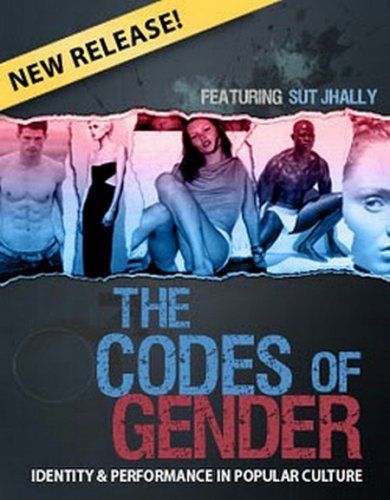
This is an edited version (for nudity and length) of a slightly longer documentary (full version here) applying the sociological theories of Erving Goffman to the most ubiquitous (and powerful?) form of gender-norming in our culture, commercials and advertising (as well as films and TV). Here is the filmmaker's statement about their work, from their website (credit where credit is due, I first found this film at Top Documentary Films):
Codes of Gender, The Identity and Performance in Pop Culture
Written and directed by MEF Executive Director Sut Jhally, The Codes of Gender applies the late sociologist Erving Goffman's groundbreaking analysis of advertising to the contemporary commercial landscape, showing how one of American popular culture's most influential forms communicates normative ideas about masculinity and femininity.
In striking visual detail, The Codes of Gender explores Goffman's central claim that gender ideals are the result of ritualized cultural performance, uncovering a remarkable pattern of masculine and feminine displays and poses. It looks beyond advertising as a medium that simply sells products, and beyond analyses of gender that focus on biological difference or issues of objectification and beauty, to provide a clear-eyed view of the two-tiered terrain of identity and power relations.
With its sustained focus on how our perceptions of what it means to be a man or a woman get reproduced and reinforced on the level of culture in our everyday lives, The Codes of Gender is certain to inspire discussion and debate across a range of disciplines.
Viewer Discretion Advisory: This program contains violence, nudity, and sexual themes.
DVD contains two versions: a full length version (73 minutes) and an abridged version (46 minutes) which has been edited for nudity and length.
Sections: Sex and Gender | The Feminine Touch | The Ritualization of Subordination | Licensed Withdrawal | Infantilization | The Codes of Masculinity | Trapped in the Code | History, Power, and Gender Display
You can read Goffman's analysis of advertising and gender on Scribd. Granted, this is an extreme reading of cultural images, but there is more truth to this than not, in my opinion.
Whether you agree with this reading of gender-norming or not, there is much in this documentary (and I have only seen the edited version included here) to inspire thought and discussion.
Subscribe to:
Posts (Atom)