I think I posted this here before, but it's an interesting video definitely worth a viewing, or maybe a second viewing. This documentary offers a cogent analysis (using Irving Goffman's examination of advertising and the contemporary commercial landscape) shows how influential advertising media is in communicating "normative ideas about masculinity and femininity, the relationship between gender and power, and the everyday performance of cultural norms."
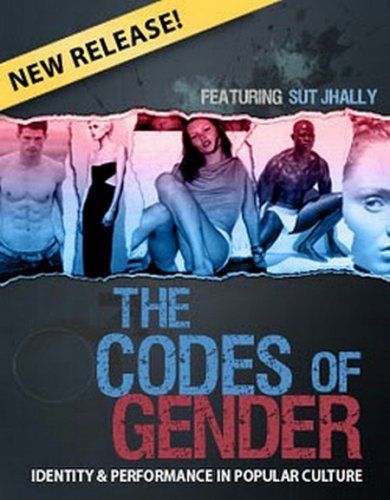
The Codes of Gender applies the late sociologist Erving Goffman’s ground-breaking analysis of advertising to the contemporary commercial landscape, showing how one of American popular culture’s most influential forms communicates normative ideas about masculinity and femininity, the relationship between gender and power, and the everyday performance of cultural norms. In striking visual detail, this film explores Goffman’s central claim that gender ideals are the result of ritualized cultural performance, uncovering a remarkable pattern of masculine and feminine displays and poses. The film looks beyond advertising as a medium that simply sells products, and beyond analyses of gender that focus on biological difference or issues of objectification and beauty, to provide a clear-eyed view of the two-tiered terrain of identity and power relations. With its sustained focus on how our perceptions of what it means to be a man or a woman get reproduced and reinforced on the level of culture in our everyday lives, the film is a great introduction to socially and culturally constructed gender roles.
This is an edited version (for nudity and length) of a slightly longer documentary (full version here) applying the sociological theories of Erving Goffman to the most ubiquitous (and powerful?) form of gender-norming in our culture, commercials and advertising (as well as films and TV). Here is the filmmaker's statement about their work, from their website (credit where credit is due, I first found this film at Top Documentary Films):
Written and directed by MEF Executive Director Sut Jhally, The Codes of Gender applies the late sociologist Erving Goffman's groundbreaking analysis of advertising to the contemporary commercial landscape, showing how one of American popular culture's most influential forms communicates normative ideas about masculinity and femininity.
In striking visual detail, The Codes of Gender explores Goffman's central claim that gender ideals are the result of ritualized cultural performance, uncovering a remarkable pattern of masculine and feminine displays and poses. It looks beyond advertising as a medium that simply sells products, and beyond analyses of gender that focus on biological difference or issues of objectification and beauty, to provide a clear-eyed view of the two-tiered terrain of identity and power relations.
With its sustained focus on how our perceptions of what it means to be a man or a woman get reproduced and reinforced on the level of culture in our everyday lives, The Codes of Gender is certain to inspire discussion and debate across a range of disciplines.
Viewer Discretion Advisory: This program contains violence, nudity, and sexual themes.
DVD contains two versions: a full length version (73 minutes) and an abridged version (46 minutes) which has been edited for nudity and length.
Sections: Sex and Gender | The Feminine Touch | The Ritualization of Subordination | Licensed Withdrawal | Infantilization | The Codes of Masculinity | Trapped in the Code | History, Power, and Gender Display
You can read Goffman's analysis of advertising and gender on Scribd. Granted, this is an extreme reading of cultural images, but there is more truth to this than not, in my opinion.
Whether you agree with this reading of gender-norming or not, there is much in this documentary (and I have only seen the edited version included here) to inspire thought and discussion.
The other day, I posted an article about how male MMA fighters can suppress fear, anxiety, and most other emotions, as well as compassion and empathy. The author of that article spent two years interviewing more than 100 MMA fighters about how they manage fear - here are some of the conclusions:
"Putting on a convincing manhood act requires more than using language and the body; it also requires emotion work. By suppressing fear, empathy, pain, and shame and evoking confidence and pride, males signify their alleged possession of masculine selves," Vaccaro said.
"By signifying masculine selves through evoking fear and shame in others, such men are likely to more easily secure others' deference and accrue rewards and status. Managing emotional manhood, whether it occurs in a locker room or boardroom, at home or the Oval Office, likely plays a key role in maintaining unequal social arrangements."
This would seem to lead naturally to the analysis of MMA culture offered by David Mayeda at the Sociology in Focus blog.
However, I want to make a disclaimer and admission. I watch UFC from time to time and enjoy the "sport" of mixed martial arts. I do not believe that all men who participate in this sport are violent toward women or violent in general.
That said, the sport likely appeals to violent men in that it provides a socially acceptable venue for them to act out their tendencies. And this may be where the study mentioned above becomes relevant - some men may not leave their suppressed empathy in the ring or the gym. It's likely that some men adopt that social role in all areas of their lives, which makes violence toward women (and others) much more likely.
Imagine if it was common place for prominent members of a billion dollar company
to use glaringly sexist language in public. That would be crazy, right?
Except over the last few months this is exactly what we’ve seen from
the Mixed Martial Arts league called the UFC. In this post David Mayeda
uses the sociological concept of hegemonic masculinity to help us
understand what is going on with the men of the UFC.
In a sport so male driven, it is hardly surprising that some Mixed
Martial Arts (MMA) athletes publicly express opinions reflecting a
violent male dominance. Recently, MMA fighter Miguel Torres tweeted: “If
a rape van was called a surprise van more women wouldn’t mind going for
rides in them. Everyone likes surprises” (December 7, 2011). Torres was
subsequently fired by UFC President, Dana White.
Torres’s comment came off the heels of other controversial comments made at a UFC press conference,
former light heavyweight UFC champ, Rashad Evans, taunted his future
opponent, Phil Davis, by saying, “I’m going to put my hands on you worse
than that dude on those kids at Penn State,” referencing former Penn
State assistant football coach, Jerry Sandusky, who faces 40 counts related to the sexual assault of children.
And back in November, UFC star, Forrest Griffin, tweeted,
“Rape is the new missionary.” What on earth is going on here? The
answer, for sociologists lies within an idea called “hegemonic
masculinity.”
Hegemonic masculinity helps to outline the plurality of masculinities
existing and shifting within a culture’s hierarchal structure. Which is
a fancy way of saying that men within a given culture engage in a
variety of practices which give them masculine currency and power over
other men and women. These practices may include (among other behaviors)
taking risks, dominating other men and/or women, flaunting wealth, or
showcasing athleticism.
Additionally, hegemonic masculinity requires men to police one
another, that is, punish and stigmatize men who engage in so-called
feminine behaviors. And perhaps it also goes without saying that
hegemonic masculinity acknowledges the general degradation women, girls,
and so-called feminine behaviors (see Connell & Messerschmidt, 2005,
for a thorough discussion). We can find nearly countless examples of
hegemonic masculinity in sports. The world of MMA is no exception.
As I discussed previously,
MMA’s most prominent organization is the Ultimate Fighting Championship
(UFC). One clear example of hegemonic masculinity in this particular
organization (and to a lesser degree the entire MMA industry) is the
absence of female fighters. Women in the UFC when spotlighted, instead
serve as ring card “girls.” Or, as seen in the picture above of five
prominent MMA athletes, women emphasizing their feminine features may
serve as sexualized visuals alongside the male fighters for the
predominantly male crowd.
Returning to the concept of hegemonic masculinity, what these
comments illustrate are first, the degradation of women. Torres and
Griffin both make light of sexual assault in a type of locker room-based
dialogue now widely disseminated via the internet. Secondly, the
comments by Evans demonstrate how sexual assault victims can be used
symbolically to denigrate others. Specifically, Evans works to disparage
his opponent (Davis) by feminizing him – by comparing him to boys who
(allegedly) have been sexually molested.
This recent rash of comments is an indication that hegemonic
masculinity still pervades our society and that male privilege is
perpetuated in sporting institutions. Even though males are in conflict
with one another, what we see is a culture that depreciates women and
all considered feminine. Whether or not sanctions against these athletes
will change MMA’s hegemonically masculine culture remains to be seen,
but in an organization where men are paid to engage in violent conflict,
such change is highly unlikely.
Dig Deeper:
Thinking about the concept of hegemonic masculinity, identify other
institutions in society where men (or boys) compete with and put down
one another by feminizing each other.
What behaviors do you notice males engage in to display their
masculine superiority over each other and over females? Explain how
these behaviors change in different situations.
How can sporting institutions change so that they are more
egalitarian along gender lines and alter their current hegemonically
masculine culture?
Reference: Connell, R. W., & Messerschmidt, J. W. (2005). Hegemonic masculinity: rethinking the concept. Gender and Society, 19 (6), 829–859. DOI: 10.1177/0891243205278639.
I found this at Top Documentary Films - it's a sensitive look at the experience and challenges of those born as intersex, not biologically male or female. Here is a useful definition of intersexuality from Wikipedia, along with the distinction between intersexuality and androgyny:
Intersex, in humans and other animals, is the presence of intermediate or atypical combinations of physical features that usually distinguish female from male. This is usually understood to be congenital, involving chromosomal, morphologic, genital and/or gonadal anomalies, such as diversion from typical XX-female or XY-male presentations, e.g., sex reversal (XY-female, XX-male), genital ambiguity, or sex developmental differences. An intersex individual may have biological characteristics of both the male and the female sexes.[1]Intersexuality as a term was adopted by medicine during the 20th century, and applied to human beings whose biological sex cannot be classified as clearly male or female.[2][3][4]Intersex was initially adopted by intersex activists who criticize traditional medical approaches to sex assignment and seek to be heard in the construction of new approaches.[5][6]
Some people (whether physically intersex or not) do not identify themselves as either exclusively female or exclusively male. Androgyny is sometimes used to refer to those without gender-specific physical sexual characteristics or sexual preferences or gender identity, or some combination of these; such people can be physically and psychologically anywhere between the two sexes.[7] This state may or may not include a mixture or absence of sexual preferences.[8][9]
When doctors encountered intersex children in the 1950s and 1960s (and even today) a sex was assigned to the child and the necessary surgeries were performed. Because it is generally easier to "make" female anatomy, that has tended to be the choice of parents and doctors.
A similar case, that of David Reimer, who was the patient of the infamous Dr. John Money, helped to change the way intersex was handled by doctors. David was born male, but was re-assigned as female when his penis was destroyed in a bad circumcision. Under the care of Dr. Money, who had done extensive work with intersex patients, he was raised as "Brenda," but he never really identified as female, so when puberty hit all hell broke loose for him. After returning to life as a male, he eventually married; but he later took his own life after suffering severe depression, financial challenges, and troubles in his marriage.
Dr. Money, who had worked with intersex patients, had developed a theory of gender identity that relied almost entirely on the social construction of gender.
According to Wikipedia,
The proposed revisions for DSM-5 include a change from using Gender Identity Disorder to Gender Dysphoria. This revised code now specifically includes intersex people as people with Disorders of Sex Development.[53] This move has been criticised by one intersex advocacy group in Australia,[54] and criticism from the intersex community has been lodged with the appropriate DSM5 subcommittee.[55]
Many people involved with intersex rights would prefer that their lives not be pathologized and that their lives be recognized as a third sex.
Sociological studies have challenged the idea that gender is socially constructed and that sex roles are exclusively binary.
The first sociologist to work on 'intersexuality' was Harold Garfinkel in 1967 using a method derived from sociological phenomenology he called ethnomethodology. He based his analysis on the everyday commonsense understandings of 'Agnes', a woman undergoing social and surgical gender reassignment.[31] Ethnomethodology was also used in 1978 by Kessler and McKenna, who argue that, while gender can be seen as a social accomplishment, cross-cultural studies render gender as problematic as they highlight how it is usually regarded as a fact, when it can be shown to be constructed in different ways. They point to different cultural approaches to gender roles, and how 'hermaphrodites' and 'berdaches' are incorporated socially, as disruptive to fixed ideas about sex, gender, and gender-roles. They argue that what we 'know' about gender is grounded in the 'everyday social construction of a world of two genders', where gender attribution seems more important than gender differentiation.[32]
What is the truth about the sexes? It is a deeply-held assumption that every person is either male or female; but many people are now questioning whether this belief is correct.
This compelling and sensitive documentary unlocks the stories of people born neither entirely male nor female. Conditions like these have been known as intersex and shrouded in unnecessary shame and secrecy for decades.
It’s estimated that DSDs (Disorders of Sexual Development) are, in fact, as common as twins or red hair – nearly one in 50 of us.
The programme features powerful insights from people living with these conditions, and the medical teams at the forefront of the field, including clinical psychologist Tiger Devore, whose own sex when born was ambiguous.
Watch the full documentary now (playlist – 50 minutes)
This comes via the Good Men Project Magazine, alerting us to Michale Kimmel's recent appearance on the Dads Unplugged radio show/podcast. The Podcast is posted at the bottom. I have more Kimmel videos to come in the next few days.
There’s a lot of interesting stuff here. Kimmel argues that there were two masculine archetypes from the American Revolution to the Industrial Age: the “genteel patriarch”—cultured, artistic gentry such as Washington and Jefferson—and the “heroic artisan,” the “virtuous worker”—for example, Paul Revere. This gave way to the 19th-century Horatio Alger idea of the self-made man, the middle-class man, which remains with us today. It’s a romantic idea: a special breed of man can pull themselves—and America—up by the bootstraps.
Advertising perpetuates this. As men’s roles shift and become more family-oriented, commercials hint they’ve been gypped. “We know the compromises you make,” Kimmel jokes, “but when you buy this car or wear this shirt, you’re back on the frontier”—where, it’s implied, men were men.
But men know better than this. We know family makes us happy. We know our interpersonal relationships are more gratifying than business, and we’ll never be the guy at the law firm who never knew his children’s birthdays. If there’s a hidden benefit to the “he-cession,” this is it: not having to make the sacrifices our dads made.
And, laughs one of the hosts, more sex.
About Cooper Fleishman Cooper Fleishman is a senior editor at the Good Men Project Magazine. A transplant from small-town Ohio, he now lives, works, and blogs in Brooklyn, NY. Email him here.
Michael Kimmel has written 12 books dealing with Men. One was recently referenced in a Newsweek Cover article titled “Man Up.” It really defines where we men have come from and where we are going. This nationally renowned author and professor at Stony Brook University joined Todd and Kent to talk about what men are facing in this day and age. We answer the questions: Why do men have to Man Up and how can they? It’s not as difficult as some men might think.




 What is the truth about the sexes? It is a deeply-held assumption that every person is either male or female; but many people are now questioning whether this belief is correct.

