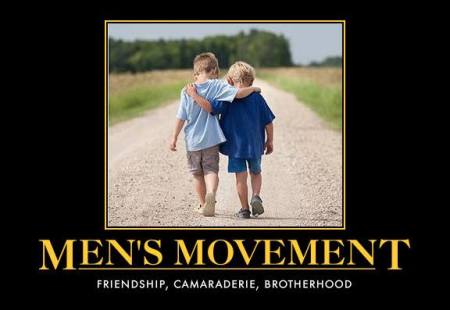
Showing posts with label compassion. Show all posts

Thursday, September 25, 2014

Selfless Cop Changes Lives of Two Boys . . . FOREVER

http://cdn.inquisitr.com/wp-content/uploads/2014/09/Jack-Mook-and-Sons-665x385.jpg

When a Pittsburgh police detective noticed that two boys he was training in a boxing gym stopped showing up, he went looking for them. What happens next is why I still have faith in human beings.

These Kids Had No Idea a Cop Would React This Way When He Heard about Their Living Situation


Police officer Jack Mook was enjoying his bachelor life, only having himself to take care of. He was boxing in his spare time and noticed that a couple of foster kids he helped train stopped showing up.

He tracked them down and found that they were living under terrible circumstances with abusive foster parents. Jack took matters into his own hands and had them placed in a new foster home…HIS home. Jack traded in his single life for the life of a parent and even legally adopted the two boys. Jack and the boys wouldn’t have it any other way and are restoring a lot of people’s faith in humanity!

Monday, April 21, 2014

This Is What Real Men Do


This is what real men do. Watch what happens in under 30 seconds. Best PSA ever? Apparently, this was made by University of Oregon School of Journalism and Communication students. They have just won the prestigious Peabody Award, deservedly!

Thursday, April 17, 2014

Kozo Hattori - 5 Habits of Highly Compassionate Men


Excellent article. I resonate with the opening remarks of the author - I was a very sensitive child and would cry when the gazelle got caught by the lion on Wild Kingdom. Other situations, usually when someone felt shame or fear, also would lead to tears.

Like the author, years of being forced into the "man box" buried that sensitivity and it took years of therapy and Buddhist practice to rediscover it.

Future generations of boys should not have to go through that same soul-crushing experience.

Books mentioned below: Hardwiring Happiness by Rick Hanson, PhD, Raise an Emotionally Healthy Boy by Dr. Ted Zeff, Search Inside Yourself by Chade-Meng Tan, From Wild Man to Wise Man: Reflections on Male Spirituality by Fr. Richard Rohr, and Raising Cain by Michael Thompson and Dan Kindlon. 

Two books not mentioned below but very much worth reading: Born to Be Good: The Science of a Meaningful Life by Darcher Keltner, and The Age of Empathy: Nature's Lessons for a Kinder Society by Fans de Waal.

5 Habits of Highly Compassionate Men

Having compassion leads to increased happiness, freedom from gender stereotypes, and better relationships with others.

by Kozo Hattori
posted Apr 02, 2014

This article originally appeared at Greater Good Berkeley.

Photo by Tom Beardshaw / Flickr.

I remember being a very compassionate child. While watching "The Little House on the Prairie," I cried my eyes out when Laura couldn’t give Pa a Christmas gift. But 12 years of physical abuse and being forced to the confines of the “act-like-a-man box” wrung most of that compassion out of me by the time I reached adulthood.

Although I was what therapists call “high-functioning,” my lack of compassion was like a cancer that poisoned my friendships, relationships, business affairs, and life. At the age of 46, I hit rock bottom. Unemployed and on the verge of divorce, I found myself slapping my four-year-old son’s head when he wouldn’t listen to me.

As a survivor of abuse, I had promised myself that I would never lay a hand on my children, but here I was abusing my beloved son.

I knew I had to change. I started with empathy, which led me to compassion. I committed to a daily meditation practice, took the CCARE Cultivating Compassion class at Stanford University, and completed a 10-day silent meditation retreat. I read and researched everything I could find on compassion.

I found that the more compassion I felt, the happier I became.

Convinced that I had found an essential ingredient to a happy and peaceful life, I started to interview scientific and spiritual experts on compassion, trying to find out what made a compassionate man. Interviewees included Dr. Dacher Keltner, co-founder of the UC Berkeley Greater Good Science Center; Dr. James Doty, founder and director of the Center for Compassion and Altruism Research and Education at Stanford University; Dr. Rick Hanson, author of Hardwiring Happiness; Marc Brackett, director of the Yale Center for Emotional Intelligence; and Thich Nhat Hanh, the Zen Buddhist monk nominated by Martin Luther King Jr. for the Nobel Peace Prize in 1967.

From these interviews and research, I compiled a list of what makes a compassionate man.

1. Learn to see compassion as strength


Most events I attend that discuss compassion are predominately attended by women. When I asked Thich Nhat Hanh how we could make compassion more attractive to men, he answered, “There must be a fundamental misunderstanding about the nature of compassion because compassion is very powerful … Compassion protects us more than guns, bombs, and money.”

Although many men in society see compassion and sympathy as feminine—which translates to a weakness in our patriarchal society—all of the compassionate men I interviewed view compassion as a strength.

Dr. Hanson noted how compassion makes one more courageous since compassion strengthens the heart—courage comes from the French word “coeur,” which means heart. Dacher Keltner argues that Darwin believed in “survival of the kindest,” not the fittest. Dr. Ted Zeff, author of the book Raise an Emotionally Healthy Boy, believes that only compassionate men can save the planet. Zeff argues that “the time has come to break the outdated, rigid male code that insists that all men should be aggressive, thick-skinned, and unemotional”—an excellent description of the act-like-a-man box that I tried to live in.

The compassionate men I interviewed agree with the Dalai Lama when he said, “Love and compassion are necessities, not luxuries. Without them, humanity cannot survive.”

2. Have compassionate role models


All of the compassionate men seemed to have role models that supported their compassion instinct. Marc Brackett gives credit to his uncle, Marvin Maurer, who was a social studies teacher trying to instill emotional intelligence in his students before the term "emotional intelligence" was coined. Over 30 years after teaching in middle school, Maurer’s “Feeling Words Curriculum” acts as a key component of the Yale Center for Emotional Intelligence's RULER program. Similarly, Marshall Rosenberg, author of the book Nonviolent Communication, constantly mentions his compassionate uncle who cared for his dying grandmother.

A role model doesn’t necessarily have to be living, or even real. Chade-Meng Tan, author of Search Inside Yourself, cites Ben Kingsley’s portrayal of Gandhi as a role model for compassion. Dr. Rick Hanson posits Ender from the science-fiction novel Ender’s Game as a compassionate role model. Certainly, Jesus and Buddha are obvious role models of compassion. The key is to treat them like role models.

Role models are not meant to be worshiped, deified, or prayed to. They are meant to be emulated. They pave the way for us to walk a similar path. Can we turn the other cheek and love our enemies like Jesus asked us? Can we transcend our ego and see all things as one, like the Buddha did?

In contrast are individuals who were not guided by positive role models. In his book From Wild Man to Wise Man: Reflections on Male Spirituality, Franciscan friar Richard Rohr describes what he calls “father hunger”: “Thousands and thousands of men, young and old … grew up without a good man’s love, without a father’s understanding and affirmation.” Rohr, who was a jail chaplain for 14 years, claims that “the only universal pattern I found with men and women in jail was that they did not have a good father.”

Scott Kriens, former CEO of Juniper Networks and founder/director of the 1440 Foundation, concurs: “The most powerful thing we can do for our children is be the example we can hope for.”

3. Strive to transcend gender stereotypes


All of the compassionate men interviewed broke out of the "act-like-a-man" box. At a certain point in his life, Dr. Rick Hanson realized that he was too left-brained, so he made a conscious effort to reconnect with his intuitive, emotional side. When Elad Levinson, program director for Spirit Rock Meditation Center, first encountered loving-kindness and compassion practices, his first reaction was one he claims is fairly typical for men: “Come on! You are being a wuss, Levinson. No way are you going to sit here and wish yourself well.” So the actual practice of compassion instigated his breaking free from gender stereotypes.

Ted Zeff cites a study that found infant boys are more emotionally reactive than infant girls, but by the time a boy reaches five or six years old “he’s learned to repress every emotion except anger, because anger is the only emotion society tells a boy he is allowed to have.” If society restricts men’s emotional spectrum to anger alone, then it is obvious men need to transcend this conditioning to become compassionate.

Dr. Doty points to artificially defined roles as a major problem in our society because they prevent men from showing their vulnerability. “If you can’t be vulnerable, you can’t love,” says Doty. Vulnerability is a key to freedom from the "act-like-a-man" box, for it allows men to remove the armor of masculinity and authentically connect with others.

Both Dr. Doty and Scott Kriens emphasize authenticity as a necessary pathway to compassion. Kriens defines authenticity as “when someone is sharing what they believe as opposed to what they want you to believe.” This opens the door to compassion and true connection with others.

4. Cultivate emotional intelligence


In his book Raising Cain, Dan Kindlon and Michael Thompson argue that most boys are raised to be emotionally ignorant: “Lacking an emotional education, a boy meets the pressure of adolescence and that singularly cruel peer culture with the only responses he has learned and practiced—and that he know are socially acceptable—the typical ‘manly’ responses of anger, aggression, and emotional withdrawal.”

In contrast, most of the men I interviewed were “emotionally literate.” They seemed to see and feel things with the sensitivity of a Geiger counter. Tears welled up in Doty’s eyes a number of times when he talked about compassion. Hanson explained how he landed in adulthood “from the neck up” then spent a large part of his 20s becoming whole again. Much of Chade-Meng Tan’s Search Inside Yourself training that he developed for the employees of Google is based on emotional intelligence developed through attention training, self-knowledge, and self-mastery.

Similarly, Father Richard Rohr leads initiation groups for young men that force initiates to face pain, loneliness, boredom, and suffering to expand their emotional and spiritual capacity. It is no coincidence that these initiations are held in nature. Nature seems to be an important liminal space that allows boys and men to reconnect with their inner world. Dr. Hanson is an avid mountain climber. Ted Zeff advocates spending time in nature with boys to allow their sensitivity to develop.

5. Practice silence


Almost all of the men I interviewed regularly spend some time in silence. They’d hit “pause” so that they can see themselves and others more clearly. When our interview approached two hours, Dr. Rick Hanson asked to wrap it up so he would have time for his morning meditation. Meng Tan had just returned from a week-long silent meditation retreat a few days before our interview. Scott Kriens started a daily sitting and journaling practice almost ten years ago that he rigorously practices to this day.

Father Richard Rohr practices Christian contemplative prayer, which he says leads to a state of “undefended knowing” that transcends dualistic, us versus them thinking. Rohr argues that true compassion can’t happen without transcending dualistic thinking. “Silence teaches us not to rush to judgment,” says Rohr.

Self-awareness through mindfulness practices like meditation, silent prayer, or being in nature allow compassionate men to embrace suffering without reacting, resisting, or repressing. Thich Nhat Hanh says that mindfulness holds suffering tenderly “like a mother holding a baby.” That poetic image is backed up by more and more research, which is finding that mindfulness can help foster compassion for others.

So the path to making more compassionate men is clear: Understand compassion as a strength, get to know yourself, transcend gender roles, look for positive role models—and become one yourself. If that sounds too complicated, 84-year-old Marvin Maurer sums up being a compassionate man in five easy words, “Be in love with love.”


This article was originally written by Kozo Hattori, M.A., for Greater Good, where it originally appeared. Kozo is a writer and counselor at PeaceInRelationships.com. His current book project is titled Raising Compassionate Boys.

Read More

Friday, February 7, 2014

Rick Hanson - A Caring, Joyful Heart

This quick and easy practice to cultivate a caring, joyful heart (lovingkindness) comes from Rick Hanson, author of Buddha's Brain: The Practical Neuroscience of Happiness, Love, and Wisdom (2009), Just One Thing: Developing a Buddha Brain One Simple Practice at a Time (2010), and, most recently, Hardwiring Happiness: The New Brain Science of Contentment, Calm, and Confidence (2013).

A Caring, Joyful Heart

Rick Hanson, Ph.D.

posted on: January 27th, 2014

As you probably know, compassion and lovingkindness are central elements of Buddhism.

They arise naturally in response to one of those three fundamental characteristics of existence: interdependence/not-self/emptiness. They are also a beautiful path of spiritual practice. And they just feel good: “Through compassion one is free from lethargy and depression.” (Acariya Dhammapala)

Interestingly, a scientifically based tradition as hard-headed as Western psychology is also beginning to find that working with compassion and related heartfelt feelings has both mental and physical benefits.

For example, the Institute of HeartMath (in Boulder Creek, California) has researched connections between the heart and emotional well-being.

Even a regular heartbeat – e.g., 60 times a minute – still has a little variability in the interval between each beat. A large and smoothly changing variation in those intervals changes your brain waves, activates the para-sympathetic nervous system, lowers blood pressure, supports the immune system, and has other health benefits.

It also helps you feel more peaceful and happy and caring.

So let’s try a simple technique that can bring your heart beat into a healthier rhythm.

It has three parts:
  1. Breathe in such a way that the length of your inhalation and exhalation are the same (perhaps counting in your mind to make the breaths even).
  2. Imagine that the breath is coming into and out of the area of your heart.
  3. As you breathe evenly through your heart, call to mind a pleasant, heartfelt emotion such as gratitude, kindness, contentment, or love — perhaps by thinking about a happy time, being with your children, gratitude for the good things in your life, a close friend, etc. You can also imagine that feeling moving through your heart as part of the breath.
Why don’t you try this for a few minutes, right now?

Just three to five cycles of this sort of breathing can have a noticeable effect. Also try five to ten minutes straight sometime, and see how that feels.

Of course, there are other ways to cultivate compassion, such as through metta – or compassion and lovingkindness – meditation that many people here are familiar with. In fact, metta practice could also help release oxytocin, a hormone that is involved in warm feelings of safety and contentment – and is released in women when they are nursing, to give you a sense of its qualities.

Enjoy!

ALSO...

There are many other spiritual practices and meditations on www.YourSkillfulMeans.com to help you clarify your inner experience and connect to deeper aspects of your awareness. Check them out here.

Friday, January 31, 2014

An 8-Step Path to Reducing Suffering

"Each step along the Buddha’s path to happiness requires practicing mindfulness until it becomes part of your daily life. Mindfulness is a way of training yourself to become aware of things as they really are. With mindfulness as your watchword, you progress through the eight steps laid down by the Buddha more than twenty-five hundred years ago—a gentle, gradual training in how to end dissatisfaction."

- Bhante Henepola Gunaratana, “Getting Started” (Tricycle, Fall 2001)
Buddhism begins with the Four Noble Truths, as revealed to the Buddha in his moment of enlightenment, the first of which is that life is infused with suffering.
1. The Noble Truth of the reality of Dukkha as part of conditioned existence. Dukkha is a multi-faceted word. Its literal meaning is "that which is difficult to bear". It can mean suffering, stress, pain, anguish, affliction or unsatisfactoriness. Each of the English words is either too strong or too weak in their meaning to be a universally successful translation. 
2. The Noble Truth that Dukkha has a causal arising. This cause is defined as grasping and clinging or aversion. On one hand it is trying to control anything and everything by grabbing onto or trying to pin them down, On the other hand it is control by pushing away or pushing down and running away or flinching away from things. It is the process of identification through which we try to make internal and external things and experiences into "me and mine" or wholly '"other" than Me. 
3. The Noble Truth of the end of Dukkha, which is Nirvana or Nibbana. Beyond grasping and control and conditional existence is Nirvana. "The mind like fire unbound." The realisation of Nirvana is supreme Bodhi or Awakening. It is waking up to the true nature of reality. It is waking up to our true nature. Buddha Nature. The Pali Canon of Theravada, the foundational Buddhist teachings, says little about Nirvana, using terms like the Unconditioned the Deathless, and the Unborn. Mahayana teachings speak more about the qualities of Nirvana and use terms like, True Nature, Original Mind, Infinite light and Infinite life. Beyond space and time. Nirvana defies definition.

4. The Noble Truth of the Path that leads to Awakening. The path is a paradox. It is a conditioned thing that is said to help you to the unconditioned. Awakening is not "made" by anything: it is not a product of anything including the Buddha's teachings. Awakening, your true nature is already always present. We are just not awake to this reality. Clinging to limitation, and attempts to control the ceaseless flow of phenomena and process obscures our true nature.
This fourth truth, the path of awakening, is known as the Noble Eightfold Path. In my 20+ years as a Buddhist, I have found that simply trying to live according to these eight basic ideas is more than enough practice to increase happiness, decrease suffering, and make me more compassionate.

Here is one version of the 8-Step Path, organized into three basic categories of living - wisdom, moral discipline, and concentration.
Wisdom
1. right view
2. right intention
Moral discipline
3. right speech
4. right action
5. right livelihood
Concentration
6. right effort
7. right mindfulness
8. right concentration
One need not be a Buddhist to benefit from these 8 Steps. Anyone can make an effort to change their perspective, purify their intention, develop right (skillful, as opposed to unskillful) speech, action, and livelihood, and increase skillful effort, mindfulness, and concentration. None of these foci require that someone give up the faith of their family or culture.

If you would like to learn more about these ideas, the links above offer a lot of information. One can also read The Noble Eightfold Path: The Way to the End of Suffering by Bhikkhu Bodhi, which is available for free online.

Tuesday, January 28, 2014

Christopher Bergland - Can Meditation Make Us More Compassionate?

From Christopher Bergland's The Athlete's Way blog at Psychology Today, this is a nice post on how meditation can help us become more compassionate. If we all could be even slightly more compassionate with ourselves and the people we encounter in daily life, the world would be a much safer and kinder place.

Can Meditation Make Someone More Compassionate?

Meditation can reshape neural networks linked to compassion

Published on December 29, 2013 by Christopher Bergland in The Athlete's Way


Researchers have discovered more proof that meditation can reshape neural networks linked to compassion. Compassion is a step beyond empathy because it involves a deeper and more visceral connection to another person’s suffering. Researchers at the University of Rochester Medical Center recently studied how doctors relate to their patients and identified three main elements of compassion:

1) Recognition of suffering.
2) Emotional resonance.
3) An effort to remedy the suffering.

Although meditation and mindfulness are often secular and do not require religious ties, the Buddha might sum up the ideas of loving-kindness meditation (LKM) by saying, “I teach one thing and one only: that is, suffering and the end of suffering.” For Buddha—as for many modern spiritual leaders and secular meditators—the ultimate goal of meditation is to foster compassion and reduce suffering.

Through meditation you gain a heightened control of mindfulness which opens your eyes to the suffering of people around you. Systematic LKM may actually blur the lines between oneself and others by dissolving the rigid differentiation of suffering between: me, you, us, them, friend, or foe at a neural level.

While doing a basic LKM you go through a checklist of directing compassion to: loved ones, people with whom there is tension, strangers, and yourself. This type of meditation allows you to grasp the interconnectedness between your own suffering and the suffering of others from all arenas of your life.

Compassionate Bedside Manner

A December 2013 study titled “In Search of Compassion: a New Taxonomy of Compassionate Physician Behaviours” was recently published by the journal Health Expectations. The Rochester researchers believe they are the first to systematically pinpoint and catalog compassionate words and actions in doctor-patient conversations. By breaking down the dialogue and studying the context, scientists hope to create a behavioral formula that will guide medical training and education.

"Good to see you. I'm sorry. It sounds like you've had a tough, tough, week." That statement was from a doctor to a patient and used as an example of compassionate behavior as observed by a University of Rochester Medical Center team.


The researchers evaluated tone of voice, body language and overall bedside manner that conveyed tenderness and understanding, and other ways in which doctors gave reassurances or psychology comfort to patients. Researchers also observed non-verbal communication, such as pauses or sighs at appropriate times, as well as speech features and voice quality (tone, pitch, loudness) and other metaphorical language that conveyed certain attitudes and meaning.

"In health care, we believe in being compassionate but the reality is that many of us have a preference for technical and biomedical issues over establishing emotional ties," said senior investigator Ronald Epstein, M.D. His team recruited 23 oncologists from a variety of private and hospital-based oncology clinics. The doctors and their stage III or stage IV cancer patients volunteered to be recorded during routine visits. Researchers then analyzed the 49 audio-recorded encounters that took place between November 2011 and June 2012, and looked for key observable markers of compassion.

Compassion unfolds over time, researchers concluded. During the process, physicians must challenge themselves to stay with a difficult discussion, which opens the door for the patient to admit uncertainty and grieve the loss of normalcy in life. "It became apparent that compassion is not a quality of a single utterance but rather is made up of presence and engagement that suffuses an entire conversation," the study concluded.

The New Pathway: Training Doctors to Be More Compassionate


In the 1980s, both of my parents (who were going through a horrible divorce at the time) worked at Harvard Medical School in very different capacities. My father was the Chief of Neurosurgery at the Beth Israel Deaconess and my mom was part of the team working to create the New Pathway (NP) Curriculum. Among other things, the New Pathway was designed to make doctors more compassionate.

The New Pathway curriculum was designed to improve fluid and emotional intelligence. The program is a problem-based approach to medical education that emphasizes small-group tutorials and self-directed learning, complemented by laboratories, conferences and lectures. The emphasis at the New Pathway is placed on the patient-doctor relationship, and takes into account the broad social context and problems of modern medicine and health care.

Although the New Pathway does not directly emphasize meditation, it is interesting that the concept was incubating at a time when many other people at Harvard and around the world were inspired by Herbert Benson. Benson pioneered the “Relaxation Response” and the Benson-Henry Institute for Mind-Body Medicine that continues to this day at Harvard’s Mass General Hospital.

Can Meditation Make You More Compassionate?

A recent study by Northeastern University's David DeSteno, published in Psychological Science, takes a look at what impacts meditation has on interpersonal harmony and compassion. In this study, a team of researchers from Northeastern University and Harvard University examined the effects meditation would have on compassion and magnanimous behavior.

This study invited participants to complete an eight-week training in two types of meditation and then tested participants in a real-life situation designed to measure compassionate responses to a stranger's suffering.

Sitting in a staged waiting room with three chairs were two actors. With one empty chair left, the participant sat down and waited to be called. Another actor using crutches and appearing to be in great physical pain, would then enter the room. As she did, the actors in the chair would ignore her by fiddling with their phones or opening a book.

The question DeSteno and Paul Condon—a graduate student in DeSteno's lab who led the study—and their team wanted to answer was whether the subjects who took part in the meditation classes would be more likely to come to the aid of a person in pain, even when everyone else was ignoring her suffering. "We know meditation improves a person's own physical and psychological wellbeing," said Condon. "We wanted to know whether it actually increases compassionate behavior."

Among the non-meditating participants, only about 15 percent of people acted to help. But among the participants who were in the meditation sessions "we were able to boost that up to 50 percent," said DeSteno. This result was true for both meditation groups thereby showing the effect to be consistent across different forms of meditation.

"The truly surprising aspect of this finding is that meditation made people willing to act virtuous—to help another who was suffering—even in the face of a norm not to do so," DeSteno said, "The fact that the other actors were ignoring the pain creates as 'bystander-effect' that normally tends to reduce helping. People often wonder 'Why should I help someone if no one else is?'"


These results appear to prove what the Buddhist theologians have long believed—meditation can lead you to more compassion, love, and committed to end suffering for oneself and others. Although the researchers don’t know exactly why meditation heightens compassion there are two likely explanations. The first is that meditation and mindfulness improves attention and ability to focus one's attention to specific things in the environment.

The other possibility is that meditation creates neural pathways that allow the meditator to see the interconnectedness of all human suffering regardless of the relationship. Regular loving-kindness meditation builds self-love, compassion and human connection on multiple levels. If you'd like to read more on this, check out my Psychology Today blog post, "Neuroscientists Confirm That Our Loved Ones Become Ourselves."

The psychologist Piercarlo Valdesolo and colleagues found that a feeling of affiliation or connection between two people, even something as subtle as tapping their hands together in synchrony, causes them to feel more compassion for each other when distressed. The increased compassion of meditators, then, might stem directly from meditation’s ability to dissolve the neural barriers that put people in different bins based on ethnicity, religion, ideology etc.

Compassion Can Be Cultivated

In a final study from May 2013 researchers at the Center for Investigating Healthy Minds at the Waisman Center of the University of Wisconsin-Madison shows that adults can be trained to be more compassionate. The report, published by Psychological Science, a journal of the Association for Psychological Science, found that training adults in compassion can result in greater altruistic behavior and related changes in neural systems underlying compassion.


"Our fundamental question was, Can compassion be trained and learned in adults? Can we become more caring if we practice that mindset?'" says Helen Weng, lead author of the study and a graduate student in clinical psychology. Adding, "Our evidence points to yes."

In the study, the investigators trained young adults to engage in compassion meditation using a traditional Buddhist technique of meditation that includes methods designed to develop loving kindness and compassion for oneself and for others.

"People seem to become more sensitive to other people's suffering, but this is challenging emotionally. They learn to regulate their emotions so that they approach people's suffering with caring and wanting to help rather than turning away," explains Weng.

To increase caring feelings for people who are suffering the compassion meditation participants were trained to increase feelings of sympathy and altruism for people who are suffering by envisioning a time when someone has suffered and then practiced wishing that his or her suffering was relieved. They repeated phrases to help them focus on compassion such as, "May you be free from suffering. May you have joy and ease."

Participants in the study practiced focused compassion towards four different categories of people. First, they focused on sending compassionate thoughts to a loved one or someone whom they easily felt compassion for, like a friend or family member. Secondly, they practiced compassion for someone they had a conflict or tension with such as an ex-partner, in-law, a backstabbing co-worker, difficult boss... Thirdly, they focused compassion towards a random stranger or group of people who were suffering. Lastly, they practiced compassion and forgiveness towards themselves.

Conclusion: Flex Your Compassion Muscle Every Day

"It's kind of like weight training," Weng says. "Using this systematic approach, we found that people can actually build up their compassion 'muscle' and respond to others' suffering with care and a desire to help."

If you’d like to read more on this topic, check out my Psychology Today blogs:
~ Follow me on Twitter @ckbergland for updates on The Athlete’s Way blog posts.

Friday, December 20, 2013

Jim Palmer - Living with Your Heart Flung Wide Open

This is a nice quote from Jim Palmer's new book, Notes from (Over) the Edge: Unmasking the Truth to End Your Suffering.

Living with your heart flung wide open

December 19, 2013


“Jesus came to awaken our heart. Religion too often makes God about rules and rituals, duties and doctrines. It defines our holiness by our allegiance and compliance to the organization, tradition, and system. Over and against religion, Jesus showed up and calls for an awakening of the heart. Jesus invited all people to allow themselves to be loved by God – to open our hearts and know that we are lovable… ever last single one of us. Jesus said look at me and see what God is like, and then he knelt in the dirt to rescue a woman who had been written off by religion. Jesus taught us that love is not an idea. It’s something you feel in your heart, and then you bring expression to it through your humanity. The truth is not a sterile and indifferent philosophy, or a theological creed. Jesus said, “I am the truth,” and then he lived a life of love. He flung his heart wide open to God and the world.”

- Jim Palmer, Notes from (Over) the Edge: Unmasking the Truth to End Your Suffering

Sunday, September 15, 2013

Chris Kyle - The Three Hidden Powers of Vulnerability

Over at the Good Men Project, Chris Kyle shared an excellent post on masculinity and vulnerability - two great things that go great together, but that we (as men growing up) are not simply discouraged from embodying, but essentially threatened with the loss our status as men if we do embody vulnerability.

This is wrong in more ways than I can count. Vulnerability is essential for psychological health, for mature masculine presence, and for ensuring authentic relationships.

Chris concludes his article with three observations around the benefits of being vulnerable: (1) increased capacity for courage, (2) greater compassion for ourselves and others, and (3) deeper, more authentic connections with others.


About Chris Kyle

Chris is a speaker, teacher, success coach and champion of your purpose. He’s an eLearning expert and recently created two new virtual programs called the Power of Purpose Summit and the Man on Purpose online course. Chris is also passionate about building global learning communities that unite people across cultures.
Enjoy the article - he even mentions the current guru on vulnerability, Brene Brown.

The Hidden Powers of Vulnerability

September 13, 2013 | by Chris Kyle


Chris Kyle learned early on that he better man up and sure as hell ‘Don’t cry!’ He learned later that vulnerability makes him stronger.

When I was a kid, I can’t tell you how many times I heard phrases like these: “just suck it up, Kyle.”
“Don’t cry.” “What are you, a pussy?; ”Don’t get too excited.” “Tone it down.” “I don’t want to hear how you feel about it, just do it.” “Don’t get angry with me young man.”

These came from my friends, my teachers, my coaches, and my family too.

I know many men who can relate to these words and far worse including a lot more swearing— “f*cking” this and “goddamn” that.

As a boy and then a young man I was told constantly to stay in a zone of feeling and behavior that essentially felt like I was a block of granite—solid, unmoving, rational, toned-down, and generally unfeeling. Sharing my feelings, my deep fears, expressing sadness, crying were all seen as weakness for a young, maturing man.

I came to believe vulnerability = weakness.

I recall one key event in my early teens when some friends at school were instigating a fight between me and a kid named Evan. I didn’t want to fight him, but it somehow became a matter of honor, or an issue of shame, if I didn’t fight him.

I remember facing Evan, with a small crowd circled around us, and thinking “Why am I here?” I literally couldn’t remember what we fought about or what was the issue that had us squaring off against each other with fists raised. We finally dove into it, trading a few punches, and then found ourselves wrestling on the ground. He got me in a headlock and all I could do was say ‘uncle’—to tap out. I’d lost the fight.

As I stood up, facing the others gathered around, I could feel the shame welling up in me, and the tears started to come. And, of course, one of the boys says: “F*ck Kyle, are you crying?” It was said with such disdain and disbelief. I dropped into a deeper level of shame for having these feelings and showing the tears. This moment shut me down and locked me out from my tears, and slammed the door on my vulnerability.

Our culture continues to indoctrinate boys and men in this way—through old socializing patterns that are deeply ingrained in our cultural DNA. Be tough, don’t cry, don’t share your fear, win at all costs, prove you’re a man.

And yet, now what I’m seeing are adult men who are willing to work on themselves and take a deep look at these beliefs and patterns. They are consciously unwinding this shame and belief of ‘vulnerability is weakness,’ and bringing a new understanding and self-compassion to their childhood wounds and traumas.

This truth-telling about myself and the willingness to be more open, transparent, revealing… to be more vulnerable, is freeing and empowering.

Now, vulnerability looks and feels different. It has become a hidden source of power for me.

At its core, vulnerability allows us to really be seen, warts and all, so we can feel more connected. Researcher and author Brene Brown says that it’s this vulnerability that helps heal our shame and opens us up to deeper connection and a greater sense of worthiness.

So as I investigated deeper into masculine vulnerability, I became aware of what I call the Three Hidden Powers of Vulnerability.

1. Vulnerability opens us to an increased capacity for courage.
 Being vulnerable, sharing more of myself, taking the risk to say with needs to be said, to speak the truth in my heart—all of it takes courage. As we practice being more vulnerable (open, transparent, being seen) then we foster a new level of courage that we can apply in many areas of our lives. This courage building also garners respect and appreciation from others. And it builds resilience in us to face the many challenges that life will bring.

2. Being vulnerable brings forth greater compassion for ourselves and others.
 When we are vulnerable, when we truly open ourselves to be seen by others, we are sharing more parts of ourselves with the world. And in that awareness of the hurt, raw or broken parts of ourselves we are able to see our own humanity and have greater compassion for ourselves. As this capacity builds inside us we have more empathy and compassion for others. This growing power of compassion provides us with a greater ability to accept and let go of beliefs and judgments that don’t serve us. More presence and peace is found in this compassion.

3. Vulnerability creates deeper, more authentic connections.
 What I see as the greatest gift of vulnerability is the ability to actively cultivate deeper, more real connections with everyone in my life. When we practice being more open and vulnerable we are able to pierce the veil of shame and fear and experience deeper connection and relatedness. More honest dialog emerges, more healing between friends and loved ones occur. And this is counter-intuitive to our minds—where we equate vulnerability with fear, hurt and weakness. When in fact it creates more support, more freedom, more joy, more release and more appreciation. These authentic connections serve our success and happiness in every area of life—relationships, work, parenting, community and well-being.

So, I invite you to choose more opportunities to share yourself, to express your fears, to let your tears be seen. Cultivate this openness, this vulnerability and watch these hidden powers blossom and grow so that they infuse your life with more meaning, passion and care for yourself and others.

Read More from Men’s Work

Image Credit: Rochelle Hartman/Flickr

Tuesday, July 23, 2013

It Takes Evil to Know Evil


When I think about evil, if evil actually exists, I think Stalin, Hitler, Pol Pot, and clowns. I don't think of children, not even disturbed teenage children.

Yet, when I was a teenager strung out on drugs and alcohol and generally getting myself into heaps of trouble, I was told I was evil . . . by teachers, administrators, police officers, and even my mother (and especially her church friends). Some people probably feel the label was/is deserved. My mother died believing I would burn in hell not only for my sins against her in my youth, but because I became an unrepentant secular Buddhist.

As near as I can tell, my teenage years, what I remember of them, were hell - there is nowhere else to go but up. I would not wish that degree of angst, that total lack of self-awareness . . . that pure all-consuming despair . . . on anyone.

Those years were hellish because I believed what those people said about me - I knew I was evil. So many people could not all be wrong, right? Plus, I had heaps of the Catholic guilt for all of the things I really had done - nothing horribly serious, but many destructive acts toward myself, other people's property, or worst of all, other people's feelings.

I internalized their disparaging label and adopted it as a core belief for many, many years.

I know how deeply a label can wound, how it undercuts anything and everything we do, we are, we believe we can ever be. The inner critic says, "After all, You are (I am) evil. What hubris in you (me) thinks you (I) ever deserve to be happy, to be successful, to be loved?"

After years of therapy and a lot of Buddhist practice, still there are remnants of that wounding, there are echoes of those old scripts that long since were rewritten and reframed. I do not really even believe in evil, but there are scars where those old beliefs once were festering wounds.

It is this experience from all those years ago that informed my response to a situation yesterday, although I did not get clear on it until I discussed it with a mentor this morning. So often things we (I) think have healed can be triggered - reactivated - by another human being having a similar experience.

This particular situation, for a variety of reasons having nothing to do with objective reality, involved someone who believes s/he is evil because of some of the things s/he has done (all of which the persona was forced to do). But for this person, for that 16-year-old part still lurking inside the adult, the sense of being evil is so overwhelming that death seems the only viable option.

In reality, this could be any one of my clients, any survivor of neglect, childhood abuse, emotional violence, sexual molestation, or a host of other interpersonal traumas. But yesterday, for whatever reason, it was this person.

In the time I spent with this person yesterday, something about the pain and despair touched that old scar within me, left me filled with deep sadness and compassion.

Why that person on that day? I don't know.

Or maybe . . . It takes evil to know evil?

What I do know is that having this new awareness of why that situation followed me home and weighed heavy on my heart allows me to connect with people in a deeper way, to be a better friend, a better partner, and hopefully a better therapist.

Tuesday, July 9, 2013

Five Ways to Make Mindfulness More Manly (Greater Good)

From UC Berkeley's Greater Good blog comes this article by Kozo Hattori on how to make mindfulness more appealing to men and boys. It seems men are not drawn to mindfulness as much as women, and those who are don't stick with the training programs.

From my own experience, it seems that the problem is in the presentation - too touchy-feely or something (Hattori addresses this is point 5: Make compassion training manlier). Here are the bones, the five ways to make mindfulness manlier:
1. Use pop culture to teach mindfulness to boys
2. Give boys role models of mindfulness and compassion
3. Start with boys in school
4. Meet men where they are
5. Make compassion training manlier
Here is the whole article.

Five Ways to Make Mindfulness More Manly

By Kozo Hattori | June 25, 2013


Many more women than men enroll in mindfulness and compassion training courses. How can we change that?


The men are gone.

That’s what I realize on the last class of the Cultivating Compassion Training (CCT) course at Stanford University. We’ve spent nine weeks strengthening our attention, building awareness of our bodies, and learning to confront pain in ourselves and in others—and throughout the course, male students were dropping out like 12th-seeded teams in the NCAA basketball tournament.


The author's younger son striving to achieve the same "inner peace" as his hero, Kung Fu Panda.

This gender imbalance was not unique to Stanford’s CCT. Two-thirds of students at the Insight Meditation Center in Redwood City, California, are female, according to teacher Gil Fronsdal, an ordained Soto Zen priest who was also a Theravada monk in Burma. Elad Levinson, the director of programs at Spirit Rock Mediation Center, says, “The sociodemographic of Spirit Rock consists of primarily women.”

All of these programs integrate mindfulnessmeditation—the practice of focusing attention on our thoughts and feelings without judging them. That might not sound like much, but study after study finds that practicing mindfulness can bring a host of physical, psychological, and social benefits. More recently, evaluations of programs like CCT are finding that mindfulness is a very effective way to cultivate compassionate intentions and behaviors.

Is that something that boys and men need? “Men tell you what is on their minds, but not what is in their heart,” says Levinson, who has 40 years of psychotherapy and 20 years of leading men’s groups under his belt. Perhaps not coincidentally, boys and men commit the vast majority of violent acts, from domestic violence to murder. Many struggle with expressing empathy andcompassion.

The problem does not seem to center on mindfulness. Men practice high levels of mindfulness in a variety of arenas in our society. At military boot camps and police academies, men learn to control their breathing and focus on a target before firing a weapon. Sports are a great training ground for mindfulness: Basketball players are taught to clear their mind by going through a routine when shooting a free throw. Being in “the zone” is active meditation in its highest form.

Notice, however, that in all of these mindfulness practices, compassion is removed from the equation. These boys and men are being trained for win-or-lose competition. “It has been historically dangerous for a man to be vulnerable,” says Elad Levinson, who suggests that men’s resistance to explore interior emotions like compassion is the result of hundreds of years of conditioning.


While some argue that this is the result of a biological predisposition, contemporary research inneuroplasticity, by scientists like Richard Davidson at the University of Wisconsin, Madison’sCenter for Investigating Healthy Minds, finds that even short-term compassion meditation training (30 minutes a day for eight weeks) alters the brain activity in regions associated with positive emotional skills like empathy. That is true for both men and women. As Davidson says, “Compassion is indeed an emotional skill that can be trained.”

We understand the benefits. The need is there. But how do we get men to participate in mindfulness and compassion training? Here are five ways to plant the seeds of compassion in boys—and cultivate its growth in men.


1. Use pop culture to teach mindfulness to boys


When my wife and I tried to teach our sons how to meditate, they immediately sat down “crisscrossed apple-sauce” and closed their eyes. “What are you thinking about?” I asked my five year old. “Inner peace,” he replied.

It turns out that he learned this technique from Po in the movie Kung Fu Panda. I wasn’t surprised: One of the reasons I was attracted to meditation at an early age stems from my love of the Japanese anime Ikkyu-san, based on the historical Zen Buddhist monk.

“If every eight year old in the world is taught meditation, we will eliminate violence from the world within one generation,” says the Dalai Lama. Some might argue with that point, but given research showing how mindfulness meditation leads to greater compassion, perhaps portrayals of meditation in action belong in the Netflix queues of young children.

Shows like Kung Fu Panda and Avatar: The Last Airbender feature characters that gain power—as well as peace of mind—through meditation. The Jedi Knights of Star Wars consistently preach mindfulness to each other, specifically as a way to foster compassion and restraint.

Parents can watch these hugely popular movies and shows with their kids and discuss the real-world roots of these practices.


2. Give boys role models of mindfulness and compassion


I meditate every day. Sometimes I meditate in my sons’ bedroom, which gives them a sense of security. “Daddy, will you ‘medtate’ in our room, please?” is a common bedtime request of my three year old.

Our sons also practice Kristen Neff’s self-compassion techniques daily. Whenever they say, “thank you,” they put their hands on their hearts and bow deeply. My wife and I want them to connect with what Bruce Lee calls the “emotional content” of their actions. Some parents at our son’s kindergarten have noticed this pose of gratitude and taught their children the gesture.


Although these actions seem trivial, research in neuroplasticity has shown how the consistent daily practice of any activity alters the brain structure of the practitioner. This is a matter of building habits—ones that will hopefully last a lifetime.


3. Start with boys in school


In a world where bullying, school shootings, and sexual violence threaten all our children, isn’t it about time that compassion training became part of the curriculum of every school?


Vinny Ferraro (center, wearing hat) of the Mind Body Awareness Project leads a workshop at a juvenile hall in the Bay Area.

The Oakland-based Mindful Schools program takes training straight to the kids. Co-founder and co-director Megan Cowan has shared a story about how a mindfulness training she led in an inner-city school engendered compassion in the students for victims during a lockdown.

Another program in Oakland, the Mind Body Awareness Project (MBA), “work in juvenile halls, detention camps, and at-risk schools in California, serving young people with histories of violence, substance abuse, and deep trauma,” as Congressman Tim Ryan writes in“Toward a More Mindful Nation.”

These programs are springing up all around the country, as Jill Suttie describes in “Mindful Kids, Peaceful Schools.” There’s also Stressed Teens in Oakland, BREATHE in Pennsylvania, the Holistic Life Foundation in Baltimore, InnerKids in Los Angeles, the Impact Foundation in Colorado, and the Lineage Project in New York City. Many of these programs teach mindfulness to at-risk and incarcerated teenagers.

Scientific evaluations of many of these programs are finding that they boost academic achievement and reduce behavioral problems. As Congresman Ryan writes:
These people and many others all over America and the world are changing the way we approach chronic poverty and disconnection. These programs reveal to our children that a negative and dangerous life is not their only option. With mindfulness skills they see that they have choices and the wherewithal to overcome the adversity in their lives. As these programs grow and lead to deep, systemic change, our country will be a safer and healthier place because of it. 

4. Meet men where they are


Rather than try to get a few good men to attend compassion training, why don’t we find areas where men are a captive audience, and teach compassion there?

Mindfulness meditation has already been incorporated into the US military’s Marine Corps. At the Quantico, Virginia base, soldiers are offered an eight-week mindfulness course in order to better deal with anxiety, stress, depression, and insomnia. “I can’t think of any aspect of my life that it hasn’t helped me with,” reports Major Jeff Davis.

Mindfulness programs are also working in prisons. The Prison-Ashram project, started in 1975 by Bo and Sita Lozoff with Ram Dass, has lead thousands of meditation workshops in more than 500 prisons. They also distribute free books and audio CDs to any inmate who requests them. Bo Lozoff’s book, We’re All Doing Time, which covers yoga, pranayama, and Tonglen meditation, has become “the convict’s Bible.” Bo, who passed away in late 2012, claims that every inmate in prison has one thing in common: “A lack of compassion.”

“Change really can happen,” says Sita Lozoff, reflecting on three decades of teaching mindfulness practices to prison inmates. “You become more peaceful.” When asked about how to get more men who are not incarcerated to practice mindfulness and compassion training, Sita simply stated, “Change the role models to make compassion something attractive.”


“Prisoners are such great role models for the rest of us,” says Jenny Phillips, director of theDhamma Brothers, a documentary about the beneficial effects of Vipassana meditation practices administered in an overcrowded, understaffed, maximum-security prison for men outside of Birmingham, Alabama. “The Dhamma Brothers suggests the possibility of freedom from that which imprisons us all,” writes Phillips in her director’s statement.

Phillips plans to release free teaching curriculum for schools to teach The Dhamma Brothers. The curriculum includes not only guides to teach and discuss the film and its companion book, but also experiential exercises on mindfulness, meditation, and cultivating loving-kindness.

Catching boys in the home, children at school, kids in front of the flat screen, and adults in institutions might just start a revolution that will end the gender imbalance of compassion.


More on Mindfulness

5. Make compassion training manlier


Finally, we might try to make mindfulness and compassion training more attractive to men.

Part of the struggle is to simply encourage men to lead other men into mindfulness. “Men tend to go deeper when they are not with women,” claims Elad Levinson. Gil Fronsdal notes that when he taught a meditation retreat without a female co-teacher, his gender ratio sometimes reached 50-50. So maybe having male teachers leading a class for men-only would help.

We can use examples of mindfulness in military, sports training, and popular culture in order to illustrate the concepts and build credibility among men. Levinson argues that compassion trainings need to be “culturally relevant, delivered by credible people who can relate to men, and learning accessible.”

Self-Compassion pioneer Kristen Neff tells a story about how Chris Germer, who co-developed Neff’s self-compassion workshop with her, teaches a male version of her active self-soothing technique. While Neff gently puts her hands over her heart as an example of self-soothing, Chris Germer adapts the hip-hop gesture of thumping a fist on one’s chest over the heart.

The trouble, of course, is that this type of gesture doesn’t appeal to all men—and catering to male culture can be gimmicky or even part of the problem, if taken to extremes. We are just starting the discussion about how to involve men in mindfulness and compassion training, and we are still struggling to discover a language of the mind and the body that can lead them toward mindfulness.

How would you cultivate compassion in men? Please join the discussion.

Friday, April 26, 2013

What Boston Showed about Human Nature

When I finally released the misanthropic cynicism of my 20s, I began to understand that human beings are essentially good, essentially kind. Most often, it's trauma and painful life experience that allows good people to do bad things.

This belief was deeply supported by the response of the crowd when the bombs went off at the finish line of the Boston Marathon (and also in the 9/11 attacks) - when uninjured bystanders ran toward the explosions, not away from them as one would tend to assume. They ran to help others, not knowing how many more bombs there were, not worrying about their own safety.

This is real-world altruism, and the scientists who dismiss altruism as selfishness in disguise need to seriously reconsider their positions.

What Boston Showed about Human Nature

In the seconds after the explosions came an answer to an ancient question: Are we by nature good, or bad?


By Adrian F. Ward | Tuesday, April 23, 2013


At 2:50 PM on Monday, April 15, I was sitting in my Cambridge office, separated from the finish line of the Boston Marathon by 2.5 miles of parks, city streets, and the iconic Charles River. Around 3:00 PM, I started receiving what would soon become a flood of messages—texts, emails, and Facebook chats, from friends, family members, and high-school classmates: “Are you ok?” “Are you safe?” “You’re not at the marathon, are you?”

This is how I learned what else happened at 2:50 PM. This is how I learned that mere miles away, two home-made bombs had detonated, killing three people and wounding 183 more. And this is what led me to pace the halls of my building, knocking on every door; to contact, in any way possible, friends I knew were there, at that finish line; to make sure that these people—my people—were safe.

In times of distress and unease—of apparent attack—it’s easy to think in us-vs-them terms: to care only about our people, our city, our country.

But if these attacks were perpetrated against any “us,” it was the “us” of humankind. The official list of marathon participants includes more than 23,000 athletes: males and females ranging in age from 18 to 83; runners, handcyclists, and wheelchair operators; citizens of 96 different countries and 6 of 7 continents (only Antarctica—which is not home to any permanent human residents—was not represented). They were us. And they were diverse.

The bombs exploded at a site celebrating this magnificent diversity—along the home stretch of the Marathon, a section of Boylston Street lined with the flags of each participant’s native country. This diversity was also displayed by the injured, and the dead—an 8-year-old boy, a 29-year-old restaurant manager, a 23-year-old Chinese graduate student.

This was, and is, a tragedy. There is no denying it.

But in the midst of this tragedy, there also was—and is—an unmistakable beauty.

In the immediate aftermath of the explosions—even as debris continued to fly through the air—countless people ran not away from the blasts, but towards them. These people had no way of knowing whether or not there would be more explosions, no way of knowing whether or not they were putting their own lives in danger; they simply saw others in need and immediately rushed to help. At the same time, more people—many of them marathoners who had just completed a draining 26.2 mile test of endurance—began to rush en masse to nearby Massachusetts General Hospital, seeking to give their own blood for the hundreds of wounded that would soon follow. In fact, so many people showed up that the hospital was forced, multiple times, to turn away would-be donors; there were simply too many people trying to help.

These overwhelming displays of helping—of selflessness and what psychologists call “prosocial behavior”—are beautiful in and of themselves. But they are even more beautiful because they transcend us-vs-them ways of thinking. These actions were not reserved for members of one group, one city, or one country; they were enacted without preference or prejudice, directed at victims of every color, creed, age, and gender. And they are still more beautiful because of their immediacy. These actions were not the result of carefully considered decisions, of weighing the pros and cons of each possible behavior; they were virtually instantaneous, seemingly born of a raw, instinctive urge to help those in need. In the face of overwhelming tragedy, people sought to help the “us” of humankind—immediately, prodigiously, and with little regard for their own safety.

A long tradition of research in social and evolutionary psychology tells us that this behavior doesn’t make sense. That people operate according to fundamentally selfish instincts, and that these selfish instincts can be found in every organism, every cell, and every gene. According to this tradition, thinking of any “us” at all can be explained as a means to the end of preserving one’s own physical and psychological well-being, living to see another day, and producing children that have a reasonable chance of doing the same. Ostensibly altruistic behaviors—everything from sharing resources to laying down one’s life to save others—can be explained by fundamentally selfish motives like reputational concerns (the desire to be seen in a positive light), kin selection (the desire to preserve one’s genetic material, sometimes even at the cost of one’s own life), or simply a desire to ease the personal discomfort that comes along with viewing others in distress. In short, people help others to help themselves.

But other research tells a different story. When people find “lost” letters on the sidewalk, they tend to mail them to the intended recipients, even though this good deed will receive no recognition or reward, does nothing to further their own genetic legacy, and probably does not relieve much personal distress. People make anonymous financial donations, and as many as 32% are even willing to anonymously donate their own internal organs—while still living—to complete strangers. Even children who are four years old spontaneously help others with no apparent concern for approval from friends and/or authority figures, personal benefits, or moral (good/bad) imperatives. Examples such as these provide a counterargument to the selfish view of human nature that has long dominated psychological research. They suggest that people may help others with little or no thought for their own well-being; people may help others simply because they need to be helped.

Of course, it could be that these heartwarming actions can also be explained by selfish motives, ones that are simply more difficult to pin down. Or it could be that these actions represent the outcome of hard-fought battles pitting conscious control against selfish core impulses—victories for virtue, yes, but ones that require continuous effort and are likely to be surrendered as soon as people are unable or unwilling to continue overriding their selfish impulses. It could be that when caring for others threatens people’s own welfare, they will retreat into increasingly smaller moral circles—from caring for the “us” of humankind to the “us” of their families, friends, and ingroup members; from caring about this restricted “us” to only caring about themselves. It could be that, when people are put to the ultimate test, self-preservation will always win out.

The Boston Marathon bombings put people to this test. The attack created chaos, pain, and destruction; it destroyed lives and landscapes. It destroyed pretense. Those on the scene were immediately forced to face the jarring reality of those who had already been injured—a reality that represented both these victims’ need for help and the possibility that providing help could result in personal injury from further explosions. In this situation, people had neither the time nor the resources to override impulses or think strategically; they could only react, behaving intuitively and emotionally.

It is in these reactions that I see beauty. In the initial movements of the helpers—the first responders, the blood donators, the countless men and women who rushed in to do anything and everything they could to fix the gaping hole left by those Monday afternoon explosions—I see an extreme example of the human capacity for selflessness. I see evidence that people tend to intuitively, instinctively, and perhaps automatically reach out to others in times of need. I see that extreme situations can cause people to transcend us-vs-them thinking, uniting diverse peoples into the “us” of humankind.

In the few days since the bombings, the intervening eventscontinued loss of life, a night filled with sirens and shootouts, a day spent in “lockdown,” the capture of a 19-year-old, and the heartfelt displays of appreciation for law enforcement—have threatened to prematurely relegate the explosions on Boylston Street to the past. Similarly, the delayed reactions of some—actively seeking a “them” to set up in opposition to “us”—have threatened to overshadow the immediate and selfless reactions shown by those at the scene. Taken together, these actions and reactions show that people are complex, confusing, and often self-contradictory. However, they also highlight the immense capacity for human goodness present in the midst of this complexity.

They offer the hope, at least, that the good in people will always overcome the bad.

Are you a scientist who specializes in neuroscience, cognitive science, or psychology? And have you read a recent peer-reviewed paper that you would like to write about? Please send suggestions to Mind Matters editor Gareth Cook, a Pulitzer prize-winning journalist at the Boston Globe. He can be reached at garethideas AT gmail.com or Twitter @garethideas.