Showing posts with label self awareness. Show all posts

Friday, July 26, 2013

Secure in Your Self-Identity - Have You Had Your ‘Man Up’ Moment?


Do you live in the "man box" or do you set your own standards and agenda for life? In the article below, re-posted at the Good Men Project, that question (in all its various forms) is identified as the "man up" moment - the point in our lives when we have to choose who we are and who we want to be(come).
When a man faces a crisis — any kind of real life-changing crisis, whether it’s financial, familial, physical, emotional, or female — that’s when he’ll know what kind of stuff he’s really made of.
This is true, for the most part.

When your moment comes, will be ready for it? Will you know who you are and what you are about in the world?

Have You Had Your ‘Man Up’ Moment?

JULY 17, 2013 BY VICTORY UNLIMITED 

Victory Unlimited provides a series of questions for men to discover their self worth and achieve a fuller potential.

There comes a time…there always does…when a man is forced to choose. Not just between what woman he will pick over another, not just between which career choices he will make over another — but between what kind of man he is now and what kind of man he will be.

There will come a time in your life when that question will be asked of you, whether you’re 18 or 85. There will come a moment in your life where you will indeed be forced to answer it with either your words, your actions, or BOTH. Rest assured, if it has not already happened yet, your manhood, and how you have chosen to define it will be called upon to “present itself” at the verbal or nonverbal demand of either some “one” in your life or some “situation” at hand.

Often this roll call to self-identify will come as a surprise. Rare is it that a man actually has time to consciously prepare for this moment of truth — this moment that will forever distinguish “who he really is”, compared to “who he thinks he is”. When a man faces a crisis — any kind of real life-changing crisis, whether it’s financial, familial, physical, emotional, or female — that’s when he’ll know what kind of stuff he’s really made of.

What kind of man are you?


Actually, this is a question that you will be much better off asking yourself, as opposed to waiting for circumstances to put you in a position where you have to answer it. No, it’s much better to ask and answer this question of yourself, and for yourself — now. Self-discovery, much like self-development, and then ultimately — self-deployment is not something that you can always prepare yourself for beforehand. These three phases of fulfillment, these three steps toward spiritual empowerment, and these three necessities for achieving greater heights of personal peace and happiness are not an event — they are a process. And the only way that process can begin with the most chance of overall life success is by means of self-discovery.

Every man, if he’s honest, knows when he’s faced, or is facing, his “Man Up Moment” — that exact moment in his life that separates his Stand Around days from his Stand Up days. This initial phase of the process, this kind of self-discovery, because of it’s suddenness, really is an event. An event that forces him totally awake to the consequences and gravity of his life choices.

So though the scenarios may be different, the question remains the same.

What kind of man are you?


Are you a man who puts off things until tomorrow that he knows he should do today? Or are you a man who does things today in order to increase his chances of having a better tomorrow?

Are you a man who stays in torturous, toxic relationships with women you know that are bad for you? Or are you a man who believes in himself, respects himself, and loves himself enough to break free from bad relationships in order to make room for good ones?

Are you a man who treats all women badly because some women before have dogged you out? Or, are you a man who learns from the past, takes it into account, but rationally judges the next woman he meets based on her actions as opposed to the actions of those that came before her?

Are you a man who works a job he hates, who always complains, and sells his soul to “the company store” out of abject fear for his financial future? Or, are you a man who goes after the career he really wants or works towards starting that business he really wants by using the resources from that job he hates to finance achieving those things he really loves?

Are you a man who has convinced himself that it’s better to be SAFE — at home, fantasizing about all the women you see on the Internet? Or are you a man who has DECIDED that he’s worthy enough and courageous enough to risk meeting real women in real life in order to form real relationships?

Are you a successful man who sees nothing wrong with stepping on other innocent men, women, and even “children” as long as you can get what you want? Or, are you a man who has become successful in life, but now also uses your success to inspire and motivate others in desperate need — those who are still struggling valiantly to achieve for themselves just half of what you’ve already accomplished?

Are you a man who measures his fulfillment in life by how much personal, unbridled, nondiscriminatory pleasure you can experience without any regard to the well-being of others? Or, are you a man who has chosen to live his life by a set of well-thought out moral standards, codes of ethics, or personal principles that inspire you to treat others as you’d like to be treated?

Are you a man who pretends to ignore injustice and laughs at things that are not funny? Or, are you a man that challenges ideas and viewpoints that should be challenged —a man that respectfully, but firmly speaks up and takes a stand for what he believes in?

What kind of man are you?


How would you answer that question to yourself? And when you answer it honestly, are you happy with the answer you give?In fact, if you died today, and you were attending your own memorial service — do you think that YOUR answer to that question would be the same answer that those who know you would give about you? If so, then consider yourself fortunate, because not only is there a good chance that you have a firm grasp of who you are, it’s also likely that who you think you are is in-line with the image that you project to those around you.

Which brings to mind some follow up questions:

“If you do know who you are as a man, are you also HAPPY with the man that you are?”

After reading that question, I can almost hear you say, “Happiness is such a ubiquitous, ethereal term, how can anyone really know if they’re happy or not?

Well, in an effort to help you answer the question that I have posed, you would do well to remember that the word “happiness” is synonymous with other words and phrases like “being content”, “being at peace”, “being glad”, or “being satisfied”. So, with that being said, know that the Victory Unlimited definition of being “happy” with what kind of man you are is to be able to look back at who you are and what you did yesterday — and still have a deep, inner sense of contentment, peace, gladness, or satisfaction when you think about it today.

Therefore, if this is where you are as a man — you’re on a good path. But also, if you happen to be a man who has just faced his “Man Up Moment”, found yourself wanting, and has come out of it “not” liking who you are — the good news is that all is not lost. Why? Because every day alive is another chance to get it right. As long as your heart is beating, the clock is still ticking, and time is on your side.

Every day alive is another day of grace — another day for redemption. So as long as you never turn back, never give up, and never surrender in your fight to become a better man today than you were yesterday — you will ultimately win. So stay locked, loaded, and armed with a positive attitude while you continue to aim at becoming the kind of man you want to be. 
It’ll be like shooting at the ground with a Machine Gun…you can’t miss.

Soldier on.

Tuesday, July 23, 2013

It Takes Evil to Know Evil


When I think about evil, if evil actually exists, I think Stalin, Hitler, Pol Pot, and clowns. I don't think of children, not even disturbed teenage children.

Yet, when I was a teenager strung out on drugs and alcohol and generally getting myself into heaps of trouble, I was told I was evil . . . by teachers, administrators, police officers, and even my mother (and especially her church friends). Some people probably feel the label was/is deserved. My mother died believing I would burn in hell not only for my sins against her in my youth, but because I became an unrepentant secular Buddhist.

As near as I can tell, my teenage years, what I remember of them, were hell - there is nowhere else to go but up. I would not wish that degree of angst, that total lack of self-awareness . . . that pure all-consuming despair . . . on anyone.

Those years were hellish because I believed what those people said about me - I knew I was evil. So many people could not all be wrong, right? Plus, I had heaps of the Catholic guilt for all of the things I really had done - nothing horribly serious, but many destructive acts toward myself, other people's property, or worst of all, other people's feelings.

I internalized their disparaging label and adopted it as a core belief for many, many years.

I know how deeply a label can wound, how it undercuts anything and everything we do, we are, we believe we can ever be. The inner critic says, "After all, You are (I am) evil. What hubris in you (me) thinks you (I) ever deserve to be happy, to be successful, to be loved?"

After years of therapy and a lot of Buddhist practice, still there are remnants of that wounding, there are echoes of those old scripts that long since were rewritten and reframed. I do not really even believe in evil, but there are scars where those old beliefs once were festering wounds.

It is this experience from all those years ago that informed my response to a situation yesterday, although I did not get clear on it until I discussed it with a mentor this morning. So often things we (I) think have healed can be triggered - reactivated - by another human being having a similar experience.

This particular situation, for a variety of reasons having nothing to do with objective reality, involved someone who believes s/he is evil because of some of the things s/he has done (all of which the persona was forced to do). But for this person, for that 16-year-old part still lurking inside the adult, the sense of being evil is so overwhelming that death seems the only viable option.

In reality, this could be any one of my clients, any survivor of neglect, childhood abuse, emotional violence, sexual molestation, or a host of other interpersonal traumas. But yesterday, for whatever reason, it was this person.

In the time I spent with this person yesterday, something about the pain and despair touched that old scar within me, left me filled with deep sadness and compassion.

Why that person on that day? I don't know.

Or maybe . . . It takes evil to know evil?

What I do know is that having this new awareness of why that situation followed me home and weighed heavy on my heart allows me to connect with people in a deeper way, to be a better friend, a better partner, and hopefully a better therapist.

Monday, May 20, 2013

Jayson Gaddis - Why Men Need to Feel Their Feelings

From Role/Reboot, this is a good article from Jayson Gaddis - originally posted at his own blog. This is an important topic for men, and I include myself in needing to pay more attention to this aspect of my life. I've become very attuned to feeling my client's emotions, but I have been paying less attention to my own feelings.

My being shut down lately has made my partner angry and uncomfortable - she feels shut out and that I am not fully invested in our relationship. It's understandable that she feels that way in the absence of any indication from me.

This article from Jayson is a good reminder to get back to being self-aware - because when I was younger, I was exactly as he described himself, "emotionally shut down." I don't want to fall into that trap again.

Why Men Need to Feel Their Feelings

By Jayson Gaddis
May 19, 2013


This originally appeared on JaysonGaddis.com. Republished [at Role/Reboot] with permission.

I was emotionally shut down for years. Every woman I dated had to deal with my inability to identify a feeling. She would ask, “Hey is something bothering you?” I would reply, “No, I’m fine” with a hint of defensiveness.

The closest I ever came to identifying what was really going on was “I’m in a funk.” Many folks know this as feeling off somehow or my personal favorite, “I’m in a bad mood.”

Underneath such comments is an entire emotional landscape that remains largely unexplored. The metaphor I like to use is that of a lake.

When standing on the shore of a large lake, you can see ripples, colors, and reflections. If it is windy or stormy out, the surface of the lake changes and makes it even harder to see beneath the surface. Not until the storm dies down can you begin to see more clearly. When things are still, the lake's surface mirrors its surroundings.

Venture beyond the shoreline and even more possibility opens up. The lake takes on a new perspective. Looking beyond the reflection, it becomes three dimensional and you can see below the surface.

We are very similar. When we are upset, it is hard to see things clearly. The only way to see things clearly is to take some space from the upset, calm down, and gain a new perspective. Why am I mentioning this metaphor?

Because feeling helps you see clearly. And seeing clearly helps you move more freely toward what you want in your life. And when you get what you want, you are more fulfilled.

But Why Is It So Hard For Dudes to Feel?

Contrary to some big generalizations out there, men do in fact feel, but most men were trained as little boys by the “boy code” to not feel. They were trained and taught to suck it up, not cry, etc. For example, as a boy I was trained by my dad and my culture to not feel. To feel meant I would be judged as a wimp, a girl, or even gay. (As if girls or gay people are somehow bad?) So, men do feel, it’s just challenging for many men to know what they are feeling.

So, it’s understandable why many men don’t allow themselves to feel and can’t even identify a feeling. Many adult men are still very scared to feel their feelings because if they do, their fear is they will be judged as not manly, acting like a girl or being weak or gay.

So, most men never venture out beyond the shoreline and certainly don’t look below the surface. Therefore, many men remain locked up, shut down, and not free.

The Cost of Not Being Willing to Feel

1. relationship blues

Sadly, these old fears keep many men locked up around their feelings and lead to very frustrating relationships for women dating these men. Rather than dive in to the unknown waters of intimacy, men stay on the shore, where it is safe. But as any sailor will tell you, a ship in a harbor is safe, but that’s not what ships are built for (a William Shedd quote).

Moreover, men who shut down or stuff their feelings remain emotionally constipated and have very little facility or freedom when it comes to intimacy. Then, they keep resisting actual help like couples counseling.

2. narrow bandwidth of expression

If you never let yourself feel grief, anger, sadness and other “negative” emotions, you will have less access to the “positive” emotions such as joy, love, and happiness. The waters you are able to swim and navigate are more shallow. For example, if you avoid “negative” emotions, you might experience some happiness but the depth with which you feel it is limited.

3. you are not free

Staying on the shore, you never really get to test if your vessel is seaworthy. Freedom is the open water of who you are, not the shore.

4. physical problems

Most body workers, massage therapists, and good body-centered, somatic therapists know that the body holds and stores trauma and unexpressed emotion. The more you hold, the more the body has to carry the burden. Your boat begins to decay having never touched water. Stoic men who never learn to feel, are simply in pain.


5. You are less available to give and receive love

If you shut yourself off from your own emotions and never “set sail,” you’ll never know what it is like to swim or sail. The endless terrain that is available to you will remain a distant dream. If you want to feel more love, try feeling all your feelings. Try exploring what lies below the surface farther from the shore.

For the brave who do decide to face the unknown lake of discomfort and painful emotion, what you will experience may shock you. Try it and see what happens. To me it’s something like an elixir.

But Where Do I Start?

1. Get quiet: When you are upset or “in a funk” sit down or lie down and be still. You cannot see below the surface until you are still. Meditation is a tool that can help.

2. Get Curious: Start with the facts before you begin to interpret or try to figure it out. Target three main areas:
a. Thoughts: When did it start? Ask yourself when this feeling started? Was it the fight with your partner last week? Was it a call with your parents? An ex-lover? Did something piss you off at work? Where are your thoughts going and what are they like? 
b. Emotions: What does it feel like? Explore the feeling quality and the sensation that goes along with it. Is it hot? Cold? Tight? Humming? Vibrating? Tense? Soft, Achy? Does it have a color? A tone? Does it radiate? Is it dense? Thick? 
c. Body sensations: Where in your body do you feel it? Is it in your throat? Gut? Chest? Where does it live?
3. Take responsibility for what you are feeling: Name it, begin to articulate it with a friend. For example, “Wow, for the last few days I was locked up. Now I know that it started when ____happened. I have felt tense and irritated ever since. I feel shut down and I don’t want to be around anyone.”

4. Notice what your default behavior is when you feel this way. When you find yourself “in a funk” do you numb out with TV? food? sugar? porn? masturbation? alcohol? drugs? Or do you isolate? Or both?

5. Choose to feel it until it changes. Have the balls to turn toward it. After all, what is the worst thing that could happen?

Want to feel more love and lightness in your life? Then start saying “yes” to feelings you have been saying “no” to. Invite them in and get to know them. As psychotherapist John Welwood says, befriend your emotions.

Jayson Gaddis is a yerba mate addict and a householder. He’s a relationship healer, psychotherapist, and guide devoted to helping people awaken through relationships, intimacy, and parenting. He’s a husband and part-time stay-at-home Dad getting schooled by his two kids.

Related Links:

Saturday, January 5, 2013

Cindy Wigglesworth - Building Spiritual Intelligence in the New Year


Cindy Wiggleworth is the author of SQ 21: The Twenty-One Skills of Spiritual Intelligence and in this article from Huffington Post, she offers suggestions and support for setting and achieving a spiritual intelligence goal for 2013. For reference, I have included her chart of the 21 spiritual competencies.


A Spiritual Intelligence Goal for the New Year
Posted: 01/04/2013

Cindy Wigglesworth - Author of SQ21, Leadership Coach and Corporate Consultant

"Spirit," by whatever name, is not measurable. But skills like spiritual intelligence (SQ) skills can be measured. And measurement is useful -- it points to where we can grow and improve.

My belief in the value of measuring SQ was confirmed when I recently heard from a woman named Jane who had scored a "0" on one of the skills in my SQ21 spiritual intelligence assessment.

"It really got my attention in a way I would not have expected," Jane said. "I was shocked. Good grades and test scores have always been important to me." Initially it was a bit hard to take. But as Jane began to read the report that came with her scores, she saw a list of some possible reasons for her score. A moment of recognition occurred. She had deep wounds she was still carrying from the church she attended as a child. She left this church with anger in her heart. The report and coaching suggested she might want to heal the wounds from her past by trying to forgive and seeing what was good in her earlier church experience.

She prayed about it and opened herself up to the guidance of spirit. Eventually she took the steps to reconnect with the choir director and then the minister and his wife. She was astonished by what she experienced. "I had forgotten the love because I had focused for so long on my anger and pain," she said. "It was that 'zero' that opened the door to my readiness to listen to spirit and to find the courage to commit to opening up to a part of my past I was afraid to be with. I did need to go back, in some way, and allow healing to begin. I didn't even know this love was still in me."

I have heard a great many such stories over the years. There is nothing quite like the stark reality of a number to propel us into reflection and possibly into action.

As we look to another new year, I am planning my own focus area for personal growth. Perhaps you are doing the same? Here are some ideas if you want to plan for some SQ growth:

1. List the areas where you would like to improve. Some common areas: letting go of the past, forgiveness; focusing on what is good, gratitude; having patience with others; developing humility. Make your own list. Then pick the one idea which is most important and focus on that.

2. Measure your current status. This is like knowing your current weight before you start a diet. Consider if there is an assessment you might want to use to see where you are today so you can plan next steps and chart improvements. If there isn't one you can write out a paragraph about why you want to improve in this area. What do you want to stop doing? Or what are you trying to change?

3. What are your desired outcomes? Be as clear and specific as possible. For example: "I will know I am successful when I can go to my parents' house for dinner and not feel triggered." How will you feel when you successfully develop this skill? Use emotions words like "I will feel calm," or "I will feel joyful."

4. Find good tools or practices to help you achieve your goal. Is there a meditation, forgiveness or other practice you would like to learn or recommit to practicing? A book to buy? A workshop or retreat to attend?

5. Think about tangible ways to track your progress. Could you journal at the end of each day? Consider who could give you feedback about your progress; for example, could a loved one give you positive feedback when you show more patience than usual? Be clear about what kind of feedback you want -- if you find corrective feedback helpful, ask for it. If not, ask for positive feedback only.

6. Buddy-up. Find a friend who wants to grow too and provide cheerleading support for each other! Agree to a regular check-in for mutual support. Perhaps you can take the same class together?

Let me know in the comments what areas you are focusing on, and what tools work for you. Who will be supporting you?

Measurement is our friend. Let's set clear goals, measure fearlessly and grow abundantly in 2013!

For more by Cindy Wigglesworth, click here.
For more the spirit, click here.

Saturday, December 15, 2012

Jeffrey Platts - 3 Things I Now Want As A Man

Jeffrey Platts (at his eponymous blog) posted this excellent statement of purpose for his life - his desires and his goals, and the traits he seeks that will get him to being a Man on Purpose, Husband, and Father.

Jeffrey offers coaching, circling (Inter-Subjective Meditation), yoga instruction, and men's groups in the Washington, D.C. area.

3 Things I Now Want As A Man

Posted on by Jeffrey Platts

 
This has been a powerful year for me.

Through all the ups and downs, I’m getting clarity around who I am, what I want as man and what I want for my life, my heart, my soul. The days of wandering around and letting life drift me in any direction are becoming less and less tolerable as I realize I am the captain of this ship.

I’m noticing that I sometimes don’t allow myself to want things, because I either…
1. Don’t see how it is possible.
2. I feel I don’t deserve it.
3. I think that there is a limited supply of good things.
4. I let my current circumstances cloud my view.
5. I am embarrassed that what I want might sound cliché.
What’s become crystal clear is that I've been letting what I truly want stay hidden in the background for too long. Mostly to myself. And I’m discovering and declaring that my three of my biggest reasons for being on this planet are to be a husband, a father and a man on purpose.

It’s time to keep it simple and stick to the basics.

Right now, my heart is wide open, inspired and engaged. Yet I can’t be a husband without a woman and I can’t be a father without any children.

But my wife exists. She is out there right now. Living, sleeping, eating, smiling, breathing, dancing, dreaming, singing.

And my kids are on their way some time after that. Of course, after some years of fun with just me and my wife!

And I’m realizing that my job isn’t to worrying about how it’s all going to happen.

My job is to just BE and LIVE in the energetic frequencies of what I want and who I am as a man.

To embody the traits and actions of a good man so when reality saddles up beside my vision, the merging will be seamless. That’s a very different vibe than the single guy who not knowing what he wants or who he wants to be (and be with). I already have the traits of a good husband, father and man on purpose. The seeds are there. The more I live from that space, and take inspired action from that space, the more the Universe will present me with who and what matches that.

I made the lists below as a way for me to get clear on how I want to show up in the meantime.

So what does the vibe of what I want look like?
Go read the whole post - the list of traits Jeffrey seeks to embody are ones most of us could aspire to.

Sunday, October 14, 2012

Daily Om - Habitual Anger: Unblocking the Ally


Wisdom from a recent Daily Om.

Habitual Anger
Unblocking the Ally

by Madisyn Taylor
Anger can easily become our go-to emotion; to remedy, start noticing when and why you get angry.

Sometimes when we feel anger, it is coming from a deep place that demands acknowledgment and expression. At these times, it is important that we find healthy ways to honor our anger, remembering how dangerous it is to repress it. However, anger can also become a habit, our go-to emotion whenever things go wrong. Often this is because, for whatever reason, we feel more comfortable expressing anger than we do other emotions, like sadness. It can also be that getting angry gives us the impression that we’ve done something about our problem. In these cases, our habitual anger is inhibiting both our ability to express our other emotions and to take action in our lives.

If it’s true that anger is functioning this way in your life, the first thing you might want to try is to notice when you get angry. You might begin to see a pattern of some kind. For example, you could notice that it is always your first response or that it comes up a lot in one particular situation. If the pattern doesn’t become clear right away, you could try keeping a journal about when you get angry and see if you can find any underlying meaning. The good thing about keeping a journal is that you can explore your anger more deeply in it—from examining who in your family of origin expressed a lot of anger to how you feel when you encounter anger in others. This kind of awareness can be a formidable agent of transformation.

Anger can be a powerful ally, since it is filled with energy that we can harness and use to create change in the world. It is one of the most cathartic emotions, and it can also be a very effective cleanser of the emotional system. However, when it becomes a habit, it actually loses its power to transform and becomes an obstacle to growth. Identifying the role anger plays in your life and restoring it to its proper function can bring new energy and expansiveness to your emotional life.

What do you think?
Discuss this article and share your opinion

Friday, August 31, 2012

Confessions of a Young Therapist


I have been working with clients for about 15 months, and I have been doing so as a Nationally Certified Counselor (NCC) for about 6 months. I am daily reminded how little I know and how much more there is to learn, and I wish I could learn it now, or yesterday.

Some days I actually feel like I might be good at this in a few years, with enough continuing education and openness to allowing my clients to be my best and most crucial supervisors (not literally, of course). I have seriously learned more from my clients than I ever learned in school.

And then there are days when I feel like an imposter, a fraud, and that any minute now someone is going to figure out my secret and make me stop seeing clients.

Because of the work I do, many of my clients are incredibly acute. The sense of being a fraud is even stronger when my clients are experiencing structural dissociation, or derealization, or wondering if not being alive may be a better option than another day of depression, anxiety, and panic attacks.

So as I prepared for my next client between sessions today (generally, this amounts to deep breathing and releasing the "energy" of the previous session), I suddenly wondered what right I had to sit in the "therapist" chair and pretend I have the slightest idea what it feels like to be the survivor of such incredibly wounding incest, rape, and/or molestation.

As much as I know that the real benefits of therapy are in the relational realm, in the intersubjective connection between client and therapist - the research repeatedly demonstrates that technique and knowledge are always secondary to the relationship - I still have that voice in my head that whispers, "Dude, you're a wicked fraud. Better quit now before you get caught."

[Yes, my inner voice sounds like Jeff Spicoli some days.]

It's always easy for me to see this in my clients - the sense of being a fraud, never good enough, always wondering when rejection or condemnation will begin - because I know that voice all too well in my own life.

Perhaps, as we discussed last night in our psychoanalytic study group, part of the reason I became a therapist is to better understand and heal those wounded parts of myself. I think it is often true of psychotherapists, as it is of shamans, that we are the wounded healers. And it is our wounds - my wounds - that allow me to feel such empathy and compassion for my clients, and allow me to connect, even for a few moments, in some small way with their lived experience.

When I was the client, through the end of my 20s and much of my 30s, it was those times when I felt my therapist really got where I was coming from that I began to heal. And when she could see through my defenses and connect with my pain, I would cry so deeply, so abjectly, that I was not even aware of the emotions. All I knew was that for maybe the first time in my life, someone else understood me, and cared about me.

If I can offer that feeling for my clients someday, maybe I will get past that voice in my head that tells me I am fraud . . . my father's voice.

Saturday, April 14, 2012

Ze Frank - An Invocation for Beginnings

Somehow I have not been a fan of this Ze Frank's work. Possibly it's the ever-present smirk just below the surface when he speaks that I found annoying and so I tuned him out. But this video is cool - and now I suspect I may need to go back and look at more of Ze Frank's stuff to see what I have been missing . . . .

Ze Frank - An Invocation for Beginnings


Monday, March 19, 2012

Suzanne Phillips, Psy.D., ABPP - Working with Your Inner Dialogue


This post from Dr. Phillips is focused on increasing one's willpower to generate and maintain change, but the basic principles are essential for becoming more self-aware and less reactive. The more we are aware of our inner dialogues, the less unconscious we are - and this is a good thing.

A recent survey reported by the American Psychological Association of 566 adults revealed that most people(93%) made a resolution to change some aspect of their behavior in 2012. Many did not succeed. The top reason most gave for failing in their efforts to lose weight, save money, exercise or make other lifestyle changes was lack of willpower.

What Accounts For This Lack Of Willpower?
Willpower is defined as the inner strength that enables us to make decisions and carry them out. What many may describe as a “lack of willpower” may actually reflect a tendency to overlook an important factor that influences our determination to make something happen – our inner dialogue.

Inner Dialogue
Our inner dialogue is actually the fabric of the story we tell ourselves about ourselves. Sometimes the inner message is very conscious; sometimes it is so automatic that we hardly know we are thinking it; and sometimes it is without conscious thought.

Often if it is negative, we may just feel down, hopeless, unmotivated, angry or anxious – the associated feelings to defeating messages sent to self.

“Outing” the Internal Dialogue
Stopping to consider your inner messages – what you tell yourself about yourself – is invaluable in harnessing willpower. It involves:
  • Recognizing and understanding your inner dialogue
  • Altering the negative messages
  • Accessing the positive ones.
It makes the difference between heading to your goal with an inner critic or a positive internal coach.


Recognizing and Understanding Your Inner Dialogue
Our inner messages are central to our definition of self. Many evolve from our earliest experiences and identifications with the significant parental figures. Years may pass but we may still echo our own internalized version of what we were told.
  •  ”I knew you would do a wonderful job on that picture!”
  • “Can’t you ever get it right?”
  • “You are not as friendly as your brother – that’s why you have no friends.”
  • “You’ll always be fat!”
Sometimes our inner dialogue is shaped by experiences we have had over our life. Some experiences are so positive that they become life messages we can carry and draw upon.
  • “I can’t believe I actually won the scholarship.”
  • “I’m a Marine – I can do anything.”
Some experiences trap us in a perception colored by pain or shame that obscures the best of us.
  • “I must be a loser or he would have stayed with me.”
  • “I’ve made such bad relationship and career choices – I can’t trust myself.”
Sometimes we carry inner messages that are context bound. Locked into an old experience of self in a certain time or place, we continue to tell ourselves things that don’t apply out of that context and sabotage our efforts.
  • “I was never an athlete growing up. How can I run in my forties?”
  • “I flunked out of college at 18 – Who am I to think of going back to school.”
  • “I wasn’t ever one of the popular kids. I don’t speak up in groups.”
Altering the Negative Messages – Accessing the Positive Ones
There is no doubt that positive affirmations underscore willpower. Make room for the positive coach inside of you by altering the negative messages.

If they are negative historical echoes, consider replacing them with a positive message from your present adult selfThat was then. They should see me now. That was a very small world. I own my life and my goals. I know how to parent myself. I want this for myself.  I have people in my life now who believe in me.

If they are positive use them and connect them to your present goal. – They always said I loved competition. I usually figured out a way. My parents never gave up on me. My Dad knew I was smart. I’m like my Mother – I don’t give up.

If they are negative messages from life experiences re-frame and use them as positive assets. -  If I could get though cancer, I can do anything. I am not a victim – I’m a survivor. If I could cook for 4 kids all those years, I can cook for myself on this diet. I want to be strong enough to travel alone or with a group.


If you are faulting yourself or being told you are your own worst enemy because of your “lack the willpower” to achieve your goal, consider that you may be stuck in an old survival pattern.
A crucial way to drop negative messages is to recognize why we think we need to hang on to them.
One of the things we find when rationale adults seem to be sabotaging themselves is that the best survival techniques of childhood are often the most self-defeating patterns of adult life. Rather than berating yourself, accept that you once needed to survive – now you have a right to live.
  • It is really ok to lose weight – You don’t have to protect a jealous sister.
  • You don’t have to play dumb and be the silent audience anymore because no one is going to demean you for interrupting Dad or telling a story.”
  • You can change careers – there is no rule that you have to be what someone else wanted you to be in order to be loved.”
  • You can try out new lifestyle modes without being perfect because no one is checking or needs perfection- not even you.
Workable External Plan
If you can use your inner dialogue and positive affirmations to trust yourself to choose and follow a workable plan toward your goal, your willpower will be enhanced and your success more likely.

As described in the Blog, “Who Said That Change Was Easy?”
  • Plan a change when you have time and energy to focus
  • Set up simple and clear day by day goals
  • Record change
  • Work with others if that will motivate you
  • Find other motivations
  • Stay with it even if you lapse
  • Support others
…. and no matter what…keep your inner dialogue positive!

Wednesday, February 29, 2012

Michael Taylor Talks with Ken Solin - "Act Like a Man"


I was fortunate to meet both Coach Michael Taylor and Ken Solin at Jayson Gaddis' Men's Summit in Boulder a couple of years ago. In this discussion from Michael Taylor's podcast, A New Conversation with Men, they talk about the pressures we get to Act Like A Man, which means to ignore how you really feel, stuff your emotions, and keep a stiff upper lip (thanks to the English for that gem). In being shaped by these cultural values from birth onward, we lose the ability to feel, to trust our emotions, to be open and vulnerable. We become two-dimensional.

Ken's new book is Act Like A Man: Really, There's Hope Men Can Change.


Listen to internet radio with Coach Michael Taylor on Blog Talk Radio


Act Like A Man

by Coach Michael Taylor


Be sure to tune in as Coach Michael Taylor interviews author and lecturer Ken Solin about why men need to become aware of how our societal and cultural conditioning makes it difficult, if not impossible, to truly express our deepest feelings and desires as men.

Too many times in our lives we are told to "Act Like A Man" even though we know that acting like a man in that moment is inconsistent with how we truly feel inside. This internal in-congruency is what causes so much pain and dysfunction in a mans life. The time has come for men to "get real" and stop playing by societies rules of what it means to be a man and learn to express themselves emotionally and authentically.

Ken's message is simple and profound, its time for us to redefine what "Act Like A Man" really means and support men in becoming authentically in touch with who they really are.

Wednesday, February 15, 2012

I Met Myself for the First Time Today


Through Coach Michael Taylor's webcast (A New Conversation with Men), I have discovered an interesting new site called Men's Group, created by Brett Churnin and Mike Britton. The site provides a wealth of information on men's groups, including why we might want to join one, how they work (or can work), how to form one, and a whole lot more. It's an excellent resource. Coach Taylor will be speaking with Brett and Mike on Friday, February 17th, so check it out.

Their site also includes a blog, so I thought I'd take a look. The first post I came upon was this one below, I met myself for the first time today, which reads a little like a prose poem. Nice piece.

I met myself for the first time today 

I control and am in control because that is how I am able to protect myself.

The exploration started from that place and why my heart as a way of being is closed and protected.

And how it expresses itself in my life is that I control things and people – because that which I can control can not hurt me.

But he who controls also dominates, imposes, tells, forces, distrusts and manipulates.

All of that without even realising that I was doing it.

My earliest memories of controlling people and situations goes back to Kindergarden. I was really small and being small I was scared of the big kids.

So controlling became a way to survive. I did not have the physical size but I did have the brain. So I became the leader. I had my gang and I told them what to do. Where to play, how to treat the others – and my gang protected me.

Despite being the controller I have still been hurt many times in my life, mainly by woman.

This morning I woke up and I asked God to help me. I recounted all the people who had hurt me, let me down, betrayed me, left me, abandoned me and I forgave each and all of them.

I did it with words and I released them.

I then asked God to open me and open my heart.

Nothing happened.

I asked again, I lay prostrate, my arms open like a crucifix, vulnerable and surrendered.

Nothing happened.

I asked out loud and then my jaw locked, I could not open my mouth.

And I heard or felt a voice saying “you do not believe your word”

And then I grew silent, it grew silent. I asked myself to just be, be in silence, I said to myself – no one is coming into this room, no one knows I am here, my phone is off, no one is going to ring, there is nowhere to go so just be here.

As I lay, things came up, experiences, conversations, and I felt myself loving right into them, almost like acceptance as an active process, A person, a judgement, an experience I just loved deeply into it and it felt peaceful, powerful, liberating.

I felt cleansed, and clean and this time I asked God in silence to come in.

Nothing happened.

And so I lay there quietly for a while until needing a pee became a strong enough reason to get out of bed.

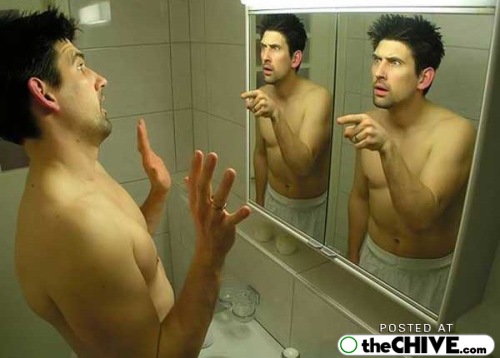
I got up and went to the bathroom. As I walked past the mirror I caught my refection so I went to the mirror and stared at myself.

I could feel that I was confronted by this person in the mirror, separate, even fearful, I could say “hi” to this person like I would a stranger. And then I stopped and looked at him and said ” hi ” again, and we stared at each other and laughed out loud but it was still the laugh of strangers.

I asked the him who was me in the mirror If it was okay for me to go and have a pee and I got the absurdity of the question. I got that I was asking this question to myself like a stranger would ask it as if he in the mirror were someone else.

I went and peed and then returned to the mirror.

This time we looked deeply into each others eyes. At first I was confronted by him, this stranger but his eyes were soft and so I stared and he stared back. We drank each other in and I said hello, lovingly, with deep respect and compassion, and with love. And he answered back in the same loving way.

And we breathed, and we drank each other in more deeply this time, and we softened and then I met myself for the very first time.

We laughed and then we cried and I was no longer afraid of the man in the mirror.

Hi we said to each other again, Hi we said back.

And tears rolled down our cheeks

Monday, January 2, 2012

Feeling Our Words - Words Have Weight


This is the Daily Om from a while back - like December 26 or something. But it's a good topic - one that I often spend time on with some of my male clients, often the ones going through or heading for a divorce.

I wonder if it goes back to the old "Sticks and stones may break my bones, but names will never hurt me"? It's like guys learn to believe that words cannot cause pain, when sometimes a word uttered in anger or with hurtful intent can cause more damage than a rock in the side of the head.

But it's not just relational words that matter.

How we speak and the way we choose our words has an impact in all areas of our lives. Think about it, do you respect someone communicating with street language when he is planning your retirement future? Do you want to work for the boss who tells "dumb blonde" jokes? I don't know about you, but I don't.
Feeling Our Words
Words Have Weight


The more conscious we become, the more we deepen our relationship to the words we choose to use.

Words carry energy and this gives language its power and its potential to heal or hurt. Most of us can remember a time that someone sent a word our way, and it stuck with us. It may have been the first time we received a truly accurate compliment, or the time a friend or sibling called us a name, but either way it stuck. This experience reminds us that what we say has weight and power and that being conscious means being aware of how we use words.

The more conscious we become, the more we deepen our relationship to the words we use so that we speak from a place of actually feeling what we are saying. We begin to recognize that words are not abstract, disconnected entities used only to convey meaning; they are powerful transmitters of feeling. For the next few days, you might want to practice noticing how the words you say and hear affect your body and your emotional state. Notice how the different communication styles of the people in your life make you feel. Also, watch closely to see how your own words come out and what affect they have on the people around you.

You may notice that when we speak quickly, without thinking, or rush to get our ideas across, our words don't carry the same power as when we speak slowly and confidently, allowing those receiving our words time and space to take them in. When we carefully listen to others before we speak, our words have more integrity, and when we take time to center ourselves before speaking, we truly begin to harness the power of speech. Then our words can be intelligent messengers of healing and light, transmitting deep and positive feelings to those who receive them. 

Friday, October 14, 2011

Daily Om - Owning Your Tendencies


A little more wisdom for a Friday morning, from the Daily Om a few days back (October 4th).

Owning Your Tendencies
Understanding All Sides


Looking at only one side of our life can make us blind to the many other ways of looking at our situation.


Whenever we examine our lives, we examine them from a particular side or angle. Most of us tend to favor one side over the others. For example, we may tend to look at things from an emotional perspective rather than a financial perspective, or we may prefer to think in terms of details rather than the big picture, or vice versa. To a certain degree, this is not a problem, and these tendencies add color to our individual personalities. However, they can also make us one-sided, blind to the many other ways of looking at our situation. Even if we have decided that we are most happy when we focus on one particular side of things, it is always worth exploring the other sides. When we do, we become well rounded, more understanding of other viewpoints, and even more solid in our own.


Perhaps you are a person who tends to see your life in terms of your spiritual well-being. As a result, other concerns such as financial comfort or social standing may not be prominent in your mind as you make decisions. However, taking just a moment to consider those angles will help you in several ways. One, it will enable you to see more clearly what your priorities are and how they influence your life situation. Two, it will enhance your sense of confidence, because you will see your situation from all sides, even as you choose one. And three, it will help you communicate with others about who you are and what you are doing, because you will come from a place of understanding that your own biases and tendencies are unique as are theirs.


Most of us instinctively come at things from a particular angle, and in many cases this is the right way for us. Still, understanding the other angles only strengthens us. When we look at our lives from all sides, we shed light on the big picture, giving ourselves access to many points of view and highlighting more clearly the one we have chosen to take.


What do you think?
Discuss this article and share your opinion

Monday, September 19, 2011

Daily Om - Claiming Our Feelings

https://blogger.googleusercontent.com/img/b/R29vZ2xl/AVvXsEjs-hLaiaqRceMSC5B4wu3CbUhkHMSAW-OtmQWtzjPFkX-4uzR4iMnc0mwkyj157nM3ZDuRvrvk-vJyzUloij5dAz3zQqRQVfLAkn4xmkaGch75jo04j7NH9GmJGMtE0Lik99M6FzyYzVo/s1600/PassiveAggressionFull.jpg

This is a nice, though slightly too simplistic, Daily Om article on how not to be passive-aggressive, which requires us to claim and be aware of our feelings. We need to be able to acknowledge and express our anger in healthy ways and repress it.

We talked about this in a therapy group I lead - most members feel that anger is rarely a healthy emotion. I offered the suggestion that anger, like all emotions, is neutral, but how we experience and use it determines whether it is creative or destructive.

Anger, experienced and used wisely, may be the most powerful tool for generating change. But not if we repress it and act it out in passive-aggressive ways.

Claiming Our Feelings

Passive Aggressive Behavior

The way to end passive aggressive behavior on your part or others’ is with complete honesty and truth in any situation.

If you’ve ever found yourself repressing your anger and behaving in other ways to get your point across, you may be someone who is adept at engaging in passive-aggressive behavior. Although passive-aggressive behavior is recognized as a psychological disorder, it also describes the behavior that many people use to cope with confrontational situations. Such behavior has the outward appearance of being peaceful, yet it is really an attempt to express oneself in seemingly passive ways—usually without accepting responsibility for doing so. For example, someone who doesn’t want to attend an event with a partner might engage in behavior that causes them to be late or miss the event without ever admitting to their partner that they never wanted to go to the function at all. Procrastination, inefficiency, stubbornness, and sullenness are some of the many ways that anger can be expressed indirectly.

It is important not to judge ourselves when we engage in passive-aggressive behavior. You may want to consider that you are not owning your feelings or your expression by indirectly expressing yourself. Perhaps you are judging your feelings and needs as wrong—which is why you are expressing yourself indirectly. You also may be worried that others will judge you for feeling the way that you do. Remember that anger and every other emotion are never good or bad. They can, however, become toxic of you don’t express them in healthy and proactive ways. When we express ourselves directly, we are more likely to be heard by the other person. It also becomes easier for us to ask for and get what we want.

Once we learn to be honest with ourselves about our feelings, we can begin to directly express ourselves to others. By learning to express ourselves directly, we prevent misunderstandings, hurt feelings, and resentment from cropping up in our relationships. We also learn to communicate with others in healthy and productive ways. It is never too late to start working on ourselves and our behaviors, just take it one day at a time.

Friday, September 16, 2011

RicK Hanson - Lower the Pressure


This blog comes from Rick Hanson, Ph.D., neuropsychologist, author, founder of the Wellspring Institute for Neuroscience and Contemplative Wisdom, and meditation teacher. It is reprinted here with permission.

See Rick's workshops and lectures for therapists and the general public.

As usual, Rick offers a good approach to leading a more balanced life - check out the series of practices at the bottom of the article.
Just One Thing: Is it truly urgent?


The Practice
Lower the pressure.


Why?


Things come at us with so much urgency and demand these days. Phones ring, texts buzz, emails pile up, new balls have to be juggled, work days lengthen and move into evenings and weekends, traffic gets denser, financial demands feel like a knife at the neck, ads and news clamor for attention, push push push PUSH.


On top of these external pressures, we deal with internal ones as well. These include all the inner "shoulds," "musts," and "have-tos," like: "I gotta get this done today or my boss'll get mad." Or: "I must not look bad." Or: "I can't leave the house with dishes in the sink." A pushy sub-personality prods us to be better, do better, and have more. Harsh, often unfair self-criticism cracks the whip to keep us going and avoid its lash. Also, we form rigid ideas - often unconscious - of what we just have to have to be successful, look good, own the right car, etc. We develop similar kinds of insistence about how it needs to be for others or the world (e.g., how one's children must do in school, how the country has to be run).


Whether the pressure comes from outside or inside us, it activates ancient motivational circuits that use the neurotransmitter, dopamine. In a nutshell, dopamine tracks expected results (e.g., emails finished, sales goals attained). If the result actually occurs, dopamine rises, which helps us feel relieved while other neurotransmitter systems such as natural opioids give us a sense of pleasure. But here's the catch: on the way to that desired result, dopamine levels sink some, which brings an unpleasant sense of stress, unease, pushing, and pressure . . . and if we meet delays or roadblocks or flat-out failure, then dopamine plummets, which feels like disappointment, frustration, even despair. To avoid the pain of dopamine dropping, we drive hard toward our goals, caught up in wanting and desire.


This dopamine system - and related but more evolutionarily recent and sophisticated emotions and thoughts layered upon it - was very effective in keeping our ancestors alive in the wild. And it works well today to keep us motivated during emergencies or necessary marathons of effort, from finals week in college to long runs of advocacy on behalf of a loved one.


But even at best, there is an inherent collateral damage in being motivated by need, urgency, and pressure. It narrows focus to a particular goal in the cross-hairs of tunnel vision. It feels tense, contracted, and uncomfortable - and usually triggers the stress-response system, whose chronic activation has many negative consequences for long-tem health and well-being. Many goals are just not reachable - so we feel bad if we are fixed on attaining them - and even if we do get the desired result, its gratifications are often less than promised, and in any case they fade eventually from awareness like sand slipping through the fingers of consciousness.


And at worst, inner and outer pressures drive us to pursue goals and desires that are bad for us and others. There we are: trying to live up to unrealistic standards, comparing ourselves to others, feeling like we're falling short, putting the work-life balance on tilt, looking for love in all the wrong places, being hard on oneself or others, pushing to the edge of capacity, and sooner or later running on empty.


Whew. Enough already. Time to ease off the pressure!


How?


(There are lots of ways below to take the pressure off. Just find one or two that you like - there's no pressure in dropping the pressure!)


Remind yourself that you can act in competent, honorable, and successful ways even when there is no sense of pressure. You can give yourself over to wholesome aspirations, letting them carry you along with resolve and passion, staying true to your own North Star without straining and stressing along the way. You can be prudent, love others, rise in your chosen work, and nurture our planet without feeling like there's a stick at your back.


When things come at you - phone calls, wants from others, a fevered pace - try to get a sense of a buffer between you and them, a kind of shock absorber, like you are seeing them through the wrong end of a telescope. Slow things down a beat, a breath, a day. Offer yourself the gift of time - time to figure out if this is really a priority, and when it really needs to get done.


Listen to your body. Are you getting that pressed/squeezed/driven feeling again? Listen to your heart, like it's a wise sweet being who loves you: what's it saying?


Be aware of the "shoulds" and "musts" muttering - or shouting - in your mind. Are they really true? And are they really you rather than an internalized parent or other authority figure. What would happen if you dialed back one bit, slowed down by one step, or got one less thing done each day? Let it sink in that there'd be no disaster at all. In fact, probably no one but you would ever notice!


Be easier on yourself. Lower your standards a smidge - unless you're doing brain surgery or something similar, you can likely afford to lighten up a little.


Be realistic about how long things really take, and how often there's a slip 'twixt cup and lip in the affairs of mice and men. Try not to make commitments that will be hard to fulfill; don't write checks with your mouth that your body can't cash.


Remember that you are a fundamentally good person. Even if you lower the pressure and a few things get done more slowly or not at all, you are still a good person.


Keep coming back to this moment - in which things are probably usually basically all right. Not perfect, but consider the Third Zen Patriarch's teaching that enlightenment means (among other things) no anxiety about imperfection. In this moment, you are likely safe enough, fed enough, and loved enough.


You can lower the pressure.

Friday, July 29, 2011

Mark D. White - Who Cares What Women (or Men) Want—What Do You Want?

http://www.howtoattractagirl.org/wp-content/howtoattractagirl_files/what%20do%20women%20want%20in%20a%20man.jpg

Mark D. White is a professor in the Department of Political Science, Economics, and Philosophy at the College of Staten Island and The Graduate Center, CUNY - and he offers the Maybe It's Just Me, But... blog at Psychology Today.

The title pretty much sums it up - but this is a good, brief article. Too many of us worry about what other people want and then try to conform ourselves to those expectations. Been there, done that, got the wounds to show for it.

It's much healthier to have an internal sense of self that is flexible but secure - giving our power to others in therms of who we are is a recipe for years of therapy. Done that too.

Why change yourself to please others?
Anne Rettenberg, LCSW
This post is a response to What Women Really Want by Anne Rettenberg, LCSW

Which one's Ozzy?

When you're looking for love, it's natural to ask "what do [men or women] want?" In the immortal words of Ozzy Osbourne, "Don't ask me—I don't know!" Far be it for me to presume to know what men want (since I'm only one of them) or what women want (I have no %^&ing clue). In the end, however, it doesn't matter, and in fact I argue that—with all due respect to my fellow PT bloggers like Dr. Rettenberg who offer advice on this front—it's a waste of time to try. (Sound familiar yet?)

I think that if you're trying to figure out what other people want, you're missing the point—the right question is, "what do you want?" And on a certain level, I will presume to answer this for everybody out there: you want to be accepted and loved for who you are, not for trying to be the person you think someone else wants you to be. As I've acknowledged before, this may be common sense, but given how often you hear people ask what the opposite sex wants, I think it bears some renewed attention.

(By the way, I don't mean to leave gays and lesbians out of this discussion, but I usually don't hear them asking what their own gender wants. I would like to think this means that they can look past gender at what another individual wants, which strikes me as a much better way to go, but it's still not ideal, as I'll explain.)

Readers of my most recent post on the Taoist principle of wei wu wei (action through nonaction) may recognize this train of thought: just be yourself and you'll attract people who like you for who you are. If you pretend to be someone you're not, anyone who is attracted to you will expect you to maintain your façade, and may not like the real you when you bring him or her out to play (not to mention the hurt feelings created by the deception involved).

Therein lies the problem with trying to figure out what other people want: just by asking that question, you're setting yourself up to suppress your own needs and desires in order to fulfill someone else's. There's nothing wrong with trying to make someone else happy, of course, but it should never be done at the expense of your own needs, and especially not at the expense of your own identity (as I discuss here). Ideally you want to find someone that fits with who you are, and you have to trust that anyone you meet wants that too. But a good fit can't be found if you're not being yourself to begin with, which doesn't do you or the other person any favors.

The simple advice to be yourself also fits in with the other insights that wei wu wei offers us, such as keeping yourself open to love—and I do mean yourself, as in your true self. If you're a book lover, you should find someone that likes that you're a book lover, and is probably a book lover him- or herself. So hang out at bookstores, libraries, or readings. Same thing if you're a jazz fan: hang out at jazz record stores (what few there are left) or go see some live jazz (please). (Just don't try to chat someone up during the show—that's just rude.) In general, go to places where you're comfortable being yourself, and you'll be more likely to find other people who are comfortable there, and would also likely be comfortable with you—the real you.

----------

Me, I'm a caffeine-addicted writer, so I'll be at the local coffee shop, fighting negotiating over the last available output for my laptop. If you can't find me there, you can follow me on Twitter and also at the following blogs: Economics and Ethics, The Comics Professor, and The Literary Table.