Showing posts with label spirituality. Show all posts

Tuesday, December 17, 2013

Richard Rohr's Daily Meditation - The Narrow Road


I love Richard Rohr - if I had been exposed to this kind of spirituality in the Catholic Church, I may not have found the idea of God so absurd. When I read Rohr, it's easy for me to substitute more universal language for the traditional terms and not lose the meaning.

For example, he says, "When your mental judgmental grid and all its commentaries are placed aside, God finally has a chance to get through to you, because your pettiness is at last out of the way." As I read this, in my head I read "love" in place of "God," and nothing is lost in doing so.

His message is about the essential union of spirituality, as we often find in Eastern traditions, not the individual separation from "Source" we find in Western religion. This is a much more welcoming and inclusive perspective.

Richard Rohr's Daily Meditation - The Narrow Road

Meditation 39 of 52
Seven Themes of an Alternative Orthodoxy - Seventh Theme: Reality is paradoxical and complementary. Non-dual thinking is the highest level of consciousness. Divine union, not private perfection, is the goal of all religion (Goal).

Contemplation is meeting as much reality as we can handle in its most simple and immediate form, without filters, judgments, and commentaries. Now you see why it is so rare and, in fact, “the narrow road that few walk on” (Matthew 7:14). The only way you can contemplate is by recognizing and relativizing your own compulsive mental grids—your practiced ways of judging, critiquing, blocking, and computing everything.

This is what we are trying to do by practicing contemplative prayer, and people addicted to their own mind will find contemplation most difficult, if not impossible. Much that is called thinking is simply the ego’s stating of what it prefers and likes—and resistances to what it does not like. Narcissistic reactions to the moment are not worthy of being called thinking. Yet that is much of our public and private discourse.

When your mental judgmental grid and all its commentaries are placed aside, God finally has a chance to get through to you, because your pettiness is at last out of the way. Then Truth stands revealed! You will begin to recognize that we all carry the Divine Indwelling within us and we all carry it equally. That will change your theology, your politics, and your entire worldview. In fact, it is the very birth of the soul.


The Daily Meditations for 2013 are now available 
in Fr. Richard’s new book Yes, And . . . .


Sunday, October 27, 2013

Jim Palmer - Jesus Was Not a Christian

"Jesus was not a Christian. He is not the founder of Christianity. Christianity is a religion created in the name of Jesus, and is much different from the actual truth that Jesus taught. Were Jesus alive today, I don’t think Jesus would be a Christian. Jesus is still one of best-kept secrets because his truth has been grossly distorted by those who claim to speak for him. There is a religion-free Jesus who belongs to all of humankind. Christianity does not own or have first rights to Jesus. His truth has universal significance. It’s often the case that you have to disentangle Jesus from institutional Christianity in order to uncover his truth." 

- Jim Palmer, Notes from (Over) the Edge - (a new book-in-progress)
Jim Palmer describes himself as a "Religion-Free Jesus Follower."  Here is a recent blog post the offers some insight into his spiritual journey.

Common objections to shedding religion

October 25, 2013


I began sharing my faith journey as an author in 2005, publishing Divine Nobodies: Shedding Religion to Find God (and the unlikely people who help you) (2006). The book struck a nerve, and my Inbox was flooded with emails from others who were trying to untangle their lives and faith from religion. Ordinary people, mainly from a Christian background, they had come to the end of their rope with faith and God, but felt understood and validated through my story, and inspired by the possibility that it could be different.

Seeing that people often got stuck in their disenchantment with religion, my follow-up book, Wide Open Spaces: Beyond Paint-by-Number Christianity (2007), gave a glimpse into what it might look like to live a religion-free relationship with God. I also noticed that many of these people in the throes of spiritual crisis chose to abandon God and Jesus altogether. My third book, Being Jesus in Nashville: Finding the Courage to Live Your Life (whoever and wherever you are) (2012), spoke to this issue as I shared my story of discovering a religion-free Jesus who finally set me free from my religious pathologies and led me forward in my spiritual pilgrimage.

People often take issue with and object to people who are “shedding religion” to know God. I decided to identify and address some of the most common objections I hear.

You don’t go to church anymore


If a person’s involvement in a church feeds and reinforces a message and perspective that hinders their knowing God, then it makes complete sense not to involve yourself there anymore. Many Christians receive their understanding about God through the institution of Church and when they discover this understanding is deeply flawed and they see how this flawed understanding has damaged their lives, they remove themselves from their church. The reason most people object to this is because these confuse leaving one’s church with leaving one’s faith. Research shows that “church leavers” grow stronger in their faith, as opposed to digressing in their faith. The issue is also controversial because people wrongly equate “church” with their specific form of church. There are an endless number of forms of church ranging from highly organized to practically no organization at all. Many people who leave organized church eventually connect in smaller, more informal types of community, which may not comply with the letter of the law when it comes to institutional church but fulfills the true spirit of “church.”


You are reading some really weird books


Many Christians in the “shedding religion” process will read books that: a) looks at their Christian faith with a critical eye, b) promotes spirituality over religion, c) offers a different and fresh view and perspective on faith and God. Shedders will be drawn to authors who offer something beyond institutional Christianity and offer the prospect of knowing God and following Jesus as a way of life as opposed to check-list Churchianity. many of these authors, including myself, get hammered by the Christian establishment. If you mess with city hall, you’re going to pay for it. People criticize such authors as having “bad theology.” In my opinion, many of the criticizers have “bad theology,” and so I’m not sure where that argument ends. People who are “shedding religion” are also drawn to books that promote and speak to spirituality over religion or books that focus on nurturing your inner world. You’d be surprised to know even how many church-going Christians secretly read Eckhart Tolle books but would never admit it. For some people, reading one chapter from The Power of Now was worth more than one year of sermons. This is also the reason why some Christians become interested in Buddhism and Eastern spirituality; these seem to speak more deeply to the root condition of humankind and one’s inner spiritual world as opposed to the focus of a lot of pop-Christian writings. At first, some people are not aware that there is a rich Christian tradition of contemplatives and mystics who lived a very robust Christ-centered spirituality. A few contemporary examples might be Thomas Merton, Ricahrd Rohr, Bede Griffiths, and Flora Wueller.

You are in danger of going off the deep end


Perhaps one of the most annoying things (to those who judge them) about people who are shedding religion is that they begin thinking for themselves. Some Christians have come from churches where the idea is fostered that congregants should only expose themselves to church-approved leaders, teachers, writers, musicians, politicians etc…because doing otherwise would be the equivalent of purchasing a one-way ticket to the flames of hell. Apparently, only a very select few people are capable of discerning truth on their own, the rest of us are ill-equipped for doing so and would be easily lured into all kinds of error if left to our own. I know this may be difficult for some to believe, but people are capable of being exposed to all kinds of differing views of God, and can discern for themselves what truth is present in these views, and what of these views seems inconsistent with truth. I have a Buddhist friend; i have detected truth is things he believes but i did not become a Buddhist. I have an Atheist friend, and I totally agree with this person’s views on all kinds of things, including some of their objections to God, but i did not become an Atheist. I have a N.Y. Yankees friend, i agree that the Yankees have some of the best baseball players but I did not become a Yankees fan. People are truly capable of doing this sort of thing.

When people begin thinking for themselves and base their opinions on firsthand personal experience, they realize that the world doesn’t fit so nicely into all the labels and boxes that religion is sometimes prone toward imposing on things. Religion and politics seems to share a difficulty in disagreeing with others without demonizing them, and wants to slice up the world into the “us” and “them” camp or the “right” and “wrong” camp. I’m not talking about turning a blind eye to evil in the world, or pretending that one’s beliefs doesn’t fuel such evil. All religions, including Christians, have justified evil in the name of God.

You can’t give a straight answer


Lots of questions aren’t so easy to answer anymore for Christians in the “shedding religion” process. For example, questions like: “Are you a Christian?” or “Do you believe in the Bible?” or “Do you go to church?” or “Do you believe in the gospel?” are no longer “yes” or “no” questions for a person who is “shedding religion.” He or she is immediately wondering what is your definition of a “Christian,” and what is your interpretation of the Bible, and how you delineate what “church” is, and how do you understand the “gospel?” By not answering “yes” or “no” it is not a sign that the person is “dodging the issue;” they legitimately cannot answer with a simple “yes” or “no.” It would be better to ask more open-ended questions like, How is Jesus Christ relevant to you?

[My disclaimer: Some people say I am “too hard” on the “Christian establishment.” Let me be the first to say that I know many people who identify themselves as “Christians” who are deeply spiritual, and not guilty of the things I described above. Some of these Christians have had a big influence on my own journey. I also know there are organized forms of church that promote true and authentic Christ-centered spirituality, as well as open, honest, and authentic relationships. I know many Christian churches that are wonderful expressions of love, compassion, and service in the communities where they exist. Since my personal experiences are in some cases related to churches (including my own) and Christians (including myself) that were guilty of the above judgments, I am prone to speak of it. Based on my experience the last several years as an author and spiritual director/coach, I have encountered countless numbers of people who have a similar experiences. I mainly wrote the above post in hopes of encouraging more understanding about many people who are in “shedding religion” mode.]

Tuesday, August 13, 2013

Jeff Brown - The Awakening Man: A Portrait of Possibility for Humankind

From "grounded spiritual teacher" Jeff Brown (author of Soulshaping: A Journey of Self-Creation, 2009), this is a very complete and holistic ideal for the "awakening man" to aspire toward - open-hearted, generous, inclusive, emotionally honest, and a lot more. Definitely worth a few moments to read.

The Awakening Man: A Portrait of Possibility for Humankind

June 30th, 2011


THE AWAKENING MAN: A PORTRAIT OF POSSIBILITY FOR HUMANKIND

The awakening man is conscious, heartfully defined. Through his eyes, being conscious is not a cerebral construct, nor an intellectual exercise bereft of feeling. It is a felt experience, an ever-expanding awareness that moves from the heart outward. It is feeling God, not thinking God. The new man is always in process, awakening through a deepening interface with the world of feeling. He continues to strive for a more heartfelt and inclusive awareness.

The awakening man has shifted his focus from a localized and ethnocentric perspective to a worldcentric framework of perception. His community is humanity. Rooted in the relational, his sense of responsibility extends well beyond his localized self and community. Where possible, his choice-making is fueled by an expansive vision of possibility for all of humankind. Not every man for himself, but every man for humanity.

The awakening man has reverence for the divine feminine, in all her forms. He celebrates the wonder that is woman. He is respectful, honoring and gracious. He is saddened by the horrors perpetuated against women by the malevolent masculine. He holds his brothers accountable. He makes amends for his own misdeeds. He co-creates a world where all women will feel safe to move about freely, to find their voice, to actualize their inherent magnificence. He welcomes a world where women and men stand as equal partners. Humankind.

The awakening man is not externally derived. He is authentically sourced. He does not compare himself to others. He does not adapt his personality to the dictates of the crowd. He stands in his own center, respectful of others but not defined by them. He works diligently to liberate his consciousness from the egoic ties that bind. He has become his own benchmark, valuing authenticity over image. He is the sculptor of his own reality.

The awakening man courageously works on his emotional processes. He clears his emotional debris and sheds his armor. He faces his issues and unconscious patterns heart on. He calls himself on his self-avoidant tendencies and honors the wisdom at the heart of his pain. He communicates his feelings in a way that is respectful to others. He learns and speaks the language of the heart.

The awakening man leads a purpose-full existence. He has heard the call to a deeper life. Not satisfied with survival alone, his ambitions are rooted in higher considerations- the excavation and actualization of his sacred purpose. He is energized by his purpose, not by the machinations of the unhealthy ego. He is coated in an authenticity of purpose that sees through the veils to what really matters. His purpose is his path.

The awakening man is accountable for his actions and their effects. He does not deflect responsibility. He does not sidestep or blame. He is self-admitting and emotionally honest. He admits his errors, and makes amends. He works diligently in the deep within, crafting a more clarified awareness with every lesson.

The awakening man moves from the inside out. More interested in inner expansion than outer achievement, he cultivates and honors his intuition. He explores and develops his inner geography. He adventures deep within, integrating the treasures he excavates into his way of being. He seeks congruity between his inner life and his outer manifestation.

The awakening man seeks wholeness. He is not satisfied with a fragmented way of being. He has no attachment to archaic, linear notions of masculinity. He seeks a sacred balance between the healthy masculine and the healthy feminine. He seeks an inclusive way of being, one that reflects all of his archetypal aspects. He is role flexible, comfortable moving through life in many different ways.

The awakening man embodies the highest standard of integrity in his words and deeds. He makes a sustained effort to work through anything that is not integrity within him. His framework of integrity is never convenient or self-serving. He honors his word, even at his own expense. He moves from a value system that is unwaveringly incorruptible. He recognizes that success without integrity is karmically unsound and meaningless.

The awakening man prioritizes conscious relationship. He values authentic co-creation. He honors relationship as spiritual practice. He seeks physical intimacy that is deeply vulnerable and heartfully connective. He is attuned, engaged and healthily boundaried. When relational challenges arise, he courageously works through any obstructions to intimacy. He stands in the heartfire.

The awakening man is a warrior of the heart. He has taken his clarifying sword inward, cutting away everything that is not compassionate. After too many lifetimes with weapon in hand, a benevolent warrior is being birthed at the core of his being. He honors the warrior capacity for assertiveness, but he is not arbitrarily aggressive. He moves from love and compassion.

The awakening man endeavors to live in a state of perpetual gratitude. He is grateful for the gift of life. He is grateful for those ancestors who built the foundation that his expansion relies upon. He is grateful for those who encouraged him before he could encourage himself. He is grateful for those who stand beside him in this lifetime. He knows that he does not stand alone.

The awakening man is comfortable in his vulnerability. He participates in his own revealing. He is not afraid to surrender- to reality, to love, to truth. This is not a weakened form of surrender, but one that is emblazoned with courage. It takes more courage to surrender than to numb. He openly explores his capacities for receptivity and tenderness. He does not identify these capacities as distinctly feminine, but as whole human. He is strong enough at the core to live in a vast array of emotions.

The awakening man moves through the marketplace responsibly, with a vigilant eye to the ways of the unhealthy ego. He is not opportunistic in a vacuum. He does not compete for competition’s sake. He does not accumulate for the sake of accumulation. In charting his course, he is mindful of his impact on humanity. He is empowered but he does not exploit power. He derives his power from his connection to source, not from power over others. Where possible, he shares the abundance, gifting back to humanity. He works hard to bridge the world as it is with a world of divine possibility.

The awakening man has reverence for Mother Earth. He has reverence for animals. He never imagines himself superior or distinct from the natural world. He understands the interconnected and interdependent nature of reality. He knows that if he does damage to the environment, he does damage to himself. He walks carefully, with awareness, consciousness and appreciation.

The awakening man has no claims on God. His spirituality is tolerant, inclusive, respectful. He honors all paths to God, so long they are respectful of others. He accepts those who believe, and those who don’t. He condemns any path that uses religious differences as a justification for destruction.

The awakening man brings forward many of the qualities of the healthy masculine of old. He is noble. He is responsible. He is productive. He is kind-hearted. He is protective. He is unswervingly honorable. He is down to earth. He is sturdy. He is flexible. He is realistic. He is hopeful. He is sensitive, not fragile. He is healthily egoic, not self-centered. He is both practical and heightened at the same time. He ascends with both feet on the ground. He is really here.

A former criminal lawyer and psychotherapist, Jeff Brown is the author of “Soulshaping: A Journey of Self-Creation,” recently published by North Atlantic Books. Endorsed by authors Elizabeth Lesser and Ram Dass, “Soulshaping” is Brown’s autobiography — an inner travelogue of his journey from archetypal male warrior to a more surrendered path. You can connect with his work at www.soulshaping.com. 
Share and Enjoy

Friday, May 3, 2013

Mens Telesummit 2013 - May 7 - May 23 (free)

For your consideration.

Mens Telesummit 2013 - May 7 - May 23


May 7, 8 and 9, 2013

Today's man faces challenges in all aspects of his life: work, health and relationships. These challenges can seem overwhelming at times, resulting in stress, depression, anger, bankruptcy, foreclosure and divorce. How can a man feel a sense of peace, purpose and passion? Where is man's connection to Self, Source, Nature or Creator? This week we will investigate a variety of ways men can deepen their connection to Spirit.


May 7 at 2pm CT Dennis Lewis
May 7 at 7pm CT Stephen Dinan
May 8 at 2pm CT Daniel Gutierrez
May 8 at 7pm CT Debra Poneman
May 9 at 10am CT Saniel Bonder


May 9 at 2pm CT Terry Patten
May 9 at 7pm CT Craig Hamilton


May 14, 15 and 16, 2013

What does it take to be successful in your career? How can you make your work meaningful? Can you find the balance between work, family and Spirit? This week we will investigate a variety of ways men can find fulfillment at work.


May 14 at 10am CT Chris Attwood
May 14 at 10am CT Randy Crutcher
May 14 at 2pm CT Vic Johnson
May 15 at 2pm CT Zappy Zapolin
May 15 at 7pm CT Ryan Harris


May 16 at 10am CT James Braha
May 16 at 2pm CT Lama Surya Das
May 16 at 7pm CT Lewis Denbaum


May 21, 22 and 23, 2013

With 50% of marriages and 80% of cohabitations failing, what can men do to find nourishing, intimate relationships? How do men pursue a relationships in a world in which all the rules have changed or are non-existent? This week we will investigate a variety of ways men can create rewarding, intimate relationships.


May 21 at 10am CT Mark Schillinger
May 21 at 10am CT Richard Platt
May 21 at 2pm CT Bill Kauth
May 21 at 7pm CT Susan Bratton
May 22 at 10am CT David Kaar


May 22 at 2pm CT Lion Goodman
May 23 at 2pm CT Yakov Smirnoff
May 23 at 7pm CT Michael Taylor


free registration

Receive Free Attendance at Men’s Telesummit w/ 23 speakers on 21 topics. You’ll receive e-mail notification of call start times and free replay availability.

No credit card info or purchase required. You can opt out anytime w/ a single click. We respect your privacy. Your info will never be sold or shared. Register Now.

Monday, April 15, 2013

Ego in Service of the Higher Self


Here's a little wisdom from The Daily Om, a bit woo woo but still good stuff. The desire to jettison ego in so many spiritual circles is unrealistic and destructive. We need ego, but it should not control us - it should function in our service.

The Ego: Serving The Higher Self

April 15, 2013
by Madisyn Taylor


As long as we are in touch with our higher selves our egos are not a threat, rather a tool in service of the spirit.

In most spiritual circles, the ego gets a pretty bad rap. The reason for this is that the ego, to some extent, is the principle in our psyches that separates us from one another, while spirit is the principle that shows us that no such separation exists. Sometimes the ego is depicted as an almost demonic figure that keeps us from realizing our true nature. But at its most basic, the ego is simply a tool that helps us organize the various aspects of our personality so that we can function in the world. In this sense, the ego is simply a way for us to understand and attend to ourselves at the same time as we understand and attend to the world around us. The ego is a tool that we use to navigate the world.

Perhaps the problem is that the ego sometimes gets out of control. This happens when the higher self loses control of the psyche. The psyche then falls under the leadership of the ego, an entity that was never meant to lead. The ego is meant to be definitively in the service of the higher self. When this relationship is functioning, the ego is a useful intermediary representing the whole self but not thinking that it is the whole self. Then, it is almost as if the ego is the self playfully pretending to be the separate entity called “I.” Like an actor, the ego plays the roles that the world asks us to play in order to be part of the program. In this way, the ego can be a tool enabling us to be in the world but not of it.

As long as we are in touch with our higher selves, our egos are not a threat. They are simply useful tools in the service of spirit. We keep our egos in check when we continually nurture our awareness of who we really are. Then our egos are free to serve without trying ineffectually to rule. It is healthy to have ego, but like all things in life, ego functions best when it is in balance and harmony with your whole self.

What do you think?
Discuss this article and share your opinion

Thursday, April 11, 2013

Know Your Shadow (Robert Augustus Masters) and Master the Neuroscience of Change (Kelly McGonigal)

I don't generally endorse products on any of my blogs, other than books in review, but this is a little different. One of the things I promote and try to embody in this blog is the receptiveness to change and personal growth that can open and make tender the masculine heart.

Each of the Sounds True offerings below are excellent tools for that kind of transformation. If you are a professional, CEUs are also available.

First, integral psychotherapist and teacher Robert Augustus Masters offers a course on Knowing Your Shadow, designed to help each of us "discover and cultivate intimacy with the endarkened aspects of yourself including core wounds and difficult emotions." I've been reading Masters' work for many years now and I can recommend his teachings without reservation - he offers essential tools for transforming ourselves into better men, better human beings.

The other recommendation is for Kelly McGonigal's The Neuroscience of Change, a course in personal transformation based in mindfulness and self-compassion. She explains how to "nourish the seeds of change and transformation by working with inner experiences as the key to making outward change through willingness, self-awareness, and surrender." This feels like a very useful melding of the work of Kristin Neff (mindfulness and self-compassion) and Dan Siegel (mindfulness and neuroplasticity).

If you would like to support this blog, and these courses feel useful to you, please order them through the links below, If you do so, I will make a little coin to buy more of these programs (and books) so that I can recommend for you the ones I feel are most relevant and useful to readers of this blog.

Knowing Your Shadow
Becoming Intimate with All That You Are
 

Robert Augustus Masters

from Sounds True


Description


“Why are the people around me so difficult?” “Why do I keep getting in situations like this?” Our shadow side, teaches Robert Augustus Masters, contains the emotions and desires we've disowned, neglected, or hidden from ourselves. If not skillfully worked with, it can easily direct our lives on every level. With Knowing Your Shadow, this acclaimed psychotherapist and author shows us how to illuminate and wisely engage with the endarkened aspects of who we are. Join him to explore in depth the areas where shadow work can most benefit us, including:
  • Discovering and cultivating intimacy with the endarkened aspects of yourself
  • Identifying and healing your core wounds
  • Working effectively with anger, fear, shame, guilt, and other difficult emotions
  • Understanding how your shadow influences those around you, often beyond conscious awareness
  • Guided practices, meditations, and exercises for developing more authenticity and wholeness in your personal and workplace relationships, your sexuality, and your spiritual path
Our moods and relationships often seem to have a life of their own. Knowing Your Shadow offers exceptional support for taking charge of your life at a deep level, providing expert guidance and instruction to discover and make wise use of what lies hidden or otherwise neglected within us.

Learn More About:

  • Becoming intimate with your shadow
  • Relating wisely to shame and guilt
  • Ending your suffering by entering your pain
  • Exploring the presence of your past
  • Freeing yourself from your inner critic
  • Working with fear, anger, and other darker emotions
  • Bringing sex out of the shadows—how we eroticize our unmet needs
  • The signs of spiritual bypassing
  • Healthy spirituality
  • Becoming intimate with all that you are


Music by Diane Bardwell


Knowing Your Shadow - Session Titles
Session 1: Becoming Intimate with Your Shadow
Session 2: Becoming Intimate with Your Reactivity and Pain
Session 3: Relating Wisely to Your Inner Critic, Shame, and Guilt
Session 4: Becoming Intimate with Your Darker Emotions
Session 5: Bringing Sex Out of the Shadows
Session 6: Spirituality's Shadow

6 CE credits available!
» Learn more
» Calculate how many home study hours are allowed per renewal period

Want to buy the CE credits only? If you already purchased this title, you can purchase the CE credits separately.

NOTE: CE credits are available for US customers only.

Course objectives:
  • Discuss how to discover and cultivate intimacy with the endarkened aspects of yourself including core wounds and difficult emotions
  • Explain how your shadow influences those around you, often beyond conscious awareness
  • Define the signs of spiritual bypassing versus healthy spirituality
  • Discuss how to free yourself from your inner critic
  • Summarize how to become intimate with all that you are
  • Utilize guided practices, meditations, and exercises for developing more authenticity and wholeness in your personal and workplace relationships, your sexuality, and your spiritual path

* * * * *

The Neuroscience of Change
A Compassion-Based Program for Personal Transformation
 

Kelly McGonigal

from Sounds True


Description 

Personal Transformation Based on Mindfulness and Self-Compassion

What's your most important goal? Why does it matter so deeply? How will you overcome the obstacles? Answer these questions with sincerity, proceed with mindfulness and compassion, and you have just set in motion a revolutionary method for personal change that is supported by both the latest science and traditional wisdom. On The Neuroscience of Change, psychologist and award-winning Stanford lecturer Kelly McGonigal presents six sessions of breakthrough ideas, guided practices, and real-world exercises for making self-awareness and kindness the basis for meaningful transformation.

Practical Methods to Retrain Your Brain to Support Your Goals

Our understanding of the incredible power of the human brain is at an all-time high, with the emerging fields of neuroscience, evolutionary psychology, and psychophysiology opening new possibilities for greater health, happiness, and freedom from suffering. Drawing on her training as a research scientist and longtime practitioner of meditation and yoga, Dr. McGonigal reveals these startling findings—including the clinically supported methods for training the mind away from default states and negativity that no longer serve us and establishing behaviors and attitudes aligned with our highest values and aspirations.

The First Rule of Change: It's Already Happening

As the world's wisdom traditions teach and science is now verifying, our lives are in fact defined by constant change. Whether you're looking to change a behavior, improve your health or other circumstances, or simply for a way to bring hope and resilience into your life as it is, The Neuroscience of Change will help you trust yourself and unfold your true capacities for personal transformation.

Highlights
  • Willingness, self-awareness, and surrender—how to nourish the seeds of change
  • Focusing on the process, not the outcome
  • How to overcome the “trigger-to-instinct” reaction
  • The proven benefits of meditation—and how to start practicing yourself
  • How to transform self-criticism into self-compassion
  • Why your mind creates habits—and how to consciously create new ones
  • Making values-driven commitments
  • Visualization and the principle of “encoding prospective memories”
  • The power of the vow
  • “Deep activation” and the danger of rejecting what is
  • Working with inner experiences as the key to making outward change
  • Six hours of breakthrough science, practical wisdom, guided exercises, and mindfulness meditations for making positive change that lasts

6.5 CE credits available!

» Learn more
» Calculate how many home study hours are allowed per renewal period

Want to buy the CE credits only? If you already purchased this title, you can purchase the CE credits separately.

NOTE: CE credits are available for US customers only.

Course objectives:
  • Discuss how to nourish the seeds of change and transformation by working with inner experiences as the key to making outward change through willingness, self-awareness, and surrender.
  • Explain how to transform self-criticism into self-compassion
  • Discuss the value of vows, "encoding prospective memories," making values-driven commitments and how to overcome the "trigger-to-instinct" in the process of transformation and change.
  • Practice guided reflections based on breakthrough science, practical sensibility, and wisdom traditions, including exercises and mindfulness meditations that for making positive change that lasts.

Monday, April 8, 2013

Journal of Men, Masculinities and Spirituality - Volume 2, Number 1: The Intimate Connection

A new issue of the Journal of Men, Masculinities, and Spirituality is available online.


Volume 2, Number 1: Table of Contents

The Intimate Connection


Editorial: 
Editor's Note (pp. 1-2)
Joseph Gelfer

Articles:
Sexually Explicit? Re-reading Revelation’s 144,000 Virgins as a Response to Roman Discourses (pp. 3-28)
Lynn Huber

Men, Buddhism and the Discontents of Western Modernity (pp. 29-46)
Chris Barker

Book Reviews:
Review of Dale B. Martin, Sex and the Single Savior: Gender and Sexuality in Biblical Interpretation (pp. 47-51)
Ken Stone

Review of Stefan Horlacher, Masculinities. Konzeptionen von Männlichkeit im Werk von Thomas Hardy und D. H. Lawrenc [Masculinities: Conceptions of Masculinity in the Works of Thomas Hardy and D. H. Lawrence] (pp. 52-53)
Silvia Mergenthal

Review of Stephen Arterburn and Fred Stoeker with Mike Yorkey, Every Man’s Battle: Every Man’s Guide to Winning the War on Sexual Temptation One Victory at a Timeand Every Young Man’s Battle: Strategies for Victory in the Real World of Sexual Temptation (pp. 54-55)
Mark J. Justad

Review of Marc Epprecht, Hungochani: The History of a Dissident Sexuality in Southern Africa (pp. 56-57)
Phillip A. Cantrell, II

Review of Charles H. Lippy, Do Real Men Pray? Images of the Christian Man and Male Spirituality in White Protestant America (pp. 58-59)
Bradford McCall

Download Vol. 2 No. 1 (784 KB PDF)
Kindle edition

Saturday, January 5, 2013

Cindy Wigglesworth - Building Spiritual Intelligence in the New Year


Cindy Wiggleworth is the author of SQ 21: The Twenty-One Skills of Spiritual Intelligence and in this article from Huffington Post, she offers suggestions and support for setting and achieving a spiritual intelligence goal for 2013. For reference, I have included her chart of the 21 spiritual competencies.


A Spiritual Intelligence Goal for the New Year
Posted: 01/04/2013

Cindy Wigglesworth - Author of SQ21, Leadership Coach and Corporate Consultant

"Spirit," by whatever name, is not measurable. But skills like spiritual intelligence (SQ) skills can be measured. And measurement is useful -- it points to where we can grow and improve.

My belief in the value of measuring SQ was confirmed when I recently heard from a woman named Jane who had scored a "0" on one of the skills in my SQ21 spiritual intelligence assessment.

"It really got my attention in a way I would not have expected," Jane said. "I was shocked. Good grades and test scores have always been important to me." Initially it was a bit hard to take. But as Jane began to read the report that came with her scores, she saw a list of some possible reasons for her score. A moment of recognition occurred. She had deep wounds she was still carrying from the church she attended as a child. She left this church with anger in her heart. The report and coaching suggested she might want to heal the wounds from her past by trying to forgive and seeing what was good in her earlier church experience.

She prayed about it and opened herself up to the guidance of spirit. Eventually she took the steps to reconnect with the choir director and then the minister and his wife. She was astonished by what she experienced. "I had forgotten the love because I had focused for so long on my anger and pain," she said. "It was that 'zero' that opened the door to my readiness to listen to spirit and to find the courage to commit to opening up to a part of my past I was afraid to be with. I did need to go back, in some way, and allow healing to begin. I didn't even know this love was still in me."

I have heard a great many such stories over the years. There is nothing quite like the stark reality of a number to propel us into reflection and possibly into action.

As we look to another new year, I am planning my own focus area for personal growth. Perhaps you are doing the same? Here are some ideas if you want to plan for some SQ growth:

1. List the areas where you would like to improve. Some common areas: letting go of the past, forgiveness; focusing on what is good, gratitude; having patience with others; developing humility. Make your own list. Then pick the one idea which is most important and focus on that.

2. Measure your current status. This is like knowing your current weight before you start a diet. Consider if there is an assessment you might want to use to see where you are today so you can plan next steps and chart improvements. If there isn't one you can write out a paragraph about why you want to improve in this area. What do you want to stop doing? Or what are you trying to change?

3. What are your desired outcomes? Be as clear and specific as possible. For example: "I will know I am successful when I can go to my parents' house for dinner and not feel triggered." How will you feel when you successfully develop this skill? Use emotions words like "I will feel calm," or "I will feel joyful."

4. Find good tools or practices to help you achieve your goal. Is there a meditation, forgiveness or other practice you would like to learn or recommit to practicing? A book to buy? A workshop or retreat to attend?

5. Think about tangible ways to track your progress. Could you journal at the end of each day? Consider who could give you feedback about your progress; for example, could a loved one give you positive feedback when you show more patience than usual? Be clear about what kind of feedback you want -- if you find corrective feedback helpful, ask for it. If not, ask for positive feedback only.

6. Buddy-up. Find a friend who wants to grow too and provide cheerleading support for each other! Agree to a regular check-in for mutual support. Perhaps you can take the same class together?

Let me know in the comments what areas you are focusing on, and what tools work for you. Who will be supporting you?

Measurement is our friend. Let's set clear goals, measure fearlessly and grow abundantly in 2013!

For more by Cindy Wigglesworth, click here.
For more the spirit, click here.

Saturday, December 29, 2012

Tami Simon Speaks with John Welwood: Healing the Core Wound of the Heart

The good folks at Sounds True made this Tami Simon discussion with John Welwood, from back in July, available for free at their site. Welwood is one of the clearest and most nurturing writers there are in the area of psychology and spirituality. His book, Perfect Love, Imperfect Relationships: Healing the Wound of the Heart, is one of my all-time favorite books, and should be essential reading for relationships.

John Welwood: Healing the Core Wound of the Heart


Tuesday, July 3, 2012


Tami Simon speaks with Dr. John Welwood, a clinical psychologist, psychotherapist, and practicing student of Buddhism and Eastern contemplative psychology. Dr. Welwood is an author whose books include Journey of the Heart and Perfect Love, Imperfect Relationships, and with Sounds True he has created the audio learning program Conscious Relationships.

Dr. Welwood is a clinical psychologist, psychotherapist, teacher, and author. He trained in existential psychology and worked closely with Eugene Gendlin at the University of Chicago, where he received his PhD in clinical psychology in 1974. He has also been a practicing student of Buddhism and Eastern contemplative psychologies for forty years.

In the 1980s, he emerged as a major contributor to the leading-edge fields of transpersonal psychology and East/West psychology. The former Director of the East/West Psychology Program at the California Institute of Integral Studies in San Francisco, he is currently an editor of the Journal of Transpersonal Psychology. He trains psychotherapists in psychotherapy in a spiritual framework and leads trainings on psychospiritual work and embodied presence throughout the world.

In this episode, Tami speaks with Dr. Welwood about his understanding of the relationship between psychological work and the spiritual journey, as well as his view of the phenomenon of “spiritual bypassing.” He also spoke about committed relationships and the most common issue that couples present in couples therapy. (61 minutes)


More from John Welwood:

Thursday, December 27, 2012

Judith Orloff, MD: The Ecstasy of Surrender


This is a nice TEDx talk from Dr. Judith Orloff on the incredible upside to being able to surrender. This is a tough sell for men - traditional masculinity views surrender as "giving up," or as weakness, fear, being beaten. Reframing the notion of surrender into an act of strength takes some time and effort, but the benefits of surrender, as Dr. Orloff outlines here, are worth the effort.


Judith Orloff, MD: The Ecstasy of Surrender - at TEDxAmericanRiviera 2012

Published on Dec 26, 2012

You can sabotage success by pushing too hard. Surrender is the antidote to stress in a world that relentlessly conspires to interrupt creative thought. Surrender boosts your brain's endorphins--euphoric, opiate-like pain killers--and serotonin, a natural antidepressant that allows you to relax, have more fun, and succeed more wildly than ever before. Life becomes easier and more blissful when you can let go.
Here are a few quotes on surrender (spiritual and psychological concept embodied by The Hanged Man Tarot card at the top):

The idea of surrender usually means to give in, to passively submit to the control of someone or something stronger. To surrender to the Dharma, however, requires the active and continuously renewed commitment of our energy. Surrendering to the teaching is the giving up of our self-images, fears, thoughts, and desires into the hands of deeper self-knowledge. It is submitting to the control of our true nature, which is healthier and stronger than our surface experience can ever be.
― Tarthang Tulku: Hidden Mind of Freedom 
* * * * * 
“Always say “yes” to the present moment. What could be more futile, more insane, than to create inner resistance to what already is? what could be more insane than to oppose life itself, which is now and always now? Surrender to what is. Say “yes” to life — and see how life suddenly starts working for you rather than against you.”
 ― Eckhart Tolle 
* * * * * 
“Something amazing happens when we surrender and just love. We melt into another world, a realm of power already within us. The world changes when we change. the world softens when we soften. The world loves us when we choose to love the world.”
 ― Marianne Williamson 
* * * * * 
“Surrender your own poverty and acknowledge your nothingness to the Lord. Whether you understand it or not, God loves you, is present in you, lives in you, dwells in you, calls you, saves you and offers you an understanding and compassion which are like nothing you have ever found in a book or heard in a sermon.”
 ― Thomas Merton, The Hidden Ground Of Love: The Letters Of Thomas Merton On Religious Experience And Social Concerns 
* * * * * 
“Those who are truly enlightened, those whose souls are illuminated by love, have been able to overcome all of the inhibitions and preconceptions of their era. They have been able to sing, to laugh, and to pray out loud; they have danced and shared what Saint Paul called 'the madness of saintliness'. They have been joyful - because those who love conquer the world and have no fear of loss. True love is an act of total surrender.”
 ― Paulo Coelho, By the River Piedra I Sat Down and Wept

Sunday, December 16, 2012

Radio National Encounter - MEN AND FAITH


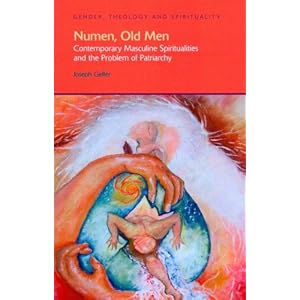
Dr. Joseph Gelfer, who I have featured many times on this blog, is one of the featured guests on this episode of Radio National's Encounter program devoted to men and faith. Gelfer is the editor of the Journal of Men, Masculinities and Spirituality, and he is the author of Numen, Old Men: Contemporary Masculine Spiritualities, and the Problem of Patriarchy, and The Masculinity Conspiracy (which also can be read online for free).

MEN AND FAITH


  • Listen now


  • Download audio


  • Broadcast: Saturday 22 December 2012 

    Over the last few years there’s been a surprising re-emergence of men’s groups, with conservative Christian groups like the Promise Keepers filling sporting stadia in the US, and Catholic men of all ages undergoing initiation ceremonies. So this week on Encounter we’re taking a look at how Christian and Jewish men define masculinity today, and how it affects their relationship to power, women and other men. We’ll also find out about the history of men’s movements and ask about the future for men of faith.

    Publications
    Author: Joseph Gelfer
    Publisher: Equinox Publishing Ltd 2009

    Further Information

    Fr. Richard Rohr

    Spiritual men's group in Brisbane, Qld that runs initiation ceremonies

    Rabbi Ritchie Moss


    Freedom2b assists Lesbian, Gay, Bi-sexual, Transgender and Intersex people from Christian backgrounds on their journey to reconciling their faith, sexuality, and gender identity.

    Wednesday, November 21, 2012

    Vanessa Fisher and Mark Forman - Revisioning Men's Worth: A Critical Exploration of the Challenges & Opportunities Facing Men and Masculinity in the New Millenium

    As part of her on-going series Dialogue Series, Dancing in the Liminal: A Global, Border-Crossing Inquiry into Art, Activism, Spirituality and Leadership for the 21st Century, Vanessa Fisher recently interviewed psychologist and integral theorist Mark Forman on the topic of revisioning men's worth. This is god stuff.

    Revisioning Men's Worth: A Critical Exploration of the Challenges and Opportunities Facing Men and Masculinity in the New Millenium


    Posted by Vanessa Fisher on Tuesday, November 13, 2012
    With Mark Forman


    Download this Dialogue as an MP3

    Mark Forman, PhD. is the fourteenth guest on my Dialogue Series, Dancing in the Liminal: A Global, Border-Crossing Inquiry into Art, Activism, Spirituality and Leadership for the 21st Century (see overview for this series here).

    Mark is the Clinical Director of Life Design Centre, an innovative psychotherapy studio dedicated to changing the lives of individuals, couples, children, and families. He is also the Executive Director of MetaIntegral’s Psychotherapy Center and the Lead Organizer of their Integral Theory Conference, the world’s largest academic conference devoted to Integral theory and its application.

    In this dialogue, I interview Mark on his views regarding the unique challenges and opportunities facing men and masculinity in the 21st Century.


    We critically examine cultural discourses surrounding the shifting historical roles of masculinity and femininity, explore the impact of feminism on men over the last 50 years, and point towards new directions of inquiry for men's role in the future.


    Mark is a long-term practitioner of both yoga and meditation, having studied intensively under several prominent teachers, including Gurumayi Chidvilasananda and Kenneth Folk.

    His latest book, A Guide to Integral Psychotherapy: Complexity, Integration, and Spirituality in Practice was published in 2010 by SUNY Press. Mark is also currently co-editing, along with Michael Raffanti and Toni Gregory, the first ever text on Integral Diversity, entitled Integral Approaches to Diversity Dynamics: Exploring the Maturation of Diversity Theory and Practice.

    Friday, November 9, 2012

    Secret Lives of Men - Bond of Brothers with Wes Yoder (Featured Replay)


    This is a replay of a previous episode of the Secret Lives of Men podcast, with Dr. Chris Blazina speaking to Wes Yoder about his 2010 book, Bond of Brothers: Connecting with Other Men Beyond Work, Weather and Sports. Fair warning: this is a Christian book with a "come to Jesus" message for healing men's wounded hearts.

    Here is the book description from Amazon.
    'The perfect conversation for men with little to say can be summed up in eight words: 'Can you believe the weather at that game?'' Author Wes Yoder's words are humorous. Yet, beyond the sports and weather chatter and silence that characterize many male conversations, there is brokenness. Emptiness. Shame. That's not funny. For Yoder, addressing the problem is not about planting the flag for one's manhood by joining a mass movement for men, nor is it necessary for men to 'sire a herd or shoot a moose to authenticate their manhood.' Yoder calls disappointed, disenchanted, and lonely men to authenticity. To rediscover joy. To find satisfaction. In Bond of Brothers, men will discover: Why your career and performance at work are not your identity * How to defeat the fears that come to a man in the 'Tough Years' * What to do when you are too worried to forgive or too power-hungry to smile * Why spiritual friendships are the central, life-giving core of all healthy relationships among men. Being present to comfort, to love, to listen, to take a step toward Jesus together in our brokenness ... that is the essence of friendship, Yoder writes. When we invite Jesus into our shared brokenness, he can do the work of remaking what is left of the mess we have made of ourselves. Begin a journey toward authenticity and your true identity here!
    OK, this sounds a little too 12-Stepford Wives for me, but he is pointing to real issues and real solutions, although I (as an agnostic Buddhist) believe there are other ways men can join in a spiritual journey toward healing.

    Featured Replay: Bond of Brothers with Wes Yoder

    by Secret Lives of Men


    Listen to internet radio with Secret Lives of Men on Blog Talk Radio
    Why are they so afraid to be known? According to Wes Yoder in Bond of Brothers, a whole lot of insecurity, secrets, shame, and silence keep men from growing strong in the broken places.
    For Yoder, addressing the problem is not about planting the flag for one's manhood by joining a mass movement for men, nor is it necessary for men to 'sire a herd or shoot a moose to authenticate their manhood.' Yoder calls disappointed, disenchanted, and lonely men to authenticity. To rediscover joy. To find satisfaction.
    In Bond of Brothers, men will discover:
    • Why your career and performance at work are not your identity 
    • How to defeat the fears that come to a man in the 'Tough Years' 
    • What to do when you are too worried to forgive.