Sunday, July 20, 2008

Common Male Sexual Problems

One of the things that can damage a relationship, and the ability of men to be present and honest in their intimate relationships, is fear of rejection (and the presence of shame) as a result of sexual problems. Most men will face some problem in sexual performance at some point, and there is generally nothing to worry about.

But our culture has placed an enormous amount of pressure on men to be "perfect" in their sexual performance. This pressure alone can create problems.

This video offers a very clinical discussion of some common sexual issues for men, including premature ejaculation, retrograde ejaculation, delayed ejaculation, and anorgasmia. Some treatments are also discussed.

If you have more questions, please see your doctor to get options.


via videosift.com


Saturday, July 19, 2008

Humor - Universal Rules Of Manhood


This is kind of funny, in a sexist homophobic kind of way. Certainly, this is humor and the posting of this list is not to be taken as an endorsement of its views.

Universal Rules Of Manhood

1: Under no circumstances may two men share an umbrella.

2: It is OK for a man to cry ONLY under the following circumstances:
(a) When a heroic dog dies to save its master.
(b) The moment Angelina Jolie starts unbuttoning her blouse.
(c) After wrecking your boss' car.
(d) One hour, 12 minutes, 37 seconds into "The Crying Game".
(e) When she is using her teeth.

3: Any Man who brings a camera to a bachelor party may be legally killed and eaten by his buddies.

4: Unless he murdered someone in your family, you must bail a friend out of jail within 12 hours.

5: If you've known a guy for more than 24 hours, his sister is off limits forever unless you actually marry her.

6: Moaning about the brand of free beer in a buddy's fridge is forbidden. However complain at will if the temperature is unsuitable.

7: No man shall ever be required to buy a birthday present for another man. In fact, even remembering your buddy's birthday is strictly optional. At that point, you must celebrate at a strip bar of the birthday boy's choice.

8: On a road trip, the strongest bladder determines pit stops, not the weakest.

9: When stumbling upon other guys watching a sporting event, you may ask the score of the game in progress, but you may never ask who's playing.

10: It is permissible to drink a fruity alcohol drink only when you're sunning on a tropical beach...and it's delivered by a topless model and only when it's free.

11: Unless you're in prison, never fight naked.

12: Friends don't let friends wear Speedos. Ever. Issue closed.

13: Women who claim they "love to watch sports" must be treated as spies until they demonstrate knowledge of the game and the ability to drink as much as the other sports watchers.

14: Never hesitate to reach for the last beer or the last slice of pizza, but not both, that's just greedy.

15: If you compliment a guy on his six-pack, you'd better be talking about his choice of beer.

Tags: , , ,

More on Harvey Mansfield


This is a follow-up to yesterday's post on Harvey Mansfield and his book on manliness. I promised some more material on and by him, so here it is. Please note that I don't necessarily agree with Mansfield, but I think he presents some serious (though controversial) ideas worth discussing.

Mansfield is well-known as a fierce conservative. And I find it interesting that in this realm, it is often the conservative who is defending the "traditional" views of masculinity while the liberals tend to agree with feminism that men should be more like women. As a starting place in the discussion of the "new masculinity," we need first to defend the right of men to be men.

But I want a little of both. A third way. Men are more "manly," and it's biologically as well as socially constructed. At the same time, there is absolutely no reason whatsoever that men cannot be more emotionally intelligent and more compassionate. We can be more than testosterone-driven brutes. I think Mansfield is moving in that direction (although haltingly, it seems) -- see the essay below.

First, his appearance on The Colbert Report, where "Harvey Mansfield and Stephen collide in a perfect storm of man musk."


Is "manliness" really about risk? Is John Kerry the biggest wuss in Washington? Should women only contribute 1/3 of the household income? Colbert kind of calls him on his views about women, suggesting, "So this book could be bullshit."

Here is a lecture Mansfield gave in 2006 at New Hampshire Institute of Politics and posted on the Saint Anselm College blog back in 2006.
Dr. Harvey Mansfield, Author of “Manliness”

April 20, 2006

Harvey Mansfield speaks about the topic of his new book, Manliness, during a public lecture at the New Hampshire Institute of Politics. Mansfield argues that manliness seeks and welcomes drama, prefers times of war, conflict, and risk, and brings change or restores order at crucial moments.

Considered Harvard University’s most outspoken conservative, Mansfield is the William R. Kenan, Jr. Professor of Government at the school where he teaches political philosophy. He has also written about the discovery and development of the theory of executive power.

Standard Podcast [63:14m]: Hide Player | Play in Popup | Download (1410)
Here is an article he wrote for The American Enterprise:
Is Manliness Optional?
By Harvey Mansfield

Today the very word “manliness” seems obsolete.


There are other words, such as “courage,” “frankness,” or “confidence,” that convey the good side of manliness without naming a sex. But to use them in place of “manliness” begs the question of whether moral or psychological qualities specific to each sex exist. Our society today denies that such differences are real, and seeks to abolish all signs of such qualities in our language. To the extent that feminism recognizes gender differences at all, it presents them as bad, and as the fault of men.


The women’s revolution has succeeded to an amazing degree. Our society has adopted, quite without realizing the magnitude of the change, a practice of equality between the sexes never before known in human history. My intent is not to stand in the way of this change. Women are not going to be herded back into the kitchen by men. But we need to recognize that there have been both gains and losses in this revolution.


Manliness can be heroic. But it can also be vainly boastful, prone to meaningless scuffling, and unfriendly. It jeers at those who do not seem to measure up, and asks men to continually prove themselves. It defines turf and fights for it--sometimes to defend precious rights, sometimes for no good reason. Manliness has always been under a cloud of doubt--raised by men who may not have the time or taste for it.


But such doubts about manliness can hardly be found in today’s feminism. Contemporary feminists, and the women they influence, have essentially a single problem with manliness: that it excludes women. Betty Friedan’s feminist classic The Feminine Mystique is not an attack on manliness, but on femininity. It insists women should be strong and aggressive--like men.


Though the word is scarce in use, there is an abundance of manliness in action in America today. Young males still pick fights, often with deadly weapons.What we suffer from today, is a lack of intelligent criticism of manliness. Feminism has undermined, if not destroyed, the counterpart to manliness--femininity--and with it the basis on which half the population could be skeptical of the excesses of manliness.


Of course, women are still women. While they want men to be sensitive to women, they don’t necessarily want them to be sensitive in general. That’s why the traditional manly male--who is protective of women, but a sorry flop when it comes to sensitivity--is far from a disappearing species.


Manliness offers gallantry to women. But is gallantry fundamentally insincere because it always contains an element of disdain? The man who opens a door for a woman makes a show of being stronger than she, one could say. At the same time, the woman does go first. Manly men are romantic about women; unmanly men are sympathetic. Which is better for women?


The “sensitive male” who mimics many female emotions and interests, while discarding the small favors men have traditionally done for women, is mostly just a creation of contemporary feminists who are irritated with the ways of men, no longer tolerant of their foibles, and demanding new behavior that would pave the way for ambitious women. Feminists insist that men must work harder to appreciate women. Yet they never ask women to be more understanding of men.


Manliness is a quality that causes individuals to stand up for something. It is a quality that calls private persons into public life. In the past such people have been predominantly male, and it is no accident that those who possess this quality have often ended up as political rulers and leaders.


Manly men defend their turf, just as other male mammals do. The analogy to animals obviously suggests something animalistic about manliness. But manliness is specifically human as well. Manly men defend not just their turf but their country. Manliness is best shown in war, the defense of one’s country at its most difficult and dangerous. In Greek, the word for manliness, andreia, is also the word for courage.


For good and for ill, males impelled by their manliness have dominated all politics of which we know. Is there something inevitable about this domination or are we free to depart from it? With more and more countries moving toward democracy and peace, perhaps manliness will become less necessary.


Yet there might also be a democratic manliness. In democracies, Tocqueville said, a manly frankness prevails--an open and fearless stance of “man to man” in which all are equal. Does democracy, then, tend to produce, and require, manliness?


Feminists find all sexual roles objectionable. They are insulted by the idea that nature has determined different social parts and purposes for the sexes. They have largely forced the abandonment of any idea of sexual nature in favor of the feminist notion of “choice.” A woman today has the choice of every occupation that used to be reserved for men, plus traditional women’s roles. Inevitably, “choice” for women opens up choices for men too. What happens when men are no longer pressed to face the duties that used to go with being a man? Traditionally, the performance of a man’s duties has required him to protect and support his family. To be a man means to support dependents, not merely yourself.


But the modern woman above all does not want to be a dependent. She may not have thought about what her independence does to the manliness of men (it might make men more selfish). And she may not have considered carefully whether the protection she does without will be replaced by sensitivity, or by neglect. The statistics on male abandonment of their children in our day are not heart-warming.


According to feminists, any traditional notion that the different sexes complement each other serves merely to justify the inferiority of women. On its face, complementarity suggests real equality--each sex is superior in its place. But if you are sure that the best positions have been the men’s and that women have been the “second sex,” then in order to achieve equality you must go for full interchangeability of the sexes. You must deny any natural preponderance of one quality or another in men and women.


Do men and women have different natures that justify different social roles? Or are these natures just “socially constructed”? If women can conclude that their roles have been designed artificially by society, then they are free to remake themselves without constraint. But the latest science suggests that being a man or a woman is much more than having certain bodily equipment (see the article below). Perhaps men and women are characterized more by how they think than by their sexual organs.


While maleness is partly just a fact of biology, in humans it is linked to thinking and reason in ways that make manliness something much more than mere aggression. In humans, masculinity is more than just defense of one’s own; it has been extended to require noble sacrifice for a cause beyond oneself.


Certainly, women reason and sacrifice too, and they are not devoid of aggressiveness. But their participation in these things is not “equal.” As Aristotle said, men find it easier to be courageous--and women find it easier to be moderate. Of course, you cannot avoid Aristotle’s qualifier, “for the most part.”


For the most part, men will always have more manliness than women have, and it is up to both sexes to fashion this fact into something good.

This is a pretty good essay, but he doesn't seem to see the need for men to rise above the idea that we are "a sorry flop when it comes to sensitivity." This is where I disagree with him. We can be manly, and even chivalrous, and still be sensitive.

Finally, here is a discussion from On Point, featuring Mansfield, Katha Pollitt, and Jack Beatty (On Point news analyst).


Manliness
Aired: Wednesday, August 30, 2006 10-11AM ET

Email this story to a friend
By host Tom Ashbrook:

Harvard professor Harvey Mansfield has whipped up a small storm in the last few weeks with his call for the new embrace of an old idea: manliness.

Men acting manly, says Mansfield, are what this world needs more of. John Waynes and Teddy Roosevelts, Papa Hemmingways and Schwarzeneggers who stride the modern range and get things done.

The post-feminist dream of a gender-neutral society, says Manfield, has hurt both men and women, and it's time to bust out the manly men inside.

Critics are agog. With Cheney and Rumsfeld and Dubya on the march, they ask, is that not enough saddle burn?

Hear a conversation with Harvey Mansfield about manly men and the call for more manliness.
Here he seems a little less forward thinking in his views. The reality is probably a little of both.

I'd love to hear what any of you think of Mansfield and his ideas.


Friday, July 18, 2008

Harvey Mansfield - "A Manly Man"


I'd be interested in any comments readers/listeners might have to how political theorist Harvey Mansfield defines the concept of "manliness." He is the author of a book called Manliness, so I guess his opinion is valid.


One person at Big Think, Jacoline Loewen, posted the following comment:
I asked the manly men in my life what they thinked defined manliness. Maybe because the question was posed by me (a womanly woman) I was told it was being able to cry, stepping up as father and husband, doing challenging outdoor activities, speaking up about tough issues but listening when others spoke and more. What it does come down to is exactly as Harvey Mansfield says - taking risk.

Anon83 asks if this could be learned vs biological - absolutely, no doubt that different societies shape the general nature of women. Most probably, an American woman in Saudi Arabia would be seen as very pushy and not rewarded for that characterisitic. But men do not have babies or estrogen and we now know how much these hormones affect our behaviour and we need to pay more attention to that science.

There was the common comment made by teen males in my small weekend study who believe that being a white manly man is the most criticized identity in North America and that they could not speak with moral authority due to the assumed status and power.
Interesting take on what it is to be manly -- I'm sure there is a bias among many men in talking directly to a woman about this subject. And I find it depressing that teen males feel so persecuted for being white and male (although I suspect being a young black male is much worse in this country).

Here is the introduction to an audio interview (free sample at the site) with Mansfield, conducted by What Is Enlightenment?
“Today the very word manliness seems quaint and obsolete,” writes Harvard University professor Harvey C. Mansfield in his controversial, thought-provoking book Manliness. “We are in the process of making the English language gender-neutral, and manliness, the quality of one gender, or rather, of one sex, seems to describe the essence of the enemy we are attacking, the evil we are eradicating.”

In this week’s feature interview for our issue on men, WIE’s Ross Robertson asks Dr. Mansfield to speak about why he thinks manliness is not as bad as it appears to be. In our research for this issue, Dr. Mansfield was a rare find—an academic who is willing to take seriously many questions about the value and significance of masculinity that are mostly taboo in the contemporary discourse on sex and gender. Here he explores such topics as the virtues and shortcomings of manly men, the complex nature of manliness itself (as it is expressed both by men and women), and the history of our postmodern experiment with a “gender-neutral society.”

As one of his Harvard colleagues has said of him, “Harvey Mansfield is a Harvard treasure, a one-man antidote to liberal complacency. I disagree with almost all of his political views, but his presence enlivens the government department, and Harvard, immeasurably.” We hope you find his ideas enlivening as well.

Find out more about Mansfield at his website.

There's more about Mansfield and by Mansfield on the web, so I'll post some more tomorrow.


Why Boys Fear Physical Education

[dodge ball is hell for some boys]

This showed up in my feeds, a link from UPI: Why boys fear physical education. There's lots of reason for boys to fear PE class, most of which revolve around shame and fear. Here is what the article contends (my thoughts below):
If a boy is thinner or heavier than he wants to be, the stress and anxiety of attending physical education may be prohibitive, a Canadian study said.

Michael Kehler and Kevin Wamsley of The University of Western Ontario said most teen obesity research involves inactivity linked to television viewing and the computer, but little research in masculinity, body image and health.

Kehler said that in Ontario all high school students are required to take at least one course in health and physical education. Most boys choose to take gym in Grade 9, but others postpone it to a year later when the topic is related to health and does not include gymnasium or playing field activities.

Kehler and Wamsley along with Michael Atkinson of the University of Loughborough in Britain did one-on-one interviews of high school boys as well as observations in physical education classes and Web logging.

Gym anxiety plays out in a number of ways, from disinterest to genuine fear of being harassed, Kehler said.

"Often boys who don't feel at ease are terrified to go to the locker room or class, fearing they will be mocked for their size, their lack of athletic prowess, or that they will fall victim to homophobia," Kehler said.

I think we had to take a PE class each year I was in school up until the 10th grade. I was good at sports, and relatively bigger than my peers, so PE was a breeze for me. Not so for everyone.

The little, skinny kids were picked on. The boys who were bad at sports were teased. The two or three kids everyone thought were gay got it the worst, snapped with towels, called names, whatever else the bullies could think of.

I had been bullied for other reasons -- I was a nerd, an athletic and physically imposing nerd, but geekdom stuck to me like flies on a cowpie. So I didn't pick on the kids with low self-esteem about their bodies, and my guess is that some of them still carry the trauma from those experiences.

When we are just beginning to develop a sense of who we are as males, body image is a big part of that in our culture. Those boys who are smaller and weaker than the rest are bound to suffer beyond the teasing in gym class.

As men (and I am not a father, but I have done some coaching) there is only so much we can do to stop this behavior. If we step in to defend a kid, the kid feels even more emasculated than if he takes his psychological lumps. But we can teach boys to be kind and considerate of others, educate them in the differences in development, and instill in them a sense of empathy for the pain of others. But if you don't think it's a big deal, please consider that bullying can lead to suicide in some kids.

Unfortunately, this type of teasing is going to happen -- it's a part of the process of growing up for most kids. Boys need to test out their strength, determine their social ranking, and physical prowess is one of the ways they do it.

If my son was being teased that way, I might help him find a way to develop his own strength and sense of self, either through a sport or weight training (which any kid can do), or a martial arts. If we instill in our kids a sense of self-worth, no amount of teasing will leave lasting scars.

It might be tough while it is happening, but be there for your son, do things with him that provide a sense of competence. In the long run, it'll pay off in a better relationship with your boy, and with him being more successful in life.


Thursday, July 17, 2008

Gender Stereotypes Hurt Men Too


Dave Hill wrote this interesting article a few days ago in The Guardian UK. He argues that men suffer from limiting gender stereotypes as much as women do. And it's true.

Yet most men are content to live within those constraints. Women are not. Some men, however, and likely you if your are reading this blog, are looking for more expansive ways to inhabit and define our masculinity. While there a few innate traits that can be considered masculine, for the most part gender roles are social constructions -- and they need to be deconstructed so that we may create better ways of being for both women and men.

Gender stereotypes hurt men too

A woman's place: The best and wisest feminist ideals have things to offer both men and women

Dave Hill

I hear "the feminists" are out to get me. They want to frame me for harassment; they want the right to breastfeed in my car; they want to toast my goolies before raging Sapphic fires. Never mind that some of my fellow men would pay good money to have that last thing done to them, there is plainly a monstrous regiment prosecuting a ruthless sex war at we gentlemen's expense, and it is winning. We have been forced on the defensive. The ladies will not be appeased.

I present these random extracts from the The Seething Classes' Book Of Male Resentments to indicate both the strength of resistance to women's uneven but inexorable advance beyond the domestic realm and the sheer silliness of much of it. Yes, I know sins are committed in female liberation's name and all sorts of daft attitudes struck. Women do sometimes abuse power at men's expense and cite powerlessness as justification. I get narked when women assume that I hate shopping and don't know where the oven gloves are kept because I'd gladly squander an afternoon on retail therapy if I had an afternoon to squander, because the sight of my souffles rising would make them go weak at the knees, and because sex war cliches are, in fact, our common enemy

But that's humankind for you. And the point is that the best and wisest feminist ideals – the sort that don't interest the media - have things to offer men too. Women moving onto the ground of politics and the professions, gaining autonomy and attaining enhanced cultural presence as a result has presented challenges for men and masculinity, but also certain opportunities.

Feminism has become a dirty word in the mouths of some its enemies, so let's recall one of its basic ambitions – the release of women from the constraints of gender custom and practice. It insists – or should insist – that the blurring of boundaries between men's domain and women's, between traits we call masculine and those we call feminine, is not a dangerous assault on some sacred natural order but an advance for social justice. It's about fair play, freedom of choice and enhancing human happiness.

Men should embrace these principles too, not only for women's sake but also for their own. All else being equal, to be born male is to inherit legacies of entitlement that continue to outweigh those bestowed on those born female. Yet the state of maleness carries its own burden of expectations and constraints. Contemporary studies of boyhood shed light on what we've always known – what I still remember vividly from my own boyhood – about the disabling and limiting influence of male behaviour conventions, homophobia and general "gender policing" on men in the making and the huge anxieties that inform them.

This is the baggage men drag with them through their lives; the pressure imposed both from without and from within to appear hard and never soft, to make a performance of rejecting anything that smacks of domesticity or femininity, notwithstanding the metrosexual and "new man". Even men who seem to embody and thrive on this stereotype can feel like slaves to it, and are often undone by it.

Sensible, grown up, non-sectarian feminism recognises all of this and seeks ways for men to combat it. This is not a matter of asking men to forgo every traditional bond and pursuit in favour of their "feminine side" but of inviting them to see that such distinctions are limiting and very largely artificial. It's not a matter either of unmanning the alleged essential male, but about men flourishing and developing in all areas of their lives, including as parents and in the home. It's about making modern, dual-earner, heterosexual relationships work better; more democratically. It's about a chap discovering that he too can be a nurse in the nursery, a cook in the kitchen and a lover in the bedroom and also, should he be so inclined, wrestle grizzly bears and grout the bathroom tiles as well – and be happy for women to enjoy such freedoms, too.


Wednesday, July 16, 2008

Understanding the Dynamics of Abusive Relationships


This article from Psychology Today looks at the patterns in abusive relationships. One of the things that sets me off more than anything (other than child abuse) is partner abuse, especially of women by men.

Although the incidence of women abusing men in on the rise, the majority of abuse is still by men of their female partners. As men, we need to change this. First and foremost, if we know of it happening to someone we know, we need to stop by any means necessary.

Men who abuse feel weak and are insecure, so they abuse to prop up their low self-esteem.

Understanding the Dynamics of Abusive Relationships

Abusive relationships are fairly simple. They are driven by insecurity, fear that feeds that insecurity and an expectation of inconsistency, both real and perceived.

An abuser is morbidly insecure. S/he (yes, potentially, she) has little sense of his/her own social value and makes an effort to gain or re-gain some semblance of that value through domination and control. The fear that feeds that insecurity has two fronts: fear of not being lovable, and fear of appearing weak. The paradox here is that the abuser is, in fact, weak, which is why s/he abuses -- to maintain a sense of control -- in the first place. The perceived inconsistency on the part of the abuser by the victim is that the victim is not submitting to the abuser's domination.

The victim is also morbidly insecure and for surprisingly similar reasons. S/he also has little sense of his/her own social value, but makes an effort to establish that value by losing him/herself to the demand for submission. The fear that feeds this insecurity is also about not being lovable or loved, and there is a willingness to accept the inconsistency of the abuser's attention for the sake of being loved.

The pathological need to control on the part of the abuser and the pathological need for attention on the part of the victim is a match made in heaven. We are all just a bunch of neurotic habits that tend to find a fit with our opposite to create a psychosocial balance. Abusive relationships are one of the most extreme cases of this dynamic.

So, what do abusive relationships look like? Well, it's not always about being slapped around. Abusive relationships come in all forms along with physical abuse - social abuse, emotional abuse, sexual abuse (we are not referring here to molestation), financial abuse, etc. Abuse is about a dynamic of extremes, domination and submission. It is about giving and withholding, also in the extreme.

Let's look at social abuse. Have you ever had a boss who praises you one minute, and makes you wonder if you'll have a job tomorrow the next? Or let's you work yourself to the bone on a project, only to take credit or give the credit to someone else? That's an abusive dynamic. Your boss has a need to control you because s/he is threatened by you, or has a sense of insecurity about his/her own ability to motivate or lead. And you have a need for a job -- a metaphor for being loved - so you put up with it; you submit.

The abuser is also driven by a more subtle and primitive sense of fear. Because s/he is often limited in his/her social perspective, and sees things only from an egocentric perspective (i.e., has not developed a sense of ethnocentric compassion), s/he will lash out when s/he sees no other options.

The victim, on the other hand, tends to be an emotional anorexic. Starving themselves, or allowing him/herself to be starved and then gorging themselves on whatever comes his/her way only to feel guilty about it later because of a sense of not deserving what s/he has received; a state of mind that drives his/her neediness - needing, not having...having, not wanting...needing, again.

Sometimes for the victim there is also a sense of familiarity and comfort in an abusive relationship, which is why victims will often return to an abusive relationship or, leaving one, will unconsciously seek out another.

Think about growing up. Was there something that your family did that was unusual (sitting around at night, singing together or working in a community garden) that you just assumed everyone did, and you were later surprised to find that you were mistaken? It's the same thing - if you are socialized to equate love with pain or withholding, then you will seek out love in that form.

My favorite example of this is the silverware drawer. Think about where the silverware drawer was in the house in which you grew up. Now, think about where it is in your house. Allowing for architectural differences, I suspect about 90% of you will find that it's in the same place is was when you grew up. It's a memory map...why fix it, if it's not broken?

But what if you don't, or can't, recognize that it's broken? That's where we get ourselves into trouble and how we come to repeat social and relational patterns.

Abusive relationships are tricky and, just as a fish doesn't know that he's wet, we often don't see the subtle markers for abuse in a relationship because we are in it. Further, relationships fill our needs and, when our needs are being met, we don't necessarily have an imperative to take a look at how they are being met.

Here's the thing. It all comes back to us, to our responsibility and accountability. But, in this case, it comes back to responsibility to ourselves and accountability to ourselves. Instead of just riding the wave, if we choose to mindfully examine the nature of our relationships and make a determination of what is acceptable and not acceptable to us, of what feeds us, rather than bleeds us, then we are living, and loving, authentically and with mindful awareness.


Tuesday, July 15, 2008

Are Men Having an Identity Crisis?


This is a vaguely humorous article from AlterNet.

Any thoughts? Are men confused about their masculinity, falling into one extreme or another, but lacking any balance and wholeness? As one might assume, the premise of this blog is that we are a bit lost right now, stuck between the old dominator model, getting a little too metrosexual, but wanting something more integrated.
Are Men Having an Identity Crisis?
By John DeVore, The Frisky. Posted July 15, 2008.

Overgrown frat boys, cheesy pick-up artists, overly sensitive cry-babies? What's going on with straight men's sexuality?

Women are emotionally vacant pigs and men are emotionally unstable psychos.

Wait. That's not right.

But it is in so many ways. Welcome to the new millennium, boys and girls, where gender equality means "let's adopt the worst of each other's stereotypes." It's a madcap race to the bottom rung of the sexual identity ladder. Wheee!

Let me put it this way ... what do the following men have in common?

  • The overgrown frat boy whose hyper-masculine appearance and gorilla strut is a just vain, cosmetic affectation.
  • The sensitive good guy who cries easily, insists on looking you in the eyes while having sex and then never calls you back.
  • The coy pick-up artist who borrows his absurd Casanova identity from a book and then rehearses the snappy one-liners he uses to charm the la-a-a-dies.
  • The relationship blogger who, albeit devilishly handsome, doesn't know whether women want the frat beast, the sneering hipster, the Xeroxed charmer, the bad boy, or the nice guy, so he sometimes settles for the default setting, shell-shocked douchebag.

The answer? We're all high maintenance. We don't call, we call too much; we never reveal our emotions, we don't stop revealing our emotions; we're filthy slobs, we're precious metrosexuals; all we want is sex, we don't want it enough. You could tell us we're tough, burly, and macho, but we'll totes settle for you telling us we're pretty.

WTF?

I have female friends who tell me stories about the dude who will cry in public, or the guy who wants to snuggle after sex, when all she wants to do is rail and bounce.

Then, apparently, there are the multiple dudes who text constantly, and if you don't respond immediately, he goes crazy, becoming a text stalker, or verbally abusive, or a blubbering slob, or becomes verbally abusive blubbering slob who just won't stop texting.

How about this: a woman I know got pissed off because her date was forty-five minutes late because he couldn't decide on what shirt to wear, and what man stink to spray on. And every time she goes out with her home girls to the tacky masquerade balls we call clubs, this prissy dude texts her every five minutes for fear she's cheating on him.

And the truth is, she probably is sucking face with someone too!

What about the guy who insists you buy him a drink, or who snidely mocks your favorite Facebook pic, or who, and this one kills me, doesn't put out?

WTF, redux.

All fair you say. Centuries of patriarchal oppression, and dudes should be insecure, suffer from poor body image, fret and furrow and breathlessly wait by the phone waiting for her to call.

Heck, women have the right to juggle men, reject them for their physical flaws, and use them for sexual pleasure. They have a right to get hammered, and behave boorishly. To rate men on a scale, and to dehumanize them with nicknames like Mr. Big, or Super Preppy, or Captain-Needs-A-Loofa.

Well, we're all in this identity crisis together. Let's get it together people.

Me? I choose not to live in a world of women-haters and man-haters. The haters are like Tinkerbell (sorry, Tinkerbell, but then again, you were never the best example of a modern woman, just a bitter little stalker) -- if you don't clap, they will die. So stop clapping.

10 Reasons Real Men ‘Go Green’

A cool post from The Art of Manliness. Real men care about the world in which they live, the environment, their fellow human beings. Real men -- whatever the hell that actually means -- know that we are nothing outside of our place as beings in nature, no matter how much that relationship has changed over the years.

10 Reasons Real Men ‘Go Green’

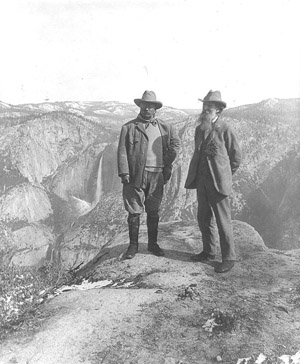
rooseveltmuir300 10 Reasons Real Men ‘Go Green’

Teddy Roosevelt & John Muir at Yosemite Valley

Photo from Teddy Roosevelt.com

This is a guest post by Sara Ost. Sara is the editor of the fast-growing blog ecosalon.com, where sexy, smart women are hoping you men will get with the program already. (A little secret: what women really want is for you to lead.)

I can hear the groans already: dude, not that green crap. I am so sick of hearing about going green. It’s a marketing gimmick!

If leading an earth-friendly life is just a marketing gimmick, it’s one of the longest running, most successfully manipulative gimmicks in all of human history. Some of the toughest, strongest, wisest men throughout time have intuitively grasped the wisdom of a proper relationship with nature - her beasts, her weather, and her wrath.

“Never does nature say one thing and wisdom another.”

- Juvenal, Satires

Seneca and Marcus Aurelius. Napoleon Bonaparte (unfortunately, he and his men learned the hard way). Galileo and Spinoza. Ralph Waldo Emerson and Henry David Thoreau. Bob Marshall and John Muir. Theodore Roosevelt.

The truth is that conservation - the active respect for the earth and her resources - has a rich history vetted by thousands of years of wisdom from philosophers and scientists, heroes and warriors, poets and writers, captains of industry and presidents. Today we call it “going green” and it’s everywhere, but that doesn’t diminish the inherent righteousness of the message. Thanks to mass media, 24/7 advertising, and popular culture, the context of our lives has changed in ways our forebears never could have conceived, but that just means men must shine brighter. You must act better. You must face bigger challenges despite greater distraction.

“Nature teaches more than she preaches. There are no sermons in stones. It is easier to get a spark out of a stone than a moral.”

- John Burroughs

No one is demanding you buy a vegan man purse, wear Birkenstocks or slurp the slimy type of tofu. There is a generous spectrum of what it means to be green, but only a lesser man scoffs at what his predecessors knew and better peers already understand.


Here are the last five of ten - you'll have to go the blog to see the top five.

6. Real Men Aren’t Selfish.

“The richness I achieve comes from Nature, the source of my inspiration.”

- Claude Monet

One huge reason I think men need to “go green” is because it requires growing out of self-absorbed immaturity. We live in a culture where narcissism is epidemic. We have food and movies on demand, speed dating and text breakups, postponement of marriage and a real career while we all “find ourselves.” Emotional selfishness is at the bottom of it all. Get in touch with something larger than yourself. Life is not just about the iPhone and getting laid.

A real man lives in awe of the tremendous gift of being alive on planet Earth.

Imagine the very possible alternative, as Carl Sagan did: “There would be no more big questions, no more answers. Never again a love or a child; no descendants to remember us and be proud; no more voyages to the stars, no more songs from the earth.”

7. Real Men Aren’t ‘Cowboys.’

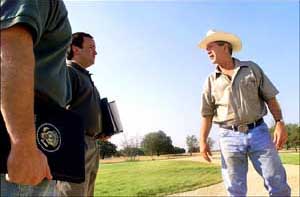
065_bush_aug6_whitehouse 10 Reasons Real Men ‘Go Green’

Photo from History Commons

Teddy Roosevelt fought with the Rough Riders and went on to lead the fight to conserve American lands. You can roll up your sleeves, talk tough and even clear some brush, but a real man does not react to important information by buying his head in the sand or excuse himself from rational inquiry and action with simplistic beliefs and cliche one-liners. Forget the faux cowboy schtick. Being a man isn’t about driving a truck and tearing into a bloody pork chop. If you really want to cowboy up, take the issues of your day seriously and do something about them.

8. Real Men Know the Secret to Good Relationships with Women.

“When we understand that man is the only animal who must create meaning, who must open a wedge into neutral nature, we already understand the essence of love. Love is the problem of an animal who must find life, create a dialogue with nature in order to experience his own being.”

- Earnest Becker

If you are sick of the ever-growing string of failed relationships, start working on the one you have with yourself. It’s a big myth that men and women want different things - we all want great sex and genuine love. (It’s if they occur together where the disagreement begins.)

It’s been said that women get in touch with their emotions by sharing; men, through activities. But before you can truly bond with anyone emotionally you have to get in touch with your own emotions. Emerson believed that time in nature is essential for a man’s soul and character development, and I couldn’t agree more. Men have an intimate relationship with the land, just as women do - it’s not all Gaia and earth mamas. Lest you discount this as a bunch of woo-woo, ask yourself if men would have better relationships with women if they had a handle on themselves and a grasp of their role in the world. There’s nothing like confidence and self-sufficiency to attract a quality lady. And time exploring and working in the great outdoors is an obvious way to build these qualities.

9. Real Men Take Care of Themselves

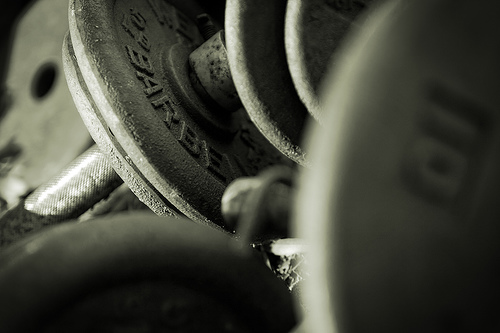
getting-huge 10 Reasons Real Men ‘Go Green’

Flickr photo: ericmcgregor

“Man has been endowed with reason, with the power to create, so that he can add to what he’s been given. But up to now he hasn’t been a creator, only a destroyer. Forests keep disappearing, rivers dry up, wild life’s become extinct, the climate’s ruined and the land grows poorer and uglier every day.” - Anton Chekov, Uncle Vanya, 1897

I’m sorry to say it, but men are largely responsible for the environmental mess we’re in thanks to a widespread lack of self-discipline and flaws like greed, selfishness, and laziness. And men increasingly do not take care of themselves in even the most basic ways. I’m talking about diet, exercise, and finances (forget intellectual development and relationships). Until you start caring for yourself, it will be impossible to care for the environment in which you live. No wonder we’re in such a state. Stop destroying yourself: your mate, your offspring, your community and your planet need you to man up. Take pride in yourself.

10. Real Men Even Eat Tofu.

i-love-tofu 10 Reasons Real Men ‘Go Green’

Photo from Cafe Press

“Rabbit food”. Please. What kind of man is afraid of a lettuce leaf? Didn’t the tofu jokes start stinking back in 1998? You hear a lot about how mainstream media demean women, but they don’t seem to think much of men, either. Despite what Carl’s Jr. ads teach us about men’s decision-making and culinary deficiencies, plenty of real men know their nutrition and make a point of trying out earth-friendly fare. Come on: a man doesn’t have the mental capacity to grill up some veggie fajitas and organic margaritas? A real man doesn’t have to love it, but he is not scared of tofu.

OK, I'm not sure about the tofu thing -- soy shrinks a man's, um, stuff.


Monday, July 14, 2008

Depression in Men: Denial, Destruction & Death

So yesterday I posted on anorexia in men. Today we're looking at depression in men, which is often under-diagnosed because men adopt that whole "stiff upper lip" the British are always going on about.

But it's a serious problem. A depressed man is much more (4x) more likely to take his own life. That needs to change.

Depression in Men: Denial, Destruction & Death

Although more women than men are diagnosed with depression, the consequences for men and their families are more violent and destructive.

The Men’s Health Network has recently published a free e-book entitled “Depression, Anxiety and Stress“. It includes the following statistical.

  • Men are 4 times more likely to commit suicide than women.
  • Men with depression are twice as likely to die from any cause.
  • Older men has the highest suicide rate of all.

The book also contains critical points about how depression is expressed in men.

  • “Deny to himself and everyone else that he might have a problem
  • Try to mask the problem by turning to drugs or alcohol or throwing himself into work in an attempt to avoid dealing with the issue
  • Act out by behaving hostilely or aggressively or doing dangerous or self-destructive”

The wages of depression in men can be catastrophic.

Here is a relevant post from the same blog that can help ease the suffering of depression by focusing on the positive. I have suffered from severe depression in my own life, and have found some of these suggestions useful, especially a gratitude journal.
Your Wellbeing Diary Can Help Moderate Depression

A simple nightly diary can help you be less depressed and cultivate a sense of wellbeing. At most, it takes 5 to 10 minutes a day.

Professor Martin Segilman of the Positive Psychology Center at the University of Pennsylvannia, conducted a study with extremely depressed people. Participants were asked to remember 3 positive things that happened that day and write them down They could be things like: you ran into a friend, you started a book you really enjoy, you found a missing piece of jewelry.

By the simple act of writing these things down, 94% of the patients experienced significant relief from their depression. The most startling result was that participants went from “severely depressed” to “mildly to moderately depressed” in fifteen days.

I’ve taken this concept and created my wellness diary in which I make entries every night. Entries for the day include:

  • Accomplishments;
  • Acts of kindness extended to others;
  • Acts of kindness extended to me;
  • Occurrences for which I am grateful;
  • And things I am looking forward to.

I have found this to be extraordinarily helpful in shifting my mood in a positive direction and keeping it there.

Try this if you are depressed, or even if you are just feeling down. It's amazing that shifting our minds to more positive thoughts can help. But it won't solve the problems causing the depression, so seek help for that.