Friday, June 20, 2008

What Is Enlightenment? Interview with Sam Keen

Sam Keen became an inadvertent leader in the mythopoetic men's movement back in the 1990s with his book, Fire in the Belly. He has since moved on to other issues, including relationships, in recent years.

I'm currently reading Fire in the Belly, and while it has some flaws (and an occasional male-centric tone), I think it was one of the best of the books to come out the men's movement that seemed so woo woo back in the 1990s.

One thing that has come to mind as I have been reading this book, and others, is that the main model for masculinity has long been the hunter and/or the warrior. We have finally moved to a phase of human evolution where these are no longer esesential roles for all men, so that we are faced with redefining and revisioning what masculinity can be -- a daunting project that has many people wanting to hold onto the old images, and many others struggling to find a new path. For all its faults, and they are legion, the men's movement was trying to repurpose archetypal male energies for a new era.

One of the best things I have found in Keen's book so far (and I am about halfway through it), is a developmental stage model of masculinity that would fit right in with any integral view of masculinity. I'll be posting more about this when I have some time, since I think having a framework for understanding where we have come from can help us discern where we are going.

Anyway, while looking around the internet for more info of Keen and others elements of the new masculinity, I found this old interview with Keen from What Is Enlightenment? [Note: I have it on good authority that a new issue now in preparation will be looking specifically at masculinity and enlightenment. I'll blog this when it's out.]

Get Over It!

A Men's Movement Pioneer Calls for the End to "The Gender Game"

An interview with Sam Keen
by Craig Hamilton

Introduction

Sam Keen

"The idea of total liberation is a bad and very destructive idea," the gruff voice on the other end of the line announced, adding, "One of the things I frankly don't like about your magazine is the holding up of these people who are supposedly 'in the absolute' and totally liberated." While our commitment to investigative journalism often finds us in unexpected territory, I had to admit that this was a new one. Not five minutes into what was scheduled to be a one-and-a-half-hour interview, and already our magazine and the very aspiration on which it is built were under fire. Fortunately, I thought to myself, I hadn't called Sam Keen to ask him about his views on enlightenment. And having discovered firsthand that he was not a man to mince his words, I was all the more eager to ask this modern-day master of myth—one of the most influential figures in today's burgeoning men's spirituality movement—our questions on the role and influence of gender in spiritual life.

Our introduction to Keen's work had come only a few months before when, while beginning our research into gender and spirituality, we picked up his book Fire in the Belly: On Being a Man. A rich, almost lyrical blending of autobiographical anecdote and psychological theory, the book—which in the early nineties had served as a rallying point for thousands of men bent on breaking free of the culture's male mythos—soon had us under its spell. For several weeks, our basement sauna was transformed into a private sweat lodge of sorts, as the male members of our editorial team gathered there by evening with our spiritual teacher to read aloud Keen's riveting analysis of the social and cultural influences that have molded the psyche of late twentieth-century man. Having each managed to miss out on all but the broadest strokes of the men's movement, we found our own experience often powerfully illuminated by Keen's detailed tour through the rites of war, work and sex—the three arenas he feels have come to define our conceptions of what it means to be a man in today's world.

Using his own pilgrimage as a template, in the book Keen also goes to some length to outline what he sees as the way ahead for modern men. Not content with the popular men's movement mantras, "embracing our feminine side" or "unleashing the wild man within," he points somewhere between these two extremes to a redirecting of "the fierce warrior energies . . . that men have honed for centuries . . . toward the creation of a more hopeful and careful future." In his "new vision of manhood," he leaves little room for the endless self-centered probing that many associate with "men's work," calling instead for a new breed of heroic, passionate and "virile" men to rise up and take responsibility for confronting the ecological and social crises of our times.

By his own description, Keen is a "philosopher of the sacred." Hailing from the likes of Harvard and Princeton, with a string of advanced degrees in philosophy and theology, he has authored over a dozen books and has for years been a prominent figure in the American human potential movement. It was through his experiences leading workshops at Esalen Institute, as a contributing editor for Psychology Today, and as cofounder of a men's group called SPERM (Society for the Protection and Encouragement of Righteous Manhood) that he began to formulate many of the ideas that would fill the pages of his books.

In the larger body of his work, Keen informed me, Fire in the Belly is perhaps best characterized as his answer to the psychological dilemmas of modern man and, as such, is not in itself focused primarily on the spiritual dimension of life. It was only in his 1994 book Hymns to an Unknown God that Keen attempted to chart the waters of the spiritual quest—a journey he sees as common to both sexes—which only can begin after the psychological "wounds of gender" have been healed. Describing the book, he writes: "[It] is a map of the path we travel together, when the questions of masculinity and femininity, male and female roles, have been left far behind." Keen's approach to spirituality, along with Jungian analysis and many body-centered "transpersonal" therapies, does not count itself among those spiritual paths aiming for final enlightenment, but falls instead under the broad umbrella of what has come to be called "sacred psychology." Attempting to bring the individualistic ideals of Western humanism into a spiritual context, Keen and other authorities in this increasingly popular school of thought point to a life of meaning found not in surrendering to a God greater than oneself, nor in an effort to slay the ego through the renunciation of self-centered impulses, but through a personal confrontation with one's own existential questions and a reckoning with the shadow-world of one's unconscious. Keen writes: "My quest . . . is driven primarily by a personal-existential need to discover how I fit within the scheme of things, not by a . . . need to understand how human beings fit within the cosmos. . . . The dignity and meaning of my life involve the discovery and creation of my way, my truth, my destiny." Although some traditional enlightenment teachings do find expression in Keen's work, the ultimate goal of spiritual life as he defines it is not the dissolution of the separate sense of self, but the empowering of it.

During the course of our conversation last spring, Keen related some of the details of his own personal struggle first to prove his manhood and later to shed the rigid notions of masculinity in which he found himself bound. Having spent the better part of his life going against his own deeply sensitive nature, he recounted, it was only when a therapist pointed out to him that his "manliness is [his] sensitivity" that he was able to begin to make his own "journey beyond gender."

Having heard Keen's description of this pivotal moment in his search, it struck me as perhaps slightly ironic that his phone manner seemed to fall somewhere on the spectrum between John Wayne and General Patton. In the course of our conversation, Keen made it clear that he does not suffer fools—or opposing viewpoints—gladly, as he forthrightly shared his informed and often scathing critique of everything from radical feminism to Jungian psychology to the very men's movement which gave him his fame.

And while I can't deny that I was still glad I wasn't interviewing him about enlightenment, there was nonetheless something about the straightforwardness, and even boldness, with which he spoke that I couldn't help but appreciate. For one meets few people who have lived their questions as Keen has. And his thinking on many of the central themes surrounding our inquiry into gender and spirituality showed not only an unusual clarity and precision but a passionate conviction and a refreshing depth and breadth of hard-earned common sense.

Thursday, June 19, 2008

More on Politics and Masculinity

This article ran on Monday at The Moderate Voice. It ties in with the Susan Faludi piece I posted this morning.
Obama-McCain: Manhood Now and Then

June 16th, 2008 by ROBERT STEIN

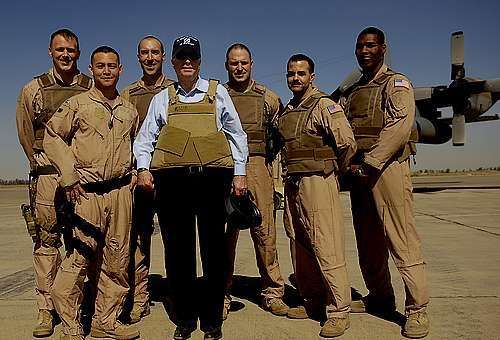
In the wake of Father’s Day, John McCain and Barack Obama offer, among other contrasts, a confrontation between old ideas about manhood and new–the hard-drinking, womanizing Navy flyboy turned politician and the New Age husband in equal partnership with a powerful wife.

Stereotypes, yes, but the biographical facts are beyond dispute. On his nostalgia tour after clinching the nomination, McCain talked about misadventures in the places he was visiting.

“I remember with affection the unruly passions of youth,” he said in Meridian, Miss., where he had organized an off-base toga party for military buddies and local girls.

At his Virginia high school, he recalled that his disobedience earned him the nickname “worst rat” for sneaking away to Washington burlesque houses and bars.

Outside the Naval Academy in Annapolis, McCain described “nocturnal sojourns” and the hundreds of miles he was forced to march for insubordination.

“I wanted,” McCain recalled in Pensacola, “to live the life of a daring, brash, fun-loving flyer…In truth, the image I aspired to was, in the end, only irresistible to one person–me, and it was a very childish attraction.”

McCain’s vision of manhood comes from life as a carousing son and grandson of admirals and then his sobering experiences as a POW and a Washington politician.

Obama, on the other hand, as he tells it in his books, was an uprooted young man searching for a sense of the father he barely knew and, despite experimentation with drugs, a serious and ambitious young man, described as “grounded, motivated and poised” by his peers.

As they present themselves to voters, McCain and Obama are both remarkable products of their life histories, representing a contrast in styles of American manhood that go far beyond their other generational differences.

Cross-posted from my blog.

The question facing American voters is whether or not they want another cowboy president, or a man who is more in touch with his emotions and more complete in his masculinity.

I think we can safely say that McCain represents the old frontiersman archetype that Faludi talks about in her article from the New York Times. McCain even promotes himself, albeit through his surrogates, as a hero. Yet, the hero is an adolescent archetype, a form of boy psychology, not a mature masculine psychology.

It's hard to say if Obama is more mature or not. But he seems to be more balanced in his masculine and feminine psychology. I think, maybe, he gets it though in a way that McCain doesn't. This is from his Father's Day speech.
But if we are honest with ourselves, we’ll admit that what too many fathers also are is missing — missing from too many lives and too many homes. They have abandoned their responsibilities, acting like boys instead of men. And the foundations of our families are weaker because of it.

You and I know how true this is in the African-American community. We know that more than half of all black children live in single-parent households, a number that has doubled — doubled — since we were children. We know the statistics — that children who grow up without a father are five times more likely to live in poverty and commit crime; nine times more likely to drop out of schools and 20 times more likely to end up in prison. They are more likely to have behavioral problems, or run away from home or become teenage parents themselves. And the foundations of our community are weaker because of it.

***

It’s up to us — as fathers and parents — to instill this ethic of excellence in our children. It’s up to us to say to our daughters, don’t ever let images on TV tell you what you are worth, because I expect you to dream without limit and reach for those goals. It’s up to us to tell our sons, those songs on the radio may glorify violence, but in my house we give glory to achievement, self-respect and hard work. It’s up to us to set these high expectations. And that means meeting those expectations ourselves. That means setting examples of excellence in our own lives.

The second thing we need to do as fathers is pass along the value of empathy to our children. Not sympathy, but empathy — the ability to stand in somebody else’s shoes; to look at the world through their eyes. Sometimes it’s so easy to get caught up in “us,” that we forget about our obligations to one another. There’s a culture in our society that says remembering these obligations is somehow soft — that we can’t show weakness, and so therefore we can’t show kindness.

But our young boys and girls see that. They see when you are ignoring or mistreating your wife. They see when you are inconsiderate at home; or when you are distant; or when you are thinking only of yourself. And so it’s no surprise when we see that behavior in our schools or on our streets. That’s why we pass on the values of empathy and kindness to our children by living them. We need to show our kids that you’re not strong by putting other people down — you’re strong by lifting them up. That’s our responsibility as fathers.
Because of McCain's background, having grown up with a highly successful father and followed in his footsteps, he would never have thought of a speech like this.

Obama grew up without a father, from a very young age, but he clearly had family who helped him as best he could. McCain jokes about his misadventures as a young man, but they are child's play -- the fun a rich young military officer can have when he has few worries.

Obama's dabbling in drugs was the result of his being lost without a father figure at a crucial time in his life. I've been there and done that. And I know that I am a better person for having gone through those things. It wasn't easy, as I'm sure it wasn't for Obama, but what doesn't kill us makes us stronger . . . buit only if we are willing to learn from our mistakes. I did. I think Obama did too.

In the end, I am more likely to trust someone who has been through the shit (not that being a prisoner of war was a walk in the park). Maybe McCain has that whol war hero thing going for him, but that experience likely made even more narrowed in an immature form of masculinity. My hope is that Obama's experience have made him more open to a mature form of masculinity, for the first time in any politician I can think of.


Two Outdated Masculine Archetypes


There have been many images of what men should be like in popular culture, from Teddy Roosevelt in the early part of the century to John Wayne in the later decades. But two images, one American, one British, have persisted -- the Frontiersman and James Bond. Both are outdated and less than mature.

Here are a couple of articles that look at these archetypes.
Think the Gender War Is Over? Think Again, By Susan Faludi

FOR months, our political punditry foresaw one, and only one, prospective gender contest looming in the general election: between the first serious female presidential candidate and the Republican male “warrior.” But those who were dreading a plebiscite on sexual politics shouldn’t celebrate just yet. Hillary Clinton may be out of the race, but a Barack Obama versus John McCain match-up still has the makings of an epic American gender showdown.

The reason is a gender ethic that has guided American politics since the age of Andrew Jackson. The sentiment was succinctly expressed in a massive marble statue that stood on the steps of the United States Capitol from 1853 to 1958. Named “The Rescue,” but more commonly known as “Daniel Boone Protects His Family,” the monument featured a gigantic white pioneer in a buckskin coat holding a nearly naked Indian in a death’s grip, while off to the side a frail white woman crouched over her infant.

The question asked by this American Sphinx to all who dared enter the halls of leadership was, “Are you man enough?” This year, Senator Obama has notably refused to give the traditional answer.

The particulars of that masculine myth were established early in American politics. While the war hero-turned-statesman is a trope common to many countries in many eras, it has a particular quality and urgency here, based on our earliest history, when two centuries of Indian wars brought repeated raids on frontier settlements and humiliating failures on the part of the young nation’s “protectors” to fend off those attacks or rescue captives. The architects of American culture papered over this shaming history by concocting what would become our prevailing national security fantasy — personified by the ever-vigilant white frontiersman who, by triumphing over the rapacious “savage” and rescuing the American maiden from his clutches, redeemed American manhood.

Aspirants to the White House have long known they must audition for the Boone role in the “Rescue” tableau. Those who have pulled off a persuasive performance, from Jackson to Teddy Roosevelt to Dwight Eisenhower to John F. Kennedy, have proved victorious at the ballot box. Even candidates lacking in martial bona fides have understood the need to try to fake it with the appropriate accessories — riding high in the saddle (Ronald Reagan), commanding tanks (Michael Dukakis), wielding shotguns (John Kerry) or brandishing chainsaws and donning flight suits (you know who).

Read the rest.

The British, and to a large extent Americans, as well, have a slightly different archetypal male image, James Bond.
James Bond as Archetype (and Incredibly Cool Dude), By Michael Dirda

A couple of years ago, I happened to be giving a talk to the graduating seniors at a Catholic girls' school. During the question period, one young woman asked, "If you could be any character in literature, who would you choose?" Given that I write about books for a (hardscrabble) living, I could see that she expected me to name some obvious literary heavyweight, such as Odysseus, Prince Genji, or Huckleberry Finn — all of whom flashed through my mind as good answers. Instead I paused for a moment, put on my most sardonic look, and huskily whispered into the microphone, "Bond, James Bond." It brought down the house.

Of course, people thought I was kidding. And, of course, I wasn't.

Having just read Devil May Care, by the novelist Sebastian Faulks "writing as Ian Fleming," and recently enjoyed Casino Royale, Bond's latest cinematic adventure, I don't see any reason to change my answer. It is a truth universally, if seldom publicly, acknowledged that virtually every American male, from puberty onward, would love to be 007. He's got the best toys, attracts gorgeous women, and wins at every game, be it golf, baccarat, or — in Devil May Care — tennis. Such (arguably) shallow benefits might be sufficient to explain part of Bond's appeal. But there's something even more primordial to his mythic glamour.

What, after all, is a man's deepest wish? Freud talked about "honor, power, riches, fame, and the love of women" — and Bond certainly encompasses all those. Still, that libidinal litany can be boiled down to a single desire, half hidden in the shadowy reaches of the male psyche and more clearly delineated in world mythology: As Joseph Campbell would say, men long to be heroes. No doubt about it. And yet I think the masculine ego also hungers for something a bit more noirish, if you will. At least some of the time, guys want to be thought of as … dangerous. While it's gratifying to be called a hard-working professional or a good provider, those admirable traits don't make our hearts beat quicker. By contrast, to overhear oneself described as "a man not to be trifled with" — that's quite another matter.

Read the rest.

What each of these archetypes have in common is that they are hero images. As Moore & Gillette point out so well in their work, the hero is an adolescent archetype, immature and not fully formed as a man. [More on this in a future post.]

Both of the images present above fit that category. We need better images, more complete masculine archetypes. Until we get them, we will continue creating immature social structures, having immature relationships, and holding immature dreams for our lives ("he who has the most toys wins").


Wednesday, June 18, 2008

A Woman's View - The Feminization of the American Male

Someone who calls herself Crunchy Chicken wrote a very interesting post on The feminization of the American male. For the most part, I tend to agree with her. The post has a lot of comments in reply, with the sense that most of the women prefer men who look like men rather than teenage boys.

More after the post.
The feminization of the American male

Where's Pussy Galore?At what point did the standard for male sexuality switch from muscular, hairy men to androgynous, hairless ones? What am I talking about and what does this have to do with the environment? Well, bear with me and I'll 'splain.

Think back to the 1970s and before (I know, that far?) and, using the all important media as our meter of society, take a gander at the men who were considered sex symbols. The standard was tall, dark and hairy. Facial hair, hairy chests, the whole shebang.

Think of Gregory Peck, Cary Grant, Dean Martin, Sean Connery, Tom Selleck or even (yikes!) Burt Reynolds. Sure there was the occasional boyish heartthrob thrown in to titillate the younger crowds, but for the most part the male sex symbols were men. Manly men.

The Dude abidesStarting in the 1980s, the male sex symbol started being neuterified. Yes, I made that word up. Can we blame Miami Vice and Don Johnson's hairless chest and preoccupation with looking good? That perpetual 5 o'clock shadow that screams "Yes! I'm a man, but not enough to have real facial hair"?

Fast forward to today and the list of sex symbols is more of a mix. Now, I'm not discounting the likes of Gerard Butler, Clive Owen, Hugh Jackman and the rest, but there's been a serious trend towards celebrities with elfin magic such as Jude Law, Justin Timberlake, Orlando Bloom and Leonardo DiCaprio (the early years).

Wait a minute, can we go back and think about Gerard Butler, Clive Owen and Hugh Jackman again. Ok. Anyway, I've been masturbating, I mean masticating over this for a few weeks now. Good lord, where was I going with this?

Damn, the research on this is excruciating!

Elfin magicNow, before you think I'm some Bonobo getting all hot and bothered over the hairy Pan paniscus in the crowd, I'll be the first to admit that I'm not a big fan of body hair. But, I do like my men to look like men and not little boys.

So, what's the deal with the recent pressure on adult men to be metrosexual? There's nothing wrong with a little manscaping here and there, but men are being subjected to the same beauty pressures that women have had to endure for the last several hundred years and longer.

Aside from the personal pressure to live up to some standard of beauty and the self-doubt and criticism that follows, the impact of trying to achieve an unnatural state is no light matter. It's bad enough that half the population is condemned to rely on beauty products, haircare (coloring and hair products), body hair maintenance and the rest. Now men are feeling like they have to do the same. That means more waste in a number of ways.

Lock, Stock and Two Smoking BarrelsI'm not suggesting that men don't take care of their appearances. Keeping the eyebrows, nose and ear hair under control is one thing. Plucking, waxing and altogether altering one's appearance to maintain a boyish look is another.

Not too surprising, even Brad Paisley is commenting on the trend in one of his latest songs, I'm Still a Guy:

These days there’s dudes gettin' facials
Manicured, waxed, and botoxed
But with deep spray on tans and creamy lotioney hands
You cain’t grip a tackle box
Yeah, with all of these men linin' up to get neutered
It’s hip now to be feminized
But, I don’t highlight my hair
I’ve still got a pair
Yeah, honey I’m still a guy

Oh, my eyebrows ain’t plucked
Theres a gun in my truck
Oh Thank God, I’m still a guy

What is the real opinion on the metrosexual trend. I want to hear from both men and women on how they feel about the pressure for men to focus so much on their appearance.

Men: Do you feel a pressure to get all "prettified" to meet a new standard?

Women: Do you prefer a more natural looking guy or one that's well manicured?
This post ties in with the video I posted a little while ago. Men are now facing the same "beauty" issues that women have been dealing with forever.

I wonder though. Is there any correlation between the physical feminization of men and the emotional feminization of men? Is the absence of a mature masculinity the source of men becoming obsessed with their appearance?

I work out to look good naked (the only real reason most guys [or girls] work out). I do a bit of grooming. I use moisturizers to limit wrinkling. I shave my face, as much as I'd rather not. I keep unsightly hair trimmed. But I have never had a facial, a manicure, or any of those other metrosexual delights.

And as much as I have worked to have clear and clean access to my heart, my emotions, I doubt that anyone who knows me would describe me as feminine in any way.

It IS possible to be emotionally intelligent as a man and not be feminine. The masculine heart is deep and tender, but it is different than the feminine heart. The hard thing for most of us is that we lack good examples of tender masculinity -- there are no cultutral images for this type of man, though he surely exists.

I think that, at least in part, the feminization of men in the physical realm represents the feminization of men in their interiors. Until we have a more integrated view of masculinity, I don't see this changing much.


Video - Masculinity

This is a strange little art installation that examines the inner voices that men are now dealing with -- which sound an awful lot like what women have been dealing with for years.
Directed by Marc Foreman.
This piece is intended to comment on the duality of ones own opinion on their body image. This piece is intended as an installation using 4 television sets and a projection.


Tuesday, June 17, 2008

Warren Farrell - Does Feminism Discriminate Against Men?

This week's chat at Integral Naked features Warren Farrell talking about what's wrong with feminism (instead of talking about what's right with masculinity). Interesting, that. Personally, I'll take Sam Keen over Farrell, but that's a topic for another post. Farrell is considered a leader in the masculinist movement, after having once served on (and being asked to resign from) the board of NOW.

At the Holon's blog, they posted a pretty good entry on the discussion and what Farrell is about. As always, there is the necessary "integral" framing going on, but we've grown accustomed to that by now (and I guess it's useful for indoctrinating novices).

Warren Farrell - Does Feminism Discriminate Against Men? Part 1. Redefining the Relationships Between Men and Women.

Rupert Sheldrake

Does Feminism Discriminate Against Men? Part 1. Redefining the Relationships Between Men and Women.

Dr. Warren Farrell and Ken Wilber discuss some of the ingredients of an Integral account of human sexuality, while exploring the nuances of relationships between men and women, the many attempts of feminism to redefine sex and gender, and the historic causes behind the division of labor and the rigid patriarchies that followed….

"It's definitely true that men, as a rule today in industrialized societies, are basically where women were in the 1950's, psychologically and socially. Part of what is keeping men there is being blamed for having power that is really a camouflage for the powerlessness. Real power is control over my own life."

click here for free sample! (right-click to download)

Who: Dr. Warren Farrell is a founding member of Integral Institute and the author of six books, including the international best-sellers Why Men Are the Way They Are and The Myth of Male Power. Dr. Farrell is the only man in the US to have been elected three times to the Board of Directors of the National Organization for Women in New York City; and he has also served on the boards of three national men's organizations. Over a period of 25 years, Warren has formed over 600 women's and men's groups and has worked with more than a quarter million men and women from all walks of life. The Chicago Tribune described Warren as "the Gloria Steinem of Men's Liberation." (Warren, though, has more gray hair.)

Summary: It is amazing to consider how much has changed in the past five decades in regard to sexual liberation and empowerment. The woman’s role in today’s society is almost unrecognizable compared to the early 20th century, and would be wholly unimaginable in the centuries prior. In America, attitudes toward sexuality and gender began to dramatically shift with the Boomer generation (and the newly emerging pluralistic values they brought with them), as birth control, free love, and several new schools of “second wave” feminism began to challenge the traditional attitudes that defined preceding generations. Since the early sixties, there has been a tremendous amount of movement toward redefining ourselves as men and women—some forward, some backward, and plenty of jogging-in-place. In the ensuing decades, we have witnessed the masculinization of women, the feminization of men, the neutralization of both genders, the roles of helpless victim set upon women, the witch hunts of fallacious prosecution set against men, the movement to procure equal rights for homosexuals, the advent of sex-change surgery, the rise of pornography as a multi-billion dollar industry, and the capitalization of just about every kink, fetish, and fixation imaginable. And through it all, not surprisingly, men and women in the 21st century still seem to look at each other with the same bewilderment they did 20,000 years ago, after waking up with a headache and an annoying lump on the back of her head.

In order to come to any coherent definition of ourselves as sexual beings, we must take as comprehensive a view of sexuality as possible. Ken Wilber has developed a theoretical model known as the “Four Quadrants,” which, when applied to nearly any field of human knowledge, offers a very simple way to ensure that all bases are being covered and that nothing is being left out. The Four Quadrant model accounts for the interior and exterior dimensions of both the individual and the collective, yielding four major realms of consciousness: intentional, cultural, behavioral, and social (or “I”, “we”, “it”, and “its”, respectively, for those interested in tracking pronouns). All four of these dimensions are closely related, with each quadrant having strong correlates in the others—though none of these quadrants can be reduced to each other (despite the entire history of human thought being essentially an attempt to do exactly this.)

When applied to human sexuality, the Four Quadrants allow us to clearly see the respective roles of biological sex (male vs. female), interior sexuality (masculine vs. feminine), and sexual gender (man vs. woman, as defined by cultural beliefs and expectations), while also accounting for the various technological and economic systems all of these are situated in. By differentiating each of these important dimensions of sexuality, we are able to see how each is able to develop along its own trajectory, with its own history, without needing to confuse one’s sexual orientation with one’s sense of “manliness,” one’s secret desires with one’s cultural taboos, or even one’s gender with one’s genitals.


As previously mentioned, each of these major dimensions of human sexuality (sex, sexuality, gender, and sociological factors) grows through several distinct stages of unfolding. Just as the human body grows through stages of physical maturity—from fetal to infancy, to toddler-hood, to adolescence, to reproductive maturity—so do we grow psychologically, culturally, and socially. In fact, it is only toward the higher reaches of psychological growth that these sorts of important differentiations between biology, psychology, culture, and society can be made—and only from within a relatively advanced culture can significant strides be made on behalf of sexual identity, expression, and liberation. Both men and women evolve through ego-centric, ethno-centric, and world-centric stages of development, creating cultures that reflect these ever-deepening and increasingly inclusive values as they go.

A special note should be made in regards to our techno-economic development, which arguably has the most influence upon development in the other quadrants, for a variety of reasons. By looking to the history of economic production, we can find the history of gender roles themselves—in the earliest stages of civilization, men and women were able to produce food fairly equally, as men would hunt and women would gather, and even later when we moved into the horticultural stage and both men and women could use a digging stick to grow crops. Things changed, however, when we moved into agricultural mode of production, requiring the training of large animals to pull heavy plows through the fields. As men possess more upper-body strength than women, and women were much more susceptible to birth complications under this sort of physical labor, men and women both made the mutual decision to each tend to different spheres of life. This is we begin to see our first true divisions of labor, with men responsible for the public sphere, and women responsible for the private sphere. (And as an interesting footnote, most of the cultures from the early foraging and horticultural eras worshiped gods that were predominantly matriarchal or evenly split between male and female deities, as opposed to agrarian societies who typically only worshiped male deities.) In societies still struggling with survivalist needs, women became valued as humanity’s most precious resource, and men became valued for their disposability, and are expected to compete for the opportunity to protect these resources.

For the next several thousand years, men did what they do best: construct rigid and elaborate patriarchies, in all flavors of tribalism, nationalism, religion, aristocracies, meritocracies, and steel cage matches. And, in these testosterone-driven social hierarchies, a woman’s proper place in the public sphere was all too clear: she had none whatsoever. And though modern and post-modern feminists can (and do) scoff at the unabashed sexual inequities within these patriarchies, the fact that this was an intentional, necessary, and mutually beneficial decision made by both sexes early in history is regrettably forgotten. Most men aren’t the oppressive beasts they are often made out to be, and most women aren’t the helpless victims of men’s oppression that they are often made out to be.

Of course, we are now in a completely different era of history, with modes of technology that have rendered many, if not all, of these prior decisions about labor division obsolete. Much of the physical labor men traditionally had to do has been replaced first by the steam engine, then by combustion, and now by the microchip. This is probably the single most important factor in terms of the rise of women’s liberation, and has brought into relief one of the most frustrating aspects of collective transformation: although the technology can change overnight, the culture is much more slow to adapt, often requiring entire generations to die off before real change can be enacted throughout society. Or, as Ken has bleakly joked elsewhere: “the knowledge quest can only proceed funeral by funeral….”

All in all, it is an amazing time to be alive—to be a man or a woman, male or a female, masculine or feminine, gay or straight. We are bearing witness to an entire new wave of individual and collective values, an Integral wave of development which, when it reaches the tipping point of its emergence, will make just as extraordinary a splash upon history as the European renaissance or the postmodern revolution of the sixties. And while each previous revolution has occurred only to steer the world away from the pathologies and excesses of what came before, the Integral revolution will be markedly different—while creating a space of personal and collective transformation that is radically and unmistakably new, Integral consciousness will also help to bring a tremendous amount of healing, stability, and sanity to the rest of the world, with the crucial understanding that everyone must start at square one before evolving to Integral consciousness. With as comprehensive a view of human sexuality as Integral consciousness provides, it becomes apparent that all of our old and apparently obsolete methods of relating to each other will always exist, and we must therefore allow them to exist on their own terms, while simultaneously liberating ourselves from definitions of sexual maturity that no longer seem to apply to us or our relationships.

Click here for full dialogue!


Monday, June 16, 2008

Where Is Your King, Warrior, Magician & Lover?


Yeah, yeah, the whole archetypal psychology approach to men's growth is so 1990s. But there is still some very useful ideas in that work. Moore and Gillette, in their well-known book, King, Warrior, Magician, Lover: Rediscovering the Archetypes of the Mature Masculine.

This article takes a look at that work. Try to ignore the ads for products - the site is trying to sell us their products.

Where Is Your King, Warrior, Magician & Lover?

Welcome everybody. This is Matt Clarkson of The Mind-Body Training Company … welcome.This Sunday is Father’s Day. So a big thank you to all the Dad’s out there! Today I want to talk about how to develop mature qualities of confidence, courage and a sense of unshakable mental stability … qualities that are often associated with the energy of the mature masculine. First of all, I want to back up a bit and talk about two concepts that are essential to what I’m going to talk about today and in fact everything we do here at The Mind-Body Training Company. Throughout all our programs and everything we teach you’ll always see two key concepts come up over and over again. We believe they are essential for a life of health, happiness and success.

Key Concept #1: Training or Practice.

So why training? Well, Western culture is all about getting the result. It’s about “push-button” results and get-rich-quick. Nothing wrong with that if it actually produces the results you want without any negative consequences. But more often than not, these things get you nowhere and waste your time. Now it might be a better marketing strategy to say “instant results” but what we’re interested in at The Mind-Body Training Company is what works in the long term. And when you look at ANY successful result in ANY area of life, there’s always been training and practice that led to it.

We believe that effective training is the true path to excellence in any area of your life — in terms of your health, relationships, finances and spiritually. If we want a result in life, whether that is better health, more financial abundance, better relationships, anything at all, we accept that regular training or practice is crucial. It’s not even so much about the individual results we think we want along the way, (the new car or the new lover) it’s about the training, the process, the practice that allows you to continually grow and evolve.

Key Concept #2: A balanced and holistic approach in our training.

The second important concept is that training should be holistic and balanced in nature. We’re not interested in half measures that only partially address the real issues. We know that effective training needs to be complete, balanced and holistic. We need to train the MIND and the BODY we need to train BOTH SIDES of the opposite.

So with this Sunday being Father’s day, I thought it would be good to talk a little about the qualities of the balanced, mature masculine energy. Don’t worry if you’re a woman — this applies to you as well! I’ll explain how in a minute. I recently read a great book called “King, Warrior, Magician, Lover: Rediscovering the Archetypes of the Mature Masculine” by Robert Moore and Douglas Gillette. This book has really helped me identify some areas where frankly, I still had some growing up to do. So I thought it would be good to take the time to share these insights with you on Father’s Day.

Moore and Gillette argue that Western society is in a real mess right now because we’ve forgotten what mature masculinity means. We think mature masculinity is abusive or domineering and society has suffered immensely for that. Moore and Gillette say that we’ve got into this situation for two reasons. First of all, unlike primitive cultures, Western culture has no ritualized initiation of boys into manhood. Also, in recent times, women have reclaimed more of their power after much suffering and injustice at the hands of IMMATURE men. Both men and women NEED mature men and we need mature masculine energies to encourage us, nurture our development and help us grow.

So let’s celebrate Father’s day by talking about qualities of the mature masculine.

Get ready because this is deep stuff!

The concepts from “King, Warrior, Magician, Lover” come from the work of Carl Jung and his theory of the archetypal Self. Jung thought that we come hard-wired with what he called “archetypes”. These are core-level programs or pre-dispositions that influence how we develop and grow throughout the various stages of life. Jung thought that we come in with these biological mechanisms that pre-dispose us to grow in certain ways. Of course, we still need the correct external role models and influences to help develop these energies correctly.

So what are the energies of maturity?

As the title of Moore & Gillette’s book suggests, Jung thought that the archetypes of mature masculinity are The King, The Warrior, The Magician and The Lover. Today, most of Jung’s contemporaries agree that these archetypes apply as much to the mature feminine and they do the mature masculine. We tend to develop one of the archetypes of King (or Queen), Warrior, Magician or Lover more fully than the others. This is called a Jungian “temperament”. But more importantly, Jung argued that to be mature, we need to access EACH of the FOUR archetypes correctly and in the balanced proportions. So let’s look at each of the archetypes now.

The Magician

My personal favourite! The Magician is the master of knowledge, both technological and spiritual. For example, over the last few years I’ve been pretty focused on marketing, growing and reaching more people with The Mind-Body Training Company. I’ve spent a lot of time accessing “The Magician” archetype — reading books about human behaviour, working with people to help them change their lives, figuring out how best to develop myself and others.

The Magician archetype is concerned with knowledge, both spiritual and technological. Examples of the Magician would be your local Medicine Man, Merlin in the stories of King Arthur, Don Juan in the famous books by Carlos Castaneda. But in modern times, the magicians are also the scientists and the technologists who make “miracles” happen. The Magician is the knowledge worker — both scientific/technological and spiritual.

The Secret to Understanding Archetypes

Moore & Gillette argue that if ANY the archetypes are not accessed correctly, we see the “Shadow” or dysfunctional version of the archetype manifesting itself. This basically means there is either an unhealthy attachment to this energy type or an aversion to it. On the attachment side of the Magician’s Shadow, we get “the detached manipulator”. This is the person who is more interested in accumulating power for himself rather than what’s best for all.

Unfortunately, our society is awash with the manifestations of the “detached manipulator”. We see this all the time in TV advertising. We also see it a great deal in the self-help community when the focus is on learning “tricks” and “techniques” to manipulate others and get your own way. There’s nothing wrong with learning techniques and understanding what makes people tick, but when it’s all about manipulating people for your own benefit, then the healthy Magician energy has fallen into that shadow aspect.

On the aversion side of The Magician archetypes’ Shadow, we have someone who is afraid of their own power, the person who denies their knowledge and likes to play dumb. This is the person who is afraid to take responsibility or take the lead in an interaction. The Magician energy, like all the archetypes is a force for good in the psyche and in the world when properly accessed.

Stop for a moment now and consider…

How is your Magician archetype? Do you need to develop more qualities of the Magician? If you do, I’d recommend Secrets Of Meditation, Health & Manifestation as a great introduction to meditation, breathing work and the art of manifesting your desires. If you’re already familiar with meditation and manifesting, I would recommend Secrets Of Abundant Energy. The Magician archetype needs to work with the energy of the King (or Queen) in order to balance the psyche.

The King (or Queen)

The King/Queen servers two functions — the blessing of others and maintaining order. The King is wise and loving. He wants to help others grow and mature. The King keeps order throughout the Kingdom (both internally and externally) and protects the Kingdom from de-stabilizing influences. The King needs to work with the Magician, Warrior and Lover energies in the correct balance for there to be order and positive growth.

An unhealthy attachment to the energy of The King happens when we become identified with it — when we believe we “are” the King energy. Then we fallen under the influence of the King’s shadow archetype, “The Tyrant”. The tyrant wants more than anything else to bolster his own position and his own sense of power. An example of The Tyrant would be Darth Vador in Star Wars or King Herod in the story of Jesus. The tyrant may be ruthless in achieving his objectives, but underneath he’s terrified of his own weaknesses (hence Herod tried to kill the baby Jesus who he saw as a threat).

On the aversion side of the King’s Shadow, we have “The Weakling” who perceives himself to be either unable or unwilling to take control of the situation. He’s paranoid, feels a sense of constant fear and is destabilized at the slightest remark. The King energy properly accessed brings stability, order and a sense of caring for self and others.

Stop for a moment and check inside.

How are you accessing your King archetype? Do you need more of that stabilizing, rational, ordered sense of confidence and community? If so, I highly recommend you take a look at Spiritual Growth Monthly.

The SGM community is run by one of the most mature people I know — Kevin Schoeninger. Kevin is our highly experienced instructor with over 25 years teaching experience. He is a certified personal trainer, meditation instructor and holistic fitness expert. He is here to serve you. He LOVES working with members to help you realize your full potential. Your membership allows you to ask him whatever questions you feel are important. You can ask them on the members blog or email Kevin privately. He answers personally to all coaching questions and we have a great community of people who are here for each other.

The Warrior

The Warrior archetype is not abusive or domineering as we might think. Yes, the Warrior is fierce, courageous and determined, but abusive he is not. If the warrior energy becomes abusive, it has actually become one of the shadow aspects of the Warrior — “The Sadist”. The Warrior has had a bad rap in recent years, mainly because people confuse the Warrior with his shadow archetype The Sadist. The Sadist takes pleasure in dominating others and inflicting suffering for his own amusement.

We often see The Sadist in warfare when our soldiers go too far. In the United States and in the UK, we’ve seen in the news that our soldiers have abused Iraqi prisoners and in some cases, tortured and killed them. This is actually quite common in all warfare on all sides. Of course, the Warrior archetype is an important one. Properly accessed, the Warrior is a motivating force for good providing much of the drive needed for success. The Warrior energy fights for just causes, but perverted it can easily become as bad or even worse than the “enemy”.

Throughout our history, women have suffered terrible abuse and injustice inflicted by the shadow aspect of the warrior — The Sadist. What we need more than anything else is not more sadists but more mature men and women who are accessing their Warrior energy correctly for each other’s benefit.

On the aversion side of the Warrior’s shadow we have “The Masochist”. This is the energy of taking pleasure in your OWN pain and suffering. So how do we access the aversion side of the Warrior’s shadow, the Masochist? Well for me, the best way to access the masochist is to dress myself in leather, cover myself in whip cream, and get a hard spanking until I cry like a girl … Just kidding! But have you noticed how we see these archetypes all over the place — in art, in religion, throughout our culture. The fact that these archetypes appear over and over again is strong evidence that these structures run deep within us.

Do you need to develop the positive aspects of The Warrior archetype? If so, I highly recommend Kevin Schoeninger program The Power Of Practice.

The Lover

The Lover feels deeply connected to all things. The Lover is creative and likes to express itself through art and other expressive activities. Here was have the musicians, the painters, the sculptors and the poets. Many people in the spiritual community have a deeply developed Lover archetype, sometimes without developing the others as well. The Shadow of the Lover on the attachment side is obsessed with Love and “can’t get enough”. On the aversion side we have the “impotent lover” who feels overwhelmed by the feminine and rejects the oneness in order to maintain his artificial sense of individuality.

Accessing the Lover correctly is going to make us more in touch, in sync and connected with ourselves and others. If you need to develop more of the Lover energy then I think meditation is a great practice to help with that. If you’re new to meditation, check out Secrets Of Meditation, Health & Manifestation. If you’ve been practicing meditation for a while and want to go deeper into natural meditation practices, then check out Kevin Schoeninger’s program Learn Qigong Meditation.

So there we have it … the four archetypes of maturity according to Carl Jung as well as Moore & Gillette. At this point, you might be asking — how do I apply this in my life to become more balanced and mature for myself and for others?

I recommend you start by asking some basic questions…

1) Which archetypes King, Warrior, Magician & Lover are you accessing correctly?

2) In which of the four quadrants are you accessing the Shadow aspects?

3) Which archetypes are you’re preferred temperaments?

4) Which archetypes do you need to work on developing?

If you go back and look above, you’ll see I gave recommendations and links for programs that will help you access these archetypes correctly. Go back and have a look at that.


Sunday, June 15, 2008

Father’s Day 2008: Mowing the Meadow, Shaving The Chocolate

[Cross-posted at IOC.]

Via The Moderate Voice:

Father’s Day 2008: Mowing the Meadow, Shaving The Chocolate

June 13th, 2008 by DR. CLARISSA PINKOLA ESTÉS, TMV Columnist

cpe-blk-son-and-father.png

(I’d prepared this article earlier to run during the day today, but in no way wanted to put a clang in the middle of the news and memoriums about the passing of Tim Russert. I hope it is alright to post it now overnight as the shocks of the day begin to recede a little. This piece was meant to commemorate bright moments that most often occur in the most mundane ways between fathers and sons.)

When I was a little girl, my dad used a rough brush and a heavy porcelain mug to lather up, and then a straight razor to shave. Don’t touch, don’t touch, he’d say when he laid the razor down on the little sink. In fascination I watched him shave. Just like I learned to cook from my mother, by watching…if I’d been a son, I’d have learned to shave just by watching my father; how to make the facial grimaces, how to tilt your head, how to sweep the razor up on this part, and across on that part.

Every night, every day, my dad’s face grew a beard, over and over. That was amazing to me. Something taken away, kept coming back. His strength. As a man. It isn’t too much to say.

Your dad too, no doubt, would he nick himself and just go on shaving while the blood ran down his throat? Wasn’t that amazing to you when you were little? And the tiny yelps when he put the styptic on? And the tiny bits of tp? And how cool and smooth his cheek was after, no more chinny-chin-chins until nighttime? Now just sweet smelling and tender cheeked. For a while. Off to work he would go. The scent of his shaving strangely holding ‘the father place’ in the house, his fragrances of soap and hot water and cologne lingering in the air long after he was gone.

And I wonder how other fathers taught their sons to shave… did the sons when they were little, like we did, even us little girls, quietly reach into the tiny medicine cabinet hanging over the sink, and sneak the blade and give it a few whishes on the strop behind the door, then soap our faces, and as carefully as we could, draw the darker roads through the white lather? Wasn’t there something so seeming magical about that? And some secret giddiness in having touched the tools of the king?

Or maybe, like in the picture, some father, uncle, friend, even mother, taught the boys to shave? It must have been a moment for a man; the first real shave; mustache, beard, clean shaven, half and half, learning that careful throat art nonetheless.

Maybe that moment of ‘first ritual shave’ is only half recorded in a grown man’s memory. But, maybe too, it’s still one of the bright pride lines of that time when the world cracked open for a young male… and suddenly out stepped a knowing but inexperienced man … who only moments before had been just a very, very experienced boy…

_______________
CODA
‘Shaving the meadow,’ or ‘mowing the front forty (acres)’ or ‘raking the field,’ is how some men in the backwoods where I grew up spoke of the manly morning ritual. One of my black friends charmed me utterly by saying, ‘Ok, gots to go shave some chocolate now.’


Barack Obama's Speech on Fatherhood


Courtesy of Real Clear Politics:

Obama's Speech on Fatherhood

Barack Obama

Apostolic Church of God
Chicago, IL

Good morning. It’s good to be home on this Father’s Day with my girls, and it’s an honor to spend some time with all of you today in the house of our Lord.

At the end of the Sermon on the Mount, Jesus closes by saying, “Whoever hears these words of mine, and does them, shall be likened to a wise man who built his house upon a rock: and the rain descended, and the floods came, and the winds blew, and beat upon that house, and it fell not, for it was founded upon a rock.” [Matthew 7: 24-25]

Here at Apostolic, you are blessed to worship in a house that has been founded on the rock of Jesus Christ, our Lord and Savior. But it is also built on another rock, another foundation – and that rock is Bishop Arthur Brazier. In forty-eight years, he has built this congregation from just a few hundred to more than 20,000 strong – a congregation that, because of his leadership, has braved the fierce winds and heavy rains of violence and poverty; joblessness and hopelessness. Because of his work and his ministry, there are more graduates and fewer gang members in the neighborhoods surrounding this church. There are more homes and fewer homeless. There is more community and less chaos because Bishop Brazier continued the march for justice that he began by Dr. King’s side all those years ago. He is the reason this house has stood tall for half a century. And on this Father’s Day, it must make him proud to know that the man now charged with keeping its foundation strong is his son and your new pastor, Reverend Byron Brazier.

Of all the rocks upon which we build our lives, we are reminded today that family is the most important. And we are called to recognize and honor how critical every father is to that foundation. They are teachers and coaches. They are mentors and role models. They are examples of success and the men who constantly push us toward it.

But if we are honest with ourselves, we’ll admit that what too many fathers also are is missing – missing from too many lives and too many homes. They have abandoned their responsibilities, acting like boys instead of men. And the foundations of our families are weaker because of it.

You and I know how true this is in the African-American community. We know that more than half of all black children live in single-parent households, a number that has doubled – doubled – since we were children. We know the statistics – that children who grow up without a father are five times more likely to live in poverty and commit crime; nine times more likely to drop out of schools and twenty times more likely to end up in prison. They are more likely to have behavioral problems, or run away from home, or become teenage parents themselves. And the foundations of our community are weaker because of it.

How many times in the last year has this city lost a child at the hands of another child? How many times have our hearts stopped in the middle of the night with the sound of a gunshot or a siren? How many teenagers have we seen hanging around on street corners when they should be sitting in a classroom? How many are sitting in prison when they should be working, or at least looking for a job? How many in this generation are we willing to lose to poverty or violence or addiction? How many?

Yes, we need more cops on the street. Yes, we need fewer guns in the hands of people who shouldn’t have them. Yes, we need more money for our schools, and more outstanding teachers in the classroom, and more afterschool programs for our children. Yes, we need more jobs and more job training and more opportunity in our communities.

But we also need families to raise our children. We need fathers to realize that responsibility does not end at conception. We need them to realize that what makes you a man is not the ability to have a child – it’s the courage to raise one.

We need to help all the mothers out there who are raising these kids by themselves; the mothers who drop them off at school, go to work, pick up them up in the afternoon, work another shift, get dinner, make lunches, pay the bills, fix the house, and all the other things it takes both parents to do. So many of these women are doing a heroic job, but they need support. They need another parent. Their children need another parent. That’s what keeps their foundation strong. It’s what keeps the foundation of our country strong.

I know what it means to have an absent father, although my circumstances weren’t as tough as they are for many young people today. Even though my father left us when I was two years old, and I only knew him from the letters he wrote and the stories that my family told, I was luckier than most. I grew up in Hawaii, and had two wonderful grandparents from Kansas who poured everything they had into helping my mother raise my sister and me – who worked with her to teach us about love and respect and the obligations we have to one another. I screwed up more often than I should’ve, but I got plenty of second chances. And even though we didn’t have a lot of money, scholarships gave me the opportunity to go to some of the best schools in the country. A lot of kids don’t get these chances today. There is no margin for error in their lives. So my own story is different in that way.

Still, I know the toll that being a single parent took on my mother – how she struggled at times to the pay bills; to give us the things that other kids had; to play all the roles that both parents are supposed to play. And I know the toll it took on me. So I resolved many years ago that it was my obligation to break the cycle – that if I could be anything in life, I would be a good father to my girls; that if I could give them anything, I would give them that rock – that foundation – on which to build their lives. And that would be the greatest gift I could offer.

I say this knowing that I have been an imperfect father – knowing that I have made mistakes and will continue to make more; wishing that I could be home for my girls and my wife more than I am right now. I say this knowing all of these things because even as we are imperfect, even as we face difficult circumstances, there are still certain lessons we must strive to live and learn as fathers – whether we are black or white; rich or poor; from the South Side or the wealthiest suburb.

The first is setting an example of excellence for our children – because if we want to set high expectations for them, we’ve got to set high expectations for ourselves. It’s great if you have a job; it’s even better if you have a college degree. It’s a wonderful thing if you are married and living in a home with your children, but don’t just sit in the house and watch “SportsCenter” all weekend long. That’s why so many children are growing up in front of the television. As fathers and parents, we’ve got to spend more time with them, and help them with their homework, and replace the video game or the remote control with a book once in awhile. That’s how we build that foundation.

We know that education is everything to our children’s future. We know that they will no longer just compete for good jobs with children from Indiana, but children from India and China and all over the world. We know the work and the studying and the level of education that requires.

You know, sometimes I’ll go to an eighth-grade graduation and there’s all that pomp and circumstance and gowns and flowers. And I think to myself, it’s just eighth grade. To really compete, they need to graduate high school, and then they need to graduate college, and they probably need a graduate degree too. An eighth-grade education doesn’t cut it today. Let’s give them a handshake and tell them to get their butts back in the library!

It’s up to us – as fathers and parents – to instill this ethic of excellence in our children. It’s up to us to say to our daughters, don’t ever let images on TV tell you what you are worth, because I expect you to dream without limit and reach for those goals. It’s up to us to tell our sons, those songs on the radio may glorify violence, but in my house we live glory to achievement, self respect, and hard work. It’s up to us to set these high expectations. And that means meeting those expectations ourselves. That means setting examples of excellence in our own lives.

The second thing we need to do as fathers is pass along the value of empathy to our children. Not sympathy, but empathy – the ability to stand in somebody else’s shoes; to look at the world through their eyes. Sometimes it’s so easy to get caught up in “us,” that we forget about our obligations to one another. There’s a culture in our society that says remembering these obligations is somehow soft – that we can’t show weakness, and so therefore we can’t show kindness.

But our young boys and girls see that. They see when you are ignoring or mistreating your wife. They see when you are inconsiderate at home; or when you are distant; or when you are thinking only of yourself. And so it’s no surprise when we see that behavior in our schools or on our streets. That’s why we pass on the values of empathy and kindness to our children by living them. We need to show our kids that you’re not strong by putting other people down – you’re strong by lifting them up. That’s our responsibility as fathers.

And by the way – it’s a responsibility that also extends to Washington. Because if fathers are doing their part; if they’re taking our responsibilities seriously to be there for their children, and set high expectations for them, and instill in them a sense of excellence and empathy, then our government should meet them halfway.

We should be making it easier for fathers who make responsible choices and harder for those who avoid them. We should get rid of the financial penalties we impose on married couples right now, and start making sure that every dime of child support goes directly to helping children instead of some bureaucrat. We should reward fathers who pay that child support with job training and job opportunities and a larger Earned Income Tax Credit that can help them pay the bills. We should expand programs where registered nurses visit expectant and new mothers and help them learn how to care for themselves before the baby is born and what to do after – programs that have helped increase father involvement, women’s employment, and children’s readiness for school. We should help these new families care for their children by expanding maternity and paternity leave, and we should guarantee every worker more paid sick leave so they can stay home to take care of their child without losing their income.

We should take all of these steps to build a strong foundation for our children. But we should also know that even if we do; even if we meet our obligations as fathers and parents; even if Washington does its part too, we will still face difficult challenges in our lives. There will still be days of struggle and heartache. The rains will still come and the winds will still blow.

And that is why the final lesson we must learn as fathers is also the greatest gift we can pass on to our children – and that is the gift of hope.

I’m not talking about an idle hope that’s little more than blind optimism or willful ignorance of the problems we face. I’m talking about hope as that spirit inside us that insists, despite all evidence to the contrary, that something better is waiting for us if we’re willing to work for it and fight for it. If we are willing to believe.

I was answering questions at a town hall meeting in Wisconsin the other day and a young man raised his hand, and I figured he’d ask about college tuition or energy or maybe the war in Iraq. But instead he looked at me very seriously and he asked, “What does life mean to you?”

Now, I have to admit that I wasn’t quite prepared for that one. I think I stammered for a little bit, but then I stopped and gave it some thought, and I said this:

When I was a young man, I thought life was all about me – how do I make my way in the world, and how do I become successful and how do I get the things that I want.

But now, my life revolves around my two little girls. And what I think about is what kind of world I’m leaving them. Are they living in a county where there’s a huge gap between a few who are wealthy and a whole bunch of people who are struggling every day? Are they living in a county that is still divided by race? A country where, because they’re girls, they don’t have as much opportunity as boys do? Are they living in a country where we are hated around the world because we don’t cooperate effectively with other nations? Are they living a world that is in grave danger because of what we’ve done to its climate?

And what I’ve realized is that life doesn’t count for much unless you’re willing to do your small part to leave our children – all of our children – a better world. Even if it’s difficult. Even if the work seems great. Even if we don’t get very far in our lifetime.

That is our ultimate responsibility as fathers and parents. We try. We hope. We do what we can to build our house upon the sturdiest rock. And when the winds come, and the rains fall, and they beat upon that house, we keep faith that our Father will be there to guide us, and watch over us, and protect us, and lead His children through the darkest of storms into light of a better day. That is my prayer for all of us on this Father’s Day, and that is my hope for this country in the years ahead. May God Bless you and your children. Thank you.

Nice.


Saturday, June 14, 2008

Iraqi Men Struggling to Support Their Families

I know how hard it is to be a young boy who suddenly has to take care of his family. I can't imagine having to do it in a war zone or as a refugee in a strange country. These boys and men deserve our respect and our support.

This is a Father's Day video from CODEPINK and Collateral Repair Project.
CODEPINK and Collateral Repair Project are working on funding special Father's Day micro-projects for Iraqi fathers who are trying to support their families amidst the insecurity of refugee life, poor living conditions, and dwindling personal resources. These are the harsh realities that rob many Iraqi refugee fathers of their sense of purpose and worth and lead inevitably to over-riding hopelessness and despair.