Showing posts with label balance. Show all posts

Sunday, January 30, 2011

Temporarily Out Of Balance - Going Through A Phase

http://stephenhoskincounselling.files.wordpress.com/2010/05/fotolia_1432816_m.jpg

When we feel out of balance and that our lives have gotten off track in some way, it's very easy to become caught up in the feeling and see that as our reality. However, if we can take a step back and look at the big picture, see the narrative arc of our lives, so to speak, we begin to understand that these difficulties, whatever form they take, are not our reality, but only a temporary phase. This too shall pass.

In this Daily Om, they are talking more about the imbalance that occurs as we learn new skills or adopt new behaviors. One of the "warnings" that come with entering therapy is that your life is about to become very unbalanced - old behaviors may no longer feel right, but the new ones you might be learning are not yet comfortable.

When we grow, our balance gets thrown off for a bit. The important thing is to flow with it, and if you are in relationship, PLEASE be sure to talk to your partner about what you are experiencing - make her (or him) an ally, a partner in the process. To do otherwise can destroy a relationship.
Temporarily Out Of Balance
Going Through A Phase

In the process of becoming, we can become out of balance temporarily, but know it is only a phase and will pass.

We are all almost always in the process of learning something new, developing an underused ability or talent, or toning down an overused one. Some of us are involved in learning how to speak up for ourselves, while others are learning how to be more considerate. In the process of becoming, we are always developing and fine tuning one or the other of our many qualities, and it is a natural part of this process that things tend to get out of balance. This may be upsetting to us, or the people around us, but we can trust that it’s a normal part of the work of self-development.

For example, we may go through a phase of needing to learn how to say no, as part of learning to set boundaries and take care of ourselves. During this time, we might say no to just about everything, as a way of practicing and exploring this ability. Like a child who learns a new word, we want to try out this new avenue of expression and empowerment as much as we can because it is new and exciting for us and we want to explore it fully. In this way, we are mastering a new skill, and eventually, as we integrate it into our overall identity, it will resume its position as one part of our balanced life.

In this process, we are overcompensating for a quality that was suppressed in our life, and the swinging of the pendulum from under-use to overuse serves to bring that quality into balance. Understanding what’s happening is a useful tool that helps us to be patient with the process. In the end, the pendulum settles comfortably in the center, restoring balance inside and out.


Monday, December 13, 2010

Male counseling psychologists in academia: an exploratory study of their experience in navigating career and family demands

Dang, this sounds like me - while I plan to use my degree to be a counselor, I also want to teach and do research (in fact, I want to do research now, and have some ideas in the works). All that seems like a tough balance with my relationship with Jami and sleeping occasionally.

It's interesting to see how men in a profession that should be best equipped to deal with the demands of work and family actually do deal with it.

Note: this article is posted for free at Find Articles, which means it is spread over MANY pages with lots of adds - sorry, but it's the only source.

Full Citation:
Duan, C., Brown, C. & Keller, C. (2010, Fall). Male counseling psychologists in academia: an exploratory study of their experience in navigating career and family demands. The Journal of Men's Studies, FindArticles.com. 13 Dec, 2010. http://findarticles.com/p/articles/mi_hb3510/is_3_18/ai_n56379157/

Male counseling psychologists in academia: an exploratory study of their experience in navigating career and family demands

Journal of Men's Studies, The, Fall, 2010 by Changming Duan, Chris Brown, Chad Keller

An academic career is often perceived as associated with high level of regard and respect and has been described as "entering the ivory tower" (Gore, Murdock, & Haley, 1998). However, despite the esteem often associated with such a career, succeeding in academia is often seen as demanding, challenging, difficult, and lonely (Hill, 2004; Jacobs & Winslow, 2004). Specifically, one prevailing ethos of the academic culture has been that "the career is to be prioritized above all else" (O'Reilly, 2005, p. xv), and "the competitive nature of the academy ... relies on total preoccupation" (Christensen, 2005). Therefore, there exists a common perception that an academic career is mainly designed or suitable for men, as opposed to women (Hill, Leinbaugh, & Hazler, 2005). This perception on one hand seems to be reflective of the belief that men can stay away from family responsibilities more than women, and on the other hand expects men to give career priority over family responsibilities.

Historically, the American society, including the academic community, seemed to have permitted the societal expectations that men were not, and perhaps should not, be too concerned with or interested in providing for the social and emotional well-being of their families due to their primary roles as financial providers (Bernard, 1981; Haddock, Zimmerman, Ziemba, & Lyness, 2006). Consequently, the literature examining the intersection of a professional career with family and life obligations has primarily paid attention to the experiences of professional women (Sheridan, 2004), while ignoring the experiences of men. For a long time, discussion about male academicians' experiences in managing the demand from both work and family was rarely entertained and probably perceived as unimportant or irrelevant in the psychological research community as well as in the general public.

Indeed, the experiences and challenges of women academicians are an important area of study as women do face unique and distinct obstacles in order to establish a successful career in the male dominated academic profession (Brown & Duan, 2007; O'laughlin & Bischoff, 2005). However, being neglectful to men's experiences is presumptuous and may inadvertently perpetuate the erroneous assumption that men do not experience challenges in succeeding in academia and that men are inherently career focused and not interested in being involved in their family lives. The lack of understanding of men's experiences may not only contribute to a minimization of their efforts in achieving a more balanced life but may also result in psychologists and employers not developing appropriate support services and interventions that would aid men in meeting both personal and professional demands. Moreover, this lack of understanding may also prevent healthy cultural changes in academia that are necessary and desirable for supporting both men and women in academia. Therefore, we considered it important to study how men experience academia as a career and how they perceive and deal with career and life challenges as academicians.

Research focusing on the professional experiences of men has primarily focused on how work dominates their lives (Haddock et al., 2006; Winslow, 2005). Through the socialization process it has been suggested that men are taught that work is a primary social role and is of greater importance than other roles, including that of partner and father (Brown, 1999). As described by Gaylin (1992), "... nothing is more important to a man's pride, self-respect, status and manhood than work" (p. 135). Previous research supports these assertions as empirical investigations have highlighted the intersecting relationship of career success and men's definition of masculinity and manhood (Russo, Kelly, & Deacon, 1991), as well as the influence of career success on men's self-esteem and well-being (Jahoda, 1982). These findings may be due to societal expectations, specifically those that emphasize men as "providers" to their families and that success or failure in fulfilling this role is of critical importance to their self-definition (Larson, Richards, & Perry-Jenkins, 1994).

More recently, researchers have demonstrated that the centrality of work to the identities of men may lead to a role imbalance, and more and more men show interest in seeking a balance between their work and personal lives (Brown, 1999). This quest for balance and involvement is reflected in these men desiring more egalitarian relationships with their partners and in being a "nurturant" or "responsible" father to their children (Palkovitz, 2002, p. 33). These fathers are viewed as not only being present at work but also being present and involved in home life. It is important to recognize that nurturant and responsible fathers are more prevalent among well-educated and financially stable households (Palkovitz, Christiansen, & Dunn, 1998), which, compared to less affluent and stable household, may have the "luxury" of fathers being more present at home.

With the increase in awareness that men, like women, do negotiate work and family life roles and that maintaining a balance between personal and professional demands is important for one's well-being, there is growing support in our society to offer men permission and opportunities to participate in both work and family roles. For example, this support is reflected by work organizations allowing men to take paternity leave when children are born. The outcome of this greater permission for men to participate more fully in family life is reflected by 2003 and 2006 U.S. Census data which show an increase in the number of men who have chosen to be stay-at-home fathers (Bergman, 2006; Bernstein, 2004). More broadly speaking, this awareness represents movement towards a greater expectation and acceptance that men have multiple identities (i.e., worker, husband, father, son, etc.) and that these identities should be recognized and nurtured (Haddock et al., 2006; Winslow, 2005).

Changes in cultural and social expectations regarding the role and identities of men will no doubt eventually affect men's career and life values and experiences. However, considering society's long standing tradition in evaluating men primarily in terms of their career success (Bernard, 1981; Sheridan, 2004), it may take time for men to feel comfortable in recognizing, acknowledging, and expressing their identities and roles other than as providers, workers, and professionals. With the increasing social expectation that men perform family roles as well as career roles (Haddock et al., 2006; Sheridan, 2004; Winslow, 2005), men may find themselves facing challenges in negotiating between the traditional values and present demands of their multiple roles. Such challenges and negotiations may be particularly keen among males in demanding professions such as academia.

In this study, we were interested in learning about male academicians' personal values concerning work and family commitment, as well as their experiences in fulfilling multiple roles and navigating various expectations. We conducted a national survey of male faculty members in counseling psychology. Our decision to study men with academic careers in counseling psychology was based on the following reasons. As we were aware that the academic culture regarding family and work may vary across disciplines probably depending on the size of women's presence and the nature of the study (e.g., natural sciences vs. social sciences), we wanted to sample participants from one academic field. Counseling psychology is a discipline that has relatively more female members than many other fields and emphasizes the teaching of human adjustment and transition, as well as on issues of career development. In terms of promoting a career-family role balance, the field of counseling psychology may be considered a leader. Based on their professional training, these men should have knowledge about the psychological challenges and benefits of such a role balance. We were curious about whether or not professional training and knowledge would completely exempt them from the influence of the "ivory tower culture" and possible difficulties in being "nontraditional" in meeting work and family needs. We specifically wanted to learn about the demographic characteristics of men who were trained as counseling psychologists and had maintained an academic position; the perceptions they held about their work and family/life experiences; the importance they placed on their work and family roles; the challenges they experienced and coping strategies adopted, and their likes and dislikes of an academic career.

Read the rest of the article.

Tuesday, March 9, 2010

Joan Gattuso - The Balancing Buddha

Some more good Buddhist wisdom which, as always, does not require that one be Buddhist to enjoy its benefits. We all can use a little more balance in our lives - being too rigid is not healthy, and being too lax in our lives is also not healthy. We need to be disciplined, but we need to do so with compassion.

The Balancing Buddha

Discipline, explains Joan Gattuso, begs something more.

By Joan Gattuso

Insights Arlene Shechet Jack Shainman Gallery Cathy Carver photoTHE MIDDLE WAY is achieved when one reaches that point of cosmic balance between austerity and the creature comforts of the world. The ascetics who were with the Buddha were critical of him because he was no longer living an austere lifestyle. They considered his life too “cushy.” He was eating beautiful food and wearing a fine robe, while they existed on a few grains of rice and slept uncovered on a bed of nails.

The ascetics asked the Buddha, “What kind of teacher and yogi are you? You are soft, weak, indulgent.”

To which the Buddha replied, “I, too, have slept on nails; I’ve stood with my eyes open to the sun in the hot sands beside the Ganges. I’ve eaten so little food that you couldn’t fill one fingernail with the amount I ate each day. Whatever ascetic practices under the sun human beings have done, I, too, have done. Through them all I have learned that fighting against oneself through such practices is not the way.”

Through the years I have known a few ascetic-type personalities who forever deny the body, its needs, and its care. One young man I knew was so physically beautiful and so unhappy and grim. His eating habits were very austere and unpleasant. He always seemed to be miserable in the pursuit of his spiritual awareness. He munched on raw garlic cloves like they were peanuts and insisted they left no pungent odor on his breath. The rest of the world did not agree. I recall one acquaintance saying to this fellow that he would probably throw himself under a train rather than eat a Frito. His response was, “What’s a Frito?” If misery, self-denial and selfimposed suffering were the way to get “it,” we would all have gotten “it” a long time ago.

The Buddha emphasized the Middle Way, which he likened to the successful playing of the lute, the strings being not too taut, not too loose, but with just the right amount of pressure. We all need to seek a way to bring forth such balance in our own lives.

I deeply believe that it is vital to our spiritual practice that we become spiritually disciplined. Without spiritual discipline we are never going to wake up or advance on our soul’s journey through this life. But our discipline must be wedded to joy, and we must find pleasure in the myriad wonders that this life offers.

I smile when I recall taking Buddhist friends, Tibetan and American, to the airport. A young monk asked the American Buddhist if he could wheel her carry-on through the airport, because it was maroon and better matched his robes than his own tan one. We all laughed, the woman complied, and the monk was color-coordinated. He may have given up much of this world’s offerings, but within him remained an artistic sense of color—balance.

It isn’t that we can’t enjoy the finer things in life, we just need to know they are not our life. Those practicing the Middle Way know this. They can take in what is offered and available without being consumed by it. Their eyes discern beauty, even from the mundane. Their ears discern harmony from discordant notes. Their taste discerns pleasure from bland food. Their noses discern subtle notes of pleasant fragrance from the rancid.

We would have to be a bit off to choose the mundane, discordant, foul, and putrid to believe these will lead to spiritual awakening. So we choose the pleasant and do not allow it to possess us. When we don’t get what we would prefer, we don’t allow ourselves to become unbalanced and miserable—adding to our own suffering. We see it for what it is, and we are able to remain detached and move on. ▼

From The Lotus Still Blooms: Sacred Buddhist Teachings for the Western Mind, © 2008 by Joan Gattuso. Reprinted with permission from the Penguin Group.

[Image © Arlene Shechet, courtesy of Jack Shainman Gallery, photo by Cathy Carver]


Thursday, October 1, 2009

Rob McNamara - Relaxation & Performance

http://www.cairns.com.au/images/uploadedfiles/editorial/pictures/2008/08/04/Freshwater-Relaxation.jpg

Nice post from Rob on finding the balance between getting things done and taking care of ourselves. For many men, this can be a hard balance to find.
Many people whom are unconsciously caught in their conditioning make the mistake of pushing harder in the attempt to get more done in their life. While the initial effort may yield some short term benefit, as an enduring strategy for productivity and performance this approach is severely misguided. Getting stuck in this modality of functioning is the equivalent of being in first gear and pressing the peddle down harder and harder to go faster. Sure you’re going to go a little bit faster initially however you’re going to top out at 25 miles an hour and if you keep doing this day in and day out you’re going to do tremendous damage to your engine.

The most efficient and effective way to enhance your performance is to refine your recovery. Wether you are trying to grow a company 7% above and beyond your annual organic growth or make an NFL roster by cutting your 40 time down by two hundredths of a second while refining your understanding of defensive assignments the formula remains the same: Relax!

Any integral approach to performance must include efficient and densely effective forms of accelerated recovery. Relaxation cuts stress levels and its associated biochemicals cortisol, ACTH, lactate and adrenaline. A potent dose of recovery also reduces muscular tension, heart rate and oxygen consumption. Relaxation increases the sensitivity of your brain and nervous system, increases your capacity for memory formation, quickens your reaction times by refining neuro-efficiency and facilitates brain growth and plasticity. When we look at individuals who have a consistent strategy for relaxation and efficient recovery we find individuals who are operating in life with much more adaptive skills and capacities for execution than individuals who fail to relax.

Just as when you go from first to second gear and from second to third, forth and fifth gear you must put the clutch down. Before you can ramp up your productivity to the next level, you must relax, you must put your clutch down and allow your conditioned RPMs to drop. When you set your physiological and psychological faculties to be more responsive, adaptive and refined you’ll start to explore performance from a new perspective and territory.

Performance as you will come to see is dependent not upon more contracted habituated effort to push through, but rather your ability to relax, open and thus generate true force in your life and in the world.

Friday, July 31, 2009

Art of Manliness - 6 Manly Ways to Settle Your Mind

Nice article. I vote for exercise, although I used to love fly fishing when I lived near actual flowing water. Chopping wood is some damn good exercise.

I remember my dad shining his shoes from time to time, even after he retired and didn't wear them anymore. Guess it worked for him.

6 Manly Ways to Settle Your Mind

by Brett & Kate McKay

relax2

Source: Life

The modern man often leads a rather harried life. There are exams to ace, bills to pay, diapers to change, and annoying co-workers to contend with. And unfortunately, we all too rarely carve out pieces of our day in which to defuse our stress and settle our minds.

Every man needs interludes of quiet and rest, not just to think through what’s been going on in his life but also to not think at all. Just to quiet his mind and be in the moment and feel his cares fall away. Traditional meditation is a great way of doing this. But I’ll level with you; I don’t have the self-discipline to sit still for long periods of time concentrating on my breathing. And I actually find it easier to get into a meditative state when I’m doing something repetitive with my hands. These repetitive motions give the brain a little something to do while the rest of it takes a break. If you’ve ever had a great idea while in the shower, washing dishes, or brushing your teeth you will recognize the wisdom in this.

Activities that keep your hands busy with simple, repetitive movements are some of the best ways to settle your mind, find peace from your worries, and gain inspiration in your decisions. So here are 6 manly ideas for getting a little more zen in your life:

Shining Your Shoes

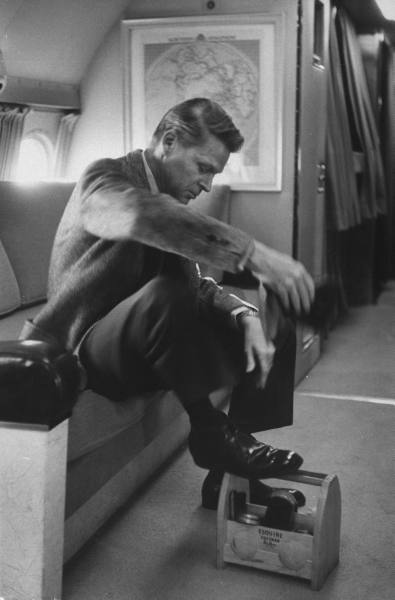
shineshoes

Source: Life

Shining your shoes can seem like a chore, but as many of you discovered during our 30 Days to a Better Man Challenge, the task can actually be quite therapeutic. There’s something about the smell, the tools, and the technique that makes the job really satisfying. Seeing your dingy shoes transformed into shiny masterpieces acts as a nice metaphor for life; a little elbow grease can turn any mess around.

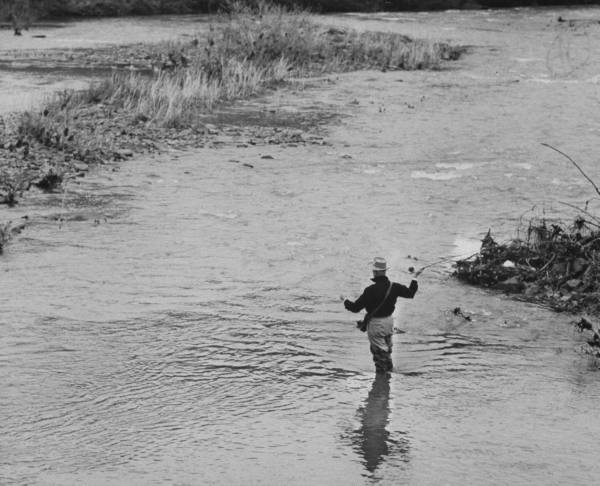
Fly Fishing

flyfish

Source: Life

While all fishing can works wonders on your sense of well-being, no type does it better than fly fishing. Fly fishing combines a quiet peaceful outdoors setting with the unstoppable de-stressing power of rhythmic casting. If the sound of your line whipping back and forth doesn’t put you into a zen-like state, nothing will.

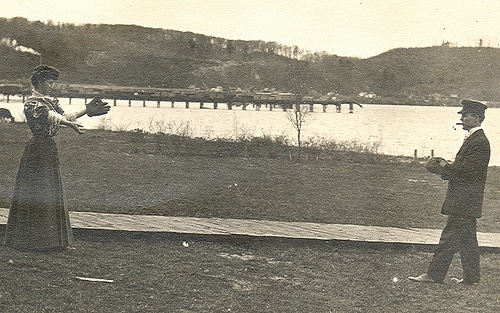
Playing Catch

catch

Source: UpNorth Memories

A lot of us haven’t picked up a baseball glove since we aged out of Little League. But just because you’re not involved in an organized game, doesn’t mean your glove should sit in the back of your closet. Just playing catch can really relax you and is more fun than you remember. Whenever Kate and I are blogging and have writer’s block, we put on our gloves right there in the office and throw the ball back and forth. It really helps.

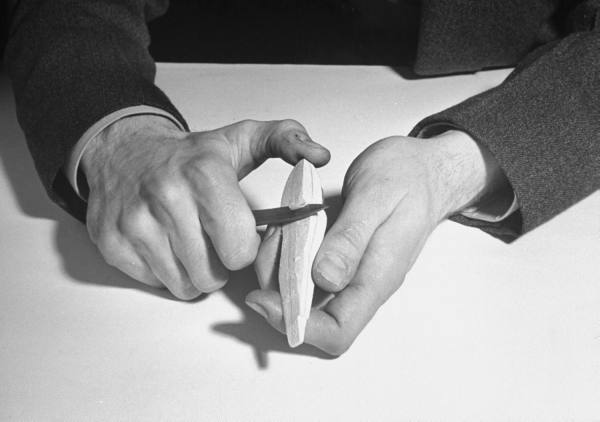
Whittling

whittling

Source: Life

Gramps did it and so should you. Men’s hands were meant to create, to turn ordinary objects into something special. And whittling is just the manly craft of woodworking writ small; all need is a stick and a pocketknife. Start practicing and soon you’ll be making your very own chess set.

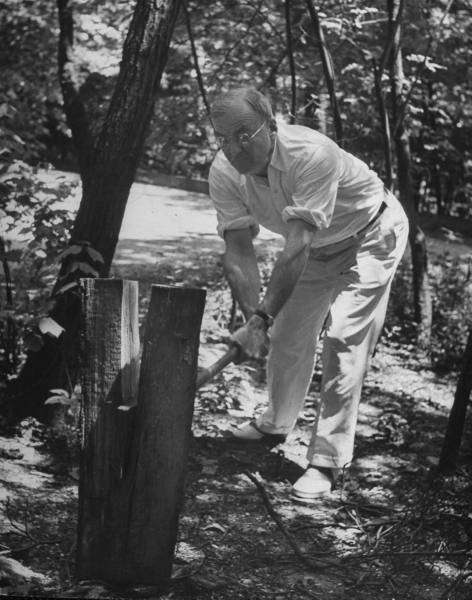
Chopping Wood

chop

Source: Life

This is something I got to do for the first time while in Vermont this summer. I have to say, it was an incredibly satisfying experience. There’s something about swinging that heavy axe and the great feeling you get when it hits the log with a crack, splitting apart the wood. I’ve still got a ways to go in being able to consistently split the logs all the way through in one swing, but even my neophyte attempts were good for the soul.

Exercise

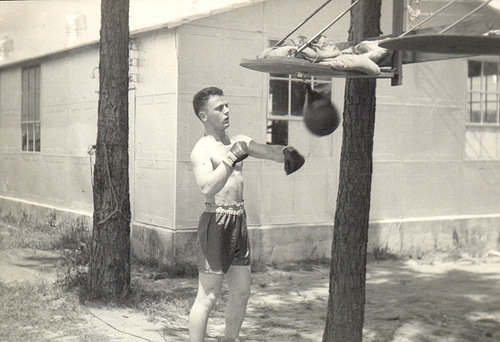
boxer

Source: Gavin James

Whether it’s jogging down a country road or pumping iron, working out is a well-known and unbeatable stress reducer. It not only keeps you hands busy, it engages your whole body while your mind goes somewhere else. With your blood pumping and your testosterone increasing, the irritations of your day are released with your sweat. Some people love having a workout partner, but I personally like to be alone and totally inside my own head. Studies have shown that working out outdoors greatly increases the stress reducing benefits of exercise, so get out to a park and move your body.

What do you do to settle your mind? Let us know in the comments.


Monday, November 17, 2008

Walking on the Edge of Strength and Spirit


I liked this post from the Integral Strength pod over at Gaiam. Damon touches on some ideas that I believe transcend the realm of strength training into a more expansive idea of finding balance in our lives.

Damon poses some questions through his own experience that each of us can reflect on in our lives, especially in the realm of body. Do we train as a practice toward greater sense of self and being, or is the training itself the object, perhaps with some shadow elements compelling us to work out? I know I have my own shadow stuff that sometimes motivates my workouts.

And can we ask these same questions in other areas of our lives?

Walking on the edge of strength and spirit

Damon said Oct 27, 5:56 AM:

This is a reflection more than a beginning of a discussion thread, but would be interested on anyone else view on a similar subject.

The nature of any practice is to develop capacities beyond the limits set by our self - to transcend. Be it meditation, yoga, philosophical study, religious introspection, or as the subject here is a focus strength training. Any system of practice has the capacity to set us free from the normal waking consciousness and into different states or stages of development. These same systems of practice also have the capacity to limit our capacity of growth through attachment, routine, egoism, illusion, delusion, lack of mindfulness and of minimal spiritual intent.

This is where I have found myself with my own practice. No longer do I feel connected to strength training in a developmental capacity, rather I feel limited in pursuing lifting as a form of strength and body training without reflection. Its the same reason I needed to leave a yoga asana practice - the common link is me.

So I find myself thinking about the edge between practice as a focus on to itself and practice as a form beyond itself. Is it natural to fall in and out of attachment within these practices, and how does one recognise the signs before we feel we have drifted too far from the edge and into a maya of form over real substance. I don't want to withdraw this time, deny the nature of my true self and the relationship to a practice I know instinctively has a deep and profound capacity for deep introspection. So what do I do from here…..continue, change, withdraw (maybe all three).

When you walk the edge of strength and spirit maybe this is natural, a falling in and out of spirit. Maybe a consistency of a strength training practice is important to reveal this evolution, reflecting that spirit may not always be the focus, but a dedicated intense path that strength training is will break us down spiritually only to build us back up.

Here is a piece of Rob's response to this, which I think is spot on (be sure to go read the whole response and the rest of the thread). He gets to what I was trying to say above.

So you've got your conventional purposes to strength training, these are important and to be integrated into the larger activity of Transcendence Dancing with Resistance, but as you articulate so well, conventional purposes can entrap and ensnare your conditioning such that the vitality and emergent novelty of who you really are becomes the forgotten dream.

Integral practice and strength training must embrace the post-conventional purpose which is radically non-linear. So it throws purpose in the conventional understanding on it's head. There's no purpose outside of this direct immediacy.

To leave this out is to live your life without a heart. To leave out this most essential component is to fall into a training that seeks not to unfold and awaken your larger sphere of identity, instead your training has the purpose of keeping you in a slumber, shackling your body-mind to cave walls, shadows and the distorted life too afraid to face the radiance of their authentic calling.

So how do you know if you've fallen into habituation?

Ask yourself this one question: do you seek other than what's here?

If the answer is yes, then you're deluded and fundamentally stuck on at least some part of your conditioned history, if not huge sections of your conditioning.