Showing posts with label cardiovascular health. Show all posts

Tuesday, March 18, 2014

Rethinking Decades of Bad Science on Saturated Fats and Health

Sausages

New research reported in many media sources yesterday refutes the connection between saturated fat and heart disease that has been taken as absolute truth for decades now. The article below is from Science 2.0. The researchers also found that consuming polyunsaturated fats like omega-3s also has little or no impact on cardiovascular disease.

That said, I will continue to enjoy grass-fed beef, eggs, and chicken sausages, as well as almond, sunflower, and cashew butters.


Do Saturated Fats Really Cause Heart Disease?

By News Staff | March 17th 2014

An international collaboration recently analyzed existing cohort studies and randomized trials on coronary risk and fatty acid intake and drew a conclusion that will surprise you if you only get your science and health news from mainstream newspapers or television - the evidence to support restricting the consumption of saturated fats in order to prevent heart disease isn't there.

And consumption of polyunsaturated fats is probably not a bad idea but there is insufficient evidence for guidelines which advocate the high consumption of polyunsaturated fats (such as omega 3 and omega 6) to reduce the risk of coronary disease.

When specific fatty acid subtypes (such as different types of omega 3) were examined, the effects of the fatty acids on cardiovascular risk varied even within the same broad 'family' – questioning the existing dietary guidelines that focus principally on the total amount of fat from saturated or unsaturated rather than the food sources of the fatty acid subtypes.

Lead author Dr. Rajiv Chowdhury of the University of Cambridge, said, "These are interesting results that potentially stimulate new lines of scientific inquiry and encourage careful reappraisal of our current nutritional guidelines.

"Cardiovascular disease, in which the principal manifestation is coronary heart disease, remains the single leading cause of death and disability worldwide. In 2008, more than 17 million people died from a cardiovascular cause globally. With so many affected by this illness, it is critical to have appropriate prevention guidelines which are informed by the best available scientific evidence."

For the meta-analysis, the researchers analyzed data from 72 unique studies with over 600,000 participants from 18 nations. The investigators found that total saturated fatty acid, whether measured in the diet or in the bloodstream as a biomarker, was not associated with coronary disease risk in the observational studies. Similarly, when analyzing the studies that involved assessments of the consumption of total monounsaturated fatty acids, long-chain omega-3 and omega-6 polyunsaturated fatty acids, there were no significant associations between consumption and cardiovascular risk.

Interestingly, the investigators found that different subtypes of circulating long-chain omega-3 and omega-6 fatty acids had different associations with coronary risk, with some evidence that circulating levels of eicosapentaenoic and docosahexaenoic acids (two main types of long-chain omega-3 polyunsaturated fatty acids), and arachidonic acid (an omega-6 fat) are each associated with lower coronary risk.

Similarly, within saturated fatty acid, the researchers found weak positive associations between circulating palmitic and stearic acids (found largely in palm oil and animal fats, respectively) and cardiovascular disease, whereas circulating margaric acid (a dairy fat) significantly reduced the risk of cardiovascular disease.

Additionally, when the authors investigated the effects of omega-3 and omega-6 fatty acid supplementations on reducing coronary disease in the randomised controlled trials, they did not find any significant effects – indicating a lack of benefit from these nutrients.

Professor Jeremy Pearson, Associate Medical Director at the British Heart Foundation, which helped fund the study, said, "This analysis of existing data suggests there isn't enough evidence to say that a diet rich in polyunsaturated fats but low in saturated fats reduces the risk of cardiovascular disease. But large scale clinical studies are needed, as these researchers recommend, before making a conclusive judgment.

"Alongside taking any necessary medication, the best way to stay heart healthy is to stop smoking, stay active, and ensure our whole diet is healthy – and this means considering not only the fats in our diet but also our intake of salt, sugar and fruit and vegetables."


Full Citation:
Rajiv Chowdhury, MD, PhD; Samantha Warnakula, MPhil; Setor Kunutsor, MD, MSt; Francesca Crowe, PhD; Heather A. Ward, PhD; Laura Johnson, PhD; Oscar H. Franco, MD, PhD; Adam S. Butterworth, PhD; Nita G. Forouhi, MRCP, PhD; Simon G. Thompson, FMedSci; Kay-Tee Khaw, FMedSci; Dariush Mozaffarian, MD, DrPH; John Danesh, FRCP; Emanuele Di Angelantonio, MD, PhD , Association of Dietary, Circulating, and Supplement Fatty Acids With Coronary Risk: A Systematic Review and Meta-analysis, Ann Intern Med. 2014; 160(6):398-406-406. doi: 10.7326/M13-1788. Source: University of Cambridge

Wednesday, February 12, 2014

Eggs Don’t Cause Heart Attacks — Sugar Does by Mark Hyman, MD


Mark Hyman, MD, is the author of The Blood Sugar Solution 10-Day Detox Diet: Activate Your Body's Natural Ability to Burn Fat and Lose Weight Fast (2014), The Blood Sugar Solution: The UltraHealthy Program for Losing Weight, Preventing Disease, and Feeling Great Now! (2012), The UltraSimple Diet: Kick-Start Your Metabolism and Safely Lose Up to 10 Pounds in 7 Days (2009), and many other books. By the way, the only way you are losing 10 lbs in 7 days is if you are losing mostly water, so don't be fooled by claims such as that (even though they are literally true, they are deceptive).

This is simply an article reviewing new research that a high-sugar diet raises the risk of heart attack by 400% - even one 20 oz. soda raises the risk by 30%.

Eggs Don’t Cause Heart Attacks — Sugar Does

by Mark Hyman, MD
Last Updated February 7, 2014

It’s over. The debate is settled.

It’s sugar, not fat, that causes heart attacks.

Oops. Fifty years of doctors’ advice and government eating guidelines have been wrong. We’ve been told to swap eggs for Cheerios. But that recommendation is dead wrong. In fact, it’s very likely that this bad advice has killed millions of Americans.

A rigorously done new study shows that those with the highest sugar intake had a four-fold increase in their risk of heart attacks compared to those with the lowest intakes. That’s 400%! Just one 20-ounce soda increases your risk of a heart attack by about 30%.

This study of more than 40,000 people, published in JAMA Internal Medicine, accounted for all other potential risk factors including total calories, overall diet quality, smoking, cholesterol, high blood pressure, obesity and alcohol.

This follows on the heels of decades of research that has been mostly ignored by the medical establishment and policy makers. In fact, the Institute of Medicine recommends getting no more than 25% of your total calories from added sugar. Really?? This study showed that your risk of heart attacks doubles if sugar makes up 20% of your calories.

Yet more than 70% of Americans consume 10% of their daily calories from sugar. And about 10% of Americans consume one in every four of their calories from sugar.


Failed Dietary Guidelines


U.S. Dietary Guidelines provide no limit for added sugar, and the U.S. Food and Drug Administration (FDA) still lists sugar as a “generally regarded as safe” (GRAS) substance. That classification lets the food industry add unlimited amounts of sugar to our food. At least the American Heart Association recommends that our daily diet contain no more than 5% to 7.5% added sugar. Yet most of us are eating a lot more. Most of us don’t know that a serving of tomato sauce has more sugar than a serving of Oreo cookies, or that fruit yogurt has more sugar than a Coke, or that most breakfast cereals — even those made with whole grain — are 75% sugar. That’s not breakfast, it’s dessert!

This is a major paradigm shift. For years, we’ve been brainwashed into thinking that fat causes heart attacks and raises cholesterol, and that sugar is harmless except as a source of empty calories. They are not empty calories. As it turns out, sugar calories are deadly calories. Sugar causes heart attacks, obesity, type 2 diabetes, cancer and dementia, and is the leading cause of liver failure in America.

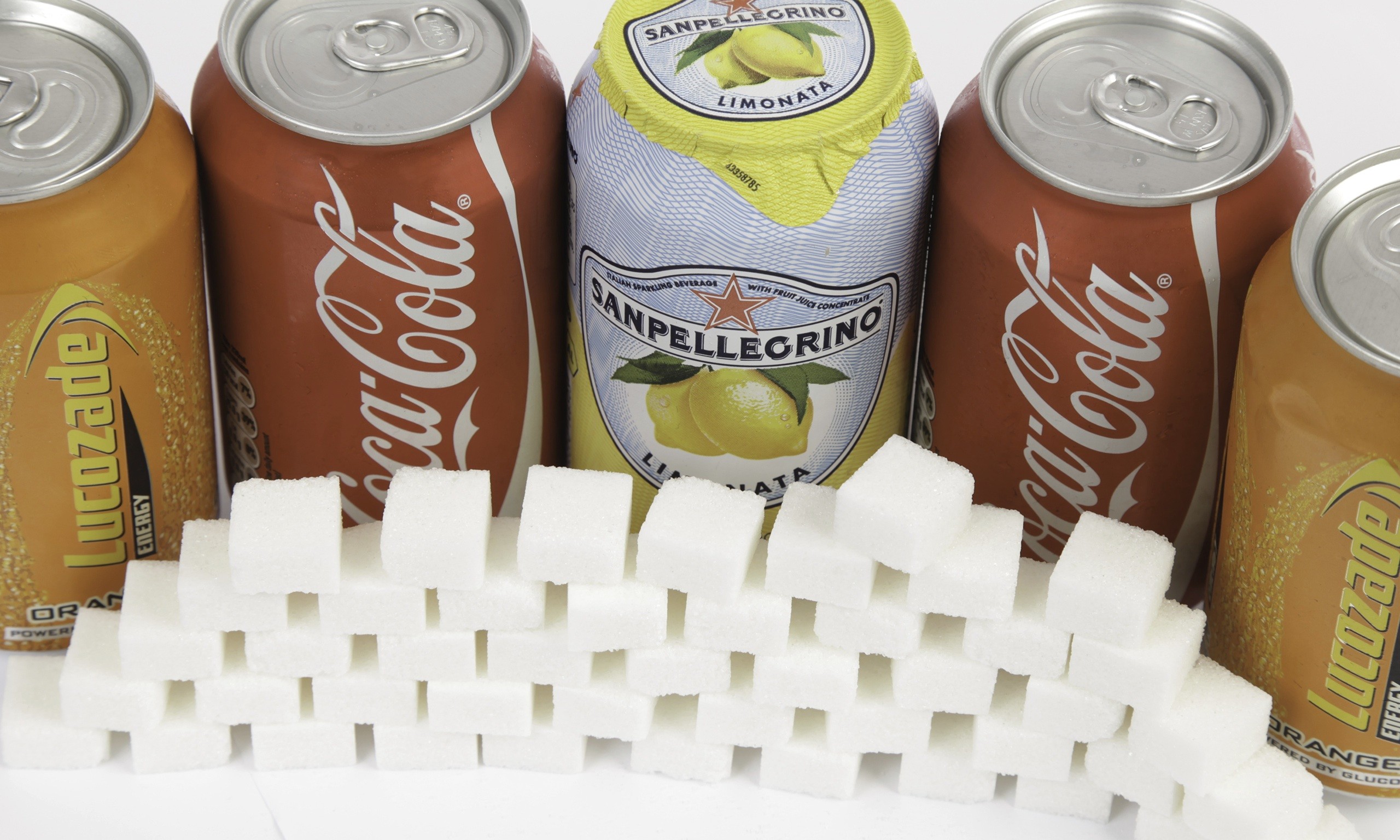
The biggest culprit is sugar-sweetened beverages including sodas, juices, sports drinks, teas and coffees. They are by far the single biggest source of sugar calories in our diet. In fact, more than 37% of our sugar calories come from soda. The average teenage boy consumes 34 teaspoons of sugar a day, or about 544 calories from sugar. Even more troubling, this isn’t just putting kids at risk for heart attacks at some remote later date in their lives. It’s killing them before their 20th birthday.

This new research syncs with decades of data on how sugar causes insulin resistance, high triglycerides, lower HDL (good) cholesterol and dangerous small LDL (bad) cholesterol. It also triggers the inflammation we now know is at the root of heart disease.

And fats, including saturated fats, have been unfairly blamed. With the exception of trans fats, fats are actually protective. This includes omega-3 fats, nuts and olive oil, which was proven to reduce heart attack risk by more than 30% in a recent large randomized controlled study.

Here’s the simple fact: Sugar calories are worse than other calories. All calories are not created equal. A recent study of more than 175 countries found that increasing overall calories didn’t increase the risk of type 2 diabetes, but increasing sugar calories did — dramatically.


How to Cure Our Sugar Addiction


America lags far behind the rest of the world in addressing this problem. Mexico, for example, responded after learning that when soda consumption increased to 20% of calories for the average citizen, their rates of obesity and type 2 diabetes skyrocketed. Public health officials there researched effective solutions to combat obesity and diabetes from around the world.

The key interventions they implemented included taxing soda, banning junk food television advertising, and eliminating processed foods, junk food and sugar-sweetened beverages from schools. More than 15 countries have targeted sugar-sweetened beverages by taxing them — a strategy that’s proven successful.

Another effective strategy is revamping food labeling to make it clear if a food is good, should be consumed with caution, or is bad for you. In the United States, even someone with a Ph.D. in nutrition has trouble deciphering food labels. How can the average person be expected to know?

Recent and mounting scientific evidence clearly proves that sugar — and flour, which raises blood sugar even more than table sugar — is biologically addictive. In fact, it’s as much as eight times more addictive than cocaine.

The average American consumes about 152 pounds of sugar and 146 pounds of flour a year. It’s imperative that we revamp our outdated and dangerous national dietary guidelines. And we need clear strategies and medical programs to help people understand and address the health risks and addictive nature of sugar and refined carbohydrates.

That’s how we can reverse this tsunami of obesity and chronic disease that is robbing us of our health and crippling our economy.

In my new book, The Blood Sugar Solution 10-Day Detox Diet, which will be released on February 25, I provide an easy, step-by-step plan to rid yourself of sugar addiction and reverse your risk of heart attacks. To download a sneak preview of this book, go to www.10daydetox.com and pre-order the book on Amazon.

Wishing you health and happiness,
Mark Hyman, MD

About Mark Hyman, MD

MARK HYMAN, MD is dedicated to identifying and addressing the root causes of chronic illness through a groundbreaking whole-systems medicine approach called Functional Medicine. He is a family physician, a six-time New York Times bestselling author, and an international leader in his field. Through his private practice, education efforts, writing, research, and advocacy, he empowers others to stop managing symptoms and start treating the underlying causes of illness, thereby tackling our chronic-disease epidemic. More about Dr. Hyman or on Functional Medicine. Click here to view all Press and Media Releases
View all posts by Mark Hyman, MD →

Wednesday, January 29, 2014

Cardio Is Not Enough, Men Need Resistance Training, Too

This comes from a site called WODMasters, which I assume is a CrossFit site (especially with the CrossFit reference at the end of the article). Be that as it may, this research review is useful.

Contrary to the article's assertion, there is considerable evidence that resistance training, done correctly, has very powerful benefits to the cardiovascular system. Ideally, one takes shorter rest periods (under a minute between sets/exercises) and uses supersets (pairing exercises for opposing muscle groups, such as chest/back, upper body/lower body).

Even bodyweight exercises done with very little rest can provide both resistance training and an aerobic workout. There is really no need for the old fashioned, slow, steady-state cardio - we know more and have better options.

Resistance and Aerobic Training: New research says both together is better for heart health


Jan 28
By: Andrea Kirk

Heart disease is the most common cause of death in older adults. Heart disease kills about 600,000 Americans annually. Heart disease is the most common cause of death for women. It is more common than breast cancer, which tends to get more attention. Many women who suffer heart attacks do not have previous signs of symptoms (approximately 2/3rds will have a sudden heart attack). Major risk factors for heart disease are:
  • High blood pressure
  • Obesity
  • Poor blood lipid profile (dyslipidemia)
  • Inactivity

CrossFit Masters Athletes combine aerobic and resistance training all the time.

An obese individual can expect to lose 6-7 years of life. This can matter a lot to the individual, but also to his or her family, who may lose that person’s love, support and companionship. Exercise reduces all four of the major risk factors for heart disease. The Centers for Disease Control (CDC), The American College of Sports Medicine and the American Heart Association all recommend 20-30 minutes of moderate-to-vigorous exercise every day for adults.

Resistance training is also recommended, but with an eye to improving functional fitness into old age. Little research has been done on the benefits of resistance training as a means of improving cardiovascular health.

Exercise: resistance training and aerobic training reduced risk of heart disease


A new study from the Research Center in Sports Science, Health Sciences and Human Development and the Research Center in Physical Activity, Health and Leisure, Faculty of Sport and the University Porto, in Porto, Portugal examined the effects of aerobic training alone vs. aerobic and resistance training together and got some interesting results. Here are some of the study details:
  • Subjects were 59 older men
  • Men were divided into three groups: Aerobic training, aerobic and resistance training or no training.
  • None of the men had cardiovascular disease, high blood pressure or was severely overweight
  • Men had no previous history of exercise training or recreational sports 

The Training Programs lasted 32 weeks:

  • Aerobic Training Group: ran or did brisk walks two days a week and swimming training 1 day a week at levels that were perceived by participants as “moderate intensity”. Each training session included a 10 minute warm up, 3 sets of 15-20 rep body weight exercises and a five minute cool down with stretching. Subjects did agility exercises in the pool for 10 minutes each session. Agility exercises included water volley-ball and water polo. Sounds like a fun program.
  • Resistance and Aerobic Training Group: did the same exercises as the Aerobic Training group except that one of the dry-land aerobic sessions was replaced with resistance training. Resistance training consisted of 65% of one rep max with three sets of 8-10 reps of bench press, leg press, lateral pull-down, leg exension, military press, leg curl and arm curl. Subjects also worked on their abs and backs.
  • Control Group: carried on with normal life

Results:


No improvements in hypertension , obesity or dyslipidemia were seen in the Aerobic Training Group. Disappointing. Maybe a longer training period was needed. Hard to say. Improvements were observed in the Resistance and Aerobic Training Group. Improvements were seen in:
  • Hypertension
  • Dyslipidemia

Discussion: 


Eye Pood Kettlebell Shirt by WODMASTERS

Why didn’t the aerobic training group show improvements? Perhaps the exercise program wasn’t intense enough. Maybe improvements would have been seen if the exercise program had lasted longer. Maybe it is important to increase the intensity beyond moderate, especially over time. Perhaps the resistance training program provided more aerobic training. 8-10 reps may be like short sprints for the cardio-vascular system. Short bouts of intense exercise can be very effective (See High Intensity Impact Training). More research is needed, but for what we have so far it looks like combining both is better than just aerobic training alone. If you do crossfit you are doing this already.


Full Citation:
Sousa N, Mendes R, Abrantes C, Sampaio J, & Oliveira J (2013). Long-term effects of aerobic training versus combined aerobic and resistance training in modifying cardiovascular disease risk factors in healthy elderly men. Geriatrics & gerontology international, 13 (4), 928-35 PMID: 23441809