Showing posts with label resiliency. Show all posts

Monday, July 9, 2012

How Resilient Are You? A Short Assessment


Lifehack posted a simple self-test to assess our resilience.The topic of resilience has become very relevant in recent years as a result of the constant stress so many of us deal with in our lives. Wikipedia offers a nice description of psychological resilience - and it's important to understand that psychological resilience supports physical resilience and likewise, physical health and resilience supports psychological resilience.

Resilience in psychology refers to the idea of an individual's tendency to cope with stress and adversity. This coping may result in the individual "bouncing back" to a previous state of normal functioning, or using the experience of exposure to adversity to produce a "steeling effect" and function better than expected (much like an inoculation gives one the capacity to cope well with future exposure to disease).[1] Resilience is most commonly understood as a process, and not a trait of an individual.
___

[R]esilience is best understood as a process. It is often mistakenly assumed to be a trait of the individual, an idea more typically referred to as "resiliency".[12] Most research now shows that resilience is the result of individuals being able to interact with their environments and the processes that either promote well-being or protect them against the overwhelming influence of risk factors.[13] These processes can be individual coping strategies, or may be helped along by good families, schools, communities, and social policies that make resilience more likely to occur.[14] In this sense "resilience" occurs when there are cumulative "protective factors". These factors are likely to play a more and more important role the greater the individual’s exposure to cumulative "risk factors". The phrase "risk and resilience"' in this area of study is quite common.

Commonly used terms, which are closely related within psychology, are "psychological resilience", "emotional resilience", "hardiness", "resourcefulness", and "mental toughness". The earlier focus on individual capacity which Anthony[15] described as the "invulnerable child" has evolved into a more multilevel ecological perspective that builds on theory developed by Uri Bronfenbrenner (1979), and more recently discussed in the work of Michael Ungar (2004, 2008), Ann Masten (2001), and Michael Rutter (1987, 2008). The focus in research has shifted from "protective factors" toward protective "processes"; trying to understand how different factors are involved in both promoting well-being and protecting against risk.
With that background, here is the quiz.

How Resilient Are You? Take the Test!

July 8 by
When faced with a crisis, some of us bounce back just like a fully inflated ball while others of us hit the ground with a thud and stay there, totally deflated.

How good are you at bouncing back? Just how resilient are you?

Take this test* to get your answer!

To get a good idea of how resilient you are, be as honest as possible when taking the test!

For each item, fill in the blank at the end of the item using the following scale:

1 = Absolutely disagree
2 = Disagree
3 = Neutral
4 = Agree
5 = Absolutely agree

1. When confronted with a crisis, I usually start working on a solution right away rather than first just hoping it will go away. _____
2. I don’t worry too much about the future. _____
3. I am not embarrassed to tell my friends and family when something bad has happened to me. _____
4. Every time a crisis occurs, I can easily remember that I’ve made it through bad things before. _____
5. When something bad happens in my life, I don’t spend a lot of time wishing I had done something differently or thinking constantly about the bad thing. ____
6. I often think about what I’ve learned from a crisis after it’s passed. _____
7. When I get stuck in traffic and am going to be late for an appointment, I am very calm rather than frustrated and stressed. _____
8. I write a gratitude list at least once a week about the things I’m grateful for. _____
9. When something bad happens, I prefer to be around others rather than withdrawing and being by myself. _____
10. I’m not very hard on myself most of the time. _____
11.  I think it’s okay to occasionally smile and laugh when something really bad has happened. _____
12. I have a go-to person – like a mentor – when a crisis occurs in my life. _____
13. I don’t tend to get stuck in the past. _____
14. It’s easy for me to believe that a crisis or catastrophe in my life can be a good thing. _____
15. When a crisis happens, I come up with a lot of different solutions rather than just freezing. _____

Now total up your score!

Scoring:

60-75     You’re a superball! You have very good resiliency skills and habits and you can bounce back from just about anything.
45-59     You are bouncing right along  . . . most of the time. You have good resiliency skills, although sometimes it’s hard to engage them right away when faced with a crisis.
30-44     Meh. Your ball has gone a little flat. You need to pump more air into that ball. Crises tend to throw you a bit. Add some flexibility to your life and be open to handling problems differently in the future.
15-29     Uh-oh. Your ball is completely flat. Looks like you need to really work on your resiliency skills. Check out the section below for more ideas. And don’t worry: learning to bounce back in life is like learning anything else – you just need to practice. Be open to responding to setbacks in a different way than you have in the past.

Detailed breakout:

Here are the components of resiliency that made up your scores. If you were low in one particular area, try to increase that particular skill.

Acceptance: the art of non-resistance
Items 1, 5, 7, 11

If you scored yourself a 1, 2, or even a 3 on these items, realize that denial is a common response to adversity and is actually a protective mechanism. Just don’t stay in it too long or you won’t bounce back at all! Teach yourself to see the reality of your situation and act on that.

Also consider how much energy you are expending when you fight or resist your problem. You can give in without giving up. The difference is that giving in allows you to keep trying to solve the problem without using up precious energy resisting the fact that the problem is here. It’s here in front of you. Don’t resist it – accept its presence and work on it!

Remember that it’s okay to experience positive emotions and laugh even when in the midst of a crisis. This kind of emotional experience will help release oxytocin and endorphins that you need to help you through the storm.

Perspective: see things clearly and from different angles
Items 4, 15

The key to this component is to remember that you have had difficult times before and made it through. Remember your past experience!

Also, keep in mind that there are many angles to a problem and therefore many solutions. Break out of your old mold and try something new! A great way to prep yourself for future difficulties is to develop your creativity. Try Roger von Oech’s A Whack on the Side of the Head for some fun, mind-expanding activities and ideas.

Social Support: ya gotta have friends
Items 3, 9, and 12

There is a lot of research showing that social support is a main component of resiliency. Even if you’re an introvert, having just one person you trust to talk with about your situation can be extremely helpful.

It’s also really good to have a more experienced, wiser person or mentor you can turn to when trouble hits. This can be a parent, friend, or anyone you look up to and respect.

Positive Actions: creating positive emotions during times of crisis
Items 2, 8, 10, 13

As mentioned above, it’s important to experience positive emotions in your life, even in times of crisis. Researcher Barbara Fredrickson’s work shows that positive emotions not only help you feel good, but they expand your ability to problem-solve well.

Rather than worrying about the past or future, try to stay in the present as much as possible. Listen to some mindfulness meditations to help you remain centered in the current moment.

Be kind to yourself! Even if you got yourself into a mess, remember that everyone else has at some time in their lives, too. Treat yourself as you would your best friend who is having problems.

Finding the gifts/Learning the lessons
Items 6, 14

Adversity frequently brings opportunities for self-growth and new experiences. Even though you would rather not have problems, remember the old saying: The sand that irritates the oyster often becomes a pearl.

Well? How resilient are you? Let’s hear about it in the comments below!

*This is a non-scientific test used for informational purposes only.

Sunday, February 12, 2012

Mark Walsh - What Is Strength? Life, Death & Resilience

When my friend Mark sent this video my way, I didn't watch it first. For whatever reason I did not make the seven minutes needed to sit down and watch (or mostly listen). I hope you won't make the same mistake I did - this is an honest, courageous, wise, and vulnerable statement from Mark about his life and his work - and how they are connected in deep ways.

Mark Walsh - What Is Strength? Life, Death, and Resilience
How can love make you stronger? Full version - with Mark Walsh of Integration Training. There is also a Shorter version.


Thursday, April 28, 2011

Scientific American - A $125-million program to boost soldiers' "fitness" raises ethical questions

http://www.mediafreedominternational.org/wp-content/uploads/2011/04/soldiers-praying-2-july-201.jpg

I'm all for teaching resiliency skills to our soldiers - if we are going to put them in a position of constant, inescapable stress from months at a time, we should at least provide them with some tools to cope.

As John Horgan reports for Scientific American, the Comprehensive Soldier Fitness program was developed by no less a figure than martin Seligman (author of Learned Optimism and one of the principal founders of Positive Psychology).

But is this all it's cracked up to be? Sounds like it's a half-baked program based on sketchy theories that have only proved mildly effective in civilians.

Yet another example of we are screwing the kids we send to defend our right to drive gas-guzzling SUVs.

Beware the military-psychological complex: A $125-million program to boost soldiers' "fitness" raises ethical questions

Apr 18, 2011

Fifty years ago, in the same farewell speech in which he warned about the "unwarranted influence" of the "military-industrial complex" on American politics, President Dwight Eisenhower also deplored the growing dependence of scientists on federal funding. "The prospect of domination of the nation's scholars by federal employment, project allocations and the power of money is ever present—and is gravely to be regarded."

Eisenhower's speech comes to mind as I gravely regard the latest example of the militarization of science, a $125 million collaboration between psychologists and the U.S. Army called "Comprehensive Soldier Fitness," or CSF. The program calls for giving "resilience training" to more than one million Army soldiers and civilian employees to help them cope with the stress of military life. A U.S. Army Web site calls the CSF "a long term strategy that better prepares the Army community—including all soldiers, family members, and the Department of the Army civilian workforce—to not only survive, but also thrive at a cognitive and behavioral level in the face of protracted warfare and everyday challenges of Army life that are common in the 21st century."

The program is the brainchild of one of the most powerful figures in American psychology, Martin Seligman of the University of Pennsylvania. A former president of the American Psychological Association (APA), Seligman is best-known for founding the enormously popular positive psychology, or "happiness," movement, which emphasizes positive rather than negative personality traits and emotions.

The APA's main journal, American Psychologist, devoted its January 2011 issue, co-edited by Seligman, to explaining and extolling the Comprehensive Soldier Fitness program. No articles in the issue questioned the program's scientific or ethical soundness, but the psychologists Roy Eidelson, Marc Pilisuk and Stephen Soldz did just that in "The Dark Side of 'Comprehensive Soldier Fitness,'" a hard-hitting article published in the newsletter Counterpunch. (Scientific American's Gary Stix also critiqued the methods underpinning the CSF in this incisive recent article.)

Is it ethical for psychologists to help soldiers to participate in what may be unethical behavior? This is the toughest question raised by Eidelson et al. "Helping people who have already been harmed by trauma is essential," they wrote. "But should we be involved in helping an institution prepare to place more people in harm's way without careful and ongoing questioning and review of the rationale for doing so?"

The trio also charged that the CSF is based on "resiliency techniques," developed by Seligman and others, that have been shown to be "only modestly and inconsistently effective" in studies of civilians. Indeed, according to Eidelson et al., the techniques are still so experimental that the CSF may violate the Nuremberg Code of ethics, which prohibits research on people without their consent. Eidelson et al. noted that soldiers "apparently have no informed consent protections—they are required to participate." According to TIME blogger Mark Benjamin, the Army dismisses the issue of informed consent as an "academic tiff"—or, as an Army spokesman put it, "an academic discussion and debate between the psychologist and behavioral health communities." The spokesman said the CSF "continues to move forward" despite these concerns.

The Army's own description of the CSF sounds like psychobabble: "Conceptually, while CSF is largely focused on training skill sets, it also delves into root causes of emotion, thought and action—what psychologists refer to as 'meta-cognition'. With this in mind, CSF serves as a programmatic first step towards training members of the Army community to understand how and why they think a certain way. Once people begin to understand this, they are best postured to change their thoughts and actions to strategies that are positive, adaptive and desirable for both the person and the Army."

Even in the face of declines in non-military funding, some scientific fields have resisted militarization. In 2009 the American Anthropological Association declared that a program to embed anthropologists with troops in Afghanistan, Iraq and other war zones violated the profession's code of ethics, which one article described as "a sort of Hippocratic oath in which anthropologists vow to do no harm."

But as I pointed out in a column last year, neuroscience is chasing after defense dollars. In 2009 the National Academy of Sciences published a 136-page report, "Opportunities in Neuroscience for Future Army Applications," that advised brain scientists on how to get on board the military gravy train. The authors included two leading brain scientists: Floyd Bloom of the Scripps Research Institute and Michael Gazzaniga of the University of California, Santa Barbara, both former members of The President's Council on Bioethics. Potential applications of neuroscience include drugs and electromagnetic devices that can boost or degrade soldiers' capacities.

The APA is capable of taking a stand. In 2007, after reports that psychologists were helping the Pentagon and Central Intelligence Agency refine their interrogation techniques, the APA condemned the involvement of its members in "planning, designing, assisting in or participating in any activities including interrogations which involve the use of torture or other forms of cruel, inhuman or degrading treatment." But the APA leadership should be ashamed by its uncritical promotion of the CSF program. The association should encourage a debate among its members over whether the CSF represents a genuinely beneficial, ethical program or just another sordid example of what Eisenhower called the "the power of money."

Logo for the Comprehensive Soldier Fitness program from U.S. Army via Aaronwayneodonahue/Wikimedia Commons

Please be sure to check out the links Horgan provided to the articles that are critical of this program:

Gary Stix - The Neuroscience of True Grit
Roy Eidelson, Marc Pilisuk & Stephen Soldz: The Dark Side of 'Comprehensive Soldier Fitness


Thursday, June 17, 2010

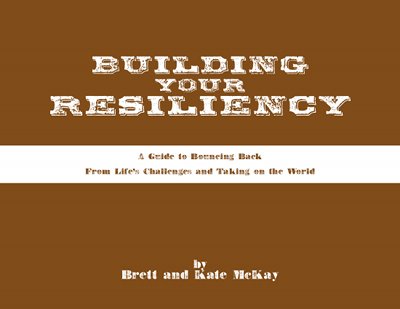
The Art of Manliness - Get the Building Your Resiliency eBook!

The Art of Manliness ran a cool series of posts on resiliency a while back. Now they have assembled them into a PDF or ePub book for a mere $3.00 - the PDF version is 72 pages and the ePub version is 53 pages. You can get all of the articles for free on their site, but they have collected them in one nice little book that you can download.

I don't usually promote what others are selling - unless I believe in the product - I think a lot of men can benefit from developing more resilience when life kicks us in the shins. And many of us could use a little help.

Here is the first article in the sequence - info on how to get the ebook is below the article.

Building Your Resiliency: Part 1-An Introduction

There are a lot of virtues lacking in the current generation of men, but I think an argument can be made that our lack of resiliency is the most critical.

And I say that as a man who has himself struggled to live this virtue.

In law school, I engaged in a pathetic routine each semester. After finishing my finals, I would initially feel pretty confident in how I did. But then I would sit and think about the exams in detail, remembering questions that I missed, issues that I failed to raise. My confidence would quickly evaporate, replaced by a sense of utter doom and despair. I would become convinced that I had gotten a C or even failed the test. I wouldn’t get my grades back for several weeks, but I would spend that time in a state my wife called “logging out,” which, as the name suggests, involved me laying on the couch like a depressed log.

When my grades would finally come in, I would be relieved to find I hadn’t flunked out, Kate would chide me for my irrational behavior, and I would swear that I wouldn’t waste my time doing that again. But come finals time the next semester, the The Log Man would make another appearance.

I was in serious need of some resiliency. And I still am. For reasons I’ll explain in future posts, law school really did a number on my resiliency, and I’ve had to go to work on regaining my hardihood. So I decided to do some research on the subject and share it with others who might be struggling to be resilient too.

What is Resiliency?

Studies have shown that boosting your resilience increases your resistance to stress and can greatly lower your chances of becoming depressed. It can even reduce the chances of getting PTSD. You may not be living in a war zone, but the trials of life, even the weight of many little setbacks, can leave a man feeling shell-shocked.

We all have times when life makes us want to crawl into a hole; resiliency is what helps us dust ourselves off and climb back into the saddle instead. But just what is resiliency, anyway?

Resiliency is a quality that helps us both act and react in appropriate and productive ways. Let’s take a look at both of these areas.

Resiliency as a Reactive Quality

Resiliency is the ability to face setbacks, failures, crises, and pain (both emotional and physical) with confidence and courage.

It is the ability to quickly bounce back from our trials and tragedies.

It’s the quality that keeps us from giving up, even when the going gets rough. It’s the ability to stick with something through thick and thin and the power to overcome the temptation to bail put when things stop being easy.

Resilient men don’t let their worry about the future, about things that may or may not come to pass keep them in a funk. And they don’t let mistakes from their past eat them up inside. Instead, they concentrate on the present and the things that they do have control over.

Resilient men take personal responsibility for their actions. They don’t whine and blame others. And yet they do not blame themselves so much that shame and guilt paralyze them from moving forward and trying again.

We see resiliency in the guy who gets cancer but remains optimistic and upbeat. In the man who gets a divorce, but doesn’t get bitter. In the guy who is fired from his prestigious job, but is able to make the best of becoming a stay-at-home dad. He’s the rock who keeps his composure when bad news hits and is able to take care of his loved ones when everything’s going to pot. He’s both strong and flexible.

Resiliency is a quality that not only helps with the big crises of life, but also allows you to weather the mundane daily annoyances that threaten to grind out your vitality. Resilient is the man who can face his annoying co-worker without anger, argue with his wife without exploding, and have his kid disappoint him without flipping out.

Resiliency as an Active Quality

While we most often think of resiliency as a quality that helps us react to challenges, resiliency is also essential to the proactive aspects of our lives. It is the virtue that allows us to face the world head on like daring adventurers, to strike out into the unknown like courageous explorers. It is the quality that enables us to take risks, to reach out to others, and to live deeply and powerfully.

Without resiliency we forever dwell on our setbacks instead of making progress in our lives. The hurt from our past disappointments (or even the hurt we imagine could befall us) is so debilitating that we cannot muster up the courage and desire to take chances and seize opportunities; we’re afraid of experiencing pain and embarrassment. Without resiliency we become content to play it small; we hide from the world, keeping ourselves from hurt but also removing our chances of joy, excitement, and satisfaction. The fear of trying something and failing looms large in our minds. Yet we ignore the even bigger failure-the failure to make an attempt, to try and to risk.

Every man wants to know the secret of the man who is able to walk up to any woman and strike up a conversation. Who can saunter into his boss’ office and ask for a raise. Who takes the trip everyone else says is crazy. Their secret is resilience. They’ve got a thick skin; they don’t walk around feeling like the next disappointment might be a fatal blow, a wound to their ego and happiness that will take forever to recover from. They’re not crippled by fear of embarrassment. They know that if they get rejected, if things don’t work out, they’ll hardly miss a beat; they know they won’t shrivel up like a daisy; they’ll simply take the setback in stride and keep on truckin. They don’t shrink from forming relationships in fear of the potential pain of a break-up; they know that pain is a possibility but they are confident in their ability to manage it and move on.

Do you want to be a man that lives with gusto, seeing the world as your oyster instead of a minefield? Well, good news: It’s possible for every man to develop iron-clad resiliency.

While some men may have been born more resilient than others, or had parents that helped them develop this quality, it, like all virtues, is like a muscle that can be strengthened by regular exercise.

Building resiliency among men is such a vital and important topic, that we decided to turn it into a multi-part series. During the next several weeks, we’ll be giving you the knowledge and skills necessary to boost your resiliency. Stay tuned.

OK then, here is the info on getting the resilience ebook - available both as a PDF and ePub (for Kindle, iPad, Nook, and other readers). In this post there is a link to a sample so you can see what you are getting.

Get the Building Your Resiliency eBook!

by Brett & Kate McKay on June 15, 2010

A few months ago, we ran a series of posts on building your resiliency. We got a very positive response from it, and many of you told us that you found it very helpful and inspiring. After the series was over, we received many requests from readers to put the series together in an easy to read and nicely formatted eBook that they could print off and go through at their own speed.

Well, I finally got it done. I spent a lot of time working on this bad boy, but I think the effort was well worth it. It looks nice and I’ve added exercises at the end of each section that you can do to help practice the principles you learn as you go along.

I’ve created two formats of the eBook: 1) A PDF version that you can read and print off using any PDF reader and 2) an ePub version that you can read on most digital readers like Kindles, iPads, and Nooks. You can even read the ePub version on most mobile phone eReaders.

The PDF version is 72 pages and the ePub version is 53 pages.

Here’s a preview of what the book looks like: Building Your Resiliency Sample

Mantastic! How can I get it? If you’d like to download the book, use the button to complete the transaction.

Buy Now

You’ll be taken to a PayPal page, where you can securely pay a nominal cost of $3. You’ll then get an email with a link to download the file.

Why are you charging for the eBook? The cost is to cover the time I spent putting the book together. I kept the price nominal because 1) I wanted everybody to be able to afford it and 2) the content is already available online.

Can you still access the posts online for free? Of course. You can still go through all the Building Your Resiliency posts online for free. They’re not going anywhere. The eBook is for those who want the convenience of being able to have all the material in one place, print it off, or add it to an eReader. Also, you can only get the resiliency exercises in the eBook version of the book.

Again, if you’d like download the eBook, use the button below and pay $3 via Paypal. Paypal accepts credit cards. After you make the payment, you’ll get an email with a link to download the eBook.

Buy Now