Friday, July 23, 2010

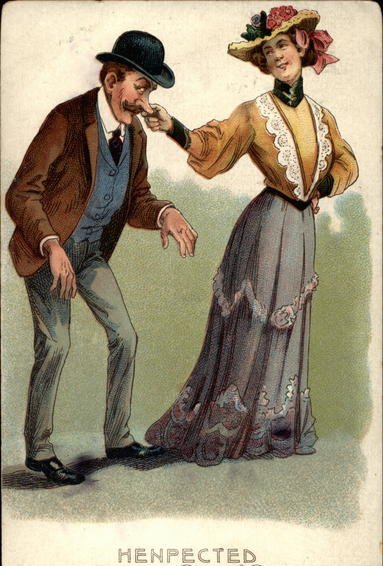
Nicholas Kristof - Don’t Write Off Men Just Yet

Kristof defends males . . . another response to Hanna Rosin's article in The Atlantic, The End of Men.

Don’t Write Off Men Just Yet

The yang of America’s labor force is this: over a 40-year career, a man earns $431,000 more than a woman on average, according to the Center for American Progress.

The yin of America’s labor force is this: in this decade, for the first time in American history, men no longer inevitably dominate the labor force. Women were actually the majority of payroll employees for the five months that ended in March, according to one measure from the federal Bureau of Labor Statistics. That’s mostly because about three-quarters of Americans who lost their jobs in the Great Recession were men.

Now men again fill a slight majority of payroll jobs because they are more likely to work in summer jobs such as construction. America may now teeter back and forth, with men predominant in the summers and women in the winters.

With women making far-reaching gains, there’s a larger question. Are women simply better-suited than men to today’s jobs? The Atlantic raised this issue provocatively in this month’s issue with a cover story by Hanna Rosin bluntly entitled, “The End of Men.”

“What if the modern, postindustrial economy is simply more congenial to women than to men?” Ms. Rosin asked. She adds: “The postindustrial economy is indifferent to men’s size and strength. The attributes that are most valuable today — social intelligence, open communication, the ability to sit still and focus — are, at a minimum, not predominately male. In fact, the opposite may be true.”

It’s a fair question, and others also have been wondering aloud if a new age of femininity is dawning. After all, Ms. Rosin notes that Americans who use high-tech biology to try to pick a baby’s sex seek a girl more often than a boy. And women now make up 51 percent of professional and managerial positions in America, up from 26 percent in 1980.

It’s also true that while men still dominate the American power elite, they also dominate the bottom rungs of the ladder. By some counts, America’s prisoners are 90 percent male, and most estimates are that homeless people are disproportionately male.

If school performance predicts career success, then women may do even better a few decades from now, for girls clearly excel in school as never before. The National Honor Society, for top high school students, says that 64 percent of its members are girls. The Center on Education Policy cites data showing that boys lag girls in reading in every American state.

Yet count me a skeptic. My hunch is that we’re moving into greater gender balance, not a fundamentally new imbalance in the other direction. Don’t hold your breath for “the end of men.”

One reason is that women’s gains still have a catch-up quality to them. Catch-up is easier than forging ahead.

Moreover, the differences in educational performance are real but modest. In math, boys and girls are about equal. In verbal skills, 79 percent of elementary schoolgirls can read at a level deemed proficient, compared with 72 percent of boys, according to the Center on Education Policy.

At the very top, boys more than hold their own: 62 percent of kids who earn perfect 2,400 scores on the S.A.T. are boys.

Some education experts, like Richard Whitmire, author of “Why Boys Fail,” argue that the success of girls has to do in part with how schools teach children. Tweaking curriculums by exposing kids to more books full of explosions might lead boys to do better in reading — and if boys continue to lag, there’ll be more of a push for boy-friendly initiatives.

I think we exaggerate the degree to which the sexes are mired in conflict. As Henry Kissinger once said, “Nobody will ever win the battle of the sexes. There’s too much fraternizing with the enemy.” We men want our wives and daughters to encounter opportunity in the workplace, not sexual harassment; women want their husbands and sons to be in the executive suite, not jail. Nearly all of us root for fairness, not for our own sex.

The truth is that we men have typically benefited as women have gained greater equality. Those men who have lost their jobs in the recession are now more likely to have a wife who still has a job and can keep up the mortgage payments. And women have been particularly prominent in the social sector, devising new programs for the mostly male ranks of the jobless or homeless.

So forget about gender war and zero-sum games. Odds are that we men will find a way to hold our own, with the help of women. And we’ll benefit as smart and talented women belatedly have the opportunity to deploy their skills on behalf of all of humanity — including those of us with Y chromosomes.

I invite you to visit my blog, On the Ground. Please also join me on Facebook, watch my YouTube videos and follow me on Twitter.

Thursday, July 22, 2010

Ray B. Williams - Our male identity crisis: What will happen to men?

http://www.ayushveda.com/magazine/wp-content/uploads/2008/06/identity-crisis.bmp

Ray Williams blogs at Psychology Today in the Wired for Success blog. Here he takes a brief look at the challenges facing men today, from education to relationships to employment. Things are changing and men are not keeping up - partly because there has been little support for men who want to make changes that don't include beating drums in the woods, and partly because the culture is invested in keeping men in traditional roles, which no longer serve many men.

Williams presents nearly every negative issue facing men - and while it is as bad as he says, it really isn't that bad. Yes, men are struggling, in general, but we are in a transitional period from the old traditional forms of masculine identity to newer, more balanced and less restrictive masculinities - yes, plural, see Masculinities by R.W. Connell.

When we look at younger men (under 35), we see guys less bound by a single hegemonic masculine identity - younger guys are exploring ways to be male and masculine and still have access to their feelings, to being vulnerable in relationships, and to wanting more fluid forms of relationship. More importantly, a lot of men are moving away from the older ideal of being the breadwinner and sacrificing family and love for money and income.

One example: one of my co-workers, who is about 30 years old, returned to personal training so that he could structure his day to spend more time with his son, and now his new little girl. He gets to make good money and still be a very involved father. I see other men doing this as well, therapists, telecommuting employees, an IT who manages the system from his home, and so on. Men who want to change the rules are finding ways to do so - so it really is not as hopeless as some make it sound.

But, transitions are challenging, and we need to make bigger and better efforts to support me who are being left behind.

Our male identity crisis: What will happen to men?

Our male identity crisis
by Ray B. Williams

We are experiencing a male identity crisis in Western Society, brought into sharp focus by the global economic downturn.

First, we are seeing a significant shift in the nature of education and employment trends which will have a huge impact on male identities. Boys are seriously under-achieving in public schools in the U.S., Canada, the U.K. and Australia, according to several recent research studies. Men now comprise barely 40% of enrolled University and College students and graduates. In fact, a gender education gap, in which women are far outpacing men in terms of educational achievement, has been quietly growing in America over the past few decades. In 2009, for instance, women will earn more degrees in higher education than men in every possible category, from bachelor's level to Ph.D.s, according to the U.S. Department of Education. When it comes to masters-level education, for instance, U.S. women earn 159 degrees for every 100 awarded to men. For the first time, less than 50% of law school graduates are men in North America.

Today, double the number of unmarried women are purchasing homes in America than there are unmarried men. Forty percent of a family's primary breadwinner are now women, a sharp increase from past decades. The New Hampshire State Legislature is now made up of a majority of women, a first for a legislative body in the U.S., and the number of women in government continues to edge up nationwide. In the upcoming Congressional elections, an unprecedented number of women are candidates, a field traditionally dominated by men.

On average, women read nine books every year, compared to men who only read four, and women account for 80 percent of the U.S. fiction market. As for the discrepancy in wages between men and women, that too may be soon be a thing of the past. A study of U.S. Census data conducted by Queens College sociologist Andrew Beveridge found that young women in New York and several other big American cities actually earn more than their male counterparts.

According to the Bureau of Labor Statistics, this fall, for the first time in U.S. history, women have surpassed men and now make up more than 50 percent of the nation's workforce. In 1967, by comparison, women accounted for just 30% of all workers. The recession has hit men hard: 80% of the jobs lost during this current recession have been held by men. The Canadian Center for Policy Alternatives has termed the current recession as a "he-cession." Christopher Grieg, of the University of Windsor, researched news stories, advertisements, autobiographies and government research reports to uncover a pervasive attitude that traditional masculinity is under siege and he says that the impact of job loss during the recession, which as hit men the hardest, combined with other social changes provoke a sense of the masculine identity under threat.

Heather Boushey, senior economist at the Center for American Progress and one of the co-authors of The Shriver Report, considers the implications of shifting gender roles:

"Girls today grow up in a post-feminist environment, being told they can do whatever they want in life." Boushey says "It's a huge shift, when you think that a generation and a half ago our attitudes and expectations for what roles women and men could play in our society were entirely different than they are today."

In a post-modern world lacking clear-cut borders and distinctions, it has been difficult to know what it means to be a man and even harder to feel good about being one. The many boundaries of a gendered world built around the opposition of work and family--production versus reproduction, competition versus cooperation, hard vs. soft--have been blurred, and men are groping in the dark for their identity.

Overwhelmingly, the portrayal of men and male identity in contemporary western societies is mostly negative. Men today are extensively demonized, marginalized and objectified, in a way reminiscent of what happened to women. The issue of the male identity is of crucial importance because males are falling behind in school, committing more suicides and crimes, dying younger and being treated for conditions such as ADHD more than females. There has also been a loss of fatherhood in society as artificial insemination by anonymous donors is on the rise. Further, medical experiments have shown that male sperm can now be grown artificially in a laboratory. There has been a rise in divorce rates where in most cases, child custody is granted to mothers. Continuous negative portrayal of men in the media, along with the feminization of men and loss of fatherhood in society, has caused confusion and frustration in younger generation males, as they do not have a specific role model and are less able to define their role in society.

From once being seen as successful breadwinners, heads of families and being respected leaders, men today are the butt of jokes in the popular media. A Canadian research group, Nathanson and Young, conducted research on the changing role of men and media and concluded that widely popular TV programs such as The Simpsons present the father character, Homer, as lazy, chauvinistic, irresponsible, and stupid and his son, Bart, as mischievous, rude and cruel to his sister. By comparison, the mother and daughter are presented as thoughtful, considerate and mild-natured. The majority of TV shows and advertisements present men as stupid buffoons, or aggressive evil tyrants or insensitive and shallow "studs" for women's pleasure.

According to J.R. Macnamara, in the book, Media and the Male Identity: The Making and Remaking of Men, less than 20% of media profiles reflected positive themes for men. Violent crimes, including murder, assault, and armed robberies accounted for over 55% of all media reporting of male activities. Macnamara says that over 30% of all discussion in the media of male sexuality was in relation to pedophilia, and males' heterosexuality associated with masculinity is seen as violent, aggressive and dominating. Men are frequently shown in TV shows and movies as lacking in commitment in relationships and are shown as frequently cheating on women. And with increasing frequency, women are shown on TV shows and movies as being independent single mothers, not needing a man.

Guy Garcia, author of The Decline of Men: How The American Male is Tuning Out, Giving Up and Flipping Off His Future, argues that many men bemoan a "fragmentation of male identity," in which husbands are asked to take on unaccustomed familial roles such as child care and housework, while wives bring in the bigger paychecks.

"Women really have become the dominant gender," says Garcia, "what concerns me is that guys are rapidly falling behind. Women are becoming better educated than men, earning more than men, and, generally speaking, not needing men at all. Meanwhile, as a group, men are losing their way."

The last bastions of male dominated roles appears to be top leadership positions, particularly in the corporate world, the military and politics, although even those areas are slowly being eroded. But leadership in those spheres has often been associated with the traditional male identity--with power, control and often aggression.

While the necessity for gender equity in Western Society has been clear, a neglected but equally important, upheaval and reinvention of male identity in both the workplace and family will undoubtedly forge a new social contract, one which will have significant impact on our world.


Wednesday, July 21, 2010

R. W. Connell - Politics of Changing Men (and a response) [CORRECTED]

I found this article while searching for material by Professor Connell, who was recommended to me by Luke Fullagar, especially his book Masculinities, which I promptly ordered. The article is from 1996 (remember that as he cites statistics), but I think much of it is still relevant - it was originally published in the Australian Humanities Review.

Connell conceives of masculinities as socially constructed and fully embodied - which negates the early idealization of androgyny that was pushed by men's liberations movements in the 1970s.

This is an all-quadrant perspective - we are physically male, which shapes our brains as well as our bodies, impacting our psychology, our emotions, and even our spirituality. And we assume gender roles, thus the idea of masculinites, that are shaped by the bio-psycho material, but are also culturally contextual.

Masculinities in rural Nebraska are going to look and feel different than masculinities in urban New York City, which also differ significantly from masculinities expressed and experienced in Tokyo, or Beijing, or Paris, or Sydney, or Papua New Guinea (where one tribe, the Tchambuli [now Chambri] actually exhibits gender roles the exact opposite of traditional roles we experience in the US - "the woman being dominant, impersonal, and managerial and the male less responsible and more emotionally dependent"*).
* Mead, M. (1935/2001). Sex and Temperament in Three Primitive Societies. San Francisco: Harper/Perennial.
[NOTE: OK, this bit about Mead's work is wrong - she retracted it years later. Thanks to my friends at Facebook for the info:
The Tchambuli are described as a people where the men are subordinate to the women. A later anthropologist who visited this people failed to confirm Mead's sensational findings. Mead apparently misinterpreted a temporary crisis situation during which traditional authority structures had broken down, enabling the women to challenge at least some of ... See Morethe men. This would explain certain curious anomalies in Mead's description of the Tchambuli. Mead points out that the Tchambuli are patrilineal, and that all land is owned by the men. Despite this, women wielded a lot of influence when Mead studied their culture. For instance, the women chose their mates, and controlled the household economy.
As it stands, then, there are NO examples of reversed gender roles - men are everywhere and always in control.]
Anyway, here is Connell's excellent article - and a link at the bottom where another scholar responds. As a side note, the "masculinist" folks hate NOMAS (National Organization for Men Against Sexism), which Connell mentions in this article as one type of men's political action, just so we're clear.

Politics of Changing Men

R. W. Connell
© all rights reserved

In 1970 my wife and I, temporarily in the United States, were among a hundred thousand or so people who marched on Washington - in our case by Volkswagen - to protest against President Nixon's invasion of Cambodia, and the subsequent killing of students during a protest at Kent State University. The action was one of those dramas of confrontation that Americans do so well. A chanting avant-garde of students, mostly men, tried to storm the line of buses parked in a defensive ring around the White House. Through clouds of tear gas, they were turned back by rows of scowling police, all men. Meanwhile tens of thousands of other protestors massed in the wide parklands and crowded into the streets of downtown Washington in support.

In 1994 I went to another demonstration against violence, this time in Sydney. It was organized by the Australian group Men Against Sexual Assault (MASA), to protest against men's acts of violence against women. We marched through the streets from near Central Station and held a rally with speeches and music in the main park of the city. About seventy people came. There was no tear-gas and there were no arrests, though there were a few police.

The contrast is obvious. Looking back, we can see the 1970 demonstration, for all its radicalism, as a patriarchal event. The confrontation was a display of masculinity on both sides, a declaration of toughness, which sidelined women physically and morally, even though women made up a large proportion of the protestors. This pattern in the anti-war movement was a key reason why the Women's Liberation Movement was emerging at that time.

The 1994 protest was tiny because there was no social movement backing it. The Kent State protest had a specific target, a perpetrator of great visibility, living right there in the building facing us. The MASA protest had as target the same group that was making the protest, "men". Though the moral point of the protest was as clear, both being actions against violence, the political situation was much muddier. And the demand being made on the demonstrators themselves was more complex. For MASA was criticizing the very masculinity that produced "the demonstration" as a confrontational genre of political action.

The issues at stake in this critique of masculinity seem to me far more important than is suggested by media jokes about Sensitive New Age Guys, or the Wild Men beating on drums and pretending to be bears. For men to gain a deeper understanding of themselves, especially at the level of emotions, is a key to the transformation of personal relationships, sexuality and domestic life. Men's gender practices raise large questions of social justice, given the scale of economic inequality, domestic violence, and institutional barriers to women's equality. Masculinities are deeply implicated in organized violence (for instance in the wars tearing apart Bosnia, Rwanda and Afghanistan); and in technologies and production systems that threaten environmental destruction and nuclear war. The path of the HIV/AIDS epidemic is closely connected to recent social changes in men's sexualities.

The Historical Moment

For much of this century there has been a gradually increasing awareness of the possibility of change in gender. This consciousness erupted in the Women's Liberation, Gay Liberation, and Men's Liberation movements in the years around 1970. To people energized by these movements, it seemed that millennia of patriarchy and oppression could now end. The technological conditions for the equality of the sexes now existed, and the change of consciousness had arrived. Feminist women began to invent a new language for a post-patriarchal world and a new politics based on "consciousness-raising" and "sisterhood".

For the brothers in Men's Liberation, many of whom had a background in the anti-war movement, this sense of a great historical drama unfolding gave resonance to otherwise modest reform proposals and vague rhetorics of change. A genre of criticism of "the Male Role" was created in the 1970s. Most of the critics believed that masculinity was in crisis, and that the crisis itself would drive change forward. The end would be a world where masculinity as we know it would be annihilated, replaced by some kind of androgyny. 1

Twenty years later, this apocalyptic thinking has become rare and even seems naive. We are all so much more sophisticated now! Yet those innocent pioneers did us a tremendous favor. The shift in thinking about gender achieved by the liberation movements of the 1970s is irreversible.

From the Male Role to Masculinities

The concept of a "male role" has severe weaknesses, both scientific and practical. It gives no grasp on issues of power, violence or material inequality. It misses the complexities within masculinity and the multiple forms of masculinity; and it offers very limited strategies of change. Let me offer a definition of what is meant by masculinity: a configuration of practice around the position of men in the structure of gender relations.

To speak of a configuration of practice is to place the emphasis on what people actually do, not on what is expected or imagined. There is no limit to the types of practice involved. It was once thought that gender could be defined as a special type of practice, for instance as social "reproduction" rather than "production". But masculinities are constructed in the sphere of production too. Research on working-class and middle-class masculinities in several countries has documented the shaping of masculinities in the workplace and the labor market, large-scale organizations and the political system. 2

To speak of practice is to emphasise that action has a rationale and has historical meaning. This is not to say the practice is necessarily rational. We would not think rape, sexual harassment or wife-beating "rational"; but neither is sexual violence a meaningless explosion of inner rage. As feminist research has shown, sexual violence is competent, generally purposeful, action directed towards intimidation and the maintenance of men's supremacy. Hence the emphasis, in prevention work with violent men, on men taking responsibility for their actions. 3

To speak of the position of men is to emphasise that masculinity has to do with social relations and also refers to bodies - since "men" means adult people with male bodies. We should not be afraid of biology, nor so refined or tricky in our theorizing of gender that we have no place for sweaty bodies. Gender is, in the broadest terms, the way in which the reproductive capacities and sexual differences of human bodies are drawn into social practice and made part of the historical process. In gender, social practice addresses bodies. Through this logic, masculinities are embodied without ceasing to be social. We experience masculinities (in part) as certain muscular tensions, postures, physical skills, ways of moving, and so on.

To speak of the structure of gender relations is to emphasise that gender is far more than face-to-face interactions between women and men. It is a large-scale structure, embracing the economy and the state as well as the family and sexuality; having, indeed, an important international dimension. Gender is also a complex structure: different masculinities are produced in the same social context; gender relations include relations among men, relations of dominance, marginalization and complicity. A hegemonic form of masculinity has other masculinities arrayed around it. Any particular form of masculinity is itself internally complex, even contradictory, an we owe especially to Freud, who emphasised the presence of femininity within men's character and masculinity within women's, and who analysed the processes of repression by which these contradictions were managed. If "masculinity" simply meant the characteristics of men, we could not speak of the femininity in men or the masculinity in women (except as deviance), and we would lose our grasp on the dynamics of gender. Gender is always a contradictory structure.

The Remaking of Masculinities

If gender is a historical product, it is open to historical change and if that change is to become conscious, and open to democratic control, we need to know how gender is shaped and how it may be reshaped.

The conventional story about how masculinities are made says that boys are pressured to act and feel this way, and to distance themselves from women, girls and femininity, understood as the opposite. The pressure for conformity comes from families, schools, peer groups, mass media, and (eventually) employers. Most boys internalize this social norm, and adopt masculine manners and interests, often at the expense of repressing their feelings. Striving too hard to match the masculine norm may lead to violence or to personal crisis, and to difficulties in relations with women. This conventional story is not wholly wrong, but it is drastically incomplete. We need to make three major revisions.

First, the conventional story takes one form of masculinity to define masculinity in general. This mistakes gender hegemony for gender totalitarianism. The evidence is clear that hegemonic masculinities are produced alongside, and in relation to, other masculinities. For instance, in one school my colleagues and I studied, hegemonic masculinity was represented by a group called "The Bloods", who benefited from the school's cult of football and pursued an aggressive, physically dominating style of conduct. But the same school also produced an intellectual masculinity, represented by a group called "The Cyrils", who were not physically aggressive but were academically competitive. The point is that the school produced both, and needed both, and the teachers had to regulate the relationships between them. 4

Second, the conventional story takes gender as a social mould whose mark is imprinted on the child, so that masculine personalities are turned out from the conveyor-belt like chocolate frogs. This woefully under-estimates the energy, the activity, the agency of a growing person. It under-estimates the pleasures and excitements of entering a gendered world and appropriating masculinity there -- pleasures that are very clear, for instance, in autobiographical narratives of men and sports, or men and motor vehicles.

This suggests we should think of the making of masculinity as a "project" (in Sartre's sense), pursued over a period of many years and through many twists and turns. Such projects involve complex encounters with institutions (such as schools and labour markets), and with cultural forces (such as mass communication, religion, and feminism). These encounters have a dialectical structure, not a mechanistic one. Boys and girls may struggle against the institution or cultural force, as well as accept its imprint. This is common, for instance, in working-class boys' conflicts with schools and police.

Third, we must see the making of masculinities as a collective project as much as an individual one. Sometimes this is very obvious: as in the masculine display of the motorcycle gang, the army on parade, or the football crowd. Sometimes it is more subtle. Cynthia Cockburn's rightly celebrated study of British printing workers shows a collective masculinity sustained as a workplace and union culture, built in struggle against both bosses and women. 5 The masculinization of the state and of corporate management is equally a collective accomplishment, achieved by the many practices that exclude, subordinate, or marginalize women - practices that are gradually being revealed and fought by "equal opportunity" programs. If the current right-wing assault against affirmative action in the United States succeeds, one of its effects will be to conceal these practices again.

If masculinities are made in such ways, they are also constantly re-made. Popular ideology often represents gender as what does not change, the stable "natural" pattern underneath all the flux. The pattern now often called "traditional masculinity", and linked to the "traditional family", is in fact a historically recent gender form, very much a product of the modern world.

In understanding the politics of masculinity, two aspects of this historicity are crucial. The first is the fact of a struggle for hegemony. Groups of men struggle for dominance through the social definition of masculinity. The dominant position in the gender order gives material as well as psychological advantages, and this makes it likely to be challenged. The conditions in which hegemony can be sustained constantly change. In consequence, a given pattern of hegemonic masculinity is liable to be either displaced or transformed over time.

In the last two hundred years of European and American history, for instance, we have seen the hegemonic pattern of gentry masculinity displaced by a more rational, calculative masculinity better suited to an industrial-capitalist economy and to bureaucratic states. This in turn has been challenged by forms of masculinity emphasising impulse and violence - fascism in the metropole, "cowboy" masculinities on the frontier. The hegemonic form of bourgeois masculinity has split between forms emphasising expertise, and forms emphasising domination and egocentric calculation. The struggle for hegemony between them can be seen in the liberal/conservative split in bourgeois politics.

These are specifically the hegemonic masculinities of the dominant world powers. In most discussions of masculinity, Europe and North America form the entire, unquestioned universe of discourse. My second point about historicity is that we cannot ignore the majority of the world's population, nor the history that made possible the hegemonic masculinities of the hegemonic powers: the history of imperialism including direct colonial conquest, which made race relations an inescapable part of the dynamic of gender.

The outcome of globalization is not necessarily that Western masculinities are cloned on the periphery. The collective remaking of masculinities, like the construction of masculinity at a personal level, is a dialectical not a mechanical process. Thus the Japanese "salaryman", born from the Zaibatsu, is not exactly the same as the "executive" of corporate America. The corporate world of East Asian industrialization is massively patriarchal, even more so than European and North American business is now. But it is not marked by the competitive individualism that is important in the European/American corporate elite.

It is possible that we are now witnessing, out of this global interaction, the creation of new forms of hegemonic masculinity. The conditions for hegemony are changing, with the growth of world feminism, the stabilization of new forms of sexuality, and the creation of a global economy. The crucible of new forms is the globalization of finance, the deregulation of markets, and the growth of corporate empires outside the control of any governments and of any democratic process now existing. The masculinity likely to be produced in this context is calculative, with an opening to authoritarian violence as a form of economic action; sensual, inheriting the pleasures of patriarchal masculinity without much in the way of cultural restraint on self-indulgence; and uprooted from kin and locality to a striking degree, though quite able to use local nationalisms where these yield political support or markets for exploitation.

There is no reason to suspect the ascendancy of such masculinity would mean anything good for women. One of the notable institutions of the new world order is international sex tourism - more bluntly, the prostitution of women of the periphery to men of the industrialized countries.

Masculinity Politics

Men's Liberation assumed that a historical consciousness masculinity itself defined the goal of politics. All that was required was to egg on the apocalypse, thus accomplishing the end of patriarchy that had come into view.

We now know that very different kinds of politics can be pursued within the horizon of historicity. Within the countries of the metropole, including the United States, four main kinds of masculinity politics have emerged. Each has a structural basis ingender relations.

1. Masculinity therapy is the best-known form of gender politics among men at present, in the English-speaking countries, sometimes called simply "the men's movement". It has the most conspicuous public figures, such as Robert Bly and Sam Keen , and a great deal of media attention. 6

It is historically derived from Men's Liberation, but represents a dramatic shift towards the political right, which gained force during the 1980s. It mostly ignores social issues and economic inequality, and totally ignores the international context, to focus on emotional problems. It is, at bottom, a psychological "recovery" movement, addressed to the pain that heterosexual men feel and their uncertainties about gender. The base of this politics is the complicit masculinity that accepts the broad structure of gender relations but is not militant in its defence.

The clients of masculinity therapists are mostly white, middle class, and often middle aged. They feel they are in trouble, and they feel they are unfairly blamed by feminists. Some of their theorists, in fact, claim that men are more disadvantaged than women. All of them say it is men's turn for the attention feminism has been getting for the problems of women.

2. The gun lobby is a politics that exalts men's power and explicitly pursues an anti-feminist agenda. Its point of reference is hegemonic masculinity, but it may recruit key support from marginalized masculinities (e.g. among working-class youth).

For the most part this does not take the form of a "movement", but is a trend or emphasis in culture, politics and business. An important part is the commercial promotion of exemplary masculinities. Televised sports, Hollywood "action" movies, super-hero comics, airport-rack novels, violent video games, children's plastic toy sets, relentlessly insist on the bodily superiority of men and their mastery of technology and violence.

But this is not the only arena. A gun-lobby agenda is also built into the cult of the ruthless business entrepreneur, which has been given force by globalization and by political demands to achieve "international competitiveness". New-right attacks on the welfare state have a gender dimension as well as a class dimension.

And at times a social movement can arise from hegemonic and marginalized masculinities. We have been forcibly introduced to this by the Oklahoma City bombing. As Bill Gibson's important study Warrior Dreams indicates, the U.S. "militia" movement is part of a wider paramilitary culture, in which a particularly narrow model of masculinity - tough, dominating, and violent - is obsessively pursued. 7

3. Gay Liberation in the 1970s mounted a vigorous critique both of conventional stereotypes of gays, and of conventional masculinity as a source of oppression. It is worth recalling, whenever masculinity therapists talk of the need for a men's movement, that there is a movement of men in gender politics that has now been in existence, and has won important victories, over a quarter of a century. This movement is based in the principal form of subordinated masculinity in the current Western gender order. Gay men's politics have been re-shaped around AIDS. In making their response, gay communities have given a stunning demonstration of men's capacities for care, for emotional solidarity, and for collective action in the face of crisis and abuse. 8

Queer politics involves a reversal of the mainstream approach of gay politics, contesting and dismantling identities rather than affirming them as bases for community-building. There is no doubt about the creativity of this movement, and the relevance of its cultural critique to the dismantling of hegemonic masculinity. Whether it has the capacity to build long-term responses to homophobic violence, HIV/AIDS, and the new Christian right, remains to be seen.

4. Exit/Transformative Politics. Anti-sexist activism among straight men declined in the 1980s, but never died out, and has found new strength recently.

Left-wing men in Britain produced a lively and intelligent magazine called Achilles Heel , and American men have sustained a network now called National Organization for Men Against Sexism (NOMAS) and a magazine Changing Men . Canada has produced the most impressive outreach, the White Ribbon movement. In the wake of the Montreal killings of 1989 a widespread movement against violence against women developed, with men campaigning alongside feminist women. 9

There is no convenient name for this form of politics; it seeks to exit from current patriarchal structures (thus the term "anti-sexist men's movement"), but it also tries to transform existing forms of masculinity. It shares many goals with gay politics but has a different underlying logic, since it involves an attempt to escape from a gender identity, not to affirm one. Its arenas are private as well as public, including a gender revolution in certain households where men take an equal share with Kinder and Kuche, if not Kirche, and women take an equal share in decision-making and control of assets.

Men's Interests

All forms of masculinity politics involve a relationship with feminism. Whether rejection, wary co-existence, or warm support, this is the emotional centre of current debates. In the days of Men's Liberation, it was assumed that feminism was good for men, because men too suffered from rigid sex roles, but the failure of any large number to sign on as the men's auxiliary to feminism suggests a flaw in this analysis. Men's dominant position in the gender order has a material pay-off, and the discussions of masculinity have constantly under-estimated how big it is. In the rich capitalist countries, men's average incomes are approximately double the average incomes of women. Men have ten times the political access of women, world-wide (measured by representation in parliaments). Men have even greater control of corporate wealth (looking at top management in major corporations). Men control the means of violence, in the form of weapons and armed forces.

I call these advantages the "patriarchal dividend" for men, and this dividend is not withering away. Yet not all men are corporate executives or mass killers. Though men in general gain the patriarchal dividend, specific groups of men gain very little of it. For instance, working-class youth, economically dispossessed by structural unemployment, may gain no economic advantage at all over the women in their communities. Other groups of men pay part of the price, alongside women, for the maintenance of an unequal gender order. Gay men are systematically made targets of prejudice and violence. Effeminate and wimpish men are constantly put down. Black men, in the United States (as in South Africa) suffer massively higher levels of lethal violence than white men.

When we look at men's lives concretely, we regularly find dense networks of relationships with women: with mothers, wives, partners, sisters, daughters, aunts, grandmothers, friends, workmates, neighbours. Very few men have a life-world that is blocked off from women, that is genuinely a "separate sphere". Men who try to develop a politics in support of feminism, whether gay or straight, are not in for an easy ride. They are likely to be met with derision from many other men, and from some women - it is almost a journalistic cliche that women despise Sensitive New Age Guys. They will not necessarily get warm support from feminist women, some of whom are deeply distrustful of all men, most of whom are wary of men's power, and all of whom make a political commitment to solidarity with women. Since change in gender requires reconstructing personal relations as well as public life, there are many opportunities for personal hurt, mistaken judgments, and anger.

Goals and Visions

Given the difficulties of the project, what might motivate men to press on into the flames? For more than a decade, the trend in feminist theory re-emphasised difference between women and men. This had obvious advantages in knitting together a women's movement, but it also had costs. Within a patriarchal culture, difference is always read in hierarchical terms, the masculine as the pole of authority. Difference becomes difference/dominance. This cultural fact sets limits to a rights-based popular politics of reform. Conservatives can always get mileage by painting criticisms of male dominance as attacks on difference - as attempts to turn boys into girls, men into women.

The only way past this knot is to go through it. A de-gendering strategy, an attempt to dismantle hegemonic masculinity, is inevitable if we are to move towards gender equality.

Models of Politics

It is commonly assumed that a progressive politics of masculinity must take the form of a social movement. The usual model is feminism; many writers imply a close parallel between the women's movement and a men's movement. More remotely, the labor movement and civil rights movements serve as models.

I would argue that these parallels are not close, and may be seriously misleading. The movements just listed are mobilizations of oppressed or exploited groups to end their subordination. They seek the unity of the group and assert the dignity of a previously stigmatized identity.

"Men" as a group, and heterosexual men in particular, are not oppressed or disadvantaged and hegemonic masculinity is not a stigmatized identity. Quite the opposite: the culture already honours it. Seeking the unity of "men" can only mean emphasising the experiences and interests men have that separate them from women, rather than the interests they share with women that might lead towards social justice.

This is not an abstract theoretical point. It has happened in practice in the history of some anti-sexist men's groups, such as the American group MOVE studied by Paul Lichterman. 10 Initially involved both in anti-violence work with batterers and in raising public issues about masculinity, this group gradually moved towards a therapeutic ideology, developed a concern with being "positive" about men, and moved away from public stands and issues about the structure of power. What happened in this specific case also happened much more broadly in the transition from "men's liberation" in the early 1970s to masculinity therapy in the 1980s.

To fight for justice and a new way of life often means, paradoxically, doing the opposite of the things that would create a "men's movement". That is, tackling issues that inevitably divide men rather than unite them: issues like homophobia, affirmative action for women, equal pay, sexual harassment and violence.

This points to the importance, for men engaged in such struggles, of networks such as NOMAS. At the end of the 1980s NOMAS moved towards a more clearly defined anti-sexist stand - though it still has a lot of overlap with masculinity therapy. Journals such as Changing Men in the United States, XY in Australia, are key elements in anti-sexist networks.

We should be clear, however, that none of this amounts to a social movement comparable to feminism or to the gay movement. Rather than agonizing over the failure to produce a large-scale movement including straight men, it would be better to recognize that there are structural reasons why a movement is unlikely to appear, and work out a more relevant political model.

The relevant model is, I think, one of a variety of struggles in diverse sites, linked through networking rather than mass mobilization or formal organization. Not a social movement of men, but some kind of alliance politics. Here the project of social justice depends on the overlapping of interests or commitments between different groups. The overlapping may be temporary, but can be long-term (a perfectly familiar situation in politics). Existing power resources can be used for new ends; we do not have to start from scratch all the time.

Pluralism in alliance-making is necessary, but containment is not a necessary result. Given that patriarchy is a historical structure, not a timeless dichotomy of men abusing women, it will be ended by a historical process. The strategic problem is to generate pressures that will culminate in the long run in a transformation of the structure; and any initiative that sets up pressure in that direction is worth having. Lynne Segal, in the best feminist appraisal of issues about masculinity, is cool about the pace of change; her book is called Slow Motion . But she is in no doubt about the possibilities of change, through hard work in familiar institutions such as workplaces, unions and political parties. 11

In parks I often see something that I hardly ever saw twenty years ago: fathers taking toddlers and babies in pushchairs for an outing.

I want to end these reflections with this image, not with a grand strategic statement. A new gender politics for men means new styles of thinking, including a willingness to be uncertain and an openness to new experience and new ways of conveying it. When pictures of men with guns are rare, and pictures of men with pushchairs are common, we will really be getting somewhere.

Read the response from

Bob Connell is Professor of Education at Sydney University. His latest book is Masculinities, University of California Press, 1995. An extended version of this paper was published in English in Socialist Review, vol. 25 no. 1.

References

1. Popular examples of this genre were Marc Feigen Fasteau, The Male Machine (New York: McGraw-Hill, 1975) and Jack Nichols, Men's Liberation: A New Definition of Masculinity (New York: Penguin,1975). The genre as a whole is analyzed in Tim Carrigan, R. W.Connell and John Lee, 'Toward a New Sociology of Masculinity,' Theory and Society, vol. 14 (1985), pp. 551-604.

2. Mike Donaldson, Time of Our Lives: Labour and Love in the Working Class (Sydney: Allen and Unwin, 1991); June Corman, Meg Luxton, David Livingstone and Wally Seccombe, Recasting Steel Labour: The Stelco Story (Halifax: Fernwood Publishing, 1993); Jeff Hearn, Men in the Public Eye: The Construction and Deconstruction of Public Men and Public Patriarchies (London: Routledge, 1992).

3. James Ptacek, 'Why Do Men Batter their Wives?', in Kersti Ullo and Michele Bograd, eds., Feminist Perspectives on Wife Abuse (Newbury Park, Sage, 1988).

4. S. Kessler, D. J. Ashenden, R. W. Connell and G. W. Dowsett, Gender Relations in Secondary Schooling, Sociology of Education, vol. 58, no. 1, pp. 34-48.

5. Cynthia Cockburn, Brothers: Male Dominance and Technological Change (London: Pluto, 1983).

6. For an excellent discussion of this movement see Michael S Kimmel and Michael Kaufman, "Weekend Warriors," in Harry Brod and Michael Kaufman, eds., Theorizing Masculinities (Thousand Oaks: Sage, 1994).

7. James William Gibson, Warrior Dreams: Paramilitary Culture in Post-Vietnam America (New York: Hill and Wang, 1994)

8. Dennis Altman, Power and Community: Organizational and Cultural Responses to AIDS (London: Taylor & Francis, 1994).

9. Michael Kaufman, Cracking the Armour: Power, Pain and the Lives of Men (Toronto: Viking, 1993) is the most thoughtful recent account of the ideas and experience of this movement.

10. Paul Lichterman, "Making a Politics of Masculinity," Comparative Social Research, vol. 11 (1989), pp. 185 208.

11. Lynne Segal, Slow Motion: Changing Masculinities, Changing Men (London: Virago, 1990).

A response was posted from A J Hammerton - check it out.


Art of Manliness - Stop Living for the Approval of Women

Good post from the Art of Manliness - when we live for anyone else's approval, we no longer own our lives - we have given them to someone else. A lot of men live for the approval of women in general, or a wife/girlfriend in particular.

My key to a successful relationship is to create a space in which you can be exactly who you are, in the most healthy sense, and be in relationship with your partner with the knowledge that you can walk away if s/he is unwilling to honor your essential self.

When we need to hold onto the relationship at all costs, we are living for our partner, not for our own best interests.

Stop Living for the Approval of Women

by Guest on July 18, 2010

Editor’s note: This is a guest post from Wayne M. Levine, M.A.

No one wants to admit they’re not funny. Have you ever met a man who willingly confesses to it? Now, you know he’s not terribly funny, and everyone else can clearly see that he’s not funny. But he still cracks his bad jokes as you all groan. In the end, though, there’s usually little harm done as a result of his state of denial.

Now, how many men will admit to needing the approval of women? Have you met many? As men get older, and they’ve suffered long enough, they’ll start to admit it and work toward change. But what about your buddies? Have you seen them shackled by this need for approval? What about you? Have you had the courage to honestly take stock and see where your need for approval is preventing you from being the man you want to be? Ready to stop denying and start growing up?

First, let’s define approval as it relates to our relationships with women. Approval is her permission for you to take an action. Approval is her acknowledgment that she won’t take you to task for your choice…maybe. Approval is giving away your power to do as you see fit. In other words, needing the approval of women makes you a pleaser.

Stick around for a moment and you’ll learn how curing yourself of this tendency to please will actually allow you to be happier in your own skin, be more respectful, be more respected, be a better partner, more compassionate, more present, a better example to your kids, and be more of the man she actually wants you to be.

Where Did It Start?

Where does this need for the approval of women come from? As with most of our emotional, psychological, and relationship challenges, the seeds were planted a long time ago in a galaxy, seemingly far, far away…your childhood.

In your home, with your parent(s), you learned more than you might have realized. You learned what a man is and how one behaves. You learned what a woman is. You learned what a marriage or relationship between the two looks like. It looks just like mom and dad, or mom and boyfriend, or dad with girlfriends, or either…alone, unhappy.

You learned how to treat women. You learned how to get what you feel you needed. You learned how to cause chaos, how to avoid crisis, how to calm the waters, how to medicate your pain. In a nutshell, you learned how to be the man you are today primarily from what you saw in those early days.

What, precisely, did you see and you learn? How did your father, or lack of dad, mold you? What did you learn about how a man behaves with a woman? If you’re a man who currently seeks the approval of women, you probably learned it from dad. Either he demonstrated the same behaviors, or he was just the opposite (neglectful, abusive, etc.) In this case, perhaps you learned how to behave differently with your mom so that she wouldn’t take her anger and unhappiness out on the other man in the house, you. You learned how to survive, to avoid pain. It was a good thing. You coped. But now you’re stuck in that behavior while your circumstances have probably changed considerably.

Now you’re a man. You fear confrontation. It’s intolerable for her to be upset with you. You’ll go to almost any length—and you have—to please her, to make your discomfort disappear…for the moment. Sound familiar?

The ugly truth.

What exactly is it that you do to protect yourself from her displeasure? You send up trial balloons to see if you can get a tentative approval by tentatively suggesting a tentative idea you had. You edit yourself and avoid saying or doing what you know will provoke her. You spend an inordinate amount of time and energy concerned about how she feels and how she’ll react. You’ve been rationalizing, compromising, second-guessing, playing it safe, and avoiding confrontation. As a result, you’ve slowly forgotten what really matters to you, what you were once passionate about, how you truly feel about issues, yourself, and others. Meanwhile, if you’re a dad, you’re passing this all onto the next generation—your legacy.

Now, let’s take a step back in time. When you first met her, none of this was seemingly a problem. You were “in love.” It was easy to dismiss little issues. After all, you’re a master of denial. And, you were, hopefully getting laid all the time. Life was good.

But then things began to change, or was it her? You found yourself less happy, more irritable, frustrated. You agreed to see your buddies less often back in the day. Why? To please her. But now your buddies are calling you “whipped.” They’ve lost respect for you, while you’ve lost respect for yourself. In addition you’re probably a bit lonely, angry, and now blaming her.

What to do next.

Now what are you supposed to do? How do you change course after all these years? You’ve thought about these things many times. But you can’t, for the life of you, imagine how anything you do could lead to a better relationship with her. After all, you know her and you know how she is. Things won’t change. Not true. When YOU change, it all changes. Will she still want to be around when you’ve made the change? Too soon to tell. But really, if you want to be happy, confident, proud, successful, if you want to be a great man, father and husband, do you really have a choice but to change?

Let me suggest a few action items. There’s a level of awareness you need to achieve, while you take steps to change your behavior. Although the process can feel overwhelming, all I can tell you is that many men have succeeded in becoming better men starting at the same spot you find yourself in today.

Read the whole article.


Tuesday, July 20, 2010

Anonymous - The Strange Things Men Pay Prostitutes To Do

I know there are always going to be men who will pay women for sex - whether it's because they are single and lonely, or want to do things their wives or girlfriends won't do, or whatever. It's called the world's oldest profession for a reason.

I guess none of this should surprise, and yet it does - or more to the point, it saddens me. This woman sells her body for drugs and the guys are so lonely or addicted to sex . . . . so many attachments we get caught up in and then we suffer.

When I worked as a street prostitute, men paid me to do things you'd never imagine - like pretend to be their girlfriend and take me on all-expense paid trips.

Photo Credit: Rodrigo della Favera via Flickr

Editor's note: This is Part III of a series in which the author chronicles her life as a street prostitute. Read Part I here. Read Part 2 here.

The lives of women who trade sex on the street for survival is very different than the idealized Hollywood treatment of sex work: less Pretty Woman than Monster, the story of Aileen Wuornos, for whom hooking was a kill-or-be-killed situation.

Survival prostitutes are the most easily and frequently killed of all women. They lack the glamor of call girls and the “victimhood” of trafficked women since their pimp is their drug habit itself. They have been abandoned by their families, their communities and the other people on the street. Even law enforcement and social services slighted them until recently.

The author spent time as a survival prostitute driven by her drug habit until she found recovery in a 12-step program. This is the second excerpt from a diary she kept while getting in cars.

A Lexus stops. The guy is dark haired, maybe 40, a little too distracted for my comfort. I go with him to a room though I worry he is a nut. We get to some small room on the West side and his thing is making me wear a negligee and act like I enjoy it. Why does he pay for this? I don't relish this silk, lace, oohing and ahhing routine but there is nothing perverted about it. You'd think he'd get a girlfriend. He says he's single. He is a medical supplies salesmen and I let him pay me in syringes.

It's like the guy who comes to my apartment Saturday mornings with bagels and lox. His thing is setting up the brunch spread and having sex before we eat it. Where is the trick? Sure this food makes me sick, especially because I am a speed freak, but there is nothing inherently tricky about this. Not like the extremely icky guy I had yesterday whose house I had to go to. Even though he had a nice house and seemed like he might have a normal wife, he wanted me to strap on a dildo and tell him how tight he was. I could not do this work straight.

Another one that makes me sick is Jim W who operates out a roofing office in uptown. He actually created a peephole so his buddies could watch while I was working on him. He is missing digits on his fingers. He says you was and yeeewww for you. He's the kind of person you would cross the street to avoid.

I have had two trips out of town. Dick K. who is a client of my printer took me all the way to California with him on his business trip. I can't figure out why. He doesn't touch me though we sleep in the same bed. Does he think I have a disease? He moved his seat on the plane on both trips and wouldn't even talk to me. Why did he bring me? One night we went to a party with normal kids my age who were watching videos, eating a stir fry and barely drinking. I felt like a ridiculous idiot in my hooker garb, all dressed up with no johns in sight. I couldn't even manage the most basic small talk with these kids. I didn't fit in with the wholesome set even when I was straight. I got really drunk and he conveyed he was disgusted. He has a New York accent and is cute.

Then my printer Keith took me with him on an all expense paid trip he was given by his paper mill. It was in the middle of the woods, very pretty but very stinky from the wood pulp. There were a lot of people there in a lodge and we all ate elaborate meals together. There was also a pool table and an open bar. I didn't bring enough speed and began crashing. I drank too much and began saying and doing embarrassing things. He told the group I was ill and he was going to put me to bed. I thought when we got the room he was going to hit me but was amazed that he didn't. In fact he was really nice to me and we even did it. Now I like him.

None of these johns make any sense to me. Some of them are paying for things a girlfriend would do. Many have told me if they were a girl they would be doing just what I do. They know all the hookers and know who is charging what. In fact many see as many hookers a day as I do johns. They're just as addicted but not getting paid. Most are more polite than guys I've dated either because they respect someone who makes more an hour than they do or because they know they're going to get it so they don't have to be defensive. I sometimes think they pay so they don't have to feel guilty about just lying there and making someone else do all the work and not returning the favor.

I was starting to get ahead economically and then they cut off my phone and electricity. I had a leech line to keep the lights on but they found it and yanked it. George said I could use his phone but the johns have my phone number not his. So I have lost a lot of them unless I see them on the streets. It is very hot and the bugs are really coming out. They are even eating the toothpaste.

I am trying to think of better ways to make money. Danny, a very cute dude who tends bar on the corner, also tends bar at Big Daddy's and said he could get me a gig there. I went to check it out and it is very depressing. You've got some wastoids at the bar and girls on the stage picking up Coke bottles with their vaginas. You get some pathetically small commission on each drink you can get the john to buy you and the house keeps most of it. If the john springs for a bottle of champagne you go in the back with him and have sex with him and get to keep more of the money. This whole routine could take an hour or more and the john has paid a huge amount of money and you get little. Worse Danny says they were busted last week so losing all that money to the middle man doesn't even make it safe.

I had my own run-in with the police two days ago which was very humiliating. It was a night off and I was with one of my few girlfriends at a bar. Her name is Sean. We barely know each other. We were in the bathroom doing a line. The bartender called the police saying there was a city ordinance against two people in a bathroom at one time. The real reason is he's in love with the other bartender who likes me not him. I wasn't worried because I thought I could flirt my way out of it and I was very drunk. But the city's finest were two gigantic female cops and they took my money, my drugs and threw me in the squad car. I was pleading with them to just let me pee because my bladder was bursting so they created a torture for me. The took me to the city park and said I had to walk all the way through it without stopping to pee or they would book me. They trailed right behind me the whole time probably doing my drugs. I don't think they had any idea what my day job is. I think they just hate me because they think I am street trash.

As soon as the squad car disappeared and I peed, I got in a car. I felt it was like getting right back on a horse again after you fall off.


Will Meek, PhD. - Men and Emotions

http://farm4.static.flickr.com/3585/3461562078_46b34f0909_o.jpg
Dr. Will Meek is a licensed psychologist in the state of Washington, and he is currently employed as the director of Counseling Services at Washington State University Vancouver. He has a private counseling practice in Vancouver, WA, and resides in Portland, Oregon. His site, Psychology of Men, offers some great info on men and masculinity.

This entry on men and emotions comes from his site. His section on processing emotions is consistent with the neuroscience, which is rare among therapists (who often confuse feelings and emotions).

As you have read in the masculine identity section, restricting emotions is a staple of traditional masculinity. This is also a central source of gender role conflict, since not having access to emotions, or processing them in healthy ways, can create a variety of negative consequences for people. The following is an overview about emotions, and some ideas on how to work with them in healthier ways.

Emotions 101
Emotions are essentially feeling states that have important and often complex information about our life experience. The English language limits the understanding of emotions since there are only a finite amount of words to identify these experiences. The actual human emotional experience does not fit nicely into boxes, and many emotional experiences are combinations of emotions that do not have names. However, there are a variety of theories that attempt to identify what would be considered “primary” or “basic” emotions that are categories of feelings that all other emotions fall into. A very basic example would be the following four primary emotions and their related states:


Emotional Intelligence
Emotional intelligence is the term used to describe how well someone understands and uses their emotions for healthy living. Overall, an emotionally intelligent person knows that emotions can be a signal to oneself, a motivator for action, a relationship monitor, and a signal to others. Asking yourself why your body experiences certain emotions can be one of the most powerful questions you can ask, since each will have a specific purpose. See the examples for the primary emotions below, again this is an incomplete description, since they can function in more nuanced ways for every person:

-ANGER: increase vigor during a competition, communicate displeasure, defend against attack
-SADNESS: recognize a loss or disruption, makes us to create meaning from life events
-FEAR: helps identify and respect a threat, avoid danger, and seek safety
-JOY: reinforces action and recognize positive outcomes

Processing Emotions
This model can be a framework for understanding the human emotional experience in five steps. Recent research on male emotional restrictiveness has encouraged use of this to understand the variety of levels that men can change their relationship to these feelings. It was originally developed by Kennedy-Moore & Watson.

1. Prereflexive Action: An event creates an automatic feeling that is due to a physiological change within the body.

2. Awareness: We become aware of the physical sensation. Problems arise when we ignore the feeling or deny its existence. Ask yourself: What am I feeling? What are the symptoms?

3. Labeling: We give a name to the feeling we are experiencing. Problems arise when we do not name them appropriately, or have an emotion vocabulary. Instead, we use words like “upset”, “bad”, or “weird”. To help, look at the above chart or emotions, name the one (or more) that you are having, and then rate how strong it is on a 1-10 scale.

4. Interpretation: We draw conclusions about what occurred to produce the feeling. Problems arise here when the cause is not acknowledged, there is a lack of attention to possible causes, or when there is a misattribution. When this is true, we say things like “I have no idea why I am feeling this way”, place the cause on something that doesn't truly connect to the feeling, or blame another state, such as being “tired”. Ask yourself: What really caused the feeling?

5. Evaluation: We evaluate the feeling as being acceptable or unacceptable based on the situation, personal identity, personal history, and cultural expectations. Problems arise here when we view an emotion as unacceptable, or a reaction to something illegitimate. I promote the philosophy that all emotions are acceptable and valid signals of something that is happening, or are an understandable reaction to something.

6. Decision: We make a decision to take action in response to the cause of the feeling (such as expressing it, or doing something related to the perceived cause), tolerate the feeling without taking action, or seek relief from it by other methods (redirecting attention, artificially changing how we feel, using a defense mechanism, etc). Problems arise here when there are real or perceived limitations on expression, fear of “losing control”, a low tolerance for negative emotions, use of unhealthy coping strategies (substance use, avoidance, primitive defense mechanisms, etc), or lack of access to or education about healthy coping strategies or alternatives. Ask yourself: What would be a healthy way to cope with this emotion? What is the result of doing it?

Myths on Anger & Aggression
There are two common myths about anger and aggression that deserve mention. First, it is not true that men are more aggressive than women. Research shows us that the levels are the same, but the expression is different. On average, men are more likely to express their aggression through physical means (fighting, violence, etc), whereas women are more likely to act through “social aggression”, which is the work of damaging relationships.

Another myth is that "getting your aggression out" through some form of catharsis (punching something, intense weigh lifting, etc) can provide long term relief. For most people, this can provide a temporary release, but if the anger/aggression-provoking source is not tended to, then another build-up is inevitable.

In conclusion, I hope that therapists and anyone else reading this information can get started on helping yourself or someone else continue to experience and process emotions in ways that are positive and life affirming.

PDF handout of this page: Understanding Emotions

Monday, July 19, 2010

Out with pink and blue: Don't foster the gender divide

http://www.liseeliot.com/wp-content/uploads/2009/09/pinkblue_lg.jpg

This is a cool opinion piece from New Scientist. I have to say, when I was a wee one, my bedroom was painted powder blue, while my sister's room was a light pink with one wall papered with colorful flowers. My parents could not have been more stereotypical in how they raised us.

Lise Eliot is the author of Pink Brain, Blue Brain: How Small Differences Grow Into Troublesome Gaps - And What We Can Do About It, a book which seeks to undo some of the stereotypes we hold about sex and gender in raising our children.

Out with pink and blue: Don't foster the gender divide

IN 2010 we need to ask afresh just how deep the rabbit hole goes when it comes to gender politics - and how far we are from digging ourselves out. Our beliefs about differences between the sexes have an impact on society vastly out of proportion to the magnitude of those differences, from female scientists defending their mathematical and technical expertise to boys accused of lacking the communication and emotional skills to succeed at school.

In truth, women are doing well in science: since 1970, the number of doctorates awarded to women in the US has increased five-fold in physics, nine-fold in computer science and 24-fold in engineering, according to the US Department of Education. And yet just last month we heard John Tierney of The New York Times appearing to echo former Harvard University president Larry Summers's claim that women may be intrinsically incapable of performing at the highest level in such fields.

At the same time, boys are stepping away from pursuits like creative writing, foreign languages, art and singing in choirs as they hear they are not "hard-wired" for words or feelings. While young women get the message they can do anything, young men are put off careers in journalism, design, teaching, veterinary practice and psychotherapy, where they were once quite successful.

When I set out to write my book Pink Brain, Blue Brain, I had little sense of the controversy surrounding gender differences. I was just a neuroscientist with a daughter and two sons, curious about how their brains might differ and how best to raise them. Now I see how little the science of gender differences has penetrated popular culture and am hoping to set the record straight on behalf of both sexes.

Yes, boys and girls, men and women, are different. But most of those differences are far smaller than the Men are from Mars, Women are from Venus stereotypes suggest. Nor are the reasoning, speaking, computing, empathising, navigating and other cognitive differences fixed in the genetic architecture of our brains. All such skills are learned, and neuro-plasticity - the modification of neurons and their connections in response to experience - trumps hard-wiring every time. If men and women tend towards different strengths and interests, it is due to a complex developmental dance between nature and nurture that leaves ample room to promote non-traditional skills in both sexes.

The obvious place to start looking for behavioural differences between the sexes is infancy. Yet even here they are often in the eye of the beholder. In a classic experiment, researchers cross-dress babies to fool people that they are interacting with a child of the opposite sex. Volunteers tend to comment more on the physical strength and negative emotions of babies they believe to be boys, and on the beauty and positive emotions of babies they believe to be girls.

In reality, baby boys and girls begin to smile, crawl and walk at the same time. Their vision and hearing are more or less the same, and they make equal eye contact with adults, at least when they are newborns. This changes when they hit 4 months, however: girls lock eyes with adults significantly more than boys. Also, by 4 or 5 months, boys outperform girls at the ability to rotate objects mentally - a spatial ability that differs dramatically between men and women but which only recently was found to differ in infancy.

Between 9 and 12 months, boys and girls start diverging in their preference for toys. While younger boys and girls prefer dolls over other playthings (they have faces, which all babies are drawn to from birth), older boys prefer trucks and balls over dolls and pink beauty sets - one of the largest sex differences that has been identified. Wheeled toys, in particular, are highly attractive to boys, probably because of their higher activity level.

And yes, boys really are more active than girls, a difference that grows as they get older. By around 8 or 9, the average boy is more active than about two-thirds of girls, meaning that a third of girls are more active than the average boy. Such early differences appear innate, though evidence linking them to the prime suspect - the surge of testosterone in boys before birth - remains shaky. Whatever the initial cause, most behavioural differences between the sexes are amplified with age, as children's initial biases hit our gendered culture and they learn what it means to be a boy or girl. Toy preferences, say, grow more disparate: a male toddler shows only a slight preference for trucks, but by 5 years of age he won't be caught dead near anything pink.

Generally, boys avoid girls' toys, clothes and activities much more than girls avoid boys' things, mostly because of social taboos, but also because parents have seen the benefit of girls playing sports, building things and taking part in traditionally male pastimes. So while prenatal testosterone exposure may fuel boys' initial preference for more active toys, social influences considerably magnify this difference throughout childhood, a period when levels of oestrogen and testosterone do not actually differ between boys and girls.

In spite of their passion for guns or Barbie dolls, boys and girls differ much less in their cognitive and emotional skills than toy preferences suggest. Girls talk earlier, but the difference is small - about a month, on average - and sex has been found to account for a mere 3 per cent of the variation in young children's verbal development.

Girls read and write better than boys, a difference that grows more marked as they go through school. In fact, this gap is larger and more universal than the gap in mathematics, which girls have largely closed in recent years. Yet there is no evidence that boys' brains are any less prepared to learn how to read than girls' brains. Rather, it seems the small advantage girls have from talking earlier encourages more conversation and wordplay with parents and peers, more time with books and earlier development of the skills crucial for reading.

Once they have learned to read and write, girls simply use these skills for pleasure more than boys. Since fMRI studies have found little difference in the way male and female brains process the written word, it is likely that this amount of experience rather than any hard-wiring accounts for the literacy gap. Similarly, boys' spatial abilities grow as they spend more time building, playing fast-paced video games and actively exploring the world around them. Such skills are important in geometry, calculus and physics, where boys tend to pull ahead of girls towards the end of secondary education.

So should we abandon our search for the "real" differences between the sexes? Yes. There is almost nothing we do with our brains that is hard-wired: every skill, attribute, and personality trait is moulded by experience. At no time are children's brains more malleable than in early life - the time when parents are so eager to learn the baby's sex, project it to others and unconsciously express stereotyped impressions of their child.

Increasingly, biologists appreciate the role of epigenetics in shaping body, brain, mental traits and propensity to disease. Why should sex differences be any different? We know that baby rats that are licked and groomed more by their mothers show a host of neurochemical changes, beginning with DNA modification, that permanently alter their stress response and memory. No one has yet investigated what this means for behavioural sex differences, even though mothers of most species interact differently with male and female offspring.

Gender roles will continue to evolve as our brains adapt to the new opportunities and expectations each generation faces. A fuller understanding of the real magnitude and multiple causes of gender differences can help us avoid stereotyping and better cultivate the unique talents of every child. Considering our fast-changing world, with its need for nimble, sophisticated thinking skills, surely our children deserve no less.

Profile

Lise Eliot is associate professor of neuroscience at the Chicago Medical School, part of Rosalind Franklin University. This essay draws on her book Pink Brain, Blue Brain: How small differences grow into troublesome gaps - and what we can do about it (OneWorld, 2009)